Search the Community
Showing results for 'Generator box'.
-
We just returned from a 5 week trip west in our 2021 LE1 with 260 AH of lithium newly installed and 300 W of solar - 200 W on top and an outboard extra 100W panel. We had several 5-day boon docking sessions and never had a problem with keeping power around 100% - or getting it back up to 100% after a cloudy day. BUT, we had mostly sun and we have the 3 way refrigerator running on propane. The bigger challenge in boon docking was running out of fresh water, or needing to dump grey or black tanks. Full time would need water and sewage hookups, at least, we suspect. And electricity via shore power or a generator in cloudy seasons. One other challenge - we needed to develop careful choreography and rhythms to live well in a tight space. And our dog had to learn them as well!! We actually had a lot of laughs as we figured them out!! Geoff
-
If you don't have that "Solar Plug" and still want exterior 12 volt, there are several owners that have installed a plug port similar to the ones on the interior of the Oliver. Usually the location is near the external 120 volt outlet on the curb side rear. Just on the interior from this location there are several 12 volt lines that can be tapped into fairly easily. Or, of course, a new line could be run around the basement back to the fuse box if a dedicated circuit was required. Bill
-
Had to go back and re-read the initial posting by @FloraFauna to re-frame the issue and get my pea-sized brain box around it. Seems to me that these forums can communicate with local OTT owners to share reputable RV service centers in their region and connect offline by starting a dedicated thread designed to do just that. What am I missing here?
-
 Thanks for the reminders! Like you, I have a box on the back that needs to slide out to access the spare, and my Michelins are now 6 years old. It’s time for new shoes.
 -
 I've been meaning to write this for some time and it's primarily directed for us very few Elite I (one axle) owners. I was preparing, last summer, to take my 2022 Elite I Hull #1209 to Hohenwald just shy of it's one year anniversary. My primary issue was a fiberglass defect I discovered on the roof that several of you on this Forum suggested I get repaired. A week prior, I decided to install mudflaps inside the wheel wells on the Ollie. This required that I jack it up and remove and each tire to access the frame in the wheel well where I mounted an L bracket on which to mount the mud flap. I used a 4 ton bottle jack on the front jack point and once jacked up, a 4 ton jack stand under the rear jack point for safety. I carry both on all trips. Earlier I had installed a carrier and storage box on the rear bumper receiver hitch and posted it here May 13, 2023. At that time, I developed my technique of removing the spare by just partially sliding out the rear bumper receiver hitch assembly just enough to remove the cover and spare. The carrier and box stayed filled and connected to the hitch. I was about 90 miles SE of Hohenwald on a Sunday afternoon on a two lane highway when my EEZ RV Tire Pressure Monitor alarm sounded. My curbside tire pressure was dropping. I started looking for a place to pull over as I was in a long stretch of road with a railing and no shoulder. I saw an adequate shoulder about 0.4 miles ahead. I watched the pressure fall from 60 when the alarm sounded to 8 lbs as I got to the shoulder. There was no cell service so no AAA. My TV is a Subaru Ascent SUV. I've learned to travel lighter on each trip, but I had to dig for the jack and jack stand. Since then, it's easily accessible. It was inconvenient, but I was so thankful that I had just gone through the process of jacking up the Ollie and removing the spare. I tried first pumping the tire back up, but heard air coming from the base of the valve stem. At the tire store in Hohenwald the next day, it was the valve stem that had cracked and caused the incident. My purpose in posting is to strongly urge, especially Elite I owners, to at least practice and prepare for this scenario and I can't recommend enough using a tire pressure monitor system! Safe travels and I hope to meet more of you at Lake Guntersville next month. (We'll be in site E25) Ron
- 15 replies
-
- 10
-

-

-

Our Annual St George trip and PPA Pickleball Tournament
jd1923 replied to jd1923's topic in Campgrounds & Parks
Thank you. It sure started that way until we ran into some unexpected weather. Last year, the tournament was early vs. late April. We drove into St George on April 5, 2023, and the temps were in the 40s with snow flurries. We had a friend playing Womens Doubles that day. We grabbed coats and hats and watched for a while. Our matches were the next day and it got up to the high 60s and the rest of the week was perfect! This year is a much different story, OMG! Getting ready the week before we noticed the forecast would be in the 80s for the tournament. But it got worse, and Chris is not a summer person at all. Driving out on Sunday, as we dropped 3500 FT leaving the elevation of the Prescott NF, it got hot and was in the high 90s the remainder of the drive. Yes, the pictures look nice, but what you can't see is Chris and Charley were hiding in the shade of the Oliver as the sun had just set. It was 91 degrees in the Oliver, when we parked, and it stayed hot until 9 PM. We were in the Sonoran Desert at 2000 FT, so lows got down to the 60s and we slept well. Right now, I can remember @Patriot writing, "I like options" when he was referring to carrying a generator, that I was not wanting to do. Living SW, we don't summer camp and weren't thinking of high 90s in April. The real issue was the next two nights, where we had booked 2 nights "no utilities" at Valley of Fire. How fitting is that name, when the forecast is 99 degrees? We wasted our reservation there and looked for a place with hookups to run the A/C! Ended up a bit short of our planned stay, two nights at Callville Bay RV Village Park, which we would not recommend. It's a park of rundown singlewides for weekend boating types, with 5-6 RV pads (picture taken Monday night). Today we head to St George. Looks like a great route, driving by Pinto Valley and Jimbilnan Wilderness Areas on the way to Valley of Fire. We will at least drive into the valley to take a look. Then Moapa Valley, Mesquite NV and on to St. George tonight.
-
What you have had is Li-ion NMC. Lithium but very different than LFP technology. GZ first LiFePo4 solar generator was the Pro 4000.
-
No doubt it will be a great ‘backup’ power supply, but not certain it can be integrated into the Olivers electrical system in similar manner as a generator or shared solar input. This is one for the electrical engineers to chime in on!
-
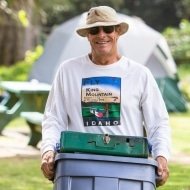 I have had one of these Rupes LHR15ES Random Action Buffer on board and have not needed it. The Meguires Flagship Marine wax and their boat wash have done such a good job it's not been necessary. It has over 25,000 road miles on it... in a box... in the basement.
-
I "full time" in mine when im not out working on a ship which is about 9 months out of the year so generally i spend about 2-3 months at a time in mine. Storage is really the only issue with it. the bed of my f150 serves as my garage so its usually packed with my bulky or outdoor gear and i made a sort of under bed dresser drawer for my clothes in order to keep the closet free for bulkier items. If you want to boondock full time you'd need to make significant upgrades to the solar package as well as carry a small generator as even with the lithium and solar package the new fridges being used starting in 2023 draw too much power to go for more than a few days maybe a week of clear skies without needing supplemental charging.
-
 Woke up thinking about this, so briefly researched and confirmed my recollection regarding the Xantrec Freedom XC 2000 in my unit. ‘All Xantrex Inverter/Chargers incorporate an automatic transfer switch. This switch senses when outside AC Power is present and transfers the load from the inverter to the source of incoming power (shore or generator). The unit also automatically switches from invert mode to charge mode.’ I suspect the ATS in the MP2 serves the same function and that an additional TS is required to run an A/C via the inverter.
 -
I found a bundle of wires tucked away below the street side bed at the juncture of the upper wheel well and battery box against the outer shell. My thought at the time was these wires were part of the solar pre-wire setup.
-
HDRider, The carrier with the box pictured above on my May 13, 2023 thread posted by rich.dev, was simple and has worked very well for me. It does have a 1 1/4 inch bar not an adapter. The carrier that I purchased had both a 2 and a 1 1/4 in bar. I also used a hitch clamp that stabilizes the carrier and it does not bounce around as was noted as a negative above. I can verify this in my backup camera. For sure, I stay under the load limit for the Oliver rear hitch. I have also worked out a technique to slide the carrier box assembly without removing it, to remove the tire cover and spare tire. I had to actually do this on a trip to Hohenwald last summer when I had a flat and had to use the spare. In fact, I did it again today as I rotated my tires, putting the spare into the rotation at Jason's recommendation during a tire discussion on that summer visit. Ron
-
You received good advice already on the storage box. This subject has been covered in dozens of threads. I wrote an upgrade thread last fall and have read many others before and a few since. There is a lot to consider here, no quick answer. Study the subject, measure your water flow rate, and ask specific questions. You will get good advice here!
-
Got some "Box Envy" going on over here... HA!
-
@Badger Pete, We had the Oliver cargo box and realized we needed to make better use of this storage area. In hindsight, would not have purchased the Oliver cargo box if this was available at the time for many reasons. Here is the custom made enclosed cargo box we upgraded to made by - https://seabiscuitmetaldesigns.com/product/oliver-box/ They are located in Johnson City, Tennessee🇺🇸. They ship anywhere in the lower 48. With lots of room, we keep all of our immediate camp set up gear - chocks, blocks, 30 amp cord, and other various first grab items we need here. David & Kristine Hess owners of SeaBiscut metal designs are just top shelf people. We even toured the Seabiscuitmetaldesigns machine shop where they custom hand craft and produce very well made high quality products. 🇺🇸 David & Kristine Hess will be at this years Oliver owners rally at Lake Guntersville SP and will have their cargo boxes and more on display. Possibly a newly designed rear cargo box for the Oliver as well. Welcome to the forum, we are here to help so ask questions, and Happy Camping! Patriot🇺🇸
-
Several OTT owners have removed their OEM front aluminum storage box in favor of a larger enclosed one. Lkely one of them would be glad to offer to sell theirs at a reasonable cost plus shipping. GJ
-
I replaced my Zamp PWM CC with a Victron MPPT CC which I installed beneath the street side bed and I had to connect the wiring from the solar panels to the wiring going to the Victron CC. That splice was done behind the original Zamp CC location. And I found that solar panel wiring ran from the original Zamp CC location back to the attic and up into the inner/outer hull cavity and onto the combiner box. It seems to be the same route mountainoliver mentions above. Mossey
-
As far as mounting the panels, the combiner box and, the interconnect wiring…. I paid Oliver service to do that. I bought the Zamp panels from Oliver and since they know exactly where the aluminum plates are located in the outer roof, they mounted the panels as well. All other wiring and solar controls ScubaRx and I installed. I had to look the other way and bite down on a broken arrow when the first hole was drilled into my new camper but have since gotten over that trauma.
-
I don’t remember that there were any wires pre installed in the ceiling but know that there were #6 cables and the temperature sensor wire running from the basement area just aft of the pantry up the wall between the window and pantry, into the open area where the radio is located. Oliver service connected to the #6 cables near the radio and ran those back to the attic area up between the roof panels and to the location where they mounted the combiner box.
-
When we purchased our trailer in 2017 Oliver was just changing solar equipment brands. They changed from Blue Sky equipment to Zamp equipment. I didn’t know much about solar power at the time so defaulted to not getting solar. ScubaRx schooled me about the Blue Sky vs. Zamp architecture and I choose to add Blue Sky solar. The trailer (at least at that time) was “pre wired for solar.” The roof did not include the combiner box but the #6 cable was in place and a battery temperature sensor was in place as well. ScubaRx and I had to run the 4-0 welding cable as needed and other #6 cables in the basement as needed along with the main switch and circuit breakers, shunt, etc. I had the Oliver folks mount the panels and do the interconnections. Technically, the total system was not completely wired, just the hard to access cable was in place. The trailers are not turn key wired by any means, you will have to do the majority of the wiring yourself along with all of the system component installation.
-
I wonder what that means, pre-wired? For "pre-wired" to be viable you would have to have a roof mounted junction box. Do you? How would you add solar if not? Not easily! How would you run cables from the roof to a solar charger in near proximity to the battery bay? I took another picture for you, Gj. The only way an Oliver is truly pre-wired is if you have a junction box, like is what's pictured on ours.
-
 I am going to be replacing my old Victron color display (push button) which took the place of the old Zamp solar charger. So yes, doing the same. For anyone reading the install, this is what I was trying to do without success so far, "The best place to insert a multiplus is inbetween the ATS (assuming you have a generator) or shore power input (if you don't) and the breaker panel itself. That way the shore or generator power will charge the batteries, and the inverter itself keeps the power on even without shore or generator. It also enables the power assist mode to function correctly, where you can dial down the current limit to match the available power, and then no longer need a power shedding device to avoid overload. Any outlets that have GFCI then continue to have GFCI as they should. Those that don't are probably better not to have GFCI, as heavy loads (air conditioner, electric heat) would end up often tripping the GFCI inconveniently and unnecessarily. The one drawback though is that you *must* then have the multiplus in on or charge only mode to have shore power pass through. If you turn it to OFF, there will be no power at any outlet, regardless of the presence of shore or generator power available. Also, no backfeeding. You don't want to deal with islanding, and you don't have to since the multiplus will do the right thing if wired correctly. Shore/gen (or ATS) is connected to AC IN1, and AC OUT1 goes to breaker panel. That's it. You *can* use AC OUT2 to switch additional loads based on other criteria (see relay assistant for control of ACOUT2 relay) but that would require an additional breaker as you couldn't then put that switched power through the existing breaker panel. Note that if you have an existing converter/charger plugged into power from the breaker panel, this will have to be removed/disabled to avoid setting up a loop (120->12->120->...) This is all assuming you have a single phase breaker panel, or one where the two phases have been merged with a jumper wire (also assuming 30a 120vac service here, not 50a 240/120 split, in which case get a multiplus2-2x). If you do have a 30a split panel (where an existing inverter has already been wired in) you would need to either connect it up the same way as the original inverter (one side of the split is "shore", the other side is "inverter"), or if you wanted to power everything through the multiplus (gain ability to operate aircon from battery) then you want to merge the two sides of the split (jumper between the two 30a breakers) and wire the multiplus in as above (shore/gen->ats->multiplus->breakers). I do this on a regular basis (upgrading mostly b, some c class RVs).
 -
GJ - Just remember to add 'Air-Down' to your step-by-step before leaving the 'Barn', if you do 'air-up' once in. I'm following this thread, with great interest and maybe I should have joined the discussion about 9 pages ago. Our (2) rear leaves broke on the 'eye leaf' at the point where the leaf below the eye ended. I believe I saw some similar break points on other pics posted above. We were in the NWT/TUK area so resources were limited. We cobbled together 2 new but different LS's to get us back down to Whitehorse, YT. Image a horse with two worn shoes in fronts, with a loafer & tennis shoe on the rears... But it tracked & pulled straight. OKAY, maybe not that bad, we can smile but not yet laugh about it now. We had all 4 LS's replaced by 'Jacob Industries' (HIGHLY RECOMMEND IF YOU NEED WORK DONE...) the go-to suspension business in Whitehorse YT, last summer to get us home. So we'll probably not be replacing LS's unless we break another on our return adventure to AK this summer. And yes, we now carry 2 (the fronts) LS with new brass bushings if we needed. Our new LS's had some differences in length from what we had from the build, they are rated at 1830 lbs. The ride home from Whitehorse was slow and not 'stiff' at all, but by this time we were on pavement. There is a lot more that ScubaRX & I found out about LS's that are compatible with the the LE2, in research & discussion. Starting with 'where does Oliver source them from' to that sources part numbers & spec's. Even on some of the supposed same universal PN's from different suppliers sometimes there are slight/negligible differences in the A B C D measurements that make it less that totally consistent by supposedly the 'same industry PN' across suppliers. And that was just the 4 leaver's. I have spreadsheets, but this thread is way beyond that point, by going with ALCAN. I actually like the idea of going with 5 leaves, not for load increase (which we will not do), but the fact that the first leaf below the eye, extends to the eye. Snow maybe Wed, after the melt we'll pull SNYSDUP out of the nesting box, and start loading him up, Cause "WE ARE GOING CAMPING". B-Out,
-
Our bumper box is welded to aluminum tubes that fit into the original receivers that Oliver installed for adding a bike mount. We limit the load to under 100 pounds.