Leaderboard




Popular Content
Showing content with the highest reputation on 01/27/2018 in all areas
-
Well stated Raspy, I don't feel the need for a tpms system either, with over 5 million miles driving class 8 combination vehicles, I've had a lot of experience with tires, though I'm not a tire guy. Several years ago FedEx added tire monitoring systems to their trailers because the drivers wouldn't or couldn't ( take your pick) check their tires on a regular basis, the system automatically adds air as needed to the tire, while you would think this is a great idea in reality, not so much, what happens is tires don't get checked on a regular basis and if you pick up debris in a tire you're not aware of it, end result tire failure for loss of pressure and the heat involved in that. Every time I stop I check my tires and wheel hubs, I run my tires at 65 psi and I can tell just by "thumping' them if their low, I also touch the tire and hub to make sure their not overheating, if one is hotter than the rest, there's a problem. If you run good quality light truck tires they very rarely fail. Tpms systems are a great addition to your trailer, but there is no substitute for regular maintenance and periodic checks of running gear.5 points
-
That looks like an old Maxair vent to me on an Oliver that was in for service. They stopped making these several years ago and no one seems to know what happened to the molds. I've heard of people "lucking" into finding one or two on Ebay but .... Bill p.s. if you find them please be sure to get two for me!2 points
-
2 points
-
In some ways, Oliver seems to be overloaded with all the accumulating details of designing, building and following up with endless questions. They have made some mistakes and are slow to deal with them. Examples such as wiring and water tank issues reveal this. Tires are a consumable item on trailers. Tire warrantees are handled by the manufacturer. Brands and sizes change over time. The same model trailer can weigh 5000 lbs to over 7000 lbs and can be towed once a year in cold weather or constantly towed in 100 degree weather. Traction on different surfaces can be significantly affected by pressure. Some might want the lowest towing drag and others might want the best possible traction, while others might want the smoothest ride. Tire pressure is never a definite number, so manufacturers give "maximum" and "recommended" values. When you say you want Oliver to give "written guidance" it implies that they should be held responsible for wildly varying circumstances. They do, as I understand it, recommend 60 PSI, which is a good all around starting point that will work well in most situations. If a tire leaks and a problems occurs, it's not Oliver's fault, as the pressure at that point would be outside their recommendations and they cannot warrant against road hazards. There have been so many trailer tire (ST) failures that many now opt to run them at full rated pressure, just as a way to keep them from blowing out from heat. This is not the case with light truck (LT) tires that are MUCH more tolerant of varying pressures and can be tuned to the situation. It would be nice if they offered a TPMS system as an option, I suppose, but then they would have to have the interface with the tow vehicle, show people how to use it and guarantee it, etc. Remember, they just went through a flap about solar controllers and defaulted to the one that was easy to use, but less efficient, in order to, probably, reduce their hassle factor. They are also not known for their wiring prowess. Better to let them build an excellent frame and body structure, as they know how to do very well, concentrate on the internal systems they must have and leave the minor options to owners. For instance, I don't really feel the need for TPMS on mine. I check the tire temps and appearance at every point of interest stop or fuel stop and if one blows out I will instantly be aware of it.2 points
-
This week I added the much needed (by me) water accumulator tank to the outlet of of the water pump. The following may be helpful to you if you want to add to your trailer. FYI, the factory has added this to all the 2018 trailers as I understand. I decided to not only add the accumulator tank, but also utilize the silence kit which adds 2 ea. 30" hoses. The reason was to make the mounting more flexible. With the hoses, I would not be limited where I mounted the tank. (You may be able to find suitable hoses locally, but having everything arrive at my doorstep has it's benefits.) Parts I used: 1. ea SHURflo 182-200 Accumulator tank. $42.11 on Amazon today 1. ea SHURflo 94-591-01 Silencing kit. $25.94 on Amazon 1. Remove the 4 mounting screws in the pump base. 2. Turn off water pump, open the sink valve to relieve the water pressure, and remove the short white hose between the output port of the pump and the valves to the right of the pump. Have towels available because the faucet is higher than the pump so some water will drain out when you break the connections. 3. Before I remounted the pump, I tested several locations for the tank. I chose to move the pump as far to the left, allowing the tank to be mounted to the right. I dressed the hoses around trying to minimize any sharp turns and minimize the hoses hitting other objects. 4. After you have all the connections secure, test the setup, and if you're satisfied, mount the pump and tank. This modification made my trailer much more pleasant to be in. At times the pump vibrations would make the plumbing lines vibrate against the back of the cabinets and sounded like a jack hammer. The tank is pre-charged to about 30 psi. As you can see from my picture, I placed the tank so I could access the air connection should I need to adjust the pressure.
 1 point
 -
I was putting out the Carefree awning for the first time and as I was extending the arms to secure them to the trailer the orange clip that has tightens the are broke off. Contacted Jason who immediately ordered me a new one at no expense even though the Carefree warranty doesn’t cover that part. Good outcome to a stupid issue
1 point
-
Here are a few photos from our wonderful tour with Scott. If he pointed at & explained something in detail, I snapped a picture. Embarrassingly, most of these I cannot explain but I thought they might be beneficial for prospective buyers. We pick up Hull # 292 (Shallow Gal 3) January 17th!
1 point
-
I just noticed a new Tech Bulletin about the $100 repair (upgrade) for the Anderson hitch. Almost like Mission Impossible, we disavow any knowledge or responsibility for any events, and etc....1 point
-
I believe that you will need a couple of things. An air regulator will prevent you from "blowing" too much pressure into those water lines. I think 40psi is what is recommended and I certainly would not go above 50psi. The second thing you will need is an adaptor that screws into the inlets on the outside of the Oliver. I've seen these in two types - get the one that has the bicycle valve on the end, it makes it much easier to apply the air hose to this fitting. As far as compressors - as long as you can attach the air regulator to the end of the hose, it is possible to simply use an air hose at a gas station or repair shop. If you want one for your home then just about any that have a "tank" could be used. Harbor Freight and others have these for about $100 or less. Of course this does not include the really little ones that one uses for simply inflating tires - they generally do not produce enough of a "blast" of air in order to blow the lines out but they produce relatively little "puffs" of air until the tire is inflated (i.e. put your hand in front of the hose on one of those little guys and turn it on - do you think it would blow any water out?). Another thing that could be done is to purchase a "air tank" and use your little tire inflator to put air into that. However, unless you got a fairly big air tank you would need to keep refilling it until you got all of the water out of the lines (don't ask me how I know this). Take a view of some of the videos on YouTube to get a better idea of this equipment. Bill1 point
-
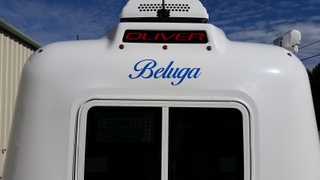
ShallowGal: Great pictures, Thank You. I am always amazed at the choices of custom graphics and names. [Like Beluga..the great white whale]. Maybe we ought to start a 'yearbook' of owners, so we know which graphic belongs to who, with their 'school colors'. Then we can tell who we just passed going the other way. Question: in your photo #15 (I think) , there is a vent(?) on the window. Is that now standard, and/or an option? This allows the window to be open in the rain? Or maybe going down the road? Alabama is pretty in places, but didn't think it was supposed to be in the 20s. Had a nephew call from Zephrhills saying his water pump froze and what should he do. I had to laugh a little, it was one degree warmer here than there. We found an interesting place in Florida to camp. Oleano State Park. A 6000 acre town that was abandoned when Flagler took the his train to Miami and started selling beach front swamp land...1 point
-
That is great that your problem was taken care of. Certainly a good outcome to an issue that could have caused you a fair amount of annoyance. Thanks for letting us know about the good stuff. I think that this is a prime example of what most of us talk about when we say that Oliver stands behind its product and is a GREAT company to work with. Yes, not everything goes as smoothly as some of us might like, but, in the end, Oliver stands behind its product and does whatever it can to make sure that we are treated like family. Bill1 point
-
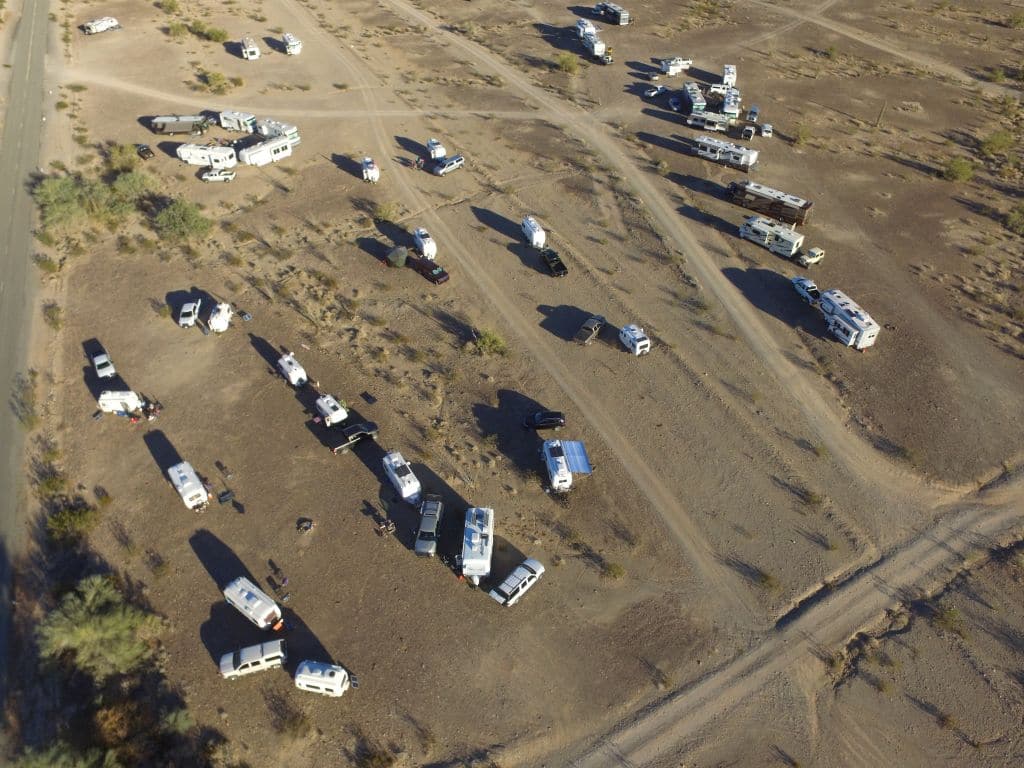
They're everywhere! They're everywhere! Attaching a photo showing 6 Olivers camping in our little area near Dome Rock taken yesterday afternoon (Jan. 24). Mixed in are a few Escapes and Casitas, but the Olivers rule. There a few more west of us, and I saw at least two more come in today. I think Mountainborn was towing a demo unit. We'll get out and try to meet everyone tomorrow.
1 point
-
This is my plan B. Of course I am in disguise. You cannot read the sign, but it says: I need money for my Ollie. Not doing too bad, made $38.00 yesterday, so this will only take about 1,578 more days!
1 point
-
We can all have opinions, but in the end Michelin's is the one that counts. They determine their recommended inflation pressures according to what pressures give the tire it's correct shape for a given load. If you're over inflating their tires by 15 - 25 psi, you're significantly reducing their contact patches and lowering their grip. And you're also making the ride significantly rougher for your trailer. You may think it rides fine, but then you aren't in there feeling the bumps. Try over inflating your truck tires by 15 psi and see how it feels and handles. Mine will hop and skip all over the place with just 10 psi over - I know because the dealer forgot to lower the pressures from their shipping specs when I picked it up. Anyway, point being that you guys wouldn't purposefully over inflate your vehicle's tires by 15+ psi, so why would you think it's O.K. to do it with your trailer's tires? As far as Oliver's recommendation goes (assuming their delivery pressure is their 'recommendation'), saying that the tire's maximum inflation pressure is it's recommended one is like Ford saying my truck's maximum speed is 117mph, therefore that's the speed I should always drive. For me, the debate is settled by Michelin's chart. Oliver's recommended pressures shouldn't be far off that, if any at all, since the suspension setup means the trailer's weight will always be equally distributed among all four tires. In fact, if their recommendation is any different whatsoever, I'd like to know why, since it's not like Oliver is out there track testing these things, measuring tire deformation, dynamic loading, temperature, wear, etc. They'd need to have a really good reason for exceeding the manufacturer's specs as much as they do.1 point
-
I installed one in my Ollie too. There's more to the benefit than the sound though. Without it, the pressure builds up when you fire up the water heater from cold and the pressure will go to 100 PSI ad pop the pressure relief valve. This puts unnecessary strain on the entire plumbing system. It's good to keep the hose from the pump to the tank as short as is practical to keep the pump from stuttering as it tries to shut off. Best when the pump runs smoothly for a longer period and then stays off for a longer period, several seconds or so. I experimented with different pressures and settled at about 20 PSI.1 point
-
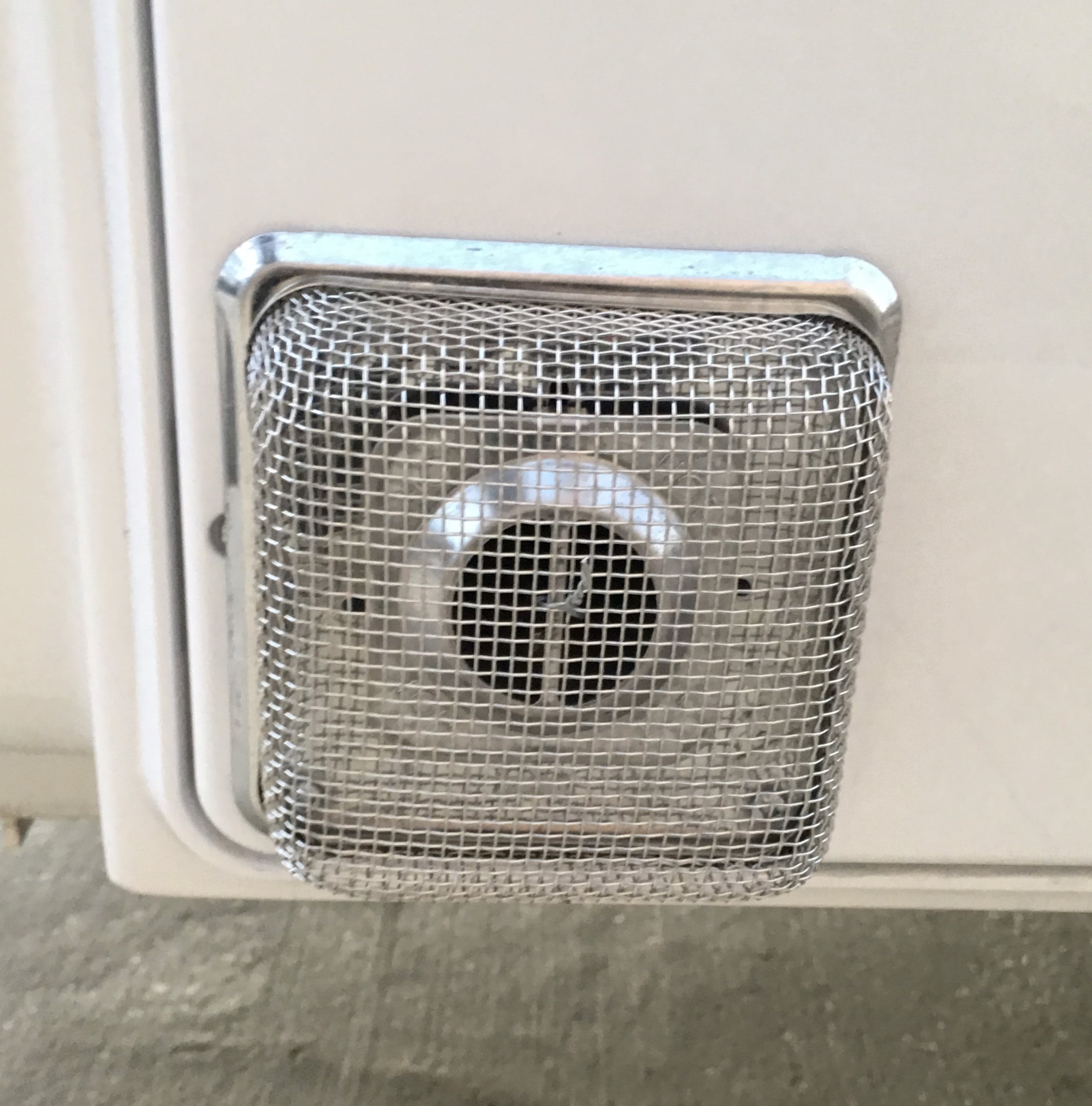
Finally we can contribute (I think) to the forum. We purchased this bug screen from Walmart Online. Used twisted wire to connect the screen to the Ollie
1 point
-
Randy, it is much more affordable than the marine version of the Indel/ Isotherm. The customer service rep explained to me that as a land-based fridge, it doesn't have to obtain coast guard approval, so that's a big part of the cost difference. Some pieces are not stainless that are stainless on some of the Indel marine versions. the door isn't reversible, and no choice of swing. But, it looks like you could change out the front panel to another color if you liked something other than basic black, their only option. I'm ok with all the above, at a reasonable price and flat rate of $100 shipping. Most important to me, it says Indel on the door, has the compressor I want, and a 2 year warranty on everything important. We'll see how it works out. Sherry1 point












-
Recent Achievements
-