Leaderboard



.thumb.jpg.780a61c48108d06558e15f745dfe9b5e.jpg)
Popular Content
Showing content with the highest reputation on 07/21/2019 in all areas
-
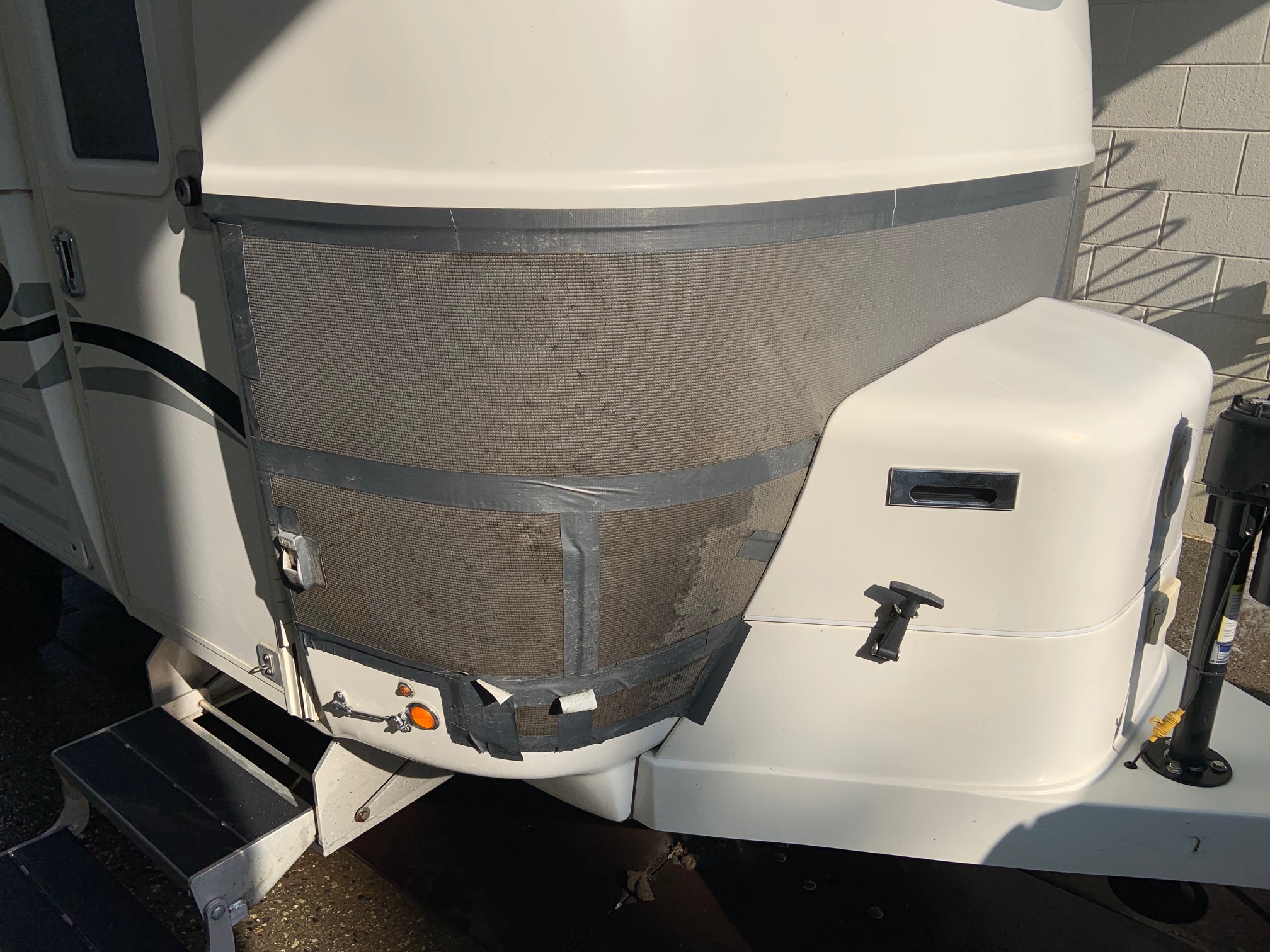
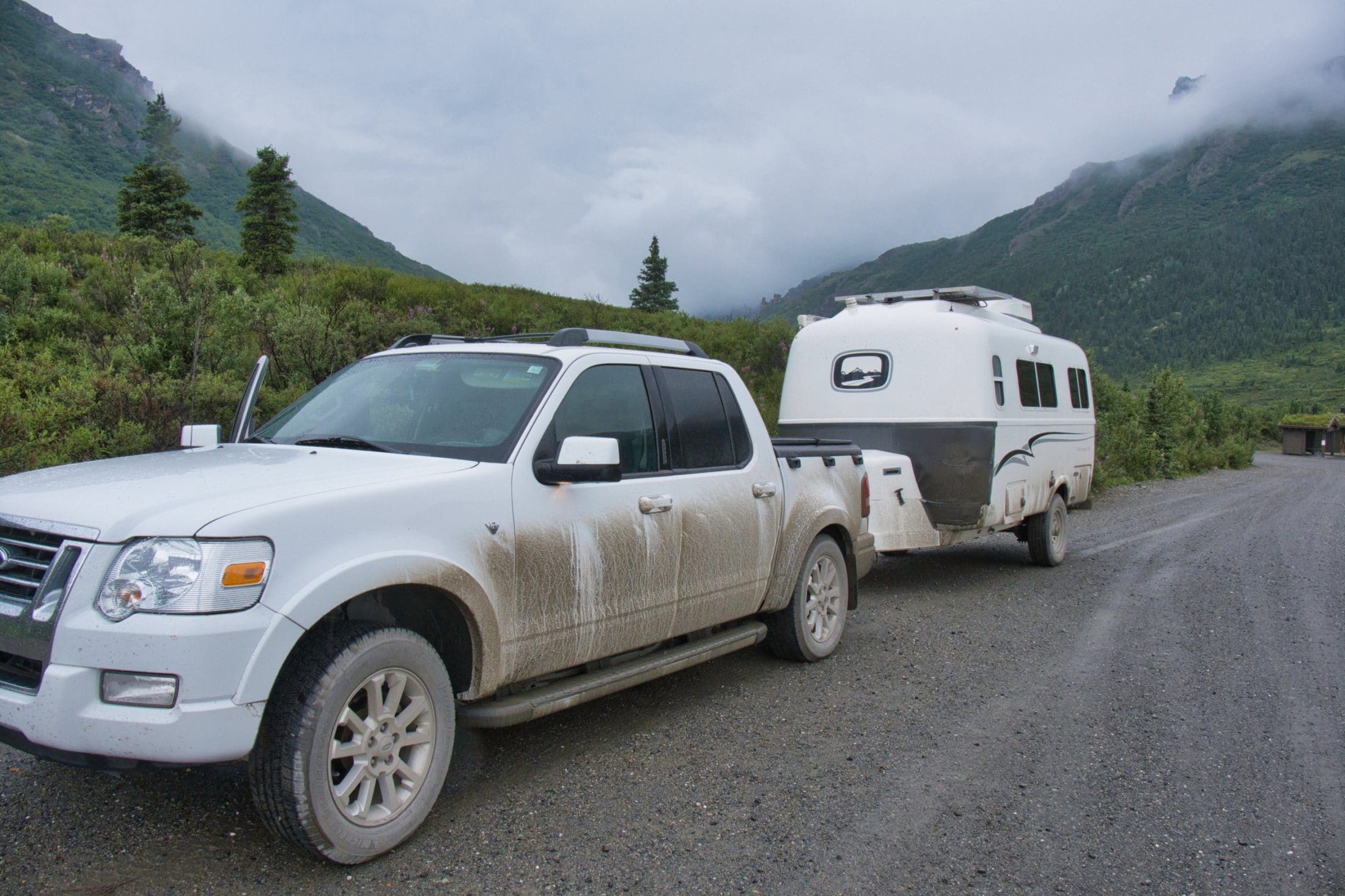
We were not sure what to do to protect the front of our Oliver on the Alaska journey. We looked into large mud flaps, but they would not fit, spray protection that turned out to be discontinued and more lasting but expensive solutions. We settled on yoga mats. Two $12 mats from Walmart and some non-residue duct tape and a little cutting produced a mat that we wondered if it would work and how long it would last. Well, it worked very well, lots of cuts and indentations on the mats. It also lasted - so far - for nearly 4000 miles and it is still intact. We have traveled miles on dirt and gravel roads as well as the Alcan and they still are working. So we are pretty pleased. The mats do not clean very well but we get the surface dirt off ok. An inexpensive solution to the rocks along the Alcan and well beyond. Total investment about $30. Daily posts at www.twolanetouring.com
 3 points
 -
14" x 21" - to get four, you have to stand them on end. And yes, it's a PITA to wire them up that way. The power assist on the Multi is seamless. I use it all the time at home since all I have is a 20A connection. I limit the Multi to 15A and let the batteries make up the rest if I run the A/C.1 point
-
Mike, the only difference in the installation would be not running the 30A cable to the Multi and back, which isn't difficult. To bypass the charger, all you do is remove the charger module. So I think you'd just be paying more for a less capable system.1 point
-
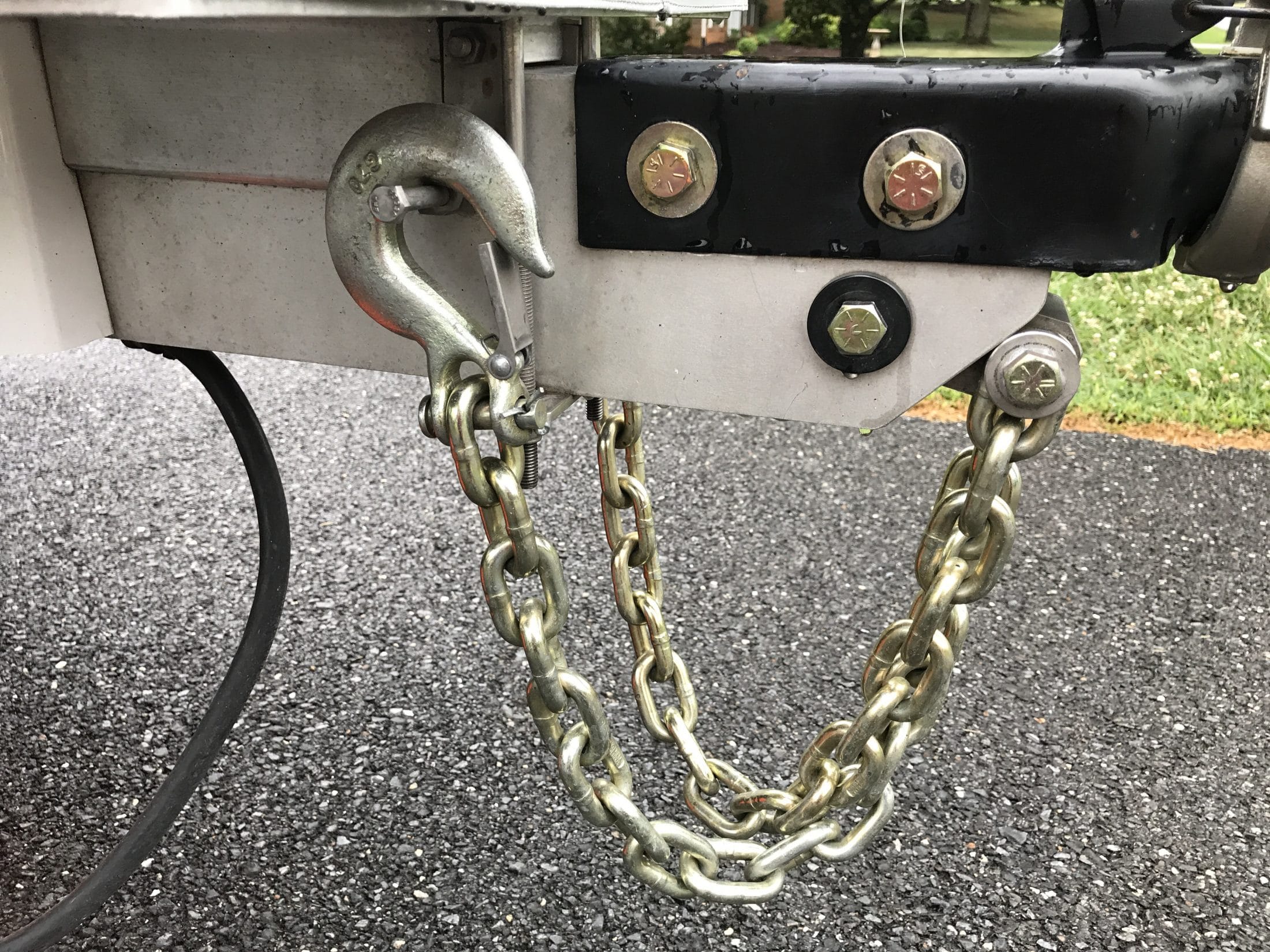
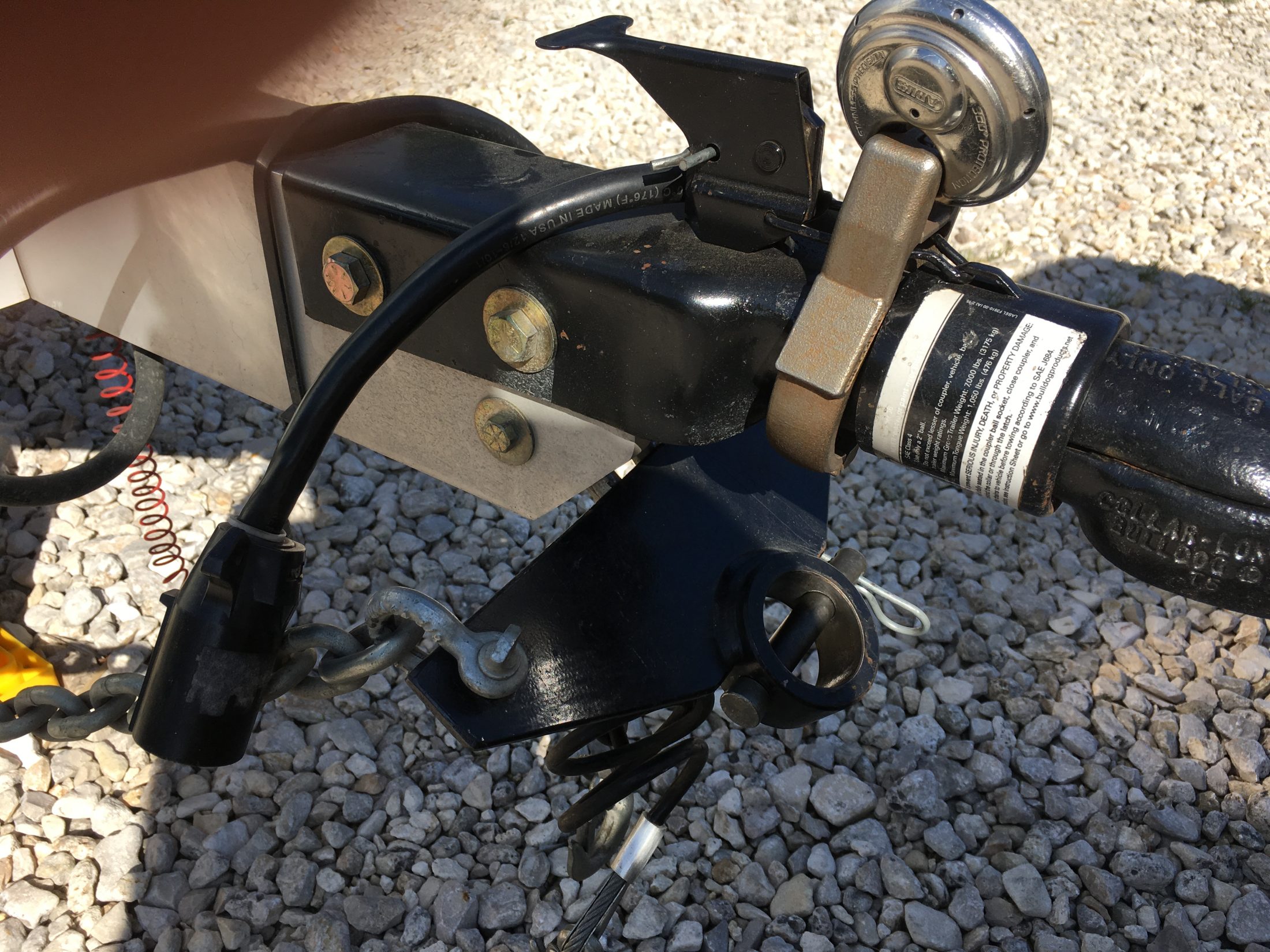
Raspy and Dave, you are correct. The safety chains should each be able to carry the full load as there is no way to absolutely guarantee that both chains/hooks will share the load evenly. Having two chains allows provision for a backup in the event that one fails. I changed from the factory cable setup for several reasons, one being I got tired of cutting myself every time I had to wrestle the cables/hooks into compliance when attaching or un attaching them. Also they were only connected to the trailer tongue with 3/8ths bolts and fender washers. Lastly, the small hooks would not fit my truck hitch. I went with 3/8ths grade 70 chain and hooks and grade 8 bolts/nylon lock nuts. I believe that this chain has a breaking strength of 28,000 pounds. (That could be wrong, I haven’t looked that figure up in a while) anyway, there’re sufficient. Also don’t twist/knot the chains to achieve the correct length. That weakens them! Cut them to the correct length. I haven’t changed the break away switch cable but you are correct. The cable should not be infinite in length as our coiled cable is. It should be solid and just long enough so that if the trailer disconnects the brakes will apply before the chains reach their length limit. We (I) should get rid of the coiled brake safety cable version and get the true cable version that won’t stretch. It should be at the correct length. Also the brake safety cable should be attached to the tow vehicle or hitch directly only not to the safety chains. Sort of defeats the purpose if the chain breaks? I believe that the intent is to have an independent attachment point again for redundancy as with having two safety chains.
1 point
-
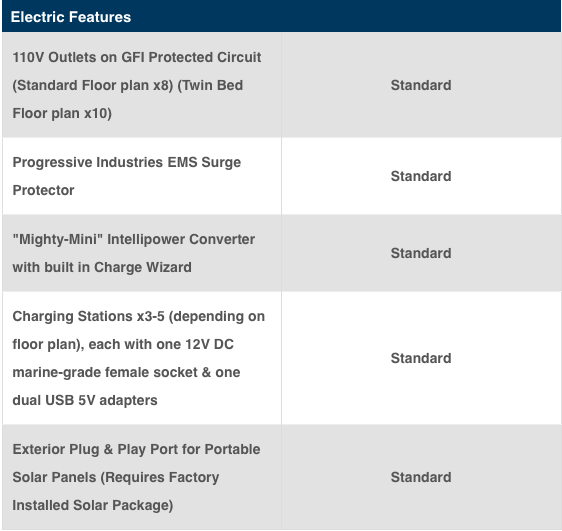
Mary & Bill: Funny, we just had your problem for the first time. We are camping in Maine, yesterday was an unusually hot hot day, and we chose to start the AC. Had the same intermittent cutouts you describe, with everything losing power and coming back on a minute or two later. At first I thought it was electrical overload, with the fridge, hot water heater and AC all calling for electricity. Couldn't find any circuit breakers that had tripped. I changed the fridge and the hot water heater to gas, but that didn't cure the problem. Turned out the issue was our Progressive Industries EMS30 surge protector (external, plugged in at the electrical supply post) which was apparently working properly and doing what it is supposed to do. It was cutting off the flow of electricity and then coming back on after a time delay. It showed an E4 low voltage code. Not surprising in that a lot of other air conditioners got turned on in this camp site. However, according to the manual, the device cuts out if the line voltage goes less than 104V for six seconds. The device when I looked at it was showing a line voltage reading of 116V. It being a hot day I balanced marital harmony with risk to the AC from low voltage, and decided to take the EMS30 surge protector out of the line. So far all is well. AC continues to function well and we had a cool night inside the Ollie. Best regards, John Shkor, SailorsAshore1 point
-
I think C/S refers to Charging Station.
1 point
-
The sealant that is now used at Oliver is ASI (American Sealants, inc) 335. It’s a 100% neutral cure RTV silicone. I have used it and it’s very good. I have also used a GE silicone product stock number SIL2KB WHT 140648. This seems similar (don’t really know) and it works pretty good as well.1 point
-
Saw these and thought they looked pretty useful. At a 9000lb breaking strength, I might just velcro my trailer to the bumper, lol. https://jeri-rigg.com1 point
-
I put my MultiPlus in the dinette seat by the bath. It fits well there on its back with plenty of air space around and even a bit left over for something else if needed. I’ll take a pic for you. Actually I just got done pretty much rewiring everything to fix things I didn’t like from when I first did it, plus to take advantage of the extra space I have since I took out the sewer line. So I’ll take some pics of it all and maybe post them in my Snowball thread. I actually ran a lot of wiring through the pantry - I stuck it in the front corner and it’s out of sight and out of the way. Probably wouldn’t want to run the heavier solar cables in there though.1 point
-
A couple of comments: First, if you eventually go with LFP batteries, like the Battleborns, it's going to be extremely tight in your battery box with all of that cabling. And connections to those batteries are awkward, to say the least. You might consider moving your shunt into the hull space and maybe adding a bus bar or combiner post for your positives. That would limit your connections in the box to a single positive and negative, plus temp and voltage sensors for your monitor and multi, which can be wrapped together, so just 3 cables total. That's what I've got, and it's still tight enough that I have to guide the cables in place when I move the batteries to make sure that they don't bind or kink. Second, I worry that your solar charge controller is going to run hot in that space. It's a small area with no circulation and you've got a hot stereo in there as well. You're also going to get a good bit of heat from the sun on the hull in there. Minimum, I think I'd get a remote temp sensor, since otherwise your charge controller is going to assume that the temperature in that compartment is the temperature of your batteries and so is going to miscalculate its compensation by a good bit. (I'm actually surprised that AM Solar didn't include that in the package - it's a $40 add on that's a no brainer, imo, for the Smart Solar series). I know that's where Oliver puts theirs, but that doesn't make it right, plus you've got more solar now and so a much bigger/hotter, not to mention smarter, controller. Then finally, wherever you end up with your controller, I'd add some strain relief to those cables, and generally tidy up, wrap, and tie everything down as best you can. I think one of the biggest potential dangers in any trailer, especially for those of us who are on gravel roads a lot, is fire from a positive cable that's come loose and starts to spark on something, or wears off its insulation from constant rubbing. By the way, I didn't realize it when we were talking about it earlier, but Victron does make a plate for both the CCGX and for the CCGX and BMV combined.1 point
-
I tried one of these covers. I let my cord hang across the trailer tongue so that the connections are facing down. The cover seemed to accumulate moisture and water. So, I went back to nothing, just letting it hang. No problems, even in rain. Mike
1 point
-
If you have the pigtail hanging down and it rains you will have water trapped inside the female cover; then corrosion starts and can lead to having to replace the female connector. So the best thing is always be sure the female pigtail connector is pointing up, when not attached to the tow vehicle. I have replaced many of these female pigtail connectors for other people after they have allowed water to run down the cable into the female plug.1 point
-
Hi John. I want to get to your mod suggestion, but also stop to discuss a fine point for a second. I wouldn’t say I expected a “medically clean” unit from Oliver. I expected that they would provide a “normally” clean product to the standard that they advertise and that we agreed upon pre-sale. As we now really investigate we find drill shavings everywhere-these did not come from road vibration, and clearly show that they did not clean between all stages of assembly and manufacture as they say that they do. I expect this sort of thing these days, which is why my work order was accompanied by a list written up by the office of special requirements, including special attention to he regular cleaning (I’ll explain the rest below). While I am not so concerned about drill shavings I am concerned about inhalable Fiberglas dust, which is a possible carcinogen per California, and absolutely a respiratory irritant. If anyone is wondering why buy a Fiberglas trailer if you’re concerned about the safety of the material, many materials are safe by one exposure method but not another. Intact Fiberglas is a non concern, while powdered inhalable fiberglas is another story. As I mentioned above, in my case, and I think you’ll be seeing an increasing number of people like me in the forums as there is a whole movement of people with environmental illnesses using RVs, the whole premise of the transaction with Oliver was based, from initial inquiry to finish, around the understanding that they were customizing my unit in light of special needs. Meaning they agreed to take some reasonable measures within the scope of their capabilities that were agreed upon before the order was placed. All of the following were negotiated in relationship to medical needs: the specs on the cushions and flooring, the between stage cleaning and chemicals allowed for cleaning, who was allowed to enter the finished unit after production (no one), and how it was to be parked to allow offgassing. I’ll give props to anyone who has a theory on how such significant quantities of dust could get into the cold air lines. The rest of the contamination seems likely to have come from being run in a dusty location in the factory or on the trailer when the interior must have looked like a flour mill- the cabin interior would have had to be filthy before the AC was first turned on. Further my local AC technician was perplexed- the AC unit should have actually cleared out the dust inside the casing while it was first run for 2 days by me, but we still find all this residue. The intake filter did not have any residue in it, so it didn’t come from the cabin air after delivery. So whether I have a medical problem or not I think is actually not relevant to the Oliver side of the problem. They poorly installed a very expensive appliance, resulting in an air unit that blows an air irritant, and they’re not getting behind fixing the problem. Which turns out is very extensive because bad installation of the AC requires work on the furnace and the ducting.1 point




-
Recent Achievements
-