Leaderboard




Popular Content
Showing content with the highest reputation on 11/20/2025 in Posts
-
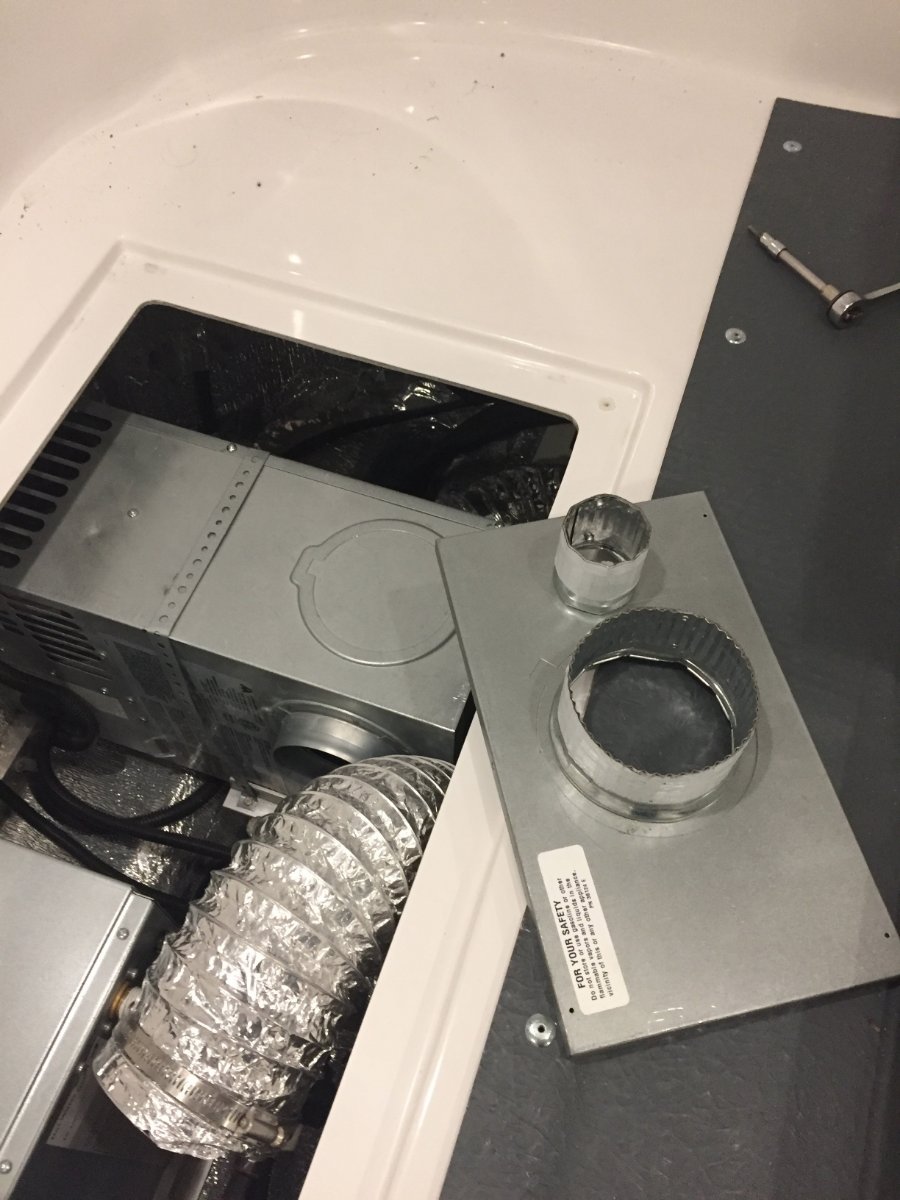
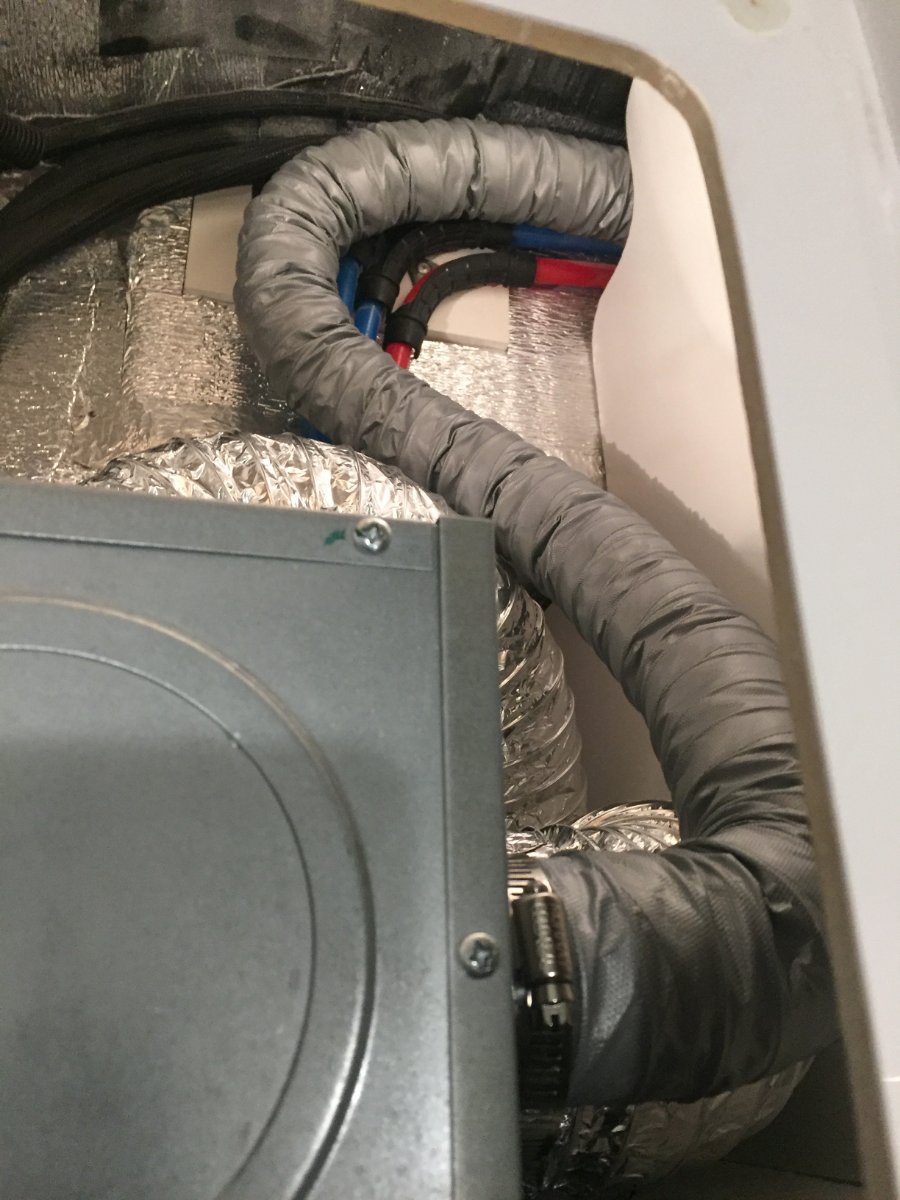
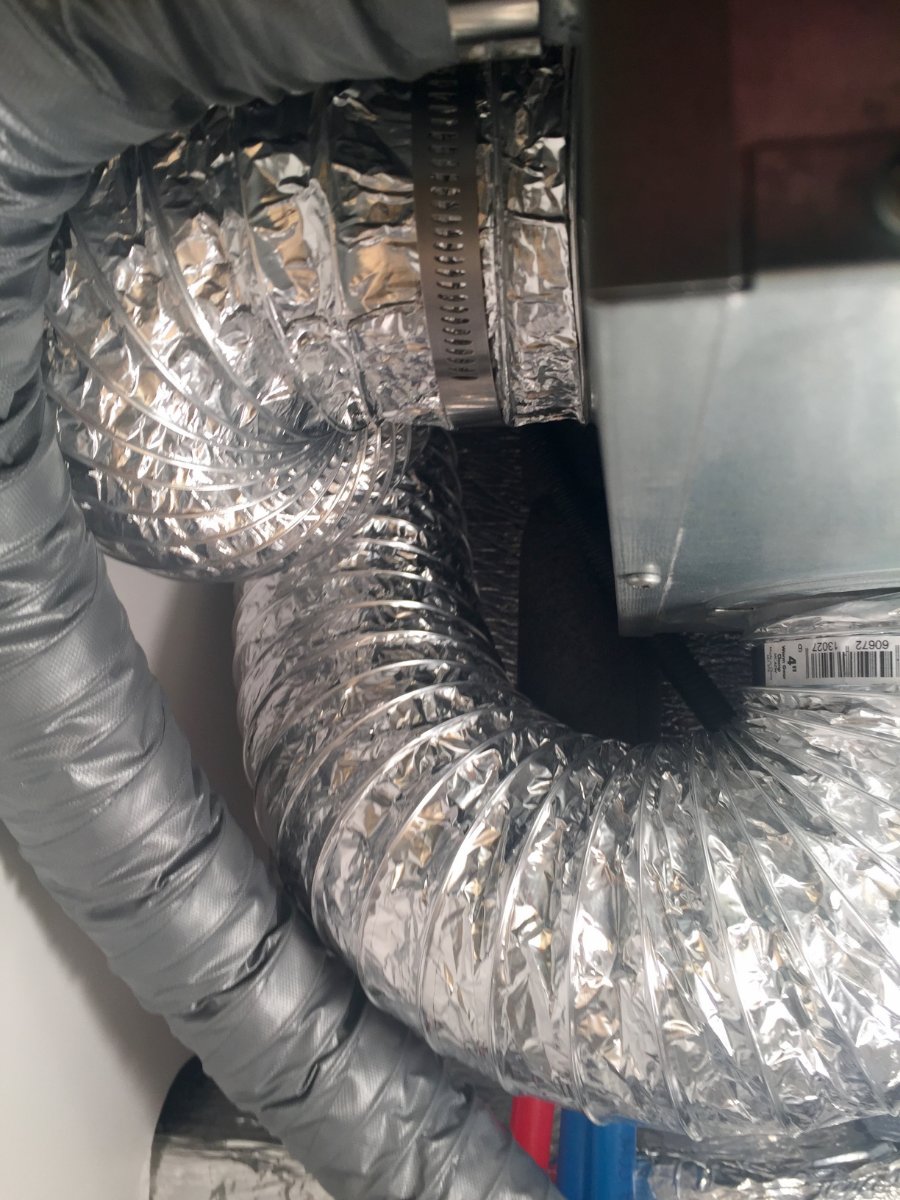
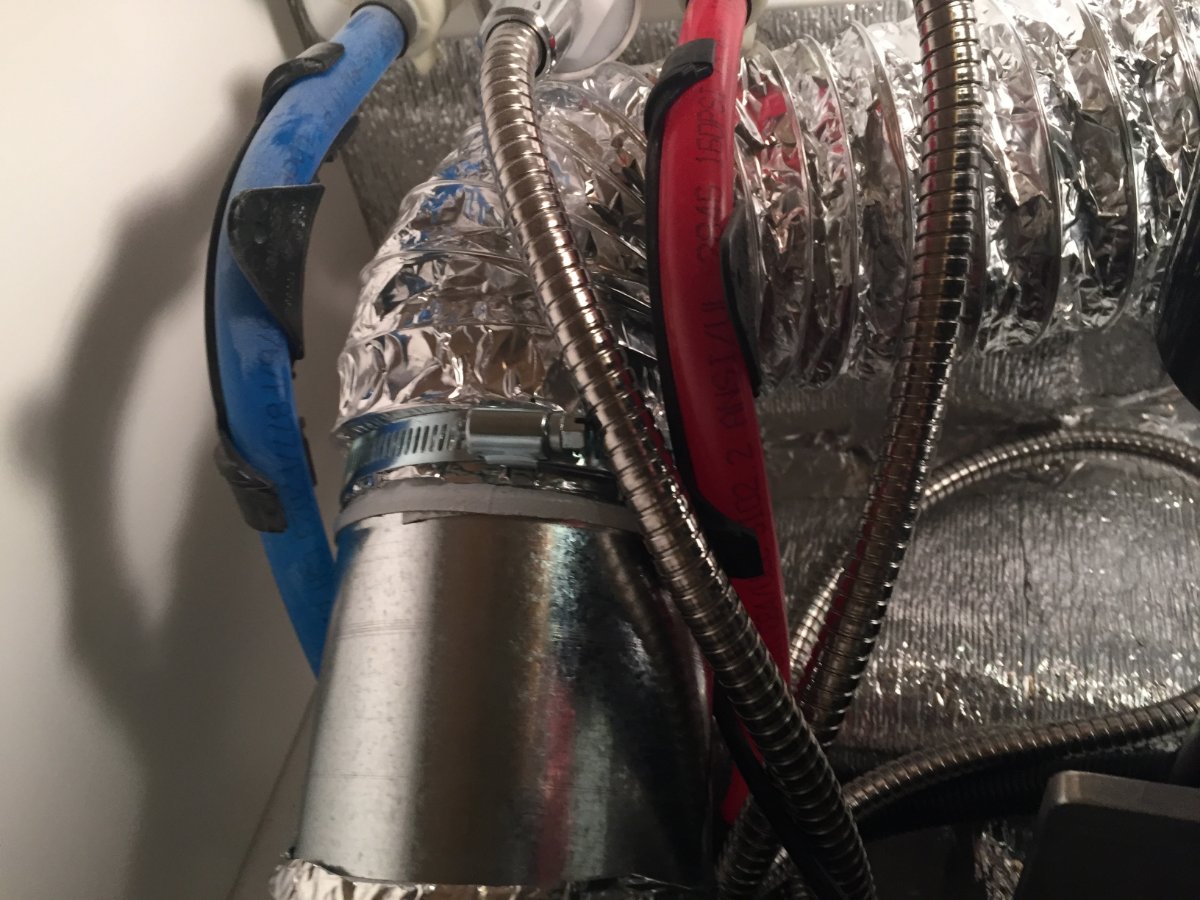
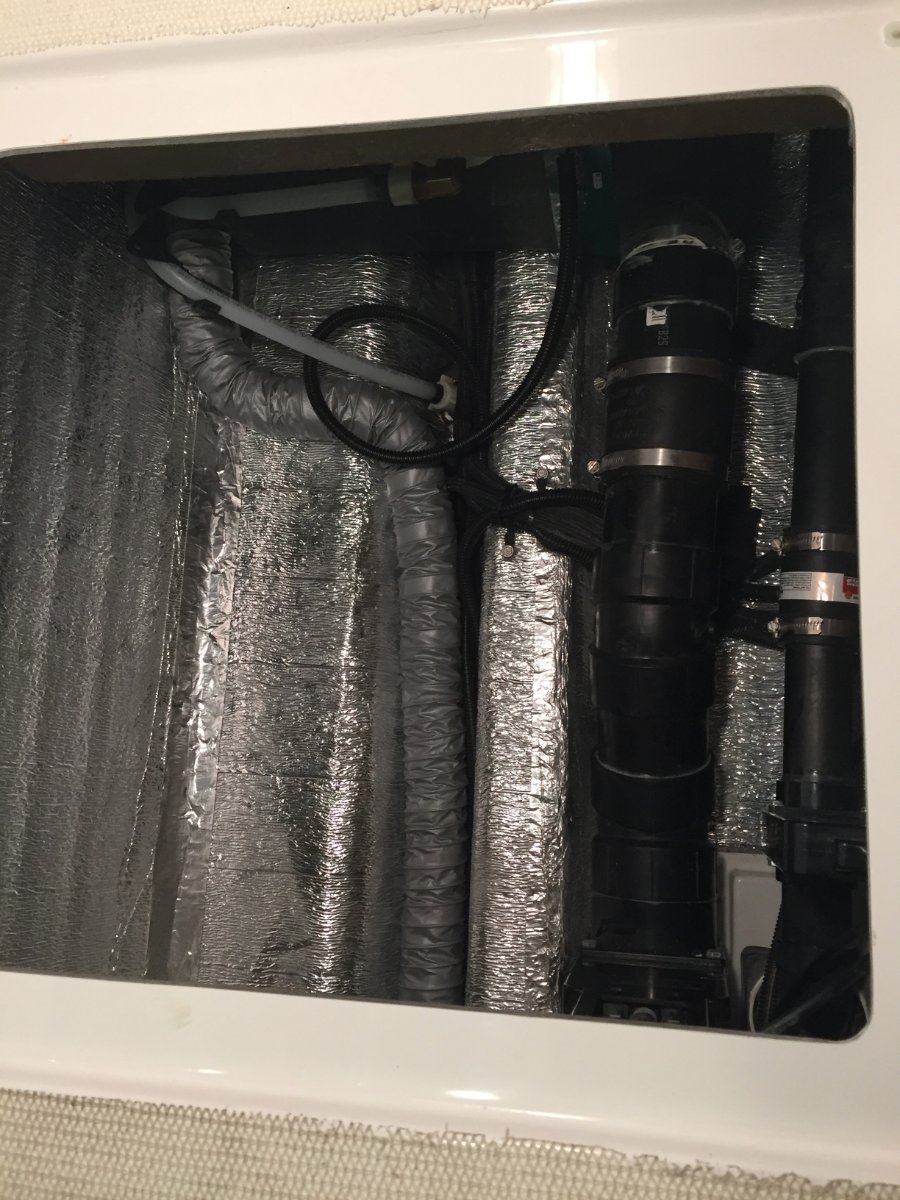
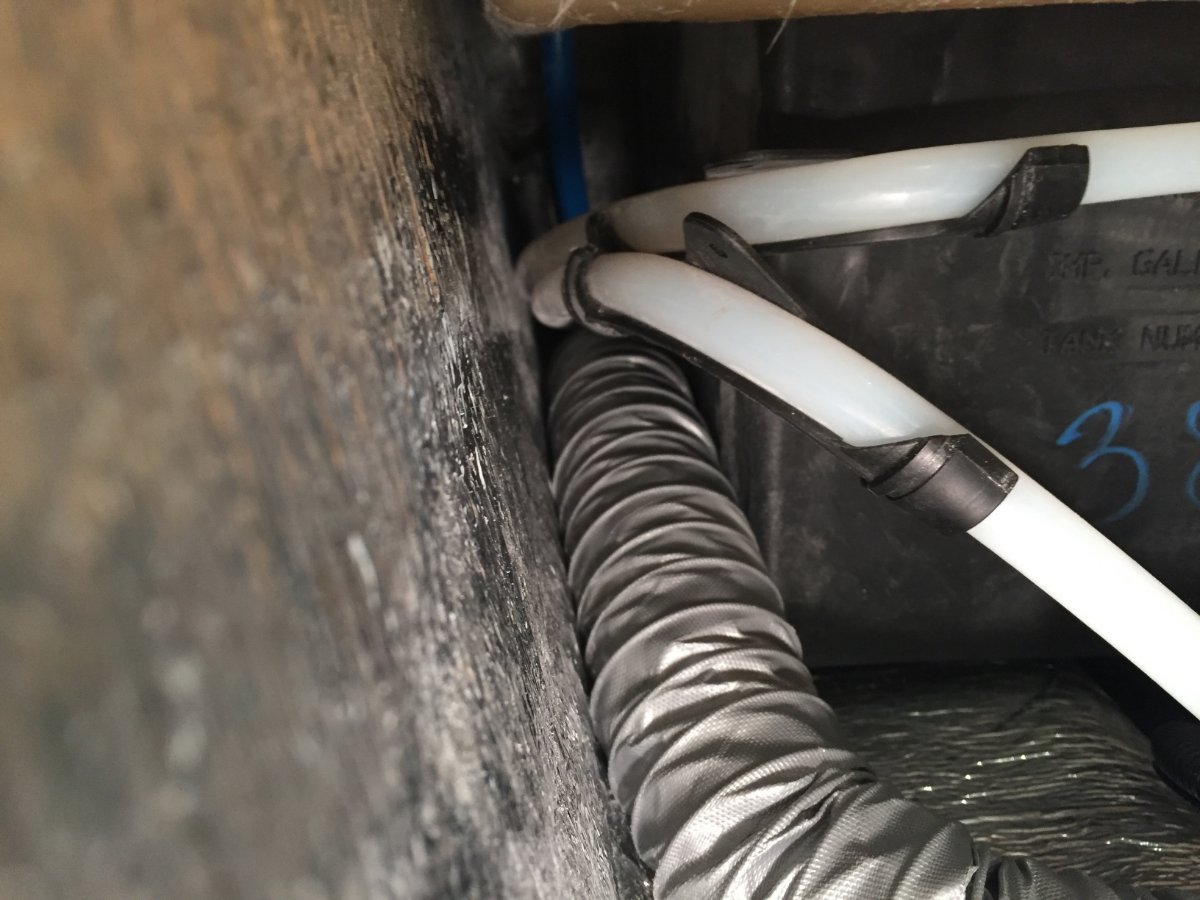
Removed the wash cloth rack to re-attach the heater vent hose when the 12V water pump LED indicator light connection broke off inside of the LED. Checked with Mike at Oliver Service and he said they have not installed that LED for years and did not stock it. He said he could source it for me, but I found a replacement on Amazon. Ordered and installed an 8MM 5/16" IP67 Waterproof 5-24V LED indicator light package of 10 with various colored LEDs for less than $11 during Black Friday sale event. https://www.amazon.com/dp/B0B41ZC73G?ref=ppx_yo2ov_dt_b_fed_asin_title&th=14 points
-
“We previously owned an Overland Trailer (which had a Max Air fan). We experienced a voltage issue so I had the Orion-Tr 12/12-9 installed to stabilize and maintain 12v power to the fan. Now I do not have to be concerned about possible spikes or a malfunctioning control board. Max Air Fans operating above 13.8v can damage the fans control board. This will prevent damage to the sensitive control board.” I also had read about this issue with the Maxxfan control board around the time I changed my batteries to lithium about four years ago. I added the Drok buck/boost circuit to run both the bath fan and the Maxxfan and suggested using the Drok circuit for anyone with lithium batteries as a safety precaution. To my knowledge all other “12 volt” appliances are designed to withstand over the typical lithium battery voltage without any issues.
 3 points
 -
Interesting! Apparently fans manufactured after Jan 2022 have the new boards which are not impacted by higher voltages from lithium chargers. Fans with a serial number starting with 22 should have the new board. I should be in the clear. . . darn! Thought I had a new project there for a moment!3 points
-
We're planning a trip to Yosemite soon and I picked up a heated water hose. The forecast is calling for lows just below freezing and it will be a just in case we need to fill our tank. I don't think I'm going to leave it attached, at night, but from what I've read, the heated portion is for that scenario. We'll keep our furnace on at night since it runs quiet, and run our rooftop AC unit heat during the day, so I don't use up all the propane and can save that just for sleeping hours. I also bought a dual voltage plug in Vornado heater, which has a low setting that I plan to run at night since we'll be hooked up to shore power most of our trip. This will be our first trip during colder weather, so I may be over doing it, but wanted to be prepared, just in case it's needed.3 points
-
On our Hull #1291 the sprayer on the outside faucet is threaded onto the supply hose. I screw the sprayer head off the hose, then push the hose through the access hole to the inside of the hull. I then take the sprayer inside, open the driver's side rear hatch, locate the hose and thread the sprayer back onto the hose for cold weather storage.3 points
-
They use a really strong industrial strength glue which I do not recall the name of. I do know that they use this adhesive in ALL their RV and Marine fiberglass installs. The next time I speak to the good folks at Inverter Services, I will try and remember to ask him about the adhesive they use. 👍🏻2 points
-
@Patriot Thank you for answering my first 2 questions! The Victron Orion 12|12 - 9 installation location confused me, the converter I installed for the MAXXAIR fan voltage issue is in the attic area. I am familiar with Starboard products, as they are produced in Florida and I have used some around the house. I am always looking for different ways to do things and was wondering how Inverter Services attached the Starboard to the Oliver’s fiberglass? Mossey2 points
-
You will pay a premium for any Starlink accessory, Amazon offers a lot of quality aftermarket products. At minimum: The SLM comes with a 15 meter cable, a shorter 5 meter will come in handy. The supplied power box is a 110 to 12V converter, you will likely want a setup to utilize 12V type outlets.2 points
-
If I were buying again, I absolutely would again buy the National Luna 90 Twin that we've had since 2016. Rough calculation is that we have about 65,000 hours on it without any problems until very recently. NL is sending a new circuit board to try to fix a problem where the freezer side runs continuously. How many other brands will replace parts on a fridge many years out of warranty? If that doesn't work, and Paul May gets a stock delivery at Equipt before we head to Florida, I'll be replacing mine, and keeping the old one for a garage fridge.2 points
-
I'm not familiar with factory solar/lithium systems installed from Oliver and like David, still learning about electrical/electronics. We installed Battleborn Lithium battery with Renogy Solar controller that we use with up to two solar suitcases, and an onboard progressive Lithium charger. We had issues with our MaxxAir fan. It started beeping and a green light on the unit started flashing. Checked internet and found Lithium batteries can cause high voltage issues with MaxxAir fans, when we had the issues we were on shore power, the Progressive lithium charger had our 12V system at 14.4V DC. Also gave MaxxAir/Airxcel technical support a call and they confirmed lithium battery higher voltage can cause the problem we were having with the MaxxAir fan. This had me wondering if the higher lithium voltage would cause issues with other 12V components, checked with Jensen and they said our TV was tested to 16 to 17V without issues. I don't know about other 12V components on Ollie, yet. We installed a DC to DC converter (12.3V output) from Amazon, secured with Velcro. Also replaced the fan's circuit board with one from Amazon, probably unnecessary. It's working OK now. https://www.amazon.com/dp/B081RG8XP5?ref=ppx_yo2ov_dt_b_fed_asin_title&th=1 Found this on YouTube:2 points
-
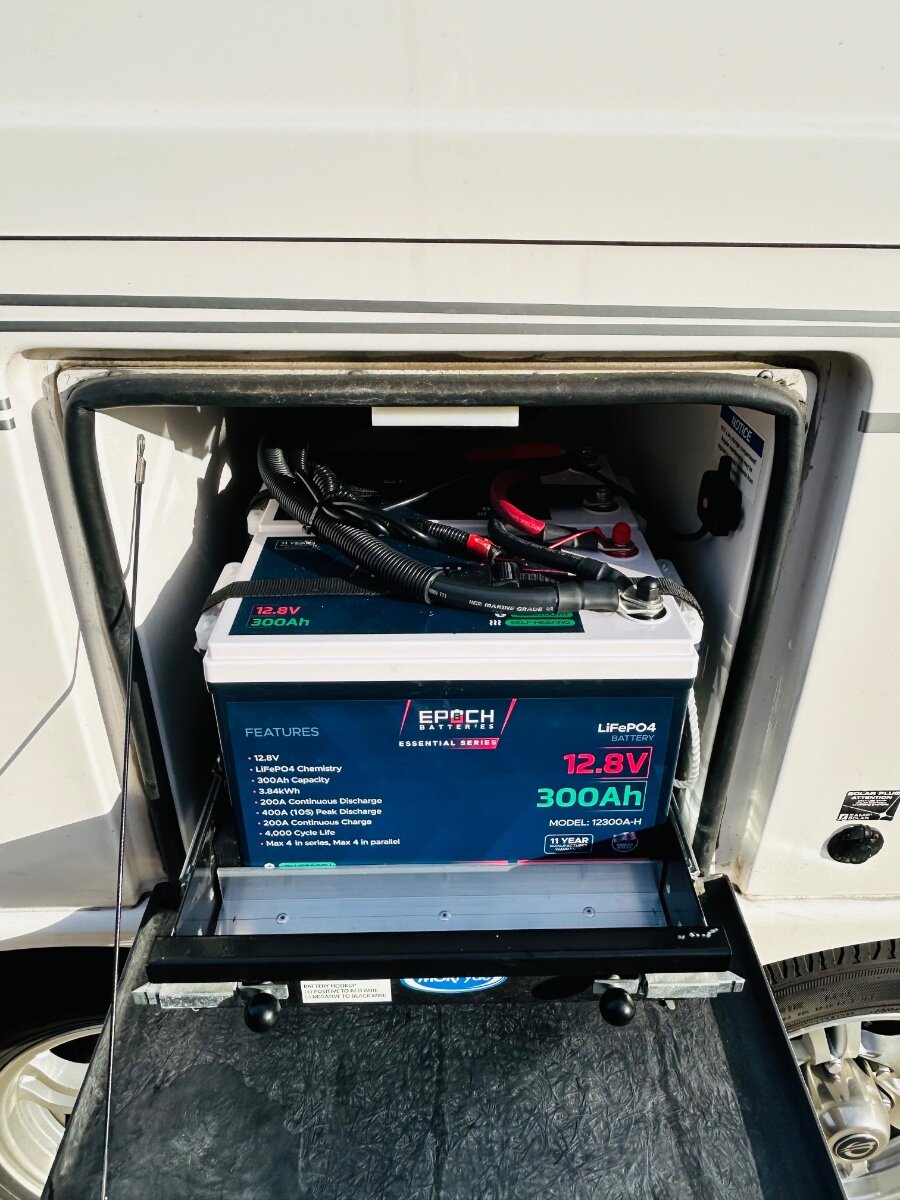
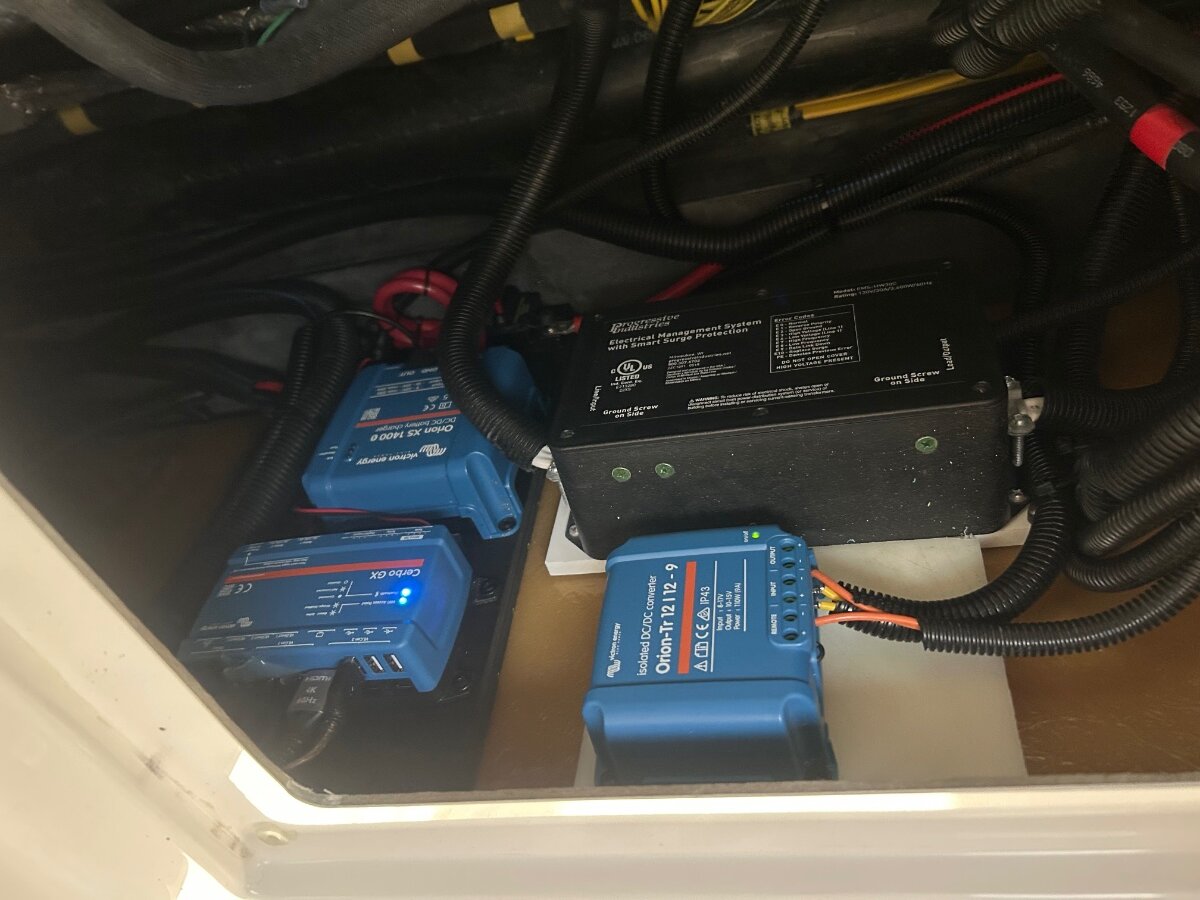
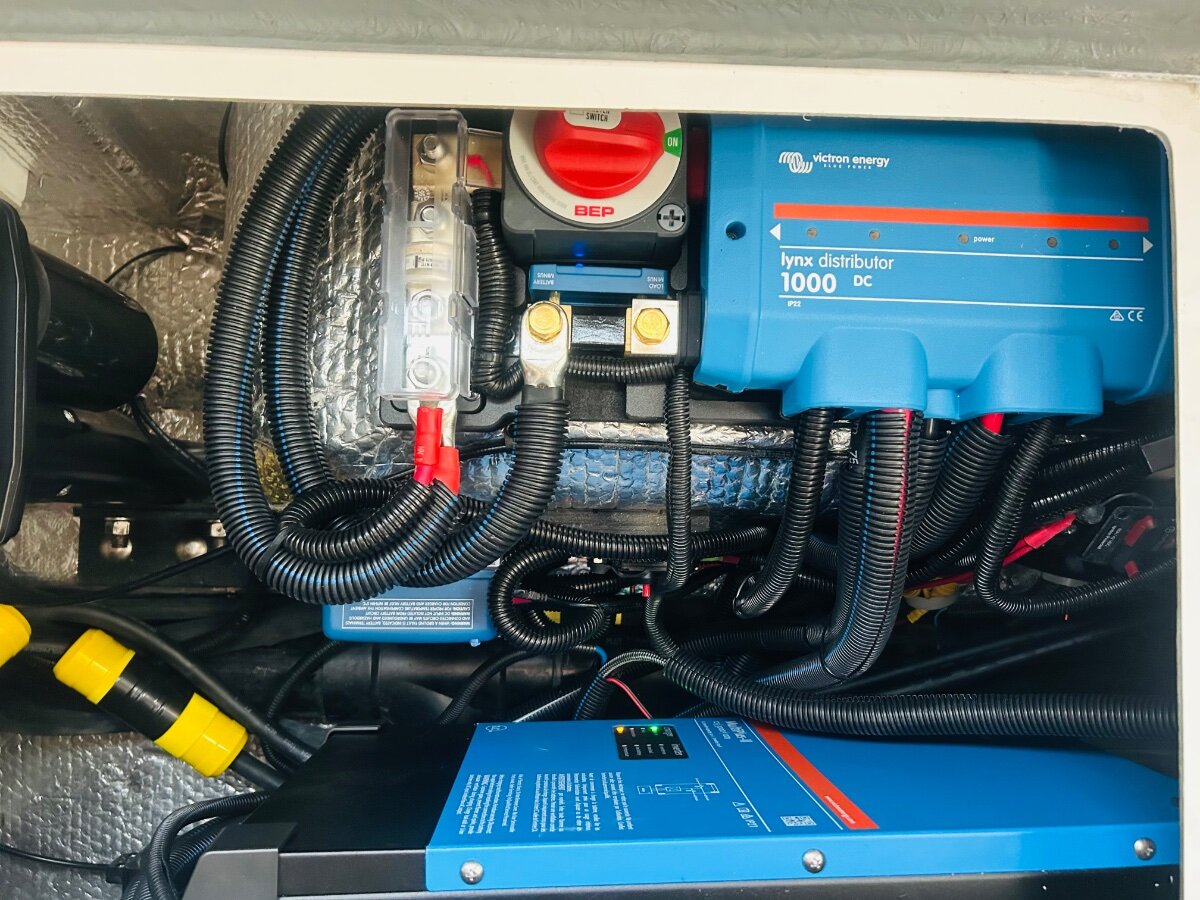
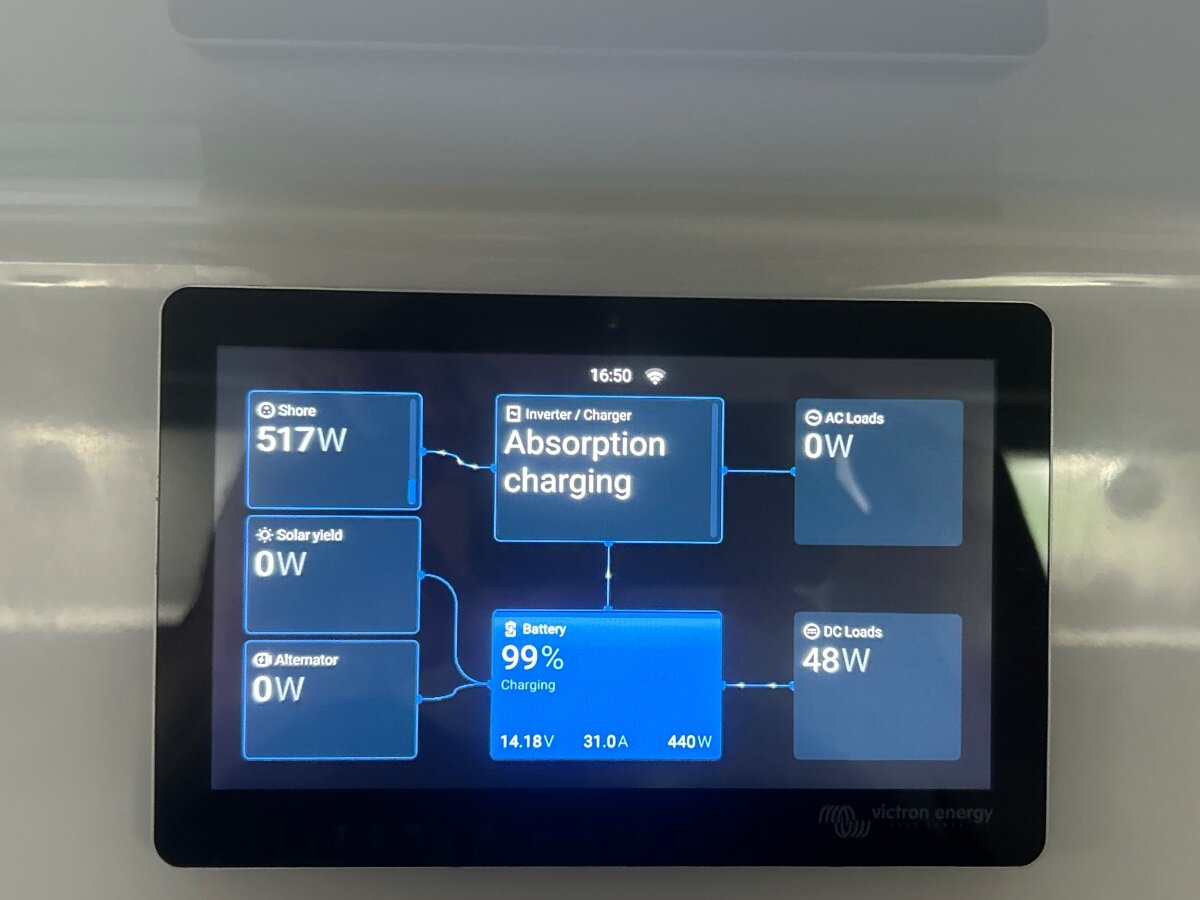
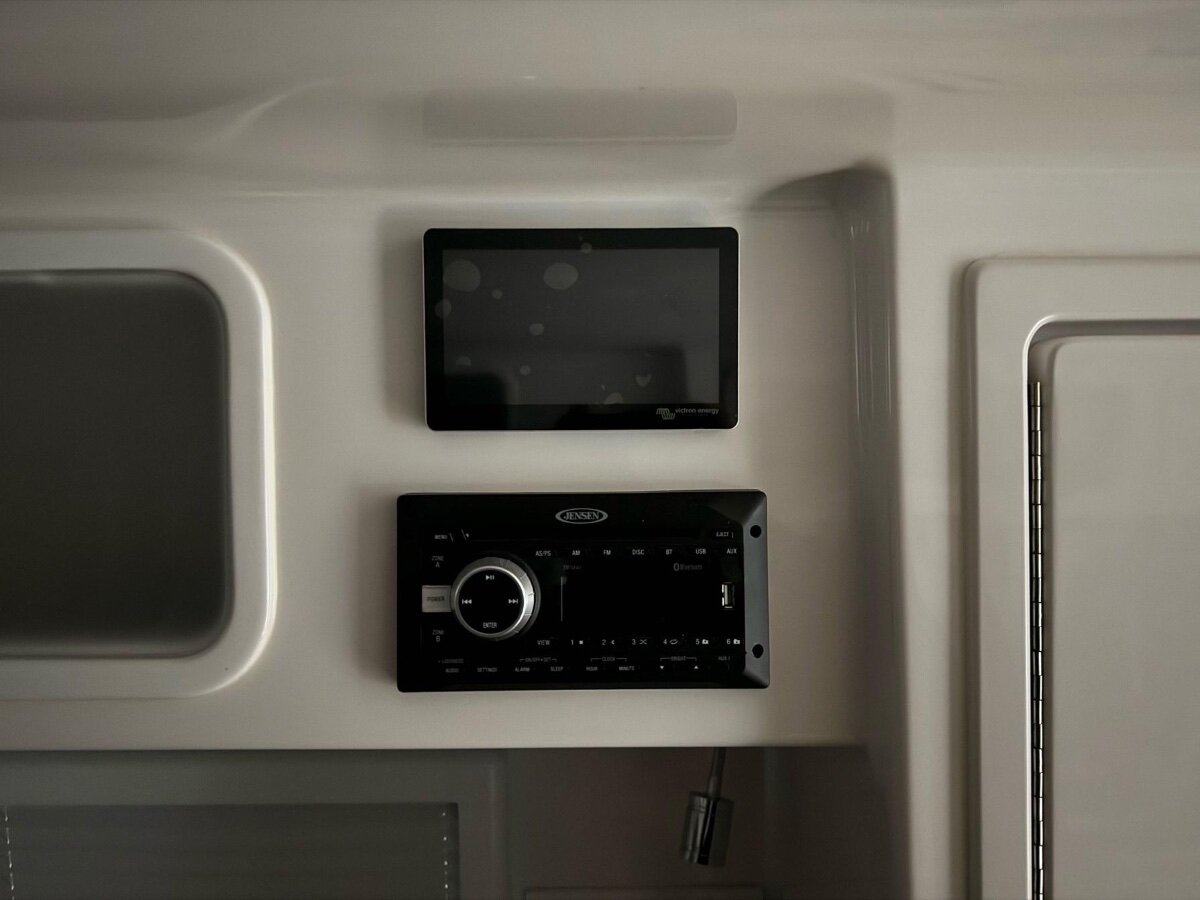
***Long Post*** XPLOR Hull #634 Victron 3000 watt inverter, Victron 12v DC to DC charger and Epoch lithium battery upgrade. Note: To discuss options and pricing, please contact Jordan Hall at Inverter Services, White House, Tenn. Our OEM AGM batteries were getting long in the tooth and it was time to upgrade our batteries to a complete lithium battery system on our 2020 Oliver LE2. Our good friend, and former Oliver owner Jim Posey, highly recommended we speak with Inverter Services in White House, Tennessee. I called and spoke with Service Manager Jordan Hall and discussed our needs and options. Jordan and his team at Inverter Services were excellent to work with and have a lot of experience working on Oliver travel trailers. Our tech/installer, Easton Ford, kept us updated on our install progress with photos and discussions as needed. We found Easton to be extremely detail-oriented and dialed in and focused on our project. We were originally scheduled to have this work done next March. After returning from our 54 day New England and Canada trip, I decided to call Inverter Services and ask if they had any cancellations. They did and we immediately took the cancellation. They are typically booked 6-7 months out. So we hitched op Oliver and headed to White House, Tenn to leave our Oliver with the team for 2 weeks. Important note: Inverter Services supports the RV and Marine industry in ALL things lithium battery and electronics. This is one of the most detailed and thorough, cutting-edge companies we have ever done business with. I chose Inverter Services to do this install because this is not my area of expertise and it absolutely is theirs. These guys are experts in their field and I admittedly am still in the learning process. Based on our excellent experience, we highly recommend Inverter Services in White House, Tenn if you are considering a lithium upgrade. We chose all Epoch & Victron following products for this install. (2) Epoch 300ah lithium batteries (internal heating elements) -https://www.epochbatteries.com/.../12v-300ah-heated... *Victron MultiPlus-II 3000w Inverter/charger *Victron GX 70 Touch Screen *Victron Smart Solar MPPT *Victron Orion XS DC-DC Battery Charger **We also had the RV Soft Start installed on our Truma Aventa AC. Inverter Services provides tech guidance/support/firmware updates as long as we own our Oliver. I cannot stress enough the pride this company takes in their work. As I think most would agree, Victron components are a class all their own and leaders in the Marine and RV industry. Post install, we have on board 600ah of lithium battery power, and with our extra 90W Zamp panel now configured to lithium, we have approx 410 watts of solar. This will certainly give us more options on the roads less traveled and boondocking. Still lots to learn on this new system. Now having the 12v DC -DC charger I don’t think we will see a need to carry a generator any longer. Thanks to all those on the forum who made the Lithium upgrade happen. ⚡️ The information gleaned here helped me decide the direction I wanted to take this install. ⚡️Happy Camping and Safe Travels! ⚡️ A few install pics- The Victron GX 70 touch screen fit the existing opening with no cutting or trimming of the fiberglass. Our system at a glance. The touch screen nice option if no cell service is available for the Victron app. Although with our SL mini that’s not an issue. Very happy with the touch screen and the Victron app. We can set the screen to time out at 5 or 10 min or longer and then go dark for sleep mode. Zamp 90W suitcase. 12v DC to DC Andersen connector. On our way home we camped at Cumberland Mountain SP in Tenn and gave our new system a shake down. It’s nice to not have to plug in. 😊
1 point
-
I’m late to the party, but having a truck with similar abilities, I definitely have an opinion. I would never tow my Ollie with my Ranger. The F350 does a fine job. In addition to being able to tow, the ability to stop should be considered.1 point
-
1 point
-
Our rear streetside jack stopped working during a trip a couple of years ago. First checked the fuse as Ron suggested above, but it was not blown. Next, checked the wires at the switch. It turned out one of the spade connectors had come apart. Reinserted the connector and checked the others. Haven't had a problem since.1 point
-
Here are my thoughts: edited- We previously owned an Overland Trailer (which had a Max Air fan). We experienced a voltage issue so I had the Orion-Tr 12/12-9 installed to stabilize and maintain 12v power to the fan. Now I do not have to be concerned about possible spikes or a malfunctioning control board. Max Air Fans operating above 13.8v can damage the fans control board. This will prevent damage to the sensitive control board. The black plastic board material used to secure all components is called Starboard or Black HDPE and I can tell you it’s super tough and used in Marine grade applications. Inverter Services uses lots of this material during their installs. Here - https://www.amazon.com/gp/aw/d/B08M6DJNH4/?_ Open Source info on Max Air Fans- *** MaxxAir fans are designed for a 12 Volt DC system, operating within a voltage range of approximately 10.6–13.6V, with an optimal test voltage of 12.8V. Operating above 13.8V can damage the fan's control board and void the warranty, especially if the system is charging. To prevent issues from voltage spikes, a DC/DC voltage regulator is recommended for stable power, especially when the vehicle's charging system is active.1 point
-
As others have noted, these trailers do very well in cold weather. So I think you'll be fine as long as you have heat. We traveled to Moab for a January wedding. There were several days on the road where the temp never got above freezing and the trailer was covered in ice when we arrived at our overnight stop. We relied mainly on the internal water tank as the supply hose would freeze. One lesson we learned was to be gentle with the trailer when you arrive. Without heat, some of the plumbing may have frozen while traveling. Give it some time with the heat on to thaw out. I broke the toilet petal once by being impatient, not knowing the flush valve in the back had frozen. I carry extra flush valves but the pedal is not available as a separate replacement part. Not my finest hour.1 point
-
@Patriot I have a couple of questions about your Victron/Epoch installation. Do you know what the black material is that they used for mounting the Victron equipment and Andersen connector? I also noticed that you have both an Orion XS 1400 DC/DC charger and an Orion-Tr 12|12 - 9 DC to DC converter. You mentioned that the Orion XS 1400 DC/DC charger was part of the lithium upgrade, so what is the purpose of the Orion-Tr 12|12 - 9 DC to DC converter? Mossey
1 point
-
For what it's worth, we spent a couple of nights in New Mexico and Colorado in November 2022 when temps dropped as low as 9 degrees F. We did not winterize the water system, so we could continue to use it. We pulled the outside faucet inside. We placed digital thermometers in the "underbelly" of our Elite II near the outside faucet in the rear and under the front dinette seat. We kept our Truma Varioheat furnace running at 70 degrees F all night, but not during the day when we were on the road and daytime temps were above freezing. We also kept the antifreeze attachment in our Truma water heater activated. The digital thermometers confirmed that the temp did not drop below 32 degrees F in the "underbelly" even when outside temps were as low as 9 degrees F.1 point
-
I believe that there are simply way too many factors that should be considered for just about anyone to give you any kind of reasonable answer to your question. Wind, certainty of weather forecast, your own risk tolerance, how much time will you spend in the camper, is it sunny out and will you be camped in the sun, how much access will you really need to those water related items that are located towards the outer hull (i.e. outside shower, black tank flush, city and fresh water tank inputs), etc., etc.. Even though there are a number of posts right here on the Forum from owners that have experienced conditions similar to what you are anticipating, there are virtually never two that are exactly alike. For what its worth, I tend to be a bit more cautious in regards to situations like this. But, I'm from a backpacking background and many time travel alone. It is a bit easier only having to take care of one human versus two (or more). A couple of milk jugs filled with water and another one or two for drinking/cooking/bathing and I'm set. That sure beats virtually any time wasted on worrying about exactly what the temps are going to do and/or repairing damage caused by a frozen pipe. Having said this, I'd guess that you will be OK - particularly if you have the ability to make sure that some "heated" air gets to the rear drivers side and under the forward dinette seat of the Ollie. Obviously this is easy to do with the dinette seat but if someone is sleeping on the driver's side bed, it might take a bit of good positioning of a fan or small heater in order to assuage your worries. Bill1 point
-
Completely agree with all of the above experience & recommendations. We have an Elite I (5,000 lb Gross) that's lighter than the Elite II that most folks tow. Our tow vehicle has been a 1/2 ton Silverado 1500 5.3L for 8 years. This combination does fine in the flatlands and rolling hills of the East, Southeast and the mid-West. The Rockies and similar mountain ranges of the West are another thing entirely. We're the vehicle going uphill at less than 45 mph in the right lane with the flashers on. Downhill the transmission really winds up (and heats up) trying to help the brakes keep our speed under control. With an Elite II, in the mountains, it would not feel safe/controlled. After our recent trip to Glacier NP and parts of Oregon, we finally upgraded to a 3/4 ton Silverado 2500HD with the 6.6L gas engine and 10-speed Allison transmission. Higher GVWR for camping gear, bigger engine, bigger brakes, more engine oil and transmission fluid cooling capability. Yes the diesel version would be the ultimate, particularly with its engine braking capability, but the purchase and maintenance costs are higher *and* in some locales out in the boondocks away from the interstate highways you can't always find diesel fuel when you need it... hence the gasser. We haven't been back to the Rockies with the larger truck yet, but in the northern NY Adirondack "mountains" (only hills compared to the Rockies) the 2500 is SOLID; you don't even notice our little Elite I behind us. As some have mentioned, its not the best choice for a daily driver in town with narrower roadways, tighter parking and more traffic.1 point
-
Thank you, Jerry. I will try a credit card tomorrow, I should have saved some hotel keycards from when I traveled for business! Maybe I have one or two somewhere. I pulled on a few edges today and thought, I better look into this. And thank you @KenB for the good info in your posts! 😂1 point
-
I totally get it! Even though my former TV was only a short bed with a topper, I was constantly bumping my head, bruising my arms and crawling on my old knees while rigorously digging around to retrieve stowed and/or staged camping equipment. Often wished for a longer bed, but then that would only exasperate the matter. Breaking camp was a whole other issue with more bumping, bruising and crawling! On the other hand however, there was comfort in knowing all was secured and protected under cap. Enter my current TV, a cargo van; best of both worlds!
1 point
-
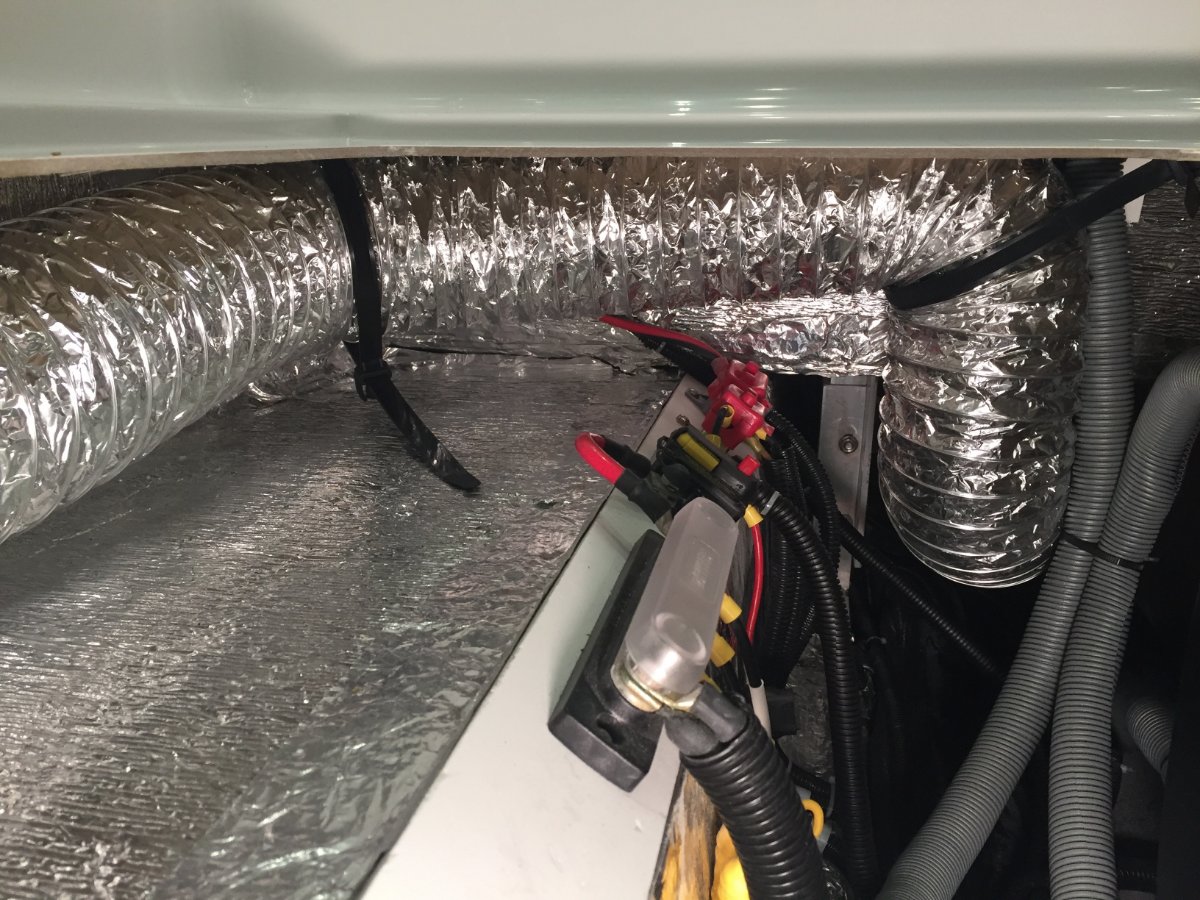
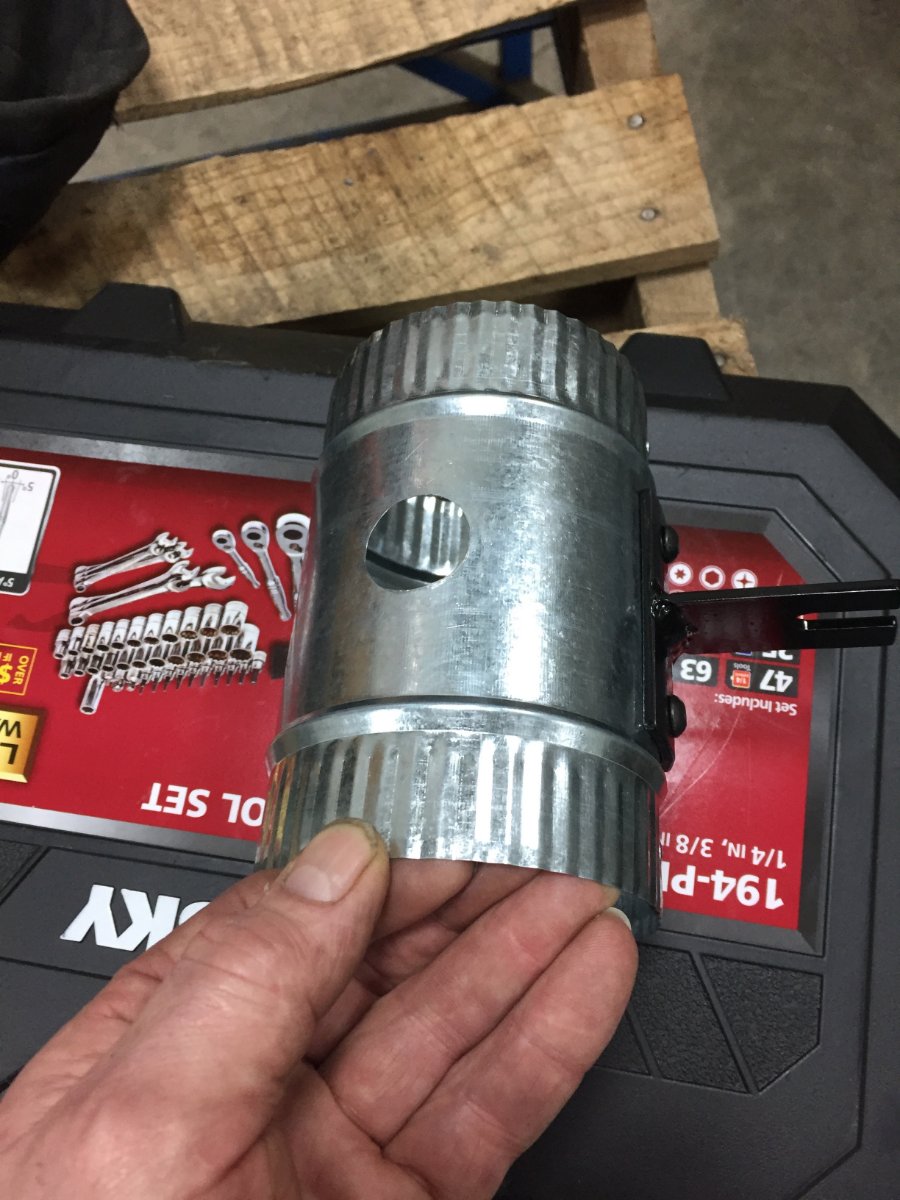
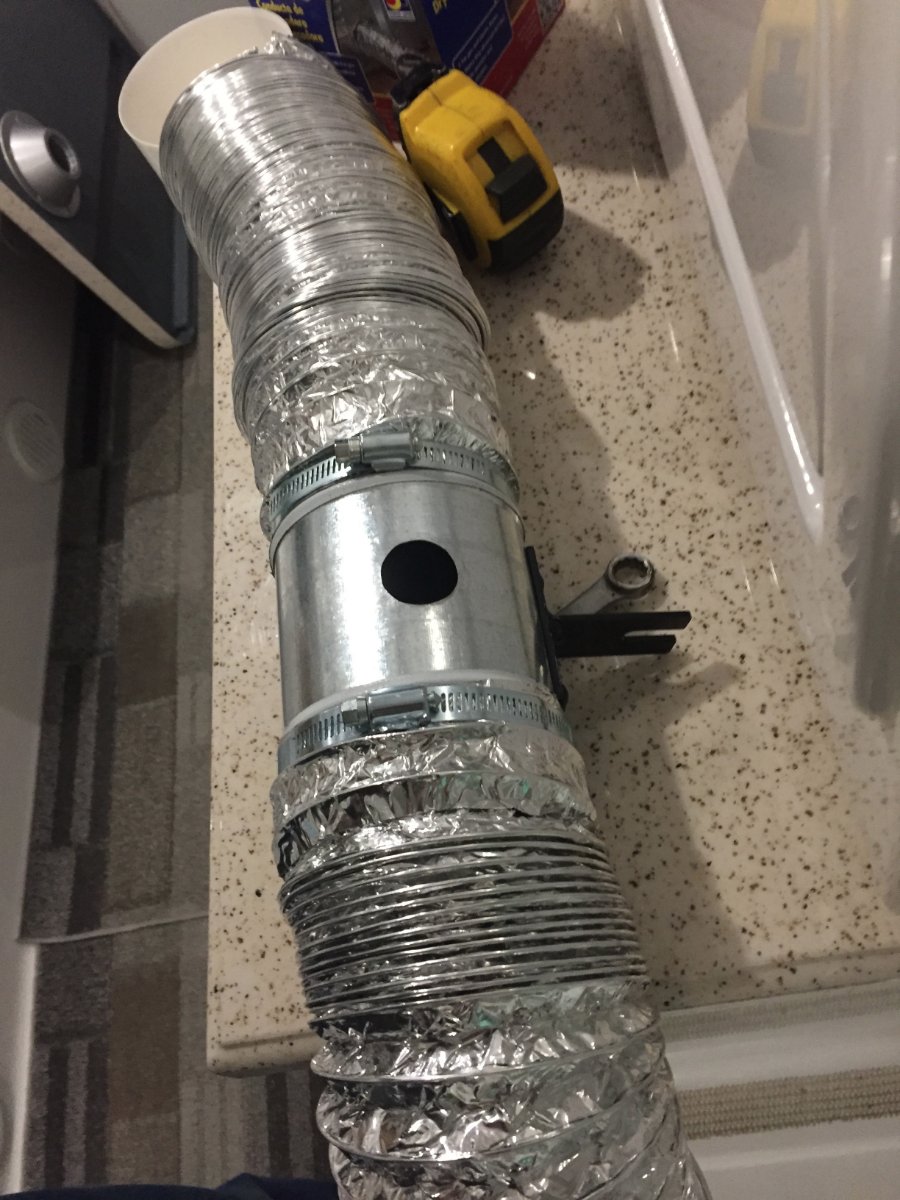
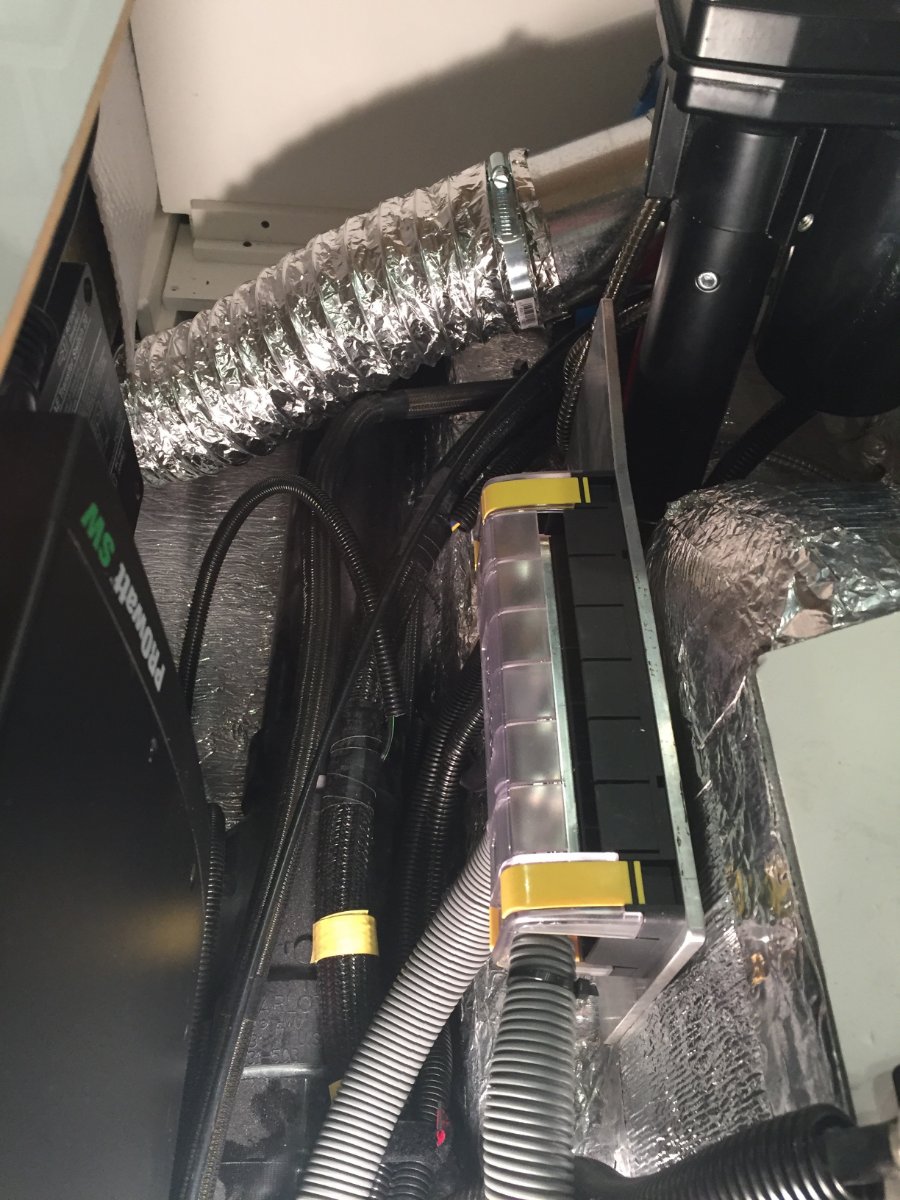
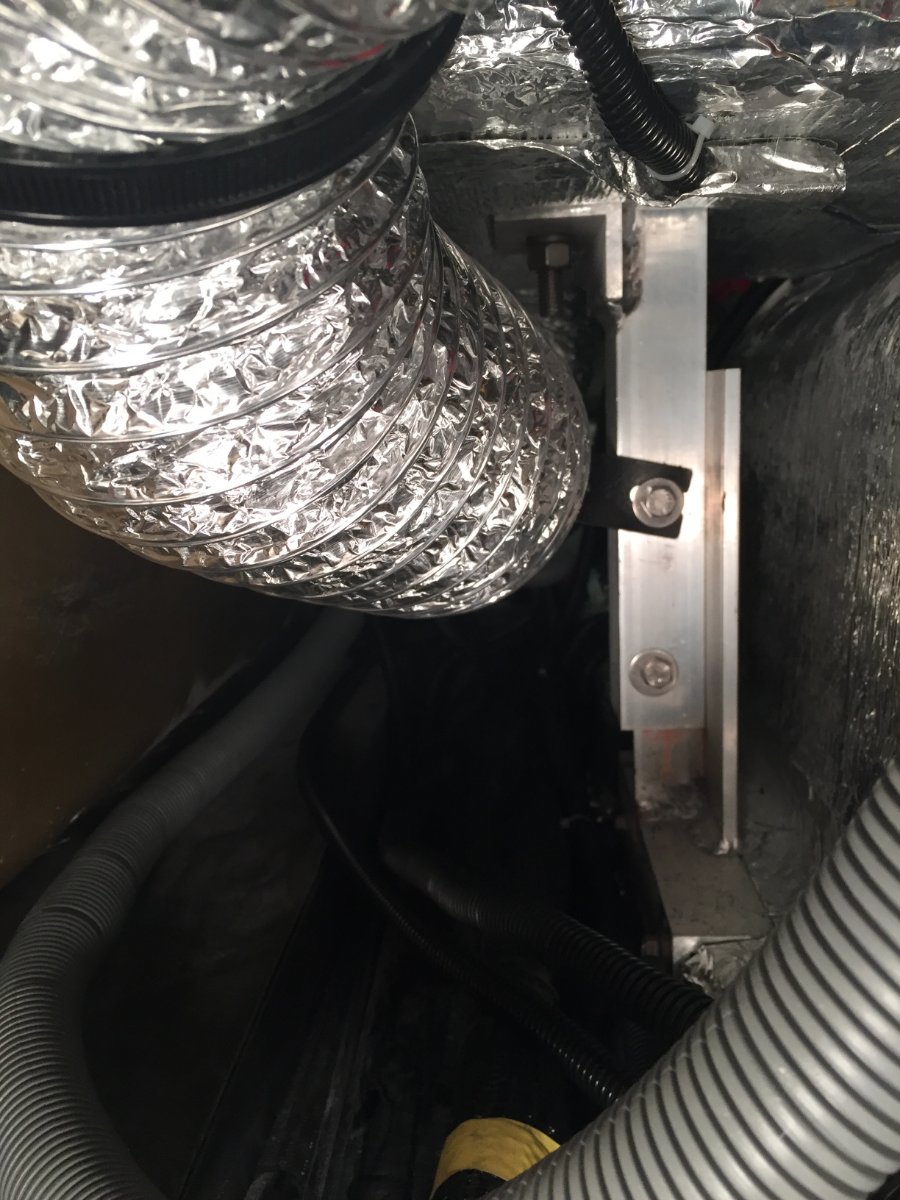
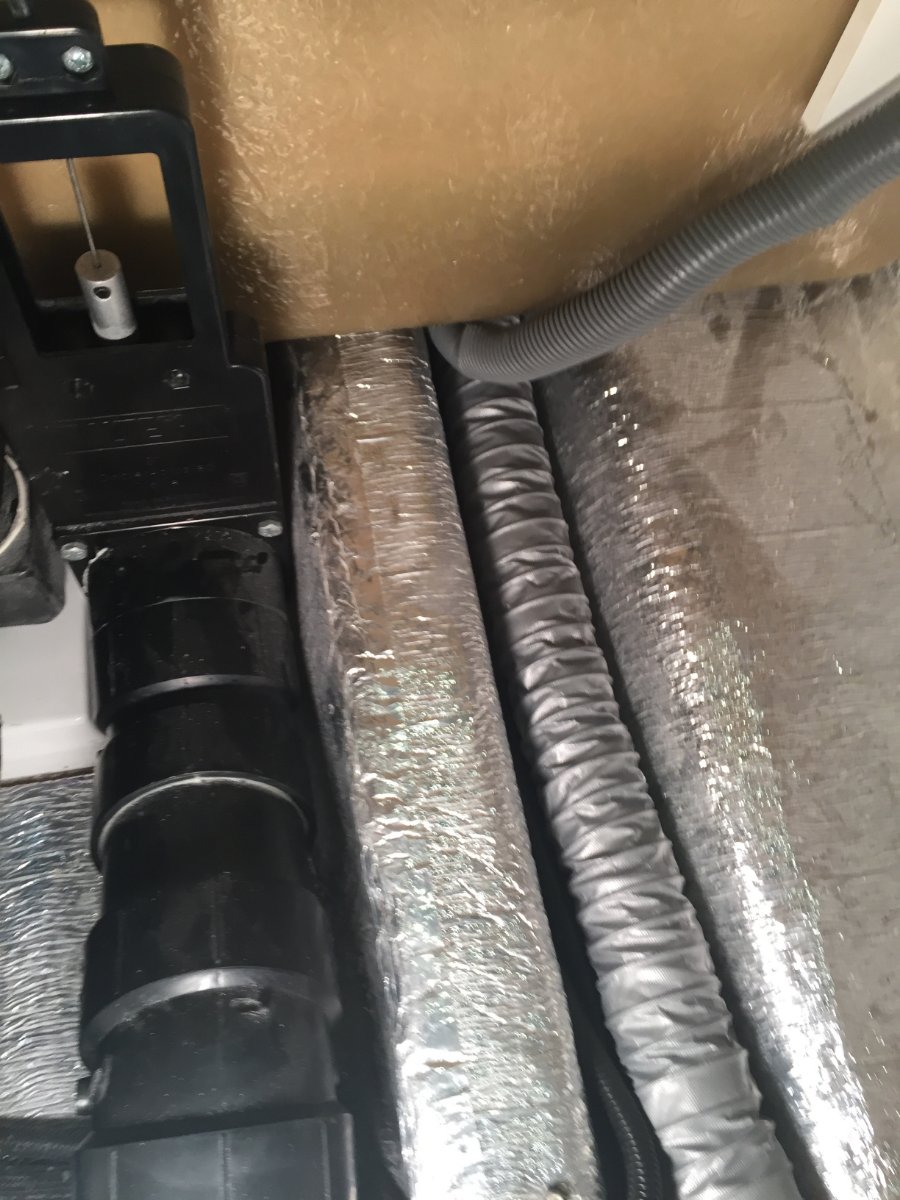
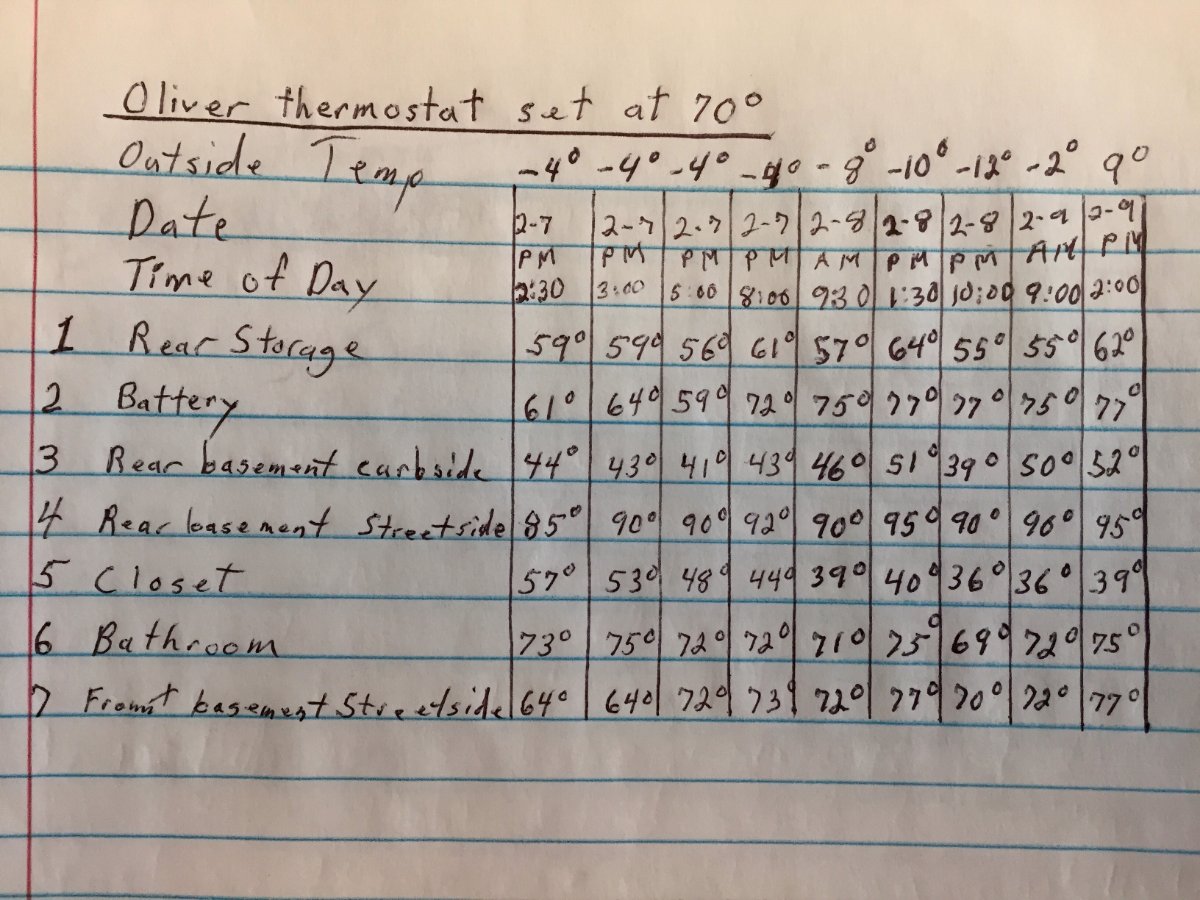
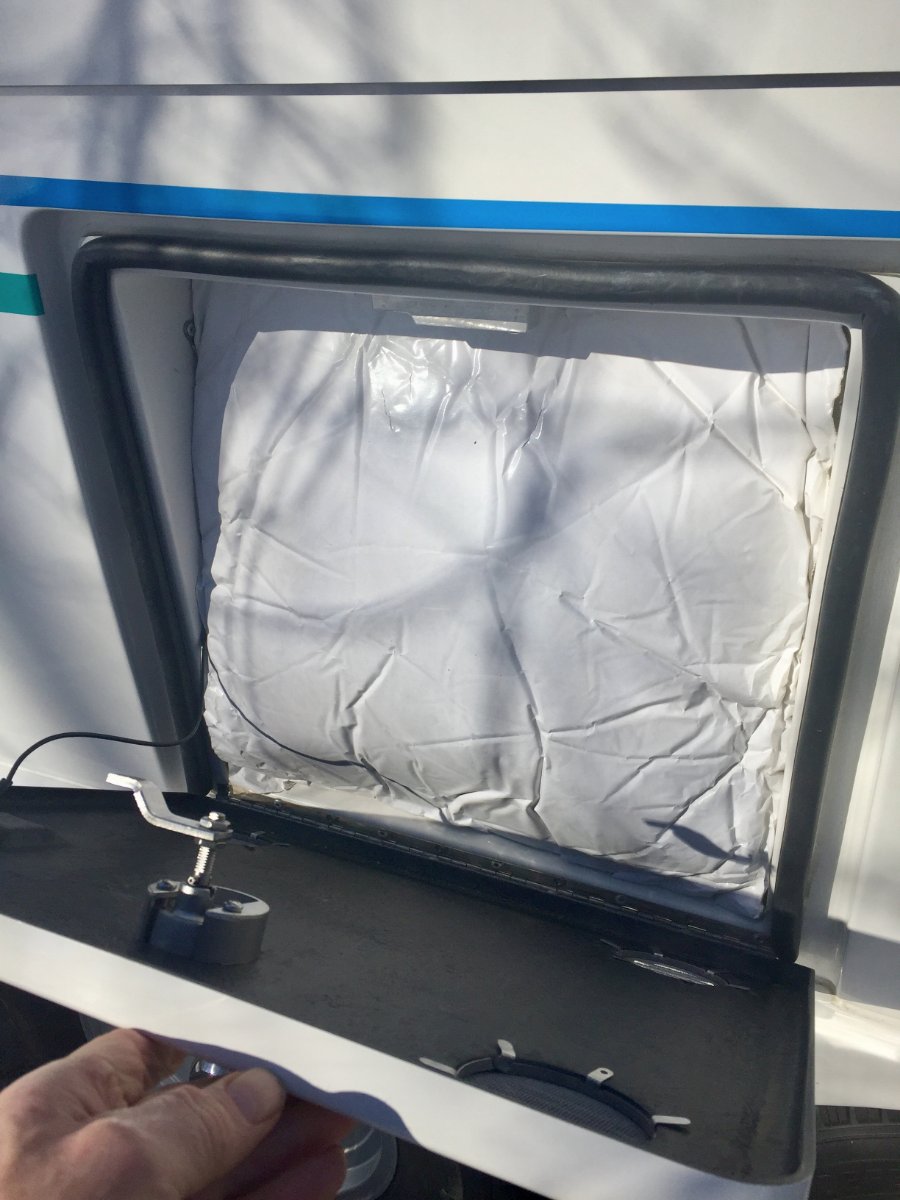
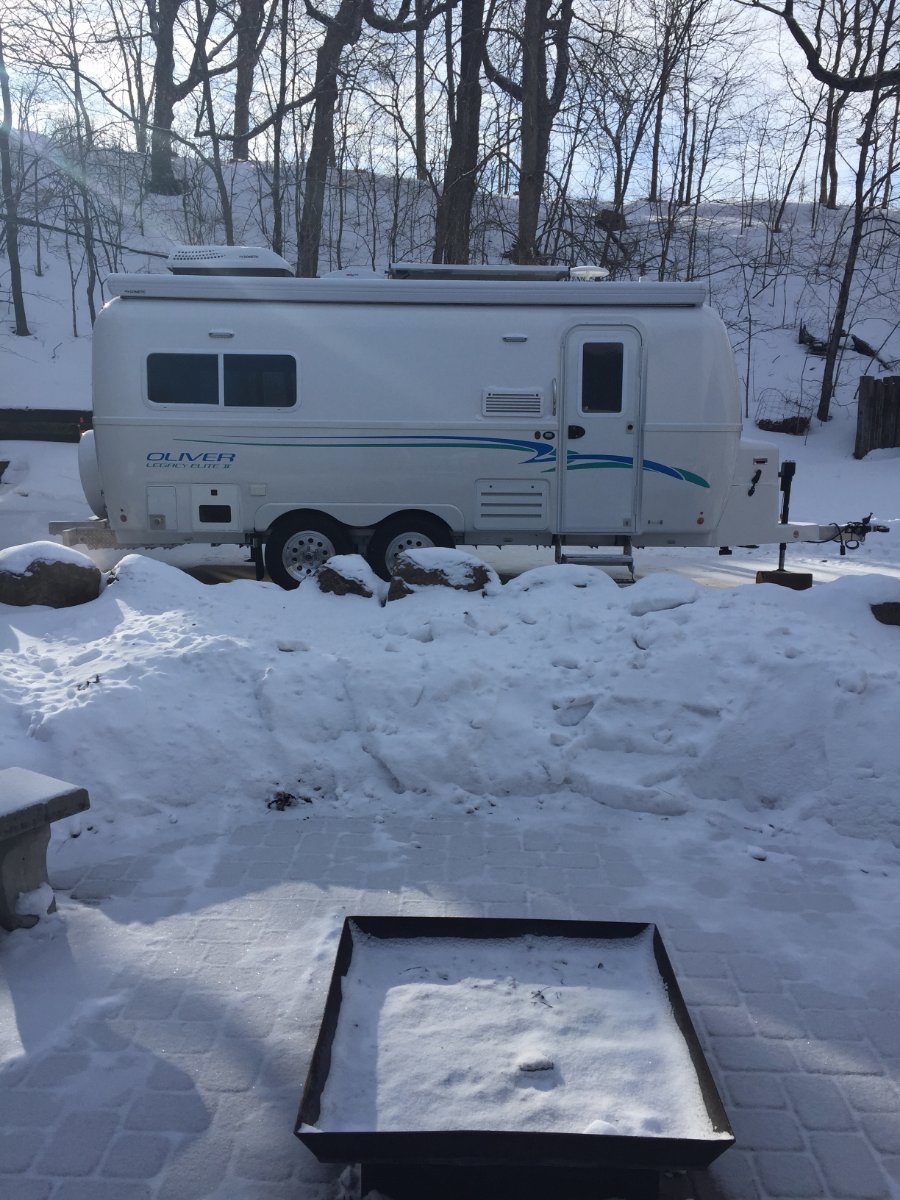
The seed was planted for this furnace mod when we grabbed a canceled reservation three weeks out at a Minnesota State Park. This reservation was mid October and when the date arrived the weather forecast had changed for the worse. We stayed for only two of the three days and we received our first snow of the season, 6 inches of wet snow. We had a non electric site and my batteries were having trouble making it through the night and I was concerned about the water freezing in the Oliver. I have already addressed switching to lithium batteries and posted about it on Oliver Forum. Now I want to share with you what I have done to relieve my worries about water freeze ups in the Oliver, provided that I have a functioning furnace. I first tried to identify the weak spots and came up with the following. Boondocking Inlet Outside Wash Station Fresh Tank Fill Inlet City Water Inlet Black Tank Flush Port Toilet Water Supply Line Hot & Cold Lines Crossing Back Of Oliver The Oliver has all of it's heat ducts run on the curbside which protect the kitchen and the bathroom faucets from freezing. My plan is to run a 2" ducting along the back to the street side and terminating in to the trough that the water lines run in for the city water inlet, fresh tank fill inlet and outside faucet. This trough also has the check valves for those two inlets and has the floor of the exterior storage compartment covering over the top of it. To get at the trough you will have to remove the back wall of the storage compartment and flip the mat back that covers the floor. This exposes the water lines that come across the back of the trailer and drop into that trough. There is a wall that separates the furnace compartment from storage and extends past the wall you just removed. It has a opening for the water lines and it is large enough to run the 2" duct through it and on top of the water lines across the back and into the trough. Now you can flip the mat back down and they are long enough to cover the water lines and the newly installed 2" duct, then the wall is put back in place. On the connection to the furnace I removed the back of the heat exchanger. There is one hard to get at screw on the bottom but the rest are easily accessible. I made two holes, a 2" and a 4" in that back plate. I could not find a 2" starter collar locally so I bought two 4" and removed the rivets on one of them and formed a two inch collar, cut to length and re-rivet. I then installed the 2" and 4" starter collars to the heat exchanger back panel and then the panel to the furnace. I then hooked up the 2" duct to the furnace. Looking in to the access hole under the street side bed you are able to see where the water lines come up and out of the trough and to the valve of the out side wash station. When the furnace fan is running it will blow out a lit Bic Lighter held in that area. So we're protecting water lines, the check valves and dumping warm air underneath the outside wash station valve. Now back at the furnace I attach a 4" heavy duty aluminum foil duct to the newly installed starter collar. It is routed forward a short distance until it can be routed across the basement to the street side and then fed between the hot and cold water lines that go to the outside wash station valve. At this point I need to use a 4" coupler that is 6" long to attach the next 8' piece of 4" duct. I use the 6" long coupler so I can add holes if I need to flood a area with heat, this particular coupler did not need to. I then routed the duct from the wash station valve along the outer wall and over the wheel well, make the corner by the battery compartment and then once getting past the wheel well go down and under battery compartment. Up in that corner I attach a adhesive base 3/4" cable anchor so I can loop a 20" releasable tie strap through it and around the 4" duct holding it up and out of the way. A second 20" tie strap is used were the duct heads down under the battery compartment, it utilizes the loop that anchors the 4/0 cable coming out of the battery compartment. Next I prep another 6" long 4" coupler by adding a metal mounting bracket. It is bolted to the coupler using two 10-24 machine screws that go through the bracket the coupler wall and then a backing plate that has tapped holes. This coupler I will add a1" hole that will be pointed up to flood heat at the battery compartment. The mounting bracket will be utilizing the upper bolt of the support leg for the battery compartment. This keeps the duct up and away from the inverter and electrical components and positions it to flood heat up against the bottom of the battery compartment. The next length of 4" duct is clamped to that coupler and routed up from under the battery compartment over to and along the wheel well. It is held by two 20" tie straps similar to the other side. Because I want to run the heat duct under the foot space of the dinette I need to transition to 2" duct. There is access via the same trough that I utilized in the back of the trailer, but at the front there is more room and I am able to pull the 2" ducting through. From there it continues toward the front until it reaches the black tank flush inlet where it then follows that pipe back along the black tank and terminates by the water supply line for the toilet. At the transition point I add two more short pieces of 2" duct and route them down to where the main black tank drain pipe goes under the dinette foot space, they are terminated on either side of that pipe. There was not enough room to run the 2" duct but enough to force air along either side. At the transition from 4" to the three 2" ducts I simply inserted the three 2" into the end of the 4" and used aluminum foil duct tape to seal the transition. I also want to mention that I used the aluminum foil duct tape to reinforce the ends of every 4" duct by wrapping outside and inside before clamping. That should cover the install, now lets talk about the results of the test in subzero weather. I rounded up seven digital thermometers and put them in the areas I was concerned about. Was placed just inside the empty rear storage compartment. Was placed on top of the batteries and a piece of acoustical insulation that was for large generator enclosure, it was 1-1/2" thick and 19" square. This was squeezed in the opening before the door was closed. Was placed in the rear basement curbside next to boondocking inlet. Was placed in the rear basement street side below the outside wash station valve. Was placed on the floor of the closet with the door left closed. Was placed on the lower shelf in the vanity in the bathroom with the door left closed. Was placed in front basement street side next to the black tank flush port line. I moved it out of the heated shed at 1:00 pm on Sunday 2-7-21. I moved it back in at 3:00 pm on Tuesday 2-9-21. The furnace was cycling off and on at -4 ' but I noticed at -8' and colder it ran continuous. I have the Truma water heater and that was also turned on. I checked propane consumption by putting on two 20 pound tanks that I had weighed and left them in place for 12 hours. It was -12' when I put them on and -2' when I took them off. Because of the subzero temperature the propane was not gasifying very well and the regulator automatically changed from the primary to the reserve after only consuming 2.353 gallons. The total consumed out of both tanks in 12 hours was 3.294 gallons, so that would be .274 gallons in one hour. My Victron BMV-712 was telling me that I had depleted my 400 Ah Battle Born batteries to 47% and at rate of use I had two days and nine hours left. I thought I would comment on a couple of things I like about the outcome of the project. The bathroom was comfy warm and the wall next to the bed was not icy cold. I am not planing to take up subzero camping but it does gives me a benchmark to go off of for any situation that I might run in to. If you have any suggestions or see something that is of concern please let me know. Paul
1 point
-
Nope, it’s stuck at about 2 inches out.0 points













.jpg.b4fb182c2dd38b005d42f99a3317e409.jpg)






-
Recent Achievements
-