Leaderboard




Popular Content
Showing content with the highest reputation on 12/19/2025 in all areas
-
I'd guess that if you check the details, you will find that a weight distribution hitch will be required by the manufacturer when towing an Ollie II. Also, remember that the hitch weight gets deducted from that 1547 and with most Elite II's that will mean something like 600 pounds which will leave you with under 900 pounds. So, you will need to be a bit careful on that weight. Bill5 points
-
We will be there with possibly another Oliver Owner in tow. Leaving here 2nd week in January. Expecting arrival to coincide with the opening of the big tent.4 points
-
We continue westward and are camping in the Mojave Desert at Kelso dunes. A very warm afternoon and beautiful sunset
 4 points
 -
Mossey, you have both BB and Lithionic batteries? Yep! I bought the BB's in 2020. I won the Lithionics battery at the 2025 OTTO's Rally. I haven’t installed the Lithionics battery yet, because my onboard charger is not approved by Lithionics. A MP2 is a future project. Mossey3 points
-
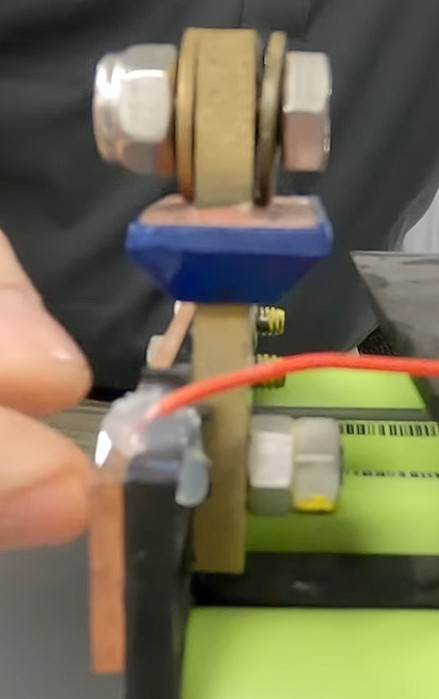
It looks like the issue is the bolt inside the BB that conducts (and resists) all of the current. A plastic spacer separating the internal buss bar from the terminal prevents direct connection of the two. The external terminal connections on the BB as well as the Lithionics do not rely on the bolts as part of the circuit. For both designs, the battery cables are held directly against the battery terminals when properly connected. There's much more surface area contact between them than just an 8mm bolt.
3 points
-
Our tow vehicle for our 2022 Oliver Elite II is a Toyota Tundra, also a 1/2 ton truck like your Yukon Denali 1500. The key limitation for our trucks is cargo capacity, not towing capacity. There are threads on this forum thoroughly discussing whether a 1/2 ton pickup is an adequate tow vehicle for an Elite II. This one is informative: The bottom line: your Yukon Denali 1500 with 1547 lb. cargo capacity should be adequate, but not optimal, to tow an Oliver Elite II. That said, you should verify whether your owners manual requires a weight distribution hitch when towing over 5K lbs. (which an Oliver Elite II will be). The Andersen weight distribution hitch is the one recommended by Oliver. It may be the only one that works with the Oliver design. We have found our 2019 Tundra with a 5.8L V8 engine and tow package, which we owned before buying our Elite II, to be adequate with an Andersen WD hitch. I know the trailer is there, but it is manageable. Yet, whenever we replace the Tundra, we will buy a 3/4 ton or 1 ton truck, which many Oliver owners who post on this forum verify will make towing an Elite II much less stressful.3 points
-
CRM gets a gold star for his observation, because I can confirm that the terminal bolts on my 3 100 amp hour BB's are 8mm or 5/16". My 320 amp hour Lithionic battery has the same 8mm or 5/16" terminal bolts. Mossey3 points
-
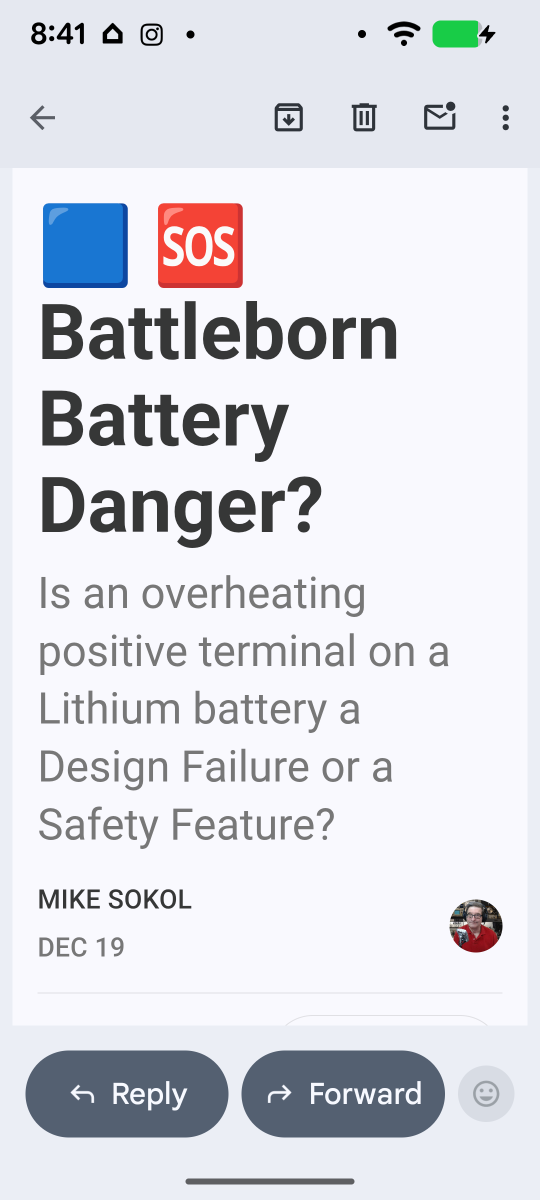
I reached out to RV Electrical Guru, Mike Sokol on his Facebook site. He responded that he would dig into this and today he posted on his email newsletter. He has asked people to respond if they had experienced any battery overheating.
3 points
-
This is my question - which I posted on Will's Youtube channel - and didn't get a response. If these batteries are suddenly crap where are all the reports of fires? These are very popular batteries. I looked for reports of fires, and I could find very little. I'm hoping that Prowse's batteries are anomalies. Those terminals are beyond loose. (Are the loose terminals causing the problem or are they the result of it?) I have 2 BB's that have been bumped and jarred over 5 years of offroad use. The positive terminals are as tight as can be. I have another BB that is waiting to go in. I will definitely keep an eye on the terminals. These batteries have been recommended to me by just about everyone for years. I may not buy another one - I've been edging toward cheaper ones as prices have dropped - but I'm not to give up the ones I have because of Prowse's video. While I can't rebut what Prowse is finding, the idea that Battleborn doesn't know how to build a safe battery seems incongruous to me, given their long track record. I guess time will sort this out.3 points
-
The 24 hours is sort of a standard. But the temperatue of the unit when it was not upright is a significant factor. The units typically sit in a warehouse. It may have "tempered air" not for the stored stuff, but for the workers. Then off into truck, train, and aircraft... all with potentially extremely low temp's. The warmer unit flows oil and refergerant down to the bottom of the coils. You get it, set upright and it may or may not come up to full room temperature before it is turned on. The oil/refergerant is viscus. The pump often does not have the power to move that incompressable fluid, rotor locks, amps surge, and blows the fuse. It would be wise to recommend 24 hours in a warm area to avoid this scenario. Then store it upright at all times. GJ3 points
-
My experience is similar to yours. I have two 100 AH Battleborn which I've bashed around on dirt roads for five years. Several times, something has gone wrong with the charging, and I emptied them out, and they've come right back. While I haven't measured what kind of charge they're still holding, my sense is that they're doing just fine. (They're in far better shape than my 2 year old Interstate lead acid batteries which are fading badly). I've always been able to count on them.2 points
-
In my eyes, John Davies was a pioneer in DIY efforts. I have often referred back to his wisdom and approach when doing my own. Sadly I have neither the tools, equipment or skills as this great craftsman. But I sure can gain insights on how to do things in our trailers from his efforts. Attached is a list I "Borrowed" from his posts. Saving a copy as a MS Word document lets me easily search his DIY Library. I hope it is useful to you. When you do, say a thanks to John D. It would be good Kama! Geronimo John John Davies Posts Index (April 2023 Version).docx1 point
-
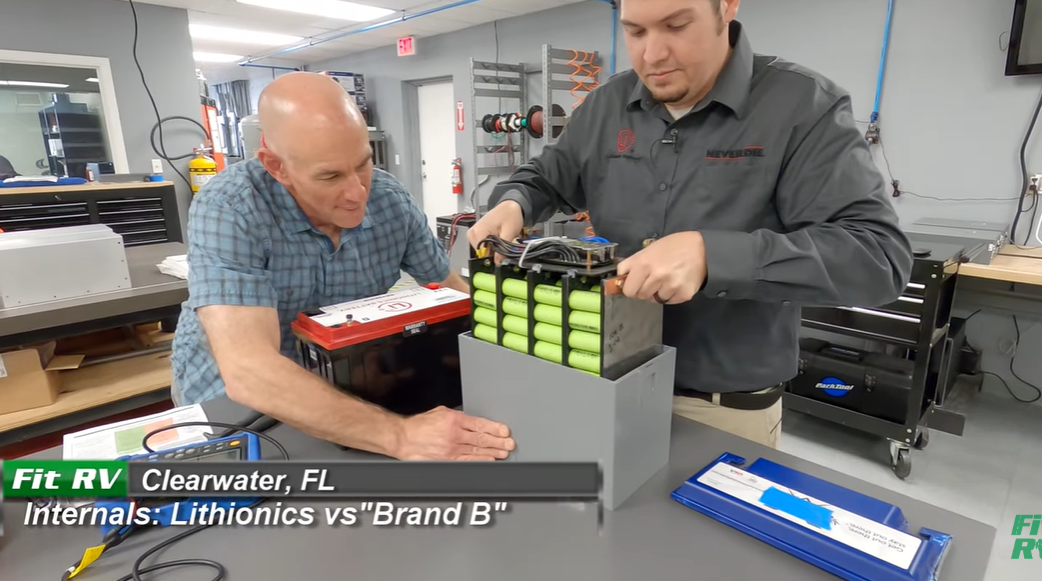
Doing some more research: Bad News: Apparently this problem was documented in 2021 in side by side comparison video. They states that the Brand B was 90% there, and only needs $5 in parts. Suggest you view this one. This now could be a class action. Good News: Looking at the video it is evident that the problem COULD BE FIXED. Question I have is did DF change the design of their batteries to fix the problem back then? Or did they ignore the warning? GJ https://www.youtube.com/watch?v=Tt0joJc9HPo&t=294s
1 point
-
One of the very spot on early-on statements of this forum was from Patriot: Their first written response as shreadded in the YouTube response was characterized as "Gaslighting". I think that was a bit harsh. But it did not go over as well as I am sure DF wished. They would have been better served by stating that they have been made aware of the issue, and will commit the resources to determine the root cause. And then appropriate remediation as appropriate. They lost ground that can not easily be made up. But the PR damage is done, and it needs to be repaired. Above in this getting longer and longer thread, I postulated that the root cause of the heating, and the failure mechanism that resulted in the arching, was likely excessively amp draws on a per battery basis. DF needs a new approach here is what I recommend: Test beyond what OTT MountainOliver did. DF should test their 100's with progressively higher loading to the point where the battery B+ terminal base temperature approaches what is safe for the design. My SWAG is that it will tolerate up to 15 minutes at 200 Amps peak and likely 100 amps contineous to 10% SOC before the B+ temp is highenough to cause concern for the plastic deformation of the "plastic" structural support of of the bolt and post. As most of our OTT OE2 owners with the BB's have installed 3 BB's, that level would be fine for our occasional A/C on inverter with other loads such as the microwave also on line. Knowing the facts would basically would go a LONG WAY to ease the concerns on this thread for sure. Not to mention a lot of other owners across their RV customer base that operate as we do. This would also buy time to safely allow us to operate, while DF address others in higher need. But still address ours in due time. Secondly, Present their findings to their customers. If a redesign of the B+ post is needed, tell us. Finally, DF should state that they will stand behind their ten year warranty. And if they cannot do so that they will provide a prorated reimbursement of the cost we paid for them. These actions would put DF ahead of the issue as so wisely stated by Patriot. GJ
1 point
-
After taking a look at their financials, I wouldn't put much hope into that. And just today they had to do a 1 for 10 reverse stock split to get their share price over $1 to maintain their Nasdaq listing. Down 99.7 percent over the past 3 years.1 point
-
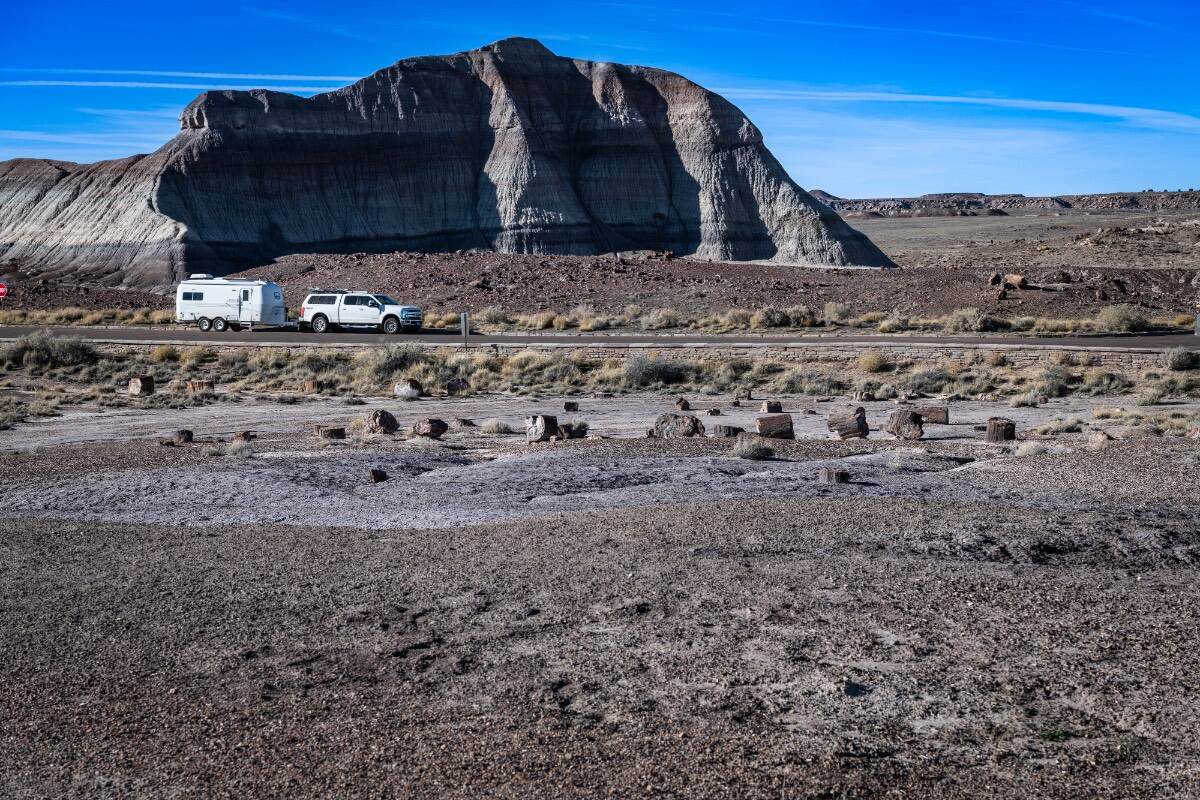
More activity for us in the Navjo Nation with a visits to Canyon De Chelly and the Petrified Forest/Painted Desert.
1 point
-
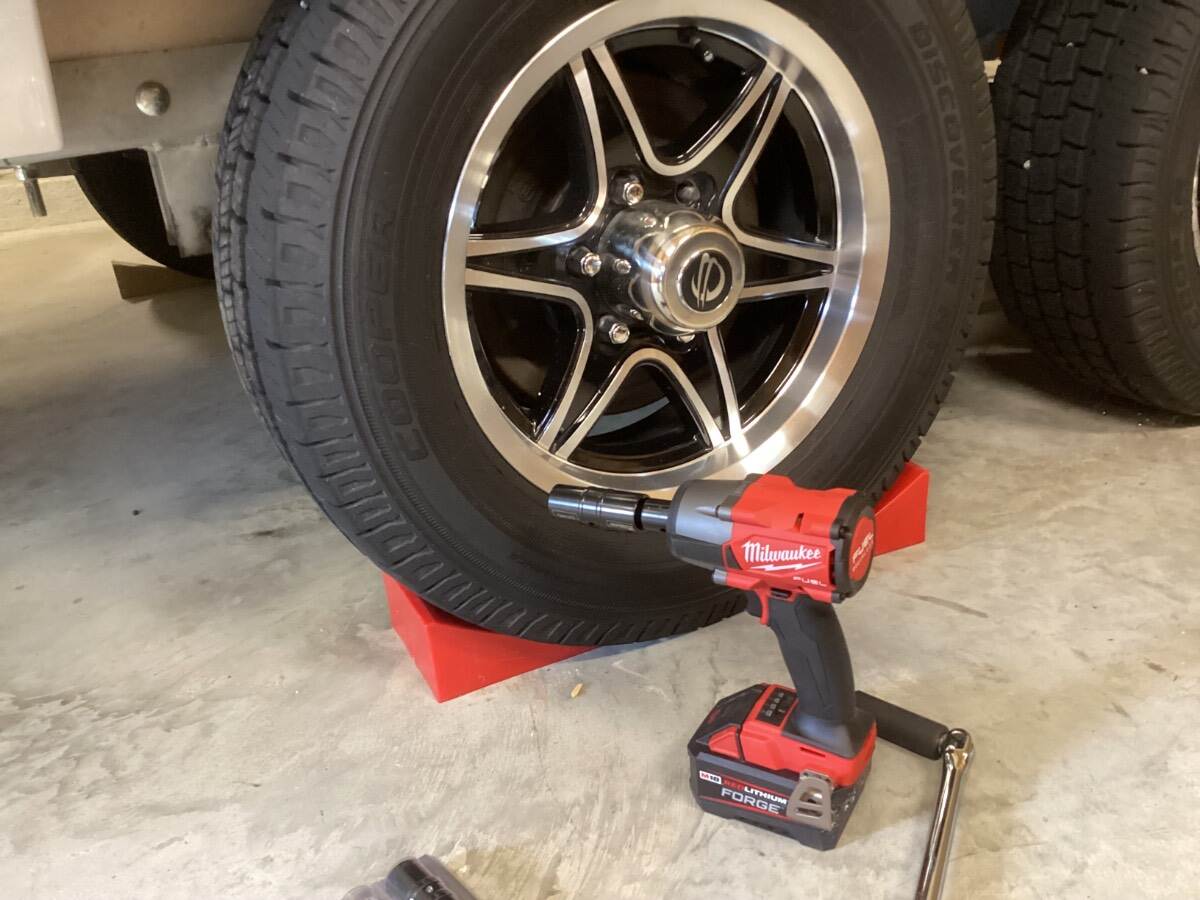
If you are considering getting a battery operated impact to carry on your travels ? These tools are expensive 🤔 but there are usually promotions and sales that you can wait for that offer steep discounts and even then they are expensive After considering one for a long time this thread kicked me over the fence and i snagged a Milwaukee 1/2” drive M18 model #2962-20 during a recent sale $189 with a 5 amp battery and a charger #2962-20 😳 $489.00 is the regular price Next I need to snag a heavy duty plug kit…….and TPMS for the Oliver You can search for sales on Search this page
1 point
-
Ok us BB owners are not real happy just now. But let's stop for a moment and ponder a bit. So far none of us OTT's owners to my knowledge have experienced a heat related failure as denomstrated by Will. Why is that? Likely because we tend to have several BB's all tied to a 300 amp fuse and virtually no possible way we could stress them further. We have been told that each of our 100 AH BB's can produce up to 300 amps of current. But with three of them we are likely never to be drawing 100 amps from each of our three batteries that would be necessary to fry our fuse. I have yet to hear that due to overloading our 300 amp fuses have blown. Even if there is a unicorn out there, it is a rare one. But for most of us that went to BB's the reason was to have a system that could run our A/C while off shore power with a 3,000 watt inverter. That's how we got to buying three BB's. The OTT OEM ifusing supports this max loading: (3,000 watts / 75%) /12.5 Volts = 300 amps Ok it is resonable that we'll not intnetionally be overloading our fuse. If we did, it the inverter will support momentary overloads, and we could blow the 300amp fuse. But how may blown 300 amp fuses have we heard about here in the last 8 seasons? Ok, point is we don't blow the fuses. And if we did, it is a mistake we don't repeat. Hence, enerally speaking in our OTT's we are operating at a current density way under what others likely could be. So until we know more about what the circumstances are to cause failures such as Will has presented, maybe it would not be prudent to take a fire axe and chop out our BB's .... just yet. But the issue is certainly serious enough to have our attention, and to monitor the temps and keep a close eye on our system demands. MOST IMPORTANTLY: What if you see high temp's on any of your B+ posts, or see discoraraton, or lateral weakness? I suggest following Will's recommendation. Just don't use a fire axe though. GJ1 point
-
I (unfortunately) have three Battle Born batteries that are now six years old. At this point considering the possibility of having to cover shipping costs basically from coast to coast and BB charging me a troubleshooting fee, I’d probably just dump these and go with a different brand. At the time I bought my batteries, BB were the gold standard in lithium batteries. Who knew! I did extensive research and chose them. So for now I’m going to watch them closely and so far I haven’t had the slightest issue with them. The other day I performed a load test with no issues with loading them to 122 amps for about 20 minutes and absolutely no heating issues at the posts. We’ll see.
1 point









.thumb.jpg.e34bf01ef7f7d5e99ad31856d45afbeb.jpg)









-
Recent Achievements
-