
Rivernerd
-
Posts
963 -
Joined
-
Last visited
-
Days Won
18
Everything posted by Rivernerd
-

Greasing Dexter EZ flex suspension.
Rivernerd replied to Ken_Judy's topic in Mechanical & Technical Tips
Good point. I was writing for John Welte, who I know has a 2022 Elite II, because his is one Hull # before mine! -
Ours is an SR5, without the TRD package. TRD is not a different Tundra trim level (like Limited or Platinum), but is an add-on to SR5, Limited, etc. trim levels sold for off-roading. The TRD add-ons include upgraded shocks, some extra skid plates and black wheels. I, too, will be interested to hear if some folks believe the TRD package makes it a better tow vehicle.
-
Your Seelevel tank level monitor may be grossly inaccurate, like ours is. If you have lifted the nose and only got a bit more water out, your tank is probably nearly empty, even though the monitor still reads 19%. As Mike and Carol note, a little water in the bottom of the tank will cause no trouble when freezing. I wouldn't. You could end up with road grime in your fresh water tank.
-
Greasing Dexter EZ flex suspension.
Rivernerd replied to Ken_Judy's topic in Mechanical & Technical Tips
Ensure you have at least two jack stands rated for at least 3 tons (6000 lbs.) each. Leave your front stabilizer jack down, so your trailer starts out level. Chock the wheels on one side, then raise the other side using the "stabilizer" jacks, with blocks underneath them, to raise one side of the frame enough to get the wheels off the ground. Place jack stands under the frame just fore and aft of the wheels, at the locations with the "Jack Point" decals. Then remove the wheels. With only one side resting on jack stands rated to support a total of 12,000 lbs. between them, backed up by the stabilizer jack on that side, you will be safe crawling under the trailer. -
Trailer Brake Disconnect Warning/Message
Rivernerd replied to Mike and Carol's topic in Mechanical & Technical Tips
When the brake pads on my 2008 Tundra got thin, the "Brake" warning light on the dash started to light up intermittently. Like you, I knew the pads were near the end of their useful life because I check them when rotating tires. But, I thought the pads still had some life left, so I didn't immediately replace them. The brakes continued to feel solid, so the light made me wonder if there was another issue with the braking system. When I finally got around to replacing the pads on the 2008 Tundra, the "Brake" warning light went out. Lesson learned: when the light comes on, even intermittently, replace the pads (or in case of Oliver brakes, the shoes) sooner rather than later. I concluded the Tundra must have a sensor that activates the warning light when any of the pads get too thin. Please post what you learn after your Oliver brake shoes are renewed. -
Looks pretty similar to the one in your photo!
-
Based on comments from many posters on this forum, I considered trading in our 2019 Tundra tow vehicle for a 3/4 ton Dodge, Chevy or Ford pickup. But, after much research, and bargaining with local dealers, I concluded that 3/4 ton truck prices are still too high for our budget, even given the high prices being offered for Tundra trade-ins. The much lower reliability ratings for the Dodge, Chevy and Ford offerings, compared to Tundras, also weighed heavily in our judgment. So, I determined to make our 2019 Tundra 5.7L V8, with tow package, a more capable tow vehicle, to the extent reasonable. I found comments on Tundra forums suggesting that towing performance, particularly "jounce," would be somewhat improved by the addition of rear air bags/helper springs. Some posters on this forum have already installed them, so I decided to take the plunge. The rear air bags are now installed. As advised by posters on this forum, the air bags are presently set at about 25 PSI. Our next 4-day camping adventure, starting tomorrow, will provide a good opportunity to determine if the towing experience feels any different than before airbag installation. But one difference became quite noticeable when I hooked up the trailer: the rear of the Tundra sat higher, causing the trailer to sit "nose up" when hitched. Because I am compulsive about towing with my trailers as level as possible, I switched the Andersen WD hitch mount from the "up" position (where the ball assembly had been bolted in the lowest position) to the "down" position, with the ball assembly bolted into the top position. Because of the design of the Andersen hitch mount, this resulted in the trailer coupler sitting about 1.5" lower than before. As you can see from the photos below, the trailer once again sits close to level when hitched. The first ("before") photo was taken last April. The second ("after") photo was taken today. Note that in the April photo, the rear truck fender well clearance is less than the front fender well clearance. In the August photo, rear fender well clearance is actually greater than front fender well clearance. So, the airbags are, indeed, preventing "squat" with the trailer attached. Notably, our Tundra came from the factory with rear fender well clearance about 1-1/2" higher than front fender well clearance (37"--front; 38-1/2" rear). I wondered if this was designed to compensate for "squat" when towing a trailer? With the air bags now installed, the truck fender well clearances, with the trailer attached, are the same as the factory clearances with no trailer: 37" front, 38-1/2" rear. I will report our observations of any difference in trailer handling after we return home this weekend. Hope this helps someone choosing to install airbags/helper springs on a Tundra.

- 13 replies
-
- 10
-

-

-
Oliver looking to partnership with RV dealerships.
Rivernerd replied to Katjo's topic in General Discussion
Me too. So far, my choice has worked out about as well as I had hoped. Our Elite II has not been trouble free, but the persistent help I have received from the Service Department, which has enabled me to address all issues so far, has been far superior to what is reported on the Airstream forums. -
Oliver looking to partnership with RV dealerships.
Rivernerd replied to Katjo's topic in General Discussion
As part of the Oliver Service Department's outstanding responsiveness to issues with its trailers, the Service Department frequently refers Oliver owners far from Hohenwald to RV service centers for warranty service. I wonder if, given the increased sales volume, Oliver is hoping to identify, and develop relationships with, better-operated RV sales and service centers nationwide (and perhaps in Canada?) to help the Oliver Service Department keep up with diagnosis and repair needs? This could result in a short list of qualified RV techs familiar with Oliver's build quality and service standards, who could take some of the load off of Jason Essary and his staff. Surely their workload has grown as production volume has expanded. -
15A AC power, with a 15A to 30A adapter of course, is more than adequate to keep even 630Ah of Lithionics LiFePO4 batteries warmed by the internal battery heaters, even down to 0 F. Our 390Ah Lithionics pro package fully recharges from reserve cutoff levels with a 15A connection in a few hours. The battery warmers don't draw even close to enough DC power to offset that AC infusion, even at only 15A. Every 3 months you leave your Elite II plugged in to shore power full time, Lihionics recommends running a full discharge/recharge cycle down to the reserve power level, then restoring shore power. For our winter in the Idaho mountains last year, with our Elite II stored in our 30' x 30' shed with 30A receptacle beginning in mid-November, I did one full discharge/recharge cycle in February. By April, we were using the Oliver again, so only one discharge/recharge cycle was necessary. I presume you are planning to install a 30A receptacle in your new 30' x 36' garage?
-
Greasing Dexter EZ flex suspension.
Rivernerd replied to Ken_Judy's topic in Mechanical & Technical Tips
After 4K miles, I would use Mystik bearing grease (the same stuff Oliver uses), before you leave home. You will need to either buy your own grease gun and follow the instructions in this thread, or pay a service center to do it (maybe Les Schwab?). It is too far from Portland to Hohenwald to just rely on Oliver's Service Department to keep your suspension maintained. -
Greasing Dexter EZ flex suspension.
Rivernerd replied to Ken_Judy's topic in Mechanical & Technical Tips
Another tool that saves lots of time when greasing multiple zerks is this Lock N Lube grease gun coupler: https://www.amazon.com/LockNLube-fittings-best-selling-Long-lasting-rebuildable/dp/B00H7LPKKU/ref=sr_1_5_pp?hvadid=177565028286&hvdev=c&hvlocphy=9029558&hvnetw=g&hvqmt=e&hvrand=17231719377028863953&hvtargid=kwd-117864911294&hydadcr=7540_9880937&keywords=lock+n+lube+grease+gun+coupler&qid=1692803808&sr=8-5 Expensive, but well worth the cost to me. I have one of these couplers on each of the 3 grease guns I own. They clip onto the zerk with a spring-loaded clamp, so you don't have to thread a standard coupler onto each zerk, then unthread each time. That process gets tedious when greasing 16 zerks. -
Greasing Dexter EZ flex suspension.
Rivernerd replied to Ken_Judy's topic in Mechanical & Technical Tips
OTT uses Mystik grease, so that is what I bought to lube our Elite II. Link on Amazon below: https://www.amazon.com/Mystik-665005002901-Hi-Temp-Multi-Purpose-Grease/dp/B0B85SSQQ9/ref=asc_df_B0B85SSQQ9/?tag=hyprod-20&linkCode=df0&hvadid=647244483985&hvpos=&hvnetw=g&hvrand=15993320974279103773&hvpone=&hvptwo=&hvqmt=&hvdev=c&hvdvcmdl=&hvlocint=&hvlocphy=9029558&hvtargid=pla-2021192446527&gclid=Cj0KCQjw3JanBhCPARIsAJpXTx59ct93dWx1KWfsWLBv0kzc9PndE_zIIDuTevC6mlJE4YoOtfyZ1f4aAvUnEALw_wcB&th=1 Using the same grease Oliver uses, I run no risk of incompatibility. Amazon sells it in 2-packs, so you will have enough should one tube not quite be enough. I have a dedicated grease gun filled with Mystik grease just for use on the Oliver. I use a separate grease gun, with different grease, for my tractor. -
That is correct. The switch on the body of the inverter (under the street side bed) must be in the "off" position, which enables you to control the inverter from the remote panel mounted next to the pantry. One of many things new owners must learn to manage a new Oliver !
-
Our Watchdog has saved us more than once from a bad power connection. We have been glad we used it.
-
Yes, it is. Our tow vehicle is a 2019 Tundra. After installing a Veepeak OBDII sensor to monitor transmission pan temps (because 2019-2021 Tundras do not include an external transmission cooler with the tow package), we considered upgrading to a 3/4 ton pickup. We've been shopping new trucks, but ultimately chose to stick with the Tundra for now because of the crazy truck market. That said, some of our local dealers are now offering small discounts off MSRP, where a year ago they were adding thousands in "market adjustment" to MSRP. I expect that as supply slowly expands to meet pent-up demand, prices will eventually drop back down to pre-pandemic/chip shortage levels.
-
Toyota Tundra enough truck for an Elite II?
Rivernerd replied to Beaver Pilot's topic in Welcome to the Oliver Forums
Before even considering a larger aftermarket tranny cooler, I would reconfigure the factory gauges (as instructed by Tom and Doreen, and ridenfly above). If that doesn't work, you can get a scan gauge to provide transmission temp data under load. Veepeak sells an inexpensive one on Amazon for Android phones that plugs into your OBDII port, and reports tons of engine and transmission data to your phone via the OBD Fusion app: https://www.amazon.com/gp/product/B011NSX27A/ref=ppx_yo_dt_b_search_asin_title?ie=UTF8&psc=1 If you have an iphone, Veepeak also sells a somewhat more expensive version. I installed one in my 2019 Tundra, which reported transmission pan temps as high as 265 F recently, pulling up a hill on a hot day. Even with synthetic ATF, that is higher than my comfort level. I'll bet that even when towing your Elite II up a hill, you won't see temps above 230 F with your factory trans cooler. Which ever solution you choose, please report your results on this thread! -
Toyota Tundra enough truck for an Elite II?
Rivernerd replied to Beaver Pilot's topic in Welcome to the Oliver Forums
You should have a factory external transmission cooler installed in your 2022 Tundra, as part of the tow package. It's the 2019-2021 model years (like mine) that don't have it. It is no surprise to me that you have had no transmission temp issues, given that you should have the external cooler already installed. My 2008 Tundra had a transmission temp gauge in the dash, along with the engine temp gauge, oil pressure gauge, etc. Does your 2022 have that gauge? -
Toyota Tundra enough truck for an Elite II?
Rivernerd replied to Beaver Pilot's topic in Welcome to the Oliver Forums
I finally had a chance to monitor transmission temps when towing our Elite II up some hills with our 2019 Tundra 5.7L on a hot (95 F+) August day. Pan and torque converter temps hovered around 230-235 F most of the time, but shot up to 265 after one long, steep pull. Ouch! That said, the "High Transmission Fluid Temp" warning did not appear on the info screen. For what it's worth, I am advised it does not appear until 300 F is reached. Given Toyota's position that their 2019-2021 transmissions (and Toyota trans fluid) can handle temps up to the point where the warning appears, I am holding off installation of the expensive aftermarket transmission cooler. Have any more of you Elite II owners with Tundra tow vehicles had the dreaded "High Transmission Temp" warning appear on your truck? -
Norcold refrigerator (model 412) not working
Rivernerd replied to Avalo's topic in Mechanical & Technical Tips
Open a service ticket. Oliver Service is very helpful with these kinds of issues. -
This is an exemplary, and prompt, response from Oliver Service. Such responsiveness is one reason we chose an Oliver.
-
Xantrex Inverter Issues? Try a Hard Reboot
Rivernerd replied to Rivernerd's topic in Mechanical & Technical Tips
Our "real world" test was a success. After resetting the LBCO to 11.5V, as authorized by Jason Essary, we had no inverter shutdowns when boondocking (without shore power, of course) over the weekend. We used the Truma AC, a small 120V vacuum cleaner, a hairdryer and the microwave (one at a time, of course), at various SOC levels, with no inverter shutdowns. I learned from Jason Essary that the origin of the problem may be traceable to a new bus bar that Oliver began installing in late 2022, and then 2023 models, with the Truma AC. Apparently, the new bus bar reduces the DC voltage sensed by the inverter by enough to trigger a Low Battery Voltage Cutoff (LBCO) if the default setting of 12.0V is not lowered. In our case, resetting the LBCO to 11.5V eliminated the annoying inverter shutdowns. Jason advised that Lilthionics has approved the adjustment to an 11.5V LBCO for those with the new bus bar. I chalk this up to "growing pains" incorporating the new Truma components into the Oliver electrical system. To his credit, Jason Essary kept conducting tests, and working the problem, until he found the solution. So, contrary to the suggestion in the initial post in this thread, the solution to inverter LBCO shutdowns is NOT a hard reboot, but simply resetting the LBCO to 11.5V. I cannot explain why both the first and second hard reboot produced short-term results. Maybe one of you electric engineers can tackle that question. But for now, the LBCO reset appears to be working. Hope this helps anyone else with a late 2022 or 2023 model that is experiencing LBCO inverter shutdowns. -
Xantrex Inverter Issues? Try a Hard Reboot
Rivernerd replied to Rivernerd's topic in Mechanical & Technical Tips
This is an update to the continuing saga of shutdown issues with our Xantrex Freedom XC Pro 3000 Watt inverter. In short, several days after the first hard reboot, we again began to get inverter shutdowns under heavy load. A second hard reboot also produced good short-term results, but did not "stick" long term. Earlier this week, Jason Essary authorized me to drop the Low Battery Cutoff (LBCO) level from the default 12.0V advised by Lithionics to 11.5V. I then ran another 4-minute test using 12V battery power through the inverter to run the microwave at 100% (with a pitcher or water inside to protect the microwave), at various SOC levels from 97% down to 22%. Although the Xantrex remote continued to report DC voltages as low as 11.8V during this test, the Seelevel "Batt" gauge reported DC voltages no lower than 12.2V. And most important, my trusty multimeter reported actual battery voltages (at the battery bank) no lower than 12.7V, with the microwave on full power at 22% SOC! So, under 11500+watt load, there was a 0.4V variance between the DC voltage perceived by the inverter and that perceived by the Seelevel monitor, while there was a 0.9V variance between the voltage perceived by the inverter and actual DC battery voltage verified with a multimeter. To me, this confirms that those expensive Lithionics batteries are not at risk under these conditions, since actual DC voltage did not drop below 12.7V. It appears to me that setting the LBCO at 11.5V compensates for the fact that, when under heavy load, our inverter misperceives the actual battery voltage by as much as 0.9V (12.7V actual -11.8V perceived=0.9V). It still concerns me that our Xantrex inverter misperceives DC voltage when under heavy load, but this new "workaround", i.e., setting the LBCO artificially low, enabled me to run heavy wattage loads on inverted power even at lower SOC levels, as the system was designed to do. With the LBCO set at 11.5V, even though the Xantrex inverter perceived DC voltage of 11.8V, there, of course, were no inverter shutdowns or LBCO "[01]" warnings. With that setting, it appears we can use high-wattage appliances on inverted power at least down to 22% State of Charge (SOC). This is encouraging. My wife and I are boondocking this weekend. We plan to use high-wattage appliances, including a hair dryer and the Truma AC, as needed. I will update this thread after that "real world" test . -
Xantrex Inverter Issues? Try a Hard Reboot
Rivernerd replied to Rivernerd's topic in Mechanical & Technical Tips
The water pump power supply does not go through the inverter. The water pump is 12V. The inverter output is 120V. There should be a fuse in the 12V fuse panel that supplies 12V power to the water pump. I would start my water pump troubleshooting there. With regard to the female hose connection, you will need a 1/2" Allen wrench. I carry one in our Elite II just for that purpose. 1/2" is not a size commonly included with Allen wrench sets, so you may need to order it. Amazon link below. https://www.amazon.com/Eklind-14232-Long-Hex-L-Key/dp/B000GARYA8/ref=sr_1_5?hvadid=409948196806&hvdev=c&hvlocphy=9029558&hvnetw=g&hvqmt=e&hvrand=2706863334268031158&hvtargid=kwd-48266044980&hydadcr=1609_11255806&keywords=1%2F2+allen+key&qid=1691070091&sr=8-5 Good luck! -
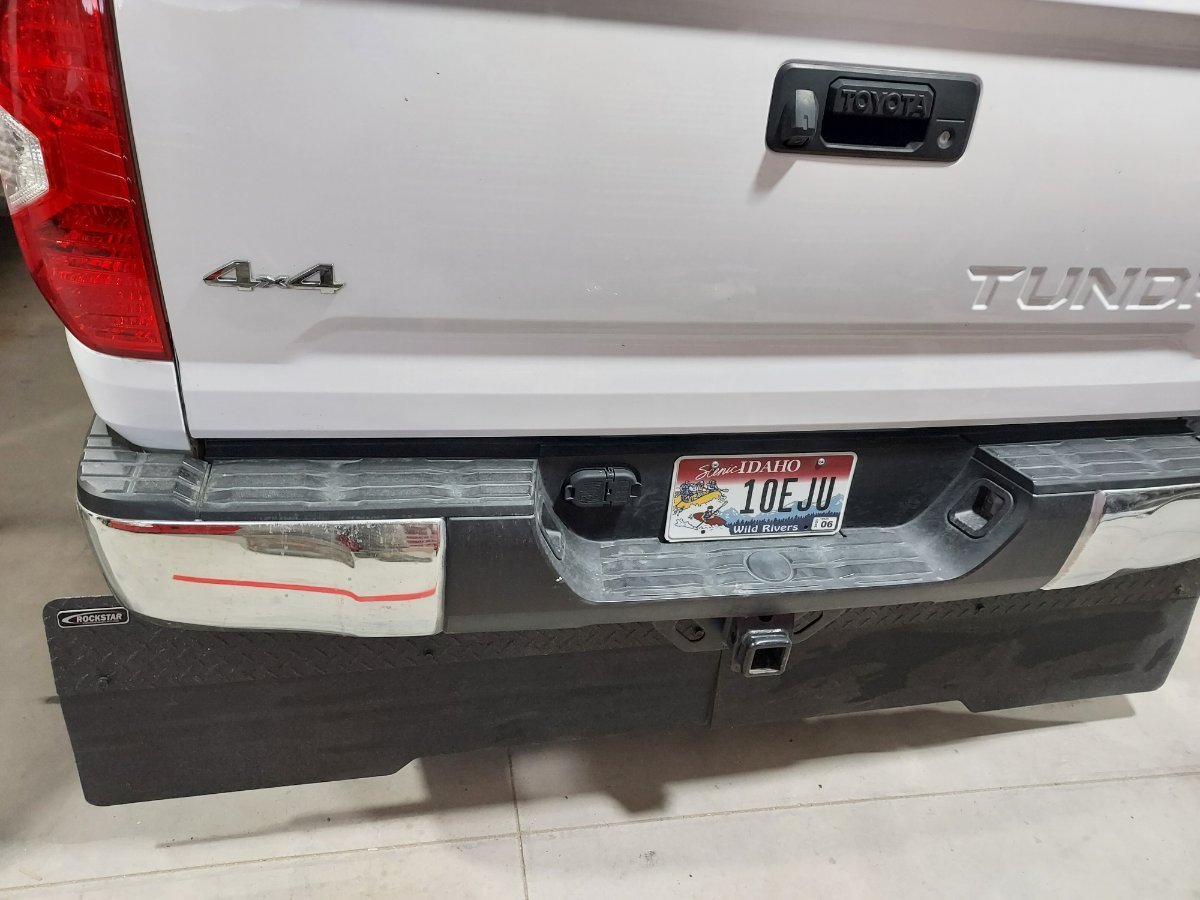
We have been using our Rockstar mud flaps for 9 months now. We like them. Rockstar sells two versions: (1) adjustable and (2) non-adjustable. The adjustable version enables you to adjust for less road clearance. Note in the photo the low road clearance.