All Activity
- Past hour
-

Need advice - winterize now or wait?
John Dorrer replied to Brian H.'s topic in Mechanical & Technical Tips
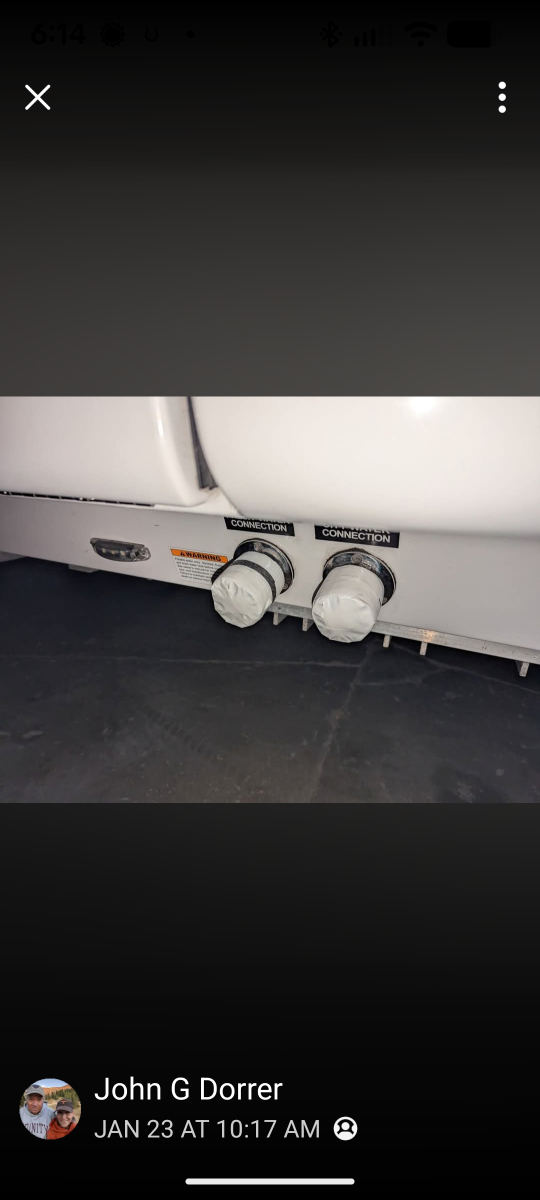
I have foam insulation around the outside shower knobs. I have Reflectix that fits outside the outside shower and covering the the floor and entrance to the basement. Two layers on the basement floor at the entrance. Pipe insulation caps for the 4 exterior connections. Soft foam in the ends and tape. 3/4" pipe insulation, cut and a piece added to allow a snug fit on the connector.
- Today
-

Need advice - winterize now or wait?
Steph and Dud B replied to Brian H.'s topic in Mechanical & Technical Tips
I would choose #3 as long as there's nothing right up against the furnace exhaust. No guarantee the forecast is right. Miscalculated once with a different trailer and ended up replacing a split fitting on my water heater. -
 Smart move. Wish i had thought of this when i was working on mine.
-
Need advice - winterize now or wait?
FloraFauna replied to Brian H.'s topic in Mechanical & Technical Tips
My advice would be 3. Keep in mind, forecasts are often wrong and it could go colder than expected. And I agree with @jd1923 that 2 is the worst option for several reasons, the main one being nonuniform heating where a cold spot could cause a plumbing freeze. -

Need advice - winterize now or wait?
jd1923 replied to Brian H.'s topic in Mechanical & Technical Tips
My vote is #1 and if it gets colder then I agree with Todd on #3. #2 is unsafe and ineffective, and yes #4 is too much work. "Lows (only) dipping to 30-32 F" then your option #1 will be all you need. I've left ours alone, plumbing full of water for several nights with lows into the high 20s, given it warms up during the daytimes. When I see consecutive overnight forecasted lows in the low 20s or teens, then I'll run the furnace (#3) or if we're staying home for much longer, then I'd "winterize." But for us, winterize means to blow the water lines out with compressed air. Though not recommended by OTT, I have a thread on this procedure. We don't use the pink stuff. I learned this from a Bigfoot owner who lives in the real COLD of Calgary AB. It works well. Your Thanksgiving situation is like ours all winter long. We're home this week, then camping next week. Then home 'til Christmas and we'll leave again, repeat pattern until the spring. We have a moderate climate. It can be middle of winter and truly cold, but more often lows are 28F with highs at 55F and no true need to winterize. If we did the standard antifreeze process, I'd have to do it 3-4 times a winter and I'm not doing that, since as you wrote, "seems like a lot of work." I believe #2 a portable space heater is your worst option. Many Oliver Owners run these heaters but besides the safety concerns (most winter fires in city apartments are caused by space heaters) they just don't work unless you place them in the rear basement where the main water lines lay. A space heater in the cabin will heat the upper shell, not the lower, so water can still freeze in the basement. There are threads here where water lines have frozen while using space heaters above! Use the furnace as it's designed to keep the basement above freezing! The only downside of option #3 is if it gets real COLD the LP does not last too long, but your need is short term. Have a great Thanksgiving trip! JD -

Need advice - winterize now or wait?
Todd B replied to Brian H.'s topic in Mechanical & Technical Tips
I have done 3. Figure it runs over night when I basically I am not there (since I am sound asleep). I have also left it running when I am camping but away for the day and it is going to get chilly before I get back. Not saying my actions are right or wrong. Your mileage may vary. -
Hello all, I need some advice. I live in Virginia and have a 2025 legacy elite 2 with the platinum lithium battery package Hull # 1633. I store the camper in an asphalt storage lot 1 mile from my house. I have a camping trip planned for the week of Thanksgiving. I plan on winterizing after the trip, but the week leading up to the trip the daytime highs are forecast to be 50-60 F with nighttime lows dipping to 30-32 F. Which of the following would be my best choice. 1.) Do nothing. With the daytime temps in the mid 50’s to 60’s and only dipping to freezing at night. Is there much chance of any damage happening. 2.) Turn on the inverter and run a small space heater on low over night in the camper. 3.) Run the propane furnace set to 50 degrees at night. (seem scary to run the propane furnace when I am not there). 4.) Winterize the camper for one week, dewinterize for the trip and winterize again after the trip. (seems like a lot of work). Let me know what you think. Thanks in advance. Brian
-
I'm just now seeing this thread. Lots of great info! When we did our 5700 mile cross country trip in September, it was the first trip to truly test my 50A Orion DC-DC install: Oliver and RAM DC-DC Charger Installation. Like others discussed earlier in this thread, I had to tweak/lower the Orion voltage "trigger" settings numerous times to get it all dialed in. The smart alternator would often be charging at a voltage too low to trigger the Orion to charge. It's a bit of a balancing act to dial it in such that the engine shut-off setting is low enough to not get triggered (and shutting off charging while gong down the road), but also not so low as to fool the Orion into thinking the engine is running when it's not. As others have said, it's also important that the negative connection not be direct to the battery post because of the battery control module. When I got it all dialed in, I was seeing a 45A Orion current, which is what I have set as the maximum current in the Orion settings, and I was happy with that. In my install, I used 2AWG on the vehicle side, and 4AWG on the trailer side (shorter run with the Orion under the front dinette seat). I wanted the heavier cable on the vehicle for two reasons: 1) Because it's a fairly long run, and 2) in case I ever want to power anything else through the rear Anderson connector. With the observed 45A current at the Orion, I saw an approximately 0.9V voltage drop. With lower currents as the Oliver batteries got close to 100% charged, the voltage drop obviously went down. I call these drops "approximate" because I was comparing the digital voltage reading shown on my truck dash with the reading at the Orion from my Victron app. I haven't found a reason to think these readings aren't accurate, but they were not taken with my multimeter as we were driving along 🙂. As several have mentioned here, going with 1/0 would be even better and provide more headroom, but for now I seem to be getting good performance with mine. 🤞 I will say, a DC-DC charger is a game changer. We boon-docked several times on this trip, and the Orion would have us all charged up by the next stop.
-
 I'm thinking JB Weld it in the hole and pray I get to 50,000 miles and upgrade to 5200's. (That's what I did). 🙂
-
Great info as usual from the Oliver Tribe. Thank you so much. Will check things out. Mike
-
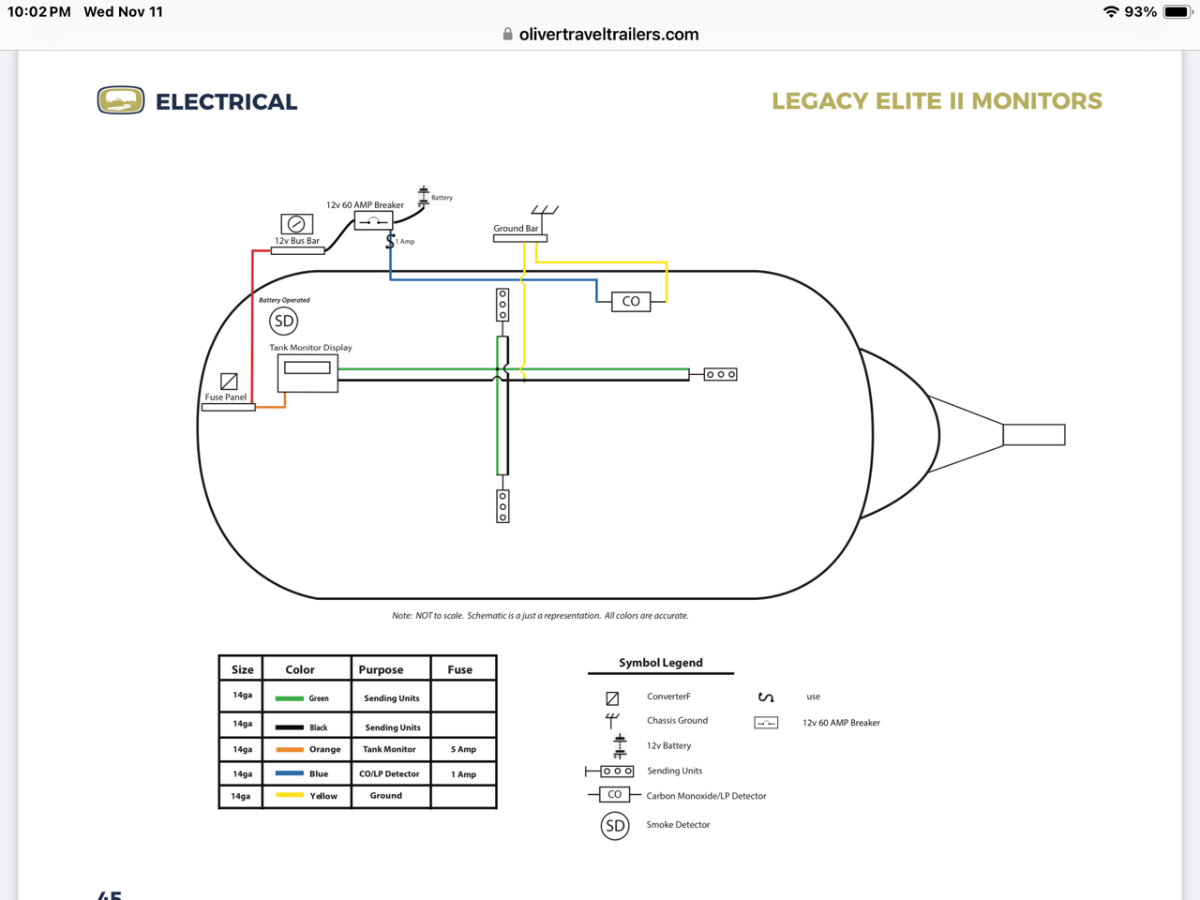
I also have a 2021 model. My 1A in-line CO fuse is under the street side bunk, attached to the 60A breaker. See snip from the 2019 Owners Manual in Oliver University. The 2019 wiring diagrams are the most similar to 2021 models I have found.
-
After a long wait, I have finally finished the Big Bend series from last year...
-
Mike, I'm guessing you mean no power to the CO monitor only and other things like the cabin lighting works. You likely blew the fuse when cutting the wires. I've done that too often where I should just locate and remove the fuse first! So, our hulls 5 years apart are going to be different. Look at the wiring below the CO monitor inside the front of the rear dinette seat and there should be an inline fuse there. If not, follow the wiring if you can and an inline fuse may be at the other end of the wire at a positive bus. Yeah, it will be a thin inline fuse holder for the light 1A fuse. Look at the +bus where you'll see 3 big yellow inline fuses for the jacks. See if there may be 1-2 other fuses attached there, but my first look would be below the CO monitor.
-
I have no power it seems after changing out CO Propane Alarm A one amp fuse is listed for the alarm unit. It is listed as F57 in owners manual. Does anyone possibly know where the fuse could be located. Any help is appreciated before taking it back Mike
- Yesterday
-
Better fill up in NC prior to the end of the month when the gas tax gets reinstated.🤑 Bill
-
Fuel price in North Carolina today.
-
Yes, DC-DC charging is the best electrical upgrade we have made, period! We use it, connect the cables every time we tow. For those of us who travel in a series of short stays (average 1-3 overnights) you'll never need to plug-in again (given 600+ Ah lithium). We spent about the same money on our DC-DC charging system that we spent in adding a 400W suitcase solar system. We've used extra solar rarely, on the rare occasions when we stay in one place longer than 3 days. The DC-DC charger is a better investment than additional solar. BTW, my issue here was in my failure to configure the engine shutdown detection voltage parameters. Geoff pointed me to the issue. The YouTube video I posted above got me to fully understand the settings. I reconfigured voltage settings in a minute and we're back to getting 40+A. That's +40 Ah added to battery SOC for every hour on the road.
-
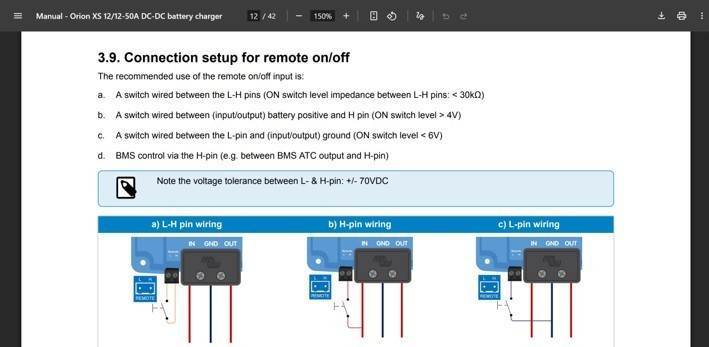
Go to the source. Screenprint from the Orion 50A manual (check your 30A manual). Most of us use engine shutdown detection feature vs. this hardwire switch.
-
@dbp05ret My ourside shower hose was cracked at the outside shower head. I bought a new hose at the local RV store for small money. Used a small adjustable plyers to untighten the connection side inside the Ollie. As I remember it, there was only a rubber washer at that connection. I just had tightened the new hose connection inside and installed the existing faucet head outside on the new hose. EZ.
-
It would only be worth it for those who pay for Roam Unlimited 12 months a year (then monthly plans are likely the same as the original Mini). This service bundle could be of interest to new full-timers who travel regularly where cell service is limited. We pay the $10/mo Standby Plan 6 months a year and then only what we need when we travel. When you have a viable cell router and antenna you need Starlink much less often. The 5G cell SIM card adds $30/mo to our cell plan which is much less per Gb than Starlink. Regardless, we would not travel without Starlink for when we need it. For those still holding out, now's the time to get the original Mini before this becomes the only available option! The Mini keeps getting cheaper too, now only $149 ($12.41/mo for 12 months). Are they advertising any better performance in their new product? It boots faster and has a built-in quick swap battery (after you buy an extra), and having an extra is truly a must unless you want to be offline every time it needs charging. We have 2 external batteries and plug-in options and when you swap a battery, of course the Mini reboots. If the Mini 2 has hot-swappable batteries, that would be cool!
-
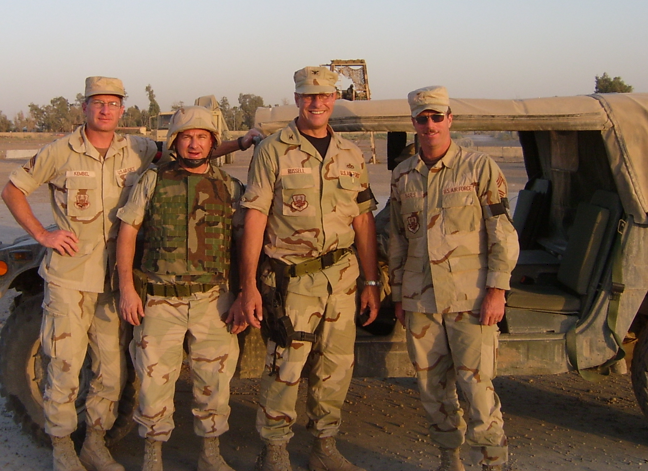
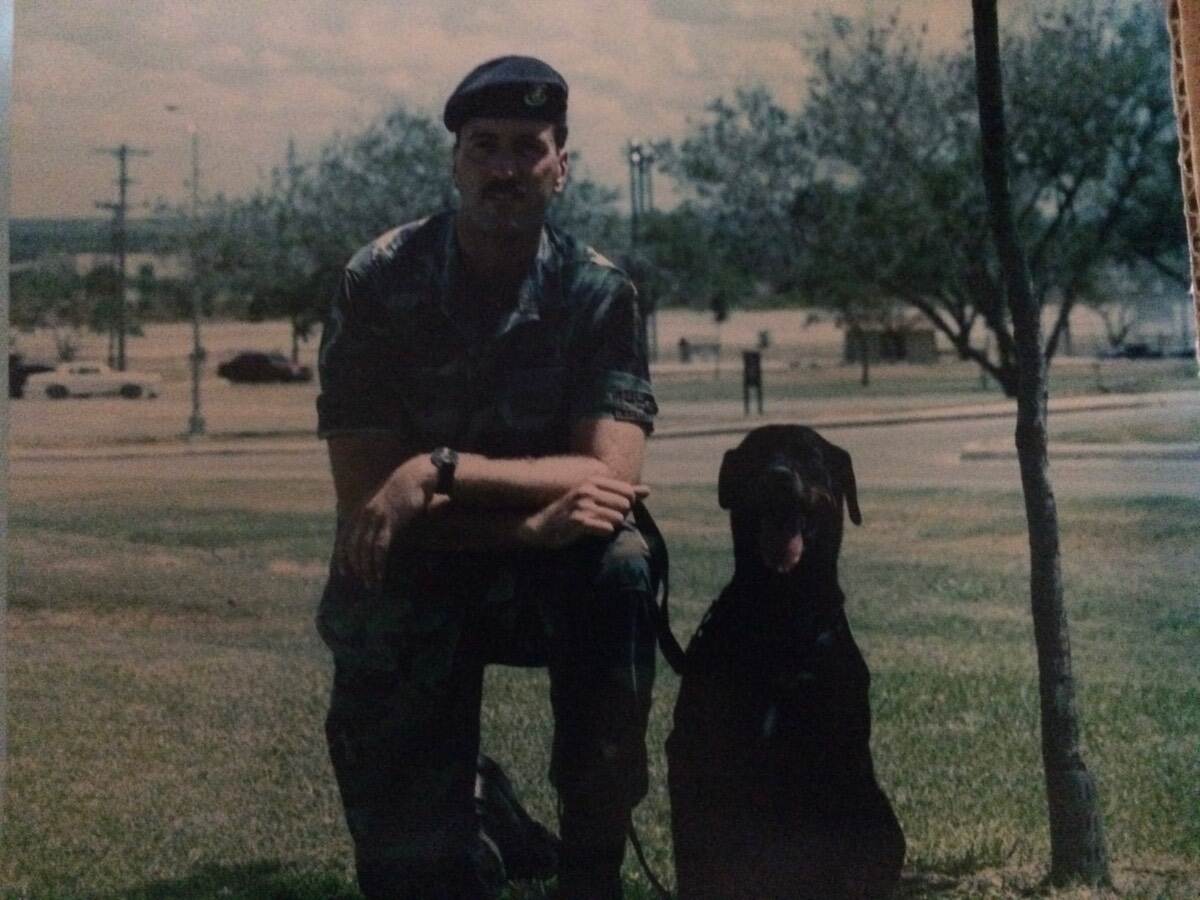
Lord please bring peace to the our fallen Service Members, and may they be proud of their family that they left behind. GJ 2004 CENTCOM Tiger Team at Qutar before deploying mostly by convoy to multiple locations in Iraq.
- 1 reply
-
- 8
-

-

-

-
Yes, but we have both. Our 2016 hull has Scandvik in the wet bath. I started the thread below asking about replacement parts last year. Our outdoor shower is an ITC part. I purchased the entire assembly recently since the plastic housing was cracked and for the price buying individual parts made less sense to me. This part is identical to the shower assembly I removed: https://itcshopnow.com/products/exterior-shower ITC also sells the Oliver Porch Lights. I purchased one to install a new rear light and a couple extras. When one light fails, I'll install the two new ones on the curbside. https://itcshopnow.com/products/assurance-exterior-flood-light?variant=50392962007319
-
To ALL my brothers and sisters in arms who have served, and those still serving, thank you for your sacrifices and the freedoms that ALL Americans still enjoy today. Freedom is not Free. Patriot 🇺🇸
- 1 reply
-
- 9
-
-
-
-
We had a blast at our first Oliver Rally! Took the attached photo walking our dog early one morning. What a beautiful venue.
-
Just remembered that @jd1923 was looking for Scandvik parts a while back for hull 113. So we know they were installing them up until 2016... maybe longer?