Leaderboard



Popular Content
Showing content with the highest reputation on 10/22/2016 in all areas
-
We caught up with Mike and Carol yesterday to see the Lone Star Oliver in West Point, NY. The drive there was lovely with the blazing fall colors everywhere we looked. It reminded us again of why we want to get a travel trailer and experience all the wonders of the outdoors. Then we arrived at the Lone Start campsite. Wow! The Lone Star Oliver is truly beautiful and our questions have been answered about size and comfort. It has plenty of room for two people to get around comfortably. The kitchen and storage is very adequate for our needs. My husband is 6 foot tall and he had plenty of head room. In the shower he only had an inch to spare but no problem. The wet bath was much more functional than we feared and we think it will work out fine. We heard about the quality of the Oliver and saw Buzzy's videos (which are great) but nothing compares to seeing it in person. Mike and Carol are such a kind and sharing couple and we are so very grateful for them opening up their Lone Star for us to experience. I think there is an Oliver in our future. Thanks everyone that posted on this tread, Linda.2 points
-
The bathroom drain valve, should it be in or out when you drain the gray tank. I have been leaving it open (out) and when I drain the gray tank it really smells up the bathroom. It seems to me back when, we had it closed and somehow that prevented the tank from draining. Stan1 point
-
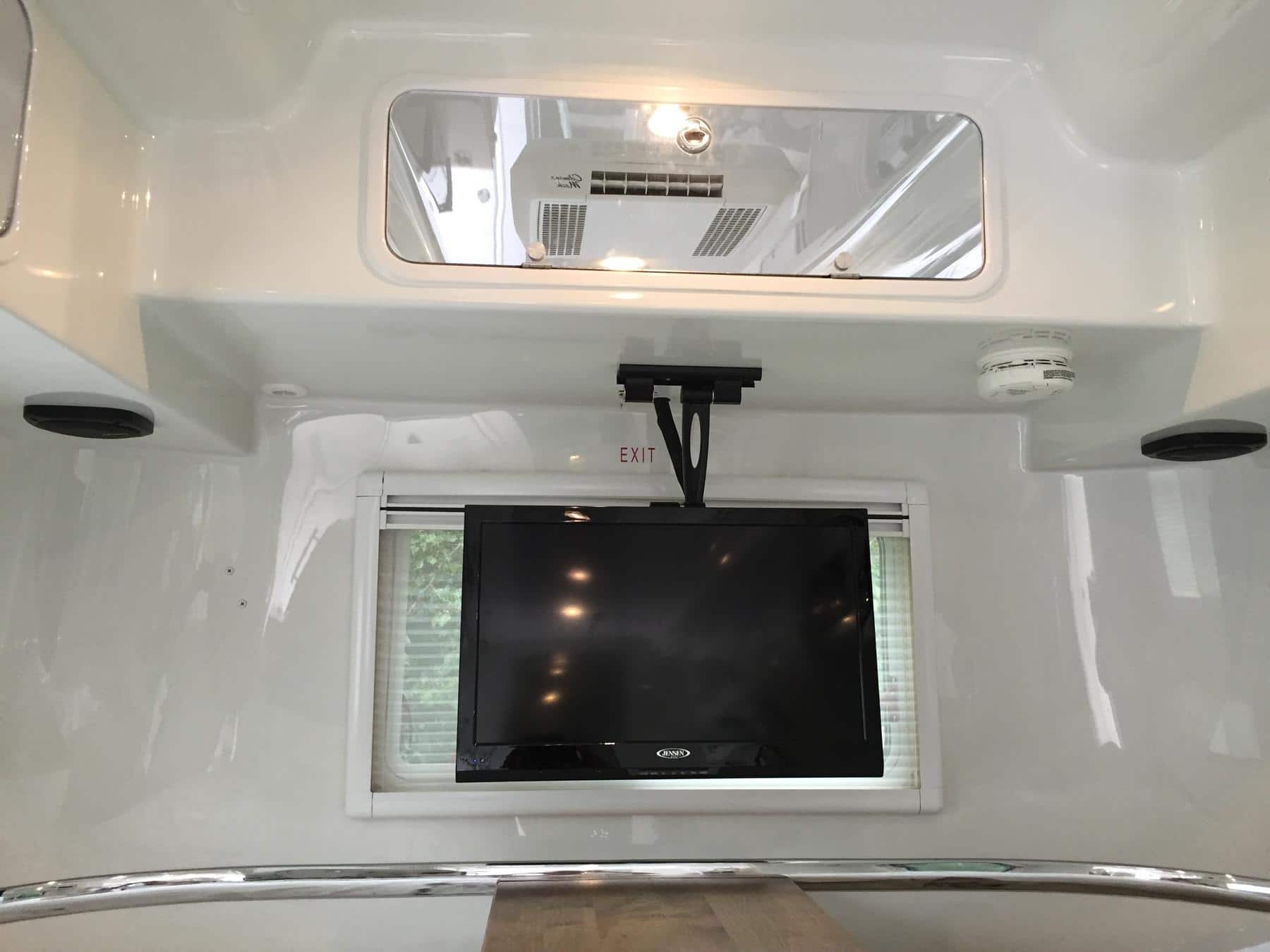
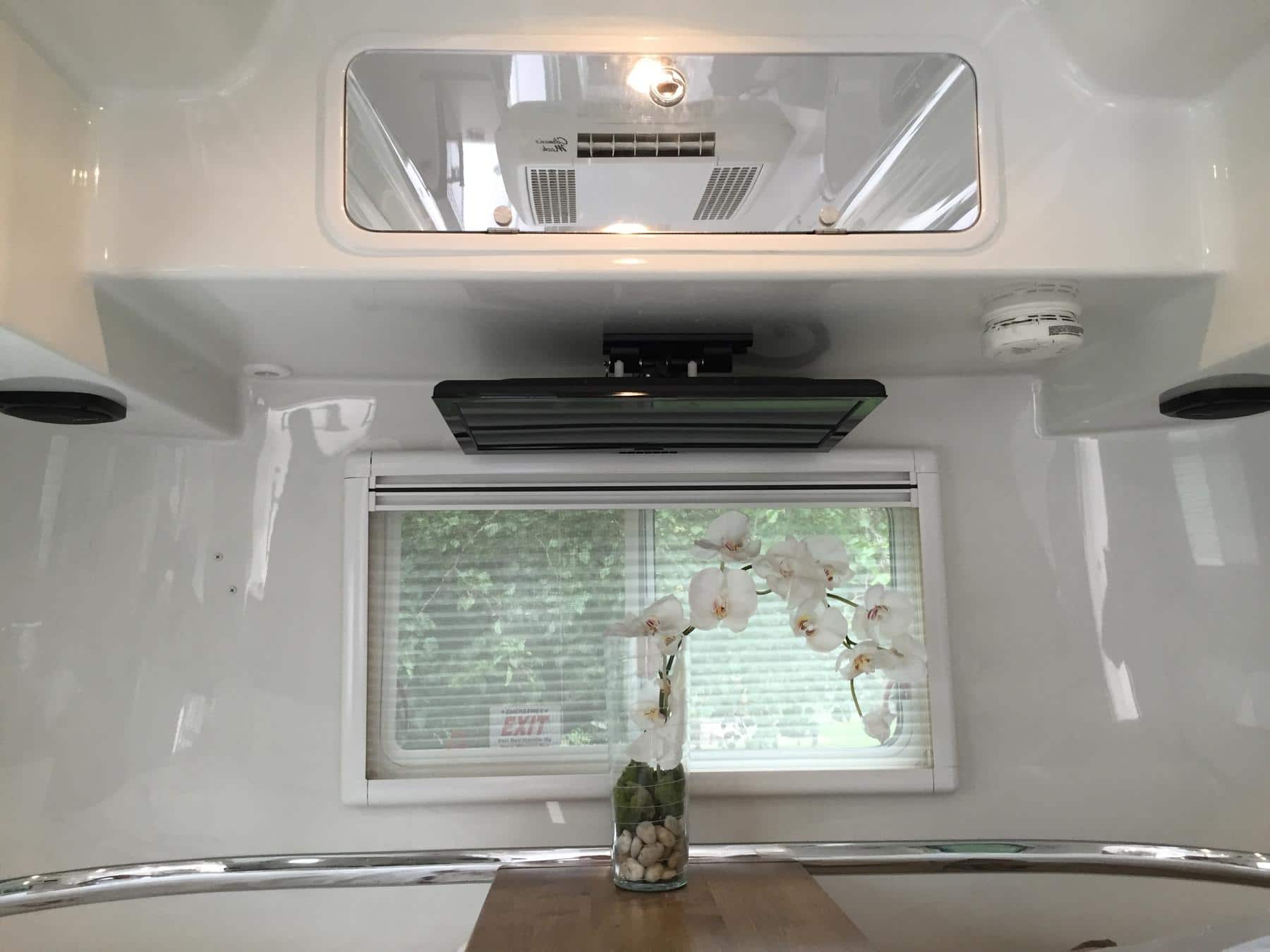
Here's my idea as to where the tv should be located. This was competed utilizing the factory brackit that came with the Trailer. Arm tension is adjustable and will have to be tightened, I did have to buy a 1 1/2 counter grommet and paint it white to bring cabling down to tv. Marc
 1 point
 -
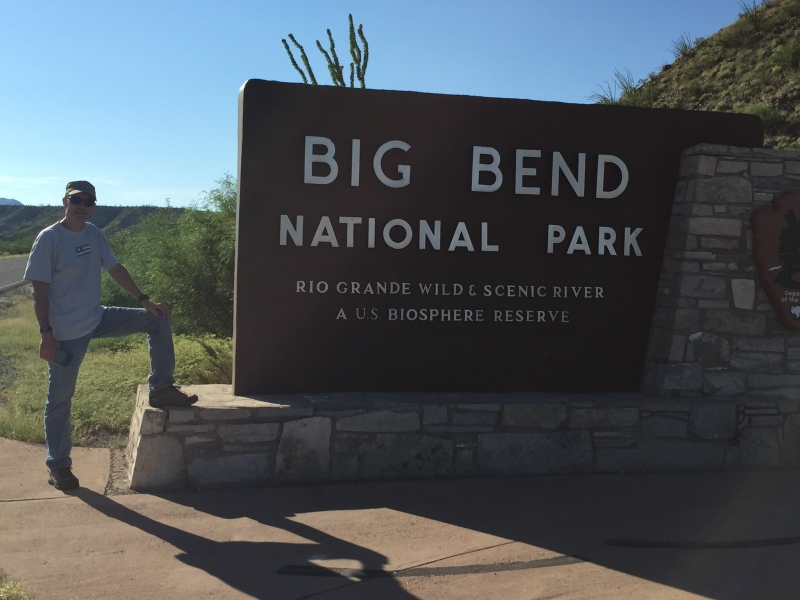
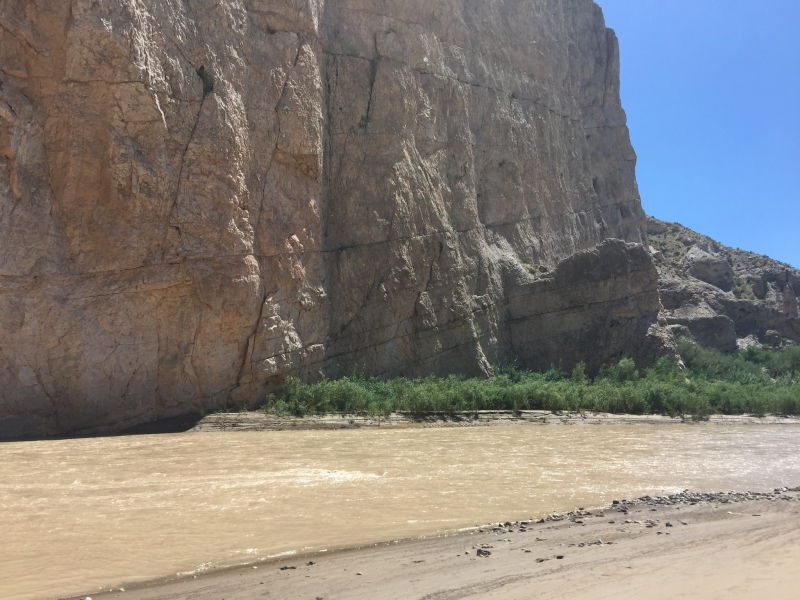
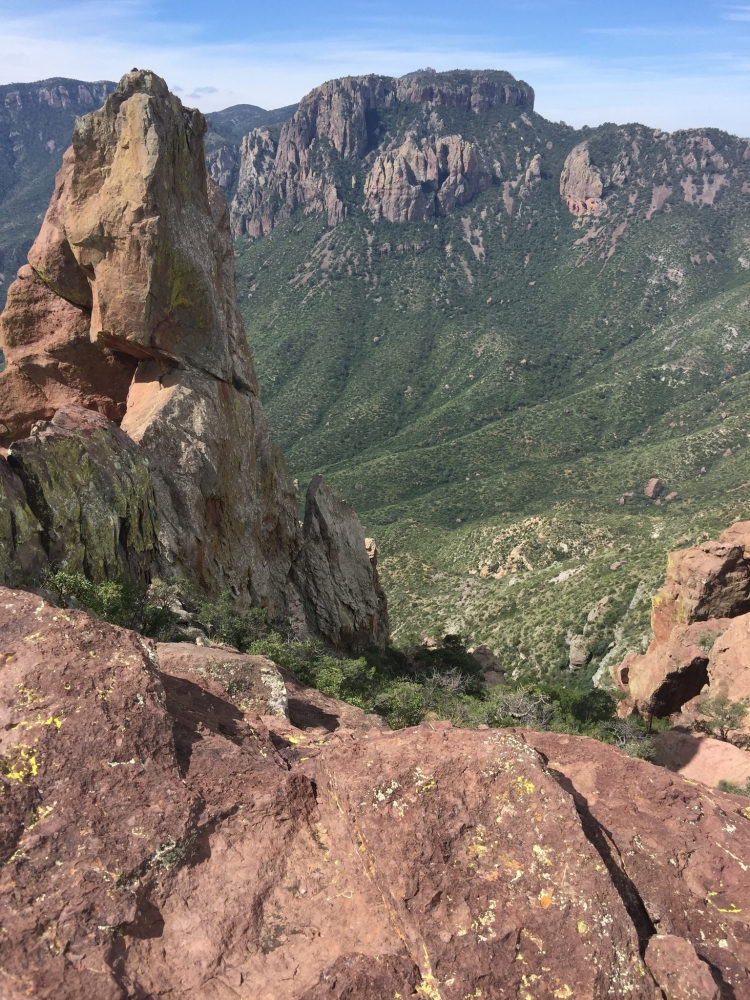
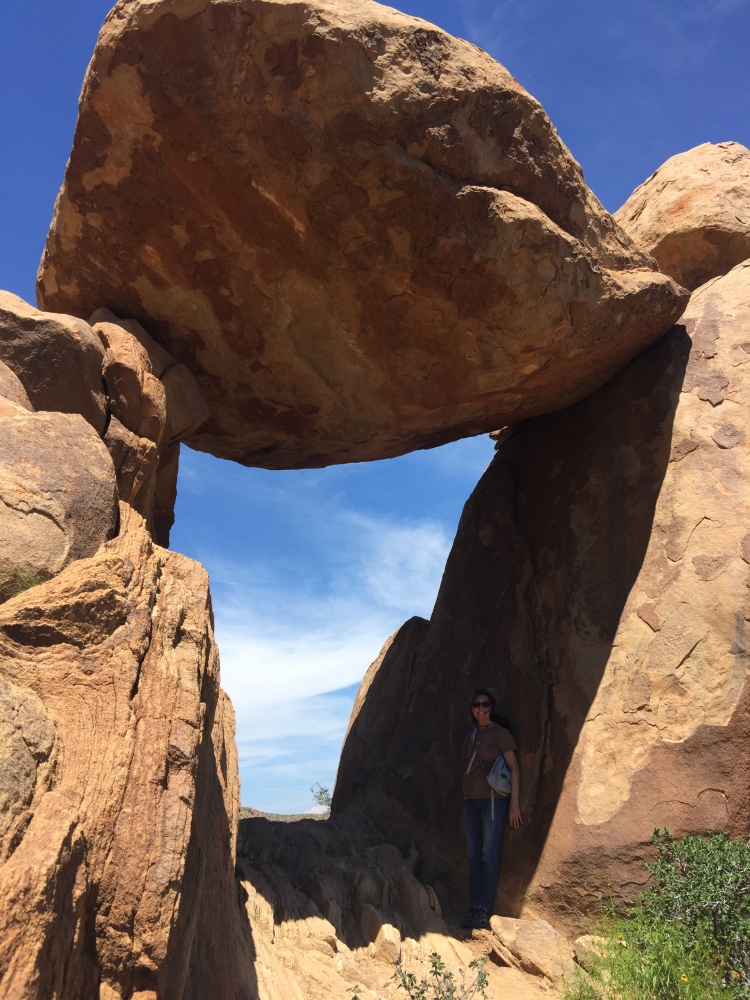
We spent last week visiting Big Bend National Park. It's one of the least visited National Parks and is somewhat off the beaten path. From Fort Stockton on I-10 you head south for about 3 hours. It is on the Rio Grande with Mexico in sight all the time. Even with the hot weather (low 70's at night, high 90's during the day) we had a great time. Lots of hiking, great views and no crowds! At times we felt like we were the only ones there. It's a fairly large park, bigger than the state of Rhode Island. This is at the end of the Boquillas Canyon hike. The bluff is in Mexico. This is where the Rio Grande enters a huge canyon that's been carved out of the mountain. After a hike to the top of the second highest peak (7550') this is the view down. It's called the Lost Mine Trail. Views are great all the way up and it's a nice little workout! We sat at the top and had some snacks and water while enjoying the view. At the other end of the park (western end) is the Santa Helena Canyon. Mexico on the left, US on the right. The upper water flow is the Rio Grande, the lower (muddy) is the Terlingua Creek emptying into the Rio Grande. You can wade through the Terlingua to the bluffs on the right and then climb up about a quarter of the way to a lookout platform. Another nice hike was Grapevine Hill. It's not too far, a couple of miles through the desert then some light rock climbing up to this balanced rock. Carol is enjoying the shade! It was right at 100 degrees when we made this trek. This is the view from the balanced rock looking back down at where the path goes back to the start through the canyon. We stayed in Lajitas, TX at a very nice, full hookup campground. There are three RV parking areas in the park, one has full hook ups. No reservations, first come, first served. If we do it again we will look at staying inside the park. None of the park RV areas were full. Peak season is November through April, so it may be more crowded. We think the Chisos Basin has the most scenic camping areas. It is surrounded by the highest peaks and is close to the start of the Lost Mine Trail. Most importantly, bacon was consumed!
1 point
-
Hello, Reed and I are excited to own our first Ollie. We currently have a 17' Casita and need a bit more room. We just finished placing our order today! An Elite ll King, Any advice on what add on's to buy or stay away from? Reed and Karen
1 point
-
1 point
-
In the end we can talk about the differences between steel and aluminum all day long, but we don't have enough information to say definitively that aluminum, in this case, is a problem. And I have no intention of saying it is. Just because aluminum has a different fatigue character than steel, doesn't mean in this case that it will fail. Way too many factors are not being included to make that analysis. The frame on an Ollie seems to have different functions in different places. In the tongue area it must have bending strength to transfer the tongue weight to the hitch. It must also carry the pull from the hitch. Out back it just offers a bumper mount that protects the body from a hit. Over the suspension it spreads the weight to the "support truck" which is the steel suspension assembly subframe. It definitely doesn't act in the same way as the frame on a conventional trailer where everything is assembled piece by piece with the frame supporting it all, as the build proceeds. Having said all that, Ollie's entire structure is flexible and I hear it creaking whenever I load the jacks. The frame works in tandem with the inherent unibody strength of the Oliver body, but it's not absolutely rigid. All of the trailers I've looked at with steel frames have two frame rails that get to the front of the body and then come together at the hitch. Oliver front sections are way more reinforced and beautifully built. I just went through one of the most severe 4 wheel drive roads I could get it through. No problem at all as I watched the suspension flex and tried to avoid dragging the frame. I fully intend to use this trailer to it's limit as we go desert camping and exploring old trails. Rather than second guessing it's design, I marvel at it.1 point
-
So, what does loaded too heavy in the trailer's rear look like out on the highway ? Here is a look:1 point
-
I don't know about the Oliver frame being over-engineered. Intuitively, it looks strong, but the only evidence we have that it lives up to its appearance is the fact that we don't have people complaining of failures. Thats good evidence as it goes though. I remember being told that Oliver strengthened the frame at some point - I don't know the motivation behind that. Perhaps it's academic. I don't know what effect the frame stiffness has on towability - perhaps some. More importantly, I don't think the overall stiffness of the frame is as important to an Oliver as it is to many other brands. On most trailers, the frame is truly the foundation off of which everything is built. On the Oliver, the hulls seem structurally sound enough on their own, so the frame mostly serves to distribute the loads from the suspension. One nice bonus of that arrangement is that if the frame ever did fail, I feel like it would be fairly easy for Oliver to lift the hull off the frame for repair or replacement, rather than writing off the entire trailer like you'd have to with the cheapy stick built brands. What's important to consider on the Oliver frame is the tongue section and how well it absorbs vibration and loads from both the trailer and the tow vehicle. Welded aluminum is always a cause for concern - it's a tricky weld in that it is very easy to overheat the aluminum surrounding the weld, which causes it to loose strength and become brittle. That said, a good welder is a good welder, and Oliver seems to have some good welders. One thing I like about their design is that the weld joints are staggered so that there isn't a straight line of joints going from side to side that are subjected to direct bending forces. The staggered arrangement means that each joint for the most part experiences only shear forces. For highway driving, I would put all the trust in the world in it. I'm a little nervous about long-term gravel road use because of the constant vibrations. I agree with John that the EZ Flex equalizers are a good buy if you plan to take the trailer on rough roads. I'm considering going a step further with the Center Point equalizers but that may be overkill and isn't an easy swap out like the EZ Flex. http://www.lci1.com/center-point One thing I'd like Oliver to offer, perhaps as an upgrade, would be a set of gusset plates at the key stress points of the frame that are huck bolted to the frame. Again, that's arguably overkill. I'm definitely looking forward to Bill's thread on his sway control unit.1 point
-
Be aware that while the Oliver frame is overbuilt and very strong, aluminum can and does crack when subjected to lots of stress. Steel is much more tolerant of abuse and is easier to repair when it does fail. Very few welders are capable of doing quality work with aluminum - it takes a good deal of experience and a certain amount of artistry to "run a pretty bead" in aluminum. Oliver frames are beautiful and hell for strong. One reason I wish that they would offer a much better suspension is to reduce the likelihood of cracks developing due to rough usage twenty or thirty years after they are delivered. The rubber EZ Flex equalizers should help in this respect, but it is not ideal. Can anyone comment? Have any owners seen frame failures due to other factors than collision or mishap? BTW I have had a marine grade aluminum utility trailer that has seen hard use for thirteen years, but when not bouncing around on forest roads it leads a sheltered indoor life. I have yet to see any cracks. I have never overloaded it. Another BTW a friend has a new Jayco TT and it has had countless issues in the few months since he bought it. It amazes me that consumers put up with the garbage construction and horrible engineering that goes into nearly every RV on the road. Why do they keep buying this stick and staple junk without rebelling? Rant over. Thanks, John Davies Spokane WA1 point
-
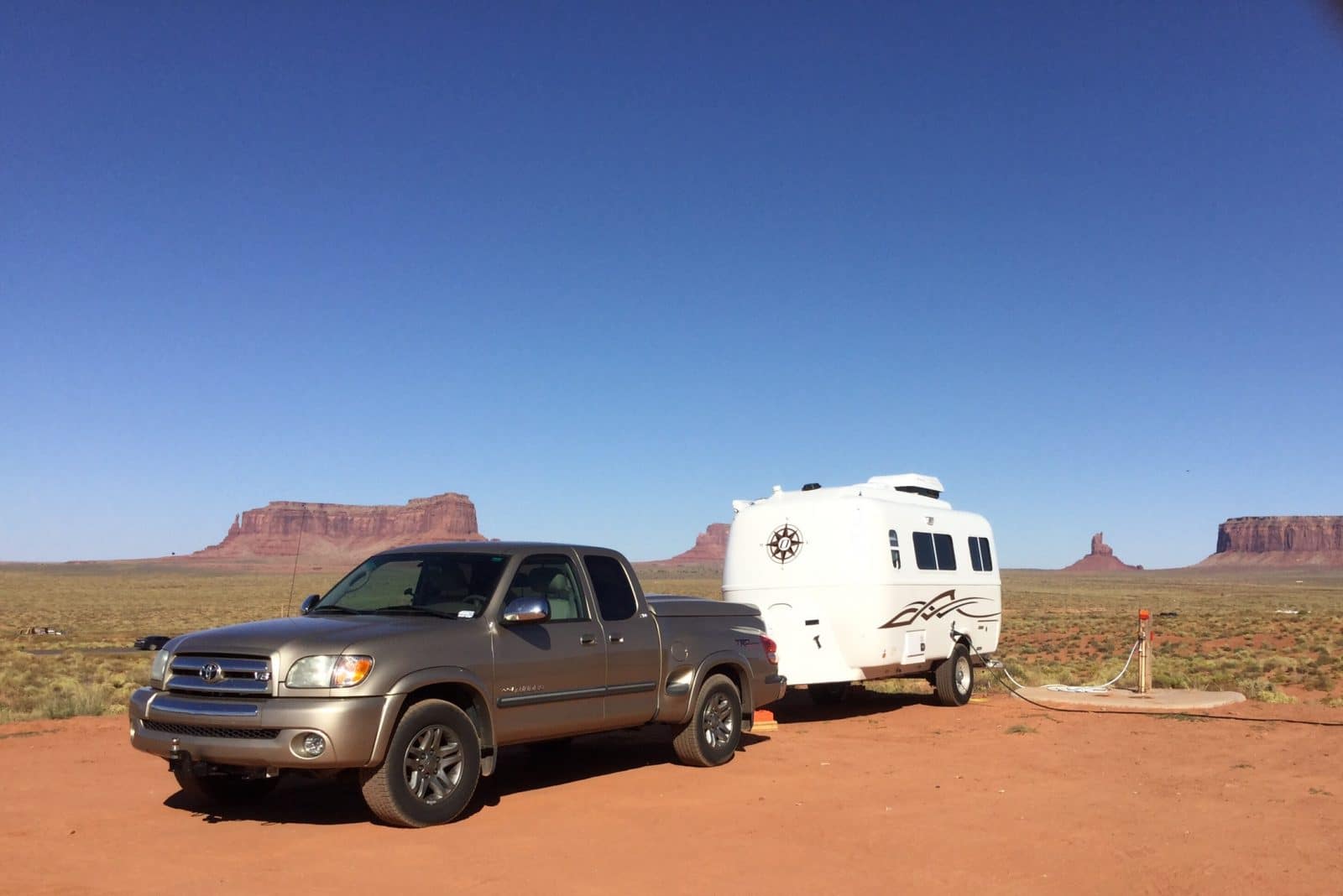
In addition to proper loading, a stand alone sway control unit could be used, too. I'm in the installation process with this unit, plan to check pickup/trailer turning clearance and adjust cable lengths today when the rain stops. This may not be the final location for the Sway Control, will see. Did not drill any holes in the Ollie hitch/frame during installation, used aluminum angle to mount. Our Ollie comes in at 4960 pounds ready to camp with empty fresh, grey, & black tanks. Not using a WDH for now, but wanted to try this sway control since the Tundra manual requires a trailer sway control for trailers over 2000 pounds. We have not had any stability issues with the Ollie. Will post installation thread after completed installation and testing.1 point
-
It's amazing how much abuse Dexter axles will put up with before they finally give up. As Buzzy pointed out, they can run along just fine with a severe bend and the wheels terribly cambered. They probably have been loaded to around twice their design limit. The plastic suspension bushings can be gone and the pins worn down to half their original thickness and they still soldier on. It looks to me like a lot of modern low cost travel trailers are being built to the absolute minimum strength. I see a lot of them on the road and am happy I've already learned my lesson and moved to an Ollie.1 point
-
Can someone who has taken delivery of an Oliver with the Dometic Penguin 2 A/C , or perhaps someone who has swapped out their Coleman for a Dometic, give an opinion on the noise level and how it compares to the Coleman? Thanks.1 point
-
Greyghost - Try typing in "Noisy AC" in the search box. There are several discussions there and if your question is not fully answered I'd suggest sending a private message to anyone there asking for more information. Bill1 point
-
This photo was taken in Miami Arizona, we were pulling with no weight distribution hitch and no sway bar. We were headed to our campground assignment at 10,800 feet in New Mexico. To get to our campground we had to climb LaManga pass and climb 3000 feet in five miles. The formula for success is balancing your loads and keeping a low center of gravity.
1 point
-
Have you considered a portable panel with a 50+ ft cable so you can park in the shade on a blistering day and still have some charging? john Furion supplies a number of electrical devices for Oliver TT. They sell a portable solar unit that plugs directly into the Furion outlet. My point is I do not need it. I have camped for days using my electrical amenities with the exception of AC & microwave. At the end of 3 days in the desert, my batteries were still at 12.5. I do not need solar panels. Recognizing we are all humans with different needs and desires, I find the Oliver to be a great value WITHOUT solar panels. I did check with Oliver 2 years ago and was told that to make the solar panels portable, Oliver would need to use a different company, their current vendor product did not lend itself to portability. The recommended company said that the longer the cable, the longer time it takes to charge the system. I worked with several senior electrical engineers and they agreed that to gain portability would be offset by efficiency. It seems counter intuitive to put solar panels on the roof and to park in the sun to charge my batteries in the summer. I could buy the Furion solar charger, but do not need it. My batteries stay charged and I do not want to haul things I "might" need. I am sure many others may need such items, but I purposely chose the smaller trailer. I want to travel light, travel often and not be incumbered by things I do not need. If a person wants all of those trappings, the larger Oliver may be appropriate, but an unfair comparison to the smaller airstream.1 point
-
Oliver's are bit heavier due to the fiber glass shell. But they are built on a frame, suspension and tires that will handle it through the plains of Texas to the toughest the Rocky Mountains can throw your way. Airstreams and Oliver Trailers have many similarities. Towing during a Wyoming cross wind and stability while being passed by 18 wheelers... is a big deal to most trailers... but not to ours. I have towed a 2006 23 foot Airstream, double axle, with a 2006 4.7L Tundra 4x4... with an Equalizer Hitch that used the chain to transfer weight from the Hitch to the Front of the Tow Vehicle. Never needed sway control... never. I would expect the Oliver 2 to handle no differently. Plenty of power, loaded or unloaded trailer. Just border line with cargo load maximums. I have towed the same 23 foot Airstream with a 2012 5.7L Tundra 4x4... with the same hitch used with the 2006 Tundra. It towed with ease and the larger Tundra only helped in the ease of towing, comfort and a slightly larger cargo capacity. The 23 foot after eight years was a pleasure to Boondock and travel across the western USA. We 'upsized' into a 2014 25 foot Airstream for three reasons. Larger refrigerator. Queen sized bed. Fifteen inch wheels which were upgraded to 16" Michelin LTX tires. The 5.7L Tundra towed this heavier trailer easily. The cargo capacity was always borderline, although had no effect on towing, power or sway using the Equalizer Hitch with 1000# bars for the heavier trailer. If you find the Oliver 1 wonderful... some day you will be finding yourself in an Oliver 2 for the same reasons. Oliver already has the 16" Michelins! The balance of the axles seems very well designed from sight. I see no reason that a 4.7L or the 5.7L Tundra cannot handle the slightly heavier Oliver 2. Since I have not towed a single axle Airstream, someone else may want to add their Oliver 1 experiences. Currently, due to the cargo limitations of the smaller 2006 Tundra and, even, the larger 2012 Tundra, I went to a 2016 F350 Ford 6.7L diesel and increased the hitch from a 2" to a 2 1/2" hitch shank to fit snug into the Ford's receiver. Cargo capacity more than doubled and total... over kill... but now have high mountain elevation towing capacity and am not limited in exceeding cargo load capacity, as with the Tundra's. I never had any mechanical issues with either Tundra. I never had any towing issues with either Tundra. This should be the same with your Oliver in tow. Having 4x4 truck options does make gravel and dirt roads in wet or dry conditions... easy. If you are 'flat landing'... you may not need 4x4, but in the Rockies... and going off the paved roads, it is almost a requirement. Having a Tow Truck pull you out of a muddy stretch of Forest Service road... once... would pay for the 4x4 option. Other tow vehicles and V8's with or without 4x4 can PULL an Oliver or Airstream easily. It comes down to the Cargo Capability. I prefer a longer wheel base tow vehicle that is heavier overall. The pickup truck is also used for local driving and can haul whatever I need. A SUV is great if you do not need to haul lumber or sheetrock. This is my experience with tow vehicles and towing. I hope the F350 Ford provides the same no mechanical issues as my Tundras. Others with other tow vehicles may want to describe their experiences. There is no right or wrong vehicle... as each of us have different reasons of owning two of America's finest trailers. When the Oliver population begins to expand... those of you with an Oliver will discover you have made the right choice. I look forward to the day that I can park my Airstream next to an Oliver and show everyone, camping in comfort is available to anyone.1 point
-
John... we can only dream of having one to six horse towing capacity. So much for emissions and comfort. I thought it best that I get some numbers from my two Airstream examples: 2006 Airstream Safari 23 foot (hitch to bumper) Double Axle- tongue weight 600# (aka hitch weight) 4,460# UBW trailer weight from factory + 1,540# NC cargo= 6,000# GVWR 2012 Airstream International 25 foot (hitch to bumper) Double Axle- tongue weight 860# 5,594# UBW trailer weight from factory + 1,760# NC cargo= 7,300# GVWR Back in the 1930's a single axle Airstream was pulled by the founder... on a bicycle. Obviously, not very fare, either. 2017 Oliver Legacy Elite 18 feet 5 inches Single Axle- tongue weight 375# 3,640# UBW dry weight from factory +1,360# NC cargo= 5,000# GVWR 2017 Oliver Legacy Elite 2 23 feet 6 inches Double Axle- tongue weight 420# 4,600 UBW dry weight from factory + 2,400# NC cargo= 7,000# GVWR Getting these numbers for Airstream vary considerably with options. Both Oliver trailers are probably very close to actual, unless you add more options... if possible. Just from searching the Internet for numbers, it appears that an Oliver leaves a lot more cargo load capacity for a 1/2 ton truck or a SUV for towing. With luck, someone with real knowledge has a tighter range of numbers. Finding empty weight numbers can vary... how much, you would really have to own the trailer and make an assumption that the GVWR is close. Many present and future Oliver owners want their every day commuting vehicle to be capable to tow their trailer. This is very... very important. When I was young, my 1956 VW was my commuter and 'camper'. I understand. Obviously my F350... beast... is capable of much more trailer than I own. This is the exception... from my experiences of being border line in cargo loads. But... the Oliver for the size and all of the neat, and I say NEAT... standard equipment, you can get away with a lighter tow vehicle. Just consider this before buying and expecting to pull your Oliver Elite 1 or 2 with a 1956 VW bug. Do your homework BEFORE purchase. Sometimes it is better getting the larger trailer first. You never have enough Oliver or Airstream if you are buying for the long, long term. But... look at it this way. There are very few Oliver trailers to be found USED. You will no doubt get a premium price, as NEW models get more expensive over time! If I were young again... lets say 35 years old would be perfect, what an opportunity for an Oliver. An Airstream is expensive in comparison and there are many available in the USED market. A middle aged couple are already catching on to what I am saying. If you are waiting for new prices to plummet or used trailer prices to plummet... wake up, these are 'tiny homes on wheels'. But, I guess, those looking for a fully equipped trailer can dream and compare the big boxes to the streamlined options.1 point
-
Seriously looked at AS trailers, but did not want wood floors. Thought about rebuilding a vintage AS and installing aluminum plank flooring, but we decided to go with the Ollie. Our first camper, Chalet A-Frame, had wood floor rot, it was built before they started installing composite flooring.1 point
-
I guess that's one of my points...It's about the price points in the market. Casita 17 Independence - ROUGHLY $17-20K? Ollie Elite 2 - $48 base - $62K loaded Airstream Base Camp ~ $40K Larger (21-25') Airstreams can be purchased for $60-70 Ollie is far and away the best built...but they are small for what you get...1 point
-
I researched Airstreams, off and on, for over 2 years, and I had always thought it was the trailer I would eventually buy. But I stumbled upon the Oliver brand, through another forum, and immediately became interested, such that I was able to tour the factory this past June. While there I saw the step by step process and from the frame up it is a far superior trailer to almost anything else currently being produced. I was also able to tour Buzzy's brand new Ollie at the campground and the attention to detail is truly inspiring. There are so many "Pros" regarding the Oliver, that when the time comes to lay out the cash, I wouldn't consider anything else at this point. Frankly, I think 40K for the Airstream Base Camp is overpriced, and while a new Ollie will be close to 60K I consider that price differential a moot point compared to the final products once actually "on the road".1 point
-
If you are going to compare units, AS Basecamp to an Ollie, keep your comparison to the Oliver Elite. While similar in size, amenities and price (base price) there is no comparison on quality. Oliver is superior. I would advise revisiting the need for a solar powered unit. I have a 2015 Oliver Elite. After purchasing it, I drove over 4 k from coast to coast. Although I struggled with solar or not, in the end I am glad I did not have it installed. I spent 3 days in Monument Valley, Utah with just battery power, gas water heater and my fresh water tank full. After 3 days, my electric monitor displayed 12.5 batter life, despite running the fan day and night, lights, water heater, everything except AC and Microwave. My style of camping is staying in a park for no more than a few days. The ability to camp using battery power, pulling my trailer that is more aerodynamic and no drag from a solar unit (more MPG vs. solar power) much better fits my needs. The electrical, plumbing, wiring, water tanks, etc is all contained WITHIN the hull, with nothing hanging down, exposed to the elements of weather, etc, makes the Elite a true 4 season camper. Also, do not overlook Oliver's new approach to upgrades. The new wiring harness is built as a "Plug and Play" capability. In the event you are unsure that you may /may not want the upgrade, you can add so many other amenities later on post purchase, with little trouble because the unit is prewired. As a owner of a Oliver Elite, I too compared the AS Basecamp before purchasing my Ollie. My Elite meets all my needs and exceeds many of my expectations. Look at what your NEEDS and EXPECTATIONS are before purchasing. Do a fair comparison, not larger to smaller a satisfied and Happy Camper Hardrock
1 point
-
I like Airstreams. I like what they've done with the Basecamp, some nice features. If Airstreams were made with the attention to detail as an Oliver I would be inclined to give them more consideration. I don't know how you do that with as many as they produce! Even so, Airstreams are timeless and grab attention as they go by. Of course, we get tons of comments and questions about our Oliver (even from Airstream owners). We made the right decision. Mike1 point
-
Actually Overland you bring up a very interesting point. There is clearly a sweet spot for a well built camper hitting around the $40K mark. There are many in this forum who were former Casita owners who bellied up to the bar and have plunked down a significant chunk of change for the Ollie. While the Ollie may have a ~40K base price, it's not difficult to get a sticker price of over $60K when you drive off the lot. As a former Airstream owner, our 2007 unit was a great unit...it was 25', full sized fridge, and could sleep up to 6. (And it was around the $60K mark). With that being said, we've seriously considered an Ollie for the better part of the year, but the cost and the differences between Airstream and Ollie have delayed our decision. Personally I would have bought an Ollie a long time ago if a) the price had be lower or b) the trailer would have been larger. Ollie is one of the best built campers in the market. No question...But you pay top dollar for that. Just one man's opinion...and no, I don't think AS is the dark side...both trailers have a place in the market...1 point
-
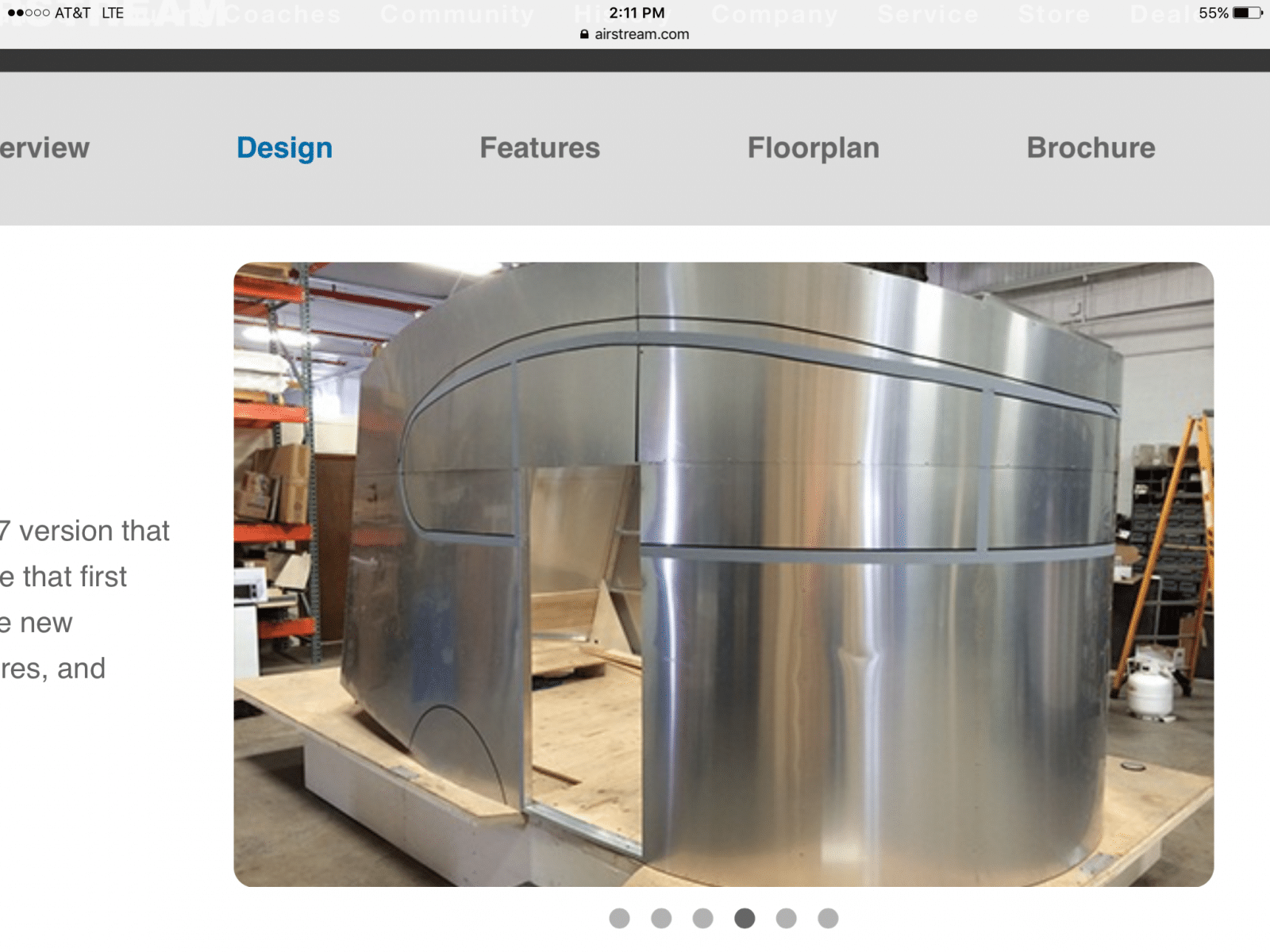
You need look no further than their own website....Notice the nice fat dent in the aluminum (front corner) and it's not even off the factory floor yet.....Not to mention the wood floor, conventional frame style, looking forward to replacing leaking rivets, etc. I've had several camp trailers in the past that have relied on wooden components, and they just don't stand the test of time. Glad to spend a little more $ for the strength of construction and lower maintenance of a fiberglass trailer.
1 point
-
If you have purchased a used Oliver Travel Trailer please call in to the sales office at 1-888-526-3978 to help us updated our vin list. Thank you for your help!1 point
-
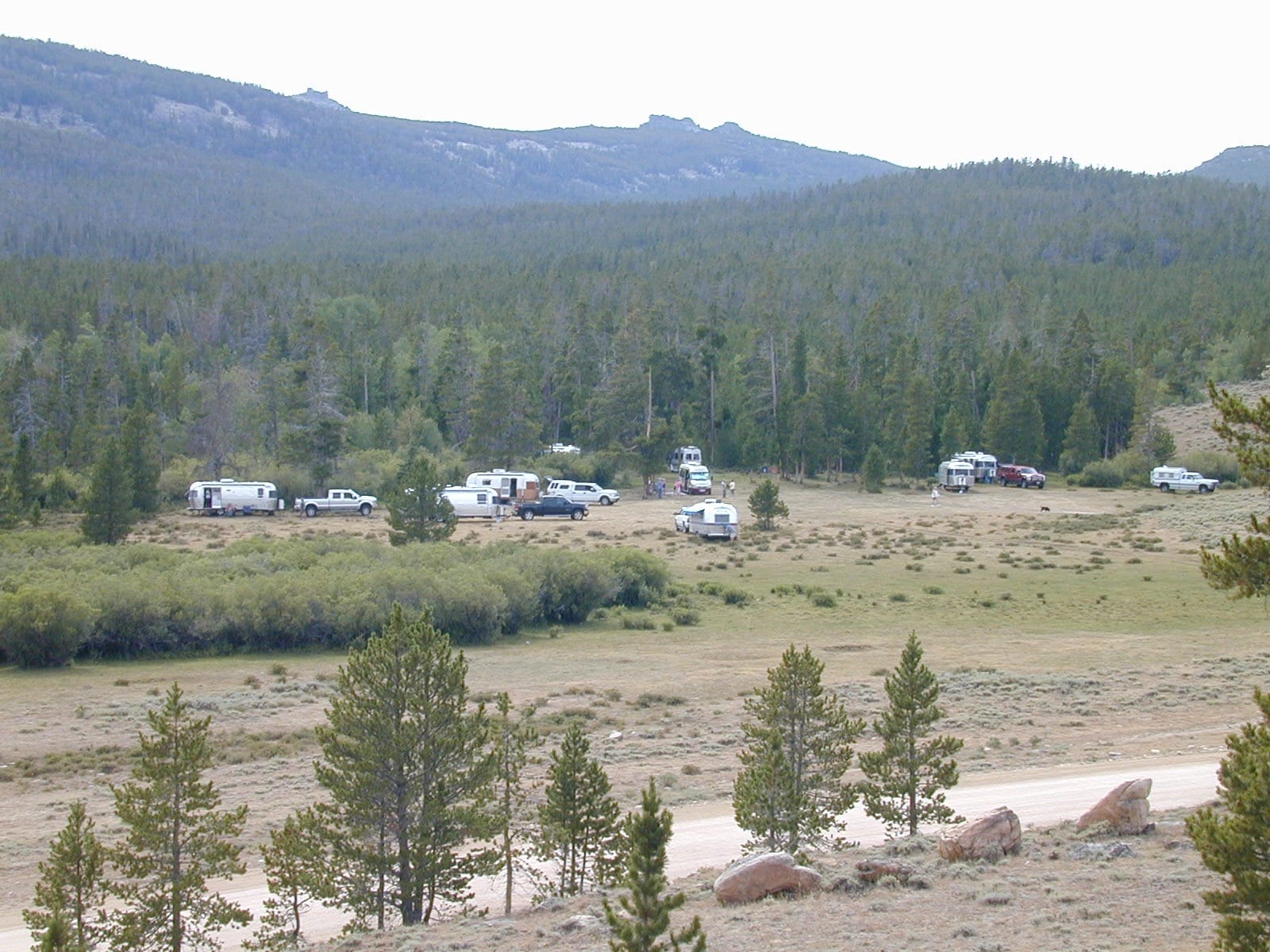
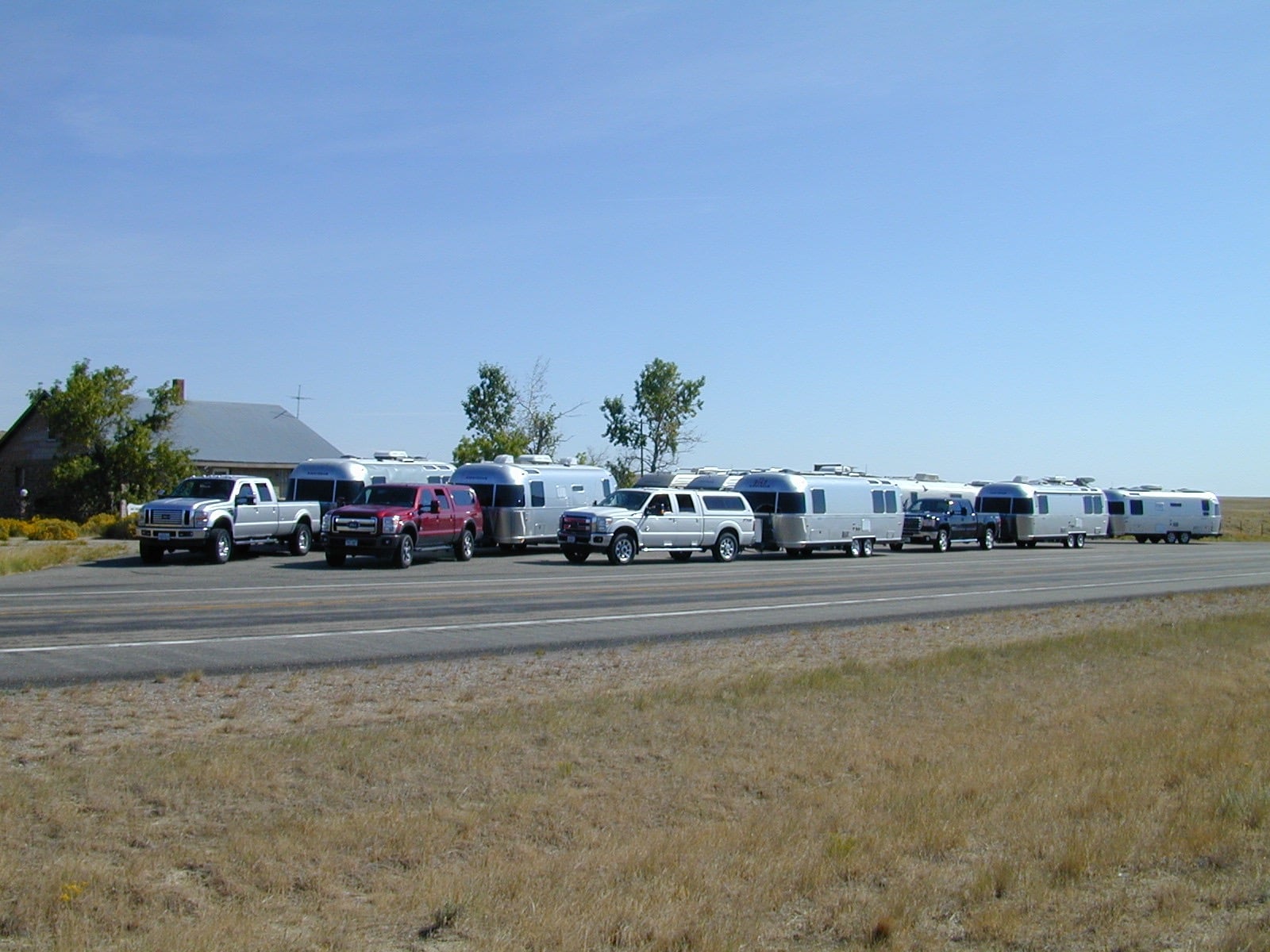
Oliver Elite and Oliver Elite II are the young Boondocking Trailers that are affordable for young families and designed for more than casual camping at a RV Park in a city environment. The Oliver has grabbed the attention of some fellow Airstream owners, who spend more time Off the Grid and Base Camping, than RV Parks with full hookups. Myself, included. It just that seeing is believing. I have attempted to have the two local Denver, Colorado owners to contact me through the Sales Staff, but no response. Being able to compare how each are assembled, ease of towing, interior cabinets and appliances being able to resist the rougher roads that come with traveling Forest Service and BLM roads is a sure test of any trailer. Being able to either Boondock with a Elite II, as I had a 23 foot Airstream and currently a 25 foot... these two trailers are Sisters. Some Airstream owners suggested that Airstream should have looked closer at Oliver for the younger adventurer who depends of quality of construction with modern amenities to support Off the Grid camping. Please, if you are in the Denver, Colorado or Las Vegas, Nevada area... contact me at boondockingairstream@gmail.com. I see a permanent friendship of two Sisters of Boondocking. (The one photo in forest is near Lander, Wyoming on the August 2016 Wyoming Adventure. There had BETTER BE some Oliver Trailers parked with us if there is a future Adventure. There is nothing better than having two brands of classy trailers to compare and talk about how one can improve the other.) (Second photo is group stopped near Medicine Bow, Wyoming at the Dinosaur Cabin near Como Bluffs on the first day of the August 2016 Wyoming Adventure. Yes... some day Airstreams will catch up with Oliver technology! But, I am not holding my breath.)
1 point
-
I used to quarter inch bolts with oversized washers. The area that the bracket is bolted to is cored and seems very strong. The weakest area seems to be where the tv bolts to the bracket when stowed and I think I will use some padding between the overhead and the tv while traveling. All in all It works great, nice having it out of the corner. Marc1 point
-
This is on my list of projects. Glad to know the existing hardware can be used! Thanks. Mike1 point
-
That was exactly my thought! But I didn't think of using the existing bracket (DUH), I was concerned about the weight of the whole unit while underway and some of the back roads in the west. Did you use a backer plate to reinforce the support or did you just use the screw mounts as it was attached to the wall?1 point
-
Anybody know what has to be done to get the backlight to work in the thermostat on 2015 Elite II, and is there an adjustment for the temperature anticipator. Thanks Marc1 point
-
Thanks for thanks for the reply Buzzy, that's not the one I have a Colman with a black RV comfort I think it's made by Colman. The display does not light up and is hard to see at night guess I'll have to ack Tommy about it. Marc1 point
-
Leaving that open or closed shouldn't matter, I would think, there is a breather/vent pipe for the kitchen sink, which is open to the tank, under the counter behind the upper right drawer, which would allow flow for draining and grey tank odors to escape. I would guess your odors came from the dump station venting back up the connection (not your grey tank) and into your trailer, which would have happen or the sink vent anyways, probably won't happen at a different station. This is why I would NEVER leave my grey valve open at a full hookup camping location. Edit: and I think there is a trap in the grey line from the shower floor drain, but I'd have to double check to confirm this.1 point
-
Stan, if you are talking about the shower drain in the floor, we leave it open when we drain. No odor issues. If it is the handle on the lower wall, we keep it open too, with no odor issues. We tried draining once with it closed and it seriously slowed the draining process. As soon as I pulled it out, whoosh, gray tank drained! What I remember from our orientation was that it should be closed for travel, but open the rest of the time.1 point
-
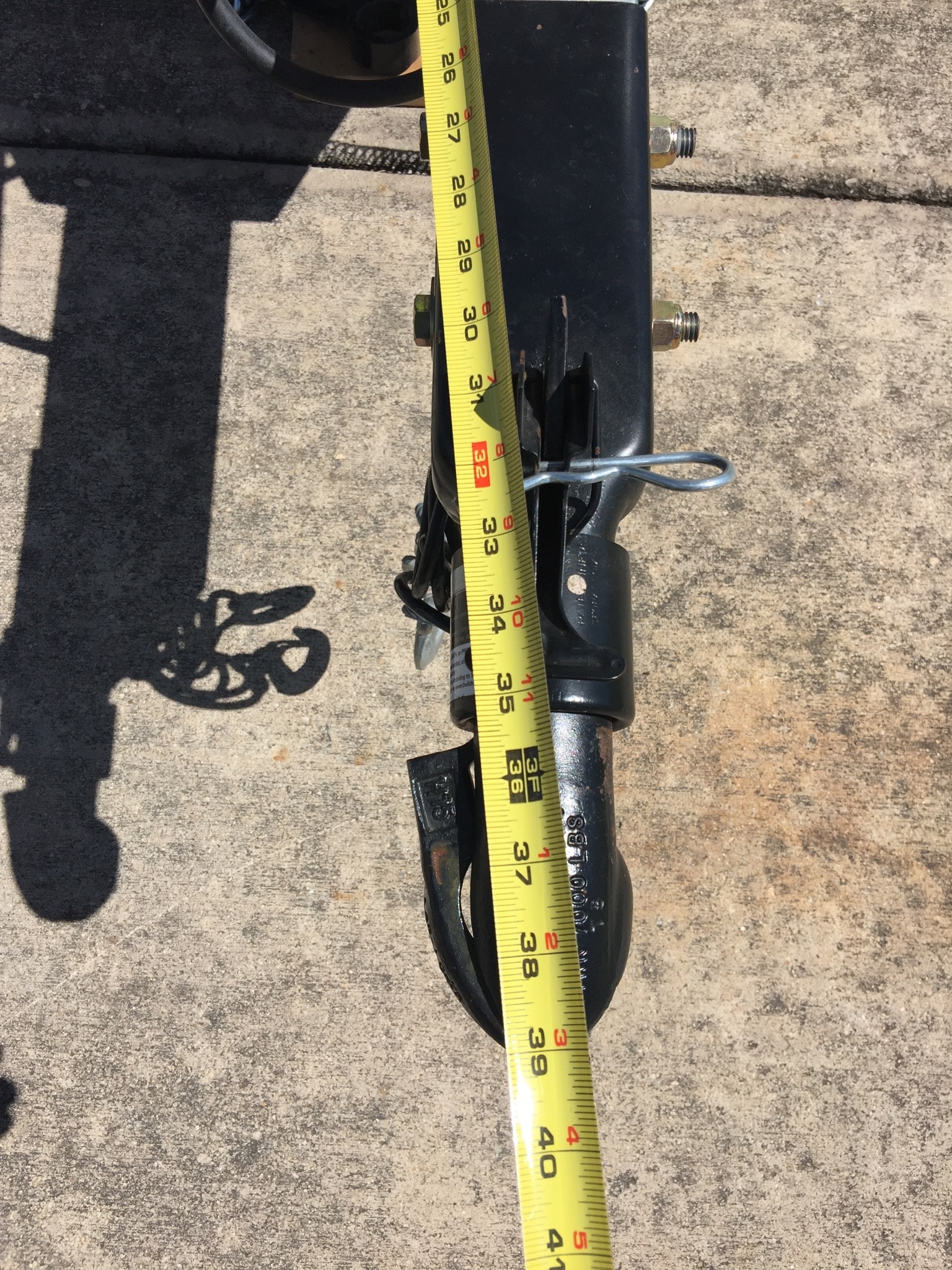
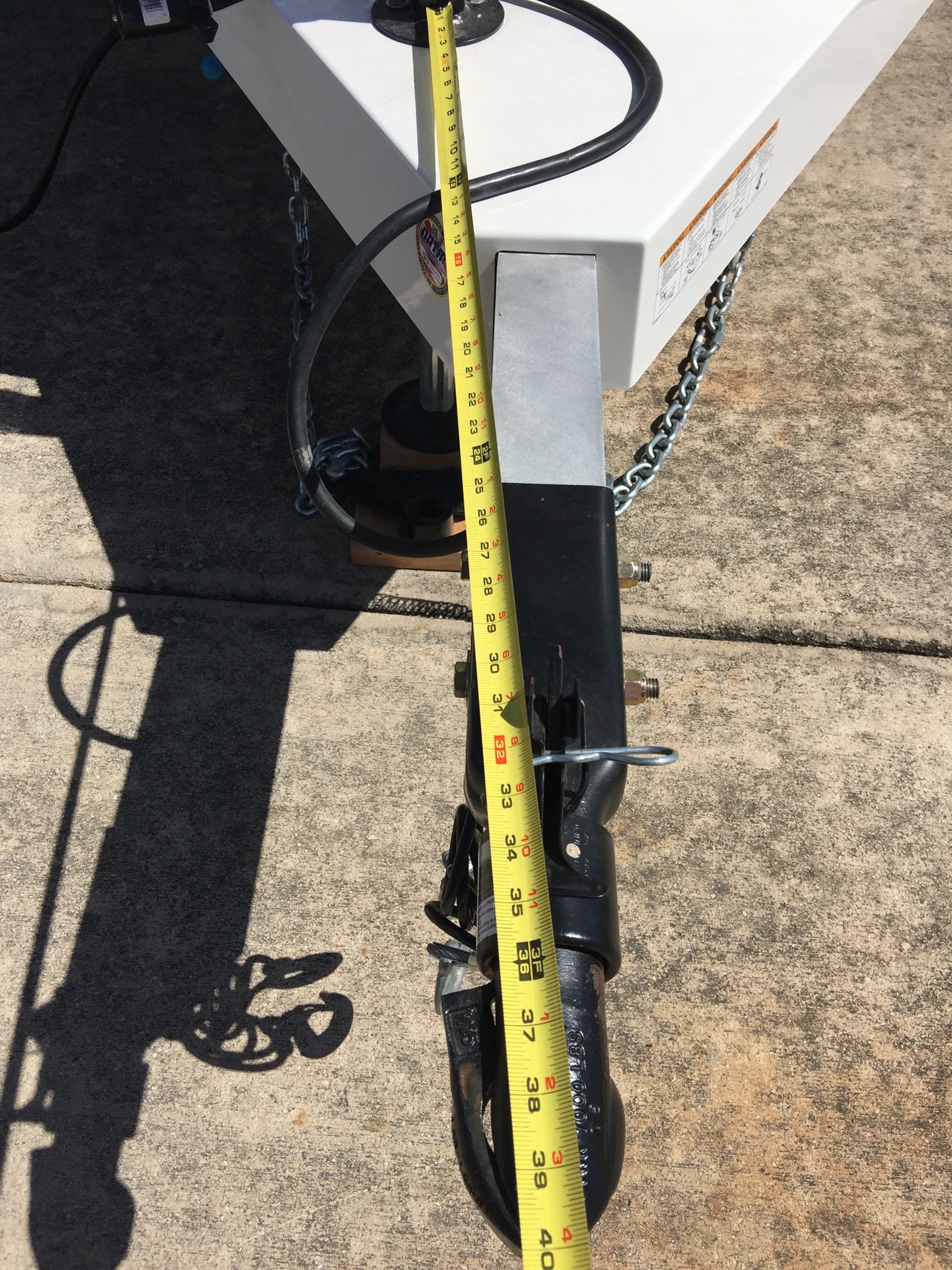
We are out camping so I just grabbed my tape measure and took a couple of pics. It is not adjustable. Looks likes about 38" from the center of the hitch to the jack.
1 point
-
John, I believe all current trailers coming off the line are being created with a tongue that is not adjustable. Folks were simply not in the habit of changing their tongue length, for the most part, and the new units' tongue is now a massive hunk of extruded aluminum to provide incresed structural strength. (They are always tweaking the design for improvements). The length of new tongues is set at about the middle extension of the older, adjustable ones. This will allow folks who desire an accessory basket on the front to have one. Perhaps a new Elite II owner could measure the distance from the center of where the Bulldog hitch would sit on the ball to the electric jack, which would be the first obstacle. Then you could compare it the the measurement from your hitch ball to the end of the down tailgate. Shoutout to any of you "big guys". How 'bout a little help! Pete1 point
-
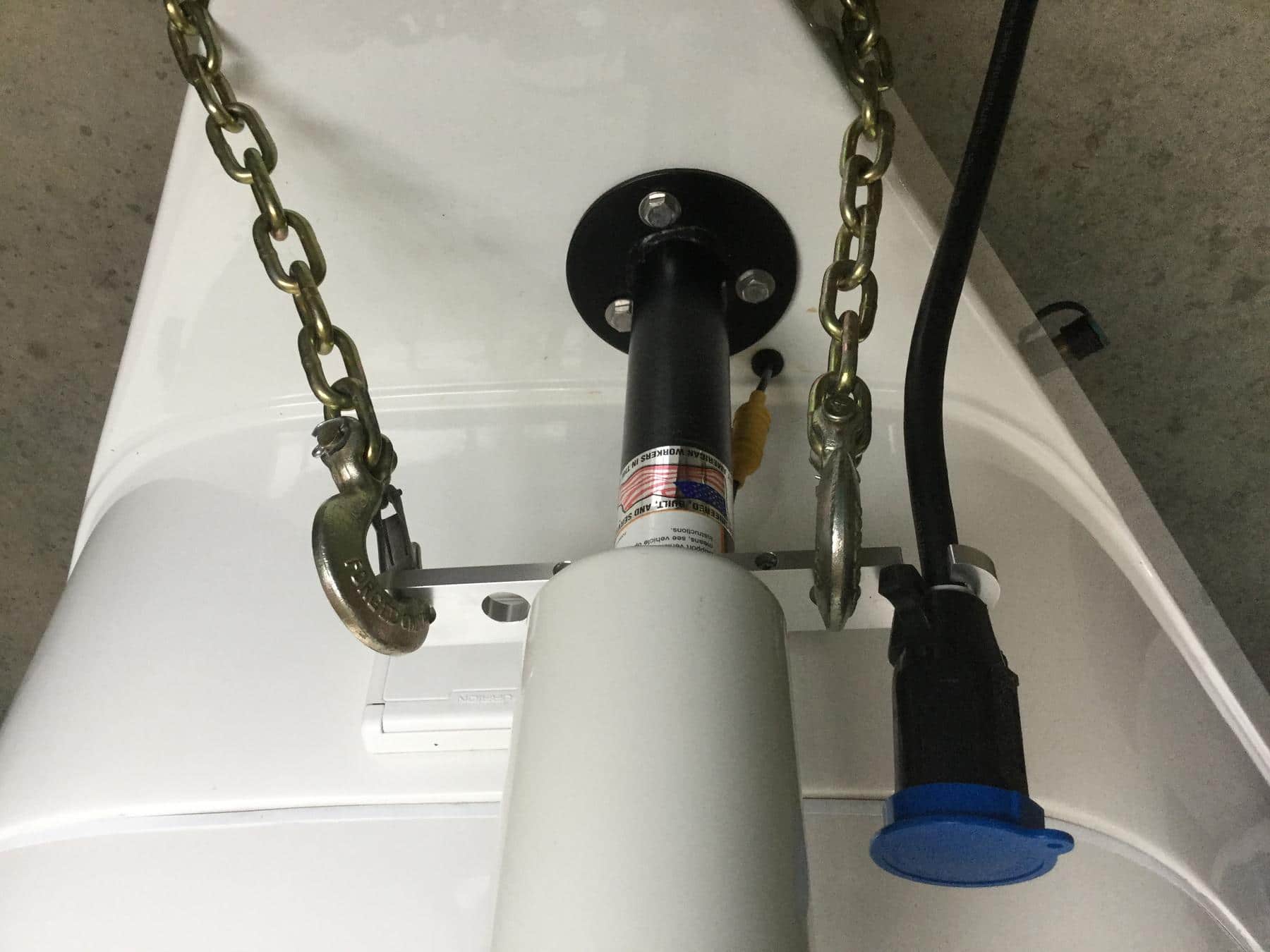
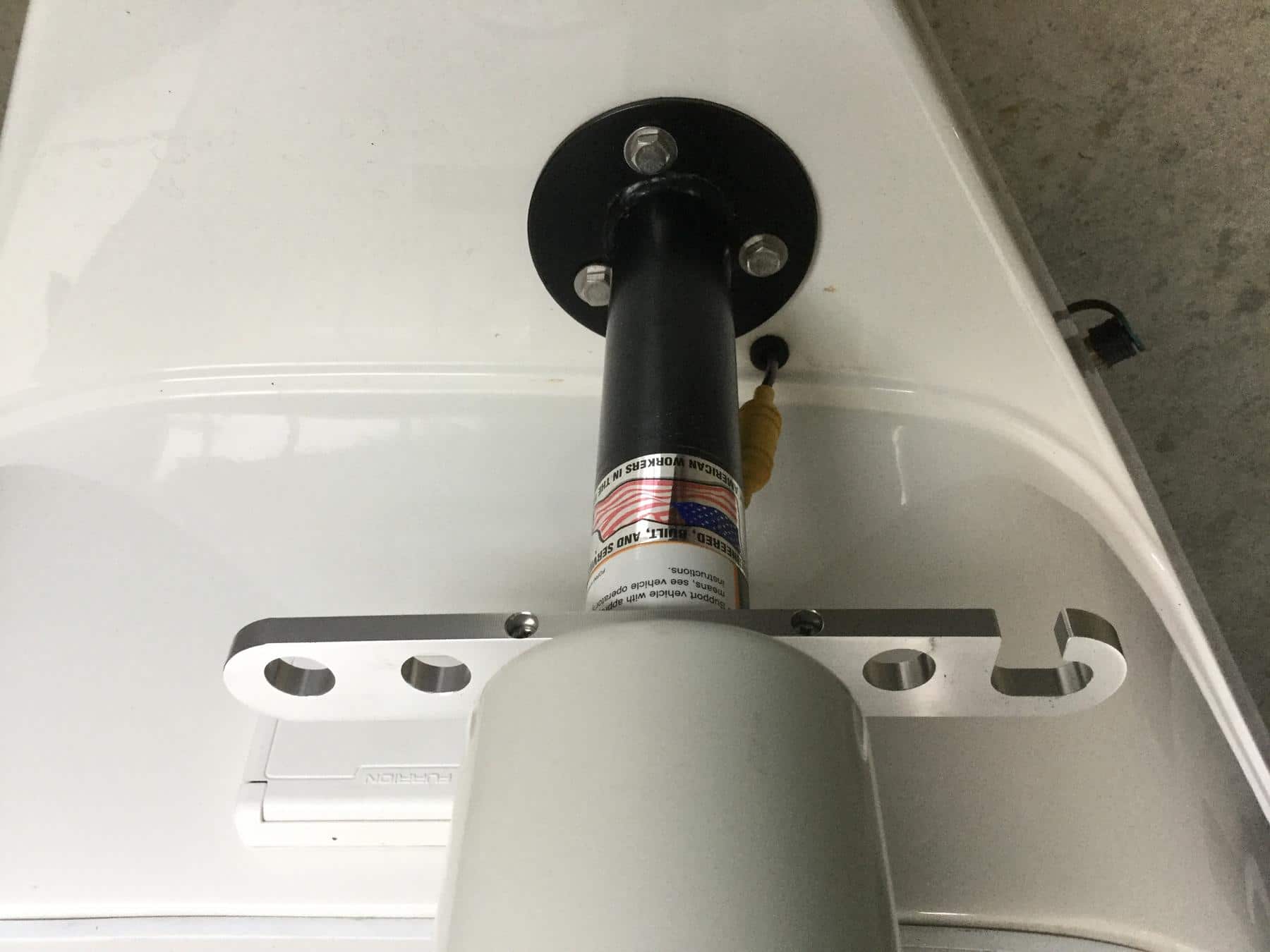
I have had a problem with my chains falling down in the campsite at night and getting dirty or even worse, my TV electrical plug falling and getting sand in the connections ! I have found this "gadget" from GR Innovations LLC, that solves this problem. This is a metal plate that attaches to the front Jack and has 3 holes and a slot. The slot is to place your TV plug and the holes are to put your chains in. (One extra hole!) The black Towing Organizer (I think it may be hard plastic) sells for $19.95 and the aluminum unit sells for $29.95. Both come with the blue 7 way plug cover or it can be puchased separately. It includes everything you need for installation which takes 2 minutes to install the two bolts and tighten. I did not buy the plug saver tether, I prefer to make my own. The chain saver organizer is well built and easily installed coy The address is grinnovationsllc.net
1 point
-
Please understand that the OLIVER FORUMS is not the OFFICIAL OLIVER WEB SITE. And, although the Oliver Forums is recognized and supported by OLIVER TRAVEL TRAILERS, it is intended only for the RECREATIONAL use of Oliver Enthusiast. For specifics about engineering aspects of Oliver Travel Trailers, please direct all inquiries to the OFFICIAL OLIVER WEB SITE. http://www.olivertraveltrailers.com/1 point


















-
Recent Achievements
-