Leaderboard



Popular Content
Showing content with the highest reputation on 12/11/2018 in all areas
-
Like Mike, I too bought an extra 25' water hose and have used them both. I often need the extra length while "camping" at friends' houses. At campgrounds that have water, you never know what side of the trailer the spigot will be, but 25' usually works great. If water is provided at your camp site, it is always best practice just to disconnect your hose at night and let the water drain out of the hose and your trailer (it will drain from the supply side of your backflow valve and out). Full timers will go to the trouble of heat tape and insulation, but for the traveler it's really not necessary. You also would need to tape and insulate the frost-free spigot or risk freezing and busting that and incurring a hefty bill from the campground owners. It just takes a couple of minutes to disconnect and stow your hose in the TV, and let the freeze come! Dave2 points
-
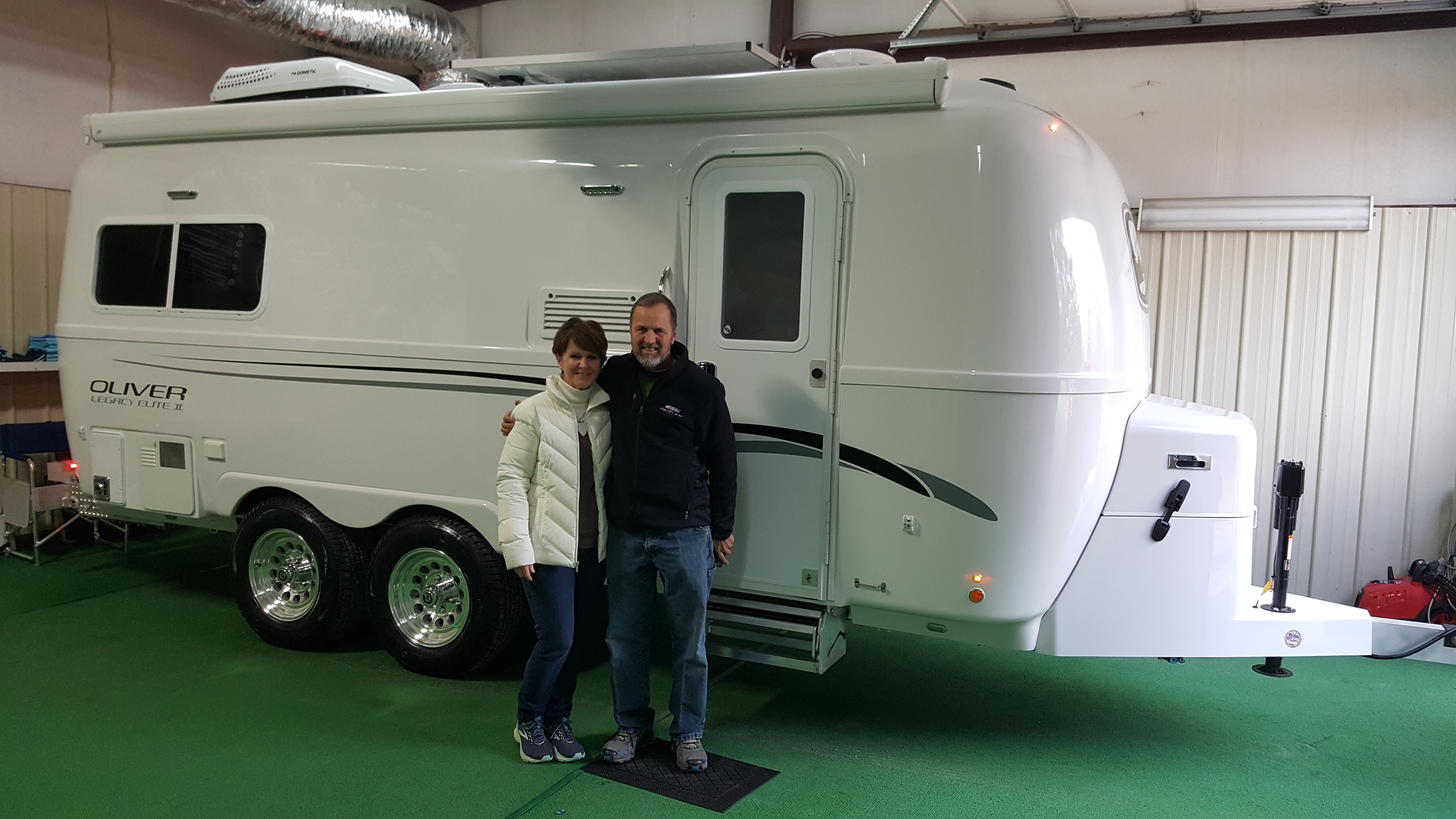
<p style="text-align: center;">We arrived at the Mothership at 9:30 AM and departed at 3:15 with Oliver Hull Number 412. We drove to David Crockett State Park and got set up. Oliver picked up the tab for the site. It is a beautiful park. The campground host stopped by and made sure things were good. The Oliver was winterized when we picked it up and we decided to leave it that way while we camp the next couple of days. Oliver gave us a couple of camping location options and we are very happy that we chose the state park. After spending 150 nights in a tent last year, this is total comfort.</p>
 1 point
 -
Hi Darryl and Kim, Have you looked in the radio manual yet? Here is a link to the Furrion 2018 manual: Furrion Radio Manual On Page 5 it talks about pairing the bluetooth device with the radio. You can also call our Service department for assistance: 1-866-205-2621 if you would like.1 point
-
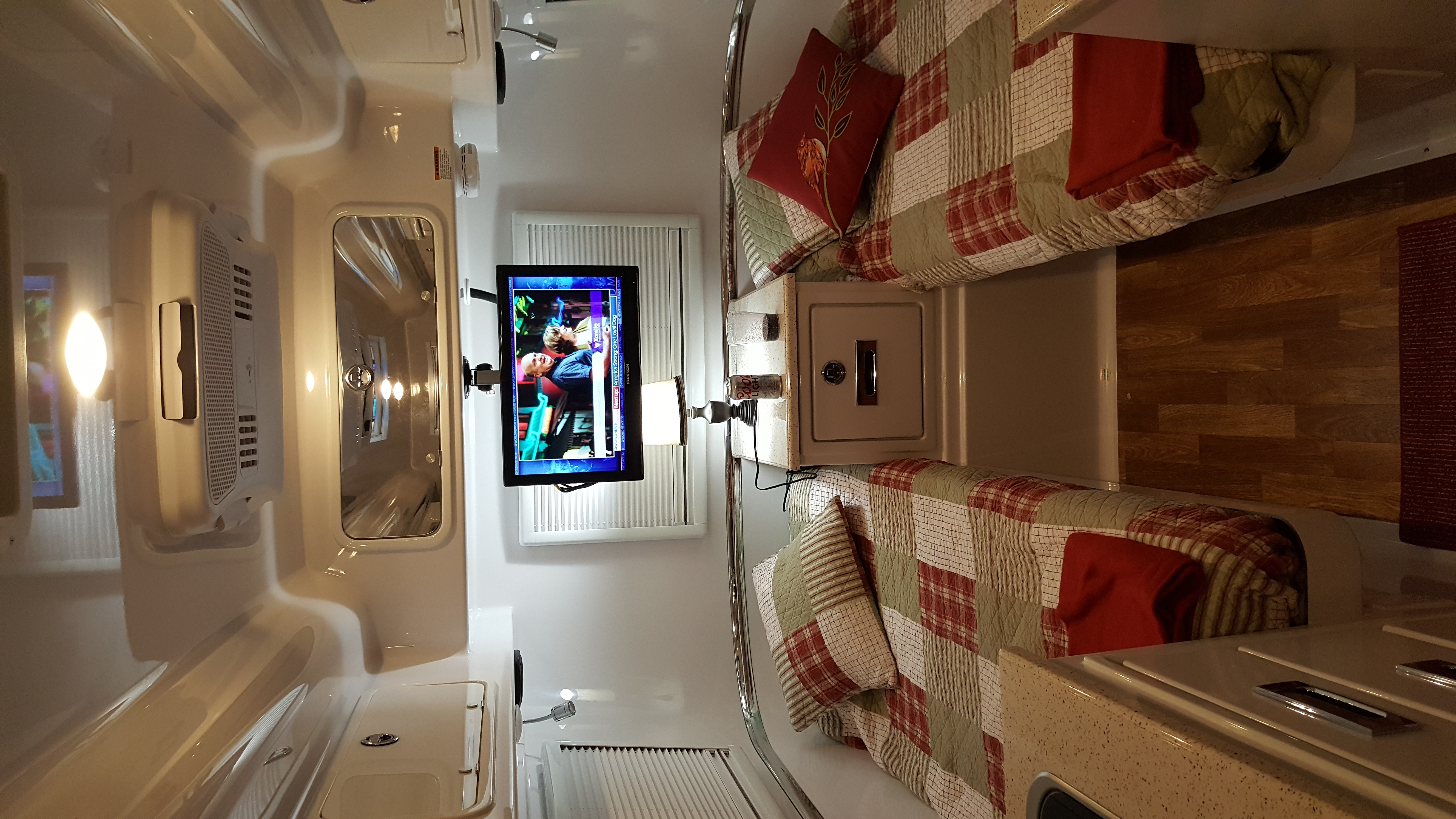
Congrats to my wife for quick decorating and making it feel like home.
1 point
-
I bought a 25’ fresh water hose and keep the 25’ that came with our trailer in reserve. I’ve had a couple of sites where I needed both to reach water. I also have a 10’ and use it when we’re close to water. I bought some heat tape but have never used it. We’ve camped in cold weather and usually just disconnect the hose when it gets in the 20s and use the fresh tank. Mike1 point
-
25 is minimum length to go with. I always carry an additional 25 but have seldom needed it. Sorry - no advice on the heater tape or heated water hose. Bill1 point
-
25 feet is essential. I have not needed more. I have certainly needed more than ten lots of times.1 point
-
@TexasMarshall We sincerely apologize for the issues you have had. We are passing along your comments to quality control. If you still have issues, don't hesitate to call the service department at 1-866-205-2621.1 point
-
My suspicion is that the water stopped at the rear due to you removing the source (water from the city inlet.) Further it is probably still dripping from the front due to the amount of water that has collected along the length of the trailer. Lower the front end slightly and see if the water won't run out quicker. The quicker you get the bulk of the water out, the better off you'll be but there won't be any lasting damage. Probably just a small leak. For the repair, some of this or this might be easier than dealing with the teflon tape.1 point
-
I can almost guarantee that you had the awning arm rotated the wrong way like Tom suggested. I did that once and scratched my head for five minutes trying to figure out why it wouldn't work before I realized what I'd done. It's just like you describe, that the foot is too long to make it past the retainer. It's probably one of those things that Oliver needs to add to their orientation, since I'm sure it's confused others as well. I managed to get mine out of the grooves on our first trip as well, and actually broke one of the little metal guide fins off the arm trying to get it out. But that too was my fault since it was pitch black and cold and I was rushing to get it in when the wind picked up suddenly. I suspect that, again like Tom said, I'd twisted the arm the wrong way and tried to jam it in. Fortunately, the broken guide fin doesn't seem to make any difference. By the way, after examining mine afterwards, I think if that ever happens again, you can unscrew the endplate on the awning and that will relieve the tension to let you slide the arm back out and get it re-situated. For what it's worth, after those first few learning experiences, I've had no problems and with a little practice they go up and come down without much thought or effort. I've found that they don't quite close up perfectly flush, which bugs me for aesthetic reasons, but I don't think it's a problem otherwise. I do feel like the orange tabs will eventually break, and I've been meaning to order a spare just in case. I don't know if the Fiammas are any better, but I don't think that Oliver had much of a choice at the time. Perhaps the Dometic awnings are better made, though I doubt it.1 point
-
Welcome to the Oliver Family! Some thoughts from a first year OTT owner: First the comments by Top Gun are spot on. When time permits, slowing down and enjoying the ride is THE way to go. But, at times that approach is not in the game plan. During summers, I am generally "On a mission" to get to paragliding competitions and fly-in's that are scattered across the continental USA. When possible , I love to stop at National Parks (using a Senior Pass of course) and to explore small towns. However, at this point in life, such is not my norm. Generally I have not enough time between distant events and covering those miles requires me to roll. Below are some thoughts and trip planning parameters: A. Are you team driving or solo driving with a navigator? Even with all the electronic maps and tools, having a navigator and partner is really nice. Having a partner that also is good with driving with a 5,000 + trailer is fantastic. B. What is your tow vehicle rating? What motor are your running? What is the size of the fuel tank? These are considerations that can help or hinder your goal of covering a lot of ground. My Toyota Sequoia with the 4.7L rolls great on the flat lands, easily running at the posted speed limit or above. Our Elite II tracks exceptionally well and due to its weight and shape behaves very well with faster truck and cross winds. But on mountain climbs, my small motor requires use of the 4 way flashers and generally relegates us to the right lane. C. The Sequoia fuel tank does wonderful solo (18 MPG), but with Ollie in tow we are running about 11 MPG or so. Seems like a lot of extra fuel stops that requires more time than they should. D. Especially out west, the distance between fuel stops can easily exceed the range of my vehicle towing Ollie. I carry a 2.5 gallon fuel can in the front tray of Ollie. Have not actually needed it, but I sure have been worried on more than one occasion. E. Regardless if your tow vehicle is on the wimpy side, as mine is, or a diesel monster, you'll likely not cover the ground as you are used to towing a trailer of this size. For planning purposes, I recommend an average speed of just 50 MPH. At ten hours it is 500 miles. With a partner it is feasible to do so for three or four days. After that, rest is strongly recommended. F. Hopefully you will have the time to really explore the OTT Forums and also the Oliver University. There is a huge amount of good information in both. Highly recommend you download all you can from these sources. G. Finally, if you run into a problem, try to figure it out from the Owner's Manual before calling OTT. If it is not covered therein, search the Forums. There are thousands of topics covered in the OTT Forums. If you strike out and still don't have the information you need.... post a note to the forum. There is a herd of OTT owners listening every day, and several of them likely solved the same problem in years past. When I made the decision to buy an Oliver, it was the welcoming and positive responses I got from the owners and the OTT team that made me confident in my purchase. So bring your laptop and use these tools to help you through the learning curve. Good luck! Geronimo John1 point
-
Darrell & Kathy - Besides a very small ceramic electric heater, I also carry a Mr. Heater "Buddy" propane heater. The one I have will work from a single one pound propane bottle (Coleman and the like) or from a long hose that you can connect directly to your main propane tanks. It includes a tip over switch and a low O2 sensor but I always leave a window cracked when using it. Those one pound bottles can get rather expensive ($3-$4 at Walmart and up to $6 in specialty stores) but it works great and uses no electricity. Bill1 point




-
Recent Achievements
-