Leaderboard



Popular Content
Showing content with the highest reputation on 01/13/2019 in all areas
-
https://www.youtube.com/embed/B2AEkfjc6-o?feature=player_detailpage Bill2 points
-
Costco carries the perfect size runners for that area, two fit perfect and then get one small one for the front door. Sure helps when you get in sandy or like those going out to Quartzite right now. Good ideas and make it your own have fun and safe travels. Thanks Gary
 1 point
 -
That’s a hoot. I totally agree, especially if you have to do chores like buying supplies or lumber. Carrying a long load of studs or heavy sacks of manure in a really nice SUV gets old really fast. I have had a couple of pickups (1500 Chevy and 3500 Ram) and decided that for me a small utility trailer and a nice SUV makes more sense. But there is nothing as satisfying as pulling up to the loading area at Home Depot, dropping the gate, and having the guy drive his forklift right up to it, and lay all those big sheets flat on the bed. Woohoo. For an inner city dweller the equation gets completely dfferent due to tight streets, low parking garage clearances, no need for landscaping etc. In that case, I really don’t understand why anyone would want a pickup as his only vehicle. It does not compute. My son lives in Redmond WA, outside of Seattle, and the ONLY pickups you see there are commercial contractors. Everything else is high end SUVs, Teslas, sports cars and dirt free tricked out Wranglers. LOL. John Davies Spokane WA1 point
-
They do grow on you. My experience was the same and even my wife wants one of her own now.1 point
-
With our LE II is still in production, I went through a LONG and detailed process of selecting a TV. Like you, I had never owned a truck and was used to small wheel based vehicles (my trade in was a Porsche 911 4S). I cannot give you expert advice about towing an LE II, but I can comment quite extensively about going from a small car to a MUCH longer TV. It was cathartic. After extensive research, I purchased a 2018 F150 (max towing 11,300 lb) for the express purpose of pulling the LE II. I was never a "truck guy" - but now I am. I went into the relationship with a chip on my shoulder because I gave up the 911 (a car I had dreamed of since I was a kid). Not only have I become comfortable driving the longer vehicle. I LOVE THE TRUCK. I am likely to own a truck even if I don't need it as a TV. I believe that there is an "inner truck" in every man. Just saying.1 point
-
Frank - I use two runners for that area. When it is time to "clean", it sure is a bunch easier to roll up one of those shorter ones at a time and shake it out as opposed to wrestling with one long one. Also, since more or your "dirt" will be at the front near the door, I chose to add a third "runner" just for the area from the door to the seat near the bath and keep the other two even shorter. Obviously this allows me to take up the door mat more often without having to move the others. Finally, the one in the "bedroom" is nice and soft, the one in the "kitchen" is easily cleaned (think spills here) and the one by the door is "all weather". Bill1 point
-
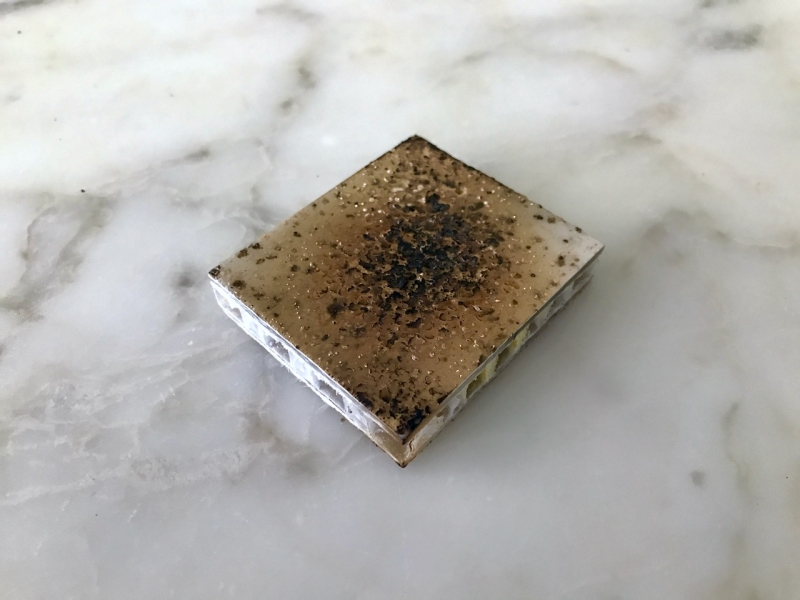
The rule in fiberglass boats is that if you have a fire, you jump; i.e., don't try to fight the fire. Yes, like the Ollie, boats come with little fire extinguishers, but really - just jump. The fumes that come from burning plastic (i.e., fiberglass resin) are pretty nasty as they can cause a lung spasm that prevents you from inhaling. That's not something you want. The RVIA has some minimum flame spread requirements, though I believe that those only apply to the exposed surface of the materials. So since the Ollie is RVIA certified, it's probably a safe bet that the surface gel coat throughout the inside contains a flame retardant of some sort. But, what about the bare resin between the hulls where my electrical or furnace fire is going to start? It would be nice to know if that material is also flame retardant or not since, in the unlikely event of a fire between the hulls, that knowledge would probably might make the difference between deciding to grab the fire extinguisher vs evacuating and watching Ollie burn. To the laboratory! To find out, I did some torture testing on one of the fiber granite samples that Oliver gave me. I held a torch to the sample for 10 seconds and then removed it so see if the sample had caught fire and if the fire continued to burn on it's own or if it died out. I did one test in the middle of the sample to test the gel coat surface, another on the edge of the sample to test the structural fiberglass within, and then a final surface test on the back side of the sample. On the first surface test, the sample blistered badly and did catch fire (slightly - it sort of sizzled and popped), but as expected, the flame died quickly when I removed the torch. Clearly, the gel coat contains a flame retardant of some sort, though the fumes were pretty nasty. On the edge test, however, the underlying resin quickly caught fire, and after removing the torch, a good steady flame with thick black soot remained and I had to blow it out. On the final surface test, the resin again caught fire, this time more of a steady flame than was produced on the gelcoat side, but as with the gelcoat side, the flame died after removing the torch. That side smoked a good bit afterward until it cooled. So if the fiber granite is any indication of the other fiberglass in the trailer, which I would think is safe to assume, then it would seem that Oliver does use a fire retardant resin for their gel coats but not in the structural fiberglass within. And it seems like they also do a coating on the inside surface that contains a flame retardant, though perhaps not as effective of one as they use in the gel coat. Verdict - If I have a small cooking fire or something similar within the trailer, I'll likely reach for the extinguisher. But if there's a fire within the hulls, then I guess it depends. If the fire is going strong enough to produce visible smoke in the cabin, then I would guess that the fire has already reached the inner core of the fiberglass and wouldn't easily be put out. In that case, we're getting out PDQ without a thought for saving the trailer. (And then we'll stand well upwind of the fire.) But if we were to catch a fire before the fiberglass began to burn, well I guess we might grab the extinguisher? It's hard to say - I'd have to call it when I see it, but I wouldn't hold a meeting to debate the question. That's probably common sense anyway, so I doubt if this thread is revelatory. But it is good to remind oneself occasionally not to mess about with things like this. I'm thinking that a handful of the tiny Atom smoke detectors placed strategically inside the access hatches might be a Very Smart Thing. I think you'd want to catch a fire between the hulls as quickly as possible and not wait until you get smoke inside the cabin. I'll probably ask Oliver to use one of those for the inside as well, since the one they use is so bonkers big. Oh, Verdict #2: Don't put anything hot on the fiber granite. It will leave a mark. Our victim test subject.
1 point
-
We’ve used runners from Walmart and Costco. Some were 20” wide the current one is 22” wide. Right now the one we have goes from the nightstand to the middle of the pantry and then bare floor from there to the bath. We have used two runners to cover the entire area. It’s all personal preference. Your measurements sound right. Mike1 point
-
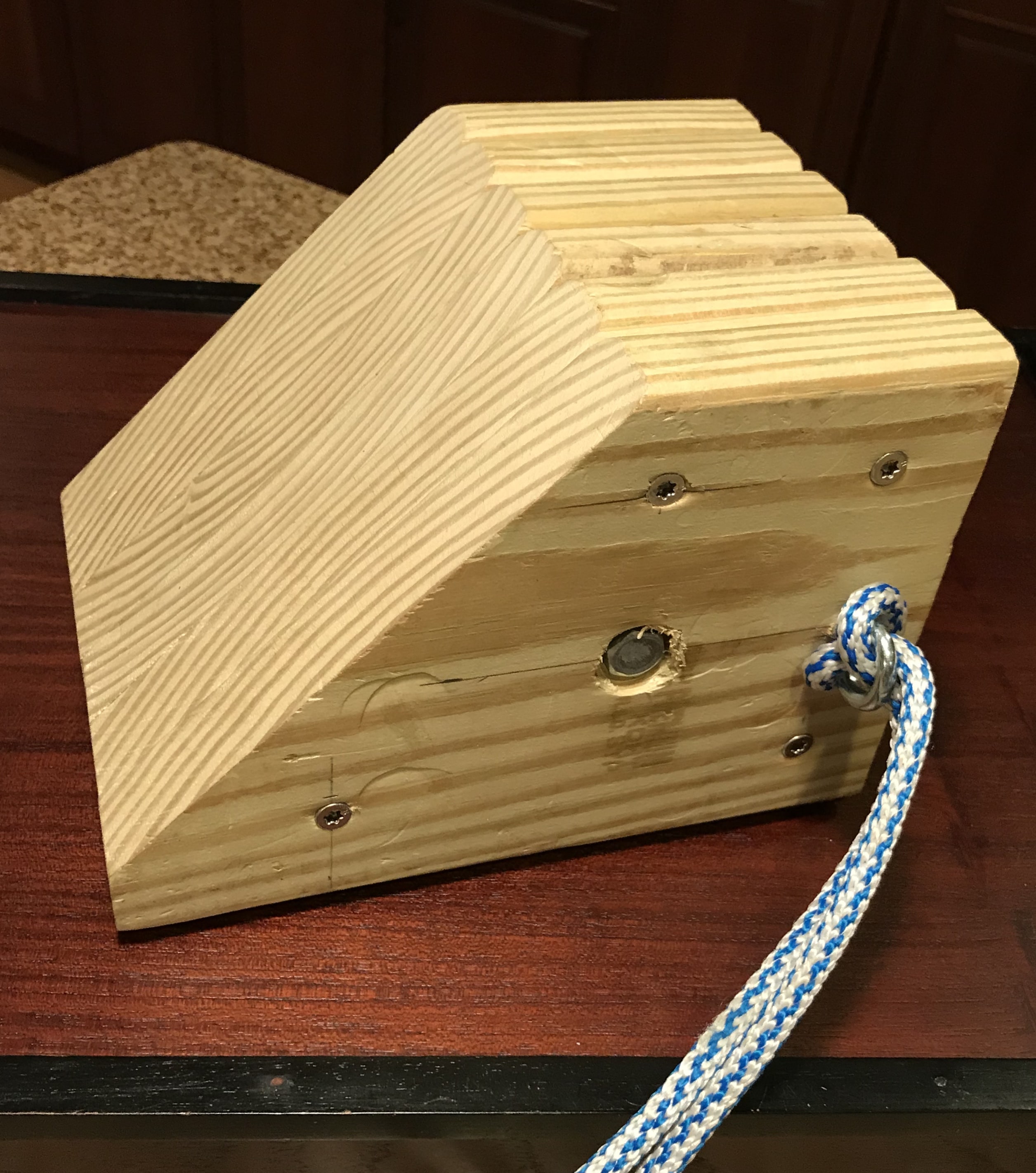
Just thought I'd pass along my home-made wheel chock design. This one is 5 1/2" high, 6" wide, and 8" deep with a durable rubber bottom to increase grip with the ground. I had thought about buying plastic chocks from Andersen (or competitor), but they seemed like they would not grip the pavement.
1 point
-
Happened to us in Texas. We went away for the day, and left the bathroom sink dripping somewhat. By the time we got back to the site we had flooded the bath and upper hallway with water running out the upper hallway (at least it was clean water). A neighbor had noticed the water and turned off our water supply. From that day, to this, I turn off the water supply when leaving for an extended time.1 point
-
p.s. I do have one of those "electric swatters". If you have any doubt as to what they do - just go ahead and turn it on and touch the swatter. Don't ask me how I know this! It probably takes a rather perverse sense of humor, but, there is something about seeing and hearing a mosquito meet her maker on that little swatter thing. Rather get the mosquito than the mosquito get me. Actually, while camped on the South Carolina beach this past summer, we apparently set up our small Clam shelter over a "nest" of hatching moths. The first ten minutes or so were spent wildly batting these little suckers into the afterlife. Perhaps "Mothra" is now out there somewhere looking for me. Bill1 point
-
I suggest a Bug A Salt for kicks. Have one, love it. And camp with someone who tastes better than you.1 point
-
Florida is pretty flat lessening the need for rails to trails. If the opportunity presents itself, I suggest you ride Hwy 30a in the panhandle. Might be able to reserve a lot at Gulf Shores State Park. I have ridden 30a several times and always enjoy the scenery and activity. Oh, you don't have to ride in traffic, there is a paved trail alongside the road (at least 90% of it). Still, at times, I move onto the highway for purposes of speed. Enjoy your trip.1 point
-
People shop towing capacity and space but what we’ve found is that it is the towing convenience features of full size pickups that really make the difference in real life. Things like extra cameras, backup assist and blind spot detection that extends the length of the trailer are huge, yet they’re things that you don’t appreciate until you’re using them. We looked at the new Disco and while there was a moment of temptation, I’m glad we went with a truck, despite its size. You get used to it pretty quickly and you’ll probably find that the utility of having a truck in the family will offset most or all of the size inconvenience.1 point
-
Kathryn and Chad: I agree with JD on the top off road/durable SUV if cost is not an issue is the LC 200. But the new Land Cruisers are really expensive. There are some available in the used market, but because they are so so strongly sought after by the off-road users, even the used LC's are very pricey. I looked at the LC as my first choice, as they really are designed to be durable and reliable for 20+ years. But the availability and cost is an issue. A good non truck TV fall back is the Toyota Sequoia. I use an ancient one (2005) as my TV. Unfortunately, (as advised before buying my Ollie Elite II by JD), the high speed rear end and the small 4.7L engine just would not cut the mustard in the mountains. He was spot on. If you look at the Sequoia's, be sure to get the 5.7L engine, 4WD with towing axles. The extra 100 lf-ft of torque of the 5.7 vs the 4.7L is a tremendous advantage over mine. Due to the age and mileage on my TV, I am looking at vehicles that are both durable, and powerful. I think that the F250 would be the best long haul TV, but finances may drive me to a used Sequoia that was set up as a tow vehicle. The Toyota forum is hinting that they will be bringing out a new updated Sequoia in the next year. That likely will reduce the cost of the used ones that will be put on the market as trade in's for new ones. Just something to consider. One key factor is how many passengers you need to carry. If it is just the two of you, then maybe a standard cab F250 may be a very reliable and safe selection, but not have the length issues you are concerned about. If an SUV is desired with its greater passenger room, then the Land Cruiser (Best)/Sequoia (Good) are options to at least look into. What ever way you go, it is very important that you get towing axles, not the high speed ones... especially if the primary purpose of the vehicle will be towing your Ollie Elite II. Geronimo John1 point
-
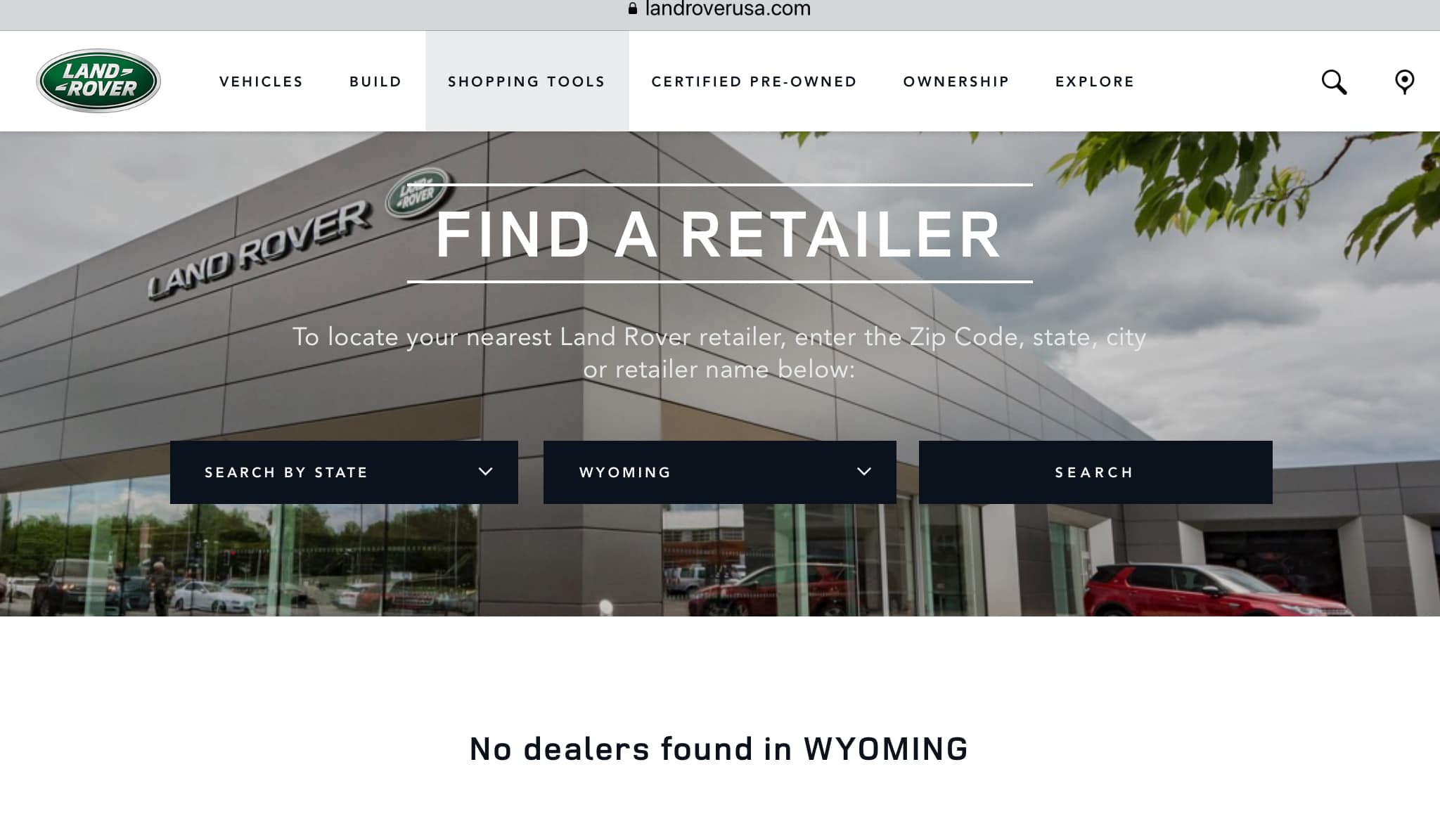
Welcome to the forum, Search is not very useful, as you found out. How many miles do you plan to drive, towing? Not towing? Do you plan to go into the high mountains of the West? Do you live and drive in a big city? I can't comment directly on the Disco, other than the fact that nobody buys these with towing equipment should raise a HUGE red flag. These are not reliable vehicles in the best of situations. I would never chose to tow more than a small teardrop or utility trailer with any Land Rover model... you won’t find a shop that can work on one in the middle of nowhere. Think about it. The Q7 might be a good choice. It does well pulling the bigger Ollie. It still has the problem of no dealers outside of the bigger urban areas, and Audi VW vehicles require many specialty tools to work on that most independent shops would not have access to. The big Mercedes SUVs would do the job. Same probelm with service. For each brand you are researching, check for official dealers in the places you will visit.... All these brands are super expensive to repair when out of warranty. If you buy an extended warranty or trade in often this would be a non- issue. Don’t obsess over run flat tires. They can be replaced with regular ones, and you can throw a spare tire on the roof for a long road trip. They are definitely a negative, but you can find a safe solution. You might consider a full sized medium wheel base SUV like the Aviator you mentioned, but many are a little marginal in terms of trailer capacity. The problem is the shorter wheelbase, which makes the rig less stable than a full sized pickup on bad road surfaces and cross winds. Have you considered a newer Land Cruiser or Sequoia? They have the same brute drivetrain as a Tundra and even the smallest city in remote areas has a Toyota dealer. They are wonderful on the open highway and not bad in town, the LC has full surround cameras and proximity warning. A LC 200 was my final choice for a powerful, bulletproof, luxury road tripper that will safely pull my 6000 pound Ollie. I have no regrets. I never worry about finding a place to fix it in remote Wyoming, though there are dozens, since they never break.... they are the best built vehicles on the planet. http://olivertraveltrailers.com/topic/land-cruiser-200-towing-thread/ The Elite II trailers are small and sleek, but when well equipped they are pretty heavy. Don’t buy an inadequate TV. Don’t expect to load down the tongue with a lot of cargo, keep it as light as possible .... too much tongue weight is your main enemy. You are doing your research before buying either, which is the right approach. Good luck on your quest. John Davies Spokane WA
1 point
-
<li style="text-align: left;"> Prepare to be astonished John, as Oliver does indeed make all of the fabric granite pieces in house and it is a pretty cool process to watch. In fact, there is very little, with the obvious exception of the appliances, that Oliver does not make onsite. Even the bathroom door is made right there in Hohenwald by those Oliver artisans.1 point






-
Recent Achievements
-