Leaderboard




Popular Content
Showing content with the highest reputation on 11/16/2022 in Posts
-
Thanks to the Admins for the reorganization and cleanup of the Classifieds section of the Forum. Much improved!3 points
-
Easiest way is to open the fresh water tank drain on the way home during the last trip of the season. By the time you get settled at home, it will be empty.3 points
-
2 points
-
One way or the other - this is not a big deal in that there is nothing the fresh water tank that will be hurt even if it freezes. And, you will sanitize it in the Spring anyway. However, I like mine to be as empty as I can get it and by just emptying it via the water pump there will be (perhaps - depending on the slope of the Ollie at the time) a bit of water left in the tank. Therefore, I open the fresh water drain valve and even slope the Ollie towards the drain point. Bill2 points
-
This note addresses the ropes or straps used by many “Non-Winch” vehicle recovery systems. Basically, there are two types of vehicle recovery ropes/strap designs: One uses the power of the retrieval vehicle to pull the stuck vehicle. This is a slow steady process some call “Static Pull” or “Low Energy” recovery design. The other has the recovery vehicle moving and stretching the tow rope/strap to multiply the pull-out forces considerably. These are called kinetic energy recovery (K.E.) ropes or straps. The tow related fatality video that I sent out previously (https://www.youtube.com/watch?v=Mb3BkeeXlIo) discussed not using our receiver hitch ball as a vehicle recovery attachment point. But in reality, ANY failure in the recovery system would likely result in flying missile(s) of various destructive energy heading either forward or backward depending where the break occurs in a K.E. based connection. The below video tests a Kinetic Energy strap that has redesigned by the OEM with a “safety strap” in an effort to control the uncontrolled energy during failure. It certainly highlights how safety clearance well away from the recovery operation is warranted. It is worth a watch to see the failure mechanics: https://www.youtube.com/watch?v=7STkTpTjDCU If you are a professionally trained in vehicle recovery, and practice the craft on a regular basis, with all the correct equipment and safety gear…. then you would want to have the proper equipment as indicated in the above two videos. This would include both static pull and K.E. gear. I was strongly biased to purchasing a K.E. style system due to their effectiveness. However, after watching the above two video’s, I changed my mind for many reasons. After many hours of research and soul searching, now I am following Frank C.’s lead in preparing for “minor emergency towing situations”. To that which he posted, I added two soft Shackles to facilitate connection at the stuck vehicle end without creating a heavy missile. I also went with a 30’ tow strap to allow for more options. To be clear, this is a static/low energy set-up and will only be used as such. The Rhino gear I chose is on-sale (Pre Thanksgiving 2022) at the Rhino web site. The sale cost plus free shipping and a Muddy10 (10%) discount is less costly than Amazon Prime at this time. I am interested in your comments and thoughts. Mahalo, GJ Rhino Kit: 30' Tow Strap, Hitch Receiver, Shackle Kit: 7/16" Synthetic Soft Shackles (2 Pack)
 2 points
 -
I was considering something similar. I was going to contact cement a piece of pre cut foam pad to same sized piece of reflectex, both shaped to cover entire door. As I have lithiums, there is no need in cold weather for venting. Foam would be cut from a cheap, closed cell camp mat. I'd attach heavy duty peel-and-stick velcro to back of reflectex and inside of the battery compartment door. That way, it would be easy to remove the insulation and allow ventilation during the summer.2 points
-
I am very sure that the new owner's of 2023 OTT's will greatly appreciate James W. taking the time to post all of these Owner's Manuals for all 1,000 of us that have 2022 and older units. It really was a grand task I suspect. I think we all should individually respond to him thanking him for doing so. Maybe one thank you from each of us for for each of the manuals. I am sure that he would enjoy seeing our unending gratitude. Was there a problem with just posting them to the Oliver University with a single note announcing the great info at our fingertips for the 2023 models? Sort of like we have for most years since 2014. LOL. GJ2 points
-
This is an update containing some new information about the AGM battery issues that we experienced this fall. Most of the background is in a T105 post by another Oliver owner. It is my host that an admin may be able to advise on how I might migrate some of the info contained into this new entry, but until then, I will briefly summarize concentrating on the new information. This fall we were boondocking in Maine and were using the furnace overnight, we had a low battery alarm that surprised us, but we had notice the furnace was cycling a bit more than we had experienced on the previous nights. Overnight temps weren't approaching freezing and we only set the temp to 58 overnight so we really didn't understand why it was cycling so much. When we had the alarm, the batteries were below 12V. We did some testing in our driveway when we returned from camping on several cold nights after insuring the batteries were completely charged by the solar panels. After some alarming test voltages on both strings of batteries that showed the first 6V battery in each string had very low voltage while just running the furnace, cell booster, and Wi-Fi extender for several hours after the sun had set. It was suggested that we have the batteries tested and I took the two suspect batteries, one was 3 years old and the other 2 years old, to Batteries-Plus for a load test after both batteries had been charged and sat for a day and both passed. I reinstalled all the batteries again and monitored for a few weeks during the warm fall weather with the intent of testing under colder temperatures. I completed my first major overnight test attempt with temperatures in the 20's last night. I had disconnected the shore power yesterday morning before the solar kicked in and it was a very sunny day so I ran the furnace, cell booster and Wi-Fi extender for the duration. The solar stopped charging at about 2pm, but everything else continued to use about 11Ah during the latter part of the day into the early evening. I went to bed in the LEII at about 10pm EST. We were at 12.7V on both strings when I went to bed and at 12.4V when the furnace and blower were cycling. When I woke up at 12AM, I discovered the voltage at 11.4V when the furnace blower was on and decided to shut off the furnace and move back to the house. The voltage was 12.3V when the furnace was shutdown. When I got up this morning at 6AM well before the sun has risen and started charging the batteries the battery voltage was at 12.7V. I was flabbergasted. I suspected that it would be about the same voltage. My Victron SmartShunt confirmed that we were at 94 percent SOC and had a very modest .37 amp parasitic draw. I am completely baffled by all this and still suspect that we have a battery issue or a furnace issue due to excessive cycling. We had a 34Ah draw down at 6am this AM since the last complete charge.1 point
-
We just picked up our E2 in May and after some great travels, it is now time to get it winterized for a few months. I watched the Oliver University video on the whole process and even typed up the steps to have it for the future. The gray and black tanks are all cleaned and drained. The winterization process went as expected and I believe it to be fully winterized. My question is this: How do you truly drain the fresh water tank? The most I knew to do was run the pump until it was spitting part air and water. Is that enough?1 point
-
Thank you! I can't believe I missed this! I'm on it now!1 point
-
Ok... that is going to be embarrassing! I didn't know there was a fresh water drain valve! Where is that darned thing located??🤣1 point
-
Share and Enjoy !Shares View the 2022 All Owner's Manual by clicking the button below. View Share and Enjoy !Shares The post 2022 Owner's Manual appeared first on Oliver Travel Trailers. Read the Full Article1 point
-
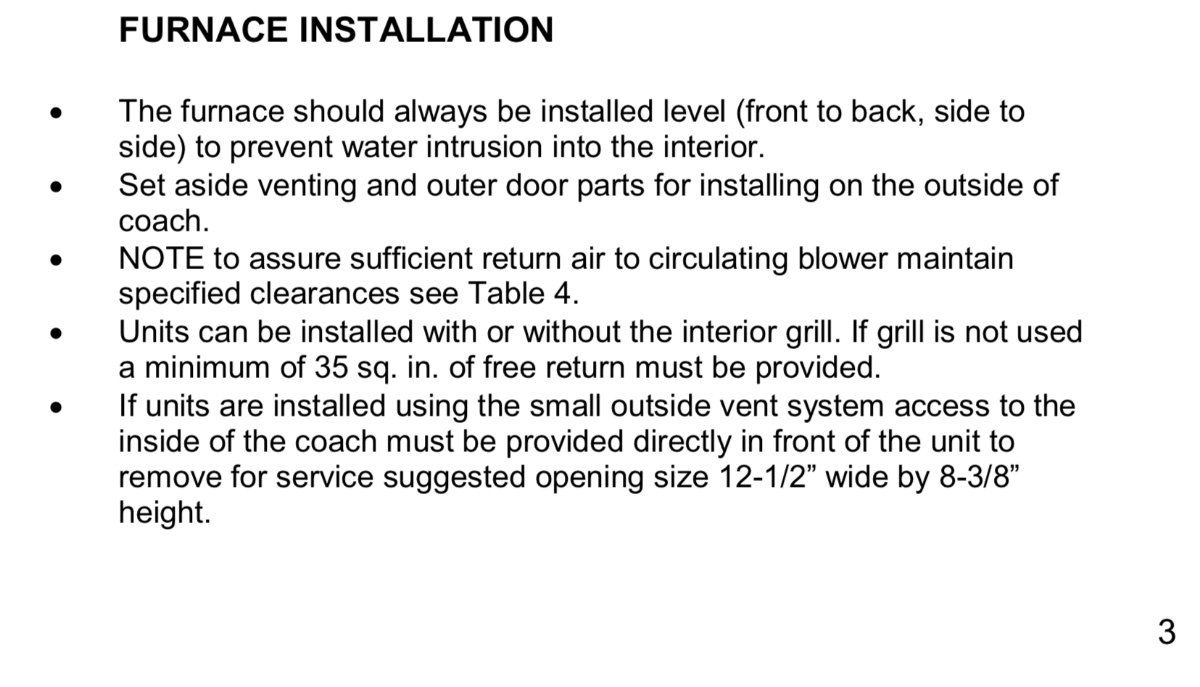
The reason Oliver installs that huge vent right beside the furnace fan is because that is specifically required by the manufacturer’s installation instructions. You can go ahead and add return air paths far away, just be sure the total square inches is equivalent to that big grill. I plan to do this, I will be removing my Dometic fridge for maintenance and I am going to see about making a return grill at the entry door down low, forward of the fridge. Once you have plenty of air return, from different areas of the hull, then you can block off and sound insulate the existing air return, which will dramatically quiet the furnace. This is a future How To article, assuming it works out. John Davies Spokane WA
1 point
-
1 point
-
It does sound baffling. You indicated that you did a load test on the two "suspect batteries". You may want to also load test the other two batteries as part of your continued troubleshooting. Good luck.1 point
-
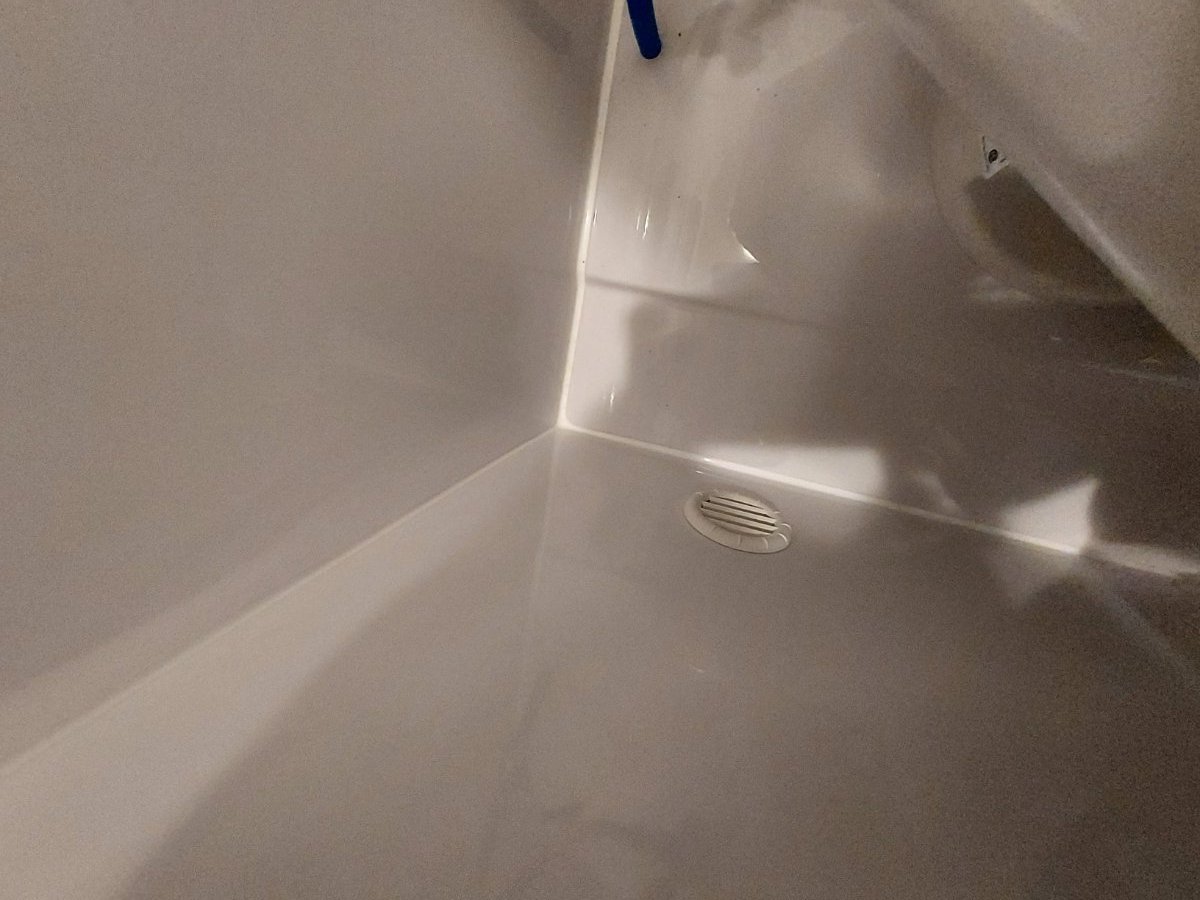
Rodney Lomax confirmed to me yesterday that the vent in the bath below the toilet is a return air vent that is included with the Truma upgrade.1 point
-
WiFiranger, a Winegard company, has just released the newest firmware and I have successfully installed it on my 2019 iteration of the product. The release, 7.1.0b13 supports the Ethernet tethering to Starlink as its major new feature and various bug fixes. The upgrade was announced on November 10th, 2022 and I did the upgrade on November 14th while sitting in my house with our Oliver gear on and connected to our Comcast Wi-Fi cable modem. The install did the SkyPro first and then the Core. Both are required to be at the same version and the entire install took over an hour and I had no anomalies.1 point
-
I think all of us Lithium users would love such a procedure. However, the problem is that there are soooo many different situations that call for different procedures. For example: A warm location where hard freezes are rare, would likely have different requirements than a location such as ours where Ollie is on top of a mountain in Oklahoma and can see -10 degrees F for a week, and in the teens for a long time some winters. Some have shore power, some have solar, some don't have an inverter. Some have Lithionics, some Battleborn, some AGM and some LA. Each has different requirements. Some have internal heaters, some external heaters, some no heaters. Some can remove their batteries to a warm location... many can't. Some can store their trailer inside a non-freezing area, some outside, some covered. Is there someone looking out for the trailer on a regular basis, or is it all alone in harsh conditions for nine months? Just to name a few. Each of the above likely have impacts on a specific situation. So many so that a matrix would be useful... May I suggest that you summarize your specific electrical systems (Solar, Inverter, Converter, Shore Power, Expected Temperatures, how stored, how long will it be stored under what conditions it will be stored, etc.) and send it by E-mail to your battery MFG. Having their response to YOUR specific situation in WRITING would be golden. Your summary and their answer would make a wonderful thread on this forum. "Maybe titles: "XXX MFG Charging Recommendations for XXX Lithium Batteries". In the mean time, all this gets clearer with use and understanding. It is wondaful that we have o many great owners here that are so willing to help the new guys along the way get to truly enjoy our wonderful OTT's. Mahalo, GJ1 point
-
Attached is a photo of what I believe to be a bathroom return air vent in our new Hull #1291 Elite II. It is on the back side of the aft bathroom wall, right above the black tank flush/check valve, and therefore accessible from underneath the front dinette seat. The second attached photo is shot from the bath side. I suspect the return air is expected to make its way back to the furnace through the area under the floor. You will note that the forced air vents are smaller than in previous models. I believe this is because we were the third Elite II upgraded to the Truma AC/VarioHeat furnace package. The air ducts are smaller diameter, but much more substantial than I have seen in photos previously posted on this forum. Maybe Oliver added return air vents as part of this upgrade? For what it's worth, a cold front moved into Tennessee last night. It has been in the high 30's today, with lows for tonight forecast to be in the mid-20's. We have run the furnace most of the day, with the bathroom door closed, yet it has been only a bit cooler in the bath than in the main cabin. I suspect that small return air duct has helped balance the flow of heated air to the bathroom.
1 point
-
we traveled an hour away and while we were at the camp site I kept hearing baby birds. sure enough a day later I figured out they were in the AC unit! we felt sorry for them and packed up and went home. when we got back sure enough the parents picked up right where they left off feeding the hungry babies. I can't believe they survived the trip.... what an ordeal!1 point
-
Can't wait to hear how this update goes. I've always thought that the "old" interface was unduly complicated for most users. As a side note referring to the quote above: I've mentioned several times before that the WiFi booster is problematic when used in a typical campground setting due to the (usual) limited bandwidth of the system that the particular campground is using. However, I've learned that while on the road, the booster is very useful to me in that I can pull into virtually any fast food joint parking lot or Walmart or Lowes or Home Depot or small town library or ....... and not even have to get out of my truck in order to send/receive emails. If you don't have a cellphone or are trying to save cellphone expense, these WiFi boosters are great when used in this manner. Bill1 point
-
However the "human waste" stored gets disposed of, it will be me doing it. And I am still about six months away from making any purchase. The whole idea of having to empty any sort of tank was and still is a bit daunting to me, but I do realize it is the price I will pay for traveling with a travel trailer. I am praying that which ever trailer I decide to buy, the information given will familiarize me enough to be able to do it with little or no mess. I was serious about the wonderfully useful information and photographs being so good. Perhaps doing some research and learning more about a composting toilet will become an idea that doesn't give me pause. Thank you again for sharing so much with everyone.1 point
-
This is the fabulous thread with tons of information...BUT...and I know this is a female thing: I just can't wrap my mind around composting poop in a toilet vs a regular flush toilet. Emptying the black tank doesn't seem unreasonable to me, but composting....shivers. Thank you all for such wonderful pictures and explanations.1 point
-
Be very aware that many motorists around you will not understand what is going on, they will only see “something” pouring out and leaving a long splashy stream on the highway. They might think your trailer plumbing is broken 😳😳😳 I have done this in the past, drained the fresh tank, but only on deserted backroads. I personally don’t recommend doing it. Don’t be this guy: …. 18 years since the Dave Matthews tour bus dumped 800 pounds of feces on people taking a cruise John Davies Spokane WA0 points
-
Unless Colorado has completed MAJOR work on the stretch of interstate from Colorado Springs to Denver in the past few years, it is/was absolutely terrible. Bill0 points
-
I have been following this thread closely... We have the Dometic Penguin. I am a bit disappointed.... I have been checking the A/C regularly..... So far not a single Penguin.0 points













-
Recent Achievements
-