Leaderboard




Popular Content
Showing content with the highest reputation on 06/17/2025 in Posts
-
We’ve done the long meandering trips and also the destination specific trips. Plus’s and minus’s for both. We’ve found that many overnight stops in a row can get tiring, so when we’re headed somewhere specific we try to find a spot where we can stay two nights and a day to rest up. Plus, we do enjoy staying at a target destination for a week or more. We’re getting ready to go to the PNW in August and September, 7 National Parks and the OR and WA coast. I’m sure we’ll be tired when we get home, but we’ll fill in OR and WA on our map! Mike5 points
-
Last year we did a 4,000 mile trip to Lake Ontario and down the eastern seaboard. Hit about 8 or 10 spots, some stays were 3 or 4 nights, a couple were just overnight stops. We are on 6,000 mile trip right now, going from NM to MT to WA, OR and back through NM to home. We are hitting more spots this trip, with a 7 day stay, some 4 day stays and some overnighters. These have been our wanderings so far in our two years with Ollie. I think I am not going to do these meandering trips any more. I think I pick a spot, how ever so far, overnight how ever so many night stays to get there, and then stay 7 to 14 days in that spot, overnight stays back home to Arkansas. Our other trips during the year will be shorties within Arkansas, Missouri and maybe southern LA and MS. These short stays don't really allow me to set up a proper camp.4 points
-
On our recent trek from FL to the UT parks, we stayed in some places for one night, others for 10 (most for 5 or more). Sometimes the next campsite was only 50 miles down the road. One day it was 1,600. (OK, that was 36 hours over 2 days with sleep at a truck stop.) But, for me, the freedom is the point. I can adventure till exhausted and chill till bored. Perfect. 🙂4 points
-
There are many different ways to experience the outdoors and see the nation. Do whatever works for you. Sounds like you have a good plan. Enjoy Ollie'n!4 points
-
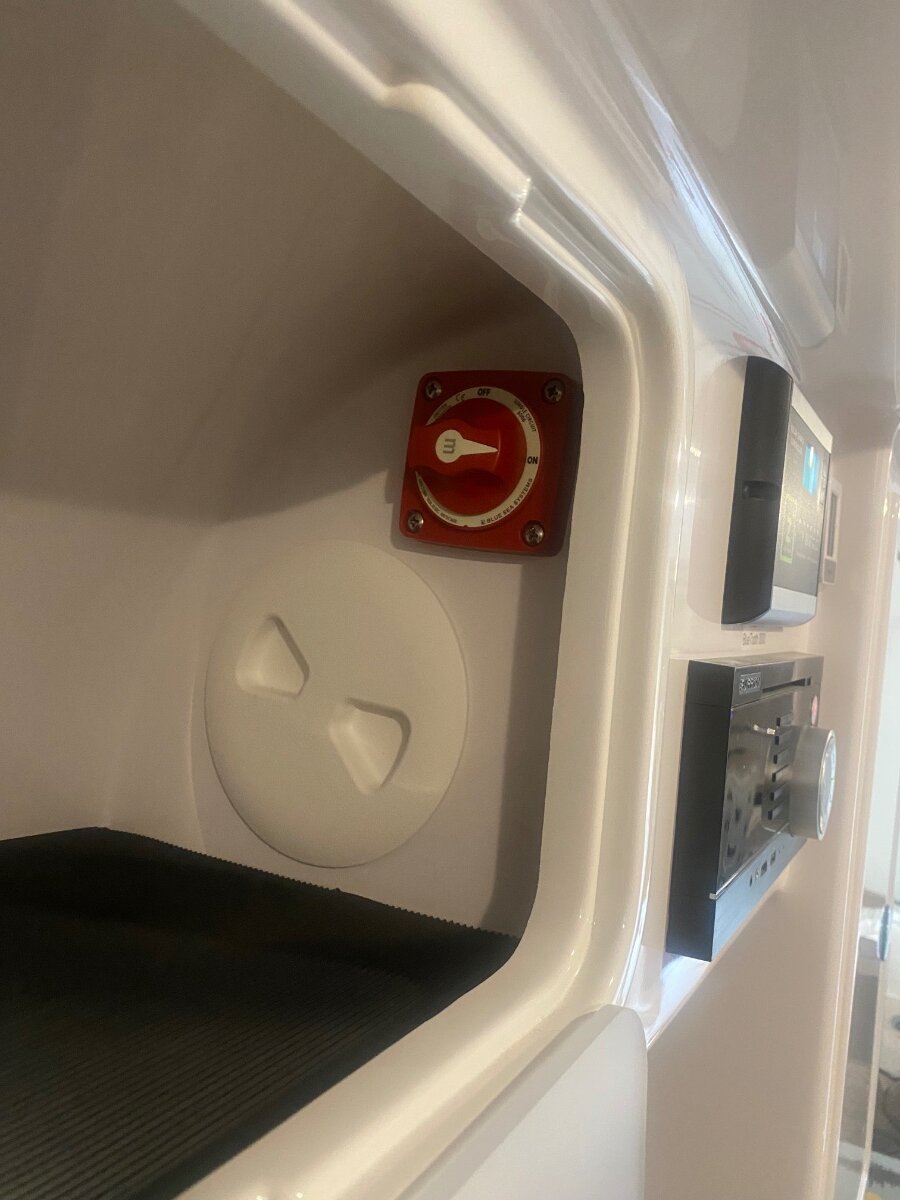
@mossemi Thanks for the link to the Solar Panel Disconnect Tutorial video. I'm going to have to spend some time watching his other videos. @Snackchaser Thanks for the photo of your switch. The switch looks like it's flush mounted since I don't see any wires. Nice clean install and much more convenient than inside the marine hatch. Installing a switch will have to wait until I can bring the Oliver back to my house but that will give me time to order parts and tools. Thanks all! Tony3 points
-
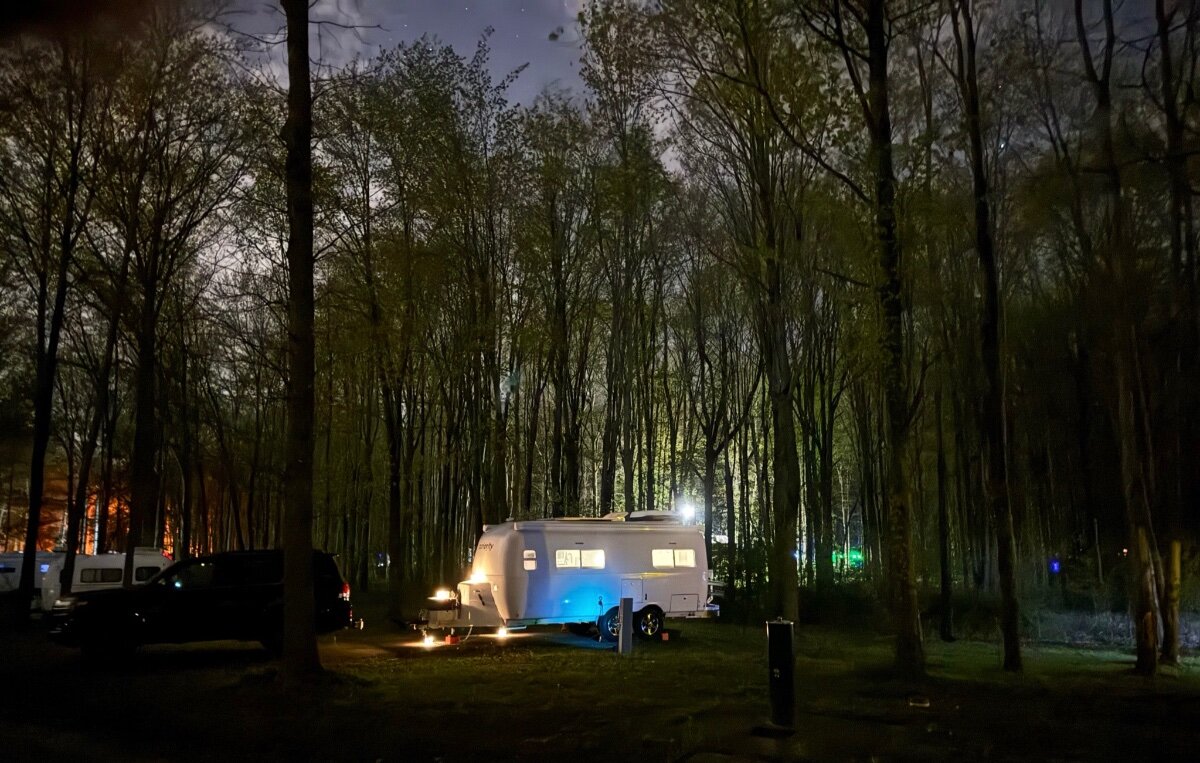
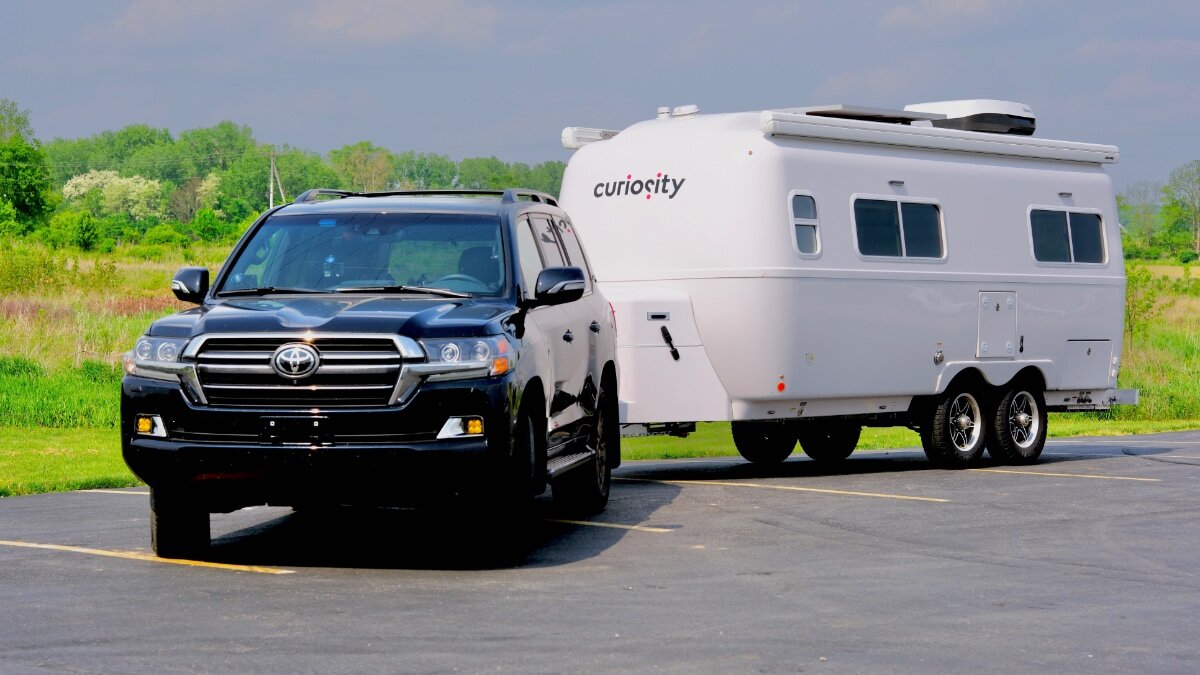
Last night was our 100th night in our 2023 Oliver Legacy Elite II “Curiosity”! While not a big deal for a lot of campers, it is a milestone for us. Thank you Oliver Travel Trailers for building us a wonderful home away from home!
 2 points
 -
I liked when Steve started this thread! As of Sunday, which was also Father's Day, we hit the our 100th overnight in our Oliver. We just passed the 2 year mark in our ownership, and although we only did one 2-night trip in our first 7 months, we're catching up now! By the time we get home on July 3rd, it will be 118 nights over the last 18 months. That's a better rate than I had expected, but a lot of short trips will add up! Starting to feel we're getting our monies worth too. The Oliver, the tow vehicle and the tens of thousands of upgrades on each! 🤣 She also had a bath for our special day!
2 points
-
So why did I calculate the above power potentials? Certainly not to coerce anybody to do anything. But to inform of the power potentials that we need to be aware of. Yes, to me the primary purpose of having a battery AND a solar discos are (#1) maintenance and (#2) emergency use. #1 MAINTENANCE SAFETY & CONVENIENCE: When we are doing maintenance on our Ollies that in any way involve electrical it is important to disable ALL power sources that can bite us. Certainly 120V shore and Inverter power sources, as well as battery and solar. Why all? Because each trailer has systems that interconnect between them. Examples: Inverter, Converter, Refrigerators, computer power ports, etc. As stated above the are many ways that a simple mistake during a simple maintenance task can, and likely have occurred from not making safe all power sources. If you don't have the necessary disco's and don't have the background experience in such systems to safely disco hot circuits.... You really need to think about your situation. With the disco's you just need to: Turn off a 350 A battery switch Flip a solar breaker Physically verify your Ollie is not plugged into shore power (Generator, Power Pole, Outlet). Without disco's, we can manually make the job electrically safe by taking apart hot cables. This is a sweat producing moment for many and hazardous as well. But it takes a lot of time. I guarantee you that at some point in doing so, you will realize that the minor cost of installing those power Disco's is far more cost effective than your time to Disco and restore all sources of power when working on your electrical and mechanical systems. Finally on this point, I consider end of season parasitic loss elimination and power source isolations just another maintenance task that is a lot easier with such switches. #2 EMERGENCY USE: If you are handy and you smell a major electrical acrid burning smell, it is possible that you manually disco the various systems. In the 10 or 15 minutes it takes to get the tools and do so, the problem may have spread from a simple electrical issue to a major one. But it is possible that you can deal with it. But what if you are out fishing/hiking/or flying hang gliders; Are your guests capable of doing the above? Not likely for most owners. With no discos, for the vast majority of spouses or guests, they should exit the trailer and call 911 and summon help if there are knowledgeable campers around. Either way, they get to watch what happens next from a safe distance. Most important part is they are safe. On the other hand if you or they feel it is safe to do so: Turn off the Battery Master Switch and Solar breaker, and unplug the exterior power port. Air out the trailer and then figure what was burning..... IN SUMMARY: Our OTT electrical and mechanical systems are exceptionally well designed and carefully manufactured. Over time their systems age very well compared to the SOB's. As a result we don't see many of our OTT units burning to the ground. But fires do happen and to me, having basic measures in place make sense as the cost could be so very high if you don't. MANY owners, especially the Master Level Contributors, are fully capable of doing significant DIY efforts. Everything from A/C and Refrigerator replacements DC to DC chargers, transition to Lithium, adding solar, springs, axles. hitches, fans and other really great projects. We take great pride in helping other owners to join the DIY group. But first start with a DEEP dive in this forum on the topic. Take pictures of your system and download the posts and pictures of others who have done the effort. You than can intelligently talk to OTT or other qualified firms to have the mod done. Or, to start asking question and help on our forum if you want to DIY it. Our owners are scattered out all across the USA. Likely one will be in your location or willing to meet should the paths cross during the season. GJ2 points
-
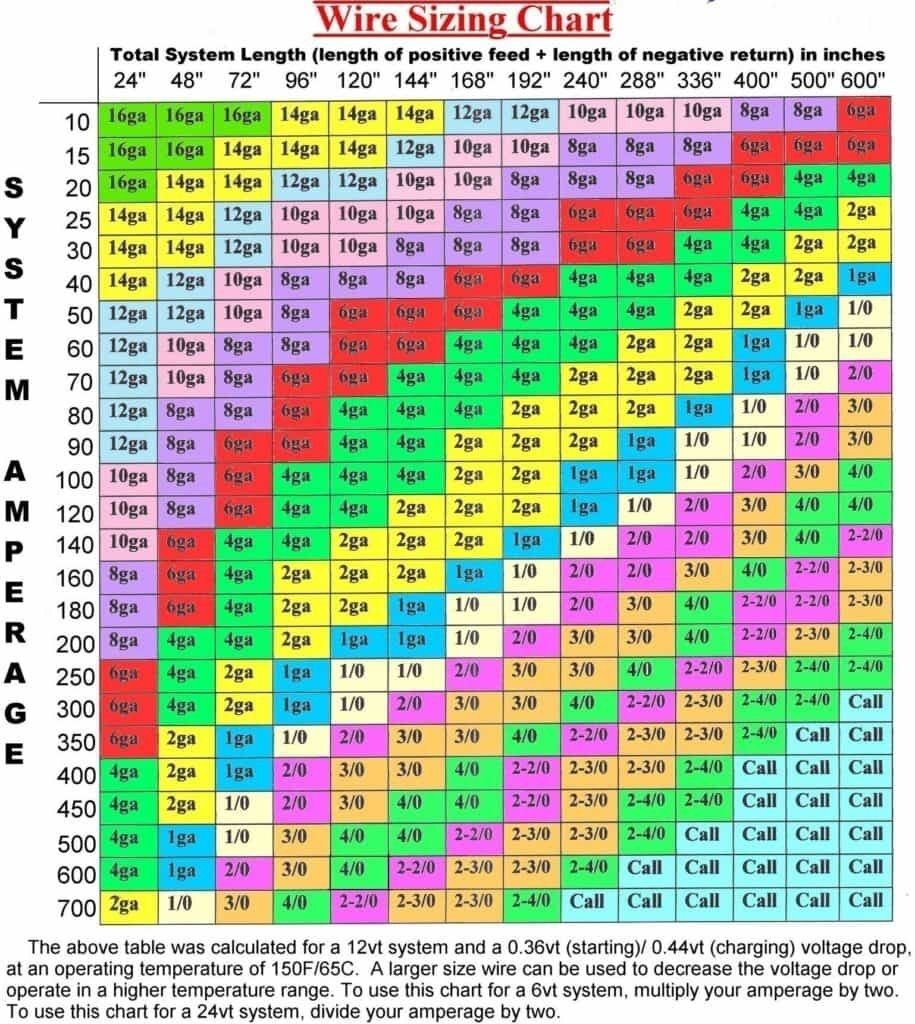
True, but you need to size wire AWG and the fuse rating based on load requirements. The single largest load in a 12V RV system is the inverter, given you have one. And inverters have overload protection and so do modern LiFePO4 batteries and either can fail, so we use fuses or circuit breakers. From the examples I've seen, OTT installs 4/0 battery cables whenever they install an inverter. This is more cable than you need, over-engineered. There are so many wire gauge charts but I like this one since it covers short wire lengths. Although I do not know the source of this tables, the numbers seem to make sense. When I pulled the original 4/0 cables in our hull, cleaned them up and reused them for new batteries and the larger capacity Victron inverter, I noted each cable was less than 5 ft long. Based on this table, B+ plus B- lengths of 4/0 cable adding up to 10 ft can safely carry 600A. Victron specified a 400A fuse for their product which also has a built-in safety factor. They spec'd 400A,so that is what I installed. There is another conclusion you can make from reading the data in this table. If the 250A fuse was all that was required in the 2KW Xantrex inverter that was originally installed in our hull (and others as the example pictured above), OTT could have installed 1/0 wire which can handle 250A up to 12 ft long.
2 points
-
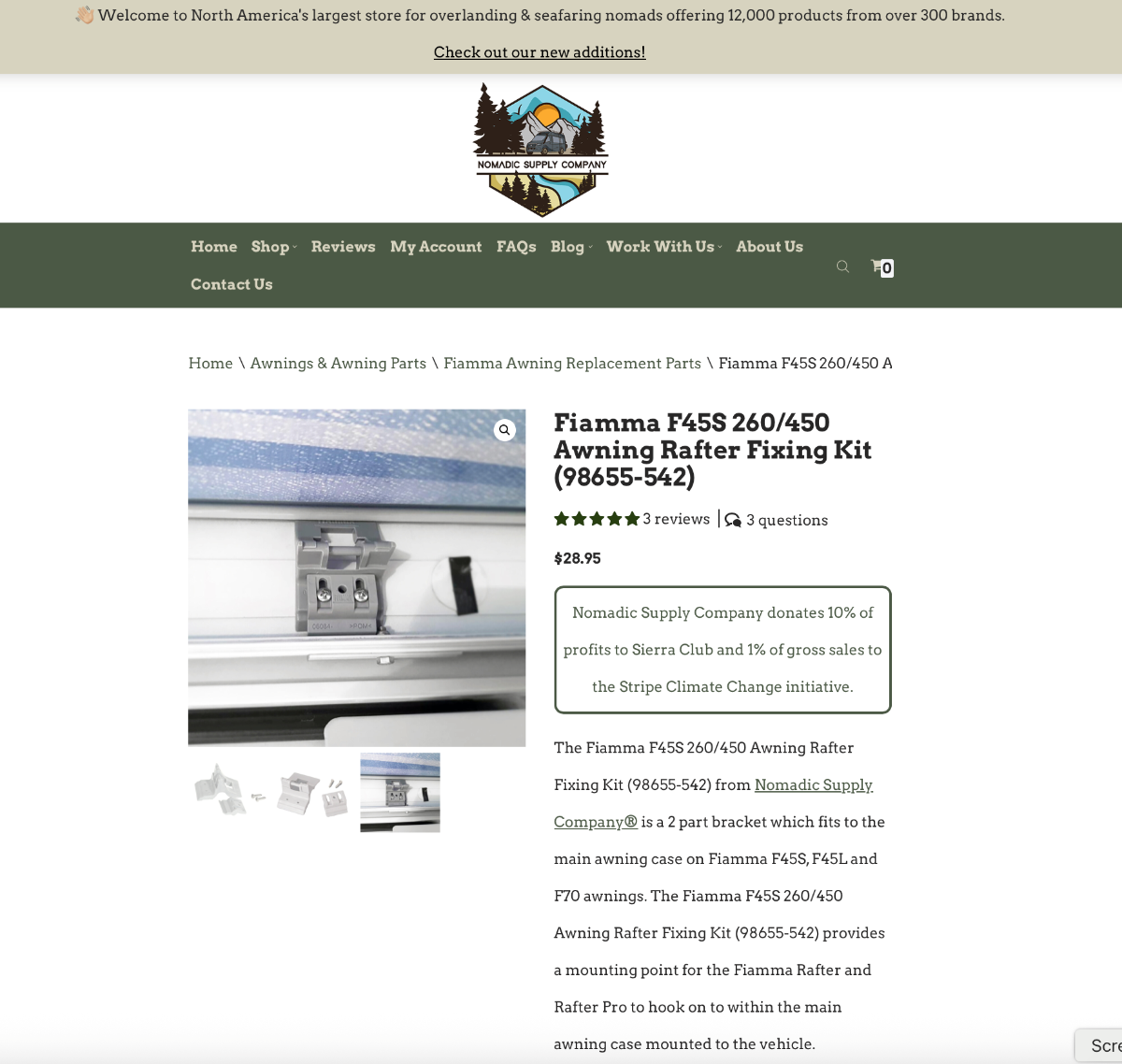
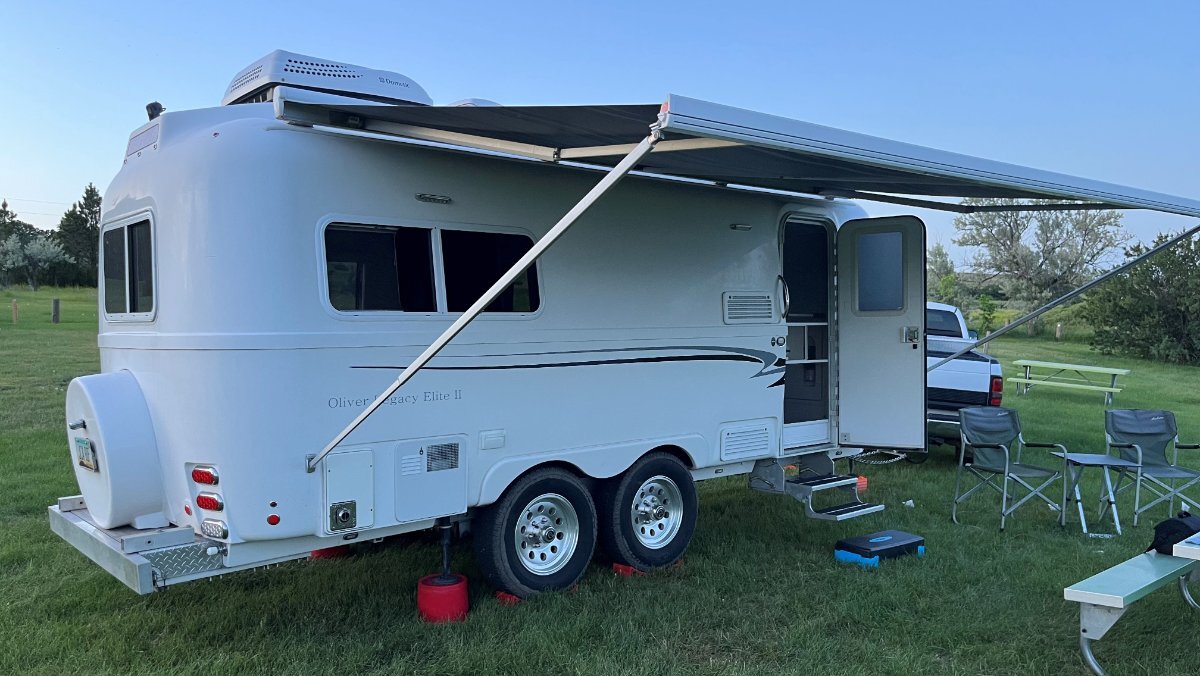
This is the rafter fixing point for the trailer side. And I usually tighten the rafter knob before raising the awning to a height I can't reach. Mossey
2 points
-
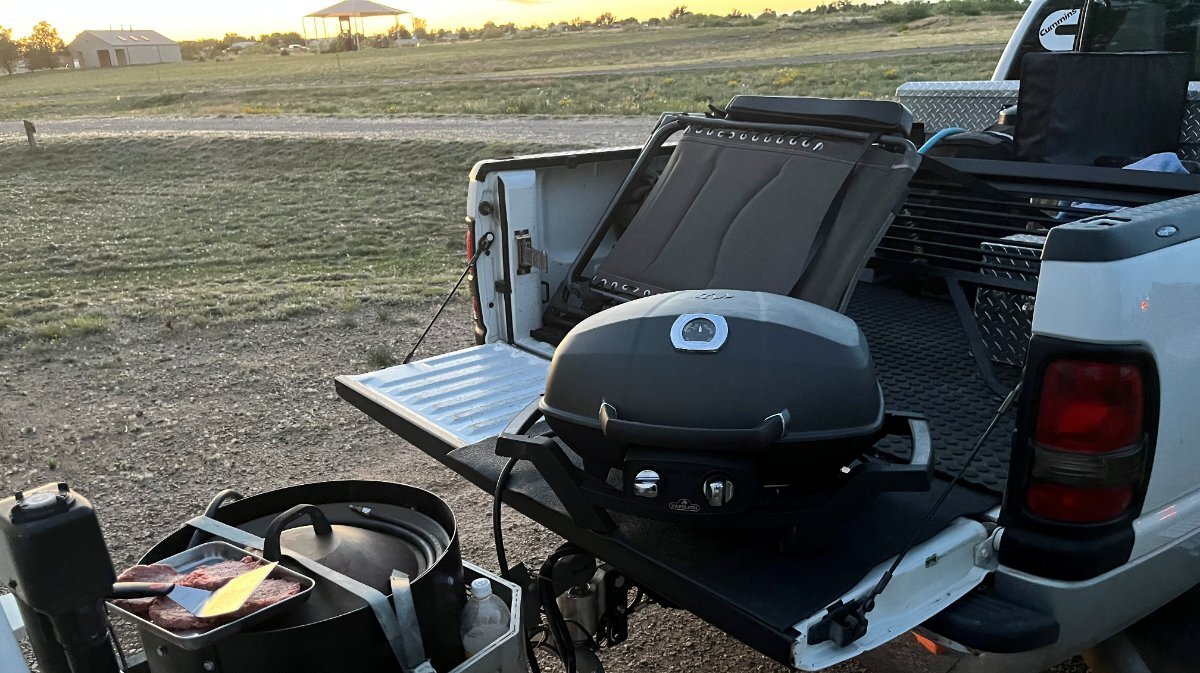
Jeff & Cindy, we're on one of those "meandering trips" right now, so we certainly understand. One thing is for sure, 5 weeks is not nearly enough time to leave AZ, see family in MN and have much time for multi-day stays in between! I like how Mike said it: I much prefer short drives each day and taking each day as it comes. Then as Mike wrote, staying a couple nights to "rest up" which we tend to do when we find a spot we like! I thought we would have some 3-day stays on the way back. That's not going to happen. We have 2860 miles so far and a good 1600 miles to get back home. We setup camp as needed on a daily basis. On one-nighters I prefer to stay hitched and even on some 2-night stays if we are just going the rest up and enjoy the campsite. Sometimes I'll decouple to get the tongue up high enough to level, but just keep the truck in place for quick coupling when leaving. I'll ask Chris about what's for dinner and sometimes we need the grill or not. If it's cold out I'll pull the fire ring out of the front basket. We cook over the fire ring too using skillets on a grate or the Lodge Dutch Oven. We've had more rain, certainly than we're used to, so I'm often partially breaking camp the night before to be prepared for a Midwest storm. Several nights I put our lawn chairs inside the pickup so they would be dry in the morning for coffee outdoors. When we leave, Chris works inside and I do the outside, it only takes us 20 minutes to break camp ready to leave. No checklists but we have it down now. Got to see all we can on our large travel loop. I remember the map of your large loop which is at least as big. I'm not pulling the Oliver, not likely to Minnesota again in my lifetime, so we want to make the most of it on our way to and from! Enjoy your trip and best wishes, JD2 points
-
When we visited Devil's Tower, we got a site at the National Park Campground, very convenient.2 points
-
Yes, it has been an amazing, yet awaking adventure! 🤣 So it's Sunday and we're in Central ND, and only 2-3 days out to Mt Rushmore SD, and I finally realized, "I'm friggin' crazy!" It's mid June and we're driving into the greatest tourist stop in the National Park system, OMG! We not only have no reservations, but been so busy in our day-to-day travels that we have no idea where to stay, or even what are the possible choices! So first, I truly needed a strong drink to deal with this situation and promptly got on Campendium and Recreation.gov! I quickly found Horsethief Lake Campground, a primitive campsite only 15 min from Mt Rushmore. They had 3 sites open only on Thursday 6/19, so I booked one for the one night that was available! Before getting there I figured we would boondock on the Badlands Wall and afterwards would head to Devils Tower. There is a FCFS primitive site very near there and most RV people gotta have hook-ups, but knowing so little I thought not to count on that. Then I booked 2 nights at Rueter Campground, and a nice drive through the Black Hills to get there. This was done on Father's Day evening. In between I got calls from my step-son and later my son. After another drink, Chris made us a great grilled Walleye dinner, creamed broccoli and baked potato, nice! It was finally time to enjoy the wonderful campsite we had booked for two nights, Beaver Creek Recreation Area just on the river from Linton North Dakota, life is good!
2 points
-
Open a new Google search and enter the line below. site:olivertraveltrailers.com 'shower head' Mossey2 points
-
Good thinking, you want both. Your batteries feed your 12VDC loads (and 120VAC loads if you have an inverter). Your solar panels through the solar MPPT charger also feed 12VDC to everything wired in the circuit. You must cut off all power sources to do M&R or make mods on your electrical systems. Some place a blanket over the solar panels, which is fine if you must! Better to be able to open any and all electrical systems with a breaker or switch.2 points
-
The thought of leaving home without any reservations stresses me out 😅 but we'll have to take a trip like this sometime to see how it goes! Could be fun. If I keep my expectations low, all should be well haha.2 points
-
Thought this might help someone else out. The water pump was not working. The main switch light was on and functional. The bathroom switch was functional. No noise from the pump at all. I opening the compartment and immediately saw that one of the wires had come loose from the pump. I plugged it in and all is well. I think I will go back in and try to tighten the connection. Hull 1467
1 point
-
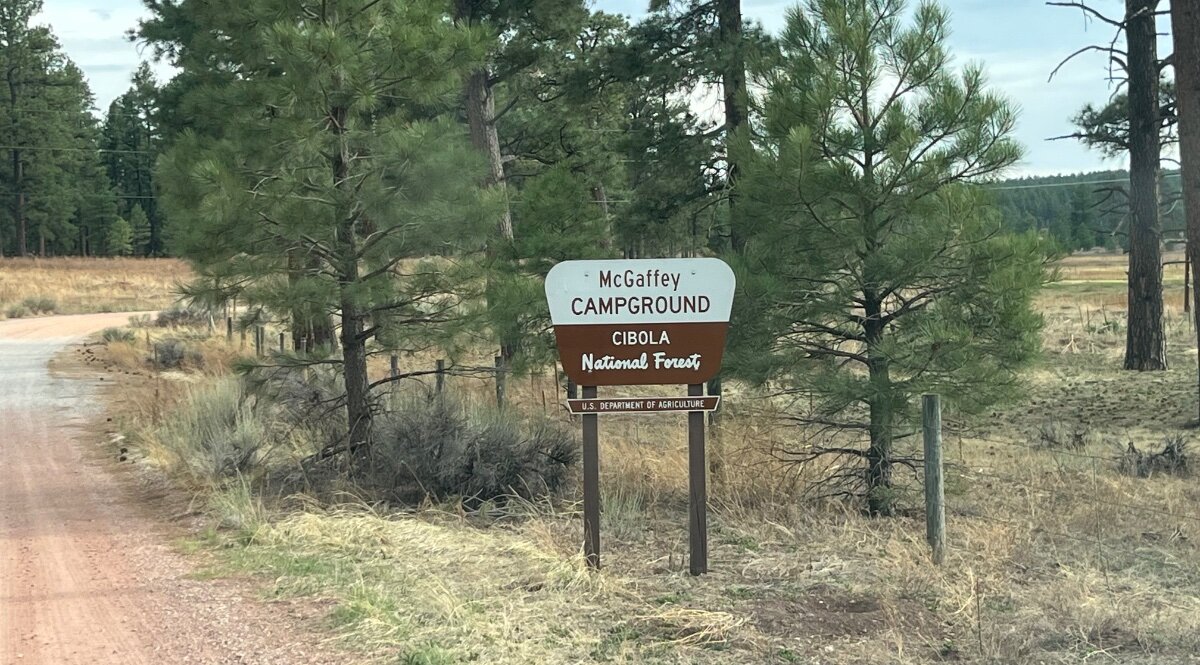
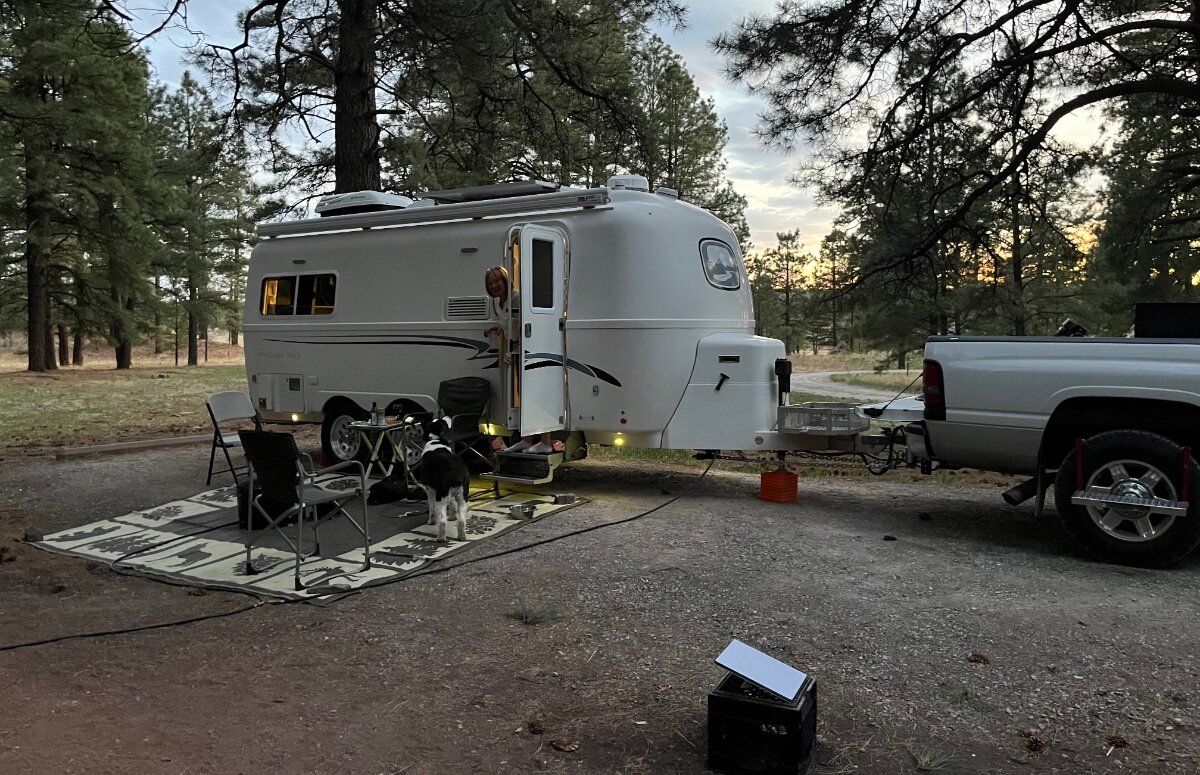
This will be a first for us, though common to many of you who have more time for travel. I have 6 weeks off work, for our personal longest camping trip ever. I was inspired by a post our friend Steve @ScubaRx made last year where wrote that he and Tali often travel across country without reservations! This is difficult for the Project Manager in me, but should make for a spontaneous and exciting adventure! First stop just 5 hours from home, we’ll stay 2 nights up at 7760 ft in this beautiful McGaffey Campground SE of Gallup NM.
1 point
-
Good safety tip JD. For our replacement 3,000 watt inverter I was able to reuse the OTT OEM 300 Amp for the protection of the 4/0 cables that feed the Inverter. In all three cases the fuse protects cables not attached loads. The inverters self protect if you overload them. But if your cables are too small they become a problem. Especially if your OEM cables were sized for 250 amps with a 400 amp fuse. So, in addition to checking the inverter manual for fuse size, VERIFY your cables are rated for the fuse size as well. Ditto. I suggest that if you are installing such a safety switch, that for the minor cost difference, get the 350 amp Blue Sea switch. That way when you upgrade to the 3,000 watt inverter you don't also have to upgrade the switch too. Why? The switch must always be rated higher than the fuse protecting the wires. I wish that I had thought of that one two years ago! Great reminder as well! GJ1 point
-
We rarely use the rafter. As I remember it has a hook like thing on the trailer side and I can’t remember how it attaches to the awning. I think it is to provide stability, although we’ve not noticed much difference. I think it also helps in rainy situations if you forget to get enough angle for drainage. Just don’t try to crank the awning in with the rafter still deployed! Mike1 point
-
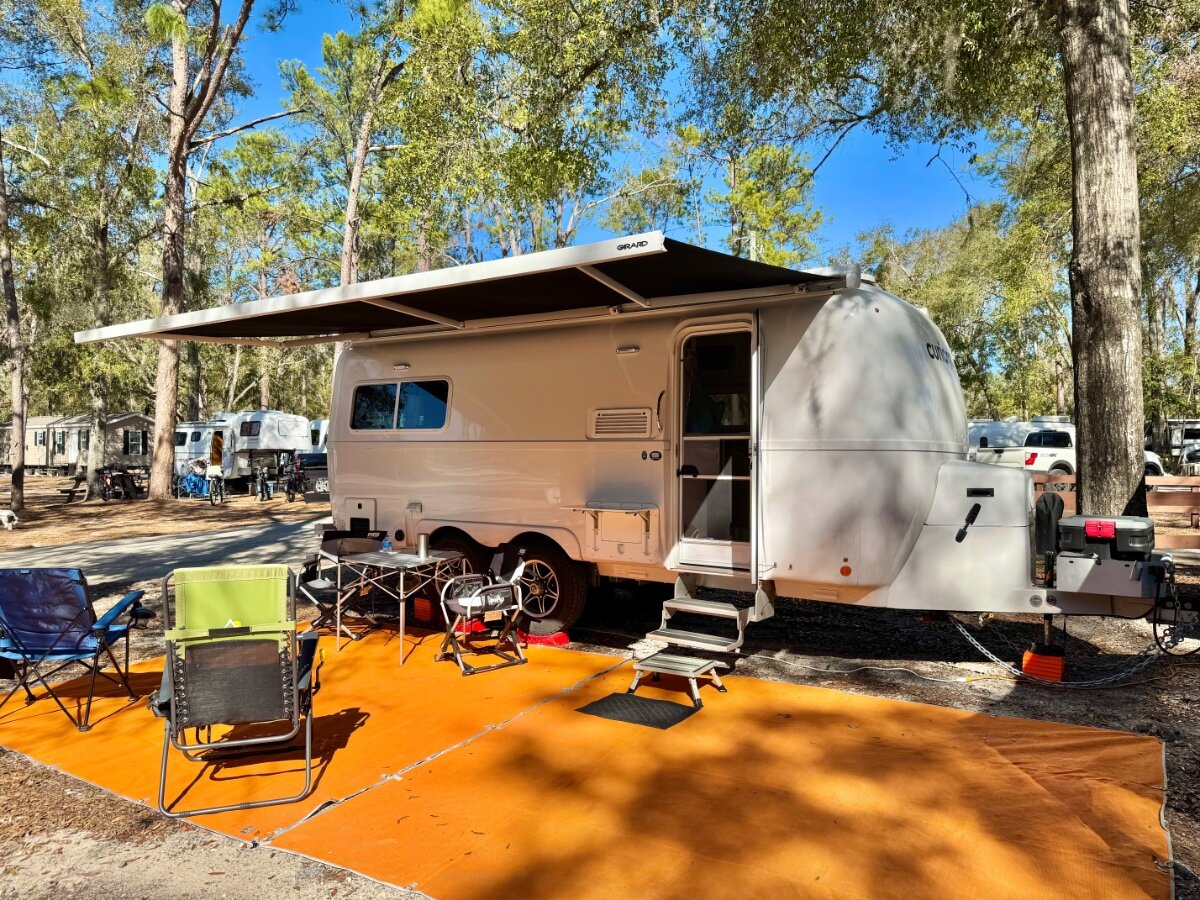
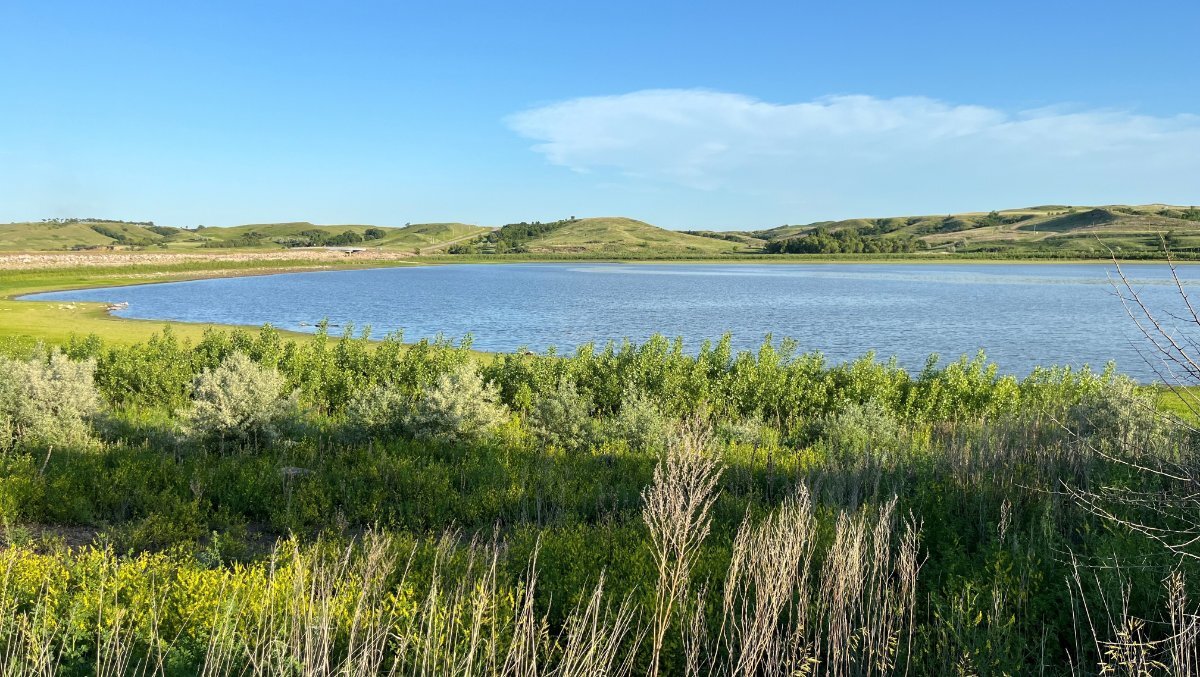
So we woke up the other morning in central North Dakota, it was cloudy at 52F. We drove to our next stop, it got sunny along the way and later very hot, 85F and humid. Our camp was on lush grass by lake which made it feel worse. So I thought, why not try the awning? It truly made a difference. With the breeze off the lake it felt 20 degrees cooler in the shade of the awning. It worked well. I could tighten it and then you could hear it vibrate in the wind and a turn looser was perfect. The setup was less cumbersome than I had remembered it. I took it down as it got dark and good thing since we had light hail, heavy rain and winds that literally shook the Oliver! I couldn't figure out the rafter. The awning had a proper receptacle for it on the extended side. Up along the Oliver roof it did not seem to have the same mount, even though the rafter has identical fittings on each side. I got it somewhat connected and even being tall I could not reach the tightening screw without a ladder or at least standing on metal milk crate we have. I just left it there untightened as it did not seem to matter. Is the rafter truly necessary? Any help or advice on how to mount it correctly and get it tightened?
1 point
-
For the main battery fuse, check your inverter spec. OTT had a 250A ANL fuse installed in our hull for the 2KW Xantrex that was our original system. When I upgraded to the Victron Multiplus II 3KVA Inverter-Charger the manual stated using a 400A fuse. Most applicable inverter specs will be in the range is 250-400A. When choosing a cut-off switch, it should be rated equal to or above the proper fuse rating. Most go with the available Blu Sea 300A or 350A rated switches. For your solar, use what is specified for the solar charger. Or if your MPPT Solar charger is rated for 30A, then a 35A or 40A breaker or fuse is appropriate. Our Blue Sky SC is rated for 25A and OTT installed a 30A breaker. When I added a Victron 30A MPPT SC, I believe the book said 35-40A and I installed a 35A breaker. So not to get shock while working with battery cables --- It is common practice when installing battery cables is to install the B+ side first since when the ground is not connected, the B+ side has no potential. When removing battery cables, use the reverse order, remove the B- side first. This is why in my battery installation, I positioned the main B- battery closest to the door. This way I can remove the ground (vs. having a switch) even without sliding the tray open and the closest B+ connection is 8" deeper into the battery bay, providing a very low chance of touching it by accident.1 point
-
We live in Beaverton, Oregon. Your timeframe for visiting the PNW will show you our best weather. The Olympic Peninsula in Washington has the rain forest with lots of moss hanging from the trees. They get about 140 inches of rain yearly, but the summers are dry. Enjoy your trip. John1 point
-
I tried it and it did not "Power Assist". Contacted Xantrex they said the XC does not support power assist only the SW models do.1 point
-
Please add: Make GMC Model Savana Van Series 2500 Year 2019 Drive 2WD Fuel Gas Engine 6.0L Vortec Rear End 3.42 Other HD Trailering Equip Trailer LEll Hull 579 Thanks!1 point
-
Yep - like walking distance. Bill1 point
-
Cover was removed to read the ANL fuse It’s certainly excellent advice to be aware of the potential hazards of grounding to the insulation1 point
-
Yes. I believe there was a detailed thread on this. Try doing a search1 point
-
No reservations stresses me out too. On our next long trip to OR and WA we have reservations going all the way to our last destination at Whidby Island north of Seattle. Coming home to Texas is wide open, we’ll be winging it but should be okay mid to late September. Mike1 point
-
If circuit breaker access is an issue as jd points out, then just add a second power panel switch in a more accessible location. It could be a breaker or a mini battery switch mounted just about anywhere. Under the dinette seat would be ideal! You could even put it in the battery compartment if you need outdoor access. It’s a relatively low amperage circuit compared to the main battery, and the wire is already oversized, so adding a little more wire length won’t be a problem. I took a photo of the solar switch location, it’s a Blue Sea No. 6006. Amazon has them for under $25. This would be a good choice for a power panel switch too. For wiring the solar switch, just remove the positive input wire from the ZAMP charger and terminate it the input terminal on the switch. Then add a short jumper wire from the switch output to the ZAMP input. Don’t use the typical hardware store construction wire, get the more flexible automotive wire. Mine has enough extra wire stuffed in that space that I could cut a piece off for the jumper. If you want to add a new switch to shut off the power panel, then just remove the panel positive feed wire and terminate it to the input on the switch. Then add a jumper from the switch output back to the panel. Hope this is useful for you. Cheers!, Geoff
1 point
-
I'll get you on the list Galway when we get home mid July. Thanks1 point
-
Here's some stock Tundra HP/Torque differences. 2006 Tundra 4.7L: 271HP@ 5400RPM 313 FT/LBS @ 3400RPM 2020 Tundra 5.7L: 381HP @ 5600RPM 401FT/LBs torque @ 3600RPM 2022 Tundra 3.4L twin turbo/non-hybrid: 389HP @ 5200 RPM 479 FT/LBS @ 2400 RPM I have not towed with the 4.7L engine, it has lower HP/Torque compared to the two later Tundra engines. The 5.7L and 3.4L Tundra towed Ollie fine for us. https://www.autopadre.com/horsepower-and-torque/toyota-tundra1 point
-
Look here to see what others are using.1 point
-
Great idea👏👏1 point
-
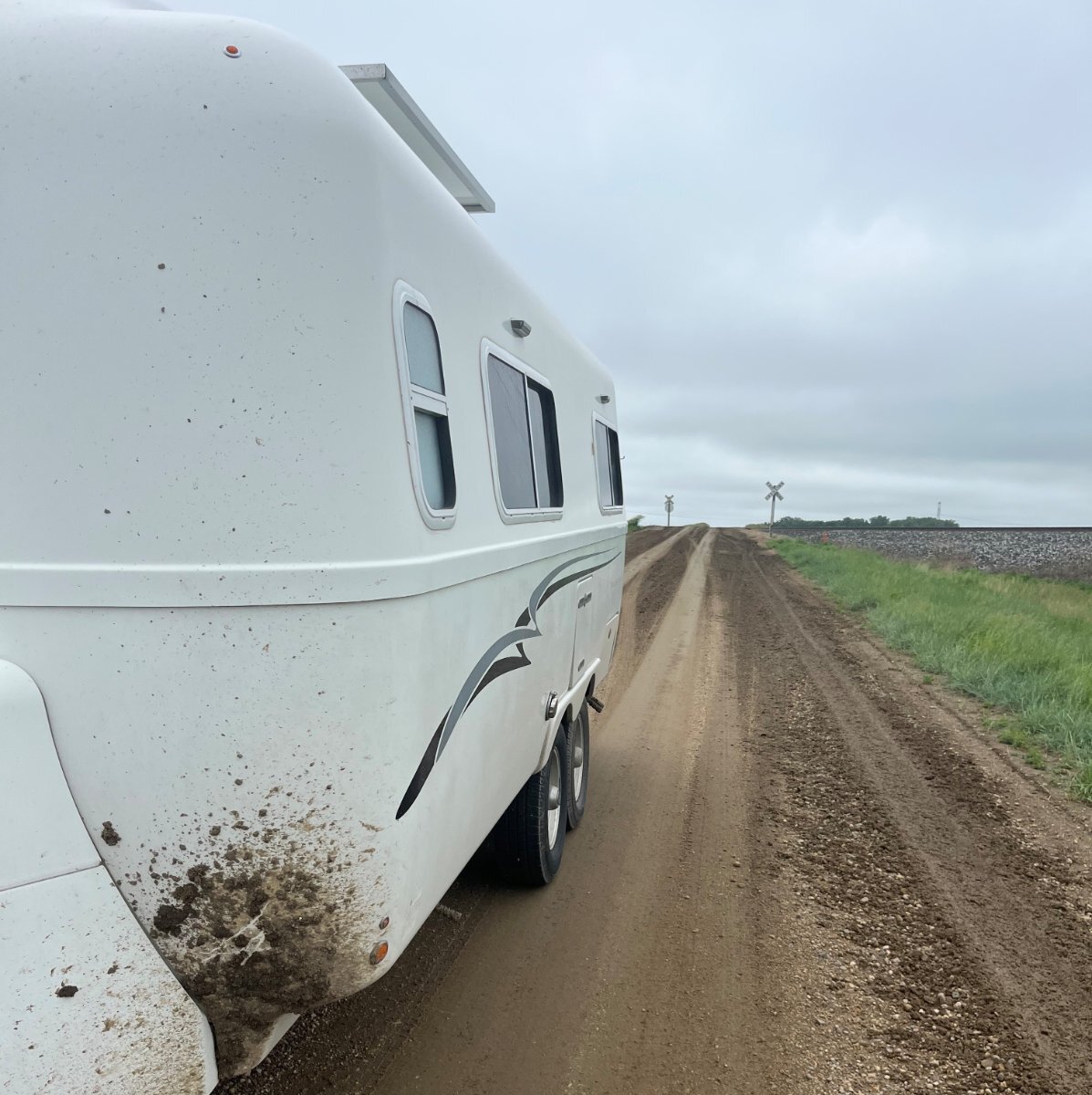
There was a little hiccup getting into the Sheyenne National Grassland. The last 3 miles were dirt and it had been raining everywhere. Given the condition it drove like a single-lane road. Then up ahead were train tracks with a hill to climb to get over them and strange thing was the dirt up at the tracks was muddy black dirt! I was worried in getting over it and since we are running with a 2WD truck, I thought to get a little more speed leading up to it. Wow, first time towing the Oliver we fishtailed at the crest and when the truck went one way, the Oliver went the other. Since I was brought up driving in snow, I gently turned into the direction of the spin and after my heart moved up into my throat for a few seconds, all was good. Whew! The first picture was taken the next morning going the opposite direction. It shows the mud that hit the Oliver, but look behind the Oliver to see the train tracks on the hill and the muddy section. Then look even more closely and you can see the tire skid marks made by the Oliver the evening before! Good thing on the way back it was a soft glide downhill over the tracks. So we're driving an hour north to get to Fargo and as soon as we got on I-29N I said to Chris, "Try to find a truck wash." I was thinking the kind of place that has a tall booth and a pressure-washer, the DIY kind of wash. Turns out it wash a full-service truck wash. This is the best invention! I walked in first to see if they wouldn't mind washing our non-commercial vehicle. Then waited in line for 20 minutes with 18-wheelers fore and aft. Not only the mud on the rear of the truck and the entire Oliver, but after 2400 miles on the road we had bug splatters all over both fronts. I paid to clean both TV and TT with an under-carriage wash. This was the absolute BEST $75 investment I've made for the Oliver! Works well in our budget vs. that $3K CGI detailing. Pics attached of Dirty Ollie and Happy Ollie! 🤣
1 point
-
One of my brothers lives in Brainerd. Brainerd weather doesn't always look at the calendar. Lol. It SHOULD be in the 70s, but 40s or 50s can happen in June. At least it cuts down on mosquitoes.
1 point
-
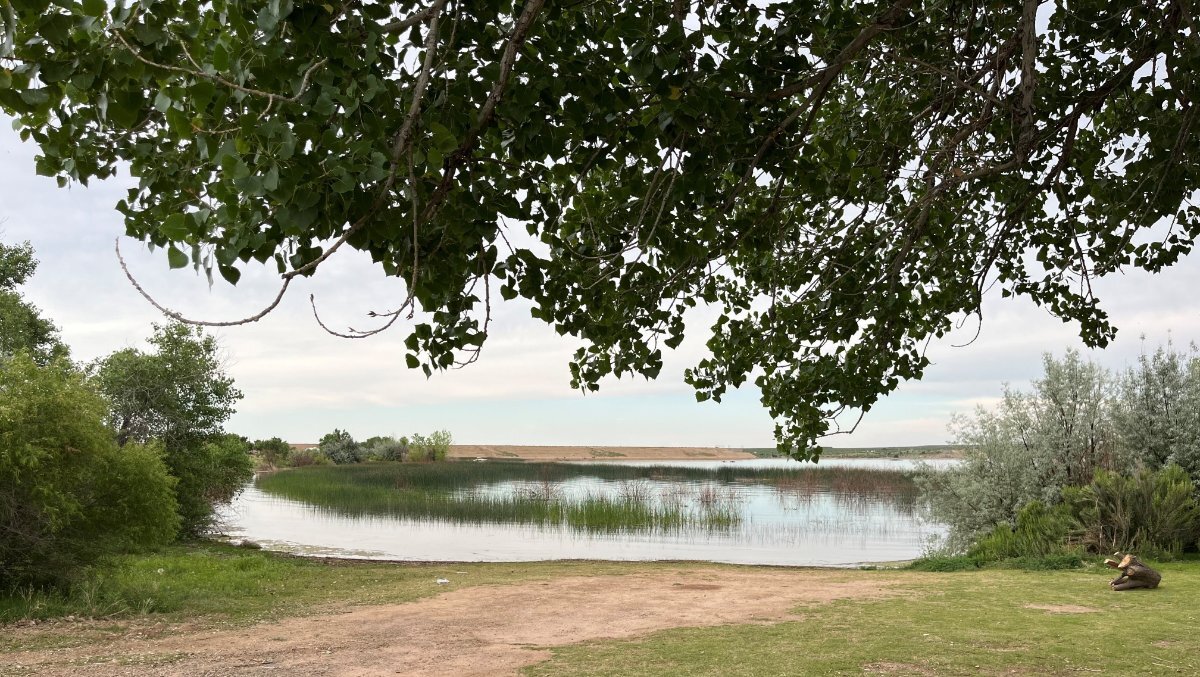
I do have one major gripe re New Mexico and you can keep all the National Parks with the word sand in them. Like White Sands NP and the Great Sands Dunes NP in CO (seen them once is enough)! Though you don't have to visit one of these parks to get caught in a New Mexico sand storm. I believe we've been caught in a half dozen of them over the last 20 years! It wasn't even that windy but from Gallup to well past Albuquerque the sky had a brown haze, not good air to breathe, both of us had sinus headaches by lunchtime, not fun. Years ago on our AZ move, with fully-packed 26' enclosed trailer we got caught in a full-scale July sand storm, being difficult to see just 100 yards ahead. Then the rear awning mount failed from heavy winds and it opened up like a large gull wing! Had to strap it down anyway possible to continue down the road. A long day stuck on I-40 to Tucumcari and then up to Ute Lake State Park. We booked via Reserve America for NM SPs while already parked on site #5 in their New Cottonwood section. Couple pictures of our site and the water pic is campsite #7 which was open but marked unavailable. Our plan is to do mostly 2-day stays on the way up to Minnesota and 3-day or longer stays on the way back. But we're not fisherman nor water-sports enthusiasts and it was going to be hot there the next day. This is my new definition of a “One-Night Stand!” The original one-night stand went out with the carelessness of the 80s! When we stay one night, we keep the trailer hitched if possible and why not a quick tail-gate? Overnight it just got cool enough to sleep, but humid cause of the lake. Thank goodness I had just installed the Sirocco II fan for Chris (or I certainly would have heard about it)!
1 point
-
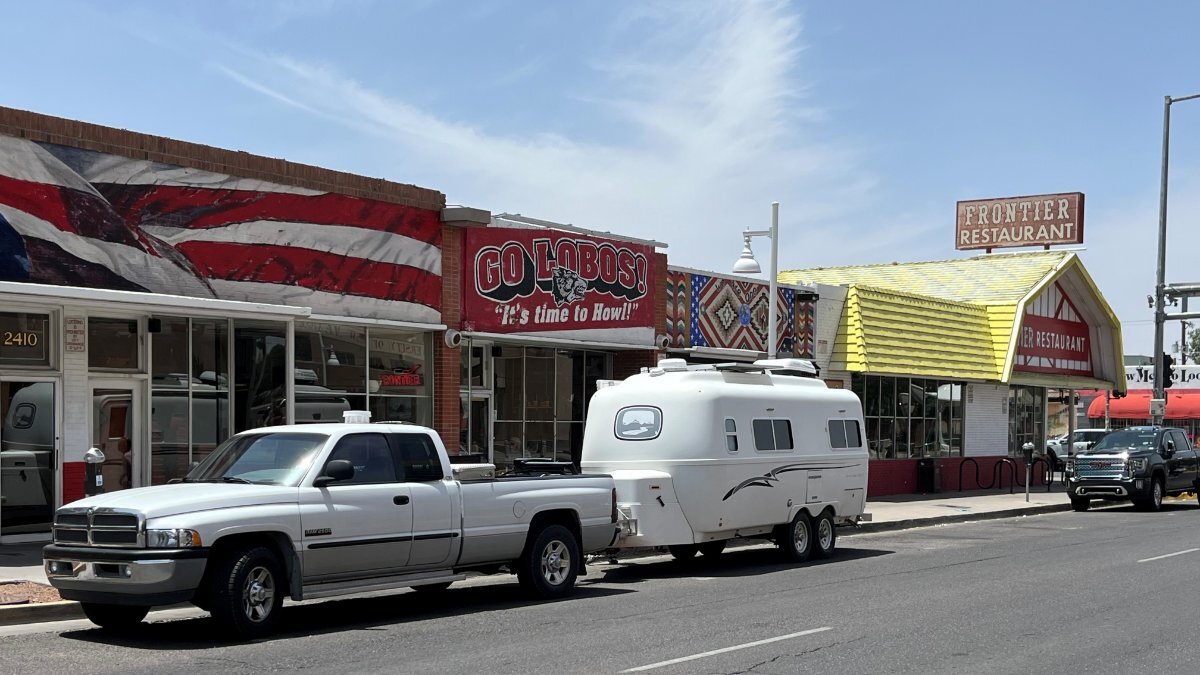
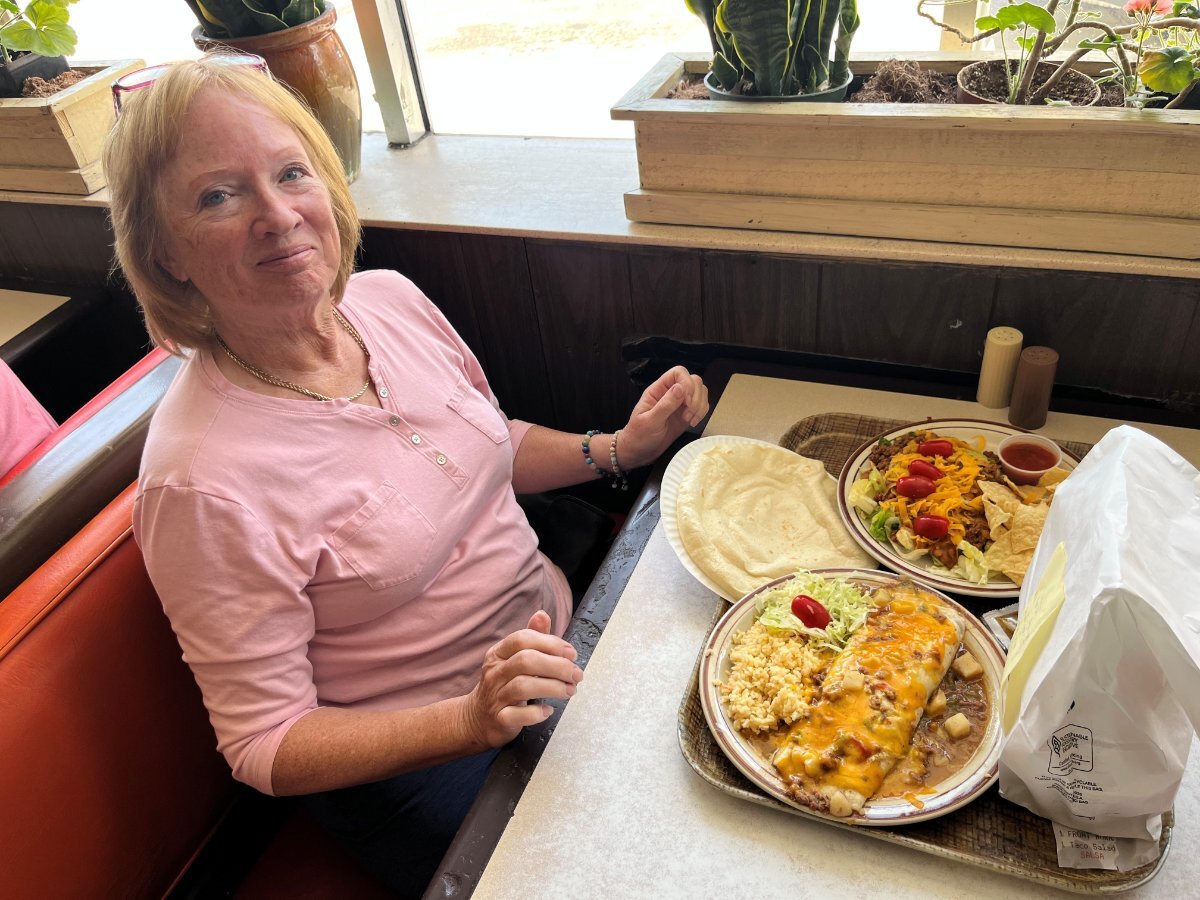
New Mexico is a wonderful state in its hidden treasures from the area NE of ABQ (where Art lives) up to Santa Fe and to Taos NM, then further up to Raton NM for the Santa Fe Trail Balloon Rally (we just happened by this rally when moving from VA to AZ back in 2005)! Then there is Ruidoso! It's Gods Country in Lincoln County NM of Billy-the-Kid and Smokey-the-Bear fame. Don't travel across southern NM without spending some time here. The area is named the White Mountains of NM, wild elk and feral horses walking the city streets daily and so many cute carvings Smokey is shops everywhere. If you're ever traveling through Albuquerque and need breakfast, lunch or dinner, or just great sides to go, like their amazing salsa and beans, Mexican meats and stews and much more, you've got to stop at the Frontier Restaurant. Just one exit S on I-25 of I-40, head a few blocks east on Central. This is my 4th visit here but the first time I parallel parked with an Oliver! (There was a car behind me when I parked and just a narrow alley in front). It worked out great and we could even keep an eye on our rig from the window seat! Chris had the Taco Salad and I enjoyed the Frontier Burrito, pints of salsa and beans to go for upcoming campsite dinners!
1 point
-
@ZLarryb I could be wrong...but in your photo it appears that your plastic twist connector fitting on your water line has loosened with vibration. This has been a reoccuring issue with my trailer and I periodically check all the twist fittings for tightness. In your photo, it's the line toward you with the black plastic tie-down that is out of place. I have loosened the black plastic tie downs, placed a thin piece of rubber or silicone (even a piece of a rubber band) between it and the twist fitting and then re-secured it. This has helped prevent loosening of those fittings. Just something to check....?1 point
-
Good catch! Same thing happened to me early in ownership; crimped the spade connector for a tighter fit, no further issues.1 point
-
More important than number of nights is $/night. I’m finally under $1000! 🤪1 point






















-
Recent Achievements
-