Leaderboard




Popular Content
Showing content with the highest reputation on 11/07/2026 in Posts
-
I am not a Truma guy, but PLEASE submit a ticket to OTT on this. In my eyes this is a clear safety issue as unrestrained movement of this machine could impace one of the gas lines down there and cause a BOOM with your family personally involved. GJ3 points
-
OTT certainly used the wrong material. Is the Truma heater currently hanging by the faceplate only? Better materials must be used for this application. This strapping material is for hanging pipe without a strength rating at only 28-gauge. Don't buy this stuff: https://www.homedepot.com/p/Oatey-3-4-in-x-25-ft-28-Gauge-Galvanized-Pipe-Hanger-Strap-33530/301505501 Go with Simpson Strong-Ties made in the USA. You could mount two hard corners with straights or use their Coiled Strap. This item is 16ga and should be extremely strong. I have a coil of their lighter 22ga. I doubled the ends at mount points and used it to strap our inverter against the basement wall. The 22ga might be strong enough for this case but I promise the 16ga will be harder to bend but would never fail. They have an array of thicknesses, chose from 12, 14, 16, 18, 20, 22 gauges. The lightest 22ga is thicker, wider and stronger than what OTT installed. Buy this instead: https://www.homedepot.com/p/Simpson-Strong-Tie-CS-25-ft-16-Gauge-Galvanized-Coiled-Strap-CS16-R/1003753202 points
-
Oddly, ours did as well. It seemed like pretty soft strapping material.2 points
-
Thanks, Geoff. I'll hook up again soon to check settings and tweak the numbers. Installation was March of 2025 and I just checked my write-up where unfortunately I didn't document anything on the Orion XS configuration. To learn more about this I just watched a few YouTubes. This one was the most thorough. @Olive2Roam should check this too as there is a Smart Alternator setting and he discusses how they can run very low voltage. Also discussed in the video is having an ignition wire connection (hot only when key is in ON position) to the switch on the Orion. This might be the perfect fix for a smart alternator so that engine shut-off detection can be turned off. This is hardwire engine ON detection which means running a light gauge ignition wire from TV to TT, having another connection at the rear bumper. Strange how Bob's setup and mine were running just fine for a year or so and then not. Did Victron notify us and we both uploaded a firmware change that reset settings to factory defaults? It shouldn't do that but I'll soon note my current settings.2 points
-
Sometimes "air sucks"....... GJ1 point
-
FloraFauna, Ollie-Haus, and Steve: PLEASE today take the time to send OTT a safety ticket on this topic. I have alerted Jason E off line. But the system should be documented with your inputs and how you chose to fix your discovery. My second worst fear is that other owners who do not read this forum will not know about this hazard. To them, the only way they may become aware is if an OTT Tiger Safety Team gets the word out. Your personal input is needed for that. My WORST case fear is that a Truma trailer with this banding gets a cracked gas line and over time leaks enough gas for the interior to reach into the explosive range of concentration. There are several possible ignition sources (I.E. some switches, Dometic three-way, or the gas heater) that could start a rapid disassembly event... with them inside. Please share your experience with OTT via a ticket. Thanks GJ1 point
-
Totally agree. By the good will of OTT we have this forum. And with the goodness of heart of so many OTT Owners willing to take the time to share their expertise and to guide and help others we are blessed. We all at some point were newer and less savey about the technical side of trailers. If you are stumped, just "Roger Up" and reach out to this forum. Just beware of the rabbit holes! 🙂 LOL GJ1 point
-
Here is a link to my post on the GM trailer camera install when I had a 2021 Silverado. The GM wired camera is excellent and once set-up, the active guidelines are very helpful in backing the trailer. I replaced my Silverado with a 2026 Tundra Hybrid that had the factory installed option of wireless trailer camera. It’s nowhere near as good as the GM camera system.1 point
-
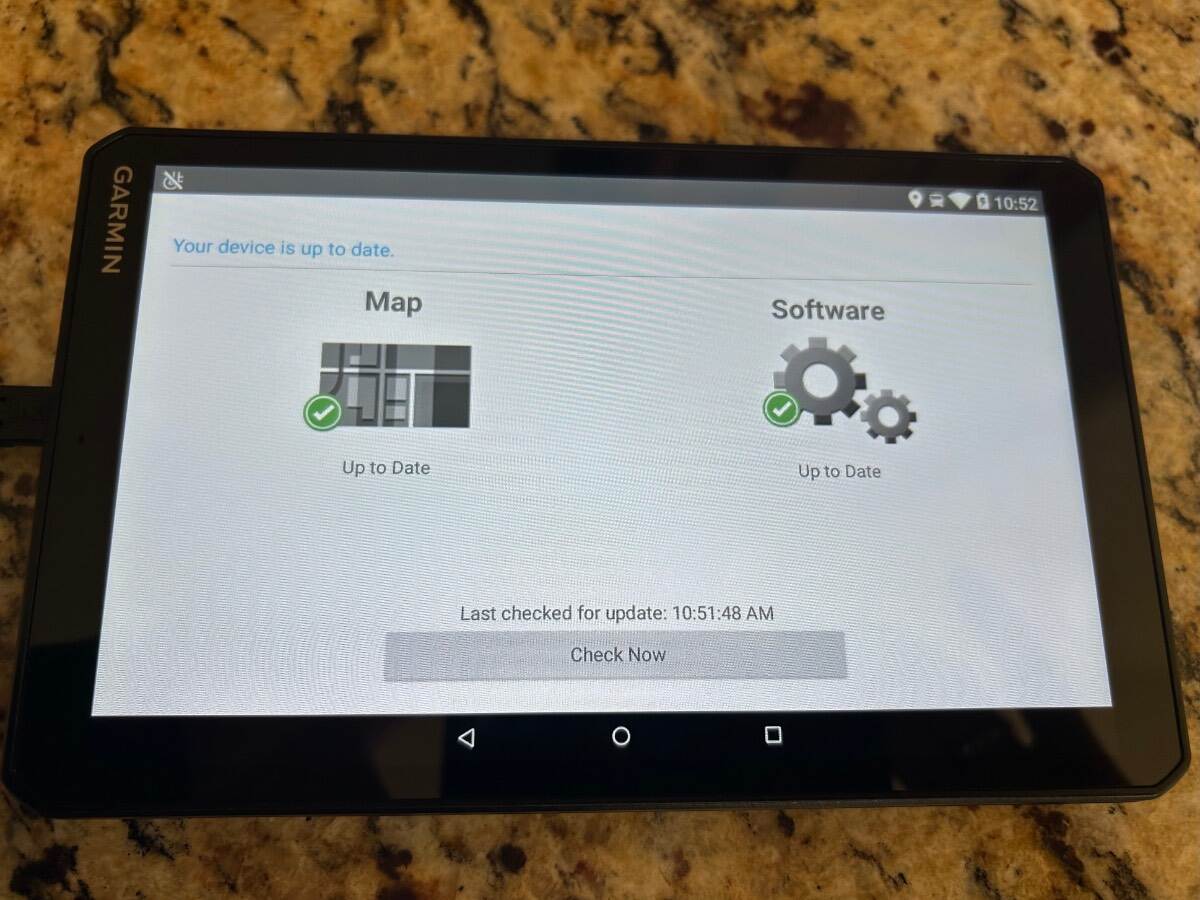
In doing some map research I stumbled across a couple of updates to Garmin devices that are currently available. The first is an update to IOverlander's points of interests and the second is a fairly substantial update of North American Maps. As usual, Garmin Express can be used to perform these updates or WiFi can be used if your Garmin device is equipped for it. Bill1 point
-
Just updated our Garmin 890 RV…and we are good to go! Thanks for the reminder @topgun2 and @rideandfly.
 1 point
-
You are sounding more and more like a potential canidate for the OTT Rabbit Hole Society! 🙂 I love it.... +++++++++++++++++++++++++++++++++++++++++++++++++++++++++++++++++++++ For sure when mine dies. No need to rush into this on my end. However, I'll be monitoring your wonderful results to make sure that your cables and the 50 amper holds up with the high voltage drop issue still out there. Bottom line I'm thrilled with the efforts for all of us. You and Geoff are "Pathfinders" on this topic, and others, for sure! GJ1 point
-
This past summer, my iPhone XR died while in northern Idaho. Without it, my 2019 F-150 navagation was useless. I pulled out my RV 780 which fortunately I had updated during the summer of 2025. It work wondefully. Hopefully Garmin will continue to allow updates and support battery upgrades. GJ1 point
-
Ours did the same thing, hull #1373. I replaced and added additional screws on the sides. We'll see if they hold up longer than the original strap.1 point
-
Yes it is. I have been using it for a year and I have been quite pleased with it. It may be the 10th Garmin that I have owned. I have not noticed the issue of only being offered the 'fastest route', but I don’t think I am on the new load that @topgun2 has referenced above. Mossey1 point
-
DONE - SOLVED - Yay! I hope Bob gets theirs working asap! So glad I took time to add those screenshots. Geoff read them and had the answer. I understand most of it but it's confusing! Turns out I had the Engine Shutdown Detection at the default settings (see pic, left frame). I had adjusted the battery charge settings but nothing else. Not sure why it was running better, then not, since looking back at my pics during installation I'm pretty sure now the Orion was always at these defaults. Taking into consideration what Geoff wrote and the YouTube video, I set mine to Standard Alternator and then when I changed individual voltage settings it's then called User-Defined. The new settings chosen are also pictured (center frame). She's running better than ever! Before I was getting about 42A when towing. Now I'm getting that at idle. I held the pedal to bring the diesel idle up at 1600 RPM and the Orion moved up to a 46A output. For some reason (?) the Input Voltage shown on the app is the same number as the selected Shutdown Voltage. It was 13.1V, now 12.8V and I changed it to 12.7V it did the same thing. Then I set it back to 12.8V. The Klein clamp ammeter showed the same numbers as the app. I measured all three 4 AWG wires at the Orion. I found Input Amps - Output Amps was equal to the approx 4A reading for the Orion Ground Wire. The 4A must be the current the Orion is using in doing the work of the DC-DC charger. The Orion 50A charger during tests today and yesterday got just slightly warm to the touch. I could leave my hand completely over it for as long as I wanted. Yes, @Geronimo John and others might want to upgrade to the 50A given your 30A charger is truly getting hot!
1 point
-
Yes, this is the easiest way to implement that option, in my opinion, at least until someone comes up with a better approach. You've definitely got my wheels turning again. I had pretty much settled on the manual switch route, but after reading the discussion and thinking through the pros and cons, I may still end up going with the hardwired Engine ON detection option after all. I need to stop talking about it and get out there and run some wires. Seriously, the more I discuss a project, the less likely I am to have to do it twice. I've learned that spending time planning and bouncing ideas off others is usually much cheaper than discovering a better way after everything is already installed.1 point
-
Holy crap! I am just seeing this. Thank you, Geoff, for the detailed analysis. I intend to share your post with the Inverter Service Center folks that installed my charging system. But a quick glance under the hood looks like the DC-DC charger’s negative cable is indeed connected directly to the Pathfinder's battery post. I will start there. I'll be back to report on progress as I work through the other potential issues. By the way, I had the alternator tested at the dealer today and it came back as 14.6 loaded and unloaded voltage as you would expect. So hopefully that variable has been ruled out. Bob1 point
-
Are you using Bounty, the quicker picker upper? Or do you use a specific brand?🤔😉😂 Mossey1 point
-
Bob, as you already figured out, conventional alternator voltages can’t be applied to a smart alternator. They use a current sensor on the battery’s negative cable that signals the engine computer, which throttles the alternator down once the TV battery is charged. That saves fuel, and 12.4 V while driving can be perfectly normal. Based on what you’ve described, there are several possible causes for your problem. First, I’d verify that the DC-DC charger’s negative cable isn’t connected directly to the TV battery post. If it is, the Orion’s current bypasses the current sensor, the computer never sees the extra load, and it never raises the alternator voltage… unless for other reasons such as a low TV battery. Some manufactures specifically say to ground accessories to the body for this reason. Many vehicles have a ground stud on the far side of the sensor for accessories, otherwise use the chassis ground point where the battery’s negative cable attaches. Even if it worked before, it could be because the current sensor was seeing other TV loads that caused the alternator to increase voltage, and it wasn’t noticed when it stopped charging. If the truck can see the charger’s load independently from the truck loads, then the alternator should keep the voltage raised well above all of the thresholds. So it could have been charging when the truck called higher alternator voltage, but not otherwise. Second, the Orion’s engine shutdown detection works on voltage. My abridged explanation is that with the default “smart alternator” settings, it starts charging at 14.0 V. A smart alternator idling at 12.4 V never gets there, so the Orion thinks the engine is off. There’s also a separate input voltage lockout setting (default 12.5 V) below which charging stops. At 12.2 to 12.4 V, you’re under that too. These thresholds are adjustable in VictronConnect, but there’s a limit. Set them too low and the Orion can stay on and drain the truck battery when parked. Every vehicle is different, so some trial and error may be needed. It sounds like the Nissan system might have some unique quirks, but disabling the voltage control might be extreme. If fine-tuning doesn’t work, an “engine-running” signal on the Orions Remote L Terminal will force the Orion on. It’s there for this very reason. You must leave engine shutdown detection enabled when you do this, so it still turns the charger off when the engine stops. Victron describes several signal sources and recommends a true engine-running signal over a plain ignition wire. For your situation, a wire that goes dead with the key off is the best approach. In a trailer setup, this gets more complicated because it needs a third wire between the truck and trailer. Fortunately, the +12 V wire in the tow harness should work in most cases. Check it with a meter. It must be dead with the key off, and must not be live from the trailer battery with the truck off. Oliver doesn’t connect this wire on lithium systems so you should be okay. Ideally, it would also be off with the key on and the engine not running. Otherwise it could drain the TV battery if key is left on. This wire is usually capped off near the inverter and it’s typically a #10 or #12 wire. Also be aware that undersized cables, poor terminations, and corroded Anderson connectors can cause “additive” voltage drops that only show up when the charger is pulling heavy current. Corrosion builds over time, which could explain why it worked for a year and then stopped. This is where the “Input Voltage Lockout” setting comes into play. It’s set it so that Vlock-out ≤ Vshutdown − Vcable. The Vcable is the voltage drop in the wiring at full current. Victron’s manual provides an example voltage drop at 50 amps over a specific length of heavy cable. It’s a surprisingly high voltage drop, so if you add any additional resistance from undersized wire, corrosion or poor connections, you can add tenths of volts more, and that can push you under the set point where charging stops. You or your installer can measure your actual Vcable with the Orion running at full current (Turn on Oliver’s air conditioner and use a temporary +12V signal on the remote L trigger). Confirm its running full amps on the App. Vcable is the truck battery voltage minus the Orion’s input voltage. Many people wing this and get lucky, but it can become a latent problem especially with marginal wire sizing. Another way to get around this it is to de-tune the Orions maximum output amperage. For example: I have wiring sized for an old 30 amp charger based on the length of the run. When I upgraded to a new 50 amp charger, I reduced it’s power output to 30 amps to match wire size, otherwise Vcable could be too high. Mine actually worked at higher amps, but the wire was getting warm which meant the efficiency was suffering and I was burning more fuel. Finally, it’s worth load-testing the alternator. Turn on all the big loads (headlights, rear defrost, blower on high) and check that voltage climbs to around 14 V and holds. An alternator shop can do a more definitive carbon pile test. Also do a ripple test, which detects a burned diode that would reduce output. You can check it yourself with a meter on AC volts, with the loads on. There are YouTube videos showing how. If the voltage won’t rise even under heavy load, a Nissan dealer can scan for codes to tell whether the problem is the alternator or the current sensor. Again, it might be true that the Orion has never worked to full capacity and it was just not noticed. It probably worked periodically over long drives enough to charge a partially drained battery. The Victron has a history function where you can verify its performance over time. It's a good tool for problems like this. Anyway, it’s been fun trying to write this out in layman terms. I hope it helps, Geoff1 point
-
@OffWeGo, I reviewed the sketches you provided for the Front Storage Basket and offer the following comments: Placing the unit in front of the dog house will move you 26" away from the cover on the doghouse. This will likely make removal of the doghouse cover difficult, if not impossible for one person when propane tanks must be refilled. To remove the doghouse cover on my 2022 LEII I straddle the tongue of the trailer and am able to reach the handles on both sides to lift it. Some clearance space will be needed between the front of the doghouse and the rear of the storage unit for clearance of the doghouse cover when dis-mounting and mounting. If the top of the storage unit is hinged at the rear, space will be needed to avoid hitting the top of the doghouse. No details are included to show how the storage unit is to be mounted. The indicated mounting positon places the storage unit on top of the fiberglass covering the trailer tongue. The fiberglass would need to be drilled for passage of mounting bolts. You would likely need spacers to keep the storage unit from resting on the fiberglass and potentially cracking it. You would need to tap into the aluminum frame members or use long "U" shaped bolts to secure the storage unit to the frame. As I recall, Oliver uses long "U'" bolt to secure the front storage tray they offer as an option. The storage unit design has a lot of doors (2 side, 1 front, 1 top). This presents a challenge for the frame of the unit to have sufficient rigidity to support the doors. To have sufficient rigidity you may have little choice but to have a square tube inner frame. Having the tubing presents an obstacle to installing and removing the generator, as you have noted. Also, securing all of the door to prevent theft will be a challenge. The top will need a gas cylinder or other support to hold it open, I had an outdoor grill stand fabricated from stainless steel to support a 200 lb grill. My initial design used square tubing to be clad with stainless steel sheeting. I took the design to an experienced fabricator, who recommended eliminating the square tube frame and building the stand using stainless sheet only. This change produced a much better result. There are storage areas on each side of the grill and they have stainless steel doors. The unit is quite stiff and strong. If you are interested I can provide photos of the details. How is the removable shelf to be supported? "L" shaped brackets mounted to the inside of the unit could work. The mounting method could be either bolting or welding. Your sketch lists routing of the power cable from the generator to the shore power connection on the street side of the doghouse. You might consider attaching a weathertight electrical box containing a 15 or 20 amp outlet on the exterior of the storage unit, with a short cable running through the wall into the generator. I suggest making a short cable that would connect from the weathertight box outlet to the shore power inlet. How accessible are the pull starter, choke and controls on the generator when in the storage unit? I have used small Honda generators before and they are usually relatively easy to start, but I never tried starting one in a confining box. I suggest you reconsider having the generator mounted in a storage unit on the trailer tongue, for several reasons: Mounting the generator to the trailer frame will likely transmit vibrations along the frame which will be noticeable in the cabin. The same concern for noise. Having the generator exhaust so close to the cabin presents a danger of infiltration of carbon monoxide into the cabin. Overheating is likely to be a problem running inside the storage unit, even with all of the openings. Additional tongue weight may become an issue. I don't know the tongue weight limit for your Tundra. The generator, storage unit and chocks could add 60-75 pounds. I try to locate our generator as far as possible from the trailer, considering neighbors, wind direction, etc. I use a 25 foot propane hose to connect our generator to the low pressure propane connections on the front and rear of the trailer. I elected not to install any type of cargo carrier on the trailer tongue, primarily to keep the tongue weight within the limits of our tow vehicle, a BMW X5 35d (diesel). I did not like the cargo tray offered by Oliver- too small to meet our storage needs and too difficult to secure. Instead, I installed a rear mounted cargo carrier. The generator, a grill, chocks and Starlink case are accommodated. You can find a write-up on the details here: How To Install a Rear Cargo Carrier on an Oliver Legacy Elite II. Good luck with your project! Regards, Don1 point
-
Yep, this is exactly why I have learned to do all maintenance myself on our Oliver. Local shops around here charge $300 per hour too and have months wait to time get in. Not an option.1 point
-
During winterization (which makes me sad but thats a different topic), I found the strap holding the Truma water heater had broken on both sides in very symmetrical locations. Easy to splice on a new strap but how did the failure happen? I suspect these are fatigue failures and thus that same strap material is the wrong fix. I also am not completely certain of the complete purpose of the strap other than to restrict the back of the water heater from jumping around. Thoughts?
0 points
-
The idea was great, but the implementation by the suits of Howenwald leaves a lot to be desired. I had work done at the Salem, Oregon "Oliver Dealer." they eventually did a good job, but I did have to do TWO round trips between Salem and Whidbey Island, Washington to get it done right. They stood behind their work, and all ended well (But TWO trips through Seattle traffic!) Turns out that NO ONE from their service department had been to Howenwald for training, nor had anyone from Howenwald been to Salem. Qualified for Oliver service? I think not.0 points













-
Recent Achievements
-