
topgun2
-
Posts
7,758 -
Joined
-
Last visited
-
Days Won
464
Everything posted by topgun2
-
sgcausey - While the CalMark cover is not waterproof, it is fairly water repellent. Given that, while it does "breath" I'm sure that the airflow through it is not very good. Therefore, I have never left any vents (MaxAir or bath) open while in storage. However, to control humidity inside the Ollie I have used a combination of a product called "Damp-rid" along with a renewable desiccant (renewed by plugging it into a 110 outlet a couple of times over the winter). I also make sure to use crumpled newspaper in the fridge and leave the fridge and bathroom doors open, and I remove my sleeping mattress but leave the dinette cushions in place. With these precautions I've never had any odors. Bill
-
Mattnan - You can't be serious - that is one really sweet setup. Nicely done! Bill
-
Horrors of horrors! Is that a picture of an Oliver with its wheels off the ground and only being supported by the rear "leveler"?😁 Great advice regardless of the position of the wheels. Less battery power used, less stress on the jack motor, less stress on the moving parts of the jack and (potentially) less stress on the frame. Add in that it is safer, probably more stable - due to lack of torque on the jack tube and potential strength of the supporting blocks and might even help in that "when, not if" situation of driving off without raising the jacks. Bill
-
Coy - That's a heck of a story - glad to hear that all turned out well and neither you nor the Ollie suffered any long term damage. What was the condition of that rim? Obviously it wasn't damaged enough to prevent a new tire from being mounted, but, what about potential cracks, deformation and/or other unseen weakness? Did you replace it when you got home? Bill
-
beaker - Congrates! Its time to "break" that low mileage Ollie in. You'll simply love the Owner's Rally - its at a great place and there will be soooo much to see and do. Bill
-
I'm not sure about the "sad and pathetic" part, but, I miss the freedom too! Bill
-

Should we sell our Leisure Travel and buy and Ollie?
topgun2 replied to Moots's topic in Introduce Yourself
ShallowGal has two large labradoodles plus a good sized husband and when they picked up their Ollie they immediately left on a multi-month trip across the USA to Alaska and then back down to Florida. Last I heard all of them are still in one piece and very happy with each other - including the Oliver. Bill -
DavidS - If your friend is looking for someone else to give a CampChef to - I'm available! 😁 Bill
-
I agree with SeaDawg on this - for the cost of a battery it certainly is not worth anyone's life in those smoke detectors. Also, having a battery leak could cause the destruction of whatever device it was in - again not worth taking the chance. Yes, I know that today's batteries (at least good ones) tend to last much longer than they used to. However, it is simply not worth the risk of life or leakage or trying to remember when was the last time I changed those darn things. Therefore, I (like SeaDawg) remove all batteries at the end of each camping season and then replace them with new batteries at the beginning of the season. Bill
-
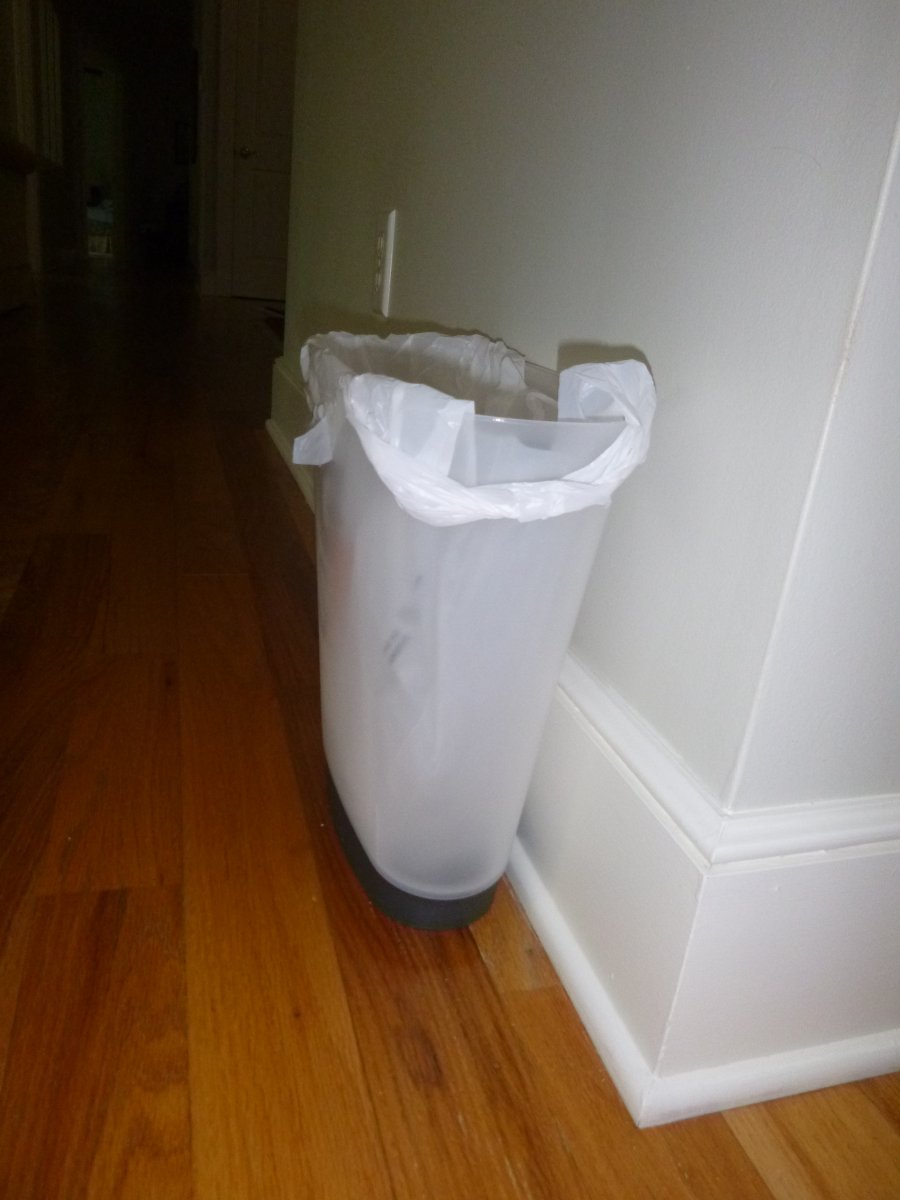
After 4 and a half years of using a re-purposed paper shredder bucket for a trashcan in my LEII I finally found a reasonable replacement. While the shredder bucket did the job of holding regular plastic bags as liners and was small enough to fit on the floor under the pantry without sticking out too far into the aisle, it certainly wasn't very stylish. While running errands after a doctors appointment in the big city of Asheville, NC today my wife and I stopped into a Big Lots store where I found this (see pics below): The dimensions are approximately 12.5 x 12.5 x 6.25 inches. It can be found at: https://www.biglots.com/product/clear-slim-2-4-gallon-wastebasket-with-flat-gray-base/p810428520 I did check Amazon when we got home and they only sell these in sets of 6 and even then they are $5 each and WalMart wants $10.32 for exactly the same thing. Bill

-
- 4
-

-

-
Should we sell our Leisure Travel and buy and Ollie?
topgun2 replied to Moots's topic in Introduce Yourself
Whatda - Your comment about the frame welds brought back a memory - After having just purchased a new SOB travel trailer I passed through Hohenwald on my way out West for some fly fishing. At that time, the first stop on the plant tour was the frame jig where they weld up Oliver frames. I was so impressed with how those welds looked that I was ready to sign a contract right there. However, there was the not so small matter of that brand new camper sitting outside and a wife that I'm sure would not appreciate those welds as much as I did. At the end of the day though the "new" camper was sold for what I paid for it and the wife (finally) saw the quality of the Oliver. Now when I show my Ollie to interested parties I always have a clean piece of cardboard for them to kneel or lay on so that they can see those beautiful welds. Bill -
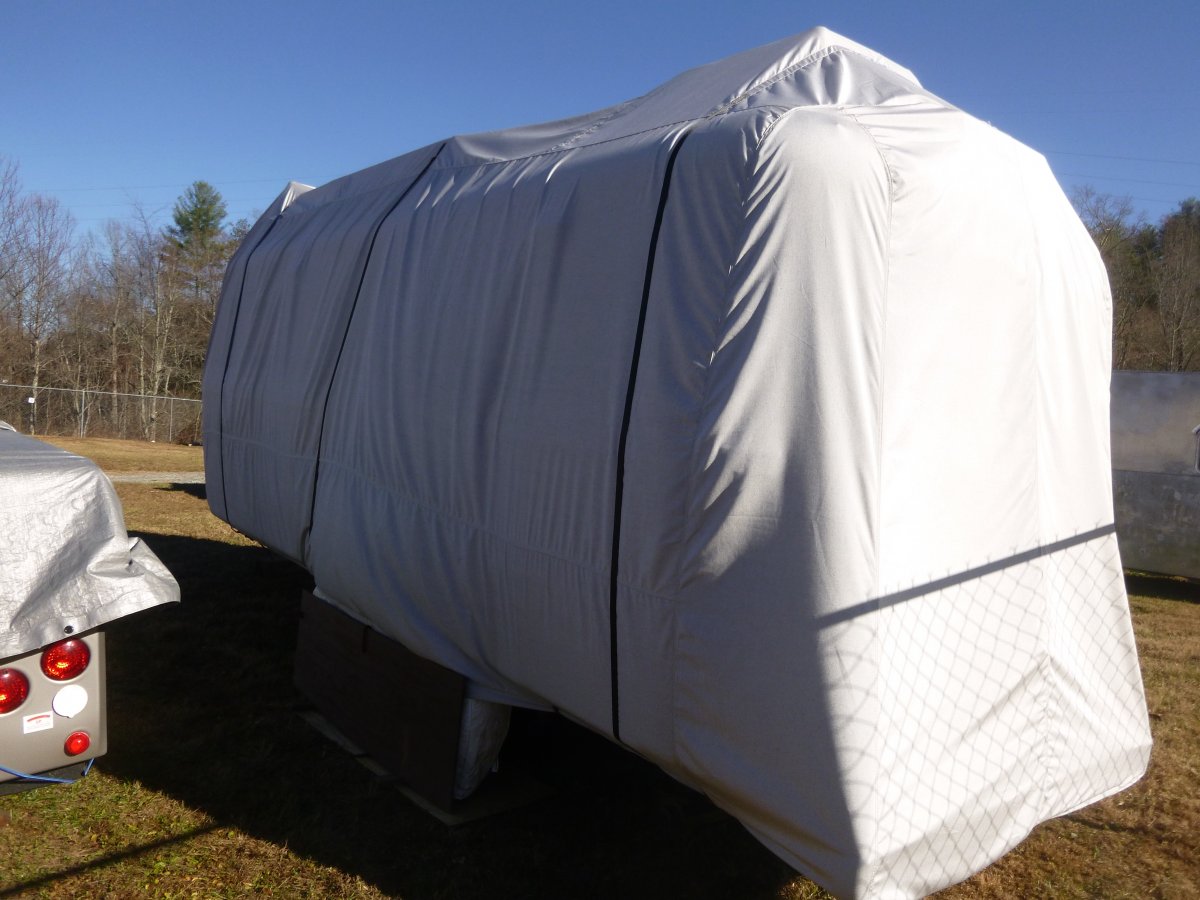
Just before changing into my workout cloths and going downstairs to the home gym, some guy has to mention "weighing in" - bummer. However,with reference to the CalMark covers - just type Calmark into the search box at the top right of this page and have fun reading. And, there are even pics in some of those posts. I've used both CalMark and Adco covers over the years and firmly believe that the CalMark's are better. Both are made from the same "Sunbrella" material but the CalMark has three webbing straps that completely go around the Oliver (front, middle and rear) and it has both a cinch rope in the bottom hem and grommets in the bottom hem that the Adco doesn't have. Both companies have the measurements for the Oliver LEII (they probably have it for the LEI also). Both have an access door so you can get into the Ollie without taking the cover off. Bill
-
Nan - Type TPMS in the search box located in the upper right of this page and start reading. There are a number of fine systems on the market but reading what has been discussed before will help you in deciding which one is right for you. Bill
-
Nan - I think that virtually all of us can't wait to get back to camping. However, now is the perfect time for you to really continue that rehab. The rehab is almost as important as the operation(s). There are some really beautiful spots in Virginia and I don't just say that because I was born there. Bill
-
Makita 16” corded electric chainsaw $182 best price ever
topgun2 replied to John E Davies's topic in General Discussion
KenB - WOW! I sure do hope that you actually doing this because it certainly looks like work to me. -
Weather stripping around the windows
topgun2 replied to Foy_Mirna's topic in Mechanical & Technical Tips
FrankC - After the install - how much did you have left over? Was the 18 feet you ordered the right amount? Bill -
City and Fresh Water Intake Overflow
topgun2 replied to Stephen and Kelly's topic in Mechanical & Technical Tips
Ollie404 - If you intend to do the replacement of the valves yourself then it really wouldn't be any more difficult to move those valves. Both jobs require that you cut out the damaged valves. To move the valves all you have to do is add in a pex connector/union to the existing piece(s) of pex, run additional pex to where you wish the valve to be located and then insert the new valve. When you cut the old valve out it is more than likely that you will need to add in a short piece of new pex anyway unless there is enough slack in the existing line(s) so that you can simply put in the new valve. The most difficult part of this whole process is "clamping" these new pieces of pex pipe and fittings into place. Basically there are two methods of doing this. You can replicate the method that was used at the factory - pex bands - that are tightened with a special tool that can be a bit expensive or you can use "shark bite" style fittings that are simply Pushed onto the pex and/or fittings. These shark bites are expensive relative to the pex bands and there are reported cases of failure (read that leaks) if not installed properly or (possibly) due to vibration. For a one shot deal it is probably less expensive to go the shark bite route versus buying the special tool. On the other hand - if you can borrow that special tool then it will probably give you a more robust final job. Good luck! Bill p.s. there are a number of YouTube vids on both methods mentioned. If you do not feel comfortable then virtually any plumber can do the job. -
Mirna - Certainly the Truma is nice and if you simply can not remember to keep the standard water heater turned off, the Truma will save you propane. It also has the benefit of "instant gratification" given the short time it takes to provide hot water. Some claim that the Truma also simplifies maintenance but that can be argued. If those features are important enough to you to spend the extra money that is asked for the Truma then you have your answer. However, on the rare occasion that either one of these heaters requires repair, the standard heater is generally less expensive to repair and parts tend to be more generally available. If you can remember to turn the heater on about ten minutes prior to needing the hot water AND turn it off after you have the hot water you need then the standard water heater is probably cheaper to run. And the standard water heater gives you the option to run on electric if you are plugged into shore power. Bill
-
It looks like Jason (Oliver Service Manager) and the video crew are back at it again with two new YouTube vids on De-Winterizing and Sanitizing the plumbing. They can be seen here: https://www.youtube.com/watch?v=vTKw-WOxFqs and https://www.youtube.com/watch?v=uZlm5Mfvodo Bill
-
In other words - "get a bigger hammer OR do more drugs". 😇
-
I didn't get the cell phone booster because I rarely use a cell phone. I did get the WiFi booster thinking that I'd use it in commercial campgrounds but their signals are so variable that I really don't rely on it for that purpose. However, unexpectedly I do use it while on the road in that I can pull into a WalMart or McDonald's or virtually any fast food place and tap into their WiFi without even going into the store. I didn't get the 30 pound propane tanks because I do not do a bunch of winter camping and the 20 pounders are mush easier to get refilled or swapped/exchanged. I did get the solar package, inverter, etc. and they are wonderful giving me so many additional camping possibilities and choices. Finally, I did get the surge protector (now standard?) to protect all that electronic stuff inside. Bill p.s. Didn't get the electric switch for opening the shower backflow slide valve - I'm not so lazy or physically challenged that I can't bend over to open that valve. Didn't get the external propane quick connects since I do not use a propane stove outside - I prefer old fashion charcoal. Also didn't get the front basket - I probably regret that one - nor the front electrical connections since I don't use a generator. Note that the basket can be used for other things and that I why I miss it upon occasion.
-
Ouch! Was that sleep after all the cussing and fighting stopped 🤓?
-
GJ - Apparently you are not the only one that feels this way about the F150. It hasn't been #1 for 40 years without some reason or the other. I had never owned a Ford product prior to my first F150 in 2011 (and then my second in 2017). Actually I was a Toyota fan after a great experience with a Tacoma. But, finding that the Tundra interior was not to my liking and the dated mechanics I went looking at Dodges. While I understand that the current year's interiors are very nice, in 2017 I was not impressed and reviews of their transmissions were not glowing. I also briefly considered GM (1/2 ton) products and really liked the exterior but I remembered that when I see a truck coming toward me, for the past ten years or so, with one front light out it will be a GM product 9 times out of 10. If they can't fix that then what is the point? Anyway, as I've said many times before on this Forum - there really isn't a "bad" 1/2 ton truck on the market these days and I'm sure virtually any one of them will do the job (equipped properly of course) but I'm still very happy with my purchase of the F150, 3.5 ecoboost, FX4 with tow package. I have never had a hint of an issue on the flats, in the mountains, paved or unpaved roads. Certainly I agree with your (GJ's) grading. Bill
-
Interestingly, there is presently a "First Aid" discussion going on over on the FGRV Forum. If you are interested: https://www.fiberglassrv.com/forums/f55/rv-first-aid-kit-s-91919.html Bill
-
I believe it was John Davies that did a post about first aid kits a number of months ago. Perhaps he will chime in on this topic. Back (way back) when I was a life guard I was jealous of the couple of other guards that got a chance to use their training for CPR. All I ever got was the chance to swim blankets out into the surf in order to provide a cover for those ladies that had lost their tops in the waves 😁. Bill