Leaderboard



Popular Content
Showing content with the highest reputation on 08/26/2019 in all areas
-
When picking a tow vehicle that will be actually used a LOT for towing, always choose the most power, the lowest gearing (highest number axles), and the biggest gas tank. Those three things will make the long long drives way more enjoyable. Everything else is just what appeals to you. If you only plan to tow a few thousand miles a year in easy terrain, and daily drive it the rest of the time, go for the highway gearing and the slightly better fuel economy. Nobody every complains that they bought the towing gears, but often we hear folks wishing they had them.... especially if they have a light duty truck and start sticking oversized tires and lots of heavy accessories on it. John Davies Spokane WA3 points
-
What's to argue about? The only likely problem you'll see is every single one that you listed.2 points
-
Updated our trailer with her Name: Galway Girl Used the same 3M Vinyl that the factory used. Bought 12" squares on Amazon and cut out with a Cricut Machine. Results Below:
 2 points
 -
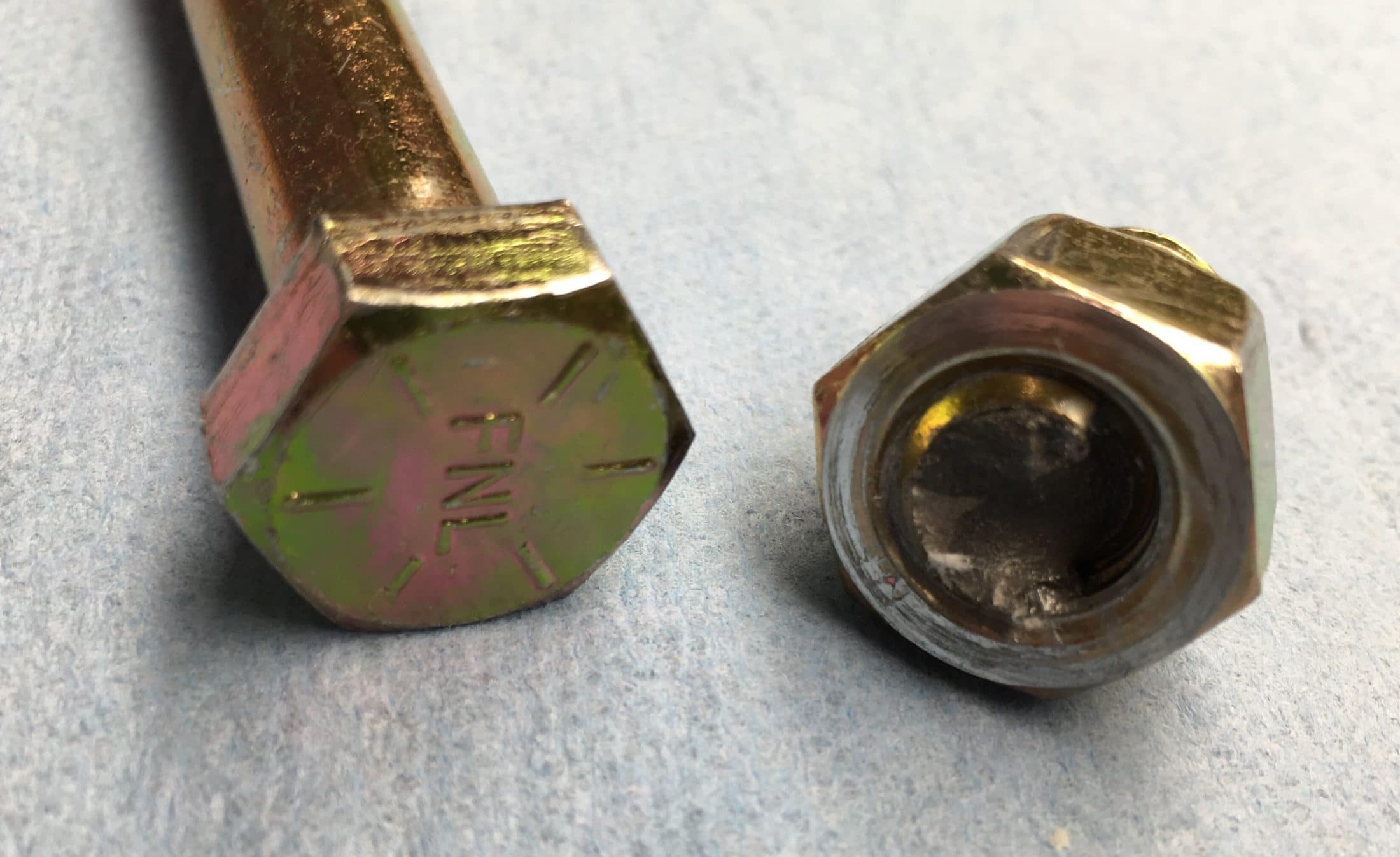
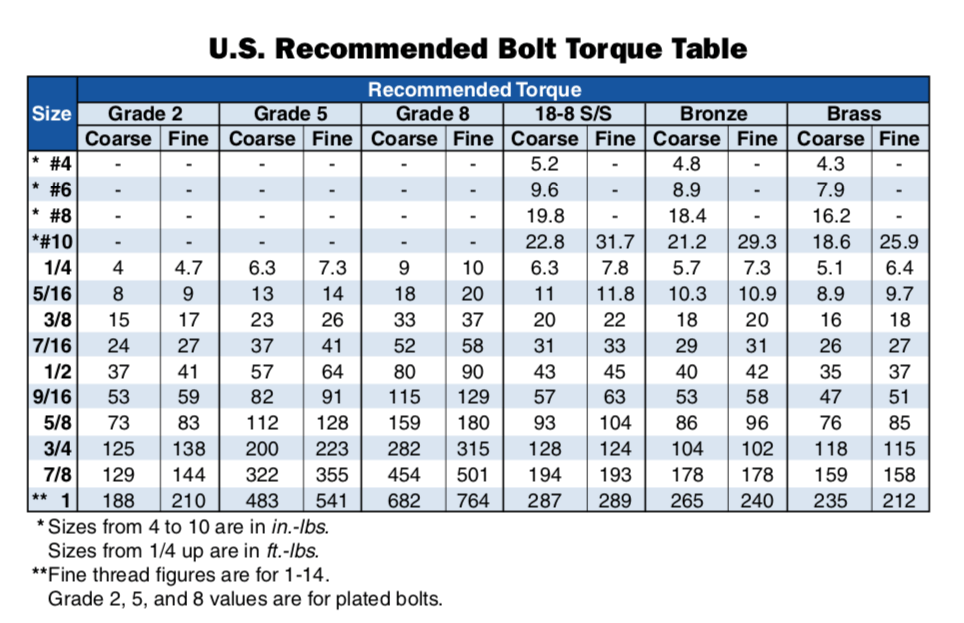
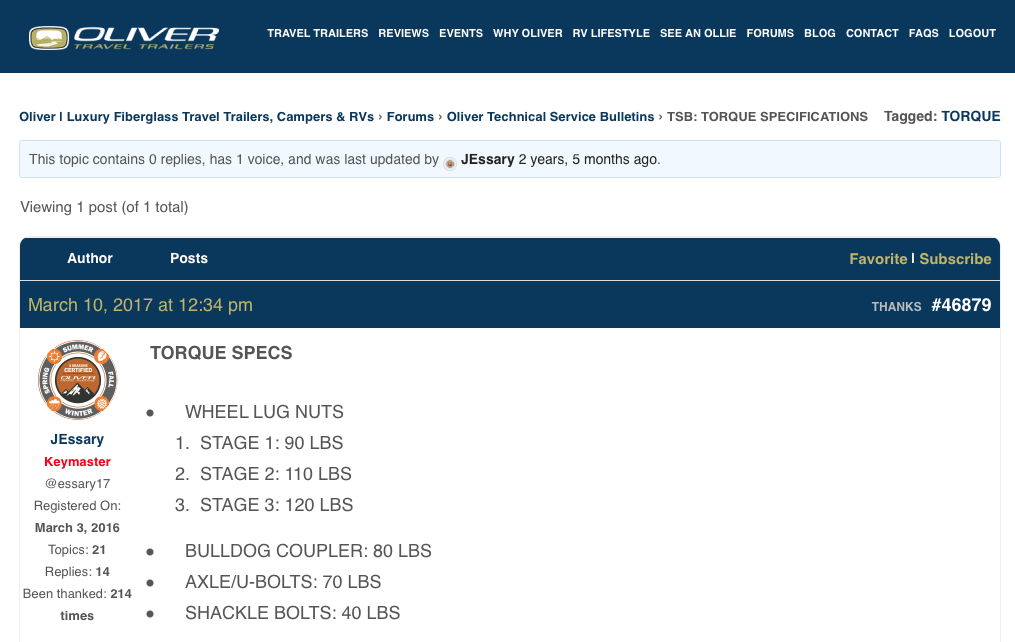
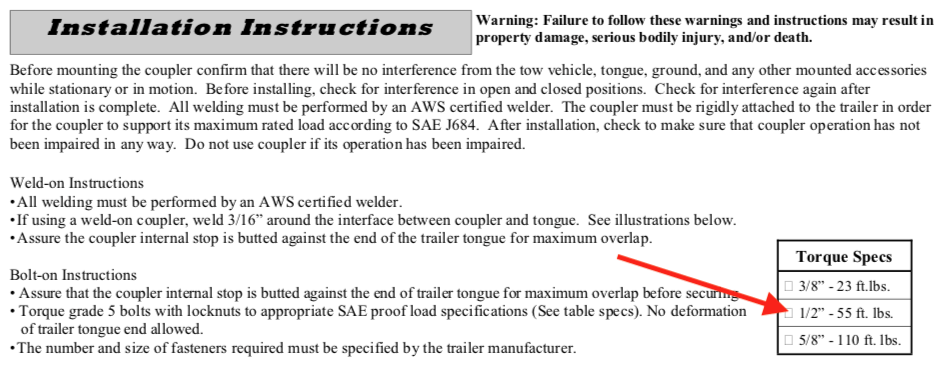
EDIT 08/29/19 Added extra bolts to the coupler here: ...https://olivertraveltrailers.com/topic/how-to-reinforce-your-bulldog-coupler-by-adding-extra-bolts/ Please comment ... I am worried. Here is what I submitted to Service: Hi, I recently replaced my coupler with a larger one. I used new 1/2"-18 Grade 8 bolts and torqued them to the specified 80 ft lbs. That is the recommended value here: tsb-torque-specifications/ And it is also the recommended value, generically, for this bolt type and size. HOWEVER, the Bulldog instructions recommend installing Grade 5 bolts at 55 ft lbs. Bulldog Instr Today I went to check the bolt torques, and one of my Grade 8 ones sheared and flew across the room. The other bolt is fine. So either I just got one bad bolt, or the torque value is not appropriate for this application, or I should be using SOFTER, less brittle Grade 5 bolts as recommended by Bulldog, at a smaller torque value. I think you need to amend your TSB with detailed instructions on type of bolt to be used and the torque value. Somebody has, or is going to, replace his hardware using the Bulldog instructions and your higher TSB torque value, you can bet one it.,.... I also think this merits a new TSB and an email to all owners to clarify the situation. Please advise, should I just put in two new Gr 8 bolts at 80 ft lbs or go with Gr 5 at 55 ft lbs? Also, I want to install a third bolt half way between the two factory locations, to add some strength and a safety factor in case one fails. Is it OK to drill new holes up high, so the bolt runs just under the top inside surface of the tongue? I would not use a compression sleeve. John Davies Spokane WA
1 point
-
There is no way I would put the Oliver in the middle - The frame was NOT designed to be a tow platform. I thought about this possibility early on - for about two seconds. My wife would be driving the Wrangler, or the TV, or I would still be at the house..... RB1 point
-
I found that when replacing my Bulldog coupler with the 2 5/16" model, that the bolts as installed from Oliver had bottomed out in the nuts before clamping sufficiently. This meant that almost all of the torque was going into twisting the bolt, rather than tensioning it. With insufficient clamping force, the holes in the Bulldog coupler had begun to elongate. A couple of grade 8 washers added to each bolt,fixed that problem. Lubing the bolt thread with either grease or anti-seize increases the tension on the bolt with any given torque value on the nut. In the case of engine head studs, for instance, the bolts are clamping the head to the engine, and bolt stretch is the best way of arriving at the design clamping force. Nut torque is just an easy way to get there without special tools, but not exact. In the case of the bulldog coupler, we need bolt tension and we need shear strength. The shear is more determined by the bolt hardness and diameter, while the tension is determined by the nut torque. In a perfect world, we'd get the bolt stretch specs and go for that by adjusting the nut torque. But in the real world, we use nut torque. It never is clear how much we should reduce the torque based on the affect of the thread lubrication. But it is clear that lubing the threads increases the tension. It may be that John had a defective bolt. It may also be that any problem with the bolt was made more obvious by lubing the threads, which increased the tension while torquing. It may also be that there was an unfair percentage of torque going into twisting the bolt because of the threads bottoming, or nearing the end of the threaded section. Since those bolts are not designed to be removed frequently, and since they are plated for corrosion, and since they may have been defective, I'd replace them and install them with no lube, while making sure the threads are not bottoming. We want the unthreaded shank to carry the shear load, so get bolts that have a long enough unthreaded length. Then add grade 8 flat washers to make sure the nut does not bottom before reaching full torque. If you have two torque wrenches, work them against each other on a nut and bolt, to see if they agree on their torque values. If not, get the best one calibrated or replace one of them. But really, the torque should not have to be very precise to work properly in this case. If the bolt is near it's full capacity, upsize it. It seems grade 8 is a good choice for the bolts because they are primarily in shear, but I'm not an expert on the differences between grade 5 and grade 8 in that regard. The torque is just a way to keep things from moving around while under load.1 point
-
There are a lot of reasons a torque wrench can be off. Even 10lbs over probably shouldn't lead to strain failure, but wrench variation+lubrication form the Permetex+maybe not good bolts could lead there. The snap-on man can calibrate or verify calibration (and sell you a nice wrench), or if you can fix a fastener in place (or use something already torqued over 80 foot lbs) and hang an appropriate weight off the handle to approximate 80 foot-lbs. You can also use a luggage scale to measure the force - subject to the accuracy of that scale. Tau=rxF.1 point
-
[quote . Is the higher ratio enough? Absolutely. To quote Admiral of the Soviet Fleet Gorshkov: "Better is the enemy of good enough."1 point
-
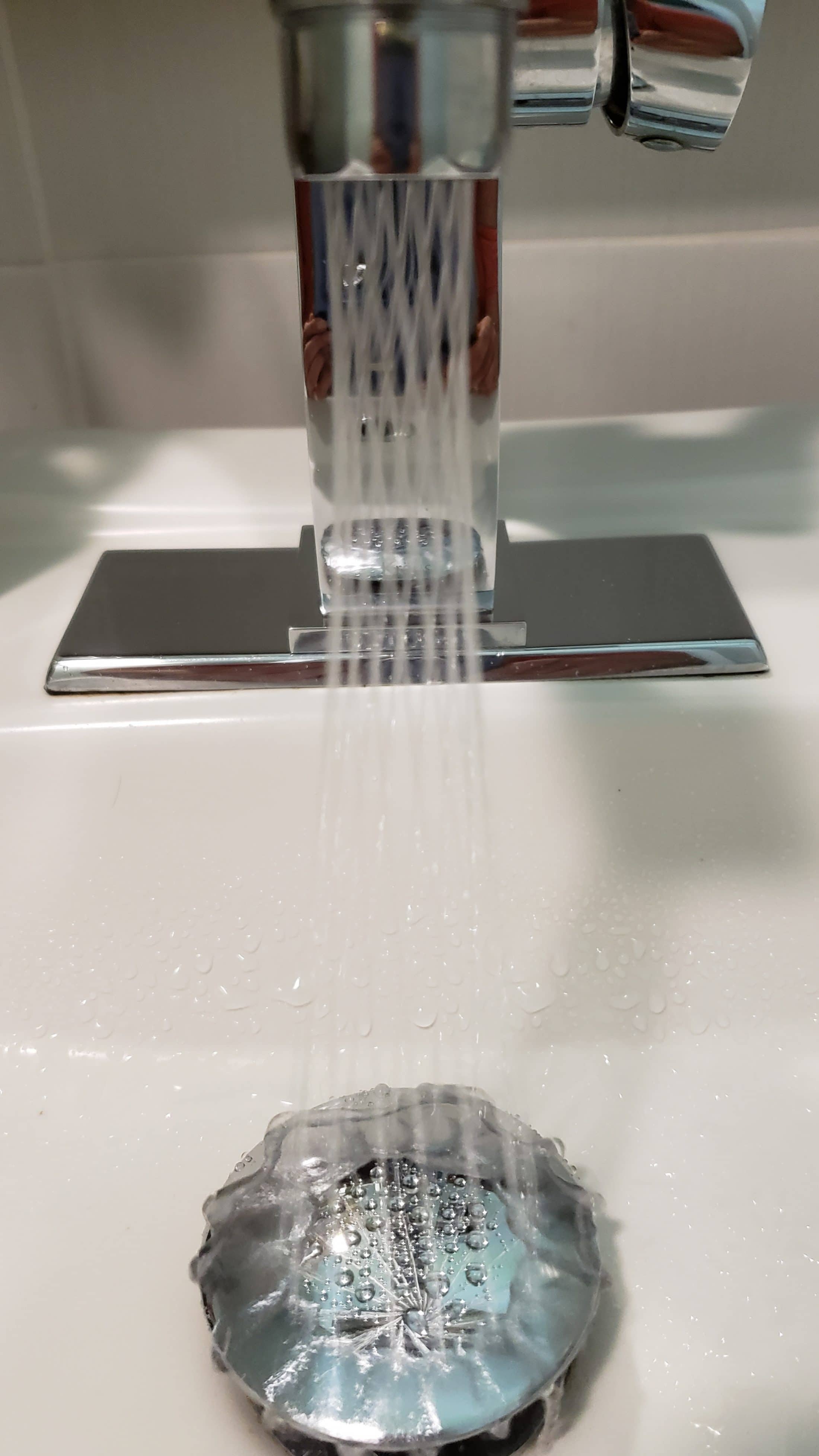
tl;dr - absolutely buy this, and depending on how you use your kitchen sink, maybe buy this. When we started looking at campers/trailers one of my requirements was that we should be able to go for a full week without refilling our water supply, using an estimated 7 gallons of water per day for both my wife and me, which included a daily shower for each of us. That was ~50 gallons, so we knew we couldn't get that with the Ollie, but were hoping that with some diligence and an extra 12 gallons carried in the truck that we could stretch a calculated 6 days into 7. That never happened, and of course we actually slid the other direction, getting more like 5 days - 3.5 from the trailer tank and another 1.5 from the extra water. I think if we really ran the tanks dry that we'd have gotten 6 full days but we never had a situation to really test that, mostly since we'd start to get nervous around the 20% mark and would go find water. Then last year I replaced the kitchen faucet, and the new one had an aerator that really had no flow restriction at all. It was rated at 2.5 gallons/minute vs 1.5 for the standard Delta faucet Oliver uses. And it also has a short little lever that made it hard to adjust to a small stream to save water. We could do it, but it was a pain. I realized last month though that the faucet would take a standard sized aerator, so I decided to buy a few to test them out. The ones I got were better, but made my cool kitchen faucet seem average, and I couldn't have that. But a little internet sleuthing led me to The Mikado. It restricts the flow to an amazing 0.35 gallons per minute and has the coolest spiral spray pattern you've ever seen. At only 0.35 gpm, I imagine you'd get pretty frustrated if you wanted to fill a glass of water; but we use bottled water and only use the kitchen faucet to do dishes and wash hands, so that low of a flow rate actually works out perfectly for us. We lost the ability to switch between two different sprays, but we never used that feature anyway. With that success, I decided to take on the shower. The highest rated low flow shower head I could find is the High Sierra. It's not a looker by any means - it's downright ugly. But it seemed like anyone who's ever rated shower heads has placed them at the top of their list, and it has a flow rate of only 1.5 gpm vs Oliver's 2.2, so I put my aesthetic sense to the side and ordered it. In its favor, it feels great in the hand - very heavy and solid, and it also has a trickle feature like the faucets Oliver used to use, which is great for keeping the water warm while sudsing up. Not in its favor is that I found it nearly impossible to connect to the hose from Oliver's faucet. I ended up having to order an oddball adapter and then modifying that to make it work. (It would have been easier just to have swapped out the entire faucet, which is what I'd recommend anyone else do.) But even with the adapter, it does slide back into the faucet just like the original, so apart from being a pain to make work, it does work just the same. But I have to say that this shower head is truly amazing. It has a surprisingly forceful stream that feels as if it's using twice as much water as before, if not more. It works so well that I didn't believe it was only using 1.5 gpm and had to test it myself - which made me even more surprised since I actually got a little less. I'm not exaggerating when I say that this really transformed the shower, and I highly recommend it to everyone, whether you're trying to save water or not. But it is ugly. After both of those mods, I thought I'd see if lowering the water pressure would make any difference, and found that 40 psi was about the point that I started to notice some drop off in the shower output. The sink stayed the same regardless what I set the pressure at. In fact it will actually run for a good while with the pump off, just from residual pressure in the pipes. So I've set both the pump and my external pressure regulator to 40 now, which I suppose helps my plumbing and maybe makes some dent in water usage though I doubt much. The result? 8 full days this past trip with both of us taking showers each day, split roughly 5/3 for the Ollie's tank and the extra gallons in the truck. So 2+ extra days of water while at the same time improving the quality of the water at both the sink and the shower and being able to lower the water pressure. Really A+ results. I don't know how often we'll actually need a full week's worth of water, but on this last trip it worked out well for us since only once were we someplace that we could actually hook up the trailer to a hose, which meant a lot fewer trips to get water. Also it means a little less stress and obsessing over water use, which is a good thing. By the way, the replacement aerator may work with the stock faucet, but I'm embarrassed to say that somehow I've lost mine* so I can't check. *Along with the sink. How do you lose a sink?1 point
-
So, I finally got around to ordering the Neoperl Mikado aerator, and installed it in one of the guest bathrooms, replacing the original .5 gpm aerator.. This is the coolest spray pattern l have ever seen. And zero splashback onto the wood countertop. Perfect replacement on my Kraus faucet. I'm ordering more for the rest of the house, and the trailer, too. Thanks Overland. Sherry [attachment file=194001]
1 point
-
Weight is something I am thinking through. I am moving away from the offroad adventures and getting back into cycling and fly fishing so the Black Bear and Conqueror (https://conqueror4x4usa.com/) is overkill. Stock gearing in GX470 is 3.73. Stock tire size is 265/70/17. I only went up to a 265/70/17 so I could still fit the spare in factory location. The local RV rental place in Durango actually has an Alto Safari Condo F1743 for rent. When I get back home and winter has not set in I may take it out for the weekend for a test. If I can pull a loaded down Alto up and over Coal Bank, Molas, and Red Mountain passes with little effort that will give me more of a relative idea what a dry weight Elite would feel like. John: try towing with an FZJ80. 3" inch lift. armor all-around...very painful when semi trucks are passing you up the grade. That is why I bought the GX470 with the V8 for the T@B. If you are looking for a GX470 check out the GXOR forum on Facebook. Or the ih8mud 120 group: https://forum.ih8mud.com/forums/120-series-toyotas.207/. I am source3 on ih8mud. Ih8mud also has a great classified section. Cheers and thanks for the input.1 point
-
Keep in mind that your actual tow weight will be more like 6000lbs so you’ll be well within your limits. The only thing that might make you want a higher ratio would be if you tow in the mountains a lot. Even then, it will be a matter of ease rather than actual mechanical limits. There are people here who tow with much more limited vehicles and do fine. The problem with asking advice on tow vehicles in forums is that everyone thinks that the vehicle they currently tow with is just the best. You’ll find those people with more limited vehicles who will say they’re fine and don’t know why you’d want more, and those with beefy ¾ ton diesels who’ll say you’re crazy to tow with less. I say trust the numbers. By the way, the wheel size won’t make a difference but the tire size will, at least for calculating torque. We had a thread here a bit ago about calculating the final pulling capacity for a vehicle - I’ll see if I can dig it up.1 point
-
John, We had several failures with grade 8 bolts on one industrial application and found the bolts were torqued wet (oil used) at the dry torque value, Never Seize would probably have the same results as oil, if used. This was several years ago, but must have been the same bolt size because remember 80FT LBS dry for that application. Once we started torquing dry threads the issue went away. If you go with Bulldog's recommended grade 5, would torque to the dry value with dry threads.1 point
-
I’ve been looking around to see if I can find anything authoritative on how much to reduce torque values when using anti seize, but I haven’t found anything yet but forum posts. This particular post I found was interesting - 50% reduction for Teflon based anti seize. Wow. LUBRICANT OR PLATING TORQUE CHANGES Oil, Reduce torque 15% to 25% Dry Film (Teflon or moly based), Reduce torque 50% Dry Wax (Cetyl alcohol), Reduce torque 50% Chrome plating, No change Cadmium plating, Reduce torque 25% Zinc plating, Reduce torque 15%1 point








-
Recent Achievements
-