Leaderboard

.thumb.jpg.780a61c48108d06558e15f745dfe9b5e.jpg)

Popular Content
Showing content with the highest reputation on 01/24/2021 in Posts
-
I have heard some reasonable ideas on the issue of fuses, circuit breakers and the way OTT installed the Fastway equipment. So I thought I would look for some installation instructions and this is what I found. It looks like all opinions aside, OTT is installing the product just as the manufacturer instructed. And I’m good with that. Mossey
 5 points
 -
It is a DOT requirement to not fuse the wire leading to the break away switch.4 points
-
Seems to be a quandary - Cautious folks would like to see the circuit protected - makes sense in most cases. However in this case - the safety factor of the BAS and its intended result overrides the "normal" fusing requirements. In some manner - the wire is a large amperage fuse - yes it will cause a little smoke and perhaps a flame. I would believe it is a requirement. Not fusing is less dangerous than any damage a run-away Oliver would represent. The resetting breaker is an interesting idea. I'll leave mine alone. RB4 points
-
John has hit on a very good practice - run the unit dry of fuel - in most cases - especially if you will not be running it for a an extended time. I understand pure - unadulterated - unleaded fuel is not available everywhere - but around my neck of the woods - non ethanol high octane fuel is readily available - and that is all I put in my small engine equipment. Never have an issue. The local marine dealer has a jar of 6 month old ethanal unleaded on display - it is a great way to see what happens to your fuel system and carb with the regular pump stuff. Run it off propane - all good. RB2 points
-
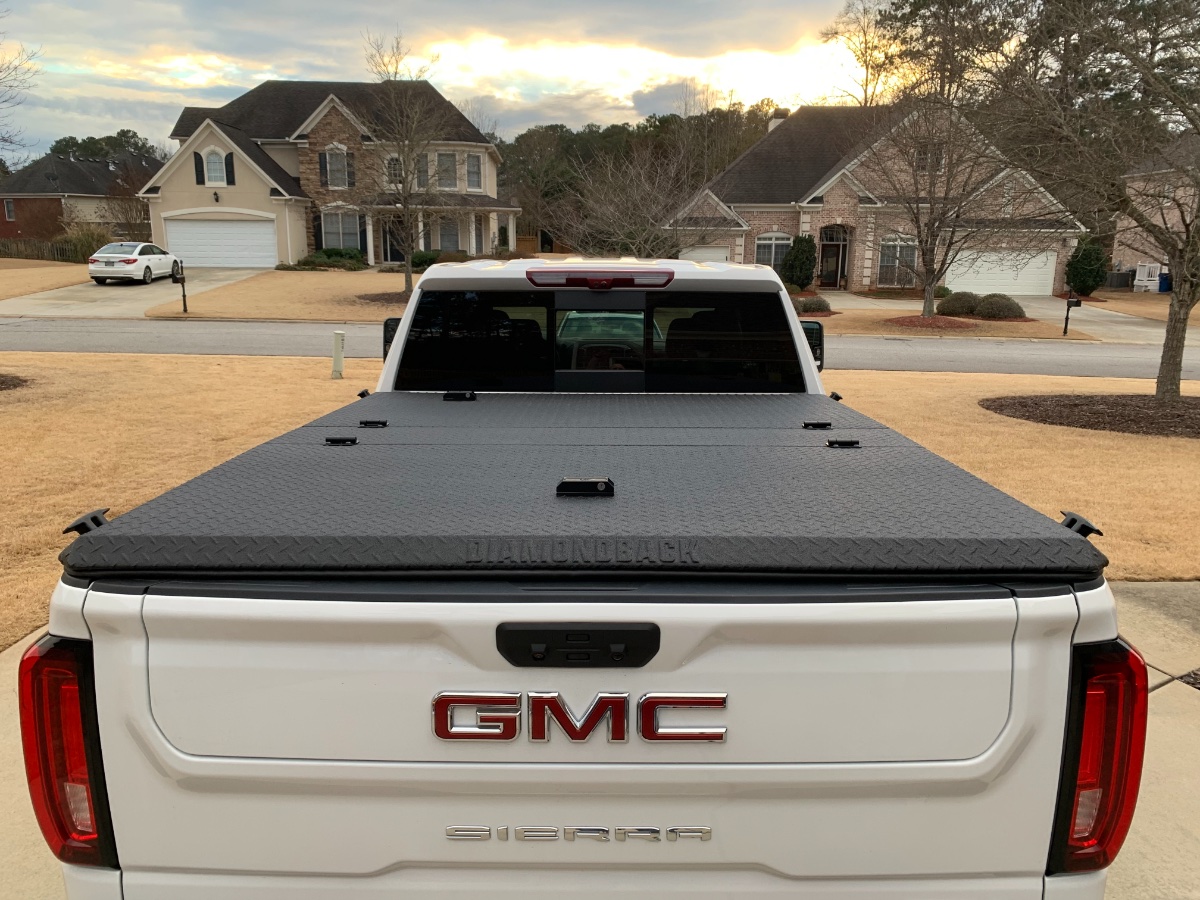
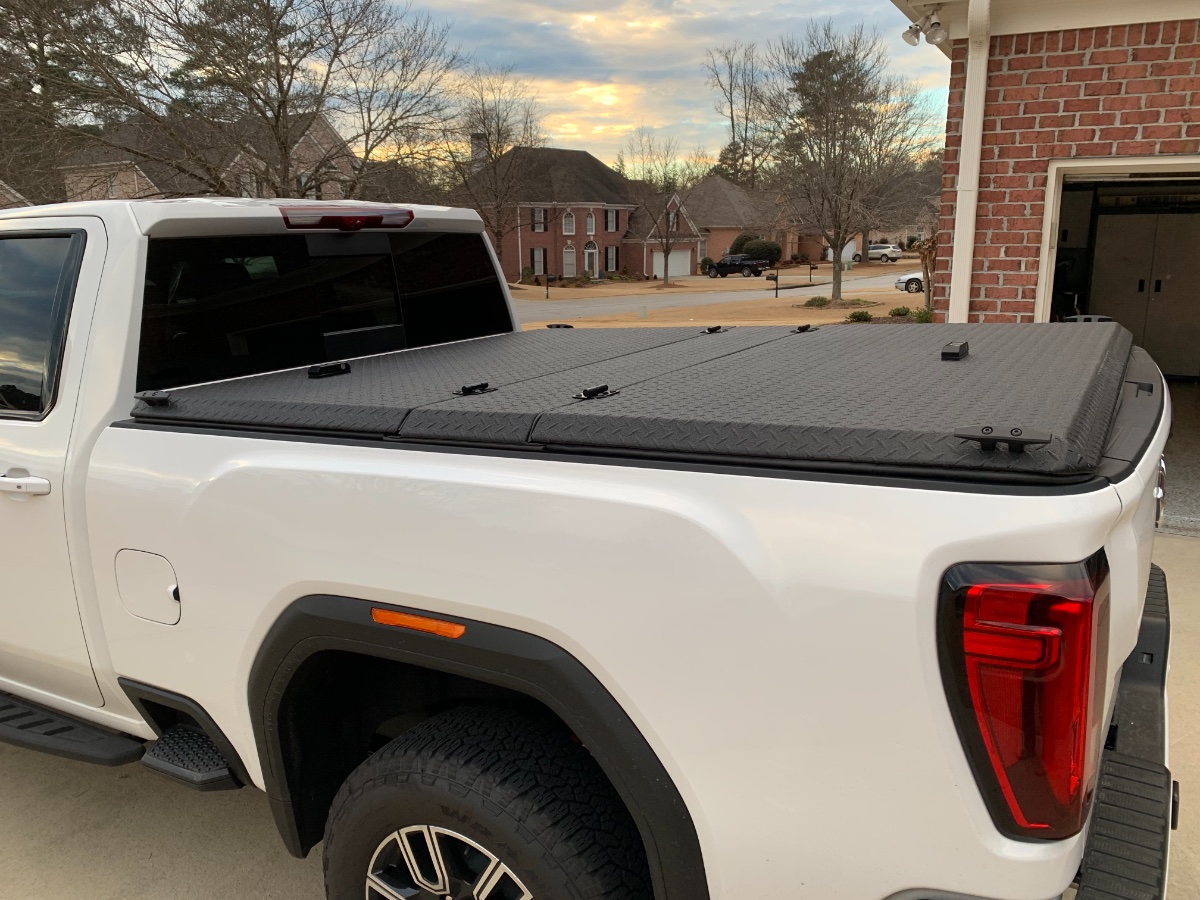
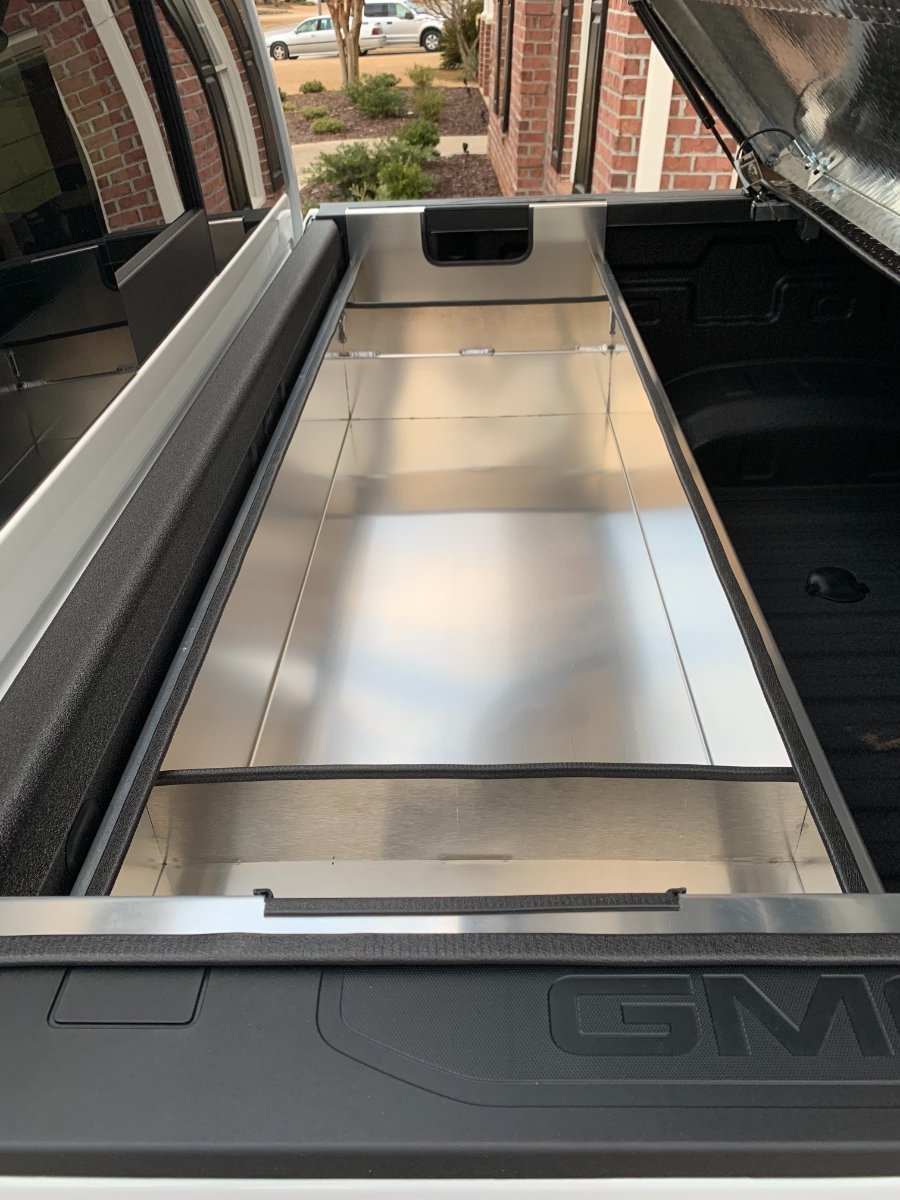
For anyone interested here are some pictures of my new diamondback SE cover and crossbin 13 installed on a GMC Sierra 2500.
1 point
-
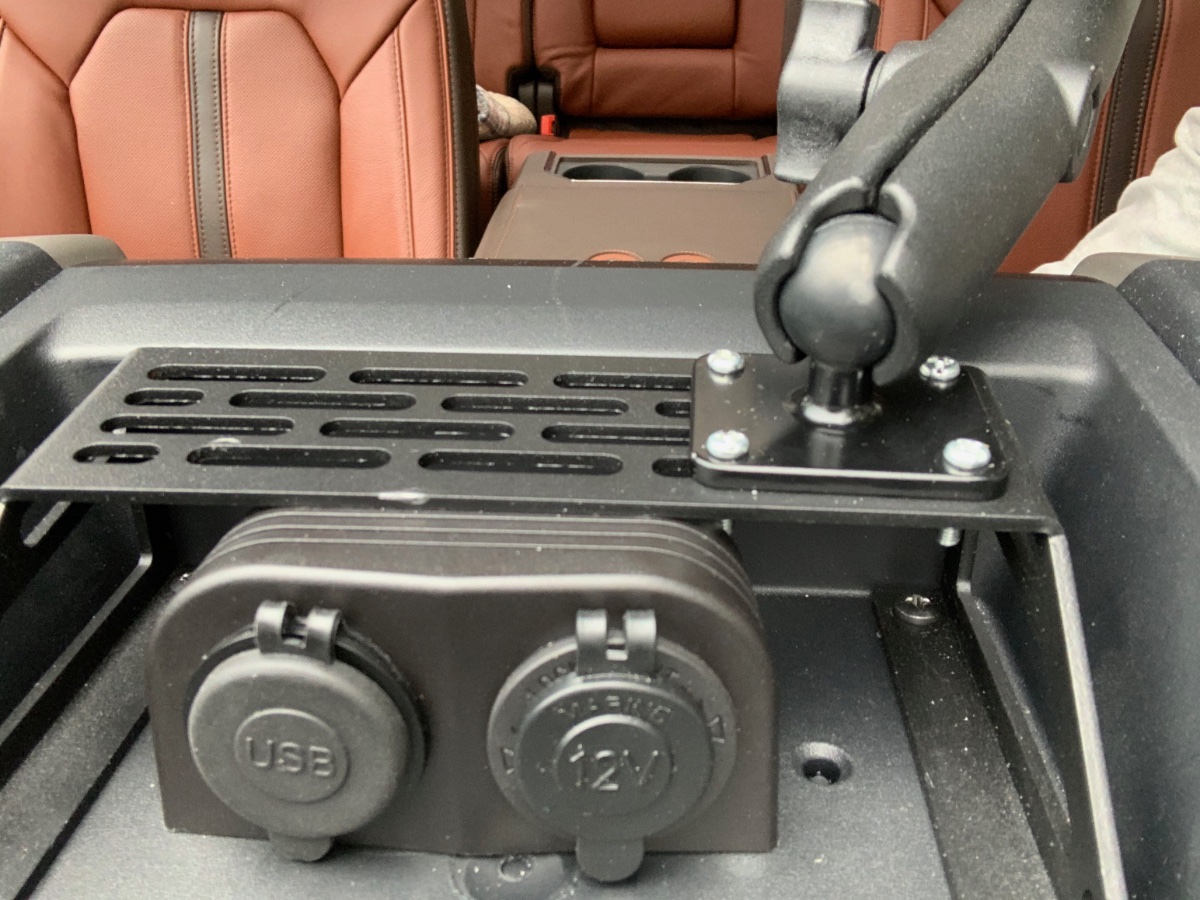
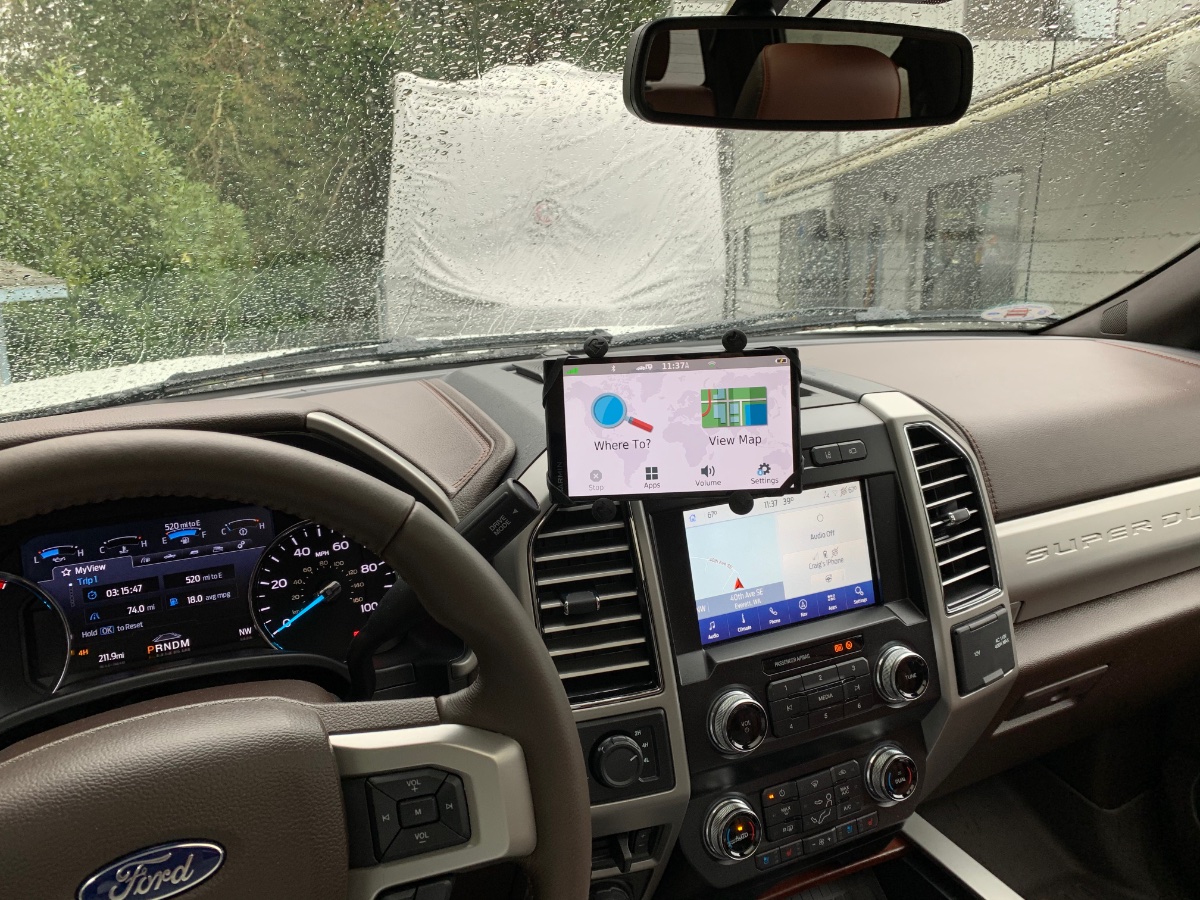
I followed Topgun2's advice and executed a similar install to enable a swivel arm in our new F350. (EDIT - I also pulled the 20A fuse for the Power Port before doing this work.) 1) I started by removing the dash tray (I used painters tape to protect your dash from scars from the plastic pry tools). 2) Snap off the "speaker cover" it is hard to pull off as it's secured by clips in 4 corners. 3) Remove 2 - 7mm bolts in the front (windshield side) of the tray. 4) Remove the 2 - 7mm bolts on the top of the radio stack front surround. 5) Pull out the radio stack surround, and loosen 2 more 7mm bolts below the radio facia to remove a retaining facia (holds on the side trim stacks.) 6) That allows you to pull straight out on trim to the right of the radio which includes the a/c vent and more importantly access the back of the power point (cigarette lighter). 7) Splice onto the wires from the Cig Lighter port. Feed the wires up into the area above the radio and below the speaker tray. The wiring diagram below was supplied by the Ford BBAS service for 2021 F350. The Cigarette Lighter B+ is the Green/Brown Stripe wire, and Ground is Black with Blue Stripe. Finished install with Garmin all setup. Since the tray removal and wiring was a little tricky I made a quick video showing tray removal and re-install. I considered using the up fitter switch, but realized that there wasn't enough current draw to warrant all that effort and using up a switch. Also, I learned that the "through the firewall" wires ended up making me wish Ford would allow 6" more wire for the "through firewall" feeds. They are so short, you need to completely remove the fuse panel to get access to the bundle of 4 through firewall wires. So I stopped that effort. I wired into the same dash 12v power port circuit as Topgun2. That port dash circuit has a 20Amp fuse, and my devices don't pull more than a couple of amps normally. My backup camera plugs into the 12V power port in the tray, and my Garmin into one of the 2 USB ports. Here's the video showing dash tray removal and reinstall. Dash Tray.mp4
1 point
-
I don’t know if that was your only reason for wanting the cover off, but you should be able to see that label by taking off just the return air grill and filter.1 point
-
We have one of the original Teakworks mats. Originally I oiled it, but keeping it clean of soap scum was a pain so I coated it with satin polyurethane. I though I’d have to add some anti slip strips but it’s actually quite grippy on its own. The finish started to wear thin in a few spots after three years but I just gave it a quick sanding and two more coats and it’s like new.1 point
-
I'd second what SeaDawg is saying about these woven rugs. CampingWorld, WalMart , Amazon, have all sorts of designs and sizes to chose from. With regards to the interior rug - you might want to consider getting two rugs instead of one to fit this space. The small rugs are much easier to simply take outside and shake. Also, the rug that is in the kitchen area will tend to get dirtier faster and it would be easier to either replace this smaller rug or clean this smaller rug versus the larger one piece unit. Finally, I like a "softer" rug for back in the bedroom/living room area - its a bit nicer on the toes and warmer feeling on the feet versus the easier to clean one I have in the kitchen. Bill1 point
-
Fritz - I don't have the Furrion camera so I can't really make a sound judgement in that regard. However, from what I've seen and read and the general design of the Furrion, I suspect that it is somewhat better than the Garmin 890/BC35 as a camera. Partly this is due to the fact that the Furrion transmits its WiFi signal directly from the housing that is mounted on the roof of the Oliver while the Garmin unit either must be waterproofed (the cable connections, the fuse holder and the power connection) or have its WiFi sending unit mounted on the interior. Also, the Furrion is (I believe) higher resolution. For the intended purpose - I really don't think that high res is necessary. I can tell if it is a truck or car or tree or rock without seeing its license plate or how many ants are on the rock clearly. And, I don't think that the night vision in either is an issue. Yes, the size of the screen on the 890 is really nice and depending on how it is wired the screen will automatically switch from "navigation mode" to the camera or the Garmin can be wired in such a way (constant power source) so that the view of the rear can be constantly on the screen (i.e. you can, with the press of two screen "buttons" switch back and forth from navigation to camera. And, if using it in place of the Furrion, it would be one less screen crowding up your cockpit area of the tow vehicle. However, unless you mount the BC35 in a reasonably different location versus the Furrion, I really don't see what advantage one would get in terms of view. In my case, I have a camera mounted in the spare tire cover. This has served me well for five years but when it is raining or when driving on very dusty roads, this camera gets wetter and/or dustier than a higher mounted camera (like the normal location of the Furrion) would. This reason plus the one less screen is why I have gone down this road with the Garmin (note that my current camera transmits via WiFi to my phone and/or 8 inch tablet and that has me really liking the larger screen). I believe that both systems will let you add additional cameras if you want to be able to look at the sides and/or front of the camper. I'm not certain what you mean regarding the "motion detect function" but the camera does not automatically come on/activate or give any warning if it detects movement (i.e. another vehicle, human, bicycle, etc.). Bottom line is that since I needed (wanted really) a new GPS and since the 890 works with a camera, For the additional $170, I got the camera. Hope this helps? Bill1 point
-
Link to federal requirements (Cornell Law School) Click on subpart C and then section 43 for specifics on breakaway1 point
-
Agreed. Non ethanol is all we run in all the lawn equipment, generators, etc. Back a decade ago,, we used to drive halfway across the county to a Sunoco to find it. Now, I've found a greater number of stations, including many of the big chains, selling non ethanol these days. If we're on the road, I sometimes use this website to locate non ethanol. (This is crowd-sourced, and far from complete, but usually accurate.) Or, just Google non ethanol near me on my phone. https://www.pure-gas.org/index.jsp?stateprov=FL1 point
-
A couple of additional comments about the Garmin 890 - 1. For a number of reasons, I wanted an additional rearview camera on my Ollie. So, I purchased the Garmin BC35 that is made to pair with the Garmin 890. My plan is to install the camera in the usual spot on the roof at the rear of the Ollie, drill a hole and run the camera cable into the attic. Then, using extension cables, run the video cable through the cubbies toward the front door. Once there I can use the already installed "camera" switch in order to get power to the camera and the WiFi sending unit. Using double sided VBR tape, I will simply attach the WiFi sending unit in that same area. Not only does this method allow me to get to a switched power source, but, it also gets the WiFi sending unit that much closer to the truck where the 890 is located (note that Garmin claims a 45 foot signal transmission distance for this device). Also note that Garmin recommends that the WiFi sending unit be protected from the weather. Unfortunately, Garmin does not make extension cables for the BC35. I found THESE on Amazon. Had to wait almost three weeks for delivery from China but they arrived this past Friday. In doing a bench test yesterday it was quickly apparent that the first connection between the Garmin video cable and the first extension cable was not going to work - all other connections were fine to include from the last extension cable to the WiFi sending unit. The issue was that the female socket on the Garmin end was too small and the male end on the extension cable was too big. So, first I used 200 grit sandpaper to shave down the diameter of the male plug a little and used a hair dryer to soften the female socket a bit. They are still fairly tight - but - they work. The next issue was that the first extension cable worked with no issues - each cable is 6.5 feet long and I bought three since I could not find a longer single cable in the necessary 6 pin design. But, when I plugged in the second cable, the system no longer worked. I tested for power - good. I tested for tight connection and/or bent connector pins - also all good. So, I went back to the original single cable arrangement and all again worked as it should. Reinstalled that second cable again and it didn't work. I was perplexed and didn't have an easy way to test the individual pins on the end of the second cable, so, I replaced that second cable with what was supposed to be the third cable. Walla, all works again. Obviously, that second cable is faulty and a new replacement is being sent. NOTE - the BC35 camera is not high resolution but it is color and night vision is more than acceptable. Also note that due to potential voltage drop the use of more than four of these 6.5 foot cables joined together is not recommended. 2. While playing around with all of the above, I noticed that one of the "apps" on the 890 was labeled "browser". I opened it and, sure enough, it connected to my home WiFi system and opened Garmin's internet page. So, I then opened My.MSN.com and Google and several other pages and confirmed that this is simply what it says it is - a doorway to the internet. Certainly the screen is much larger than my cell phone and is the same size as my tablet. But since it is already on the dash, when I pull into a McDonald's, Starbucks, Lowes, WalMart, etc. I can simply connect to their WiFi without messing with my phone or tablet and send emails or catch up with what's happening here on the Forum! 3. Another nice feature of the 890 is that even while not tethered to a computer it will use WiFi to check for both map and system updates and notify the user if either are available. While they do want the unit plugged into a power source prior to downloading and/or installing any update, a connection or direct use of a computer is not necessary - any simple USB power port will do. Bill1 point
-
I would think it should not be fused.If the fuse popped and you needed the emergency break away it won’t do its job. It needs constant 12v power while hooked to the TV.1 point
-
This is an undesirable end result of using the house battery bank for the emergency breakaway source. It's either a RVIA or DOT requirement, maybe both, that the switch be directly connected to the battery. Normally, with a dedicated breakaway battery, this isn't an issue because wire lengths are miniscule. Common sense and best practices always overrule ambiguous requirements. I added a 25 amp type 2 auto reset breaker. 25 is the maximum ampacity of the 14 awg wiring so it won't burn up if it shorts or the switch fails, and high enough to eliminate any potential for tripping on initial surge. Whatever device you choose to use, make sure the interrupt capacity rating is adequate for your battery bank capacity.1 point
-
What was the date of those reviews? Gasoline or propane? Some older Hondas did not have a separate fuel shut off switch, so while it was running you just killed it with the combination ignition/ fuel shutoff switch. The problem with that is the engine is still spinning for a couple of seconds and it sucks unburned gas into the cylinder. That fouls the plug, washes oil from the cylinder walls, and leaves a lot of gas in the carb. None of that is good. My old EU1000i was like this, and it was always hard to start after sitting, at took at least half a dozen pulls. My Yamaha 2400 has separate fuel and ignition switches, so I can turn off the gas and let it run until it dies, THEN turn off the ignition. That empties the carb, most of the way. It always starts with one pull. It is a good idea to manually drain the carb after a camping trip, so the small amount left in there does not evaporate and form varnish, which can block the jets. And ALWAYS use a fuel stabilizer, unless you run propane. 😬 So be sure the unit you buy has this design feature. John Davies Spokane WA1 point
-
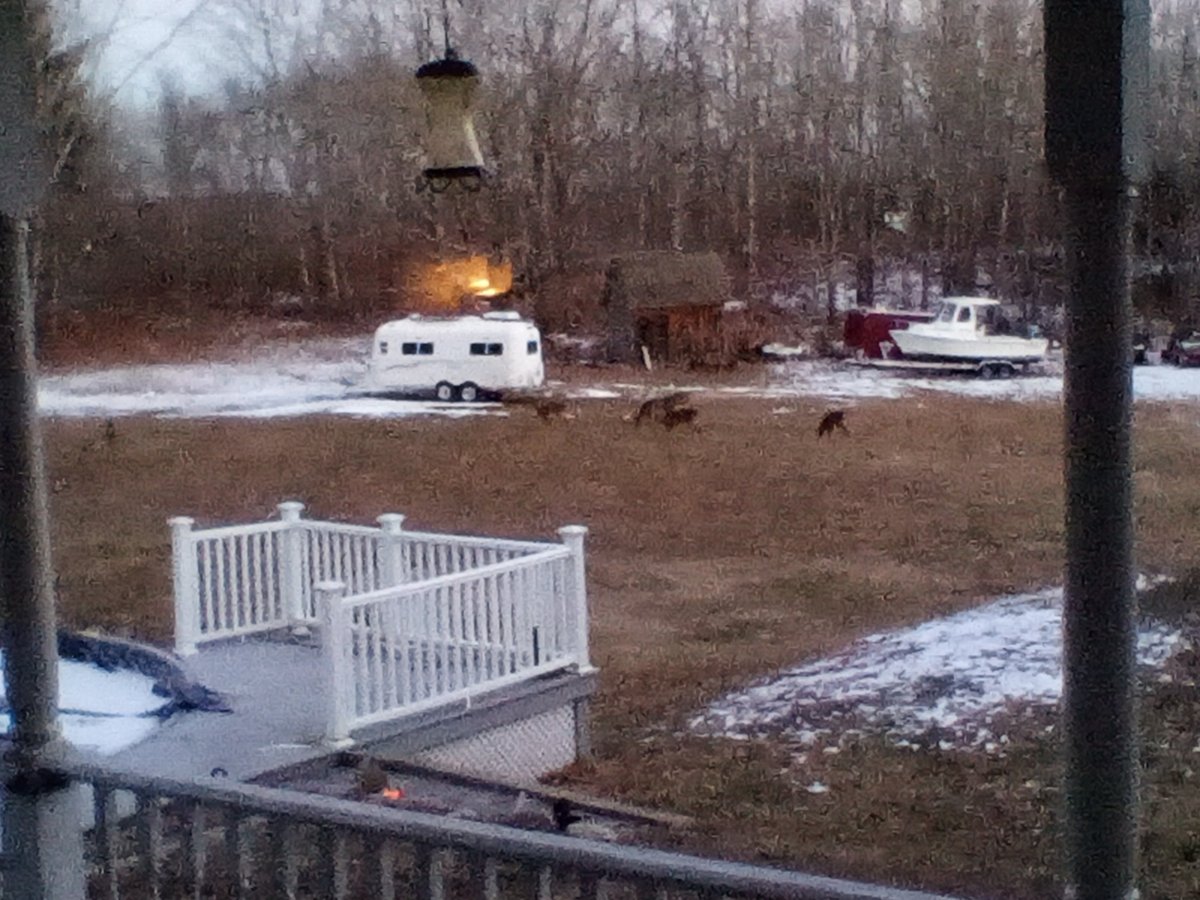
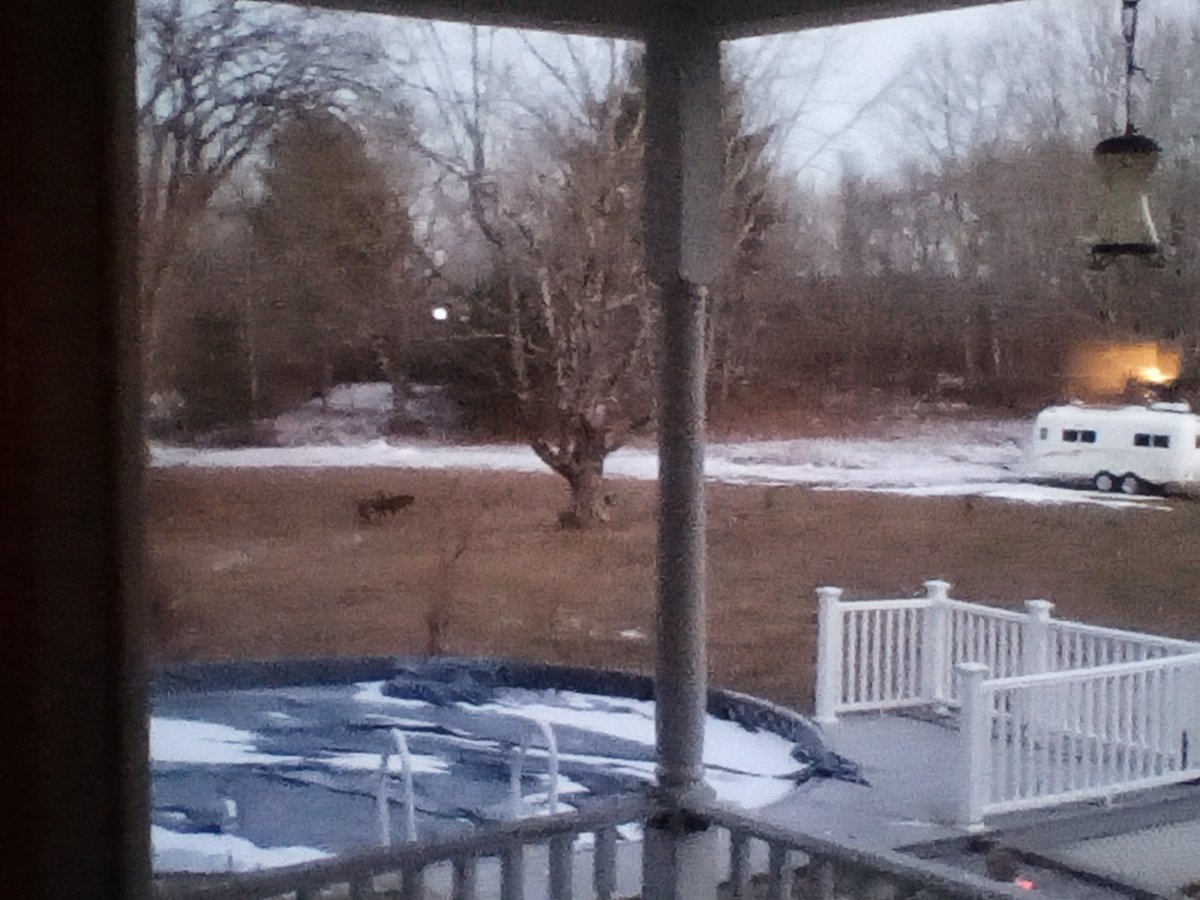
Late January in Maine, so we can't go be with nature. So nature came to visit the Oliver. Eleven deer any day is good. One can dress in bright orange and go the whole month of November without seeing one. "Life is Good".
1 point
-
I like to think the wildlife do not consider the Oliver as a threat. It is such a peaceful presence. The word is out in the animal world. That is why so many of us see so much natural beauty?1 point
-
Build it and they will come. Pick a place, pick a date(s) - and they will come. Foy and Mirna have some experience with that. Bill1 point
-
Perhaps those deer are interested in your Oliver? A nice clean, dry, relatively warm place to spend the rest of the winter.☺️ Bill1 point
-
I totally agree Most good outcomes depend on prep, and process.1 point
-
Mainiac, I agree. I also think, with the many nooks and crannies on the shower mat, timely recoating with the original product (outdoors) would be my choice. We use aqua teak on our indoor shower, and the boat teak mats. Doesn't need refreshing, often. As in, I can't remember the last time we did the boat (teak) mats. In the house (ipe) is almost six years.1 point
-
Teak oil can bring gray wood railings on a sailboat back to a light teak color. More coats can make it darker and harder. A pressure wash and a good coat after dry, once a year, should do it.1 point
-
Personally, I'm very happy that all of you Mainers are looking forward to a rally. I hope it can happen. Even happier, for the big Ollie population in such a small population state . We have a couple cousins up there. Could we become "unofficial " dropins, someday? Another year, when there are fewer restrictions. Sherry1 point
-
Btw, I've been looking at a number of years of reviews on marine sealants, teak to fiberglass, for a boat project. Guess what? A number of posts lamenting 3m 4200 turning orange, or not curing properly. Bad batches in past years . @Overland I think we will continue with our Loctite Marine experiment, now on the boat instead of the trailer. Polyether seems to give a good bond, long life, and high elasticity. Future removal will probably require mechanical and a low heat gun, followed by a chemical, as in 4200 or 4000 uv removal, but that's ok. Hopefully, it's far into the future. Last caulk in this area was well over a decade ago. Wish I'd asked, and recorded, what our friend used. 😞 he's no longer in our area, (cruising sailor), and , heck,, he might not remember, either. Btw, I am seeing a lot of recommendations for plexi and acrylic to fiberglass, structural and non structural, for Dow 795, a single component silicon adhesive sealant. That might have been an option for the third tail light (except for my aversion to most things silicon.) Might have eliminated a couple steps for us. Though, even if butyl requires mechanical fastener backup, I'm happy with our choice for the third tail light, I think. We'll see how everything plays out. Sherry1 point
-
Our 2018 Elite 2 has the same A/C with an easy start and my Honda 2200 EU runs the A/C fine, just don't try to run the microwave or the fridge on auto at the same time. FYI Champion dual fuel generators have a lower wattage output running on propane. We follow the travel route of 70 degrees and sunny so we have traveled 5 months at a time maybe using the generator once or twice.1 point
-
Absolutely1 point
-
Hi RussW, sure, it's nothing special really. I think if you used the owners manual and went through each system / component you would accomplish the same thing. Some of my notes may be helpful. My checklist is also specific to some of the options we chose so not all may be appropriate for your Ollie. I used it both while going through the walkthrough (helped remind me of questions) and at Davey Crockett State Park. I did test everything on my list and while there were a few minor things I had to take care of (I called Oliver service twice and they helped tremendously), nothing required a trip back to Hohenwald. I did exactly what JRK is going to do and stayed an extra day to make sure I had time to test everything before driving back home.Ollie Inspection Checklist.xlsx1 point
-
Overland, I have been studying your install from the Snowball thread and am leaning towards a similar setup. Are you still happy with it? john1 point
-
Thanks for the replies, and comments. John Davies, just to be a bit contrary, I am buying the Lexus. I view an Oliver as superior to the Mercedes or Lexus equivalent of the trailer industry, which is why I am here. I didn't want a $13,000 trailer, as I was concerned about the quality. I do not need a Rolls Royce, (used to be Cadillac), so I compromised at $60,000 for an Oliver. A 13' trailer. I do not expect any problems or issues caused by production issues. I do not expect any problems or issues due to the choice of installed equipment and appliances. The problems go with the $13,000 trailer (I won't mention brands). I do expect something of the quality of my last trailer, as a minimum, which was a 1985 Coachmen 5th wheel, 24'. I put more than 200,000 miles on it, with no problems or issues attributed to workmanship - ie missed issues, overspray, electrical problems or similar. Oh, I had to replace a couple of water pumps, a manual jack (just one), several sets of tires, the plastic window trim, all of the plastic roof vents, etc. which are expected. I am buying what has been described to me as being a premium product. That is what I expect to receive. That is what my research has shown. Thanks John and Anita, you have made me feel a bit more comfortable. JD, I have learned a lot from your posts. Thanks. When I read about glue from flooring making its way to the gel coat and not being able to be removed, or paint overspray on cabinets, or unfinished gel coat, I just shorted out a bit. When added to problems with the choice and installation of a battery tray that damages the battery, or reading about the installed Zamp issues and problems compared to other brands, I began to question my judgment. That level of workmanship is not acceptable at any price point, or quality level, Yugo or Aston Martin. I'm looking forward to getting the trailer, but I will be carrying my inspection list. I'll spend an extra night at DCSP before I begin my trip back to Los Angeles. John1 point
-
We picked up our 2015 Oliver Elite II on September 2, 2015, at the time we were using a Toyota Sequoia with the 4.7 engine. In a few months we sold the Sequoia and purchased a 2016 Toyota Tundra with the 5.7 engine; this truck has no issues of pulling the Oliver where ever you want to travel. I have been pulling travel trailers for over 50 years through out this country. It appears lots of people like to push ¾ ton with diesel engines. I owned a ¾ ton Chevy diesel one time and it dumped us many time hundreds of miles from home; I would not own another diesel. However I do own a diesel tractor which has given me great service for over 20 years. My 2016 Toyota Tundra Crew Max Deluxe gets around 12 -13 MPG pulling the Oliver and around 10 MPG in the higher mountains. I never have seen any temperature issues when towing at any elevation. We use an Anderson WDH and it takes only a few minutes to connect or disconnect. When I first purchased the Tundra I had an additional rear spring added to each side. The Tundra and Oliver are just about level (the Oliver is ¼ inch high at the tongue); with both the Oliver and Tundra loaded for travel. Our Tundra has a fiberglass cap over the bed to keep things out of sight and dry. We only carry some tools, chairs, a BBQ grill, cooler and a tub with lego blocks and chocks. At times we carry a Honda E2000i generator on the rear of the Oliver in a custom made carrier. We have been through CAT Scales several times to check the weight and everything is within limits. We only try to carry what is necessary, not the kitchen zinc.1 point
-
So, back to sealant testing. I found a few articles on various forums, and more importantly, testing by Practical Sailor, on a (relatively) inexpensive adhesive sealant, Loctite pl Marine fast cure. We had to order it, from our local Lowe's. Not on the shelf. It has a 12 month shelf life from date of manufacture, unopened, so important to read the date code. Opened, a few months, maybe, if sealed and refrigerated. I'll let you know. It's double sealed, in the workshop fridge, now. Like 3m 4000 uv , it's polyether, not silicone. Cleanup is alcohol, uncured, or mechanical, cured. We'll see how it works out. It's supposed to be non yellowing, and we used it next to butyl with a bead around the new maxxair bath vent, among other places. If it does yellow, we should see it earlier, on the roof, is my guess. I think it's a good place for a test, as appearances aren't much of a concern. Workability was ok, according to Paul. No worse than 3m 4000 uv. https://www.practical-sailor.com/boat-maintenance/mildew-resistant-caulks-for-boats https://www.practical-sailor.com/boat-maintenance/marine-sealant-adhesion-tests I can't recommend at this point, but we'll see what it looks like in a year or two1 point













-
Recent Achievements
-