Leaderboard



Popular Content
Showing content with the highest reputation on 06/06/2022 in Posts
-
We’ll be there from July 1-10, and nearly at Lake Powhatan June 16-19th. It is such a beautiful area, and has been our go-to for camping for over 30 years.
 5 points
 -
A couple of comments regarding the BRP - 1 - The road surface is fine and should cause no problem in towing an Oliver. However, when problems do arise it is normally due to everyone wanting to see the view - the driver included! There are plentiful parking areas and "turnouts" that can be used and should be used for this purpose. 2 - Many people that drive the BRP are not used to driving on mountain roads that curve and twist and go up and down. Add this to towing and the result is slower traffic. People get impatient and drive inappropriately. Drivers of slow moving vehicles should be aware of the traffic around them and use the "turnouts" mentioned above to let faster vehicles move on down the road. 3 - Fog is not uncommon along the BRP. Drivers should use common sense before attempting to drive these mountain roads in fog or heavy rain. 4 - There are numerous campgrounds all along the BRP route. Certainly do not be afraid to get off the BRP and take time to enjoy the forest, towns and attractions that these may provide. One such campground is the Davidson River Campground. Plenty of hiking, fishing, biking, and waterfall looking to do plus its an easy drive to the Sierra Nevada Brewery and/or the Oscar Blues Brewery if that is your thing. 5 - Don't overlook some "feeder" roads to the BRP such as highway 215 and 276. Note - unless you are really used to mountain roads I would not recommend taking 215 with the Ollie in tow. Even 276 from Waynesville to or from the BRP can be interesting. Once you have a good idea of the time you have and what you might want to see - post it here. There are a number of Oliver owners that live near and/or have experience with the BRP that could give you a plethora of information. Bill4 points
-
We camp mostly in NC on the BRP, and the LE2 tows easily. Pavement conditions are OK. Speed limits are mostly 35 or 45 MPH and most Federal BRP campgrounds in NC have certain sites set aside as walk up that cannot be reserved. That being said, I would still make reservations during fall when there are many folks traveling the area to see the fall colors that peak at different times depending on elevation. The Federal campgrounds in NC do not have electricity or water at the campsites. Since we don't have factory solar, we have a portable suitcase solar panel that's handy to reach out from shady sites. We also enjoy hiking to water falls not too far from the BRP. Using the Federal geezer card gives 50% off of camping fees. Here's some NC Federal BRP campgrounds: Doughton Park, Julian Price, Linville Falls, Mt. Pisgah, and Balsam Mountain Campground is over 5300' elevation, but also a nice drive from the BRP in the Smoky Mountain National Park. Reservations can be made on Recreation.gov https://www.recreation.gov/ If there is construction, it's posted on their website with detour information. https://www.nps.gov/blri/planyourvisit/conditions.htm Roaring Fork Falls is not far from the BRP: Sunset on the BRP:4 points
-
There are a bunch of cons to this mod. I personally would rather visit a toilet or outhouse every three days with that little tank, dump it and return, than deal with dumping and rinsing the big black tank, which requires a sewer connection. I routinely dump my grey water at home into the gravel, or when boondocking in the desert, into a sage brush. With the Natures Head you do NOT need to stop at dump stations for your human waste, why make that more complicated? You will still need to use a station for your grey tank sometimes, but that is so much less nasty when it is just fresh water with a small amount of soap in it.I suggest a second tank and cap, and call it good. https://store.natureshead.net/p/28-Nature-s-Head-Extra-Liquids-Bottle.aspx John Davies Spokane WA4 points
-
Are you going to be by yourself? and what tow vehicle? If solo, I suggest the smaller Elite since it is easier and cheaper to lift, much MUCH easier and cheaper to add disk brakes to (there are no bolt on, plug and play kits for the LE2, you have to install heavier axles), has stouter axle and bearings, and is significantly more maneuverable. The 4.5 feet shorter length will fit into lots more primitive campsites. The wheels are strong. The tires that come are adequate high mileage LT Load E Cooper somethings. Earlier trailers had Michelin LTX. Neither will be a problem with typical groomed gravel roads, but a more robust tread has better sidewall cut resistance for sharp ballast roads like the drive to Kennecott. I would install a set of slightly larger 30” outside diameter robust off road tires, including the spare, and then not worry about it again. A bigger tire will not fit under that spare cover, but you can remove that entirely if you like. You would have to relocate the license plate bracket and light. The suspension is OK on either, but both definitely could be improved. The LE2 suspension flexes nicely but has around an inch of up travel before the axle ubolts hit the frame. BANG. 😳 I haven’t made it to AK yet, but have been through western BC and YT as far as White Horse, and driven the Stewart/ Cassiar in the rain. These trailers need significant rock protection unless you just don’t care about gelcoat damage and blasted frame and axles. There are a lot of threads on this subject. If I were flying solo, I definitely would prefer the LE over the LE2! It would be a great match for my Land Cruiser 200, which is a little overwhelmed by the bigger trailer, and I could eliminate that pesky PITA Andersen hitch. BTW, I used to occasionally do engine work on Turbo Beavers and Twin Otters in Seattle. I really hated working on float planes! Especially outside. Cool aircraft tho. I used to live near Lake Union and enjoyed watching them take off through the horde of sailboats and paddlers. Balls of steel! 😬 John Davies Spokane WA3 points
-
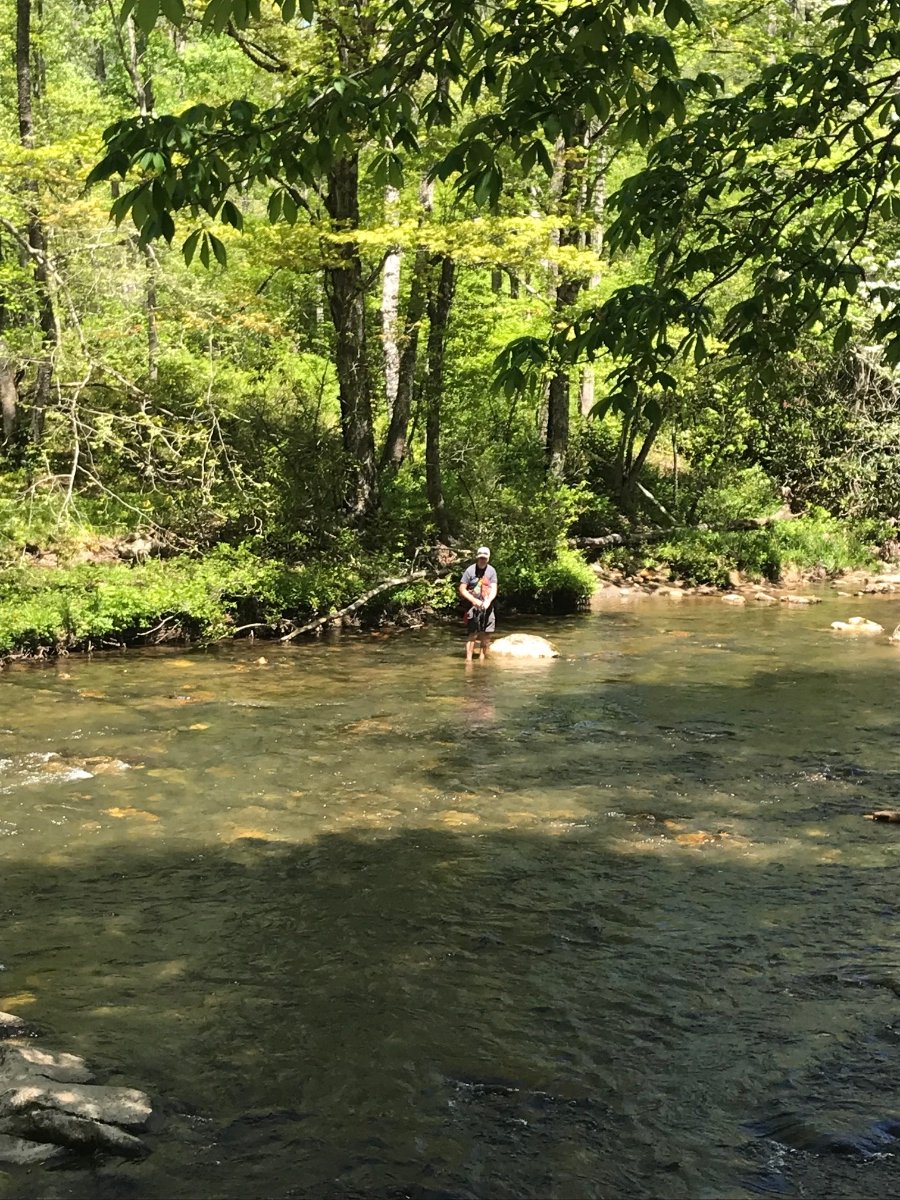
We have stayed at Bear Den CG and also Mountain River Family CG in the Blue Ridge Mountains. Both privately owned in cooler elevations, clean bath houses, and very well run and secure. Both have full hook ups. Mountain River Family CG is bordered by the Toe River which also has great trout fishing. We simply prefer the privately owned CG’s over Federal Parks. The cost is a little more but you get what you pay for at least at these two I listed. Not at all campground snobs here, we just prefer privately owned CGs for all the amenities that go along with it. It really depends on how long you want to stay, your budget, and what type of camping you plan on doing. We try and book at least 4-5 day stays at most CGs locally. Happy Camping! https://www.beardenmountainresort.com https://www.mtnriverwnc.com Mountain River Family CG - Toe River
3 points
-
We’ve done the entire BRP motorcycle camping. Some days we traveled for hours, others found us hiking on the easily accessed trails, where we would barely cover 10 miles. All told, we took about 10 days to make the trip, and totally fall in love with the Parkway and surrounding areas.
3 points
-
Bill, I sure did have some issues in the beginning and truth be known Oliver fixed them. As a first time RVer I think I made a good choice in buying an Oliver.3 points
-
We hope to go back during August, at 5,000' above sea level Mt. Pisgah has nice temps in the summer! Campsites for $10 per night with the geezer card. 👍3 points
-
Heading to Mt. Pisgah again later this summer, hope we get the nice weather that you had!3 points
-
It is a standard type, but check the pressure and temp rating on it to be sure. A Camco tool works great for removal, and you can also use it in your home water heater. https://www.amazon.com/gp/aw/d/B003VB15MC?psc=1&ref=ppx_pop_mob_b_asin_title There may be nothing wrong with yours, remove it and soak it in vinegar for a couple hours with the lever open to remove hard deposits. That might cure the slow drip. John Davies Spokane WA3 points
-
Camped last week at Mount Pisgah Campground on the Blue Ridge Parkway NC. It was low 50s there last few mornings and very nice!3 points
-
Our water pump quit working once. When I checked it I noticed that there was a wire lose that goes to the pump. On mine, there are two red wires that connect to the pump. Make sure they are both still connected. They can work lose if you are on bumpy roads. Mike2 points
-
I use the cover Bill mentioned above. We have a cute little bird called a Carolina Wren that will build a nest 🪹 in short order. As soon as we bring our Ollie home from a trip I place the cover over the air conditioner shroud to keep the wrens out. It has worked great.2 points
-
The 2010 Sequoia with the tow package & 5.7 engine had the 4.3:1 final drive ratio….it truly is a SUV version of a Tundra, at least for the era that I own.2 points
-
@Vic and Wanda Shumate & other Floridians: if you purchase a generator that costs less than $1000 by this Friday, June 10th, you will not have to pay sales tax. https://floridarevenue.com/DisasterPrep/Pages/default.aspx2 points
-
Why do these things seem to always happen in the middle of the night ...? @Chukarhunter excellent explanation!2 points
-
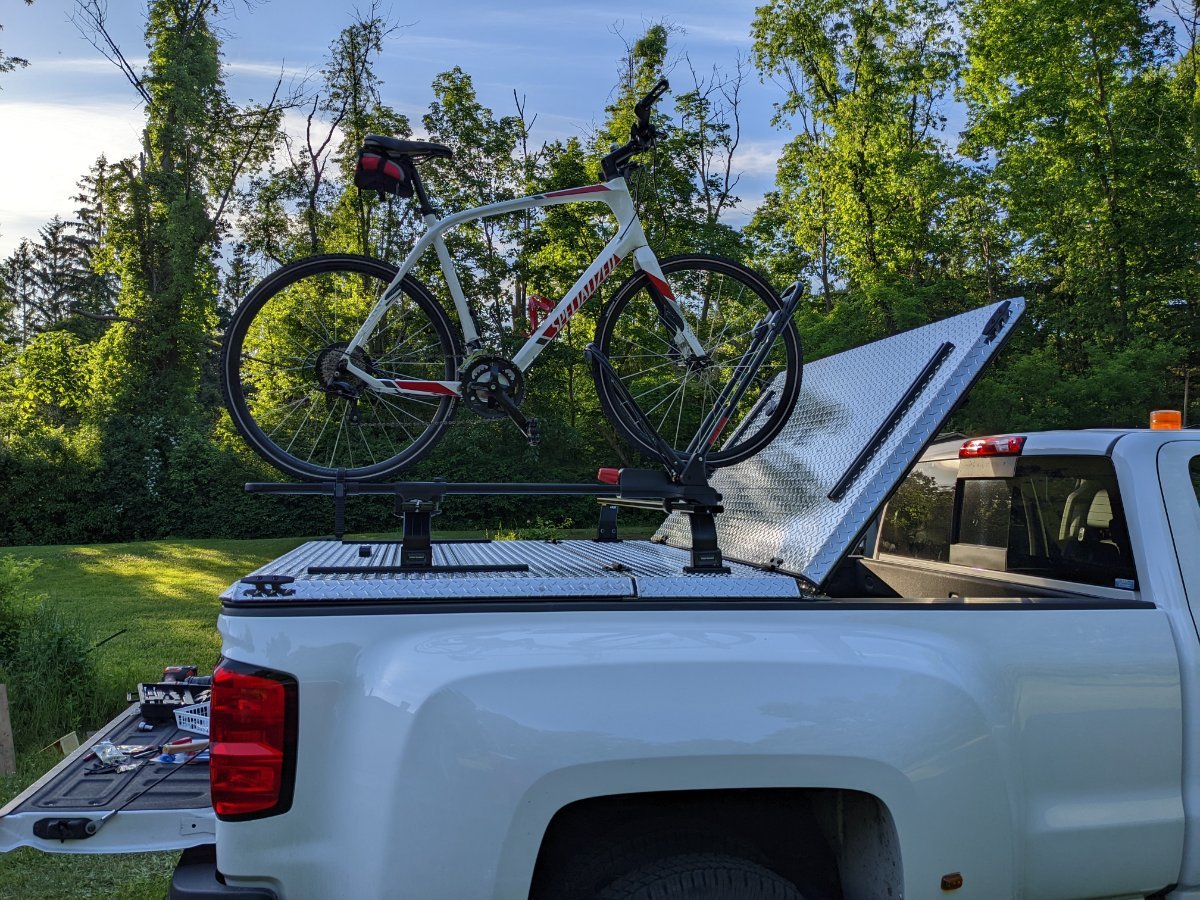
Diamondback installed, with the Front Runner racks and Yakima bike racks. Just about ready for our delivery date now.
2 points
-
As with any heating element - they do go bad over time. However they are not "sacrificial" like the anode rod is. I've never removed mine on any of the campers I've owned over the past 25 years and none ever failed to work. Bill2 points
-
I'd clean it out and then use an expanding foam like THIS STUFF to replace the missing insulation. Then I'd get an air conditioner cover in the correct size similar to THIS in order to keep the birds out. Good luck! Bill2 points
-
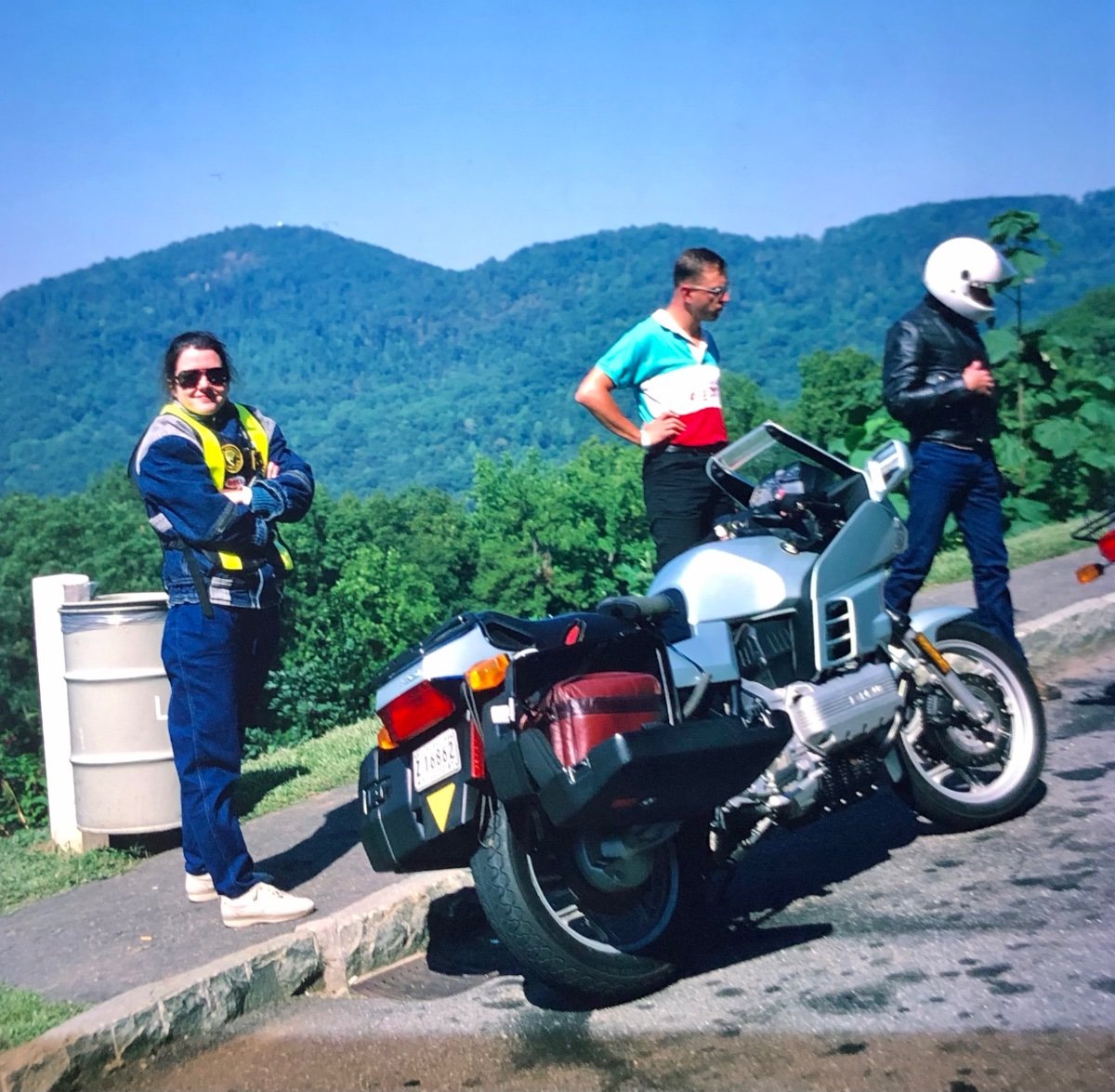
We love to ride our motorcycle two-up on the BRP for day trips!2 points
-
Agree, We think the BRP is a National treasure! Fine photo!2 points
-
As long as you pour a gallon of fresh water into the tank after emptying it, that will be fine. But urine does in fact do gross things as it dries, it turns to hard yellow crusty deposits which are not super easy to remove. I use hot water with a strong dose of laundry detergent, and let the tank sit. Cleaning out that yellow gunk from a small PEX line will be a lot harder. Rinsing each time with a couple of squirts of vinegar will help. I was an A & P tech for many years, if I encountered a mess in a pilot relief tube or the outside venturi, where it dumps urine (hopefully) into the air, I told the owner/ pilot to deal with it, or an unfortunate minimum wage line boy. Urine deposits can mess up an airplane skin. This has been discussed several times, go over those older threads and then go ahead if you still want to. Just don’t do anything that can’t easily be reversed in case you or a future owner doesn’t like the results. John Davies Spokane WA2 points
-
Pee alone still stinks, if left to sit for a period of time. It is what it is. If you do this mod, I'd add some water every use, maybe some sugar. . More water, before dumping.2 points
-
@Chukarhunter, @John E Davies, and @topgun2, thanks to all of you for putting these ideas onto words that all of us can read and understand. With the proliferation of electron hungry appliances, and summer season, ac use, and very full campgrounds, we'll probably see more folks with similar issues. What I'd do, would be to turn off the ac, get the water hot, and turn othe water heater to gas. Minimal gas to maintain temperature, in summer. Then, put the ac back on. The ac and electric water heater are the biggest consumers in summer. Our compressor fridge draws very little, but I wouldn't want to run all three at the same time. (Can't anyway, as our Girard heater uses gas only, but you get my point.) As campgrounds fill, fewer electrons to go round. From our experience, many campgrounds have puny wiring. Just wait til people start plugging in and charging lithium batteries in trucks and trailers. It will only get worse, imo.2 points
-
Trainman, I agree with others that low voltage at the post was likely your problem. Voltage drop is a function of wire size, current (amps) and nature of the load itself; resistive, or inductive. Were you the last RV site in the park? The longer the wire run, the more voltage drop there will be. And the higher the current in the wire, the more voltage drop there will be. I'd speculate that the closest trailer to the power source had plenty of voltage, but everyone in front of you on the bulk circuit was running their air conditioner and everything else which will cause voltage drop at each site along the circuit so by the time the power got to you, voltage was getting pretty low (the definition of a brownout). The bulk power system adds capacitors every so often along the overhead lines to support voltage. Your electric water heater is a resistive load like an incandescent bulb, so if voltage into the water heater drops, the water heater just consumes less watts and doesn't heat the water quite as fast. The air conditioner is a motor (i.e., inductive) load which like John said will increase current draw as voltage decreases. As voltage drops , the current increases to the AC as the AC continues to draw the same number of watts. The increase in current will act to drop the voltage even more which increases the current draw which drops the voltage, etc. Reactive power devices (like the soft start capacitor in the Oliver) might be able to intervene somewhat to break this cycle but can only do so much. Beyond a point, the voltage collapses and the EMS will open the circuit preventing the AC compressor from burning up due to the high current draw resulting from the low voltage. The soft start capacitor in the Oliver acts to prevent this voltage collapse when starting the air conditioner with a generator. Like others, I expect that you were experiencing unusually low voltage at the post to start with and your air conditioner was operating on the bleeding edge of low voltage. Turning on the water heater increased the current draw from the power source past every RV site ahead of you on the circuit and caused further voltage drop at your post and on into your trailer. That caused the air conditioner to draw more current (amps) which further dropped the voltage which caused it to draw more amps and it reached the low voltage cutoff of the EMS. Just a theory. If it happens again, you might try turning the air conditioner to low (the compressor should draw fewer amps on low) and you may be able to run the water heater in combination with the air conditioner on low long enough to get the water hot. Worth a try. I don't think plugging into 50 amps would make any difference as I believe 50 amp RV posts are still only 110 volts into the Oliver. A heavier gauge and/or shorter cable from post to the Oliver would reduce voltage drop a bit, but if you are using the beefy cable that comes with the Oliver, there is not much more you can do there. The RV park probably had an under-designed electric system. I have read that the electrical code says that an RV park system need only supply 41% of the sum of the maximum rating of each site on the theory that in aggregate, the RV's will never be using more than 41 percent of the capacity of all the posts. Probably not a very good assumption on hot afternoons since just about everyone has an air conditioner and compressor fridge these days.2 points
-
Not even from Missouri, but until I see something - or have other factual evidence that it exists - I can't be sure it's really there. I don't doubt the integrity or good intentions of the fine folks in Hohenwald that built our unit - but anybody can goof up and forget something. At any rate, I just obtained the bits and pieces I need to make the neutral ground bonding plug and I'll try the experiment again. Though needing one seems to be common knowledge among this crowd, this points & condenser guy who still has to convert millimeters to inches to visualize it is still coming up to speed on the systems that make the space age travel trailer of the 21st century tick.2 points
-
As JD says above - most any decent chassis grease will do the job. Other than the crawling around the job isn't really very difficult. However, you might want to consider getting some of zerk grease fitting caps like THESE to help keep those fitting cleaner. Bill2 points
-
You can use any decent chassis grease, but IMHO the very best is Redline CV-2, for suspension zerks as well as wheel bearings and jack gearboxes. John Davies Spokane WA.2 points
-
I have successfully been able to run the AC (without easy start) using my Champion 2500 Dual Fuel generator on propane. It weighs about 40 lbs and is pretty easy to transport in the bed of the truck.2 points
-
A 2200 watt generator should run your air conditioner but with minimal to no headroom to charge your batteries as John pointed out. Assuming your LE II will have the inverter/charger and lithium batteries, even a 3,000 watt generator will likely NOT run the air conditioner as delivered, depending on how the inverter/charger comes configured when the LE II is delivered from the factory. The reason is the charger section of the inverter is probably set to a charge rate of 100 amps or higher. This means that the batteries will be charging at a 100 amp rate off the generator, which will require about 1,600 watts of continuous generator power not counting the air conditioner. If the inverter/charger is set to a 150 amps charge rate, it will require over 2,300 watts of continuous generator power just for charging the batteries. In both cases, a 3,000 watt generator would be unable to run the air conditioner and simultaneously charge the batteries without overloading. However, there is an easy adjustment that will allow you to run the air conditioner with either the 2,200 watt or 3000 watt generator. The inverter/charger allows the user to customize the charging current from zero to maximum in 5 amp increments. It only takes a minute to change the setting. If using a 2,200 watt generator, set the charging current to zero (i.e., turn the charger off) and start the air conditioner. If the air conditioner runs fine, you can turn the charger back on and gradually increase the charging rate from zero until the generator starts laboring or shuts off. Then you know how much is too much and set the charge rate accordingly. It may be only 10 amps. If you have a 3000 watt generator, you can do the same thing. Begin with the charger turned off and start the air conditioner, then increment the charging rate until the generator complains. You will probably be able to simultaneously run the air conditioner and charge the batteries at close to a 100 amp rate at the same time with a 3,000 watt generator. The best news is that the solar panels will continue to charge the batteries even if the inverter/charger charging rate is set to zero. My personal preference would lean toward the smaller, lighter, quieter 2,200 watt generator, turning off the charger section in the inverter temporarily, and relying on the solar panels to charge the batteries when I am running the air conditioner. Others please correct anything I got wrong here. Thanks.2 points
-
Hi all. I had discussed my problem of very low water pressure at my shower faucet even with the faucet head removed on an earlier post. No issues at kitchen, outside faucet or toilet. I decided to share this on a separate post on how I fixed the problem since others might have this problem sometime. I bought the vinegar (see pic) at Home Depot and was planning on pumping it though the fresh water tank (bypassing the water heater) and decalcifying before my next trip. But meanwhile I had the idea of removing the faucet head, turn of water or pump and drain as much of the water out of the shower water line as I could. Then I took a syringe - see pic (no needle) and slowly over 1 hr. injected about 2 cups of the vinegar down the faucet hose (see pic) . Be sure to wear gloves and eye protection as the vinegar will burn. I hung the shower hose to the shower holder so I got max amount of vinegar down the hose. Pics need to be rotated 90 degrees. After 1 hr. I went back and turned on the water pump and water pressure is back to normal. 👍
1 point
-
Watching the charge rate @ 400W with the Victron app on our Lithium battery while charging with a 46 pound Honda EU2000i gen-set. Our Honda gen-set only has a continuous rating of 1600W, even though it's a 2000W gen-set. A 13.5K AC can use 1400 watts continuously, but (in our case) needs the Microair EZ start unit to start the 13.5K AC compressor. It would be easy to exceed the continuous rating of smaller gen-sets while charging and running another appliance at the same time.1 point
-
Thank you John. That was helpful.1 point
-
We installed the Micro-Air EZtouch RV Thermostat which works marvelously. It sends me a text when the inside temp reaches the temperature I have deemed unacceptable. I am currently researching cellular/hotspot plans so have only used it via local wifi.1 point
-
I have been a owner of a Nature's Head toilet in my Ollie for the past 2 years, For 20 years before that, I had a portable toilet in past popup campers. Emptying a portable toilet is gross in itself. I have never had a odor problem from the urine tank or the Nature's Head toilet smelling. I do empty the urine tank when 3/4 full and rinse it out. We do have a vinegar and water spray bottle in the bathroom and do a small spray on the inside of the toilet after each use. I do believe that Hature's Head recommends a vinegar spray bottle. With myself and my wife using the toilet, I usually have to empty the urine tank after 5 days of use (longer if a toilet is present at a campground). At the end of the camping season, I thoughly clean the tank and toilet and scrub everything clean. Emptying a black tank or a portable toilet tank at a dump station is a lot less desirable then a couple of spirts of a vinegar bottle. Just my opinion.1 point
-
I bought my Oliver in 2017 and an honest review would reflect high grades in every aspect of owning it from customer service and all in-between. I would add the customer service is above the industry hands down!1 point
-
It will technically accept a 1.5 to 2” adapter but it is not rated for that. Plus typically the reducer drops the load capacity by 50%. The receiver is made entirely of aluminum, which is not great. And most 2” bike racks are not “RV rated” anyway, they won’t withstand the sometimes violent motion at the back of a trailer bouncing down a rough freeway or back road.. Some owners have modified the factory receiver to accept a standard 2” rack or even built a custom setup. But as delivered, your Ollie won’t work with your 2” one.. You can complain to Sales about it😤 What make and model bike rack do you have? How heavy are the bikes? If they are a couple of sub-20 pound road bikes, maybe that reducer will be OK. Two ebikes, nope. I see your are in Bellingham, please add your tow vehicle and trailer info to a signature. And feel free to PM me if you happen to be returning through Spokane this summer.. John Davies Spokane WA1 point
-
If you have the Oliver supplied surge protector inside your Ollie, it should have a remote readout that cycles between various readouts. One of these should be telling you the voltage that is actually coming into your Ollie. I'm guessing that the voltage was too low which, in turn, means that your amperage was too low. If that be the case then it is highly likely that switching to the 50 amp at the pedestal would have not helped you. As I remember it, you do not have the solar panel option. If that is the case then I don't think that you have no way of directly telling what amps you are receiving. One of the products on THIS AMAZON page could help either at the pedestal and/or inside your Ollie. In addition, you might want to watch THIS VIDEO for ideas on a fairly inexpensive product that might get you what you need. Good luck! Bill1 point
-
Ours goes upside down on top of that fragile turntable spider thing, resting on an old towel that is folded up around the corners. A plastic Camco dish drainer and a box of Kleenex lie on that to keep it steady, though if the door ever opened of course it all would come out. Check your tire pressures, unless you just forgot to latch the door, something else is probably wrong! 42 to 45 psi for an LE2, NOT 50 60 or 80 especially for nasty pavement or gravel. For ugly low speed and really rough roads drop it by 10 pounds. (You definitely do need a TPMS when running lower AKA correct pressures. Last trip we had around 50 miles of straight flat (small) washboard gravel ranch roads, cruising speed when possible was 35 to 40 mph and nothing shook loose inside the Ollie. But you have to pack your gear so it can’t move around, especially in the overhead cabinets and in drawers, which should be strapped closed. When you get a chance, please try reposting pictures, the first one is lost in space. Enjoy your trip, get to Kennecott copper mine if you are into old ghost towns and equipment. White Horse is worth a couple of days. How are the fuel prices in BC and AK? (Woah, stupid Autocorrect changed fuel to girl!) John Davies Spokane WA1 point
-
Went to CVNP for Memorial Day weekend. What a great park ! Great hikes/ stayed at Silver Springs campground in Stow -$18 per night. Great location - electric no water. And today is our Ollie’s First birthday ! happy days with our Hull 8181 point
-
We visited CVNP last fall. We stayed at West Branch State Park not too far away. It was an interesting visit. Mike1 point
-
Oh ye of little faith.1 point
-
Unfortunately, I missed this part! This caused me to be thinking about having never coming across any suction cup at Harbor Freight that looked anything like the ones shown in the picture above. In turn, I happened to be at Harbor Freight this morning, found the suction cups but they (obviously) were in one piece that formed a "handle" between them. It really helps to actually read the entire post! Nicely done on both the post and the mod! Bill1 point
-
They should sail out at a about a 45 degree angle to the ground at speed, so the debris will bounce down and not back at the truck (and onto the bumper, tailgate and lights!). This is how the Aussies do it, it is even described that way in their Rock Tamers supplement to the manual. And yes, most unfortunately, rooster tails of gravel happen when the flaps are cut too tall, so they contact the surface over dips. I tried RTs on the trip home from Hohenwald (4000 miles) and decided they were not at all adequate for my needs. https://www.clearviewaccessories.com.au/wp-content/uploads/2019/03/RT_MANUAL.pdf Why RT USA doesn’t include this info is baffling! it is not like the Aussies have the only gravel in the world. FYI I made my own bumper inserts using the two 3 inch strips I cut off the bottom, that helped significantly! We just did about 3 miles of of rough double track (roughly “graded” by a tractor), 45 miles of two lane gravel ranch roads, with another 15 tomorrow, near Steens Mountain OR. Lots of dust, lots of washboard, at up to 40 mph (the Ollie rides smoothly at that speed). No stone damage. All the chaos is channeled by the Stone Stomper mesh fabric underneath the tongue and frame, towards the three sets of rubber flaps. 42 psi in the truck and Ollie tires, nothing came loose or broke in either. No blown shacks 😳 John Davies Spokane WA
1 point
-
On our trip across the Top of the World Highway, as we headed towards Chicken, AK for a chicken pot pie, we only saw one set of tire tracks heading over the edge. !#?*!! (No vehicle was visible in the bottom of the valley) My Vortex coating added about 40 pounds to the trailer and is still holding up very well. Tiny flecks of paint can get knocked off by debris, but can be easily fixed with a bit of matching touch up paint. The fiberglass is well protected.1 point
-
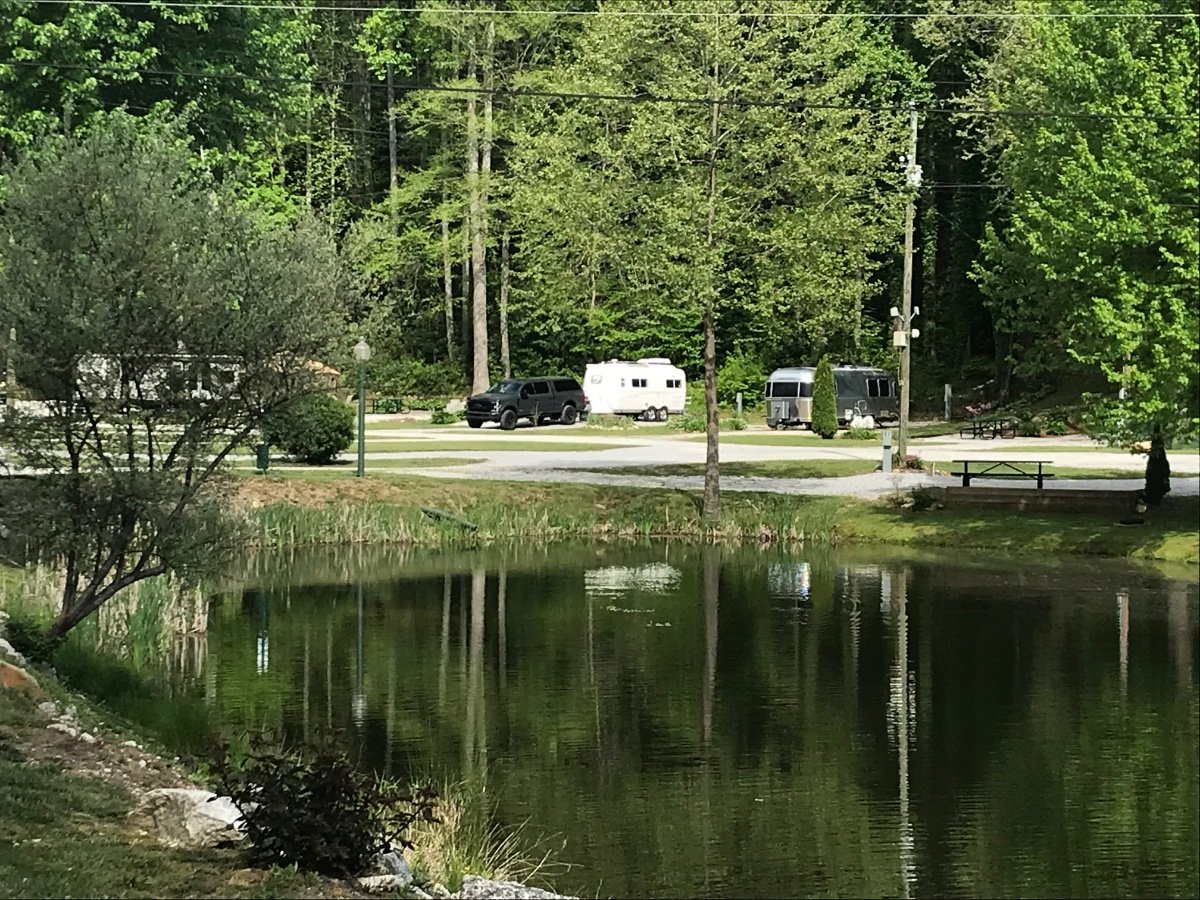
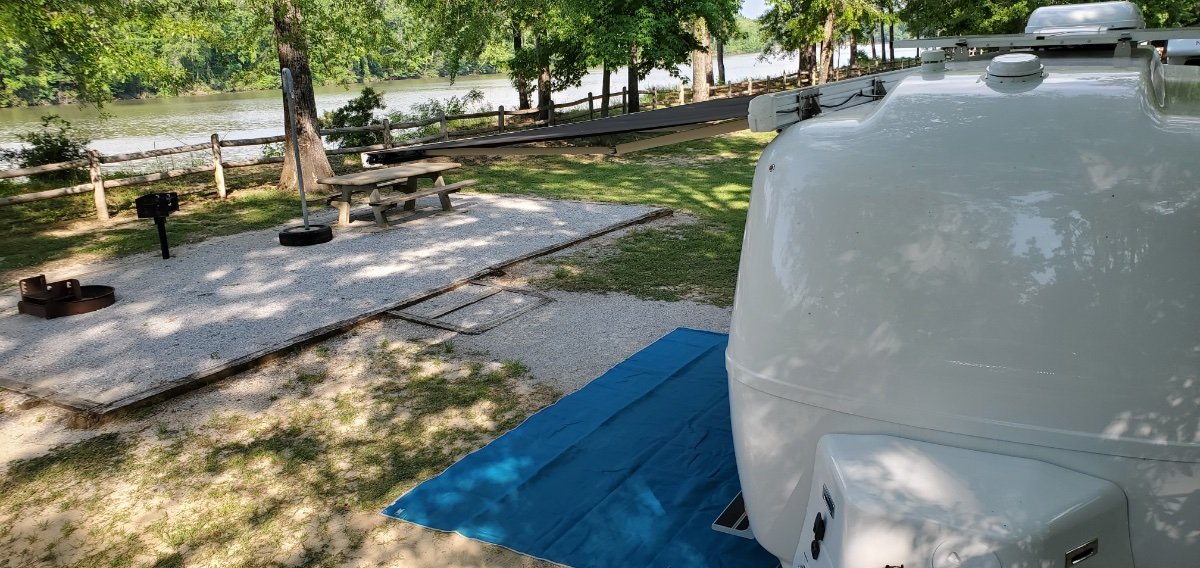
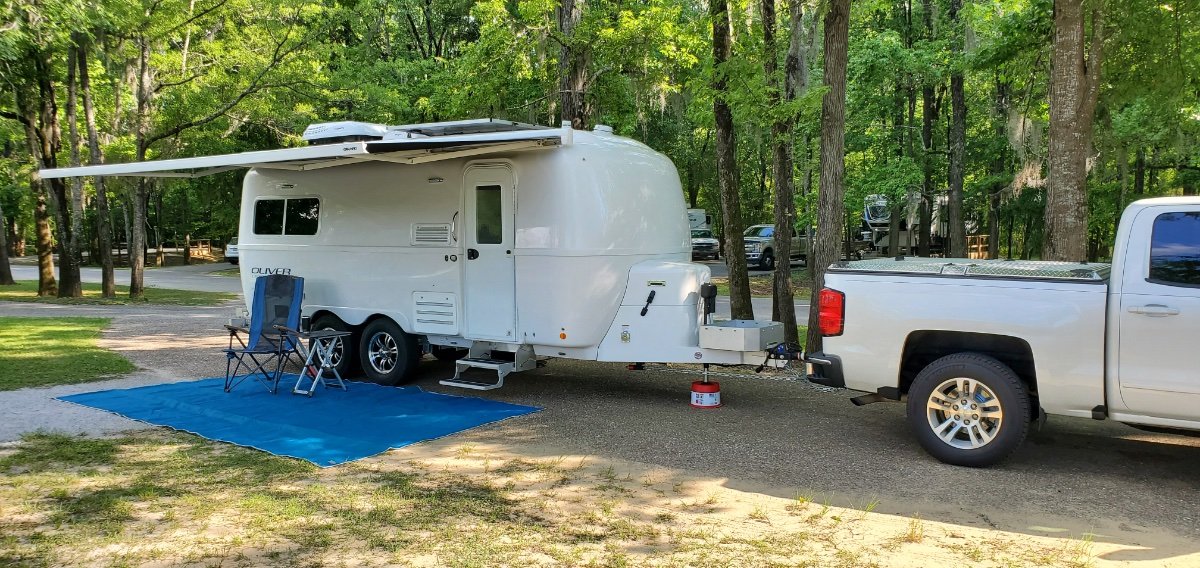
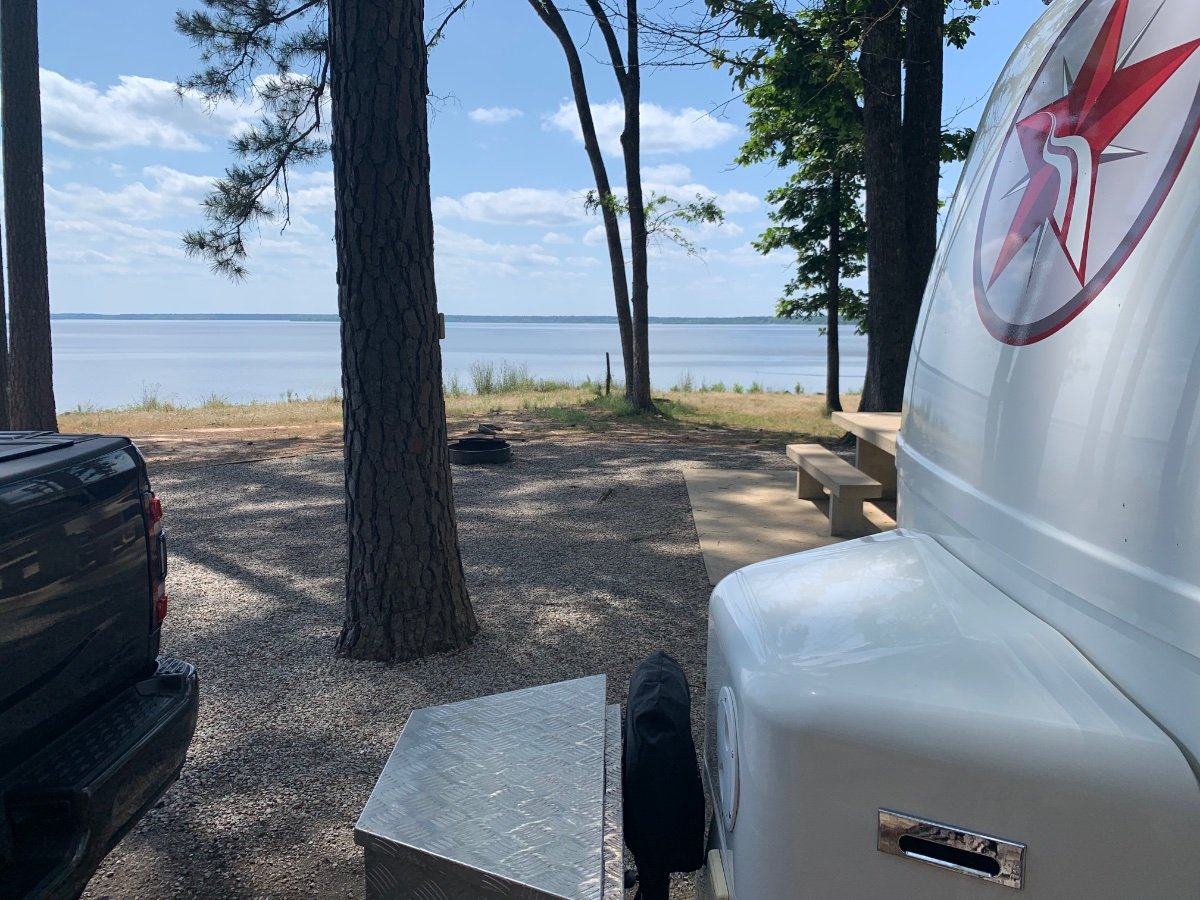
Service Park COE campground on the Tombigbee river in AL. Nice COE campground but pretty remote.
1 point
-
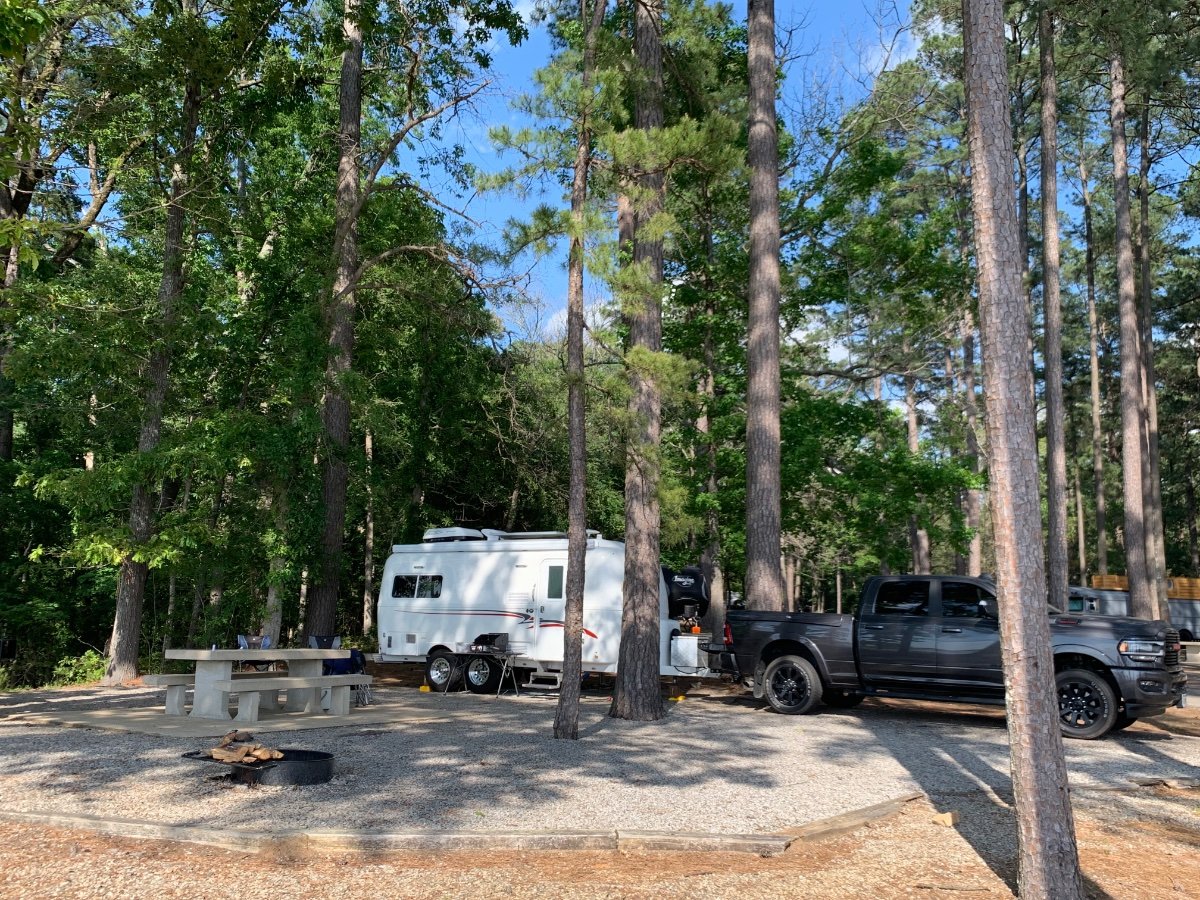
We continued our meander across Texas today for another one night stand just outside of Texarkana. We’re at Piney Point COE campground on Wright Patman lake. We’ve camped at this lake several times before at Clear Springs COE campground not too far from here (see page 9 of this thread). I’d say Clear Springs COE is a bit nicer and is much larger. It has a lot FHU sites if that’s what you need. This campground is smaller. Lots of tall pine trees, not like Texas Hill Country at all.
1 point
-
This happened while camping at a State Park in Nebraska, guess this could be classified as meeting your neighbors. True story. When we set up in a new campground, I like to go for a walk checking out the campground, restrooms, and laundry if the campground has one. The campground was about 1/2 full and had already been told there was also a national camping group meeting there, too. When I tried to inspect the laundry room, the door was locked. After trying a couple times, saw a couple on the floor. They got up putting their clothes back on and opened the door apologizing to me. I told them no problem, sorry I bothered them. Told Debbie what happened and she said we wouldn't be using that laundry room to wash anything, will wait until we find another one. 🙂1 point
-
It does. I've never tried to run the AC off of the Honda, seems that I should be able to. To others' points above, we just don't use our trailer as if it was plugged into a 30a shore power outlet. eg, I've only used the microwave once, we were plugged into shore power. I've only used the AC to load our trailer in Phoenix in the summer then we get the heck outta dodge so we don't need it any more. I get that some folx camping needs at festivals and such might need that, so everything is according to your own needs/camping style. you absolutely need a neutral ground plug. SUPER simple to make your own, I'm electrically incompetent and made mine. 😄1 point









.jpg.51b49cb15d1d402da89e0fb926679919.jpg)
.jpg.59e69d2e42eb6184aecdf56fba370a12.jpg)







-
Recent Achievements
-