Leaderboard




Popular Content
Showing content with the highest reputation on 12/24/2024 in all areas
-
Wishing everyone and their families Merry Christmas and Happy New Year! Bill and Debbie LE2 #75 North Carolina6 points
-
Merry Christmas and Happy New Year to all!
 4 points
 -
Merry CHRISTmas and wishing All a Happy and Blessed New Year!! Soooooo looking forward to the New Year! 🇺🇸🇺🇸🇺🇸🇺🇸4 points
-
Merry Christmas and Happy Camping in 2025!4 points
-
4 points
-
Geromino John, thanks for the kind words. Sure I can elaborate why I haven’t installed a Master battery switch, and I’ll also provide a better solution if the objective is to switch off all the stand-by loads when the trailer is in storage. The battery switch will add resistance to the circuit from the additional cable length needed to reach the switch, and through cable lugs and switch contact resistance. Granted it’s not much, but anyone who has ever dabbled with cable resistance knows that it doesn’t take much to create a voltage drop, particularly in high amperage battery systems like the Oliver. Voltage drop impacts the systems efficiency and it means your creating heat and burning watts. I don’t think there’s an optimum place to install a switch given the stiffness and limited bending radius of the size cable that you would need. It's best to keep the cable as short as possible and that really limits the mounting options. I haven’t see a compelling reason to install a huge battery switch. I’m in and out of the trailer enough where it would be an unnecessary burden to turn the battery off. The only reason I can think of for installing a switch, is to shut off the stand-by loads while in storage. I personally think stand by loads are not a significant concern. There are not many scenarios where solar or shore power is unavailable and, if so, there are other solutions. If there is a desire to shut off the stand by loads while the trailer is in storage, then simply shut off the DC breaker that supplies the DC fuse panel. It’s located next to the inverter. You can see from my previous post that all the primary loads are fed by the DC fuse box. However, I’d recommend re-powering the CO2 detector so that it always stays energized. Hope you find this useful! Cheers, Geoff3 points
-
Geoff: What a great post. It certainly sheds a technical light on the amp draw issue. Knowledge is good. Speaking of which, would you please elaborate further on not installing a high quality Battery Master Switch? There are some owners who are on the fence in this regard, and your perspective would be beneficial. Thanks, GJ3 points
-
Merry Christmas 🌲 to all and may 2025 be a great year of adventure for each of us.2 points
-
We are also planning a 3-4 week trip to drive part of Route 66 heading from Tyler TX to Florence AZ around early to mid February. This will be our first trip outside of Texas and learning anything that we can use in our trip would be great. wishing you Happy Holidays.2 points
-
I decided to chime in on this because I don’t think you’re missing anything, your discharge rate is perfectly correct! All the given advice is good, but it’ can be a bit miss-leading to fully understand whats going on. I hope to provide a better explanation, and show you a simple and very accurate way to check your “parasite” loads, which I’ll refer to as normal “stand-by” loads. Your 390 amp hour battery with a daily discharge rate of 3% equates to a loss of 11.7 amp hours over a 24 hour period. This further equates to a stand-by load of 0.48 amps, which is not overly excessive considering all the electronic devices in the Oliver. Devices with memories, remotes, touch lights, rain sensors, USB ports, electronic boards, etc., can each draw milliamp currents even when turned off, and they do add up quickly. I took some current readings from my own trailer to show you what I mean. It’s the same year as yours and it also has a 390 amp hour battery. Remarkably, the values add up to exactly the same current as your calculated load. But more importantly, it shows that there is no single extraordinary load: Fuse 2, Various electronics = 0.117 amps Fuse 4, Furnace = 0.012 amps Fuse 5, Main lighting = .003 amps Fuse 6, Fans = 0.016 amps Fuse 7, Water heater = 0.113 amps Fuse 8, Radio = .204 amps Fuse 9, USB outlets = 0.007 amps Fuse 10, USB outlets = 0.009 amps Total = 0.481 amps These measurements were done with a precision multimeter having a resolution of 3 decimal points. My Victron shunt has a resolution of 2 decimal points and it showed a lessor current of 0.42 amps. My Clamp-on Amp Meter has a resolution of 1 decimal point, and it showed a higher current of 0.5 amps. This demonstrates how subjective and inaccurate some of these measurement methods can be when dealing with such small milliamp values. Another potential misconception is that the Lithionics BMS App will provide the overall charge and discharge values. It’s only true to the extent that it provides values for the battery selected, but not for each battery combined. For example; the 390 amp hour package consists of three 130 amp hour batteries. If the overall load is 3 amps, then the App will show each battery discharging at 1 amp. Additionally, it’s only accurate to 0 decimal points so it won’t show anything less than 1 amp. This is another good justification for installing a Shunt. There are a number of ways to measure stand-by or parasite current, but the easiest and most accurate way is with an inexpensive Multimeter through the fuse box. It will show the load of each circuit, but not each component on the circuit. Thats okay because some of the individual component loads are too small to be accurately measured anyway. Caution: When using the ammeter function, the meter is in-line with the circuit. This means that the current is running through the leads and meter. So don’t use it with loads greater than it’s rated maximum current, which is typically 10 amps. Before testing, make sure that everything is off including the inverter/charger and solar (Solar switch is in the street side overhead cabinet.) Make sure shore power is unplugged too. Pull each fuse one at a time and the red LED “blown fuse” indicator will light-up if there is any load. Put your ammeter leads on each leg of the fuse socket and read the current. Add up the values and you will have an accurate overall stand-by load. FYI, the inverter/charger does not go through the fuse box, but it will add another 0.2 amps load if left on. I keep my trailer undercover without shore power and the batteries also discharge rather quickly. In fact the shunt screen shot below shows that it will discharge in 10 days. I considered adding a battery master switch, but it wasn’t a viable option for a number of reasons which is why I believe that Oliver doesn't install them either. I ended up getting an auxiliary solar panel, with charge controller, and I mounted it on the roof to keep the batteries at 100%. It was better than running an extension cord and risking complete discharge mishaps. Hope this helps Cheers, Geoff
2 points
-
I sent you a PM if you want to discuss. Coming from Tyler you could start by going up to Lake Thunderbird State Park just before OK City, then head on the highway west. One stop in Oklahoma that's a nice museum is the Stafford Air & Space Museum. (Also a harnest host site). If you like horses, Amarillo has the American Quarter Horse Museum along side I40. They have parking outside large enough for trailers and many folks have horse trailers in tow. The midway point for the route is here - 301 I-40, Adrian, TX 79001 You can pull off the highway before and then rejoin I40 to continue onward. Just before the town of Holbrook on I40 is the Petrified National Park. Location: 35.06768055675693, -109.77800719186772 Worth a 1/2 or Full day visit and perfectly doable with the Trailer in Tow. We've stayed at Holbrook KOA which is just after the NP and found them very friendly and a good stopping point for an evening. Next up is Winslow , and very near to Winslow is Homolovi State Park. Depending on how far you want to drive you can go as short as 150 miles...and see a lot...or 300 and see major sites. Contact me on PM if you want to talk through. Merry Christmas. Craig
1 point
-
Yep, I did that with the one that broke off. When I accidentally skinned it while torquing my lugs. At $3 a piece its a quick fix. 😊1 point
-
A little E6000 on the back and tabs is all it takes to keep these puppies in place - broken tabs or not. Bill1 point
-
Thanks for the heads up, doing it right now.1 point
-
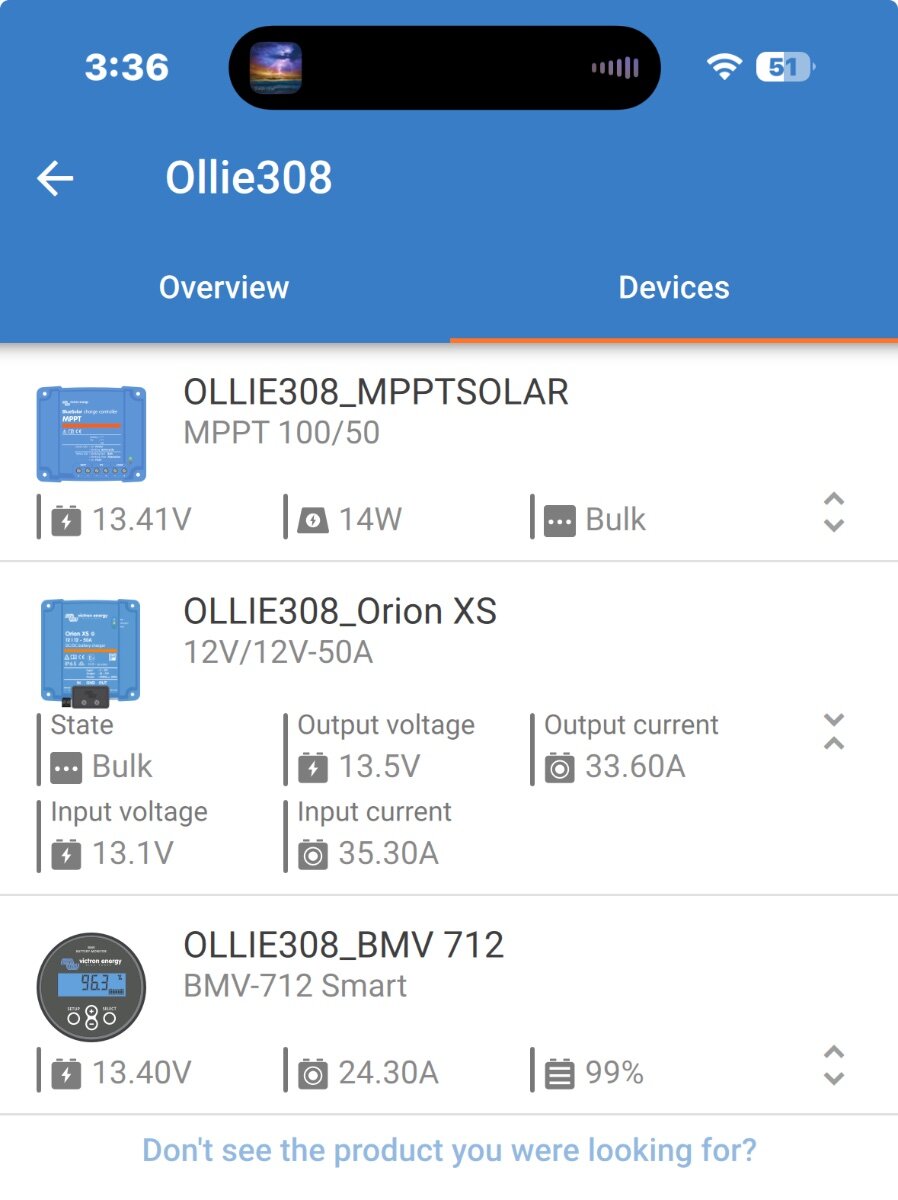
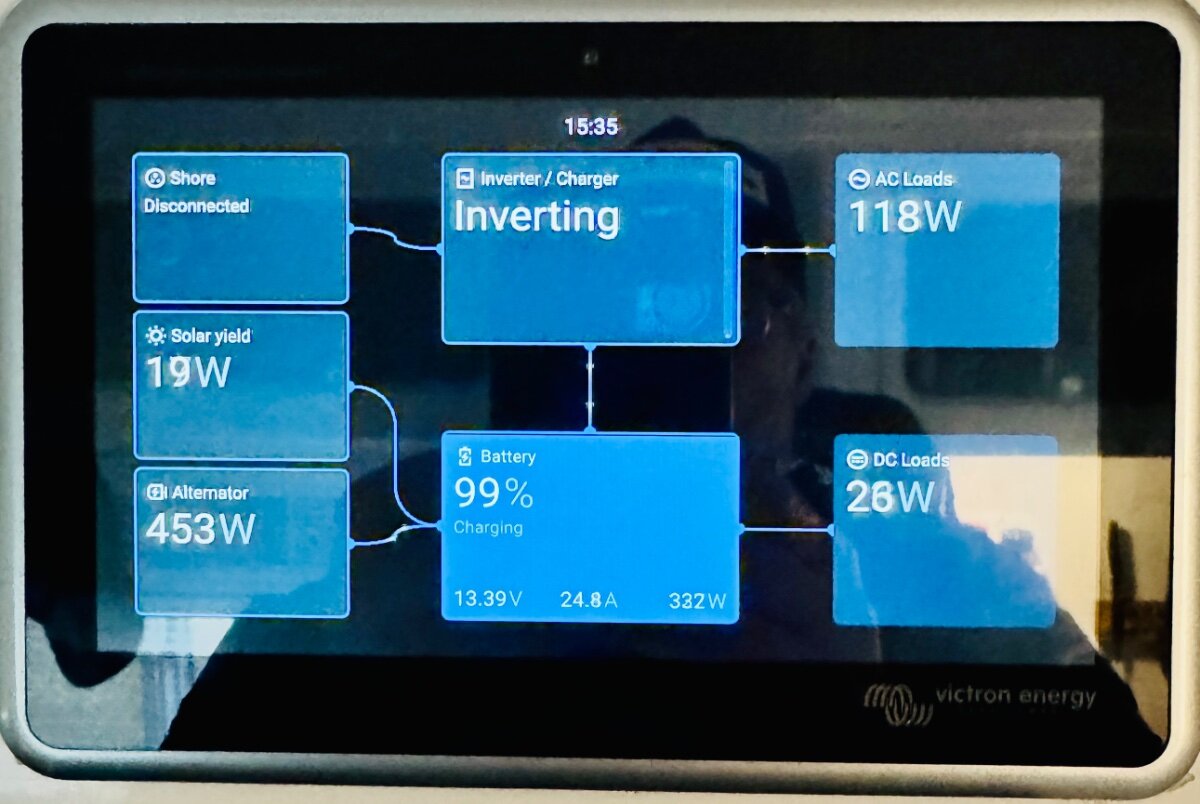
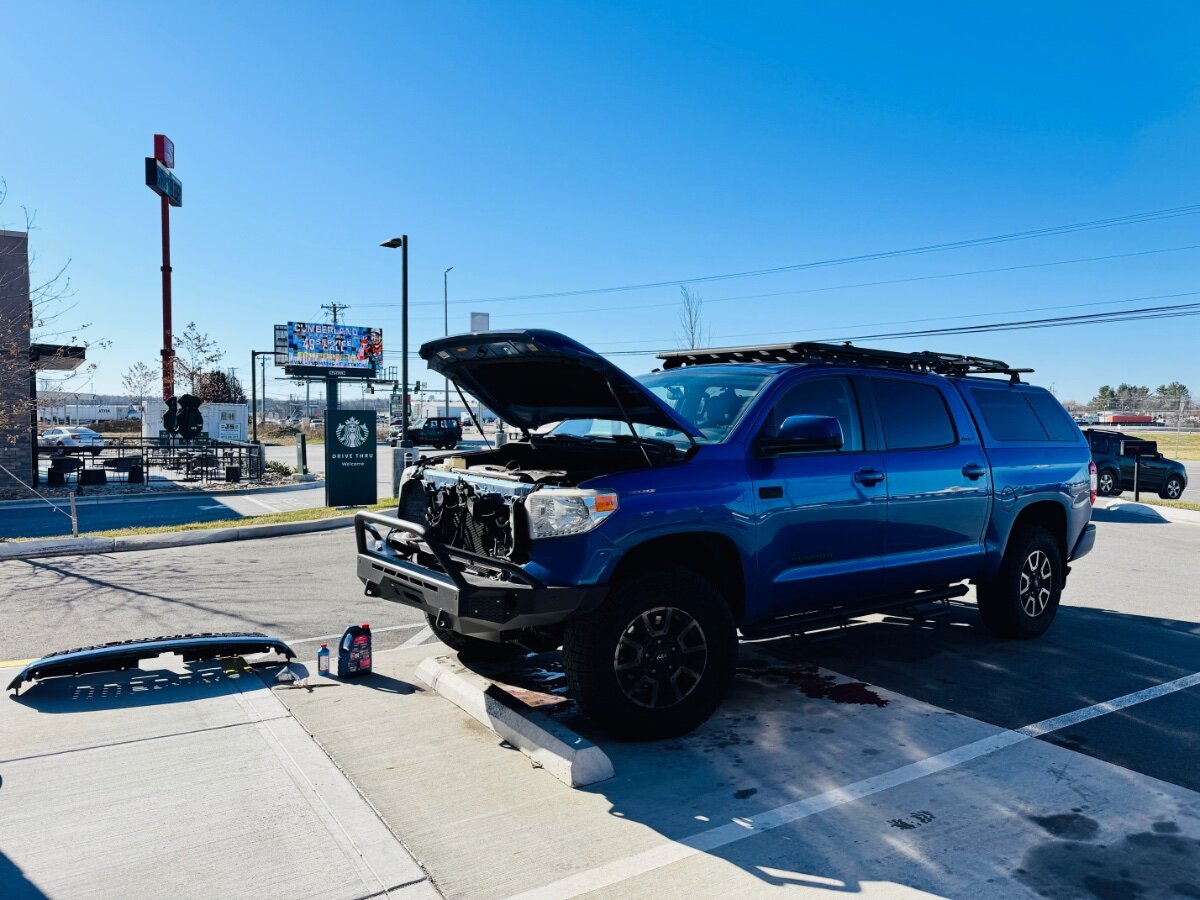
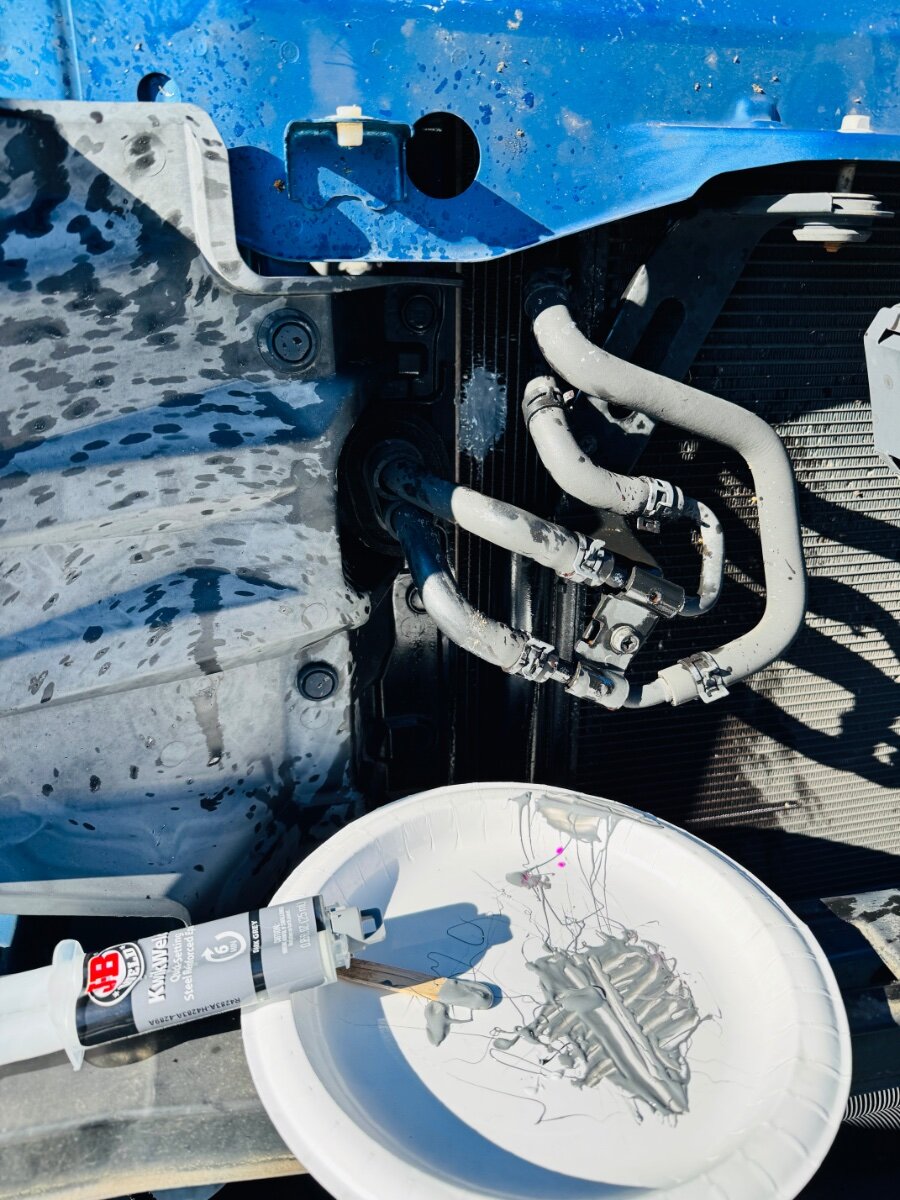
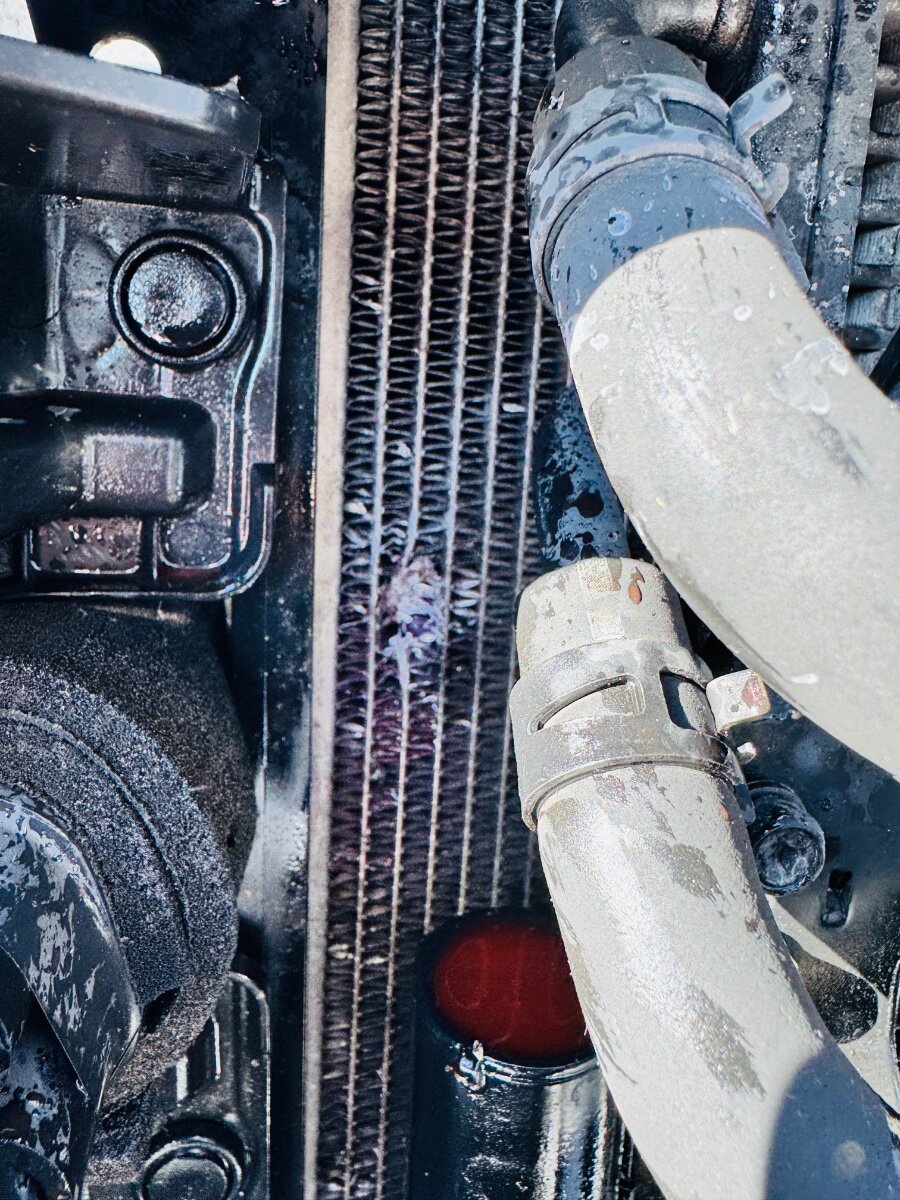
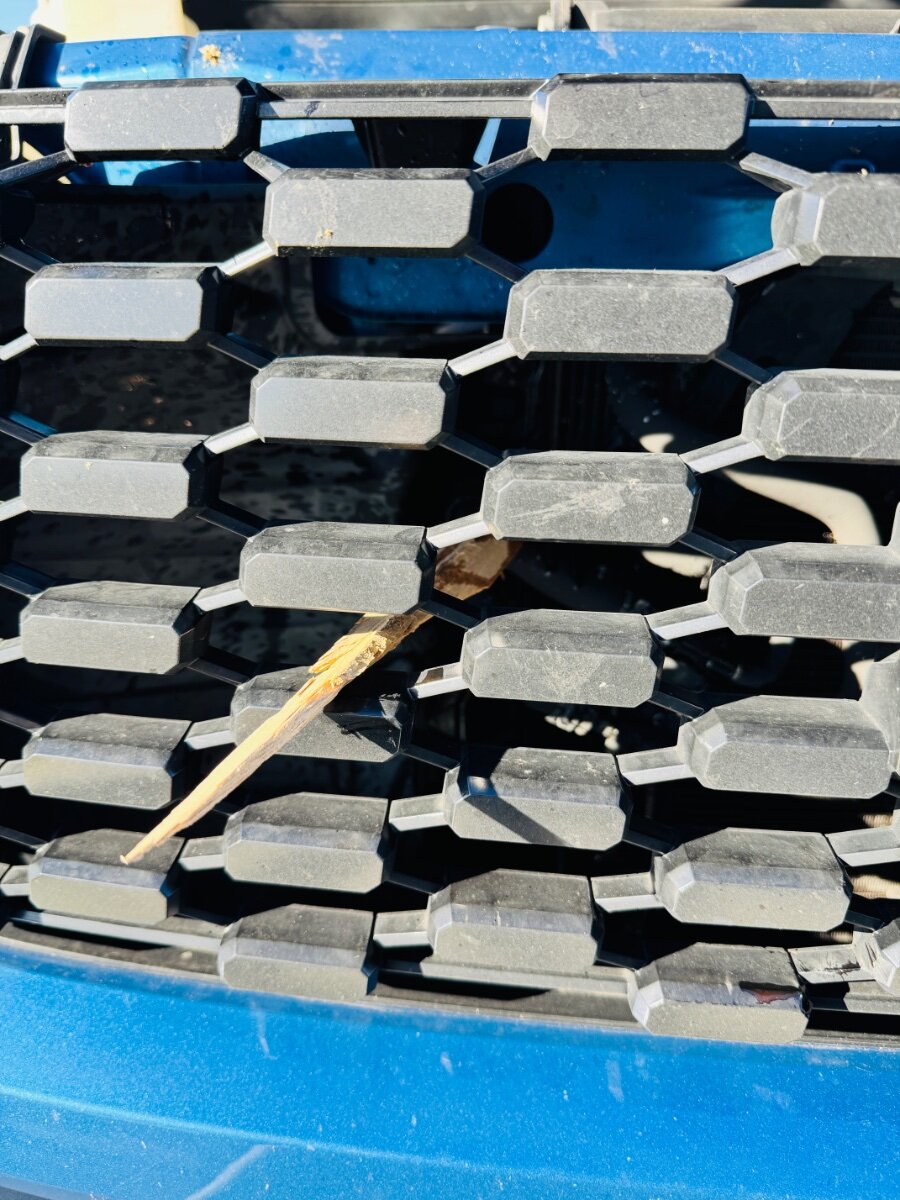
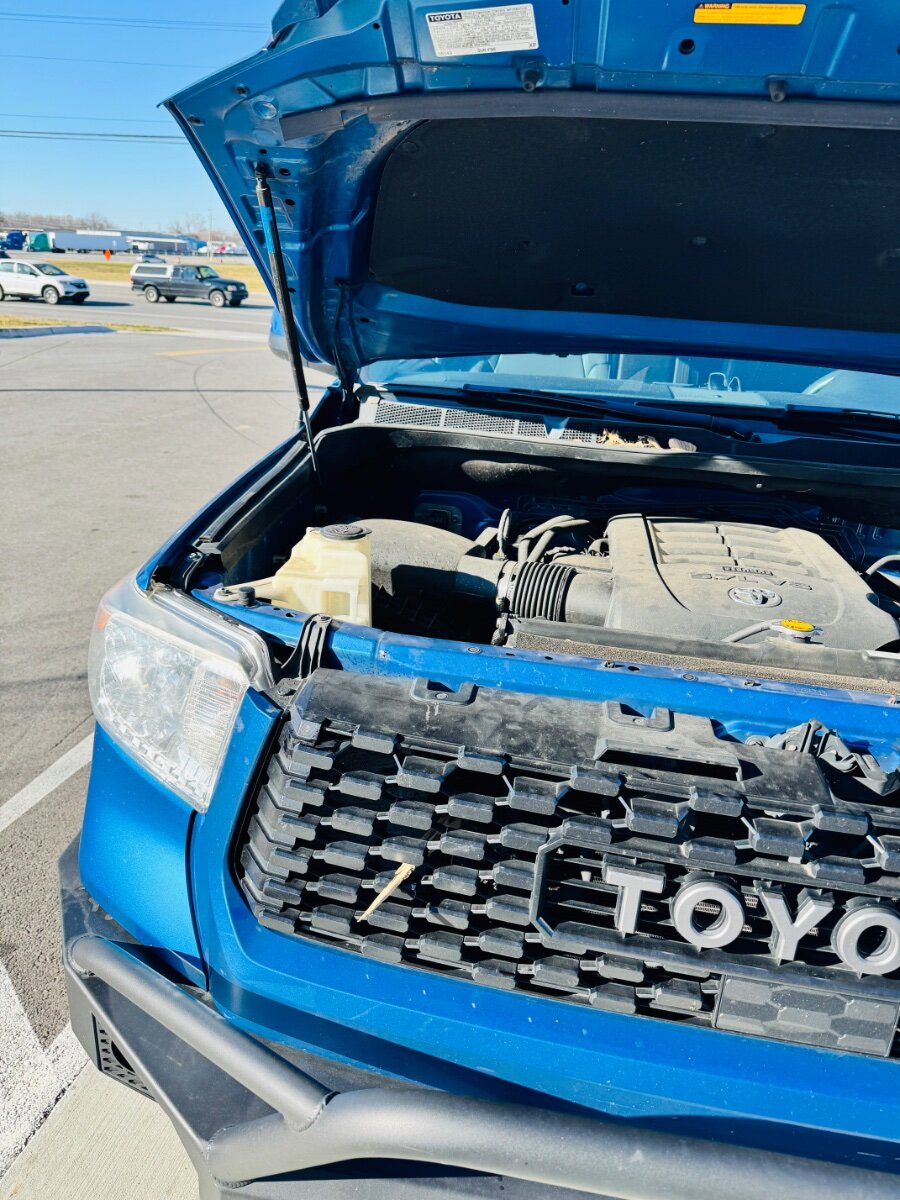
Finally got the Mechman 370 amp HO alternator installed. Dramatic difference @idle 35 amps showed up on display. Woohoo! Interestingly, it took a piece of 2x4 going through my radiator on I-40 East headed to Johnson City, TN to get the incentive to do the upgrade. The Mechman alternator had been sitting in my garage for 6 months. Now, I can finally replenish the 920aH battery bank while driving on long legs out West. Best, Mike BTW, used JB weld to temporarily stop the drainage of coolant... made it back home without a tow.
1 point
-
Have you tried placing a folded blanket or pillow under the table, then lowering it onto the bed or seat cushion when in transit? I use pillows with our Lagun tables and they stay put; I find it too cumbersome to remove and stow whether underway or not in use.1 point
-
Our EII Hull 505- 2019 had been having some weird intermittent USB action on the street side of the trailer. When I checked for continuity across the 20A 12V Fuse (Street Side) in the rear attic it showed all OK. I removed the 4 screws that hold in the radio, pulled it out and checked the voltage on the connectors for the USB plug leads and read 2V. I went back, pulled the fuse and measured a resistance that was pretty high and noticed discoloration in the fuse body... It turns out that fuse has partially blown. I replaced the fuse and measured voltage at 13.4V and when the power and ground reinstalled the USB ports came alive. Upon re-installation of the radio I noticed the bottom right of 4 screws was not actually going into any fiberglass. The hole cutout for the radio wasn't a clean rectangle and that bottom right screw is floating in air. I'll be trying to find some c-clips to use as a backer for that screw. Craig - Hull 505 2019 EII1 point
-
We will probably swing by Imperial Dam for a month or so before coming back to Dome Rock for the rally in February, then Magnolia Beach before we start the trek back north to Nova Scotia along the east coast. But that’s the beauty of being a retire with time on your hands, take it day by day!😊1 point












-
Recent Achievements
-