Leaderboard




Popular Content
Showing content with the highest reputation on 02/27/2025 in Posts
-
I can't argue that under these circumstances, it would take a long time to get to everyone. But don't misunderstand what I wrote. These statements are just possibilities that I'm saying COULD be true, I have no evidence that they are, but if I was running Truma and a company pissed me off bad enough, that's exactly what I would do. I don't own a Truma, but if I did and now knowing the exact nature of the issue, you can bet your sweet bippy I would pull that burner out, repair it, put it back in, torque it to the proper specs, hook up and go camping.8 points
-
Not trying to add fuel to the Truma fire, but we had problems with our Truma last spring after 4 1/2 years and the symptom, delayed ignition and the smell outside adjacent to the Truma. I was directed by Oliver to reach out to Truma, as I recollect and that wasn't unexpected. When I open the case with Truma support, an Elkhart based engineer reached out to me and said they didn't want me to use the Truma anymore. They made me promise as they felt it was a health and safety risk. I naturally agreed, particularly when they said they would have a certified technician of my choice replace the unit for free and document the installation of the Truma with pictures. We went with out hot water in the Oliver for a week at the Maine Rally. I reached out to Tim's RV in Erving, MA and explained to Tim and Brandon that Truma would be shipping a unit to them and compensating them for doing the pictures and installation. We arranged for a late June for the 1/2 day installation. Truma requires certified and trained technicians and extended a courtesy approval after discussing Brandon's experience and in light of our needs. Truma sent the brand new unit to Tim's. We were notified when they received it. Brandon confirmed the delivery too before I made the trip from Concord, NH to Erving. Tim and Brandon were very gracious and Brandon did an outstanding job on the install.4 points
-
Two of my least favorite things about the Oliver are the awning that can’t be used in the rain and the floppy/noisy bathroom door. I’ve long wanted to replace the door with a wooden one, but being a custom furniture maker, wifey has forbidden it because that's what I always do. No more wood! She just wants to keep with the shiny modern look for a change. So, when I told her about Oliver’s new fiberglass bathroom door, she loved the idea and surprisingly suggested that I make one just like it. Oh no! This could be problematic. I have no idea how the new door was designed, except that it appears to be made of fiberglass. Since I won’t likely see one in person anytime soon, I’d be grateful if anyone could share details or close-up pictures of the door. I’m curious about the jam, hinges, hasp, and finishes on both the inside and outside. I’m also wondering how the mirror is attached, if it has a bezel or frame, and if the door is two-layered or similar to the closet door with the gelcoat on the inside. If it seems doable without major wall or door jam modifications, I might build a reusable mold and try giving it a go. Any insights or opinions on this are welcomed. Cheers! Geoff3 points
-
Doing ones own maintenance is an individual decision. I certainly did my own work for years and rarely went to the dealer. Growing older and more senior at work there just wasn’t time anymore with the long hours, frequent travel and weekend work. Today’s vehicles are also more technical and complicated. Now being retired, I just don’t feel like taking the time to get greasy. Need to spend that time with grandkids, kids and mom next door. Not to mention traveling and camping. I’ve got a good Ram dealer and Audi dealer very close by that I’ve been doing business with for years. To each his own. Mike3 points
-
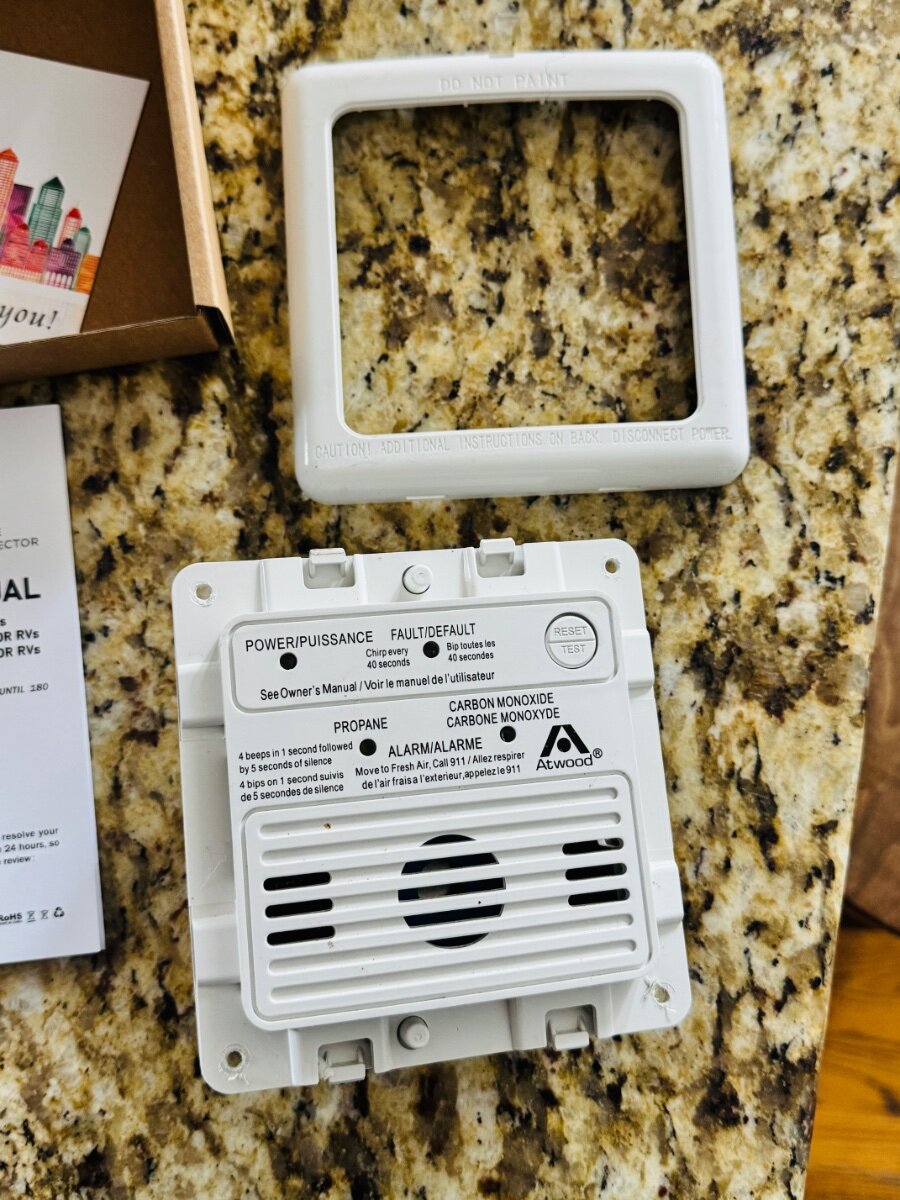
I did this swap few weeks ago and immediately noticed the same thing, however once started tracing the red wire back and pulled back some of the wire loom found the red wire is one wire coming from power source with a y splice to make 2 red wires. I just cut the red wire at the splice and ran 1 red to new detector.3 points
-
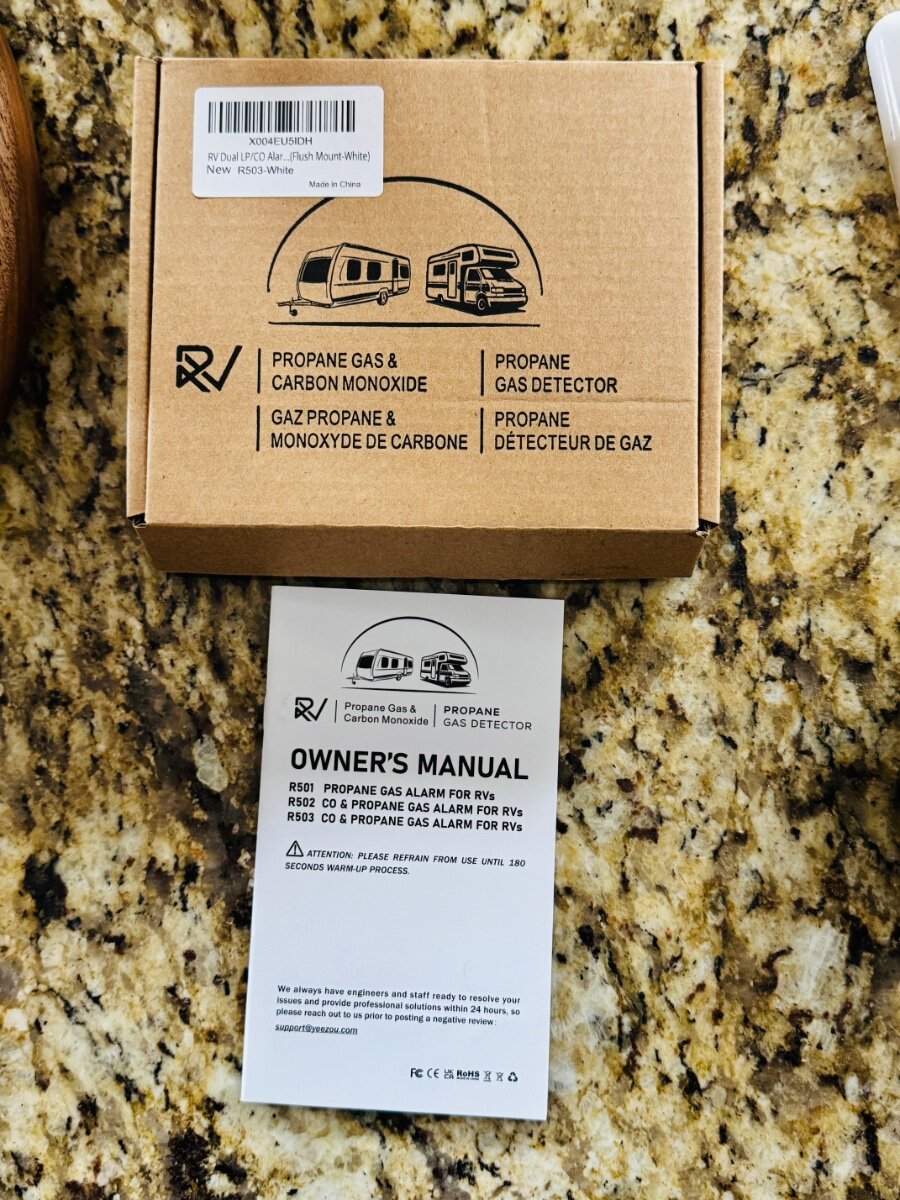
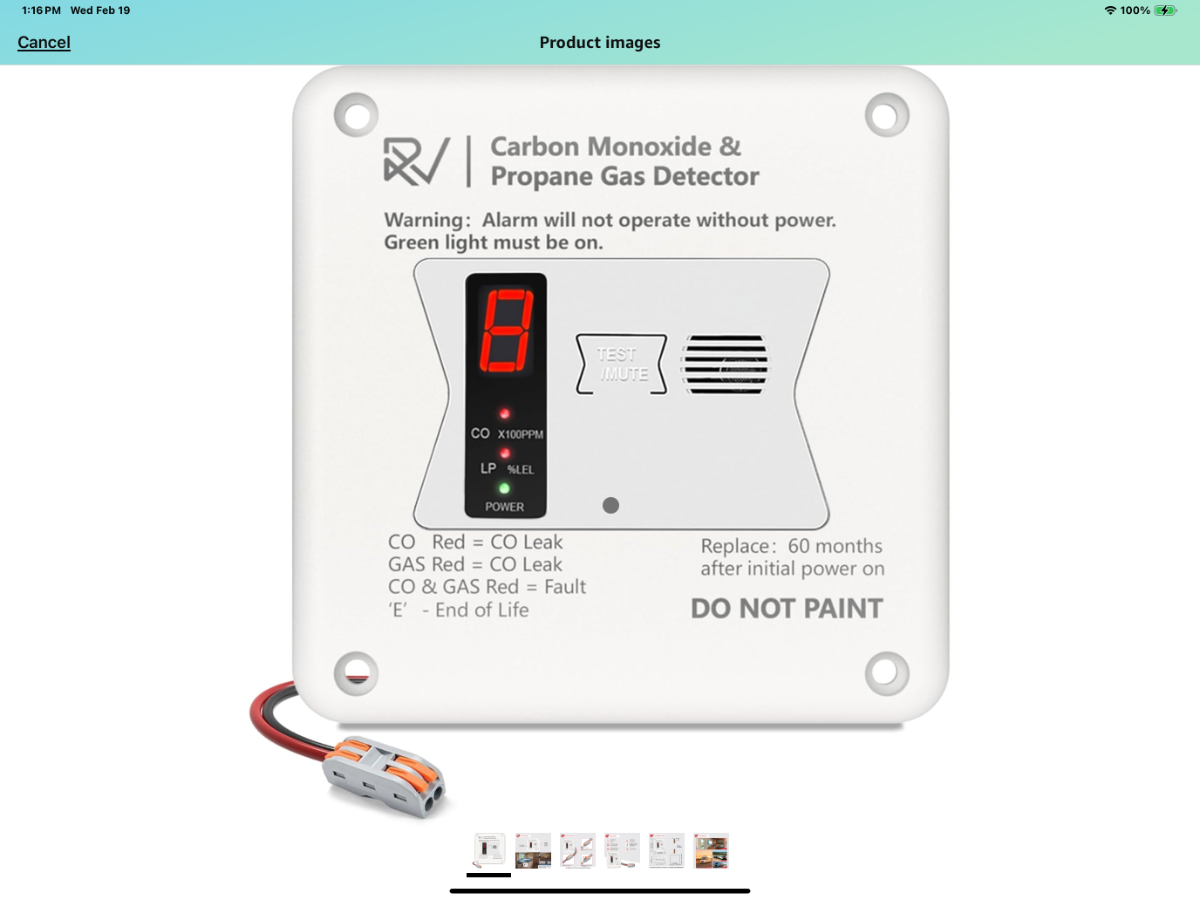
After 7 years, the CO/propane detector needed replacement. The alarm stayed on and wouldn’t reset. Got on Amazon and ordered the one linked below, perfect fit. Says to replace every 5 years. 2 min. Job. Even came with its own quick connects. I know there are previous posts about this, just thought I would update with a new one since this topic will be coming up for others soon. Amazon link: https://a.co/d/eDhKYr5 NEW ONE OLD ONE
 2 points
 -
I understand, but it’s too much money. What I’ve done to our Oliver in less than 2 years would be near $20K in labor! And that doesn’t include the total restoration of our tow vehicle. I rarely buy new vehicles, last time was in 2001, don’t like warranty claims or insurance, so we go with minimums. Close to 50 years wrenching for me. Turning 70 in April and I still prefer to do my own work. Hope I can when I’m 80, although very few parts of my body don’t hurt these days! 🤣2 points
-
It’s really quite simple and well within the skill set of anybody who can change their engine oil or a set of spark plugs. You WILL need a couple of Torx wrenches. I forget the size, but both/all were included in a small Elkind folding set, I’d guess a T-10 is one of them. Two open end wrenches to remove the gas fitting. (I don’t think there’s room to use flare nut or “line” wrenches.) About 5/8 or 11/16” I think. Also the big wrench for the nut holding the gas line to the manifold. Other than having to ease it out and caress it back in is to pull out the black control box at the top right of the heater enclosure when you open the access door. Easier than removing the ignition and flame sensor leads and less likely to break them. DO take the picture as Galway Girl suggested to put the disconnected leads back in the right place. Turn off the LP first of course. Once you overcome any trepidation about working on an unfamiliar piece of equipment, it’s a pretty simple job. As others have pointed out - if you fiddle with it, you likely void your warranty.2 points
-
If you are correct, it is a remarkably poor business decision by Truma. The sooner the product failure is resolved, the sooner it fades from the public consciousness, and Truma's quality reputation can be rebuilt.2 points
-
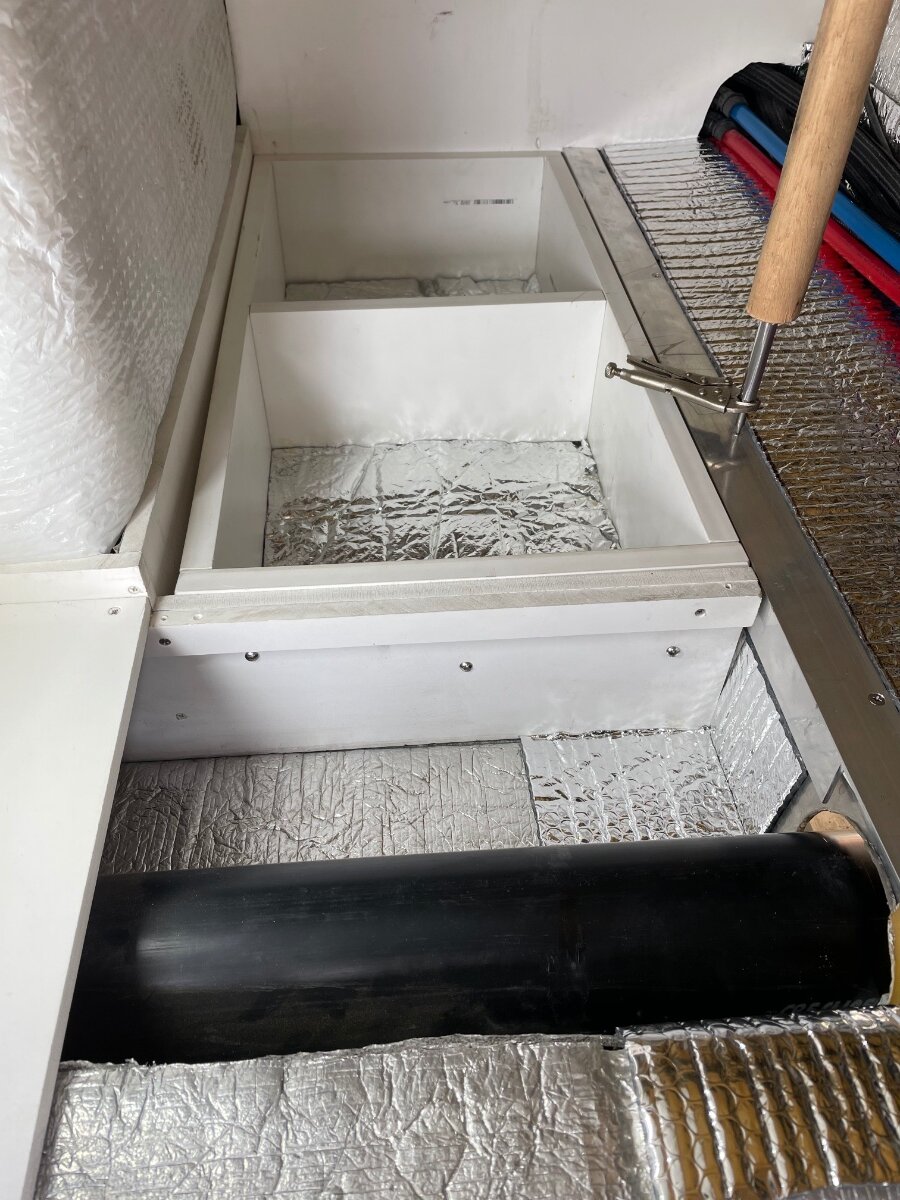
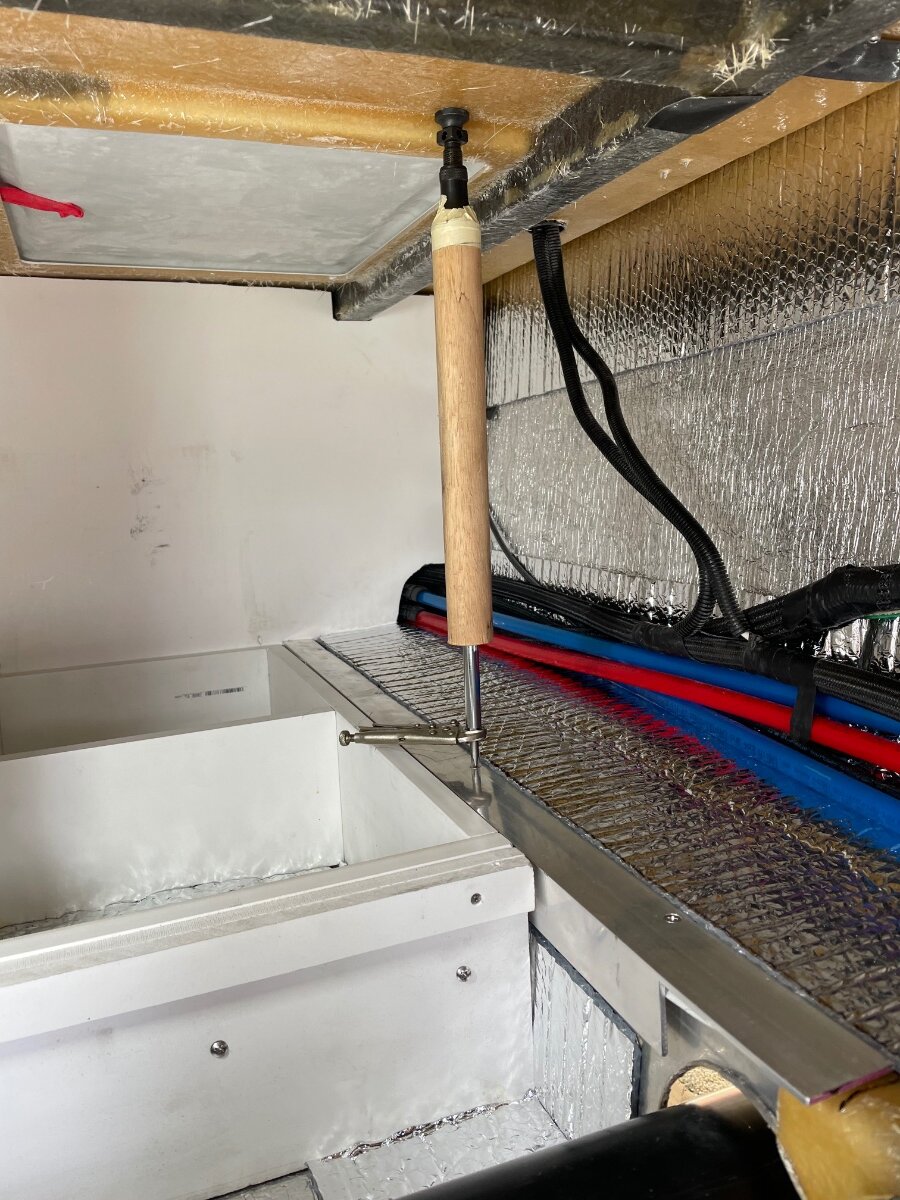
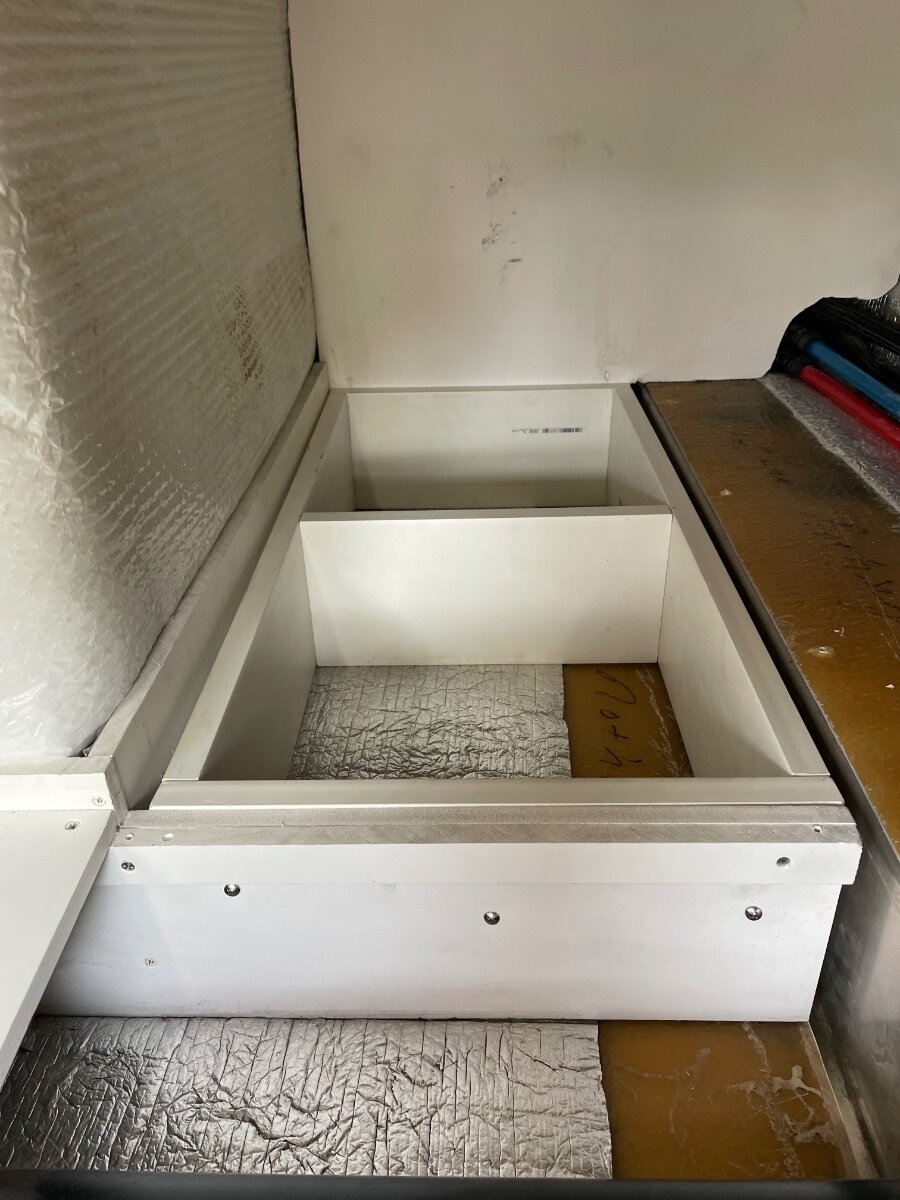
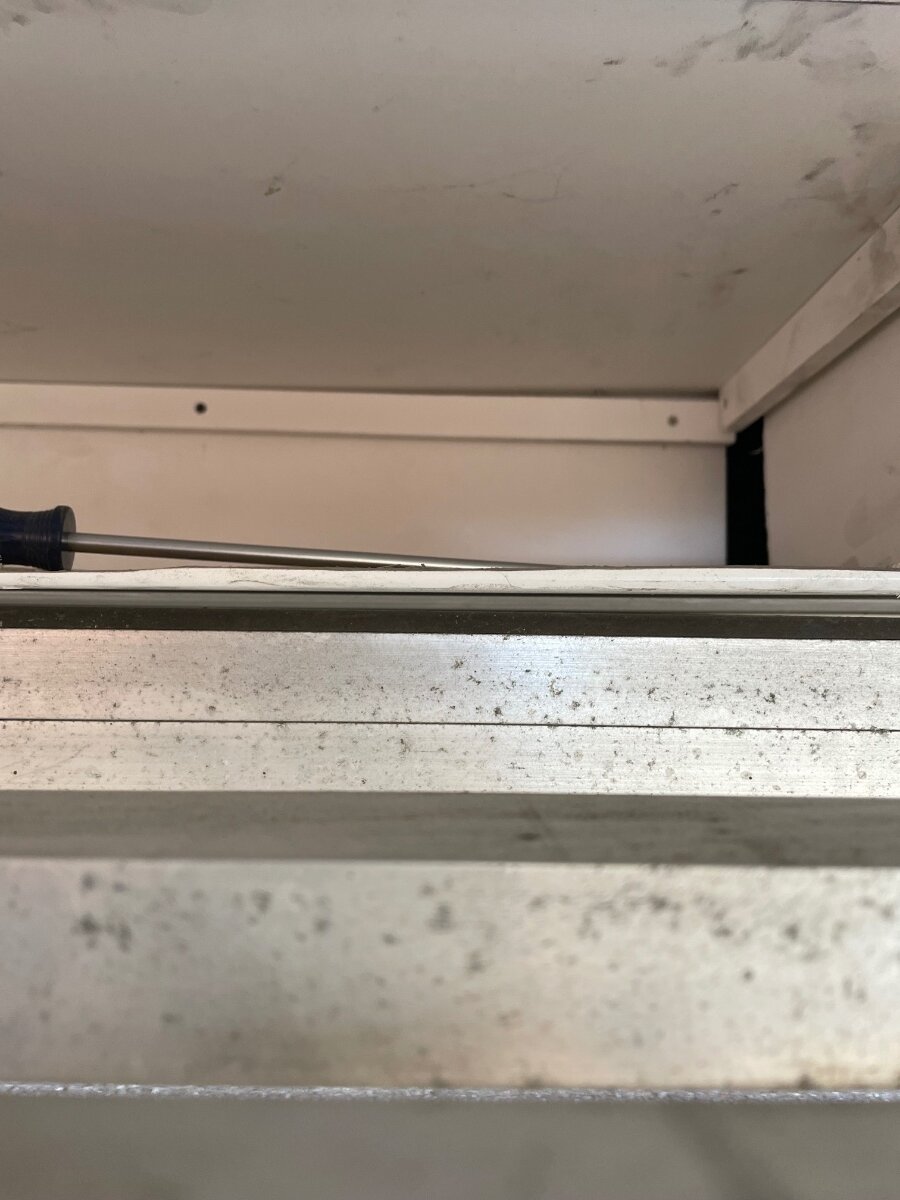
I’ve had a similar issue since the camper was new. A couple of years ago I removed the aluminum Z shaped panel that closes off the rear of the trailer. This panel is located deep inside the rear bumper and the sewer drain passes through it. Mine was not sealed at all and the rubber seal around the sewer line was loose. To do a thorough job of sealing the panel you’ll need to go into the basement area as well. In doing this I also found a large area in the basement area with no insulation, especially the aluminum panel had no insulation. I used butyl tape caulk all around the aluminum panel and a long piece of angle aluminum to stabilize the raw fiberglass edge around the upper edge and stainless screws/self locking nuts through the fiberglass and the panel. The wooden dowel/screwdriver/vise grip pliers was used to hold the screws in place while I tightened the nylock nut from the outside. I also added insulation everywhere I could. Just a suggestion.
2 points
-
Ditto from my side. I always go for premium tires when they are due, or before. Yes it costs more. But it is worth every penny from my perspective. Galileo: I have found that the OEM tires tend to be good in stopping distances because that is what many owners want to see in the specifications. Problem to get those ultra low distances they use tires that are specially made with a softer compound. That's why they stop shorter. But it leaves the vast majority of new car buyers wondering why their OEM tires don't last anywhere near as long as their premium replacements. So, Galileo your replacement tires that you thought were exact replacements generally are not. They have a more durable and longer lasting tread compound. And the MFG knows this. So using the same exact tire likely will work fine if it meets your needs. Here is where the logic line gets a bit soft. The MFG of your TV had no idea what or if you are towing. Or what kinds of roads you are traveling with your Oliver. Where you will be going...... etc..... As such, the off the shelf OEM factory tires tend to be a general duty tire. Hence the need to at least relook at your towing needs as it relates to your TV and where your needs to safely do so. There are more than a few reams of paper worth of discussions on tire selections posted on this forum. Maybe worth a look at the posts. Or just post what your TV is at the bottom of your signature line, and how you intend to use your Ollie. I feel certain you will get plenty of good info as a result.2 points
-
Young kid at the hardware store over filled my 30lb tank. When I got home I noticed a problem and ended up releasing pressure some. Now I go to Tractor Supply.2 points
-
Two for two now, where the same cause is creating the same issue. The cause is the electric space heater, period. Your electric heaters are significantly over-heating the upper cabin. Try using an infrared gauge, and measure and compare the temps of your ceiling to that of your floor while running these heaters. You will likely measure a 20-30F difference when its cold enough outside. The electric heater is adding little to no heat in the basement, the lower cabinets, beds and seat cushions, flooring, the ENTIRE lower hull! Heat can escape the hull above in so many small orifices and the significant heat differential at ceiling creates a turbo effect, forcing this abundance of heat out in any available path. Heat loss through the fan vents, gaps in the A/C seal, the door and windows, the fridge vents, the perimeter around the sewer vent, through the upper cabinets and out everywhere OTT drilled holes for awnings, exterior lights, cameras, etc. Simple fact, the cold air coming in from below must be equal in volume to hot air escaping above. The furnace vents allow the largest opening to the basement below, path of least resistance is where it is coming into the cabin interior. The cold air from the entire basement (and exterior) is being pulled through the furnace ducts and because these ducts are under the curbside bed, it is your curbside wall and likely under that mattress where condensation is accumulating (colder surfaces). Those of us running the furnace are creating hot air below in the ducts and pulling cold air in through the intake in exchange. Just run the OEM furnace as designed and the issue that is bothering you will go away! Being frugal is good, but use your LP (prices coming down soon). Run your OEM furnace when you need to warm your cabin. The electric heater should be used for secondary or back-up heating purposes ONLY. I haven't use one and will not carry one with us. In the next few months, we will add the Atmos A/C with heat pump. The heat pump will be our backup, but we will still run the furnace as our primary heat. We much prefer an evenly heated cabin, not breathing hot air blowing in our faces.2 points
-
On a whim I occasionally press the “Battery” button on the see-level display. Usually I see 13 point something. Last night, plugged into shore power with all AC accessories working and no error messages, with the furnace fan running, I pressed it and it read “12.3. I thought - seems low, but don’t panic. When the furnace fan shut off, I pressed it again and it had come up to 12.4. Still low, but not knowing what strategy the battery charger uses, I let it go for the moment. About six in the morning, a memory of this happening previously came to mind. That time I pulled out my Fluke 77 and checked the actual voltage at a few cigarette lighter sockets and they all agreed with the see-level display. I checked the battery charger breaker and it was on. I pulled the cushion off the rear dinette seat and lifted the access panel… Battery charger unplugged. Sure enough, when I arose and looked - same thing. That’s twice for the battery charger. First season out, the Norcold fridge wouldn’t automatically switch to AC when we arrived at our campground with hookups. It stayed on LP mode. I pulled the outside lower cover and found zero voltage at the AC connection. About the time that Oliver service got back to me, I had found the AC plug under the galley cabinets had come unplugged. I think that’s when I asked myself “why isn’t this hardwired?” Now I’m asking the same about the battery charger… Only reason I can think of is “Manufacturer’s warranty”. So - check those plugs! Anybody address this issue?1 point
-
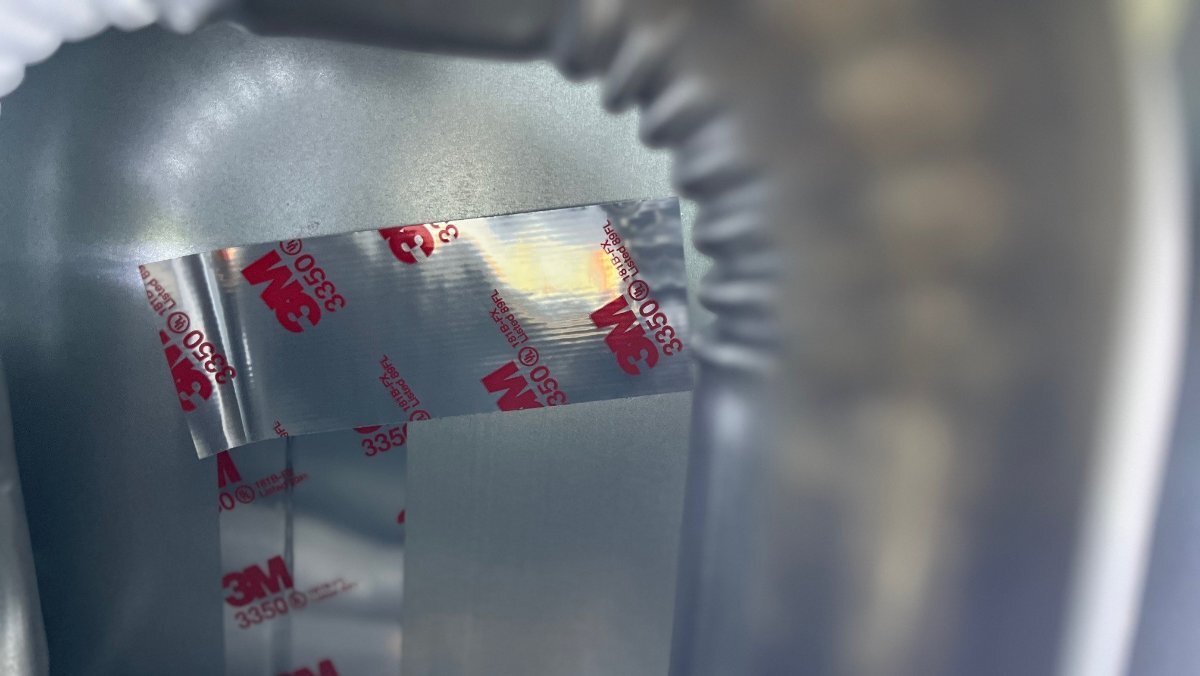
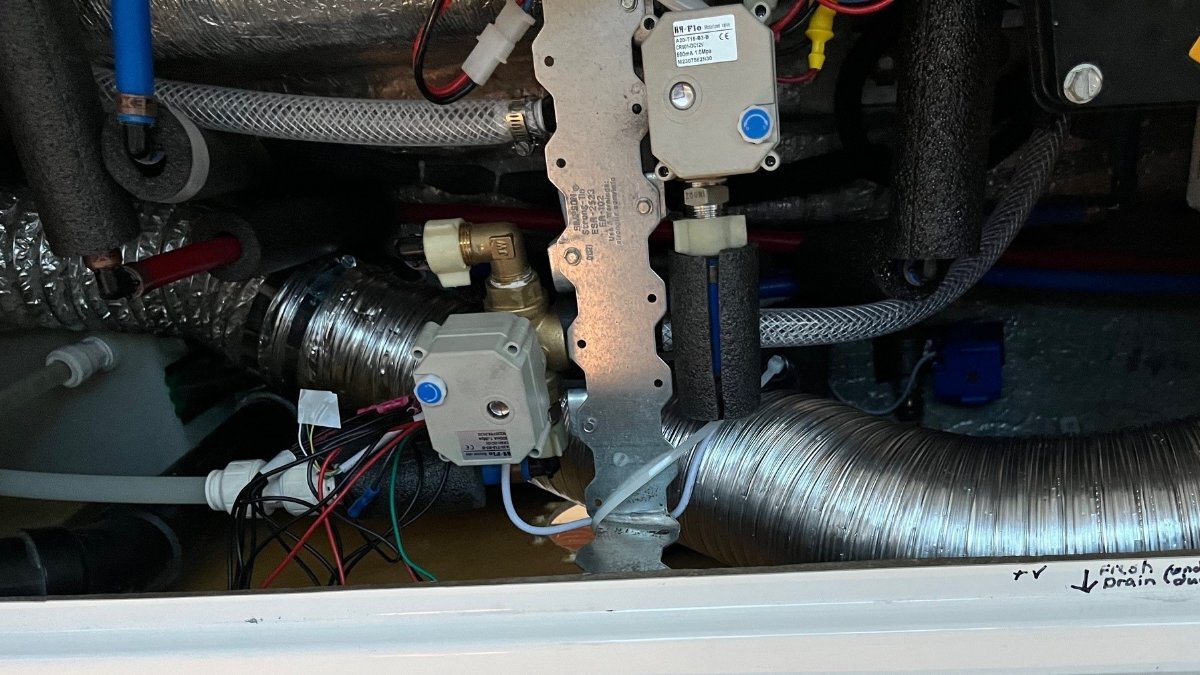
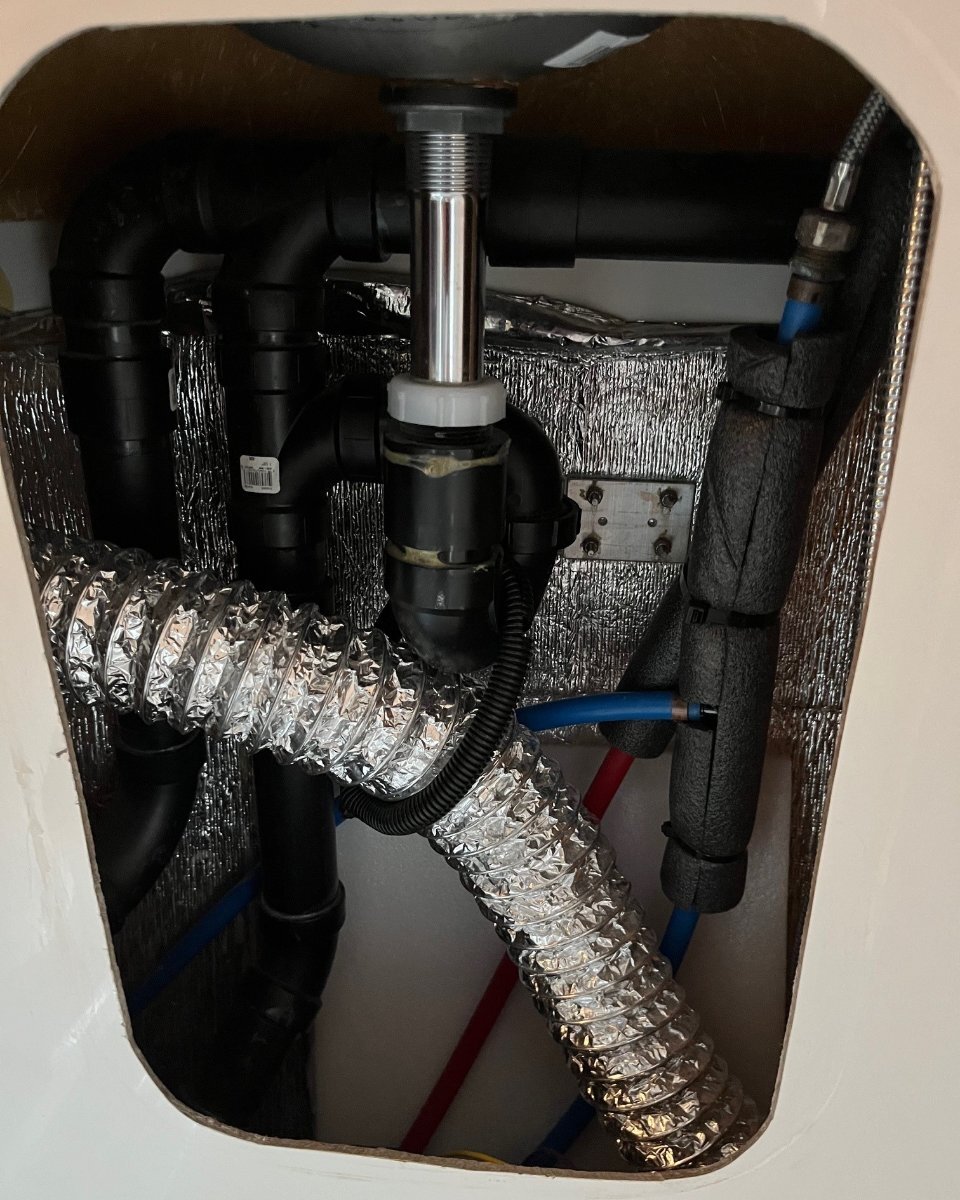
There must be a half dozen mods in this category, and I studied all I found in searching this forum. It's a shame the flexible ducting OTT uses, when upon original installation it would be so easy to plumb rigid ducting. Mine was torn everywhere in the area where you need to reach in and change the water valves. I closed the rear duct at the furnace, using 5x6" sheet metal that I got inside of the furnace housing and used 3M 3350 tape to hold it airtight inside and out. I figured why not blow air at twice the CFM in the forward direction? I replaced the first 6 ft of ducting with semi-rigid dryer vent ducting and added a 4" steel junction to connect it. Placed foil insulation above it since it is now very close to the fiberglass under the bed. I kept it straight and tall as possible for better airflow vs. the downhill and tangled mess of the original installation. Wrapped the furnace hold-down with some old automotive heater hose to keep it cushioned and quiet. I wish I could have reached all the way to the junction but would have to cut the floor of our kitchen cabinets to do so (if I ever have to replace the fridge, I will cut below and replace everything past the junction). I removed the underbed airduct completely, which is now a dummy vent, a return vent that I will place an air filter behind. The airflow at the kitchen duct is now 2-3 times the old and at the bath it has certainly doubled. I also strung up the bath vanity ducting, so it has better straight airflow, not cramped by laying down at the bottom. While in there, I foam-wrapped the PEX which had been banging on the drainpipe very loudly when in use. I will add an air filter to the return duct next (to catch dust and dog hair) and my last task will be to add the bathroom vent that @Rivernerd showed in another post (thank you!) This should really help when the bathroom door is closed as well as to vent/circle air around the basement and keep the water pipes above freezing in the rear basement. And of course, thank you @Snackchaser for your "Bathroom Heat - a more direct approach!" post that got me started in the right direction!
1 point
-
After doing some more research I have learned that it is not the working load that matters for the safety chains but the breaking strength which I believe is usually at least 3 times the working load. I found a chart for RVIA that lists safety chain requirements by state. Generally, it appears that when a state has a strength requirement it must be at least the GVWR of the trailer. The only data I could find from the Federal Government related to commercial applications. For commercial applications the rules state the combined breaking strength of the safety chains must equal the weight of the towed vehicle. Based on the above it sounds like my chains are ok since (assuming the shackles are the weakest link) have a combined breaking strength of 6T.1 point
-
Generally speaking as stated, yes. I can not comment on what your dealership sells. Because I never buy tires from a "stealership Huh - definitely news to me. In the spirit of “trust but verify” - could you share the source for your assertion that a tire put on a car at the factory -isn’t- the same as a replacement tire of the same manufacturer, label, model, and size? That definitely sounds like a hairball for tire manufacturers to manage to me! Though I worked for a (Buick) dealership as my first full-time job, I too was loathe to ever take a vehicle to a dealer for repairs or maintenance. These days, NOT wanting to do all of my own maintenance after having done exactly that for 40+ years - I take my vehicles to the dealer. There are several good reasons for this: They know the vehicle considerably better than I do. Especially important in these days of fuel injection, 15 computers under the hood, and not wanting to buy thousands of dollars of special equipment. Sure, I have my trusty OBDII scanner and more hand tools than most professional mechanics, but these aren’t the days of points and condensors any more. I served my time under the hood, fixing up rusty old beaters, and all the rest. Frankly, ANY service shop is charging exorbitant rates these days, so there’s not a lot of qualified, “inexpensive” places to get your vehicle serviced. My last two vehicles were purchased new, with factory warranties. One more reason to take it to the dealer than Joe Blow shade tree mechanic. I’m a little older these days, and frankly, don’t feel like having to crawl under my vehicle unless it’s just me in the middle of nowhere. I CAN if push comes to shove, and I carry enough tools to pretty much repair most things on my truck or trailer, I just choose not to. I bought my last tires from the dealership(s) because they BEAT the quotes I got from competitors. I also don’t think it’s a bad idea to throw your favorite shop (or dealership) a gravy job once in a while instead of just the warranty stuff. We travel all over the country and Canada as well. I had my truck to at least half a dozen dealerships in as many states for routine service. That said, I take my truck to my “preferred” dealer for as much as I can. I even bought my replacement vehicle there -because- they treated me right. Finally, unlike days of old where I could buy quality oil for under a buck a quart, and pay $2 for a filter, these days, by the time I buy the stuff to change it myself, I’m not saving anything. That, and we’re back to crawling under the truck, getting dirty, having to collect, bottle, and tote waste oil to a recycling point. I also don’t fly coach on discount airlines anymore.1 point
-
I forgot to mention the reasons that prompted my basement exploration. The floor had collapsed and upon inspection I found that the floor supports were only held in place by a few screws that only were about 1/4 inch into the side supports. I was also getting propane exhaust fumes into the trailer when the water heater was running. Anyway, in checking out the collapsed floor and the carbon monoxide issue I discovered the air leaks and lack of insulation.1 point
-
All interesting stuff of course, but you lost me on the above. You’re saying the replacement tires I purchased for my vehicle with the same manufacturer, model, and size as the ones the truck came with aren’t the same tire? Even when I get them from the dealer who sold me the truck?(!) If that’s what you’re saying, how are the tires that Bridgestone sends to a GM assembly plant as “tire A” differentiated from the tires Bridgestone sends to a GMC truck dealer as “tire A”? It may just be my non-aggressive driving style, but I always get considerably more miles out of my tires than they’re typically rated to deliver. That’s something that I’m fine with. I got 70,000 miles out of the original tires on my previous truck - and I replaced them long before they were near the wear indicators. I credit that to the fact that I’m a fanatic about monitoring tire pressure, alignment, and rotation. Actually, it’s surprising as I drive on rural Texas roads a lot. They’re “chip seal” surfaces which is reputed to eat up tires pretty aggressively.1 point
-
I don’t have a brick in this wall, a horse in this race or a dog in this fight, I just stumbled upon this “older” video from James of The Fit RV testing a smart plug…. so just an FYI!1 point
-
Last week during some unusually cold south Texas weather we ran both of our 30 lb tanks to completely empty. We took them to a nearby U-Haul for refill while the temperatures were still in the low 20's. We were charged for volume (16.9 gallons), not weight of propane. After getting them home, as the weather warmed, we noticed a faint smell of the gas odorant. We found that the pressure relief valves were bleeding off propane. We had a serious fire hazard. A little online research suggested that based on volume, tanks are sometimes overfilled in cold weather. Liquid propane is denser at low temperatures, so more (by weight) can be filled in colder temperatures before the Overfill Protection Device (OPD) shuts off the flow. There are also recommendations for the entire valve to be replaced whenever the pressure relief has popped. We took the tanks to Propane Depot, a specialty supplier. They weighed the tanks. One weighed 65 lb and the other 66 lb. The tare weight for our tanks is 25.5 lb each. Neither should have weighed more than about 55.5 lb when full. They had been overfilled by about 20% of their rated capacity. Texas regulations state "containers of less than 101 pounds LP-gas capacity shall be filled by weight only", so this rule was not observed when the tanks were refilled. After bleeding off the excess, the guys at Propane Depot checked the pressure relief and the tanks were no longer leaking. They didn't think the temperature had been cold enough to explain the extreme overfill so the OPD is suspect, though it seems odd to have failed on both our tanks. The propane guys said they only refill by weight and never depend on the OPD. We plan on replacing the valves before the next refill anyway. The takeaway is to make sure the tanks are weighed before and after being refilled. The filled tank shouldn't weigh more than its rated capacity plus its tare weight. Stay safe, Steve1 point
-
My understanding is that Ford caused the Firestone blowouts that caused I’ve 450 accidents and 250 deaths. Ford was getting complaints that the Ford Explorer of 25 years ago drove too harsh, “drove like a truck.” A ford exec sent a service advisory memo to the dealers, asking tire pressure to be reduced to 26 PSI from the Firestone spec of 33 PSI! Ever wonder why only Explorers had these blowouts and not the F150 of the era that had same drive train and tires? Ford caused the demise of Firestone, arguably the best tire company of the 20th century, certainly the greatest market share. The public stopped buying Firestone tires. Their stock plummeted trading at pennies on the dollar when the Japanese parent co of Bridgestone Tires bought them out. Henry Ford and Harvey Firestone created a partnership that lasted for 7 decades until this time. Henry II married the Firestone granddaughter in the 50s. At least this is how I remember the story.1 point
-
Galileo, Plugs should have a fairly tight fit in the receptacle and they will not easily fall out. However, we have all run across worn out, or poor quality, receptacles that the plug will not stay in. When a plug is loose in the receptacle, it means that the electrical connection is also loose! It’s one of the most common causes of fire. Loose connections have a high resistance that create heat, and/or arcing. It’s best to replace the receptacle. Otherwise, bend the plug prongs outward just a bit to improve the connection and the holding friction. Hardwiring is okay, but it shouldn't be needed. Cheers! Geoff1 point
-
As I said - it’s your trailer, TV, etc. I’m an OEM kinda guy. I use genuine parts on my truck, replace the tires with what the factory originally installed, and follow the manufacturer’s instructions for installing and maintaining their equipment. As my old HS auto shop teacher used to say “when you modify a vehicle, you become a test pilot.” There are enough factors when you’re on the road that you can’t control. I don’t feel the desire to add another one. So, when Andersen says not to lube the ball because the lube -could- seep down into the friction material - I take them at their word. After all, they designed, built, and tested the thing. I figure they likely know more about it than I do. Besides - with the Andersen design - where the ball turns with the coupler, and the amount of vertical angle change between the TV and trailer are greatly reduced, the need for lubrication as with non WD hitches is pretty much gone. That, and no greasy mess to add to the bruise and cuts you get when you walk into your hitch. 😋 That said, old habits die hard. People are gonna do what they’re gonna do. I don’t see much benefit to trying to lubricate two mating surfaces that aren’t pretty precisely fitted to each other. In fact, grease is more likely to catch grit and dirt that will be held in place and act as grinding compound. Andersen says don’t lube - I don’t lube. It could even affect a product liability claim.1 point
-
Sorry about that, I generally do not use so many. I’m sure you know the electrical acronyms like AWG, VAC and VDC. I also used FWT for fresh water tank and HWH for hot water heater. MP2 is short for the Victron Multiplus II Inverter/Charger. I got the 4 AWG wires run in the Oliver last week while working on waste valves. We’re camping this week but I will get this done in another week or two. I will run tests setting the Orion XS 50A configured at 30, 40 and 50 amp settings. 30A will be no problem and we’ll see if it can run somewhat higher without issue. You did answer my question, thank you. I answered it myself at the end of my post and you confirmed my thinking.1 point
-
I think this is a reasonable and responsible approach.1 point
-
I have considered it, but only as a short-term solution. As a retired attorney, I accept that to be able to ultimately sell our Hull #1291 I must endure the pain of facilitating the recall work once "our" replacement burner assembly becomes available. Doing the work myself is not a legally viable alternative, even though I believe I may be more careful than many RV repair techs. If you feel better pulling the burner assembly and crimping the ends yourself before using your Truma Aquago pending receipt of "your" new burner assembly, go for it. But even if that may be as effective a practical solution as burner assembly replacement, it will not be legally sufficient to limit your liability when you sell your Oliver. That said, I am aligned with those folks who have opted to continue to use their Truma Aqugo units "as is," but with more careful monitoring, until the recall requirements are satisfied.1 point
-
JD, I was reading your post, but I struggle with acronyms. I believe you’re asking why a 120-volt current through a #14 gauge wire can charge at 50 amps, while a 12-volt current through a much larger #4 gauge wire can’t. The answer lies in Ohm’s Law (E=IR), which states that voltage (E), current (I), and resistance (R) are directly proportional. Therefore, as voltage increases, current decreases. A good analogy is the 700 kilovolt transmission lines that can power a city through a wire the size of your thumb. If you reduce the voltage to 120 volts, then you would need a wire thicker than a redwood tree to carry all the amps. Regarding the Orion, it’s a type of Buck Booster, which means it can increase the voltage of a low-voltage input to a higher voltage output. However, an undersized feed cable from the tow vehicle still experiences voltage drop due to cable resistance (E=IR again), which will affect the charger’s performance. Look at it like a toaster, the heating element is basically an undersized conductor that is heating up due to its high resistance. It effectively limits current exactly like a resistor in an electronic circuit does. I hope that answers your question, and I apologize if I’ve misread it. Cheers! Geoff1 point
-
One of my tanks was overfilled by someone relying on the OPD to shut off the flow. I was watching the gallons readout and made her stop and call a supervisor. At my insistence he weighed it and vented a fair amount to bring it down to 55#. You can't trust the OPDs.1 point
-
Very interesting, thanks! Here's a link to the procedure: Anderson maintenance.1 point
-
Yay, wired our Oliver for the DC-DC charger today! (TT side only, wire lengths installed hitch to buses, no connections made yet) An injury and then rebuilding the waste valves took precedence. But after Reading @Ronbrink's comment (thanks Ron) about running the wires around the toilet and not having to remove the vanity shelf, I thought since I have the waste valves removed under the front dinette seat, I should get this done before putting them back in. I pulled the two valves yesterday and then thought, a couple of hose clamps and I could pull it all out and inspect for condition inside and clean the area. Good thing I rinsed the toilet 4 times when we dumped tanks. The 4 AWG wire is now laying across the floor in the picture. It made the wiring soooo easy! I stuck my head down where the waste valves were installed and looking forward I could see the OEM installed cables coming through the hull. I'll see if I can take a picture of it. If they truly sold me 65 ft and I have 28 left, then I used 37 ft for the round-trip in the Oliver (2 x 18.5 ft). I ran it as straight as can be leaving some extra length where the buses are located under rear dinette seat, and outside I made it 5" longer than the trailer cable to be safe. The amount left over is enough for the + run to the starter battery (~20 ft) with 8' left over for rear and front frame grounds, and a 4 AWG straight run from battery to alternator. We're leaving to Catalina State Park and the Coronado NF a week from Monday, so completing the DC-DC charger installation is second to getting the waste valves finished. So glad, I got this wiring run today. I'll be happier when the plumbing is done!
1 point
-
I think most owners with the Dometic A/C would agree that’s it’s a tiny bit loud. (I suppose if you’re deaf it wouldn’t bother you at all - just your neighbors.) That, and I’ve read that at least two other owners have had issues with the bolts holding the fan motor backing out and causing significant problems. I had that issue myself. Luckily, I didn’t mind crawling on the roof to fix it myself. Others had to get professional help. The design and assembly shows a lack of care and proper engineering to an item that should be expected to regularly be exposed to a fair amount of vibration. As it’s built, this A/C should be -expected- to have problems. If I have to deal with the same problem again (before I replace it entirely) I’ll replace the substandard hardware with something more akin to what the factory SHOULD have used in the first place. Pretty sure I’m not the first one to have to replace the hinges on the Dometic fridge freezer door. Likely also why they’re a popular item on Amazon. Otherwise, I think it’s a great fridge - super freezer. Toilet seal leaked from day one. Wouldn’t keep water in the bowl. Tried the usual seal conditioners with no improvement. Replaced the seal with a new factory one. Worked for a few weeks, then same problem. Had a cheapo Thetford toilet in previous MHs - never had an issue with them. If your unit is 8 years older than ours - it’s highly likely that the components and workmanship were frankly - better. There’s really no such thing as “exactly the same equipment” build nearly a decade apart. Corners are cut, cheaper suppliers of parts and subassemblies are substituted, production processes are streamlined, workforces change, pandemics occur - and often - once-reliable items carrying the same model number are redesigned into something wholly different. (I believe there’s a phrase… oh yeah “they don’t make ‘em like they used to”.) Ask owners of White Mountain ice cream freezers. The ones made 20 or 30 years ago are bulletproof. The ones made 5 years ago will fail before you can make a second batch of butter pecan. We treat our equipment very gently - so it’s not as if we’re abusing our stuff into early failure. That said, I AM fairly demanding of stuff I pay a lot of money for. I EXPECT it to work properly and not fail quickly under normal operating conditions. OTOH - in those ‘less than three years’ - we’ve camped in 30 states and two provinces in Canada. We’ve crossed the continental divide four times. We use our Oliver for pretty much three months solid on each of the three vacations we’ve been on, and put 78,000 miles on our first tow vehicle during those three years. So it’s possible we’ve just use our trailer more than most folks. As for your lack of problems from any of your Dometic appliances - I’m happy for you! Really! It’s not like I -enjoy- having to diagnose, troubleshoot, or seek out other’s experiences to keep things working. I AM lucky to have a fair degree of mechanical aptitude, experience, and the tools to make most of my own repairs.1 point
-
The maxxair vent and bathroom vent don't seal real tight so a fair amount of warm cabin air can leave through those vents when closed IF and ONLY IF there is a window open or as you appear to have discovered, a source of outside air entering your basement. I have never experienced condensation under the hatch cover above the furnace like you are so it seems plausible the cold outside air is coming into the basement in that area. Could it be possible that the outside air intake tube for the furnace has cracked or separated from the combustion chamber inside the furnace housing? That would allow outside air to flow freely into the furnace housing and then into the basement through the fan intake vents when the furnace is not running but the furnace would probably still work. It doesn't seem at all likely but that could possibly explain it. Just a WAG.1 point
-
1 point
-
You need to have windows cracked to allow airflow. You need to be using a dehumidifier. You need to use the trailer furnace to heat under the bed. This is really operator error. Please don't take this the wrong way. Worst thing to do is keep the trailer closed up. You need to know when it is time to move to the furnace. The furnace will also help to remove moisture When camping with temps below freezing we crack curbside and dinette windows, 1"+. We really have never had a condensation issue. Best of Luck.1 point
-
If you have to ask then this exalted position is well above your station in this life - sorry.1 point
-
None of this is provable, of course, but I personally don’t think Truma has any intention of ramping up production to help Oliver. When this problem became apparent, Truma refused to issue and take responsibility for a recall laying the entire blame on Oliver claiming they were the only OEM that had experienced a problem. Truma knew about (or at least bought into the idea) that their product might have as issue because they retooled and changed the design of the burner assembly. It is my belief that this “shortage of parts” is an issue manufactured by Truma to punish Oliver and (by default) this community of owners for making this problem public knowledge.0 points



















-
Recent Achievements
-