Leaderboard
.thumb.jpg.e34bf01ef7f7d5e99ad31856d45afbeb.jpg)



Popular Content
Showing content with the highest reputation on 12/05/2025 in Posts
-
I love your math and will be using it as my sales pitch for new Nev-R-Lube axles to my wife. She'll then return the favor by letting me know what she'll be spending that saved money on!6 points
-
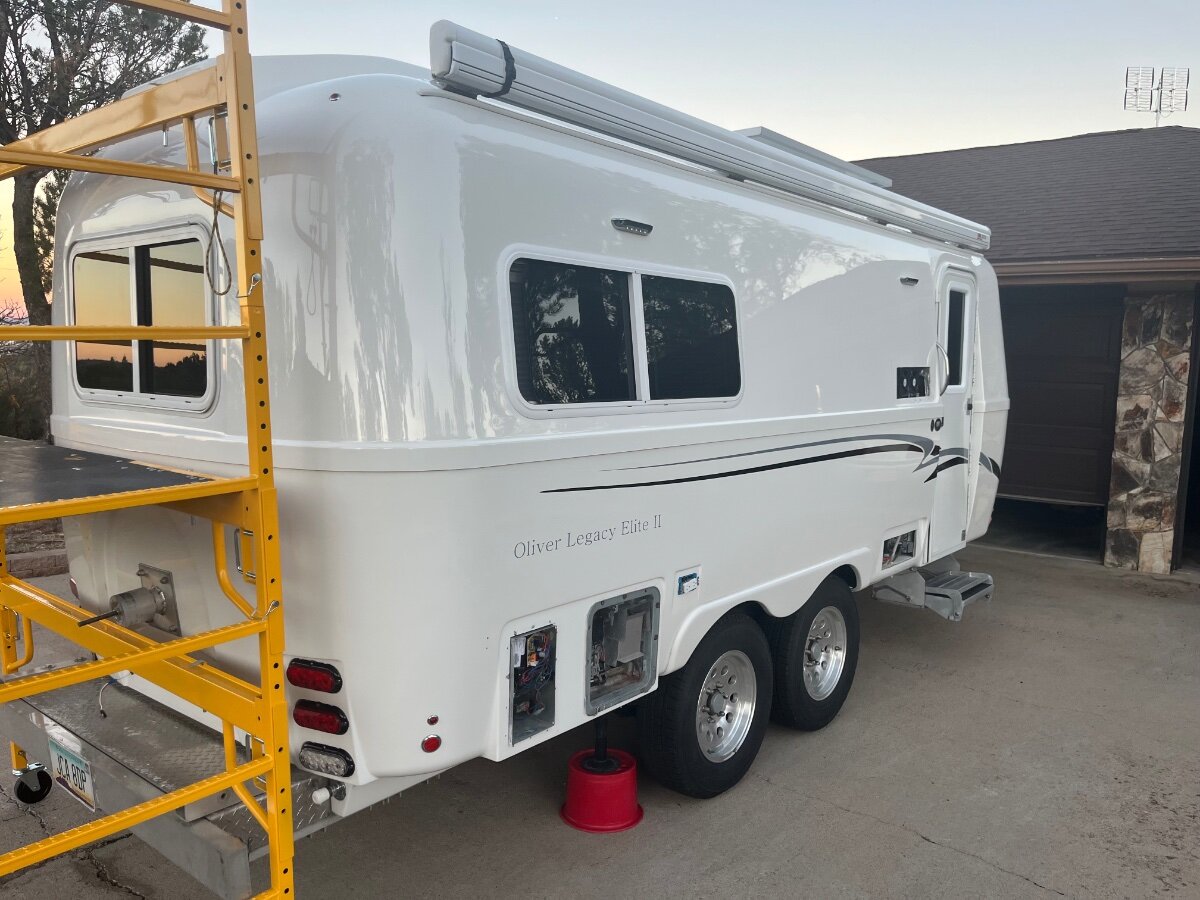
I had a great Kubota with front-end loader 20+ years ago when we lived in N VA. But not anymore! We just installed our new Greenland Inverter A/C. It did not seem as heavy as advertised and much less weight than the Dometic P2 we removed! My son Adam and I carried the new unit onto a stand I positioned near the scaffolding at the rear of the Oliver. Another lift got it up head-height and onto the scaffolding. Then we climbed up and one more lift from the scaffold flooring to the roof of the Oliver. Easy Peasy! I had raised the scaffold platform another 6” from where it’s pictured and raised the upper bar to be level with the roofline to provide a temporary holding position. I also placed a towel on the roof since we just had it ceramic coated. We slid it on the towel. Then I went inside as Adam stayed outside for a final adjustment. I found it already 2" further up than needed. I lifted the A/C and pulled the towel down through the opening. The two of us pulled it back a little and wiggled it until the 4 corner bolts lined up nicely. Took 15 minutes at most with the scaffolding already in place.
 3 points
 -
Those guys are a lot faster than I am! But if I could do two axles at their pace, it would be $300 a year cost. Ten years that I hope to be around say $3,000. The Dexter NeverLubes I understand should go ten years. So, mathamatically speaking, I am financially well ahead in getting the 5200 never lubes with their better brakes. RIght? GJ3 points
-
AI has the following to say on the subject of AGM battery life: "AGM (Absorbent Glass Mat) batteries generally last 3 to 8 years, but the lifespan depends heavily on usage: expect 3-5 years for deep cycling (RVs, marine) and 5-8 years for standby/float (backup power), with high-quality units potentially lasting longer. Key factors include temperature, quality, depth of discharge (how deeply it's drained), and charging practices, with extreme heat or shallow discharges shortening life, while proper maintenance extends it. " Therefore, as Mike says above - you are probably at or very near the end of life for your current batteries. Bill2 points
-
We found that after about 5 years our AGM’s started declining. We replaced them with 300ah of Battle Born lithium 5 years ago this month and we’ve never even been close to running out of battery power. If yours are four years old, it’s probably age combined with the cold weather that’s putting a stress on them. BTW, 300ah doesn’t sound like much compared to what some folks have installed but it’s been plenty for us even for extended boondocking. Mike2 points
-
I think it is important to run the vent fan when showering, as well as post showering for a while with the door closed, to remove as much moisture possible; even in cold weather conditions. While running with the door closed, the vent fan creates a negative pressure within the wet bath and draws heated air in through the vanity HVAC duct and any installed lower vent from within the under dinette area for that matter. Once the wet bath is completely dried, the vent fan can be turned off and door left open, whereby conditioned air entering the under dinette area via an installed lower vent is less likely to cause adverse effects and possibly improve return air ventilation.2 points
-
I'm going with NO silicone after spending many HOURS removing all the caulk on caulk spread aimlessly through the years. Compare this picture to the ones above! And notice all the CR@P on the ground, never again! 😎
2 points
-
With shop rates getting to the point of about $150.00 per hour, you are probably a touch low on the $50. But around $75 per wheel would probably get it done. Bill p.s. while just about any boat or regular trailer can do this job - I'd ask around a bit to get some recommendations. Bearing service is NOT difficult. But, if it is not done properly it can cause you some real headaches down that lonesome road.2 points
-
We got 5 years out of 2-12 volt AGM's before needing new ones. The thing to remember is 12.2-12.3 is the lowest you want to go It takes only one time below 12.2/12.3 to cause damage. Some might get lucky, but I know several people who destroyed their AGM's after one low draw.1 point
-
Totally agree. I also keep the bath vent open so as to create a chimney effect from the lower hull screened weeps and other sources. Sort of an energy way to bring in a limited amount of fresh air. Esspecially impotant to do so when using an open flame heate inside. For that cracking a window is meeded as well. GJ1 point
-
Ditto. Love our Battleborns. But knowing what's out there now, as posted many times by many owners, the cost of three of them (300AH) and the cabling could lead me today to another larger single battery. PS: In addition to the SOC capability, our 2019 OE2's do not have a master 350 amp shut off switch. Yes there are lots of opinins as to where to mount it, but 95% see the need to ba able to stop the source of power in an emergency QUICKLY. So please add that to the need to do list. Below is John Davies' approach. John Davies Master Battery Switch.docx Note that his install was for 200 amps and inside the cabin basement. I suggest using the 350 amp version as it is higher than the fuse in the 4/0 cabling. Also, I suggest mounting it in the battery box to not delay exiting a smoke filled trailer in an emergency. Get out and shut it off outside. Always grab your fire extinguisher and have it handy. But get the family out first.1 point
-
I put some caulk UNDER not around the furnace frame and none around the windows. Looks much better now!
1 point
-
We have Spectrum internet at home, but use a discount cell service that uses another large carrier network. Some places we camp still have poor cell service. Starlink Mini Wi-Fi works great with our smartphone & Roku as long as we have an opening in the trees for satellite reception at the campsite.1 point
-
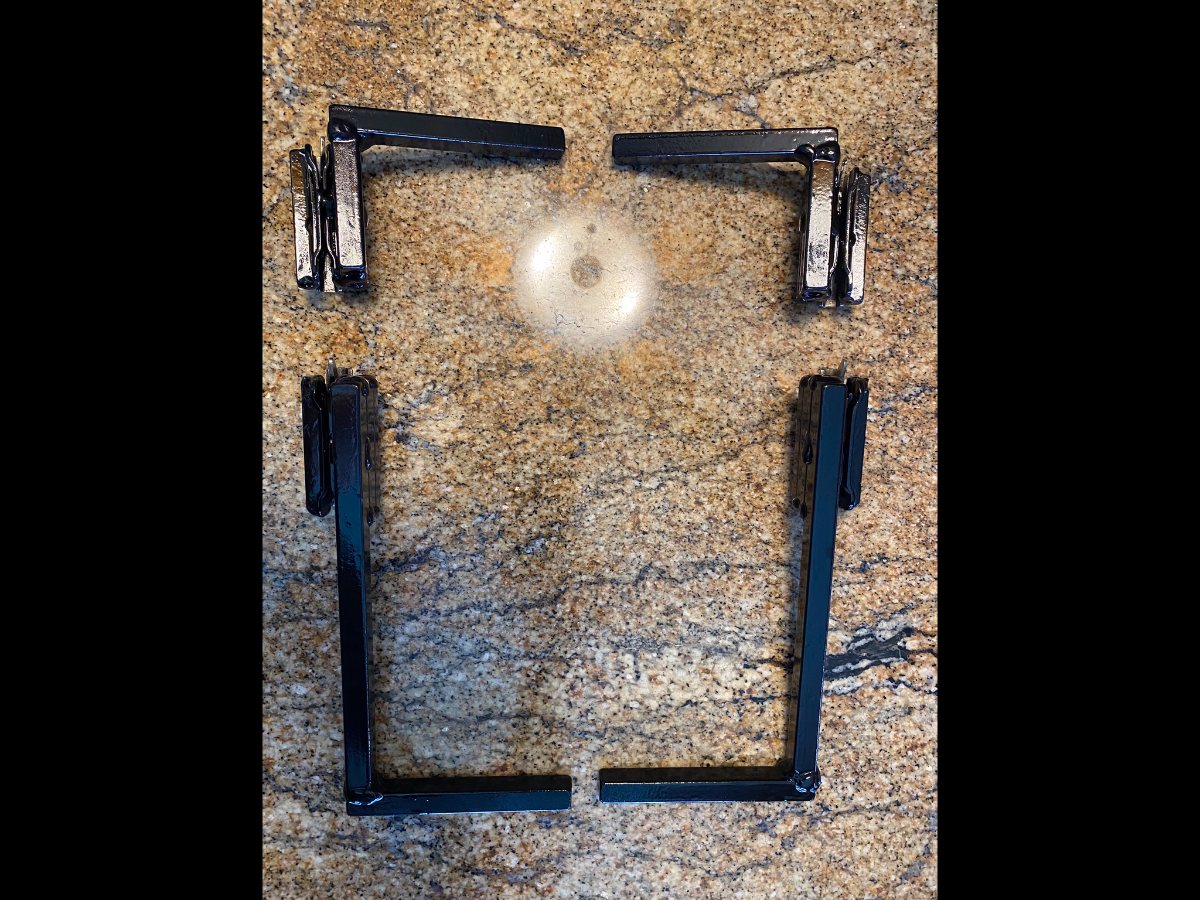
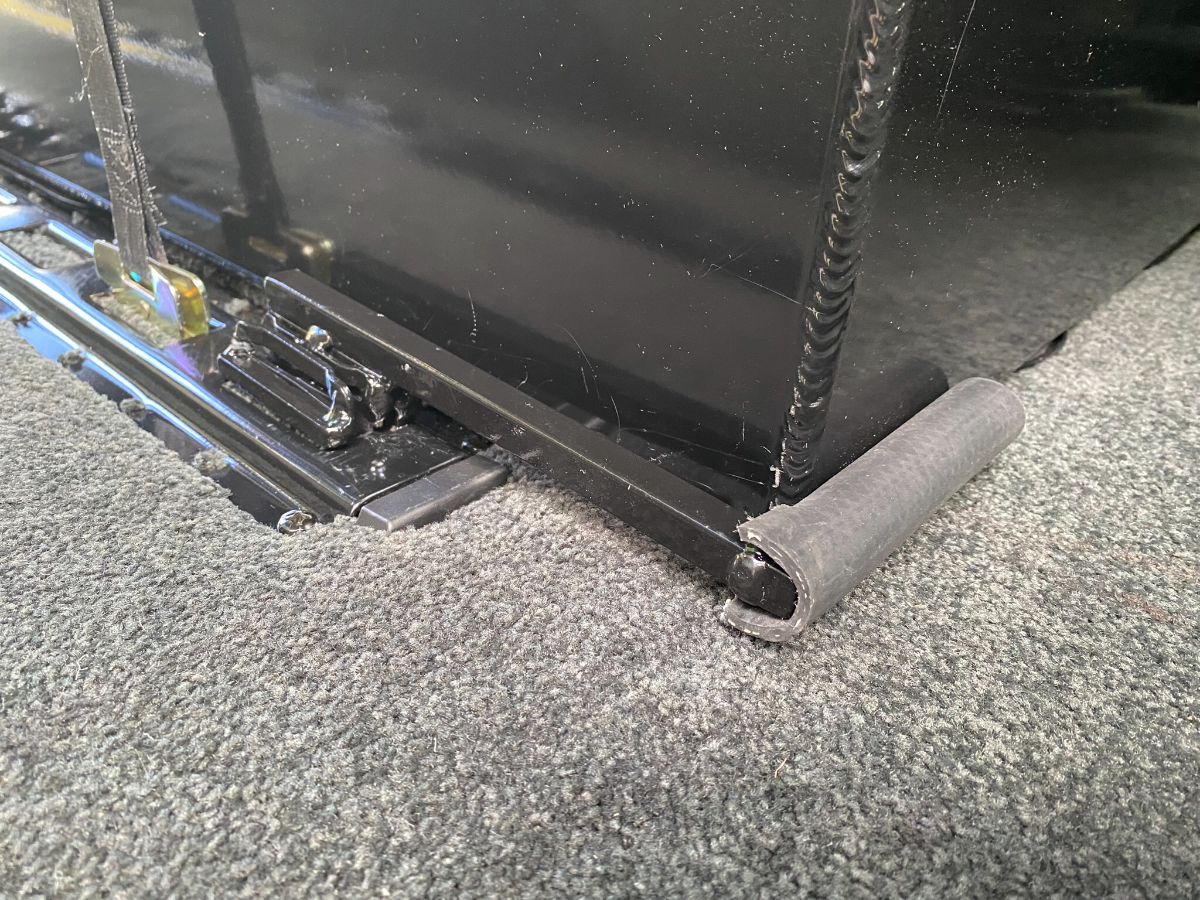
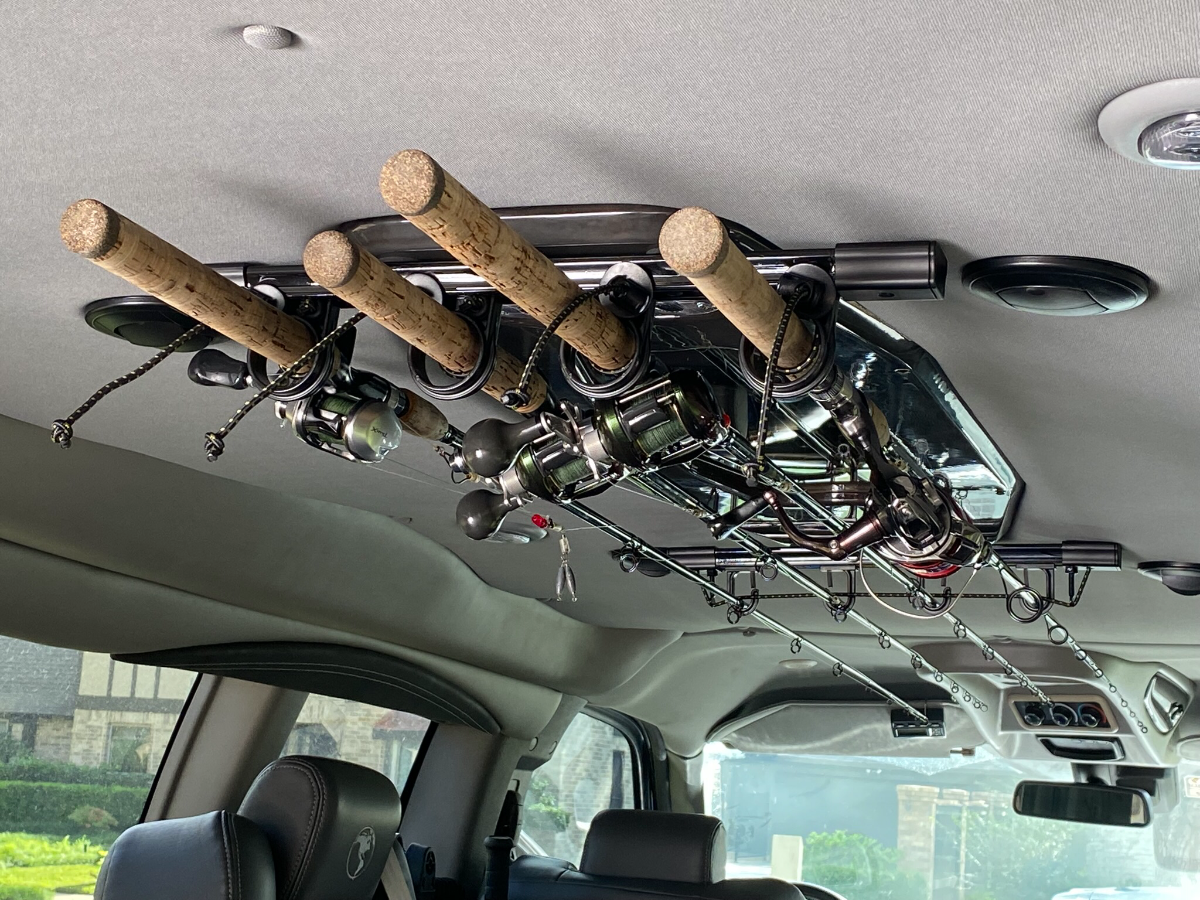
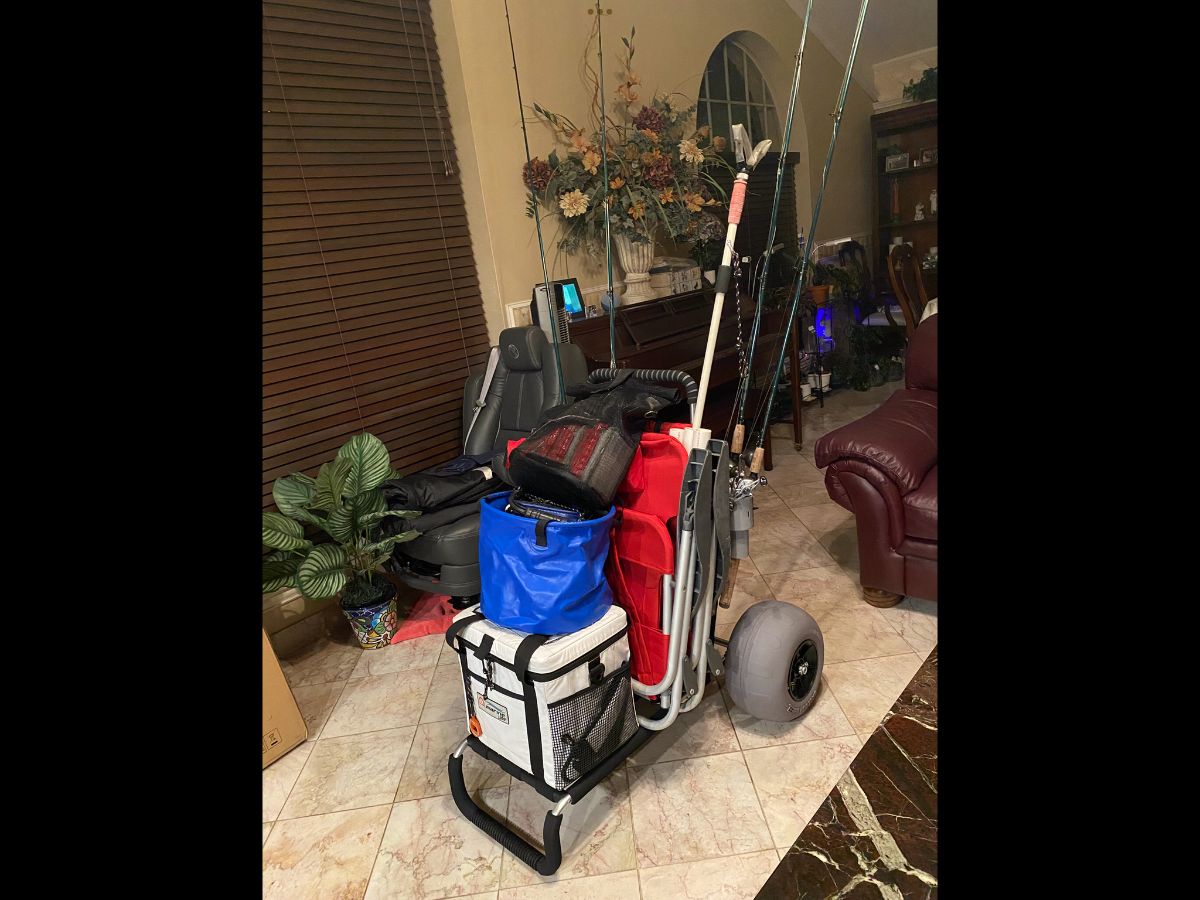
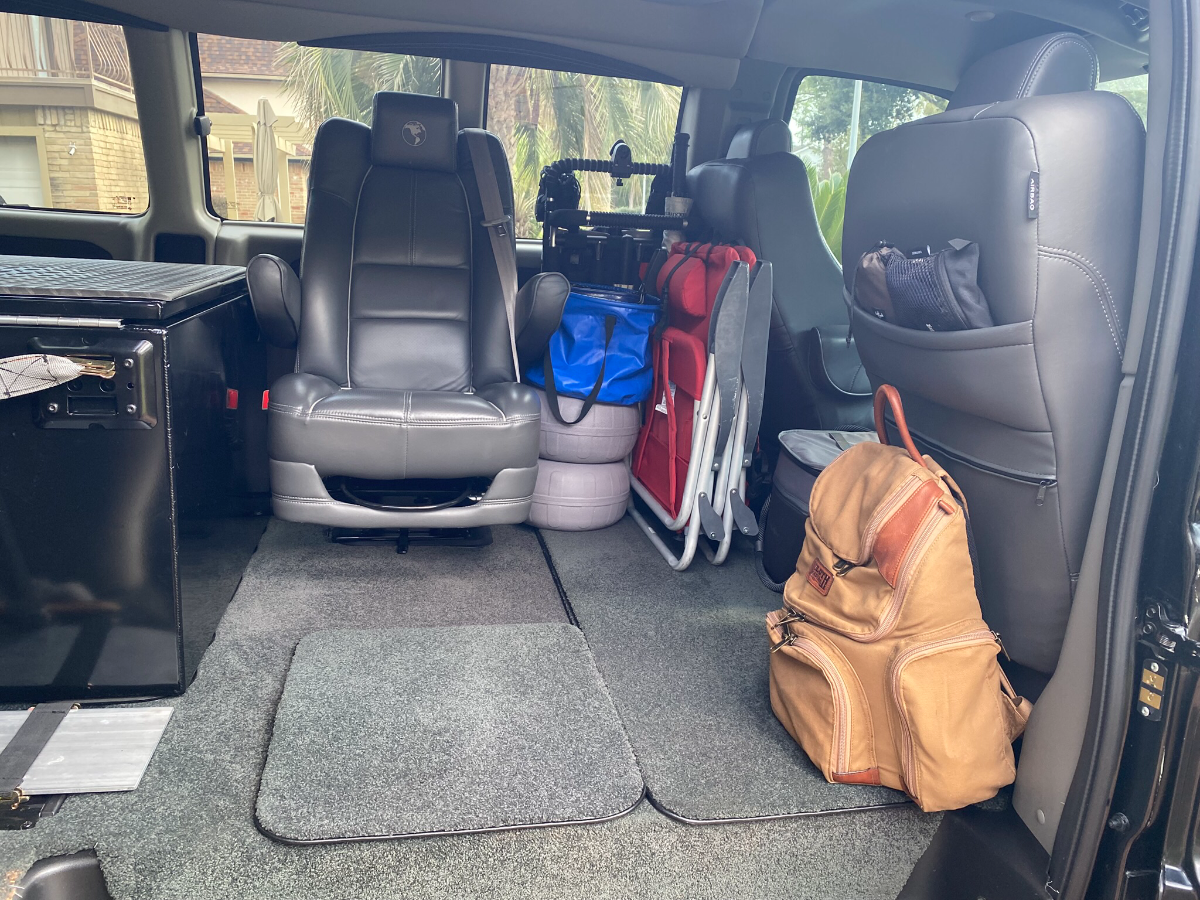
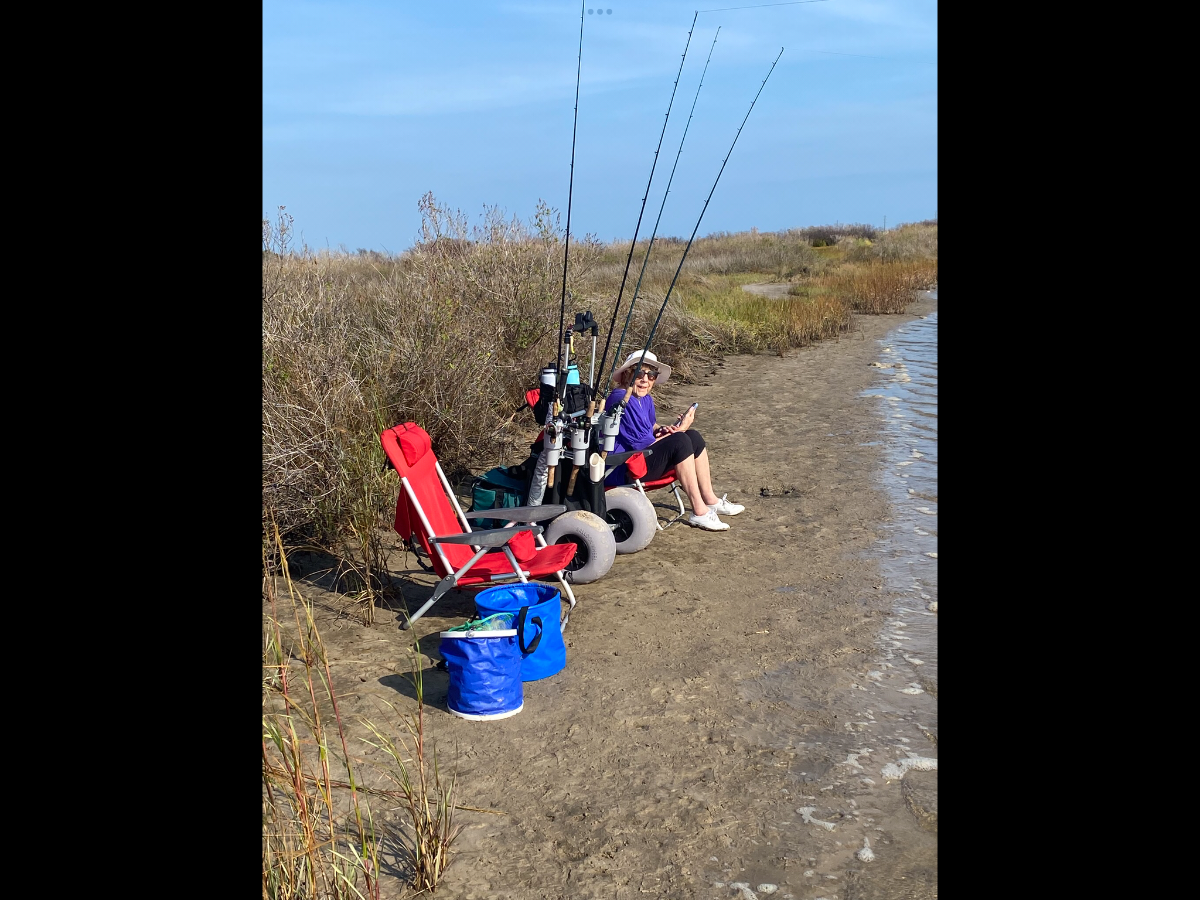
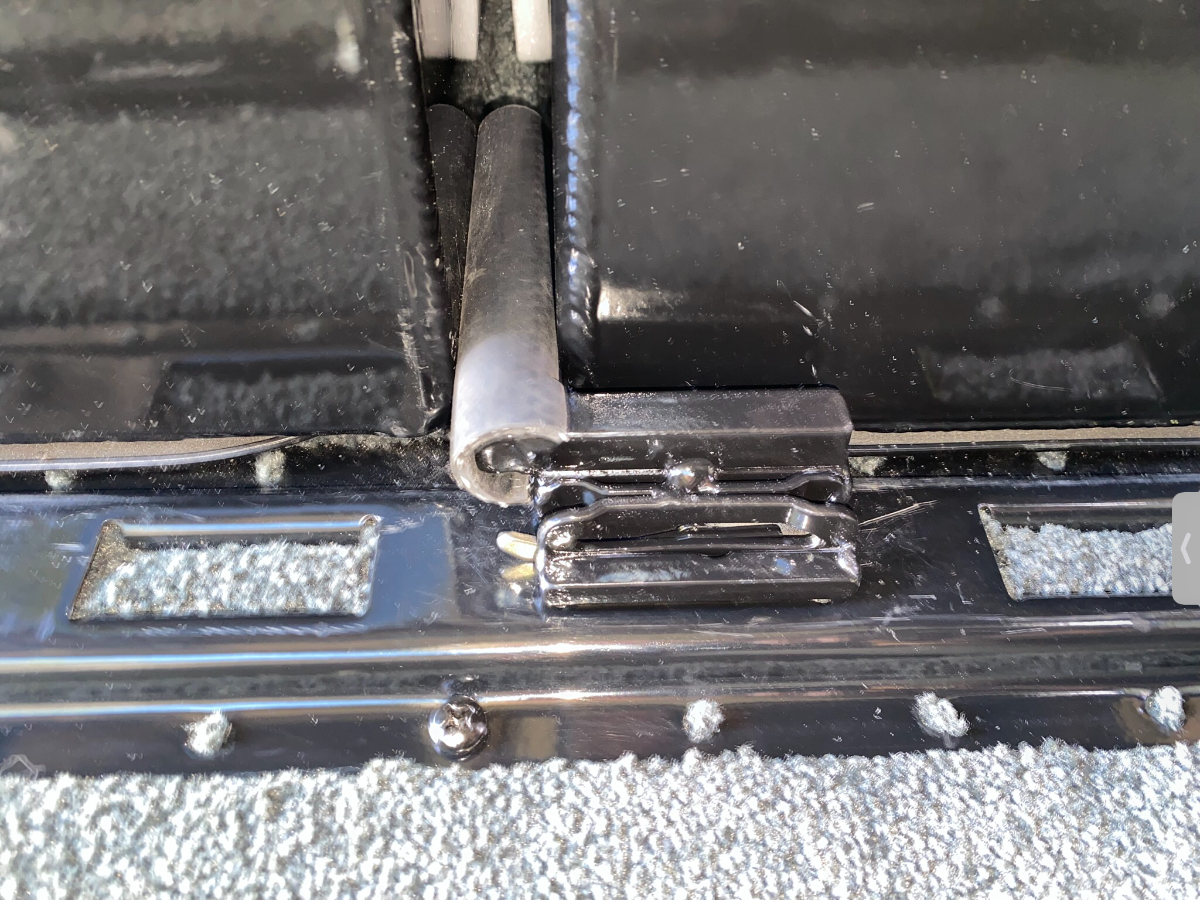
Lessons learned from our previous trip to Galveston Island SP, better cargo securement and improved fishing equipment handling. In an effort to better hold the two cargo boxes in place during transit, I welded some adjustable stops to mitigate movement. Although the ratchet straps are still necessary for hold-down securement, they allowed said boxes to slide a tad. I simply modified some rail system fasteners to make stops, which worked great in application! I also wanted to incorporate fishing into our coastal trips to share the same joy of angling I’ve had most of my life with my wife. During a prior trip we had to carry all of the equipment to fishing spots, a burdensome task for these elders. Upon return home I ordered a beach cart, problem solved! Our last trip proved much easier and enjoyable, wherein the cart could be loaded for fishing connivence or for a relaxing evening just sitting on the beach to watch the moon rise and sun set. I also addressed an issue in transporting my rods and reels in the Savana. Here are some pics: Set of stops readied for installation. Forward cargo box stop in place. Rearward cargo box stop in place. Beach cart mockup. Dismantled cart and fishing equipment staged for transport. Fishing spot setup. Rod and reel holder in Savana.
1 point
-
French Glen / Steens MT petroglyphs and painted rock CG white spar / Prescott Sedona
1 point
-
Cave Creek Regional Park, our 3rd visit! Site #9 is the best spot in the park! Better yet, @ChristianD will stop by soon to meet. They live only 15 min away. 😂
1 point
-
Over Thanksgiving week, my wife, daughter, dog and I drove out to Yosemite and Sequoia National parks. I let the dog do most of the driving 🙂 Camped at Yosemite Pines RV park, which was very nice, but a bit far from Yosemite. Made for some long morning and evening drives. Spend about 4 days there. My daughter worked from the RV one day via Starlink. That was our first experience with it and it went really good. Sequoia we stayed at Lemon Cove RV park. Decent place and much closer to the NP gates. Saw a bear on Bear Hill one morning, so we decided not to hike that area that morning. Had lunch with some deer then drove up to Kings Canyon, which was better, in our opinion, than Sequoia. All beautiful places though. The Oli towed great the entire trip and was nice to have some of the updates I had done previous to this trip. The new axels and Alcan springs felt great. The new Tosot AC/heater worked well for night time when I ran it for heat since I was plugged in to campsite power. No reason to burn through the propane while hooked to electrical. New Truma water heater worked perfect too. Overall, a great trip and no issues with the Oliver. It was also nice to have our daughter fly in from Denver and spend the week with us.
1 point
-
Creating such a space will likely impact the return air filtration aspect of the unit and thus, require further modification to compensate.1 point
-
Not that I know of (assuming that you mean "authorized/recommended by Oliver". However, if it were me, I'd start by asking any friends in the area, the campground hosts/owners and/or other campers in the area. Bill1 point
-
Lots written about the furnace but everyone seems generally satified with its ability to warn the cabin living space. We have been in the Anza Borrego area (45-night / 75-day) and headed for colder weather. Even with modified ducting (hard elbows at furnace, hard straight runs passing through the water valve area and cutting 3.5' off in the bath vanity) our heater works hard to get the cabin temperature above 65 degree (starting at 55 degrees inside). We find 65 comfortable but concerned about heating when it's 25 degrees outside. Is this normal? please share your heating experience.1 point
-
That's why we're taking our time replacing the springs in 2026 with Alcan springs. I don't like Dexter EZ Flex wet pin spring bushings, they were thin and fragile when installing the EZ Flex system, very easy to damage. Believe Alcan's bushings are made of more durable material and thicker than Dexter's wet pin spring bushings. This will be a good reason for us to visit Grand Junction, CO this year during our western trip. 🙂1 point
-
And - what's "wrong" with "rat fur"? Back in the day when I was first looking at molded fiberglass, I took a look at a Casita. I was fairly impressed with the "oak" cabinet doors until I looked a bit more closely and saw that they were actually "press board" with a decal oak cover. Then I looked at the rat fur, then I looked at the frame, then I looked at the "holes" in the shell that were used to secure the "furniture inside, then I took a look at .....1 point
-
And apparently still with the dreaded carpet on the walls🤣1 point
-
We reconfigured our OTT in the same manner and have logged over 12k miles since. Concur w/ @Mike and Carol, the rig feels solid and tracks true over various terrain conditions. @Geronimo John and I ventured over several dozens of USFS roads in rough and muddy conditions earlier this year while searching around and met @jd1923 w/o any noticeable relocation of contents inside the cabin. Rugged terrain should be transited slowly and surely, IMO. I would not have chose to transit those USFS roads without the suspension upgrades you've done to your Ollie. just my $0.02... Be safe out there...1 point
-
I could be wrong, but I think most of the noise is due to the small area inside the plenum and lack of any decent sound deadening insulation inside it. Definitely not coming from the outside portion of the unit which is whisper quiet. I do like your idea of letting some airflow bleed off around the top with spacers and may try that first before increasing the plenum size. In the end, it's not horribly loud but I know it could be better...1 point
-
My take away from the above is that the current distribution box (Plenum) does not effectively allow good control of airflow in different directions, and that the air flow velocity is excessive out the 1/3 section that does work. I've seen several different inside plenum's and they are pretty all passively turn the air flow and discharge it into the cabin. Noise is directly attributed to that from the over roof section and the noise generated by turbulance in the plenum itself. It would be worth a try to place about 3/8" of washers between the ceiling and the plenum at each securing screw locaton. (You may need longer screws to do this.) Doing so would effectively provide a 3/8" gap all the way around the unit. Some portion of the supply air will exit via that gap. This extra air supply path will (hopefully) slow down the air velocity as the air transits into the cabin. That in theory reduce the noise associated with the current design. GJ1 point
-
I understand concerns about best way to overwinter Lithionics batteries. The owners manual states the first option is to leave the batteries on and the trailer plugged in. The question arises what to do if the trailer doesn’t have access to power over the winter. We store our under cover (no rooftop solar input) with a 100w portable solar panel and controller plugged in to the outside zamp plug. The location of the portable panel allows it to get sunlight about 4-5 hrs/day in January. During cold and cloudy spells, the battery heaters will draw down our batteries to about 75% SOC. I emailed Lithionics and asked, is it better to turn off the batteries or leave them on during cold weather knowing that the charge from the portable solar panel sometimes has a hard time keeping up with the draw from the battery heaters. Their only reply was to send me a link to the owners manual page with storage recommendations. I usually turn our batteries off with a full charge and make sure I follow the the recommendations for how long to leave them off based on ambient temperature in the owner manual.1 point
-
Rather or not you are plugged in is the primary question. See their manual. https://cdn2.olivertraveltrailers.com/wp-content/uploads/2024/05/30122505/Lithionics-Batteries-Storage-Procedure.pdf “1. If your battery has the Lithionics Internal Heater, and you are subject to winter conditions, keep the battery ON, solar ON and plugged into shore power. Shut down all appliances, lights, and other DC loads. You may purchase a very small charger from Lithionics Battery (KF Series) and power this from an extension cord if shore power is not available. This will keep the heater running and protect your battery. Doing this will eliminate the procedures below.”1 point
-
We live in Ohio and winters are very unpredictable. The first winter I left the batteries in and turned on the heating pad, moved Oliver to the horse barn, non hearted but doesn't get real cold. After the first year I just started unhooking them and bringing them inside. It is not that hard to remove and re-install them. I color coded all the connections, took pics, all the overkill you can do to make sure I put them back correctly. Now if it gets real cold for some period of time I am not worrying about power going out and the battery heating pad not working. House has generator, also way better insulation than barn. I did call Lithonics a few times and they were always very responsive and helpful. Just the way I am doing it now.1 point
-
For the couple of times during the winter months that you may want to check on the batteries I'm guessing that the price that Calmark would want to install an access flap would be a bit high. Living in western North Carolina, our temps don't usually get very cold for very long. I do not charge my lithium batteries from the time I put it to bed until about a month before I wake it up in the Spring. When I wake it up, I simply plug in a small (25 watt) solar panel and leave it that way for a month or so. Then when I uncover the trailer, the batteries are fully charged and ready to go. Bill p.s. But, as aaronorange says above - you should answer the questions he proposes before you decide what to do about your cover.1 point
-
Do you live in a freezing climate? Will you keep you batteries heated? Will you keep your rig plugged into shore power? I would research those questions first. Lithium batteries don’t like to be charged in cold weather. You may want to remove your batteries for winter. I have kept mine in but monitor throughout winter for right temperature. As far as the Calmark cover, you can loosen the straps and lift the cover to get into the battery cabinet. It’s a pain especially in winter. It would be nice to have an access zipper flap added.1 point
-
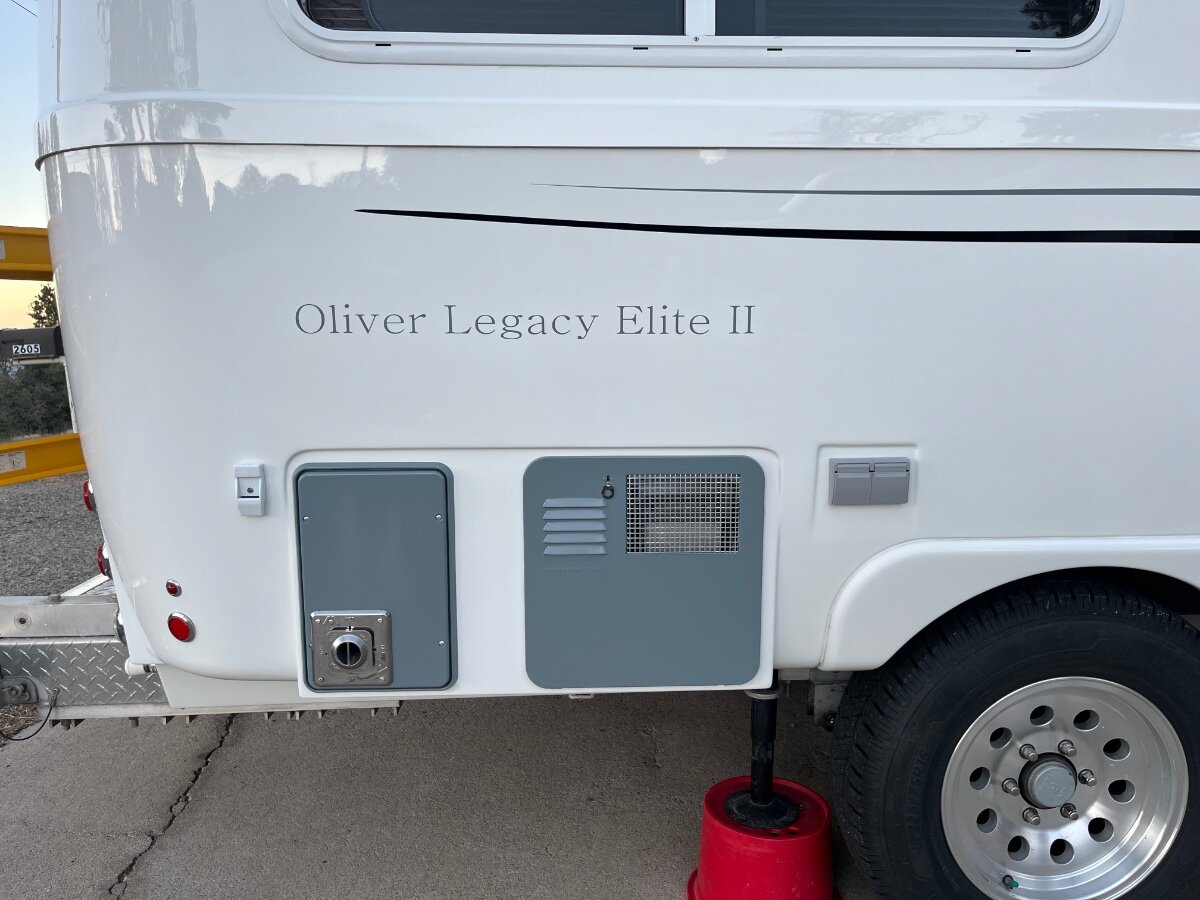
Dunno if this will help you?
1 point

















-
Recent Achievements
-