Leaderboard


Popular Content
Showing content with the highest reputation on 09/02/2021 in all areas
-
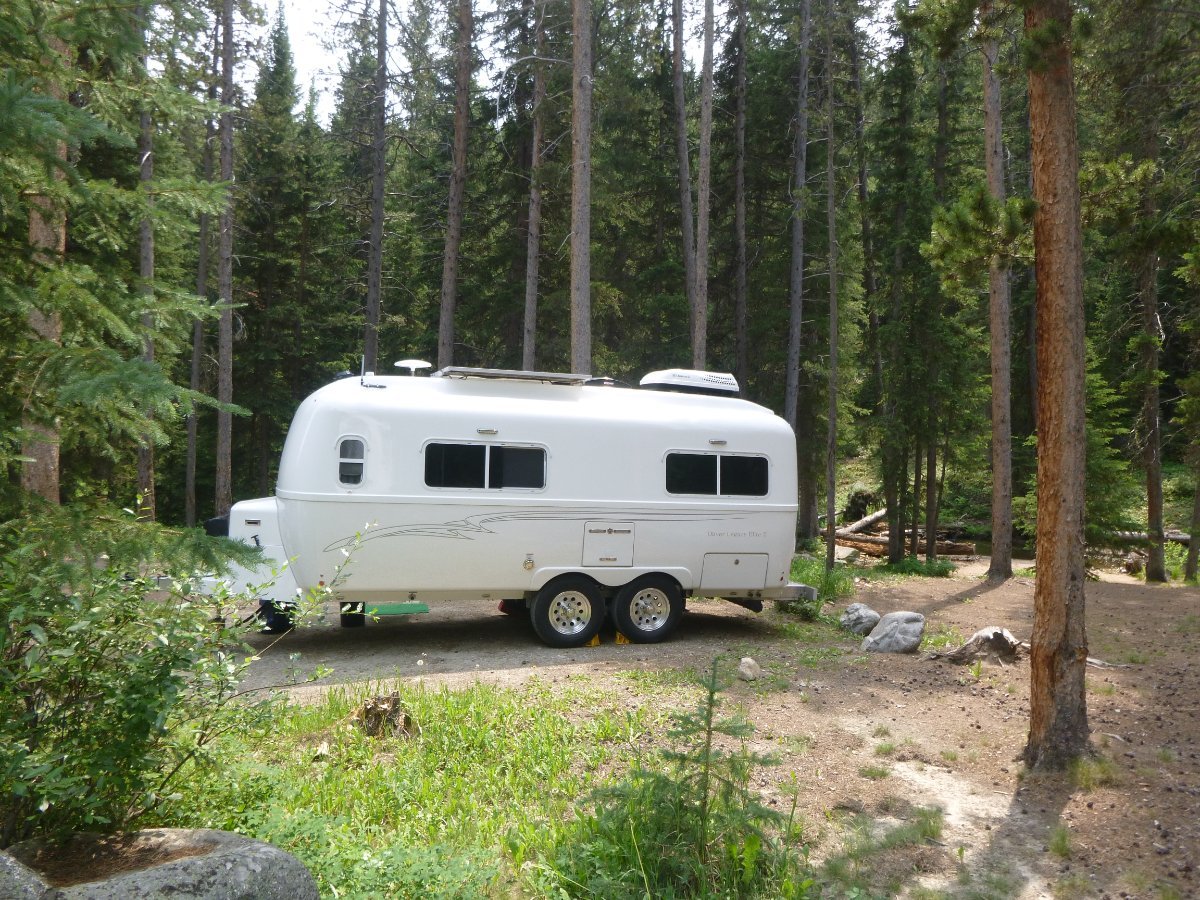
Middle Fork Campground about 16 miles south/southwest of Buffalo, WY.
 4 points
 -
We did some car camping with our Cherokees, but never used either of them for any towing because of the limited towing capacity, limited payload weight and cargo volume. Absolutely love the Cherokees as an SUV, especially in the winter with the snow we get here in Pennsylvania, and our two Cherokees are still in the family, handed down to our son (the 2014) and our daughter (the 2019). They’ve been great all around vehicles but because of their size and specs, I wouldn’t tow anything even the size/weight of an Elite I with one. I’m in the camp of folks on this forum that believe you don’t want to be anywhere close to the max specs of your tow vehicle when towing. It’s a big strain on the engine, brakes, suspension, tires, etc., and emergency situations/panic stops do happen pretty regularly when towing because other drivers are morons. I like a nice safety margin.3 points
-
Here is my two bits (for what its worth?)- I started out in this rv world pulling a tiny camper that also hit near the extreme end of my towing capacity. I went ahead and did it. Once. My vehicle was at it's max "design spec" and acted like it. It's fuel range was at 150 miles. It was pulling its heart out. Stopping was there... but fortunately never had to really test it. I called a spade a spade.... decided all I was going to do was prematurely ruin a great SUV making it do something it wasn't really designed to do. This is not to mention the safety aspect that ... I have since come to realize was also border line. Towing vehicle weight, wheel-base, BRAKE power, tongue weight... and several other things, all were "border line". Anytime you are pushing a design spec to near its max.... you have to decide how long you really want to do that.2 points
-
Would a case of Lone Star be acceptable? 🤪2 points
-
They're not but being an ex-Army guy and a fine upstanding Texan, I'm sure that he wouldn't mind covering the costs for the beer.🤨2 points
-
@bhncb, I'd love to see a published equation for figuring frontal area. It's a really good point, but not exactly sure how to figure it with the rounded shorter (and trolley roof) front of an Elite. Our is a little over 6' at the front, (not counting tires height) and 6'6" at the bellybutton, but narrows top and bottom. The accessories on top surely increase drag, but if I were so inclined to reach back to high school math, and did proper measurements, I'd probably be close to the 40 sf limit. Maybe out, maybe in. The back, of course, is far more squared off. @FrankC, your experience with two cherokees is important. Did you tow anything with them? We have a friend in NY state with a lesser capable Cherokee model than the Trailhawk. He tows a big 4x4 utv, a lot. Traded up from a 2up to a heavier side by side, recently, and is buying an aluminum trailer vs steel, to stay within the limits. I usually say, your TV that you own, if within legal and comfortable limits, is the best choice, to begin. Depends entirely on your skills and camping style, and where you want to go. Marginal tow is a no go for mountain passes, imo. Many people change up later. Some people are ok limiting gear, staying on the flats, and good weather, not carrying water in any of the tanks. Others are not. Some people routinely drive mountain passes, (like us) and are unwilling to monitor every piece of gear and its weight. And, travel with empty tanks, routinely. Which would probably be required in the op situation. Some people just camp weekends, short drives, with hookups. Not us, but that's ok, too. Steve/ @scubarx is not only kind hearted, but super skilled in many areas, and brings joy to others and himself being able to fix and repair. He carries a LOT of weight in parts and tools and bedslides that many of us don't. Plus, a huge generator on the tongue. It's not the end if the world to camp minimalist. It's also not the end of the world to enjoy every avaiilable option. Everyone is different. That's why the world is so much fun.2 points
-
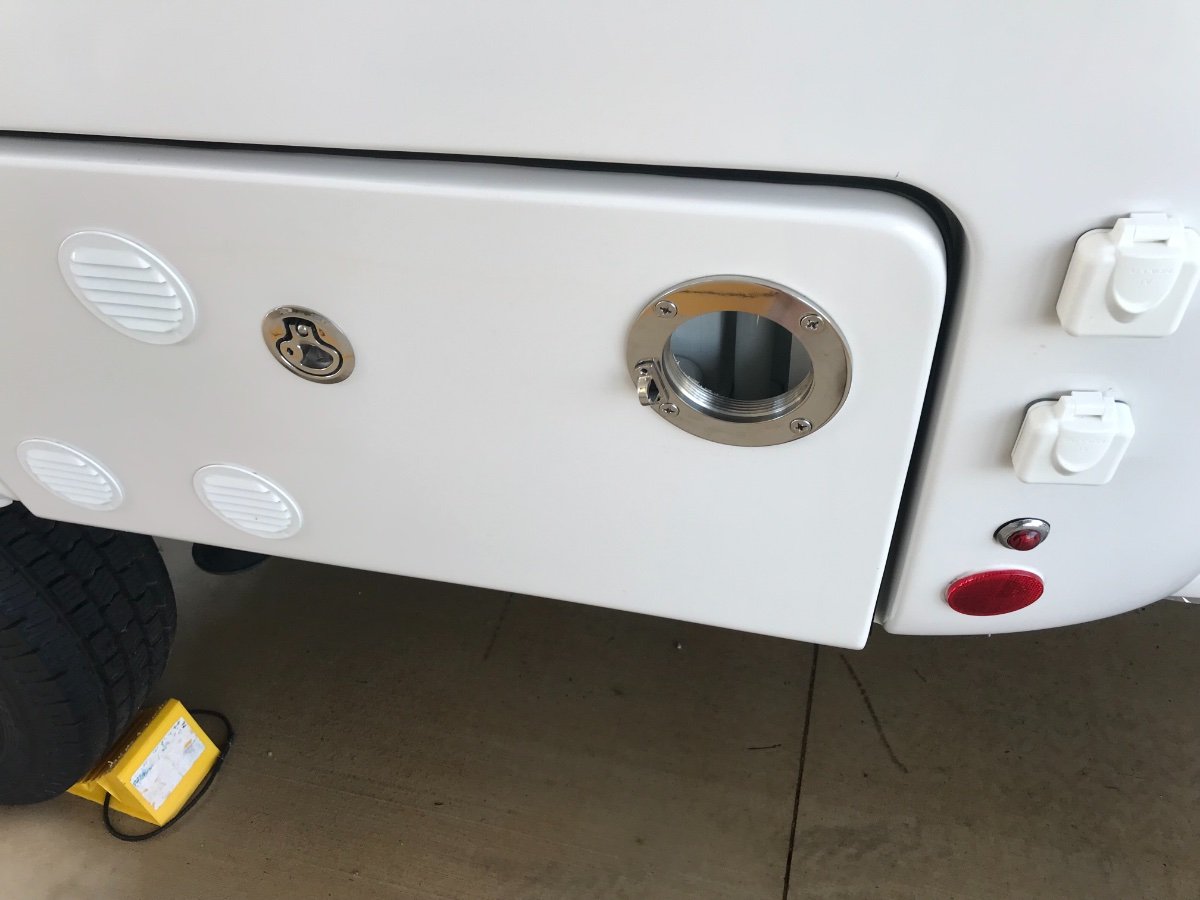
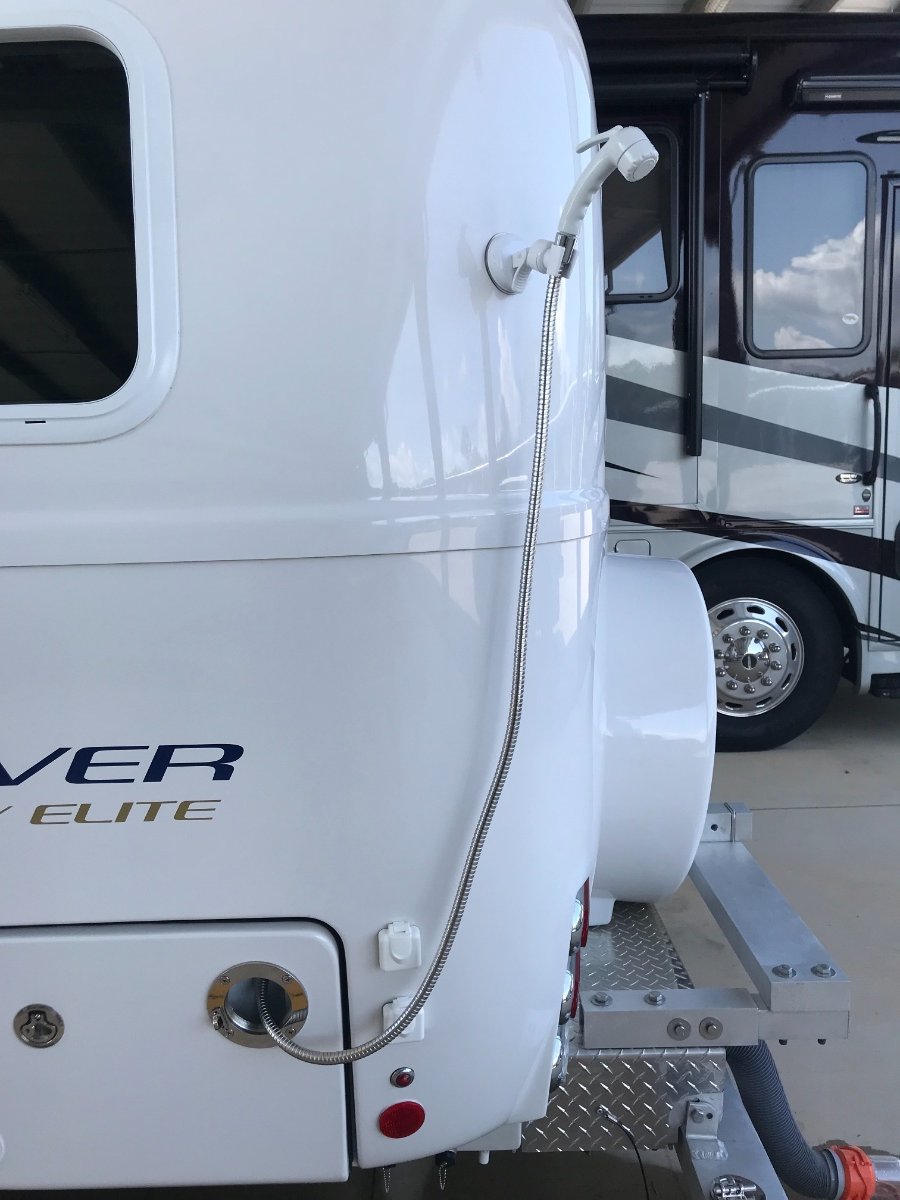
Thought I’d share a recent mod I completed on the outside battery/shower compartment door. We use the outside shower quite a bit and do not like the fact that the battery compartment door has to remain open in order to utilize the outside shower. So I installed a small marine grade access hatch through which I can feed the shower head through and close the door. Works beautifully!
1 point
-
Ford defines it thusly: "Frontal Area is the total area in square feet that a moving vehicle and trailer exposes to air resistance." It doesn't require an aerodynamic drag calculation. Just add to the published tow vehicle height and width, any additional for the trailer that extends beyond the tow vehicle.1 point
-
This sounds like a classic case of “he said, he said”. Mossey1 point
-
See Bill for the beer.🍺 Unfortunately, we have a family wedding that weekend so we won’t be there. You’ll be welcomed warmly by a bunch of Oliver owners. Mike1 point
-
Not only can you stop by but you are welcome to join in the fun, hang around, get to know some owners, etc. All you have to do is reserve a site and let Foy and Mirna know you are coming as per their request. Besides, Mike is buying the beer! 🤣 Bill1 point
-
Would this be a good event for a perspective owner to stop by to look at an Oliver?1 point
-
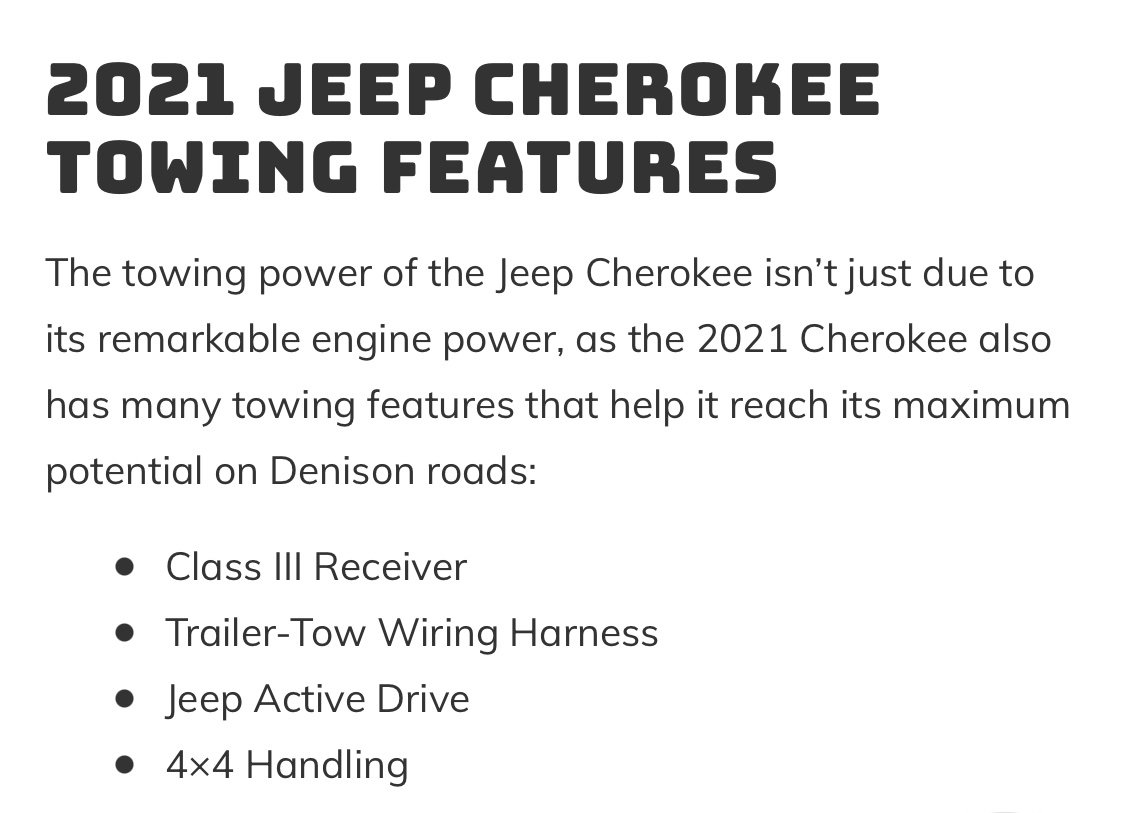
I don’t want to sound harsh but I’ve owned two Jeep Cherokees, a 2014 and a 2019 (both with the V-6 engine), and while they are great little SUVs, I think they would be terrible tow vehicles, even for the smaller Elite I. The payload capacity is really limited, there isn’t much room for carrying the typical camping gear, and the towing specs are marginal for an Elite I with any options or water in the tanks, food in the fridge and pantry, etc. And does yours have the optional Jeep trailer tow package with the necessary 7 pin electrical trailer connector port near the back bumper, and the 2” receiver for towing? If it doesn’t have the towing wire harness with connector already installed, that makes it really expensive and complicated to install a trailer brake controller.
1 point
-
I sanitize my tank, filter the water to fill the tank and sterilize the water with whisky when I drink it. Haven’t died yet.1 point
-
One thing you have to consider is the maximum frontal area of the trailer. The Cherokees are limited to less than 40 square feet which pretty much restricts them to towing boats, popup campers, or maybe a larger teardrop. Assuming the numbers you provide for the Jeep are from the vehicle information label on the drivers door jamb and/or the owner's manual, your actual maximum payload is 1250# (5500 gvwr minus 4250 curb weight). Whenever you'll be loading close to the GVWR, it is best to first verify your true curb weight at a public scale, then add the weight of your anticipated passenger and equipment load to determine a best-estimate for tow vehicle weight, before adding the trailer tongue load. The difference between this estimate and the maximum GVWR can be used to determine the maximum tongue/trailer weights. If a Gross Combined Weight Rating (GCWR) for your vehicle is available, it is often best to use this number to determine the actual maximum trailer weight. Manufactures often toute high tow weight ratings that, when combined with the GVWR, far exceed the GCWR. This means the tow vehicle is safe to tow the advertised trailer weight only with minimal payload. Again, in cases where anticipated loading will be near the GVWR, you may find your maximum trailer weight will be far less than the advertised tow rating.1 point
-
Hi Donna and Scott, unless you have made some modifications to your heating capabilities in the basement (specifically, getting some ducted heat to the areas at risk of freezing) and are willing to run your furnace while driving (at least while driving in below freezing temps), I'd suggest just winterizing your water lines with antifreeze. I did a little bit of successful towing in freezing temps this winter with water in the lines and my heat running, but nothing below 25F, so I really can't say for certain what the limits are even for my modified trailer. I also have a self-regulating heat strip on the city and fresh water check valves as many owners find those valves are prone to freezing and cracking and getting ducted warm air to those valves is not easy. Btw, I don't consider myself an expert in this area yet as I don't have any experience towing / camping in extreme cold - what I did have was lots of posts about what other owners have done to help get it ready for a 5th season - and I made modifications based on those posts. So far so good. Let us know if / what you try and your results - I know there are several owners who ski and are very interested in camping/skiing with an Ollie - including me! Best, John1 point
-
Agree with me or not, I don’t have a dog in this race. My only point is that I believe that this is a terrible choice for a tow vehicle for an Oliver. The numbers bear that out and after towing our two Oliver’s over 150K miles during the past 14 years using five different tow vehicles, I believe I’m qualified to know what it takes to do it safely. My goal is to always help new owners and potential owners from making very costly mistakes (like I did) because many times they simply don't know what all is needed in order to make wise decisions.1 point
-
I will reiterate the discussion we had on Facebook in this thread... As Sherry stated ..."You can easily keep an Elite to under 4500 pounds..." You can, but just barely. A fully loaded, ready to camp Elite will weigh over 4000 pounds. Your tongue weight will be over 400 pounds. The only way to know an exact weight will be to load it up and use a tongue scale to measure it. You're very close to your max tow and max tongue weight capacities. You state your cargo carrying capacity to be 900 pounds. You state your passenger weight to be 320 pounds. Adding the tongue weight (400 pounds min) to the passenger weight (320 pounds) = 720 pounds. Make sure you remember to subtract the weight of your hitch and ball. This leaves you less than 180 pounds for camping gear. One thing you didn't mention but would be a deal breaker for most is your fuel capacity and towing MPG. That vehicle has less than a 15.8 gallon capacity and a combined MPG of 21. Cut that number in half for estimated towing MPG. You will be stopping for gas in a little over 100 miles each time. There will be many places that are too far between services for you to go. As I stated in our FB conversation, I believe this vehicle to be extremely marginal at best and without very careful attention to loading may actually become unsafe. You need to consider a more capable tow vehicle to be legal and safe.1 point
-
Welcome to the forum. The GM motorhomes were the height of cool, back in the day. My boss had one, and I thought it was awesome. You can easily keep an Elite to under 4500 pounds. Don't get a tongue basket. Don't get 30 lb tanks. We've not weighed ours in a long time, but our tongue weight, years ago,, loaded for camping with some fresh and some grey and black from a three day trip, our trailer weighed 3960, with 420 on the tongue, 3540 on the axle. We've removed and replaced some equipment, so I'm sure we weigh a bit less, now. Think through options, and what you want to carry, carefully. Add the tongue weight to your passengers and pets, and that will tell you how much cargo you can carry in the Jeep. Probably not more than 200 pounds or so. You'll get a sticker with fully optioned weight, as delivered, and then you can figure out what you can carry in the trailer, within your Jeeps limits. We use cushions and a mattress topper. I'm sure the custom mattresses are a bit heavier. Is your trailhawk a Cherokee or Grand Cherokee? Where do you want to camp? Our Volvo xc90, with which we towed our Ollie Elite home to Florida, was fine in flats and hills, but probably would have struggled in the mountains.1 point
-
If you put a small "nose up" attitude to your Ollie, the old water pickup at the back becomes much more efficient. Not sure exactly how low you can go, but I'm sure your water pump won't be sucking air with ten gallons remaining. If you wish to maximize the old pickup's capabilities, try a nose up, right tilt. Not enough to make anything roll off your table, just enough to encourage water in the tank to head towards the right rear of the tank.1 point
-
I cleaned my fresh water tank as best I could - filled it with filtered water most of the time - and we drank from it sporadically. I am sure there were times we had almost as much bottled water squirreled away in Ollie as was in the tank.1 point
-
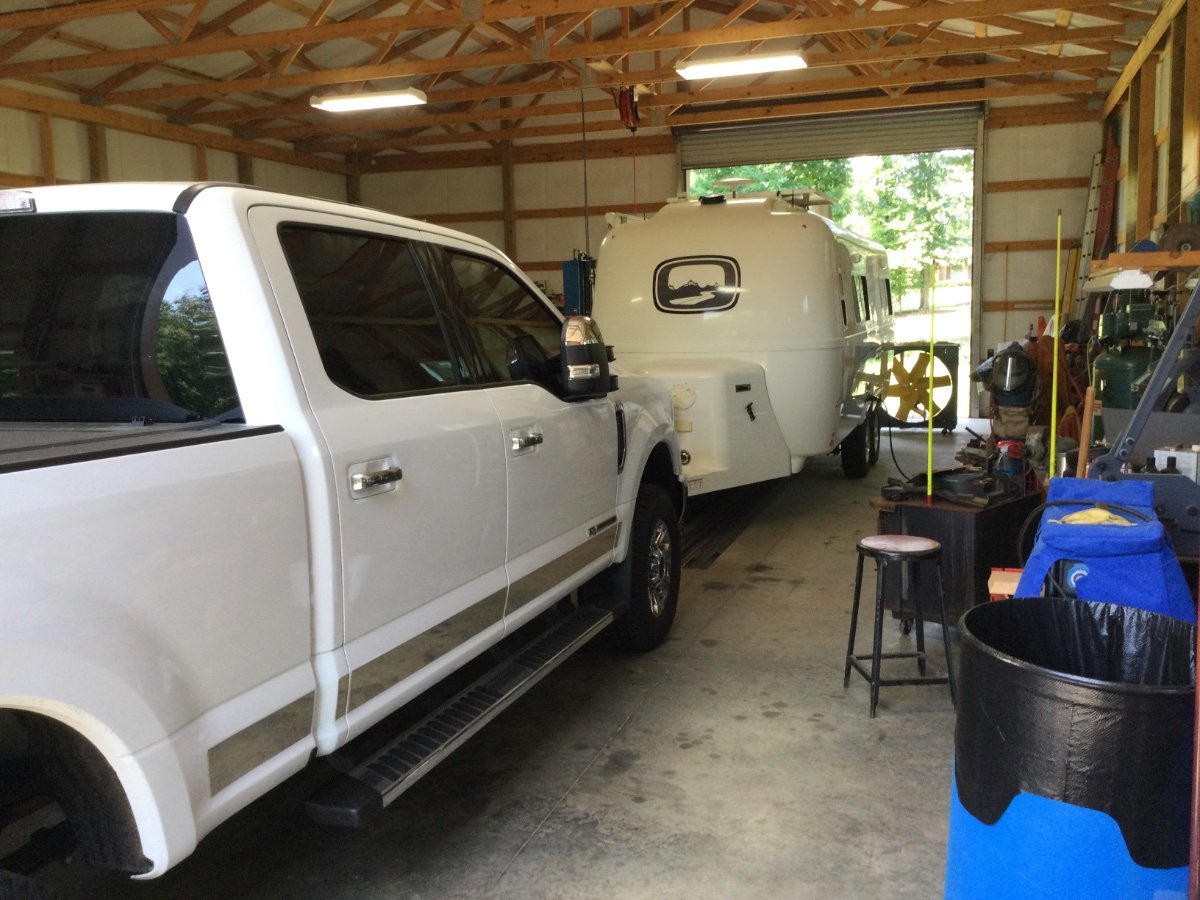
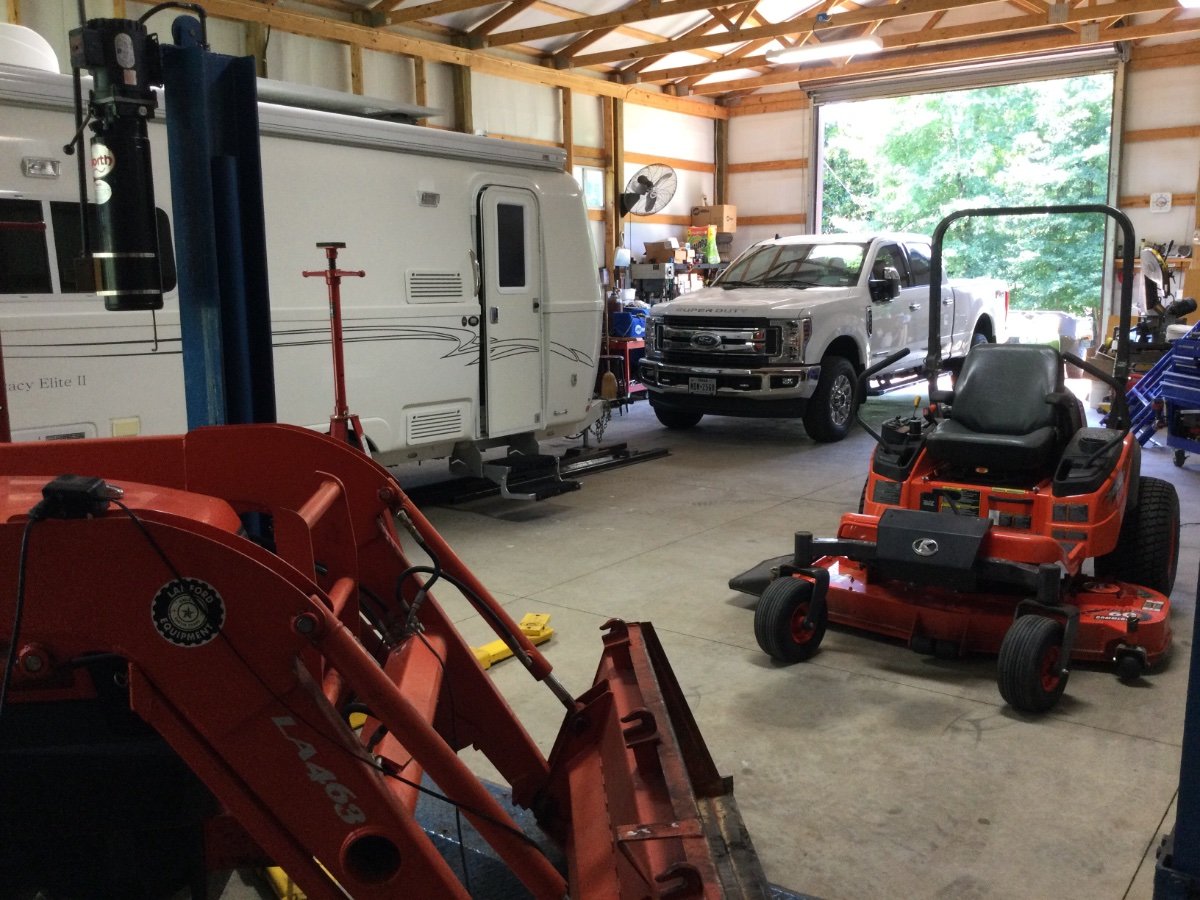
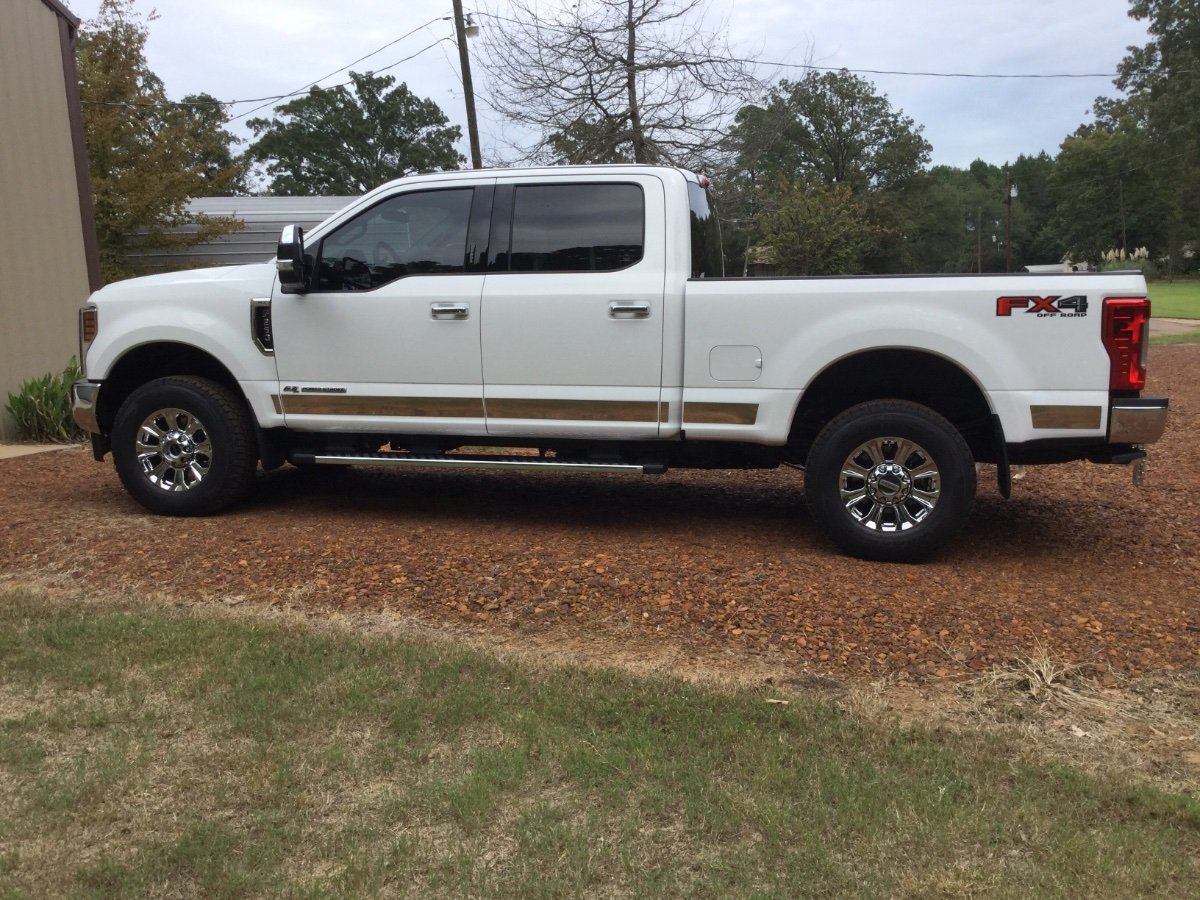
I purchased a new F250 Super Duty two years ago, the truck is a 2019. It has the 6.7 diesel and the suspension includes the camper package that includes a rear stabilizer bar, the front stabilizer bar is one step stiffer, but less than the snowplow option. There are two bed lengths and mine is the shorter of the two. I did tow my LE 2 on a 1,200 trip recently and it towed great. Smooth and no sway or bounce. My fuel mileage is 19 combined with no trailer or load, with the LE2 I averaged 14.5 and that was through the Smokey mountains. I am very happy with the truck and the Oliver. Recently I added the Undercover Flex Armor bed cover for the 6’ 9” bed and very pleased with that as well. Steve
1 point
-
I am almost finished with bathroom vents, to allow airflow out the roof fan with both the window and the door closed. I took this shot over the door a little while ago, right after I sealed the wood core with spar varnish, I thought is was kind of “UFO cool”. I also added a set of holes into the closet to vent the trapped heat that accumulates in the top. John Davies Spokane WA
1 point
-
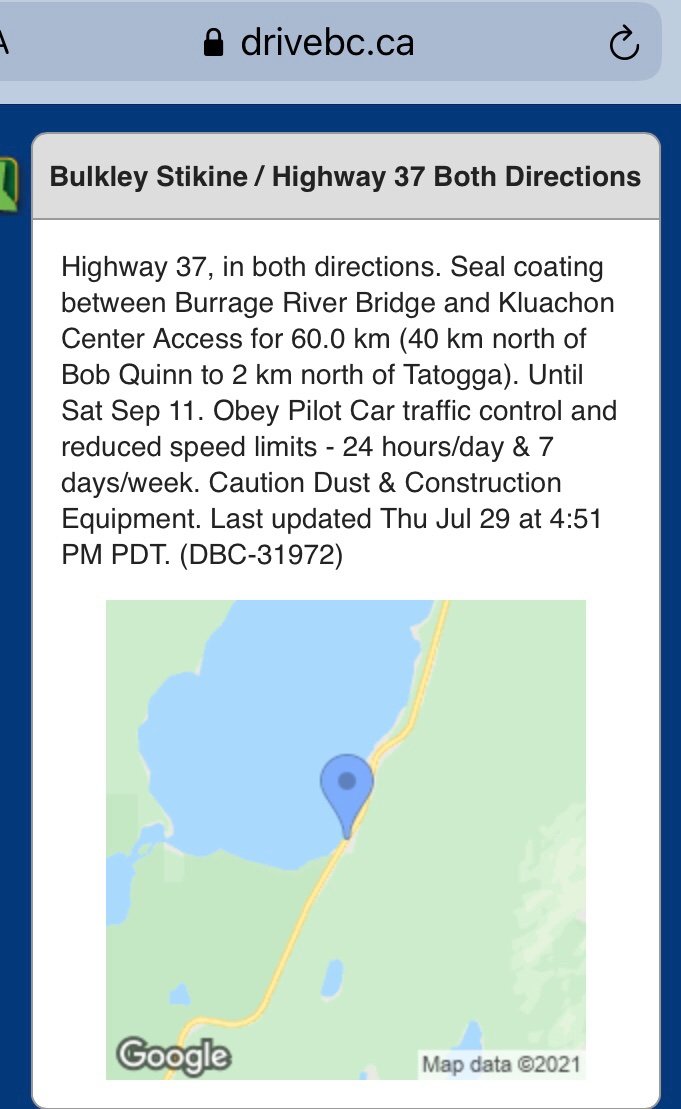
Just after reaching the north end of the Cassiar Hwy at the Yukon border. “Caution Extreme Dust” said the sign….. but it was raining steadily and had been for three days. 10 km of road construction, ripped up asphalt and single lane pilot car traffic, with 30 minute delays, followed by 60 km of very fresh chip seal (loose gravel over tar). The posted speed limit was 45 kph but everybody was doing nearly double that. Most of the lower stuff washed off, but there was this odd oily Nike Swoosh left on both truck and trailer. The windshield has quite a few new pits. The Cassiar is a route everybody should do one time. You won’t want to do it again unless you are riding an adventure bike…. I’ll update this post with a pic of “Mouse” when I can get one from my wife, she was snapping lots of pictures with her Nikon DSLR as we gassed up right after the mud bath. John Davies Spokane WA
0 points










-
Recent Achievements
-