Leaderboard



Popular Content
Showing content with the highest reputation on 11/21/2025 in Posts
-
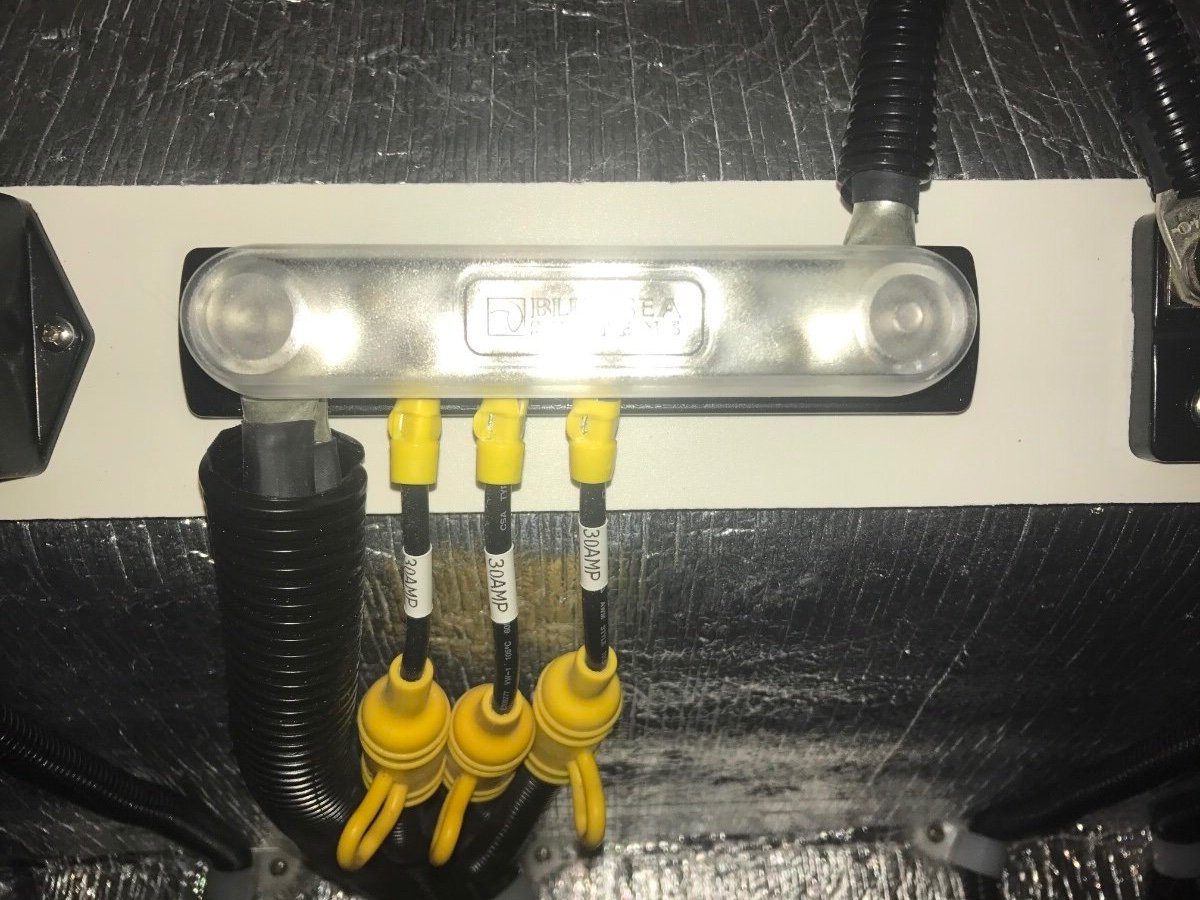
@taylor.coyote This picture is from below the front hatch under the street side bed of my 2017 LE2. The yellow fuse holders are for the 3 Barker jacks, 1 for each jack. There are 2 fuse holders for the front jack, 1 under the bed and 1 outside by the front jack. Good luck, Mossey
 6 points
 -
We have a Girard awning, so I have no relevant experience. Looks like it is time to start tearing into the roll-up mechanism. Now that you have removed "both ends", I would start by studying the owner's manual. Below is a link to the Carefree of Colorado website through which you can hopefully find the applicable manual by product name for download. https://www.carefreeofcolorado.com/product-library/ There is also a toll-free number listed on that website. I would call seeking a tech support person who might be able to advise you. Good luck!3 points
-
Episode 18:3 points
-
I’m late to the party, but having a truck with similar abilities, I definitely have an opinion. I would never tow my Ollie with my Ranger. The F350 does a fine job. In addition to being able to tow, the ability to stop should be considered.3 points
-
“We previously owned an Overland Trailer (which had a Max Air fan). We experienced a voltage issue so I had the Orion-Tr 12/12-9 installed to stabilize and maintain 12v power to the fan. Now I do not have to be concerned about possible spikes or a malfunctioning control board. Max Air Fans operating above 13.8v can damage the fans control board. This will prevent damage to the sensitive control board.” I also had read about this issue with the Maxxfan control board around the time I changed my batteries to lithium about four years ago. I added the Drok buck/boost circuit to run both the bath fan and the Maxxfan and suggested using the Drok circuit for anyone with lithium batteries as a safety precaution. To my knowledge all other “12 volt” appliances are designed to withstand over the typical lithium battery voltage without any issues.
3 points
-
Although you likely have an electrical-related issue, the stabilizers jacks can also be manually operated.2 points
-
big tex, you have likely saved me from head slapping and turning the sprayer into an ice cube2 points
-
Ok, this is brilliant. Don't know why I didn't think of this. I've already had to replace the sprayer head once due to freezing. (Where's the head slapping icon?)2 points
-
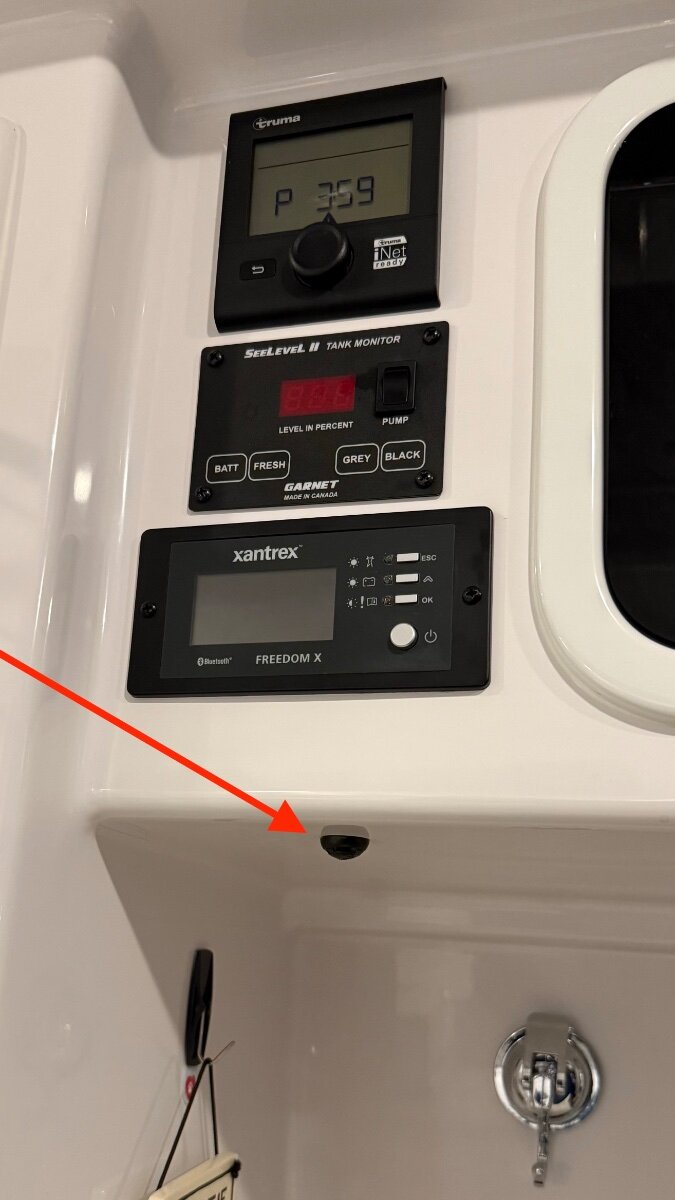
I believe the temperature sensor is mounted just below the controls.
1 point
-
Appreciate info on the other 12V components!1 point
-
They use a really strong industrial strength glue which I do not recall the name of. I do know that they use this adhesive in ALL their RV and Marine fiberglass installs. The next time I speak to the good folks at Inverter Services, I will try and remember to ask him about the adhesive they use. 👍🏻1 point
-
1 point
-
Our rear streetside jack stopped working during a trip a couple of years ago. First checked the fuse as Ron suggested above, but it was not blown. Next, checked the wires at the switch. It turned out one of the spade connectors had come apart. Reinserted the connector and checked the others. Haven't had a problem since.1 point
-
Did you check the fuse, there’s one for each stabilizer jack; for the two rear jacks, located under the street side bed area.1 point
-
We're planning a trip to Yosemite soon and I picked up a heated water hose. The forecast is calling for lows just below freezing and it will be a just in case we need to fill our tank. I don't think I'm going to leave it attached, at night, but from what I've read, the heated portion is for that scenario. We'll keep our furnace on at night since it runs quiet, and run our rooftop AC unit heat during the day, so I don't use up all the propane and can save that just for sleeping hours. I also bought a dual voltage plug in Vornado heater, which has a low setting that I plan to run at night since we'll be hooked up to shore power most of our trip. This will be our first trip during colder weather, so I may be over doing it, but wanted to be prepared, just in case it's needed.1 point
-
I'm not familiar with factory solar/lithium systems installed from Oliver and like David, still learning about electrical/electronics. We installed Battleborn Lithium battery with Renogy Solar controller that we use with up to two solar suitcases, and an onboard progressive Lithium charger. We had issues with our MaxxAir fan. It started beeping and a green light on the unit started flashing. Checked internet and found Lithium batteries can cause high voltage issues with MaxxAir fans, when we had the issues we were on shore power, the Progressive lithium charger had our 12V system at 14.4V DC. Also gave MaxxAir/Airxcel technical support a call and they confirmed lithium battery higher voltage can cause the problem we were having with the MaxxAir fan. This had me wondering if the higher lithium voltage would cause issues with other 12V components, checked with Jensen and they said our TV was tested to 16 to 17V without issues. I don't know about other 12V components on Ollie, yet. We installed a DC to DC converter (12.3V output) from Amazon, secured with Velcro. Also replaced the fan's circuit board with one from Amazon, probably unnecessary. It's working OK now. https://www.amazon.com/dp/B081RG8XP5?ref=ppx_yo2ov_dt_b_fed_asin_title&th=1 Found this on YouTube:1 point
-
On our Hull #1291 the sprayer on the outside faucet is threaded onto the supply hose. I screw the sprayer head off the hose, then push the hose through the access hole to the inside of the hull. I then take the sprayer inside, open the driver's side rear hatch, locate the hose and thread the sprayer back onto the hose for cold weather storage.1 point
-
As others have noted, these trailers do very well in cold weather. So I think you'll be fine as long as you have heat. We traveled to Moab for a January wedding. There were several days on the road where the temp never got above freezing and the trailer was covered in ice when we arrived at our overnight stop. We relied mainly on the internal water tank as the supply hose would freeze. One lesson we learned was to be gentle with the trailer when you arrive. Without heat, some of the plumbing may have frozen while traveling. Give it some time with the heat on to thaw out. I broke the toilet petal once by being impatient, not knowing the flush valve in the back had frozen. I carry extra flush valves but the pedal is not available as a separate replacement part. Not my finest hour.1 point
-
Also, try "pip pins" :)1 point
-
Thanks for sharing. I would agree many variables will be in play. Rivernerd, how do you pull the outside faucet inside? Your trailer is much newer (about 1,000 trailers after mine), maybe you have different plumbing. I have seen where people layer in additional insulation between the hatch door and the outdoor faucet. In general, our experiences is as you have described. Our Oliver can handle a few hours of below-freezing temperatures each night, provided you heat the interior and monitor the driver's side hull. I was a hardcore winter camper in my youth but we will head for the barn if the temp is a hard freeze day and night1 point
-
I’ve towed my Elite II well over 100K miles since 2016. I towed with a Toyota Tacoma for 5 or 6,000 miles. I towed with two different Ram 1500’s (both 5.7L V8) for 50,000+ miles. I am currently towing with a Ram 2500 6.7L diesel, around 60K miles towing. Impressions: 2012 Tacoma (I-6, TRD Supercharger): maybe 200 miles per tank. Always looking for and stopping to fuel up. At or over load limit even with the smaller bed. 2016 Ram 1500, 2020 Ram Rebel (both 5.7L V8): Much more comfortable towing. Towing range much greater. Still aware of payload limit, but nothing like the Tacoma. Good tow vehicles. 2020 Ram 2500 (6.7L I-6 Cummins diesel): Am I towing? No worries about payload, towing range good. Engine brake does 90% of the braking when going downhill. Big diesel stays at less than 2,000 RPM most of the time, pretty effortless towing. My bottom line is that a half ton is a good TV and daily driver. Tacoma, Colorado, etc are marginal TV’s usually operating at the upper limit of their capacity, significantly reducing the margin for error. 3/4 ton and up are ideal, enough truck to stay well within limits and offering flexibility, safety and a very pleasant towing experience. Mike1 point
-
Reading your post peaked my curiosity about the Truma, particularly from the mention of a Temperature Sensor. . . which is typically part of the thermostat. So I looked-up the Combi and sure enough, there is a Temperature Sensor that is separate from the control panel. Accordingly, there is a temperature off-set adjustment in the control panel to account for temperature variances depending on where the sensor is mounted verses the room temperature. Perhaps that was inadvertently reset, which could account for your temperature miss-match. I’d check that first. Review your manual for instructions on how to change the off-set. I don’t know where the sensor could be mounted, but it shouldn’t be too difficult to find by following the wire from the unit. It’s probably a simple thermistor, basically a resistor that changes resistance with temperature change. These are easy to test with a multimeter in the Ohms setting. If the resistance value changes with a little heat applied from your fingers, then it’s probably okay. Let us know what you find and good luck. Cheers! Geoff1 point
-
These did the trick! Thank you very much!!1 point
-
Hope they help! Mossey
1 point
-
This schematic and information is from Barker's website and may be of help! Mossey vip_3000_all_pages.pdf
1 point
-
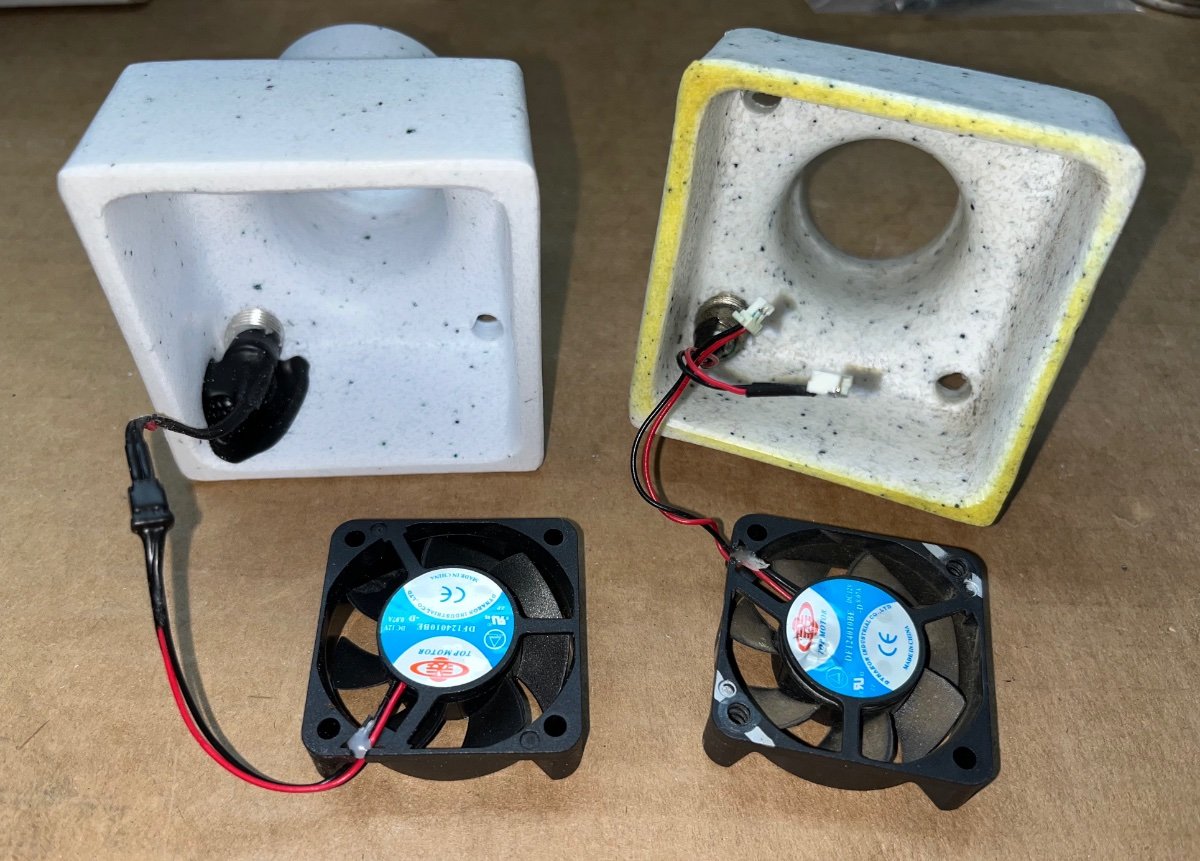
Fan failure! My fan just stopped working right before my fifth camping season. https://olivertraveltrailers.com/forums/topic/6878-natures-head-fan-failed-the-day-before-first-trip/ An email to Natures Head resulted in their shipping ASAP at no charge TWO upgraded fan assemblies. My old fan on the right has unprotected solder joints and the tiny connector is open and corroding. The new one has heat shrink tubing over the connector and waterproofing compound applied liberally to it and to the main round connector. I highly suggest that if your fan looks like mine, go ahead and ask for a pair of replacements. They obviously saw that corrosion was a problem and took steps to eliminate it. Bravo. I tested the extra one to make sure it worked and added some paper towel padding inside and wrapped it all in stretch wrap, and I put it in the overhead cabinet in the bathroom for any future need. John Davies Spokane WA
1 point

















-
Recent Achievements
-