
topgun2
-
Posts
7,828 -
Joined
-
Last visited
-
Days Won
472
Everything posted by topgun2
-

Closet Door/Fire Extinguisher Bolts Too Long
topgun2 replied to Gliddenwoods's topic in Mechanical & Technical Tips
I understand completely but don't worry about it. I do know (within reason) that the Oliver staff sincerely appreciates the input of owners - both good and bad. Bill -
That's and easy one - it depends.😁 Seriously, there are those that like to take some of the weight off the suspension and/or tires during storage and others that simply leave things alone. I'm in the leave it alone camp. Any "flat spots" in good tires will work themselves out once the tires are warm and rolling down the road. I'm not convinced that either the shocks or the leaf springs will "set" in a certain spot due to not flexing over the winter. But, I do store my Ollie in a fairly protected - from wind - and the winters we have here in western North Carolina are really not very bad. Bill
-
I would doubt that the battery heater is run via the inverter - but - I really don't know. Don't forget that there are other considerations such as state of charge to be concerned with. Bill
-
Went down to Lowe's and got a number pieces of 1/2 inch foam pipe insulation like THIS. For that outside shower insulation - if you don't have some regular fiberglass insulation laying around then you can simply use a couple of old rags. Bill
-
Closet Door/Fire Extinguisher Bolts Too Long
topgun2 replied to Gliddenwoods's topic in Mechanical & Technical Tips
Hopefully you have sent Oliver a Service Ticket on this issue given that I'm not aware of any Service personnel that monitor the Forum on a regular basis. Also, these "tickets" are used to help monitor quality control issues among other things. Thanks! Bill -
Except for the 26 degree night (unless your weather forecasters are like our - i.e. not worth a darn) I'd would not do a thing. For that 26 degree night I'd make sure that my kitchen drawers were open (warmer air to the kitchen faucet). and the access hatches to the basement area were open and the closet door open as well as the bathroom door. Finally, you might place a small wad of insulation in the outside sower door and pour a 1/2 cup of RV anti-freeze in each of the drains (Bath sink, Kitchen sink and don't forget the shower drain) . All of this is to make sure that you get some warm(er) air into the areas where the pipes are. In my case, I've put pipe insulation on all pipes that I can get to so I'm really not concerned until things get down below the middle 20's for short periods of time. On a side note - you might want to PM Patriot about restaurants and other details concerning HBSP given that he just returned from there. Bill
-
Yes - Connect coax cable to campground pedestal and then to "cable" input on the exterior of the Ollie. Then set TV control for "cable" versus "over the air". Then "scan" for channels. Once the scan is done you should be all set and the TV should show you on the screen whatever program is currently on the first channel found. Bill
-
Closet Door/Fire Extinguisher Bolts Too Long
topgun2 replied to Gliddenwoods's topic in Mechanical & Technical Tips
Yep - off with their heads! A dab of white paint or fingernail polish will help with looks and sealing (even though mine have never budged since new). Bill -
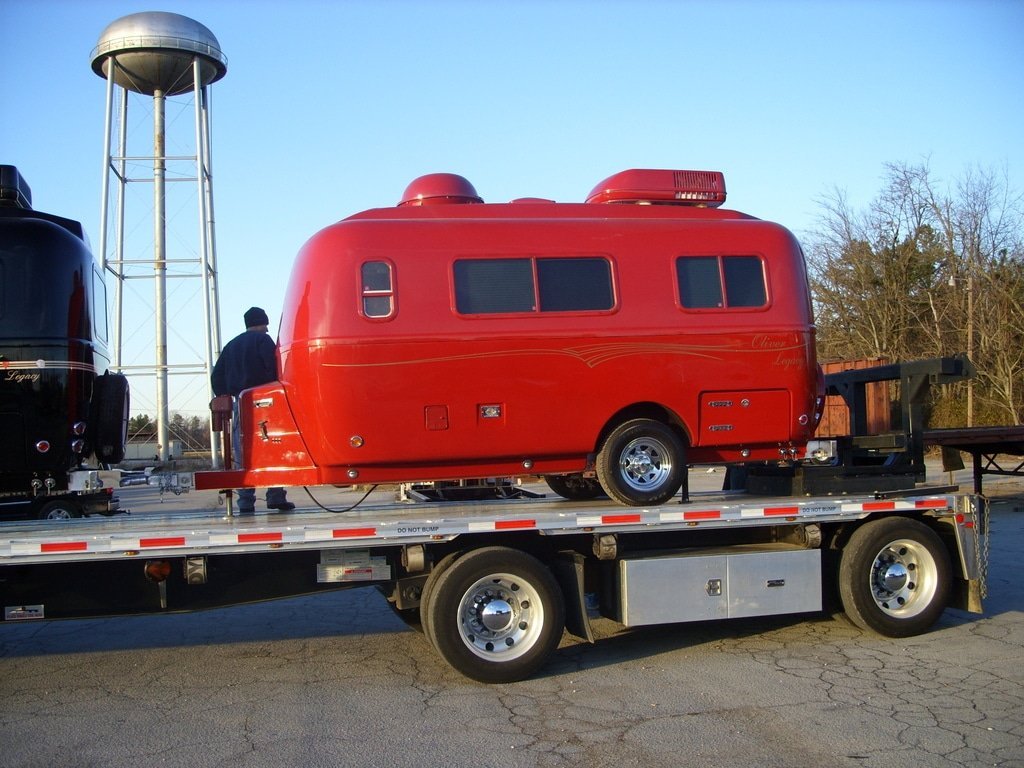
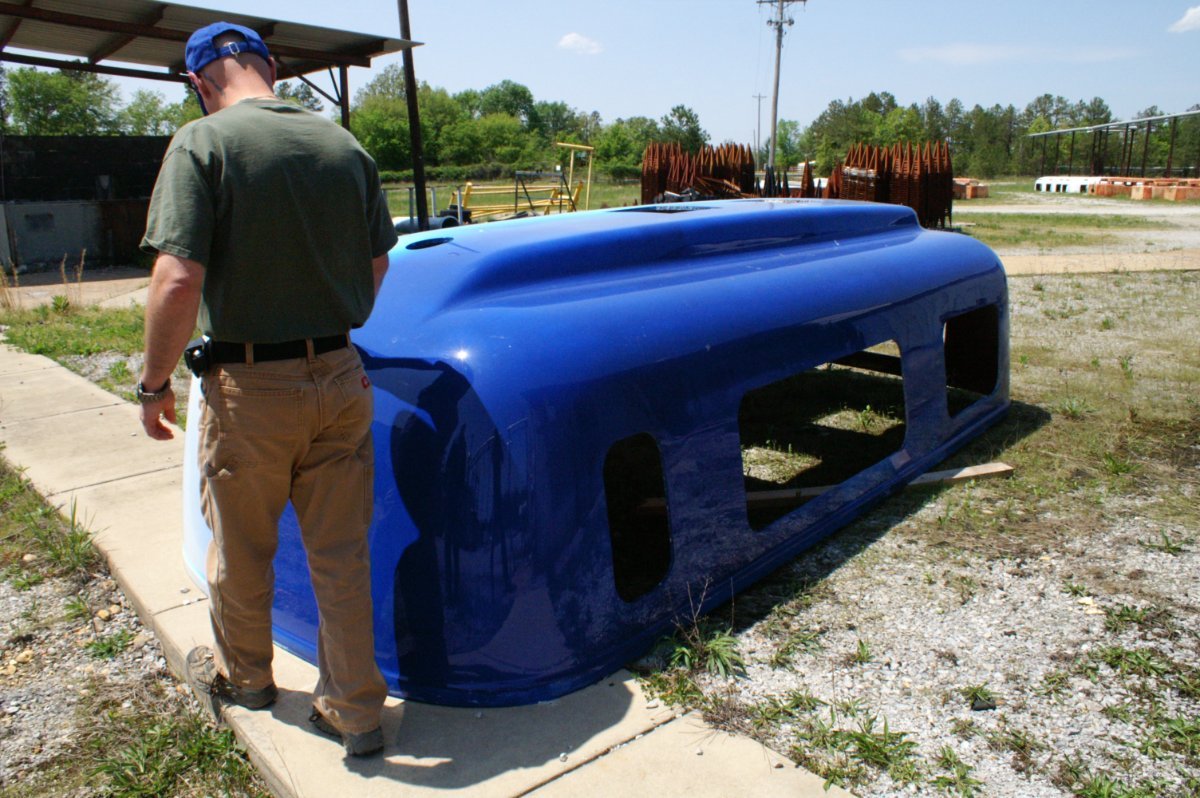
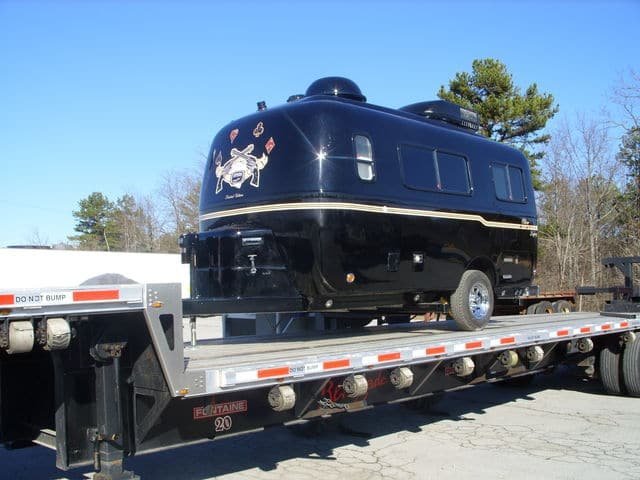
The costs of producing these "colored" Ollies was very expensive - they were not painted and the color was obtained in the same basic manner as the white is obtained. Therefore, the cost of cleaning ALL of the coloring out of the machines and anywhere near the production space was very labor intensive when it came time to switch back to another color. There may have been another color - blue - but I'm not sure that this was painted or produced like the red and black ones and I've only seen a picture of the top outer shell - not the complete trailer. Here is the red one before it was lovingly restored by its current owner. Bill p.s. I found it! Below is a pic of that blue top outer shell.

-
Are you sure? This "switch" is simply a little black button that gets pushed in and out and has a little LED light that indicates if the signal boost is on or not. Bill
-
Mirrored cabinet doors at night, and Heyburn State Park ID
topgun2 replied to John E Davies's topic in General Discussion
Now all you need is a Blue Man Group outfit! All of this at 2am? Did you hit that bike trail too hard or not hard enough? Bill -
Where's that black Oliver when you really need it?
-
New to this forum, looking for feedback on Lithium package
topgun2 replied to serge's topic in Introduce Yourself
Since the charge from the truck must go through the batteries and if the batteries are toast then there is no way for that charge to get to the fridge - or anything else for that matter. Bill -
Sure enough one would not want their face or private parts in the way of that anode! Bill
-
Lagun Table Side Mount Retrofit in Twin Bed Elite 2
topgun2 replied to Overland's topic in Ollie Modifications
I'm sure that Foy would be very happy for you to give him a call about that table top. Both will surely look good in that new Ollie in five months. Bill -
Welcome to the Family. Indeed, you are now a full fledged member with one very nice looking rig. Perhaps a PM to Foy would help in getting the measurements you need and even might help in getting a source for that insert. Bill
-
My bad! I'm running 0 for 2 today. Hopefully this is not old age.😬 Thanks for the update! Bill p.s. I have edited my post above to reflect the change in the 2020 models.
-
B & B - Note that Patriot is presently on the road, so it might be a couple of days before he can get back to you. The BuiltRight platform for the Ford's is great. On my F-150 I did not use the backing plate (and I do not think that Patriot did either) and have had zero issues with vibration. I'm not sure if Patriot has his 890 mount connected directly to the BuiltRight or not (I think he does), but, I connected a 6 inch RAM arm to my 890 and then to a RAM ball mount on the BuiltRight. No vibration with this set-up. Also note that I removed the rubber tray liner in the area where the BuiltRight is installed. This way, in the event I replace the BuiltRight and/or sell the F-150 I can simply remove the BuiltRight from the tray and replace the rubber mat thus covering the holes. Bill
-
While we are on the subject - Note that there are currently both software and map updates available for the 890. There are also map updates available for most (if not all) other Garmin GPS units (like the 2797) Bill
-
Yes - unless you have something else plugged into one of the ac outlets.
-
That was quick - I simply Googled the question and here is the response: Wi-Fi capable Garmin devices support 2.4 GHz frequencies and cannot connect to a 5 GHz Wi-Fi network. For more details on Wi-Fi network compatibility and ... Sorry about that - I (obviously) simply assumed that 5 G was it. Bill
-
Time - out! I just rechecked my Garmin and it actually does not specifically tell me which of the two networks I'm connected to. More research is needed to make sure it is actually the 5G. I'll be back! Bill
-
The TV in the Oliver runs off DC - 12 volt. At least up to the 2020 models. Bill
-
Yes, it automatically connects to 5G but even though my router has both the slower and the faster networks, I only saved the faster (5G) to the Garmin. Therefore, the Garmin has no choice. Of course I could add another network (i.e. the slower one) but since I've had no issues I'll leave sleeping dogs lie. Bill p.s. perhaps you might try deleting and then reconnecting your networks to see if that helps?
-
WOW! One of my new favorites - not. Bill