
jd1923
-
Posts
3,844 -
Joined
-
Last visited
-
Days Won
312
Everything posted by jd1923
-

Maxxfan Dome installation (previously orientation)
jd1923 replied to Townesw's topic in Ollie Modifications
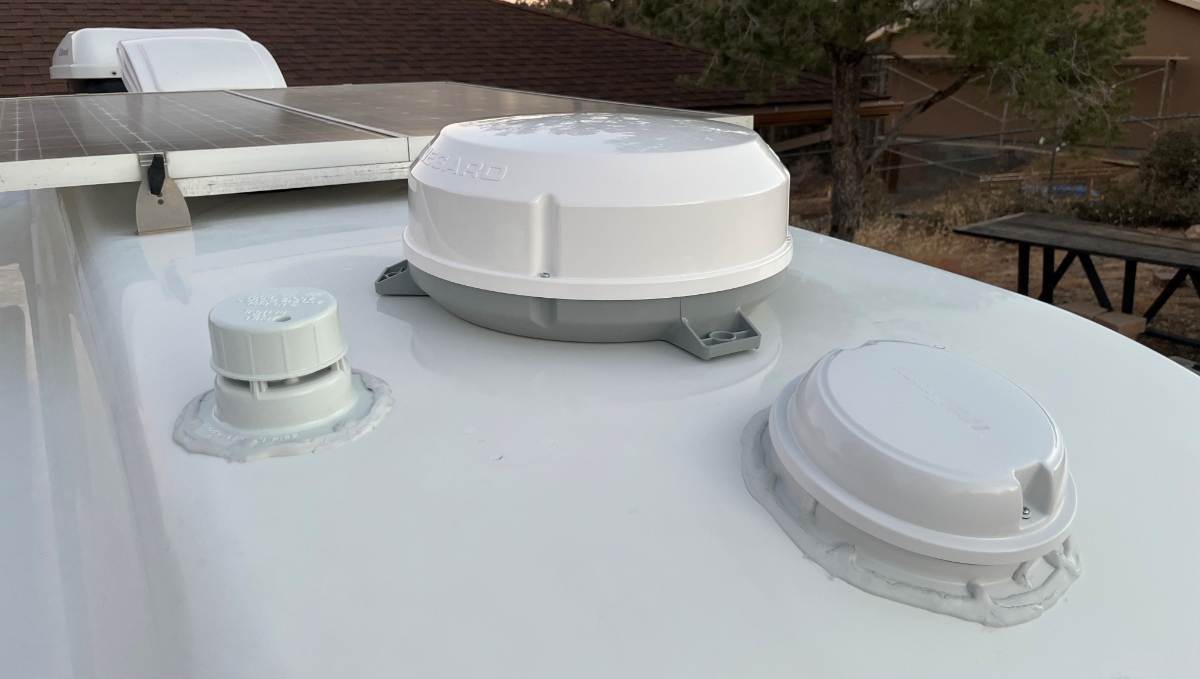
Do you believe this to be a measure of correctness? I wish OTT always installed accessories correctly in our hull, but their installers made several mistakes. When I first read "button toward the front" I also thought of the power button. But they show a sketch pointing at the release trigger with the wording, "position toward front of coach." If someone posts a different orientation, regardless of it being "installed at the factory" it would still be wrong. I thought the same thing for about 50 ms when I had the new flat fan sitting on the curved Oliver roof. Then I realized, one good rainstorm while highway towing and the butyl would blow out of the large front gap and you'd have rainwater all in the bathroom. Butyl works best for sealing thin gaps. You could 3D-print gaskets with a tall front and rear, if you have that capability. I wrote gaskets plural since the fan must be concave on the outside and convex inside. The plastic frame will curve in place, tightening it little-by-little patiently. I took the day to work ours slowly. A hot sunny day helps to soften the plastic.
-
Dometic toilet 311 valve leakig
jd1923 replied to Nick and Linda Stratigakis's topic in General Discussion
By Pony Express do you mean Amazon? Are you sure it is a Dometic brand part. I'm with you in wanting to hear the 'click' like the original part. If not Dometic brand, time for another Amazon return and get the part from eTrailer, Camping World or some legit RV store. https://www.etrailer.com/Accessories-and-Parts/Dometic/DOM93FR.html A lot of hose clamps these days have 7mm screw heads. -
Maxxfan Dome installation (previously orientation)
jd1923 replied to Townesw's topic in Ollie Modifications
Yep, that's what I did, per the instructions. It makes sense the button is forward, so that it clasps the fan up front where it takes wind when towing. Once you get to installation, the curved shape of the Oliver hulls makes it difficult! All exhaust fans are designed to be flush on a flat roof and ceiling. Torque down the screws gently, little-by-little, taking your time so the plastic frame will curve. Too bad Oliver doesn't have a small flat area for this fan in the design of their hull molds. -
Two things I don't want. The Oliver bathroom is the most comfortable bathroom we've had in an RV. One exception: I wish the sink/vanity top came out further so that I could actually get my face over the sink (on my mod list). Sitting on the can is truly roomy! Our first RV was a Fleetwood Discovery Class-A. I had to have my right leg out in the hallway to take care of business. OMG, on a WIDE 39-ft Class A! 🤣 Now that we're comfortable in a 7-ft wide trailer, without slides, I would never again want to tow an 8-ft box. That's what this new entry is, just an 8-ft BOX. Sorry, I've towed too many. They take wind and they're awkward in lane changes and on backroads. You feel every semi-truck passing and need towing mirrors on the TV. Bottom-line, one will not replace our Oliver! I tow the Oliver like I'm not towing! IMO, one thing OTT could-a/should-a done from the start was to make the hull only a few inches longer, to allow room for two 80x30" mattresses without the radiused rear corners! For me at 6'2" this would add significant comfort in a minor change. They guy that sold us our Oliver is 6'5" go figure!
-
Can't live without them along with the LevelMatePRO! I always smile and snicker when I see the 5th-wheel and camper guys with their manual jacks, large 1/2" impacts in hand. 🤣
-
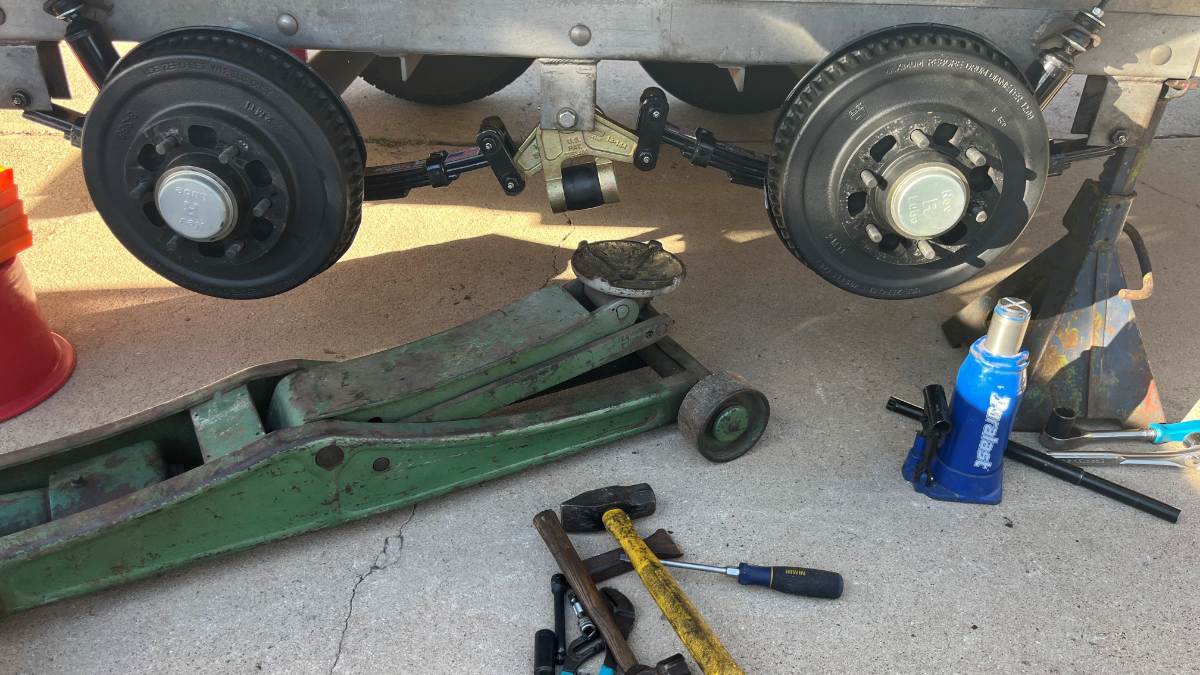
Tom, you are absolutely correct! 😎 Changing a tire or working any suspension maintenance like in this maintenance thread, only "the belt" is needed, no suspenders necessary! 🤣 I would wager the floor jack I purchased used 40 years ago is much more capable than what most of you use at home (see pic below). When friends come into my garage, a first comment usually is, "Wow, where did you get that?!" It was already decades old at the time, nicely rebuilt at a hydraulic service shop in Chicago. It's an 8-ton floor jack with a 6 ft reach, a pump handle that comes up to your chest with a release lever at that height. It also has a kick pump that's so cool, it gets you started or by itself can lift a lighter car with ease. 10 auto restoration projects, 40 brake jobs and more! This beast has always been appreciated. But I'm still using the Oliver lift jacks alone for everything Oliver. Tom mentioned the one exception which is axle replacement. Our Oliver hull was lifted by the stabilizer jacks. I used the floor jack to lift the axles and you can see a bottle jack that I needed once to get a stubborn leaf aligned to the shackle opening. Tools are a man's best friend, when the right tool is chosen for the task at hand. I have this bottle jack and a single jack stand in the TV toolbox, along with enough tools to do most emergency repairs to the TV on the road. Haven't needed them thank goodness, working a lot of preventive maintenance when home and being lucky! Like my belts to keep my jeans in place, never wore suspenders!"
-
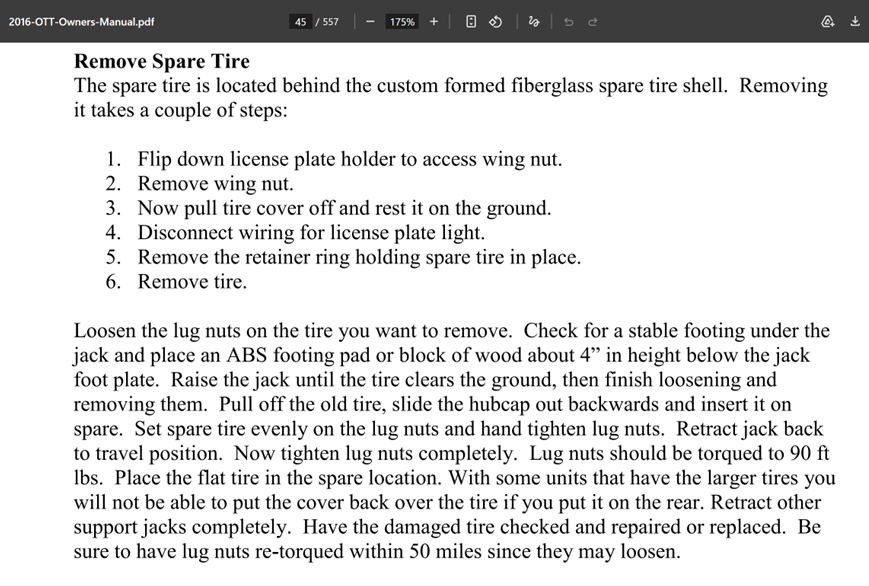
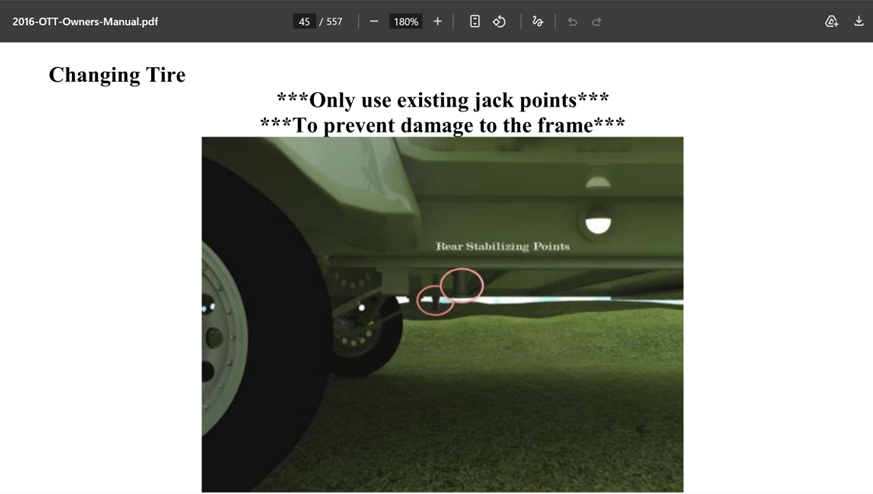
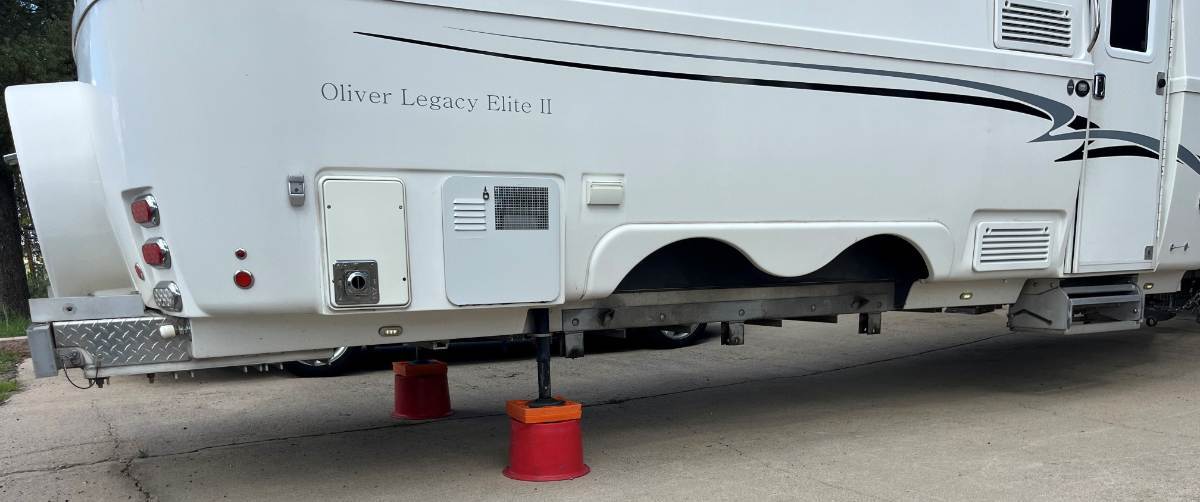
Actually, the angle to which I took the photo just makes it look level. Not much level ground up here, including our driveway! The wet-bolts were very difficult to line up when mounting the leaf springs due to the sloped driveway. There is NO WAY I would have used other jacks and jack stands (even if it was level ground). But with our driveway sloping down back to front and right to left, with wind always coming over our ridge, the built-in jack stands are the only safe way to lift the hull. Trust these jacks, rated to 3,000 LBS each, bolted to the frame (given OTT did not forget to finish the weld as was found in our hull). These jacks and their mounts can be inspected in the basement. The ONLY reason OTT does not advise using the built-in jacks is liability indemnification (since there is no science behind their change in procedure through the years). If the Oliver Owner get's in an accident using aftermarket equipment, OTT cannot be liable. Q: What's best for you? A: Using the built-in jacks. Q: What's best for OTT? A: When customers create product damage or bodily harm it's not created by their product, or anything they installed. Use a 3rd-party jack stand on the "Jack Point" and your hull comes crashing down to the ground, causing damage to the hull? OTT can claim no liability, but operator error. On older hulls the “jack points” as shown are the jacks! The hulls and jacks haven't changed, just the legal position has changed. From the 2016 manual below (two screen-prints). It's the proper way to change a tire, or lift the wheels for any maintenance task! 😎
-
Agreed, and sorry. I meant when changing from rubber to steel stems. When you are included in a safety recall, that's different. Find another shop at a decent price.
-
The best jack, the quickest and safest jack, is our built-in Barker VIP 3000. 😎 When upgrading axles, I would not support the hull in any other way. I'm not using jacks on wheels or bottle jacks on a trailer that can move. I added a jack stand underneath before I got under it. If the jacks can do this, they can be used for any maintenance. I had it sitting like this for 4 days by the time I got the old parts out and new axles and leaf springs installed.
-
For sure! Best to install new valve stems with new tires! That way your not paying for mount & balance twice, just parts cost. I’d leave them alone for now but get the Colby stems Ken showed above in case of failure during travels. They are now in my toolbox and I have steel stems on truck and trailer. Hope I don’t need them, but any kind of stem can fail. It’s good insurance! 😎
-
On our OEM suspension, with the weak 1750 LB Dexter springs, the axles would droop, so such devices would not work. So, why carry one? Just use the Oliver stabilizer jacks to change tires and for other service! 😎
-
Yeah, we run our inverter 24x7x365 but it is nice when all the lighting is low-amp running on 12VDC. 😎
-
Same for us re the radio, though we stream TV, news and pickleball matches, movies shows often and have added Samsung TV and soundbar which has far superior sound. I would not replace the radio merely for slightly improved functionality but it would have to look much better. Exchanging one ugly black box for another is not for me. Took a quick look online and they all seem to be BLACK. I'd buy a white or light gray model. Also, I've been meaning to change out those black speaker grills with something lighter in color too. Please let me know is anybody finds a better looking product! Rob, with all the adventurous mods you've made 😎, you could remove your radio and create a small cabinet. Remove the speakers and cover with trim plates flush to the ceiling, being much less noticeable.
-
Yes, good idea to live with new accessories for a while, proper install when certain. 24V now we're talking! Most AC adapters convert to some lower DC voltage. All you need is a small DC-DC converter which runs off your 12VDC system, so no inverter or shore power needed. https://www.amazon.com/dp/B01D082AX8/?th=1 @Snackchaser introduced us to this device to power a Starlink Mini, without using their adapter, instead running on house batteries. I have one installed in our truck for the Starlink. Adding one under the rear dinette would be simple to power those lights! 😎
-
Very nice! Is there anything comparable in 12V lighting? Love soft lighting, but the installation could be improved. I imagine this is just your first take. Cut the wire, drill 1/4” or smaller hole behind the light to a power source in the basement. Then no clumsy adapter or wires showing. Our Charley would say, what’s all this new stuff in my spot down here, Dad?! 🤣
-
With some HUGE Dometic A/C unit up top too! And it looks like OTT had to add a full length (glued-on) platform for that klunker A/C to sit on! What a shame (my rant to follow)... 🙃 I know many of you are always interested in what's new in Ollie-land! But would you trade your Oliver for a new one, if you could? Not me, as I'd have to make all the same corrections and upgrades all over again! It took me two years the first time, but knowing what I know now I could work a 6-month plan to rebuild our wonderful mods! 😎 The only way I would start over, would be if Oliver would sell a hull with no installed options for HALF the cost! No A/C installed, no fans, just the 14x14" openings with the appropriate wiring run. No roof accessories at all, no cable or charging ports down below. And on some future hull design, OTT could shape a round-flat area for the bathroom fan so these fans can sit flat vs. being forced to the curve of the hull by the torque of the installation screws! You'll see this when you replace the fan. No chargers, inverters or batteries, so I could choose Victron and Epoch over limited company brand name offerings. No switches, breakers, busses, and especially manual water valves under the beds! ALL electrical controls installed in one spot, under the rear dinette seat (as ours are today). Why not motorized ball valves for winterizing and boondocking settings? We use the boondocking configuration, adding water from TV tank to FWT about every other week we travel and I certainly would not lift the curbside mattress to do so! 🤣 And for that matter, keep your mattresses or seat cushions as we're going to upgrade them anyway, so why add cost for items that are more often than not replaced. No TV please! Many prefer not having one and we replaced ours with a Samsung 4K 32" Smart Monitor with speaker bar. The radio or Bluetooth speaker are unneccesary too. Don't we all already have a Bluetooth speaker? We have an extra one just for camping, sitting in the nightstand drawer. Windows are no longer flush to the hull. That could be an issue over time with the front edge always taking highway winds. NO silicone caulk please, and no caulk at all on windows and accessories that already have butyl or integrated seals! No nothing installed where any contract installer would need to drill holes into the hull. Please allow me to install these items with VHB tape or other means (including rooftop solar panels without mounting screws). I've sadly removed 40-50 drill-holes from our hull, adding fiberglass fill and I truly dislike this kind of unnecessary repair work. No entrance door hook, drilled into the door and hull. Just add Lippert friction hinges instead. Please install D52 axles on Alcan Springs, or I would have to do that again too! Except for the OEM rooftop solar panels and MaxxFan, every item I've mentioned in this post, everything attached, has been replaced in our hull with something better! After 1700 hulls manufactured, over 10 years later, does OTT truly know what us "Oliver Owners" like and dislike about their travel trailers? I've list enough items, but could keep doing so... These items are not on the company radar! My vision isn't for most of you who want the complete Oliver with your choice of options. But for me, what I've described would be utopia and it would be fun to do it all again on a clean hull! 😎
-
Maintenance of D52 Nev-R Lube Axles with Alcan Springs
jd1923 replied to jd1923's topic in Mechanical & Technical Tips
At your local Walmart for $10, I've been using Super Clean for years. Use it full strength on greasy parts. https://www.walmart.com/ip/Super-Clean-Tough-Task-Cleaner-Degreaser-1-Gallon-128-Fluid-Ounces/23752162/ But if you really want to clean greasy/grimy parts, you would not believe how a Go-Jo style mechanics hand soap cleans parts! Rub on patiently with a soft brush (toothbrush and/or larger brushes), then hose off and blow with compressed air! I've used this in many restoration projects. Can't beat the price on this item too and check how clean these parts came out! 😎 https://www.walmart.com/ip/Purple-Power-Heavy-Duty-Creme-Hand-Cleaner-14-oz/345407987/
-
Maintenance of D52 Nev-R Lube Axles with Alcan Springs
jd1923 replied to jd1923's topic in Mechanical & Technical Tips
I have revised the original post to add a full brake inspection (see step #8 above). -
That's for sure, Chris! All Dometic units (except a 230V/50 Hz Inverter model in non-US markets) and Truma, the Atmos/Tosot and all others made through the years, the compressor goes ON & Off and you hear it with a bang and a thump! Add a Soft-Start and then they take 3-5 minutes ferbling around to finally start cooling!
-
The NOCO went up quite a bit! Mine was $86 two years ago. The new GENPRO model is now $123. The link I posted above was not working. I edited the post above and copied it here again: https://www.amazon.com/NOCO-GENPRO10X1-Waterproof-Maintainer-Desulfator/dp/B08G3M697M/ I also got a couple of these for the tow vehicle (and my Goldwing) to connect the charger without "popping the hood" or on the motorcycle, without removing side covers. https://www.amazon.com/dp/B004LWWNLC?ref=fed_asin_title&th=1 On a budget, the one Bill showed should do the trick. On Bill's suggestion, I would go that way, $45 for a 20A charger is much more reasonable.
-
Maintenance of D52 Nev-R Lube Axles with Alcan Springs
jd1923 replied to jd1923's topic in Mechanical & Technical Tips
Thank you, Bob! LOL, you and I both, have "done many vehicles over my years!" I've done 3 brake jobs this year alone and I want to quit having to do brake jobs around here, OMG! 🤣 Removing the drum is very easy on the Nev-R Lube axles, and no red grease mess! It's just not something to do when less than one year old with 3600 miles, as in my case. I will likely do so at 3rd inspection. Your question is a good one though, a GREAT addition to this post and soon I'll add this step to the above procedure. 😎 Remove the bearing cap, the small outer circlip and spindle nut is all it takes (more info in post linked below). One trick is retorquing the spindle nut afterwards. I got confirmation from Dexter (via Lew at Alcan), that these spindle nuts can be reused (should replace after 2-3 uses). To retorque, I would mount the wheel, lower the tire touching the ground and torque to 155 ft-lb (remove wheel again if you mount center caps). Then replace the circlip and dust cap and that's all there is to it. -
Bob, IMHO this is unnecessary. I assume your Oliver converter (charger) is setup or will be reprogrammed for LiFePO4 batteries with Epoch charging specs. Just install them (they come at 50% SOC), plug in and charge overnight to 100%. Want a portable charger for all battery types? I got this one 2 years ago and have used it on all our vehicles when needed. Keep in mind, this is only a 10A charger. But more amps means much more money! 🤣 https://www.amazon.com/NOCO-GENPRO10X1-Waterproof-Maintainer-Desulfator/dp/B08G3M697M/ Our Victron Inverter/Charger can charge up to 120A. It can add 20% SOC to a 600 Ah battery bank in one hour! The 10A portable charger will take 12 hours to add the same 20%.
-
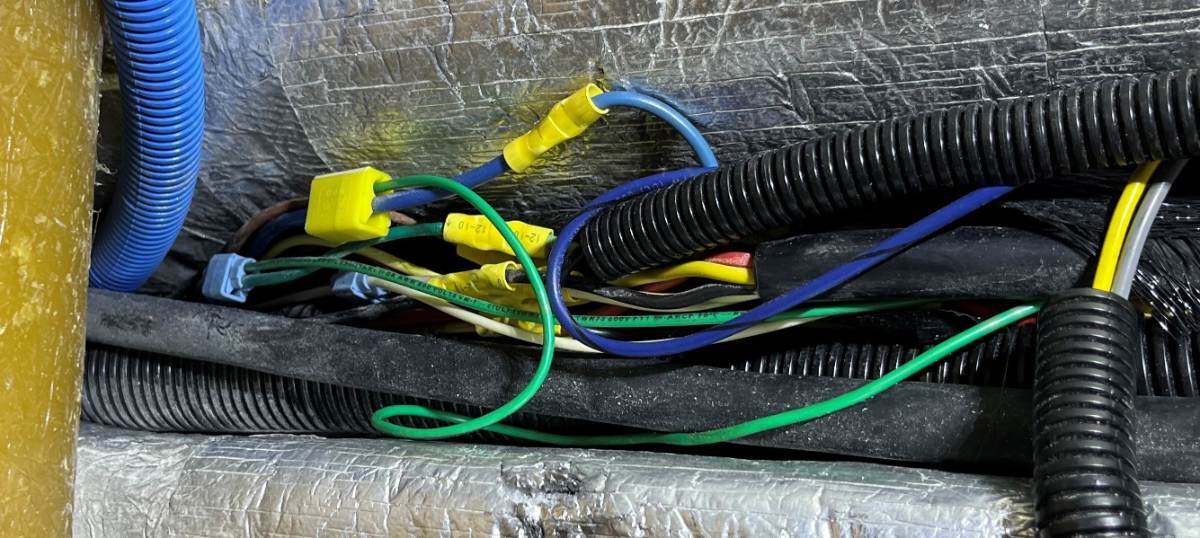
Drying it out is a temporary solution, as it will get wet again no doubt! I would be replacing the 7-blade plug on the Oliver. These plugs are not real easy to wire, as you have to cut the wire short enough to fit inside the plug. Make sure to cut the cable back a couple inches to strip and bare all new copper ends. I replaced ours as soon we purchased our Oliver used. For a waterproof installation, install a new complete cable, like this one from eTrailer: https://www.etrailer.com/Trailer-Wiring/TowSmart/TS74RR.html This would certainly be more work (so many are afraid of work these days 🤣)! But it's something that will last. Not sure on your hull, but in our hull the trailer wire is split up under the front dinette seat (picture shows trailer cable and all 7 wires connected to various Oliver circuits).
-
My wife Chris said, "The sound on this A/C is soooo quiet! I can't see it any taller from inside, so who cares?" I think it looks just fine up top (function over form) and would not want any Dometic A/C product ever, or Truma for that matter, with no aftermarket support and warranty issues with something like owner installation of a Soft-Start. BTW, Soft-Start should be inherent to the design, like it is on variable-speed or inverter A/C units (not after-the-fact with Truma service costs). I've heard the quiet Atmos/Tosot and they are quiet. The Chill cube is quieter, while using half the power. It's the height of this unit with huge evaporator fan, that creates its efficiencies and allows for an air handler flush to the Oliver ceiling. She looks just fine! We love this product. 😎
-
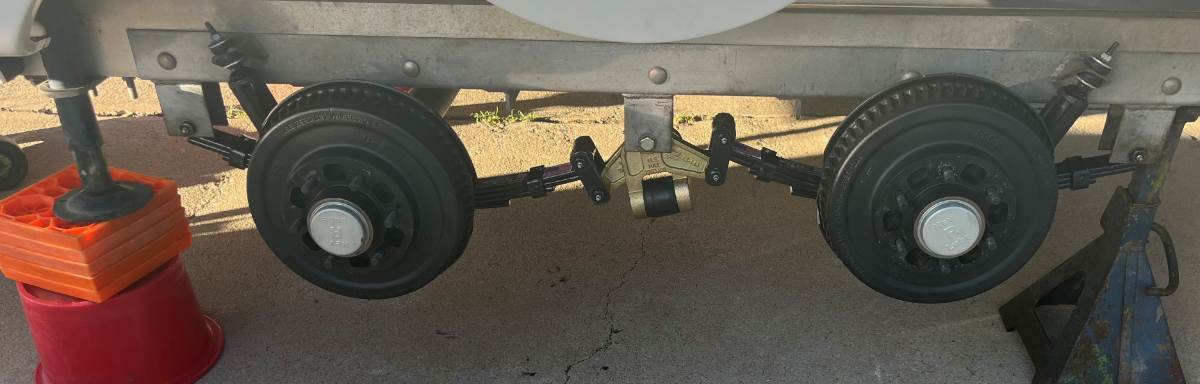
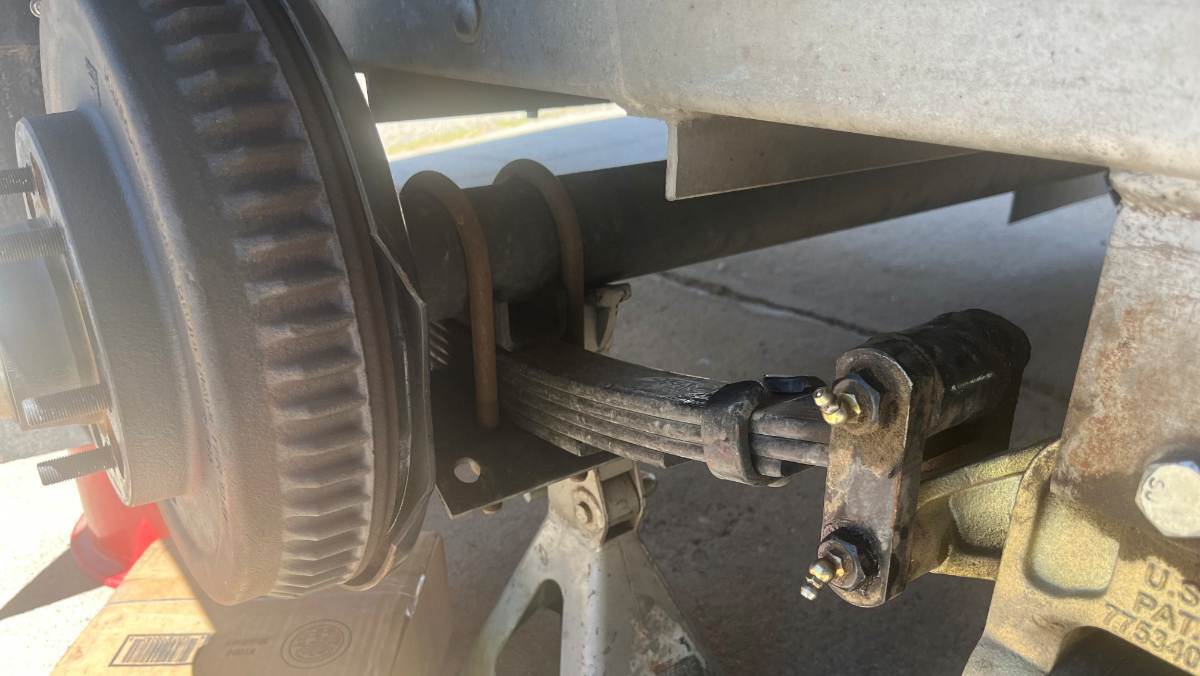
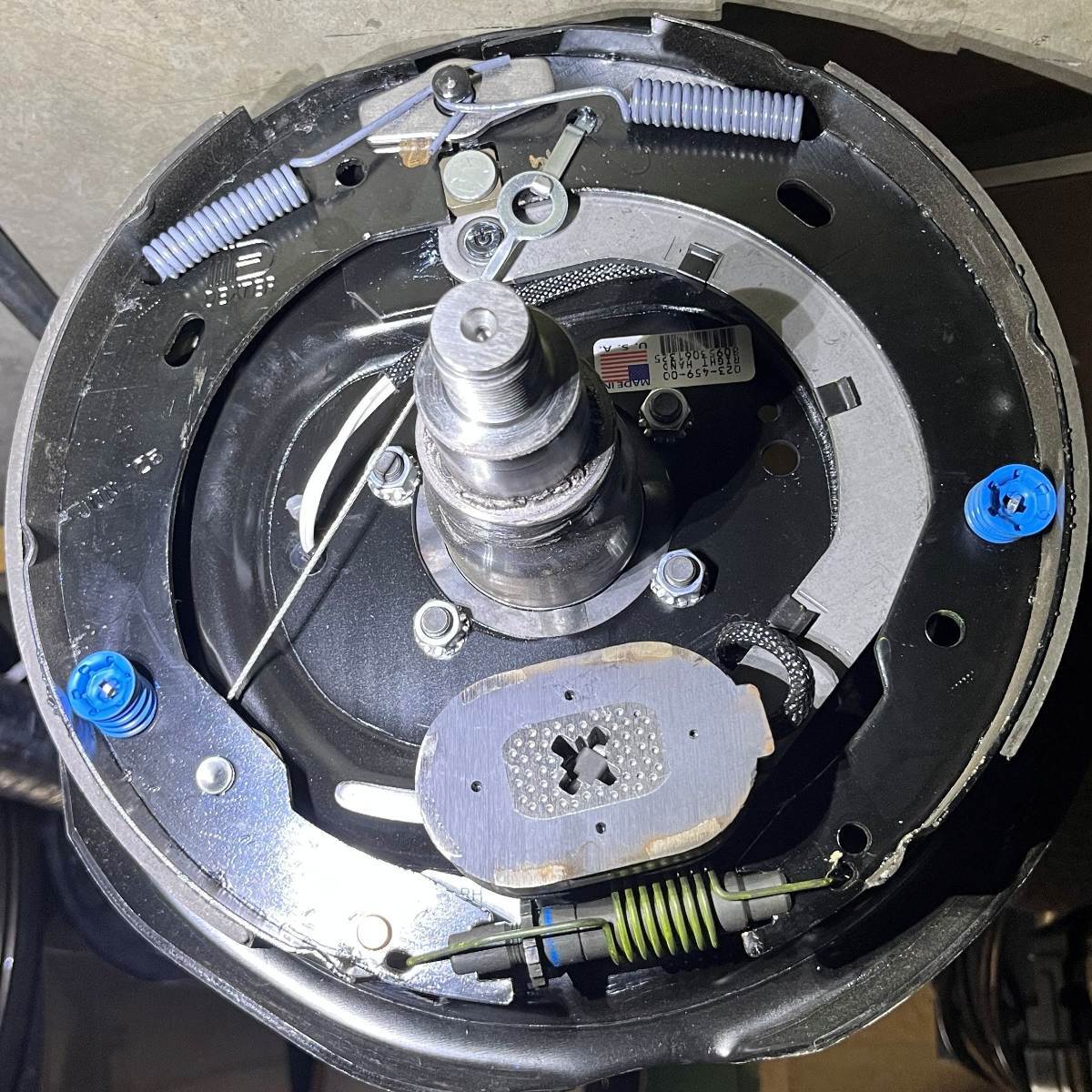
This maintenance can be completed in 2 hours (by the young experienced mechanic), or you could take most of the day! Have fun and pride in your Oliver! Take your time. I did the curbside yesterday and did the other side today (not young anymore, like splitting tasks across days). The second side went very fast today, done in only 90 min having the tools out and ready. This is just how I worked our suspension maintenance, in how it made sense to me, based on my automotive experience, not Dexter nor OTT approved! IMHO this maintenance should be conducted annually, or perhaps bi-annually for those who tow 10K +/- miles in a year. Some may work this routine every two years. Following is a suggested 10-Step Suspension Maintenance procedure: 1) On level ground, jack up one side of the trailer, using the rear leveler jack, while the Oliver is hitched to the tow vehicle (mandatory for safety). 2) Spin each tire to see if it rolls freely. Listen carefully for any unusual sounds. Try to wobble each wheel left to right (3-9 clock positions) and top to bottom (6 - 12) to observe any free-play. There should be no observable free-play with the Nev-R Lube bearings. 3) Remove the lug nuts on both wheels with impact (no impact, loosen with tires on ground). Place a jack stand under rear axle, close to wheel, for safety since your body will be under the trailer to do some of this work (see pic1). 4) Grease all six (6) wet bolts, plus two (2) grease fittings on the EZ Flex. Use a power grease gun if available with a LockNLube coupler attached. Add just enough grease to see some ooze from an edge. Wipe up all excess grease. A straight-blade screwdriver helps to remove old grease from recessed areas. Wipe grease fittings before and after and place caps back on (I don’t use caps). 5) Torque all suspension bolts to Alcan specs. 90 ft-lb for U-bolts, 80 ft-lb for the EZ Flex center bolt and both end-points, and 65 ft-lb on the shackle wet-bolts. The U-bolts will set at some point where they will not need further tightening. They rust into place and once this occurs, they’re done and you will not need to check again in future service (not true for the wet-bolts). I go lighter torque than Alcan specs on the wet-bolts, 70 and 58 ft-lbs which is an eighth (12%) lighter. The 80 and 65 numbers seem high to me. 6) Check drag on the drums. They should contact the shoes ON and OFF when spinning (shoes installed are not perfectly round). If they do not drag at all, the self-adjuster is not tightening properly (see pic2 brake assembly, adjuster at bottom). Mine were all dragging just right on like-new axles. There are two inspection ports on the backside. Unfortunately, there is no way to reach the gear to adjust it, due to the Oliver wide leaf/shock absorber plate. If adjusters are not working, the hub/drum must be removed (see step 8). 7) Pull the trailer emergency brake switch and turn the drums until they stop (to ground magnet). Check amperage draw at each wheel, placing amp meter clamp around ANY single wire behind wheel. Amperage should be 3A +/- without much difference between wheels. My LF wheel was 3.1A and the other three all read 2.8A, the two main brake wires coming out of the streetside Oliver hull read 6.1A front and 5.8A rear. These numbers look good enough to me! 8] Now the question is, do the brakes need a full inspection? I would say no for the first 2 years, then later with enough miles towed (>25K miles). Perhaps work a full inspection after 3 years. Then skip year 4 and do another full inspection year 5. Something like that! Clean brake dust without internal inspection: Use compressed air to blow through all openings of the braking plates to remove all shoe dust from the interior of the brake drums. Wear safety glasses and stay upwind from the cloud of brake dust. Blow throughout until you see only clean air. Full inspection of trailer brakes: Remove the bearing dust cap, the small outer circlip and spindle nut, then slide the drum off. Use compressed air to remove all brake dust (Brakleen spray unnecessary). Make sure shoes are clean, free of grease, clean if necessary (sand shoes lightly). Check shoe thickness, There is not much material there to begin with (Dexter shoes new have only 0.18" or 4.5mm material). They will look thin but when wearing evenly should be good for many more miles. Check the action of the shoes by pulling the magnet to see all is working as designed. Replace shoes if necessary, or replace the entire braking plate assembly, which is bolt-on and economical. If you have enough miles to replace shoes, the drums should be turned or replaced. Replacing shoes without doing so would result in poor trailer braking performance. Drum assemblies with new bearings are very expensive! The Nev-R Lube bearings are warranted for 5 years or 100K miles (our hull will not clock 100K mile in the next 10 years)! Some who tow a lot may replace bearings every 5 years. I will carry replacement bearings and tools with me to replace as needed, as they could fail at any time or last many, many years. Then replace the drum, washer and spindle nut. To retorque, mount the wheel, lower the tire to just touching the ground and torque to 155 ft-lb. Then replace the circlip and dust cap. Remove wheel again to mount center caps, though many of us go without center caps so that hub temps can be checked at stops while towing. 9) Remove gravel from the tread of both tires, using a thin flat-blade screwdriver, while inspecting for tread wear, tire defects and foreign objects. I do this with All of our vehicles, every time wheels are removed for any reason. I’ve found many screws and other sharp metal objects in tire treads, sometimes causing slow leaks that can be fixed now vs. getting worse on the highway. 10) Mount rims, lower hull to get rim close, making it easy to place wheel on studs. Use impact on light setting and snug up lug nuts evenly. Lower hull to sit on wheels, remove leveler blocks, and torque lugs to 90 ft-lbs. Repeat all 10 steps on the other side of the trailer. Let me know if I missed something or other suggestions! 😎