Leaderboard



Popular Content
Showing content with the highest reputation on 09/04/2018 in all areas
-
As owner of Hull number 14, picked up in March of 2008. I've now pulled The Wonder Egg 124,000 miles from Florida to Alaska and California to Newfoundland, including most points in between, I do admit that 2018 Olivers include a more refined bit of quality control "between the hulls", and some cool toys are being thought of (push button awnings). That being said, my venerable Wonder Egg has faithfully provide me with the dream retirement, wandering the roads 4 to 7 months each year and traversing everything from smooth interstate highways to mind boggling frost heaves in Nova Scotia, car swallowing potholes in Newfoundland, and literal hundreds of miles of dirt roads in Alaska and Montana. The trailer's "bones" are sound. Items that have failed over this period have either timed out (10 years for the original microwave and water pump) or been abused by my failure to properly care for the entire mechanical system (because I live in south Texas and was complacent about winterizing). I believe this was causative to one of the internal pressure regulator's failure. Many wonderful changes have been made by Oliver over the years, such as placing a furnace between the hulls to quiet the noise when it is on. But to do this, the power cord reel was eliminated. I do love my 45 ft, 30 amp cord that winds into the trailer with a push of a button. Sure, there were QC issues at the beginning as the company went through the slow maturation process to where they are today. But since the first Ollie graced the roads of this nation, the company has stood by their "Trailer to Last a Lifetime" idea and always made it right for the customer. Even second owners are treated like part of the family. Now, with checks and double checks taking place throughout the building process. They have, indeed, come a long, long way in the Quality Control department. Some owners have minimal skills when it comes to turning a wrench or selecting the right widget for a mechanical job (take ME , for instance) Others are gifted with the ability to discern how something could be improved upon, and have the tools and wherewithal to make it so. Bless their hearts and thank goodness they are out there to improve their rig and help the Ollie be the best it can be. Some of their ideas make it into future Ollies and others stand as examples of how their unique rig has given The Starship Enterprise a run for its money in the "pizzaz" factor. It is apparent that recommendations for improvement are noticed by the company and incorporated when it is deemed feasible to improve the Ollies rolling off the line. But, we must realize not every good idea will make it to the production floor for a myriad of reasons. Ultimately, the company decides. It is nice, though, that they have and will likely continue to listen to us. Keep those ideas coming. Bottom line, to the original post of this thread, how is the quality control of an Oliver Travel Trailer? Has it improved over the years? You bet it has. This opinion is formed from my years as an early adopter of the Ollie and talks as well as face to face meetings with owners all over the country throughout the last ten years. Pete4 points
-
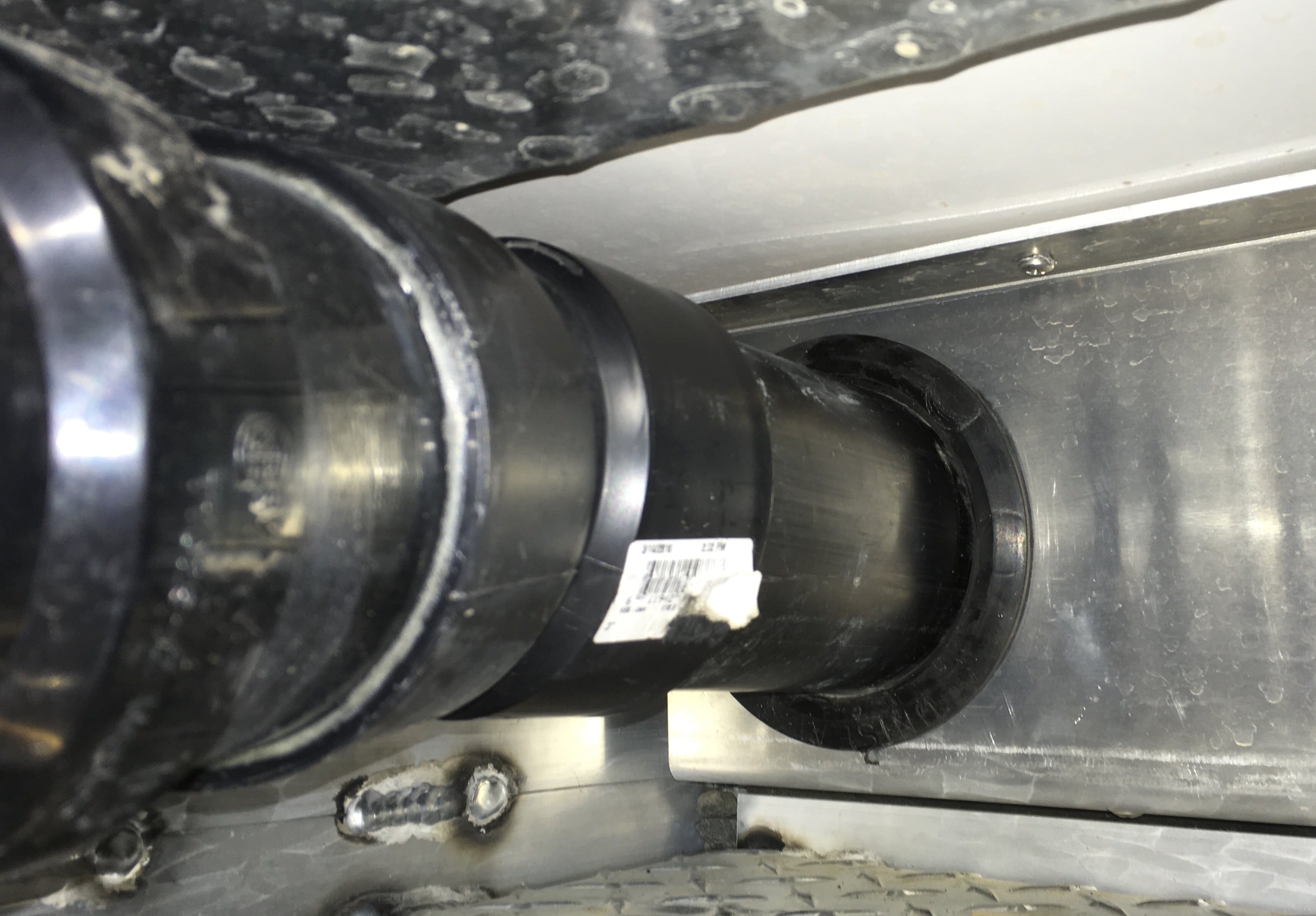
This really embarrasses me because it took 18 months to finally figure out what was going on. The waste pipe has always flopped around and it never occurred to me to get on my knees with a strong flashlight for a close look. I discovered that at the very front (dark) end of the hose compartment is a 5” hole where the 3” pipe exits the trailer. There is supposed to be a big flanged plastic grommet inserted into the hole to seal it. Mine was two inches back on the pipe. It had never been pushed into place. I drove it into position with a wood stick and a big mallet. The last little bit at the 6:00 position was tough, but I wedged a 2x4 under the pipe and finally got the last 30 degrees of grommet to snap firmly into place. Now the pipe does not move, nor will huge amounts of road dust enter there. If your pipe moves at all, check the grommet. It should look like this, fully seated all around. You can feel with a finger if there is a gap anywhere: Fixing it should RADICALLY slow down the nuisance dust buildup in my interior compartment: I will vacuum the dust out once more to see if it is stopped for good. This is what typically comes out of that rear compartment after dusty roads: John Davies Spokane WA
 3 points
 -
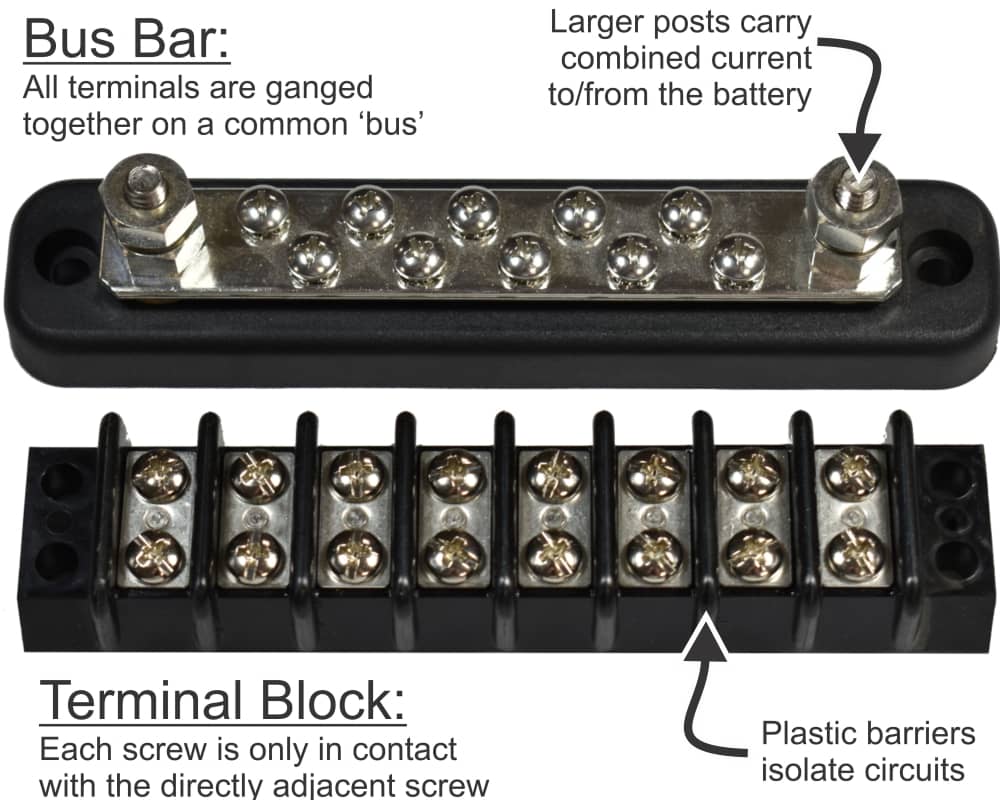
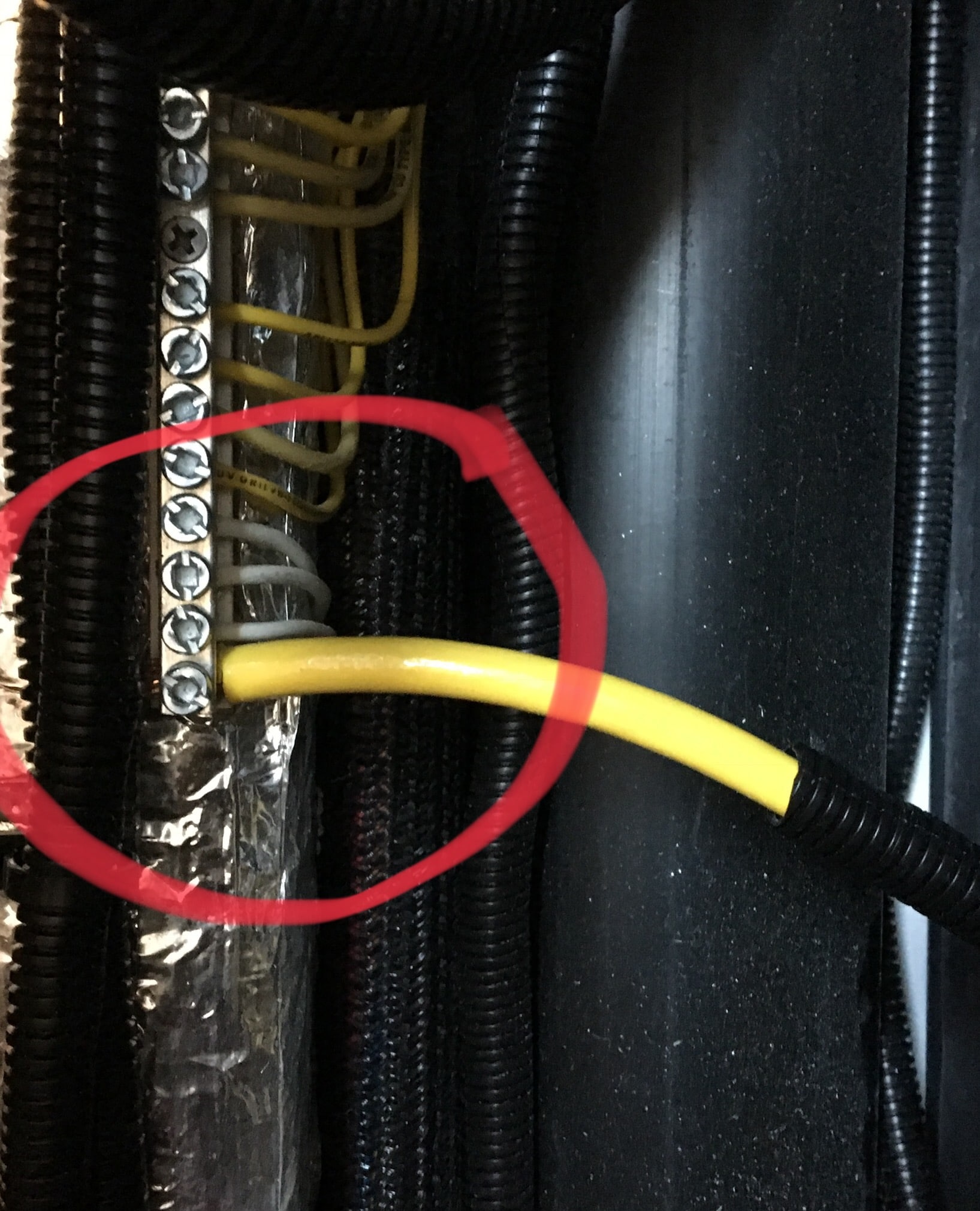
I really don’t like that the big cable is inserted into the ground bus like that. It is a marginal connection at best. It is acceptable for low current draw wires. But not ideal, even there.... Ring terminal size & shape. The “flag” or “ring” of the lug that attaches to a terminal comes in a variety of shapes and sizes. Lugs that provide a large surface area reduce resistance and the possibility of digging into soft lead battery terminals. Some breakers and inverters may need a smaller-size ring to fit on their terminals. Avoid using set-screw-type compression lugs with finely stranded cable. Under pressure, the fine strands can twist and break off. The high number of strands makes the flexible cable’s connection “soft,” resulting in a connection that will be difficult to get tight and could potentially become loose over time. https://www.homepower.com/articles/solar-electricity/design-installation/inverter-battery-cables?v=print At the very least, make sure your cable is tightly secured with nylon ties so it cannot flop around at the bus and weaken. It really ought to have a proper eye terminal and a separate ground point. If you don’t do anything about it, try to remember to check the screw for tightness every year. I REALLY hope I am not sounding like a doom monger, talking so much about wire connections, but less than ideal wiring can literally cause fires. It takes no more effort to install a wire correctly during manufacture. Fixing incorrect wiring is time consuming, expensive and frankly a PITA.... These are a much better choice than what Oliver and the RV industry is using: John Davies Spokane WA
3 points
-
I still fail to see the point of a Facebook group. All it does is siphon posts and solutions from this site to make both less useful.3 points
-
Hi, we are from Beach City,Texas. We are planning our retirement which should kick off in about five years. Our plan is to travel the country and find where we want to put down roots. Our Ollie went into production August 17th and our delivery date is November 8th! For now, our Oliver will be pulled with a 2016 Nissan Titan XD Crew Cab with a Cummins turbocharged 5.0-liter V-8 Diesel engine. We want to thank everyone on the forums and at OTT for sharing so many details which helped inform our decision. We also want to extend a special thank you to Cobra 1169 for generously giving us a tour of his Ollie.2 points
-
I agree, for a great number of reasons.2 points
-
Nice work on the solar. Your 120v ground circuit is bonded to the frame already. This is to give any short against the frame an easy path back to source rather than just energizing the frame waiting for you to touch it to complete the circuit. So the potential for your batteries to see the 120v is already present when you're plugged in or running the inverter and a short occurs. I'm unfamiliar with the Xantrex, but I assume that the casing is internally bonded to the 120v ground. So the external ground is primarily/exclusively for the 12v circuit. That is, you might ask why you need an external ground if there is an internal one which itself goes back to the frame via the 120v ground circuit. The reason is that since the battery is connected directly to the inverter, the 12 gauge ground wire on the 120v side would be insufficient to handle a short from the 12v side, as the amperage could be much higher. In my case, with 4 battle born batteries that can deliver 200 amps each, that's potentially 800 amps of current. Therefore you need a heavy gauge ground cable, which should be sized to handle a current that would blow your main fuse block. If it is too small, then the wire would melt before the fuse blows. Keep that in mind when sizing your ground cable. 8awg is probably a minimum, and might be fine for shorter cables. If, however, you're going to run it some distance before connecting it to the frame, then you might want to oversize it as John did.2 points
-
The 10,000 hour rule is from Malcolm Gladwell’s book, Outliers: The Story of Success , which if you haven’t read it, I highly recommend it. My professional background is in manufacturing and quality systems. Twenty-five years+ in the trenches, (10,000hrs) collecting, sorting, and responding to quality data, process data, SPC, voice of the customer, warranty data, and on, gives one a healthy respect for data, statistical data, and a full awareness of how a few customer data points can skew a trend. One customer making 20 complaints about the same issue, in a small sample size - for example . Which may prompt some to state incorrect subjective opinionated views to be taken as fact, when, statistically they are not. That is my Toil. ha ha. That is my reference to Mike and Carol. I have little doubt Oliver quality - whatever your definition - has improved over time - I just can't prove it. But I can find antidotal evidence of customer satisfaction. Have a great day. Edit - As in all things, the devil is in the details. In todays cultural wasteland, the "trend" is to quote feelings as fact, and dismiss reality as something to be ignored. I believe I will move to the sidelines, the popcorn crowd has more fun.2 points
-
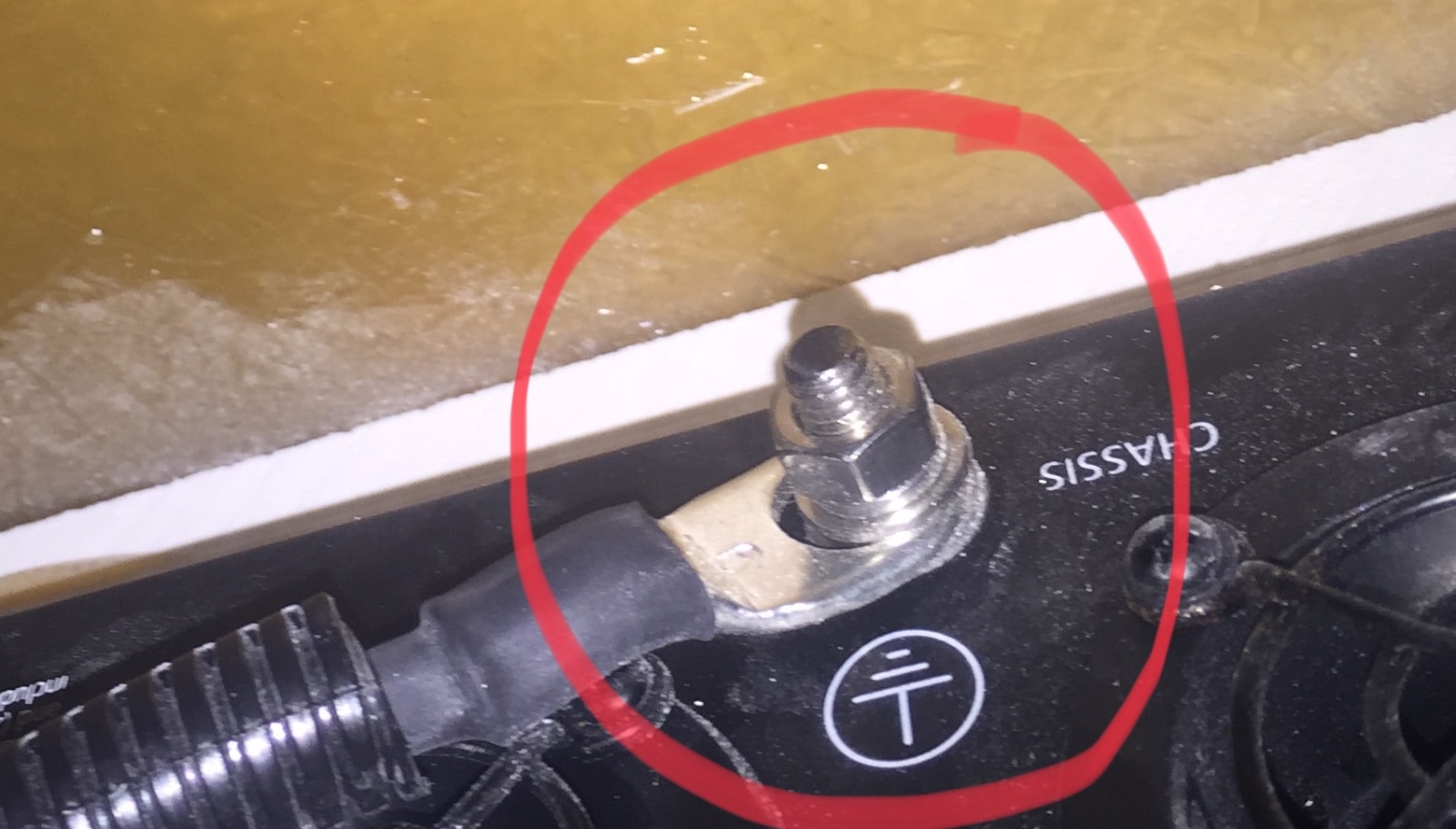
Spike, it’s great that yours is installed, but not so great that there is a 1/2” eye terminal on a 1/4” stud. The actual metal-to-metal contact area is perhaps 30% of what it should be. It may be OK, but you should add 1/4 stainless flat washers on either side of the eyelet. EDIT, DO NOT DO THIS, SEE POST 499 below here. Or better yet, consider having a correctly sized one crimped on the end of the cable. Having a great big hole hugely reduces the area for current to flow, not good when you are expecting it to carry a very high amp overload in an emergency.... a 1/4 stud needs a 1/4 eye. In addition, the connection is much more likely to get loose from vibration since there is so much room for the terminal eye to shift sideways. Unfortunately the tech who installed your cable did not understand this. John Davies Spokane WA
2 points
-
For approximately 8 years, I worked a bicycle tour that started in St. George and after approximately 280 miles we would finish back in St. George. The bicycle tour always went the first week of June. The campground we used in St. George was Temple View Resort. It has a great bath house and laundry with really great WiFi. It is quiet and within walking distance of restaurants, banks and bicycle paths. In Zion National Park, we stayed near the entrance in a campground called Zion Canyon Campground. It is in a town called Springdale. Busy place! Reservations definitely are needed during the summer. It is right outside the Zion NP Gate. Bicycling or shuttle from campground to park is easy. Too busy for my taste. In the Bryce Canyon area, we would camp at Ruby's Inn Campground and RV Park. Great laundry, bath house and WiFi. Swimming pool was very extremely nice. It is located right outside NP Entrance. About 25 miles away from Bryce is a town called Panguitch. It has a KOA that has been under new ownership for approximately 8 years. They have really made this KOA nice. There is a National Forest Sevice area called Dixie National Forest near Panguitch. We would often stay at Panguitch Lake North or South Campground. Beautiful area. We tried to stay at the KOA in Cedar City, Utah a few times. However, they were not bicycle friendly. Therefore, we would stay at a small campground called Red Ledge Campground in Kanarraville, Utah. It was nice with a very friendly owner.Temps during first week of June was always hot in St. George but gradually turned cooler as we headed to higher elevation.2 points
-
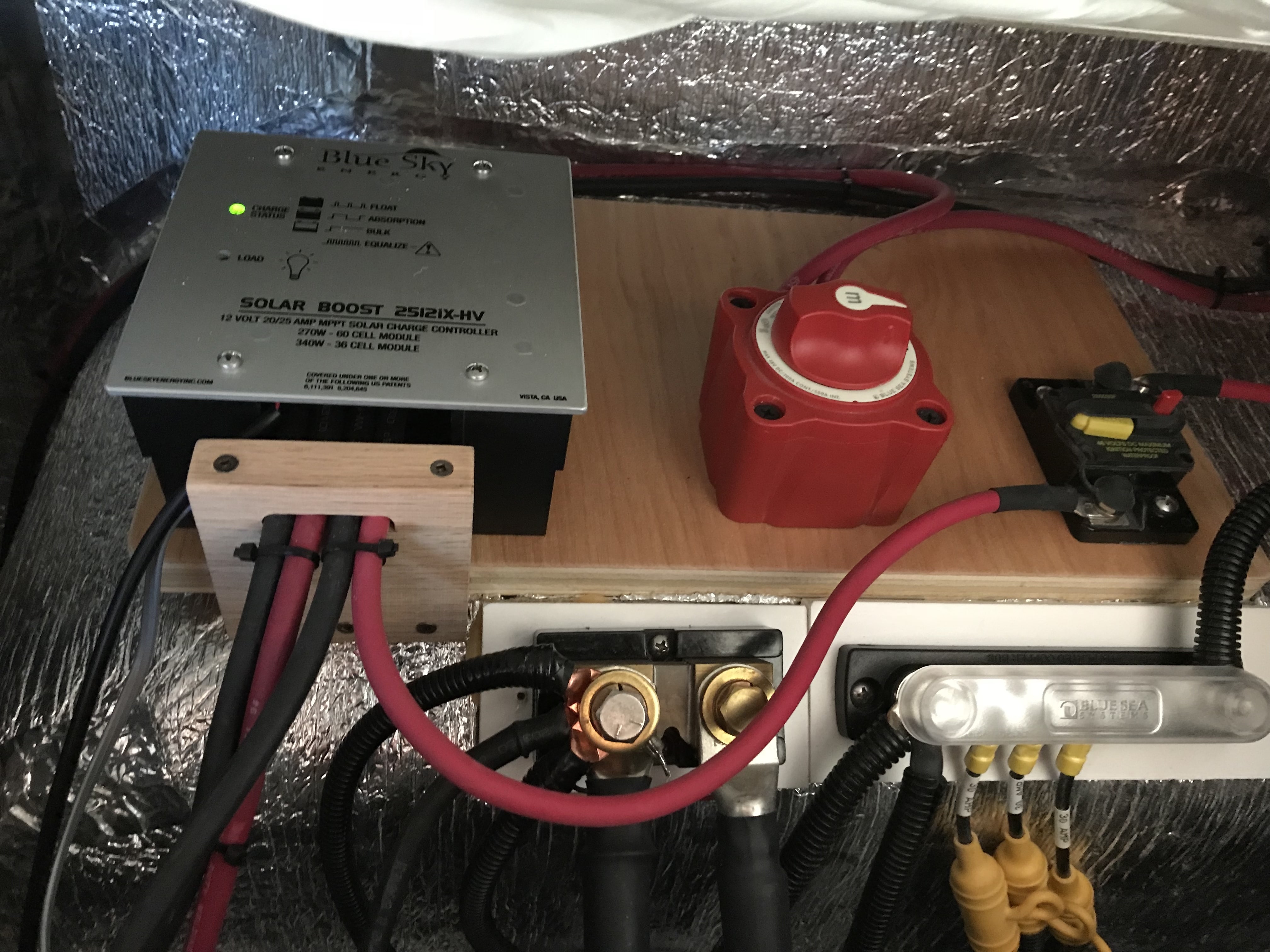
I don’t have the inverter ground wire on hull 208 (2017). I don’t think that it should be attached to the DC negative buss bar, should it? But instead to the frame ground bolt under the rear dinette seat? Wouldn’t it be bad to have the inverter short internally and dump 120 AC volts directly to the batteries? I’m trying to figure if (especially due to solar charging) the DC negative should be completely separate from any AC grounds. Anyway, to be determined. In answer to the switch and breaker question, Steve (ScubaRx) and I installed Blue Sky solar equipment on my trailer and when Oliver installed the rooftop panels I asked them to install a disconnect switch and a 30 amp breaker/switch. Something like this should be in line for maintenance/safety. The switch disconnects the panels from the solar controller and the breaker is between the controller and the batteries. See photo.
2 points
-
My wife and I live full-time in our Oliver Legacy Elite travel trailer. We are first-time trailer owners, but have a varied past tent camping and spending a great deal of time outdoors. Beginning in early 2018 we sold our Florida home and then this summer we dispensed with our cabin in northern Michigan. Our Oliver is now our only home. We chose this trailer because of visits to see first-hand the Oliver company and then its competition. We looked at other fiberglass trailers, Airstreams, and also whatever you call the higher end teardrops. The superior quality of the Oliver trailer stood out far above the rest. And so did the price. We both believed at this sales price the Oliver should be free of defects and all quality control issues handled at the plant during initial construction. But we discovered, again, that nothing is perfect when humans have a hand in making something. Oliver Travel Trailer Company has addressed the few problems we have had thus far. They have been accommodating and fair whether they personally make the repairs, send me the necessary equipment I need to do them myself, or reimburse us for expenses incurred in the process. Jason Essary has ALWAYS been available to answer a question, respond to a text message, or teach me something I need to know to better operate my equipment. There is a learning curve. One must be prepared to go through these sometimes disagreeable adventures. To read the posts of a few talented people on the forum who perform their highly detailed and complicated maintenance procedures or modifications is at the least daunting. It could be a bit overwhelming for those of us not so gifted with our hands. There is no way I will ever be doing the modifications these engineer-types perform. But I can learn the basics. I remember early on in this thread where the Lukens advised me that before my journey was over I would be everything I wasn’t in my forty-year career in the building trades. Our survival now depends on it. If I had to choose any travel trailer today my first choice would be Hull #309, the very one we eventually purchased. We love our Ollie and hope in the years to come it takes care of us as well as we take care of it.2 points
-
"The real issue, in my opinion, is, if you have an issue- does Oliver take care of it until the customer is satisfied. To date, I have not found any post, comment, or otherwise that indicates Oliver is less than stellar in this aspect." I agree completely with the comment above. I took delivery of Hull #126 in March, 2016. Oliver has provided the best customer service post-sale that I have experienced with any product of any type I've purchased. My issues have been few and none have been serious, but the company has always responded as if I'm their only or most important customer. I hope Oliver remains a small, family-owned company and never sells to one of the large manufacturers. Anyone considering purchasing an Oliver has many things to consider: size, price, etc., but quality and customer service are not concerns, but instead are huge reasons to purchase an Oliver!2 points
-
Hello Admins, Can I get one of you to change my display name from this login name to "Kenny & Penny". Mr Walmsey did this for me last week but it was on my personal account and not a joint one. We will be removing our personal accounts once we get this one set up. Sorry for asking this in the forum but I was unsure who to message privately. Please delete this post if it's inappropriate. Thank you, Kenny & Penny1 point
-
Hi all, Not an owner yet, going to change that in 2020 with an Elite I. I'm going it solo with 2 dogs. Research brought me here with quality at the top of my trailer list. I like the construction process, seems the most durable by far. Reading about Oliver's customer service is very reassuring, they seem great. Enjoying the forum a lot, nice people and great info. Here's to 2020! Glad to be aboard, Paul1 point
-
By the way, I grounded the case of my inverter directly to a negative combiner post that I had installed next to the shunt for my battery monitor. If Oliver has a similar post on their standard setup, then that would be a good alternate grounding point.1 point
-
The improved quality in your trailer if it's over Hull #230± has all of the proof built in. All of the fixes and modifications have been documented with pictures and movies right here throughout this forum with the inverter grounding cable fix being documented as the latest known improvement. A couple of the easily visually seen improvements on your trailers over Hull #195± are 1, the full sized spare tire, and 2, the smooth bottom sewer clean out area. Then as time moves on, the propane area floor encasement and access door that came out this year... and these are just the visually seen exterior improvements... With the water tank pick-up tube, the bladder tank and the inverter grounding cable being hidden under the hood, so to speak. Now the convection microwave, Norcold fridges, and the Dometic awnings will be a big part of the easily seen 2019 improvements. The proof is all documented right here in these pages for all to see for themselves ? Reed1 point
-
Welcome Paul ? You've made the right choice. If I was single, I would be in an Elite 1 myself because it is the best trailer out there for my off-road, boondock g style also. Once again, Welcome ?1 point
-
Water pump, AC and Refrigerator are all components used in travel trailers of many brands. It’s good to hear the water pump was taken care of quickly. The refrigerator can take a while to cool down if you are starting out in hot weather. As Reed points out, switch to propane until it gets cool. We leave ours running all the time, even when in storage (we have electrical power in storage). If you can’t do that, fire up the fridge a couple of days before your trip. There are a number of things to check with the AC - temperature setting, fan on high/low/auto, which vents are open or closed. If it is cool around the bed it must be cooling. I’d check the vents on all four sides. We keep them mostly closed on the sides and back and fully open in the front. We were camped in 100+ weather in June and had the fan on low and we were plenty cool inside. There are lots of folks here willing to help when you have issues and questions. Mike1 point
-
Now that's funny John ? I fixed ours at Fall Hollow after pick up. I'm glad that I'm not alone on this one ?1 point
-
Which refrigerator do you have and what's the temp outside? If your in over 90° weather, then you need to run it on propane if it's not keeping up. Also, you can crack open the outside upper refrigerator vent cover and that really allows the air to circulate. I have a quick wire that attaches on ours and keeps the door tilted open at the top around an inch and that helps a lot. There is a topic on this here in the forum. We were in 110°+ temps a few weeks ago and the freezer was working fine, but the fridge wasn't able to keep up. On our Dometic, there is a lever on the far right in the back that can be set to allow more cold air into the refer area. If you push the lever up, it makes the fridge colder, but at the 110°+ temps, we still needed to add frozen bottles of water to the fridge to keep it happy. The freezer maintained just fine. Your air conditioner has adjustment vents all around it. If just your bed is staying cool, then be sure that the cold air return vent is full open and not blocked. Pull the filter and check it if needed. Then close the rear vent cover and make sure that the front vent cover is full open. We prefer it to be coldest over the bed, so we have the rear cover full open and the 2 sides at 45°. There is a learning curve to everything in this trailer and all in all, you will overcome ? Another big plus is to join the Oliver Owners Facebook page for quick results and answers from other owners. It's monitored at all times. Reed1 point
-
Ok, you got me? You have 10,000+ hours of toil on your Oliver? I hope that you've made videos of your fixes.. ? haha. Heck, we only have 13,000+ hours living in our Olli full time and only maybe 20 hours of fix and repair. Can you put your hull# in your signature so that we can see where your trailer comes in? We've had thoughts about getting a new 2019 Olli ourselves with so many great fixes and upgrades in the last 2 years. The Dometic awnings and convection microwave are nice additions. Convection microwaves are faster and better then the old regular ones and we run our current microwave with the inverter most every day off the grid. To any who know - Has Oliver changed out the leaky after a year exterior light seals? That would be another huge plus! The only regret that I have now after living in this trailer since February of 2017, is having not bought the street side awning. Those seals under the awnings really keep the water away from the lights and windows during those downpours that want to flood the interior. We put the awning out in the rain and the curb side stays nice and dry with that seal traveling the length of the awning. Reed1 point
-
I'm not sure what happened. I reset it. If it flips again, perhaps it's the duplicate display name on two accounts? Thanks for your patience... Sherry1 point
-
My point exactly. In my comments I did not intend to imply there were no issues, simply that not all - is as it seems. My 10,000 + hours of toil tell me this.1 point
-
This thread caused a lot of consternation for a lot of folks. Now that it has been resurrected it looks like it is having the same effect on current future buyers. The really negative comments were from one owner. Most everyone else, even with some initial problems, were happy campers. I listed the initial issues I had and my total satisfaction of how they were addressed by the Oliver company. There’s much more positive in this thread than negative. Mike1 point
-
It's clear, however you want to characterize it or seek actual evidence, that Oliver has had some problems. These fall into different categories. The "statistical Data" comes from conversations here and fixes that Oliver has made. Some problems are mistakes, some are design changes, some are poor workmanship. But none have been disastrous or have turned me away from loving my trailer. Some examples are: Drawers falling out, this was caused by the use of wrong screws and stripping them. Missing ground wires. This was careless and can be easily fixed. Change to a different solar control system, unexpectedly and after promoting the previous model. I'd say sloppy marketing here. Switch away from the telescoping tongue. This was previously touted as an Oliver advantage and then disappeared without notice. Use of an undersized spare tire. Microwave ovens poorly secured. And the water tank issue where only about 60% of the water could be accessed. I designed the fix for this and it went into all new trailers. These are a few examples that are well documented and were items of concern for some. The general wiring system has also been improved over time and the drawers are now dove-tailed construction. The sub-frame truck assembly has been extended to allow easier jacking and the whole jacking procedure has been re-written since the time they used to say the stabilizers were used to lift the trailer. So, some things were defects, some were oversights, some were carelessness, some were re-designs and some were just re-thinking earlier procedures. I've made about 30 modifications/upgrades to my trailer and it keeps getting better. It's a keeper.1 point
-
There was definitely a drop in initial quality on the early 200's, but that seemed to slowly improve over the course of the year. I don't think any of those quality issues should harm the resale value of those units over time, however, since they're things that can and likely would be repaired either by Oliver or the owners. I'd ask a premium for mine if I were to sell (not a chance), because I've gone through and upgraded all those problem areas to a higher spec than Oliver delivers.1 point
-
Update - when I posted a few minutes ago, I must have been reading an older series of posts where folks were pointing out many issues and assigning D ratings, but my post a few minutes ago is attached to a pretty positive set of comments. Obviously, I am not all that good at maneuvering this forum. Anyway, I am now on the positive side of things and glad to read the opinion that quality seems to be improving compared to 2017. Hope I did not offend anyone or create "negative vibes" on this mostly upbeat forum. I truly am super excited about picking up my Oliver in April, and undoubtedly will have the future opportunity to share posts about minor problems and fixes encountered along the journey. Unfortunately, I am not near as handy as many of you and will not be able to fix the more complicated problems. But, with the assistance of this forum, diagnosing problems is a breeze.1 point
-
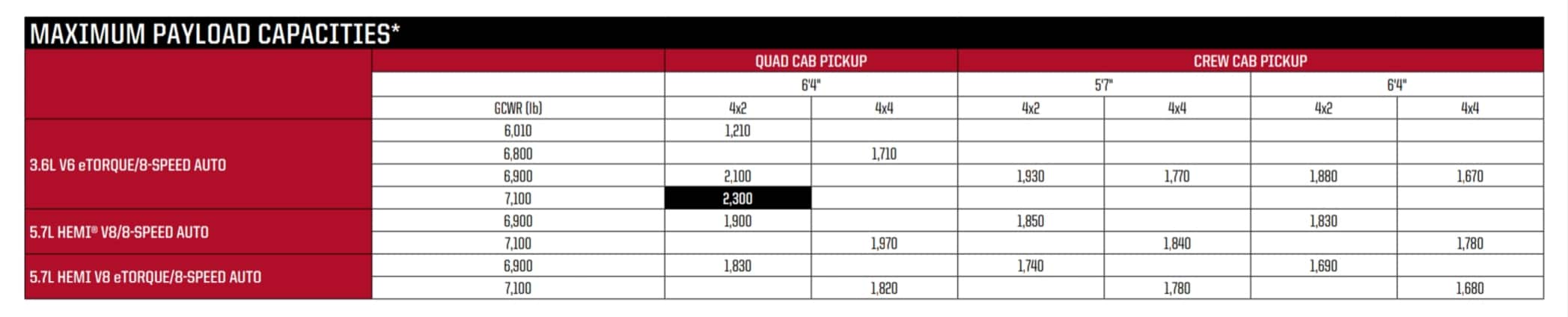
Please correct me if I'm wrong, please, you seem to be lacking a few people skills, hopefully it's just the way I'm reading it, you posed the question, others try to respond to be helpful with what they've experienced and seen based on what they have and what they have found. You get snippy and clarify that you only want, other people, to provide information if they're talking about 1 specific truck and then state that you are tired of doing research for others while everyone else is doing just that for you. Backofbeyond quotes "Rumline – Exactly. I was mislead by the OEM websites and brochures on payloads." Trying to help you out *you know* "experienced advice I’m supposed to rely on” You then post you have the real numbers because you had a trustworthy salesman send you a sheet, as was stated earlier, the only numbers that matter are what is on the door post. The "real" numbers you have are the brochure numbers I guess you can lead a horse to water...
1 point
-
Spike's method worked for me!1 point
-
From what I see on my post above, I seem to have succeeded. However, instead of copying the URL, I just copied the map itself. Does it appear the way it should regardless of the method? (That blank spot above Arizona will be filled in this month.) Thanks, Jason.1 point
-
I signed up about week ago for 2019 and it's already filling up. Last year I was hesitant to go because it was so far. We live in Northern Nevada. But we decided to go after talking to Scott Oliver and I am really glad we did! The thing about trips is you can never judge them before you go and they always turn out to be so much better than imagined. So we took off with the absolute minimum of planning. We didn't even take a map and only had the destination date in mind. We wandered around and stopped when and where we wanted too. Sometimes 500 miles more east and sometimes a 100 mile detour to see something. We saw the vast emptiness of Nevada, Valley of the Gods, The Rio Grande and The Johnson Space Center. We toured the Oliver factory, visited Muscle Shoals Alabama and the Fame Music Studio, where so much music came from, toured the Helen Keller Museum, toured a Frank Lloyd Wright house, camped next to the Tennessee River at McFarland Park and had a marvelous dinner on a floating restaurant on a perfect evening. Crossed Mobile Bay on the ferry, and played in the Gulf behind the Flori-Bama Bar in Pensacola. we stopped at a "picnic area" in Texas for the night and the thunder and lightening was so powerful we stayed in the truck until it passed, nobody around for miles, and watched in wonder. Afterward everything was fresh, a fantastic rainbow and and evening with an endless view. We made zero reservations along the way and found so may beautiful places to stop for the night. Oh, and we had a great time at Guntersville. Met some great people and made some long term friends. Oliver went all out to make a very nice, fun and casual event. Coming home we played it by ear again and were able to wander along at a speed we chose. Cruised through Quartzsite after the rush and stayed in a BLM campsite, by ourselves, for free. Stopped in Death Valley and soaked in the hot springs for a couple of days as our last major stop before the final leg home. About 60 miles in on a gravel road and 60 miles back out on another gravel road. The last 6 miles is across the desert with almost no road at all. Finally, the Oasis arrives. Wild burros casually stroll by, looking for a cookie. Warm clear water fills beautiful soaking pools. Besides our nights at the rally, we only paid for four nights to camp during the month long trip. Two were $7. and two were $10. Each with full hookups. We entered federal parks for free with my Senior Card. If you want some good sippin' whiskey, be sure to get some Kirkland Premium Small Batch Bourbon at Costco before you go. It's hard to get and twice the price in Alabama. The final couple hundred miles up 395 wander through the eastern Sierra and past Mono Lake. Then up to 8,000 ft. A refreshing thundershower rinsed the truck and Ollie. We left pounds of dirt on the highway and got home with a clean rig. Two months later I eagerly signed up for the next one. We'll probably cruise through Yellowstone this time and see some different parts of the South that I'm so unfamiliar with. Alabama is full of beautiful parks. The food is delicious and everyone was very friendly. Heck, we might even take a map this time!1 point
-
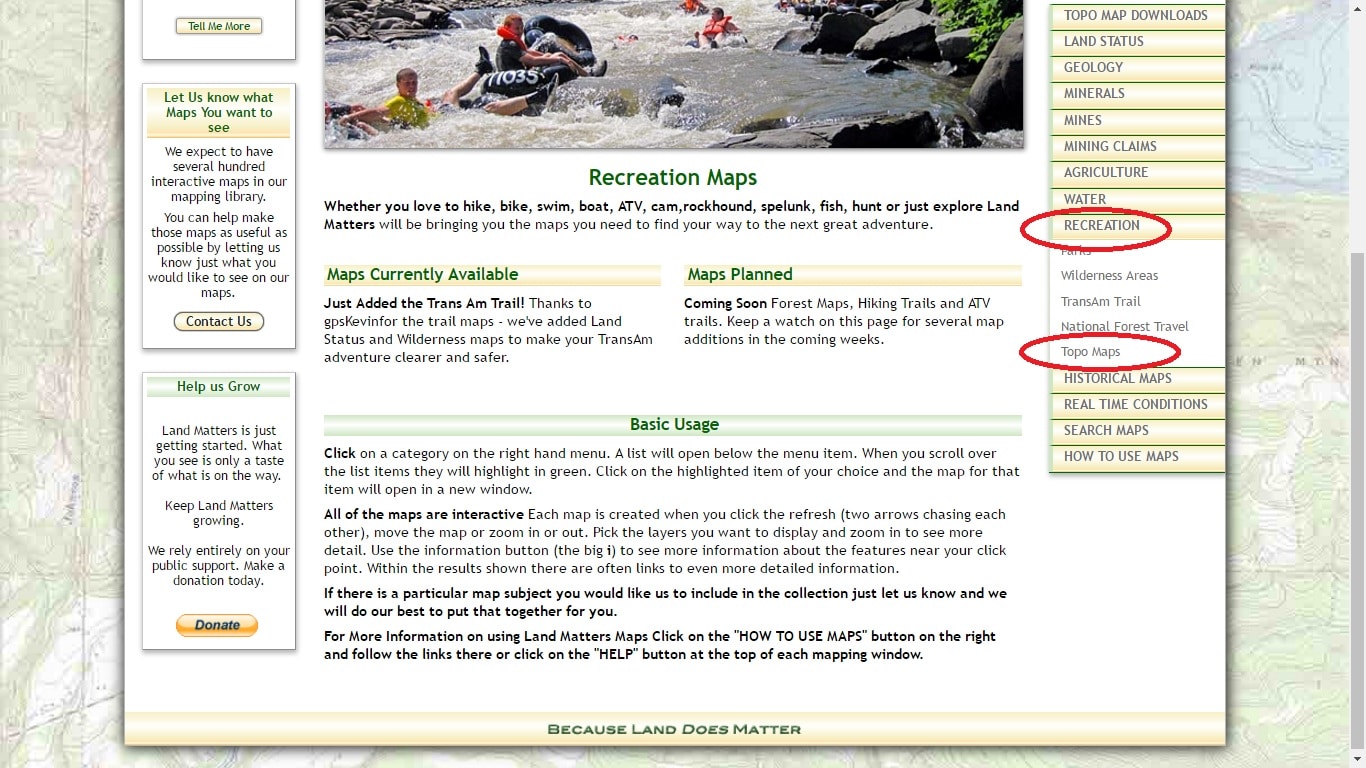
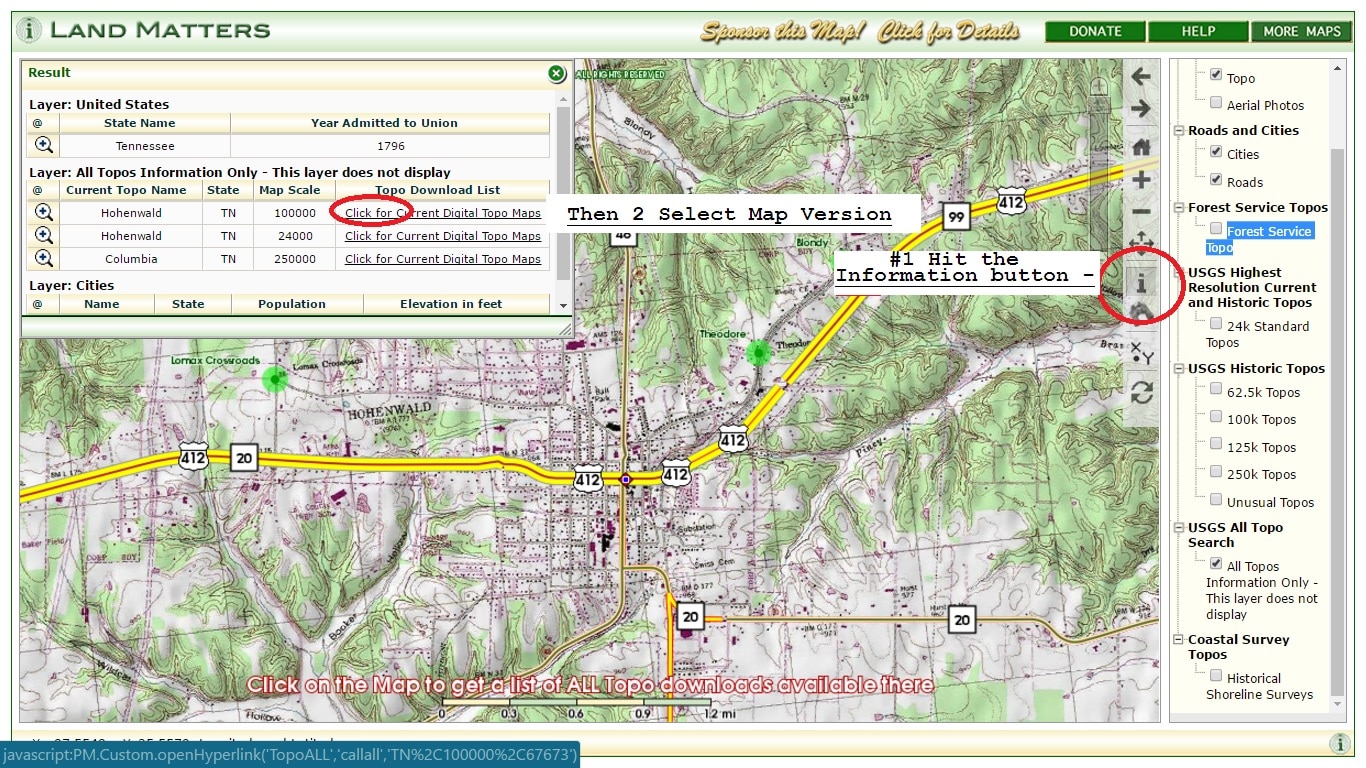
For the most part we are really spontaneous and don't always look ahead of time at places to camp and most of the time we simply use "Trip Adviser" or "Yelp"when looking for a place. But then there's times when you just want to get away and really all that you need is a map. So I go to http://www.mylandmatters.org/ and download the USGS map that I want for that particular area. There are simple tutorials for this on YouTube but here's a quick run down 1st click the "Maps" button in the menu Then today we'll select "Recreation"first and it then opens the drop down menu below it and we're selecting "Topo Maps"this time but there's a ton of great maps on here and if you're a miner like I am then this place is my 2nd home - After Selecting this you click on the + button and then you can either keep hitting the + inside the map in the area that you want or I simply form a rectangle around the area that I want to see and let it enlarge that way on its own. To make a rectangle just put your pointer in the lower right hand section of where you want to enlarge and then drag it up and left to form whatever size area. Today we're going to Hohenwald - You can see the green and then look for state parks, etc. You can drag the map by hitting the button with the 4 arrows pointing in 4 directions then just drag the map up/ down/ etc... The arrows are above the most important button, which is the "i" or information button - After finding the area that you want the map of, you simply click the "i" and then click on your spot on the map and it will open the menu on the left in the picture above. Then simply download the map and open it up and you have the USGS Map of that area right in front of you - I zoomed in at the bottom so you could see the edge and also Hohenwald. Then I saw the green US Forest areas and picked one, the Laurel Hill Lake State Rec area and then typed that area into found a place to check out for the evening. Then we Googled Laurel Hill Lake and the rest is up to you. There's a ton of info all across the United States and this gives you a place to start. Honestly though it all starts with having a good GPS in your Vehicle. You can find them for under $200 in many stores - https://www.amazon.com/Garmin-Nuvi-2589LMT-North-America/dp/B00N41UTCG/ref=sr_1_6?s=gps&ie=UTF8&qid=1482271268&sr=1-6&keywords=garmin+gps Reed
1 point
-
WINTER STORAGE OF CAMPER When storing the camper for the winter you will want to ensure that it is done properly so you don't run into any issues when you get ready to get it out of storage. Winterize: Make sure you properly winterize the camper with an RV Antifreeze. Using air to blow out the lines will NOT remove all of the water in the system. There are valves throughout the camper that can hold the smallest amount of water, freeze and crack causing an unwanted repair. Make sure the filter or anode is removed from the water heater and it is empty. Batteries: The on-board batteries are susceptible to cold weather and can drain even when disconnected from the camper. It is best to leave the camper on a charge keeping the batteries topped off. This will prolong the battery life as well as ensure that the camper has 12v power when it comes out of storage. Tires: The tires on your camper may develop flat spots if left sitting on concrete/asphalt while being stored. This is okay as the flat spots should straighten out as you drive the camper down the road about 10 miles and the tires heat up. Even if the camper is being stored inside a building, if the building temperature is not regulated to stay above freezing and/or the building heat source fails, then you may have something freeze inside the camper causing damage. Winter Usage The camper is designed to be used during the winter months just as you use your stationary house. However, the biggest difference is that with your camper you may turn off the heat source and travel to your next destination. This trip might just be enough for the water left behind in your water lines, water filter, toilet, and or water heater to freeze and cause damage. Recommendations: While traveling in freezing temperature (32 degrees) it is recommended that you drain your water heater, cut off the water to the toilet and flush to remove as much as the water from the toilet as possible. Depending on the outside temperature and how long your drive will be, this may not fully protect against freezing. It is best to use RV Antifreeze to pump through the lines when in extreme temperatures to ensure that nothing freezes. What factors impact how quickly your water will freeze? Water Mass - 6gallons of water will take longer to freeze compared to 1ml of water. The valves inside your camper may have less than 1ml of water resting on them as you travel creating a potential freeze condition. Water Temperature - The starting temperature of the water before it loses its heat source. Water that is in the cold lines may already be at 50 degrees and it only has to drop to 32 degrees for it to freeze. Hot water in the lines requires even less time compared to cold water to freeze. Outside Temperature - If the outside temperature is 0 degrees then the inside temperature will fall faster than when traveling in 32 degree weather. Speed of Travel - When traveling down the roads at 70mph the wind chills across the camper can drop the temperature quicker. *When traveling during the winter months please keep up with each states laws for campers. Many states do not allow the propane system to be on while driving on roadways, bridges, and tunnels. Space heaters may keep the main cabin warm but may not provide a sufficient heat source for the water lines between the shells.1 point












-
Recent Achievements
-