Leaderboard



Popular Content
Showing content with the highest reputation on 02/22/2019 in all areas
-
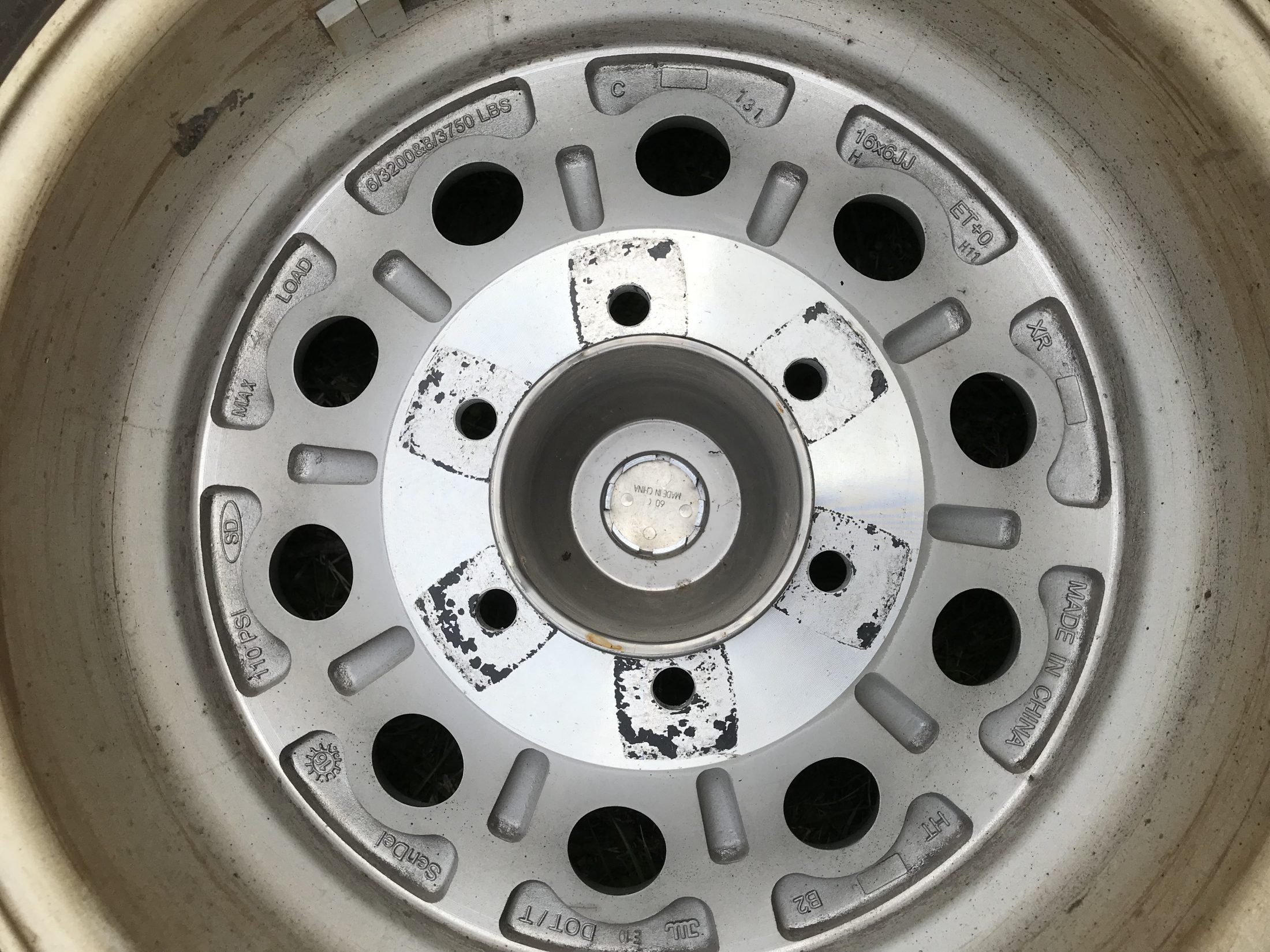
Took a photo of the information cast into the back of my hull number 208 LEII wheels. 110 psi is listed as a maximum. I run 60 psi in all four tires. I could be wrong but, I would think that it is harder on the bearings/tires when making a tight turn with really low inflation pressures.
 3 points
 -
Our trailer was pre-Michelin and pre-Dexter EZ Flex. We left the factory at 80psi in our BF Goodrich tires. Our first year we experienced overhead doors opening, wires coming off the water pump and electrical connections loosening. I aired down to 60psi and installed the Dexter and we’ve had no problems since. I may try going down to 55psi, but 60psi has been working well. I keep an eye on tire temperature on the TPMS and haven’t noticed much difference at the lower pressure. Mike3 points
-
http://olivertraveltrailers.com/topic/how-to-tire-pressure-placard/ Depending on the load 40 to 45 is appropriate. I am now running 45 with no issues. I keep lowering it, I may try 40 this year. LOL.... If I end up on a really choppy forest or ranch road for many miles I will drop them to 30 psi and re-air when back to normal roads. I believe that a TPMS is mandatory if you run at these pressures, since you will have way less time to react to a slow leak than if you are running at higher pressure. I don’t know if this info was ever added to the Owners Manual. Mine has pages of boiler plate legal messages, pictures and warnings but zero actual recommendation for the proper pressure. Can somebody with a new trailer please check that section and see if this info was ever added? Thanks. I hope this helps. John Davies Spokane WA3 points
-
I don't know what most people use, but here are two resources for you: the first is Michelin's inflation tables for their LT tires, which unfortunately no longer shows the older model tires that many of us have. John Davies, however, preserved the info for older tires in this post. I ran across some early discussion on tire pressures here, and that shows the thinking on why our tires come from the factory at their maximum inflation pressure. Keeping your tires at the maximum rated pressure seems really odd to me, but apparently it's a fairly widespread practice so I guess it's up to each owner to decide for themselves which way to go. Keep in mind that's an older thread talking exclusively about the Elite I.3 points
-
I have noticed reading some of the posts that some of the problems that occur with the Ollie are from vibrations, loose wires, water lines etc. I know some travel gravel and unpaved roads, some of the vibration. I noticed at the factory tour that the wheels installed aren't spun balanced with weights. I maybe wrong, but wouldn't it be a good idea since they are light truck tires. An unbalanced wheel will cause vibration.2 points
-
I agree with all the posts and thanks. I tend to go overboard on these and other items, always checking tire pressure and balance anything to make live on the road easier. Another key point on my purchase of the Ott was the wheel tire combo. You don't find this set up on travel trailers, most are all fitted with the China bombs. A/S. Yes a tire monitor system is on the buy list.2 points
-
Our tires are BF Goodrich also and we have had the factory install the Dexter EZ Flex and no issues before the EZ Flex or after. When we picked up the trailer before it was moved by us, we checked and adjusted the air pressure to 55 psi and no issues so far.2 points
-
You beat me to it. Thanks for posting those links. Note that an Elite weighs 5000 pounds with a single 5000 pound axle, so the tire pressure for that trailer must be higher, in the 55 to 65 psi range. But 80 is still too darned high. At the factory they don’t know which type of trailer a wheel set will end up on, so they keep them all pumped up hard. But it sure would be nice of them to let some air out when they bolt them up to an Elite II. BTW in 2009 when that other thread originated, very few people used TPMS on trailers. So running all the tires rock hard made at least some sense. John Davies Spokane WA2 points
-
Could definitely be the case, if you remember this thread. For what it's worth, they don't seem to be getting any worse, though we've only put maybe 1,500 miles additional on them since then. But again, I've no idea if that damage was from my first 5,000 miles with the pressures at 70, or the second, with them at 45 - or if it's not related to pressures at all.1 point
-
John Davies started a thread couple years ago about wheels. Checked our LE2's ION wheels that have 60PSI maximum air pressure. Could not find load/inflation tables for the BFG LT tires, so started using the Michelin inflation table. Run Ollie's LT tyres :) at 50PSI. Installed Dexter EZ flex couple years ago. Not having vibration issues. Edit: Here's the thread, looks like a few older Ollie's including ours have ION wheels with lower maximum wheel air pressure, 60PSI Max. http://olivertraveltrailers.com/topic/wheels-model-warranty-care/1 point
-
What tire pressure does most people use? When I picked up the trailer three years ago the pressure was set by the factory to almost 80 psi; I adjusted the pressure to 55 psi and after getting the trailer home I installed a TPMS plus had the tires balanced. We have had no issues with our trailer running at 55 psi.1 point
-
I guess the first thing to say is that I don't think vibration is any more of an issue for Olivers than it is for any other trailer. In fact, our trailers are probably considerably less prone to vibration damage thanks to the solidness of the construction and a far better than average suspension. That said, it's inevitable that if something breaks on a moving vehicle, vibration will at the very least have been a factor in the failure; and so that's why it's mentioned here so often. I think we should count ourselves lucky that we can place vibration high on our list of issues, vs leaks, rot, instability, etc. One of the primary reasons my wife and I chose Oliver is because of the inner hull and that fact that most of the 'furnishings' of the trailer are integral to the structure. I've read too many stories of other trailer *cough*airstream*cough* owners arriving at their campsites to find that their trailers' interiors had disassembled themselves along the way. Like John said, the most effective means you have of controlling vibration is through tire pressure (I set mine at 45, vs the 70+ they were set to at the factory). I honestly don't know if wheel balance is an issue or not. Couldn't hurt to rebalance them - how about that? For more adventurous travelers, there are suspension add-ons from Lippert and Mor-Ryde that should significantly help, though I don't know of anyone who's gone that far. Yet. Apart from those things, you can do what I do, which is whenever I'm working on anything in the trailer I try to take a moment to see if there's anything adjacent to what I'm working on that can be secured more solidly. As to whether Oliver could improve with respect to vibration - of course they could, and it's input from us that would drive them to do so. But saying they can improve is different than saying it's an issue. You'll find that many of us on the forum are relentless about stuff like that. We're the sort that the moment we improve something, we're thinking of how to improve upon that, and we tend to apply those standards to Oliver.1 point
-
Having one of the new trailers with the water feed from the top, my guess would be that debris from the hole cut found its way into the drain line and possibly clogged the valve assembly. The beauty to pex, cut the line somewhere before the valve, take it in the house and clean it make sure it flows good and then Sharkbite it back together, it's just a drain line. Make sure the tanks empty before you cut that line though...1 point
-
If you have any noticeable vibration, it would be wise to balance your trailer tires.1 point
-
Have you attempted to see if a bug/mud-dobber is clogging up the outlet? If it is blocked with a foreign object, perhaps a pipe cleaner or something similar could dislodge it. Do you have a source of pressurized air? A short burst of air could help. And do be sure to double check your valve placement to ensure they really are set for draining. You mentioned that you turned the "valves" to drain. On my old model Elite, from 2008, it only requires one valve (the one in line with the drain port) to be repositioned in order for the fresh water tank to drain. Does your newer unit call for turning two? One last thought . . . if the nose of your trailer is low and the water has all sloshed up towards the front of the tank, you will not be able to drain normally. An elevated nose is best for that operation. Let us know how it finally works out. Good luck.1 point

.thumb.jpg.780a61c48108d06558e15f745dfe9b5e.jpg)




-
Recent Achievements
-