Leaderboard




Popular Content
Showing content with the highest reputation on 05/14/2019 in Posts
-
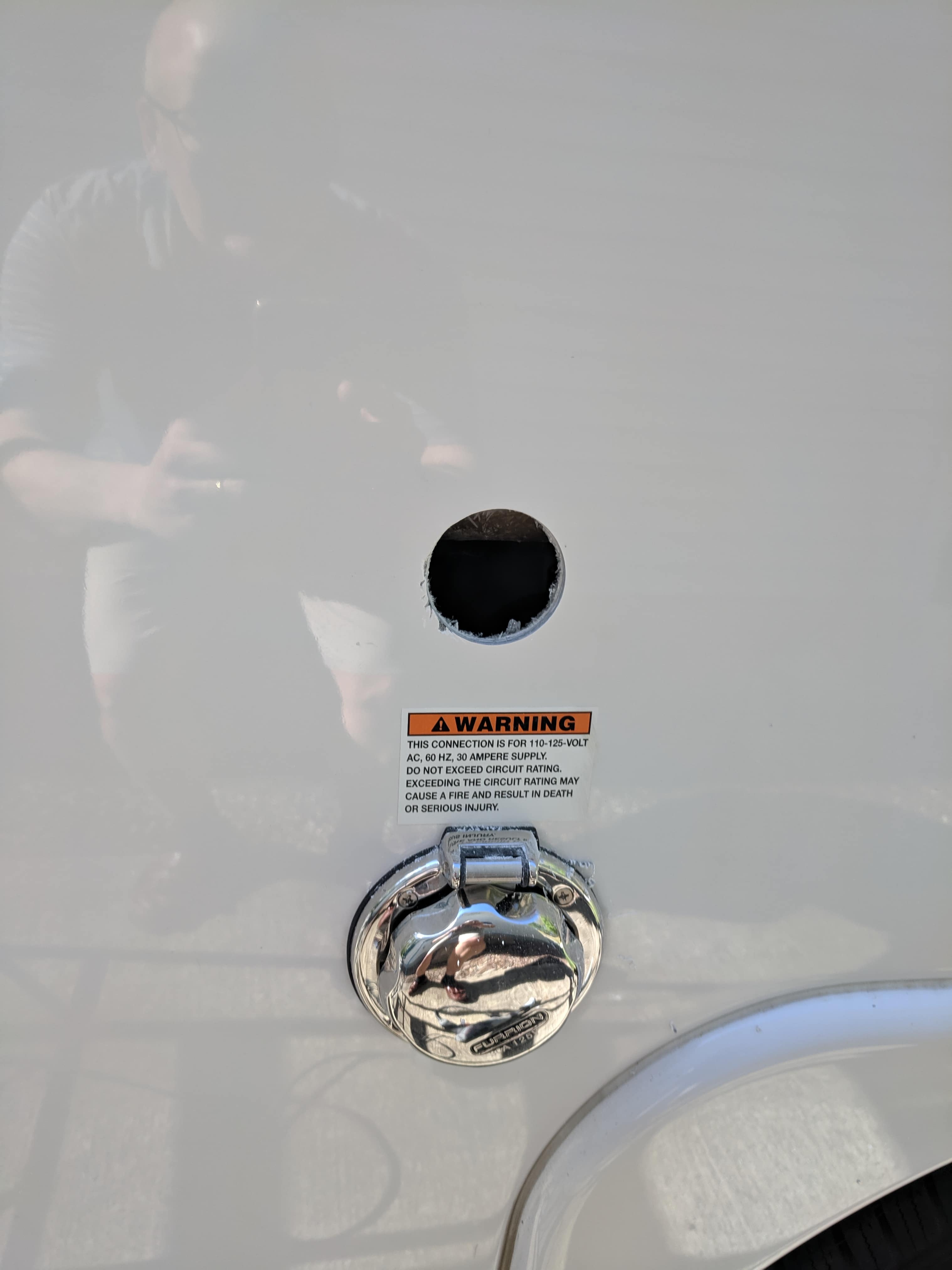
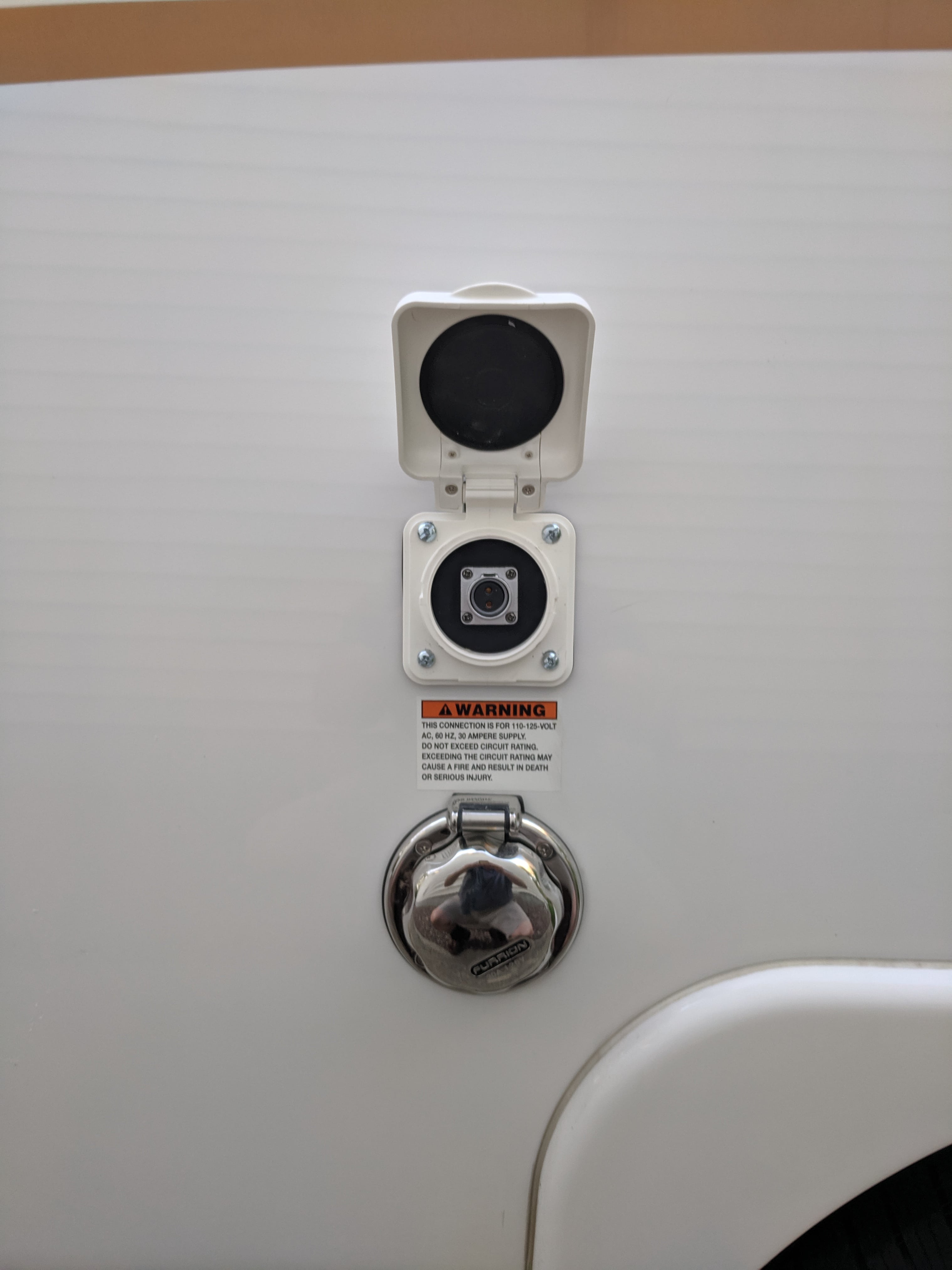
Thanks @Raspy. That is a nice simple idea. Well I have to say drilling a hole in my brand new camper was filled with anxiety but it was just about the easiest to drill hole I have ever cut. I decided to install the Furion solar plug port above my existing shore power port My plan was to use rivets to mount it but the rivets I had were not long enough. I think you would need 1 inch grip rivets to get through the plastic port and the thickness of the hull. I decided to through bolt it which worked but would be impossible with out a patient partner because the top through bolts were just under the lip of the inner hull; this made threading the two top nuts very tricky! At any rate the job is completed. I will post the pictures here and then add the final wiring install pictures when I get to that step.
 3 points
 -
If you want to calibrate your own torque wrench, check out. I ordered the little scale from Amazon for less than $9.00 dollars. All I've got is a cheap one from Harbor Freight and I'll be curious to see how accurate it is.2 points
-
There were three reasons that it didn't work - 1) they said the stability was questionable just moving it around the factory, 2) because of my hitch config, the trailer already travels nose down a bit even with a 4" rise on my hitch, and 3) it looked totally silly. I also think that a lift would make the trailer more difficult to level - not a huge deal, but you'd have to carry some extra blocks I think. Also an extra step to get in and out. That was a 4", maybe 5" lift, so obviously something lower would mitigate all of the above.
1 point
-
I agree with Raspy on the above. I don't think you want to fiddle with the spring rate much and one of the reasons I've not looked further into the Lippert or MorRyde systems is concern over what that might do to stability. The truth is that however much gravel and dirt each of us sees, we still do 90% of our travel on the highway and safety there trumps anything else. I've read a few cases over on Expedition portal where guys who have bought Australian campers or US ones with offroad suspensions have had to go back and add big sway bars to eliminate the sway on highways. I've also noticed that most of my suspension woes come from poor paved roads and not gravel/dirt. On gravel, and especially dirt, you're traveling at slow enough speeds that the bigger bumps are taken just by the trailer tilting back and forth. I've seen no need for a long travel suspension anywhere that I'm willing to risk taking the trailer*. Same goes for clearance. I've hit the steps once, but haven't scraped the bumper yet. The primary issue off pavement for me is vibration. On the other hand, big dips, potholes and bumps on a poorly paved road often take you by surprise and you can't slow down quickly enough to make them not hurt. And wow have I had some moments of hurt, even on interstates. Much, much worse than anything I've experienced off pavement. *Frankly, while those Australian suspension systems look amazing, I've come to really question the need. Long travel suspensions are either for absorbing big high speed whoops, like a Baja truck, or for rock crawling. On a trailer you don't need a rock crawling suspension because you have no traction to gain. And if you're traveling on gravel fast enough to need a Baja suspension, you're just going way too fast.1 point
-
The best kind of Ollies have holes in their bellies.1 point
-
If you plan to switch to the 5200lb axles and install disc brakes, make sure to order them WITHOUT electric brakes. This will save you $$$. I just replaced one of mine and it ran a little over $450. A year or so ago I posted about my switch to from electric drums to electric over hydraulic discs complete with a shopping list of all parts needed with prices. If you are handy, you can do this yourself. Are you going to be at the rally?1 point
-
Vector, Very happy with 5200 pound axles. Larger bearings and brakes. It was my understanding Oliver temporarily ran out of 3500 pound axles when they installed Legacy Elite axles on our Ollie. Ours is not the only LE2 Ollie with 5200 pound axles. Will be happy to email a PDF spec/build sheet that Dexter emailed for my axles. Will send you a PM with email address in a few minutes. I don't know how to post a PDF file here.1 point
-
Ok here is what I have been informed, in my case I had what is called production holes, it’s how the hull are mold work together in some fashion. I also had a twist” of a air pocket formed and blew out. Bottom line things were not done correctly. A correct hull should be smooth and white with a clear coat of gel coat. To correct this deficiency the holes must be enlarged and fiberglass layers should be used for repairs. Then gel coated to match. If not completed correctly then the issue would resurface. So what I got out of them for you guys with exposed production holes with no cracks, it’s a matter of a coat of Gell coat, And for those such as me with blowout holes it more extensive enlarging the holes and filling with layers of fiberglass. Hope this helps.......Yukon1 point
-
John, You can search for shocks by length, but it can be a hassle. Once you find the ones, and what they are made for, you can just go ask for shocks for that particular vehicle. You have to know the mounting style on top and bottom of the shock. I once found that shocks for a certain year Corvette fit a trailer I built. Then I found some for a certain model Volvo fit my Samurai. I recently wanted Rancho shocks 2" longer than stock for my Jeep. The parts guy assured me they were right, but they turned out to be about 3 1/2" longer and would bind on compression if installed. Then the next set I ordered were said to be for a 2" lift, but were shorter than stock! So, you really have to know what extension and compression lengths you want and how much tolerance you have with those measurements. Then you have to find those measurements with the mounting style you need. Then, of course, with the shocks at the angle they are, you can't just add 2" for a 2"lift.1 point
-
Thank you so much John for taking the time to explain this to me. Nan1 point
-
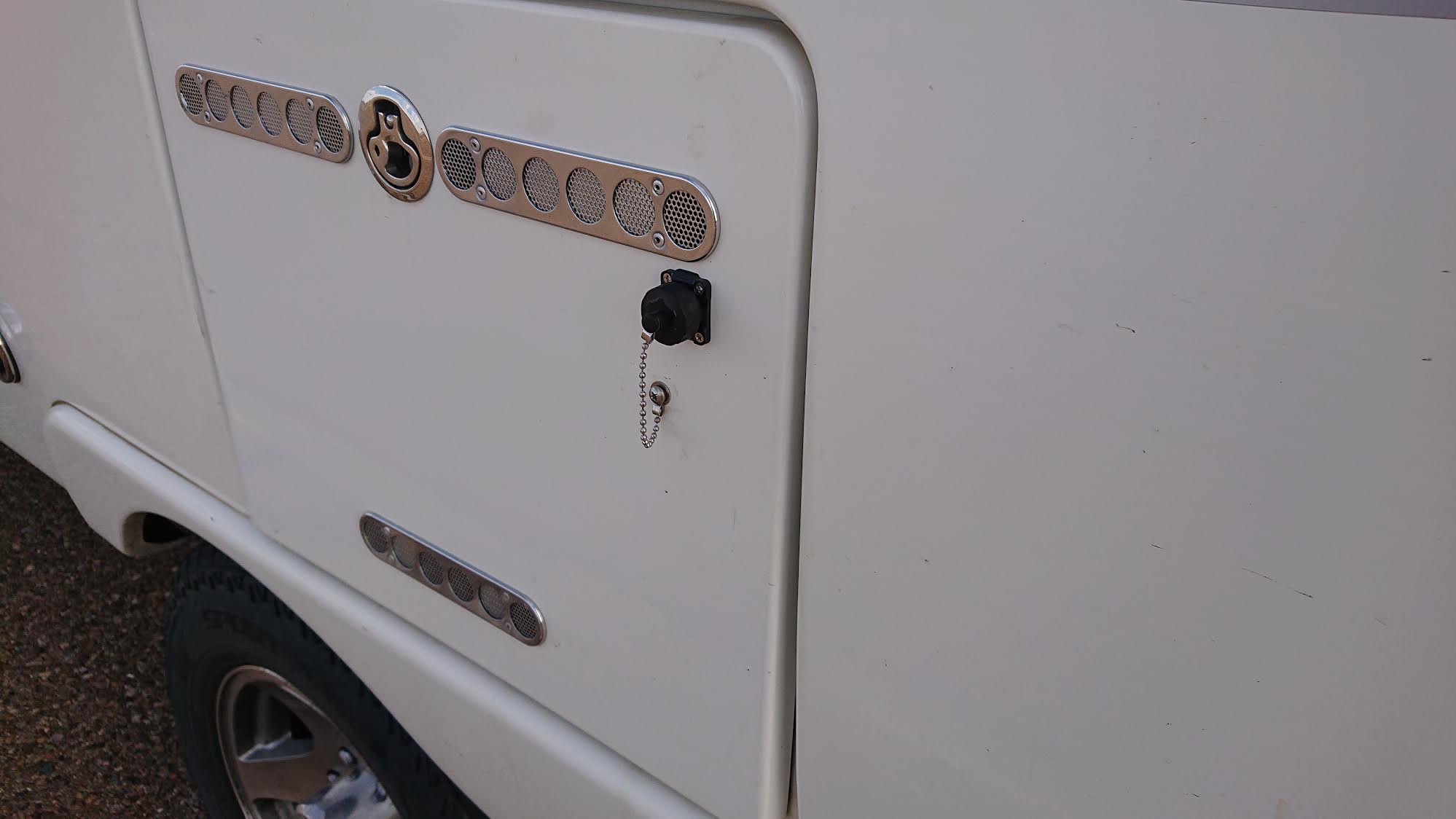
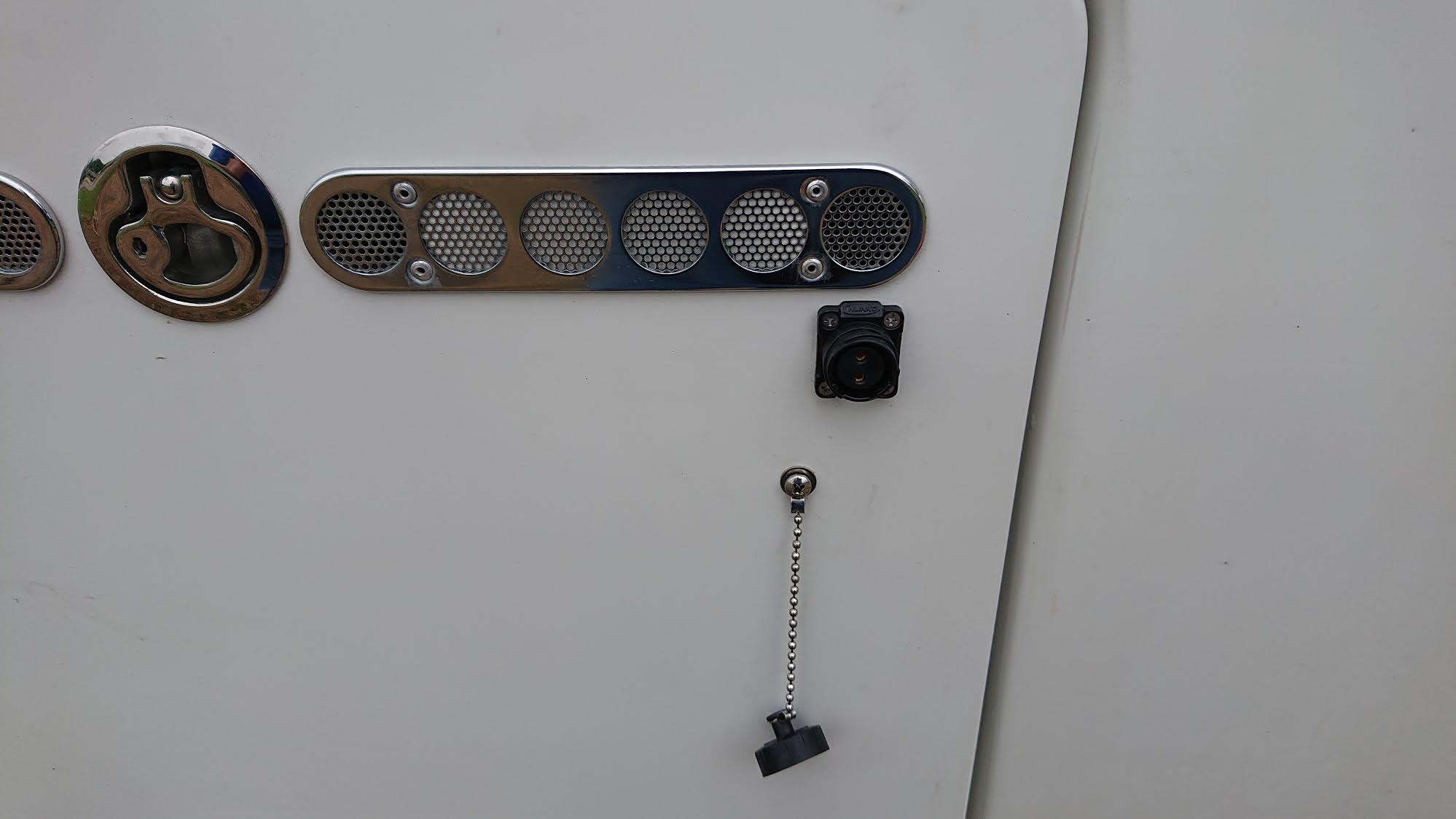
Exterior solar plug pictures: This is a very nice and compact 20 Amp exterior plug. It has solder connections to gold (I think) terminals. Comes with screws, gasket and chain. I posted a link to it in an earlier post. The male end fits a #12 exterior extension cord and has a strain relief nut. The plug has a twist-lock design and will not fall out. It also keeps the connection dry while plugged in. https://www.amazon.com/CNLINKO-Industrial-Connector-Receptacles-Waterproof/dp/B0795464LP/ref=pd_ybh_a_26?_encoding=UTF8&psc=1&refRID=9EBPJGFS22DYCSBDBBGV
1 point
-
Welcome Randy, we are probably one that ordered our new Elite II with very few options, we are I guess what one person called us as travelers, that is we do want hookup and really don't look to Boondock, or at least not by choice, one night at Walmart is ok. We even opted for the White counter tops (standard), Heather Oliver said they look great, just a lot of white in the trailer, but were into white and with our accent trim we will add, it should look great. No upgrades like, Solar, Batteries, and all the boosters that are offered, we did opt out on those to. Oliver builds such a nice trailer that which ever way you go I don't think you can go wrong, plus if later you want to add some of the extras just setup a time with Oliver Service and get it done. Plus we can always take along a Honda generator for those need be situations that can arise and it will run the A/C. Order your trailer to custom fit your needs and make it yours. trainman1 point
-
Welcome, The Andersen is a cool lightweight hitch, but not without its own set of problems. They keep changing the design in attempts to fix those issues. Depending on the age and specs of your truck, I would DEFINTELY consider towing with a dead weight ball mount to see how your long bed Taco does. Where the Andersen excels is on undulating roads where the truck is going one way and the trailer the other. It helps immensely to dampen that frightening pogo motion. Without the effect of the urethane bushings under compression all the stress goes to the rear shocks of your truck. If the are old they may not be up to the task. In spite of the advertising the hitch doesn't do a very good job of weight distribution, compared to steel spring bars, but you can use it without cranking down hard on the nuts and it will still provide great vertical dampening. If you keep the tongue light (don't order the front cargo tray) then you might not ever need this hitch. http://olivertraveltrailers.com/topic/fyi-andersen-wd-hitch-ball-locking-up-or-load-noise-11/ If you will tell us your camping desires and your tow vehicle specs (payload, engine, gearing, tow options) we will be happy to argue about them.... ;) I'm a huge fan of Toyota body-on-frame trucks but there have been a bunch of changes over the years that will affect how well your Tacoma can tow. John Davies Spokane WA1 point
-
Hey Randy, welcome to the group. I would echo some of the advice given. Do you know what kind of camping you will be doing? If you’re big dry campers then solar, batteries, inverter and composting toilet are important. If you are a traveler and will have hookups, then the regular toilet is okay and you may not need solar and the extra battery capacity. It depends on what you see as what you will be doing. If you have general questions on options, ask away! There are some very knowledgeable and experienced owners here that can give thoughts and opinions on almost anything. Mike1 point
-
Where are my manners, I apologize for my behavior here. Randy - Welcome to the Oliver Forum. Jeesh, I'm losing it. RB1 point
-
You can do like I did, check off the options that you really have interest in. Then you look at each one more closely ask questions check the forums. Then narrow it down to your own personal preference. You’ll have plenty of time to make final decisions before you get a production date.1 point
-
And I forgot to say, " welcome to the forum!" Randy, are you new to camping, trading up from a tent or some other brand? The options today are many, I know. Take heart . A lot of options in 2008 are already standard. Just a lot to work through in the decision process. Here's our story, 11+ years in. We camp without hookups 99 per cent of the time. Removed the microwave. Added solar in fall, 2008. Most important to us is solar, and the freedom the small size gives us. We leave the bed made up all the time. Added an inverter in 2009, died a few years ago, no plans to replace it. Never used it much. We chase cooler weather, travel in the eastern half of us, and Canada, primarily. We camp often in North Carolina mountains. Where do you want to go? Sherry1 point
-
This close: 1. Were I you, I'd find out the tow ratings, payload, and hitch weight capacities of my Toyota, to insure my Toyota was rated to tow the smaller ollie. The larger one, the EII maybe out of the question. You may need weight distribution simply due to hitch weight limitations. For sway, no, the Ollie tows just fine. 2. Options are what fit your camping personality. You didn't state any profile. Boondocking, only stay in RV parks, a little of both, must have electronic connectivity, and on, etc... I would like to help, but I can't. Good hunting. RB1 point
-
Yes, check your specs on the truck. The Elite is smaller than the II, less tongue weight, and less weight overall. But, I heard from another Elite owner that uses the Anderson with his late model Taco in another thread. Our Elite is a 2008. I don't know the current weights on new models. Our Elite has served us really well for a couple and one or two small dogs, for 11 years. Have you seen one yet? Sherry1 point
-
Randy - No, there is no pros and cons list for the items on the options list. Certainly any pros or cons would be fairly dependent on exactly who was doing the proing and conning. Many of these items have been discussed here on the Forum, but, you will need to either use the "Search" function or simply just start "leafing" through these pages to see what various people have to say. Certainly you can also just ask if you have specific questions about any item offered. In your example you will find owners that are virtually dead set against a weight distribution system while others simply swear by them. As far as I know, we have never had an owner say that their Oliver swayed. So, that feature of the Andersen hitch is not usually an issue. Check with Toyota regarding as to the need for a weight distribution system - your owner's manual or labels on your hitch may be an easy place to look first. Perhaps a good place to start would be to let us know a bit more about the type and style of camping you intend to do. Then Forum members might have a better idea as to which direction(s) and/or options might be fitting for your purposes. Bill1 point
-
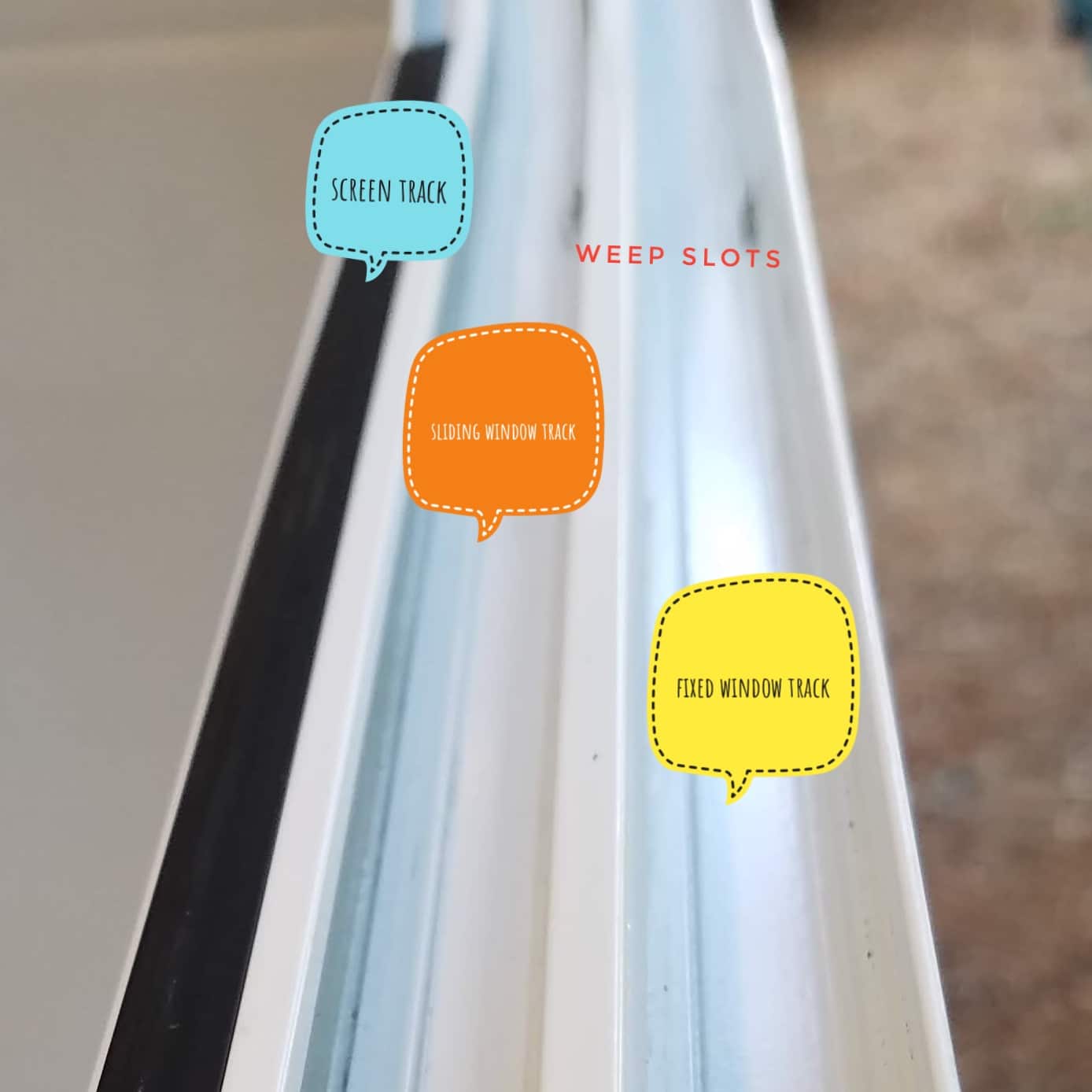
I wanted to offer a few suggestions for removing the window seals and tracks. Please read the entire message first as my writing style is a little disjointed. And if you think it tough to read, you should be grateful you don’t have to think like this.? First off, only do this if you feel you can’t clean the tracks and drain slots with brushes, vacuums and compressed air. It takes me about 30 minutes to remove and replace the seals, minus the drying time for the seals. Removing the outside seal for the fixed glass track is pretty simple, I used a metal pick to raise the seal enough to grab it by hand and then pulled it out. The sliding glass track has a different seal that is actually 5 individual pieces. Without looking closely you would think that it is all one piece. The top and bottom horizontal pieces are straight and run the length of the track. The curved corners are two separate pieces with a short straight vertical piece between them. My trial and error procedure is to remove the window shade assembly first and then the screen. The screen has spring clips on the top. Slide the screen open enough to grab it on both sides and push up while pulling the bottom out. With the screen out, remove the sliding window rubber stop. I think a piece of masking tape on the window frame will prevent the sliding window from scratching the frame with window stop removed. Wish I had thought about that before scratching my frame. Working from the outside, remove the outside seal. Next remove the short vertical seal between the curved corner pieces in the sliding window track using something like the pick and a butter knife. The seal is U shaped and it is necessary to fold either of the side portions into the middle and then carefully remove the entire piece. Removing the short vertical piece first will allow you to slide the bottom corner piece upward into the space created by removing the short vertical seal. Do not remove the corner pieces as the are very fragile due the the cuts is the sides which allow the seal to fit the round corners. Now begin removing the long bottom seal by folding both sides in and lifting it out of the track an inch or so at a time. After you get about half of it out you can begin sliding it out from under the window. Now you can clean the seals, tracks and slots by which ever method you prefer. Allow the seals to dry if you cleaned them with soap and water. I treat mine with 303 protectant before reinstalling them. If you are any questions, please ask and I’ll provide any help I can. Mike1 point
-
Missing pictures from original posting. I hope?
1 point
-
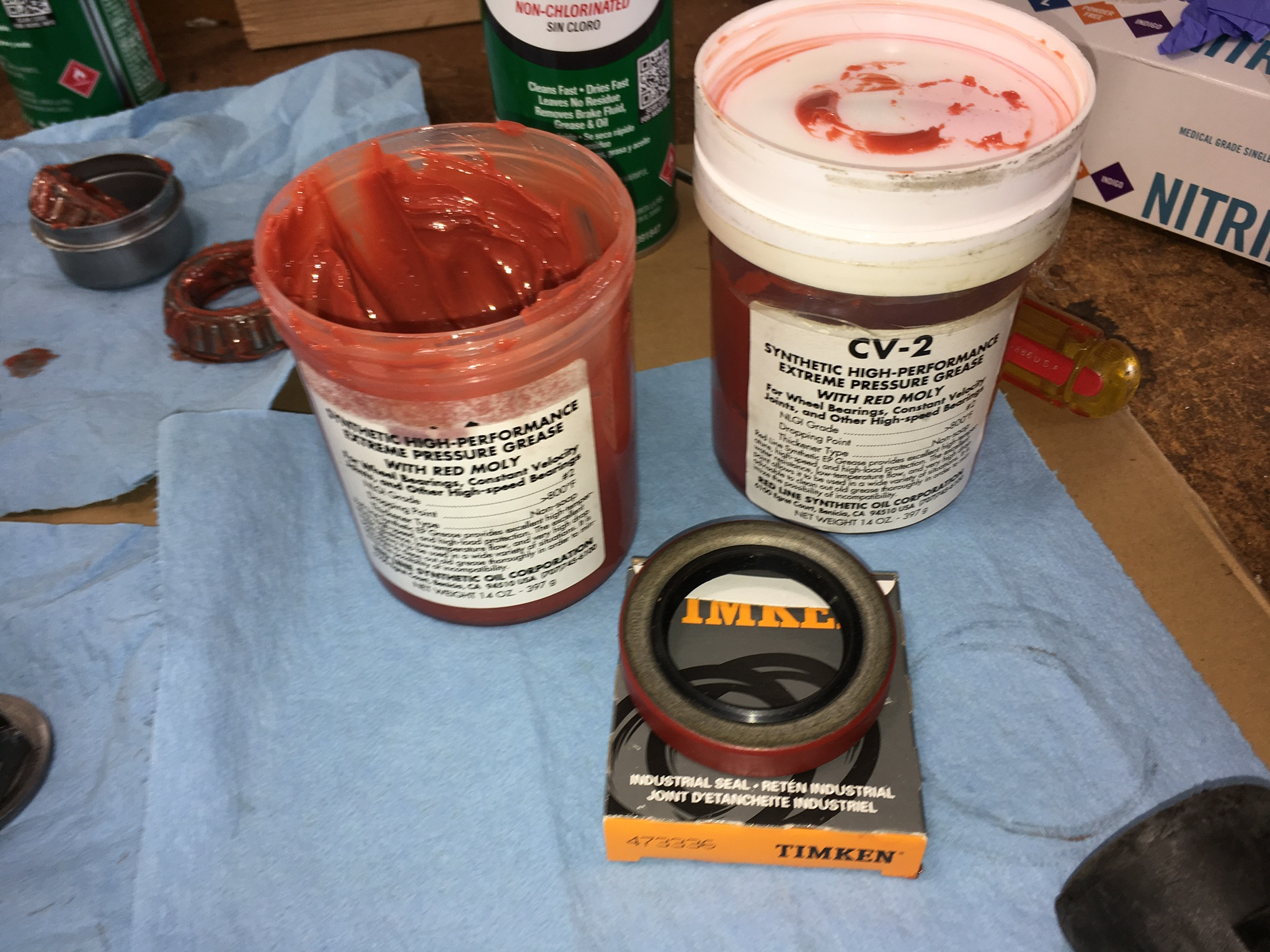
John, Crossed the bearing numbers Bob posted to Timken at Motion Industries and came up with these: Inner Bearing L68149: https://www.motionindustries.com/productDetail.jsp?sku=00660237 E-Trailer Recommends L68111 Race: Timken crossover: https://www.motionindustries.com/productDetail.jsp?sku=00660229 Outer Bearing L44649: https://www.motionindustries.com/productDetail.jsp?sku=00659271 E-Trailer Recommends L44610 Race: Timken crossover: https://www.motionindustries.com/productDetail.jsp?sku=00659251 John Davies used Timken 473336 seal. Link at Motion: https://www.motionindustries.com/productDetail.jsp?sku=01317904 We have 5200 pound Dexter axles on Hull 75 Elite II.1 point
-
Your axles take standard 3500 axle bearings and seals, no need to call Dexter. https://www.etrailer.com/question-181919.html You can get a generic bearing kit but I strongly recommend buying high quality Timkin seals at your local bearing supply company. All the $1 seals, including those sold by Dexter, are Chinese made garbage, they have very minimal quality control and will eventually leak and screw up your brake linings. These are about $20 plus tax for five, I always get an extra one for when I screw up during installation... like forgetting to insert the bearing first ;( Or here, for a lot more.... https://www.amazon.com/Timken-473336-Seal/dp/B001544U88 John Davies Spokane WA
1 point
-
Bob, If the stickers John refers to are not on the axles, the following Dexter link will tell you where to locate the serial number. With the SN call Dexter and they will email you a build/spec sheet with part numbers: http://www.dexteraxle.com/docs/default-source/default-document-library/light-duty-axle-identificationba11829d2ba463c18d7aff64007a4014.pdf?sfvrsn=01 point
-
Can you confirm by looking at the Dexter stickers that are on your axles? Should be on the axle tube near the center.1 point
-
As an owner of one of the early "Stripper Pole" (woohoo!) high lift Ollies and someone who flew jets and helicopters for a living, I am very familiar with issues regarding center of gravity and dynamic rollover. With The Wonder Egg sitting high, the reason I always travel with a full fresh water tank is to keep the center of gravity as low as possible in order to improve stability during angular acceleration under windy conditions. I also moderate my speed under those conditions whenever possible. This has worked well for 112,000 miles (knock on wood). Given the extra 5 feet of length and additional height of fiberglass in the Elite II, combined with additional storage space at higher levels you will be catching more wind and can raise your center of gravity higher. I realize your stance is slightly wider but would want to know, engineering wise, what the implications of any lift would be. Perhaps you would be encroaching on an unsafe condition with an extreme lift to your trailers. While it might enhance off road travel, you need to consider all ramifications of such a modification. Be safe out there and have FUN.1 point
-
Overland, I suggested "additional cross bracing" in my last post. That's important. Also, wider tires and/or wider wheels will not clear the shocks, unless the offset is changed. Then they'll stick out beyond the fenders. Bad idea for an off road trailer, or even one that travels in the mountains in winter. If someone really is going to drag an LE2 into places where these changes are needed, it woud be a good idea to go to the 5200 lb axles too. Now, how much are we up to? New axles, modified subframe, new wheels and tires, fender flares. Now it's wider and taller!1 point














-
Recent Achievements
-