Leaderboard




Popular Content
Showing content with the highest reputation on 10/24/2022 in all areas
-
My wife and I purchased our 2020 E2 based, to a certain degree, on our enthusiasm for cold weather adventuring. We took a number of trips over the 21/22 winter season to check out limits and capacities. All were trips between 3 and 7 days, in northern New England with night time temps in the range of roughly 30-0 degrees Fahrenheit. We would note nightly exterior temps, kept the overnight cabin interior set to 60 and rotated 3 digital temp sensors around what we found to be the most vulnerable areas to cold we found (and could get to) between the shells that housed water lines and tanks: 1) under front dinette seat, under street side bed by the exterior shower, 2) the pex lines to exterior shower passing through the faux wall at very rear of basement and 3) the battery box. We could not get to but are curious about the cabinet housing containing the bathroom sink. Playing it safe, we kept the trailer winterized for the entire time relying on containerized water and our composting toilet. All of our sites were boondocky, with no shore power hookups so we relied entirely on the LP furnace and solar/lithiums. We found that the stock trailer could manage to keep all the areas listed from dipping below freezing down to 25 (exterior temp). The lines behind the faux wall and exterior shower would hover in the low 30s at that temp. We realized those pex lines will, realistically speaking, need to be always kept winterized by adding cut offs as heating the basement area would be an inefficient waster of LP. Side note that we asked Jason if that could be done during our build and he informed us that the shop could not find anywhere with enough space to add them. We're open to suggestions. A simple set of tweaks including adding two layers of Reflectix to cover the interior of both the basement and battery compartment doors got us down to 20 with similar results. Next project was more involved. The temperature difference between the areas under and wall along side the curbside bed versus the street side bed was resulting in heavy condensation on the streetside wall and window which would soak that bed. We also found that the battery compartment was dropping down into the 30s at exterior temps in the high teens. While there is a matte heater pad below the batteries, it seemed to us that the compartment was too cold to reflect the lithiums themselves being warm enough to run efficiently and we noticed anecdotally an increased need for more charging assist - be it solar or generator. Could haver been the drain of the heat pad or the lithiums running less efficiently in the cold (as validated by the manufacturer) but which one did not matter. We felt adding heat to the box would be of benefit. Our fix was to re-route some heating vent. We capped the rearward 4" vent and re-ran that line through the gap behind the water tank from the furnace to the street side, past the inverter, under the battery box to a new vent we placed as a mirror image to the existing one below the drawers in the galley. One vent grate is pointed fore and the other aft. Here we used semi rigid vent tube specifically because it sheds so much heat, allowing the areas it runs through to warm. Where the tube ran past electronics, we would shield the hot tube in a layer of reflectix. Measuring with an infrared thermometer, the reflextix surface was cooler than the surface of the OEM flexi vent tubing and quite cool to the touch. The heat exiting the new vent would run about 10 degrees warmer than the one on the other side of the isle even though it is a further distance from the source. We expected an increase in output from the vent in the bathroom but did not notice much of a change. As the bathroom is a bit of a "dead end" with air being forced in but nowhere for it to exit, we added a 4" eyebrow vent at the floor level below the towel rack to allow for circulation and share some heat passively with another problem cold area - under the front dinette seat. While there are no pex lines run there, there are drain pipes and tanks and it would otherwise fall to freezing if outside temps were in the teens. Not very scientific but the furnace did not sound like it was under further strain or seem to run more frequently given similar temps. Our rate of LP consumption is roughly the same now as it was before alterations which, in single degree night time temps, consumes a 30lb tank in just over 2 days. Not very good. To increase efficiency, we cut two layers of "double bubble"reflectix and taped the edges with silver foil vent tape - as suggested in a previous post. They fit tightly inside all windows and are held in place by closing the shade. Bought a camco 14" soft material vent cover which bunjied over the Maxair (when not cooking) and cut a piece of 2" open cell foam to fit the window in the door. Covered it with a layer of reflectix and taped the edges. This is held firmly in place by the screen door. As all including the fan cover have refectix sides facing inward, the add ons look good enough - not jury rigged. Our takeaway is that these tweaks have bought us 20 degrees of leeway so we have squeaked by to zero. The batteries box is running much warmer but the other areas are more iffy. There is less condensation around the streetside bed but the exterior shower, for it's entire run, will need to be somehow shut off and winterizede or will be subject to freezing. Someone had suggested cutting a block of memory foam to put in the box with the exterior shower nozzle and knobs which may work but would not help with the tubing behind the faux wall. As to factory options that would have really helped: The exterior shower really needs cut offs or could have had it's lines run through a heated area of the belly and it would be super helpful to insulate the basement walls, basement door and shower door. The walls of the trailer REALLY transmit a lot of cold into the interior. A layer of spray on insulation foam would have gone a long way to help with that. I am also eyeballing the sealed belly and thinking a layer of sprayed on insulation could really help there as well. Am going to contact an HVAC place to get some feedback on options there. Also looking for doable suggestions. We love our Oliver and appreciate the incredible quality of the build. We also realize that there are very few folks looking to use theirs in frigid conditions. We're hoping that those of you that do, pipe in with further feedback and refinement to increase both capacity and efficiency in these sort of conditions.5 points
-
I think they were testing temperatures while winterized so they could establish a baseline before risking winter camping with water in the lines.4 points
-
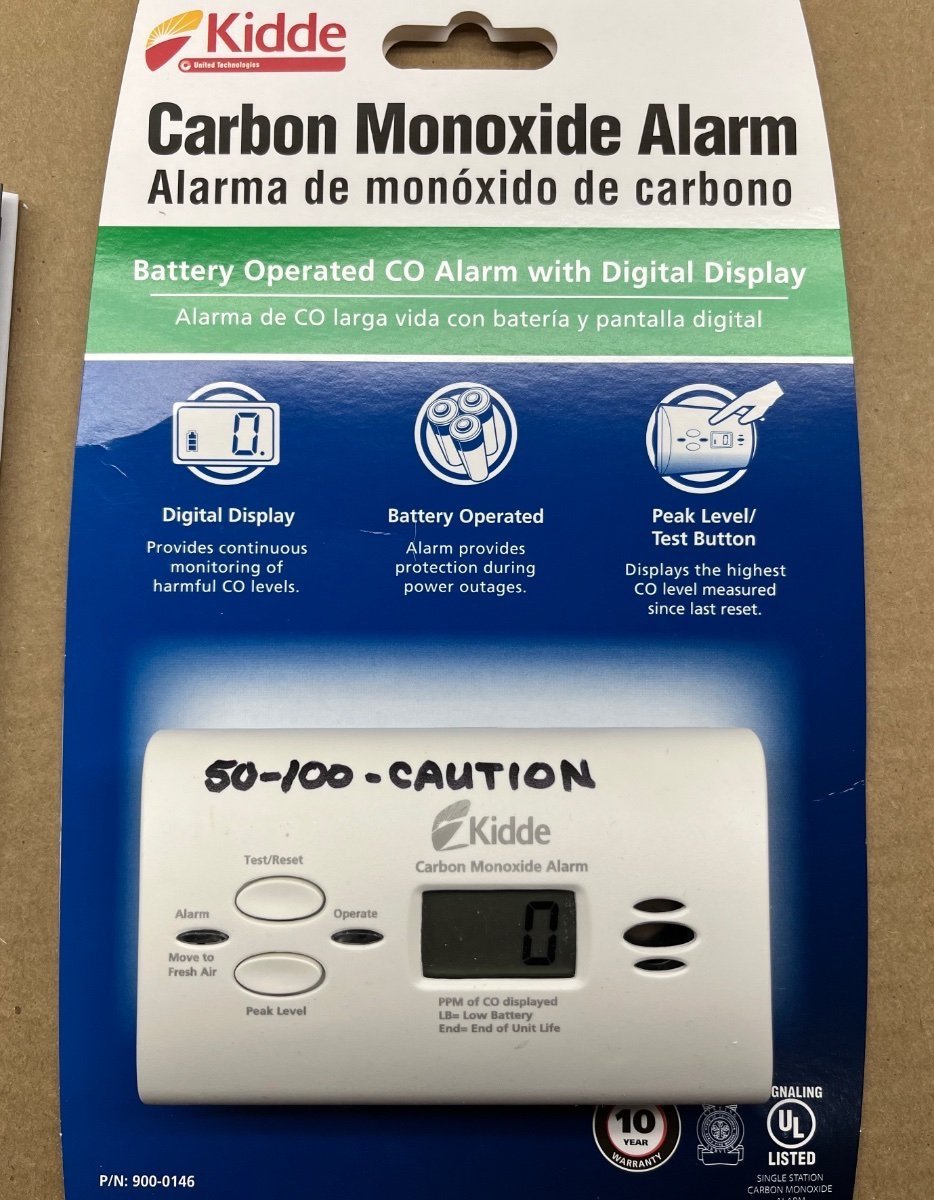
Your primary hazard when using the furnace is indeed CO poisoning (from a stress crack in the combustion chamber, which is impossible to predict). You are putting a lot of faith in the two Oliver installed “yes/ no” CO detectors. The one under the galley isn’t going to be helpful, CO is lighter than air. The combo smoke/ CO unit below the attic is good, if it works. I recommend this digital CO detector as a failsafe, it will show you trends, for example, the current level (should be very close to zero, but up to 50 is acceptable in the short term) and the highest reading since last reset. https://olivertraveltrailers.com/forums/topic/6780-how-to-replace-the-propane-co-detector-with-a-gas-only-one-and-a-digital-co-detector/ I have three of these, one in the trailer up high, one in the RV bay, one inside the house (because I have gas appliances and heating). The Rv bay unit shows elevated levels briefly when I have run a car in the attached garage, it has never actually got to an alarm level. Those who camp in milder weather should crack a rear window and open the bath vent half way and not stress too much. If you are running electric heat, there is no worry at all about carbon monoxide death…. Which I understand is quite nasty, but OTH it is quite hard on your family and friends. Symptoms of carbon monoxide poisoning may include: Breathing problems, including no breathing, shortness of breath, or rapid breathing Chest pain (may occur suddenly in people with angina) Coma Confusion Convulsions Dizziness Drowsiness Fainting Fatigue General weakness and achiness Headache Hyperactivity Impaired judgment Irritability Low blood pressure Muscle weakness Rapid or abnormal heartbeat Shock Nausea and vomiting Unconsciousness John Davies Spokane WA
 3 points
 -
That's it exactly. We were testing the system free of frozen line consequence This winter we are planning a month long cross country ski safari and, being that long, would want to be able to have showers. Scuba, We're super interested in your project and not just the process of rerouting water lines. Hope to hear the gory details.3 points
-
I am in the middle of a project where I am rebuilding the basement. I have decided to reroute the supply lines for the outside shower to a position more inboard than they are now. This is mainly to allow the new floor that I intend to install to be lower and completely flat. In rerouting those lines it will put them in a position closer to the centerline of the trailer as opposed to right next to the outside wall. This should have a positive effect on insulating those lines. I had not thought of putting valves into those lines, but it does sound like a good idea, and in their new position, it will be easy to do. I will probably put electric motorized valves in since I would not be able to easily access manual ones from the outside. Thanks for the idea.3 points
-
Hull 806..LE2.....a repost of our low temp camping experience. I have no problem considering the Ollie a 4 season trailer but I know I have to monitor the temps and always have to have a back up plan (or three) if "oops" happens (bold below). >>>>>>>>>>>>> We camped in Wyoming with lows around 15 degrees for a week, not winterized, with no problem. Altitude was about 7,000 feet. I have three SensorPush HT1 Wireless Thermometers to monitor the temps. Sensor # 1 was located in the cabin attached to the rear most driver side reading light. Sensor # 2 was located between hulls under the passenger side bed near the tail lights & water lines. Sensor # 3 was located between hulls under the driver side bed next to the shower outlet. On the outside of Ollie, I removed the shower head and pulled the water line inside the hull and reconnected the shower head. I set the furnace to mid/upper 50's and monitored all three temps....adjusting as desired. The driver side had the largest variance to the cabin temperature.....about 15 degrees. I have two 30 lb propane tanks. We were boondocking. After 5 or 6 days with ice/snow cloud cover....the batteries got down to about 50% SOC. At that point, I used the generator to recharge....not risking the furnace fan operation. We consumed one tank of propane and promptly got it refilled. (This was a portion of a five week western trip..we had been running the refrig on propane so we did not consume the whole tank in this one week). I also carried a Caframo heater and anti-freeze/pump ..... just in case. We operated the water system/hot water heater as normal. We did have to deal with condensation. (((BTW...I have move one of the sensors to inside of the refrigerator. We adjust the temp setting according to the readings. Early on in our experience we were having veggies and eggs freeze because we did not monitor and adjust....now, not an issue.))) Steve2 points
-
For the sake of efficiency, we sleep with everything buttoned up. If you run your hands past the edges of window sliders, past the seam between panels on the bathroom window, around the edges of the door, etc... there are plenty of minor leakage points. We feel these minor porosity is healthy and would prevent mold much the same with a modern house. During the days we run the Maxair when cooking and, as necessary, pull the reflectix inserts in the windows to allow the heat "cook away" moisture buldup per condensation on on the glass. We also carry a small mountain of micro fiber hand cloths to wipe away moisture from the glass, bathroom and galley. Super absorbant and easy to clean. Our safety backups is the monitor/alarm to warn of of C02 buildup. The smoke alarm has gone off while cooking items that really produce smoke but the alarms have not gone off otherwise.2 points
-
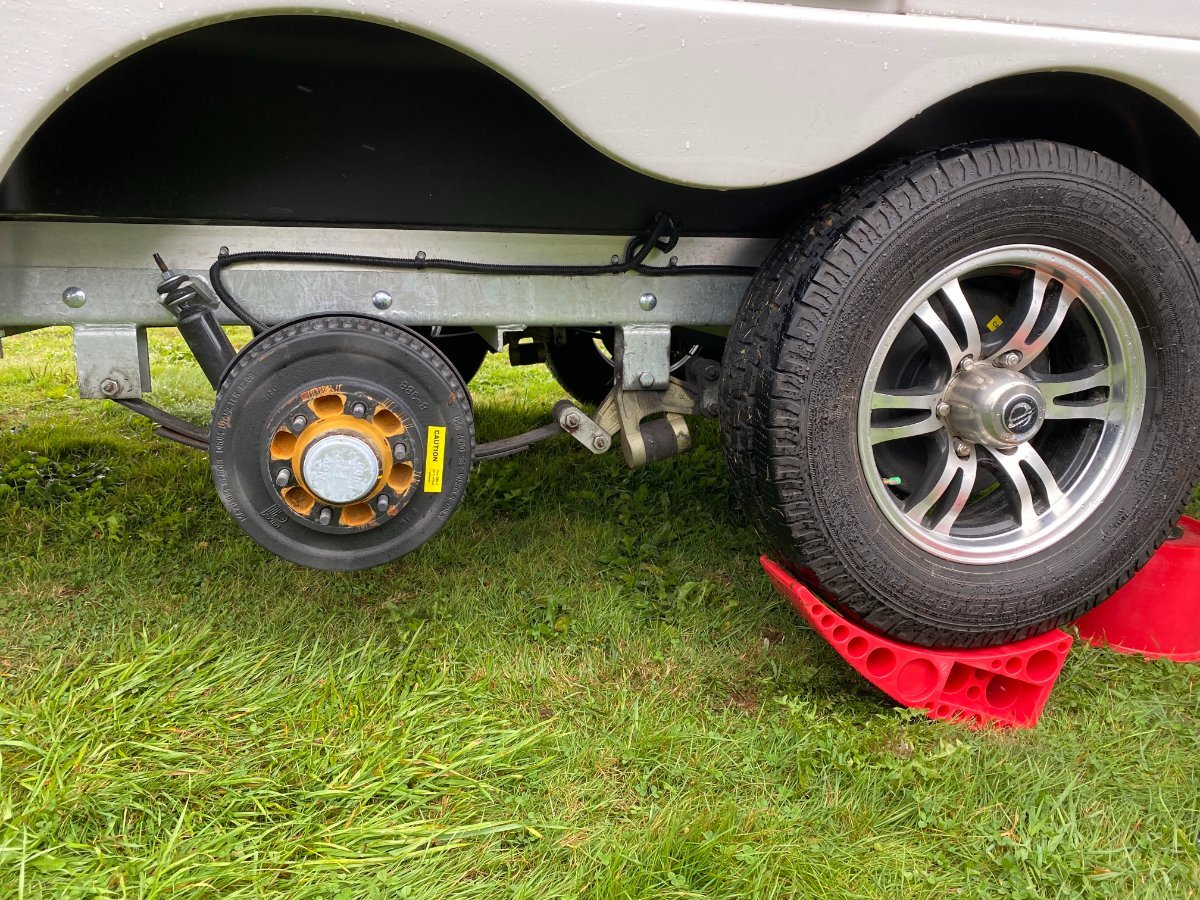
I don't believe that those hubs are actually "ventilated". Its just the normal ridges around the outside that make it appear so in this picture. Bill2 points
-
Thanks for the very informative post. It is particularly useful to know that the "stock" trailer will protect the water systems from freezing down to 25 F, and that you burned about 15 lbs. (3+ gallons) of propane per day when nighttime lows were in single digits. Please forgive me if this is a dumb question. But, if you kept all water systems winterized the entire time, using only containerized water and your composting toilet, what would it matter if the external shower was exposed to freezing temps? The winterizing process should have filled all of your Pex lines with RV antifreeze. What am I missing?2 points
-
One is silver, and the others gold... We sang it by the campfire, as kids, and it's just as true today. I spoke today with a camping friend that I taught with many, many years ago. (Not telling.,) She's at a rally that she's been attending for probably a decade. Fun with old friends and new. Past summer, she created an informal "camping experience " with her senior band friends. We've made cherished friends within the Ollie circle, and other friends around the world, camping, in our Ollie, and rentals/ deliveries. Tonight, in my conversation with my friend, I was struck by how much our life has been enriched by our camping (and sailing/cruising) experiences. That song I learned in Brownie camp is just so true. Some people I cherish today, though I've never met them in person. Others, that I've camped with are cherished in another special way. Life can be so good, when we get out there, and open our hearts to adventure, and new friends. I do so love the woods, thevbeauty of nature, the adventure, and all the opportunities. Camping season, for us, this year, is drawing to a close. Maybe a few short trips, but other adventures await.1 point
-
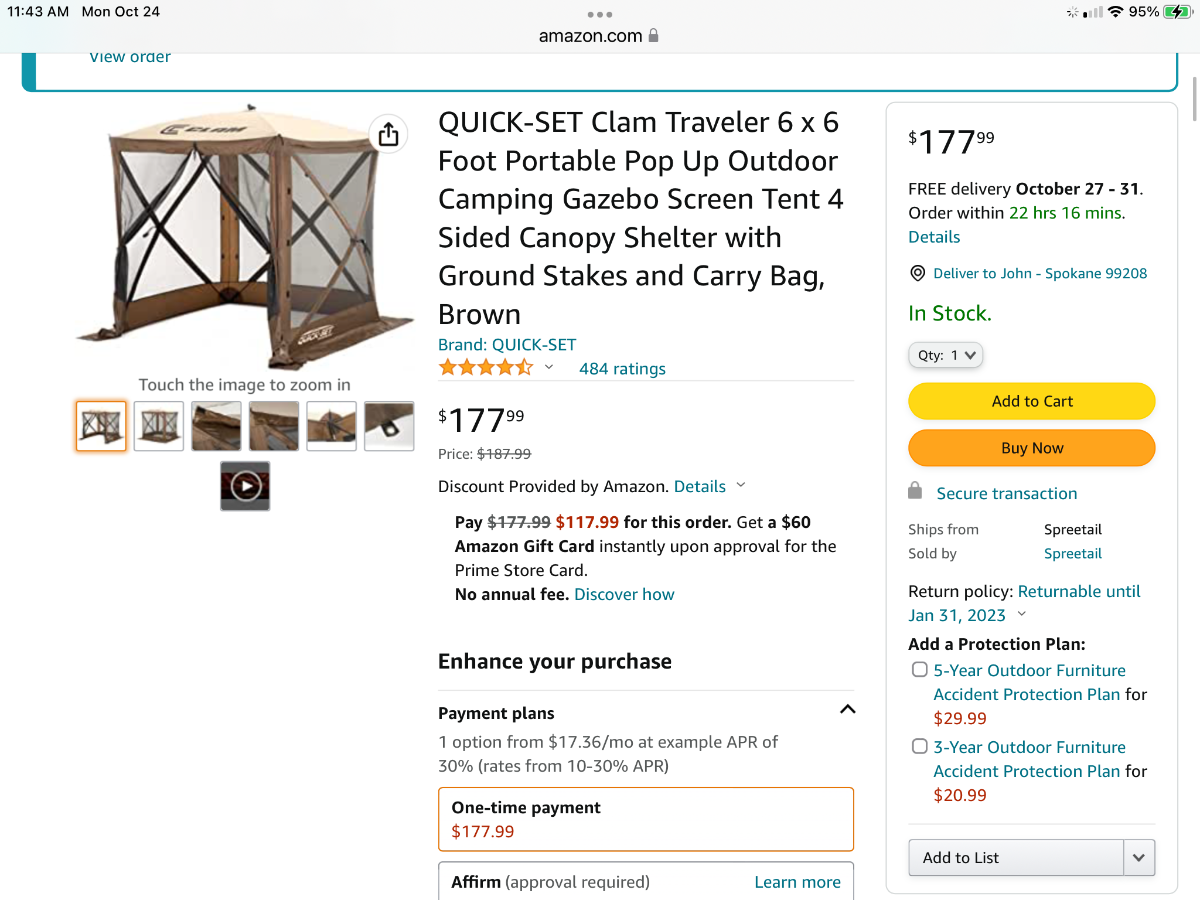
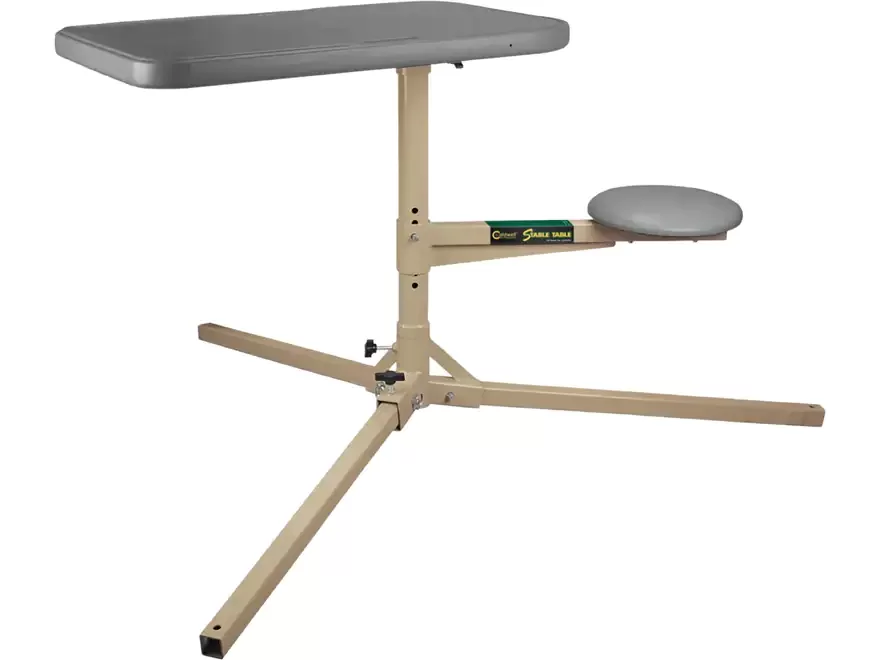
https://www.amazon.com/gp/product/B00TMBEMQ6/ref=ppx_yo_dt_b_asin_title_o00_s00?ie=UTF8&psc=1 I already have the big one (almost 12 feet) and I do like it, but holy cow it is big and hard to store and set up for just one person. I can use this when I am traveling solo, and I also plan to use it as a winter shelter over my Caldwell shooting bench. I have a short airgun range set up in my unheated RV bay aka The Hanger Deck, and with the wind panels installed, this will be a lot easier to keep warm when it is below 40 degrees there. This CLAM will leave room for another chair and some walking space. I already have three “wind panels” for the larger CLAM, I do not know if they will fit this small guy, but a new set is just $40. Does anyone know if the panels are universal? John Davies Spokane WA
1 point
-
I've traveled with my little CLAM for the past seven years. It is great for one or two people and can be stored in the closet of the Elite II. Bill1 point
-
A CLAM pop-up is on our wish list. One of our favorite spring photography trips is to see the Camas Lilies in bloom, but there are millions upon millions of mosquitos. This might be a great size for us to try. Thank you for the link. 🙂1 point
-
Agree fully. However, when I have the wheels off for annual bearing cleaning and re-grease, lubing the EZ-Flex is simple and easy. Also pretty clean compared to doing the wheel bearings. 🙂1 point
-
For my first four years of Ollie ownership (21K Miles), I had the same problem. Even with my 2019 Factory F-150 brake controller set on max, performance was dismal. Ultimately, I figured out my problem was me. I was not adjusting the brakes nearly tight enough. In May I tightened them all a bunch, and we rolled over 15,000 miles this summer (Texas/Oregon/Alaska) and my trailer brake performance was just fine. I recommend setting them tight and then driving a mile or two using the brakes. Use a thermal meter to measure the drum temperatures (I have removed the drum look pretty cover as suggested by John D.) Jack up the trailer and make sure the wheels will only drag a little. If not, loosen a bit. Repeat is needed. Using a thermal tester (As suggested by John D) gives me great piece of mind. RESULT: I now can lockem-up on max setting during testing. For running, I am now using 6 with good performance vs Max before. I was considering going disk brakes due to poor performance. But am now on the fence.1 point
-
You are correct. That was what I was trying to ask.1 point
-
June, please add your location, tow vehicle info and Ollie model and hull number to your signature. Washington is pretty big, I assume you are in The Wet Side? I do everything myself, so I can’t comment about a good shop. Just be very aware that you must be able to do certain basic safety things like winterization yourself, there are huge backlogs in most RV shops. You might find a mobile Rv tech who can come to you. https://www.yelp.com/search?find_desc=mobile+rv+repair&find_loc=Seattle%2C+WA John Davies Spokane WA aka The Dry Side.1 point
-
Hey Kirk. Sorry to say but, from my real world testing, you are right. Great as they are, these trailers are not set up stock for use in temps below mid 20s if the water system is on. To different degrees of efficiency, just about any trailer with a decent heating system could be used in the winter as long as the water system is turned off. I've heard that a number of other manufacturer's stick built models are set up for running dewinterized in deep cold conditions and cannot square how Oliver claims these trailers to be truly 4 season capable as they are currently built. Your trailer's huge lithium capacity my be able to handle the bilge pumps and keep them running 24/7 but I'd suggest running some tests with the unit winterized first to see what is what. Please share your results here as it could prove helpful to all.1 point
-
I thought GJ was referring to those pockets between the studs. Those look to provide some release or isolation for the nevrlube hub.1 point
-
That's my guess too.1 point
-
It’s good datas, thank you. It’s a Florida’s 4 seasons trailer! There is no rig that will stand cold weather for a long time because there are too many infiltration weak points: water inlet, back of the fridge, back of the water heater, door, windows, maxxair, roof vent , weak insulation factor (R…) etc……but Oliver is way better then other type of construction with a double haul and no slides out……it’s designed in case of a nights or two below freezing but not that much. 4 seasons in Eastern Canada need R60……!1 point
-
👎T-Mobile (mine) 👍AT&T (his)1 point
-
We have Blue Sky equipment in our Oliver. With all the different brands, to have a good setup, you have to have a solar controller, a shunt and a display. The Victron display Oliver is installing is the BMV-712. It is Bluetooth enabled and I think it provides the best bang for your buck. Shop around for the best price. As far as the shunt, one is included with the BMV-712. The solar controller you need will be dependent on the total wattage of all the panels you plan to connect to it. You will want to install it as close to the batteries as possible to lessen voltage loss from a long run of wires. Do not mount it in the battery compartment. I would put it under the street side bed if possible. The 712 display needs to be inside the cabin in a location that is easy to view. Ideally I would put it where the Zamp is now. Just fabricate a panel large enough to cover the hole and mount the 712 in it. If you need further help with that, PM me.1 point
-
I used to wonder if using Teflon tape would somehow (electrically) insulate the anode from the tank thereby somewhat reducing its effectiveness. But, I used to wonder about a lot of things that don’t seem to bother me anymore. Never mind.1 point
-
We just came home from a trip. And we had a flat tire. It was in one of those remote places where you really don't want to have problems. I had just stopped at a service station and adjusted the PSI in the tires the day before and had a scare when one of the tires wouldn't stop letting air escape. Ultimately I was able to get all four tires properly inflated and we went on our way... thinking all was well. One of the four then went flat over night. I believe the cause was the "balance beads" used by Lionshead (a supplier to Oliver). I had the Andersen "rapid jack" which is just an oversized version of the camper leveler ramps...and with just a little assist from the Ollie's stabilizers, I was easily able to jack it up high enough to put on the spare and get into a town where the original tire was repaired... with a new valve stem. Since that time, I came home to discover that we (those effected by the balance beads) had received replacement valve stems that are resistant to interference from the balance beads... from Oliver. (Thank you Oliver!) I was on some very soft ground and with the Andersen rapid jack... I wasn't able to get the tire quite high enough for it to turn freely... but just a little assist from the Ollies stabilizer and she was clear. This also made it very convenient to tighten and torque the lug nuts... before putting it all down on the ground again.
1 point
-
Back in the Spring of this year I seemed to be having these same "remote" symptoms again. I don't remember exactly why but while poking around (be careful with poking around given the voltage that is in this area) I found that the negative side cables were loose on the inverter. I simply tightened those up and all returned to "normal". Good luck in finding the real issue. Bill1 point
-
Seems like the emergency valve version of these would have been ideal in this situation. I haven't tried them but carrying a couple might be good insurance.1 point
-
You didn’t mention in the Oliver vs BB comparison the Oliver has ditched the inadequate Zamp equipment for Victron. It won’t make up for the $$ difference but it is light years better in capability. I swapped my Trojan AGM’s for three BB’s a couple of years ago. We rarely use more than 12% during the dark hours and we are back to 100% by noon with good sun and we only have 300 watts of solar. We were not hobbled with the Zamp stuff as our Hull #050 (and the next 150 trailers) was outfitted with Blue Sky equipment. A 100 watt panel can only put out about 8 amps so you can calculate how long it would take to replace amps used with whatever number of watts of solar you have. With either the Blue Sky or Victron equipment, you’ll get a few extra amps because their controllers are MPPT vs PWM on the Zamp. Older trailers will also need to replace the PD4045 charger with a lithium compatible model ($200+).1 point
-
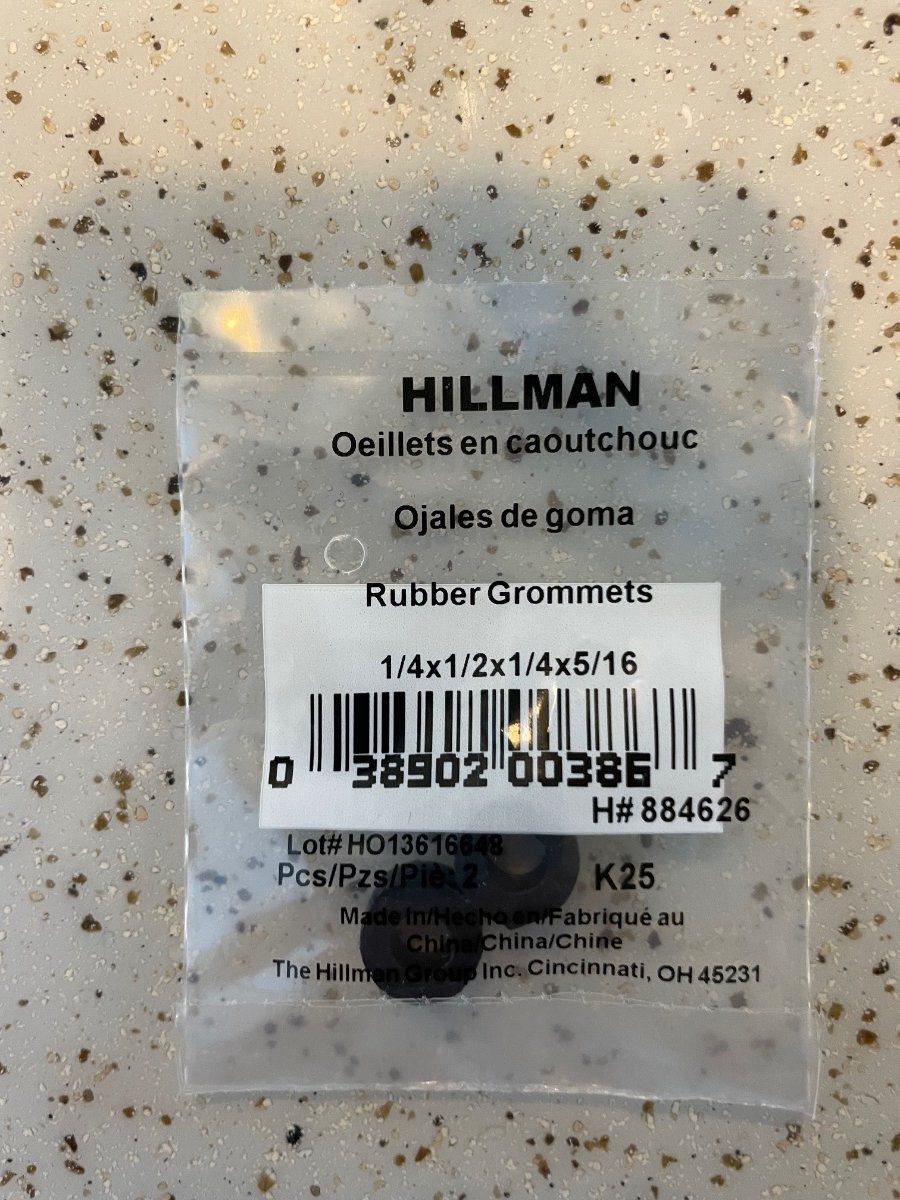
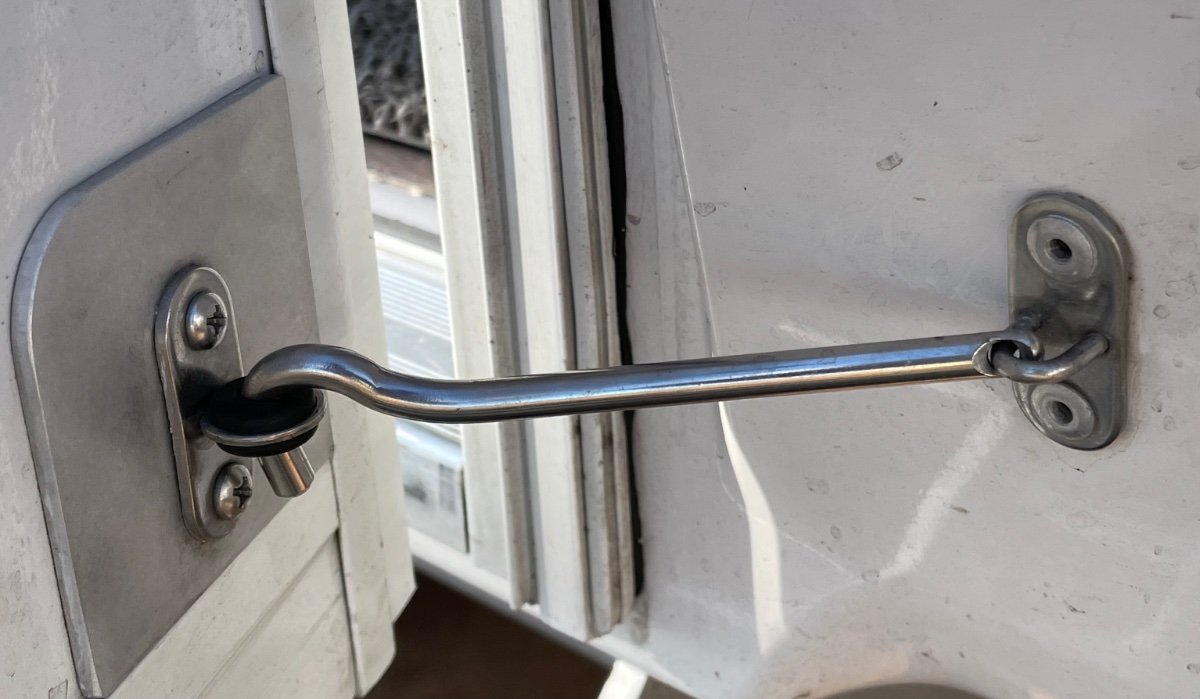
Replaced grommets in door hooks. Found at Ace HW and Lowes in the nut bins sector he store. Specs: Hook itself is 1/4” dia Bracket Hole size 1/2” Grommet hole 5/16” grommet is 1/4” thick
1 point
-
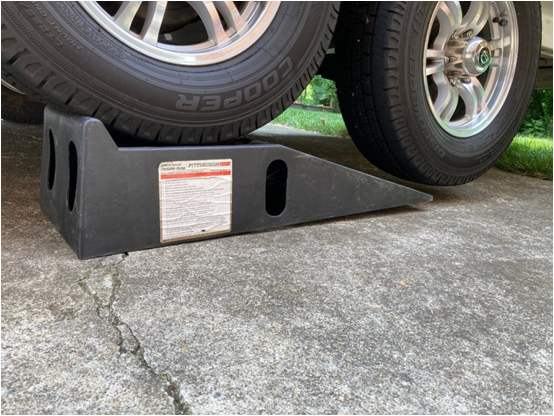
LE2 2022 Hull 806 here, I utilize a HFreight ramp I already had on hand....it works great to lift either tire off the ground. It has 6.5" of lift and is as simple as it looks. I use the ramp to take tires off when I grease the zerks. I hope I never have to use it on the side of the road, but I have complete confidence if I need to do so.
1 point
-
Got that There is a Yukon Territory campground, built in ww2 days, one of our faves. SNAFU. (you guys know what that means.) I can't recommend it for most folks. Super sandy drive , easy to get stuck. 4wd engaged, preferred,,and a run at the bottom of the hill. We know the drive, and like the hilltop sites overlooking the lake. Best for 4wd van campers, or.... those who know the way. There are a few sites at the lower lakeshore that are really nice, and easier access, if available. We camp there every trip on our way to AK. Edited to add: seriously, if you are not experienced, don't have 4wd don't try this. Even the lower sites We know what were doing,,and a tow truck is really expensive. If you have signal to call one. This is seriously in the boonies. Pit toilets, no water, no sewer. Our kind of quiet place.1 point
-
Very interesting to hear the opinions of others on similar equipment. My first response to the title here was - Why on earth.... But as usual - JD has a well reasoned answer to that question. I have no complaints with my brakes - after 17k miles they remain in decent shape - and I'll take another look at them in the fall. But then I tow with a 2500 with a robust breaking system - and the Oliver doesn't have to work that hard on the braking. The Oliver seems to represent a great platform for the "I can make it better" crowd. And conversely - works really well for the rest of us.... Now here is a counter opinion - I have a mind to switch from the E-II down to a E - I, Find a pre-owned - basic - and go from there.... Carry on. RB1 point












-
Recent Achievements
-