Leaderboard

Popular Content
Showing content with the highest reputation on 12/22/2022 in all areas
-
As a Garmin inReach subscriber, I get occasional info. I thought this one was special and worth a read. I deleted the picture to reduce the size of the file. If you want the "Full Monte", it is here: https://www.garmin.com/en-US/blog/saved-by-garmin/the-10000th-inreach-sos/?utm_source=americas&utm_medium=yarmouth-email&utm_campaign=inreach-consumer-newsletter&utm_content=BP If you often find yourself in a location, especially when alone, where if your were hurt or lost, and it would be difficult or time consuming to find you.... then please consider getting a Sat Tracker. Mahalo, GJ ++++++++++++++++++++++++++++++++++++++++++++++++++++++++++++++++++++++++++++++++++++++++++++++++ The 10,000th inReach SOS: A Foot in the Wrong Direction December 19, 2022 In October 2022, we announced that more than 10,000 individuals had received help after triggering SOS distress signals on their inReach® devices. So what was the actual 10,000th inReach SOS incident? Three separate inReach SOS triggers came into the Garmin Response℠ Center moments apart, all reporting a dirt bike crash and a severe leg injury. The injured individual was Kyle McKillop, a 33-year-old inReach subscriber who is no stranger to the outdoors. He regularly camps, mountain bikes, snowboards and dirt bikes in the Pacific Northwest. Originally, he purchased a Garmin inReach satellite communication device to have while on solo trips in the backcountry. “I figured it would be a good idea to get one after an incident with a mechanical breakdown that caused me to be extremely late getting home,” he said. “It’s been a great way to keep my wife informed if anything happens while I’m gone.” On that day in fall 2022, though, McKillop was with five other friends. They planned to do a 60- to 70-mile loop ride in an area and on trails they were familiar with. More than 20 miles into the ride, the group was rounding a sharp, steep and rooted switchback that McKillop had done on previous rides without any issues. To gain momentum, he began accelerating to get to the top of the switchback. It was then that what he calls “the incident” occurred. As the grade of the hill increased, McKillop lost his balance and started to fall. Not wanting his bike to tumble off the switchback, McKillop attempted to jump off the back of the bike and push it into the hill. He jumped, landed on his feet and spun around to avoid falling down the switchback. The maneuver was successful, and he kept his bike from going over the hill. But as he twisted, he realized his foot was not twisting with the rest of his body. It was caught in some roots and thus anchored to the ground. “When I looked down, my foot was pointed completely backward,” he said. “I remained standing but couldn’t believe what I was seeing. It made me sick to my stomach looking at it.” He released his foot from the roots and hopped on one foot over to a spot on the trail where he could lie down. When he looked at his friends, they were looking back at him — in shock. “I knew we had several inReach devices among our group members, and I knew it was going to require a helicopter to get me out,” he said. “We were over 10 miles to the nearest forest road, with significant terrain features that prevented anyone from being able to ride me out.” In a matter of moments, Garmin Response, the 24/7 staffed global emergency response coordination center, let McKillop and the other inReach users know that emergency services were being contacted and dispatched. They informed the group that the rescue team would not have a transport basket and they would need to find a spot for the helicopter to land. Otherwise, it would’ve taken 8 hours for a rescue team to reach the group on foot. Meanwhile, McKillop was in agony. His friends worked quickly to figure out how to get him to a pickup spot for the helicopter. They created a stretcher with branches and paracord, got him loaded onto it and carried him to a ridgeline. When the helicopter arrived, the landing area was deemed not flat enough. The EMTs jumped out to check on McKillop while his friends looked for other spots to land. Unfortunately, there wasn’t anything better nearby, so everyone began stacking rocks up on a ridgeline to create a landing area for the helicopter. “The pilot and the EMTs were flawless, but they said it was one of the sketchier rescues they have ever done,” McKillop said. After a 45-minute flight and another 45-minute ambulance ride, he made it to the hospital. He had a broken tibia and fibula and a dislocated ankle — an incredibly painful injury to endure. Still, McKillop made it home by nightfall. “The time of the incident was 11:30 a.m., and I made it home around 9:30 p.m.,” McKillop said. “I am so impressed with how quickly the inReach system worked and got a rescue team to me.” McKillop said that having the inReach provided him with comfort through the whole ordeal. “I would 100% recommend everyone that goes into remote places to have an inReach,” he said. “Knowing that we had a rescue team responding and they had my exact GPS location ultimately helped me stay calm.”4 points
-
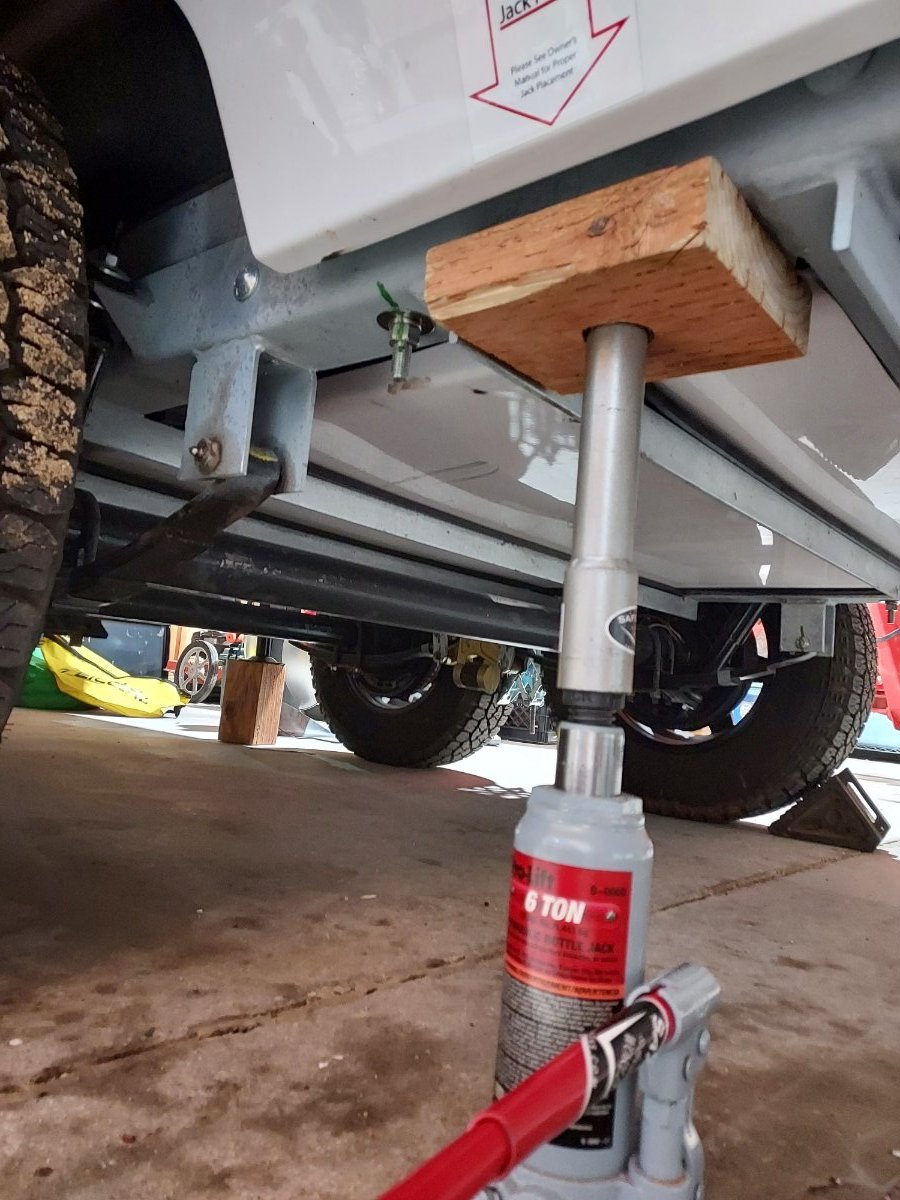
This is the Jack stand/ jack we carry with us. It has worked great anytime we needed to lift the tire. Highly recommend.4 points
-
We carry two of these: https://www.summitracing.com/parts/pwb-620471?seid=srese1&gclid=EAIaIQobChMI4LnMqZqN_AIVGPjICh0OsQgDEAQYAiABEgIzYfD_BwE Being a jack stand, it's much more stable than a plain jack. I can easily lift one side to the trailer with these to do any repair or maintenance work necessary; and when camped, I use them on the front corners of the frame to mitigate the wobble when walking around inside the trailer using just slight pressure against the frame. I wouldn't leave home without them. At the rally last year, they were used by another owner while doing a spring repair.4 points
-
After looking around at our needs for our Ollie's 2000 watt inverter and its lithium batteries, we chose the 2500 Champion dual fuel inverter based on price, weight and the fact that I never plan to use gasoline in it. Note that propane wattage output is always less than that of gasoline. It took us only a short time to realize the need for TWO regulators - the normal pressure regulator on the Ollie tanks AND the back-pressure regulator that comes with the unit for attaching it to a remote tank. After some alternations, we were able to use propane regulator included with the Champion to hook up directly to the Ollie. The propane-powered unit is reasonable quiet. It runs our AC or microwave and it will provide our lithium batteries with about 28 amps of charge. While you can buy two and link them together, we have had no need to do that. We do use a null plug, which eliminates the need for grounding the unit. Note that without it, the Ollie's surge protection won't like you! We've had it over a year, but haven't had the need to use it much as our lithium batteries provide for most our needs. But, we take it each boondocking trip and at 39# it is easy to load/unload into the back of the pickup. At less than 18" high, it fits under the hard cover on our pickup. We have made LP hose and electric cord so they reach our Ollie front connections without excess. While our unit is a year old and Champion continues to change/upgrade them, it is similar to this unit, which can be viewed at https://www.amazon.com/Champion-Power-Equipment-200961-Ultralight/dp/B08L45W2V9/ref=sr_1_3?crid=2HQF8CA30OCBA&keywords=champion%2Bdual%2Bfuel%2Binverter%2Bgenerator&qid=1671671377&sprefix=Champion%2Bdual%2Caps%2C158&sr=8-3&ufe=app_do%3Aamzn1.fos.c3015c4a-46bb-44b9-81a4-dc28e6d374b3&th=1 Last, but not least, I had the need to contact Champion's phone support. It took a while to get through to a real person, but he was very helpful and supplied a part that I had screwed up when altering the back-pressure regulator to fit Ollie's LP connection. He expedited the shipping and there was no charge for the new part. In short, the Champion 2500 Dual Fuel Inverter works for us. Charlie.4 points
-
A few years ago, generators were all over our forum. Nearly all portable generators were of standard Motor/Generator design. I refer to them and my Dometic Penguin AC as "Hammer Mills". Then Honda came out with their inverter line. Super quiet, fuel efficient, and their EU 2000 watt unit with an EzStart would run our A/C units. The vast majority of us purchased the Honda inverter 2000 or 2200 units. But they were, and are pricy. Time has passed and most of us still have the Hondas that you could not pry out of our dead hands. But much less costly Champion, Yamaha and Predator inverters (to name a few) have come into play. With the OTT production rate acceleration, I suspect we have many new owners that likely would likely benefit from a revival of the topic. This thread is intended to hear from our owners their thoughts about their generator. Please touch upon the below as well as your experiences: Generator Name and Model Cost of Purchase Power Output (Rated Full Load) Ability to handle our A/C cycling while switched to "Eco-Mode". Please specify if you have an 11K BTU or 13.5K BTU A/C. Decibels idle and full power Ease of use Maintainability Reliability Durability Number of seasons used Thank you! GJ3 points
-
I'm liking this a lot. Generators are advancing rapidly in tech and features and there are dozens of manufactures. Honda no longer owns the "quiet generator" market, and amazingly they seem to be getting smaller at the same time they are getting quieter. I have two linkable Sportsman 2200w inverter gens I bought several years ago. I'm willing to bet they are Honda knock-offs but they were really cheap, and they have turned out to be very reliable. They almost always start on the first or second pull of the cord. They are very quiet, the specs say 53 db, and of course very light weight at about 48 pounds. Looking them up I found they are now duel fuel for propane operation, and they are on sale at Tractor Supply for about $500 each. Wish I didn't already own two of the older ones. https://www.tractorsupply.com/tsc/product/sportsman-2-200-watts-dual-fuel-inverter-generator-gen2200dfi?cm_vc=-100053 points
-
REF: Champion 2500 Watt Inverter: $484 Amazon Prime Dual fuel 38 pounds Super Quiet 2500 watts start and run rating AMAZING! 🙂 It sure isn't a "Hammer Mill" like this grandpa's was!2 points
-
I went with a 12ft high x 14ft wide and it is 30 ft long. I really like the 14 ft wide, for being able to work on the Oli and it gives me extra width for getting backed into place (still working on the backing skills). The extra height is also nice to get up on top. I had enough room I could have gone 36ft long, and I wish I had. When I was going over things with the contractor he told me that for resale I should do a 14ft high opening, and max the length out. We had set a financial limit on what we could spend on Oli, truck, RV port/garage, and accessories to get going. When it comes down to it, we hope this house will be our last, and we will never go with bigger RV/Trailer. I had a GMC greyhound bus conversion many years ago which was fun, and it had lots of room and storage. Although it was to big to get in placing that I can get the Oli into. We really like the Oli trailer setup better, and I no longer have to take care of a towed vehicle. So my decision for the RV garage was right for me. My Children will have to worry about resale in the future, I hope to be to darn old to worry about it. What I do regret is that 10 years ago I built a 10ft high x 24ft wide x 36ft deep garage with 2 stalls . I wish I would have be more forward thinking and built a 40ft wide x 36ft deep with 12-14ft height with 3 stalls. I would have saved 1/2 of the cost of the RV garage doing it all at once, and had more room. Good luck with your decisions.2 points
-
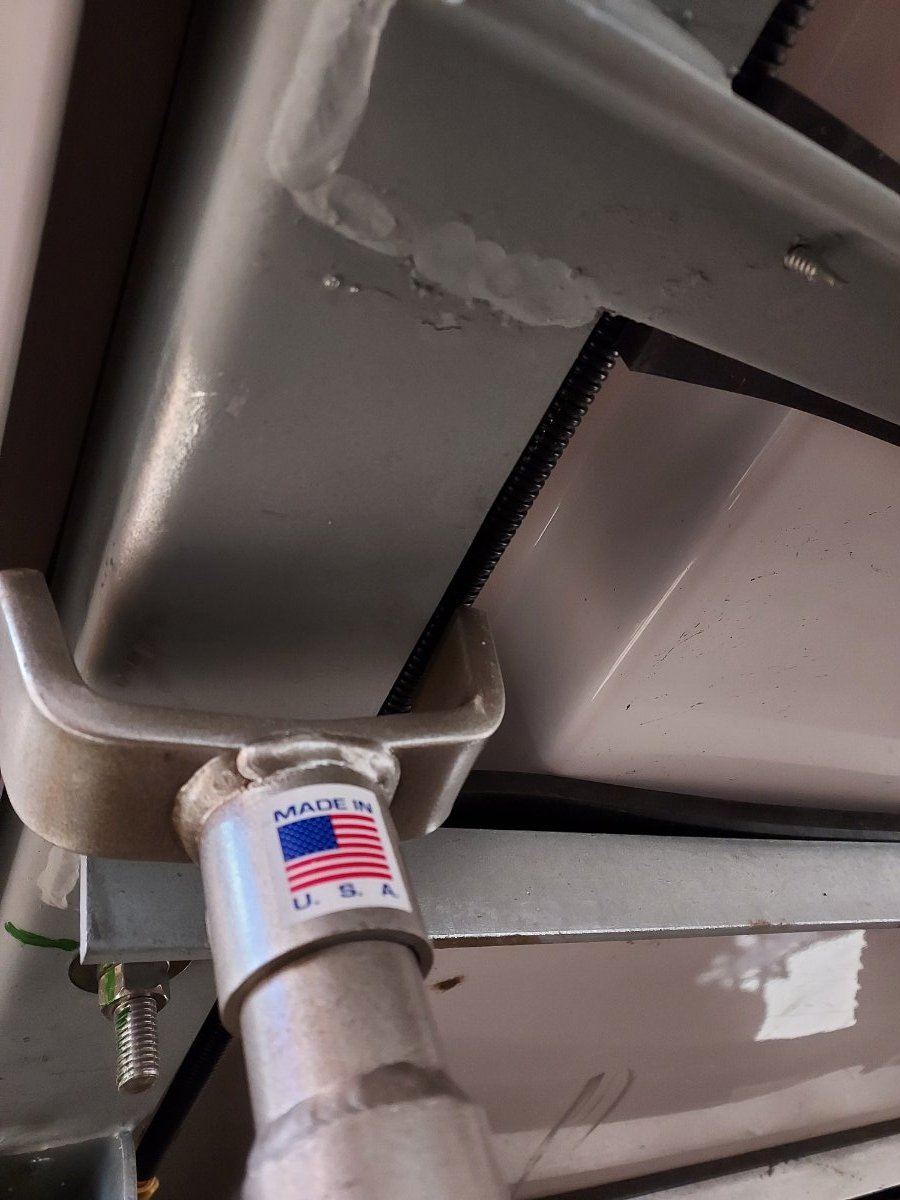
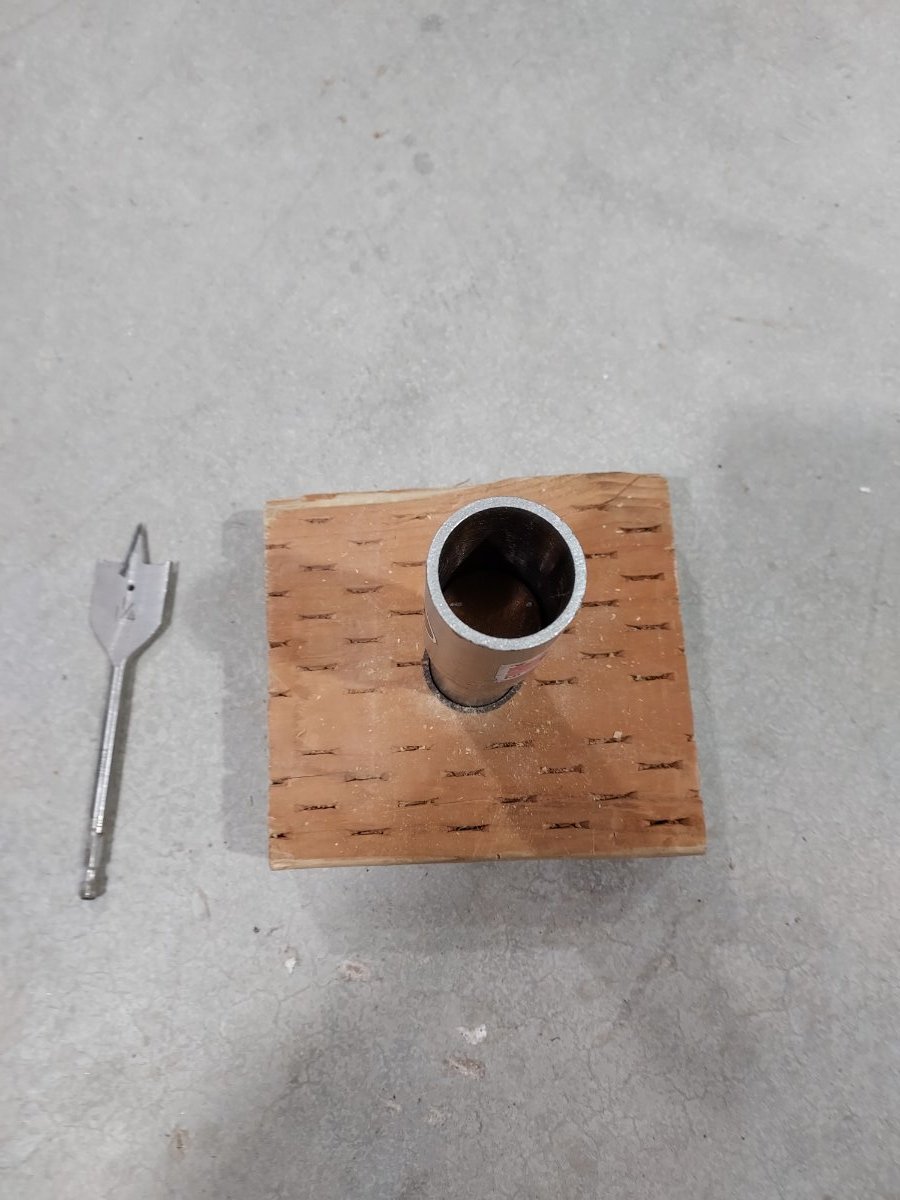
Since Oliver no longer recommends using the "stabilizer" jacks to jack up their trailers for tire changes, I invested in a bottle jack for that purpose. At John Davies' suggestion, I purchased an RV Safe Jack. My hope was that the Safe Jack would come with the components necessary to safely jack up an Oliver Elite II in a variety of situations, because you never know where you will need to change a tire. This post describes how I have chosen to use the RV Safe Jack on our Elite II, and includes a warning about using the u-shaped saddle that comes with the RV Safe Jack to jack up an Oliver at the specified jack point. The 6-ton RV Safe Jack includes three jack extensions: one 6" and two 3" extensions. Also included is a clever Extension Screw Collar, which can be placed on the extension screw on top of the bottle jack when it is extended. The Extension Screw Collar helps stabilize the interface between the extension and the screw. Only the 6” extension fits under the Oliver when jacking from a smooth surface (like a concrete floor). See first photo below. If you are changing a tire by the side of the road, and wind up with a hole right below the specified jack point, the other two 3" extensions may come in handy. Do not use the included u-shaped saddle on the steel frame at the specified jack point. It could crush the propane line (which is inside wire loom). See the second photo below. The saddle is designed for use when jacking under an axle, but Oliver recommends jacking from the steel-reinforced part of the frame, not under an axle. I had hoped the u-shaped saddle in the Safe Jack RV kit would fit around the steel reinforcement frame, securing the jack to the frame. But, alas, the copper propane line (protected by wire loom) is installed right next to the steel reinforcement frame, so using the u-shaped saddle to jack in that location is a definite "no go." Instead of the u-shaped saddle, I chose to use a 6” length of 2x6 lumber, with a 1-1/4” x ½” deep hole drilled with a spade bit. The block fits nicely between the two welded angle iron pieces of the steel reinforcement frame. The block also cushions the interface between the top of the extension and the steel frame. The 1-1/4" x 1/2" deep hole in the 2x6 block holds the jack extension in place, as shown in the first photo below. The third photo below shows my 6" length of scrap 2x6 with an extension inserted, and next to it, the 1-1/4" spade bit I used to drill the 1/2" deep hole. Hope this is helpful to anyone choosing to invest in the RV Safe Jack system for use on an Oliver.
 1 point
 -
A number of years ago I purchased a Garmin InReach Mini satellite communications device to use primarily while I'm in the Western US and out of cell phone range. Certainly the Garmin is not the only one of these devices but they recently published a statistical analysis of where, who and why various "SOS" calls have been made. Actually I had never considered at least a couple of the possibilities as reasons or situations to use the Mini. While I found the commentary to be a bit self-serving at times, the general nature of the report can probably be applied to many of us that spend a bunch of time exploring the great out doors. HERE is a link to that report. Bill1 point
-
Everything oxidizes when left outside and in the sun, so not doing anything will defiantly speed up the oxidation process. On ours I buffed in once a year with a good marine fiberglass compound and our trailer after four years looks just like new, yes it does require getting up on some scuffling (ladder not recommended) with a buffer and buffing it, not a fun job. Like I have said many times, being a retired body shop manger for some 30 plus years there is no miracle product that will stop oxidation, but removing it is possible and that's buff it off. The ceramic coatings my be the best way to go for some, but for myself, it's just a coverup and in time your will still have to have it buffed to get down to the original gel coat finish to get the original luster of the trailer back to where it all started. I realize this process may not be able to be done by many, so I would do what works for you, a nice metal building would also work, plus it does bring value to your property. trainman1 point
-
On the other hand: "German engineering quality" and "German reliability" are questionable. Over engineering and high build quality don't ensure reliability. I've owned a few..... Common control integration, is aka potential single point of failure. Truma protectionist service and parts distribution ensures extended down times and higher repair costs, when the time comes. No Aventa heating capability is potential deal breaker to complete showstopper. What's going on with this no soft starter policy? Don't they understand their target market? Recouping higher initial costs depends on the lifecycle of the equipment and the purchaser's perceived value. These could turn into negatives. I'm not trying to be argumentative, just offering a different perspective (opinion). All things considered, for some RVers, the Truma solutions may be a better choice when compared to the alternatives. Their appliance performance may be notable, but be aware of the negatives.1 point
-
https://megagaragehomes.com/rv-garage-dimensions-cheat-sheet/ John Davies Spokane WA
1 point
-
My wife and I fly paragliders and I too use the Garmin Mini 2. For the past several years have served as the Applegate Open National Championship meet in Oregon. As the event Safety and Rescue Director, we require all pilots to have a Garmin or Spot Satellite Communicator/Locator to participate in the comp. When we have pilots hanging in 200 foot tall pines or injured on top of a remote mountain, these devices make the difference in a bad day or a really bad day. But beyond these outliers (Bad pun)... they also serve in other less urgent ways. For example, as part of our requirements, all pilots program into their devices my cell phone number and a number of pre-typed and saved messages. A few samples: LOK = Landed OK, PUP = Picked up Pilot, AID = Need Help. For most cases we use the text messages and their GPS location that comes to me with their GPS location. We then vector mountain rescue runners, and when possible RAZR's as first responders. Behind them rescue teams with more gear are sent if needed. The locators along with GAIA Trail Maps, Google Maps with high power radios and cell phones are the tools we use. Our teams are effective enough that in the past four years or so we have not actually needed the SOS capability despite competing several responses/rescues a day for the competitions. I for sure had ours with us during our Alaska/Canada voyage this past summer. BTW, they were on sale at COSTCO recently!1 point
-
Very interesting, I wouldn't have expected nearly as many driving incidents nor calls for a third party. I suppose this is a good argument to get one of these or the new iPhone 14 which in theory can also hit a satellite network.1 point








-
Recent Achievements
-