Leaderboard




Popular Content
Showing content with the highest reputation on 02/12/2023 in all areas
-
Hello Everyone! I am a 58 years young lady who is now obsessed with all things Oliver travel trailers. I converted a 36' school bus in 2018 and lived in it for 3.5 years. I then converted a Ford Transit Connect and lived and traveled in it for 4 months. I simply love the lifestyle and am ready to secure my final rig; truck and Oliver Legacy Elite ll; twin bed layout. I am stationary for now, in the Phoenix, AZ area, planning and saving and taking well thought out steps in my purchases over the next couple months. I am an RN by profession. I am so looking forward to seeing others out on the road in the next year, enjoying these beautiful trailers.4 points
-
Share and Enjoy !Shares Traveling with an RV is a great way to explore the open road and see all that this beautiful country has to offer. But before you hit the highway, it’s important to make sure your motorhome is stocked with all of the essential items needed for your journey. From medical supplies to survival gear, having these items on hand can help you be prepared for any unexpected situations which could arise while you’re out on the open road. Medical Supplies Having medical supplies on hand is incredibly important, especially if you’re planning a long trip where access to hospitals and doctors may be limited. Be sure to include items such as prescription medications, bandages, antiseptic wipes, and any other items that you or someone in your party may need during an emergency. Additionally, it’s always a good idea to have some form of health insurance identification available in case of an unexpected medical situation while on the road. Survival Gear No matter how prepared you are, there’s always the chance of an unexpected situation occurring while on the road. That’s why it’s important to have some basic survival items in your RV, like a compass, whistle, and water-purification tablets. Additionally, if you plan to explore more remote parts of the country, it may be worth investing in a satellite phone and basic first-aid kit for extra security. Portable Water Filter Water is essential for any RV trip, so it’s important to have a portable water filter in your motorhome. This will help ensure that you and your family always have access to safe drinking water no matter where you are. Additionally, if you’re traveling in an area with limited resources, this can also be a great way to conserve water. Personal Care Items When you’re on the road, it can be easy to forget some of the personal care items which are essential for a safe and comfortable journey. Make sure you’ve got plenty of toiletries like toothbrushes, toothpaste, soap and shampoo as well as other grooming items such as razors and shaving cream. These may not seem like emergency items, but if a situation does occur and you end up on the road longer than expected, you'll be glad you had them stocked. Automotive Care Supplies No matter how well you plan, there’s always a chance that your RV may run into some mechanical issues while on the open road. To be prepared for any situation, make sure to keep an extra set of automotive supplies in your motorhome such as oil, coolant fluid, tires, and jumper cables. Additionally, it’s always a good idea to have an emergency roadside kit in case you end up stranded. Flashlight & Batteries Having a good flashlight inside your travel trailer is essential, especially if you’re traveling at night. Be sure to have some spare batteries in case the light suddenly goes out while using it. Additionally, it’s a good idea to bring extra lights that you can use for exploring in the dark. Having a few headlamps on hand is also a good idea in case you need to work on your trailer at night and need both hands to do so. First Aid Kit You never know when an accident may occur while out on the road, so it’s important to have a well-stocked first-aid kit in your RV. Items like bandages, gauze, antiseptic, and tweezers should all be included in your kit. Additionally, if anyone in your party has any allergies or chronic medical conditions, make sure you pack the necessary medications and equipment for those as well. Emergency Blanket & Extra Clothes Having an emergency blanket and extra clothes on hand can help significantly if you’re ever stuck in an unexpected situation. The blanket can provide extra warmth and comfort, while the extra clothes can help protect against any sudden changes in weather or temperature. Plus, if you're out on the road longer than you expected, having clean clothes to wear will make the experience much more enjoyable. Water & Non-Perishable Foods Having water and non-perishable food items is essential for long trips away from campgrounds and convenience stores. Make sure to stock up on items like energy bars, dried fruit, canned tuna and other protein-rich snacks that will offer you and your party the necessary sustenance while in an emergency situation. Fire Extinguisher It may seem unnecessary, but having a fire extinguisher nearby can be lifesaving if a sudden flame occurs in your RV. Make sure to check the expiration date on the extinguisher and replace it if necessary. This is also helpful if your campfire gets out of hand and you need to put it out quickly. The last thing you want is to start a forest fire, so having an extinguisher nearby is always a good idea. Tools & Necessary Fluids Having some basic tools like wrenches, screwdrivers, and a tire pressure gauge can help you in case of a sudden mechanical problem with your RV. Additionally, having essential fluid replacements for your vehicle on hand is also a good idea, as this can help keep your engine running in case of an emergency. Portable Generator A portable generator can be incredibly helpful if the power goes out suddenly at your campsite. Having a backup source of electricity available gives you peace of mind that you won’t be left in the dark if any unexpected issues arise. Physical Maps & Directions to the Nearest Hospitals When you're out camping, you'll often be in situations without cell service – which means you won't have access to Google Maps. To make sure you’re always prepared, it’s a good idea to store physical maps and directions to the nearest medical center in your RV. That way, if anybody needs medical attention while on the road, you know exactly where to go for help. Final Thoughts Having essential items in your RV is a must when out on the open road. From medical supplies, to emergency blankets and tools, stocking up on these items can help ensure that you and your family are safe in case of any unexpected situations while traveling. Additionally, having proper survival gear and non-perishable food items is always important for longer trips away from convenience stores and campgrounds. Having these items at all times will provide you and your family with the necessary safety and security while out on the open road. Share and Enjoy !Shares The post Emergency Essentials to Keep in Your RV appeared first on Oliver Travel Trailers. Read the Full Article4 points
-
My Tire Minder TPMS sensors come with a nut that is tightened by the little wrench. If you try to unscrew the TPMS sensors without first loosening the nut with the little wrench and then spinning the nut toward the wheel, the TPMS sensors will not budge. This is a theft-deterrent measure--Tire Minder figures a casual thief won't have one of the little wrenches, but you will keep the one they supplied. If yours are Tire Minders, try loosening the nut first, then spinning it toward the wheel. A Tire Minder TPMS sensor will then twist off with just counterclockwise hand pressure.3 points
-
I have run both the Champion 3500 duel fuel and a Honda 2200 converted with the Hutch Mt gear as a single and/or paired (two 2200's) successfully from the quick release propane value at the nose of the trailer. I have found the generator can get starved for fuel if I'm running the furnace and refrigerator at the same time as the generator. I simple turned off one of the appliances inside the trailer to run the generator.2 points
-
These days just about anyone that has that "RN" profession is an angel. I've personally been helped by those angels and I'm certainly one that is VERY grateful. Glad you found Oliver like just about everyone here. They are truly something different as is the company that makes them. If there is anything that any of can do to make your journey into the Ollie world a bit more pleasant, please, just let us know. Bill2 points
-
What about just heating the water in the pipes, and not the air? I don’t do that much winter camping, too hard with little kids. But I am planning a trip to Alaska and keeping the pipes warm has been on my mind, as well as eliminating water waste when boondocking. Another lifetime ago, I was an apprentice plumber in Los Angeles. Granted, it never freezes in L.A., but for some wealthier clients, recirculating hot water pipes were popular because it allowed hot water immediately. For clients that didn’t want their drywalls cut up, there was an option to install a pump in the bathroom farthest from the hot water heater. This pump simply ran a line from the hot water pipe, into the pump, and then into the cold water pipe. The pump was either activated by a switch or a temperature setting, pushing the hot water into the cold water line, which then went into the hot water heater, and then return to the pump, creating a loop, and it would remain on until the temperature at the pump reached the set temperature. This eliminated water waste and provided fairly instant hot water. My plan was to do something similar with my Oliver. I don’t need a recirculating pump since the onboard pump will do the work of circulating water whenever there is a loss of pressure. I intend to install around 3 or 4 electronically controlled 12 volt valves. I plan to install ½ inch tees at certain locations (i.e.: the faucet in the bathroom, the outside shower, and the fresh water fill pipe). The tees will be to connect the hot water line to the cold water line, with an electric valve that is normally closed between these connections. An activation of these 12 volt valves will cause the water pump to activate and will push water through the hot water heater, along the hot water line almost to the faucet where it will tee into the cold water line and then go through that line, and then get pushed into the fresh water tank. Obviously, I’ll need a valve to divert water into the fresh water tank. To activate the 12 volt lines at the proper intervals, I was going to get one of the cheap PID controllers from Amazon and some cheap water temperature sensors to put in key locations (i.e. outside shower cold line, the freshwater tank fill line, the freshwater tank, and the bathroom faucet). Once the temperature gets to 40 degrees at a certain location, the correct valves open, the pump activates, both the cold and hot water lines get hot water racing through them until a desired temperature is reached (say 85 degrees). If I also insulate what I can of the pipes, they should maintain their temperature a while. I’m probably not describing this too well, but the end result will be no frozen pipes, and instead of heating the entire basement, I’ll only be heating the water lines and the fresh water tank using just the hot water heater. I anticipate this will use less propane than heating everything with the furnace. I can leave it active while away hiking or exploring without running the propane hogging furnace. The only down side is it won’t keep the gray or black water tanks heated. Did this make sense? If so, thoughts?2 points
-
Carl - Another thing that you can try is to press down (towards the tire) on the TPMS while at the same time turning the TPMS anti-clockwise (lefty loosey). If the sensors aren't on too tight this just might work without that little wrench. One more - Hold the main body of your TPMS in your left hand and use your right hand to try to twist the very top of the TPMS (again anti-clockwise). Again, if the top isn't screwed on too tight, it just might come off without that little wrench. And, finally - if you have either a thin head adjustable wrench or a thin pair of pliers, you can use those in place of the little wrench. Be a bit careful doing this in that you certainly do not want to bugger up the relatively soft plastic that these TPMS housings are made out of. Bill2 points
-
@GAP thread here2 points
-
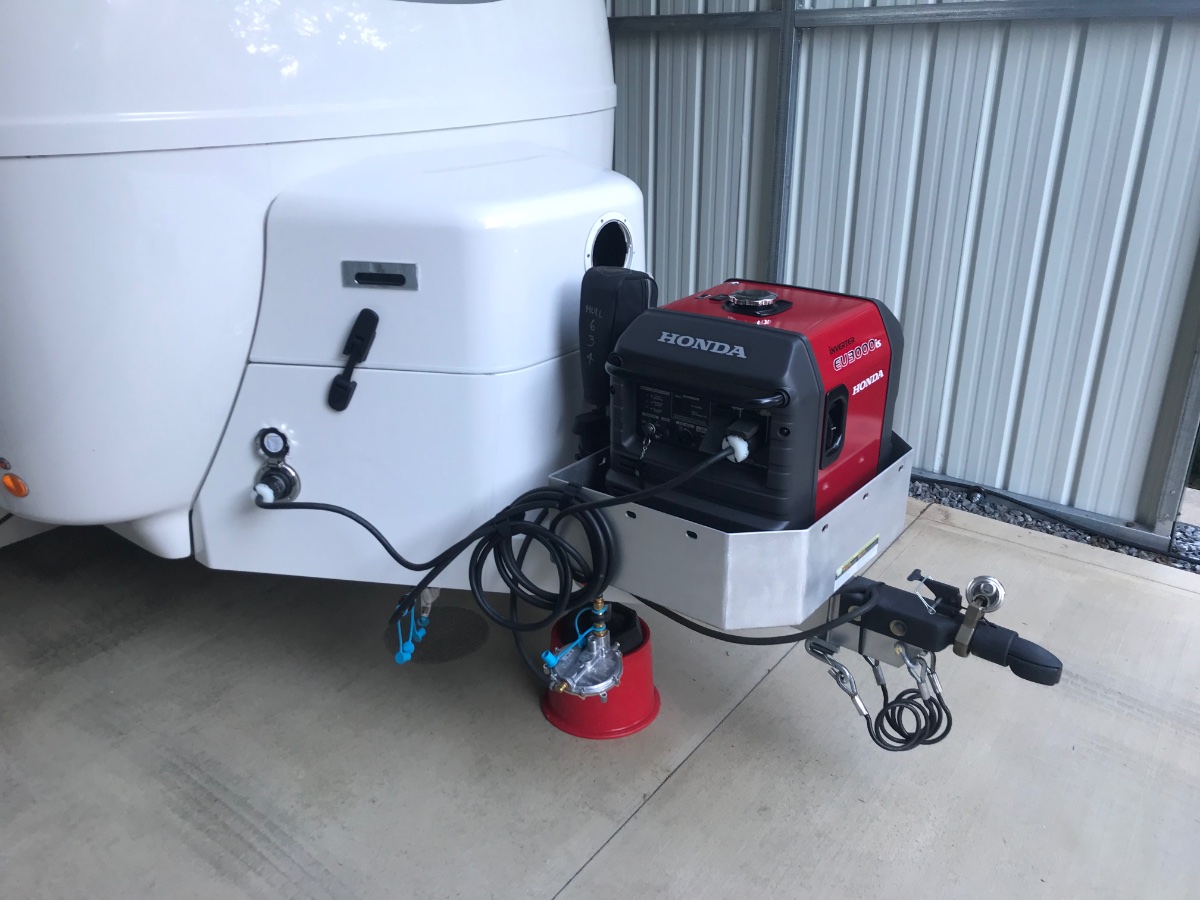
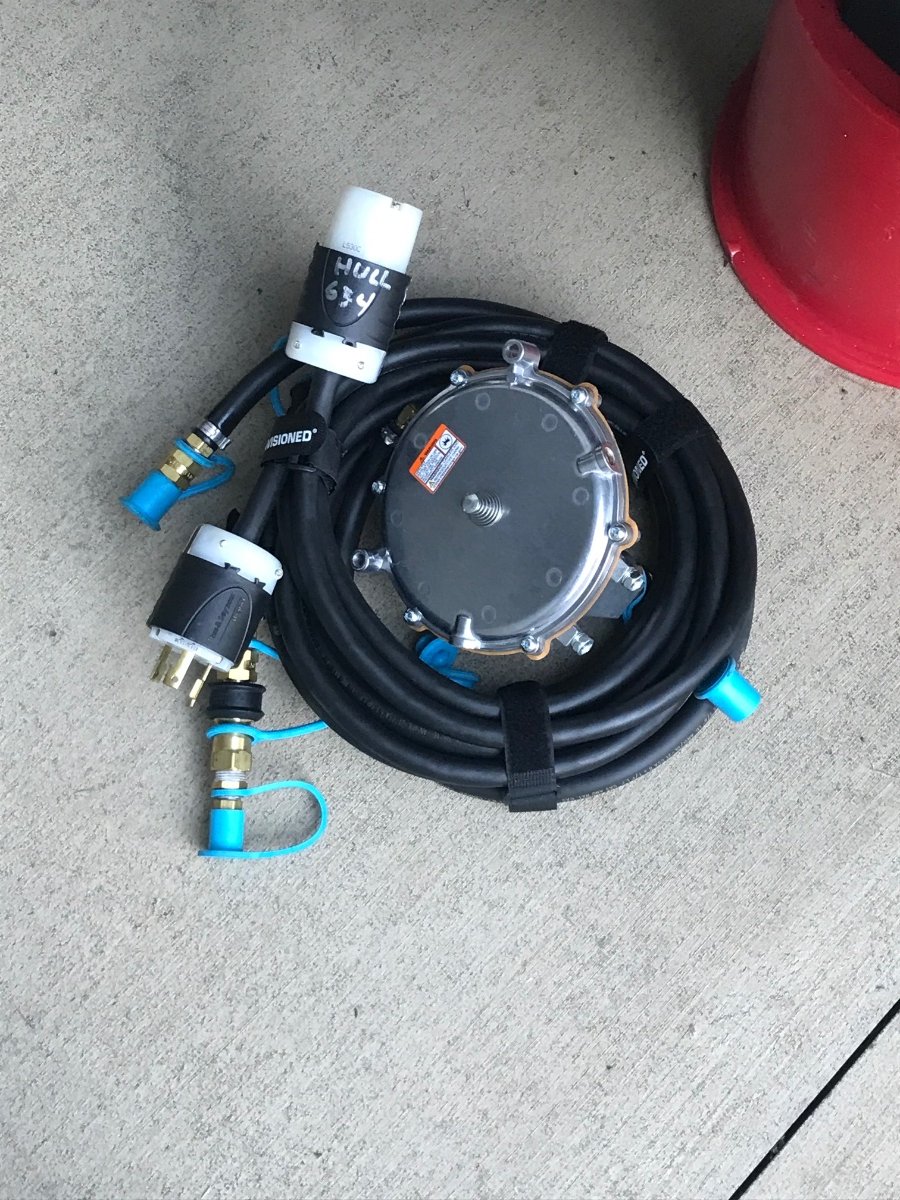
I have a Honda eu3000is which I converted to LP not wanting to carry any gasoline in my TV. I have successfully run my generator off our Oliver’s QC. I retrofit the Hutchmountain LP conversion kit to this Honda. It does require a demand regulator to run the generator. Look closely at my photo and you will see the demand regulator. It has a small button which I push to prime the generator when starting to get the flow of LP going. It only requires one touch of the button and the Honda fires right up. I don’t know if this helps since you have a different brand generator but thought I would share what works for my whisper quiet Honda. Patriot🇺🇸
 2 points
 -
I am not sure the Champion dual fuel generators will run properly with a different regulator than the ones they come with. Can you carry a spare 20-lb. propane tank, and use it to run your Champion generator with the regulator that came with it? Fearing the same issues you report (running my Champion dual fuel generator from the low-pressure Quick Connect ports on the Oliver), I just carry a separate tank and use it to run the generator.2 points
-
What brand TPMS?2 points
-
I described the initial mods in the chain 3.75 Season Trailers? This upcoming trip is to Canada and will afford me the opportunity to test the additional mods I've made this season. I'm planning on sharing the gory details of all once everything has been tested for multiple days in frigid conditions with the water system on. So far, looks like I should be good down to 0.2 points
-
In addition to the NovaKool referenced above, Isotherm has a newer Elegance model with a larger freezer - the Freeline 115 Elegance (CR115EL). It appears to be 2 inches taller than the Cruise Elegance 130, with the same width/depth H:31.4" x W:20.7" x D19.5" +2" door depth proud of flush). Not sure if that fits in the available Oliver spaces or not... It *appears* to have the functionality of the Intelligent Temperature Control built-in with its "ECO" mode (267 W/24Hr vs 418 W/24Hr for the Elegance 130 without the ITC). Slightly less overall volume (4.1 cu ft vs 4.6 cu ft for the Elegance 130) but a much larger freezer compartment (32 liters vs 6 liters for the Elegance 130). Some places show it as 12vdc only, and others seem to have a 12vdc/120vac version. Its compressor is bottom-mounted but has the same Danfoss/SECOP components as the Cruise Elegance 130. https://www.westmarine.com/isotherm-cruise-115-freeline-stainless-steel-fridge-freezer-ac-dc-internal-mounting-system-3--side-flange-20597779.html?cm_mmc=PS-_-Google-_-DSA>Galley%20%26%20Outdoor-_-Null&creative=638403958720&device=c&matchtype=&network=g&utm_medium=cpc&utm_source=google&utm_campaign=OutdoorandMaintenance&gclid=EAIaIQobChMIsIn0rtiQ_QIVCVVyCh3eMAqFEAMYASAAEgIt0_D_BwE https://www.indelwebastomarine.com/us/products/product/show/freeline-115-el/ https://defender.com/en_us/isotherm-cruise-freeline-115-elegance-refrigerator-freezer Could be worthy of investigation for those that want/need a larger freezer space.
1 point
-
I did similar but double stick taped two layers of double bubble reflectix inside the doors to the garage and battery compartment. they were cut to the size of the doors. I backed off the latch attachment and secured them just tight enough so the rubber gasket around the door was firm against the reflectix. Easy adjustment to do.1 point
-
I don't know - but - I doubt it since the principle on which this device works is based on pressure differences. I wouldn't think that there would be enough pressure difference in the cold water lines. However, in the beginning of my usage, I didn't think that it would really work for the hot water line either. Shows ya what I know. Certainly would not hurt to shoot the company an email. Bill1 point
-
Absolutely! For a number of reasons. Bill1 point
-
Both of you, Stranded and NCEagle have great ideas here and I've considered both. - I almost went with DC heat cables (heat tape) and it was an attractive thought. Please share how that has worked for you. I've found there are options for "self regulated" which draw more or less power depending on how cold the lines are. Some cables have built in thermostats set often to on at 45 and off at 55 or it's easy to add a digital thermostat which can be set manually. Problem for me with this set up is 1) tanks would be unprotected unless tank heat pads were added to the system 2) the amount of DC power it would take to protect all the pex pipes that are vulnerable to freezing (those outlined above) would be incapable with our winter usage style. We mostly boondock in ski resort parking lots and have never had access to AC power. Short winter days and low angle light = mostly using generator to juice our lithiums and would be a power challenge on long travel days. On really cold days, we would probably have to recharge our batteries daily. Not right or wrong, but for our use, heating the basement was the lessor of two evils. - Recirculating water through the system would be great for protecting the lines and connections. Supplementing with DC tank heaters would draw minnimal DC power. We opted for the Truma Aqua Go Comfort system, installed by the factory, which we love. The Comfort Plus system has a built in recirculating feature. In discussion with Truma, they said the plumbing is a different set up to accomodate that system or I'd opt to switch. It would be easy enough to insulate with pipe wrap foam all the exposed pex and to put heat pads on tanks. I'm don't know anything about plumbing so wish I had Stranded's skills. If I had known when ordering our Oliver that it was limited in it's cold weather use, AND I knew as much about cold weather trailer camping as I've learned, I would have tried to go a different route. My $.02 worth of unasked for input is that the factory could offer a "hard winter" upgrade that would be easy for them to instal and would be popular enough to justify the effort to develop and test.1 point
-
Interesting idea - Our current home was built as a "SPEC" house about 20 years ago. After it sat vacant on the market for two years (because the builder was asking too much money for it) we negotiated a fair price and moved in. A short time later, I discovered that the plumber that did the original work on the house decided to install a "return on the hot water line" from the further point away from the water heater thus forming a "loop" in the hot water line. He did this because the house is relatively long and narrow with the source of hot water being located at one end while the kitchen and laundry room are located at the other end. Obviously this causes a rather long delay in getting hot water to that end of the house. Having never seen a return "hot water line" before I did some investigating and found a product called "Just Right" made by the Nibco company. This product is installed near the water heater on that "return line", it requires NO pump because it basically works using the Venturi principle which takes advantage of the small differences in fluid pressure due to the slight difference in pressure between the return water being slightly cooler than the water coming directly out of the water heater. You can read about how it works HERE. As I see it, the down side is that the water heater would have to constantly be "on", but, that would probably be less expensive than having the furnace constantly "on". Bill p.s. this device works great and there is always hot water available in the kitchen and laundry room. Since there is always water circulating in those house pipes I did insulate those pipes heavily.1 point
-
@Stranded, I think that's a really cool (I mean warm) idea! It would actually address the entire system. Would this take some significant modifications to the plumbing? How would you get the water "flowing" around all of the plumbing in a closed loop? Another option worth considering is 12V self regulating heat cables: https://www.oemheaters.com/. I installed some of these heat cables in the plumbing areas that were most vulnerable (Water inlets, front bathroom and rear storage area water lines) a couple of years ago. I'm pretty convinced that the areas I've protected would never freeze (camping, towing or otherwise) as long as the cables had power. As an example of power requirements, I have 4' of cable installed around the lines and valves that compose the fresh and city water inlets and it takes 1.5 amps at full power (single digit temps and below). Very interested in hearing what you decide to do and your results.1 point
-
Spot on Top Gun! Sorry for not also adding my other prime Safety John caution. If working under Ollie, no matter how you got it up, please have it connected to your 6,000 pound anchor (Tow Vehicle). Best to have the TV in park with the emergency/parking brake set. Finally, add some sort of notice on the steering wheel not to drive off with Ollie with jacks down. I use a simple piece of red flagging across the steering wheel as a reminder (mostly for me) that the jacks are down. When covering 500 mile days, I'll stop for sleep and use that same flagging if I need to just somewhat level Ollie for just for an evening. In the morning, I am anxious to get some more coffee and on the road. Fortunately, the first thing I see is the flagging. 5% of the time, I then get out of the truck and raise the jacks, AND do my full pre-departure inspection. That flagging has saved my jacks more than a few times. Do you have an inside and an outside pre-departure check list? If not send me a PM. GJ1 point
-
A couple people have installed the larger Novakool. Though still small, the Novakool freezer is almost twice the capacity of the isotherm. 11.4 vs 6 liters. If I remember correctly, @mountainoliver installed the Novakool https://www.novakool.com/r5810-11 point
-
What a great idea! I'm going out to move the plug right now! EDIT: It fits like a champ!1 point
-
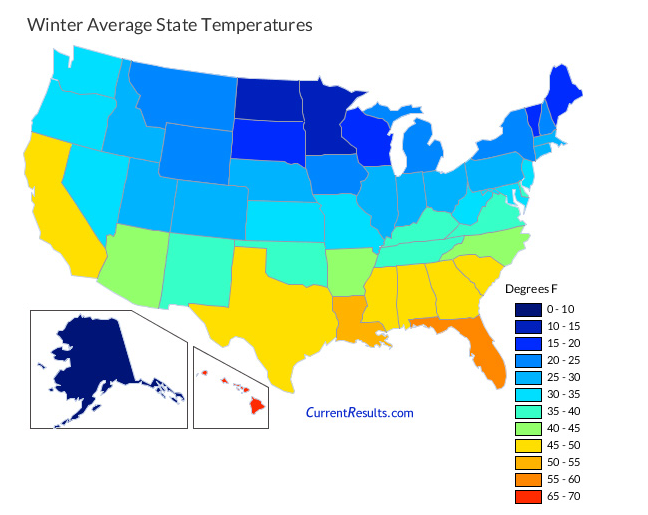
I have had a few questions regarding 4-Season camping with the Oliver and wanted to make a post so it would be available for everyone. What is 4-Season camping? It simply means that the Oliver is capable of being used through all 4-seasons. It does not mean that it will necessarily have no freeze issues in certain areas during certain climates. This is no different than a house. Here in Tennessee we recently saw sub-zero temperatures and many people had their water lines freeze and burst causing lots of damage. Does that mean that their house is not capable of being used during the winter? No, it simply means that in certain temperatures you may need to make arrangements to combat the temperature. In the past I have had my water lines freeze that were located on an exterior wall of my house so this time when they said we would see sub-zero temperatures I placed a space heater on that wall area to help keep it warmer and the next morning I had no freeze damage. Below is an average winter temperature for the United States however this is just an average and when temperatures go below the average especially when going into the low single digits or below zero, whether in a camper or a house you may have to perform steps to ensure freeze damage does not occur.
1 point
-
Those of us that occasionally or frequently encounter very cold weather when pursuing our passions with our Oliver can benefit immensely from the experiences and insights of others on this forum. Those that never do, or that always winterize, probably don't care as much, especially those that never boondock. Let's face it, if you have full hookups, you can put two electric space heaters in the basement and run the propane furnace at 70 and not worry. Absent shore power, cold weather can be stressful. I would like to see the Moderators expand the category of "Oliver Boondocking" and call it "Oliver Boondocking and Cold Weather Camping" so those of use that do find ourselves in frequently in cold weather and unwinterized can share our questions and insights in one place. I have spent over two years trying to figure out the eccentricities of the Oliver when it comes to balancing temperatures throughout the trailer in cold weather and I wouldn't trade my Oliver for anything else. However, what I have learned or not learned can't be shared in one giant post. And I haven't figured it all out either. After two years of moving remote wifi temperature sensors around to different places, changing out the thermostat, and opening different pathways for return air to enter the basement, I have learned a lot. Importantly, I have come to the tentative conclusion that the biggest reason that the basement temps can drop so far below the cabin temp in places is due to the fresh water tank. Heat travels through water 20 times faster than it does through air. Conventional wisdom would say that the fresh water tank would act like a hot water bottle to help keep the basement warm. However, the fresh water tank in the Oliver appears to sit on a rubber mat on the floor of the basement and that creates a direct coupled path for the heat in the water tank to be lost through the bottom of the trailer at a rate up to 20 times faster than heat is lost through the rest of the shell. This sucks heat out of the basement faster than the furnace can replace it. Even a small air gap under the fresh water tank would slow this heat loss dramatically. Unfortunately, insulating under the fresh water tank is not an option for us, although Oliver should consider doing something like it in future builds. The rapid heat loss from the fresh water tank could explain why the basement temperatures drop so much compared to cabin temperatures, unless the furnace runs constantly. I am wondering if it would help to add 2 inch or 3 inch rigid pink foam panels to the underside of the trailer between the ribs of the frame to reduce the heat loss from the fresh water tank. Am I crazy?1 point
-
In The Wonder Egg, a 2008 Elite, I installed of two Xtreme bilge heaters between the shells in the rear of the trailer. One protects the water pump and the other protects the water lines near the outside shower. They both protect the water tanks. The heaters turn on as the temp dips below 40° and turn off as it rises above 55°. The initial amperage draw is 8.2A for one second and 4A for operation. It required the addition of two 110v outlets between the hulls and they only operational when I'm hooked up to a power pole or running a generator. I mounted them on firm, yet flexible rubber mats which enables me to easily position them where needed and stops them from tipping over in transit.1 point
-
I think it's super important for winter campers to remember that there is a substantial part of the water system that is, as far as has been discussed on the forums, still vulnerable to freezing even after the 2023 model year improvements. The area where the lines running through my garage in rear of the belly has consistently dropped below freezing when outside temps are still in the mid teens. This is even though I made all the same alterations on return ducts that Oliver has plus the mod to heat feeds coming from the furnace as described in "More Airflow In Bathroom". As previously shared in this chain, while camping, the rest of the belly remained comfortably above freezing when outside temps dropped to -5 but that rearward compartment ended up with plumbing exposed temps in the mid 20s. The reason I started this thread was to share what I found about this vulnerability and to ask if anybody has found a workaround. Circling back to that question here. Any insight would be much appreciated.1 point
-
Neither is my home - guess I better start looking for a true 4 season house.😁1 point
-
Last winter I put a 4" vent through from the base of the toilet to the area under the dinette. It's an eyebrow style vent so shower water can't splash into the belly. I also removed the exterior shower head, brought that hose inside and re-attached the head. Also removed the hot and cold water knobs. Used closed cell foam to insulate the space behind the tiny door and two layers of reflectix to insulate the outer door. All super easy and very productive. Those belly areas were measurably warmer as was the temp in the bathroom as air now flowed through there where it had been a dead end.1 point
-
I'd second the comments quoted above. I've found with a month worth of below freezing camping that the trailers in their stock configuration is safe to run de-winterized until the mid 20s. Below that the garage (the area behind the skimpy wall at the very rear of the trailer belly) drops below freezing posing a threat to the pex lines and connectors in that area. In pre 2023 models, the belly areas below the front dinette and by the exterior shower can also freeze when temps dip into the low 20s. With mods currently in 2023 models and/or mods outlined in the discussion titled 3.75 Season Trailer, all belly areas except the rear of the garage, have stayed above freezing down to -5 which is the coldest I've been able to test, so far, since making the modifications. It's tough to say what "4 Season" means but, to me, any place that occasionally sees temps to 32 could easily fall to the low 20s so, the short answer as far as I'm concerned and have seen in my testing is Not Really, these are not currently outfitted for true 4 season usage. Others may draw different conclusions or even have different experiences. For what it's worth, at the end of the winter, I'll share a full breakdown of my mods and results.1 point
-
What is your definition of four season camper? We have camped many times with night time temperatures in the 20s and teens with no freeze ups. I don’t winterize. We had a week of single digit temps a few years ago, I wasn’t winterized. I had my trailer in the driveway and turned on the furnace and had an electric space heater going (hatches open) and had no issues. Is the Oliver an extreme cold weather camper? Probably not. Normal cold, 20s and high teens, yes. Very few people like to camp in single digit or below zero weather. Some, like us, will camp in cold weather but we don’t seek it out. Our Oliver has served us well in cold weather. Mike1 point
-
No - that is not what KYD said. Since Olivers have an enclosed "belly" and there is heat in that area, according to KYD the Oliver IS a four season camper. For me, living in the mountains of western North Carolina, the Oliver is certainly a four season camper. However, a person living in Fairbanks, Alaska probably would not consider ANY RV a four season camper. As I said above the answer to your question will at least partly depend on the person you ask. Bill1 point
-
I believe that the answer you seek will be determined by the source from whom you seek it. In a recent video on YouTube( by "KYD - Keep Your Daydream" they stated that when the term "Four Season" is used relative to RV's it means that the RV has heat directed to the areas containing the water and sewer tanks and the water lines. Obviously, that in and of itself does not necessarily mean that these lines and tank will never freeze. In any case - there are some good hints, practices, etc. in this video if you intend to camp during cold weather. Bill1 point
-
I'd caution eliminating that factory return as it's placed in the area of least airflow resistance. Put another way, you are playing with more than just a simple sail switch - you're literally playing with fire as most Ollie owners do not have the proper equipment needed to measure the required furnace manufacturer's airflows and static pressures created by altering the factory inflow/outflows. Charlie1 point
-
That's it exactly. We were testing the system free of frozen line consequence This winter we are planning a month long cross country ski safari and, being that long, would want to be able to have showers. Scuba, We're super interested in your project and not just the process of rerouting water lines. Hope to hear the gory details.1 point









.thumb.jpg.79d7e8d10b37de38659b3e2851de60b2.jpg)




-
Recent Achievements
-