Leaderboard



Popular Content
Showing content with the highest reputation on 03/24/2023 in Posts
-
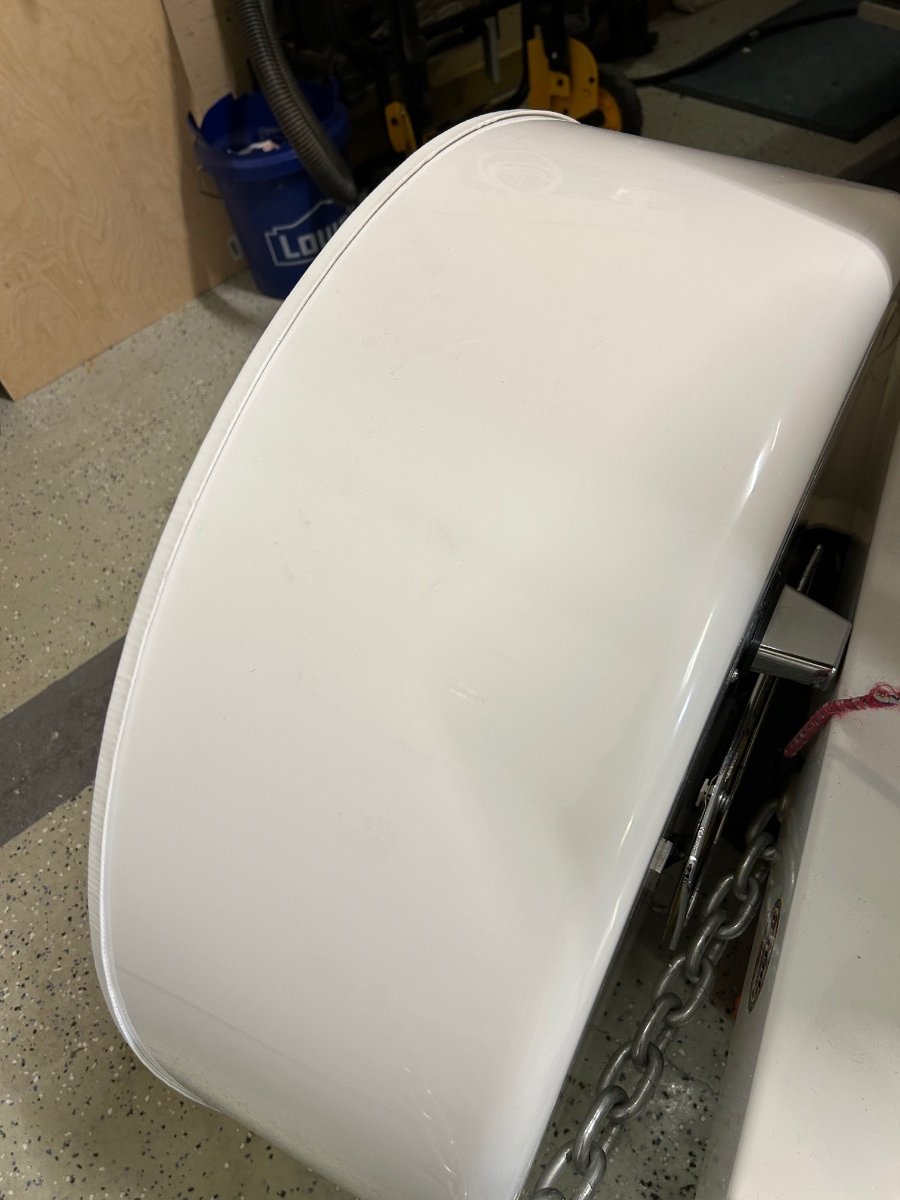
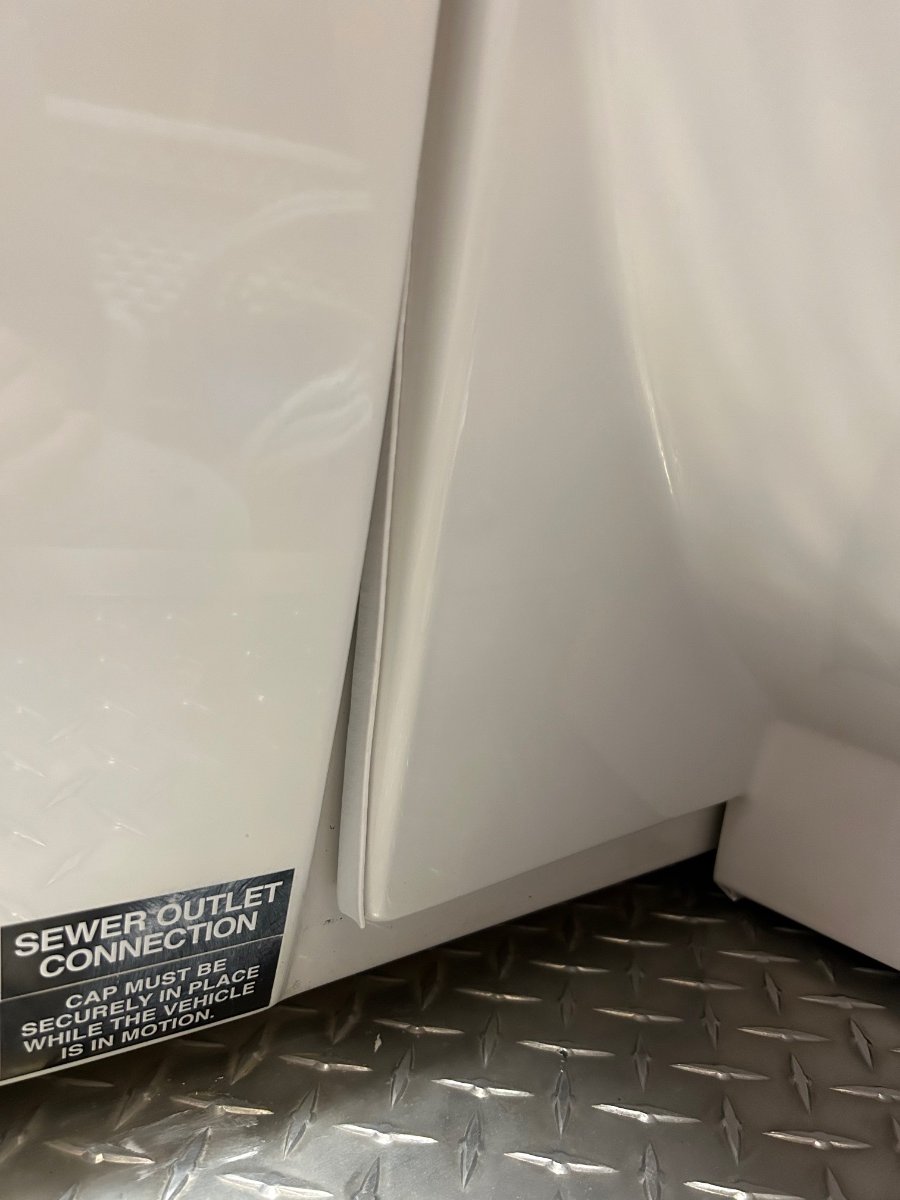
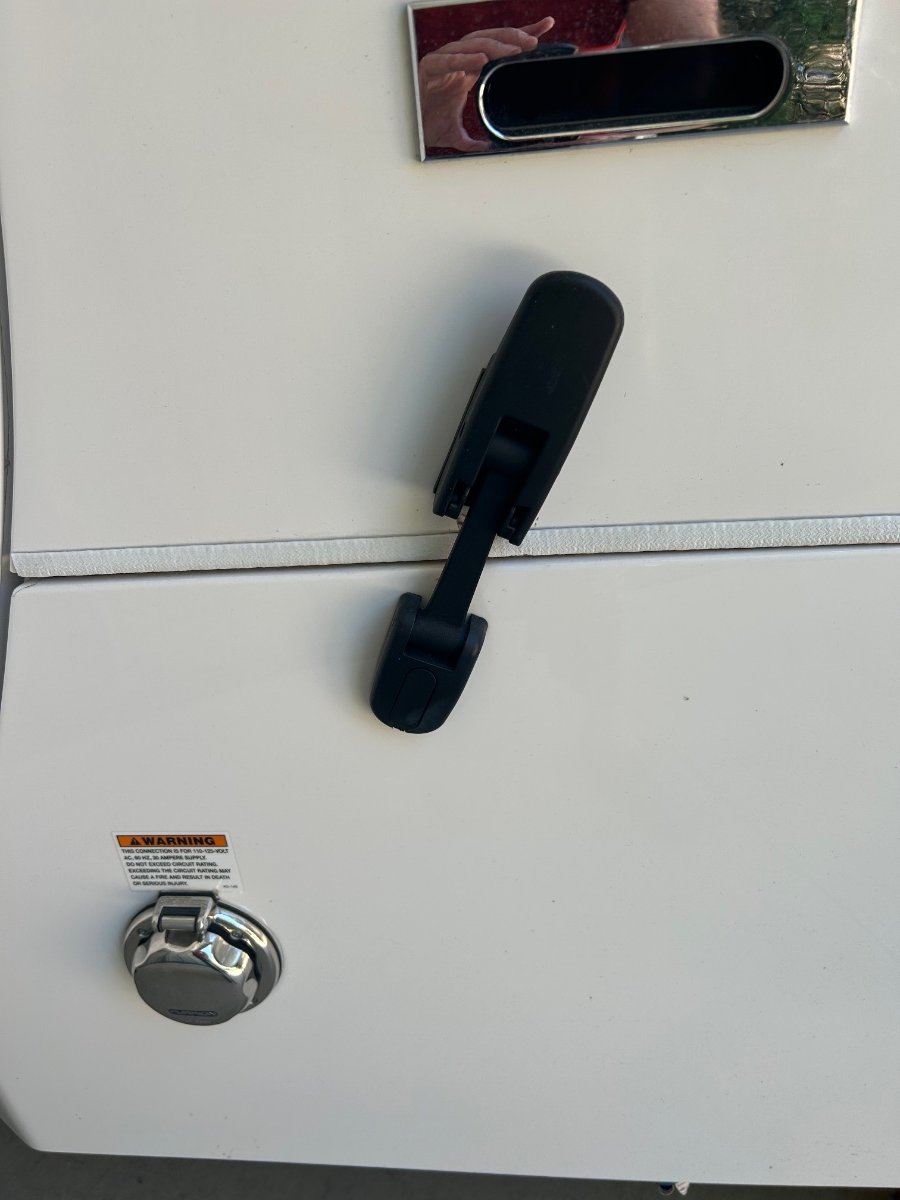
After replacing the protective strip around the “dog house” LPG tank cover, I realized I ordered enough for the spare tire cover. So after removing the cover when accessing the tire, I can place it flat on any surface without dinging the edge on sharp rocks or debris. It may seal the compartment a bit better now also.
 10 points
 -
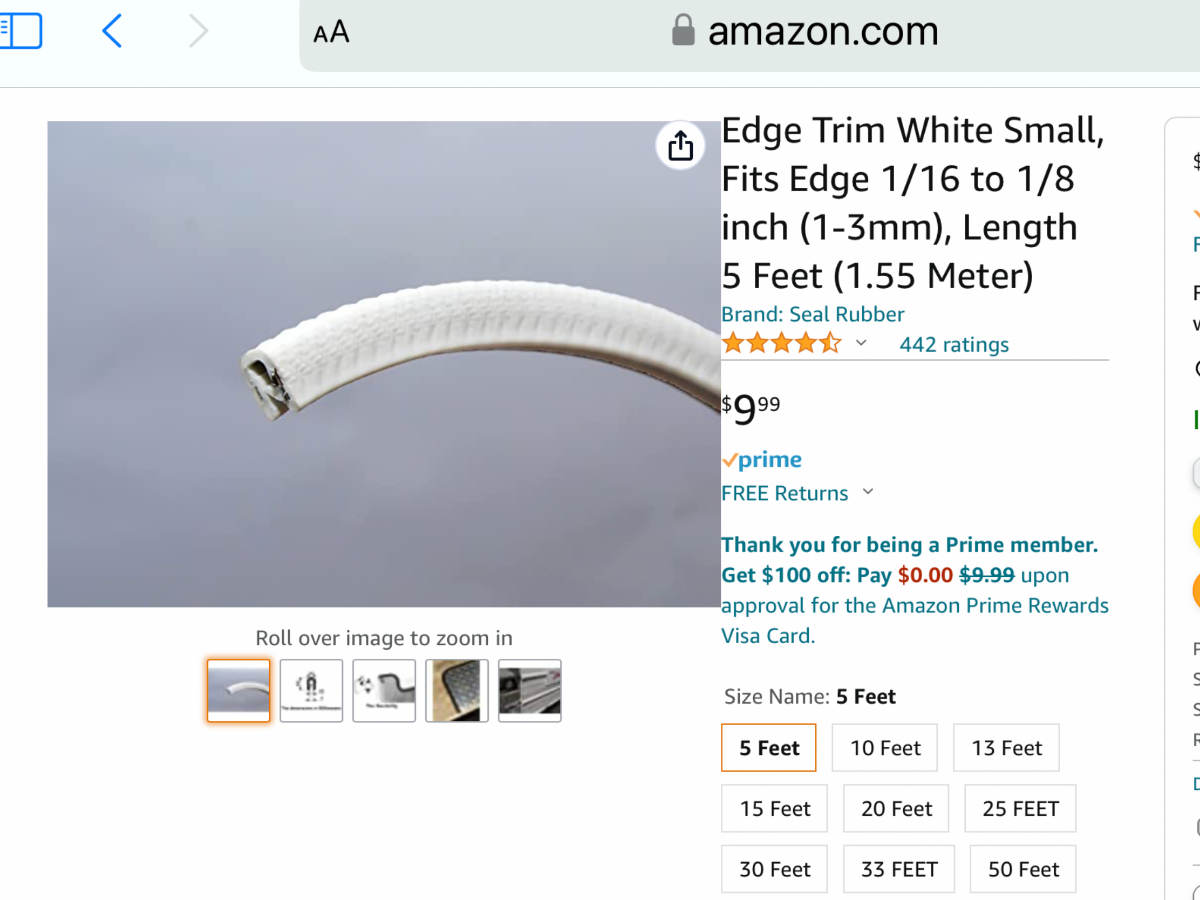
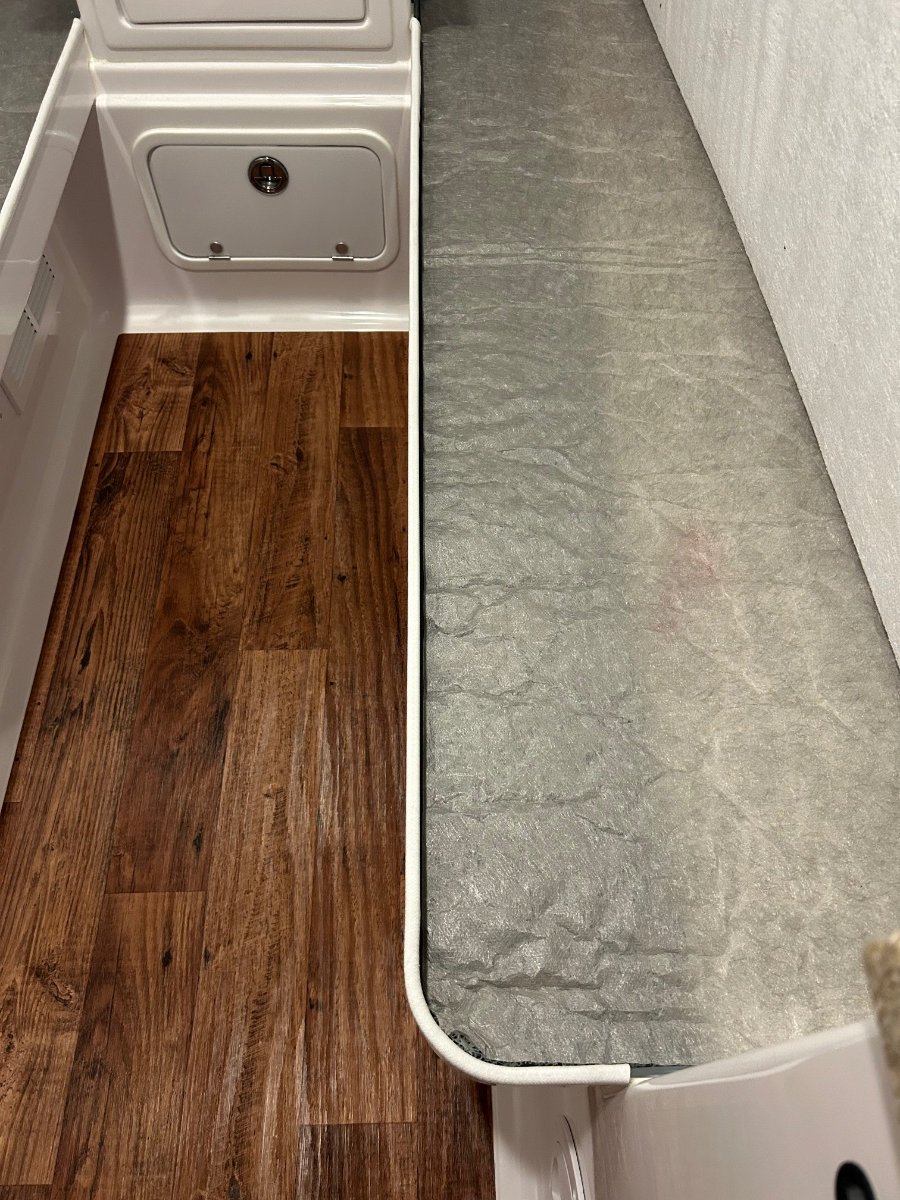
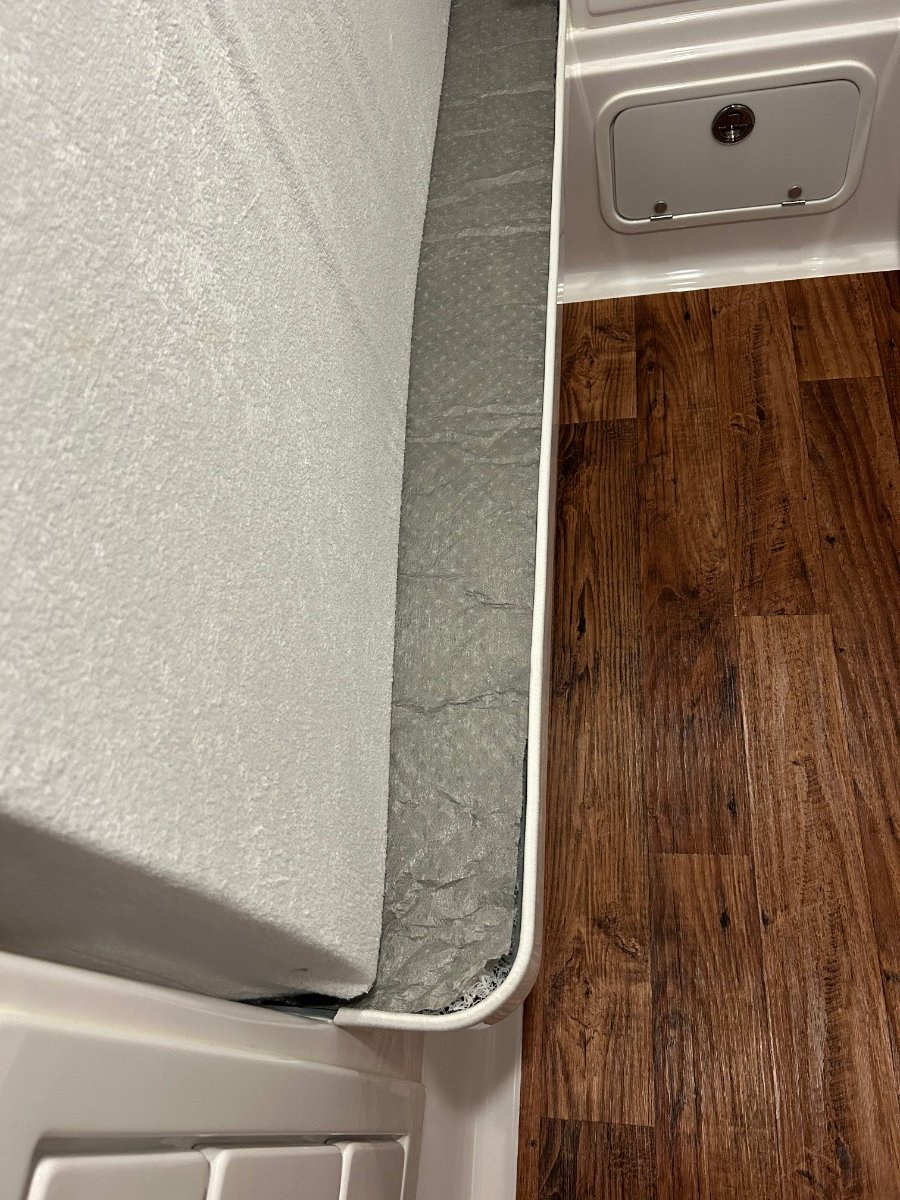
Nice job! Here is a where you can ordered the edging off Amazon. 😊I used this on the edge of the dog house aka propane tank hood as well. And decided to use it on the fiberglass edges of the twin beds.
7 points
-
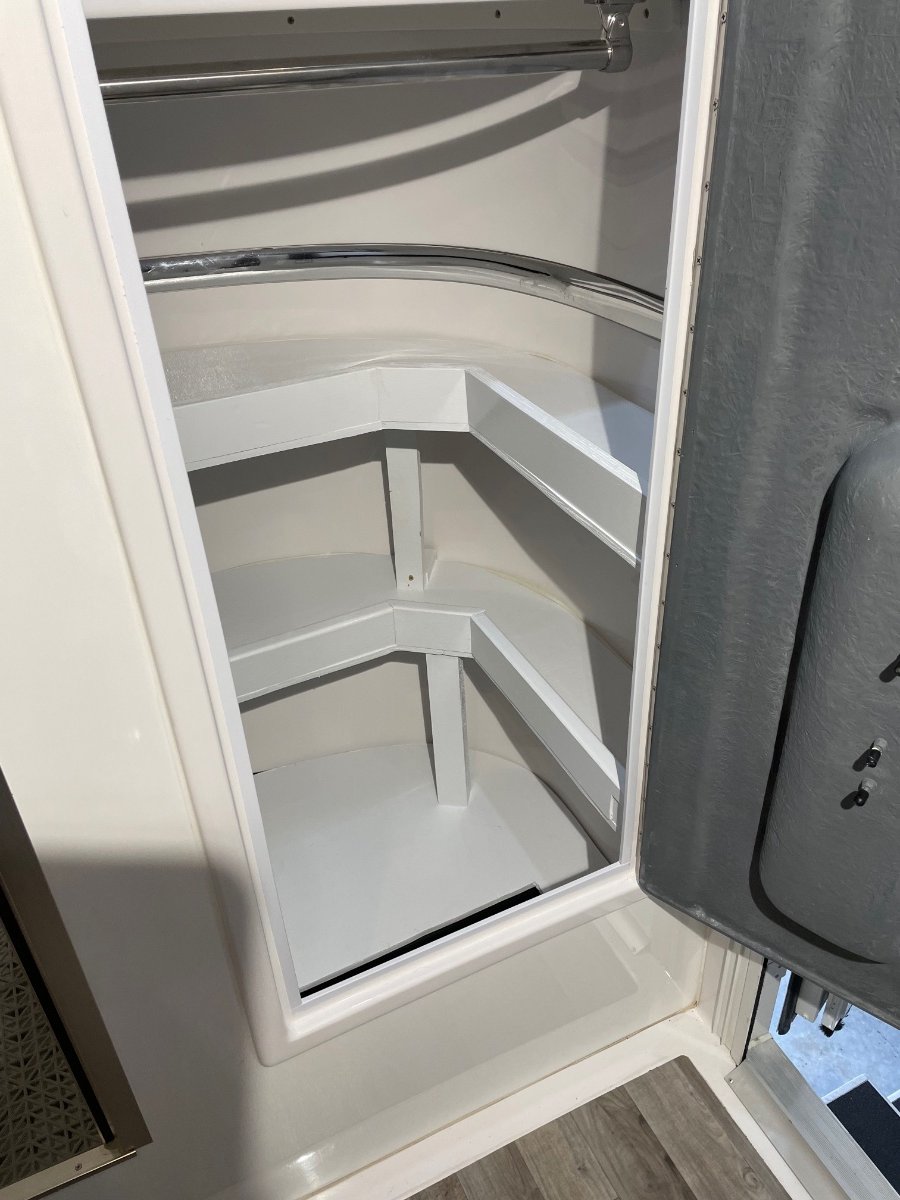
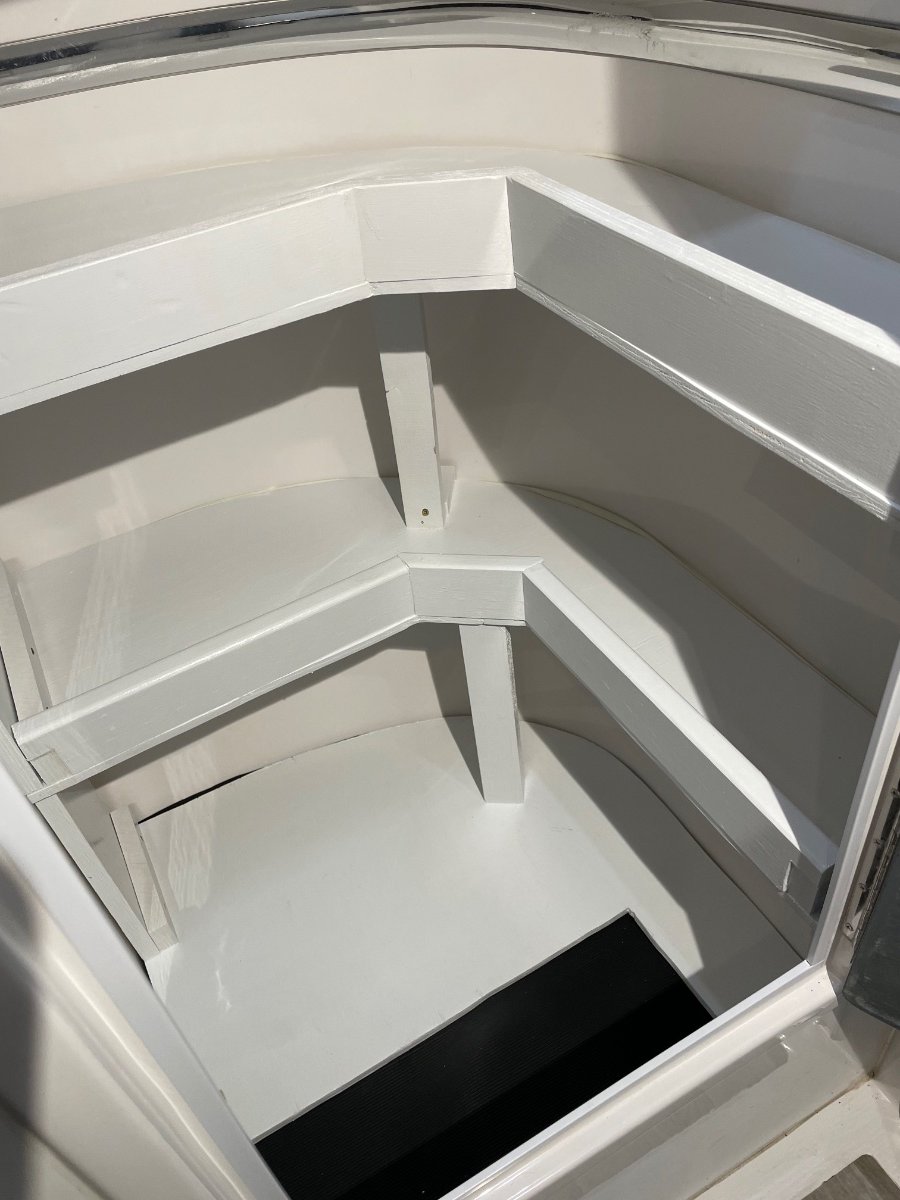
Building Process: First I created a template of the floor with a piece of poster paper. I used 5/8 inch plywood to then produce a base piece. I then made two side pieces to go against the two straight walls (shelving board)...(first shelf is 12 1/2 inches tall from the base) They were attached to the base with an additional strip of wood. Nothing is screwed to the camper...I used a strip of window insulation around the edge of the curved surface to eliminate any rubbing against the fiberglass. I then used a piece of cardboard to create a template for the first shelf. I repeated the process with shelf 2. After completing the unit i unscrewed all parts, removed from closet and painted with gloss white paint. Then re-assembled the entire shelf. The post in the middle of each shelf is placed toward the back of the middle of the shelf for additional support.6 points
-
Here are a few pics of the mod mentioned above - Dog house Edge of bed rails.
5 points
-
I just returned from another trip camping in temps below freezing. In the last two seasons, I've now done more then two month's of camping with temps staying below freezing even during the days. Have done the mods to assure that all areas of the basement stays above 50 degrees even when outside temperatures have dropped below zero. Tested with registered digital thermometers. I've now had multiple frozen lines under those conditions. I'm confident the culprit is the insulation (or lack thereof) and especially the type of insulations used - reflectix. This type of insulation does OK with radiational heat loss but not good at all with conductive heat loss. Translation is the pex lines freeze at points where they actually sit directly against the reflectix allowing the cold from outside to transfer through to the lines. The lines froze after a couple of days where temps were consistently in the low teens. My take is that these trailers without extensive mods are not safe to use the water system when outside temps sit in the low 20s for more than a day or so. By allowing air to flow through the basement, this threshold drops another 10 degrees. Without running heat tape along pretty much all pex lines and tank adding warming pads, an Oliver cannot operate with water below that. Our experience may not line up with others. Have asked before and do so here again for anyone who has used their trailer free of mods and used their water in ambient temps below the mid teens to share the particulars of their story. I'd love to be proven wrong on this but feel that, as sold, Olivers are not built for the type winter conditions found where snow is a common place thing.5 points
-
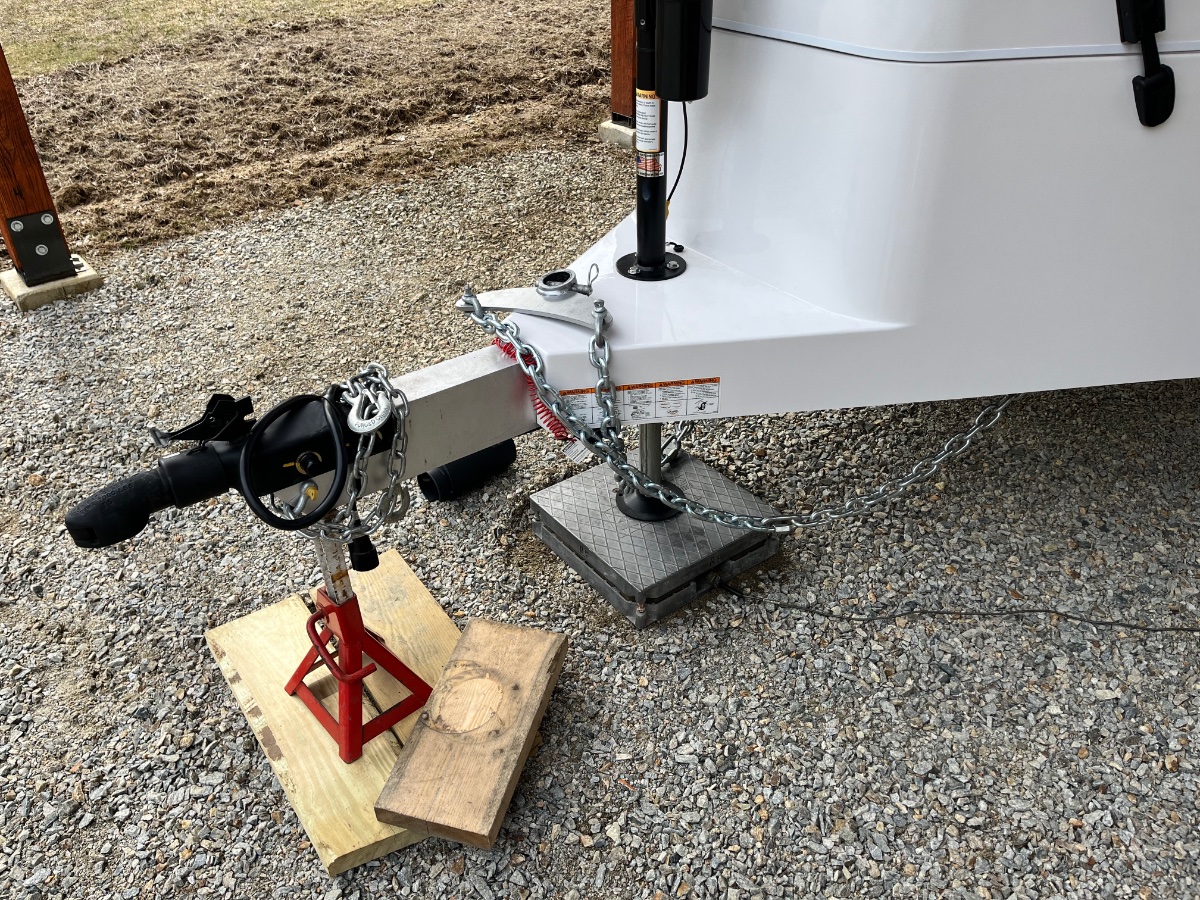
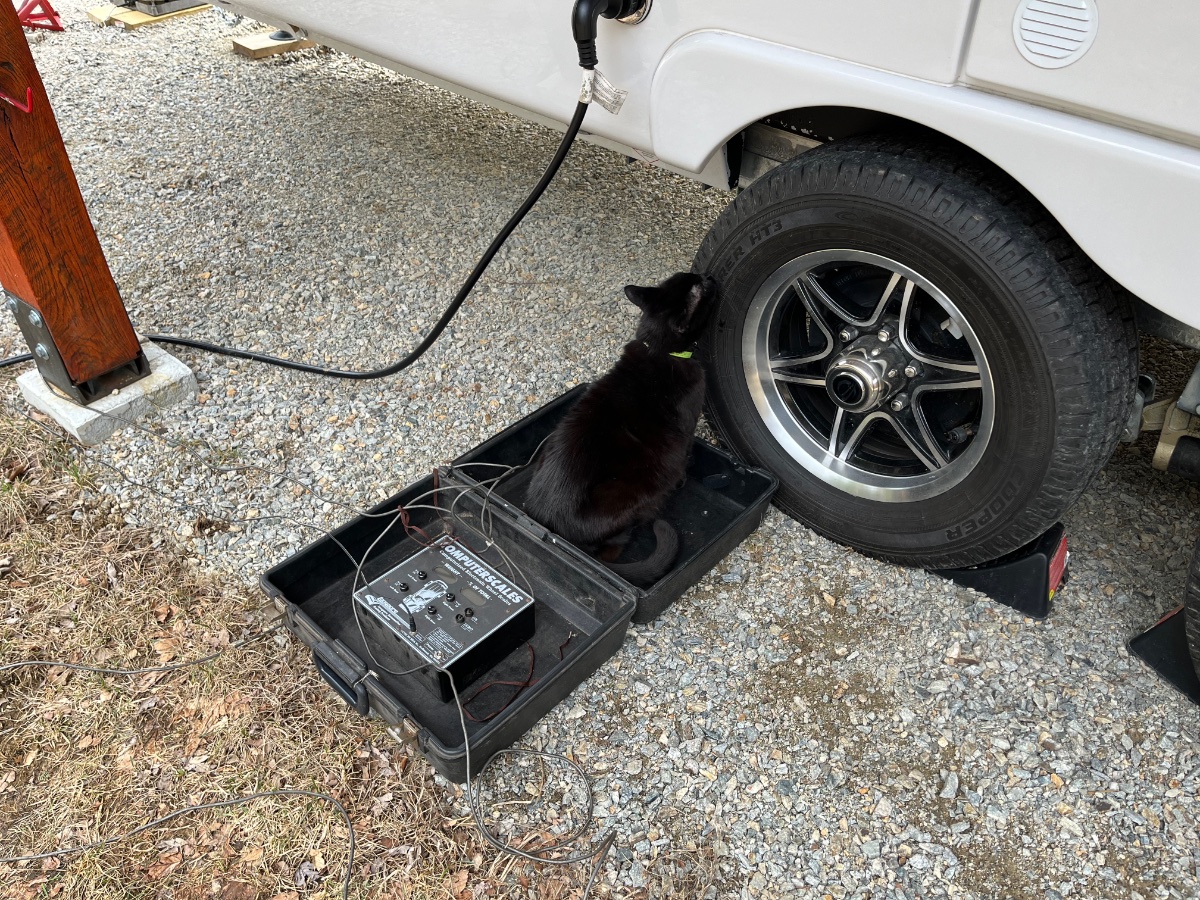
I decided to weigh my trailer because there is a lot of discussion. I have a set of scales I use to do weight and Ballance on Aircraft and they are very accurate. I did a quick and dirty weight but will re do it on the hanger floor in another week fully loaded. The trailer is a 2022 LEII with solar, lithium a convection microwave and two full 30 Gallon propane tanks. At the moment it is still winterized so it has no water. We have a Lavio toilet so there is no black tank water. It is loaded and ready to go with everything we travel with less the 240pounds of fresh water. The trailer weighs in at 5,220 pound add the fresh water and we are at 5,460 pounds. The weight on the tongue is 509 lbs. I plan to re weigh it with the fresh water full to see if it changes the tongue weight. So that’s it in a nut shell. Before someone comments I put the trailer back down level on the tires and moved the load cell under the trailer ball to get the tongue weight, I did not take a picture of it. Bill
3 points
-
Hi John, It’s been awhile since I did this mod, I think I ordered 20 or 25’. I did not put this edging on the rear spare tire cover only the bed rail edges and dog house. It would seem that 30’ would get the job done. Partriot🇺🇸3 points
-
No. It takes many hours in below freezing temps to fully freeze the water in the Pex lines. This will not be enough time for the water in the Pex lines to freeze. But overnight at 0 F. without heat in the trailer? That would likely be enough.3 points
-
You won’t need adhesive, this trim grips extremely well. No issues with it coming loose at all.3 points
-
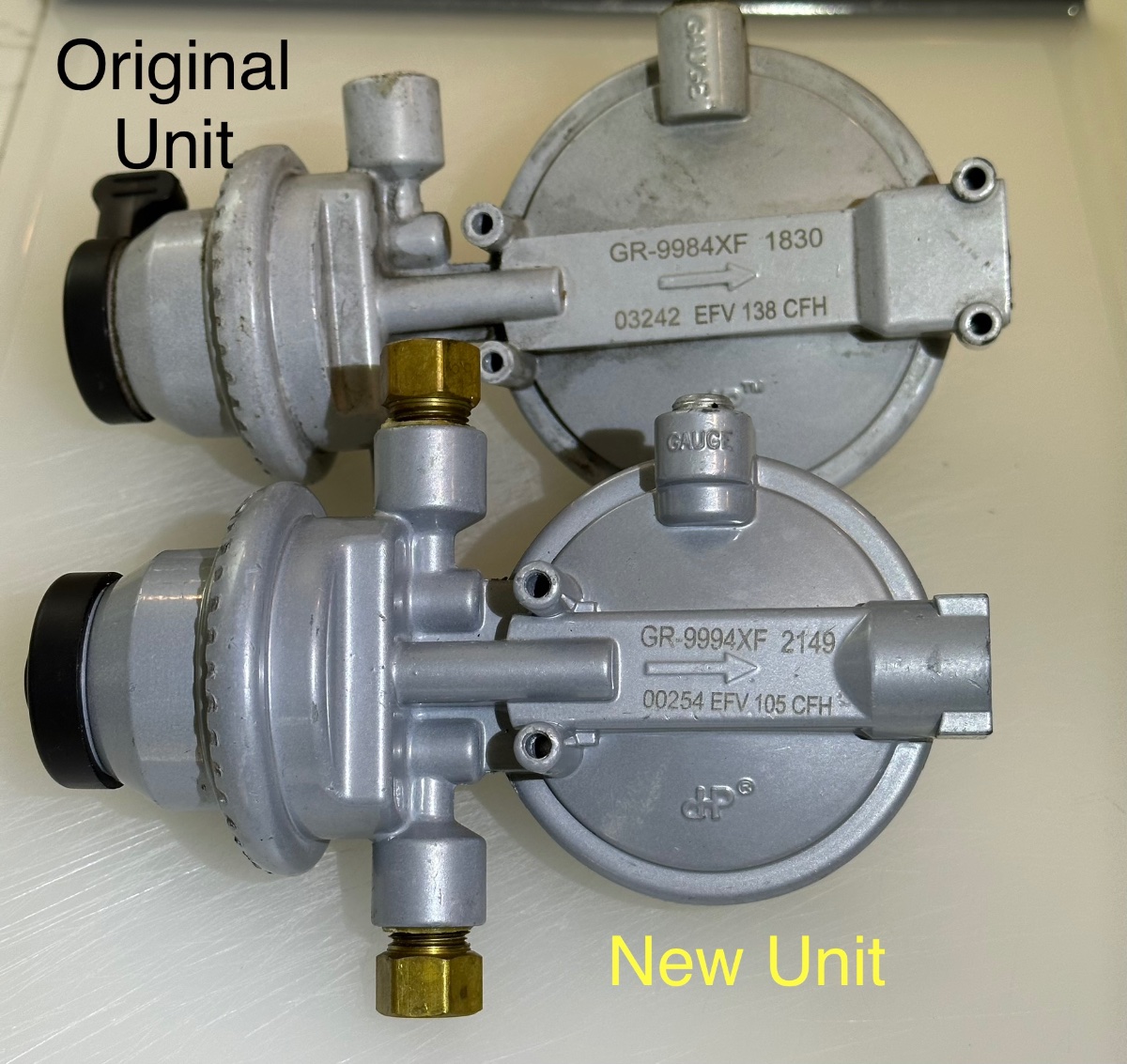
I recently had my original gas regulator die on Hull 505. I wasn't paying close attention when I ordered the replacement and ended up ordering one with a lower BTU Rating. The original Hull 505 part - GR-9984XF with 345,000 BTU from the Main Service Cylinder is what I should have ordered. The replacement part - GR-9994XF has 262,500 BTU from the Main Service Cylinder is what I have now sitting in a box. Since I learned of my error, I've ordered the original part and left the other new in the original box. I can't return it as the time's expired for exchange. Net Result: I have a NEW in Box GR-9994XF sitting in my garage. I'm wondering if the GR-9994XF would work as a spare for those of you with newer trailers that no longer have the Gas Fridge? If you're interested in the unit...send me a private message and we can work out details. Craig Short
2 points
-
In a side note, we will be coming thru your area in June and I would be happy to hear your ideas on what you think would be needed. I've done many extensive mods on our trailer thru the years and if I could offer you any assistance, I would be glad to.2 points
-
This type of edging has a spiral steel spring inside, no glue needed unless the material being edged is too thin. John Davies Spokane WA2 points
-
Our original awning (2008) suffered from a bowed arm and saggy fabric. (Yes, we often leave it out when we have a moderate rain.) Oliver hooked us up with a direct replacement, at a reasonable price. I second Bill's suggestion, if you are anywhere near Hohenwald. Or, if you just want to revisit beautiful middle Tennessee. Put in a service ticket.2 points
-
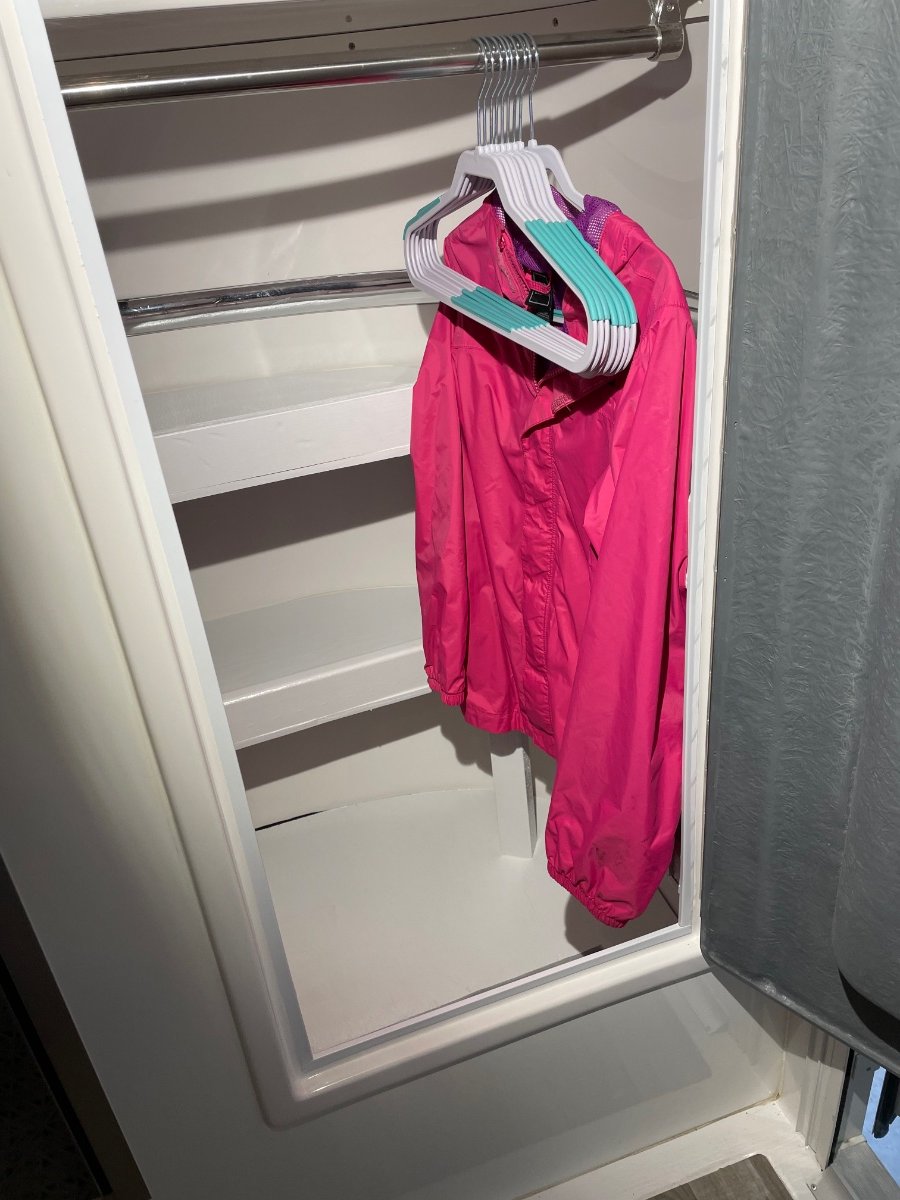
We do not bring but a few clothes that need to hang. We felt like we were losing so much storage area. I built shelves to fill the lower area of the closet. That curve is a bugger to work with. Shelves have a 4" lip in the front to help hold the gear. They are not perfect but work well.
1 point
-
Ok-...My fault...I moved the trailer without bringing the awning back in ! Needs to be replaced. This happened mid-September last year. I have had a new one ordered through a local "RV" place. Here it is mid March...still no awning... Girard is telling them that it is a "custom" awning...that is what is taking so long ... How can it be "custom" ?... they must make 500-600 a year for Oliver... Starting to get..."crazy"...1 point
-
I don’t think so. We have had a lot of time where the temps were below freezing, both stationary and while moving) with no issues. I don’t winterize. We’ve had two occasions where the temps here in south Texas got into single digits and stayed below freezing for days. I kept the heat on, opened hatches and had no problems. If I was looking for a cold weather trailer for camping in constant below freezing weather I would be looking at a Nash/Arctic Fox or even better an Outdoor RV. They have a lot more insulation in the walls and ceiling, enclosed tanks with dedicated heat ducting plus tank heaters. The Oliver 4 season capabilities are for how most of us camp - above freezing with occasional, but not sustained, below freezing camping. Mike1 point
-
Or, buy a trailer or motor home that has factory-installed 12V tank heaters, and a furnace design that properly heats the area where the tanks and plumbing are located. Stock Olivers are true 4-season trailers only in the Southern US, where they are made. Knowing what I know now about the stock Oliver trailer's performance in below-freezing temps, I believe it is remarkably "aggressive" marketing for Oliver to include on its website photos of its trailers being used for snow camping.1 point
-
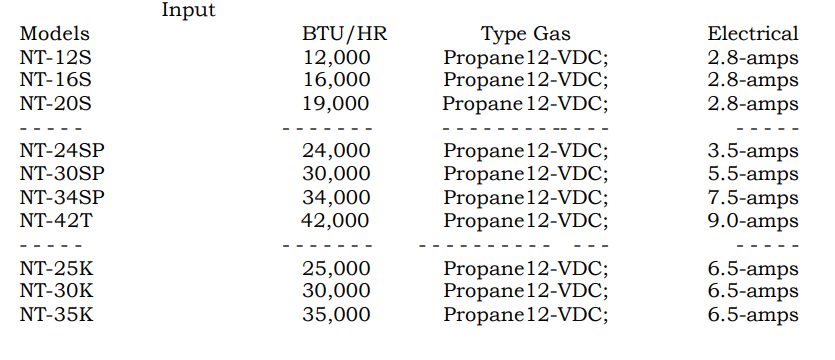
Thanks for the tip on summing up all propane users for the trailer and comparing to the max BTU output from the regulator. Here's what I found out about my Hull 505 Propane Users: Propane draws Norcold N412.3FUI: 1,200 BTU/HR. *From Fridge Service Manual* Suburban Furnace: 18,000 BTU/HR. *Printed on Side of Furnace* Truma Waterheater: 60,000 BTU/HR. * Printed on Side of Water Heater* Outland Fire Bowl : 58,000 BTU/HR. *From Specs on Outland Website* Dometic Cooktop : 9,600 BTU/HR. * From Domestic Website* Sum of ALL: 146,800 BTU/HR Other BBQ’s etc: TBD So it appears the smaller 262,000 BTU regulator will work just fine and can feed all those things running at the same time...and I shouldn't worry about upgrading to the larger 345K BTU regulator that was originally on the unit. I still have one in the box if anyone needs it. Craig1 point
-
If I were someone that actually enjoyed being out in weather that cold and had purchased a travel trailer for the express purpose of being able to do it, I would make whatever modifications I felt were necessary to enable me to be able to safely and comfortably enjoy my passion.1 point
-
My research into the capacities of PEX have netted similar info as you have stated above. Although there have been times where we were caught by bad weather, I too, reside in the group of folks that would never purposely camp in sub freezing temps. There have been mountains of how-to information posted here and all over the internet concerning cold weather (at freezing or above) camping and, since you've probably already read it all, I won't go into it again here. So, in answer to your question "Am I being overly confident in the ability of the trailer to withstand a little cold?" ... Absolutely not.1 point
-
Mike, I read all the comments above in the thread. My understanding of PEX lines are that they can expand quite a bit without breaking. 3 times their size if I recall. Water expands something like 9%, a figure that wouldn't present a problem for the PEX lines. One source I read said that the temperature needed to freeze water in a PEX line that isn't insulated is 20°f. Two problems that I see happening in freezing temperatures are the inability to have water at the faucet due to the water now being frozen in the PEX lines and possible breaking at the non PEX junctions. Maybe if they use PVC fittings which I think are used, that wouldn't be able to expand like the PEX and they would fail. I would think that the water in the small PVC fittings would expand out into the PEX line laterally instead of pushing against the walls of the PVC fitting, in other words, the path of least resistance. I can't see myself camping in sub freezing temperatures, but a brief period of sub freezing temperatures might happen while pulling the trailer through mountains, for instance. Maybe for most of us, we don't have to worry about freezing lines. I winterized the trailer and will take it out when it's safely above freezing. Am I being overly confident in the ability of the trailer to withstand a little cold? John1 point
-
We camped once when night time temperatures were mid-teens and daytime temps were high 20s. That was for about 5 days. No issues with water lines freezing. We’re not big fans of that type of cold and avoid it if possible. The last time I had my basement partitions out I could see the water lines laying against the hull as they ran around the back of the trailer. It would be easy enough to either wrap those with insulation or lay some thick insulation down under the water lines. The back of the trailer seems like it is the most vulnerable area for the water lines. The lines under the bed seem more protected but should get some more insulation too. For the few times we’re in weather below 20 that might be enough. Thanks to our cold weather campers for their experience. Mike1 point
-
Sounds like good general guidance.1 point
-
Craig: Don't know which furnace and stove you have, but if you check their BTU input ratings you could find the answer. If the actual required loads are less than the rated load, you're golden. Here is all the Suburban models that are in my 2018 hull 342 furnace O&M manual: I suspect as you are way under the rated load, you will be fine. But do add up all your gas usages (BBQ, Stove, etc.) just to be sure. JPRussell
1 point
-
Original thermostat works fine, though it flashes E5 which is an open circuit code because there is no more AC unity to connect to. Just toggle to thermostat to heat when you turn it on and the heater works as normal. 6 month now using the Houghton and we love it! Its quiet, the Heat pump works great, as long as outside temps are above 40" F. Runs 5-6 hrs so far on the lithium 640 amp Hr batterys. Hull 1144 LEll, FORD F150 20141 point
-
Are they free standing other that the screws into the floor? You might consider adding a bead of adhesive along each of the curves to give it more strength, Please post some pics of the shelves with stuff on them. If you added stretchy cargo netting, you could fill them up and not risk having stuff tumble out, for example paper towels or boots. Thanks for posting. John Davies Spokane WA1 point
-
Have you talked to Oliver Service?1 point
-
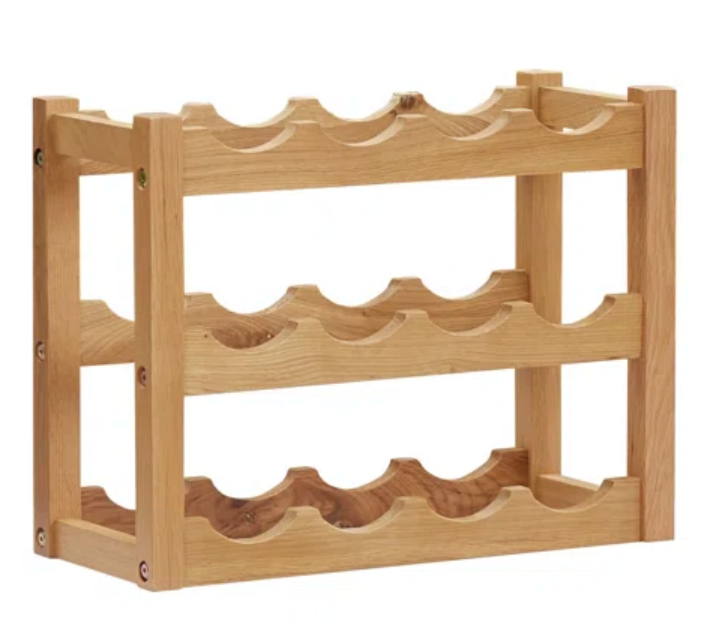
Your closet upgrade is fantastic! I'm thinking it's begging for a nice secure wine rack! Ha! Heck -- a few bungie cords over the top of the bottles... Might work?
1 point
-
This is probably true for the Stick Built Trailers, or Metal Sticks, but for the fiberglass trailers like, Oliver, Casita, Big Foot, Escape, etc., I wouldn't be too worried about the value going down, just how much are they going to go up. The fiberglass community of campers is a total different group compared to other groups. trainman1 point
-
I vacuum them, then use a damp microfiber towel and wipe them down.1 point
-
I vacuum the blinds with my dyson, and the brush fabrics tool. I do have one mosquito spot that I've not tried to get rid of. I left it, to remind my husband to not kill mosquitos on the shades. Maybe someday I'll try, but it's been there over ten years....1 point
-
Wow! Have to wonder if this is even legal..1 point
-
Using a Swiffer may help remove some of the dust. These blinds are pretty fragile so I would not want to hose them down. You may want to check with the MFG. GJ1 point
-
This too has been discussed here on the Forum many times. Oliver did produce 4 Olivers (red, blue, black) plus, of course the white ones we all know and love. Simply put - the man-power cost of adding color as compared to the volume of units produced simply didn't make economic sense. This primarily is due to the need to get every spec of color out of the equipment and environment where the shells are manufactured prior to producing anything of a different color. Bill1 point
-
That company got off to a rough start. Apparently, the CEO was indicted for fraud a few years ago. Here's a link: https://casetext.com/case/united-states-v-spivak Their initial website was pretty sketchy looking. Today, their 27 footer is just a CAD drawing with no wheels. Be interesting to see if they can hang in for the long run.1 point
-
What about just heating the water in the pipes, and not the air? I don’t do that much winter camping, too hard with little kids. But I am planning a trip to Alaska and keeping the pipes warm has been on my mind, as well as eliminating water waste when boondocking. Another lifetime ago, I was an apprentice plumber in Los Angeles. Granted, it never freezes in L.A., but for some wealthier clients, recirculating hot water pipes were popular because it allowed hot water immediately. For clients that didn’t want their drywalls cut up, there was an option to install a pump in the bathroom farthest from the hot water heater. This pump simply ran a line from the hot water pipe, into the pump, and then into the cold water pipe. The pump was either activated by a switch or a temperature setting, pushing the hot water into the cold water line, which then went into the hot water heater, and then return to the pump, creating a loop, and it would remain on until the temperature at the pump reached the set temperature. This eliminated water waste and provided fairly instant hot water. My plan was to do something similar with my Oliver. I don’t need a recirculating pump since the onboard pump will do the work of circulating water whenever there is a loss of pressure. I intend to install around 3 or 4 electronically controlled 12 volt valves. I plan to install ½ inch tees at certain locations (i.e.: the faucet in the bathroom, the outside shower, and the fresh water fill pipe). The tees will be to connect the hot water line to the cold water line, with an electric valve that is normally closed between these connections. An activation of these 12 volt valves will cause the water pump to activate and will push water through the hot water heater, along the hot water line almost to the faucet where it will tee into the cold water line and then go through that line, and then get pushed into the fresh water tank. Obviously, I’ll need a valve to divert water into the fresh water tank. To activate the 12 volt lines at the proper intervals, I was going to get one of the cheap PID controllers from Amazon and some cheap water temperature sensors to put in key locations (i.e. outside shower cold line, the freshwater tank fill line, the freshwater tank, and the bathroom faucet). Once the temperature gets to 40 degrees at a certain location, the correct valves open, the pump activates, both the cold and hot water lines get hot water racing through them until a desired temperature is reached (say 85 degrees). If I also insulate what I can of the pipes, they should maintain their temperature a while. I’m probably not describing this too well, but the end result will be no frozen pipes, and instead of heating the entire basement, I’ll only be heating the water lines and the fresh water tank using just the hot water heater. I anticipate this will use less propane than heating everything with the furnace. I can leave it active while away hiking or exploring without running the propane hogging furnace. The only down side is it won’t keep the gray or black water tanks heated. Did this make sense? If so, thoughts?1 point
-
I described the initial mods in the chain 3.75 Season Trailers? This upcoming trip is to Canada and will afford me the opportunity to test the additional mods I've made this season. I'm planning on sharing the gory details of all once everything has been tested for multiple days in frigid conditions with the water system on. So far, looks like I should be good down to 0.1 point
-
Back in the day, we called high maintenance cost on lesser entry cost a "razor blade" marketing plan. The laveo is a cool concept, but high per flush cost. If you rarely use the toilet, seriously easier to maintain than a composter. Everything is a tradeoff. We all just have to pick what works for our own camping styles.1 point















.thumb.jpg.e34bf01ef7f7d5e99ad31856d45afbeb.jpg)

-
Recent Achievements
-