Leaderboard



Popular Content
Showing content with the highest reputation on 02/28/2025 in Posts
-
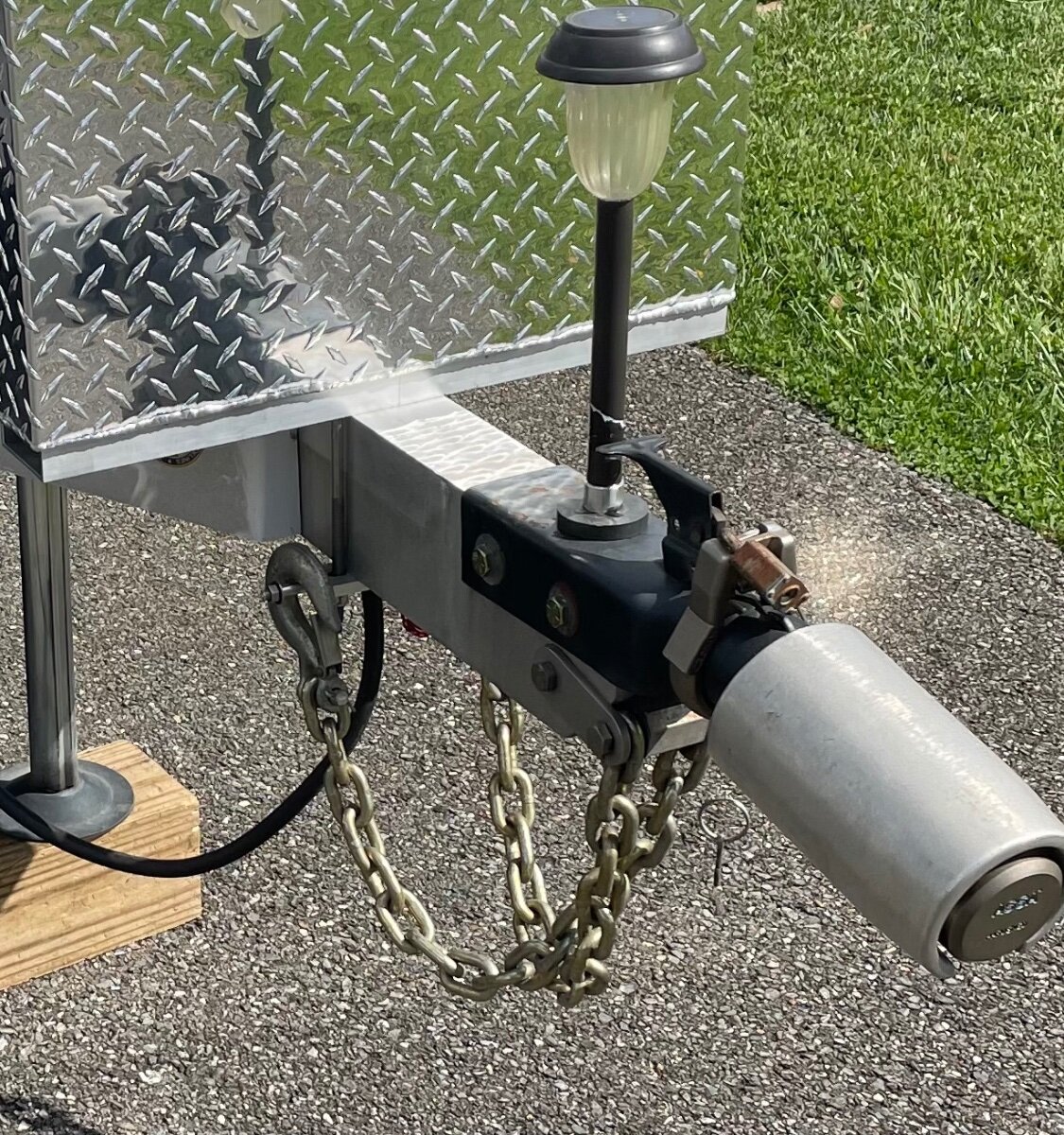
Yes, I upgraded mine about 6 years ago. The 2017’s came with 5/16 curly cables that were difficult to connect and connected to the tongue with 3/8 bolts and thin fender washers. This setup would have never held in a disconnected trailer situation. I used 3/8 grade 70 chains and equivalent hooks. The chain is attached to the trailer tongue with 1/2 inch grade 8 bolts. I don’t think this arrangement will fail. Years ago I did some research into trailer safety chains for a monthly newsletter that I was doing for an antique farm equipment collectors club. Basically, you are legally responsible for your trailer including if it becomes disconnected from your tow vehicle and causes property damage and/or injury or death. Some folks say that if there is an accident that they would rather have the trailer break free and not be close to their tow vehicle. This is completely wrong.
 6 points
 -
Doing ones own maintenance is an individual decision. I certainly did my own work for years and rarely went to the dealer. Growing older and more senior at work there just wasn’t time anymore with the long hours, frequent travel and weekend work. Today’s vehicles are also more technical and complicated. Now being retired, I just don’t feel like taking the time to get greasy. Need to spend that time with grandkids, kids and mom next door. Not to mention traveling and camping. I’ve got a good Ram dealer and Audi dealer very close by that I’ve been doing business with for years. To each his own. Mike5 points
-
We are in total agreement on all 5 points. Except I have just a tad more years. GJ3 points
-
Same here, we abandoned the Curley Wires on our 2017 and upgraded like you did a couple years ago...3 points
-
I understand, but it’s too much money. What I’ve done to our Oliver in less than 2 years would be near $20K in labor! And that doesn’t include the total restoration of our tow vehicle. I rarely buy new vehicles, last time was in 2001, don’t like warranty claims or insurance, so we go with minimums. Close to 50 years wrenching for me. Turning 70 in April and I still prefer to do my own work. Hope I can when I’m 80, although very few parts of my body don’t hurt these days! 🤣3 points
-
You should have headed west and rode around Starved Rock SP. It still has a bunch of twisty 2 laner's. Mossey2 points
-
We have similar backgrounds. I too was the “new car prep” guy at the Buick dealership. Radios, cruise controls, defrosters, and everything else to make sure the salesman could get the car out the door. I did the motorcycle thing too. Rebuilt the engine on a ‘77 XS750-D including a big-bore kit. Funny, in the year 2000 - an 815cc motorcycle was pretty “small”. I had the smallest engine in the advanced motorcycle safety course I took before I got back into riding. I ended up selling all the bikes - I got tired of every driver on the road in Chicago trying to kill me. I’ve even been known to buy “broken” stuff off eBay to fix and own it cheap. It’s amazing how many people can’t (don’t) read instruction manuals and think something is broken - or can figure out how to put batteries in properly.2 points
-
I also got started in the stereo installation business, but with 4 track tape players. It was also an after school job. That experience led to a cell phone installation job 20 years later with General Telephone. That job led to 30 years in the cellular phone business. When I retired in 2017, I found immediate employment at home and the list keeps on growing. The really good part is that I get to pick the next job! Mossey2 points
-
Our standard practice has always been to turn the Truma on at the inside control panel when we needed hot water and then turn it off when not needed. This is not a solution to the problem, it just reduces the likelihood of a fire 🔥 when we are not around. We will also add a step to our departure and setup checklist , to turn the outside switch off or on as needed before travel! It’s the best we can do until a repair has been completed. Mossey2 points
-
I can’t speak to Goodyear, Pirelli, General, etc - but just out of curiosity, I contacted the friendly folks at Bridgestone - the main “corporate” office, not a dealer. They assured me that a given Bridgestone model is made exactly the same whether it is shipped to a GM assembly plant or a aftermarket dealer. (They were pushing Firestone service centers.) No different rubber compounds or other manufacturing differences. They DID say that tires from the GM assembly plant (and ones GM dealers sell) are stored - sometimes for quite a while. They said that this is why tires on your new vehicle can have shorter service lives. They said Firestone service centers get “new tires straight from the factory”. They went further to suggest those who are concerned should look at the DOT markings on the tire to find the manufacture date. Since they were Johnny on the spot with that storage factor information - I’d wager it’s not the first time that they’ve been asked that question. They suggested that how long a tire has been in storage could have a fairly pronounced effect on its life. I had to assure them that no, I was not contacting them to complain about my tires. They offered twice to set up an appointment to start a warranty claim! I can’t really even imagine the logistics of making the “same” tire with two different rubber compounds depending on whether it gets shipped to an assembly facility or to a tire dealer. It would also give a given tire a bad reputation - hurting future sales: “I had those tires on my new car from the factory. They wore out in 20,000 miles! I’ll never buy them again!” I would think that it could even cause safety issues - you tear up a tire and replace it with “the same” tire - but it’s different from the one on the other front wheel and it causes a traction difference that leads to loss of control. “Hello ambulance chaser? I’d like to sue Goodyear for $5 million!” Id be curious to know if other tire manufacturers will come out and say that “yes, we make the same model tire with two different rubber compounds depending upon if it’s shipped to a car assembly plant or to a tire dealer.” I won’t be doing that research though. I don’t know where “AI” got its information from, but AI does nothing but lift existing information from the web. And we all know that “if I read it on the internet, it MUST be true” right? 😋2 points
-
Please don’t misunderstand me. I totally agree that having dealers - or even independent shops - do ALL of the maintenance would be too expensive. I pick and choose my battles. When Oliver Service said they could replace the black tank dump valve with an electric one for $900 - I said no thanks, bought one off Amazon for $200 and put it in myself. When Oliver sent out the new tire valve stem cores for the tires a year or so ago and suggested taking the trailer to the tire shop, I snorted and did it myself. (Almost) Any idiot can replace a valve stem core! ( the gift card they sent for $25 or $50 or whatever it was wouldn’t have covered having a tire shop do that anyway.) Likewise - for expediency sake, I addressed my own issues with the Truma water heater. I had neither the time nor desire to seek out a Truma dealer, wait for an appointment, and haggle with the shop and Truma over who pays for the service. Frankly, it was faster and easier to do it myself. I LIKE fixing things! It’s why my first job was as a mechanic and I worked on my own cars and houses for decades. Money is certainly a factor. These days, I’m in a little better situation financially than I was when I was younger, so that has changed my decision making process when it comes to maintenance and upgrades. As I get older, my TIME has become more valuable. There’s also another factor in play. My wife and I have sold all of our property and are on the road - domestically or overseas - pretty much 100% of the time. We’re “homeless”. Sure, we have an “official” place of residence, but it’s a studio apartment (kinda) above a friend’s garage that we crash in a couple of times a year between road trips and European vacations. That means that I don’t have the facilities to do much vehicle work. Sure, I could do an oil change in a friend’s driveway, but there’s no place for me to do much involved or extensive work. We also don’t have multiple vehicles these days. So I can’t put one up on jack stands and drive the other one to the auto parts store for brake pads. As I said earlier, oil and filters have gone up so much that by the time I buy six or eights quarts of the increasingly special oil my truck uses, I’m not paying that much more to have the dealer do it. That, and I don’t have to drag out the floor jack and stands to rotate the tires. I’m in and out in an hour or so with no dirty clothes, oil to recycle, or bruised knuckles and sore back. So sure - cost is always a factor, but so are time, effort, and convenience. I do try to weigh all the factors and select the one that best fits the specific situation. I’ve become a little more cautious over the years, which is why the current and previous trucks were purchased new. No, a new vehicle with a warranty is no assurance of freedoms from breakdowns, but it not only takes the sting out of a breakdown, it also takes advantage of the odds that a newer vehicle has fewer aging parts to fail. (Though “infant mortality” needs to be considered.) I forget exactly where it was - someplace between the Grand Canyon and Lubbock Texas - where we were driving (towing) on mountainous, winding, narrow roads with no shoulders and no “civilization” for miles. That would be a REALLY bad place to have a mechanical issue. Motor club be damned! Right about then I started thinking about Endurance or Ox extended warranties vs the cost of a new vehicle with a new warranty. At one point I had to eat a $500 out of warranty repair for something that failed -just- a few miles too late. I wouldn’t have had the knowledge or specialized equipment to do that repair.2 points
-
Ok just throwing something out there, with tires you don’t just look at load capacity of 1 tire for a VH, isn’t it the same with the chains, ie 2 chains/shackles = 2T load capacity? Also, the GVWR of 7000lbs is vertical load carried by the tires/suspension/axles of the trailer, the load capacity of the shackles is a horizontal/tucking load.2 points
-
AI says it better. I have to admit that AI is smarter than I am.... by a very wide margin! AI focuses on a more general aspect (Ride and miles) whereas my experience was from a performance (braking and miles) perspective. Either way, message is the same. My Michelin Defenders, Cooper and BFG's on new vehicles all wore out faster then their replacements for the same replacement tire. GJ
2 points
-
It’s really quite simple and well within the skill set of anybody who can change their engine oil or a set of spark plugs. You WILL need a couple of Torx wrenches. I forget the size, but both/all were included in a small Elkind folding set, I’d guess a T-10 is one of them. Two open end wrenches to remove the gas fitting. (I don’t think there’s room to use flare nut or “line” wrenches.) About 5/8 or 11/16” I think. Also the big wrench for the nut holding the gas line to the manifold. Other than having to ease it out and caress it back in is to pull out the black control box at the top right of the heater enclosure when you open the access door. Easier than removing the ignition and flame sensor leads and less likely to break them. DO take the picture as Galway Girl suggested to put the disconnected leads back in the right place. Turn off the LP first of course. Once you overcome any trepidation about working on an unfamiliar piece of equipment, it’s a pretty simple job. As others have pointed out - if you fiddle with it, you likely void your warranty.2 points
-
I forgot to mention the reasons that prompted my basement exploration. The floor had collapsed and upon inspection I found that the floor supports were only held in place by a few screws that only were about 1/4 inch into the side supports. I was also getting propane exhaust fumes into the trailer when the water heater was running. Anyway, in checking out the collapsed floor and the carbon monoxide issue I discovered the air leaks and lack of insulation.2 points
-
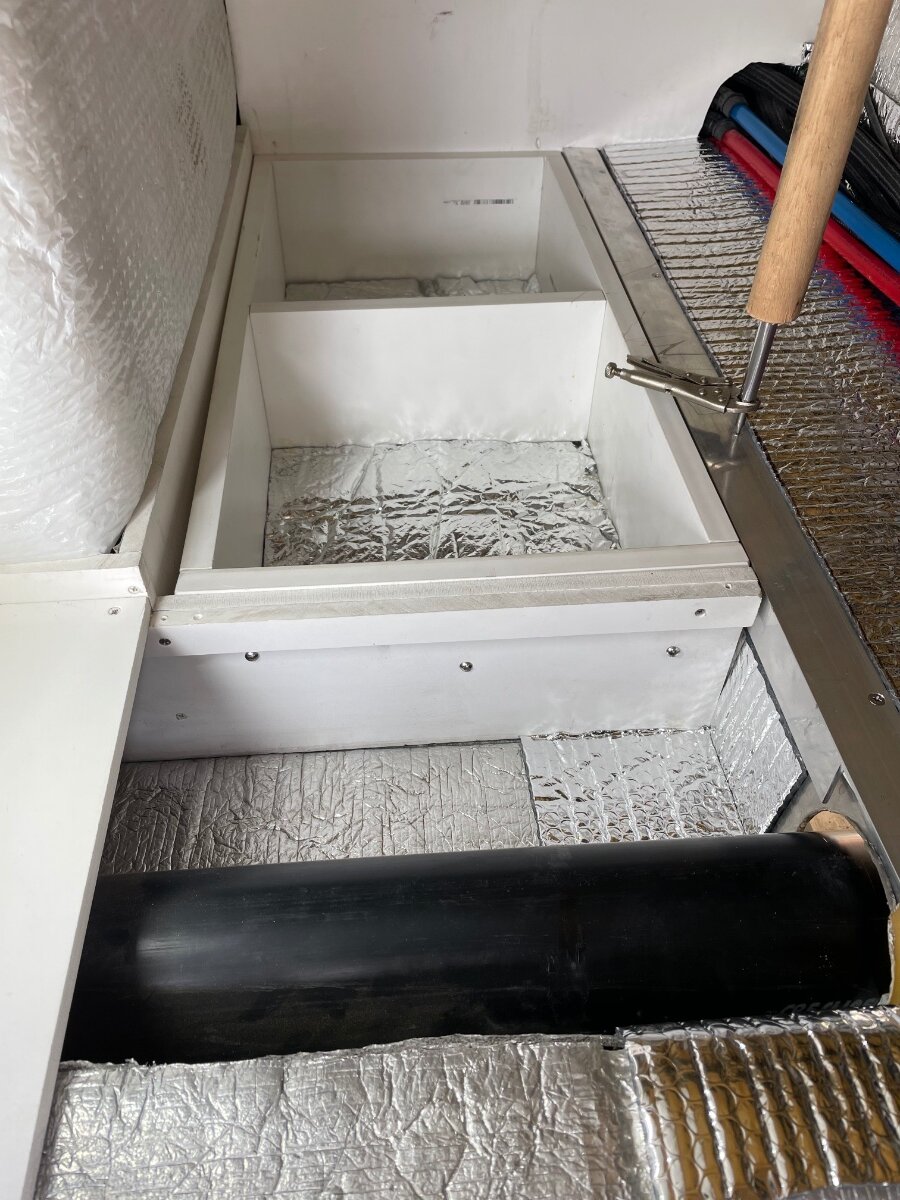
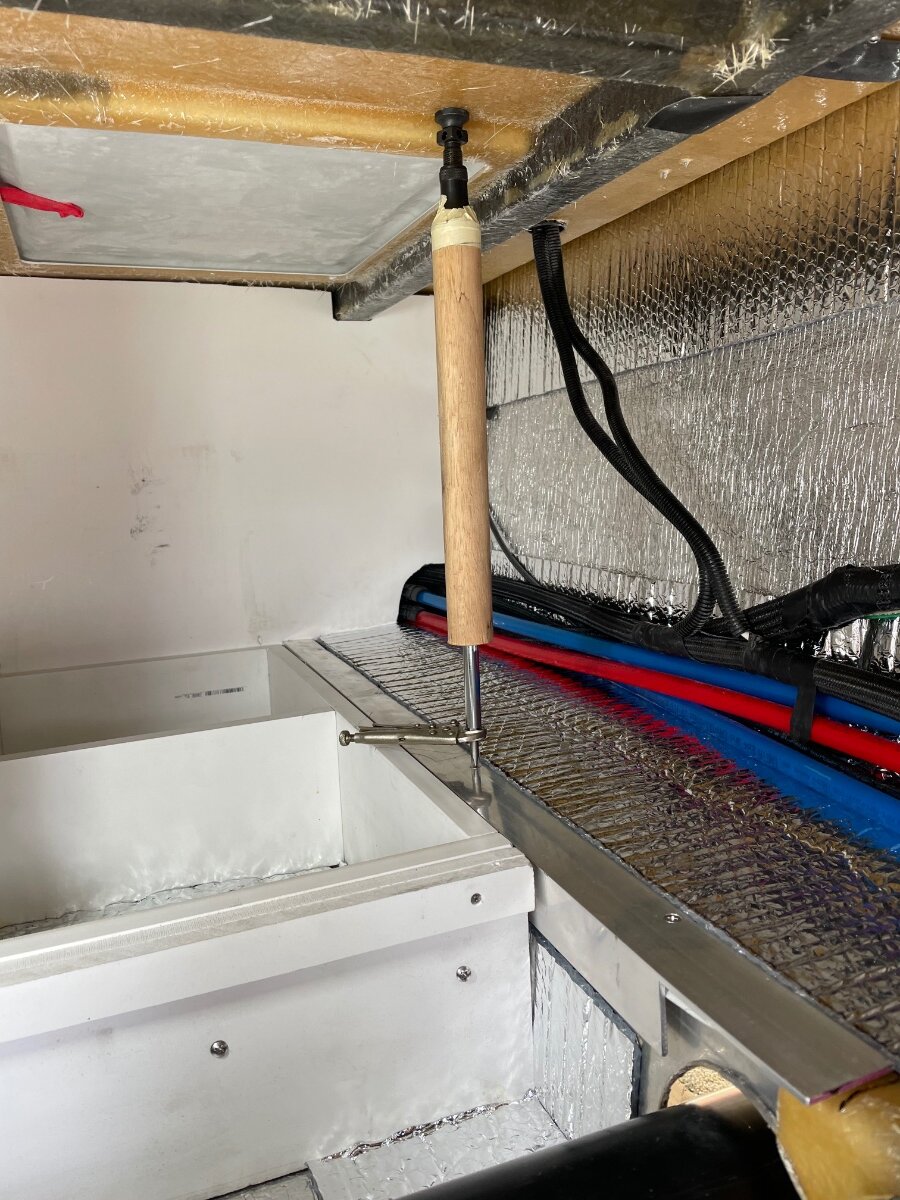
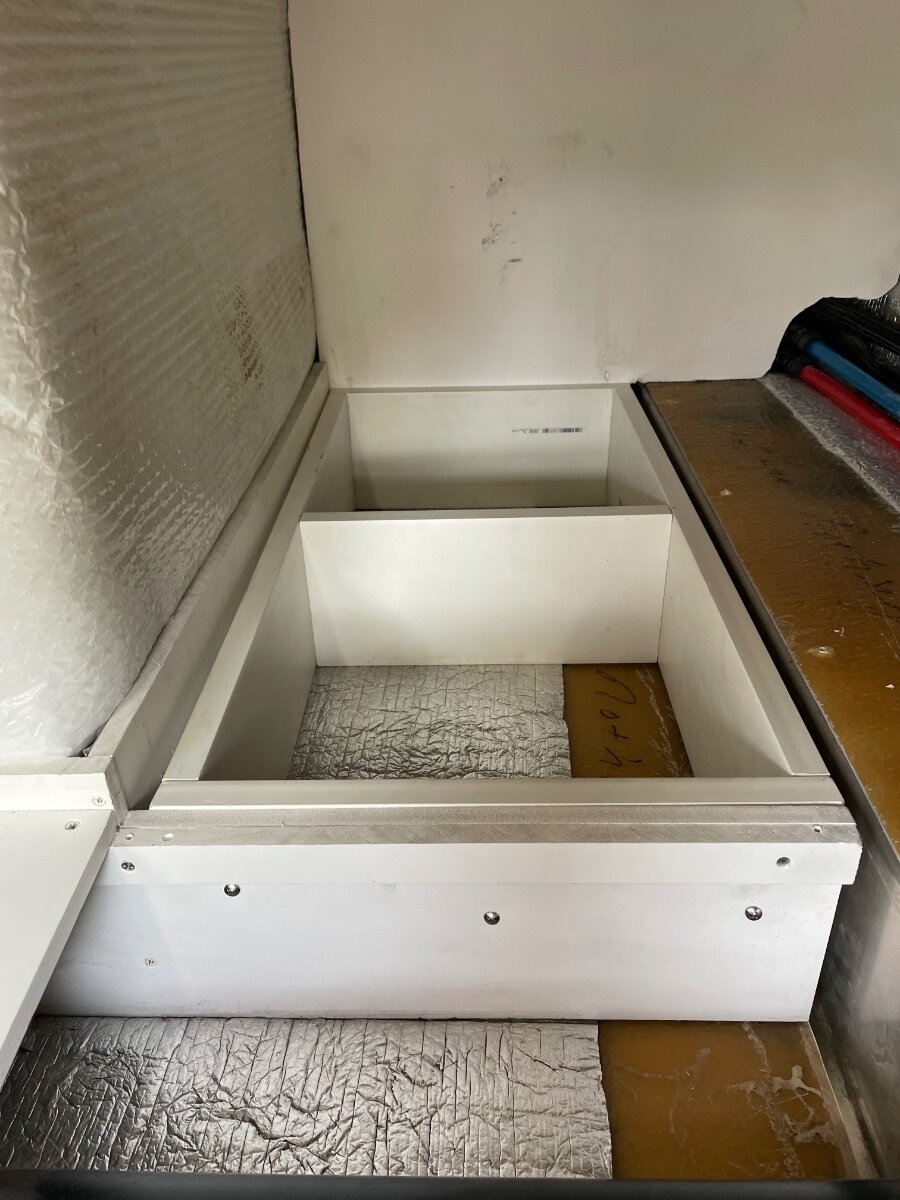
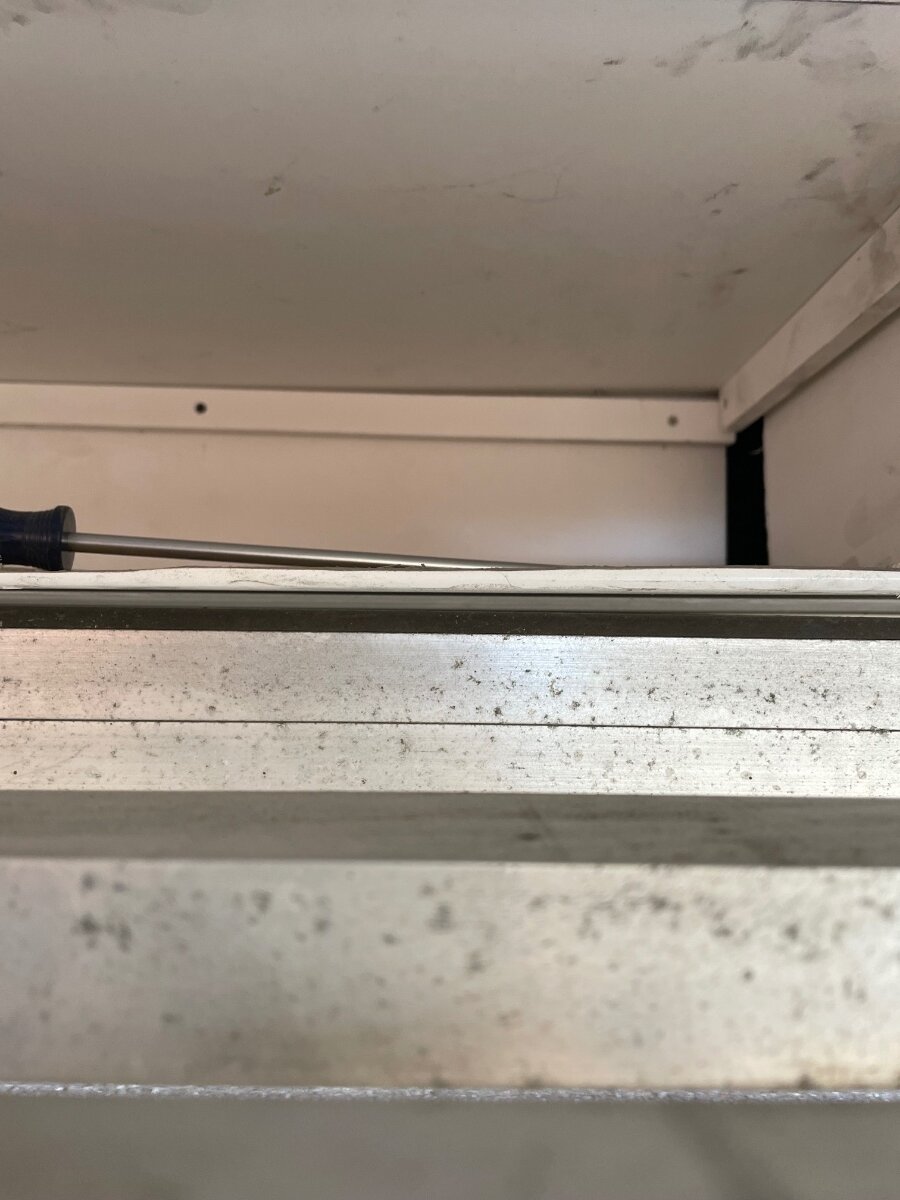
I’ve had a similar issue since the camper was new. A couple of years ago I removed the aluminum Z shaped panel that closes off the rear of the trailer. This panel is located deep inside the rear bumper and the sewer drain passes through it. Mine was not sealed at all and the rubber seal around the sewer line was loose. To do a thorough job of sealing the panel you’ll need to go into the basement area as well. In doing this I also found a large area in the basement area with no insulation, especially the aluminum panel had no insulation. I used butyl tape caulk all around the aluminum panel and a long piece of angle aluminum to stabilize the raw fiberglass edge around the upper edge and stainless screws/self locking nuts through the fiberglass and the panel. The wooden dowel/screwdriver/vise grip pliers was used to hold the screws in place while I tightened the nylock nut from the outside. I also added insulation everywhere I could. Just a suggestion.
2 points
-
My understanding is that Ford caused the Firestone blowouts that caused I’ve 450 accidents and 250 deaths. Ford was getting complaints that the Ford Explorer of 25 years ago drove too harsh, “drove like a truck.” A ford exec sent a service advisory memo to the dealers, asking tire pressure to be reduced to 26 PSI from the Firestone spec of 33 PSI! Ever wonder why only Explorers had these blowouts and not the F150 of the era that had same drive train and tires? Ford caused the demise of Firestone, arguably the best tire company of the 20th century, certainly the greatest market share. The public stopped buying Firestone tires. Their stock plummeted trading at pennies on the dollar when the Japanese parent co of Bridgestone Tires bought them out. Henry Ford and Harvey Firestone created a partnership that lasted for 7 decades until this time. Henry II married the Firestone granddaughter in the 50s. At least this is how I remember the story.2 points
-
Not trying to add fuel to the Truma fire, but we had problems with our Truma last spring after 4 1/2 years and the symptom, delayed ignition and the smell outside adjacent to the Truma. I was directed by Oliver to reach out to Truma, as I recollect and that wasn't unexpected. When I open the case with Truma support, an Elkhart based engineer reached out to me and said they didn't want me to use the Truma anymore. They made me promise as they felt it was a health and safety risk. I naturally agreed, particularly when they said they would have a certified technician of my choice replace the unit for free and document the installation of the Truma with pictures. We went with out hot water in the Oliver for a week at the Maine Rally. I reached out to Tim's RV in Erving, MA and explained to Tim and Brandon that Truma would be shipping a unit to them and compensating them for doing the pictures and installation. We arranged for a late June for the 1/2 day installation. Truma requires certified and trained technicians and extended a courtesy approval after discussing Brandon's experience and in light of our needs. Truma sent the brand new unit to Tim's. We were notified when they received it. Brandon confirmed the delivery too before I made the trip from Concord, NH to Erving. Tim and Brandon were very gracious and Brandon did an outstanding job on the install.2 points
-
We are also from the PNW and live in Vancouver WA. When we visited the Redwoods, we stayed at Panther Flats FS campground. It worked well for a base camp. Jedediah CG didn’t allow for an elite 2 length. We have camped at many Oregon beach campgrounds. Preference is a matter of personal choice. We prefer to see and hear the ocean from our campsite. The best spots for that (in my opinion) are Beachside and Cape Disappointment in Ilwaco WA. We go to Cape Disappointment several times each year so please let us know if you want any ideas on campsites if you choose to go there. Pam1 point
-
OK - I'm guessing that you are using a cell phone and that is what you did the screen shot that I see above. I did move your profile picture slightly higher for you but if you don't like it there you can simply move it back or let me know and I'll move it for you. Given the height difference between the two of you I do not see a way to get both of your faces in that picture without cropping the picture and moving your faces to the right. Assuming that I'm correct about the cell phone usage - please let me know - I'll have to investigate what can be done (if anything) to get more of your picture visible. Bill1 point
-
After doing some more research I have learned that it is not the working load that matters for the safety chains but the breaking strength which I believe is usually at least 3 times the working load. I found a chart for RVIA that lists safety chain requirements by state. Generally, it appears that when a state has a strength requirement it must be at least the GVWR of the trailer. The only data I could find from the Federal Government related to commercial applications. For commercial applications the rules state the combined breaking strength of the safety chains must equal the weight of the towed vehicle. Based on the above it sounds like my chains are ok since (assuming the shackles are the weakest link) have a combined breaking strength of 6T.1 point
-
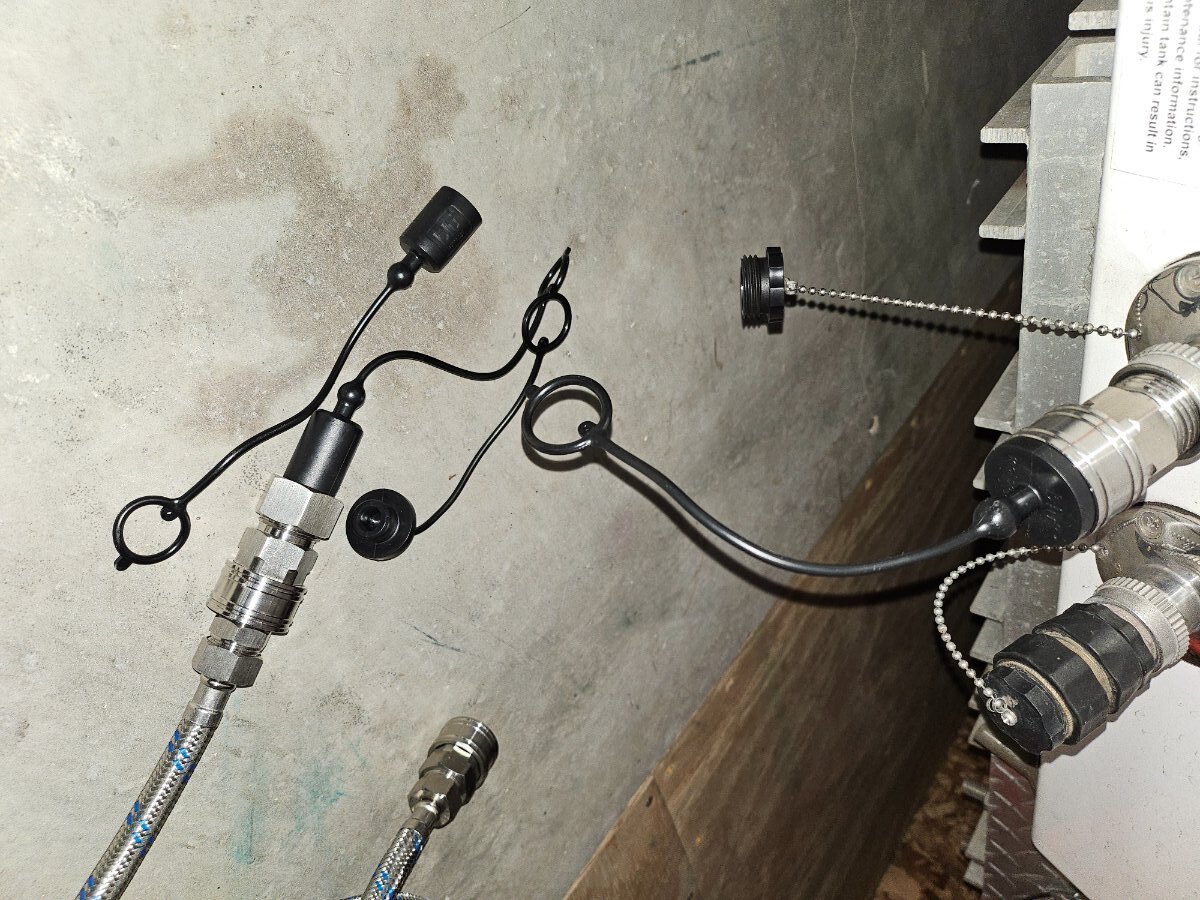
Ordered two dust cap combos. In photo one set is (partially) installed on hose end and on my Oliver. Other uninstalled set on floor. They fit very nice
1 point
-
If you are correct, it is a remarkably poor business decision by Truma. The sooner the product failure is resolved, the sooner it fades from the public consciousness, and Truma's quality reputation can be rebuilt.1 point
-
All interesting stuff of course, but you lost me on the above. You’re saying the replacement tires I purchased for my vehicle with the same manufacturer, model, and size as the ones the truck came with aren’t the same tire? Even when I get them from the dealer who sold me the truck?(!) If that’s what you’re saying, how are the tires that Bridgestone sends to a GM assembly plant as “tire A” differentiated from the tires Bridgestone sends to a GMC truck dealer as “tire A”? It may just be my non-aggressive driving style, but I always get considerably more miles out of my tires than they’re typically rated to deliver. That’s something that I’m fine with. I got 70,000 miles out of the original tires on my previous truck - and I replaced them long before they were near the wear indicators. I credit that to the fact that I’m a fanatic about monitoring tire pressure, alignment, and rotation. Actually, it’s surprising as I drive on rural Texas roads a lot. They’re “chip seal” surfaces which is reputed to eat up tires pretty aggressively.1 point
-
Ditto from my side. I always go for premium tires when they are due, or before. Yes it costs more. But it is worth every penny from my perspective. Galileo: I have found that the OEM tires tend to be good in stopping distances because that is what many owners want to see in the specifications. Problem to get those ultra low distances they use tires that are specially made with a softer compound. That's why they stop shorter. But it leaves the vast majority of new car buyers wondering why their OEM tires don't last anywhere near as long as their premium replacements. So, Galileo your replacement tires that you thought were exact replacements generally are not. They have a more durable and longer lasting tread compound. And the MFG knows this. So using the same exact tire likely will work fine if it meets your needs. Here is where the logic line gets a bit soft. The MFG of your TV had no idea what or if you are towing. Or what kinds of roads you are traveling with your Oliver. Where you will be going...... etc..... As such, the off the shelf OEM factory tires tend to be a general duty tire. Hence the need to at least relook at your towing needs as it relates to your TV and where your needs to safely do so. There are more than a few reams of paper worth of discussions on tire selections posted on this forum. Maybe worth a look at the posts. Or just post what your TV is at the bottom of your signature line, and how you intend to use your Ollie. I feel certain you will get plenty of good info as a result.1 point
-
I don’t have a brick in this wall, a horse in this race or a dog in this fight, I just stumbled upon this “older” video from James of The Fit RV testing a smart plug…. so just an FYI!1 point
-
I can't argue that under these circumstances, it would take a long time to get to everyone. But don't misunderstand what I wrote. These statements are just possibilities that I'm saying COULD be true, I have no evidence that they are, but if I was running Truma and a company pissed me off bad enough, that's exactly what I would do. I don't own a Truma, but if I did and now knowing the exact nature of the issue, you can bet your sweet bippy I would pull that burner out, repair it, put it back in, torque it to the proper specs, hook up and go camping.1 point
-
Young kid at the hardware store over filled my 30lb tank. When I got home I noticed a problem and ended up releasing pressure some. Now I go to Tractor Supply.1 point
-
Yup, our empty 20# tanks consistently takes 4.5 gallons = 6.75 gallons for a 30# tanks, so you have overfilled your tanks by 0.05 gallons John!😜1 point
-
True although as the article states, “Propane is stored and delivered as a liquid.” And later it states, “These meters include a volume correction device known as an automatic temperature compensator.” Given delivery is adjusted for temperature, when you buy a gallon of LP it should be the standard weight of a gallon at the standard temp 60F. If it’s a cold day your getting less actual volume, but the gauge in the dispensing tank is temp-compensated standard. The person filling should be trained, but if not, do not allow much more than 6.8 Gal on the gauge to be added to an empty 30# tank! (4.5 Gal for 20#) Temp swings up and down is why the tank should be only 80% full. The 20% gas portion allows for expansion and contraction. The cold tank filled with over 8 gallons had no room for expansion, so it had to be released out of the tank when the temp increased.1 point
-
Thanks for the history lesson! (I don’t mean that sarcastically btw!) Now that you mention it, I do think I remember low tire pressures leading to overheating leading to failure being a factor. That said, I thought I had also heard that at least some of these failed tires had rust on the steel wire that was woven into the belts. Apparently that didn’t allow a good bond with the rubber - leading to the delamination. As with many of these big legal cases, you really can’t be sure of all the facts. It all comes down to what the lawyers can sell to the jury, and how deep the respective pockets are. I didn’t know the Ford/Firestone connection. Ironic that Henry and Harvey were so closely associated, and Henry’s offspring and company brought about Firestone’s demise. Funny that the “Firestone” auto service centers are still (apparently) going strong.1 point
-
That's a good ballpark for roughly room temperature. The volume of liquid propane changes based on ambient temperature. Since the bulk storage tanks are outside, it can vary by a fair amount. The most accurate way to measure it is by weight. 6.8 gallons at 17 degrees F would be a lot more propane than 6.8 gallons at 85 degrees. https://www.propane101.com/propanevolumecorrection.htm1 point
-
I did this swap few weeks ago and immediately noticed the same thing, however once started tracing the red wire back and pulled back some of the wire loom found the red wire is one wire coming from power source with a y splice to make 2 red wires. I just cut the red wire at the splice and ran 1 red to new detector.1 point
-
Galileo, Plugs should have a fairly tight fit in the receptacle and they will not easily fall out. However, we have all run across worn out, or poor quality, receptacles that the plug will not stay in. When a plug is loose in the receptacle, it means that the electrical connection is also loose! It’s one of the most common causes of fire. Loose connections have a high resistance that create heat, and/or arcing. It’s best to replace the receptacle. Otherwise, bend the plug prongs outward just a bit to improve the connection and the holding friction. Hardwiring is okay, but it shouldn't be needed. Cheers! Geoff1 point
-
As I said - it’s your trailer, TV, etc. I’m an OEM kinda guy. I use genuine parts on my truck, replace the tires with what the factory originally installed, and follow the manufacturer’s instructions for installing and maintaining their equipment. As my old HS auto shop teacher used to say “when you modify a vehicle, you become a test pilot.” There are enough factors when you’re on the road that you can’t control. I don’t feel the desire to add another one. So, when Andersen says not to lube the ball because the lube -could- seep down into the friction material - I take them at their word. After all, they designed, built, and tested the thing. I figure they likely know more about it than I do. Besides - with the Andersen design - where the ball turns with the coupler, and the amount of vertical angle change between the TV and trailer are greatly reduced, the need for lubrication as with non WD hitches is pretty much gone. That, and no greasy mess to add to the bruise and cuts you get when you walk into your hitch. 😋 That said, old habits die hard. People are gonna do what they’re gonna do. I don’t see much benefit to trying to lubricate two mating surfaces that aren’t pretty precisely fitted to each other. In fact, grease is more likely to catch grit and dirt that will be held in place and act as grinding compound. Andersen says don’t lube - I don’t lube. It could even affect a product liability claim.1 point
-
Sorry about that, I generally do not use so many. I’m sure you know the electrical acronyms like AWG, VAC and VDC. I also used FWT for fresh water tank and HWH for hot water heater. MP2 is short for the Victron Multiplus II Inverter/Charger. I got the 4 AWG wires run in the Oliver last week while working on waste valves. We’re camping this week but I will get this done in another week or two. I will run tests setting the Orion XS 50A configured at 30, 40 and 50 amp settings. 30A will be no problem and we’ll see if it can run somewhat higher without issue. You did answer my question, thank you. I answered it myself at the end of my post and you confirmed my thinking.1 point
-
We’ve never yet run out of LP while on a trip. So we always fill up at the same company in Prescott, where an empty 30# tank consistently takes 6.8 gallons. My understanding is they should be filled 80%. 16.9 / 2 = 8.45 and 6.8 / 8.45 = 80%. Your tanks were filled 100% with no expansion room for the liquid to turn to gas. In the future know that 6.8 gallons is the correct volume. Tell any unaware attendant to stop filling when it hits this number!1 point
-
None of this is provable, of course, but I personally don’t think Truma has any intention of ramping up production to help Oliver. When this problem became apparent, Truma refused to issue and take responsibility for a recall laying the entire blame on Oliver claiming they were the only OEM that had experienced a problem. Truma knew about (or at least bought into the idea) that their product might have as issue because they retooled and changed the design of the burner assembly. It is my belief that this “shortage of parts” is an issue manufactured by Truma to punish Oliver and (by default) this community of owners for making this problem public knowledge.1 point
-
I think this is a reasonable and responsible approach.1 point
-
I have considered it, but only as a short-term solution. As a retired attorney, I accept that to be able to ultimately sell our Hull #1291 I must endure the pain of facilitating the recall work once "our" replacement burner assembly becomes available. Doing the work myself is not a legally viable alternative, even though I believe I may be more careful than many RV repair techs. If you feel better pulling the burner assembly and crimping the ends yourself before using your Truma Aquago pending receipt of "your" new burner assembly, go for it. But even if that may be as effective a practical solution as burner assembly replacement, it will not be legally sufficient to limit your liability when you sell your Oliver. That said, I am aligned with those folks who have opted to continue to use their Truma Aqugo units "as is," but with more careful monitoring, until the recall requirements are satisfied.1 point
-
JD, I was reading your post, but I struggle with acronyms. I believe you’re asking why a 120-volt current through a #14 gauge wire can charge at 50 amps, while a 12-volt current through a much larger #4 gauge wire can’t. The answer lies in Ohm’s Law (E=IR), which states that voltage (E), current (I), and resistance (R) are directly proportional. Therefore, as voltage increases, current decreases. A good analogy is the 700 kilovolt transmission lines that can power a city through a wire the size of your thumb. If you reduce the voltage to 120 volts, then you would need a wire thicker than a redwood tree to carry all the amps. Regarding the Orion, it’s a type of Buck Booster, which means it can increase the voltage of a low-voltage input to a higher voltage output. However, an undersized feed cable from the tow vehicle still experiences voltage drop due to cable resistance (E=IR again), which will affect the charger’s performance. Look at it like a toaster, the heating element is basically an undersized conductor that is heating up due to its high resistance. It effectively limits current exactly like a resistor in an electronic circuit does. I hope that answers your question, and I apologize if I’ve misread it. Cheers! Geoff1 point
-
Galileo: To lube your ball, or not lube your ball..... A philosophical question of the forum. Some of us believe that having a bigger ball is better than smaller ball. Some of of us like bigger and lubed. Some don't. Totally depends on your perspective. I can't speak for anybody but myself and Crazy Horse. We believe that for our OE2 and F-150 SuperCrew the sway control of our Hull is not need. I am convinced that Scott Oliver's long nose design tandem axle, shocks and EZ-flex, and light rear end all together make that possible. That may or may not apply to your trailer loading. Personally I have about 540 pounds of tongue weight as measured at Art's, and no stuff over the rear bumper, stiff Bilstein 5100's on my TV rear end, and Firestone Airbags as well. We cover huge miles each summer from TX to Idaho/Oregon and the back with lots of detours such as Alaska too. Never once a sway. Hence we go with a lubed ball. Friction cone wear likely will not be a problem for quite a while. When I was lurking this web before our 2018 purchase, I was schooled well by John Davies post and pictures about the cone and ball wear issue. My thoughts were that the contact patch wear for the heavily loaded Anderson dry was simply normal wear. Solution: A bigger ball and lube it. Took a whole two seconds to figure that one out. So we purchased ours with the larger 2 5/16" Anderson system. After seven years, my conclusion still that we like having the Weight Distribution of the Anderson, but do not need the sway control..... for our rig. BUT: if your rig is loaded tail heavy, or your TV is a shorter wheel base or lighter, or a bunch of other what if's.... You may want to keep the sway control. If you do, USE IT. The safety of your family is riding in your hands. So travel safely and travel far. And everybody on this forum will support your decision. If not, let me know and I launch Crazy Horse that way! LoL Geronimo John1 point
-
One of my tanks was overfilled by someone relying on the OPD to shut off the flow. I was watching the gallons readout and made her stop and call a supervisor. At my insistence he weighed it and vented a fair amount to bring it down to 55#. You can't trust the OPDs.1 point
-
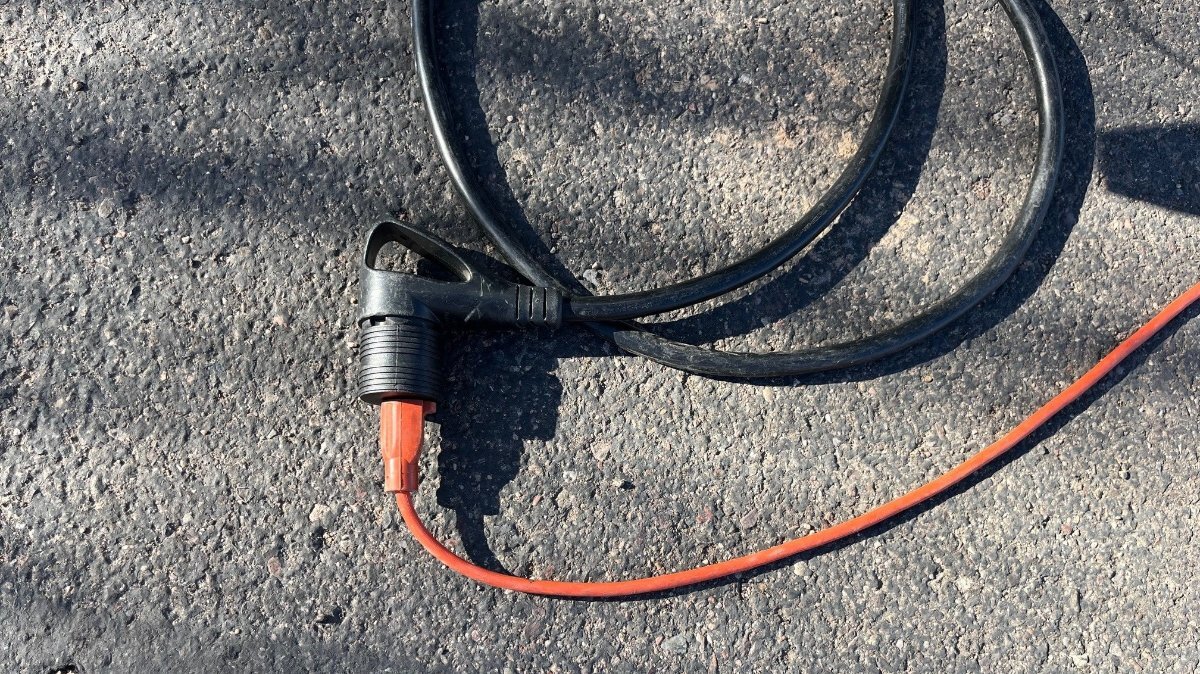
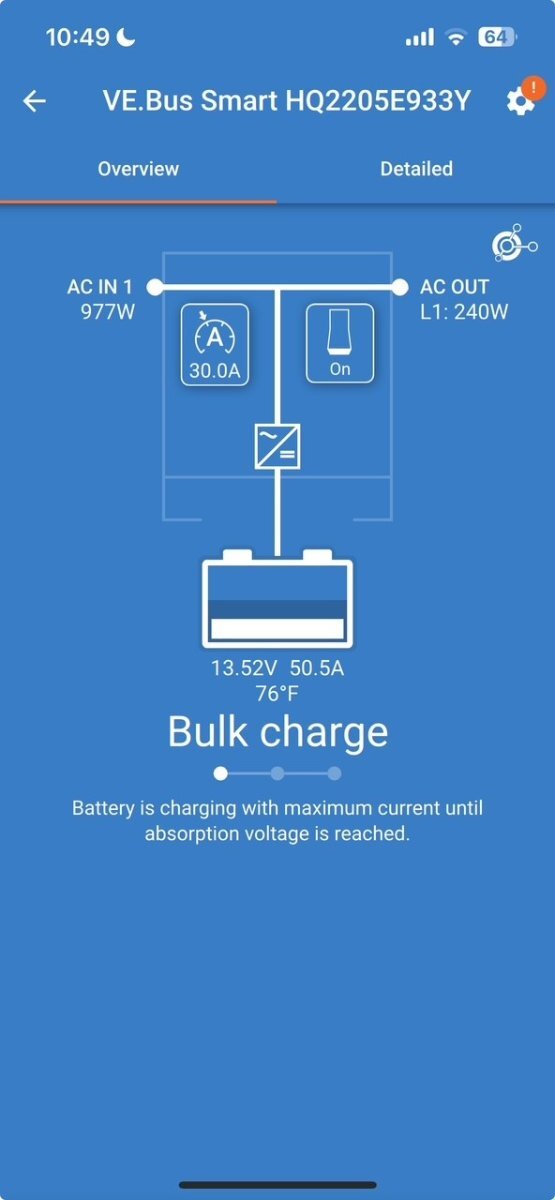
I understand the EE standard calculations. Question though... How am I charging at 50A through a 25 ft 10 AWG cable in series to a 14 AWG extension cord? (see pictures) We left home yesterday batteries down to 34% after running our fridge for 48 hours on DC, lights and radio, etc. We usually leave with full batteries and tanks but day one was only 2 1/2 hours to Lost Dutchman SP were we could charge and fill the FWT. When we got here we had a drive-through site and want to park the opposite direction, so I needed the extension cord. First I turned the MP2 to inverter only (no charging) and ran the HWH on AC. Even though we were connected, I guess the MP2 sensed not enough available amps on the 20A shore power connection and was pulling 127A DC from the batteries. This translates to approx. 10A 120VAC but maybe the HWH was using 10A in addition to the limited shore power. I should have checked the EMS readout for shore power amps used but did not think to at the time. A half hour+ later we had hot water, we turned the breaker OFF, and the 600AH batteries were now at 20%. The Victron picture taken at 11 PM (5 1/2 hours later) showed the batteries up to 60%. This adds up that the charger was supplying 50AH. When I woke up in the middle of the night the batteries were at 100%. The extension cord never got hot. What's the deal here? Does the 14 AWG cable work because voltage is 120VAC and the 4 AWG will not be enough for 50A at 12VDC (13.6V actual)? Also, does voltage drop really matter when the Orion XS 50A accepts input voltage as low as 9V? (input range spec 9V - 17V)
1 point
-
I received a response from Lippert (Girard Awnings). Here is a copy of the response. "Thank you for your response. We have taken note of your selections and confirmed your rally on our calendar. We are excited to kick off a successful rally season together! Here's what you can expect from Lippert this year: Rally Coupon Code: This will be a discount code provided to all rally goers to use at our online store. This coupon code will be for 20% off any items on our online store. Door Prize/Giveaway: This will be an item selected and donated by Lippert for you to use as a door prize or giveaway for your rally. Welcome Bag Kit: This will include items for attendees with information about Lippert plus a few SWAG items." I was specific that it was for Oliver Trailers, so hopefully it is items we can use.1 point
-
IF you decide to install a second connector, best practices would be to install a transfer switch between the two and reroute the output through the EMS. Otherwise, there would be no protection from electrical problems while using the front connection. An additional benefit would be that you could then use the front connection as a generator hookup.1 point
-
For those that haven’t read the entire thread, I still stand behind what my research showed in September of 2023.1 point
-
I'm not sure what I'd do if I were in this situation other than try to stay in very close contact with the folks in Oliver Service and I'm sure that I'd be just a frustrated as you must be. From what I know, Oliver is doing all it can - they simply can't get enough of the units quickly enough. Hopefully, Truma can get its production ramped up. Bill1 point
-
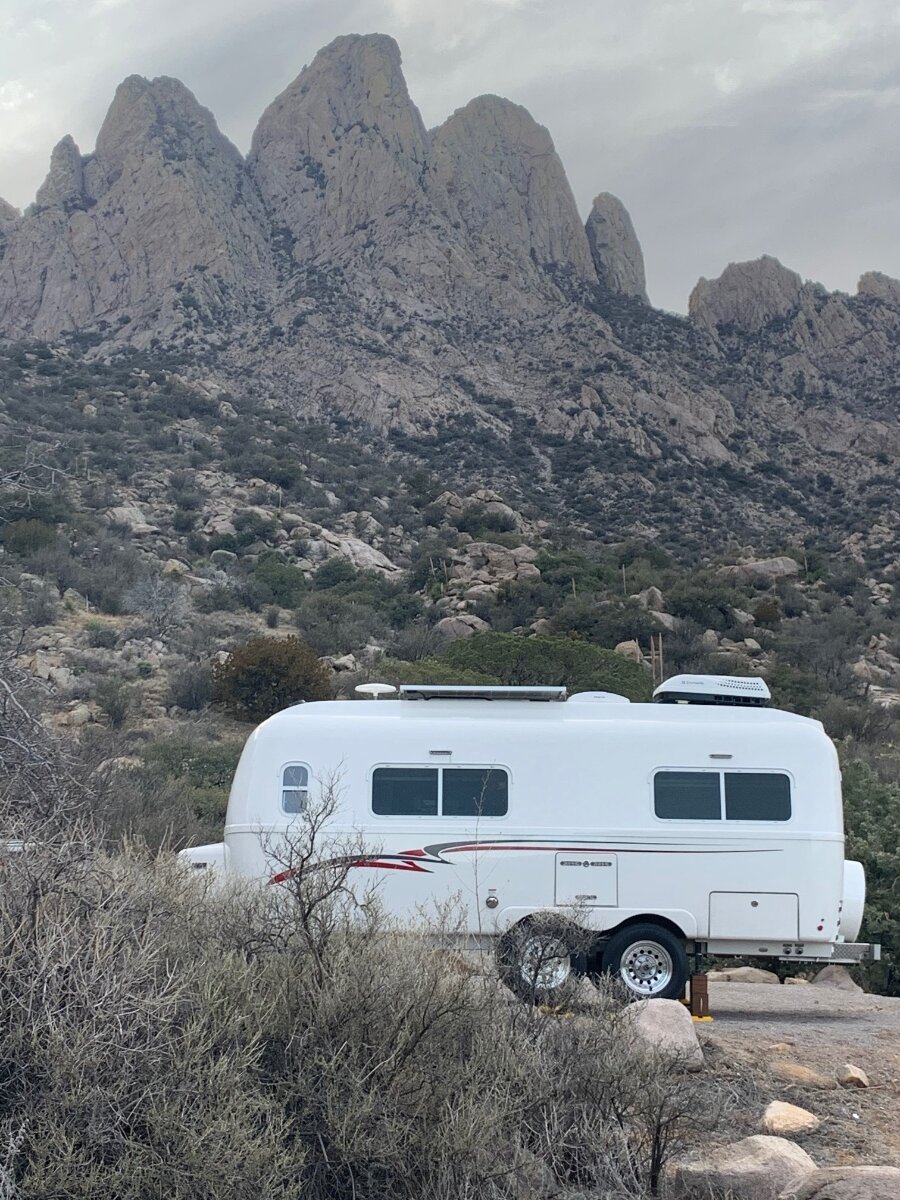
This is Aguirre Spring in January…
1 point
-
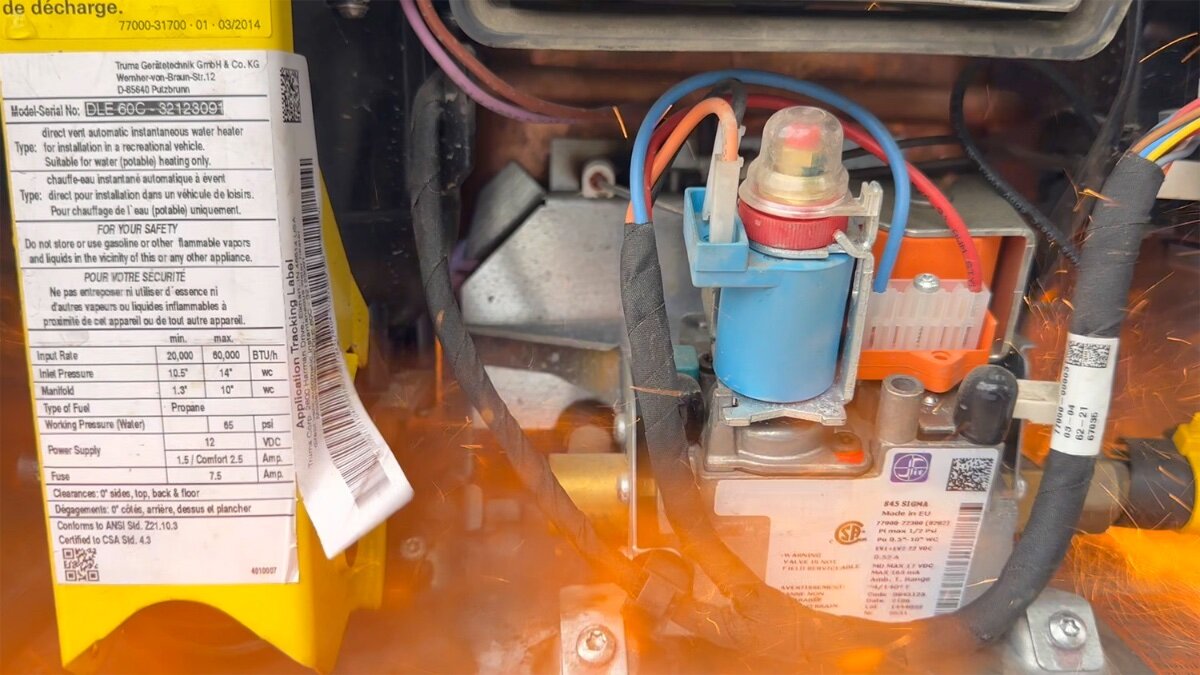
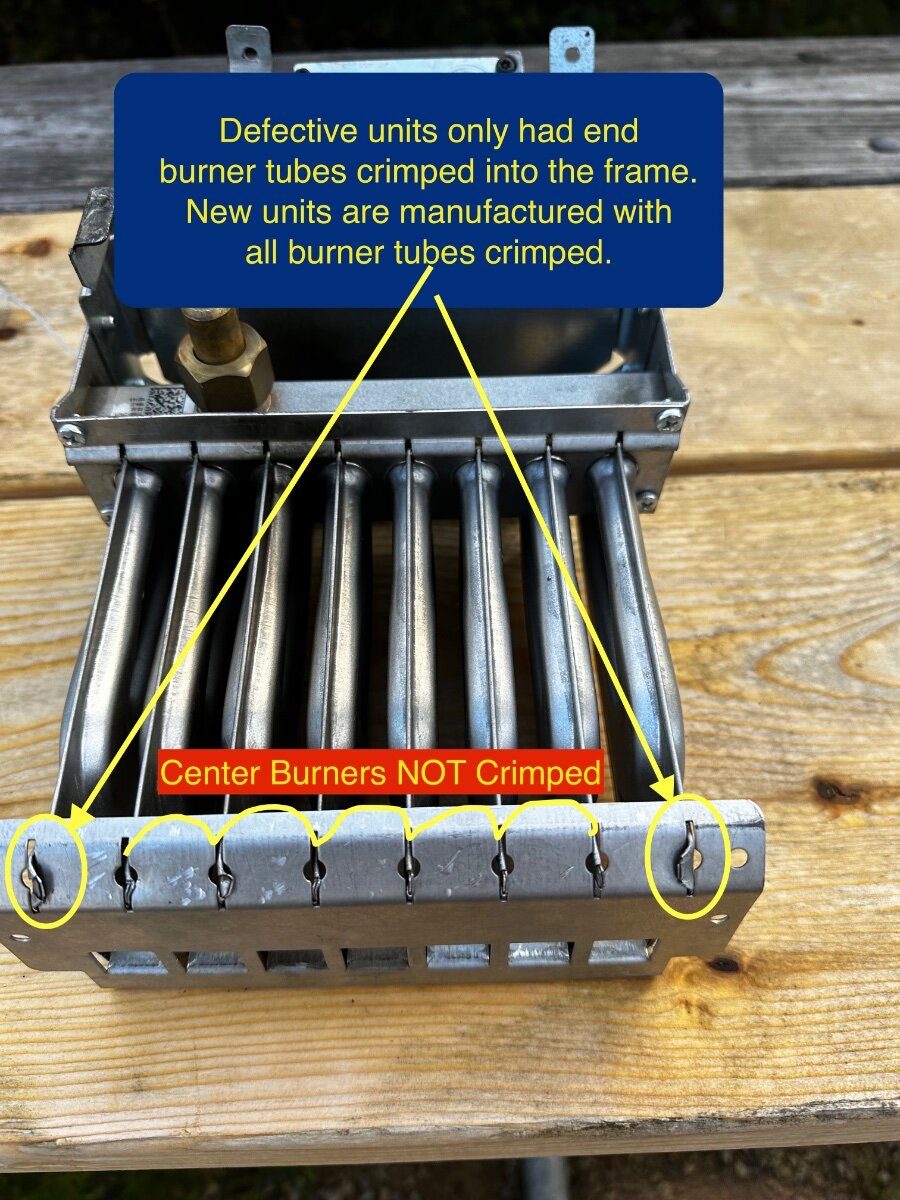
I'll repost this picture to illustrate the purpose of the recall. The recall is for water heater burner assemblies manufactured in the date range of the recall. Those burner assemblies only had the two END burners crimped to the frame. (See below pix.) The result is after many miles of vibration or less on rough roads, the burner tubes are susceptible to falling out out of the frame. When that happens, gas from the feed orfice that is no longer aligned with a burner tube pumps gas directly into the burner chamber. On ignition you'll hear an explosive (whoosh/pop) type of ignition. Most commonly that ignition also blows out the burner...and then the unit recycles as it try's again to light the heater. Owners of units in the recall range should carefully listen and watch for unusual ignition events...which is a sign that a burner tube has fallen off the frame. All new units being manufactured have ALL the burner tubes crimped in place. The recalled units are replaced with newer burners with all the burners crimped to the frame. Oliver is getting units from Truma but at a rate of 10-15/month...so patience is required for repairs. Follow instructions in the Oliver Recall to get your unit repaired. They can only send replacement burners to qualified repair centers. For the curious, here's a pix of an actual "ignition event" when a burner tube has fallen off: As you see the flame is rather large and extends outside the burn chamber.
1 point


















-
Recent Achievements
-