
Geronimo John
-
Posts
2,404 -
Joined
-
Last visited
-
Days Won
68
Everything posted by Geronimo John
-
I was wondering it anybody would catch that one. LOL!
-
Geoff: For sure. When I first purchased my Ollie (2018) I was having power issues and could not figure it out. Then one of the forum owners mentioned the use of the bonded plug. Problems disappeared. But every so often the issue pokes its head out of the covers and all of a sudden it is a new topic. This is one item that OTT needs to really stress in their Owner's training and manual. Thank you for the details on how it works. That I did not fully know. Your post has made it's way into my DIY folder so I can whip it out when the covers get disturbed again for another owner. GJ

-
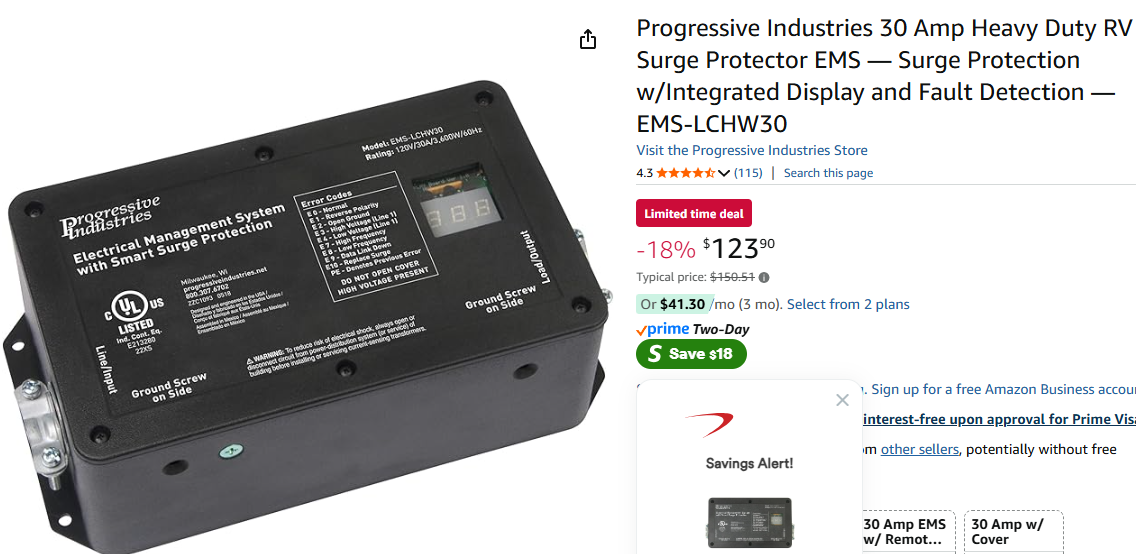
Either that OR you have been running power protection naked for ten years. Good news is that if so you still have a lot of Joules left in your Progressive Industries power filter!
-
On our "Older" Ollie's the Progressive Industries system switch makes a difference to getting power into the trailer when the power is coming from most generators that require neutral bonding.. Are you saying that is not the case for "Newer" Ollies? Thanks just trying to keep up to date.
-
Sounds like the nuts may have been Nylocks jamming themselves to a total stop. Happens when they are installed too tightly. Cutting them off has generally been one path. The other is to break the bolt/Ubolt with a hack saw. If they were not Nylocks, then Blaster overnight is the easy way. On an OE2? Not likely. Would be worth asking Jason that question. Or they were an after market swap for some reason.
-
As previously posted, for most of us there certainly is a rather large learning curve involved in spring and/or axle upgrades. But the knowledge gained by DIY is priceless. GJ PS: A can of Blaster is an essential tool for rusted anything. Sorry none of us mentioned that in any of our posts about springs. Amazing.
-

Dexter Axle Upgrade Options - To EZ or NevR Lube Design
Geronimo John replied to Geronimo John's topic in General Discussion
Certainly for many folks not towing a 6,000 pound OE2 with a full size TV. For the OE2 Team, I suspect that the weights are actually quite close between the total Ollie Weight (Loaded, unhitched) and the weight of our loaded TV's. I think you are spot on with the design of the EZ lube axles. For me the jury is still out. But my engineering mind says (Without a preponderance of evidence to the contrary) that I would lean towards the EZ. Then continue my full service to something like every other year if nothing else than to check in on the brakes. As I have at least another year on our existing 3500's, I am looking forward to JD's post on this thread about what he learns at ALCAN. GJ -
Here is how I remember it: The Inverter's job is to Invert your power. It takes DC from the batteries and turns in in to AC via a transformer an turns it upside down again and a gain to create 60 hertz Alternating Current for your 120 V systems. The Converter takes 120 volt power and Chargers your batteries. Normally the Auto Transfer Switch causes the Inverter to not be energized at the same time as the C. nThis is because the inverter is not needed when you have A/C power from a shore power source. But it is possible and desirable to charge your batteries using the C and also power it up by your generator providing the energy to do so. This can be a high draw and "sucks up" much of what the main breaker will allow. Since I don't have clue what systems you have in a wonderful 2024, I can only suggest that if you have the ability to change your C charge rate, it may be pulling a lot of power that overloads the breaker. Hence some folks have dialed down the charge rate to leave more power available for other uses. You can check this by flipping the C's breaker off and see if you are still tripping the main breaker when on generator. OH one more hint. Many generators require us to use a bonded neutral plug. Like Honda's for example. I would start with that topic on the forum. The Progressive Industries EMS will no allow power from an unbonded neutrall for such generators. But failing to do so has not tripped a main that I am aware of. It willl however preclude shore power from getting you to your 120V loads. Hope this helps out a little bit. GJ
-
Made in USA leaf springs
Geronimo John replied to Mountainman198's topic in Mechanical & Technical Tips
Yes of course. But with my Houghton I gained about an inch or so. -
Where Are The Jack Points?
Geronimo John replied to Tony and Rhonda's topic in Mechanical & Technical Tips
I do so annually for bearing and brake service. I also think it a good idea to stack up your dunnage under the jack you are using. That shortens the amount of jacking you need to do, and and also the lever arm against the jack should there be a problem. In this case leverage is bad. GJ -
Made in USA leaf springs
Geronimo John replied to Mountainman198's topic in Mechanical & Technical Tips
Mine as well. I'm thinking EZ Lube as I have a concern with ALWAYS and NEVER for just about all things. They are two absolute words we both used to use. 🙂 Keep us posted on your decision. I'll likely follow your lead. Good Camp Fire discussion next month! GJ Another indicated it was 3/4" increase. I have similar storage door frame height limitations. -
Arizona to Minnesota w/o Reservations!
Geronimo John replied to jd1923's topic in Campgrounds & Parks
Did you drop Ollie and drive up into Needles? It's AMAZING! GJ -
Energy does not simply disappear. It is going somewhere. The wiring in our OTT's is mostly protected wire by wire with loom. I recommend that you: A. Pry the loom open and using your clamp on amp meter, to figure out where all that energy is going. B. Get a thermal meter and use it to do follow the heat trace of the current flows. If this is technically beyond your abilities, then time to seek out on site assistance. That's about all I can do for you from Hawaii. Good luck. GJ
-
That makes sense. So kindly consider deleting your "I recommend" post, or at least via edit clarify it as you have clarified above. Neither of us would want a new owner to see to see it as an endorsement for "staying the course:" with the OEM 1750 # springs. Thanks GJ
-
Mountain Oliver: Also John if you tow either nose down or nose up (instead of level as possible) you will transfer extra weight to either the front or rear axle. yes, but the EZ flex tends to "equalize" that a bunch. Not a problem I think. Most of the time when I unhitch at home, the trailer will remain in that position until I reconnect. That puts extra weight on the rear axle for however long. I now level the trailer after unhitching. Of course while camping typically the nose is up a little to aid waste tank draining. Your jacks will likely pick up much of the concerned extra weight. Not a worry. The damage to the springs per Dexter is partly the FULL TIME 6,000 dead weight. I think that weight is greatly amplified by road conditions. So when we hit a bump or a rise and drop (think elevated RR tracks) the G forces will easily add a couple of thousand pounds on bottom out. Likely also leave witness marks on the frame. This would greatly hasten the demise of the light springs. I’m not totally sure but it does seem like there are a lot of broken springs on rear axles. Yes the VAST majority are rears. I think this is due to the longer moment arm from the hitch ball to the center of axle. Roads cause the Rears to "jump us and down" more than the Fronts. We are actually on our (slow meandering) way to Grand Junction to replace the (humble opinion) undersized axles and the weak springs. Two less things to worry about. Congratulations! Your 2017 Ollie is likely overdue for springs. Travel gingerly until you get to the shop. “On our way home” we’re stopping in Elkhart Indiana to have an Atmos 4.4 installed. There are bearing noises that I don’t like on occasion and I have to climb on the roof to oil the fan motor. Had to do that in 100+ deg heat last summer at Gilbert Ray campground. Not fond of doing that and the frequency is increasing. Time for a change. Okay three less things to worry about Yep! GJ
-
That leaves you with two more springs begging to fail. Suggest if the cost of the ALCON's are a concern, then get four of the Dexter PR4's. It is 2400 # rated.
-
I believe the 5200 pound axles are a great upgrade. When I need a brake job, I plan on doing mine. But their springs need to be upgraded as well. I understand that some "Lucky" owners have the bigger axles (YEA! for them). BUT they have the 1750# springs. In no way I can think of would they NOT have the same spring issue as all the 3500 # axles. So inspections are in order for them as well.
-
I agree if the road is port to starboard level. I have repeatedly made the distinction between the 15% and 85% group. WHY? The 15% group are far more likely to "duck walk" their trailer. This is hard on the springs and shackles. But worse is when you transverse an area where the trailer and TV are on a steep side-slope. Doing so causes a LOT more weight to be transferred to the downslope side of the axle. Doing so twists the spring pack and racks the shackle. Now the springs and shackles pick up not say 1500 pounds, but likely many more hundreds of pounds extra load and worse the torque between the frame and axle moment. This is when you really qualify as a 15%er and need those Alcan 5 spring packs. I than asked the question how many of our owners actually transverse gullies sideways, duck walk, or travel on side-slopes as part of their joy with an OE2? My guess is 15%. The rest of us may boondock and use graded fire roads. But we would not want the harsher ride of the super duty shackles/spring setup. However, IMHO the 15%ers would benefit greatly by the stronger more torsion resistant heavy duty 5 pack suspension. And Cord is very likely a 15%er! GJ
-
I would not recommend anybody replace their OE2's with any 1750 # rated 11 pound spring. Just not enough steel. GJ
-
Corrosive conditions for storage and/or use certainly will accelerate the failure of such under-sprung springs. The corrosive agents (Road chemicals and ocean salt) exposure would exasperate the corrosion at the grain boundaries resulting in even more earlier failure for sure. As such I too believe that corrosive conditions are a contributing causative factor in early failures. Especially so for metal that is over stressed or under designed. We have established that OE2 Dexter 1750 springs (11 pounds) are "Under-Sprung" for full time loaded duty of our 6,000 pound class trailers. They just are not enough spring for the job. Hence overloading, over heating, and over flexure occurs thereby killing them young. Dependent upon the owners use, the Dexter PR4 and the Alcan's (4 or 5 leaf) all have enough steel to provided an expected 20+ year life. The PR4B springs clearly do not. Regardless of how we use our trailers (15% group/85% group), I anticipate that all OE2 owners with the Dexter PR4B (1,750 rated, 11 Pound) springs will experience flattening. and if ignored will fail. Replacement of these springs on our OE2's is inevitable. It is just a matter of when and where. Hence inspection of them often and thinking ahead and choosing a time and convenient place to upgrade is just smart. We collectively on this forum have documented that well over 100 owners have upgraded their springs at a single vendor. Plus at least another 20 others who went a different direction for their spring upgrades. And the numbers continue to increase as time passes. These failures clearly validate that there is a problem fleet wise with these springs. Moderators: As such, it would be a wonderful public service for OTT to put out a Service Notice about how to inspect these springs and at what point they recommend upgrading to a heavier spring. GJ.
-
Likely you are a bit younger and more agile than this ROF (Retired Ole Fart) and could get a both sides done a LOT faster. While boondocking, do suggest a sheet of sturdy plywood for the jacks. WIll make your life a lot easier than moving the floor jack around the sand/dirt without it. GJ
-
Battery and Solar Disconnect Install Questions
Geronimo John replied to Tony and Rhonda's topic in Ollie Modifications
Overkill, but highly effective! Hard to miss as well. Safety John Approved! LOL Several of us have used a vice, propane torch and machinist hammer. Suggest drilling the short leg hole first and make sure you have clearance over the switch and the door frame above. Mine is 1/8". I said good work. My wife said "Lucky". But then I tend to be the Clint Eastwood of this house..... GJ
-
Definitely a candidate for the ALCAN 5 leaf spring set.
-
It sounds like you may have either a high resistance connection. It would be heating up a lot. A thermal sensor (Like we use for checking brake temperatures) would spot that easily. Or you have loads that are not on your view screen yet. For example: Like your litho's are force charging the TV AGM's. Like the hot water heater switch is on 120V (Switch lower left hand corner of the hot water heater (outside). With your Clamp on Amp meter/Multi Meter you can trace the current flows and voltage drops to see where all that energy going. You can also check the accuracy of what you Gizmology is telling you. GJ
-
As I know you know, but I think for clarification: Yes so long as you are not even for a second hooked to shore power, the 200 amp does as you said. It stops the flow of power to the AC circuits. But if shore power is restored, even just for a few milli-seconds, the auto transfer switch sees shore power, and transfers power to the 120 circuits. Hence killing the 200 amp breaker with cycling of 120V shore power does not make the 120V system "Safe". Such has occurred when one of my unit's generators simply ran out of diesel. The electrician was inside checking voltages and the Sgt refueled and restarted the unit. Fortunately the electrician had one hand in his pocket and the other in the panel. He was pretty upset with Sgt, but was not injured. My lesson: LOTO and Strict Key control. For us, it is just please also disco the short power. cord flip the breakers where needed, and be sure that your inverter is also disabled.