
topgun2
-
Posts
7,758 -
Joined
-
Last visited
-
Days Won
464
Everything posted by topgun2
-

One 200 AH lithium battery or two 100 AH?
topgun2 replied to John E Davies's topic in General Discussion
Bummer!😭 While you knew some of this bad news, having it all hit at the same time can't be much fun. However, the real bad news is in your next to last sentence. While it is indeed that time of year for many of us, I really didn't want to face winter yet. Bill -
That is really great! I hope that the "potential buyer" realizes just how lucky he is to have had the chance to meet with you guys and discuss why you were there for service. Bill
-
For me, the fastener depends on the job I want it to do. However, as DavidS says - Command Strips are your friend. Never had one fail (yet) and they can be removed without leaving any trace. I've used Command Strips with Velcro on them, Command Strips that are plain double sided tape, Command Strips that have various hooks attached, etc., etc. And, they are fairly cheap.
-
One could take delivery in the un-winterized state, test all systems overnight, return to the Oliver Service department the next day (or even a couple of days later) and have Oliver winterize the new Oliver while you watch - or go to breakfast, lunch or that exciting shopping trip in the Hohenwald WalMart. If it was me and if I was worried about this issue I'd ask that this testing and winterization be part of my delivery. Bill
-
Wiring Quality New Models - Feedback Please
topgun2 replied to connor77's topic in Ollie Modifications
Back in the day prior to Oliver having "issues" with a host of production quality control things, each Ollie was individually wired. Sometimes by one person, sometimes by another and even sometimes by a combination of people. Then in order to get better control of quality control many things were "standardized". Indeed, one of those things was wiring. Now, all wiring for all campers is done the same regardless of what options any particular camper is destined to be originally outfitted with. So, if one does the factory tour they get to see relatively large tables where the wiring is laid out and on these tables are diagrams of what color wire, connector, splice, etc., goes where. This process insures (as far as anything that we humans are involved with can be) that each and every Oliver that comes off the production line is wired the same and is proper as per current electrical code. In addition to the benefit of having a new Oliver already wired for any options that are to be added after original delivery, the relative ease of completing the wiring on a large table right at waist height should make things like splices and connections much more secure than the way it was formally. However, is there is "possibility" that a connection, splice, buss bar cover, screw, clamp, etc., could be or not be tightened or placed in the "right" location? As long as humans are involved, of course the answer is yes. Bill -
A couple of thoughts here: 1. no real need to flush the toilet with antifreeze at the temps being discussed here - 30's & 40's during the day and mid 20's at night as Mike points out above. 2. Either your Oliver will be delivered in the winterized mode or you can request for it to be delivered that way. I would simply leave it winterized, carry some milk jugs with water for flushing the toilet and carry some water in the TV for drinking and possible "GI type cleanup" as per Maniac above. 3. Relax and enjoy the delivery and trip. Bill
-
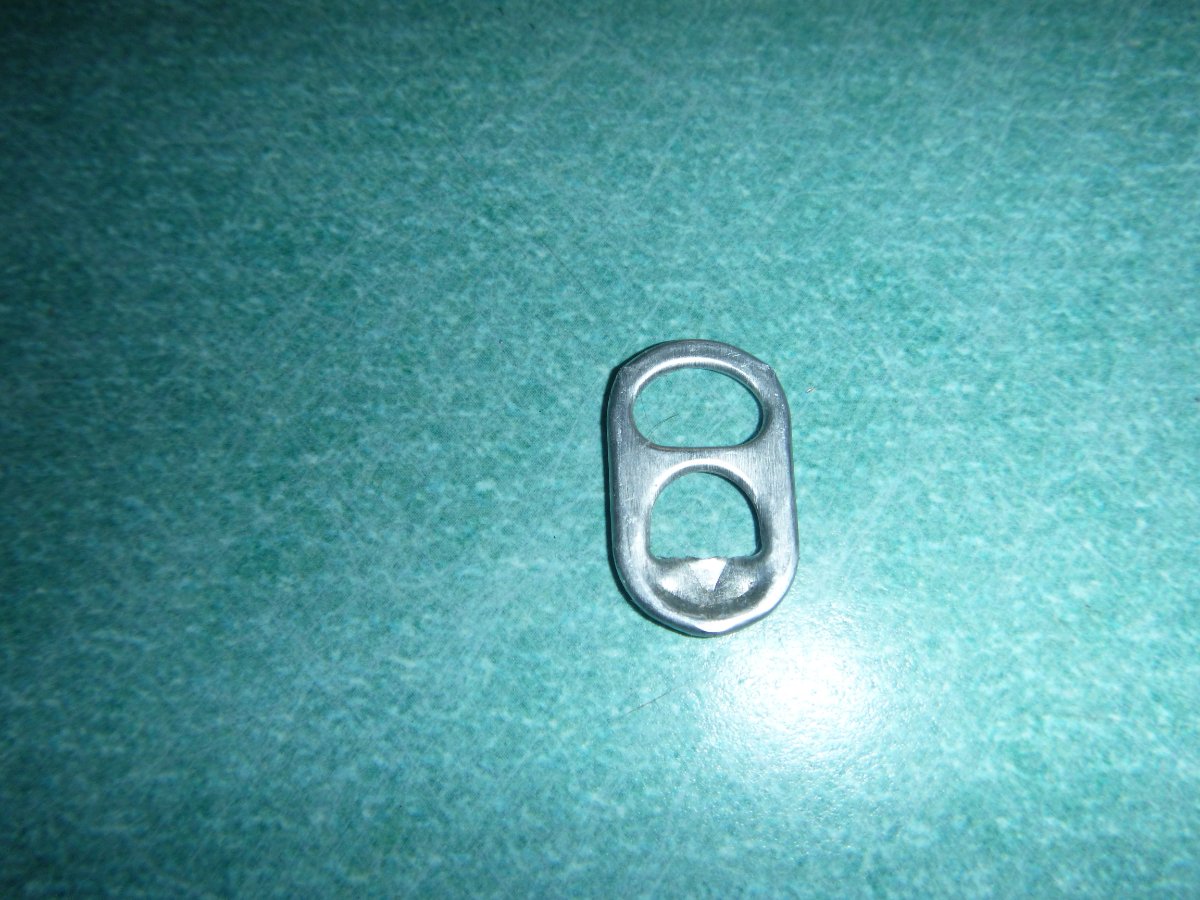
Free is good too! A fair number of USFS (US Forest Service) campgrounds use a water pump that requires the person doing the pumping to also hold up a valve that diverts the water from a "drinking fountain" into the spout where you can fill your water container. Unless you were a gymnast this can be rather difficult to do. Sticks, pebbles and other assorted forest debris can be used to prop this valve in the open position but if you happen to have the "tab" from a can of soda or beer it works perfectly for this purpose. In addition, it gives you yet another excuse to pop a cold one. Bill

-
We certainly agree about living versus visiting the beach. I can't tell you the number of times my wife and I have talked about buying a second home on the beach only to slap ourselves back to reality. We "need" another home like we "need" a hole in the .......... And, living at the beach full time without the mountains, trees, motorcycle roads, hiking, etc. is just simply not something we want to do. But, for a vacation, we find the beach, the ocean, the food , and the different life style very refreshing and relaxing. Bill
-
Pam - See the very first post by Foy above (top of page). His price for the shower mats is $199 plus shipping. Bill
-
It is possible that we are mixing a bit of "apples and apples" in this discussion. I believe that the comment about NOT recommending blown air for winterization pertains to the practice of ONLY using blown air and has nothing to do with using blown air in COMBINATION with using RV antifreeze. While not impossible to remove ALL water from the plumbing system using the blown air approach - it is very difficult. Given the small spaces in back flow preventers and single handled faucets a single drop of water can do a fair amount of damage. Given that most RV antifreeze protects down to between 10 and 50 below zero any residual water that is left in the system from pumping the antifreeze through simply gets mixed into the antifreeze solution. Yes, this might reduce the level of protection by a few degrees but given the winters we experience here in Western North Carolina, I do not worry about it. I would guess that in more severe climates and/or if you are worried about this potential mixing of a small water and antifreeze, you could use the blown air in combination with the antifreeze. Bill
-
HOW TO: Quiet the Smoke Alarm
topgun2 replied to John E Davies's topic in Mechanical & Technical Tips
One of the "problems" that you will encounter is that there are very few alarms of any sort that fit into that hole under the dinette. So, unless you are willing to live with the hole, or, live with gaps around the hole, or, patch or cover the hole, you are basically stuck with what's there. Bill -
You would be well served to ask the Sales Department that last question. However, I've always believed that when it comes to thing involving money, there is usually a way around most any obstacle. Bill
-
7 inch (diagonal) screen - I would never go back to a 5 inch screen. Yes, mine is on the dash of my F-150. No issues with sunlight. Bill
-
Susan - Research, research, research! What's good for me is not necessarily good for you and GPS units are no exception. Garmin's new 8 inch screen and the model 890 is getting good reviews. Garmin's website used to have a matrix that compared their various models and features. Several years ago I upgraded to a NUVI 2797LM that has a large 7 inch (diagonal) screen and have liked it very much. But, I usually travel alone which makes the large screen much easier to see and interact with while driving down the road. Good luck on your search. Bill p.s. I have a bean bag mount https://www.amazon.com/Bestand-Dashboard-Portable-Friction-Garmin/dp/B01N6KWHSC/ref=sr_1_1_sspa?crid=A2F2DL4BGFDE&dchild=1&keywords=garmin+bean+bag+dash+mount&qid=1601297711&sprefix=garmin+bean%2Caps%2C169&sr=8-1-spons&psc=1&spLa=ZW5jcnlwdGVkUXVhbGlmaWVyPUEzN09LQTRFSlhGWU5BJmVuY3J5cHRlZElkPUEwNTQ1MDE3MUg3REo0U0Q0R0JYWSZlbmNyeXB0ZWRBZElkPUEwNjQxMzgyMlBBTktOVERUTERYOSZ3aWRnZXROYW1lPXNwX2F0ZiZhY3Rpb249Y2xpY2tSZWRpcmVjdCZkb05vdExvZ0NsaWNrPXRydWU= that works great and is very stable. Of course there are also vent mounts, magnetic mounts, suction cup mounts and (if you have a CD slot in the dash of your truck) a CD slot mount. Before we sold our Volvo XC70 last year, this CD mount was my favorite in that it got the Garmin off the top of the dash but was still high enough to be able to see the Garmin easily.
-
I suspect that FJV meant to say - gasoline without alcohol - and not specifically "premium gas". Alcohol has bad effects on many gas lines and carburetor parts. Bill
-
It would appear that Sir John Crapper did ☺️.
-
HOW TO: Quiet the Smoke Alarm
topgun2 replied to John E Davies's topic in Mechanical & Technical Tips
Both are dual. So the co part is duplicated - thanks Mike 😊 -
Tractors 1 (Charlie Y) - RV WIDGET WORKS - is or was a member of our Forum - I've not noticed him here recently though. He is the originator of the shield JD mentions above. If anyone is interested, you might want to try sending him a PM or contact RV Widget Works and cut out the middle man. Bill
-
Battery compartment lock
topgun2 replied to Ray and Susan Huff's topic in Mechanical & Technical Tips
At one time Bruce Norton ordered a lot of these keys. He sold me a couple. Anyone interested might try sending Bruce a PM. Good luck. Bill Edit - if sending a PM try Forum member name - Cheryl -
Battery compartment lock
topgun2 replied to Ray and Susan Huff's topic in Mechanical & Technical Tips
I believe that Patriot recently purchased couple of these. You might want to PM him for details. -
I know several RVers that Velcro a couple of those lights to the exterior of their camper. The theory is that if/when a critter (or human) sees that light come on they will leave. I wonder if it actually works at least for any critter of any size. I do know of at least one black bear that really doesn't care if a "security" light is on or not. Bill
-
So sorry about the rain. Isn't there a winery nearby? I know there is a cave that can be explored. Twist and I are with all of you in spirit. Stay safe! Bill
-
During numerous trips across the Midwest on motorcycles I had this opinion that it was flat and unappealing - just something that must be endured in order to get to more appealing areas. However, once I slowed and gave myself more time to realize that this area is not flat ( or at least TOO flat ) nor was it necessarily unappealing. The sky, the rows of corn and sunflowers, those t-storms (as long as I wasn't in one). The quiet nature of both its small towns and its people. Its vastness offset by its safety and friendliness and warmth of spirit. The knowledge that this area of the world feeds so many people. And, besides these big picture things there are smaller gems that can be found by asking and looking - Fort Hayes (Hayes, KS) and a Buffalo Bill statue (Oakley, KS) located just a couple of miles off interstate 70 are just two examples. Bill
-
Agree with Mainic. Those panels (both left and right) in the attic are easily removed to see if the coaxial cable is there. If it is not then fishing a length of cable into or from that space should not be difficult. Bill
-
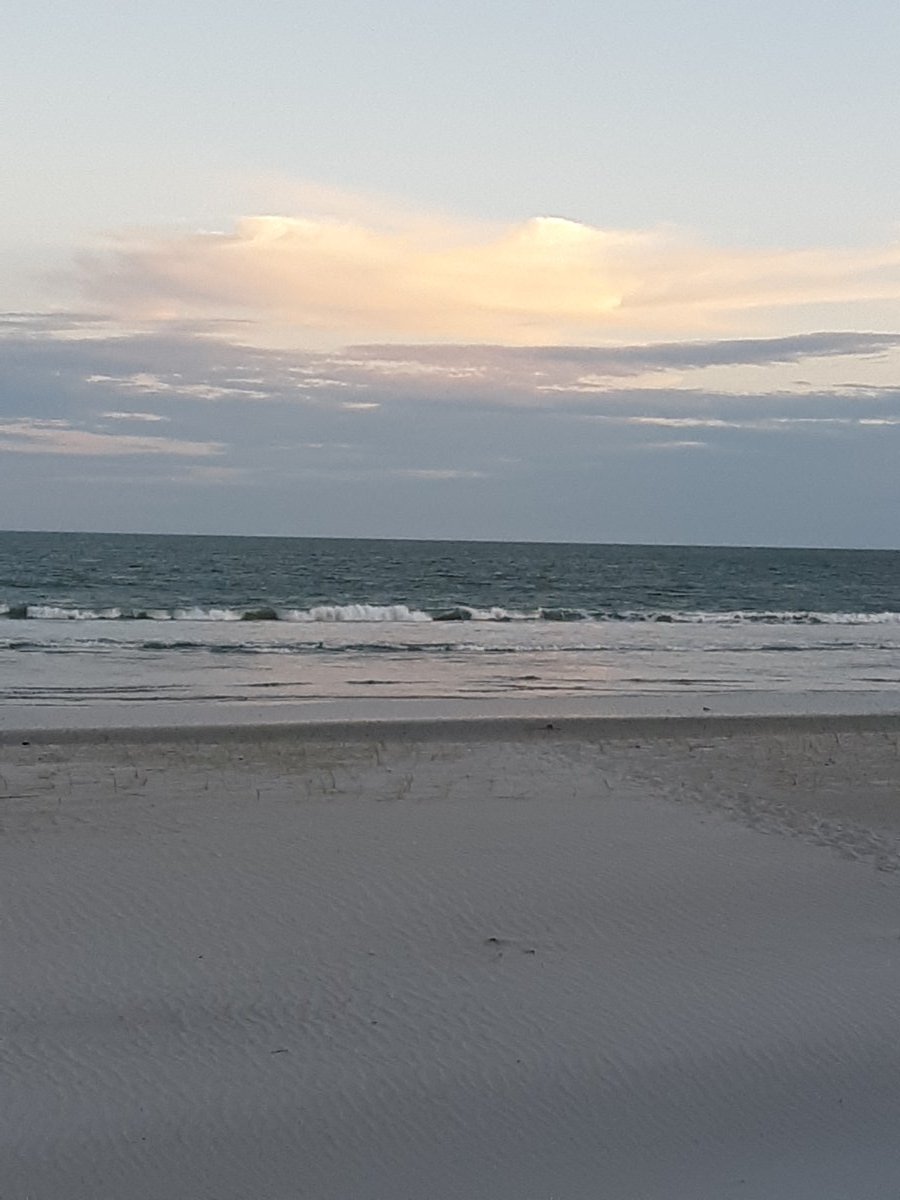
Just 10 minutes ago I took this pic and had to share. No, I'm not in the Oliver but the pic is from the deck of the beach house.