Leaderboard




Popular Content
Showing content with the highest reputation on 02/10/2023 in Posts
-
B & B - What you have heard is correct - these jacks are supposed to be used only for stabilization NOT for leveling. Perhaps your confusion comes from the fact that at one time (pre 2018 or 2019) Oliver actually made note of the fact that these jacks could lift one side of the trailer at a time. Therefore, they could be used for leveling, and/or other things like changing a tire. Certainly the jacks are strong enough to do just that, but, given other possible things going wrong - think twisted frame, cracked fiberglass, collapsing jack tube due to torque and even the possibility of lawyers getting involved with potential liability issues, Oliver now advises to only use these jacks for stabilization. Having said all this, there are still a number of owners that continue to use these jacks for things like changing tires in an emergency, and, lifting the side to the trailer in order to place more substantial supports for jobs like wheel bearing maintenance, etc. Bill4 points
-
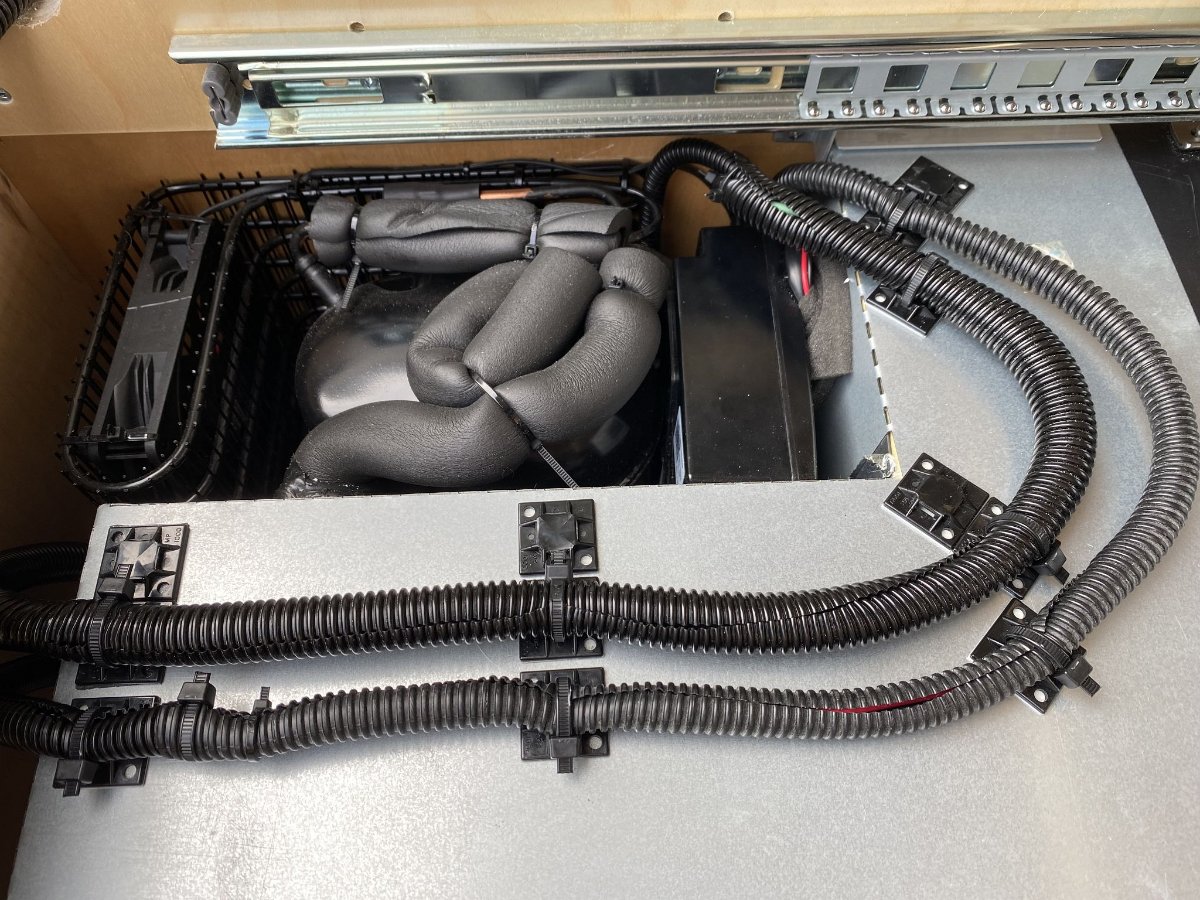
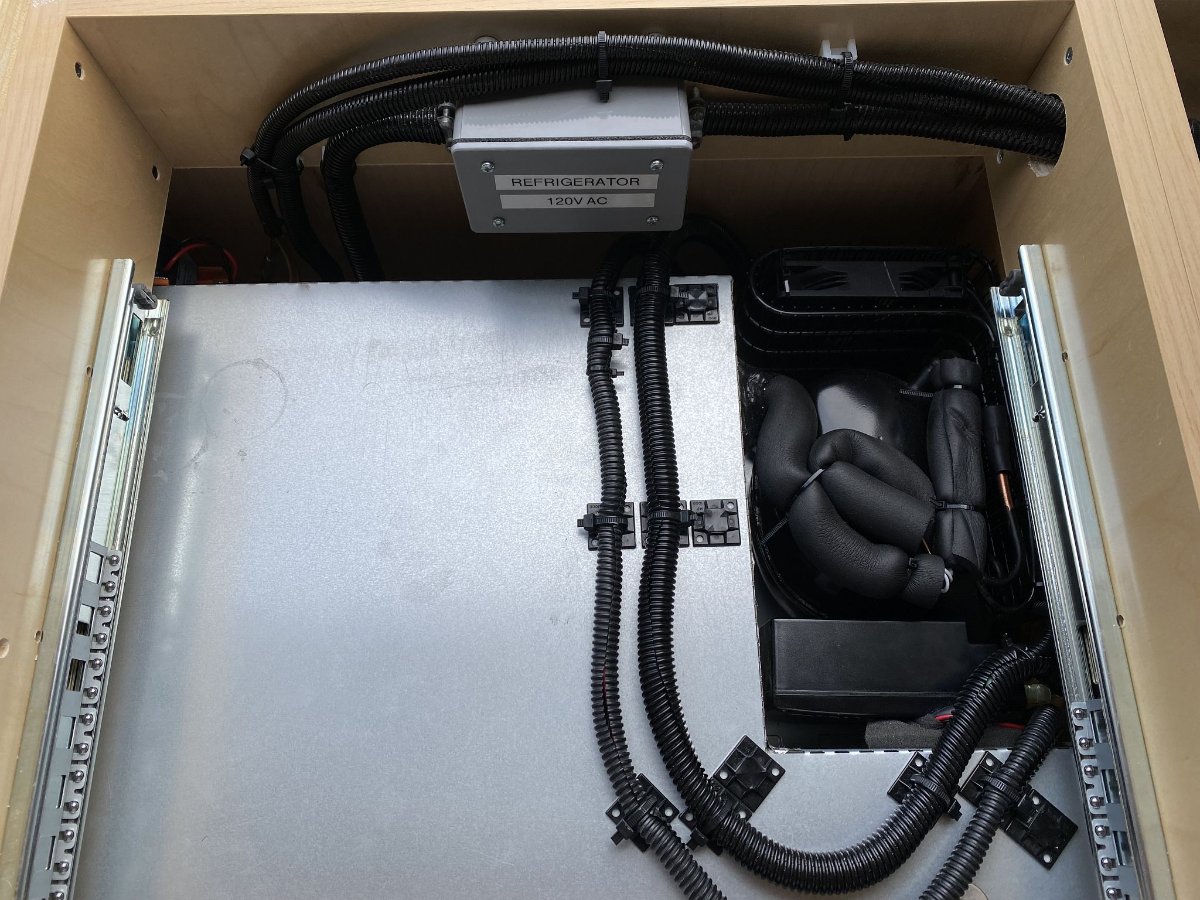
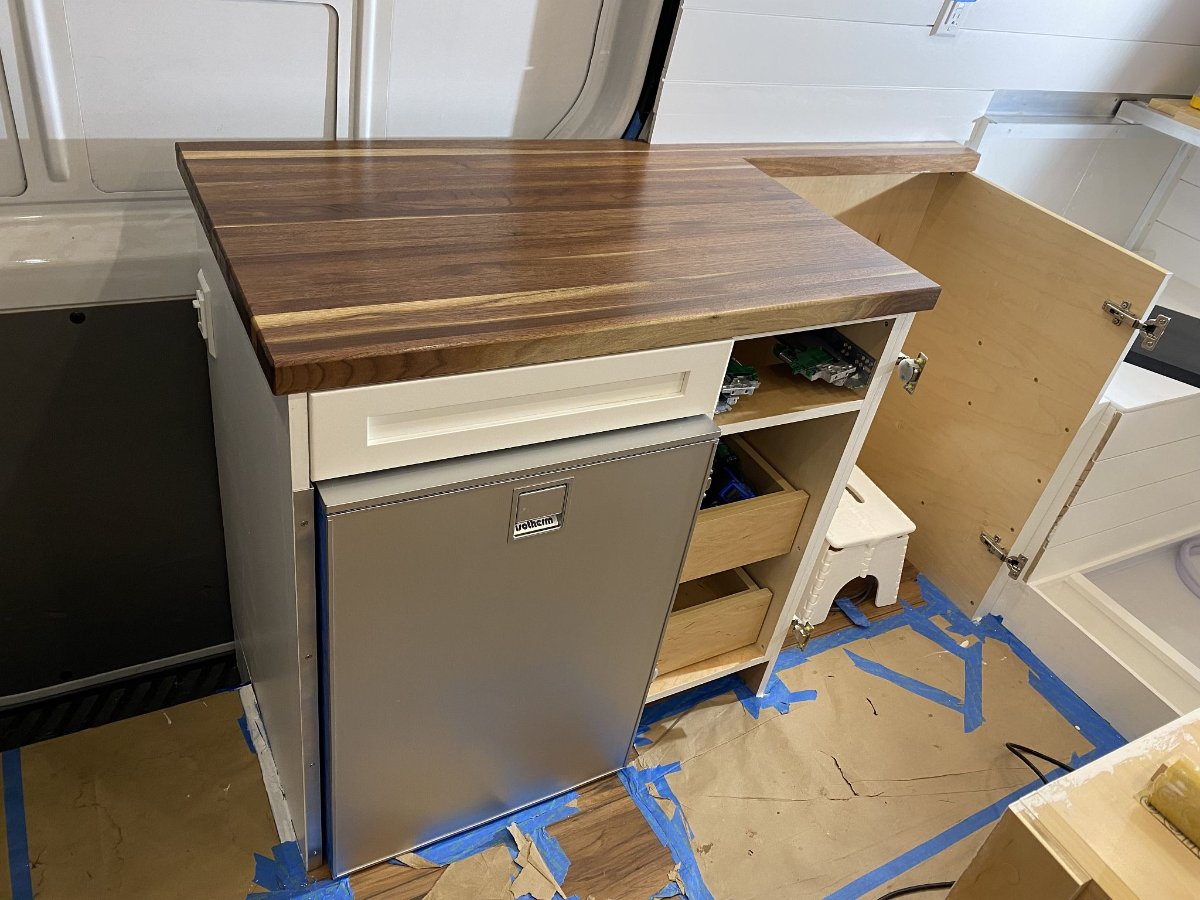
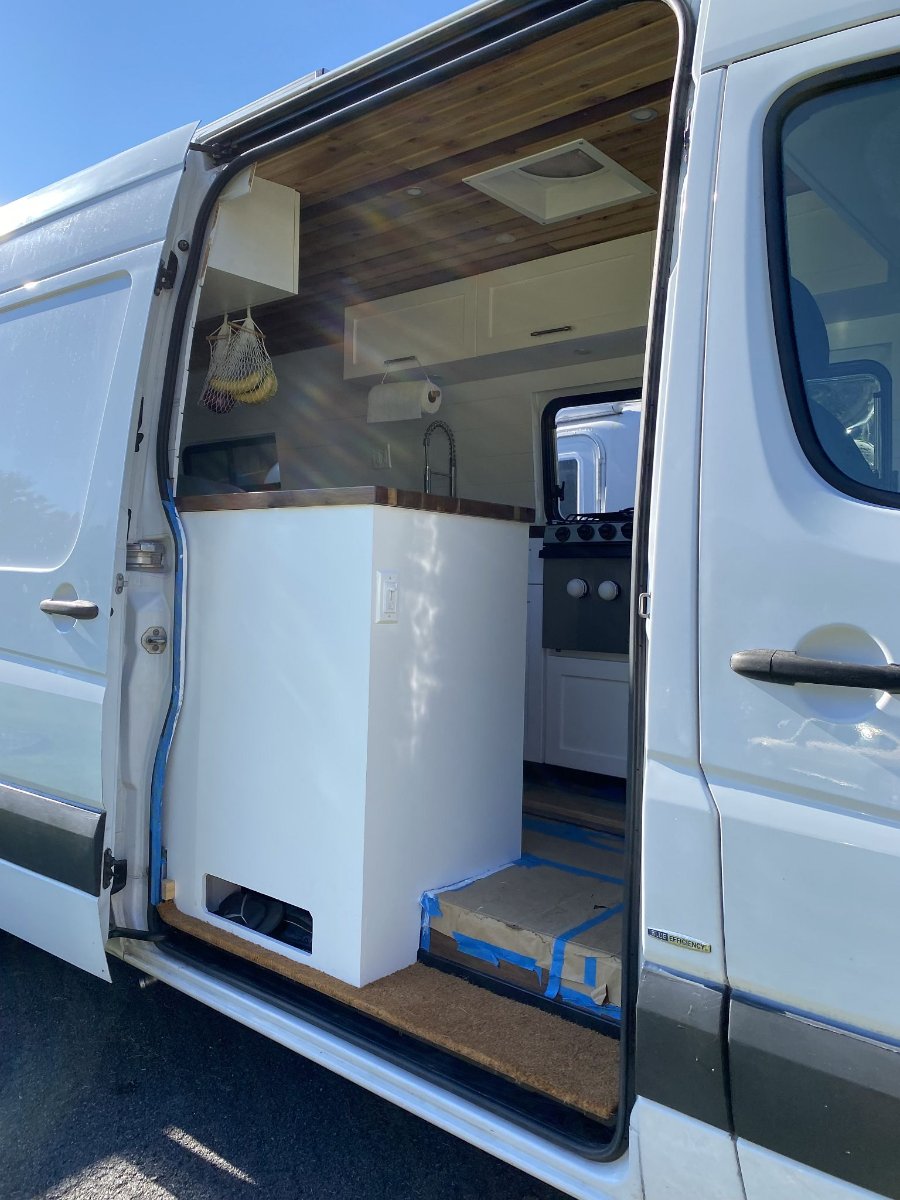
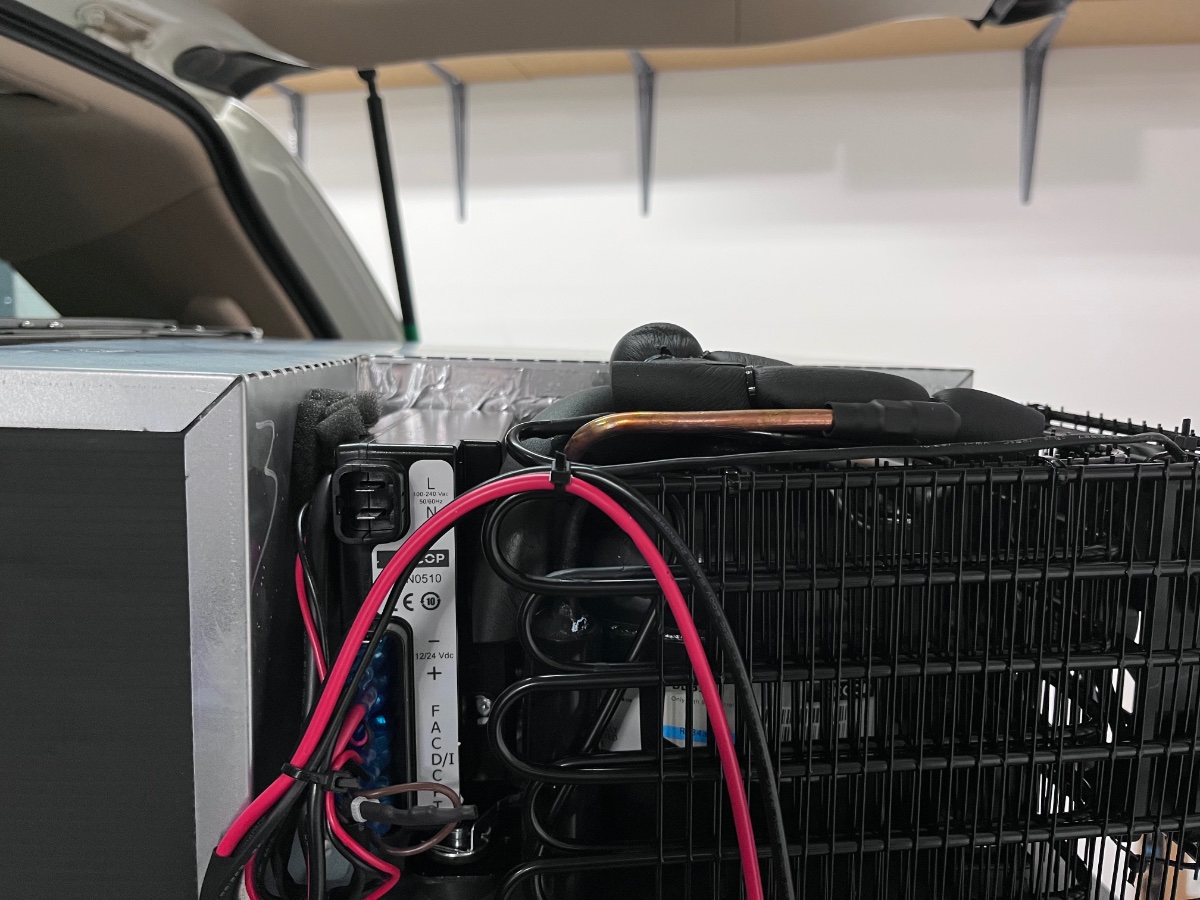
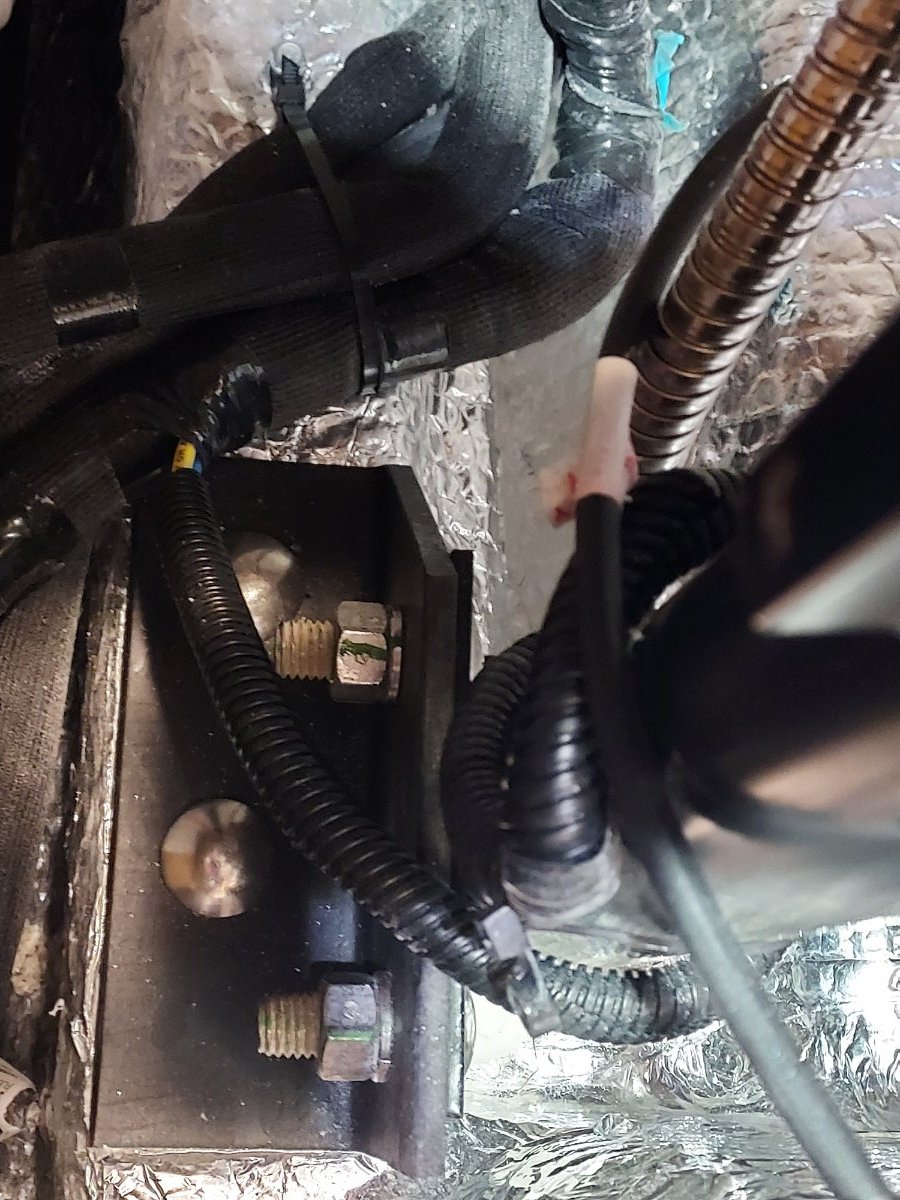
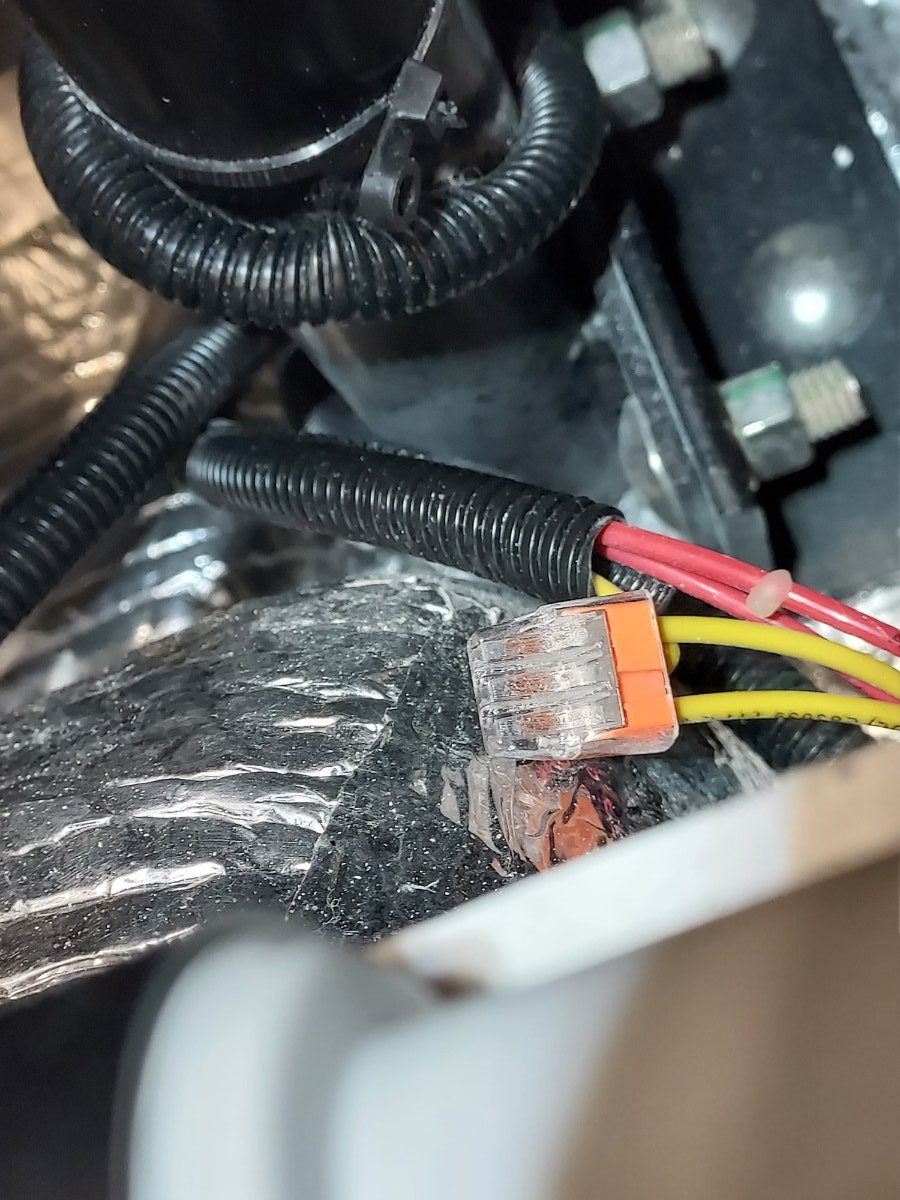
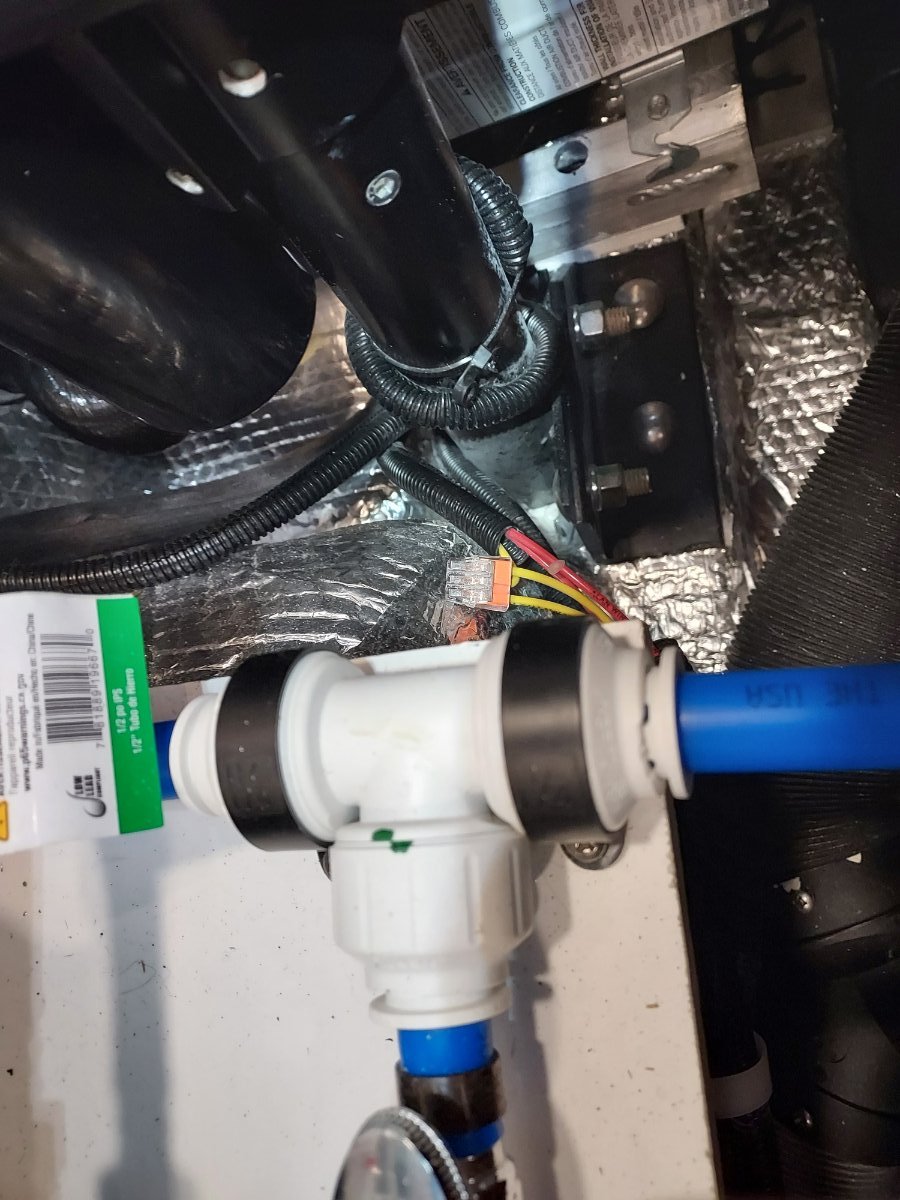
I helped install a similar if not identical model in our son's Sprinter van conversion. From memory, there was a cord with 3 pigtails on the end, 2 of them with push-on connectors as shown above. There was a designated grounding screw on the flat surface just below the SECOP unit (although tiny and not painted green...). See attached photos for how we secured the 12vdc and 120vac wiring...
 4 points
 -
Ford finally launched their VIN specific towing calculator. After inputting your VIN it allows you to input values for Passenger wt, box payload, and choose between Goosneck, 5th wheel or conventional bumper trailers. it calculates remaining available tongue weight and total max trailer weight. link below: https://t.m.email-ford.com/r/?id=h74cb0e7e,8d77749d,7c1fa34e&e=Y2lkPVBST0RETTk4MTk5MyZiaWQ9MTk1OTQ2NDU3NCZwMT13d3cuZm9yZC5jb20vc3VwcG9ydD9lbWFpbGlkPUZEXyBUUlVDSyBUT1dJTkcgRVhQRVJJRU5DRSBFTV9GLTM1MCBPV04&s=5Ij45wNQTUXCV4HKKrOWf8DmysLGRqmuRHqVkfPBOSs The towing support you need. Towing just got a whole lot easier with the new Towing Calculator. Follow these steps to help make sure you’re within your vehicle’s towing capacity: Log into www.ford.com/support/ using your existing account information. Once logged in, click on the Towing Calculator tile in your owner’s dashboard. The calculator will automatically pull in your vehicle’s towing capacity based on your VIN number. Add your occupant, cargo, and accessory weight. Determine whether or not you’re within your vehicle’s towing capacity and make adjustments accordingly. It’s that easy!3 points
-
Yes, for now the exhaust comes out below the drawer. We've been watching for signs of overheating, but its been fine so far. There is some air intake from the bottom rear of the cabinet, through a space designed to hold shoes. If necessary we can add more exhaust venting at the top rear or the end of the cabinet, which is exposed within the van's sliding door opening.
3 points
-
That’s an odd one. I’ve never seen that one before. I always used Interpower as a reference for cord types, but I don’t see one like that. It looks a bit like the Euro IEC 60320 rectangular C19/C20 form factor, but the C19C20 has the two power connections offset to one side, and has a ground. Might be a proprietary one. https://www.interpower.com/cgi-bin/ic.cgi/p65list2.p?w_country=North+America&w_pc=truep:// https://www.interpower.com/ic/designers/in-depth-product-line-information/More-Information-on-IEC-60320-C13-Connectors.html3 points
-
I do not specifically know - however, as I said above, I believe that Oliver changed from aluminum to steel brackets in 2018 or so. Certainly, it is easy enough to inspect any particular trailer to ascertain if that trailer has steel of aluminum brackets. All I can do is answer this question relative to the brackets that are on my Oliver. For BOTH rear brackets it is easy to see that they are aluminum AND for BOTH brackets it is easy to see that the welds on both sides of the bracket extends to close to the ends of the bracket. No borescope or light or mirror is needed. I can tell you that this is exactly what Oliver Service did for this owner. I can also tell you that I was told that Oliver Service inspected all "completed" brackets in the parts bins and all brackets on any trailer on the production line with no additional brackets being found that were not welded properly. Indeed, in reading this thread, I'd certainly take a look at my rear brackets - just to make sure - "trust but verify" (The phrase became internationally known in English after Suzanne Massie, an American scholar, taught it to Ronald Reagan, then president of the United States, the latter of whom used it on several occasions in the context of nuclear disarmament discussions with the Soviet Union.) This is particularly true given that it appears that there just may have been two instances (that we know of) that had failures of this nature - even though no pictures of the bracket failure that started this thread have been given.3 points
-
If I owned an older Oliver, I would make it a priority to remove the hatch covers under both the curb side and street side beds to enable examination of the welds on the jack brackets. Even without a close-up photo, I could see that the top welds joining the two pieces that form the "L" shape on my angle iron jack brackets are not just spot welded, but have such smooth, precise full welds as to suggest robot welding. This is easily seen in the photo I posted above. If I found such a jack bracket on an older trailer, I would rest easy. If, instead, I found two aluminum brackets, with just a spot weld joining the two pieces on top (as shown in the photos posted by Topgun 2 above), I would open a service ticket and ask Oliver to send me two of the cut and drilled steel angle iron pieces that could be swapped out for the aluminum ones. Given my very positive experience with Oliver's Service Department, I expect they would send you the steel angle iron jack brackets at no cost.3 points
-
That's good to hear. Thanks. What's the definition of Recent Owners? It would be nice to know what hulls have AL vs. Steel. It would also save a lot of time (and worry) if we had an idea of the number of steel vs. AL.3 points
-
Everyone - please note. I have never heard of any of the aluminum brackets failing as long as they were welded properly in the first place. The issue with the bracket in the photos above is that while there was a "spot" weld completed on the one side of the bracket, the finish weld that should have gone across the entire length of the bracket on that side - as it did on the reverse side - was never completed. And that is the reason the bracket failed. Those with aluminum brackets that are welded on both sides of the bracket should experience no issues. Recalls and/or Service bulletins are only issued if there is a known problem that affects a number of trailers - not a one off. Bill3 points
-
I’m not sure where we’re going with this discussion. Are you saying that Oliver should not advertise their trailers as four season? We’ve had our trailer 7 years and I’ve never winterized. We camp year round and have had plenty of camping with temps in the 20s and a lot of camping in the teens. No issues. To me, that’s a four season camper. We don’t camp in single digits or below zero. To me that is an extreme weather camper. I’ve had the basement partitions out of the trailer and have seen the water lines that run behind the basement on the floor of the outer shell. They just lay on top of the insulation. I’ve considered wrapping those lines with insulation, but it is not a high priority because we’ve not had any issues with them freezing. A very gentle beating😊…. Mike3 points
-
Are you sure that this steel not simply been bent and/or molded/extruded in this manner versus "welded"? I've never examined one of these steel brackets closely, but, I always thought that they were simply reasonably heavy "L" channel. Bill2 points
-
For a degree or less of side to side leveling I’ll just use the jacks. For any more I use the Lego block style leveling blocks under tires on the low side to get it mostly level and then the jacks to stabilize and fine tune the side to side leveling.2 points
-
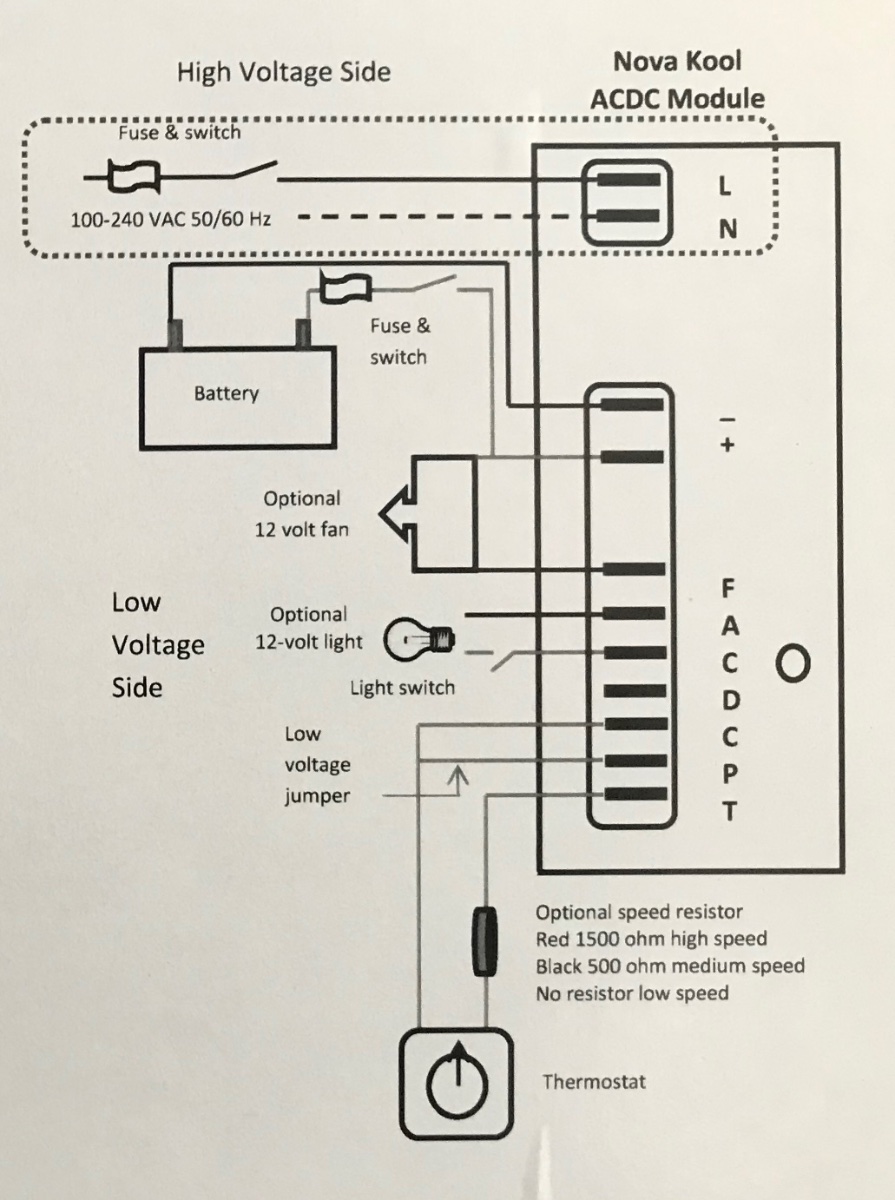
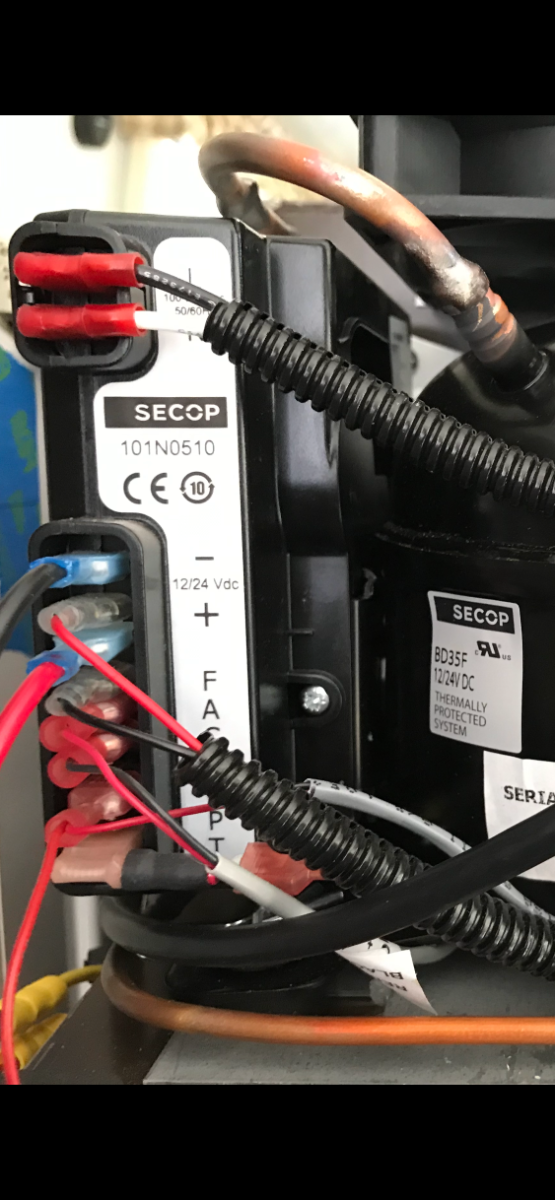
Also, here’s a schematic that may help. Even though the module is labeled Nova Kool in reality it’s a standard Secop AC/DC compressor inverter module.
2 points
-
John, that’s the AC input. On my fridge a separate “computer” type socket/cord is mounted/grounded/fused elsewhere on the fridge chassis but close to the compressor. As you can see the DC connection is down in the lower section of spade terminals.
2 points
-
That's great to hear! So, now we are back down to a single instance - that I know of. Bill2 points
-
I never said the welds broke on my jack mounts. I just said I didn’t trust them for lifting the trailer completely because they are small welds and I don’t trust them for lifting ~ 1/2 the trailer weight when I’m working on the trailer. Mine have the steel angle channel brackets. Next time I have the access hatches open I’ll take a picture.2 points
-
I'm none to well versed but, in my research before buying our Oliver and since, I've not found a trailer that does clearly better than ours, except for bigger models that have ducted heat to their basements and/or heat tape as standard features. The Escape Trailers from Canada seem to do about as well if you opt for their spray on insulation sealing of their bellies. They are described as 3.5 season trailers. That said, not of the same quality build. My brother owns a brandy new Airstream which is about the same size as an E2 and he claims they can now be set up for full on winter use but has not been able to test that out and I haven't bothered to dig into their forum. I'd argue, based on their forum, that they are not of the same quality as Oliver either. RVs.even smaller ones, are often good for winter camping. Given the increased popularity of winter camping I am puzzled by there not being more options. With my last modification ( to be tested starting next week) I feel my E2 will be good down to 0. Have tested in those condition quite a few times - am close to done. It was a lot of work but only cause I had partial guidance (limited but top shelf through this forum), am not handy and don't have an engineering brain so had to go slow and there was a learning curve. These mods were relatively cheap and straightforward to do so certainly not impossible.2 points
-
All well, and good, but I believe that you cannot inspect the hidden side of the brackets without physically removing them, so additional hulls could have defective ones. So a Tech Bulletin is definitely needed to verify that they are correctly built. If those bottom welds are visible with a borescope, or a light and a mirror, it would take minimal down time. John Davies Spokane WA2 points
-
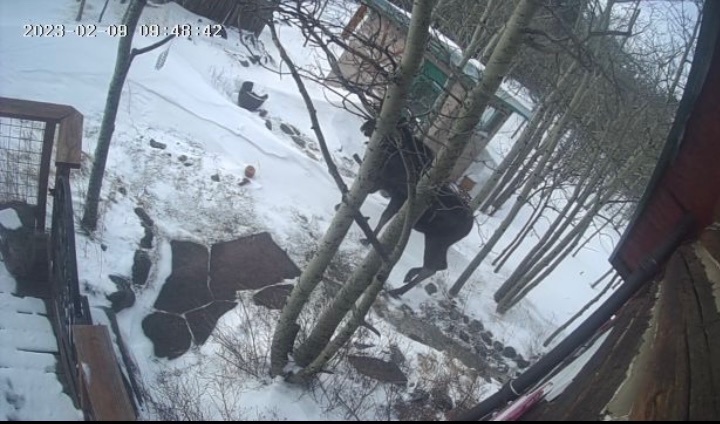
The neighbors like to shortcut thru the yard when I am away
2 points
-
Bill: Please do split this off into another thread. Every owner of an OE2, and maybe the OE's, needs to know if their jacks are accidents waiting to happen (aluminum) or OTT stout steel ones. This is a true life safety issue for those with aluminum. Thank you Sir. GJ2 points
-
Will Oliver Service exchange the older aluminum ones for steel? I haven’t looked at mine lately, I need to go check. Seems like there should be a recall or at least a Service Bulletin… Thanks. John Davies Spokane WA2 points
-
True if you are not 4,000 miles cross most of CONUS and an ocean away. 🙂 Yes, I saw that...I'm a 2018 owner. Hence my concern. And yes inspection of the brackets will be on my list of inspections shortly after arrival. However knowing in advance if hull 342 has aluminum brackets could allow me to get the parts in hand for use before I start my long 2023 Summer Tour where such efforts become more difficult to accomplish and the need for functioning jacks becomes very important while boondocking out west in the mountains where camp sites are often not real level. I agree fully. Being a "Safety John", I would also insert the words "Very Level" in front of campsite.1 point
-
I guess it is a European spec, it fits Isotherm fridges. My fridge has to be returned due to shipping damage, I need to know in case the replacement unit’s 120 v ac line cord is too short. Does it use a separate ground wire??? Thanks, John Davies Spokane WA
1 point
-
Tom, that is a gorgeous installation, you have to love those little self adhesive cable pads. Did it just vent out the bottom of the drawer? John Davies Spokane WA1 point
-
First, thank you all for being generous with your time. I found many detailed answers in the forum and the broader community was a major factor in deciding on an Oliver. This will be my first travel trailer. It is perfect for me and my wife and our two miniature dachshunds. Kids started college and we are still a few years out from retirement. But we can see it coming up fast. My wife is a history teacher and I own my own business - so we spend most of our time in California (Ventura County) and summers and holidays in Williamsburg VA. My toolbox consists of a wrench and a roll of duct tape. But I am up for the adventure and look forward to acquiring new skills. I have to say I am very impressed with all of you and look forward to getting to know you. Rich and Christine Mutell1 point
-
Welcome to the family. Here is a link to our blog for inspiration and upgrades. You also will find links to the Oliver Outfitters Guide, a list of accessories we’ve compiled specifically for Oliver owners. https://4-ever-hitched.com/ Hull 505 - Galway Girl Craig & Rose1 point
-
I just read my email from Ford on this and it sounds really useful. Bill1 point
-
Question: Are people using these Jack to “level” their trailer at a campsite? It was my understanding that these were “stabilizer jacks” NOT “Leveling Jacks”. The sales and service team say to never use them to level your trailer. You just drop them after your trailer is leveled using blocks and they help to take the bounce out of the trailer. We are on-schedule to pick up on 3/8 and very much looking forward to it finally being here. Thanks - Brian1 point
-
2021 LE 2 Timken counterfeits or WBA app wonky... Last year, I bought Timken bearings from Rockauto to replace all the original wheel bearings. I used the WBA app to authenticate them. Oliver service performed the work. Oliver saved the original China bearings for me to keep as "road spares". In preparation for repacking this year, I purchase six seals and two sets of Timken bearings to have on hand, if needed. These bearings were also purchased from Rockauto. I checked them with the WBA app....which indicated that both of the set4 and set17 bearings were counterfeit !! After sleeping on it, I started trying to find out more info on the WBA app....revisions...updates...reliability reviews. Most of what I found was marketing speak. I decided to delete the WBA app from my iphone (originally downloaded in 2022) and download again. This time the app approved as genuine both of the set17 and one of the set4. Once again I deleted and downloaded the WBA app. I rechecked all the sets with the same result...one set4 counterfeit. Next, (without another delete/download) I very gradually moved the iphone camera over the counterfeit set4 CR code without the bar code in the image.....and before my very eyes the counterfeit set4 transformed into genuine Timkens. I share this with the group for anyone who uses the WBA app for authentication. So, do I have genuine or counterfeit? False positive?...false negative?...scam WBA app? I've bought OEM parts from Rockauto for years without incident. I guess the bottom line is to do the yearly bearing maintenance and carefully inspect them. I'll look forward to how last years installed "genuine" Timkens look this year. Steve1 point
-
I went through the whole thing and rerouted many of the wires and secured some, especially the main input wires. If your AC input cable isn’t long enough you can just get a long computer cable to replace the the supplied one. I’ve found that someplace like Goodwill will have tons of odd cables for less than a dollar. The AC input cable on my fridge is a typical computer type that’s 16 gauge, very common. Your fridge should have had the AC input wire assembly already installed.1 point
-
OK, I guess I will have to assume my replacement fridge has all of the needed harnesses taped up inside the cooler. I did not see another junction box on the outside anywhere. FYI I don't like that method of just having individual wires hanging in space, that is a recipe for fatigue failure of the terminals. Did you secure all the loose wires into a tight bundle? Thanks John Davies Spokane WA1 point
-
Frank C : The sentence quoted above is what started this very informative thread. As noted in my posts above, the welds holding the two pieces of angle steel together that form the L brackets on my rear jack brackets could not be stronger. They are anything but "tiny." They are so perfect I believe they were welded using a robot. See attached close-up photo. Are you referring to the welds that connect the cylindrical jack housing to the flat vertical bracket, which, in turn, is bolted to the L bracket to secure the jack assembly to the trailer frame? One of these welds is visible (although a bit out of focus--my apologies) in the second close-up photo below.
1 point
-
I wonder if the folks who use Oliver trailers in the winter in Alaska are limiting themselves to campgrounds with shore power, where they can use space heaters to warm vulnerable areas of the trailer as Jason suggests in his post above? Or if boondocking, whether they are running generators to power space heaters whenever ambient temps are below freezing? Oliver is not the only travel trailer that is marketed as a "4-Season" solution. Are there other "4-Season" trailers on the market that can be used un-winterized when boondocking, without modification, and without external power for space heaters?1 point
-
I don't exactly know when but Oliver stopped using the aluminum ones within a year of so (2018?) after the photos above.1 point
-
I don't wish to stick my head in a guillotine nor to contradict Jason who has been great to work with but in posting here he is, to some degree, responding to a ticket conversation I've been having with him recently. In fact, I pointed out the threads, including links to this post, where winter capacity was being discussed. While Oliver may have intended to apply the interpretation above to what "4 Season" means, that term is used to describe equipment that is meant to be used in full on winter conditions. Sleeping bags, tents, parkas, etc... described with that term are being sold as being appropriate for frigid conditions. In housing, it marks the difference between a seasonal and year-round place. Virtually all trailers that offer heat, including those that are much less expensive than Olivers, will work fine in these winter as long as you don't employ their water systems. In the name of transparency and fairness, if Oliver meant something more like "4 Season In Tennessee", it should have been spelled this out clearly in their marketing materials. 4 Season is not a bottomless pit meaning that no one expected these trailers to be able to handle insanely cold conditions when ordered. That said, my salesperson claimed that there were folks living comfortably in non winterized stock trailers in Alaska which according to my pretty extensive testing - around 2 month's so far of winter dry camping taking temps all over the belly - is simply not possible. This claim was repeated to me again by someone responding to a ticket just two weeks ago. I requested, in both cases, to be put in touch with these owners and never received a response. My results have show that there are areas of the basement/garage with water lines that will be exposed to temps below freezing with the cabin heat at 70 when outside is in the mid teens or even low 20s if daytime temps stay below freezing. These are temperatures that are not un-common during the winter in most states including parts California and Texas and sometimes, even in Tennessee. Bottom line is that we love our trailer but feel that, We feel that in both indirect and very direct ways, it's capacity to be used in winter was exagerated. Jason is a super knowledgable, straight shooter and the company has been good to deal with but this particular situation has been a disappointment to us. Everyone is entitled to their opinion - right? Most Oliver owners, including us, bought theirs primarily for the superior quality with the vast majority having no interest in camping in below freezing temperatures. I'm sure most will disagree with my stance here but, I felt obliged to share a point of view from someone who is a frequent cold weather camper. Let my beatings begin.1 point
-
Wow! That is very different from the brackets installed in our Hull #1291. Ours are steel, not aluminum, and appear to me to be robotically welded angle "iron" (steel). See photo below. Given the significance of the difference, and the impact on jack stability, maybe this last part should be broken off into its own thread. Maybe "Aluminum vs. Steel Jack Brackets"?
1 point
-
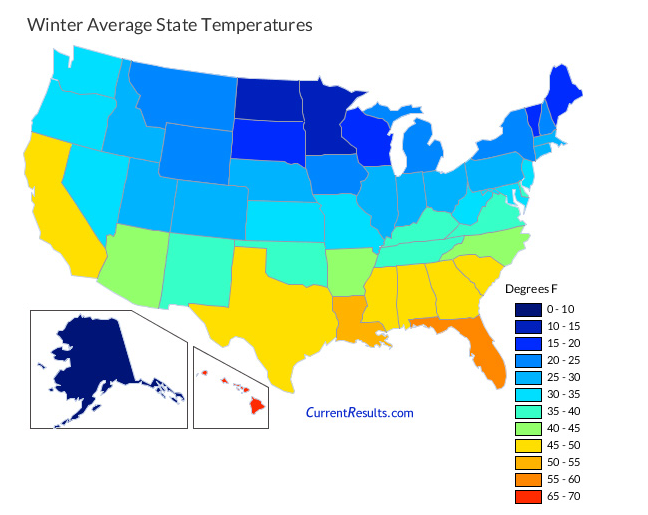
I have had a few questions regarding 4-Season camping with the Oliver and wanted to make a post so it would be available for everyone. What is 4-Season camping? It simply means that the Oliver is capable of being used through all 4-seasons. It does not mean that it will necessarily have no freeze issues in certain areas during certain climates. This is no different than a house. Here in Tennessee we recently saw sub-zero temperatures and many people had their water lines freeze and burst causing lots of damage. Does that mean that their house is not capable of being used during the winter? No, it simply means that in certain temperatures you may need to make arrangements to combat the temperature. In the past I have had my water lines freeze that were located on an exterior wall of my house so this time when they said we would see sub-zero temperatures I placed a space heater on that wall area to help keep it warmer and the next morning I had no freeze damage. Below is an average winter temperature for the United States however this is just an average and when temperatures go below the average especially when going into the low single digits or below zero, whether in a camper or a house you may have to perform steps to ensure freeze damage does not occur.
1 point
-
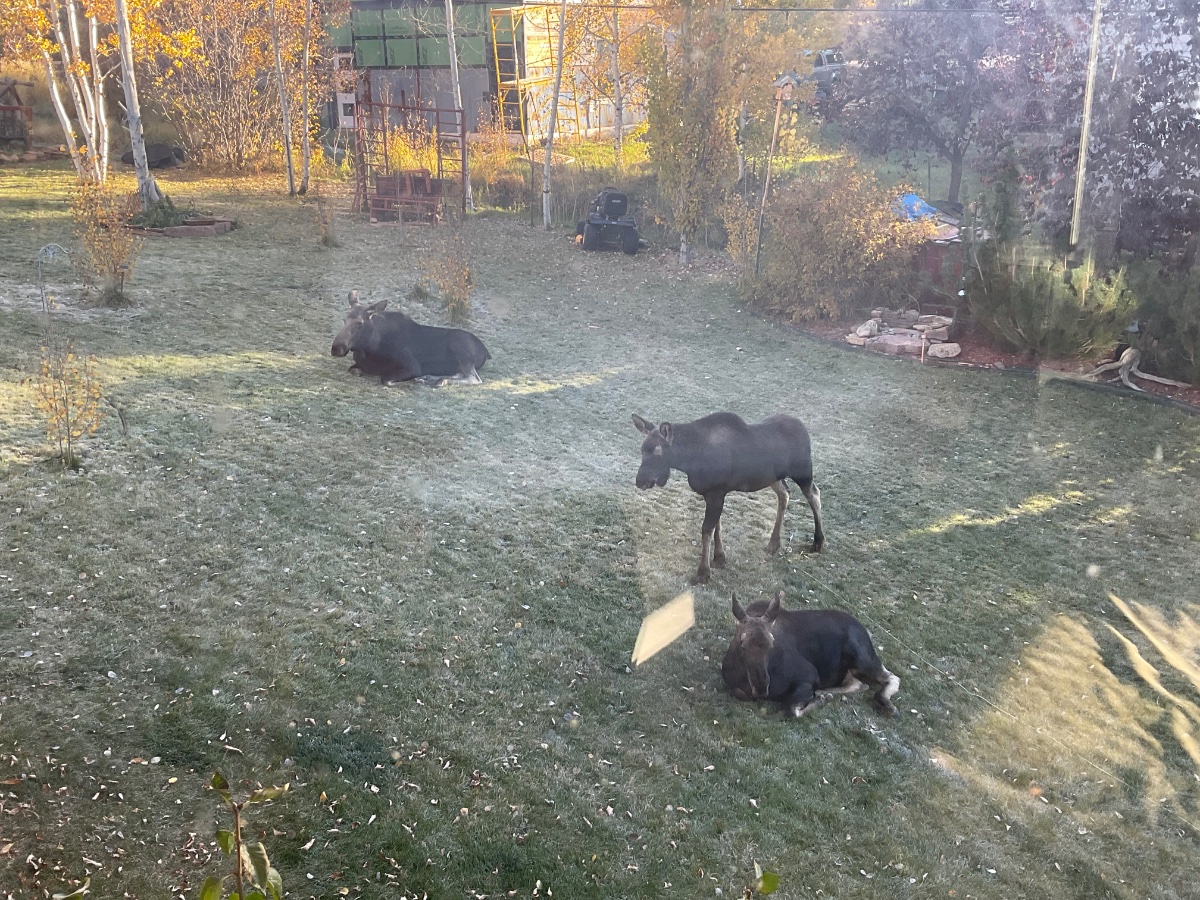
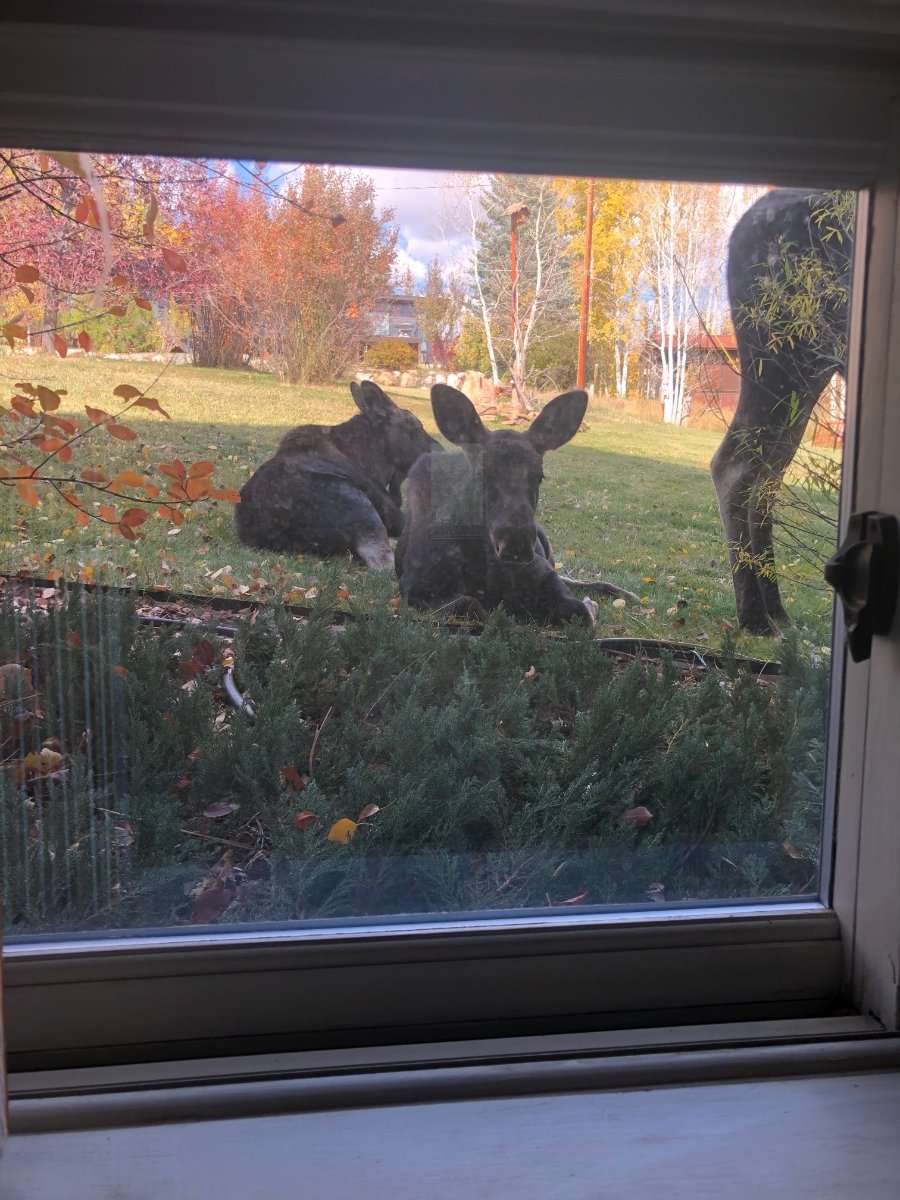
They hung around for a few days feasting on the crab apple trees and creek bed . Kinda hard on the dog walks. Last week, I opened the front door at 9PM and looked up at mama three feet way. Sorry no pics....had to do laundry.
1 point
-
This was my bathroom view last fall
1 point
-
That's one way to keep burglars away.1 point
-
1 point
-
1 point
-
You are not crazy. As an alternative to pink XPS foam, you could consider 2" foil-faced polyisocyanurate foam board. It has a higher R value than XPS, and the foil facing should blend in better cosmetically with the aluminum-and-white Oliver under belly. If you do add foam to the underbelly, please report your results, including how you installed it.1 point
-
Chukarhunter I think that there are three things in your post. 1. While I don't normally camp in the winter season, I have encountered winter conditions during the "summer" months. 80 degrees during the day and mid to high 20's and snow at night while at altitude in the western mountains. By having a category called Boondocking it includes (hopefully) all those things that one might experience when camping off-grid, including cold weather. 2. You have an interesting thought on the location/insulation of the fresh water tank. Since it is a distinct possibility that your suggestions in this regard would not be seen here by the appropriate people at Oliver, have you sent an email/letter to Oliver specifically suggesting this? 3. I too have thought about the addition of foam panels on the underside of my Oliver. If it weren't for the vanity of dealing with how it might look, I probably would have already tried this mod. I have stuffed insulation into just about any place I could think of and/or reach between the two shells though. There is a YouTuber named "Slim Potato Head" that has a single shell molded fiberglass camper. Last year he did this mod to his camper and the finished product really didn't look too bad. In any case - I'm a big fan of more insulation from both heat and cold. Bill1 point
-
Those of us that occasionally or frequently encounter very cold weather when pursuing our passions with our Oliver can benefit immensely from the experiences and insights of others on this forum. Those that never do, or that always winterize, probably don't care as much, especially those that never boondock. Let's face it, if you have full hookups, you can put two electric space heaters in the basement and run the propane furnace at 70 and not worry. Absent shore power, cold weather can be stressful. I would like to see the Moderators expand the category of "Oliver Boondocking" and call it "Oliver Boondocking and Cold Weather Camping" so those of use that do find ourselves in frequently in cold weather and unwinterized can share our questions and insights in one place. I have spent over two years trying to figure out the eccentricities of the Oliver when it comes to balancing temperatures throughout the trailer in cold weather and I wouldn't trade my Oliver for anything else. However, what I have learned or not learned can't be shared in one giant post. And I haven't figured it all out either. After two years of moving remote wifi temperature sensors around to different places, changing out the thermostat, and opening different pathways for return air to enter the basement, I have learned a lot. Importantly, I have come to the tentative conclusion that the biggest reason that the basement temps can drop so far below the cabin temp in places is due to the fresh water tank. Heat travels through water 20 times faster than it does through air. Conventional wisdom would say that the fresh water tank would act like a hot water bottle to help keep the basement warm. However, the fresh water tank in the Oliver appears to sit on a rubber mat on the floor of the basement and that creates a direct coupled path for the heat in the water tank to be lost through the bottom of the trailer at a rate up to 20 times faster than heat is lost through the rest of the shell. This sucks heat out of the basement faster than the furnace can replace it. Even a small air gap under the fresh water tank would slow this heat loss dramatically. Unfortunately, insulating under the fresh water tank is not an option for us, although Oliver should consider doing something like it in future builds. The rapid heat loss from the fresh water tank could explain why the basement temperatures drop so much compared to cabin temperatures, unless the furnace runs constantly. I am wondering if it would help to add 2 inch or 3 inch rigid pink foam panels to the underside of the trailer between the ribs of the frame to reduce the heat loss from the fresh water tank. Am I crazy?1 point
-
Well, dang! I've been wondering why my inner ear vestibular system has been just a smidge off lately and now I know.1 point
-
All this is like the “rule” that you can’t utilize the rear jacks to lift the side of your trailer completely off the ground when that capability used to be a major selling point. If you knew the real reason behind their change of heart, you’d be flabbergasted. Come by at the rally in May and I’ll fill you in on the details. We’ve been sitting at Dome Rock for a week now with both port side tires a couple of inches off the ground, held up by only the jack and, as far as I know, the earth is still spinning around the sun at about 18 miles a second with no ill effects so far. I’ll update you here if anything untoward happens.1 point
-
We are so excited for you! We loved Davy Crocket and want to get back there. We are just like you in many respects - first time trailer owners, still newbies as we only picked up in Oct 2021. Unlike you, we have but one mini dach and we roll coal down the road vs. a quiet hum 🙂 We are so happy with our "Lucy" and am sure you will be tickled with your Ollie!1 point


















-
Recent Achievements
-