Leaderboard




Popular Content
Showing content with the highest reputation on 03/10/2025 in all areas
-
Different stokes for different folks.... Some of us like being very close to our camping neighbors and all of the noise, crowd, congestion, only add to the enjoyment and the amenities (i.e. pool, snack bar, miniature golf, etc. are wonderful. While others prefer not being able to see another carbon based life form and believe that nature provides more than any human could ever imagine. Of course, there are also those that are between these two extremes. Our Olivers give us choices and I believe that this is one of the best features of these great campers. Bill6 points
-
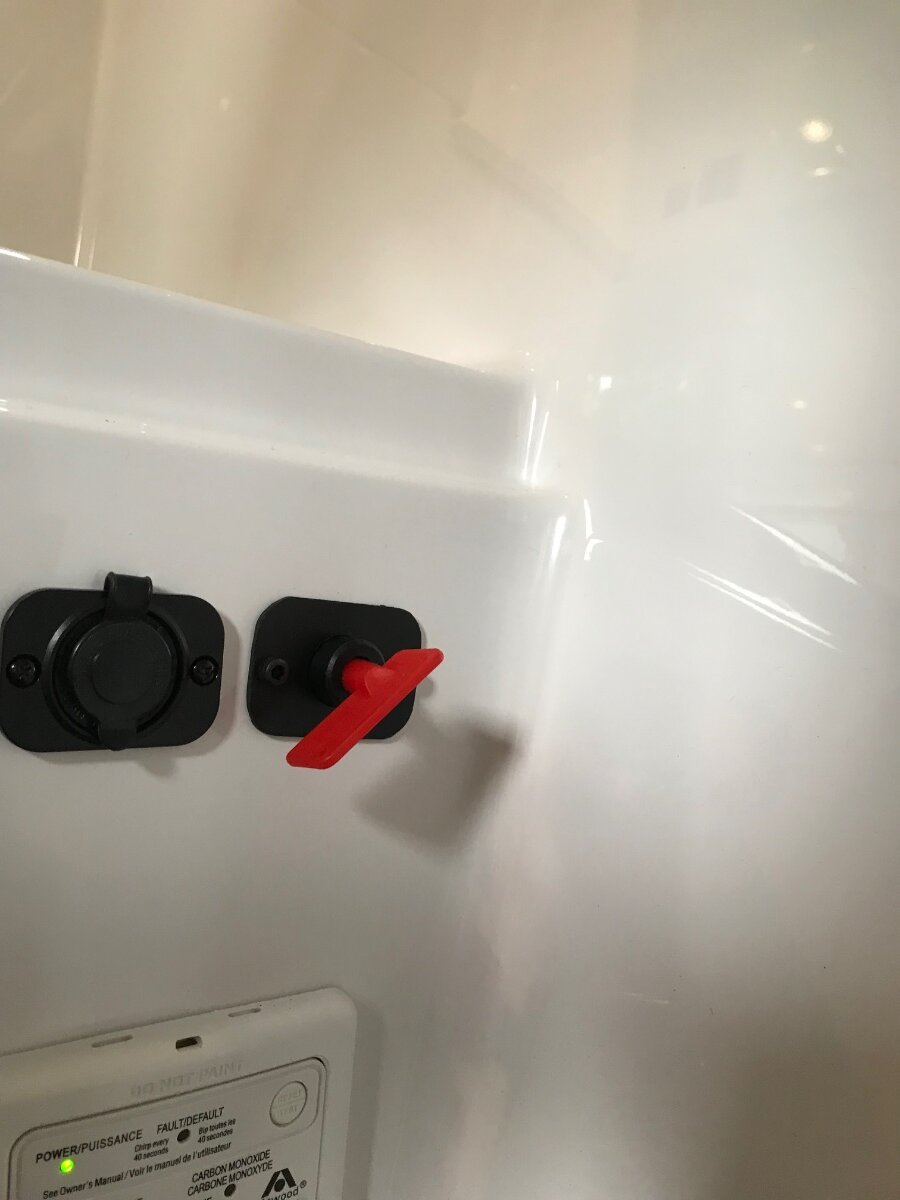
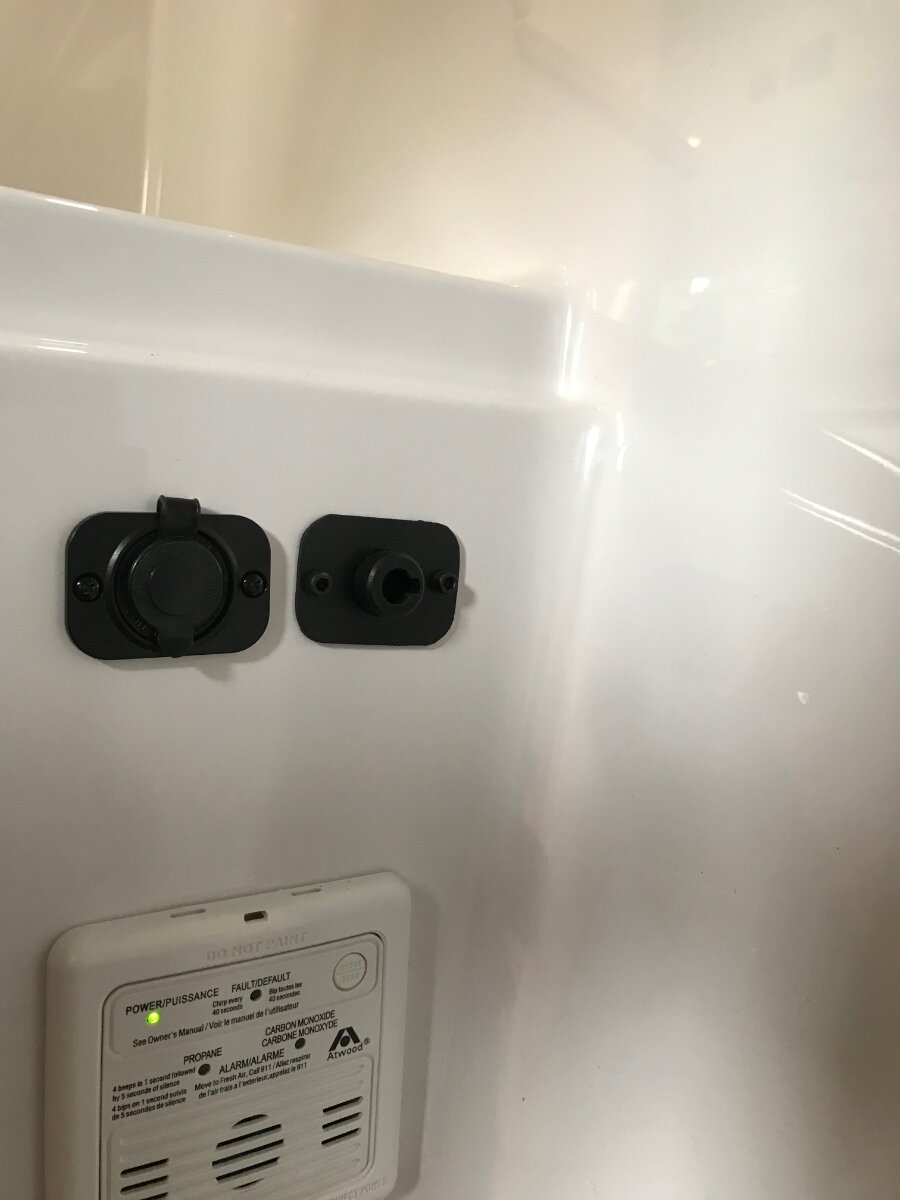
Seven years ago I added a master switch for the leveling jacks. I disconnect the power to the jacks whenever the camper is parked. My hope is that with three jacks firmly down it will be much more difficult to steal. Thankfully, as far as I know no one has ever tried my theory.
 6 points
 -
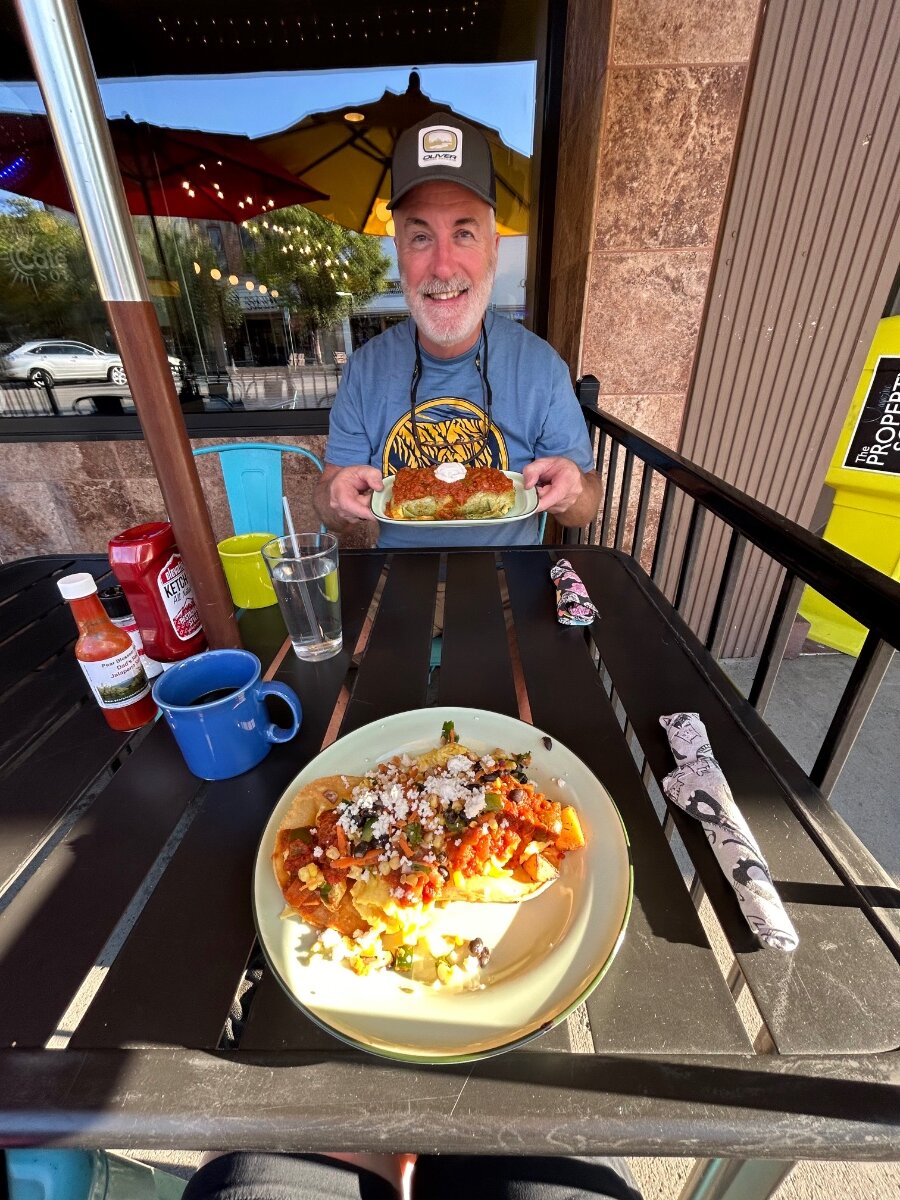
Ralph, When we had our 5 leaf pack installed by Lew and his team at Alcan it took them approx 2.5 hrs and the team did a great job. We got there first thing in morning and all of my expectations were ✅ off. It was worth every cent to have it done professionally and done right. We dropped off our Oliver and went and had an excellent breakfast in Grand Junction at Cafe Sol, gotta go hungry! 😋 We actually camped here the night before- https://koa.com/campgrounds/grand-junction/?utm_source=google&utm_medium=organic&utm_campaign=gbp maybe 15-20 min from Alcan with traffic. Cafe Sol…we ate here during our 2023 trip and again as noted in 24 while having the 5 leaf pack installed. Great coffee and we let the forks fly!! 😄 Patriot🇺🇸
4 points
-
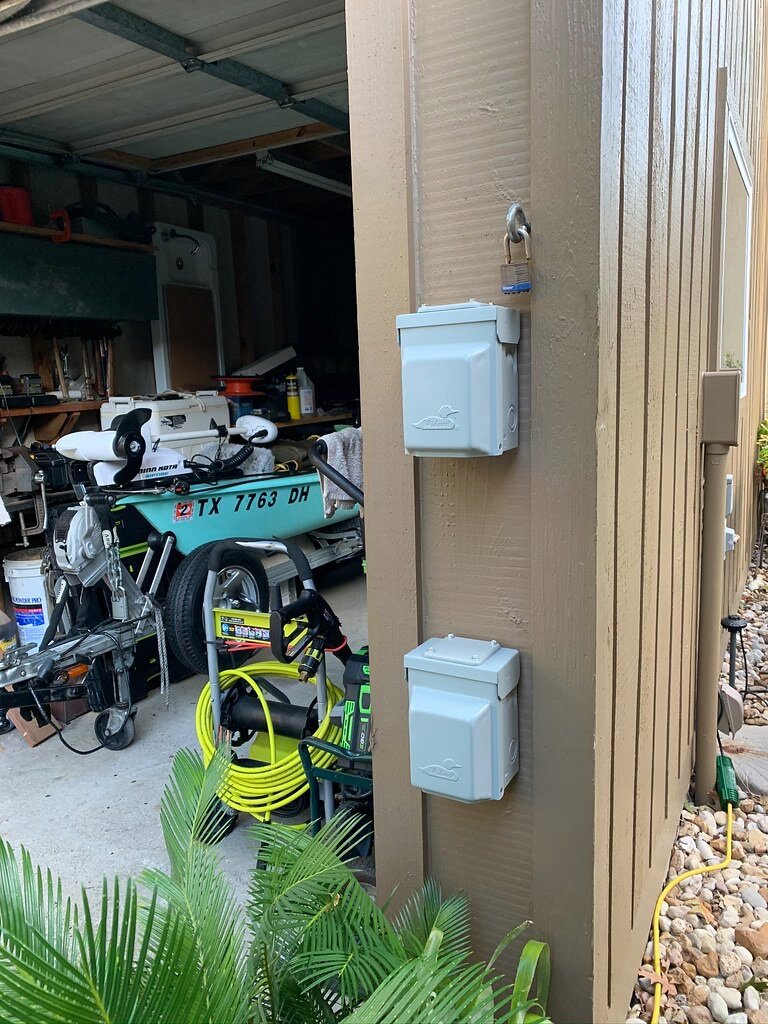
That’s what I did, self installed a 30A for the Oliver and 50A for my Son’s RV when he visited.
4 points
-
All of the listed suggestions apply to paved and well maintained gravel roads. Granted not always heavily traveled, but easy to do with a 2wd TV and good tires. But put on the yoga pads plus a serious set of mud flaps...... GJ4 points
-
Another good option in the Grand Junction area is James M Robb State Park in Fruita, just outside (west) of Grand Junction. It’s also just a couple of miles outside of Colorado Monument, a must see if you are in the area. Mike3 points
-
Yes, I removed the USB port from under the dinette and moved it to over the bed. One bed had an overhead USB port and the other one didn’t.3 points
-
Schools are starting to change when they open again for the Fall semester in Alaska. Idea is to give the kiddo's more summer time for play and jobs. Suggest you check that out. Seems like they were trending to start up the first Tuesday of September. September is the shoulder season. Almost no bugs, discounts and lots of camping parks only part full. Some years you could get all of September before it gets really cold. Other seasons early Sept the snows are starting. We were there in 2022 for August and half of September. Loved it. Some say that going in the late spring when kids are in school is wonderful for retired travelers. Too cold for our thing skins. Just know that the cost of Fuel is off the charts. So take what you need and be mindful that due to fuel costs and many road conditions you will be traveling many less miles than you do on our Interstates. GJ3 points
-
I agree completely with all of the above... however its important to note the difference between the Elite and the Elite II with respect to their tire and axle configurations. Ignoring for the moment the differences in tongue weights, the variability between lightly loaded and heavily loaded trailers and whatever safety margin you prefer to factor in, the Elite II GVWR of 7,000 lb / 4 tires = roughly 1750 lb/tire which must be supported, while the Elite GVWR of 5,000 lb / 2 tires = roughly 2500 lb /tire which must be supported. For this reason, for our Elite, we have settled on 55-60 psi with E rated tires for our loaded Elite at highway speeds on "normal" roads. On rougher paved roads we have to slow down some, and on rough backcountry roads we slow down even more and sometimes air-down a bit to help cushion the shocks. There are several prior threads that discuss the relationship between psi and a tire's weight carrying capability, which can be looked up / computed based upon tire manufacturer's data. Camp on!3 points
-
I’m certainly not suggesting that the Berkey does what an RO system does. We have had an RO system for 20 years that supplies drinking water and water for both of our fridges with ice makers (we’re actually on the second system, we wore the first one out). The RO removes everything, which is why we add back electrolytes to our glasses of water during the day. For camping, the Berkey has been effective. It gets top ratings by the EWG. I asked them about microplastic removal and they said their carbon filters remove some but that their new ceramic filters remove most/all micro and nanoplastics. Plastics is becoming a major health issue, they’re finding them in our arteries, artery blockages, brains, organs, etc. I applaud anyone who engineers a good RO install in their Oliver. I’m not that smart or talented so we’ll just roll with our Berkey. Mike2 points
-
Same here, Ron - added the 30A outlet to the west side of the "man-cave" for visitors to use when here. Our cave is energized with a 75A sub-panel that powers up the shop equipment as @jd1923 mentioned above. The main panel is configured with 200A service, which is more than ample to meet our needs. The 12.5kW whole house standby GENSET gets us by famously during power outages. So far, so good - no popping breakers.2 points
-
I don’t mind knowing there are other beings on the planet when I camp. I just don’t want to sneeze in my trailer and hear one of them say “Bless you!”. I don’t concern myself with snack bars and pools. Hot showers and the occasional washing machine are nice though. We’ve “camped” at everything from urban campgrounds - basically parking lots with hookups - to the aforementioned Harvest host - with zero hookups. (But a cool impromptu youth rodeo!) I prefer something comfortably in the middle. I admire the dedication of the tent campers. (BTDT, enjoyed waking up in 2” of water in my sleeping bag.) I scoff at the guys in the half-million dollar coaches. (I like getting more than 4MpG, thank you very much.) Friends often call what we do in our Oliver “Glamping”. That’s ok, I need some glamour in my life.2 points
-
Hey, Ralph; This is, at most, a 3-4 hr job at a service shop like Alcan, IMO. I changed my springs "solo" - it took a full day. However, when I changed my axles out at Hohenwald last year, "DeeBo" and I started around 8:30am and we were at lunch by noon that day. I'm sure Lew and his team at Alcan would have the springs done in less time. Plan on getting there the day prior to your appointment and you'll be on the road by early afternoon. Good luck!2 points
-
Deleted the booster and the front camera when I removed the Sat dish and did fiberglass work to fill all the holes and clean up the top front of our hull.2 points
-
I’m afraid I have to agree with you here. Im often tempted to leave my car doors unlocked. Though I try not to leave valuable (looking) stuff in the car, I don’t want some clown breaking a window just to steal my knockoff sunglasses, or hack my $50 cd player out of the dash with a hatchet. (When I worked at the Buick dealer - I saw some pretty expensive damage just to steal a radio or break into a trunk to steal a spare tire!)2 points
-
This rings a bell and I stand corrected, thanks Val. Now I remember an RV we had was gas and when the fuel tank was 1/4 full or less it would stop feeding fuel to the generator. Likely a lot of RV generators are gas. For trailer use, pouring gas is messy and a safety hazard, like Ron wrote, LP is cleaner/easier for his small generator. I'm glad to be generator-free now. There was a time with only two lead-acid batteries that I would have to run the generator in the afternoon to recharge them every couple of days, running a small inverter without any solar.2 points
-
We ordered and used the AB Lifestyles Oliver sheet set and mattress pad. They fit perfectly. We don’t use the top sheets anymore because they were too snug down at the feet end. We just use a regular twin bed sheet and tuck it in a little more. It allows a little more maneuver room for our feet. Mike2 points
-
@TravelWell, welcome to the forum. The Oliver tires are fine for highway and off-road. We’re nearing the end of life on our second set of tires, Cooper AT’s and they have done well. We don’t run at 80 psi, 50 psi is plenty. Our first year or so we kept inflated to 80 psi because Oliver said so. Much too harsh and we aired down several years before Oliver decided 80 was too much. As far as bumpy dirt roads, I think a lot of us have quite a few miles of bumpy dirt roads under our belts on the standard tires so I wouldn’t worry. Good question! Mike2 points
-
Yep, but you are faster on the key board than I. 🙂2 points
-
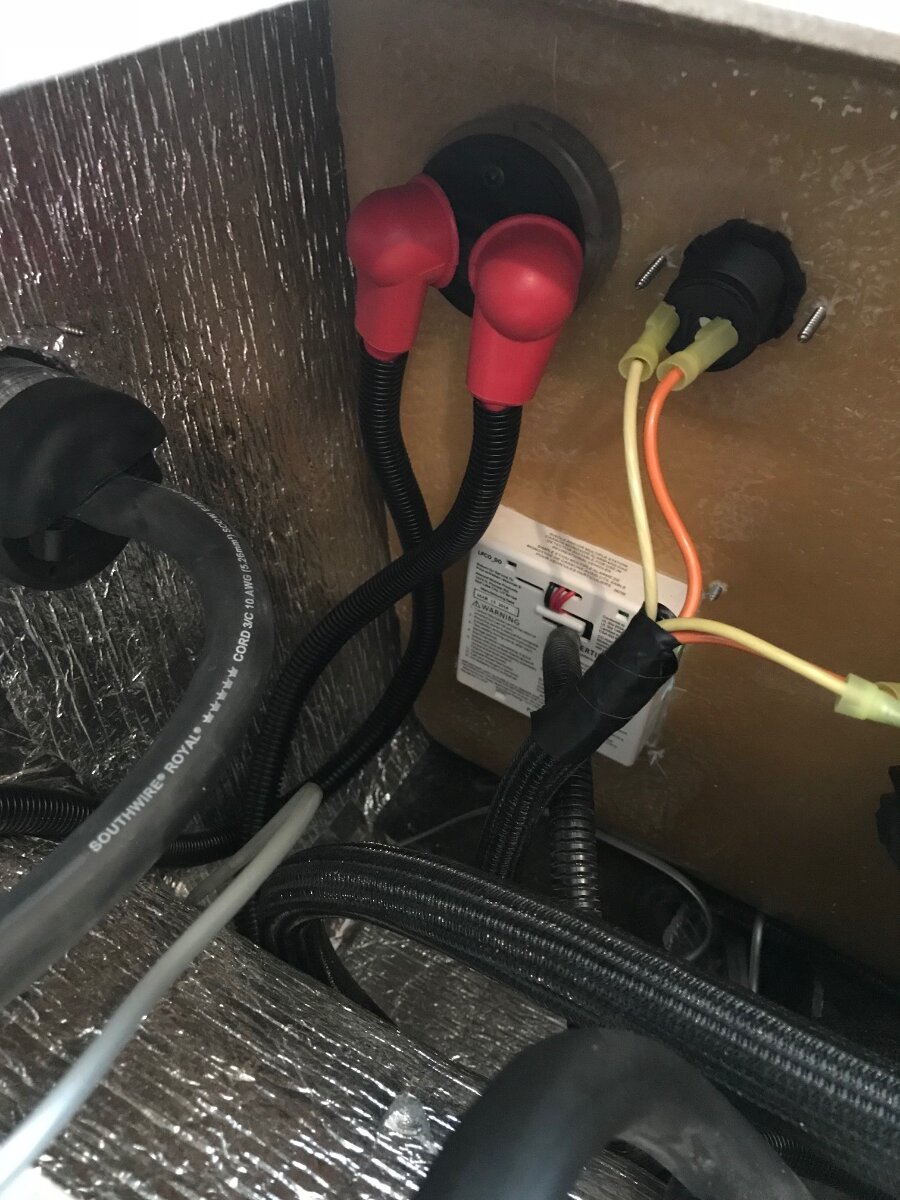
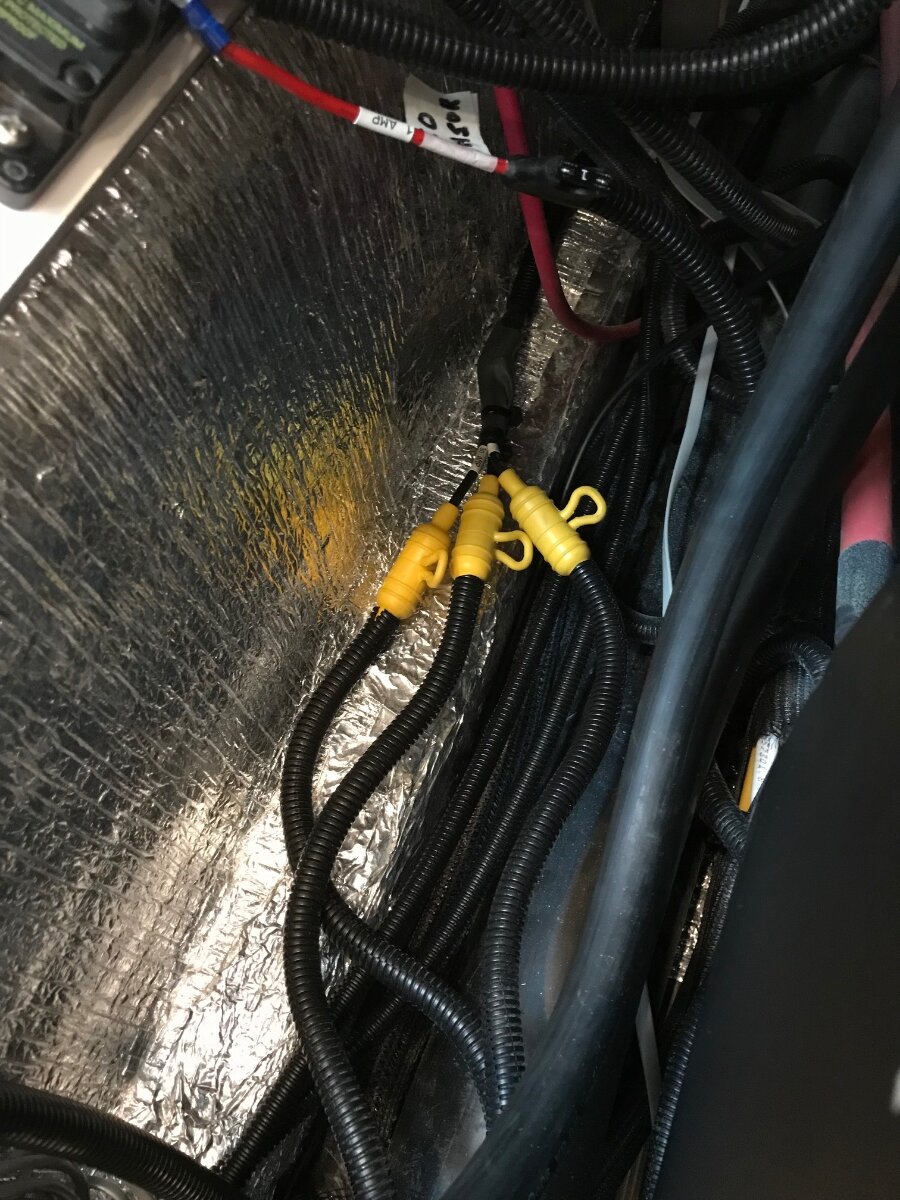
Steve: I was good all the way to the words "is actually a good idea as it protects the circuit from both ends". That logic applies to circuits that have the ability to power up the home-run from both ends. Like the DC to DC charging system. However I do agree that having a fuse at the front jack, although somewhat redundant, does serve a great purpose. When I leave my trailer unintended in a boondock location for which there may be a theft concern, I lower the tongue and remove the fuse. Certainly makes a quick scope, connect and getaway much more effort for the thief. GJ2 points
-
TravelWell: This appears to be your first post, so welcome to our forum. For a 6,000 (loaded) trailer, the OEM use of an E-rated (80 PSI) tire is unusual. Oliver could easily have gone with less stout and lighter C or D rated. But true to the exceptional quality of OTT's, they went with the stronger and much thicker tires that are rated to carry WAY more load. The E-rated tires are much more resistant to road damage as our owners typically include boondocking and roads such as yours in our travels. There are penalties with going with an higher rated tires and they are weight, cost and ride as JD discusses above. That said, I have yet to hear of any OTT owner complain about having too good of a tire tire on their rig. On the other hand, going to an even heavier duty tire such as you proposed would gain little in endurance or failure resistance. But the weight and cost increase would be significant. The third consideration is the forces that high pressure tires transmit up into the trailer. Although our 80 PSI rated tires can handle this pressure, most of our owners are running their trailer tires at the 50 PSI or less on highway and 30 PSI or less off road. Doing so keeps stuff in the cabinets and cushions off the floor. Finally, I know of no OTT owners that use 110 psi rated tires on OTT's for all of the above reasons. GJ2 points
-
The simple answer is NO, and since when does an E-rated LT tire have thin sidewalls? Please do not take advice from Overlanders, Van-Life or or Rock-Crawler types! 🤣 The Oliver is simply a 7K LB rated trailer. Ours weighs in at 6500 LB and 40 PSI is enough according to pressure-weight tables, so I go with 45 PSI. Yes, OTT suggests even more pressure for legal reasons, since not everybody checks tire pressure each time out. https://tirepressure.org/lt-metric-tire-load-inflation-chart More pressure AND more plies in the tire construction makes the tire stiffer, the ride harsher, which is not helpful to Oliver trailer systems. Many owners have drawers and cabinets opening, which is a sign, but a stiff ride also causes real damage. You want a softer ride, in fact the E-rated tire is already too stiff. Most 7K trailers run on ST tires. Many Oliver owners have run the OEM tires at 80 PSI because that's what the label says on the side of our older hull and that's what OTT used to spec which was very wrong. Like you, we very often go, "down some bumpy dirt roads and truly off-gridding." There are more wash-board roads where we live and travel than most of you. You need strength in the drive tires on your tow vehicle, but the trailer should glide slowly over the rough terrain as much as possible. Think, why do off-road types air down when the terrain is rough? (to make them soft and flexible for better traction). And based on your location, cold weather also makes tires stiffer! We owned a class-C where a prior owner install G-rated 12-ply tires instead of the spec for Load Range-E. The ride was horrible. Every time the front tires hit grooves on the highway (almost everywhere) the front-end felt like it was being hit with a 100 LB hammer! Another example - we own a Lexus GX AWD truck. I added a 2-inch lift and suspension goodies. This truck comes OEM with P-rated tires (P for passenger). I wanted LT tires for our dirt roads. Everybody goes with an E-rated tire which makes sense if you are always pressuring down and crawling rocks but we are on city roads and highway 90% of the time. I purchased a Cooper AT tire because I could get the size I needed in a Load Range-C which is stronger than the P-rated tire but not stiff and harsh as E-rated. We run at only 32 PSI (not towing) and the truck glides down most roads. LOVE the ride and was so happy with this purchase decision! I will likely replace our Oliver tires with Range-C tires when the time comes, since it is all we need and the Oliver will ride more smoothly at lower pressures. We only need 45 PSI, not 80 and certainly not 110 PSI. BTW, welcome to the OTT Forum and congrats on your first post! I hope that my explanation helps! JD2 points
-
This GMC Savana 2500 conversion van owner is getting ready to have Bilstein 4600’s installed front and rear. I wished the 5100 Series was offered for my make and model. I plan to have a shop install the front shocks due to the heavy coil springs, given a quote of $180; I can manage the rear installs.2 points
-
Alaska Suggestions: The Stone Stompers help for sure. After our 30 days in Alaska, I wish I had also installed the "Yoga Mats" as one very wise owner posted several years ago. Looked dorky, but if I had it to do again.... I would be Mr. Dorky for Alaska. Beware of puddles in the road. I saw where one had broke the back of a well made camper. Have a good spare, air compressor and a plug kit too. Have industrial strength bear spray for each adult. Get Tek Campground reservation/pass six months ahead. Don't sweat boondocking as the opportunities abound. Get the Mile Post Long sleeve, long pants and boots.... YEP! New springs, shocks and serviced bearings. GJ2 points
-
@Galileo this may be the other A/C model you were looking for. I witnessed @Ronbrink’s installation in action. Very quiet, very efficient and runs at 10A on 120VAC compared to 16A or greater for Penguin and Truma, not sure re amperage on the Houghton. This model is on my list for Apr-May since we are traveling all of June this year. The efficiency of this unit will allow us to run A/C considerably longer on inverter!2 points
-
Since I could screw that up fairly easily, I opt for the old school methods of assuring that one tank stays full: closing the valve. ”Regulator” sounds like such a pedestrian moniker. Shouldn’t it be something more ostentatious like “Regulator with automatic tank selection and gas status indicator”? Anyway, the 30-second “orientation” we received on delivery day was all of the insight I have on the device. I’d have to actually READ the manual to have any confidence in my ability to operate it without shooting myself in the foot. Back in my motorcycle riding days, there was a “on” setting on the fuel taps that left about 8/10 of a gallon in the tank to limp home on “reserve” when you spaced out and forgot to monitor your fuel. That’s how I use the “regulator”.1 point
-
All excellent points here. We used to have an RO system at our old house, primarily to eliminate the 0.010ppm arsenic that our shared well had. Larger RVs can easily rig an RO system because they've got the real estate available, the OTT, IMO, just doesn't have the available space. We run like @Mike and Carol with a Travel Berkey and as Mike mentioned, we too will switch the activated charcoal filters over to the ceramic filters once they've been exhausted.1 point
-
What was Groucho Marx’s famous line? Something about not wanting to belong to any organization that would have him as a member? 😋1 point
-
JD - we’re homeless these days. Sold our 1/2 acre “city” property in Chicago northern suburbs (“Goodbye $13,000 annual property taxes” - and climbing EVERY year or so.) and also our “country” property in Rural NE Texas. $400/year property taxes on 40 acres - go figure. (Ag exemption mainly) That said, we crash in the same part of Texas (Winnsboro) a couple of weeks a year. And likewise in Joliet area south of Chicago. Our camping trips are typically pretty long by comparison. (“I got nowhere else to go!”) At about 2-3 months at a time. We left Chicago just after Christmas, and only stashed the trailer in storage on March 8th. It will only be there until the end of the month, then camping again in Mandeville (NOLA) area for all of April. June starts the long trip cycle again, and will be in the trailer ‘til end of August. Though we’ll be staying near NOLA between two state parks for a month, and campground hosts for 5 weeks in Minnesota later this summer, we generally cover a fair amount of ground, aiming to stay in each place 3-4 days, and driving 100-200 miles between stops. “Home Base” for the Oliver (AKA “Indoor Storage”) is Hammond, LA (again, essentially New Orleans) and we’ve covered from there to the Florida Keys & back, Grand Canyon & back, PEI & back, and Yellowstone & back. Put 78,000 miles on previous tow vehicle in three years. (Whew!) My wife could easily hold down the role of a professional travel agent, as she researches and makes all of the reservations - as well as all of the travel arrangements for our annual fall Europe trips. (Me? I just drive the truck…) We’re trying to get smarter as far as spending the “cold” months in the South, and the hot months North. (No more Winslow in August please!) But with family in Chicago and Northern Indiana, we usually have to suck it up around Christmas. Biggest concern there is diesel trucks don’t like Chicago winters…1 point
-
I went with the air bag / Bilstein 5100 combo and have been very happy with the outcome. The Air Lift bags I had installed can be pumped up to 100 PSI but I have found that 30# does the job real well without excessive rear end lift. I did use the Bilstein 5100 ride adjustable front shocks set at 1.75" in order to counteract the nose-down effect you get when pumping up the rear air bags. This combo gives a smooth, level ride and virtually eliminates the hobby horsing you get on uneven road surfaces such as northern frost heaves or slumping road surfaces. Far superior to the factory F150 shocks that came on my '21 crew cab.1 point
-
If I can’t get a cell signal on my phone or hot spot, I take that as nature’s sign that I need to disconnect and enjoy the great outdoors. I do kick and scream a bit, but sometimes I have to surrender.1 point
-
Thanks for all the information! I just booked at the KOA and plan to have breakfast at the same cafe. It appears we can drop off the trailer in the morning and pick it up in the afternoon. We plan to stay at the KOA for four nights and explore the area. Do you have any must sees there in the area? John1 point
-
Scott, happy to chip in for the hall. How is the best way to do that? Gary, Anita, and Ranger in the Range Rover, Hull 2921 point
-
Storing for how long? Generally, we have no issues with leaving the compost as-is for a few weeks sometime even a month, between trips. If there are only two of you, one week should not be end of life for your compost. Depending on where you are and your climate, you may want to unplug your Natures Head exhaust fan so you do not over dry the compost between trips. We have found keeping the compost at the right moisture content is the most critical factor in having an odor free composting toilet.1 point
-
They may well be LP fueled now, but I’d wager that there are at least a few 70’s-80’s vintage Onan-equipped RVs out there that were gasoline powered. I suppose on a trailer, LP would be the obvious fuel. Motorhomes - the gas tank is -right- there….1 point
-
You have 12VDC in the attic and adding a USB-C port is easy enough. What @Snackchaser Geoff was suggesting is that his powered solution and the device you suggested earlier would boost voltage for a longer distance cable run. Part of me says forget the extra length and mount the Mini on the roof of my truck right next to the Parsec cell antenna! 60+ days out camping so far, only a few days were in the woods and 50’ away, we’d still be in the woods! Most of our camping will always be in the SW where tall trees start at 7K ft elevation. I could always move the truck too since Wi-Fi distance on the Parsec antenna is over 100 ft. Keep us posted on your install!1 point
-
More that a few of our owners with F-150's use the Firestone Air Bags and Bilstein 5100's on the rear shocks. I have 18,000 miles on mine and wish I had upgraded earlier. GJ1 point
-
My house, built in 1976 with apparently no building codes observed, is severely under-powered and under-wired. It is an all-electric home with a heat pump for heating/cooling, and only has 150A service. The entire garage is on one 20A breaker, with two wall outlets, one ceiling outlet, and two ceiling light sockets (one of which has a screw-in outlet for four LED shop lamps.) There are way too many continuous and/or intermittent loads on that one 20A breaker: the aforementioned LED shop lights, garage door opener, 40 year old chest freezer, dorm fridge, stationary air compressor, 3-4 Battery Tender Juniors, the Oliver, an extension cord to my truck to run the fridge/freezer at home, a buried extension cord to an outdoor weather station and security camera, occasional woodworking tools, two Makita 2-slot battery chargers, a Bose Wave radio w/Raspberry Pi attached, cable TV signal booster, and probably more that I'm forgetting. So, I keep the Xantrax set low to limit how much it draws from the house. The only loads are the fridge, battery charger, parasitic loads, and occasionally the AC. The vast majority of the time the trailer isn't plugged in to the house at all. The batteries can handle any typical loads, and even AC if I'm not using it continuously.1 point
-
Maybe this post will provide you with some answers.1 point
-
I installed an Air Lift system on both my former Chevy Silverado 1500 4x4 and current GMC Savana 2500 TVs for the primary purpose of reducing squat when fully loaded and trailering. The system will also compensate for uneven weight distribution in the TV cargo bay from side-to-side. The remote control for the onboard air pump is a great feature for ease of adjustment, based on situational needs; in general, 25psi for daily driving and 35psi when trailering with the Silverado. I will determine like settings for the newer Savana with more use. The trailering psi provides for the optimum ball height specified by Oliver, 23.5” as I recall. It is important to wire these systems to operate only in the keyed ignition ON position, since pressures are affected by temperature variances and minor seepage overtime; otherwise the starter battery could be compromised! As a bonus to this system, when dumping the waste tanks the front of the Oliver can be lifted to speedup the process and ensure a complete dump. There have been times when this is necessary due to poorly designed dump stations or an awkward approach. It is a fact that airbags will not increase vehicle load or tow capacities, but based on my experiences they do improve overall handling, especially when towing. That said, I never felt the need for the Anderson WDH. You can pan below to view my post titled ‘2019 GMC Savana 2500 Cargo Van’ and dated October 24, 2024, wherein there is some discussion on the Air Lift install.1 point
-
1 point
-
We also have a Honda EU2200 in the bed of our F-150. When we need the generator, I remove it from the truck. It sets on the ground outside of our trailer or truck for "Just in Case" bad things that happen. Having it run in your TV or Tongue Box has several problems. One is that up front you have no line of sight to see a fire. At least if you put the generator on the ground and to the street side, if it cooks off, you have a chance of seeing the fire ball directly. Now I have never heard of a Honda generator "Self-Immolating"..... but if ours does, we will not be exiting the trailer about 4 feet from the fire. With it on the street side we at least could have an opportunity to see the fire ball and exit the trailer on the curb side. I would then grab the cord and disconnect it from the generator. Then use our awning crank as a hook to move the burning generator away from our Ollie. Or it could just sit in a box in the box at the front of Ollie and maybe the auto fire extinguishing system will overcome the leaking gasoline fire. Or if you run it in the TV bed, and it has a "problem", you would have a great excuse to buy a new TV. But then, what are the odds? Maybe something to really think about I suspect. 🙂 Safety John1 point
-
OK, I get your question now. The "l-o-n-g" part internal to the "Post Assembly" is not a serviceable unit. Check the parts diagram in the manual. There must be some sealed drive assembly internal to the assembly. I just extended mine fully and cleaned the exterior down to the stainless steel. Some earlier in this thread suggested lube on the external post but I still maintain a year later to merely leave it dry. The Original grease on mine had hardened dry. I wanted it all cleaned out and wanted a better high-temp grease than that brown crud! Just because they don't say so, doesn't mean so! There is no clutch. I had the unit down to every individual part. The ratcheting sound is the drive gear being turned by the motor while the main gear hits the stop. You can see the slight damage to the drive gear in my pictures. This gear is part of the motor assembly, so replacement means new motor. Being careful, I have not heard that ratcheting sound ever since I rebuilt mine. I use 8" blocks on the rear and as soon as they are free I leave the post at that height, usually the height of the wheel centers. I keep my eye on the front and always leave it a few inches below the stop.1 point
-
You keep repeating this, but I have no idea where you're getting this information. I don't watch my Amp draw constantly, but every time I have looked, the whole trailer has never shown more than 8-10 Amps, and that includes anything else that is running. I don't have a 30A receptacle at home, and need to run my trailer on a 20A circuit breaker though a 50 foot 10 gauge extension cord. So I typically set the grid draw on the Xantrax to 12A when at home, and have had zero problems. Truma's rated load on the compressor is 8.8A, and the fan at 2.9A, so that maximum is should ever pull is 11.71 point
-
I haven’t needed - or wanted - to remove the jack motor yet. That said, I did have to tighten up those Allen screws on the front jack when they weren’t tight enough and the whole top end of the jack spun around when I tried to level the trailer about 6 months ago. Luckily, it isn’t smash my hand against the propane five -too- bad… I did go through the whole video that illustrates servicing the Jack. Unfortunately, I find that the most important parts of the Jack - the parts that do the actual lifting - don’t appear to be serviceable. Only the gear reduction that turns the main screw inside the Jack body. Seems silly to me. Looks like the real “Jack” just goes without TLC - or lubrication.1 point
-
Thanks! I’ll try to keep the wild(er) conspiracy theories to a minimum. Since I’ve sworn off Facebook, quit using LinkedIn, never tweeted in my life, and don’t know nuthin’ ‘bout Tik-Tok, Instagram, or Etsy - this is pretty much my only “social media”.1 point
-
Have you taken a look at THIS YouTube Video? Bill1 point
-
To get to all three Allen screws on the rear jacks you have to remove the jacks. From under the trailer, remove the two nuts from the carriage bolts holding the jack to the frame. Gently tap each bolt back up through the holes so they can be removed from the inside. Lift the jack out through the inside access port. They will have to have their power supply wires cut. Now you can take the jack to your bench and work on it comfortably. I replaced the crimp-on connectors with a 10 gauge SAE connector to make for easy removal next time.1 point
-
I’m not totally convinced based on her demonstrations. The specific gravity of hydrocarbons is lower than that of water and thus, will float on top of water. However, with enough agitation a hydrocarbon will emulsify with water. Had she aggressively agitated all tests in like manner the results would have likely been similar. Neither product will prevent condensate from developing in ethanol gasoline due to its affinity for water. This is not so with non-ethanol blends and the reason she recommended its use as a preventative, especially in small engines. That said, non-ethanol blends are generally not as available and more costly, so the convenient ‘go-to’ is ethanol. I personally would not use a fuel additive for moisture control in a daily driver where fresh fuel is regularly added. Water is a natural byproduct of combustion and expelled in exhaust, we’ve all seen it dripping out our tailpipes. However, other fuel additive types can be beneficial to boost octane, clean injectors and lubricate upper cylinders. Here’s my take on the subject: for long term storage, whether in a tank (vehicle or small engine) or container, any additive to stabilize the fuel and prevent/deter degradation is a good idea.1 point
-
To his credit, @Just Joe does show use of covers and metal cam lock straps in his last photo to protect and better secure the loads, respectively. However, agree with your point that proper strap configuration is paramount!1 point











-
Recent Achievements
-