Leaderboard




Popular Content
Showing content with the highest reputation on 06/29/2025 in all areas
-
Robert, When I used Firestone rear differential air bags at about 30PSI, did not have much TV rear end sag towing Ollie. It was a firm ride while towing, but when not towing decreasing the air pressure to about 5PSI gave a nice unloaded ride. I have not used the RAS system. I'm currently using the Timbren rear differential system towing Ollie, but believe many folks here have had good results using rear differential air bags because of flexibility given by adjusting air bag pressure when towing or empty. Some folks use onboard air compressor for the rear differential airbag systems, but I mounted the rear license plate with left & right airbag valves and found that air pressure could be easily increased with a simple bicycle air pump.4 points
-
Yes true, this is the standard EE calculation which is based on 50A at 90-100' length of the wire, total length up and back. I believe I got away with 4 AWG since I only used 65 ft of wire. I've been working aftermarket automotive installations professionally since the 70s, so figured the shortest possible run for our TV. This heavy wire is soooo expensive these days. You're paying for every additional foot and increase in gauge! Ran the wire through the frame to reduce distance and provided protection for the wire, no wire ties required most of the length. I also used the truck frame as ground, using only 2' of cable from rear connecter to frame (file ALL paint off), saving a good 15' of wire on the B- side, not running the ground all the way back to the battery which is truly unnecessary. I know of other another installation using the frame ground using only 6AWG for a 30A charger. This is not suggested, but the report is, it's working fine. In addition, I ran two 2-ft 4 AWG legs from battery B+ to the alternator and B- to frame ground up front. I believe, not doing so is the issue with many installations not producing good charge output. Most trucks have much less than 4AWG from battery to alternator and battery to frame ground. If you run 2/0 all the way, but from your battery has only 6AWG, you can guess the result. I understand length in the engine compartment is shorter, again the diff between theory and practice. It's HOT under the hood too! My mod post can be found on the forum where I show my installation in detail. Our system has run flawlessly regularly pushing 30-40A to charge the house batteries. I believe even though I upgraded the TV alternator from 130A to 180A, if I spent more money on the 220A model numbers would be a little higher. I've seen +48A max and with our 320W rooftop solar it can add to +60Ah max towing (10% per hour on our 600Ah). Recently I'm running the A/C 1-2 hours while towing prior to arriving to a campsite with electrical hook-up, and we arrive with a nicely cooled cabin! Gary, good thing you purchased the Orion XS 50A. Only a few of us with the 50A model for greater capacity and efficiency! My budget much preferred the cost of 65 ft 4 AWG vs. 90-100 ft of 2/0. But if you really need the extra length and believe as some do that the truck frame is somehow not an adequate ground, buy the 2/0 as Gary did. Many of you want to over-engineer your mods and there is nothing wrong with that. Me too most of the time. I just did that buying D52 Dexter axles and Alcan springs rated at 2750 lbs. Our wheels are rated at 3200 lbs each and we're on Load Range-E tires. Except for the Oliver frame (weight capacity?) we could functionally carry 10K lbs, although who needs to. We're under actual 6500 GTW now, which will go up a bit with the heavier suspension, yet still under the 7K DOT label to be legal. To me over-engineering the suspension made sense given the road conditions today and the washboard we drive on regularly in Arizona! We all want improvement, though some of us, some of the time, need to consider budget as well.3 points
-
Allow me to add this, I installed the RAS on my 2013 Lariat Super Crew 3.5 Eco Boost a couple of years ago. Initially I adjusted it for the max setting using black thicker gauge disc. On my setup this was just too much and felt the ride was a bit too hard, tail up too high and finally the the tow vehicle to trailer looked like an inverted V with trailer pointing upwards at the hitch ever so slightly. A few months ago I adjusted the RAS back down to the lower setting using the thinner white disc and like this setting a lot compared to the previous max. Ride is better, TV and trailer are flat out level and the truck bed tail gate combo set lower while not towing. From my perspective I don't think the max setting is needed on an Oliver given its modest size and weight. I would encourage you to at least try this method and see how you feel about it before abandoning the RAS. BTW never used air bags so no idea how it compares.2 points
-
Love Starlink, SpaceX, Tesla and Elon, but sure wish they would use industry standards in Starlink design! I can understand needing greater voltage, like 30V for the dish over distance. Why in the world 9V for this mobile solution when there are 100s of millions cars, trucks and RVs running standard 12VDC systems. If it can run on 9V they could have spec’d 12V just as easily. I’ll wait ‘til I get mine next week to figure out what will work for me. I’ll then contact MobileMustHave where I purchased our Pepwave cell system and they will know exactly if Ethernet interface is possible. Again, it would make better sense if the input was proprietary Mesh Mode and the output was the industry standard. That would have greater market appeal vs. daisy-chain one feature only to achieve greater distance. My fear from when I wrote my post last night is your answer may be correct! Boy this mini router would be the perfect answer if it could connect to any brand router. Elon is usually for open source! We’ll soon know a definitive answer. Thanks again Geoff for being the Oliver Community pioneer in this and many new applications!2 points
-
JD, perhaps you didn’t notice that I edited and corrected the power requirements for the Mini Router after receiving it. I’ve messaged one of the Moderators to also edit the first post because it turns out that the Router specifications on the internet are different than the Routers nameplate ratings. It’s actually 9 volts/1.6 amps (14.4 watts), so the car adapter will not work for the router, although it's still a good option for the Mini Dishy. You will need a voltage reducer/converter (12vdc to 9vdc) to run it from your truck or trailers 12 volt system. There are plenty of converters available and the Router takes a 3.3mm male barrel connector, and it’s not waterproof. I haven’t done the research for a quality converter, but I think the inexpensive ones on Amazon will work fine. Regarding your Pepwave, there are two ethernet ports on the Router, an input and output. But I don’t think it will interface with your’e Pepwave as your’e hoping because I’m pretty sure it’s a propitiatory Mesh Node and the output is for daisy chaining two or more Starlink Routers for greater WiFi coverage. Cheers, Geoff2 points
-
I went to the side on my install. I did not have to trim the lower propane tank housing, but did have to notch the gland at the adjacent cable entry for proper fitment (see pic). In your situation, it appears you will have to trim said housing to adequately expose the outer hull at this proposed point of entry; there is no inner hull to contend with. Take caution by first doing a visual from within via the forward dinette seat hatch for proper clearances; standing on my head using a light and mirror worked for me. Once that preliminary visual proved acceptable, a 1/8” drill bit was used to carefully breach the hull only to make a sight reference point to further confirm the location. Based on that observation, a second hole was drilled to better find the center of the much larger hole needed to accommodate the DC/DC cables.
 2 points
 -
Gary, I believe you will want to drill to the right of the 3 pictured cables, but do this to be sure. Open the front dinette seat and get a mirror down there, pointed towards the front a get a visual on the 3 OEM cables to see there is room. You want your cables running under the dinette but it’s not a good idea to drill blindly. https://a.co/d/7amvqcN Some go with a large gland to hold both 4 AWG cables but I drilled two 1/2” holes using simple plastic grommets that were a tight fit. My goal was to remove the least amount of fiberglass. EDIT: you’re using 2/0 which is better, so two holes will certainly work better. You’ll have 5 holes in a line when done.2 points
-
The Victron Multiplus II and many other capable inverter models have a built-in ATS. The 2KW Xantrex OTT originally installed in our hull had an external ATS and remote power switch. These are two different worlds. True for those not connected to shore power, without rooftop solar and/or who store long-term indoors. If not, as in my case the solar produces 10x parasitic draw on a daily basis. In fact, I can be 60% SOC on 600Ah LiFePO4 batteries, running exterior courtesy lights and in a few days SOC is 100%. Even in winter sun in AZ, and yes as you wrote in our "home area." However, I truly recommend those who have full inverter/charger capability, 3KW with built-in ATS, Xantrex or Victron, leave your inverters ON always when your Oliver is in use (I know some manufactures say not too, but I have trouble being told what to do without valid reason)! It protects against power outages, brown-outs, if Victron it provides power-assist and more. Heck, I've been running our A/C one hour prior to arriving at a full hook-up site and when we get there the cabin is cool and no hurry plugging in unless SOC is near 20%. Of course, you must have viable Ah capacity in LiFePO4 to do so. Use the technology that God and Mankind has provided us! It's wonderful and we finally had a wonderful 5-week trip to truly experience the amazing features, in all the upgrades I've made to our Oliver and tow vehicle! 😂2 points
-
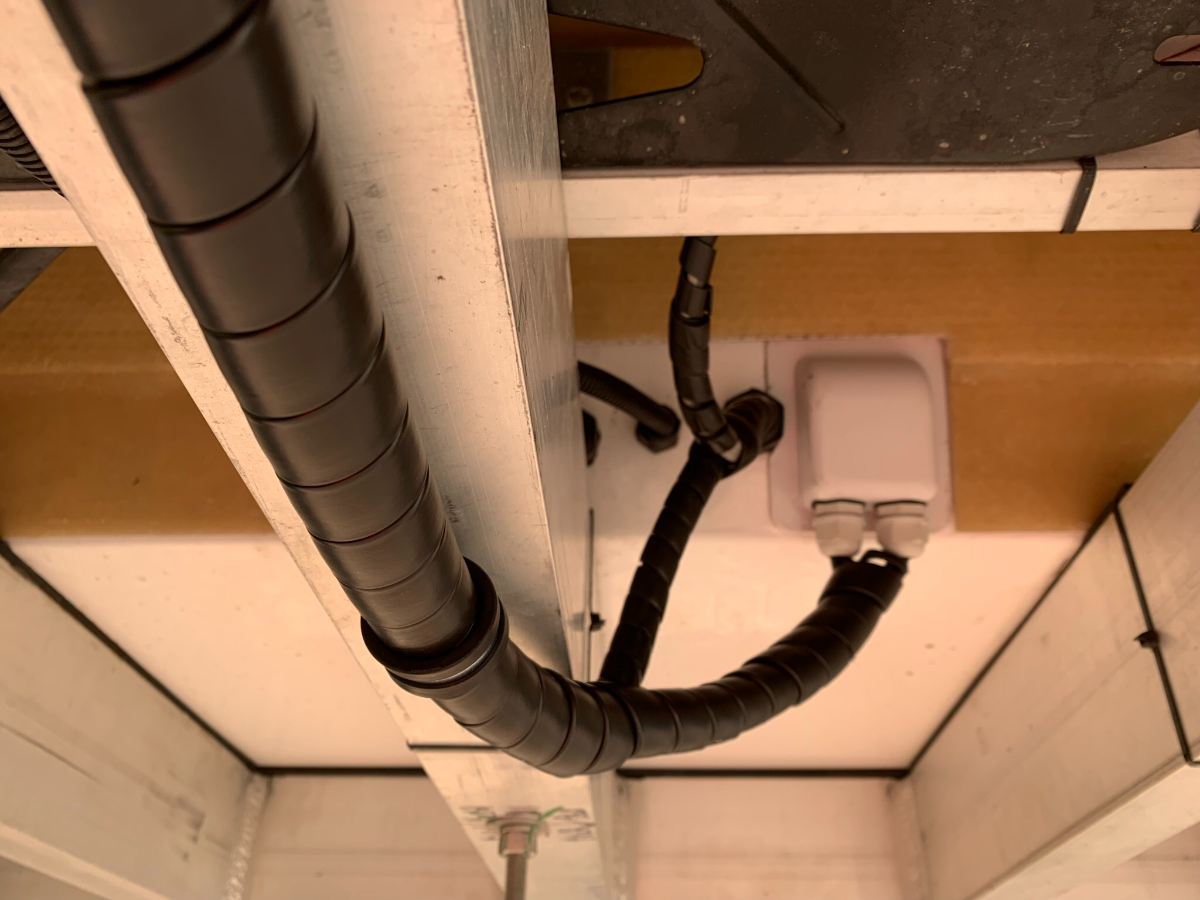
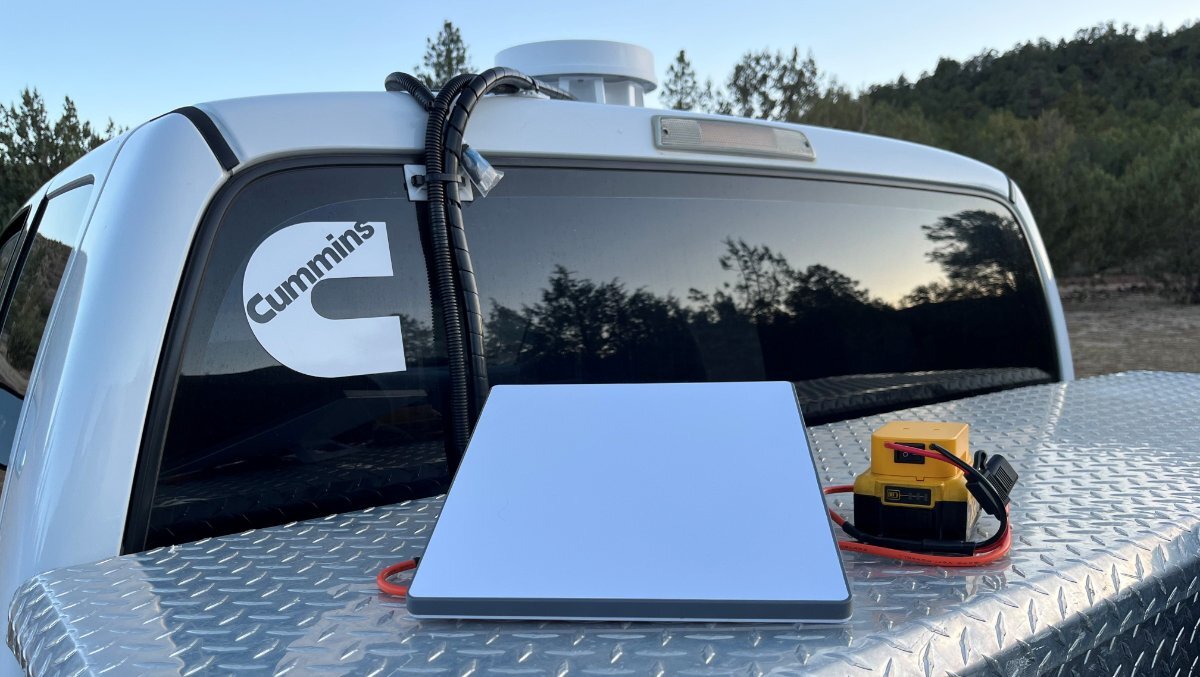
OK, now you got my attention! A cabled solution between Starlink Mini and Mini Router is not of interest to me and your test results show the true value of the Mini Router! Thank you, Geoff. I just ordered one through the app Shop menu. I also noticed the travel kit for $45 and got that as well. I did not order a cabled power solution, as of yet. I thought you had written about a 3mm male plug but could not locate that statement tonight. Would something like this work or is it another style plug? Does it also need a waterproof version like the Mini? https://www.amazon.com/ZEPFJHE-6-3mmx3-0mm-Connector-Replacement-Computer/dp/B0DKJN9L37/ Earlier when you had written your initial Starlink thread, this was all new to me and naively I thought it could be roof mounted. Immediately upon use, I realized the Mini is so particular to dish Alignment and Obstructions. So I ended up with a simple battery-powered solution (pic1) using the built-in Wi-Fi. This has worked well in the two months experience we have, but it is a pain to switch between Wi-Fi signals (Pepwave to Starlink) for TV streaming, laptop use and cell phones. Before realizing this I jumped the gun and had installed a wired solution using a Victron 12-24 DC-DC charger like you had used in a different configuration (pic 2 and if you look closely you can see the external cabling strapped down in pic1). To date this installation has been a waste and sits idle. Now shooting in the dark here... Could I use my roof-top wiring, change the power plug to the correct style for the Mini Router, connect Ethernet between the Starlink Mini Router and the WAN port of my Pepwave router? This would be so cool if possible, one Wi-Fi login and my installation would finally have purpose. I'm over my head, re whether the Ethernet port on the Mini router could be used in this manner or ONLY to connect to the Mini dish.
2 points
-
CORRECTION! This post was Edited to correct some miss-information, and my apologies to anyone who ordered a Starlink Mini Car adapter to power the Mini Router. According to Google AI, the Starlink Mini Router operates on a voltage range of 12 to 48 volts, but apparently AI is confusing it with the Mini Dishy. From looking at the actual specifications on the Router nameplate and power supply, it operates on 9 VDC, or 120VAC. This means that the Mini Car adapter will not work for the Mini Router, but it will still work for the Mini Dishy of course! I should know better, because it's not the first time AI has tripped me up with bad information 🫢 I'll be looking at getting a 12 to 9VDC converter, but right now were packing for a road trip. The new Starlink Mini Router showed up today, just two days shipping which is unheard of where I live. It's only shirt pocket size, just a little bigger than my phone. I couldn’t wait to test it, so I placed the Starlink Mini Dishy on the ground 45’ away from my bench. It's powered from one of my home made portable rechargeable power supplies as seen in the photo. The Mini router was on the bench separated from the Dishy by a 2x6 wall. The results were great! Standing next to the Dishy without the Mini Router, I got an impressive 163.9 Mbps download speed From my bench without the Router, I got a paltry 12.5 Mbps From my bench with the new Mini Router, I got a respectable 113.5 Mbps If the router was hardwired with RJ45 cable, I suspect it would be the same speed as standing next to the Dishy. The Mini Router paired in about 4 minutes using the Starlink App. It showed up as a new Mesh-2 device, the App asked a few questions, and it was immediately working. It really couldn’t have been easier.
2 points
-
It really depends. Geoff really explained every facet nicely and fully in detail. Everybody should read his post a few times! When we had the OTT installed 2KW Xantrex, when OFF shore power you had to turn the inverter on to run anything 120VAC, but not the air. You wanted it off most of the time if you're running on LA or AGM batteries, when not needing AC appliances/outlets so you would not loose SOC%. With a 3KW inverter installed, generally all AC circuits run through the inverter including the A/C. This is also how I installed our Victron Multiplus 2. I see no reason to ever turn off our inverter, so we don't. In fact since I installed it a year ago it has been on 24x7x365 unless it's on high amp charge when I'm trying to get to sleep and it's making some noise under my bed. Then I turn it OFF via the Bluetooth app and turn it back ON when I wake. With ample Ah LiFePO4 batteries and rooftop solar and the fact that our hull sits outdoors and does not get winterized nor go in storage, our Victron MP2 in ALWAYS powered on ready to use anytime.2 points
-
Something I need to add to my maintenance list, I guess!2 points
-
My intent of this thread, which from my above posts consistently failed to do..... is to discuss the merits/problems of the two axle designs (EZ or Never). Not what shop does the best work, disk brakes vs. drum, 3500 or 5200 rated axles, or even God forbid the topic of Alcan or Dexter springs. No arrows on my part are being shot for most of the above posts as I too wandered off the thread I started! On target arrow: One of the disadvantages of EZ is that it wastes a LOT of grease. To get grease out of the axle you have to pump it full of grease first. Then once full of grease one could begin purging old grease by pumping likely tubes of grease thru the axle to get all the old grease out. I can clean and service my 4 bearing sets with a single tube of grease doing it the "Ole Fashioned Way". Where as I suspect that after a few years service, the EZ will require at least a tube per bearing set. This can of course be avoided as stated by CRM above with his "On Target" response. GJ2 points
-
After spending well over three grand on axles, springs and other parts. And after my recent experience, I'm wondering, does our hull truly need a new suspension? (I'm just kidding 🤣, but you're not going to believe this!) We camped on the Yampa River valley, near Craig CO. We had used most of the water in our fresh tank the 2 days before, so when we setup camp I connected hose from our TV 35-gal aux tank to the Oliver boondocking port to fill the FWT. Afterwards I put everything away, but forgot to cap the hose port. The next morning we drove down to Alcan Spring in Grand Junction. A 3-hour 140 mile trip, starting with 40 minutes of dirt, then CO Highway 13 south where we dropped 2500 ft in elevation, then on I-70W and it was the usual windy day in the West. After I worked with the staff at Alcan, I walked back to our rig to grab a personal check for payment. As I walked behind the Oliver, I froze in awe, OMG, are you kidding me? The cap was exactly where and how I placed it the night before. There is no logic, no physics nor engineering science to explain this, but believe me, it's the God's honest truth! This just goes to show that Oliver Travel Trailers are rock-solid driving down the highway! 😂
2 points
-
I do have the 6.5 foot bed, but doubt it would make a huge difference one way or the other. Just curious are you also using the Anderson WDH? It seems there are still some folks with half tons and not using it so that certain could make a noticeable difference too. Regardless using the RAS system will raise the bed, no way around that, to what degree depends largely on adjustment implemented, ie heavy vs light. Unfortunately I can't take any photos now of my setup having just traded in my older '13 F150. I see you have the 2.7 engine, probably somewhat lighter in weight. Curious if that throws the front to rear weight balance off compared to my setup.1 point
-
do you have the 5.5’ bed or 6’6” bed ? Would that make a difference? . The springs on my truck seem too soft . We initially set it on the mid setting but after 1700 miles I was unhappy with the ride, nose up , ass down . Too much sag, uncomfortable driving. Rather than attempt the adjustment in a campground , I ask the 81 year old camp host if there was a shop around anywhere nearby He mentioned a little one man shop in South Fork , Colorado “the last garage” very reasonable, nice garage, very nice lift ! for $75 Klaus and myself adjusted the RAS Cool guy, known for helping travelers without gouging them the rest of the trip the towing was great I can give it another try but I’m frustrated enough to throw in the towel and take my $610 ass whipping the unhitched ride on the mid tension setting was really good even tho the rear end was up about 1 3/8 inch1 point
-
As always sano install Bill! 👍🏻🇺🇸🤩1 point
-
Thanks. Will do.1 point
-
Likely no experience yet, not sure. Call them and ask, they are great on the phone and in person. Everybody speaks of Lew. He is the lead guy, but Tim answered my call and serviced me when we arrived. All staff is great! Take a picture of your axle label and stamping on the leaf springs. They will ask to email pics. That should do you. They can build any custom leaf spring and charge like it’s a stock item. Best wishes, JD1 point
-
Same height, 220 lbs here and no way my shoulders fit. I can just touch the line with one hand, then there goes my neck! I’ll ask my son to get in there and remove the two end screw fittings. Then I’ll make the replacement parts, longer PEX to make up for the restrictor delete. New check valves likely unless the originals clean easy with CLR which would be preferred to leave those connections alone. Then Adam again to reinstall. I might need a six-pack on ice for my helper! 🤣1 point
-
As you point out - there is the entertainment value… Luckily, that bonehead managed to miss you. I typically just manage to get videos of idiots taking freeway exits from two lanes over, or blatantly blowing through red lights. OTOH - we did catch a bear loping across the interstate in Wyoming.1 point
-
I wanted to follow up on this thread as I did have a local truck accessory shop install the RAS on my 2018 F150 4x4 super cab with 6’6” bed $610 installed My setup had too much squat even before the truck bed or Oliver were loaded with camping gear. this aftermarket product does have a noticeable improvement on the truck ride when not towing and it does reduce the squat when the trailer is on the ball. But after 5000 miles towing I am not happy with the RAS system. After email conversations with RAS there is no solution. the maximum amount of squat it will reduce is 2 inches and in order to reduce the 2 inches of squat the RAS should be adjusted to the maximum setting . this setting raises the rear wheel well height 2 inches from stock height to reduce the squat 2 inches It works great while towing, handles great, truck is almost level, trailer is level. the problem is when not trailering on my daily driver vehicle , the RAS needs to be adjusted and that is a PITA riding 2 inch high in the rear end doesn’t work I am looking at other options I was traveling light in the truck bed and in the Oliver1 point
-
Hey Gary, I highly recommend you give Lew at Alcan a call and let him know what you’re wanting to do. He will give you a quote right on the phone. 👍🏻🇺🇸 Here you go -https://www.alcanspring.com/1 point
-
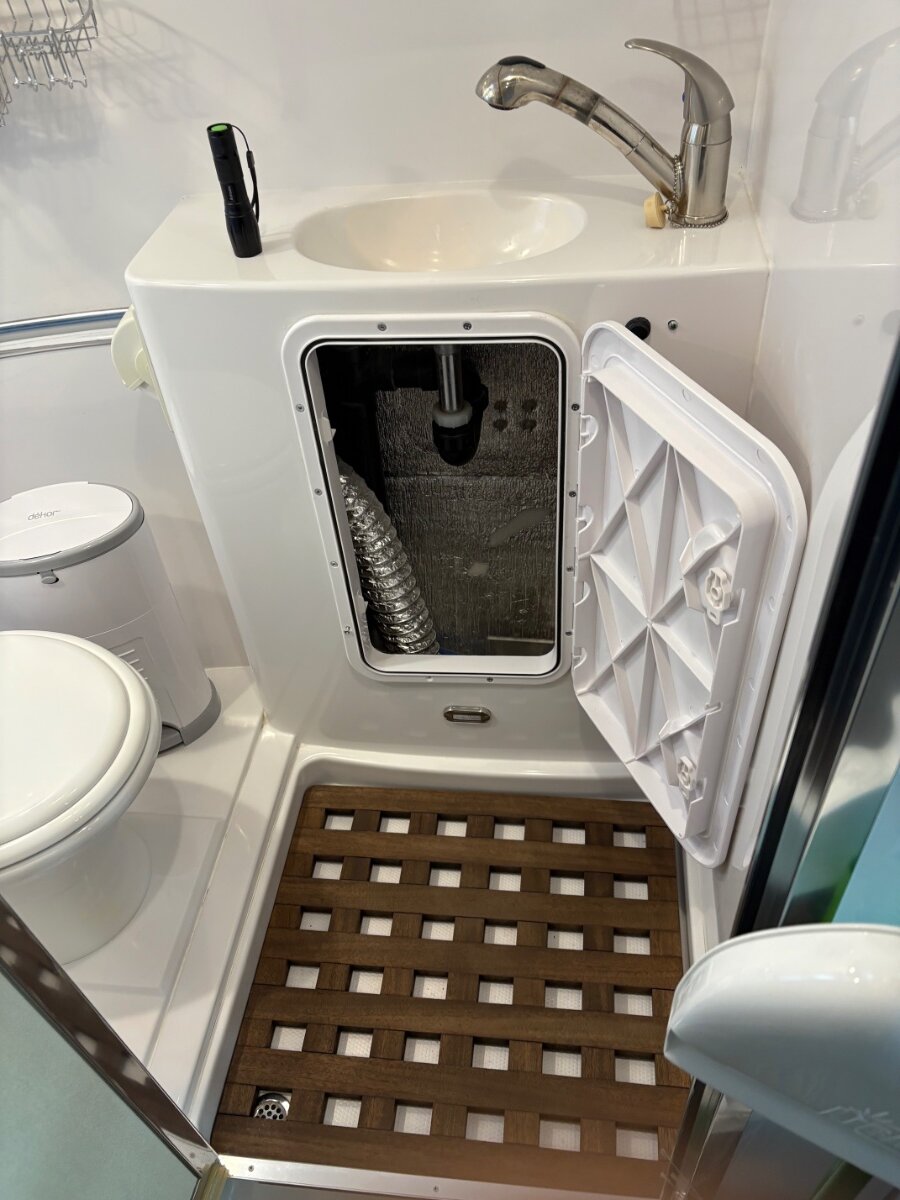
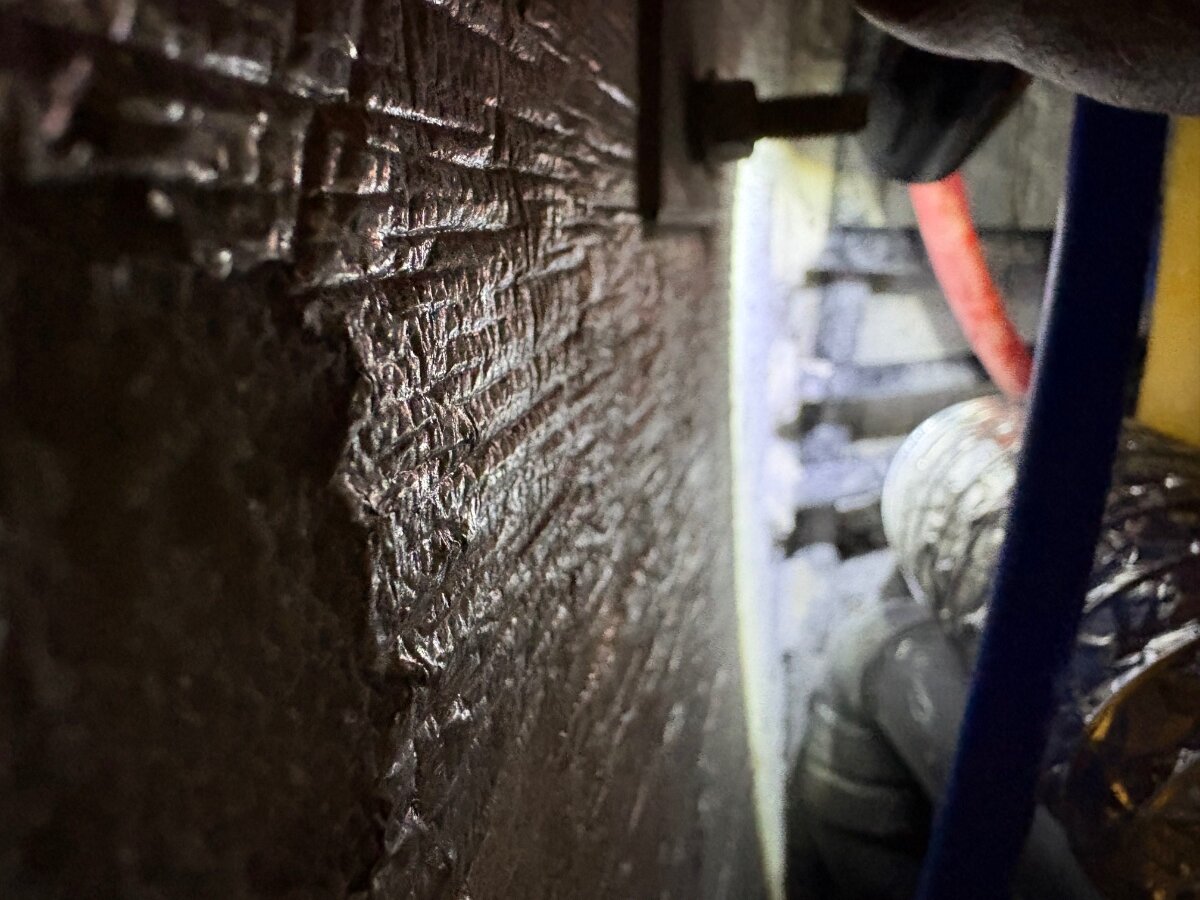
JD, as always I can count on you for great advice. Thanks again. As our shower was a dribble, and Anita could not wash her hair, I took the wash cloth/shampoo holder in the front of the sink and put a marine door. I’m able to see where the cables are coming in. FYI, just to the right from the outside is where I considered putting the new hole. When I looked from the inside, the sink plumbing drain is in the way. Hope it is clear in the pic below. Will carefully drill the holes and use a Cable Clam Craig used in his install. Gary Hull 292
1 point
-
Gary, "You can check out my post "More DC to DC charger installation tidbits" to see how I did it. As seen in your picture, the outer layer of fiberglass has been trimmed to make room for the penetrations. You can use an oscillating multitool to enlarge the rectanglular opening in the first layer. The layers are not bonded together and there is a gap between them. Just be careful to to go through both layers. Once the opening through the first layer is bigger, then use a hole saw for a gland similar to the existing ones. My gland was too large so I filled it with RTV and snugged it up after the RTV cured. It's good to hear that you're using properly sized 2/0 cable. There has been a trend of using undersized wire which may work, but it's asking for trouble. 🫢
1 point
-
Thank you everyone! Will check all the fittings!!!1 point
-
it is my understanding that the A/C loads are run through a separate Auto Transfer Switch. The ATS is then connected to the inverter. The reason is to allow the A/C load to be powered up by either the ATS (On shore power) or to be powered up by the Inverter. It would seem logical that regardless of how wonderful (Yes inverter envy) your inverter is , it would still be switching between an ATS or the Inverter power created by the Iithos to the inverter. Not having either a separate ATS or an Multiplus 2 (Inverter envy) would when running the A/c and microwave would over amp the OEM single ATS. It is for this reason that John Davies encouraged us to add a second ATS if going to battery powered A/C. That's a valid choice for your home area. But for others: One reason to turn it off would be parasitic draw, Over time even in standby mode, one ends up using a lot of power regardless if on shore power or not. For some : OK for some Not. A second is that all electronic components have a finite life span. That life is generally determined by the number of hours it is turned on. There is an exception to this concept and that is for folks in a high humidity areas. Keeping the home fire burning to keep the electronics' dry works well for some. But not everybody.1 point
-
Thermal tripping can be caused by a bad connection. With a corroded or loose connection the increased resistance will cause a voltage drop. Yet the loads will still operate at the same wattage. To do that, the amps increase. The heat generated usually is AT the corrosion site. Hence needing a thermal gun as well a clamp on Multi Meter. GJ1 point
-
Impressive in performance and flexibility. Just what a work from home person would find really enabling!1 point
-
I love my old truck and have put my heart and soul into rebuilding it. It drives and tows great, but as we’re camped in Ouray Colorado, no way in the world we’re descending the Million Dollar highway when we leave here. The other route back home through Cortez CO, driving past Telluride will be enough for our rig! (BTW it’s amazing here, see the Where’s Ollie thread soon for our campsite pic)! The torque, the gearing and braking of modern HD diesel trucks are amazing! Something I should have considered sooner. I will be giving this some hard thought this summer while we’re home! Thank you for this reminder, my friend Patriot! We’ll be home for by The 4th of July. A salute to you, Mike and the other Oliver Vets during our Nations 249th! 😂1 point
-
You’re welcome, glad it helped! I wasn’t mixing up proper names, but online names @GlacierGirl and @Galway Girl! I should have known better, since I’ve read many of Craig’s posts! Best wishes, JD1 point
-
Update 25 amp inverter breaker still trips on normal shore power. So I don’t believe it was my generator. The breaker is tripping on thermo as it is HOT and resets after cooling. This occurs with and without the air conditioning on. Dialed the charger down to 80A Same result Mark1 point
-
I agree, although I think disc brakes add a “cool factor” and are likely much easier to service I have never had an issue with the drums or have no plans to spend the $$$ to replace mine. While in descent on some of the steepest declines (fully loaded to camp) out west such as Wolf Creek Pass and Teton Pass, I let the 6.7 Power Stroke diesel engine brake work its magic and rarely had to use my brakes. Very impressive to say the least. Suffice to say, Ford nailed it with the 10 speed and the engine brake in my experience. I do recall a time when there were folks being pulled over in Rocky Mtn NP and having their brakes checked with infrared thermometers, then were told to stand by and to allow their brakes cool. We were stopped very briefly and then waived through, they never even checked our brakes. Park Rangers obviously knew a little bit about the diesel engine braking system and they waived us on. Based on these experiences I don’t see a need for disc brakes ever with our present TV. With a half ton TV, I can see the interest certainly in the name of safety.1 point
-
GJ, didn’t you rule out option B in your previous post? Now I understand why we remembered disc brakes are no-go for Olivers with 3500 LB axles. Too bad OTT installed 3500s on some of hulls. Yes, just over $2K plus tax and delivery. But this and another $1K for HD springs and parts and I will be happy with a completely over-engineered suspension, carefree for several years!1 point
-
We stand corrected. Question is, is it a good idea, and would you truly want to? Disc brakes cool better, but will a 10” disc brake system stop better than a 12” drum? Absolutely not IMHO. They will stop some better that the 10” drums, so your adding more stress to the weaker 3500 lb. axles, smaller bearings, etc. Also, you’d end up spending near $2K adding disc brakes, so why not spend $2K for new axles, Nev-R Lube bearings, new brakes, everything new and 5200 LB HD! That makes better sense!1 point
-
This is a great question John, and it brings to mind that a lot of folks probably don’t understand the importance of bonded neutrals on RV generators. The NEC requires neutrals to be bonded to ground at all power sources so that any fault currents have a path back to the source. This assures that any fault current has a low resistance path to ground that can handle enough current to trip the breakers. Otherwise, the fault current will look for an alternate path to ground and there might not be enough current flow to trip the breaker… at least until someone comes along and completes the path to ground and gets a shocking surprise! This is particularly important for the Progressive Industries transfer switches because they switch both the hot and neutral wires. When the switch transfers to an un-bonded neutral, then it’s possible to create a situation where there is no path to ground. This is true for all Olivers, both old and new. Additionally, GFCI’s and surge protectors rely on the ground to detect circuit imbalances. Both the hot and neutral conductors pass through a Current Transformer and cancel each other out in a balanced circuit. However, any leakage to ground from either hot or neutral wire will be detected by the Current Transformer, which then instantly interrupts the circuit. This can’t work if the neutral isn't bonded to the ground. So it’s important that RV generators are bonded to ground, and most of them are. It should say so on the label, and the few that aren’t bonded, including Hondas, will say something like “floating ground.” If you're still uncertain, then just use a Generator Bonding Plug which are readily available for under $20. Cheers, Geoff1 point
-
I'm in agreement with @mountainoliver and @Patriot and will add more detail from my point of view, in the order of your questions: 1) This is likely my biggest reason. Having 12" brakes over the 10" on 3500 lb. axles is huge in size of the contact area of the shoes. I have always felt they are not enough on mountain downhills. The self-adjusters don't full adjust/tighten up especially on the rear axle. I had one of 4 brakes lock up the other day, thought there was a kid in a sports car, burning rubber behind me from the sound. No, it was just one brake on the Oliver. 2) The brake drum bolt pattern must match the wheel choice, independent of the axle. However, it is industry standard that 5-bolt patterns are used on 3500 axles and 6-bolt on 5200s. OTT has over-engineered everything but the axle, the weak link. I have a dual-axle 12 ft flatbed trailer at home that we use for OHVs. It has the same two 3500 axles, 5-bolt 15" wheels with ST tires and it weighs only 1100 lbs When load with our SxS, a dirt bike and gear, adding about 2400 for 3500 lbs. total, half the 7K limit. Rock solid for that use. As Ken stated above, The Oliver is at the limit of 7K in axles, most of us carrying 6400+ lbs. and the Oliver is tall, not truly top heavy but the top can in certain conditions sway back and forth quite a bit. Consider your precious cargo and what Ken said to me last night, "no more worries." 3) I also understand, they do not manufacturer disc brakes for 3500 trailer. Besides wheel bolt patterns, 3500 lb. axles have a 4-bolt pattern, axle to braking plate and 5-bolt on the 5200 lb. axles. The connection, axle to brake plate, to wheel is 25% stronger. 4) An axle can fail/ bend in extreme circumstances, but more often the smaller bearings and brakes on lighter axles failed. You're thinking the 4-leaf design which Alcan has made available on request. They are a costume shop. They suggest the 5-leaf product which was their original design. As we've heard from their reps, "the Oliver is under-sprung." I believe this is true watching our hull waddle like a duck over irregular RR tracks, gas station driveways and DIRT ROADS, every time the suspension has to take a height change on an angle. And re the 3500 lb. axles, I would say the Oliver is under-supported. And btw, OTT has finally decided that the D52 axles are standard equipment. For those that are minimalists, and there are a few of you out there that tow with 1/2 ton trucks and always keep your Oliver curb weight under 6K lbs, the 3500 lb. axles and 4-leaf springs are certainly enough.1 point
-
Our flag flys 24/7 here at our home, not just on holidays. 🇺🇸🇺🇸🇺🇸🇺🇸 🫡 Nothing like “Air Superiority” which wins wars.🇺🇸🇺🇸🇺🇸🇺🇸1 point
-
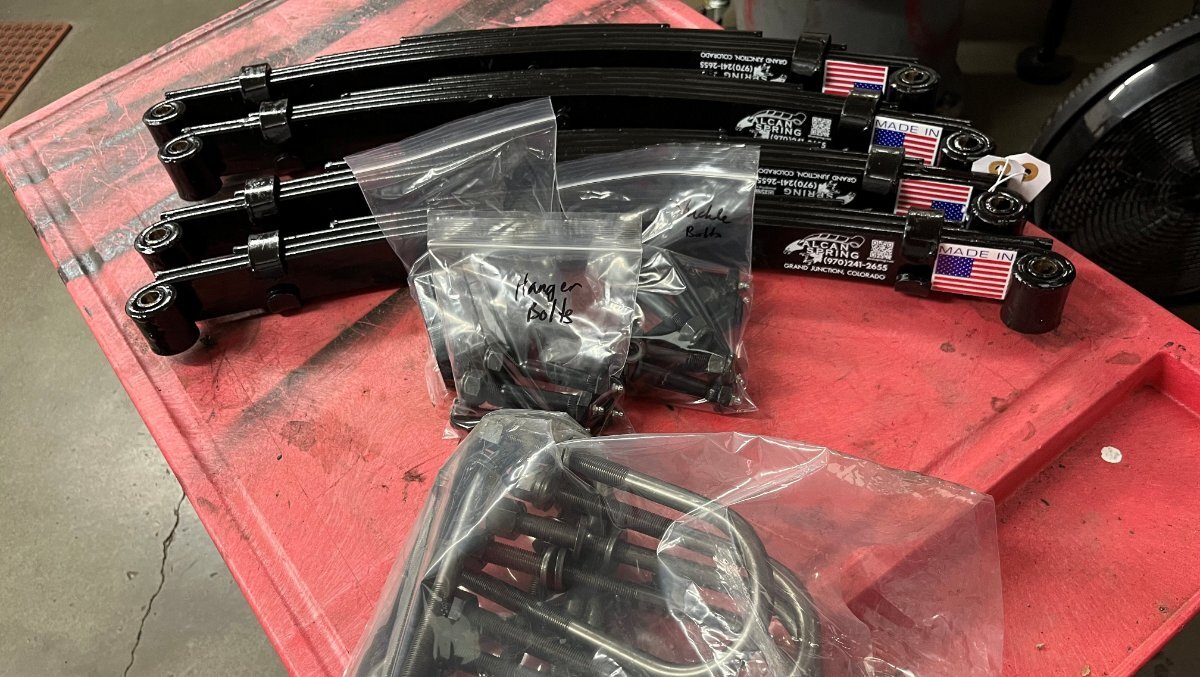
I visited Alcan Spring today in Grand Junction CO. I was impressed by their operation and service, what they were able to accomplish on a minutes notice. As a medium-sized manufacturer and automotive service company, I quickly noted their company quality, efficiency and fully capable staff (see picture of a portion of their operation). I purchased leaf springs for our Oliver, including HD shackles, new wet bolts and U-bolts (pic2). Our Oliver requires the 50.00 length axles. They measured our Oliver. For comparison they manually measured their 50.50 springs which they stock for Oliver customers. I asked them how can I go about getting the correct D52 axles for our hull. They replied that the could special order axles for me and charge me the same price as the axles they stock and buy in bulk for Oliver owners. And that's what I did. Getting my special-order axles will take 6-8 weeks and they will ship to me when ready. I was out the door in an hour. Four staff members were working together to help me. Simply put, they were awesome! I had a smile on my face, the whole way to Montrose to see our friend Ken. He was happy to see the parts, since he has a full installation scheduled soon. RE the purpose of this thread. Alcan only sells the Dexter Nev-R Lube axles. They report good reliability with these sealed bearings, not hearing of premature failures. So they do not have experience with the EZ Lube product. When asked about replacement bearings for the Nev-R Lub, they replied they would ask their Dexter rep and get me a quote. @CRM if you have a link for the correct Timken brand replacement Nev-R Lube bearings, please advise. I appreciate that @John Dorrer has posted his experience so far, and of course if/when any of us have failures, we should read it on our OTT Forum. I'll be working my installation later this summer and will start a new post documenting the job. Like I mentioned before, it will be fun getting into this! 😂
1 point
-
I tried to help on Mark's Facebook post. I think your explanation is correct. I was trying to figure out why he has the inverter on. Using shore power at the power post or a generator the inverter shouldn't be on. I was getting hung up on this. I have charged our 2022 LE, Lithium & Solar without changing any settings. I have also run the AC without making any adjustments. When I use the generator it is being run on fuel. He is running his on LP.1 point
-
We have the upgraded 5200 lb. axel and Never Lube on our 2022 and so far so good1 point
-
Certainly for many folks not towing a 6,000 pound OE2 with a full size TV. For the OE2 Team, I suspect that the weights are actually quite close between the total Ollie Weight (Loaded, unhitched) and the weight of our loaded TV's. I think you are spot on with the design of the EZ lube axles. For me the jury is still out. But my engineering mind says (Without a preponderance of evidence to the contrary) that I would lean towards the EZ. Then continue my full service to something like every other year if nothing else than to check in on the brakes. As I have at least another year on our existing 3500's, I am looking forward to JD's post on this thread about what he learns at ALCAN. GJ1 point
-
Is there any knowledge or do our forum members have opinions on this subject? After 26 pages of comment re leaf springs I’m disappointed not a word here! This is equally important. I read the entire 5-page link GJ provided, when he posted a few weeks ago. I could not see on that forum that they achieved consensus. Maybe somebody can show how Nev-R Lube lives up to their claim. Keep in mind it’s Dexter. Some have seen failures in 1 year, others 5 max, it cannot be never! I will be at Alcan Spring today. I will purchase their HD springs, shackles and wet bolts. I cannot have 5200 lb axles installed since I need 50” and they stock 50.5” that most later hulls need. I will ask why +/- 0.5” matters. I will ask their opinion on new EZ or Nev-R bearings a why they decided to stock kind. Maybe they can drop-ship me the correct axles. Or maybe I can get a good used set of 5200 lb axles, with tried and true conical bearings, any length and have them cut and welded to size, bolt on new bearing/brake assemblies. We’ll see. I don’t believe in annual bearing service anyway. Annual inspection yes, but when bearings are cleaned and packed correctly they will last 3-5 years with average mileage. I replaced bearings with Timken 2 years ago. I’ll open one up to see next summer and will post pics. If anybody wants to learn the correct method, let me know and I will start a new post. Most of you will prefer the claim of EZ or Nev-R when you don’t work this service yourself. I didn’t want Alcan to work my installation anyway. That would take all the fun out of it! 🤣1 point
-
You can carefully compress the rolled edges of the female spade connector using needle nose pliers to create a tighter fit onto the male spade. Try doing this in-place while connected, if room allows, to prevent over compressing. Otherwise, disconnect and gently squeeze the rolled edges for a tighter fit. Alternatively, replace the female spade connector either by crimping on a new one or splicing a short section of terminated wire with the proper fitting.1 point
-
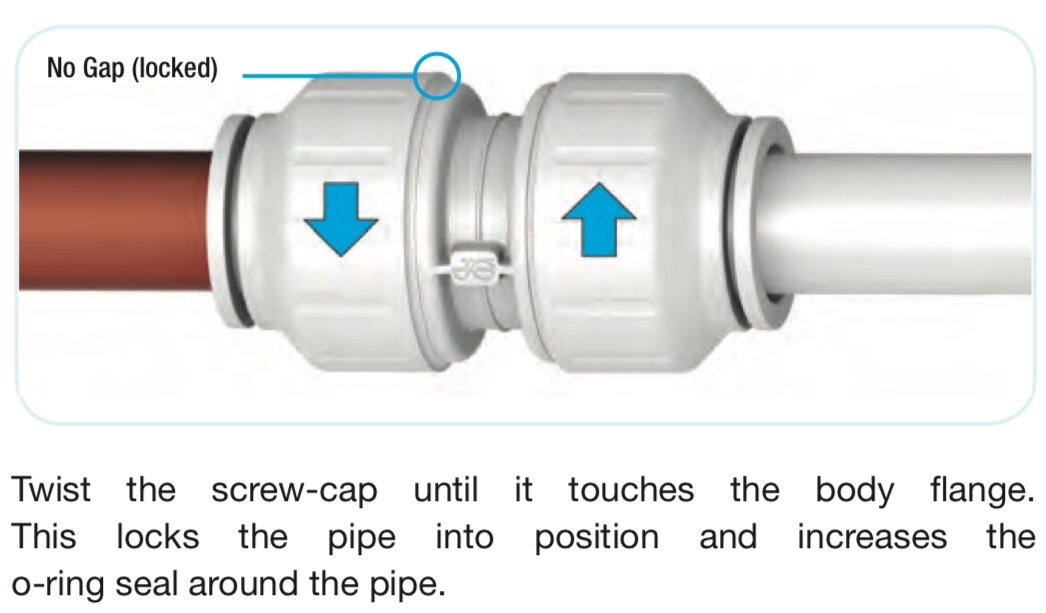
@ZLarryb those white John Guest push to connect fittings are notorious for coming loose, check them all periodically like this
1 point
-
Just a quick update on this project: Only four owners have requested assistance in getting one of these numbered plaques. We know that two of these were not in the original box that Oliver received from the supplier. One of these was removed by the previous owner to keep as a memento of the years that they had the Oliver. And, the last one is still being investigated. We are also in the process of investigating at least two different avenues of having these plaques produced at prices that are somewhat below what has already been quoted. Further details as we progress. Bill1 point
-
Take heart, folks. My hull #12 didn't get its plate till a few years ago. About 14 years after pickup , in fact. Just in time to take the plaque to Antarctica. Couldn't take the trailer, obviously.
1 point
-
This very same thing has happened to me! Thanks for posting this! I had no idea why my water pump wasn't working...until I found this. I'm a newbie and trying to sanitize my freshwater system before filling the freshwater tank. I'll be camping somewhere in a couple of weeks with no access to city water. Thank you, thank you, thank you!! Lisa Jones and "Columba", Hull #14751 point
-
I use the Timbren suspension systems on my 2024 Ram 1500 Larame as it was a lot less expensive than the air bags. Additionally, you need to check the air bag pressure often as they will loose pessure over time.1 point
-
The BMS can limit, but note your MPPT solar charger is offering 33A, that's 48A total if I'm reading this right. 150A on the truck alternator is good number given it is in good condition, many are rated lower. Try running your test again, with your batteries needing charge (<80% SOC) and your MPPT solar charger turned off. This will show what the Tundra alternator and DC-to-DC is capable.1 point




















-
Recent Achievements
-