
topgun2
-
Posts
7,791 -
Joined
-
Last visited
-
Days Won
467
Everything posted by topgun2
-
Jason talks about registration fees in the video above. But for those that don't want to watch this video here is what he says: $100 per person from now to the end of June $150 per person from July 1st until close of "normal" registration - assume that this date will be announced later $200 per person from the close of "normal" registration for "late" registration Obviously, to save a bit of coin, registering before the end of June is less expensive. However, even though it appears as though the 2026 Rally will be well attended, the more of us that register "early" also greatly helps the folks at Oliver, helps the folks at the State Park and helps presenters and demonstrations with planning, ordering food, swag and venues for each of the activities. For those that might be worried about something happening that would prevent attendance after already paying your money, in the past up until a fairly late date prior to the Rally, Oliver has refunded most (if not all) of the Rally fees. Looking forward to seeing "old" friends and meeting a bunch of new folks too. Bill
-
If you are attending (or still thinking about attending) this year's Rally and have NOT reserved a campsite, be sure to do this ASAP. When I reserved my site a couple of months ago, there were not very many sites left to choose from. Bill
-
Zane - Most of us do not have your type of shades on our windows. I'd either call and/or open a Service ticket. Both of these can be done by clicking on the "Service" tab located in the dark blue area at the top of this page. Good luck. Bill
-
Adding a Matching Rear Porch Light and some Front Lighting
topgun2 replied to jd1923's topic in Ollie Modifications
Basically I did the same with THESE LIGHTS. Fairly often I camp where there are bears. Certainly I do not want to step out the door and come face to face with something a bunch stronger than I am.😵💫 -
Portable solar panel with legacy elite 2 platinum package
topgun2 replied to Brian H.'s topic in General Discussion
No - there is not a "web store". However, Oliver does have a number of items for sale via the Parts/Service department. These things include grills, outdoor rugs, chairs, outdoor firepits and portable solar panels. Every now and then they will advertise "specials" here on the Forum. Bill -
Adding a Matching Rear Porch Light and some Front Lighting
topgun2 replied to jd1923's topic in Ollie Modifications
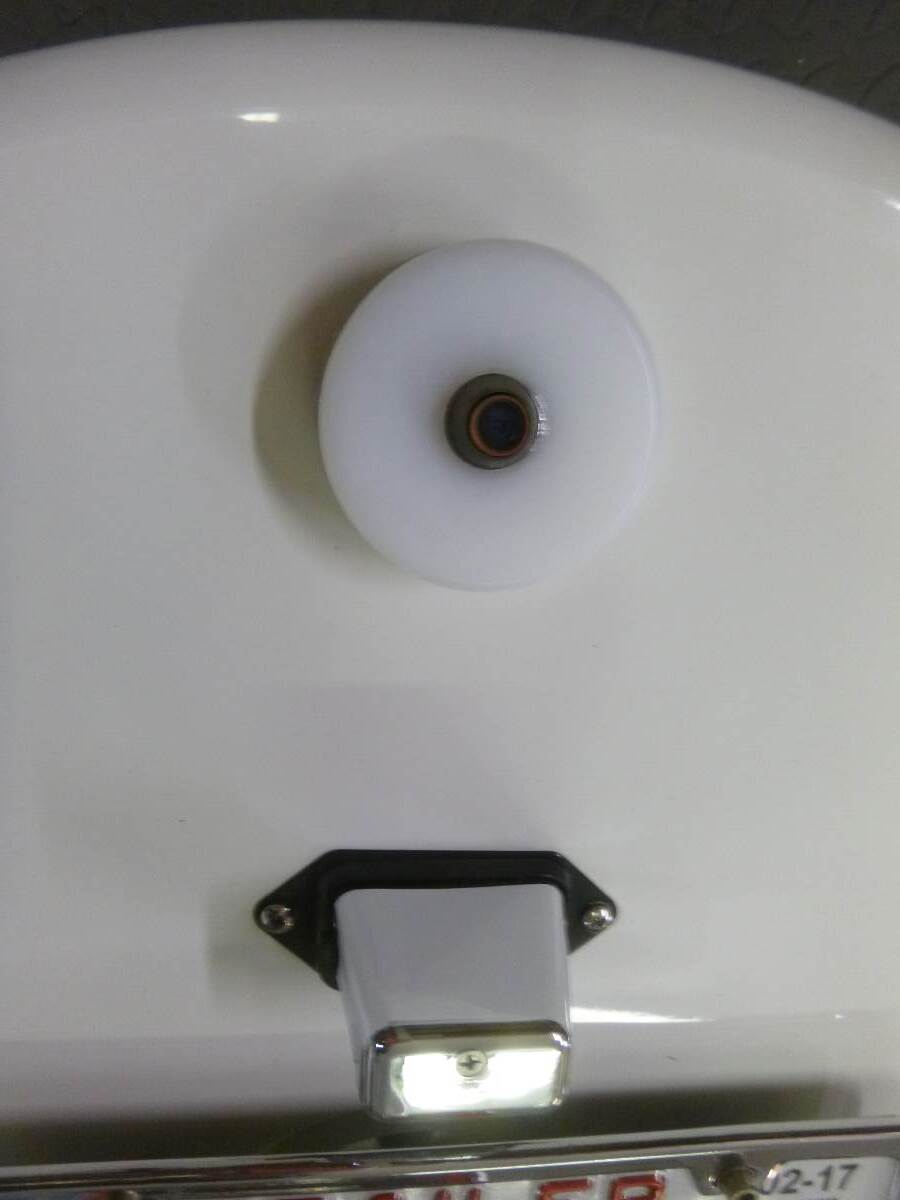
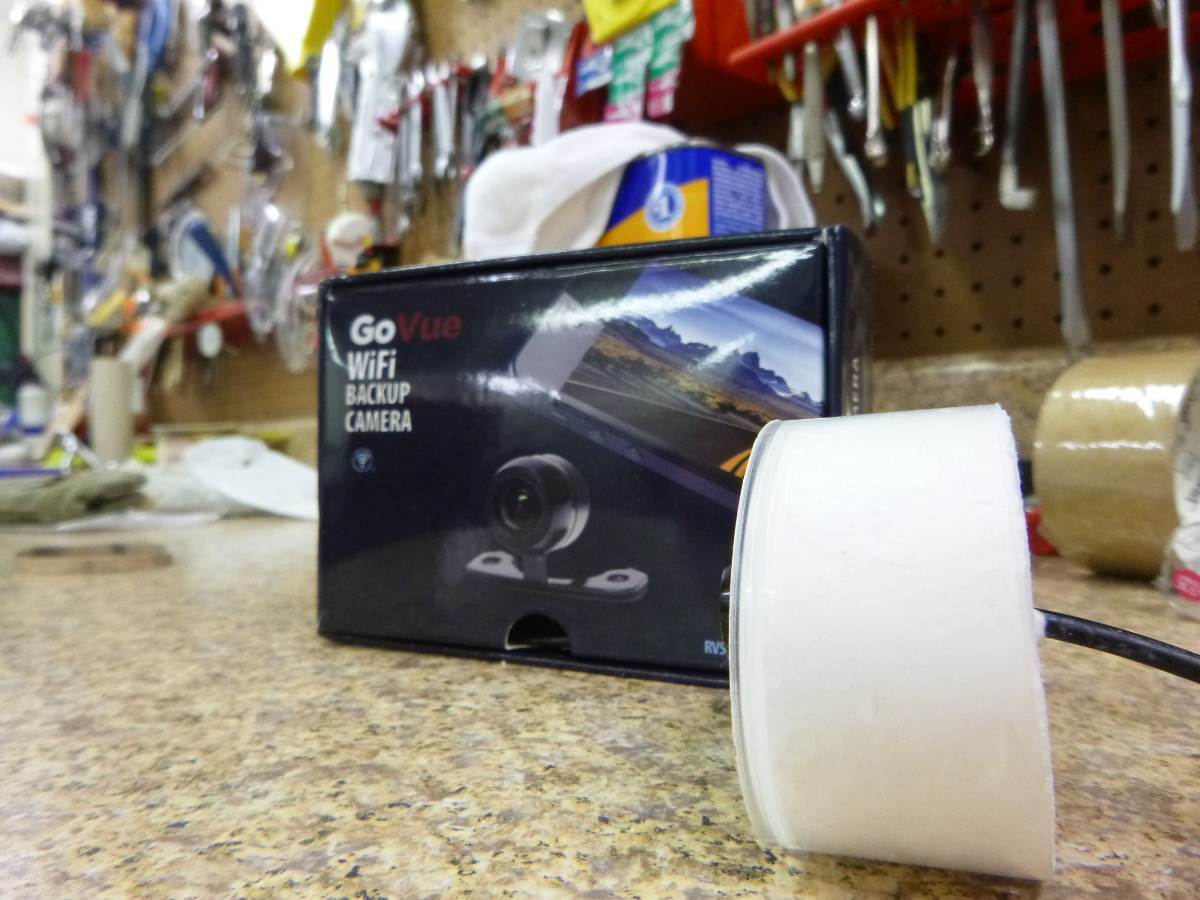
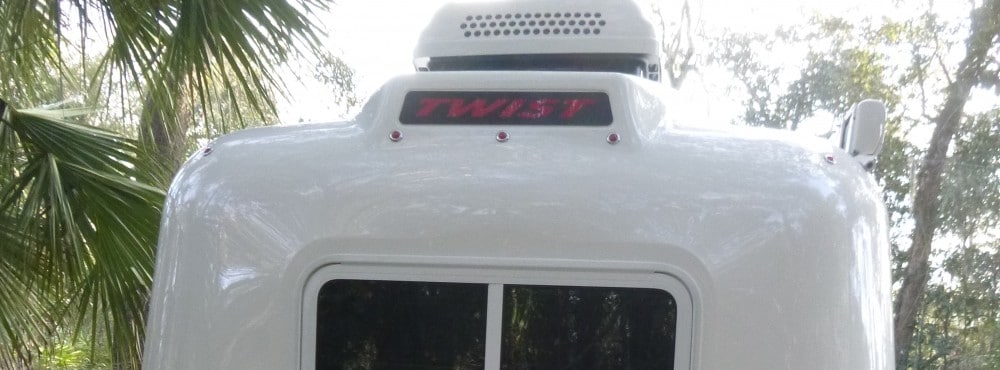
When Twist was in production I asked that the trailer be wired for a rear camera but I would supply and install my own camera. I decided that I would mount it in the spare tire cover. For security purposes this is a good place. However, for traveling down the road - not so much. The spray from wet roads makes this camera location virtually useless and even when its not raining it is difficult to use the camera in order to see beyond the vehicle that is directly behind me. Therefore, for driving, I now have another camera mounted in the usual high position (up near the marker lights) but still retain the lower camera too. If you decide to do as I did and mount a camera in the spare tire cover - PM me. The spare tire cover is NOT "in line" with the body nor the rear bumper. Because of this I needed to put a spacer in so as to compensate for the different angles. Bill
-
Maxxfan Dome installation (previously orientation)
topgun2 replied to Townesw's topic in Ollie Modifications
Bill - Wonderful job - both on the install and the writeup! Almost makes me wish that my original fan would give up the ghost. 😉 Bill -
Portable solar panel with legacy elite 2 platinum package
topgun2 replied to Brian H.'s topic in General Discussion
Given the right time (sun) and place (security for the panels) then more is better. If you have the room and payload capacity to take the panels with you - then - why not? There is nothing to "hurt" and only more energy to gain. Bill -
I do not have your type of faucet in my trailer or home. However, these faucets virtually all have a cartridge inside and it appears to me that there is something stuck inside that. I'd look at your manuals to see what cartridge it uses and how to disassemble the top of the faucet in order to get to it. Good luck! Bill
-
True Induction Stove Top will not turn on
topgun2 replied to Lamar's topic in Mechanical & Technical Tips
While the outlet itself may not be GFCI, it almost certainly is on a circuit that is GCFI controlled (i.e. is a slave off a GCFI). I'd suggest that you keep checking for another "tripped" GCFI. Bill -
A day to remember and a day to not forget.
-
Sure - but... It's tinted glass - the bugs simply will not know what hit 'em.🪰🦟🐝
-
REALLY nice toy! Bill
-
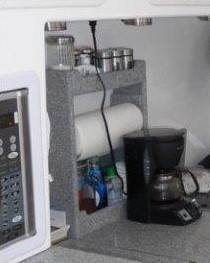
Yep - James Oliver constructed the spice rack/paper towel holder for the very first Oliver made way back when - see below.
-
Try a PM to SeaDawg. I know that she had this issue and a "local" (Florida) place solved the issue for her. Bill
-
Tim - Note that Jason Walmsley is more of an IT guy and as such he wears a bunch of different "hats" at Oliver. In addition - this Jason (W) does not really "monitor" the Forum on any set schedule and/or continual basis. Therefore, it may be even weeks before he sees your message. The person in management that is responsible for Sales and Service is Jason Essary and can be reached at the email address that I provided above. While this Jason (E) (nor any other employee at Oliver) does not monitor our Forum, a direct email should be replied to fairly quickly. Bill
-
I'd bet that Ford does require a weight distribution hitch - look for a "sticker/decal" on the underside of the hitch on that Expedition. Also, be mindful of thigs other than "will it tow the trailer" - remember, you also have to stop that trailer, possibly tow it up/down steep grades. The additional stresses placed on your tow vehicle are also likely to shorten the service interval you had planned on for this vehicle. Therefore, be mindful of shortened service intervals and while driving pay closer attention to acceleration/stopping distances and avoiding other road hazards. Your ride quality may also be compromised as you approach the maximum limits of the tow vehicle. This might make driving a bit less enjoyable for all concerned. Having said all this, please note that the Oliver is extremely well behaved when towing. Bill
-
Are you comparing "apples" to "apples" here? Was the local guy only charging for the application of the ceramic coating while the CGI price includes all the prep work? Bill
-
Entry steps steel rod, broken weld
topgun2 replied to Olive2Roam's topic in Mechanical & Technical Tips
Darn! Well, it was worth the call and at least you know. However, I'm a bit surprised. Bill -
I agree! This tool CAN do a bunch more than a can of compressed air. But - you sure can buy a bunch of cans of compressed air for $70 to $90 bucks - like 20 cans or so. Bill
-
Entry steps steel rod, broken weld
topgun2 replied to Olive2Roam's topic in Mechanical & Technical Tips
Or - Give Service a call. Can they ship you a replacement rod and what would the cost be. Since your Ollie is relatively new - this breakage should not have happened. Would they (could they) replace this under warranty? You'll never know unless you ask (nicely). Bill -
Always! Are you going to be at the Owner's Rally in October? Thanks. Bill
-
This is one of the major reasons I had my Ollie done by the CGI guys. Certainly I didn't want my Ollie screwed up by someone that really didn't know what they were doing. There are a few shops doing this kind of work in and around the Asheville, NC area, but, very few of them had ANY EXPERIENCE with fiberglass. And, reviews were generally mixed. After seeing how hard CGI guys work, seeing the results of their work and then getting to meet them at one of the Oliver Owner's Rallies, I was sold. There have been a few posts here on the Forum by members that have used other outfits and they have noted satisfactions with the results at prices that are competitive or even lower than CGI. Unfortunately, I do not recall any of those posts being for ceramic coating shops anywhere near Maine. Good luck! Bill
-
Good idea - I do the same. I know that one of the "system" updates is for the Andriod part of the internal workings of the 890 (and 1090) - so, it must be fairly important. Bill
-
How long did this milestone take you to achieve? Any idea of the total miles? Congrats! Bill