Leaderboard


Popular Content
Showing content with the highest reputation on 06/21/2021 in all areas
-
Check out RV Travel's newsletter article on the boondocking prowess of the Oliver Travel Trailers. RV review: Oliver Legacy Elite Travel Trailers for boondocking - RV Travel Andrew ("an enthusiastic Oliver trailer owner")3 points
-
Bob: Thanks for the suggestion to measure the fabric. The left side (that was not closing all the way) was almost 3" longer than the right side of the awning. I did not do anything with that issue. We did notice last week, while camping, that the awning fabric does not roll up straight but tracks over to the right when cranking it in. With the awning cranked out all the way, I could see where the fabric attaches to the roller. I pulled the awning fabric over so it was equal on both left and right sides. I could not believe it but the entire leading rail of the awning now closes on both ends. The problem apparently was all because the awning fabric was pulled to one side too much. If the fabric tracks straight up when closing that seemed to be the secret. Maybe that will work for others that have similiar issues with their (not so) Carefree Awning.3 points
-
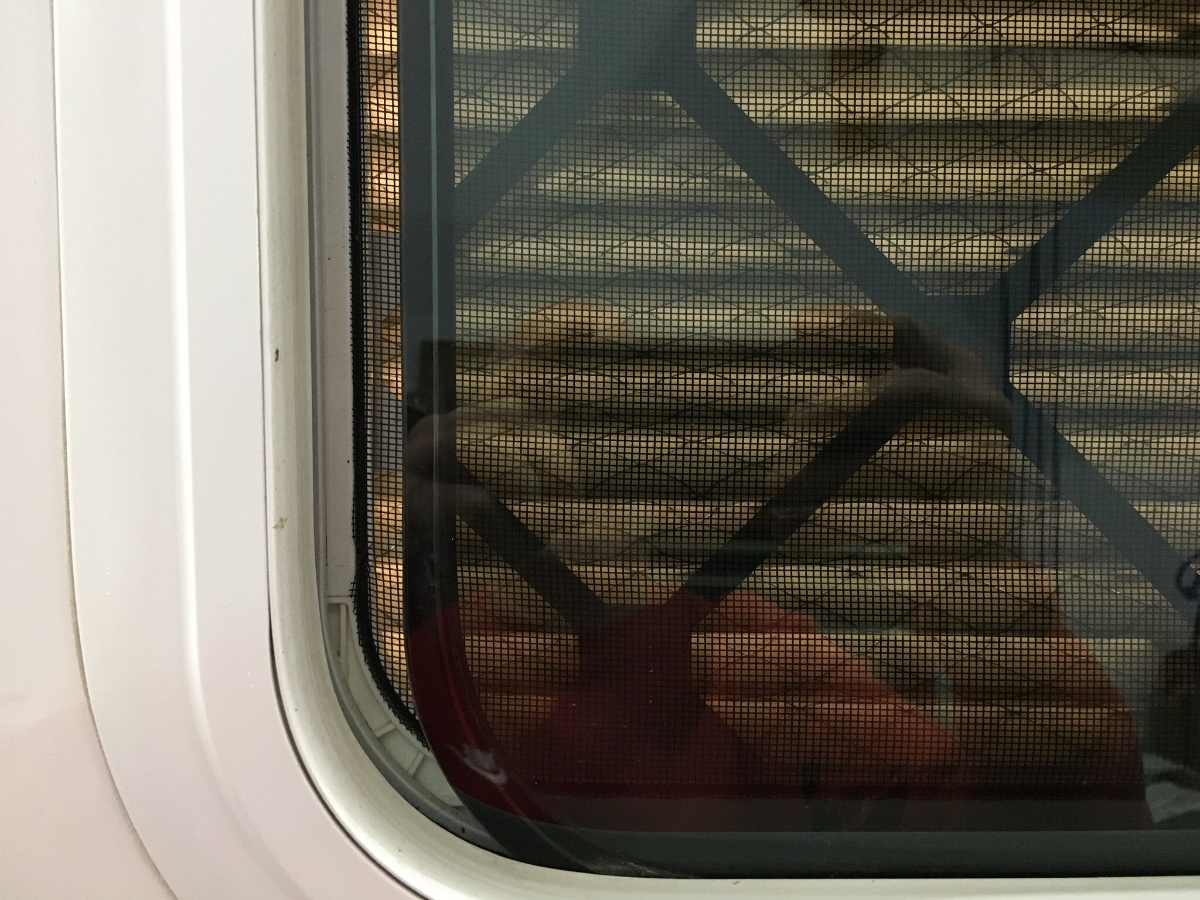
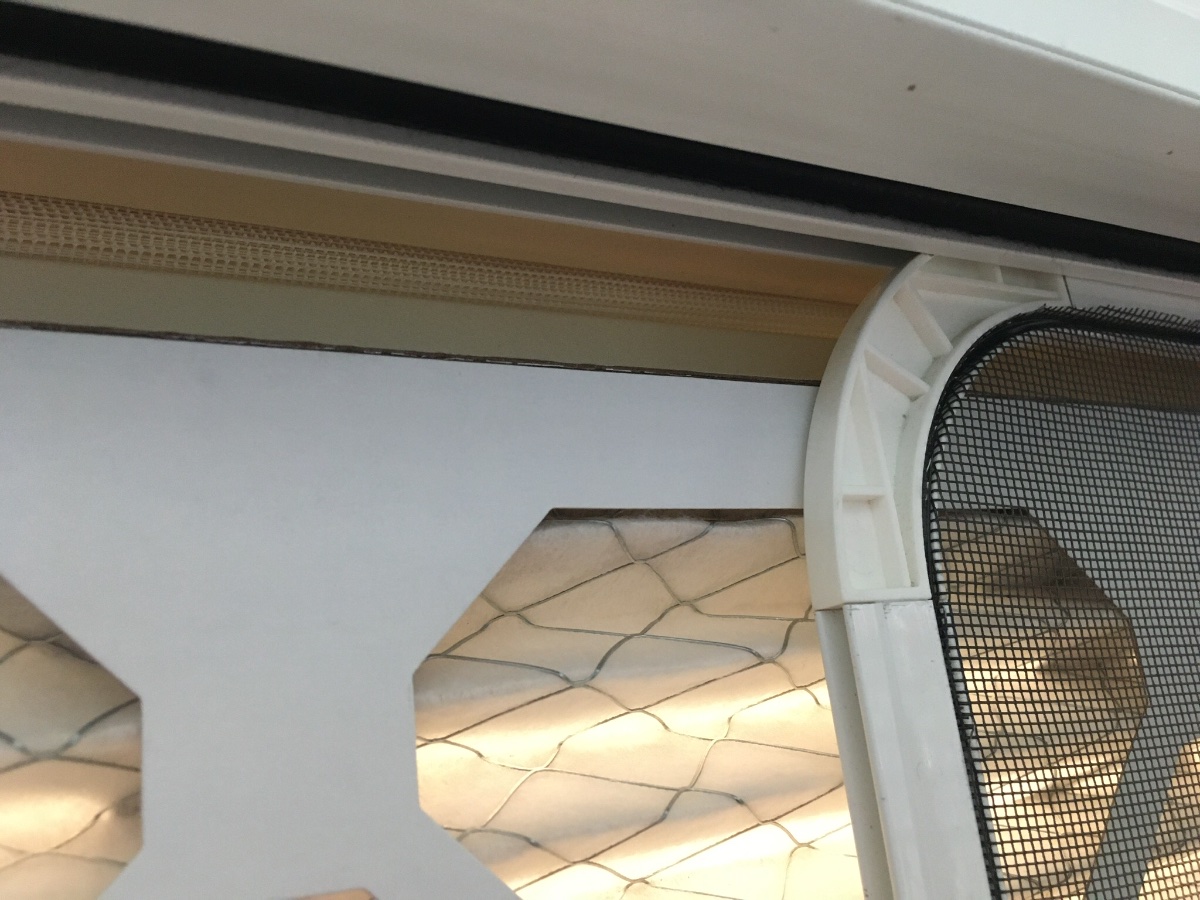
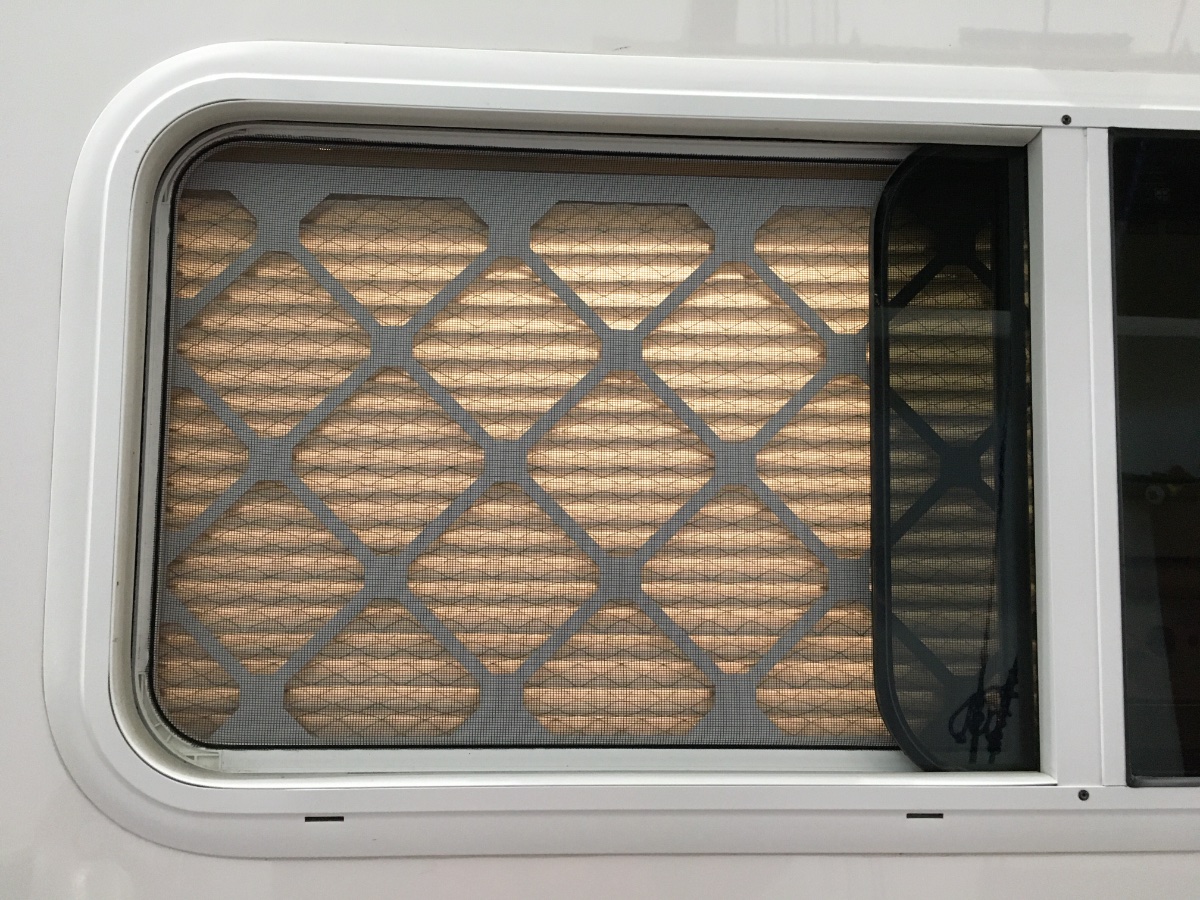
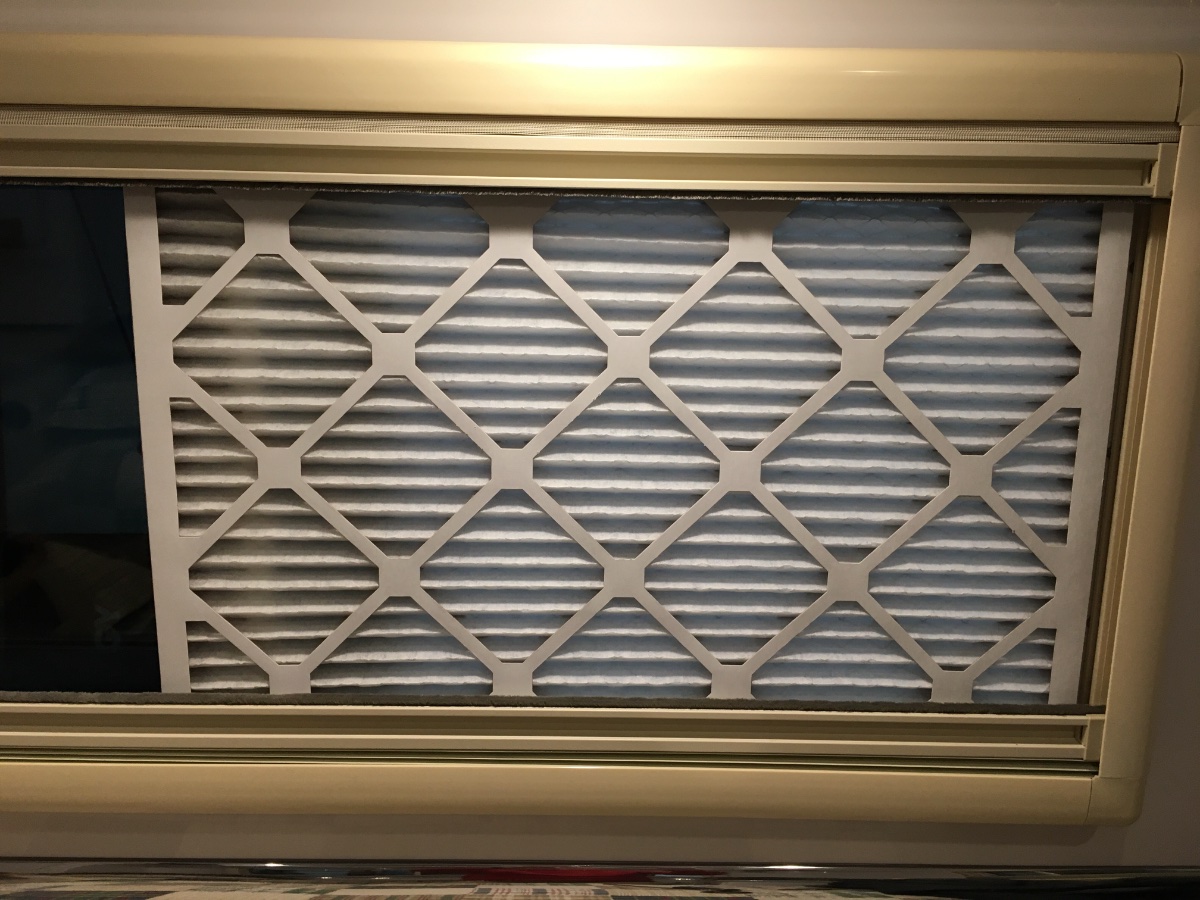
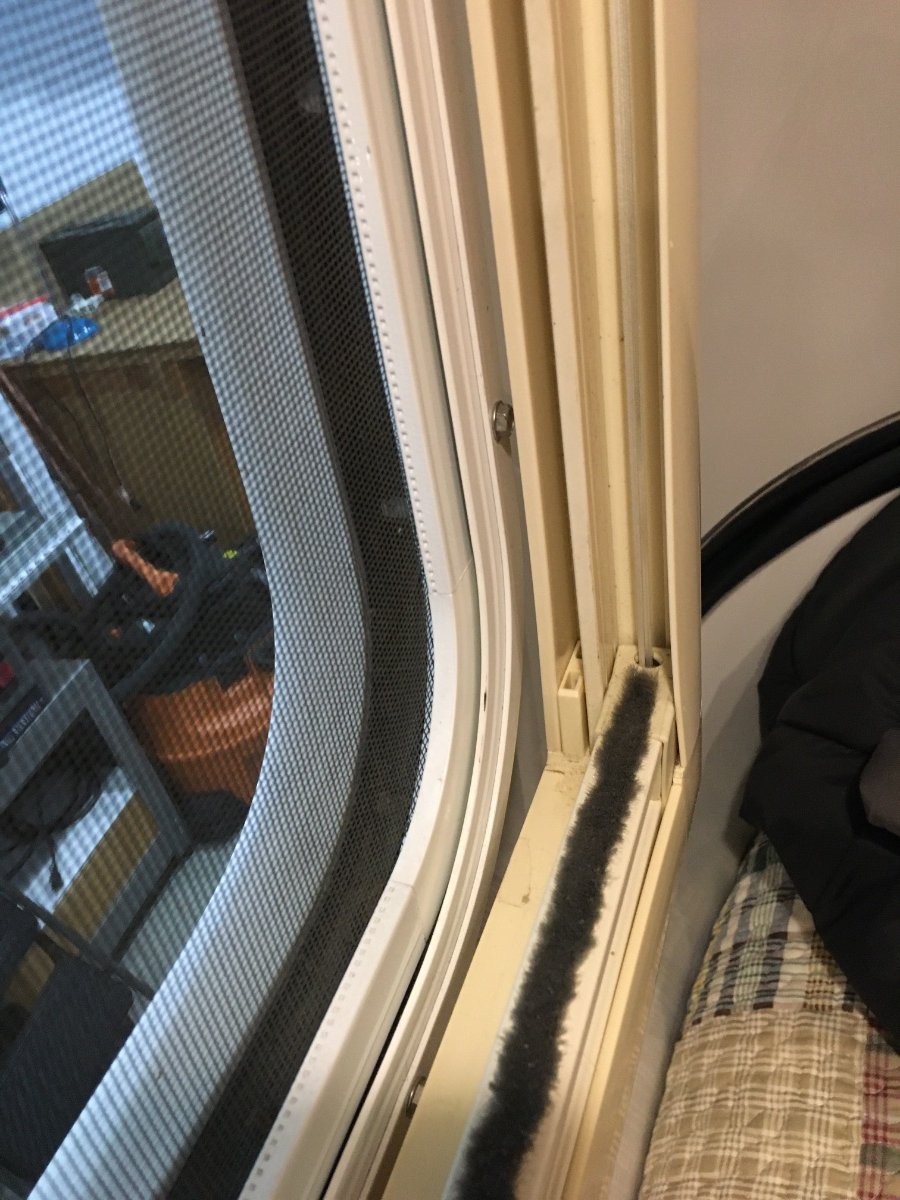
It sucks to get old, I feel like an idiot. I put the frame back up and tried inserting that 16x25x1” filter, and it went in fine. When you lower the top blind and raise the bottom blind just one inch it holds it firmly in place with hardly ANY gaps. The window and screen slide perfectly. Inside views: Outside views: The only issue is with this 25” long filter the window won’t fully close. If somebody has a 16x24x1 filter that you use in your furnace PLEASE TEST THE FIT, see if the window will close and latch. See if there is a gap at the front, where the center divider is located. Try repositioning the blind frame further to the back (mine is centered) - moving it rearward might do the trick, since the blind frame is what retains the filter. If the glass will latch, you could leave the filter in place with the window closed while traveling, or if it starts to rain. You could even install three filters in all the long windows of an LE2 if the air was horrible. Here are the 24” ones, I have used these Nordic Pure ones for a long time in my HVAC system, they are affordable and effective. Nordic Pure 16x24x1 MERV 12 Pleated AC Furnace Air Filters 6 Pack $43 I will test my 25” filter on the next trip. There may be a little dust seepage around the outside of the blind frame, there is a 1/4” gap there, but it would be easy to seal with foam weatherstripping. Some owners have done this to reduce cold air infiltration…. John Davies Spokane WA
 2 points
 -
I've got the same Locking Pin'Ring set up, but prefer the Heavy Duty 1/4 Spring Clip. I think it is harder to accidentally fall out. I guess my point in bring this up again, is that I am surprised how just a "Simple/Inexpensive" and "Extremely Effective" Modification is, it isn't more commonly used by a larger number of Oliver owners! More to the point! You hear all kinds of complaints about how hard the Andersen Hitch is to use, (it does have its moments) but when there is something that can GREATLY IMPROVE the situation to few people use it. Go figure! I would expect this to be used by almost everyone. I've sent this idea along to Andersen for their comments.2 points
-
Our Carefree manual awning has stopped retracting all the way. The forward end goes in leaving about a 1/8th in gap, the rear about 1/4 inch. Is there something we can adjust on it to help it go back to closing flush?1 point
-
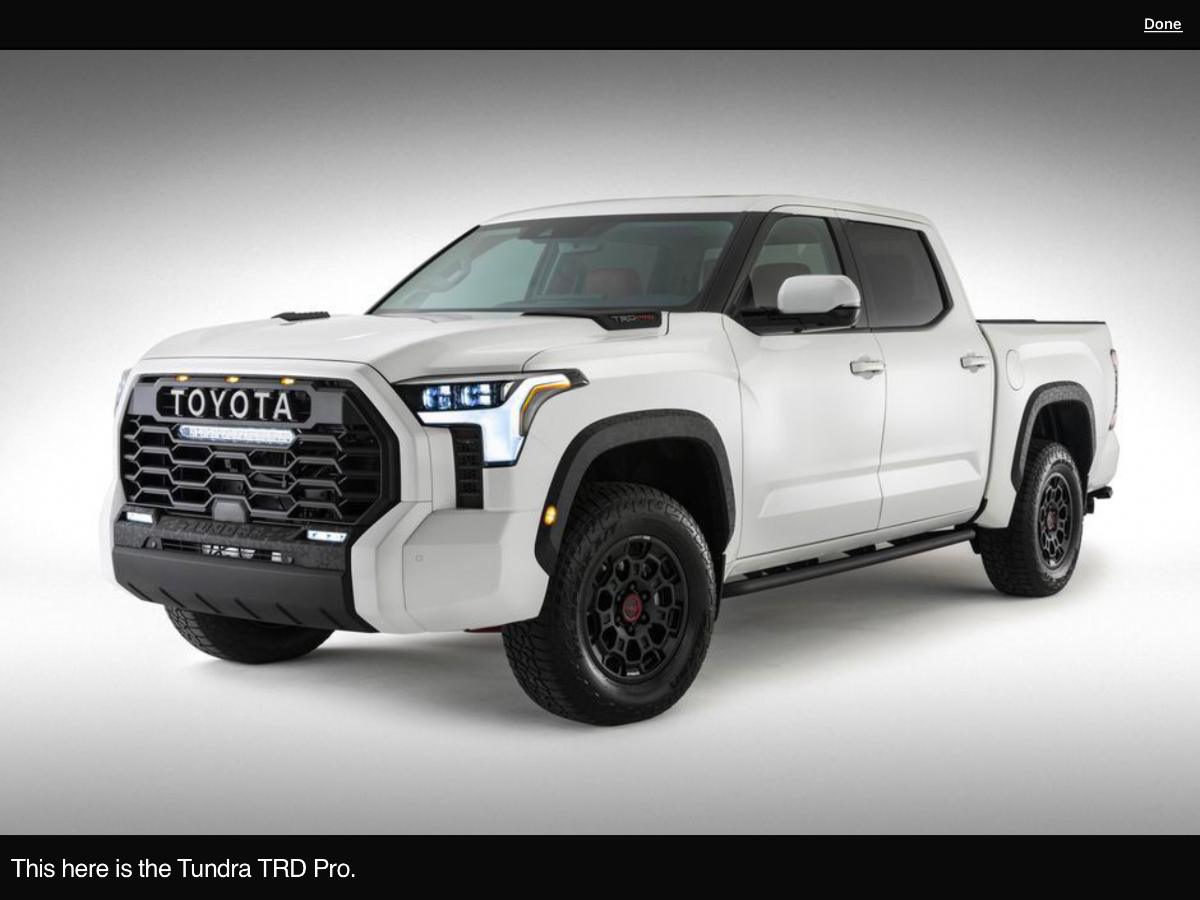
Here is a quick reveal article on the new Tundra…not sure I like the new look at all. More Lexus “SUVish” front end looking. It will be interesting to see how sales go. https://apple.news/AW7efCs8QTg-HsE9Rd9IhAg
1 point
-
Good article.. sums it up nicely! I've had more interior likes than dislikes..but the ones who dislike it, are few.. AND incidently, are not invited to camp with me anyway!.. LOL.. Thanks for sharing.1 point
-
Even though the bug zapper is 30 per cent off today, I removed it from the cart after reading the article you linked . I'll dig out the 12v FanTastic box fan, and try to blow them away.1 point
-
The interior "bug" lanterns that I mentioned above are the NEBO "Z Bug" (On Amazon) lantern and THIS ONE from Amazon. Leaving either one on at night with just its blue bug attracting light on and no other lights leaves enough light to be able to negotiate around inside the Ollie while enjoying that short little "zapping" sound as another one of these little critters turns to dust. The NEBO uses batteries while the other one is USB charged. And, yes, both will zap mosquitos. The only "problem" that I've noted is that the bug light reflects off the interior surfaces. Thus, I think it takes awhile for the little critters to actually find the source of the light. But, leaving it on for a couple of hours seems to allow for enough time for them to "go to the light". Bill1 point
-
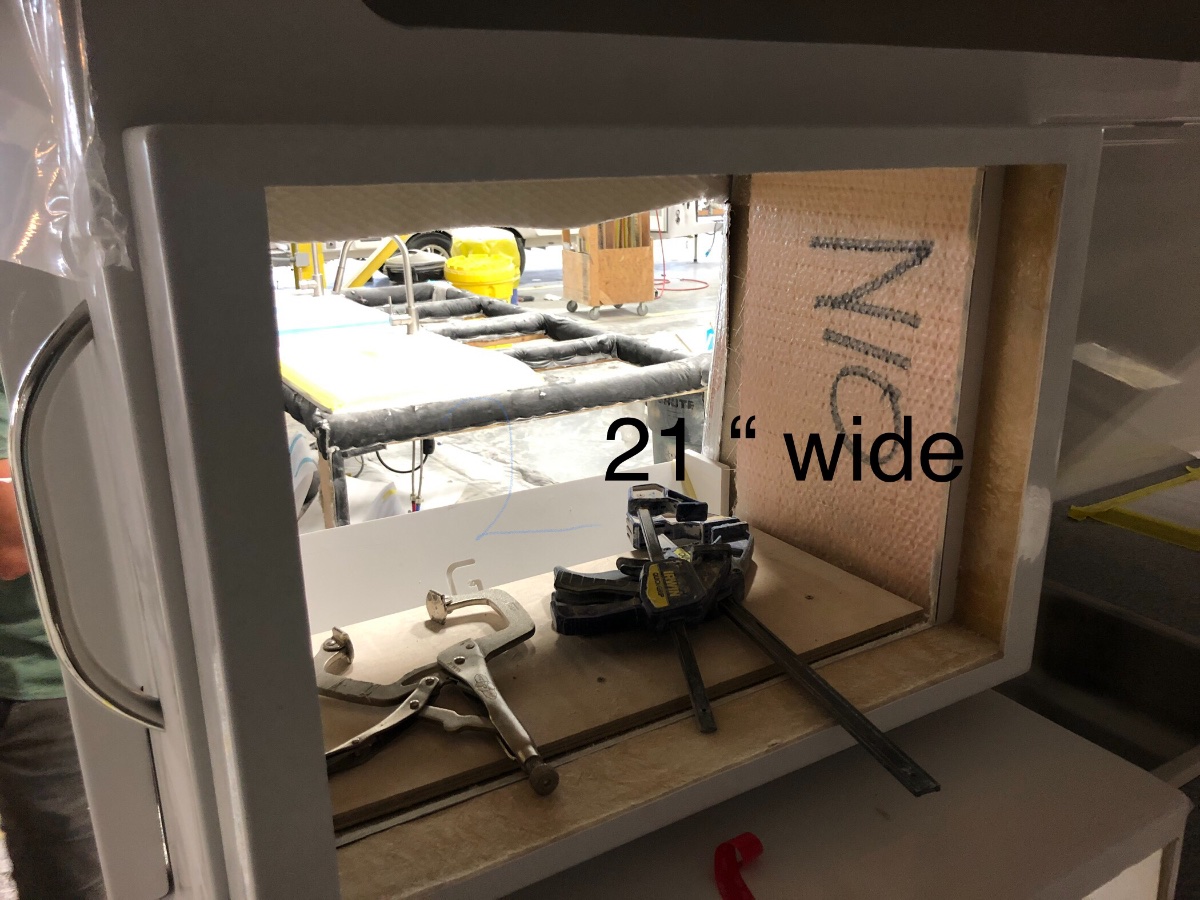
I had a factory tour and took precise measurements of the rough opening in Hope of installing the larger Breville. The rough opening before and after the convection oven is inserted is: 21l” wide, 15” tall, 17” deep. Hope this helps.
1 point
-
Great. This seems to have eliminated a lot of grief. Good job!1 point
-
I’ve only run mine in reverse to see what it does. Like you guys, I’d much rather have it pull a nice breeze through the windows.1 point
-
I had considered that but I would prefer to use that fan for exhausting heat that collects at ceiling height. I have never even run it in reverse, is it at all effective that way? John Davies Spokane WA1 point
-
Glad I have a 2018. V8, trans cooler and better looking to boot!1 point
-
ill take one...hopefully in oct-nov..!!1 point
-
Yes, but they have sentimental value.1 point
-
It stays light longer up by you, I think, most of the summer. Even now, with our longest days in NC, the little flying jaws are drawn to my phone after 8 or so. I've been chased inside a few nights, and it's not even height of bug season. I need to dig out the 12v fan, and at least try to blow them away from me.1 point
-
Bill, I really do wish it was much more pleasing to the eye. I think the engineers really could have done much better. From what I have read it’s bumped up to 472 whopping pounds of torque🙄. I was really surprised at its front end appearance…maybe it will grow on folks. It will be interesting to see how they sell. -David1 point
-
Overland, recacril looks like an amazing fabric. I'm sure it was expensive, but so worth it. They currently show a ten year warranty on their fabrics. I think that's unheard of. https://recasensusa.com/producto/recacrilawnings/1 point
-
Share and Enjoy !0Shares0 0 Why RV Vacations Are the Best Taking a trip in the twenty-first century is relatively simple. You can quickly head on to Google and search for flights and accommodation anywhere in the country or even internationally. However, if you own an RV, you could have the same benefits of traveling in your free time, and it'd cost you a lot less. Not to mention the flexibility of locations and where you can go to. As long as there's a road headed there, you can get there with your rig. Sometimes, especially in dirt road tracks, even if the road isn't headed there, you just need to be smart with your driving. With the recent health crisis that has the entire world panicked, the price of flights to destinations and the cost of staying there have plummeted. Now you can get a leisurely vacation in any number of tropical getaways for about half the price you'd pay for one if there weren't a global pandemic happening. But here's the thing - even with the hugely discounted cost of traveling and staying somewhere else in the world, you'll still end up with a cheaper vacation with an RV. Motorhomes and campers even offer one of the most critical benefits during this particular time - the ability to stay away from large groups of people. Exploring the Road Via RV If you've ever vacationed in an RV, then you already know that there are a ton of ways for you to enjoy your time knocking about on the highways and byways. Not only is there a lot of things to explore out there, but there are always brand-new vistas to entertain you. You won't ever get bored staying at the same spot for two weeks, because if you do, you can just up your stakes and move. You're never too old to start camping. With the cities full of people, and work probably suspended for a few weeks, there's no better time to leave civilization behind and come out into the wilderness to see what the rest of the world has to offer. Aren't you tired of just sitting at home, surrounded by the fears and threats of a hugely populated city while the whole, vastness of creation sits right outside your door? The only thing you need at this point is an RV that suits your needs. RVing the Right Way - Taking Advantage of the Camping Trip There are a lot of different things that RV camping brings to the table that makes them a better option to traditional vacations. If you know anyone who RVs regularly, they'll tell you how much more cost-effective it is to use their camper to go somewhere. There's no need to plan out an AirBNB beforehand or worry about not having a place to sleep. There are no hours of layover times in airports, or TSA people searching through your bags. Camping in an RV is flexible, gives you back your privacy and freedom, and is probably one of the best things you can invest in when the world around us is coming to grips with a virus that spreads with a touch. So, what exactly does RVing offer to us that makes it better than booking a flight to anywhere? 1. Learning About the World Around You I'm sure you remember back in grade school and high school how vital field trips were to help you understand your local area. With an RV, you get the benefit of having a field trip anytime you'd like to. Since you're in control of the RV, you can plan what sites you want to visit on your journey. The entire continental United States is awash with history, culture, religion, and political figures that all come together to form a tapestry that is uniquely American. While you can comfortably sit on your couch and watch these sites on TV, don't you think it'd be a lot better to just hop in your RV and go see them yourself? National parks and forests are a perfect place to head out to see what the country can offer. Carry a pair of birding binoculars, and you can witness nature around you unfold. If you're not that much of a birdwatcher and prefer fishing or hunting, there are a lot of places that allow you to do that to your heart's content. Want to teach your kids a few necessary survival skills that could come in handy? There are tons of dispersed campsites in many states that allow you to do just that. If you're less of an outdoor person, there is a wide range of educational activities that you can access in more suburban and urban areas. Museums, libraries, and historic townships are among the best hands-on experience you can have with history and culture. Setting up a tour schedule that takes you between the points of interest on a route makes for a uniquely exotic getaway. At the end of each day, you don't even need to go back to a hotel. You can just find the best view possible, park your camper and enjoy the sunset wherever it might come. 2. Unplugging From the Connected World One of the most overwhelming things we have to face in our day-to-day lives is dealing with constant connectivity. Cell phones have taken a connection to new, unbearable heights. While they are useful tools, they can invade your personal time, and freedom like no other utility has ever done. Not to mention if you work at an office, the thousands of emails that you have to deal with daily might be enough to send you insane. Social media is the twenty-first century's version of keeping up with the Joneses. It's mentally tiring to have to deal with all of your friends and their associated drama like that. The only way to truly escape the mire is to unplug. When you're RVing across the country, you don't have to worry about connection. In fact, a lot of campsites on the road don't even have an internet connection. Some of them are also lacking in cell reception, making the unplugging more effective. Additionally, if you're traveling to a location that doesn't have an electrical hookup, your electricity is limited by what your RV or your generator can provide. Unplugging is good for your mental state, but it also helps your body. Sleeping under the stars without any artificial light to distract you is a relaxing feeling. Additionally, being able to let the stresses of the modern world go if only for a little bit, can help give you perspective and re-center you to resume reaching for your goals. Everyone needs a rest now and then, and RVing in a disconnected campsite might just be what you need. 3. Meeting New People The RVing community is pretty close-knit. Thanks to how unpredictable life on the road might be, many people who travel from town to town in campers share a sense of bonding with other trekkers on the roads. It's not uncommon to get helped out of a jam from another RV wandering by when you're at your wit's end. You'll also find that online forums that outline where to stay by RVers tend to have a lot of people commenting on each other's' posts and correcting them in a friendly way. While you'll find the odd man or woman out who's a loner and prefers to do things to his own beat, most of the folks who do RVing regularly are very friendly, and that feeling is contagious. If you set up your camper on a site, you might actually find other campers relatively nearby. Making nice with neighbors when camping can be a lot easier than trying to talk to the people you live next to. You'd be surprised at how easy it is to form a bond with someone you meet while camping. You already share an interest, and you'd be surprised how much more you have in common the more you talk to one another. A lot of strong friendships have been formed by meeting fellow RVers at campsites across the nation. If you'd like to see the kind of people that the US really has to offer, RVing is a great experience to do so. 4. Avoiding New People For each one of us who enjoys meeting others, there's at least one of us who hates anything to do with people. The camping community is made up of both introverts and extroverts. You can usually tell them apart by how they choose to set up their campsites. While extroverts are less likely to be bothered by neighbors, introverts might go to another campsite miles away just to stay away from other people. If you're the second kind of RVer, then you shouldn't worry too much about what others will think about you. Being sequestered from others is actually a serious concern these days. With infectious diseases hanging around populated areas, being out in the wide-open spaces can help you with avoiding a contagious health pandemic. There are enough campsites throughout the continental US so that you can find a spot that's far enough away from other people, so you don't have to worry about catching anything. This kind of self-quarantine is far better than being stuck at home and slowly getting cabin fever because you can't go out. 5. Increasing Family Bonds I'm sure that, if you ever went camping with your folks as a kid, you have some timeless memories of your time with them. Camping opens the door to one-on-one time with your family and helps you to increase the bonds you already have. Activities like fishing, hunting, and hiking aren't just character building. They offer you a chance to impart what you know with your kids. Not having to worry about the rest of society also makes for a great way to re-establish a connection with your significant other as well. Living in close quarters and being dependent on just that one person can make you appreciate them in a completely different light. With modern life offering us so many distractions from bonding time, there's very little chance for us to connect to the people close to us. Distractions make it difficult to find time to sit down and enjoy each other's company. We tend to miss out on the little moments that shape each other's' lives. Sometimes, because of how caught up we are in our own reality, we miss the significant changes that happen right within our own family. It's surprising how much a night in front of a campfire exchanging stories, and roasting marshmallows can accomplish. RV trips to dispersed campsites are the ideal way to re-establish this connection with your loved ones. 6. Returning to the Outdoors Humans living in houses is a relatively new concept in the grand scheme of things. Civilization is not where we evolved to be, and it shows. Hitting the road in an RV gives you a chance to experience that rough-and-tumble life of your ancestors. While we're not really hunter-gatherers anymore (unless you count shopping at Walmart "gathering"), we still retain a lot of our primal instincts. However, the longer we live in a safe, protected home surrounded by neighbors, the more we lose that competitive edge that established humans as the dominant species on this planet. Roughing it is probably the only way you can reconnect with your primal spirit as an outdoorsman. If you're less of a primal hunter and more of someone who prefers the wide sweeping vistas of pine, spruce, and birch, getting lost in national forests of wildlife preserves are just as good for your free spirit. Humans aren't meant to live in locations that take them out of nature for too long. At heart, we're still part of nature, and it calls to us, even though most of us choose to ignore it. Connecting with the outdoors revitalizes your spirit and relaxes you in a way that nothing else can. When the outdoors calls you the next time, you should probably answer. You might be surprised by how different you feel after a visit. 7. Convenient Travel Like we mentioned earlier, avoiding a health pandemic means limiting your international travel. Local travel also has its own risks, because flying from one state to another means entering an airport that has already been hit by people who are suffering from the virus. You don't have that same problem when you've got an RV. Additionally, you don't need to plan ahead, book a hotel room, worry about if you'll get transport to your destination, and worry about missing your check-in time. All you need to do is gas up the camper, get some supplies, and hit the road looking for almost anything. Naturally, one of the best things about RV camping is that you can get some of the best sights in the US for free, just by locating the best place to park your camper. These views range from majestic vistas where acres of forest roll out like a carpet between the alpine slopes of hills and mountains to uninterrupted seaside vistas with the waves rolling in to wake you up each morning. The variety of spots you can visit and the amount of time you can spend there are both crucial considerations for vacation travel. Carrying your "hotel" room with you makes it easy to change the backdrop, so you never get bored with what's around you. 8. Cost-Effective Travel to anywhere and paying for a stay can have a HUGE impact on your pocket. It doesn't even have to be an exotic international destination. Sometimes, even places in-state can cost you more than you're willing to pay. With an RV, that's not much of a concern. You can just choose a spot you want to visit, drive up there, and camp out then drive back home the next day. There's no need to pay for airfare or a hotel room. You do need to pay for gas, though, but the cost is a pittance compared to other types of vacations like cruises or all-inclusive resorts. With an RV, you can make your own meals, meaning you don't have to pay for overpriced restaurant meals. Even if you decide to take advantage of an RV park, the affordable ones don't run more than forty to fifty dollars a night. As for paying to stay, there's a load of free campgrounds we've covered previously that you can pull up and stay that doesn't cost you a cent. RV camping gives the power back to you where you want to spend your money instead of forcing you to pay for a place to stay. Simply The Best Way to Travel Anywhere the road takes you, you can get to. It's travel like this that allows you to fully appreciate the country around you and the people you meet on the way. If you're not a fan of meeting people, there's enough opportunity to avoid them as well. Never before has a vacation method been so affordable, yet so flexible. If you haven't looked into getting in RV camping as yet, then you're missing out on a great thing. Ask anyone who does it regularly, and you might be surprised at how little their long weekend getaways cost compared to yours. RV's are simply the best way to vacation. RVing is like an adventure that you're fully prepared for. Share and Enjoy !0Shares0 0 The post 8 Reasons Why RV Vacations Are the Best appeared first on Oliver Travel Trailers. View the Full Article1 point
-
Share and Enjoy !0Shares0 0 The Ultimate Act of Rebellion There are a lot of different ways to enjoy the outdoors. Boondocking also knowns as Free Camping is one of those ways that allow you to fully experience life outside of the big city on your own terms. There's something attractive about being all by yourself, out on the open road, dependent on no one and nothing. Disconnected living in a time where everything is connected can be considered the ultimate act of rebellion. Yet we need disconnection sometimes. Boondocking allows you to disconnect and unwind, leaving behind the things that tether you to the real world and freeing your mind and body to explore nature the way it's meant to be explored. But how exactly do you boondock across America? This guide will help you on your journey as you explore the highways and byways that make up the US. What is Boondocking? In short, boondocking can be described as the art of camping in an RV or Travel Trailer without a hookup. The apparent downside to boondocking is that you lose any sort of connection or electricity supply to your RV. On the upside, however, that lack of a leash means that you aren't restrained to civilization of any kind. It gives you the freedom to roam as you please. Some of the views we've found while boondocking are hidden gems that no one would even consider looking for. These locations aren't usually covered as popular destinations because they're so far away from where people regularly visit. That's the true beauty of boondocking. Being all alone, dependent on yourself, and not having to worry about anyone else being close to you. You must be responsible while boondocking, though. You need to have a checklist of the things that you need to carry with you, and everything that you take to a site, you need to carry with you when you leave. Unfortunately, not all campers engaged in boondocking think the same way, and sometimes you'll come across the leavings of someone else who used a site in the past. The only thing you can do is to promise yourself that you won't be like them. In recent years, boondocking has become quite popular with campers. It can be quite cost-effective and allows you to a lot more freedom for your travels. Being disconnected from the rest of the world also has its perks. Overall, boondocking is something that anyone who enjoys camping should try at least once to see if it appeals to them. Types of Boondocking Boondocking isn't just limited to a single kind of camping. You might hear the term "dry camping" when talking about these visits. There's no difference between the two conditions. However, within the field of dry camping, you will notice several different subtypes, namely: Overnight Stay Overnight stays happen when you're driving across a region and just want to pull up and park for the night. Several businesses provide parking to overnighting RVs, although some do have a cost attached to them. Walmart parking lots specifically have provisions for RVers intending to overnight. Other businesses might offer a similar courtesy to visitors. It's definitely better than having to shell out $50 for a single parking spot! There's also the opportunity to borrow a parking spot from a friend you might have. It's very likely, depending on how much the friend likes you, that it'll be a free parking spot, and you might even be able to stay longer than a single night, depending. There are entire communities of people dedicated to the practice, which has garnered the nickname "Moochdocking." A few landowners have even allowed visitors to park on their land for free, but it's always essential to consult nearby owners before just pulling up on their spread to park for the night. Scheduled and Developed Campsites Campgrounds that are operated by federal, state, county, or municipal authorities are great locations for staying for a short amount of time. These spots are the best for boondock campers who aren't entirely into the lifestyle yet but want to give it a try. In many of these developed campsites, there's a limit on the maximum stay time. While some of these sites might be free, a few of them have fees attached to entering, parking, or using hookups for your RV. Several of them operate on a reservation basis, while others use the first-come-first-served methodology. Many campsites come with amenities such as fire rings, grills, picnic tables, and other things that might be necessary for a proper camping trip. Because of how easily accessible and close to amenities they are, these sites tend to fill up quickly during holiday weekends. It would be in your best interest to book ahead to ensure you get the best sites. Primitive or Rustic Campsites These are the ones you'll encounter most often in your boondocking travels. They're the roughest living and are situated quite far from civilization. For newcomers to the idea of boondocking, taking on these sites might be an exciting thought, but you could quickly find yourself out of your depth. These sites are perfect for those who have been boondocking for a while. Even campers who have a little bit of experience in roughing it while camping might enjoy them. There are no amenities, and there's usually no one else for quite some distance. You'll usually find these camping spots on federal lands within forest reserves or wildlife areas. National parks also fall into this category. Usually, when you set up camp in these spots, you can spend some time exploring the area you're in. More often than not, there will be a lot of trails you can trek through. It's by exploring like this that you find the fantastic, breathtaking views that boondock campers crave. If you ever wondered precisely how beautiful nature gets, this is the best way to experience it yourself. Benefits of Boondocking Boondocking is for adventurous souls longing to see the world. The age of explorers is long past, but that doesn't mean there isn't anything in nature left to discover. However, while it's a beautiful experience, many people considering boondocking have concerns about its safety and security. If you camp responsibly, this becomes less of an issue. There are several reasons why you might want to consider boondocking as a camping option, including: Affordability Boondocking usually costs nothing, aside from the money you pay to fill up your gas tank and buy your supplies. Even developed campgrounds that have an attached fee don't usually run you more than $10 to $20 a night. If you're more into roughing it, then those developed campsites are not worth the money. It would be easier to find dispersed camping at a free site and enjoy it on your own. In the case of RV owners, parks that cater to those vehicles have steadily increased their prices over time. As a result, boondocking would save a lot of money over a year. If you're an RV owner, you should definitely consider it as an alternative to pay-to-camp spots. Breathtaking Sights It's one thing to pay for an experience and enjoy it, but it's another to discover a spot all by yourself. Many dispersed campgrounds exist near the edges of lakes or along the banks of rivers. Some of them are located along cliffs or plateaus. Tourist brochures can't reproduce the views from these locations, so you have to go and see them yourself. Their uniqueness is what attracts people to them. Finding a spot that takes your breath away in a national park, or along the edge of a bluff as the world unfurls like a tapestry at your feet is one of the most life-changing experiences you will ever have. The potential downside is that you'll always want to discover more. Solitude We are social creatures, but too much socializing can leave us bored with a need to recharge. The isolation you get from boondocking is unmatched. You don't need to worry about ever interacting with another human being for as long as you're out there. It's truly a unique feeling being that far away from the hustle of humanity that you're likely to find in cities or towns. Because of the variety in campgrounds, you can choose a site that has neighbors nearby if you prefer being closer to people. For those of us who like our alone-time, there are wide open spaces that we can lose ourselves in with little worry about running into another person. Losing Yourself in Nature You get a particular appreciation for nature as a boondock camper. RVing usually helps you reconnect to the world around you uniquely. By setting up camp far away from civilization, you get to appreciate nature in a completely different way. When you lay down that first night in the middle of the wilds, switch off your lights and realize how many stars adorn the night sky that you just don't see when you're in a town or a city is when it hits you how much you're missing out on. Nature might be all around us, but scarce few of us take the time to appreciate our surroundings. Finding Boondocking Sites We've outlined several of the best free campsites for boondock travel trailers, campers and RVers in different parts of the country. However, boondocking sites aren't necessarily campgrounds. Aside from the suggestions we've mentioned, there are a few distinct sources that you could look to for your boondocking needs: Forestry Sites The US Forest Service or the Bureau of Land Management (BLM) usually have spots in national forests set aside for campers. Calling ahead helps you to know if you need a permit to camp on those sites if there's a fee attached, and what the maximum stay time is at the park or forest. Contact information for each department is available on their websites. Bureau of Land ManagementNational Forests and National GrasslandsFish and Wildlife Services Some government-owned lands like (BLM) will require you to pick up a camping pass and may have restrictions on the length of stays permitted. Membership Clubs A new development that is probably long overdue in the camping world is the idea of a membership camping site. Landowners can offer up spare space on their properties for RVers to take a few nights to explore the area. Membership to the sites like these is affordable and well worth it if you plan to be boondocking for a while. Additionally, if you're a member of some organizations such as the Elks, parking lots for those lodges might accommodate members for overnight stays. Consulting the chapter's secretary may offer more insight into leveraging these options. Store Parking Lots Any port will do in a storm. When you're passing through a civilized area, and you need to stop for the night, the cost of an RV park will probably be expensive. However, you can always choose the free option and park in the parking lot of a big-box store like Walmart. Companies such as Costco, Menards, and even Cracker Barrel offer free overnight parking for RVers, but the accommodation differs by location. Some require you to register with the administration before parking. Consulting the store's staff might clue you in to where you're allowed to park and stay. Places That Should be Avoided In any locale, there are a few places that you ought to be aware of that are no-go areas. Whether because the residents aren't particularly friendly to visitors or the location is a crime hotspot, there are a few warning signs that the experienced boondock camper will notice immediately. A few of the elements to consider when you're picking a spot to stay are: In populated areas, What looks like a deserted spot during the day might get very busy at night. If you don't know anyone locally, ask around to find out if that spot is one you should be staying in. If staying at a place that trucks are likely to be present, be courteous. Truckers can be territorial, and it's better that you didn't put yourself in harm's way over a parking spot. Boondocking is about privacy, security, and solitude. If you notice a space for your RV to squeeze between two others, you might want to avoid that spot since it will probably annoy your neighbors. Federal lands are available for all to use, but the onus is on your to ensure that the road can handle your vehicle's size and weight class. Doing research beforehand as to whether the route can manage your rig will save you some moments of anxiety on the way to your campsite. On private lands, make sure the landowner knows you're there and has explicitly permitted you to stay. If they haven't, then you have no right to be on that spot. Many boondocking campsites have a limit on how long campers are allowed to stay. Make sure you know if there's a maximum stay-time for that particular campsite. If you require a permit to camp at that location, you should also be aware of where you can get it and how much it costs (if anything). Knowledge about your camping site is the most important thing for a boondock camper. Essentials for Boondocking Responsibly By now, you should be excited to head out on the open road and discover what America has to offer you. Not so fast, pilgrim. You're forgetting one crucial detail, one that many new boondock campers overlook. Generally, you can survive out in the wilderness while camping comfortably enough once you have three main things: Water, Food, and Electricity. These are what you'd call your essentials. Obtaining them isn't horribly painful, but being prepared is vital to your survival and the ability to remain out in the wilds for as long as possible. See our guide Tips To Keep In Mind When Traveling Water In most commercial RVs, there are usually three tanks for water storage. One is a freshwater tank (for potable water), one is a grey water tank (for wastewater from sinks and the shower), and one is the black water tank (for excrement). Larger containers translate to a longer time that the RV can remain self-sufficient. Eventually, however, you're going to have to head to a dump station and refill your potable water. There are a lot of ways you can preserve water out on the road including Flushing your toilets lessKeep your dishwashing to once a dayNavy showers - use running water only when necessary while showering There's no hard-and-fast rule for what you should do to conserve water. Each V's water flow situation is different. The only accurate way to figure out what the limits of your water storage situation are and how long you can go before a dump is by trial and error. The better you are at conserving water, the longer you can stay out in the boondocks. Food Meal planning is among the most vital skills to have when boondocking. Stocking up on groceries might only happen once in a while, so knowing what you need during your one grocery trip before heading out into the wilderness is essential. If you're planning on heading far from civilization, you won't have the option of dropping into the nearest 7-11 to restock. Just like in real life, having a shopping list that references your meal preparation schedule can help you keep costs to a minimum. Additionally, depending on what your RV comes with and what amenities you might have, using tinned goods and ready-to-eat meals might be an option you can look at exploring. If you're not much of a wilderness chef, these will at least ensure that you have something you can eat, even when you're too tired or busy to rustle up some dinner. Your food, like everything else out here, is your responsibility. Knowing what you can cook and eat and how long before you need to get supplies is an essential step in evolving your boondocking. Electricity As much as we'd like to throw out all the trappings of the world, it's a sad consequence that we need electricity for a lot of things. RVs typically run on two separate electrical systems. There's a 120-volt power supply that's akin to the power distribution in your home (AC). There's also a 12-volt supply that runs off batteries (DC). If your RV is of the driving type, there's yet another electrical system that helps to operate the vehicle. For isolation, this power system is separate from either of the other two. You can think about that one as the auto-electrical system in a car. If you're going to be off-grid, you obviously won't have any hookups for your RV to connect to. Typically, in the past, generators have been used to power RVs while out in the boondocks. The upside is that, as long as you have fuel, generators can run indefinitely when you need them to. The downside is that they can be loud, and that might end up driving the wildlife away and disturbing your neighbors. Generators can plug directly into an RV and power the entire rig as well as recharge the batteries. When you switch off the generator, the cells take over the supply of power. Solar power is becoming more accessible, but it suffers from a few hurdles that make it unreliable. Panels can't generate enough power on cloudy days, and they are not very efficient in catching energy even when you are out in bright sunlight. Generators are still the best option, even with their downsides. The demand for power that each RV has differs by what's connected to its electrical system. Figuring out how much battery power it will take to run your rig, and for how long, is a trial-and-error errand. Ideally, you should do this before you set out to boondock so you'd have a baseline for operation. Don't Be Afraid to Try Boondocking, just like camping, is about your planning and managerial skills. You need to plot your course to get to your campground, know how long you're spending there, and where you'll be getting supplies and dumps from. The fun part of the trip is getting into the great outdoors with the most minimal comforts of home with you. Boondocking is one of the last great adventures we have as explorers of our own country. There's no better way to discover the secret gems of America than to boondock across it. See more guides on tips for boondocking in a travel trailer or RV. If Boondocking sounds a little too much for you, see our guide on finding the best RV parks. Share and Enjoy !0Shares0 0 The post Boondocking Across America appeared first on Oliver Travel Trailers. View the Full Article1 point











-
Recent Achievements
-