Leaderboard


Popular Content
Showing content with the highest reputation on 12/01/2020 in all areas
-
We joined the forum about 3.5 months ago but have never introduced ourselves. We are Charlie & Cindy from the DFW area of Texas. We took a trip to Hohenwald in August after our 17 day trip to Europe for our 40th anniversary was canceled due to COVID. We are not new to camping. We have had two travel trailers in the past. A 24’ starter trailer for a couple of years and then we upsized to a 42’ fifth wheel which we had planned to retire in and travel the country. We had it 5 years and decided it was way too big to drag across the country. Charlie retired a few months ago but I have about 5 more years to work and then we’ll be doing some long distance trips. In the meantime there will be lots of local camping on weekends and a few occasional 1-2 week trips where we’ll do some boondocking out west. We had just put our 5th wheel up for sale before our trip to the factory. The weekend after we returned home it sold for full asking price so we placed our order for a May 2021 delivery. Not too long afterwards we got a call that someone cancelled and we were offered a February 2021 pick up date so we jumped on it. Our final selections were made just before Thanksgiving and we forked over half the balance. We’ve enjoyed reading and learning about the Ollie differences and been buying a few things for the trailer along the way. The majority of the camping stuff we already have. This past weekend we camped old school with our son’s family who tent camp. We used our new truck topper to sleep and had a great time. Can’t wait to take delivery of our Oliver Legacy II in just 2.5 months so we won’t have to rough it in the future. We are still working on a name for our trailer and what graphic we want for the front end. We are also anxiously waiting to find out our hull number when it goes in to production on 12.22.2020. We look forward to meeting other Oliver owners out on the road and hope to see you at the non-rally Rally in 2021. Cindy & Charlie2 points
-
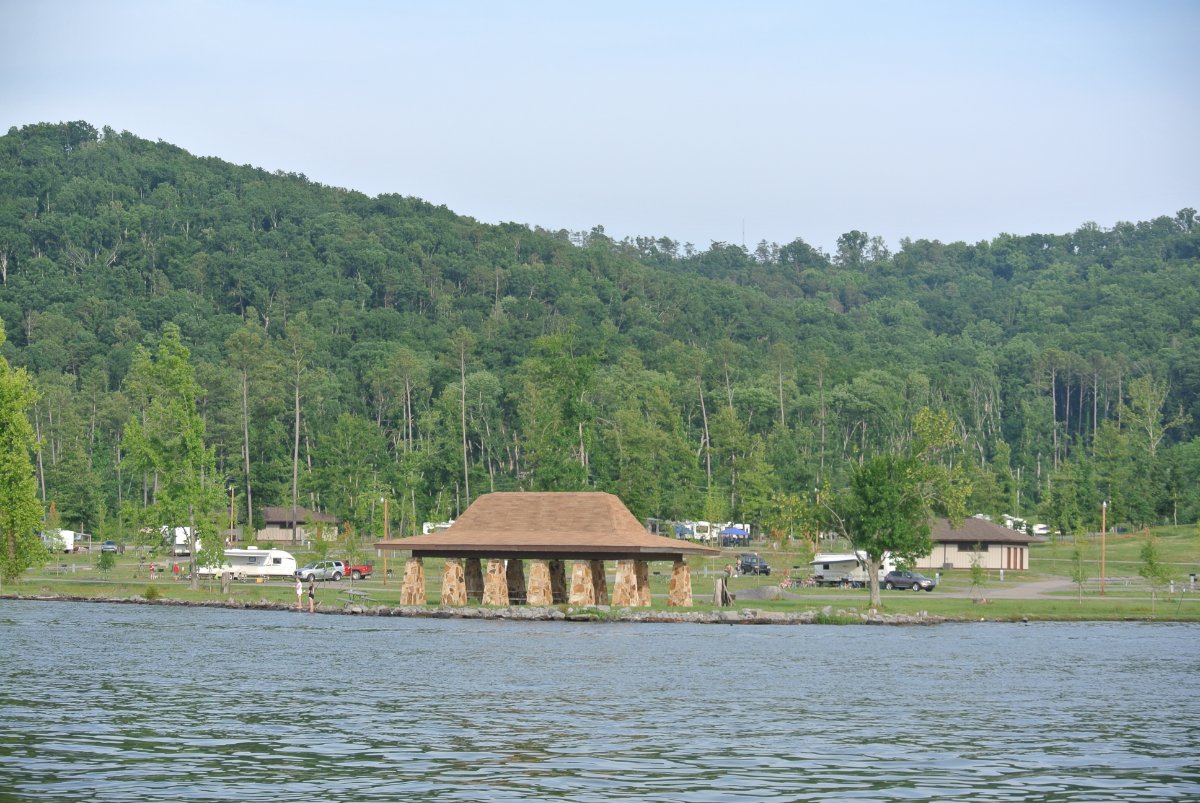
The Oliver Travel Trailers Owners Rally traditionally occurs at Lake Guntersville State Park, (LGSP) Guntersville Al the 3rd week of May on an annual basis. Because of concern over Corona Virus, Oliver, understandably, will not be sponsoring the rally for 2021 out of concern for Oliver Owners. However, you are encouraged to come to Guntersville May 13-16 2021. ( Date corrected ). I will be contacting LGSP administration to request we get our rally discount during this time as well as a pavilion for us to safely gather. If you are considering coming, I encourage you to go ahead and make reservations. The park allows reservations to be made on their website and the campground is already beginning to fill up that weekend. When we gathered in October this year, the campground was full, no sites were available so make your reservations ASAP ! I hope to see you there Coy Gayle Location 1155 Lodge Dr. Guntersville, AL 35976 Phone Numbers General Info: 256-571-5440 Lodging: 256-571-5440 Camping: 256-571-5455 Park Office: 256-571-5444 Reservation website https://www.reservealapark.com/AlabamaWebHome/Facilities/SearchViewUnitAvailabity.aspx
 1 point
 -
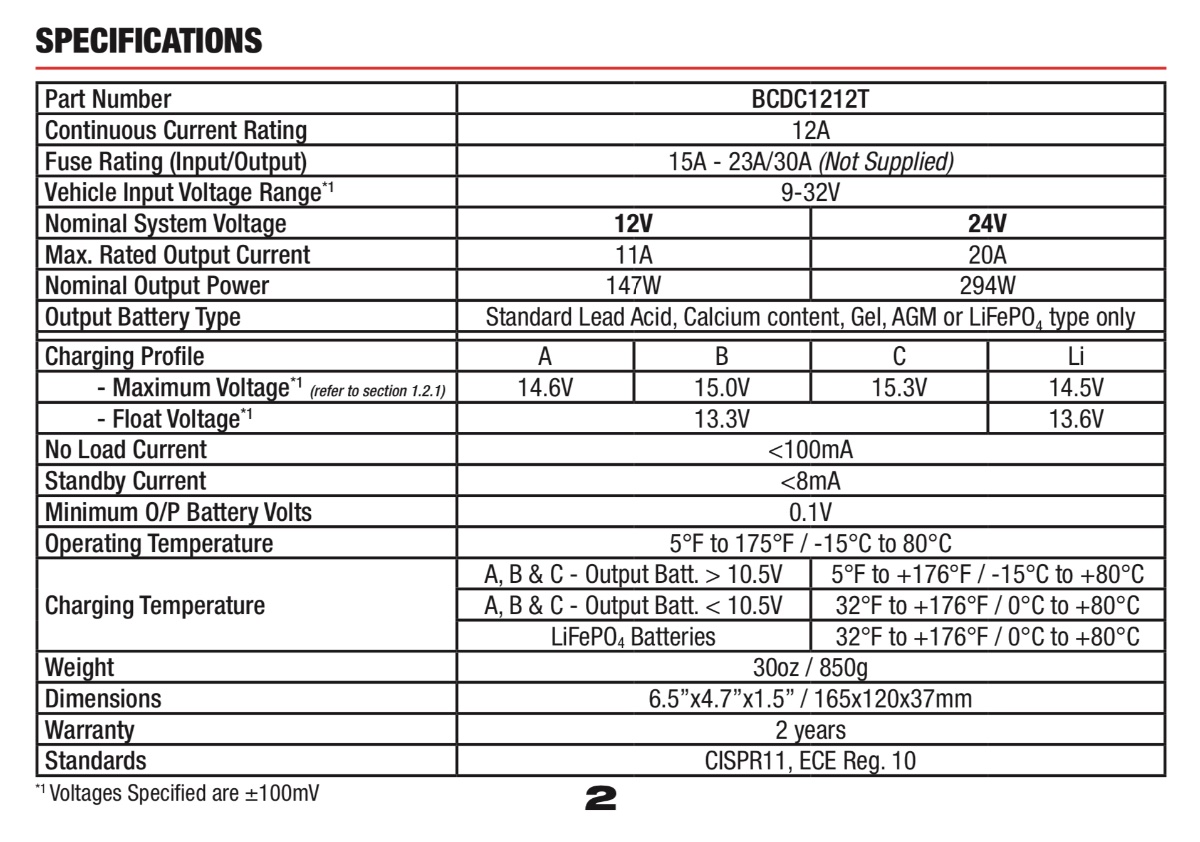
I peeled this off another thread about the need to isolate the higher voltage of the lithium batteries from the truck to prevent “back feeding”, one owner noted a continuous 5 amps😳. I am pretty sure it would work fine with the 20 amp fused charge wire already installed in the trailer harness but I would appreciate confirmation of the Ollie fuse and wire size. This device requires a 15 amp fuse on that input, and the max draw is only 11 amps (for a 12 volt system). This won’t flow a huge amount of amps to the batteries like other alternatives, but it should be plug and play for most tow vehicles; only a smart “variable voltage” alternator would require you to run a small sense wire up to the engine bay. All regular TVs don’t need that, it simply senses the rise in voltage when you start the engine and ten seconds later it switches itself on. Very cool, I think! It will charge lithium’s to 100% which is what I am after. Otherwise my Land Cruiser system probably won’t be able to get it over 70%. During sunny weather the rooftop solar should be enough, but I don’t want to completely rely on that in night time or gloomy weather. “The BCDC1212T is specifically designed for, but not limited to, applications where the input current required to charge a trailer mounted auxiliary battery is drawn through the vehicle’s towing harnesses and connectors. It limits the input current drawn to 12A which provides for safe and reliable operation when using towing harnesses, fuses and connectors that are suitably rated without the need to install additional cables and connectors between the start battery/alternator and the BCDC1212T/auxiliary battery. The BCDC1212T is a three-stage, 12V DC-DC battery charger that operates from an alternator input of 12V or 24V. The input voltage to the BCDC1212T can be above, below or equal to the output voltage making it ideal for charging an auxiliary 12V battery where the distance from the start battery or alternator may cause a significant voltage drop. When connected to a 12V alternator the BCDC1212T will typically provide peak boost currents of 11A. The BCDC1212T isolates the start battery from the auxiliary battery, to avoid over-discharging the start battery.“ https://redarcelectronics.com/products/trailer-battery-charger Instruction Manual pdf Excellent install video here at eTrailer.com: https://www.etrailer.com/Battery-Charger/Redarc/RED96FR.html They do caution that the lithium batteries must have a built in battery management system, which most RV batteries do (home brewed battery banks may not). I emailed the dealer I ordered my new Victron batteries from to confirm it would be OK to use this. So, are there any reasons this would not be a good choice? The fact that it is mounted on the trailer is really good in case you change TVs, or if you sell the trailer it will be useable by the next guy with little or no fuss. I think the 11 amp charging limit is acceptable for most people if it allows them to get close to a full charge during a typical drive. If you have 400 amp hours of batteries (the factory setup) that are severely depleted, there is no way it will bring them up to 100% on a single days drive; that is why you carry a generator so you can use the high charge rate of your standard converter. I plan for just two 100 amp hour batteries, using 80%, so I think this would be quite helpful. At the very least, it provides an easy fix for the isolation problem some owners have. Comments please. John Davies Spokane WA
1 point
-
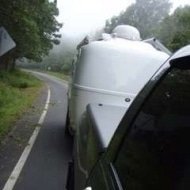
Makes me wonder about those Airstream owners. He even got complimented for having 'thought everything through'. If I run into that particular Darwin Award applicant at a campground, I'll have to remember not to touch his truck or trailer - that could be a nasty shock.1 point
-
Hey, and welcome, from Florida. So very happy that everything worked out for you!1 point
-
When I first started reading this I though it was a joke. Then the pictures downloaded.1 point
-
Welcome you guys! It certainly looks like all of the stars aligned just right for you on this one. With all of the Oliver owners in Texas I'd think that Oliver just might (someday) consider a branch office there 😉. I too took delivery of my Oliver in February and while you will need to keep an eye on the weather, since you don't have to cross any mountains it should be fairly good for you. I'll be looking for you out there on the road! Bill1 point
-
John Davies advice is spot on (as usual). The GX 460 is not at all a good choice for towing an LE II. However, If you are in a situation where you already own a GX 460 and are not in a position to upgrade your tow vehicle immediately, the GX 460 may serve as a safe "bridge vehicle" to tow the LE II until you can upgrade, especially if the alternative is passing on the LE II altogether. I faced this situation last year when I was looking at trailers I could tow with my 2004 4Runner V8 Limited (200,000 miles), a vehicle that would tow the smaller Elite easily. Alas, I toured an Elite 1 and realized I was too tall to comfortably stand and sleep. Before eliminating Oliver from consideration, I did my homework and spent many hours on this forum soaking up much wisdom on towing. In the end, I ordered an LE II for August 2020 delivery and proceeded to bring my 4Runner to as close to new condition as possible, all the while dreading the 2,400 mile "test drive" from Hohenwald back to Oregon. Maintenance upgrades included new transmission fluid, new brakes all around, new shocks, and new rear air springs, with all OEM parts. From what I can tell, my 2004 4Runner V8 Limited is very similar to the current GX 460. They are both built on the same 110 inch wheelbase, and my 4Runner actually came with the Lexus GX 470 drivetrain (full-time AWD) and the automatic leveling rear end. The engine in both is similar as well with similar torque, although the GX 460 has more horsepower than the 4Runner, (less important for towing). The 4Runner is rated to tow 7,000 lbs with the Andersen hitch, whereas the GX 460 is rated at 6,500 lbs. Our drive home from Hohenwald was comfortable. The LE II pulls nicely with the twin axles and Andersen hitch. We spent two nights at Davy Crockett park and then set off for Oregon. Day one I drove 350 miles, day two I drove 730 miles and day three I drove 715 miles and day four 550 miles. No white knuckles. The engine is adequate for interstate driving, including I-80 across Wyoming (barely) on a 95 degree day with 20 mile cross-headwinds. Steeper off-freeway grades at altitude are a different story. Brakes are strong and not a concern if set up properly. Mileage about 11.5 MPG. As John said, one reason that the GX 460 (and my 4Runner) could never be an acceptable tow vehicle for the LE II long-term is the meager payload capacity. After considering tongue weight and the weight of the Andersen hitch (essentially three passengers sitting on the back bumper), you are basically limited to a driver and one passenger with next to nothing else in the car. A driver and three passengers is out of the question. Even with a lightly loaded vehicle, you would need to carefully manage tongue weight and be disciplined enough to stay within limits each time you tow. Since arriving back in Oregon I have added close to 3,000 miles of uneventful towing all within Oregon. I do not regret my decision to limp along with my 4Runner until I can upgrade as I believe I am being disciplined, safe and responsible; and I now own an LE II! I also recognize that I will not have the flexibility to fully enjoy the LE II until I am able to upgrade my tow vehicle, hopefully to electric.1 point
-
Trucks are definitely changing, especially with the shift to hybrid charging, so I won't deny that you're getting a charge, but I do have questions. First, I'm curious how many amps of charge you're seeing and how that changes over time vs just at startup when the alternator is charging the start battery. My alternator will give 14.6 volts for a bit, but only until it senses that the starting battery is recharged, then it drops into, if I remember right, the low 13's, which isn't enough to charge lithiums even without taking into consideration the .3 to .5 drop in voltage that you'd see over the distance to the batteries. This happens even with a house battery in the truck, connected with 2 awg cables. That behavior seems pretty common for modern truck electrical systems, but of course with hybrids that could be different. The ideal test, but also the most inconvenient, would be to disconnect your solar while driving for a day and then take a look at the day's chart from the Victron app. Also, what gauge wiring do you have between the truck and trailer? If it's standard 12 gauge, and 18' to 25'+ of wiring from truck to trailer (depending on where it starts in the truck), and the Norcold fridge pulls 15 amps, then already I think your wiring is undersized (assuming you're charging from the truck at the same rate). My guess though is that your solar is providing the bulk of what you're seeing to the batteries/fridge. Still, traveling at night or rainy days, I think I'd want at the very least 10 awg wiring, and if I'm swapping it out for that, then of course I might as well swap it out for something more.1 point
-
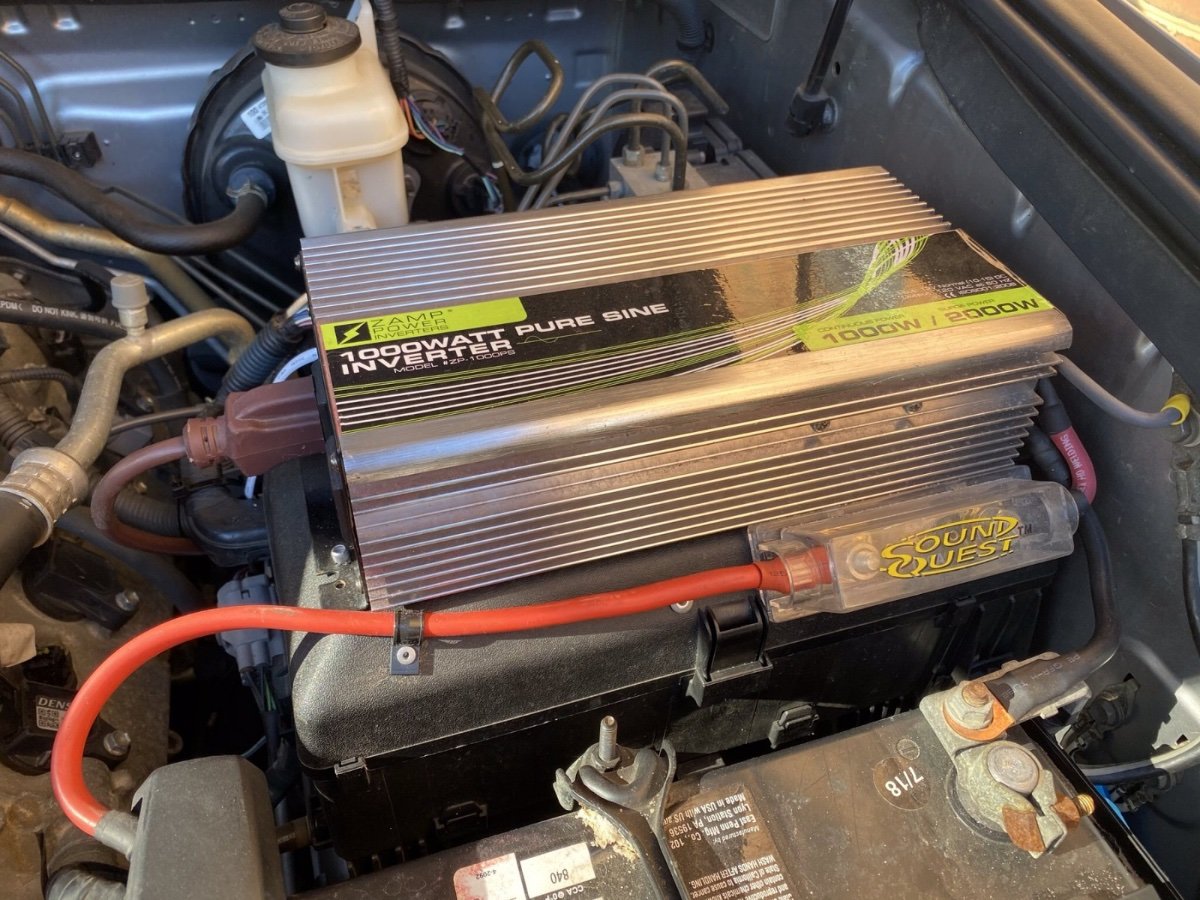
Edit 10/16/22, in case that link disappears. Yikes! He mounted a 2000 watt (surge) inverter in the engine compartment; these units will shut down at temps above around 150 degrees F. The heat is really bad for them. And no way is that unit OK for a wet environment like that. Zap! He ran a 120 VAC 16 AWG live household extension cord past the engine, exhaust and under the truck chassis! The first is just poor planning, the second is super dangerous and against all kinds of codes and logic. I did not read any further, this is criminal. Please do not do this. John Davies Spokane WA
1 point
-
https://www.airforums.com/forums/f449/charging-lithium-batteries-from-our-tv-217112.html1 point
-
My onboard Progressive Dynamics charge converter itself draws 725 watts, around 6 amps AC. If you flipped off all the other circuit breakers you might be able to get by with a 1000 watt inverter. But if any other circuit was live and drawing power, like the microwave, then it would not carry the load. Regardless, going from DC to AC and back to DC to charge batteries is really inefficient. And that 1000 watt inverter would need a 6 AWG supply cable. John Davies Spokane WA
1 point
-
Keep in mind that a simple converter is not a “smart” charger, it relies on a battery’s built in BMS to prevent cell damage. I would be happier with the more precise control of a real charger. I peeled off the Redarc charger info onto a brand new thread since it addresses more than just isolation. Let’s add comments specific to that particular unit here: https://olivertraveltrailers.com/forums/topic/4759-redarc-trailer-charger-mounted-inside-the-ollie-for-100-lithium-charge/ Thanks. John Davies Spokane WA1 point
-
John, These are great points. I lean towards placing the 12 12 DC converter in the trailer and a new power line from the truck to the trailer for charging, however, the potential for parasitic discharging remains via the 7 way connector. I guess a proper low Vf Schottky diode could be placed inline to address this issue. I need to think about this for awhile. Maybe others have already solved these issues?1 point
-
I replaced my gear. Be sure to look at the link in John’s first post that takes you to the RV upgrade store - before you disassemble. I over disassembled looking for the problem without properly researching and made the job twice as hard. It actually is pretty easy besides having to get on the roof.1 point
-
I am really glad this topic is once again being discussed. After we finish the Oliver install (upgrading the panels), we've been thinking about an additional panel on the outriggers of the radar arch, where we would have far fewer shade issues. I was looking at a fixed high wattage single panel, from a different manufacturer. I'm rethinking this solution, as adding another controller won't likely be easy. And, we have plenty of room on the Victron controller for a 300 watt panel of similar voltage. We'll see. More time to think. One install at a time.1 point
-
I remember reading in a number of places that mppt vs. pwm was not a big deal in efficiency in small installations. I do suspect the marginal gain of an mppt controller is most important to those of us who live on solar, and stay put for more than a few days at a time at unserviced campsites. The availability of service for Zamp probably drives Oliver's selection of Zamp as their product. All the big manufacturers use Zamp. And, it's well built and reliable, from what I've read.1 point
-
On the boat, with six x 100w panels on the hardtop Bimini, Paul compromised. Each two panels are wired in series, then all three strings in parallel. The two panels in series were selected by likeliness of being shaded at the same time. But then, we have all those shading obstructions, mast, boom, and, underway, sails. The Victron equipment has been great. We haven't had to plug in since the install, and even when the alternator failed in the last trip, the batteries were always charged.1 point
-
The obvious solution is one very large panel.1 point
-
We were having the same problem shortly after delivery so we just place a drop of caulk on each lower window clip only; this will solve the problem.1 point
-
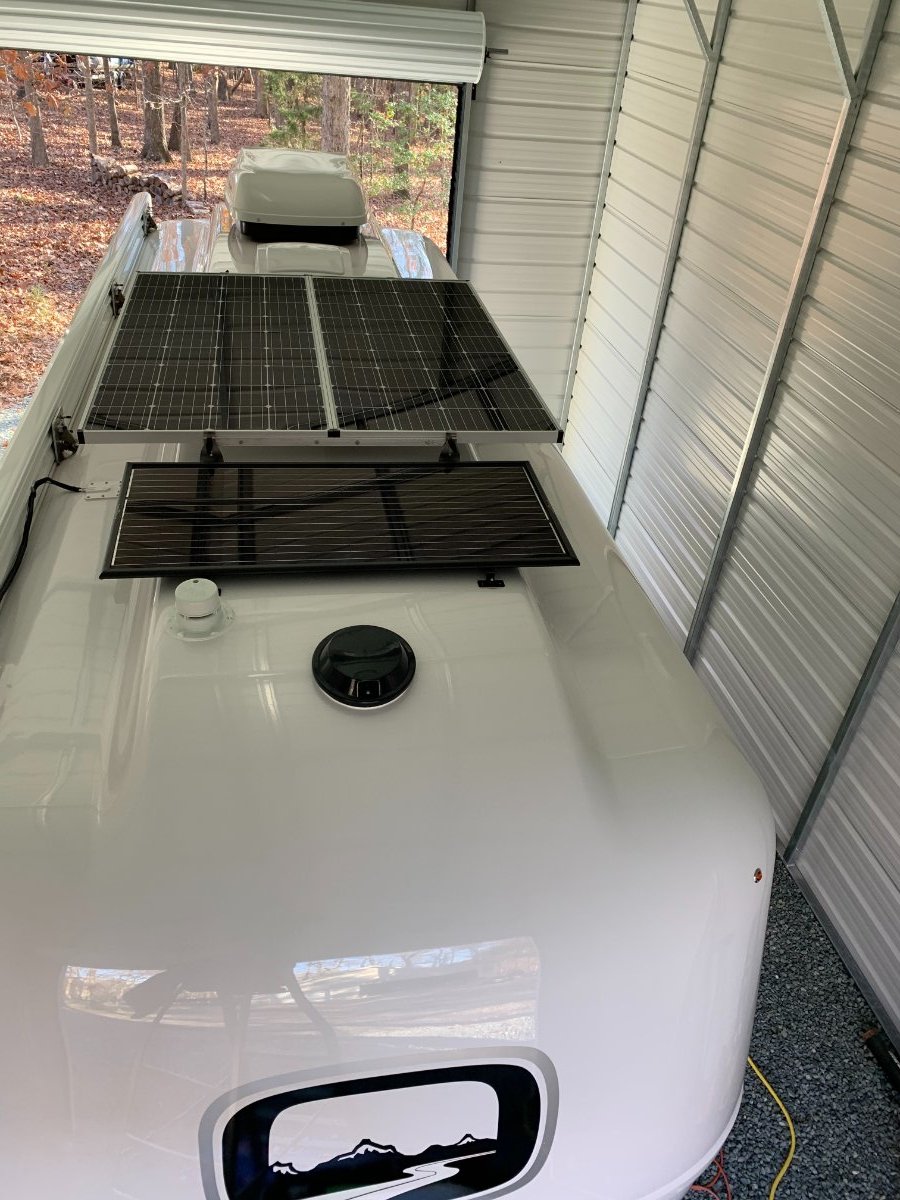
Here's a picture of a partially installed Zamp Obsidian 100 Watt panel on the front part of the roof. This super simple addition doesn't require any changes to the standard Zamp 30 Amp charge controller or access port on the roof (there are only 2 of 3 ports used). Anything additional will require an upgrade to a 50 or 60 Amp charge controller. There's still a decent federal rebate for solar this year. Before anyone goes crazy, I haven't finished mounting this yet. I've got a question in to Jason about using some sort of stainless screws in addition to the VHB and then I'll seal it up with 3M 4200 just as Oliver did to the mounts on the other 2 panels.
1 point
-
Lucky you, living nearby. Our trip home will be at least 8 days. Isn't this fun??!!!1 point
-
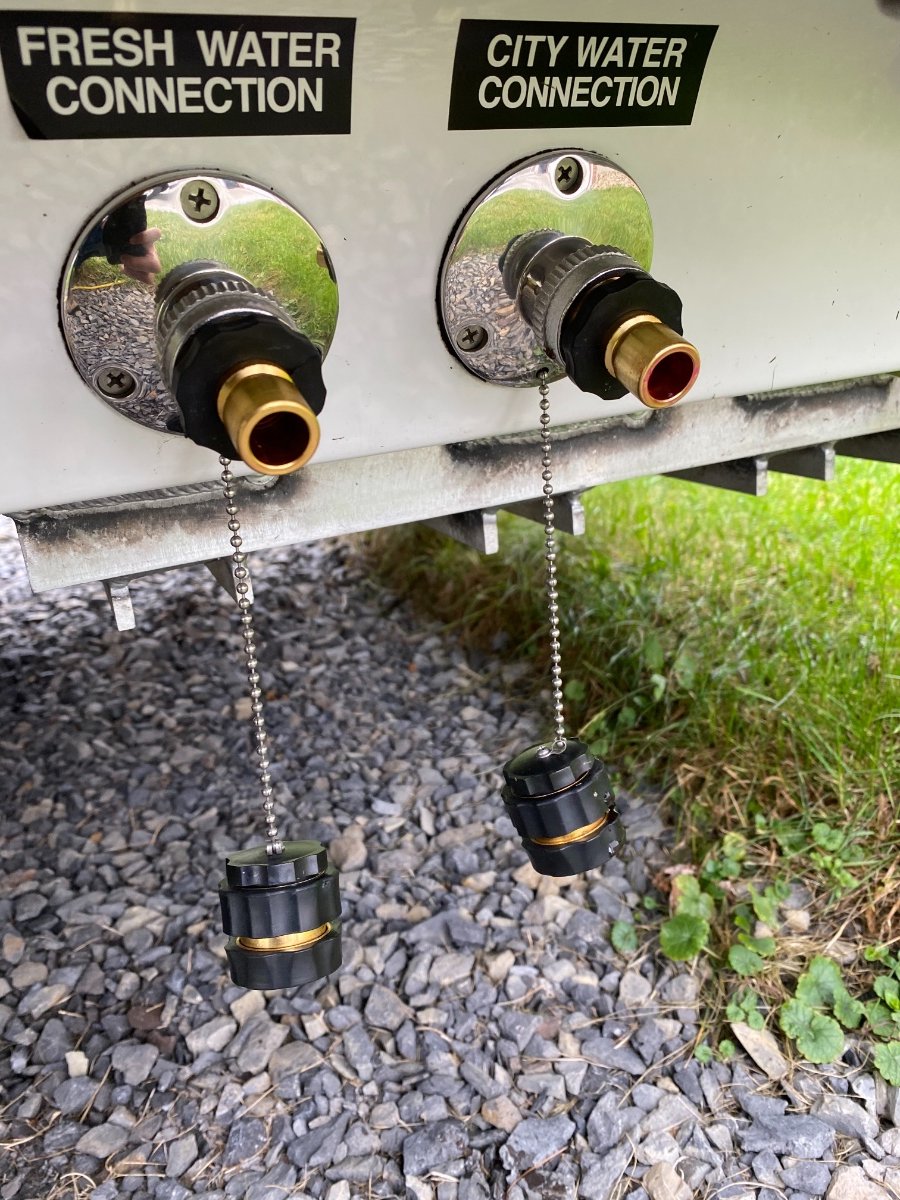
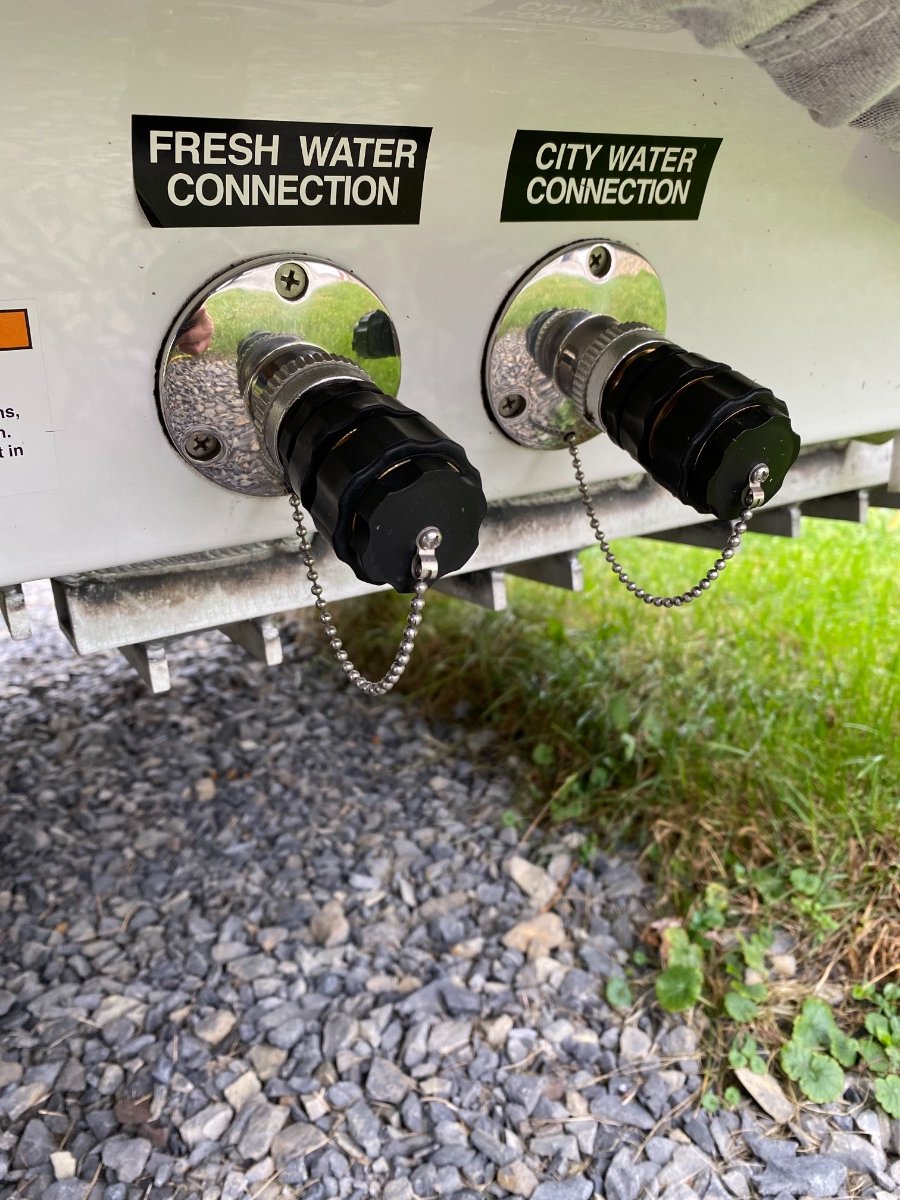
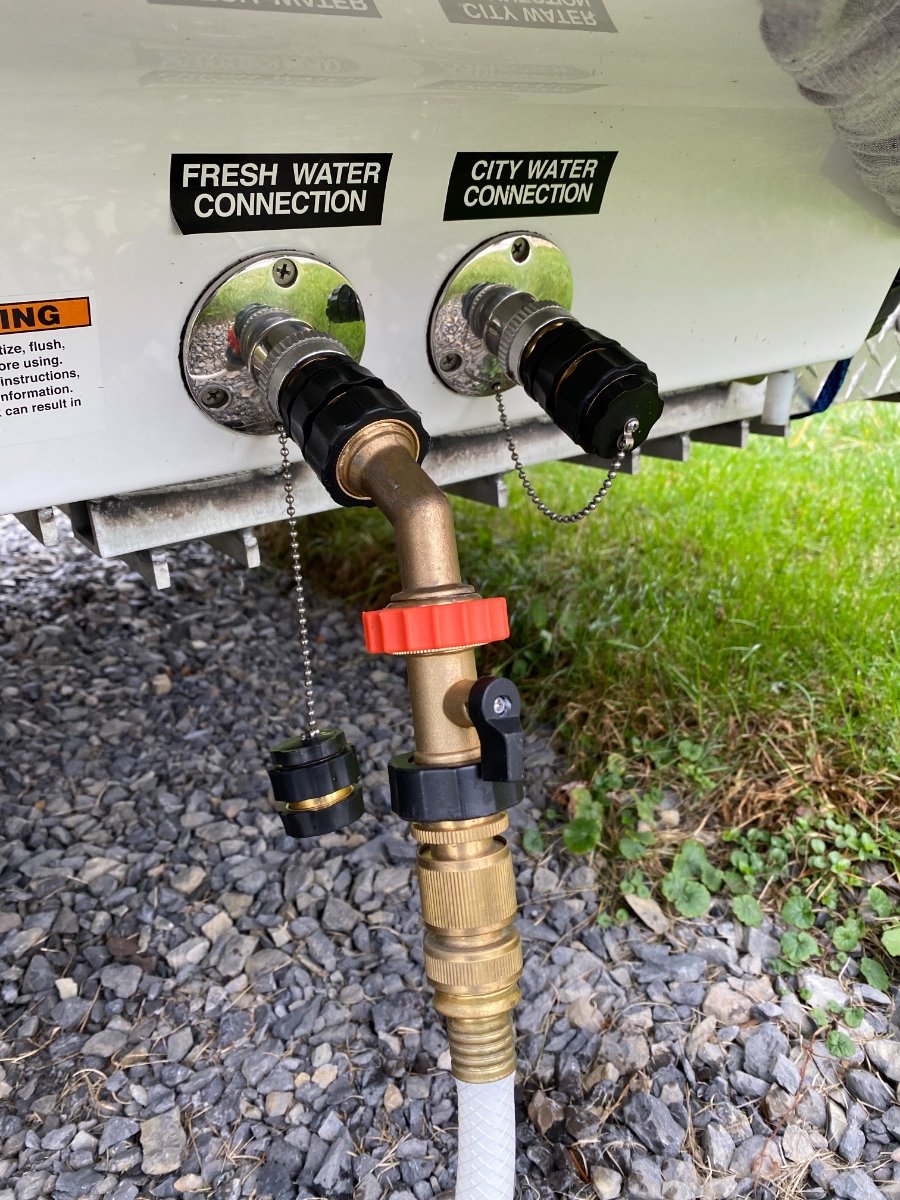
I use quick connects on all of the water connections on our Ollie. Makes setup and tear down at campgrounds a lot faster. Bought extras so I could have one attached to the cap that is already on the fittings. And I put a 1/4 turn ball shut off valve at the hose end to turn off the water quickly anytime we leave the camper for an extended time. And a 45 degree elbow so it doesn’t stick out too far.
1 point
-
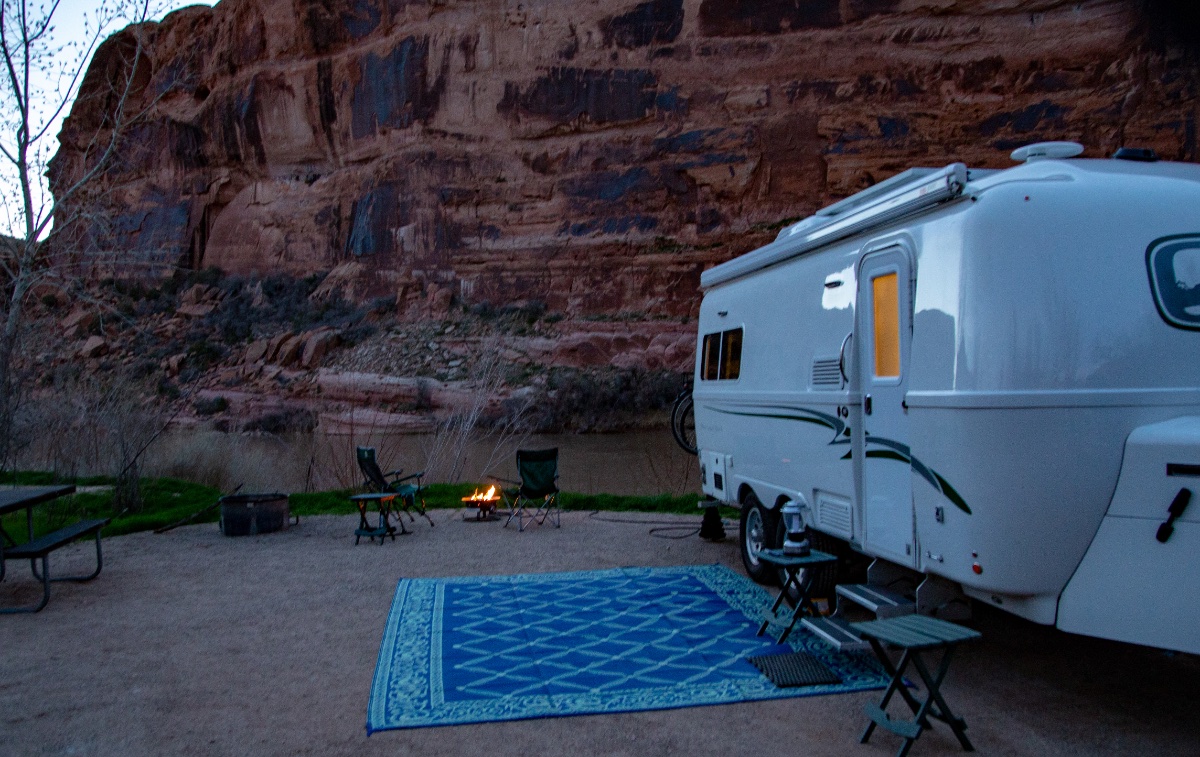
This is Goose Island Campground, just east of Moab. We got a lovely campsite right on the Colorado River. This is a BLM campground, so only a picnic table and pit toilets; this qualifies as boondocking in my book.
1 point
-
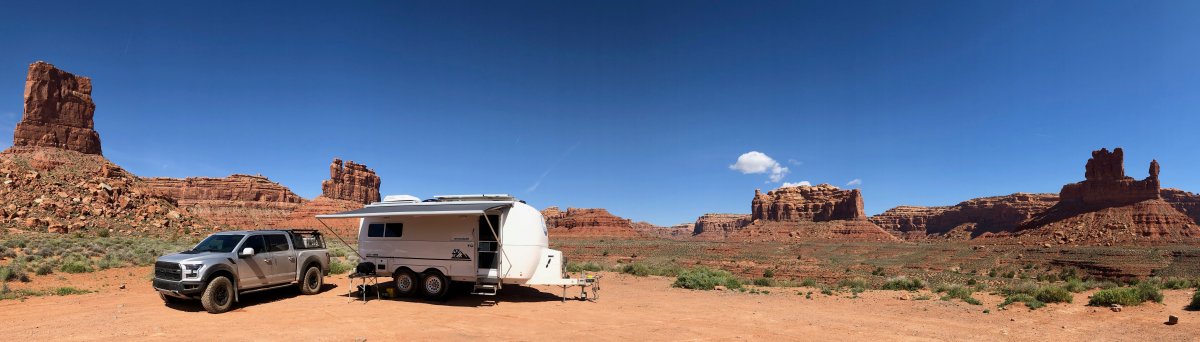
Valley of the Gods
1 point
-
Congratulations on your new trailer! I hope to buy one in a couple more years. Enjoy the journey!!1 point
-
Whatever the name, your counters are lovely.1 point
-
Susan, yes it's a 2020. The color of the counters was called Samba.1 point
-
So is yours a 2020? I looks like you have the Black Dakota fiber granite which isn't an option for 2021. Our #699 will have the Midnight Decor with Mont Blanc counters which was my choice before the ala carte decor choices were eliminated. 40 days and counting!1 point
-
After Paula and I ordered our 2019 LEII we both spent considerable time reviewing the forums for the tips, techniques, and trouble descriptions that folks have contributed. I remember some posts about having ready spares on hand, particularly on longer trips, and we had plans to do that so I purchased some ready spares, tools required and recommended, and additional materials to facilitate repairs. As it turns out, We are camping in Pittsburgh, NH today and for the next few days near the main source for the Connecticut River which runs between NH and VT through western Massachusetts, central Connecticut and onto the Long Island Sound. This is our first trip this far north in our home state of NH. We get to Ramblewood Cabins and Campground, find our site and proceeded to setup. We eventually started thinking about supper. Paula was prepping ingredients when she noticed the Truma light flashing on the control inside our Ollie. I went outside to review the flashing light pattern, got the manual out and read the description which indicated a propane issue. I had already turned on the propane tanks, but checked again to be sure. I had recently filled the tank that we had emptied on our last trip. I asked Paula to try the stove and she reported no propane at the burners. I checked to see if both tanks to insure that we had propane in the tanks and we did, but the regulator showed red aka empty on the tank we used last and when I manually switched to the recently filled tank, it also showed red. I remembered a post from folks about having a bad Fairview regulator either on the Oliver forums or one of the Fulltime RV forums on FB. One of my ready spares was a Marshall dual HC regulator. I found it in the basement and pulled the bag with the pipe dope and leak testing fluid. I removed the offending regulator. I installed the new regulator, reconnected the propane, leak tested and gave Paula the heads up to light the stove. Voila, all is well. I will open a service incident with Jason as we are still under warranty and get a new ready spare.1 point


.JPG.9f42d507862de5a4f29e9caaed2cd4d2.JPG)


.jpg.4a1d2c2bbd1b6277f08b91fd704aa48c.jpg)










.thumb.jpg.780a61c48108d06558e15f745dfe9b5e.jpg)









-
Recent Achievements
-