Leaderboard



Popular Content
Showing content with the highest reputation on 04/11/2023 in all areas
-
Just so everybody is on the same page, the bearing Kit shown above is for the 3500 pound axles used on the Elite II's through 2021. In 2022 Oliver started installing a 5200 pound axle on the Elite II models. This axle is the same size that has always been supplied on the Elite's except it is de-rated to a 3500 pound weight capacity due to using a 4 leaf spring pack (3500 lbs) instead of the normal 5 leaf spring pack (5200 lbs.) These new axles are now standard with Dexter's Nev-R-Lube Bearings. If you have a 2021 or earlier Elite II with the standard bearings they cannot be replaced by the Nev-R-Lube style. There were changes made to both the hub size and the spindle size. The complete axle would have to be replaced. If you have a 2021 or earlier Elite I it will require the standard bearings for a 5200 pound axle. If you have a 2021 or earlier Elite II it will require the standard bearings for a 3500 pound axle. Advantages with Dexter's Nev-R-Lube Bearings: * No need to pull the hubs to repack the bearings or replace the grease seals when checking the brakes. * No more inner and outer bearings. Just one sealed bearing cartridge. * Pre-set adjustment means installation is easy and human error is virtually eliminated in bearing adjustment. * Pre-lubricated at the bearing factory providing resistance to contamination. * Sealed for life which means increased durability and reliability and no more bearing maintenance. * 5 year or 100,000 mile warranty against defects in material and workmanship. I do want to emphasize if you do have a trailer that has the Nev-R- Lube bearings installed there are periodic checks that need to be performed to make sure they are in good working order. Nev-R-Lube Bearing maintenance needing performed every 12 months or 12,000 miles. 1. Elevate and support the trailer unit per manufactures instructions. Never jack the trailer up on any part of the axle. Always jack the trailer up on the main frame rails of the trailer. 2. Check for excessive wheel end clearance by pulling the tire assembly towards you and by pushing the assembly away from you. Slight end play is acceptable. 3. Rotate tire slowly forwards and backwards. The wheel should turn freely and smoothly. 4. Excessive wheel end play, restriction to rotation, noise, or bumpy rotation should be remedied by replacing the bearing unit. Note: A slight amount of grease weeping from the seal is normal. Excessive leakage may indicate abnormal bearing operation. The important thing to remember is that even though this bearing is sealed and does not need lubricated it still needs to have a yearly inspection for the end play. Having this checked will hopefully keep you from having wheel bearing issues on that next adventure you are planning. If there's a downside, it would be that if/when you need to replace them it will cost a lot more than the old style bearings and seals. A sealed Nev-R- Lube bearing Kit -42MM CARTRIGE & ATTACHING COMP, FITS 5,200 LB & 6,000 LB AXLES - Part #K71-997-00 will cost over $300 per wheel. I would be remiss to only replace one at a time.4 points
-
To Oliver Owners considering the 13500 BTU Truma Aventa retrofit. In the last few weeks, I have been working with Oliver Service on incorporating an optional Honeywell digital thermostat to run the Dometic furnace. This optional thermostat will replace the Dometic mechanical thermostat that Oliver has been installing. I learned good news today from Service Manager Jason Essary that my suggestion to use the Honeywell digital thermostat was tested and approved by Oliver engineers. The Honeywell digital thermostat will be offered as an option for owners having the Truma Aventa retrofit done. Optional Honeywell digital thermostat -https://www.amazon.com/dp/B00H6ARNXO?psc=1&ref=ppx_yo2ov_dt_b_product_details We will have the Honeywell thermostat installed in May when we have our Truma Aventa retrofit install completed. For any technical questions please contact Oliver Service @ 1-888-526-3978 Happy Camping! Patriot🇺🇸2 points
-
No intent on hijacking John's original thread topic - but we ran Michelin Defenders on our previous trailer and got about the same age and mileage from them. We live in a high UV area of the Rockies and used dual axle white wheel covers (secured on backsides with bungees) whenever the rig was not in its protective "Hangar." I'm thinking the covers helped a bit but don't have any empirical/quantitative data to support the observation. But after 7 years and 40k+ miles, the tread wear was incredible, however the sidewalls (inside and out) started showing signs of UV cracking - we bought another set at that point, FYI. May have waited 12-18 months too long to make that new tire set investment... IMHO2 points
-
When I bought my Ollie used, the previous owner gave be the tire covers he bought. I use them all the time when the Ollie is in storage (outside). They fit over both tires and I use bungee cords on the back side of the tires to hold them in place since we have a lot of wind in the winter. They do a good job of protecting the tires. The tires are still in good shape with plenty of tread and no signs of deterioration.2 points
-
@topgun2: Replaced the frosted door window with a clear glazed Louvre mechanism - don't have to open the door to see who's a-knock'n! Short gas line - exactly right on! I've got the 10-footer, but not compatible (yet) with the QD forward propane outlet because of the grill's gas regulator... Need a hack! HA! @Patriot: Temps are awesome - FINALLY! We've had a long cold winter. Temps here are low 50's to high 70's - spring has sprung in the Rockies. Just have to wait for the wind to stop... we don't like the wind. I'll take cold, rain, snow - you can have the wind!2 points
-
Hello to everyone and I'm glad to have this forum available1 point
-
Excellent comment.... but only up to the point of running out of roller. The root cause of "barber polling" is likely that the canopy has been stretched and is no longer a rectangle of the size it once was. This can easily happen over it's lifetime. Or it can be the direct result of owner error in adverse weather conditions such as high winds and/or heavy rain. Mine appears to have been caused by my lowering the outboard rear end support brace to the ground for the purpose of forcing rain to drain near the rear (Away from the door area). Was a great idea...up to the point that it wasn't. When it stretched they generally become a parallelogram. The amount of "barber poling" that a given set-up can tolerate is dependent upon how much extra top roller space you have. If your canopy is say 14 feet wide and your top roller shaft is two inches longer, then you can adjust the canopy left or right to allow for up to 2" of wonky roll-up. This is what my OEM Carefree (SIC) OTT canopy had. Problem was that I needed three more inches of top roller shaft.... For this reason, when ordering replacement canopies, I recommend buying one at least several inches narrower than the OEM canopy My new one has four inches of such space. With that space, it is possible to do as you suggested several times and not have to replace the canopy. Which I hope to make a moot issue by not being creative in my canopy drainage plan..... Cost Saving Rule of Thumb: Don't let water pond on your canopy. Crank it in and lower the leading edge so it drains well if rain is in the forecast.1 point
-
If you're going to tow, then obviously get a vehicle equipped to tow. It's all about the numbers, tow capacity, cargo capacity (payload), gross combined weigh capacity, and even tongue weight capacity. Point being many vehicles are well within their overall capacities or ratings to haul an LE2 around the country. Like others have said it needs to fit all your needs and requirements. If you are getting a tow vehicle to primarily serve that purpose and the other needs are secondary, get plenty of truck. Ease of towing and handling the weight of the trailer will make the overall experience more enjoyable. Also with plenty of extra capacity the truck doesn't work as hard and will last longer between service intervals. The harder your tow vehicle works, the more you will have to attend to service needs. Lastly, once you are into a full size truck, the size of the vehicle becomes a moot point. A short bed crew cab half ton sits in essentially the same space as a short bed crew cab 1ton. The half ton will be a little more nimble driving around, but the 3/4 or 1 ton will be more nimble with the trailer attached, and won't require WD hitch system. And the heavier trucks will not work as hard and will have much more cargo capacity, something you will realize at a point is very much needed for most folks. My tow vehicle of choice is in my signature line. It was purchased specifically for our LE2 adventures.1 point
-
Ditto @topgun2's comments - 100%. FYI: We used a 2015 RAM 3500 turbo diesel crew cab, 8' bed for 6 years as our TV, but.... it lived outside, wouldn't fit in the garage, and nowadays diesel fuel is fairly "spendy." We never had an issue with maxing out payload, tongue weight - ever. The TV basically never even "knew" the Airstream was back there. Overkill? Not in my world. I came from a field where there was no such thing as, "too much power" (or too many missiles...) That said, we did a TV downsize last year when making the Oliver transition. Now we're easily pulling our rig with a gasser and must be mindful of payload, tongue weight, and overall GVW. Oh, and the TV fits in the garage - YES! Regarding whether or not an OEM tow package is worth it? Seems to me to be a "must have" feature, if only for the factory brake controller and 7-pin receptacle, IMHO. Best of luck in your searching efforts, brother! Art1 point
-
Yes - I was an early adopter of that window replacement - sure does beat the heck out of most of the other alternatives I was using prior to the simple install. I'm sure that you'll get that gas hose figured out before the really hot weather comes. Bill1 point
-
How much will you travel and/or carry? Most 1/2 tons can easily tow LEII but you can hit payload limit depending on how you travel. If I did not have TV I’d buy F350 with 7.3 to max out payload. You do not need a diesel to tow an Oliver. Nothing wrong with them but it will take a lot of miles to cover cost delta. BTBRV is great channel for towing. He even suggests gasser when under 10,000 pounds. Whatever you get absolutely get tow package I have F150 with max tow. Tows my LEII easily. I do not really like having to use WDH but it is needed per Ford. I have truck camper on order so actually upgrading to F350 for payload. If I wasn’t getting truck camper I’d stick with my F150.1 point
-
I have read that a general rule of thumb is to replace trailer tires at 6-7 years of age. These numbers are beyond my risk level of comfort. I will likely replace ours at the 5 yr age mark. I would say you are right, listen to your gut, you’re riding on borrowed time. A visual of the exterior of a tire is ok, but the age of your tires and the things you and your tire tech can’t see in the aging rubber and internally would keep me awake at night. I would replace them as soon as possible if it were my Oliver. https://www.discounttire.com/learn/tire-aging Patriot🇺🇸1 point
-
We've had these for 2 years in New England: Explore Land Tire Covers 4 Pack - Tough Tire Wheel Protector for Truck, SUV, Trailer, Camper, RV - Universal Fits Tire Diameters 26-28.75 inches, Tan & Khaki https://a.co/d/e20v5uu (We have the stock Cooper 235/65R16 tires.) They fit snugly and seem to be good quality. We've always covered our trailer tires in storage, mostly because we have a short camping season. My understanding is they're more prone to UV damage when they're sitting still because the oils in the rubber aren't getting moved around. Maybe an urban myth but I feel better with them covered.1 point
-
We live on the Northern Ca coast and are still running on the original 10 ply Michelin's that came on the trailer. The trailer was delivered in 2016 and had traveled about only 4,000 to 5,000 miles when we purchased it mid-year 2019. We had to take a year off due to medical issues but have put on about another 20,000 miles. Estimated total milage of 24,000 on tires. Lots of tread left but have been concerned about their age, UV and general abuse due a lot of off road activity. Took them in for a good inspection while rotating last November. I was ready to purchase new tires due to age. Joe, my tire guy said they have evidence of off road travel but the rubber is still supple, no aging on the sidewalls, plenty of tread and in good shape. He talked me out buying new tires and told me to run them one more year. Still concerned about age of the tires, I had My RV guys inspect the tires when repacking the bearings In Feb. He gave me the same report. Nothing wrong with the tires, run them another year. Although in good condition, I hope i'm not operating on borrowed time. Why all this information when you are asking about tire covers? If you live west of the cascades, our climate is much like yours. Our trailer lives outside year around. A lot of our off road adventures are in the hot desert. The tires are 6+ years old and we have never used tire covers. UV tire damage is a real thing but but after getting 7+ years from my tires, I question if tire covers are worth the hassle for trailers stored west of the cascades. I have invited some conversation on the need for tire covers but please don't let my post hijack John's original post wanting recommendations for good tire covers1 point
-
My awning uses three spring arms. I haven't specifically inspected the elbows but have been up close and personal with them as I attempted to blow out any debris which could have gotten inside the arm enclosures. I didn't notice anything unusual but will inspect more closely. As best as I can tell, the tarp opens symmetrically. Keep in mind, the first half of the opening is accomplished by me pulling the tarp out while the motor is unspooling it. Somewhere in the 50-60% range, it will operate on it's own and it continues until the knees lock out at full extension. It looks symmetrical at that point. At no point of this process does it look uneven. It stops opening at roughly the same place which is only an inch or two out. It clears the cassette enough for me to get my fingers in and grasp it to pull it out. There is no audible difference in the motor sound at that point. There is a manual crank which the owners manual says is for emergency retraction in case of motor failure. I don't know if it can be cranked out but will try it tomorrow as well as pushing in on the arms at various intervals to get a sense of different tension. At no interval is there any obvious difference in the tarp tension. It stays pretty even and taut. As to the next step, I will probably bow out and make an appointment with a Girard dealer if the above actions don't turn up the culprit. I really appreciate your time and thoughts on this. Either way I will report back and let you know what happens. James1 point
-
James: Ok, now down a notch in the test and eval: I assume your arms are "spring arms", and not gas strut driven arms. Please verify. Would be a good idea to inspect the "elbow" of each arm and check for any cracks that may reflect their having been broken. Does the tarp open symmetrically? Possible weak spring arm. Does it stop opening at the same place each time (Possible gear jamb at the motor.) Does your awning have a manual crank? If so, can you crank it open manually? Is it a smooth operation or does it bind in the process? If so where? Opening with a crank tends to be easier (Has spring assist and gravity) than closing against gravity and the springs as well. If you were to incrementally open the awning, and push on the arms, do all three of them feel as if they have the same tension on the tarp? Try again at various stages of opening. Focus before and after where it tends to bind up. If no, likely one of the arms has failed or partially failed. The next check has some risk and you should have two beefy helpers. Open the awning 100% fully and carefully mark where each arm bolts are attached to the leading edge. Open, the arms should have most of their spring tension released. Place ladders under the leading edge to support the awning leading edge. Tie them WELL to the awning leading edge for security and support. Cautiously remove one arm bolt at the leading edge and verify you can handle any remaining spring tension. If yes, untie the arm, and manually check the spring tension increases more or less lineally as you push it in the closing direction. You will be pushing directly towards the arm upper attachment point. You only need to push it part way to know if the spring closer is operating smoothly and with increasing tension. As you move towards the trailer, the spring arm resistance will increase greatly. Don't even try to go further than you can handle those increasing forces. The elbow will be closing and the action should be smooth. If so, all is good. Reattach the arm to the leading edge as marked. Tighten its bole and repeat for other two arms. This will identify if one of your arms is defective. If the above is inconclusive, then likely you have a motor/gear top spool issue and I do not recommend you doing further testing yourself. Time to get it to Girard experienced technician. I hope this helps. Hopefully other owners with this awing have additional ideas or any concerns about the above. If the above does not id the problem, I'm at a loss as well. GJ1 point
-
Hello Mark, and welcome! As a new owner myself (12 days), I appreciate your interest and enthusiasm. There's a wealth of knowledge and support here on the forum. It really is way above the norm, from my experience.1 point
-
The quality of posts on this forum, the quality performance history of Oliver's Service Department and the overall quality of Oliver travel trailers all persuaded my wife and me to pay the premium, and drive all the way to Tennessee, to acquire our Elite II last November. Our only "camping" experience in it so far has been the 2000+ mile "shakedown" drive back to home to Idaho. It remained stored during the longest winter experienced in central Idaho for many years. Yet so far, none of the three things mentioned above (the forum, the Service Department and the overall quality) have disappointed. Today we head out for the Oregon Coast for our first actual trailer camping experience with the Elite II. We expect it will perform well. Following in the footsteps of so many who have provided informative posts on this forum, I will report any issues that arise.1 point
-
Welcome to the Family, Mark. Normally I'd strongly suggest that you seriously consider attending the upcoming Oliver Owner's Rally, but, I see that you are located in California. That's a bit of a distance to travel even though it does provide an opportunity to see a bunch of Olivers and talk to their owners. In years past, shortly after the Rally pictures and sometimes even brief shots of some of the presentations will show up here on the Forum. This many spur questions on your part and if it does then be sure to ask while these things are still fresh in the minds of those that were fortunate enough to be there in person. Bill1 point
-
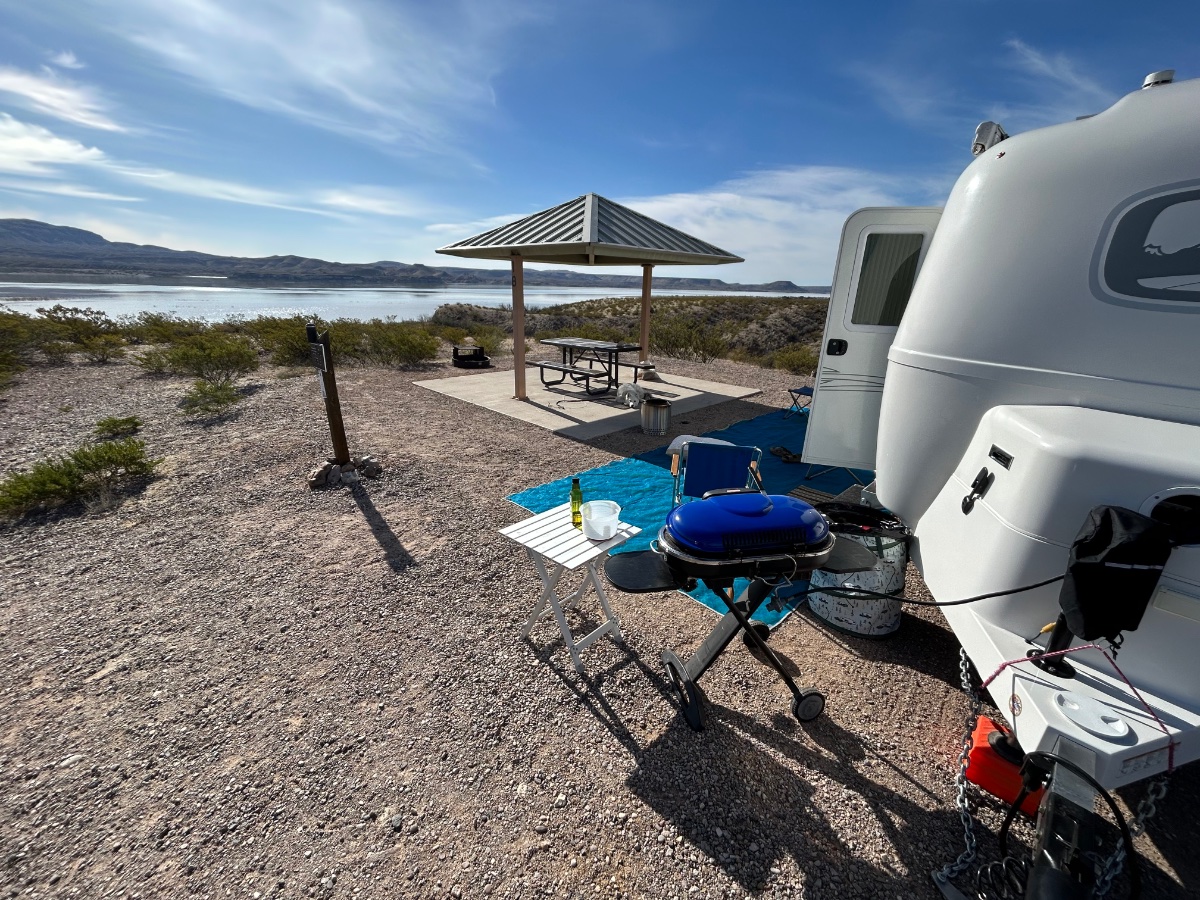
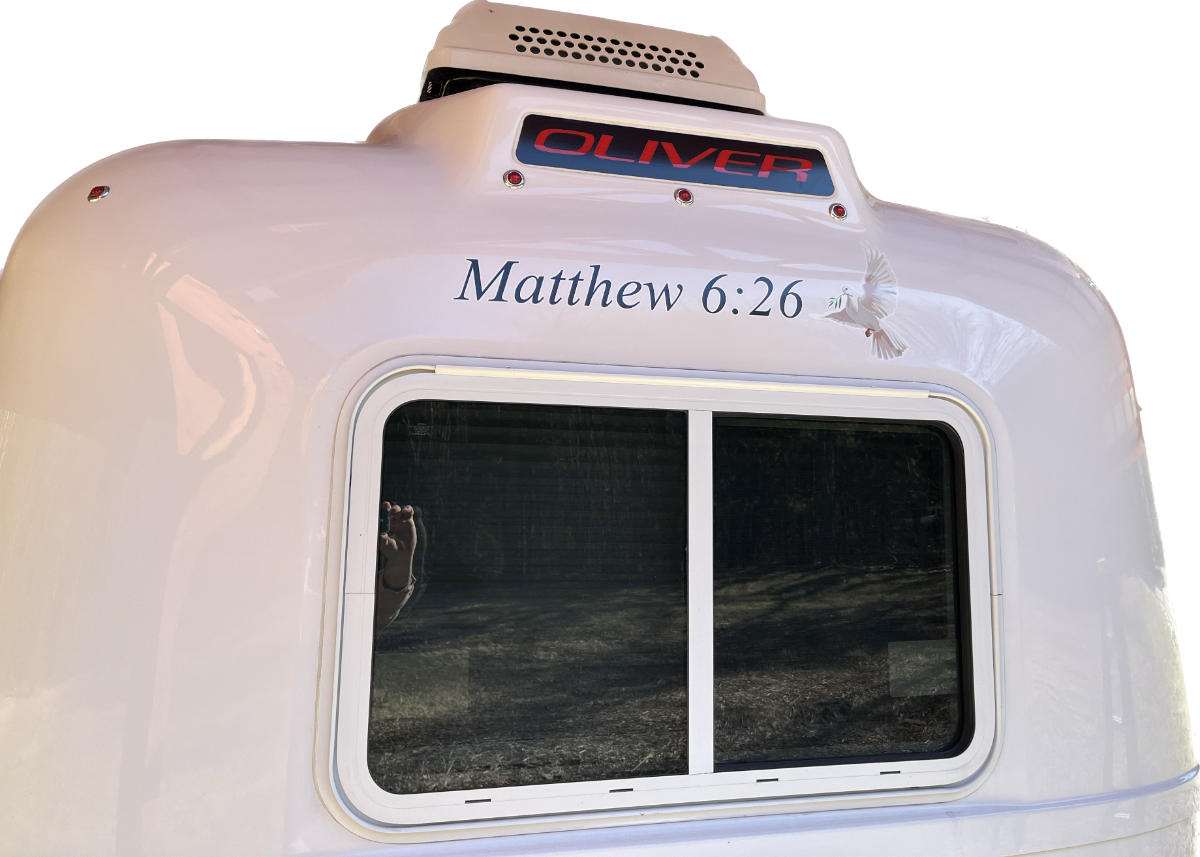
Happy "late" Easter Sunday from Elephant Butte Lake State Park - New Mexico.... 1st "official" camping trip with our new-to-us Hull #226...
 1 point
 -
Happy Easter :)1 point
-
I have the CareFree unit and as others have previously stated "It for sure isn't". That awning is THE most time intensive frustrating bugger I have worked on Ollie. I hope that your Girard 750 is much less so. Three cautions: Awning arms have tremendous torque and if not very securely roped down when doing service can get away from you in an instant. If it does, it will "Break it's back". I made this mistake and have one new arm. Be sure to read the owners manual and hopefully Girard has videos as well. I watched all the Carefree video's except one. See Item 1 above. All awnings stretch. So don't lower the back corner to cause rain to avoid falling off the awning near the entry door. Over a couple of seasons It will stretch the fabric and then it will not roll up square on the tube. When that happens you'll have a problem rolling up the tarp. I found out that this is a great way to have an opportunity to buy a new awning tarp. And also to learn about Item 2 and then Item 1 above. Needless to say, I really dislike working on my awning! As John D. says "Lots of bad words"......... GJ1 point
-
happy Easter everyone 🙏
1 point
-
A slightly less cost approach....... 2021 Elite 2....just completed replacement of my Dometic jet engine with the Truma Aventa Eco. It was installed by the Lakeland Florida Truma service center. So far, it seems to work as advertised...no opinion yet using the remote...seems simple. Hot weather performance test pending!!! For the heater....the Truma installer recommended we keep/use the Dometic AC control box and thermostat vs a mechanical or Emerson digital thermostat. I used the propane heater while camping this last week. Using the Dometic thermostat was no issue. Cost = $2,705 walk out price....includes Aventa ECO, Aventa Air Distributor, Condensate drain kit and installation labor. (included tax was 7%)1 point











-
Recent Achievements
-