Leaderboard




Popular Content
Showing content with the highest reputation on 03/04/2024 in all areas
-
UPDATE: I was indeed the grounding plug! Got a new one and it charges like a champ now!! So glad it was a simple fix!! Thank ya'll again for all your help!4 points
-
Below is a photo the return air vent in the bath installed by Oliver in our 2022 Elite II Hull #1291. The photo is taken looking down; our standard Dometic toilet is visible in the upper right corner of the frame. This 3" vent allows hot air pushed into the bath by the Truma Varioheat furnace to return through the underbelly to the furnace. It does not create a draft. Below is a photo of the other side of the bath return air vent, taken from underneath the front dinette seat. In addition to this factory 3" return air vent, I added a 4" vent on the aisle side of the front dinette seat. A photo of that "owner-installed" vent appears above in this thread. The additional 4" vent further improved the flow of return air through the underbelly of the trailer. That allows us to camp in colder ambient temps without putting the plumbing in the underbelly at risk.
 3 points
 -
I wonder if they would still feel the same if they pulled a larger stick built trailer several thousand miles, then had the chance to tow an Oliver an equal distance. Also, I was hesitant about a wet bath until I saw how easy it was to keep clean. John3 points
-
I have a gas sniffer unit too for #1290. It worked great to find my leak. John3 points
-
I will definitely try this! Now if I could just keep the furnace quieter! That would be a big plus for the new Truma heater as our Suburban is like a rocket going off. Keeps the place warm though! I've been absorbing all the good ideas presented. Thanks to all. We are expecting another cold front soon so I will do some more testing. I'll also take floor temperature readings next time, could be interesting. Looks like all you LE2 folks will have to do your own due diligence figuring out return air flow but I see the gears are turning! I think it is a worthwhile endeavor. Cheers. Dave2 points
-
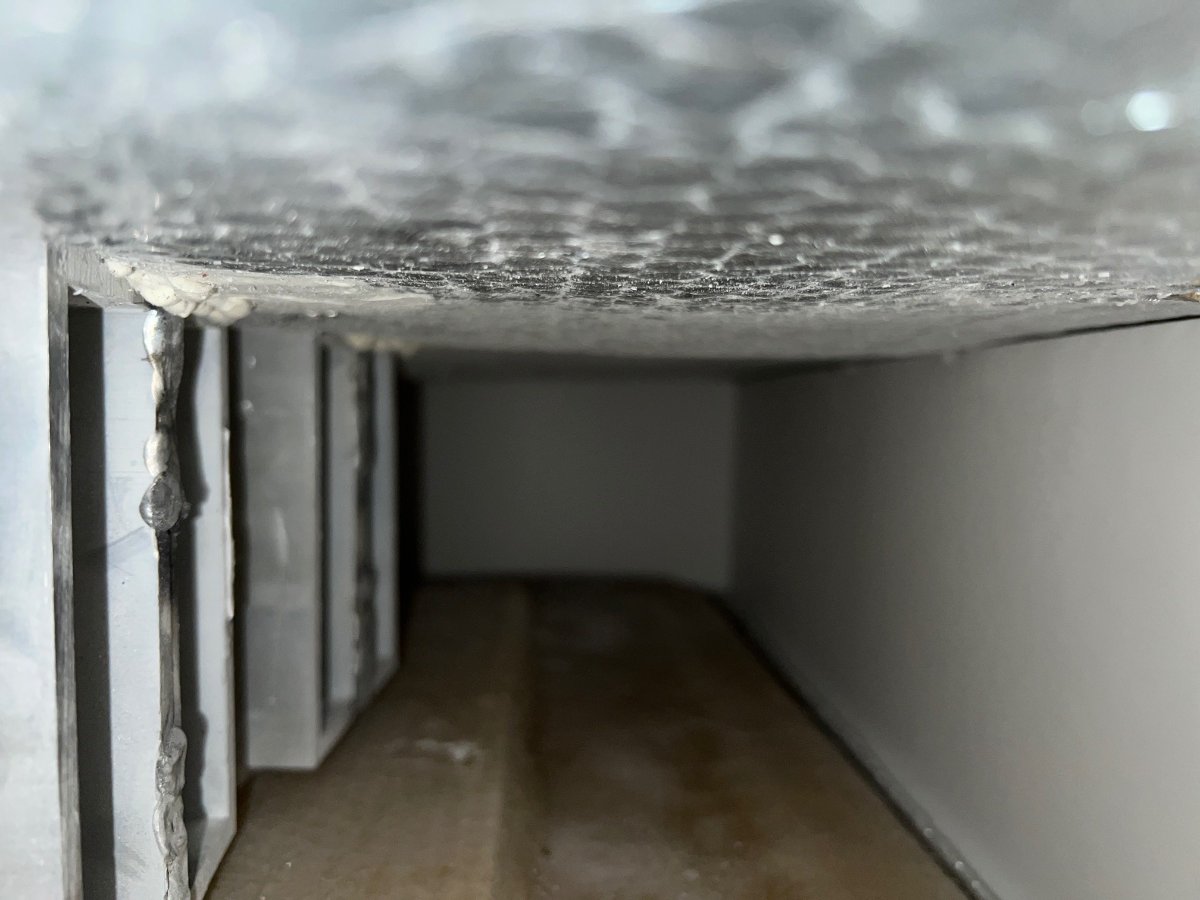
Same on my 2023 with the Truma furnace and water heater, it’s a pretty big pass through. Here’s a picture of it, I believe taken from the curb side (where the fresh water drain is) to the street side behind the Inverter. Plenty space for air to pass through.
2 points
-
Hello everyone! I am sharing with everyone how to delete your account if you ever choose to go; we sure hope you stay! But in case you ever move on and would like to delete your account, here is how! Go to Account Settings: Next choose Security and Privacy Tab: From here you can click on the "Request Account Deletion" and it will be reviewed and then deleted. Safe Travels Wanderer!
2 points
-
Michelle Kwan skated to Eva's Fields of Gold in exhibition a number of years before I actually found out just who was singing that song. I was seated at a dinner party one night when I heard the song playing softly in the background and YELLED, "that's it!". The other guests must of thought that I was either drunk or crazy. You're correct - "gone far too soon". Bill2 points
-
Mary Black is another wonderful artist.1 point
-
Anything Webb Pierce.... but, how come your dog don't bite nobody but me? 😄1 point
-
FYI On my LEII there is an underfloor pass through from street side to curb side just aft of the fresh water tank, and forward of the rear jacks. Plenty of air can pass though there.1 point
-
While looking around the internet for this material I came across a number of RV Van modification companies that use this stuff extensively and also sell it on the open market. It is used mostly for sound insulation more than thermal insulation though. Apparently the R value of the thinsulite is 5.2 better than nothing and pretty good for something this thin. Yep, seen the pipe wrap by the box load in the home centers and hardware stores.1 point
-
A couple more thoughts on this. Good thread though. To my way of thinking there is yet another mod to do if you decide to install a vent under the seat cavities. There is a barrier made from 1/4 inch plastic just behind the furnace and hot water heater that would eliminate any air flowing back through the basement as a fresh air return. This sheet is sort of a janky affair that is most likely meant to protect the furnace and hot water heater should stored items go flying around in the rear compartment under the bed. I suppose one could devise a heavy duty net that might accomplish the same thing but otherwise a vent hole needs to be cut into this barrier sheet. No idea if this is installed with those people who have the Truma units. I have taken mine out a couple of times to service the hateful Suburban furnace and it is a PITA to get it out then back in.1 point
-
Agreed. That is why I also installed a vent on the aisle side of the front dinette seat, to allow more return air from the front of the main cabin back through the underbelly area to the furnace. See photo below.
1 point
-
As I have pointed out in other threads, an added benefit of the pipe insulation is that it will help quiet the water pump. Put it on both the hot and cold water lines (like rich.dev shows). For those areas that you can't see and/or get to easily, simply start the in an area that you can get to and shove it along the pipe until it stops. You'll be able to get most - if not all - the pipe covered. I'd bet too that the Thinsulate will also help decrease noise levels. Bill p.s. Ace, WalMart, Lowes etc. all have this foam pipe insulation.1 point
-
I posted about my Oliver on another forum. Its small size and wet bath were the two most common attributes that made people look to other brands.1 point
-
Fiberglass or any other construction needs to be strong where it will take stress (in the case of a TT, takes wind). It does NOT have to be strong in the rear of a trailer, where it will see NO wind, and my legs and feet would love to stretch!1 point
-
I used my $27 Smart Sensor combustible gas sensor to locate a propane leak at a fitting on an outdoor propane tank at our church last year. Our noses smelled the mercaptan odorant in the propane to alert us to the presence of the leak. The sensor then isolated the source to that fitting, which was repaired. It works outside, as well as inside. I now carry a Smart Sensor detector in our Hull #1291. Then I don't have to worry about whether the stoichiometric air/fuel ratio inside the trailer is within a dangerous range when searching for the location of a propane leak. https://www.amazon.com/Detector-Portable-Combustible-Adjustable-Sensitivity/dp/B07H671NJ3?source=ps-sl-shoppingads-lpcontext&ref_=fplfs&psc=1&smid=A2PG0JPHUSQSX81 point
-
See photo below, showing both the bottom and top vents I installed. As you can see, they are cut into the wall above and below the closet door, allowing air from the main cabin to flow into and then out of the closet. I am advised that Oliver is now installing such vents in new trailers being manufactured.
1 point
-
Now you've gone and done it. You have just made all the snowflakes and liberals heads explode. Do you have any idea how much paperwork this will create? And the Darwin awards are just going to build up. It just means there will be more warning labels. How are we ever going to drain the gene pool swamp if you keep warning them? Actually, that's the way I've always done it, outside. As you (plainly) said, "NEVER, never try this in an enclosed space where gas can accumulate!" If that's not warning enough for someone, they deserve what they get. 😃1 point
-
Trust me, they do. Think of it this way: the furnace blower creates positive air pressure in the trailer's main cabin. If you left the closet door open all the time, this positive air pressure would push warmed air into the closet. The two vents work in a similar way: the positive air pressure pushes the cold air near the floor level of the main cabin through the lower vent (i.e., a hole with louvers) into the closet. As the warmed air rises, it exits the top vent (hole), creating a convection current in the closet.1 point
-
Our Hull #1291 did not come with return air vents in the closet. I installed them, one top and one bottom. Our experience has been that before the addition of those vents, the closet stayed about 20 degrees colder than the main cabin when camping in cold weather and running the furnace with the closet door closed. After the vents were added, the closet temps stay just a degree or two below those in the main cabin. Convection of heated cabin air, between the bottom and top closet vents, explains the difference.1 point
-
Yes 3M thinsulate 600L. The reflectix on the inside of the bottom outside hull is pretty much useless as far as I’m concerned. Reflectix is a radiant barrier and an air gap is required to allow the reflective surface to reflect radiant heat, like between the 2 top hulls, ie. top outside hull, gap, then reflectix on outside of top inside hull. However, with the huge open spaces between the 2 bottom hulls and the reflectix on the inside of the bottom outer hull the R value of the reflectix is approx. 1 maybe 1.5. I have added Thinsulate everywhere within reach on the inside of the bottom outside hull, including the battery and garage doors.1 point
-
ABSOLUTELY!!!!! In fact - if you even think that you smell propane (rotten eggs) don't even switch on a light or strike a match or light the furnace or light the fridge (assuming propane fired fridge) or anything that could cause a spark or open flame. Bill1 point
-
Tish Hinojosa is one of my favorites.1 point
-
On our July 2017 cross-country trips to take our daughter to college in Seattle, we found the crash site, and then went to Clear Lake and into the Surf Ballroom. Of course we listened to:
1 point
-
Listened to Chris Stapleton and George Strait concert in Denver Saturday at Empower Mile High Stadium... NICE! 70934978029__5930F5C9-B962-4BBA-89E4-AEFEA87AE9AF.MOV
1 point
-
Most of the folks went to Bigfoot (space, dry bath) or Casita (price) if they did not go stick built. I guess a lot of stick built people pull to a spot and stay there for a long time.0 points



















-
Recent Achievements
-