Leaderboard



Popular Content
Showing content with the highest reputation on 04/03/2025 in all areas
-
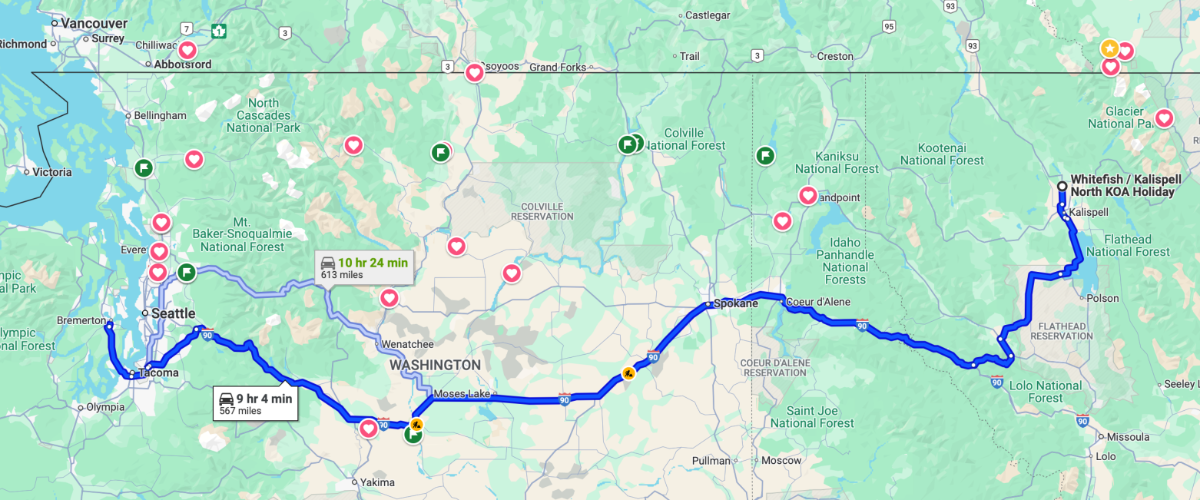
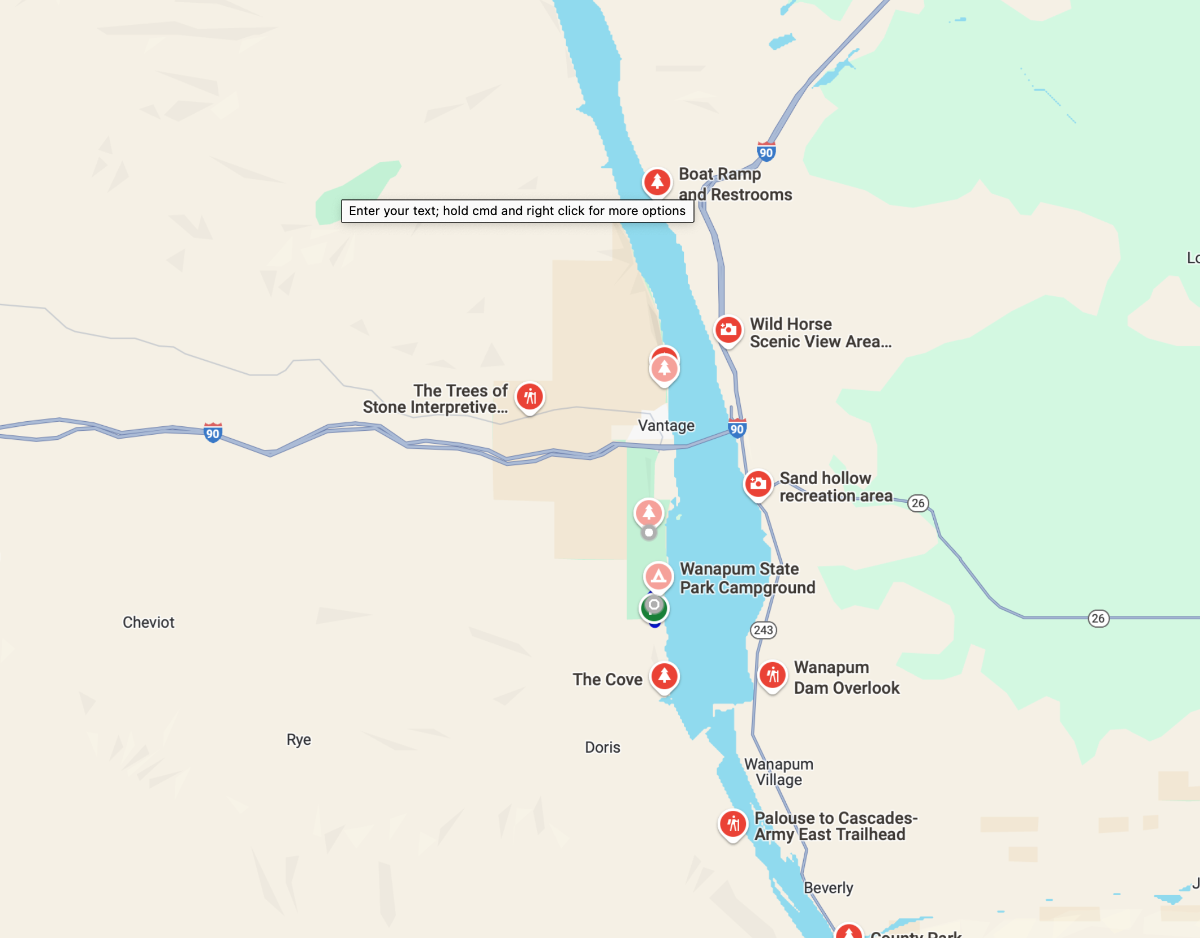
Wow that's a long driver from Kalispell to Port Orchard (almost 600 miles) so ideas below for breaking up the drive. You could stop at Beauty Creek Campground - which is bookable on Rec.Gov and about 220 miles / 4 HRs from Kalispell. 7500 Beauty Creek Rd Coeur d'Alene, ID 83814 Another longer drive day option is about 6.5 Hrs (400 mi) from Kalispell to where I-90 crosses the Columbia River. Right at the Columbia River there are a couple state parks including Wanapum State Park and Ginko Petrified forest and other areas for camping. You can reserve at Wa State Parks. (See Map Below) Good luck on your travels. Craig
 4 points
 -
FYI - Garmin has released a map update for GPS devices (at least the 890 and the 2797 models). This update must be fair large in that it took about 45 minutes to download and install. Bill3 points
-
This was four years ago. Today, I would not offer the same advice. There have been a number of users with brightway who didn't make it to the five year mark. Plus, a number of better, including lithium, choices available. Tech and manufacturing standards change.3 points
-
Thanks for the heads-up. I've got a 780, and it needed a software and map update (estimated time 3 hours).2 points
-
I replaced our original faucet early on (2017) because it couldn’t be moved or adjusted, it directed flow only to back of the sink. I don’t recall the brand, but we didn’t like it. I put in a Delta bar sink faucet that has a removable head and spray capability. Delta Faucet Essa Chrome Bar Faucet with Pull Down Sprayer, Chrome Bar Sink Faucet Single Hole, Wet Bar Faucets Single Hole, Prep Sink Faucet, Faucet for Bar Sink, Chrome 9913-DST I don’t remember a way to remove the aerator from the original faucet. MIke2 points
-
Just checked ours and the aerator and switch section can be unscrewed from the hose but the restriction looks small.2 points
-
Goo Gone or Goof Off. Then make sure you use soap and water to thoroughly clean the area.
2 points
-
Hull #527 ready for carrying bikes! After the factory tour, I wanted a bike rack receiver hitch but NOT the one they sold. At the time there was not a safe option for an 2” receiver. After buying a used LE II, I decided to look for a good welder. I am happier than ever with the way this turned out and at a fraction of the price.
1 point
-
Hull #527 additional outlet. Some people were asking about adding an additional outlet for 120v possibility. I chose this location over others and I think it turned out well! Happy drilling.
1 point
-
Thanks. Hope to see you at the October Rally in Mineral Springs1 point
-
Gary, we’re big fans of Texas State Parks. Parks that we’re familiar with around here (Boerne, just north of San Antonio)…. there’s Guadalupe River State Park and Blanco State Park. Guadalupe River State Park has a nice area in the river to swim or wade. Blanco State Park is small but nice. Further north is Inks Lake State Park, another nice (and popular) camping spot. We’ve heard good things about Perdernales Falls State Park, but haven’t been there. One of our favorites is Mother Neff State Park between Waco and Temple, not exactly Hill Country but worth a visit. We camp there often. Another park we like is Lost Maples State Park an hour or so west of here. There are a number of nice commercial RV parks in and around Fredericksburg, we’ve stayed at one (Peach Country RV Park in Stonewall) and drive by the others pretty often if you are interested. The state parks fill up fast, recommend reservations! Mike1 point
-
Empire is the brand on our 2019. The label is near the base on the right. It's very light so it was difficult to see until I removed it.1 point
-
Beauty Creek Campground is right in my neck of the woods. A great little spot not far off the freeway but far enough. The spots are all great. They are isolated so you feel pretty alone. Mineral Ridge is a hike close by that is great. You could do a driveway surf, but it is further off the road and not as nice as the Beauty Creek Campground. We are happy to help with any needs.1 point
-
PJ, what ever choice you make on the batteries, the right choice is an Oliver. It’s not just the Trailer, which is fantastic, it’s great fellow Ollie Owner, like Mossey who will take the time to answer your questions, and you will have lots of questions, after you get your Oliver. Hope to see you at one of the Rally’s. Lake Guntersville Rally is at the end of April. You would learn a lot and meet some great folks.1 point
-
Gary, I did purchase this and later went without it, returned it to Amazon. First, when I got my hands on it, the breaker did not appear to be quality level for 4/0 battery cables. Then when I removed our battery cables, I found that OTT had an ANL fuse holder and 250A fuse well hidden up above inside the pantry wall (see pic). If yours has this, it's all you need. To find it, follow your positive/red 4/0 cable out of the battery bay and it should be right there on the interior side. Fuses are also better protection, since they protect against an overload in both directions. Breakers are directional with source and load sides. But then fuses do not include ON/OFF switches. I went without a cut-off switch and twice since when upgrading other electrical components, I merely remove the battery ground with a 1/2" wrench. If you want a cut-off switch I would do what @tallmandan did in his post. If fact your upgrade could follow his good example:
1 point
-
Ideally you would connect the manometer in place of the device, in this case the Truma. If that is not practical then try where the gas line Tees off from the main line. If you have the front and rear quick attach propane ports I would also try to get a reading there for a base line. Another thought is to check where the propane is fed into the Truma to mix with oxygen if it is not completely sealed. There are insects that can get into small spaces and build their nest out of dirt, clay, ash, etc. like a Dirt Dobber only much smaller. They got into my refrigerator propane mixing chamber and restricted the flow enough that it would not burn clean. It was obvious from the soot around the chamber that it was not getting enough oxygen so that might be another sign to look for. Although I have a Truma I'm not very familiar with them so I'm just spit balling from my experience with other propane devices. Good luck with getting it figured out and working again.1 point
-
No worries. We all learn from each other. Our outside faucet knobs are hard to move also. Maybe it's designed that way to make sure they don't wiggle open. John1 point
-
Your update took so long because you tasked it with displaying all the best trout holes in the US.1 point
-
I'll try to remember that the next time I'm standing in the shower ankle deep in water because I forgot to open the drain valve.🤪 Bill1 point
-
It is a PORTABLE panel, I did not want to restrict its use to just the trailer. For example I could power my truck battery or help some other person in need. With an automatic transmission, you can’t bump start the truck with a failed battery, I am pretty paranoid about shutting it off in the back of nowhere and then finding that it won’t turn over. I do carry a portable jump start box (Viking from Harbor Freight - most excellent). The solar gives me the opportunity to keep the truck battery topped up when, for example, I am operating my portable PCP (airgun) air compressor off its terminal. Portable means portable. I do some strange things sometimes, contrary to mainstream ideas, but usually there is some sort of valid reasoning behind it. John Davies Spokane WA1 point
-
I'm not sure that's a fair comparison, but it's obviously a great price, for those who want an entry level solution. I think Will Prowse tore those down, and found a few flaws, like no low temp charging sensor in the bms. I'd Google it. Ok if you always camp in warm climates, maybe. With caveats. Renogy had a series of lifepo4 on sale this week, and I didn't post it, because it was only a 2000 cycle battety. I think older tech. $500 for 100 ah. Solid company. But you have to acknowledge what you're buying. Fwiw, I do think battery prices will likely continue to drop. As has solar. It's all a gamble, but if we ever swap to lifepo4, we'll go with a company with a warranty, like battleborn, or build our own. Just my opinion. We've certainly been known to take a risk for a price savings, and my opinions are subject to change with research.1 point
-
Agree with Sherry, check the web site every week or so. When I got my third Battle Born I had been checking their web site weekly for a couple of months. Mike1 point
-
Anyone wondering the difference between the GUTS of Battleborn vs. Lithionics may want to watch this from the Fit RV. A teardown that compares the GTX3 Lithionics Battery to the Battleborns.1 point
-
As you compare AGM to Lithium prices, consider how long you are likely to be using the trailer and if you believe "many years" is likely, then it's worth factoring in the comparative predicted lifespans of the two battery types. Lithium doesn't look quite as expensive once you do that, and if you boondock a lot especially with unreliable solar conditions then the Lithium also offers potentially significant additional benefits1 point
-
We're going with the factory lithiums and solar. Our previous RVs all had small flooded batteries and we carried a generator. I was always stressing about conserving power when boondocking and then taking time to run the generator in the morning and evening. Never again. As for the pricing, I'll be honest, the factory lithiums are a luxury. Yes, we could retrofit an Oliver with lithiums ourselves for less money. But this will be our last RV and we decided to just go for it so we can start enjoying it on day one. We're treating ourselves with this trailer.1 point
-
I can't give you specific advice as my LE II is a 2020 and when I ordered mine, Oliver did not offer any lithium options (they announced availability three weeks after I ordered mine). After purchase, I immediately upgraded to Lithium. The upgrade was painless . Having said that, I would probably order the full Oliver lithium package if I had it to do over again just for convenience and the bells and whistles of Oliver's battery choice. As a point of reference though, I will explain my experience in which I easily upgraded later. Since Oliver had no lithium option and I planned to convert to lithium right away, I asked Oliver to add the solar system and inverter, but I would stick with the standard 2 flooded batteries when I ordered. Oliver said I had to upgrade to 4 batteries (flooded were fine) if I ordered the solar/inverter system because they needed 4 batteries to test out the whole system before delivery. So I upgraded to from 2 to 4 flooded batteries. When I got the trailer home, I replaced the four flooded batteries with 4 Lion Energy UT 1300 lithium batteries through Costco (113 ah each for a total of about 450 ah). They were $700 each (Costco has specials on these batteries a couple times a year) The UT 1300 lithiums (only 23 lbs each) are group 24 size which is the same footprint as the four flooded batteries (Group 27) that came in the Oliver. That made it easy. All I did was remove the four flooded batteries and replaced them with the 4 lithiums. They were an exact fit and I didn't have to change out any of the wiring. Truly plug and play. It took about 2 hours. It would have taken half that time except that the posts on the UT 1300 lithiums were both sized the same as a negative terminal on a flooded battery so I had to run to NAPA and buy a replacement negative terminal for my positive battery cable so it would fully tighten onto the postive post of the first lithium battery. (The positive terminal post on the flooded batteries is slightly larger than the negative terminal post I learned.) That was not an issue with the remaining three batteries because the cables attach to screw posts with wing nuts.) I now have 18 months of experience with my lithium batteries and at least 12 boondocking trips. No problems whatsoever, knock on wood. The UT 1300 lithiums don't have bluetooth or heaters but that hasn't been a problem. Each battery has a button you push that will light up a row of 5 LED's when the batteries are above 70% state of charge (SOC), when you get down to only 2 led lights lit, the battery is down to about 20% state of charge. While crude and not particularly accurate, they work and I always have a good idea of how much juice I have left. The Battery Management system (BMS) in the UT 1300 seems to work fine, and has all the important safety systems built in (e.g., won't charge if the battery is below freezing, etc.). I store my trailer outside and the solar system keeps the batteries fully charged all the time in the summer. In the winter, I am connected continuously to shore power which makes sure the batteries are brought to a full charge each day. I know this is not recommended for maximum battery life, but the Lion Energy warranty is 8 year replacement with no pro-ration if the batteries drop to less than 70 percent capacity in the first 8 years. We'll see.1 point
-
We love lithium for many reasons - especially the lithium battery management systems. What we see omitted in most lithium-related posts is the charging limitations - not how you charge - but how fast you can replace that expended energy. So, it's the age-old "what goes out must come in." Hence, we were happier with four lithiums in our RV than the three we currently have in our Ollie. We were happier when we could provide 40 amp hours while driving than the 5 we currently have. We typically use 120 amp hours during a 24 period when boondocking and not fully replacing those amp hours simply means our stay is shortened. Charlie.1 point
-
I do not have the factory lithium option in my 2017 LEII, it wasn’t available in 2017 and I bought my Ollie used. But I do have lithium batteries now, because of a lead acid battery failure which I blame on myself. And I like tinkering with my stuff. If I had a boat, motorcycle, classic car or any of the assorted toys that we can afford, it would be the same. I like tinkering and I can always find something I would change if it is something I am capable of tackling. I do not like to help people spend their money and I am not sure what that $9500 would buy anyway. I have never made any money on my choices in anything I use for recreational endeavor’s. My needs and wants are my own and I have to burden those choices my self. As you know, there are a lot of people that believe Oliver’s are over priced compared to a Casita, Scamp or any of the other travel trailers available, except maybe Airstreams. I would ask if this is your first RV, what type of camping you intend to do and where that camping will be. It may help other owners answer this question. Sorry I couldn’t be more help and I hope I haven’t added to the stress of your battery choices. And I really do like the Morton’s YouTube channel. They have great content are very transparent about their sponsors. Mossey1 point
-
I believe the 3000W inverter is what allows the new models to run the AC off their lithium batteries. If that was your ultimate goal, I think you would need to upgrade. Mike1 point
-
Oliver service is charging $120 per hour labor. Even that seems way too high to me, for a small town shop. They can’t have all that much overhead in terms of payroll and expenses…. Except they have to pay off that new building and the campground. But IMHO a few hours of that would be enough to buy some shade trees😬 John Davies Spokane WA1 point
-
For those of us that cover a lot of miles and worry about running the 3-Way on 12V there is another solution: Per John D's info, the 3-Way needs 15 amps. A Victron Orion 12 |12 -30 DC to DC charger (for example) run with 4 AWG cables from the TV to Ollie's Lithiums will provide just short of 30 amps. So all of folks with solar suit cases don't need to duct tape them to the truck any more. 🙂 And we have about 50% of the Orion still available to charge our Lithium's too. The next logical question is what does it cost to power up the 3-Way by the TV or by propane? GJ1 point
-
Were it me (and it's not), I'd probably opt for the solar pro, and see how it goes. Lithium prices keep dropping. You can always add them later, if you actually need them. Depending on the weather, (cooler temps), you can actually turn your gas fridge off for a few hours, if it's cold and full, and be fine, instead of running the 3way on 12v, if your solar doesn't keep up. We used to run ours on propane, traveling, when we had a 3way. (Unless in areas required by law to turn it off.) A 3way is least efficient in 12v. In our case, in the days when we still had a 3way, 200 watts solar, two 12v agm 105 ah batteries, we couldn't keep up running on 12v.1 point
-
In regards to lithium life span, those numbers are based on full discharge cycles. A set of batteries in a home solar installation, where they are deeply discharged every single day, will work orders of magnitude harder than on RV trips with partial discharges. My Battle Borns have been used for one season, and rarely did they ever drop very far below 50% state of charge. In about 45 days of use, the Victron Connect app shows just 12 cycles. Obviously if you are full timing off grid, you will stress them more, but at the rate I am going they will probably last for the rest of my lifetime….. and be healthy for the next owner. The expected life is 3000 to 5000 cycles. John Davies Spokane WA1 point
-
My wife and I are taking delivery of an Elite II next summer as well. We haven't yet been required to make a final commitment on upgrades, but we are leaning toward the Lithium Pro Package over the Solar Pro package. In response to an earlier, similar post inquiring whether to go with wet cell or AGM, I stated the reasons we have tentatively chosen the Lithium Pro Package. I have edited it to more specifically address your LIFePO4 vs. AGM query: "We are presently planning to spend the extra $$$$ on the Lithium Pro Package [over the Solar Pro Package], for many reasons: (1) we view it as "future proofing" (it's a lot easier to have the more robust 3kw inverter and wiring infrastructure installed during construction); (2) we hope to be able to run the AC with just our 2kw generator, which requires the Micro Air Easy Start [included in the Lithium Pro Package] (which is also much easier to install in the factory before the AC goes on the roof); (3) we want to be able to run the AC, albeit for only a short time, on the batteries; (4) LiFePO4 accepts a full charge much faster than lead/acid, and so is more efficiently recharged with solar; (5) 390Ah of LiFePO4 provides much more usable battery capacity than 400 Ah of [lead/acid/AGM batteries], because only about 50% of lead/acid capacity is usable before recharge compared to 85% with LiFePO4; (6) payload,and therefore trailer weight, is an issue with our 2019 Tundra 5.7L Double Cab tow vehicle, and LiFePO4 saves a couple hundred pounds vs. [AGM] and (7) the increased cost is offset to some extent by the 10-year probable life of LiFePO4 batteries." I will add with regard to the first point, future proofing, that we plan to own our Ollie for a couple of decades, and we believe that the price of LiFePO4 batteries vs. AGM will continue to drop over that time as lithium R&D costs are recovered. We do not plan to spend the additional $4400 for the 630 Ah Lithium Platinum Package because we believe 390 Ah will be enough. But, if, over time, we decide we really want more battery capacity, it will likely be less expensive later, and we can add it without having to also upgrade the inverter or any internal wiring. I expect you know you will likely get between 3 and 5 years of service from AGMs. So, over the probable 10-year life of the LiFePO4 batteries, you will be required to replace the AGMs at least once, maybe twice. Today, you must pay at least $800 for 400Ah of AGM capacity. And, I note you have purchased a Honda 2200i generator. If you plan to run the AC using that generator, you will still need to spend the extra $400 for the MicroAir Easy start if you don't opt for the Lithium Pro Package. So, over time and considering the cost of the MicroAir Easy Start, the "net" cost differential between the Solar Pro and Lithium Pro packages falls more in the $2400-$3100 range, not $4300. For these reasons, we are still planning to spend the extra on the Lithium Pro Package. Hope this helps with your decision.1 point
-
I suggest a larger panel, so it can also be used when camping. A 20 watt panel is equivalent to a little 120 VAC battery tender, and it has zero usefulness at other times. Of course, theft is a risk so you need to factor that in. Your trailer has phantom electrical draws, that occur all the time unless you disconnect the batteries. The propane detector, for example, uses about 0.3 amps, day in, day out. So if you do get a small panel, disconnect the negative cables to eliminate those loads. I think Bill’s method, using the trailer 7 wire harness, is simple and will work OK, it requires very minimal skill at wiring. However, there is a very long wire run from there to the batteries, so the voltage drop means you don’t get the maximum amount of current. For simply maintaining the batteries, that doesn’t matter, but at other times, the leads should be connected as close to them as possible, and always use large wires... A small panel does not need any kind of charge controller, but a larger one does, so that adds a little expense. Here is a Furion adapter, it requires cutting and soldering wires. https://smile.amazon.com/gp/product/B01M4RQ3X1/ref=ppx_yo_dt_b_asin_title_o03_s01?ie=UTF8&psc=1 https://olivertraveltrailers.com/forums/topic/3247-how-to-external-solar-dc-power-cable-using-factory-furrion-port/ John Davies Spokane WA1 point










.thumb.JPG.dd838cdb3df463dab6a16861fa23a319.JPG)






-
Recent Achievements
-