Leaderboard




Popular Content
Showing content with the highest reputation on 12/09/2025 in all areas
-
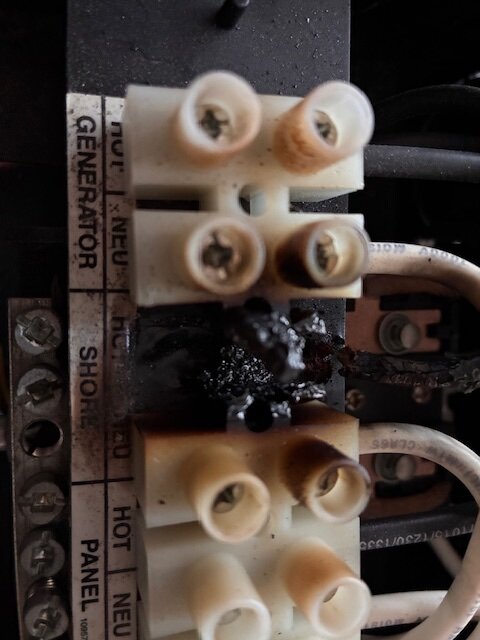
And for the rest of the story: Replaced the converter, replaced the TOASTED transfer switch, replaced AMG batteries (300AH lithium) and added the dork converter for the Maxx fan. JD, after this experience, I'm not ready to let go of the generator redundancy and we need it for the air conditioner. Love to jettison the generator, we'll see now how it goes with lithium batteries. AND AS ALL OF YOU ALREADY KNOW...... YOU CAN'T TAKE IT WITH YOU... AND IT'S ONLY MONEY. Now we are good to go.... almost... while installing the new batteries we discovered broken rivers at the top of the battery box... I found an excellent stream with solutions but this will wait till we get home. We'll keep an eye out but the reduced weight of the Lithium (210 lbs lighter than our AGM batteries). 201 lbs, that's a crazy number. Hopefully lighter batteries will be kinder to the battery box. Thanks to everyone's contributed that has helped get us back on the road.5 points
-
CGI Detailing is coming back to Florida in January 2026! if you're interested in getting your Oliver or Vehicle ceramic coated please reach put to us. https://www.cgidetailing.com/olivertraveltrailers
 4 points
 -
https://www.etrailer.com/RV-Transfer-Switch/Progressive-Dynamics/PD5110010Q.html 30 AMP model here.2 points
-
John, Letting it stand for 24 hours allows the compressor oil and refrigerant to settle back where they belong so that you don't damage the dehumidifier. Roger2 points
-
@Colin Rafferty I thought that you couldn't do these at Eggs and S'mores? If you can and have a day available, we can do it there instead of your place in February. We arrive January 14, and depart on the 19th. Whichever works best for you guys, as we're flexible.2 points
-
That State of Charge (SOC) differential is not a sign of damage to the battery. Our three Lithionics batteries also discharge at somewhat different rates. As advised by Roger above, periodic battery balancing is recommended by Lithionics. This is done by discharging down to Reserve Voltage Cutoff (RVC) (until they automatically turn off), then back to full charge. I have found that complete balancing after recharge sometimes takes 1-2 days on shore power before all 3 batteries show 100%. To discharge our batteries in the winter I run a space heater using the inverter (as I can't set the AC low enough in December in Idaho to get it to run). The inverter will shut down 120V power when battery voltage drops to the point preset at the factory. To get down to RVC, I then turn on a bunch of 12V loads, including all the lights and the refrigerator set to DC mode, for another couple of hours until the lights go out because the batteries have turned themselves off. I can then reconnect shore power to charge the batteries back up to 100% SOC. This process balances all three batteries. In my experience, the next time I use battery power, discharge rates among the three batteries are much more even, but never precisely the same. That is o.k., per Lithionics.2 points
-
@rideandfly I used the KNKA on a trip earlier this week in the Okefenokee Swamp where the temps were in the 50s and 60s and the humidity was in the 80% to 90% range and it did an excellent job keeping the humidity down.2 points
-
Boondocking on FR 401, east of AZ-87 (Beeline Hwy Mesa to Payson), with amazing views of the Four Peaks Wilderness due east! It only took me a week to get ‘er dirty after polishing and ceramic coating, serious washboards getting here! Dirt not sticking like before though. Too much an OHV location, but as the sun sets early they’re already gone for the day! Quiet and truly majestic and should be a great night for star-gazing!
2 points
-
We still carry a genny. Never use it, except to charge Stephanie's e-bike, but it's nice to have, just in case.1 point
-
I have had same experience as Roger. The balancing process in battery charging works better after drawing them down to below 50%. I still see differences in SOC but less after draw down.1 point
-
Geoff, found time today for the rear jack. My electrical skills are weak. Wires were off the terminals for the jack. hooked them back, still no action. I took a bonehead approach and installed a new toggle. The result: jack would opperate going up only. I revised the wires and the jack would go down only. Missing the jack fucntion is a small inconvenience. Power issues have been our priority. We resolved power issues today, The jack will have to wait till we are home. thanks..1 point
-
Lithionics told me at the last rally that I should cycle the batteries. Discharge the batteries to their reserve voltage (i.e. until they quit working) and then recharge them. He suggested I run the a/c on battery until it quit as a quick way to run them down. This seems to have worked for me as my batteries now show similar life remaining. The rep said that the batteries don't really know their discharge state and use an algorithm based on recharge time, usage, etc. and sometimes get out of sync. There is another discussion about this here.1 point
-
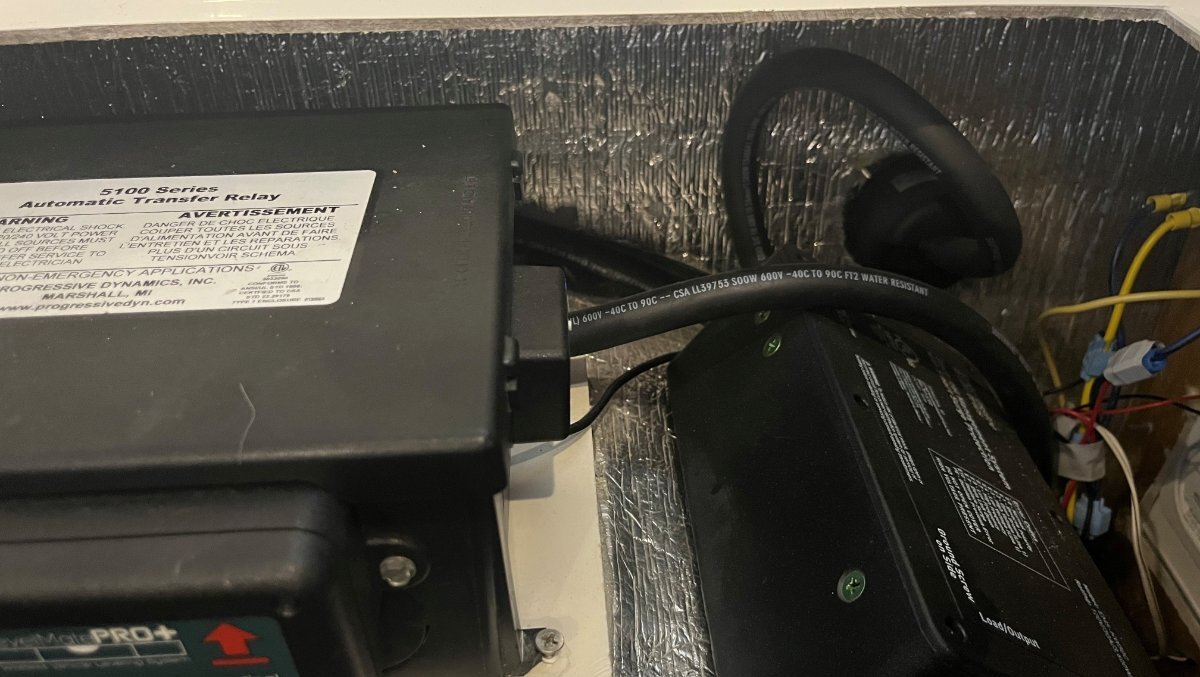
So, you can replace it or simply bypass the ATS. For us, we only use the Shore Power connection streetside. Our PD5100 ATS was about to falter last year and ahead of a major trip, and instead of replacing it, the decision I made was to bypass the ATS! Do this if you are not a generator guy (which is truly against my religion, given the current art of LiFePO4 and inverter technology). I do not need the front Shore Power connection and hence, I do not need an ATS! Less stuff, less cr@p to go wrong! 😎 Note top-right in the picture where you see the interior side of the main shore inlet. Normally, this cable goes to the ATS (large box on the left). The ATS will have two (2) incoming shore power connections and one out to the power panel. KI most RVs the ATs switches as needed between Shore Power and an onboard generator. I rewired ours to bypass the ATS, now wired directly to the EMS (wire it directly to the 120VAC power panel if your older hull does not have an EMS). I left the other cables in place to revert if ever necessary, but never again will I have to worry about the ATS as wired (or spend another $140 to replace it). I have replaced the PD5100 ATS in every (3 of 3) RVs we have owned! It is the nature of the beast! 🤣
1 point
-
Glad you all are safe. The replacement unit will be much better and safer.1 point
-
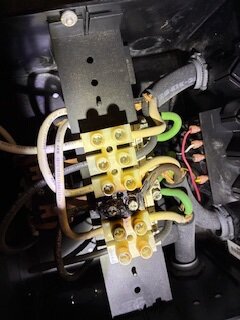
the box is toasted..... imaged attached. I'll send more about our adventure later.
1 point
-
We entered from the east, Hwy AZ-87 to Cline Cabin Rd to FS 124 then 401. Dirt as soon as you leave AZ-87 and it's a long way to Four Peaks. We drove about 6 miles to where we camped. This route and the one via El Oso Rd both go all the way to the wilderness area. It would take a good 2 hours on dirt to go the whole way! "The Rolls OHV Area" is on this route which was fine for an overnight, but even though we did dirt riding for 20 years, I do NOT like to camp with engine noises and the dirt in the air the OHV creates! Perhaps El OSO is better? It's a shorter run off AZ Hwy-188.1 point
-
Thanks for the warning regarding fire and the great diagrams/images. Out of caution we are not attempting to run any power from 30amp sources. We are again heating the trailer with an electric portable heater with short 12 gauge extension cable through dinette window. We have the dinette hatch open to warm plumbing here.. Additionally, we have enough battery to run the trailer heater for a while in the early morning to heat the plumbing on under the passenger side bed. With some luck, our dilemma will over tomorrow. The good news, we did not waste the day. The temp was an amzing sunny 50 degrees on the Grand Canyon south rim. Absolutely fantasitic day. Even better, almost no-one around the canyon. No traffic, empty parking area, empty campgrounds and hotels due to the main water line being shut down for emergency repairs. No water throughout. the park was our private playground today.. a once in a lifetime event. Doesn't get any better than this
1 point
-
Thanks for the report. Ours did a great job, too!1 point
-
Your Progressive Dynamics converter is a circuit card located in your fuse box under the dinette seat (PD4045). Yours will not support lithium batteries, mine didn’t either. Your hull is the same year as mine. I ordered a new one, it was about $150. It has a switch for lithium batteries. It’s fairly straightforward to switch them out. If I did it you can too. While you are down there, check to make sure your main breaker didn’t flip off. Also, I would check under the bed with your Bluesky for the red circuit breaker to make sure it isn’t off. You might have another one under the dinette seat, I do. Make sure it is set. If you are hooked up to shore power and not getting 110 in the trailer I would suspect one of those breakers broke and needs to be reset (push the little flag back in to place). Hope this helps. Mike1 point
-
A couple of thoughts: 1. Does your trailer have 2 shoreline inputs, one on the driver's side and one on the passenger side of the hitch? If so, try the other one. 2. Does your unit have a power management system display, perhaps in the attic cabinet? With shore power connected, does the PMS display show anything? Any error codes? Not sure where the transfer switch and converter are in your model year. You should be able to find that information online in Oliver University1 point
-
Great shots👏👏1 point
-
French Glen / Steens MT petroglyphs and painted rock CG white spar / Prescott Sedona
1 point
-
Cave Creek Regional Park, our 3rd visit! Site #9 is the best spot in the park! Better yet, @ChristianD will stop by soon to meet. They live only 15 min away. 😂
1 point
-
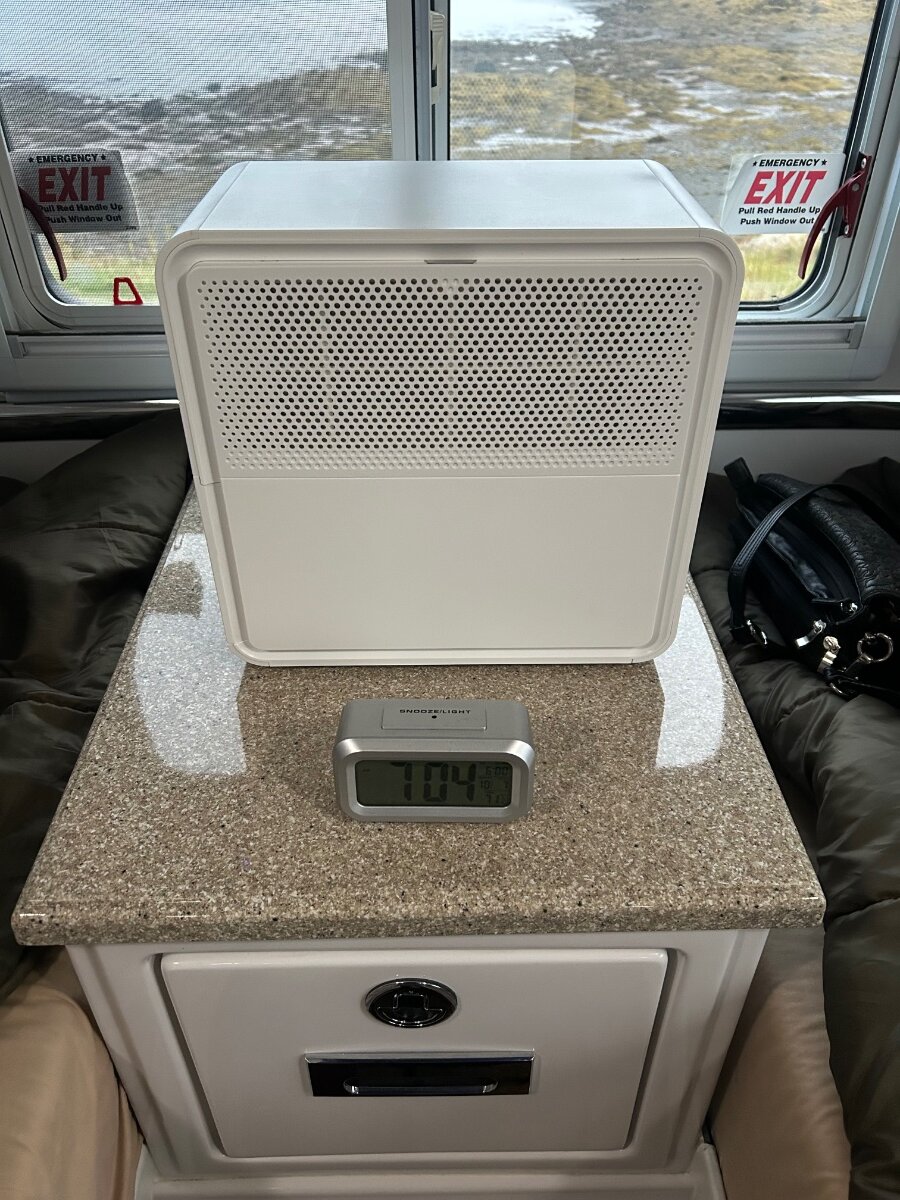
Yes John those are the external dimensions. I don’t think you would be able to store the unit in the attic space without tilting it on its side. Ours stores very neatly and secure in the upright position under the forward dinette seat space, between the blade valve and the knee space fiberglass wall.1 point
-
Chris: Yep for sure. Gotta get the refrigerant oil down to the compressor where it will....... lubricate the compressor. On it's side of upside down, the compressor oil mixed with the refergerant will not be doing it's job in the compressor. Same thing is true for our desktop ice maker. The Amazon spec's post the unit size as: Can you confirm these meassurements? Can the unit be stored in the Attic for storage standing up? If yes, would attic removal tilt to get it out of storage likely result in an oil entrapment issue? Your thoughts? thanks GJ
1 point
-
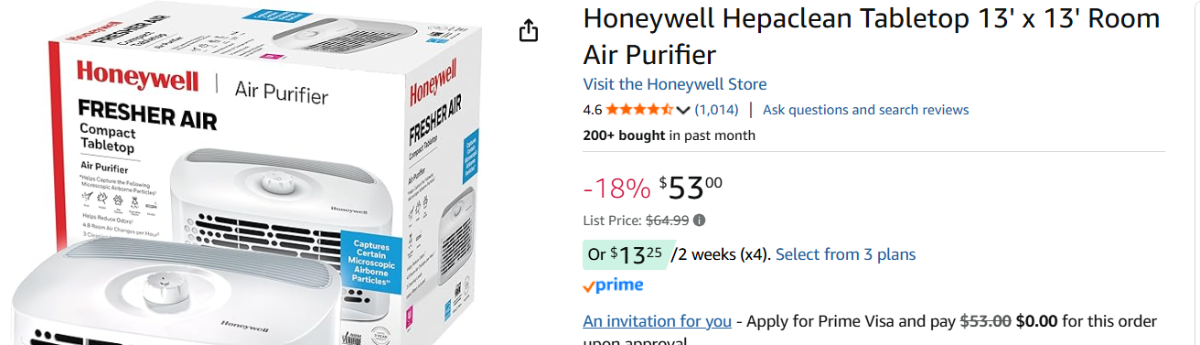
Dave: I agree that only having the scuppers would not do much as there would be no "draw". But as Bill stated, and I also nearly always do is to also open up the bath room vent. This and the air leaks from the Max Fan (When closed) do provide a draw for the scuppers below. Now is that adequate enough? I would respond with a "Maybe, it depends". LOL. The maybe part depends on factors such as: How old is your trailer? Has it off-gassed the offending VOC's to a great extent? What's being cooked or items brought into the trailer that could be adverse to the users? Wind direction and velocity. Construction or Fires in the region generating particulates. Other factors such as distance from an exhaust source, local pollution, etc. It is helpful that our OTT's with their solid surfaces, are easy to clean and those surfaces don't generate much off gassing once cured. But as you stated some individuals need to be more or even extremely cautious and I certainly recognize this as a valid concern. So your approach to the topic is spot on. Experiment if you can and act according to you and your family needs. For those where a HEPA filter would help, having a small HEPA filter such as the below Honeywell that we use during fire smoke events has been very helpful. Another planned benefit is that if we must excape a fire/smoke situtation, the 20 to 50 watt power draw can be plugged into our Ford F-150 400 watt inverter to run the unit in the truck as we get out of the hazard zone. This could be useful for other disaster situtations as well. PS: Be sure to close the outside air vents on the truck A/C should you find yourself in the "Fire Country" scenario.) For travel we wrap our HEPA in a towell and it fits easily into the OTT OE2 Attic area. GJ
1 point
-
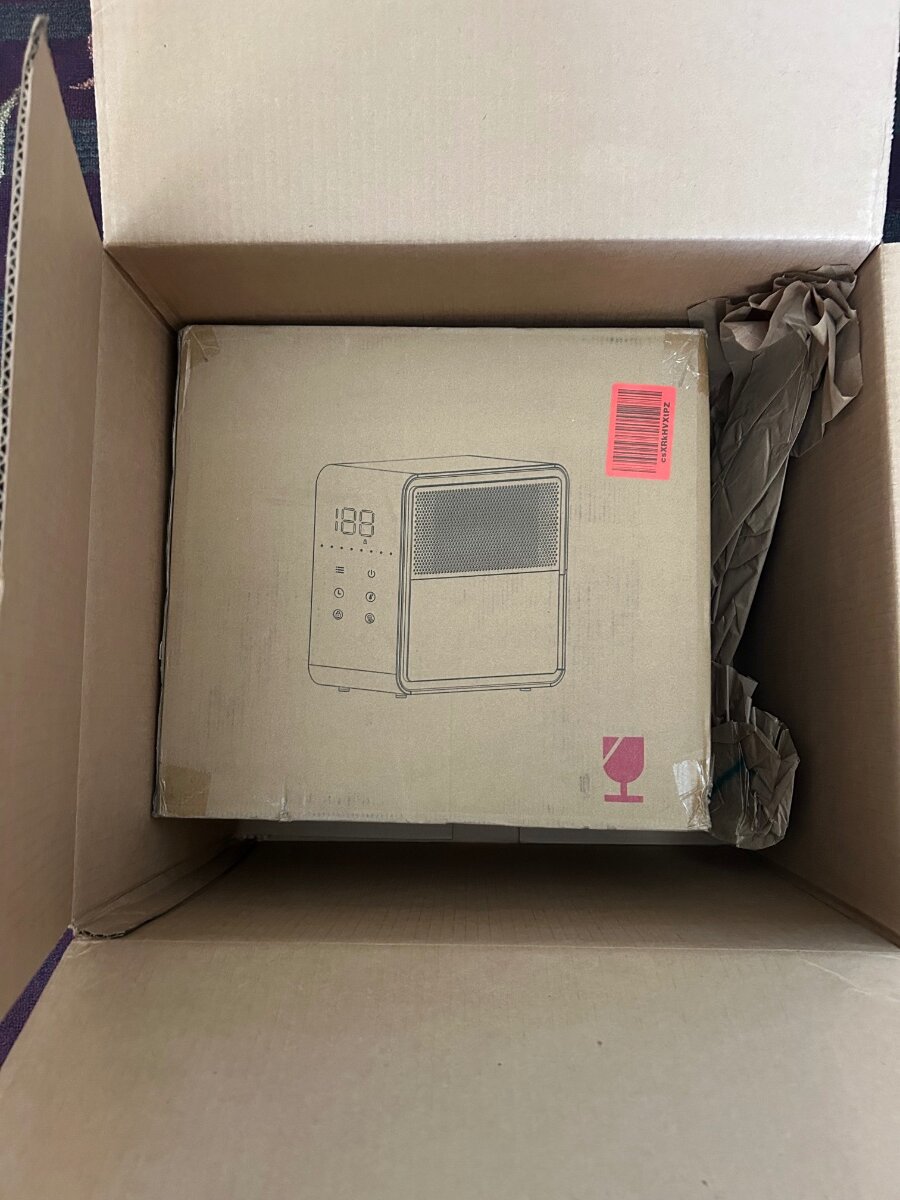
I’m sure you know this, but will say it anyway. When I received the unit it had been repackaged and shipped from Amazon on its side, this was previously mentioned in this thread, set the unit upright for 24 hours before operation. I did not use rollers included with the unit, used 3M rubber pads that that also came with the unit.1 point
-
Amazon has it for $105 again. I'm going to hive it a try.1 point
-
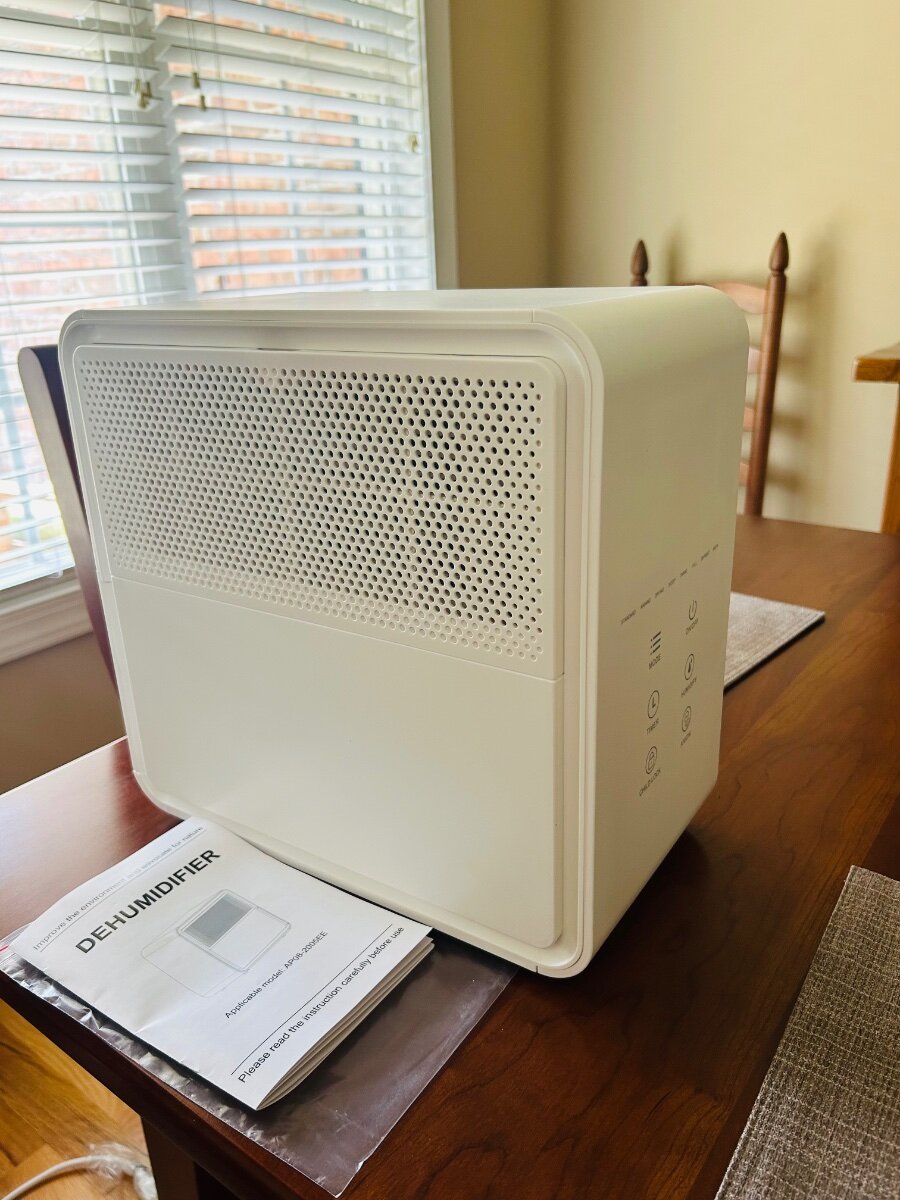
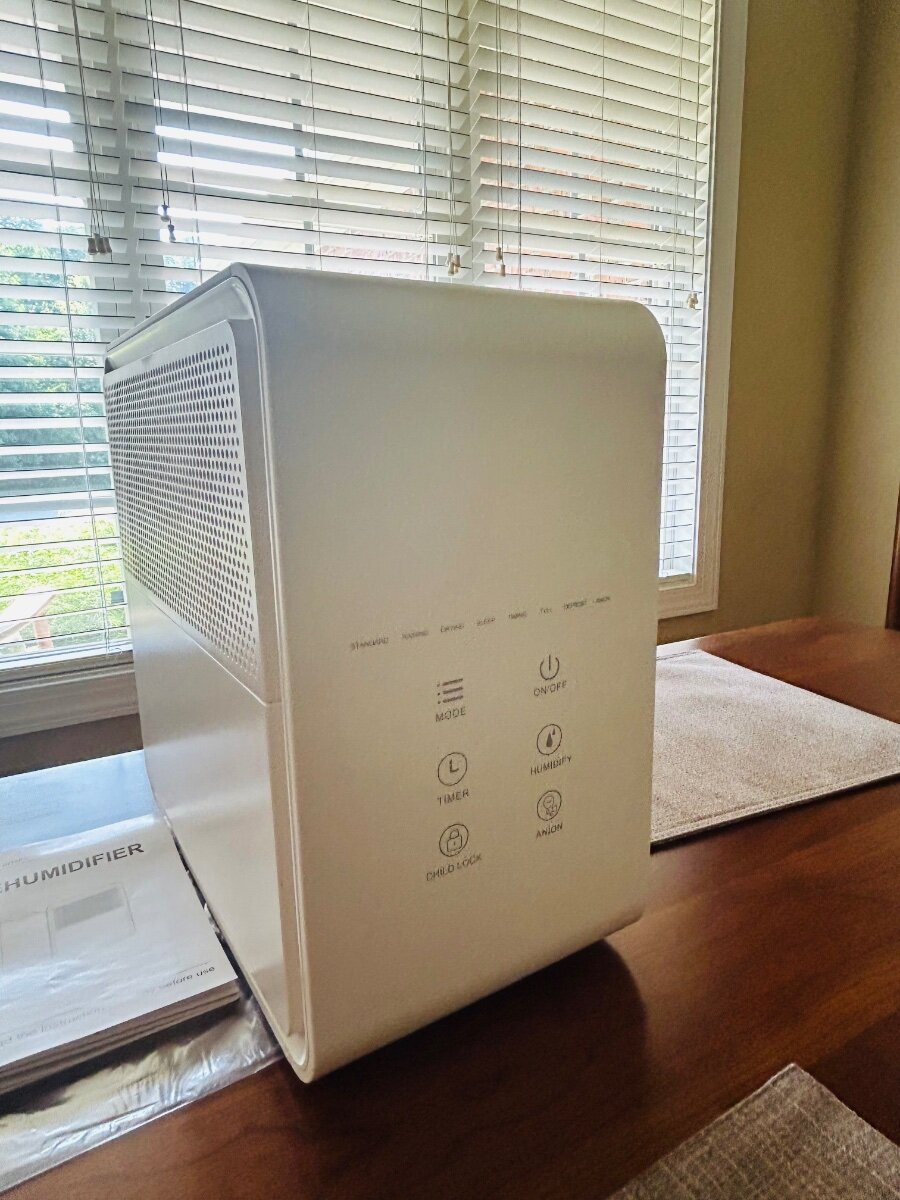
Checked several times to purchase the Airplus unit for Ollie only to find them Unavailable. Purchased a 21 pint KNKA unit on Amazon for $105, but looks like this unit went up to $144 on Amazon, Ebay has them for less. Tried this unit for 3 days in Ollie with outside humidity ranging from 50% in the afternoon to 90% before sunrise with outside temps ranging from low 40s to afternoon upper 60s. This unit removed about a quart of water daily. I dumped the tank daily, but it also has a drain hose that could be run into the kitchen sink or shower drain. Set the unit at 40% and it actually kept the inside humidity at 47% when the compressor shut off to 55% when the compressor turned back on. It has CSA certification. https://www.knkaonline.com/en-us/products/99278484933771 point
-
I just looked. Amazon is "Currently Unavailable" and the AIRPLUS Store only shows large home units. Walmart search did not come up. If anybody finds it available online at some point, please post here! Are there other viable models, small with this compressor design? After 130 overnights in our Oliver, when I first read this, I thought bottom of the list! The humidity created within the Oliver hulls is generally welcome most places west! But after hurricane rains actually settled over Durango CO last week and rain during our June trip to the upper Midwest, I now see the occasional need for a small dehumidifier! A no-brainer for those traveling in humid climates. 🤣1 point
-
So glad to know it performed well for you. I know these are hard to get as the supply is intermittent at best. If anyone else is considering buying one of these, you need to be diligent in watching for availability as they sell out quickly. As @Rolind said, they can be a real game changer, especially in high humidity cool temperature situations. They actually give off a fair amount of heat while running, which allows you to dry out the air in your Oliver and add just enough heat to not require the furnace and remain very comfortable.1 point
-
Thanks to @Ollie-Haus and @Patriot for good advice on the dehumidifier. It arrived at the same time as the three days of tropical rain in Charleston. I was really a game changer, so much more comfortable inside the trailer.1 point
-
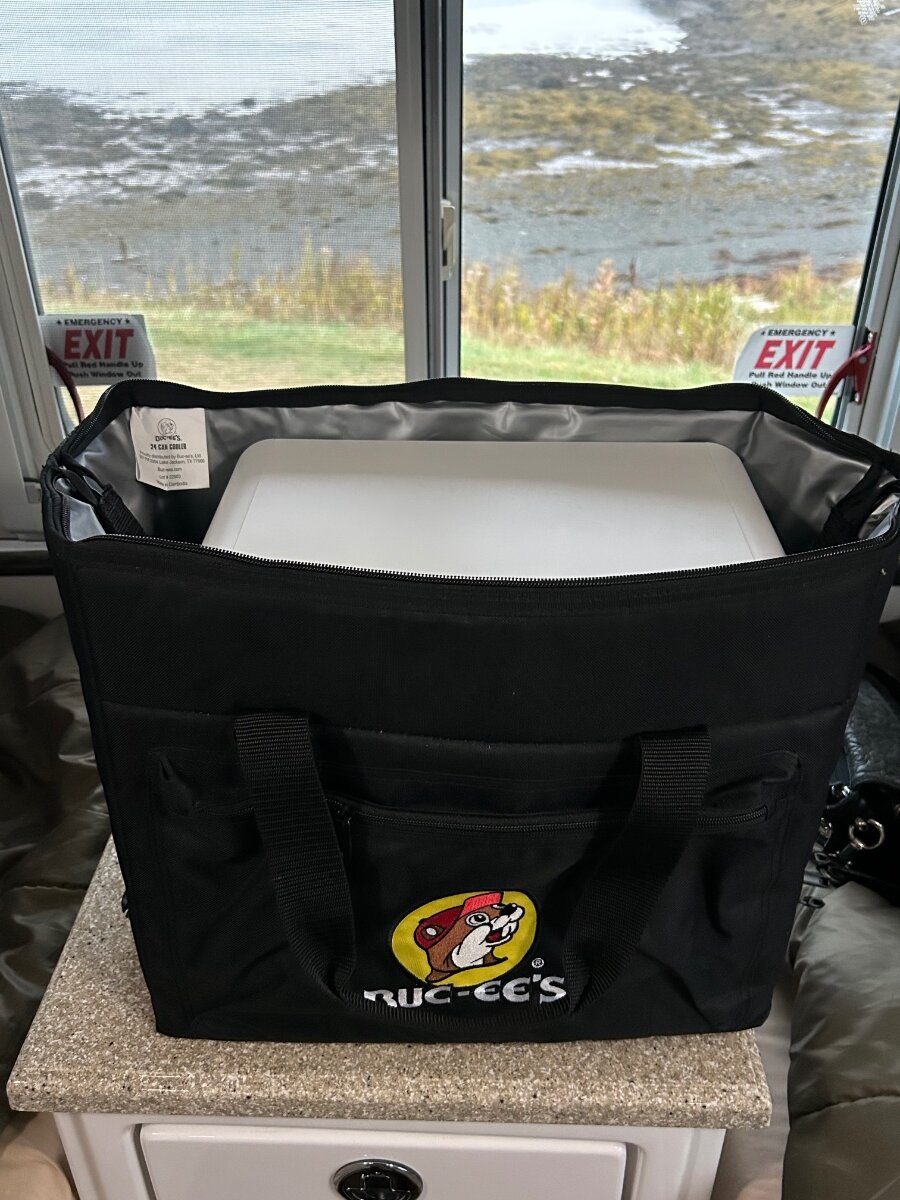
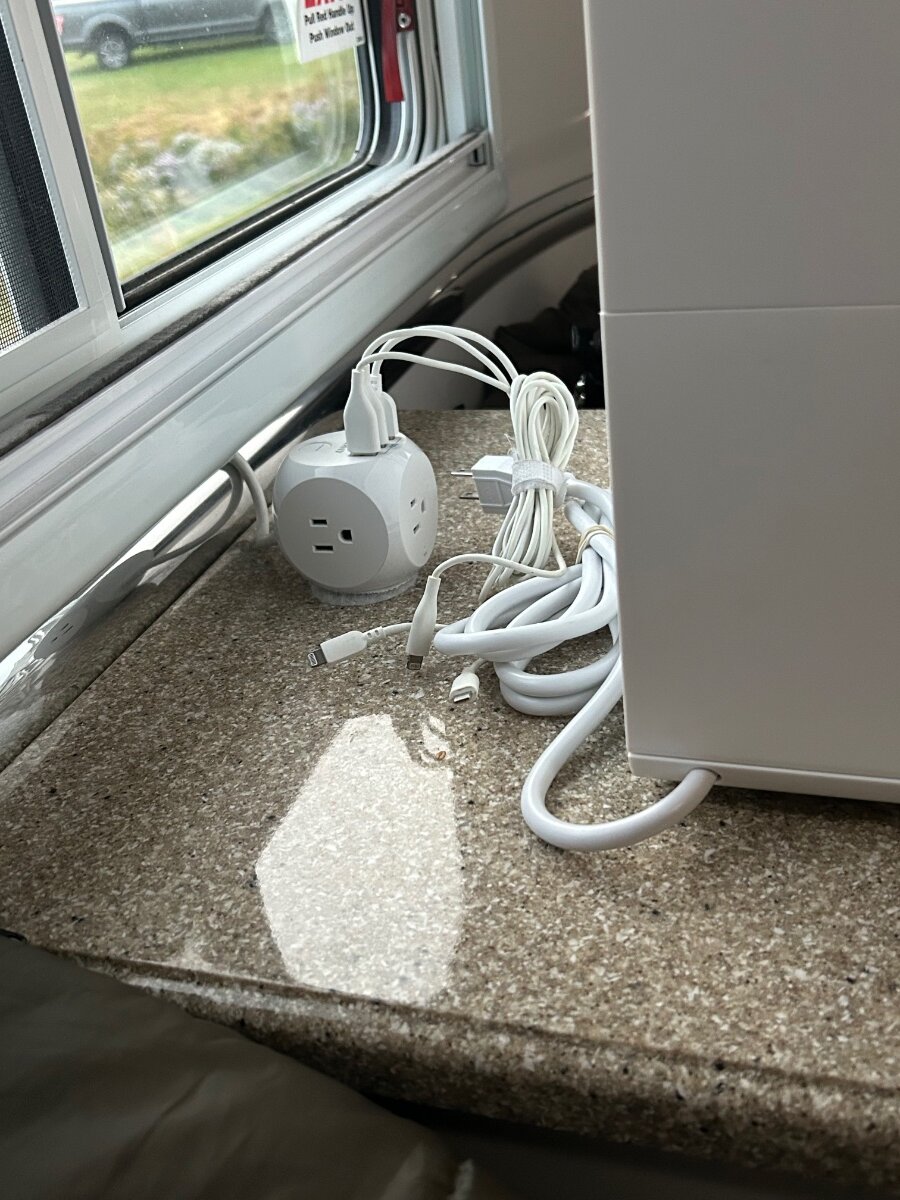
@Rolind If you decide to roll with awesome dehumidifier that @Ollie-Haus recommends, here is the storage back hack I came up with. It’s a padded/insulated cooler bag from Buc-ees. The dehumidifier fits nice and snug down inside this bag and rides on the floor of our closet. So far all good. Just passing it forward. Great chatting the other day. Safe Travels, enjoy Western NC, and if you ever need anything while in Western NC, please don’t hesitate to reach out. When plugged in, my power source is a cube.
1 point
-
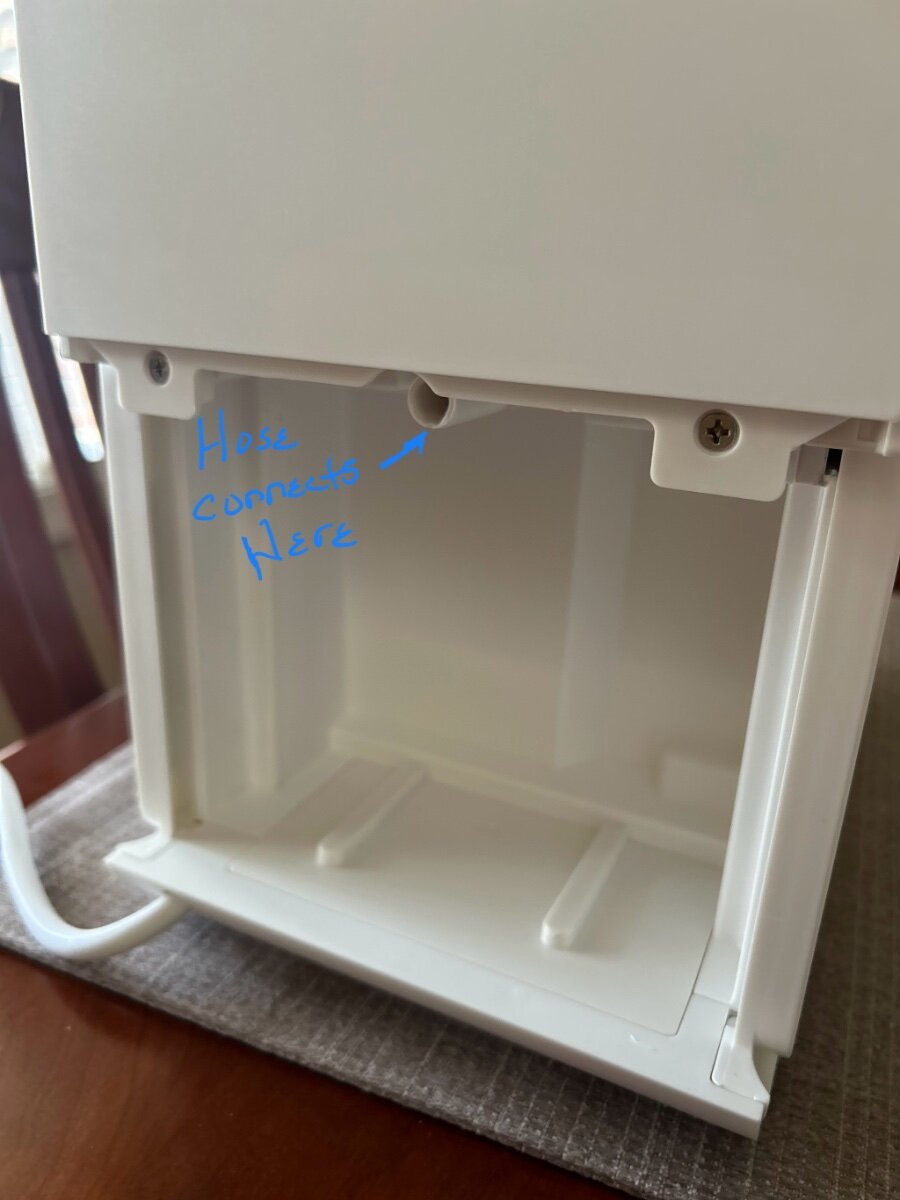
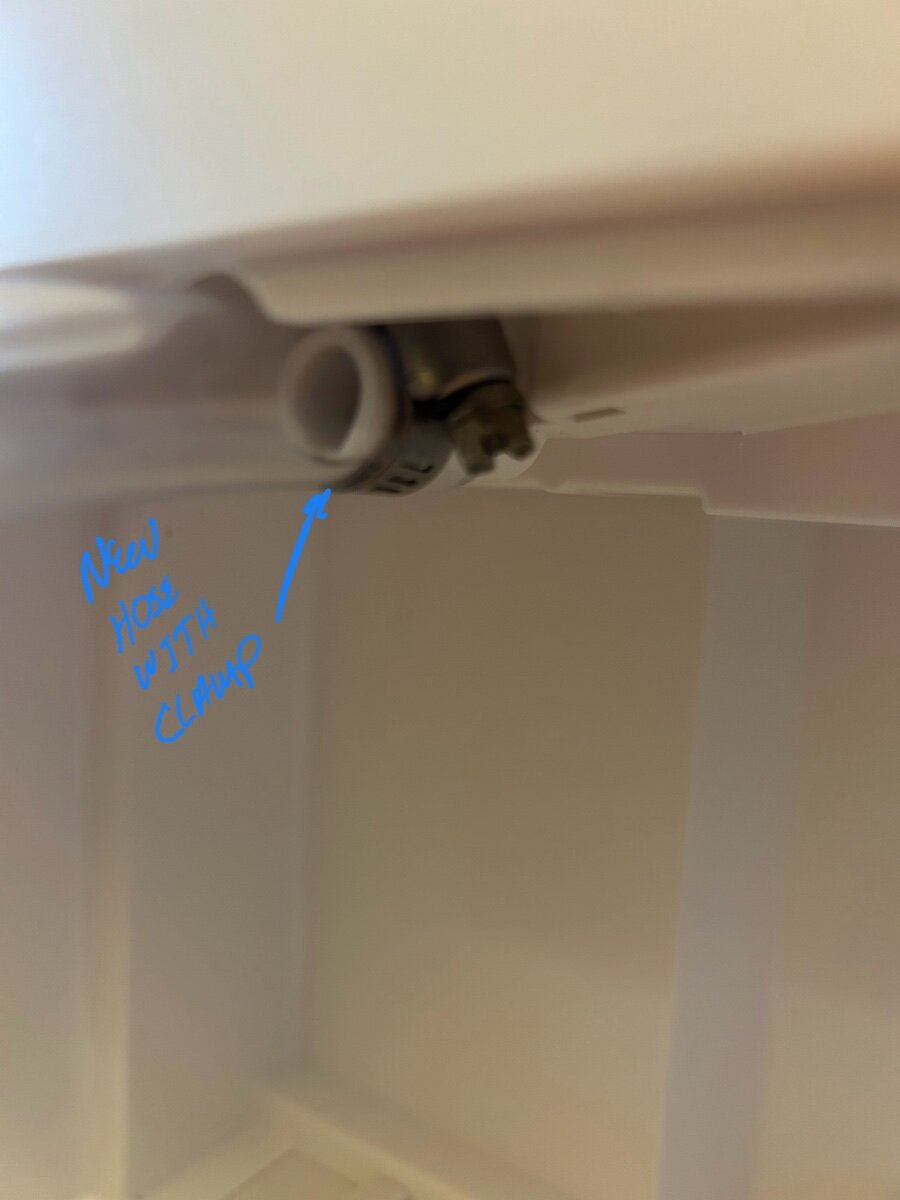
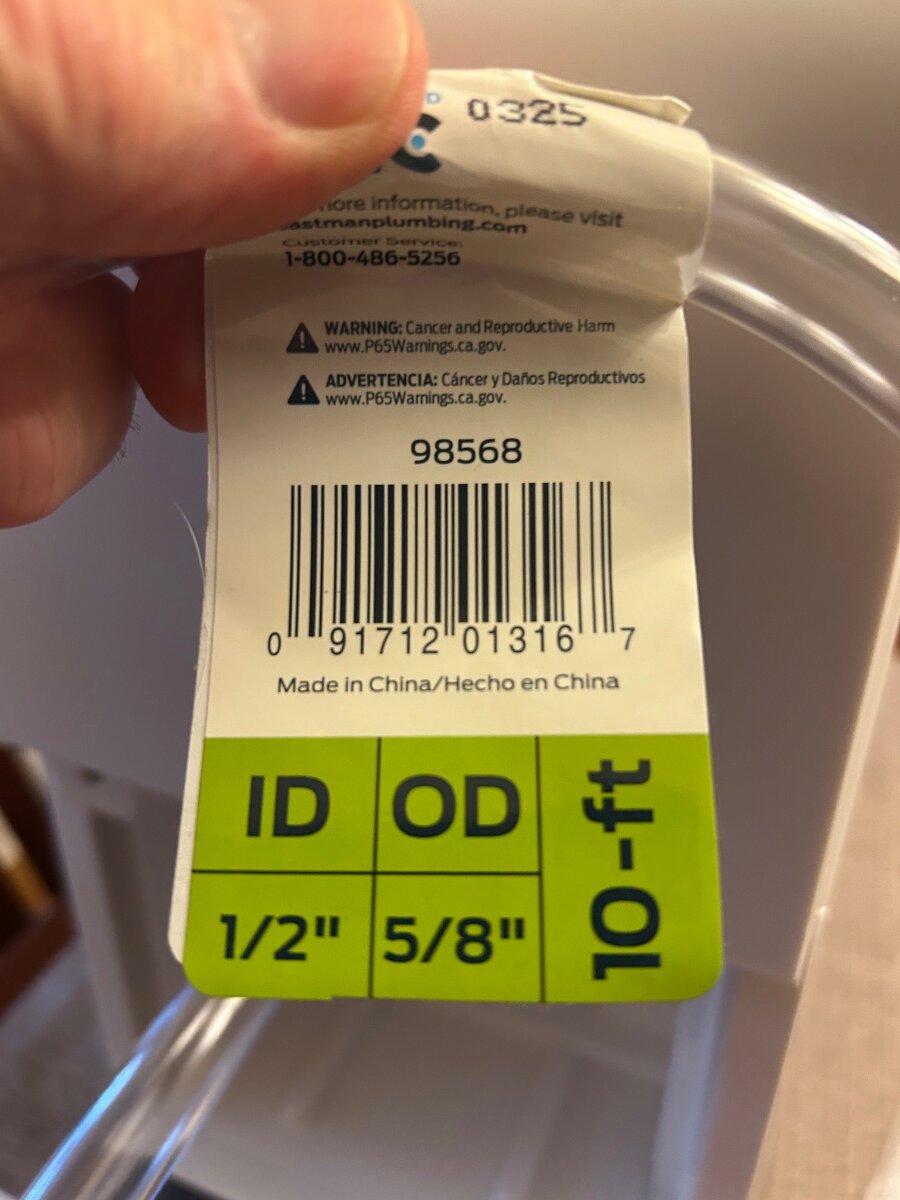
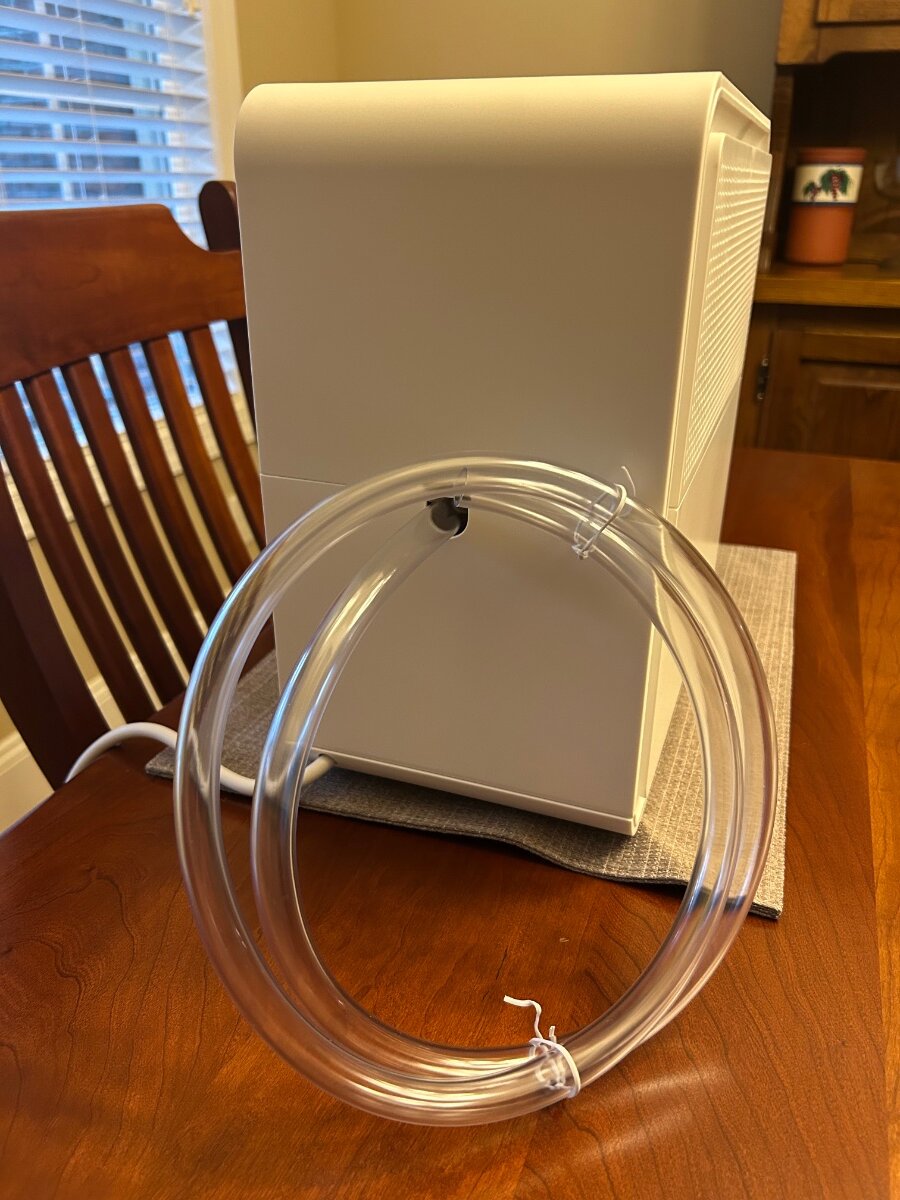
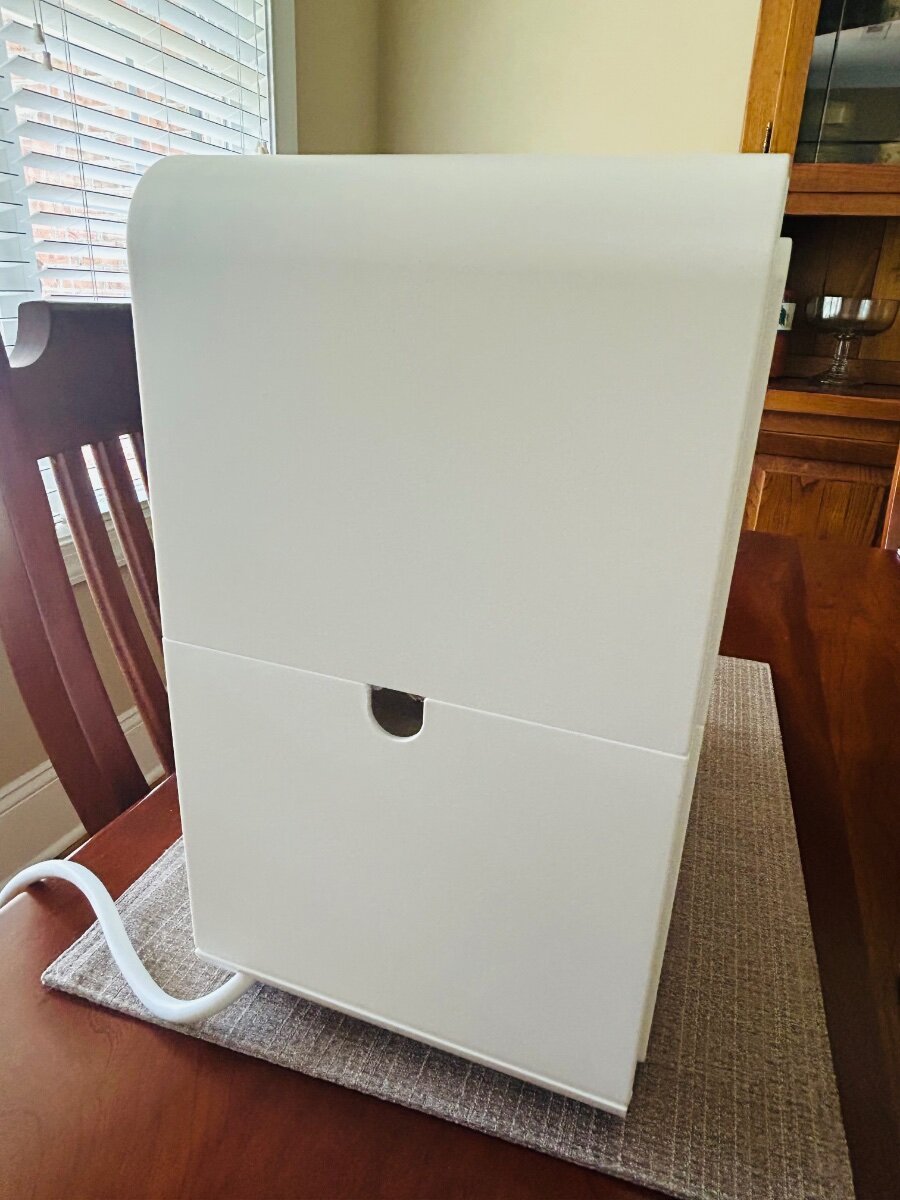
I quickly discovered after opening the box that no condensate hose was packed with the above dehumidifier. So I shot a quick txt to @Ollie-Haus who confirmed I should have received one. A quick run over to Lowe’s and I found a piece of tubing that would work to drain the condensate into our gray tank. This hose eliminates having to drain the tank every 4 or 5 days. Here is my fix and the hose part # if you should receive this unit with no condensation drain hose. This new tubing fit snug, but I still opted to add the small radiator clamp. Caution no need to over tighten just snug the clamp up. After tightening the clamp, maybe give the hose a little tug to be sure it’s tight enough that it won’t pull off. Here is the unit buttoned up after the new hose install. I cut the hose length to 4’ so I can use it either on galley counter top or on the shower floor. My bride/copilot already has a storage spot in the closet ready to transport this while underway.
1 point
-
Amazon delivered this today. As soon as my bride/copilot saw it she said “that will get it done. We store our Oliver here at home plugged in 24/7. Instructions say allow the unit to sit upright for 2 hrs. Not being in a rush, and taking solid advice from @Ollie-Haus. It arrived really well packaged and in its original box in side another Amazon box. It did not arrive upright in the box. (pic) I will let this “humidity eater beast” sit overnight upright to allow the all fluids to drain back properly. We are looking forward to firing this up and giving it a shake down right here at home and then afield. Let’s just say the humidity level is what we call “swampy high” right now with this heatwave. Thanks Chris for the recommendation! 👍🏻
1 point
-
FYI for @DaveK and @Patriot, when you receive the dehumidifier from Amazon, take it out of the box and set it upright on the counter and let it rest unplugged for 24 hours before you turn it on the first time. Like all refrigeration based appliances, if it’s turned on it’s side during shipping, it must be allowed to set in the upright position for 24 hours to make sure the liquified freon and the oils inside drain back to where they normally are during normal operation. This of course applies any time the unit is allowed to lay on its side or upside down. It will certainly be handled like any other package during shipping so don’t forget to perform this procedure to safeguard the internal systems. 👍1 point
-
We did not have any fresh air coming in for this particular situation as the humidity outside was considerably higher than inside the camper. One unique characteristic of the Oliver design is you are sealed into a “plastic bubble”, if you will. Normally you will want to ventilate to alleviate the tendency to build up moisture in the cabin, but in this situation bringing in outside air would have reduced the comfort level significantly. My point in the original post was that while we were experiencing cool, rainy, humid weather outside, the comfort level in the Oliver was able to be maintained by only using the portable dehumidifier. Using the Air conditioner would have made the cabin chilled inside in order to try and control humidity, and turning on the ventilation fan only introduced cool air while increasing the already humid conditions inside. It was kind of a third option to use the humidifier only, and turned out to be very effective in keeping the humidity under control. The side benefit was the humidifier puts off a noticeable amount of heat so it actually warmed the inside of the camper while reducing the humidity. Thus not needing the AC or furnace in these particular conditions. You could always crack open a couple windows for ventilation, we just chose not to because it was so comfortable throughout the night. Again, with experience you will find that the one thing everyone battles in an Oliver is humidity. The AC works marginally at best regarding humidity control, and if the outside humidity is high with lower temperatures, it’s a losing battle. The dehumidifier is a game changer for us and an essential tool in the arsenal of comfort ( think menopause 🙄). 😆 Regarding the AC and fresh air intake, the AC only recirculates cabin air, therefore the ventilation fans and open windows are the only option. I don’t think CO2 is a problem, although some may be sensitive to slightly increased levels. It would be interesting to bring a CO2 monitor into an Oliver to test levels inside for different scenarios. On the other hand stale air is always the issue with the camper sealed tightly so some ventilation is usually the solution. Hopefully this helps answer your questions.1 point
-
Very true. I'd want enough air changes per hour to keep CO2 and VOCs at reasonable levels. Those numbers can be unique per individual, but I would guess the scupper holes on the bottom (from what I saw during the factory tour) are not really bringing in enough fresh air to improve the air quality. Curious if anyone has setup an air monitoring device that can detect things like CO2. With two people in an Oliver with everything closed, I imagine it spikes pretty quickly. Sorry I'm getting a little off topic. Dehumidifying the air is great, but I'd encourage folks to think about ventilating too. I think the only way that works is opening windows/vents, which makes dehumidifying harder. I wonder if the dehumidifiers can keep up once you open a window/vent. Another option would be to keep everything closed, but every hour (or some interval) open windows/vents to get a load of fresh air to sustain until next time (obviously this won't work while sleeping).1 point
-
There is always fresh air coming into the Oliver due to the "scupper holes" in the bottom. Therefore, it all depends on how much fresh air do you want. One of the first things I always do when setting up my Ollie is to open the bath roof vent. Then, depending on temps, humidity, precip, etc., I open other windows/Max Air fan (or not). Bill1 point
-
In this situation, are you getting any fresh air into the trailer? I would think CO2 and other chemicals would build up quickly. Related, when the AC is running, do you know if it pulls in fresh air or is it recirculating the air inside already? I'm thinking I'd always want a window cracked or roof vent open at least.1 point
-
We don't travel with one, so I don't know what else is out there that meets those specs. When not traveling I keep a 22 pint Frigidaire on the shower floor that continuously drains but it's a little too big for a countertop.1 point
-
I can verify, as others have said, the Truma AC works fine but you need to be a polar bear to enjoy it. I believe it also uses the same amount of power at it does in AC mode.1 point
-
I had a larger unit that was in storage. I brought it out today and put it on the floor of the head. It is a bit overkill but removed about 30% humidity in less than two hours. I will likely upgrade to a much smaller unit that can be placed on the countertop.1 point
-
I’ve had enough of “steamy”. I ordered one of these today.1 point
-
Yes, and if you run it on normal setting with a humidity set point, the compressor cycles on and off. The power consumption drops to around 30 watts while the fan alone runs and the compressor is off. This little guy sips power. 👍1 point
-
Another benefit to the dehumidifier is if you run it while running the AC on a normal cooling cycle, it helps reduce the humidity spikes that occur when the AC compressor shuts off. The comfort level in the Oliver is much improved in this scenario.1 point
-
I have used the dehumidify function on our Truma. I believe it works by simply running the compressor constantly until you turn off the dehumidify setting. It does a great job lowering the humidity, but also makes the Oliver frosty cold pretty quickly. It would not be a good option when not running on shore power and I rarely use this function since it makes the Oliver so cold and only lowers the humidity while the dehumidify function is running.1 point
-
Thanks. That’s excellent, how efficient it is! That’s 42 Ah per day running 24 hours on high.1 point
-
We have two of these we use at home and in the Oliver and they both have performed flawlessly for the past 18 months, and the one in OllieHaus bounces down the road while traveling. We rap in a blanket and set it upright on the floor while traveling.1 point




















.thumb.jpg.e34bf01ef7f7d5e99ad31856d45afbeb.jpg)


-
Recent Achievements
-