Leaderboard


Popular Content
Showing content with the highest reputation on 07/25/2019 in all areas
-
Ollie was at Deer Creek State Park, near Midway Utah.
 6 points
 -
It seems most trucks are geared too high for my liking. In an attempt to get the absolute best mileage, they are running the engines at a high idle on the highway. And seemingly assuming the truck will be operated with no payload. This is OK for unloaded conditions, but means, when towing, that the truck has to drop 1 0r 2 gears to begin to pull a hill, or a headwind. And the mileage is not noticeably better because of it. The new Cummins 6.7 engines, since 2013, are tuned differently that the older 5.9s and early 6.7s were. The new ones are tuned to avoid smoke under any conditions, and consequently will not pull well below 1600 RPM. The older ones were tuned to reach full torque at 1400 RPM. And with the 3.42 standard gears it means about 1500 RPM is common on the highway. This means it will downshift to do anything. At that point, the theory of "higher gears means better mileage" goes out the window. Don't fall for the idea that mileage will always be better if the engine is running slower. Not so. A certain amount of HP must be produced to do the job at hand. If the engine is running below it's volumetric efficiency RPM (not on the cam), it will be running inefficiently and while still able to get the job done, may be getting worse mileage than it would at a slightly higher RPM. Then there is the issue of how drivable it is. When it has no throttle response and it has to downshift to work, it becomes very annoying. It also means that you will lock out the upper gears. This negates the gearing theory and deprives you of more gears to work with. My Cummins, for instance, came with the standard 3.42 gears. When towing, I had to lock out 6th, and sometimes even 5th, to make it pull well. I've spent a lot of time in 4th, (direct drive) while towing heavy loads. Even while towing my Oliver, I liked being in 5th better than 6th. I changed my gearing to 4.10 and it became a different truck. More useful gearing, less shifting, better throttle response and the mileage is just as good as ever. Also, 1st became even more torquey. It was so worth the change. My Rubicon is the same deal. I wanted the 4.10 gears instead of the standard Wrangler 3.23 gears. The Pentastar has to get over 2000 RPM to get into the fat part of the torque band. This RPM is where it becomes efficient and has useful power. At 60 MPH, it is turning about 2100 RPM and is nice to drive. At 70 it is in the high torque area of the curve, without getting into the V6 buzz zone. I'm also getting about 19-20 MPG with it. With the 3.23 gears, 6th would be a useless gear. So, the higher gears would mean fewer useful gears and bad mileage if I tried to use 6th. It was the same story with my Dakota. The gearing was so high that 6th was useless. So I re-geared the truck and made it much nicer to drive. The mileage was no worse, and maybe better. I've done this with two other trucks too. All with similar results. Your truck needs to run efficiently at the RPM you will be using it at and it needs to be responsive to the throttle, or it becomes annoying as it lugs along, gagging for air. Simply expecting better mileage, by slowing the engine down, is not gonna happen. Then, while driving on secondary roads, or around town, you want lower gears, because you have more useful gears, and lower gearing for repeatedly starting out from stops. Modern computer controlled fuel injection, and variable valve timing have made engines run much better than a few years ago, but they still have to be tuned to pass the EPA emissions tests. Modern gas engines, with variable valve timing, have a wider efficient RPM range. This really helps with mileage and drivability. Diesels must not smoke any more than necessary, in order to not prematurely clog the DPF and cause too many regens. Cummins is a victim of this requirement, as are all diesels. What is an inherently torque heavy design, is detuned at low RPM. They pull like a locomotive at 1800-2200 RPM though. And the new HO has 1000 ft lbs of torque. Yikes! The only tranny that Chrysler has that will hold that much power is the Aisin. It still has about 20% of headroom, even at that. The 68 RFE tranny, used with the lower output Cummins, is a good tranny, but in a different category. Lighter duty. The Aisin will run at full throttle all day and never overheat. It's torque converter is strong enough to pull a dump truck around and be fine. Remember, automatic transmissions are called "automatics" not "smoothies". Being able to feel a shift is desirable. It means it is not slipping and it is getting the shift over with as soon as possible. This means less wear and less heat buildup. There is always a balance with automatics between too smooth, and possible slipping, and too rough for comfort, but no heat buildup. Lockup strategy is now part of each shift, except maybe in first, or in some special conditions. It's not a separate function that occurs at some predetermined vehicle speed or throttle position. The majority of heat in an automatic comes from a slipping torque converter while under power, and that has been eliminated as much as possible. They also must stay locked during engine braking.2 points
-
I'm like John and others have said, if you are not willing to take advice from this forum and list to what others have said, you not only put yourself in danger, but others on the road, or around you. Now this is not "rocket science" but it does require a lot of common sense, much more then just towing a trailer. I would also have the truck that I'm going to tow the trailer several weeks in advance, or even a month before you get your trailer, this way you can become familiar with it and the way it handles and be comfortable with it. I can't even think of showing up with a new tow vehicle, pulling a trailer all on the same day, and never done it before. I would go to and RV dealer in your area and tell them you are thinking about buying an RV trailer and would like to pay someone to give you some lessons on towing a trailer. I wouldn't tell them you have already purchase a trailer if that is the case, but you just want to learn so when the time to decide you will feel somewhat more comfortable about doing it. Note here, I would have my new truck with me so I would be learning with that vehicle, remember being comfortable with the tow vehicle is just half of it. Many say you will learn in time, true, but it would be best for you to start out on the right foot and hopefully you won't have and problems that can happen for not knowing. I want you to be happy with your investment and enjoy RV camping with the rest of us, it's a wonderful time enjoyed by many. trainman2 points
-
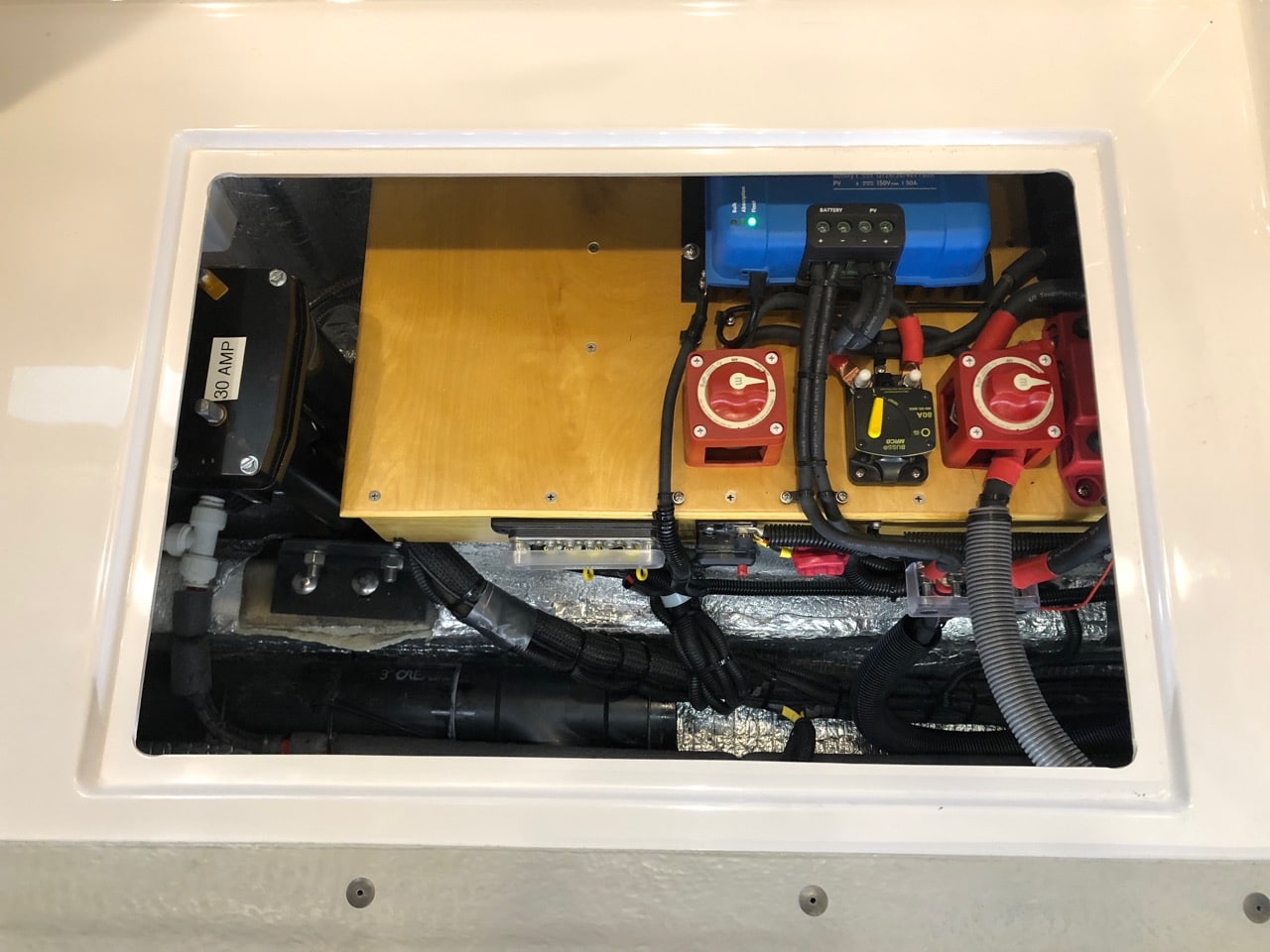
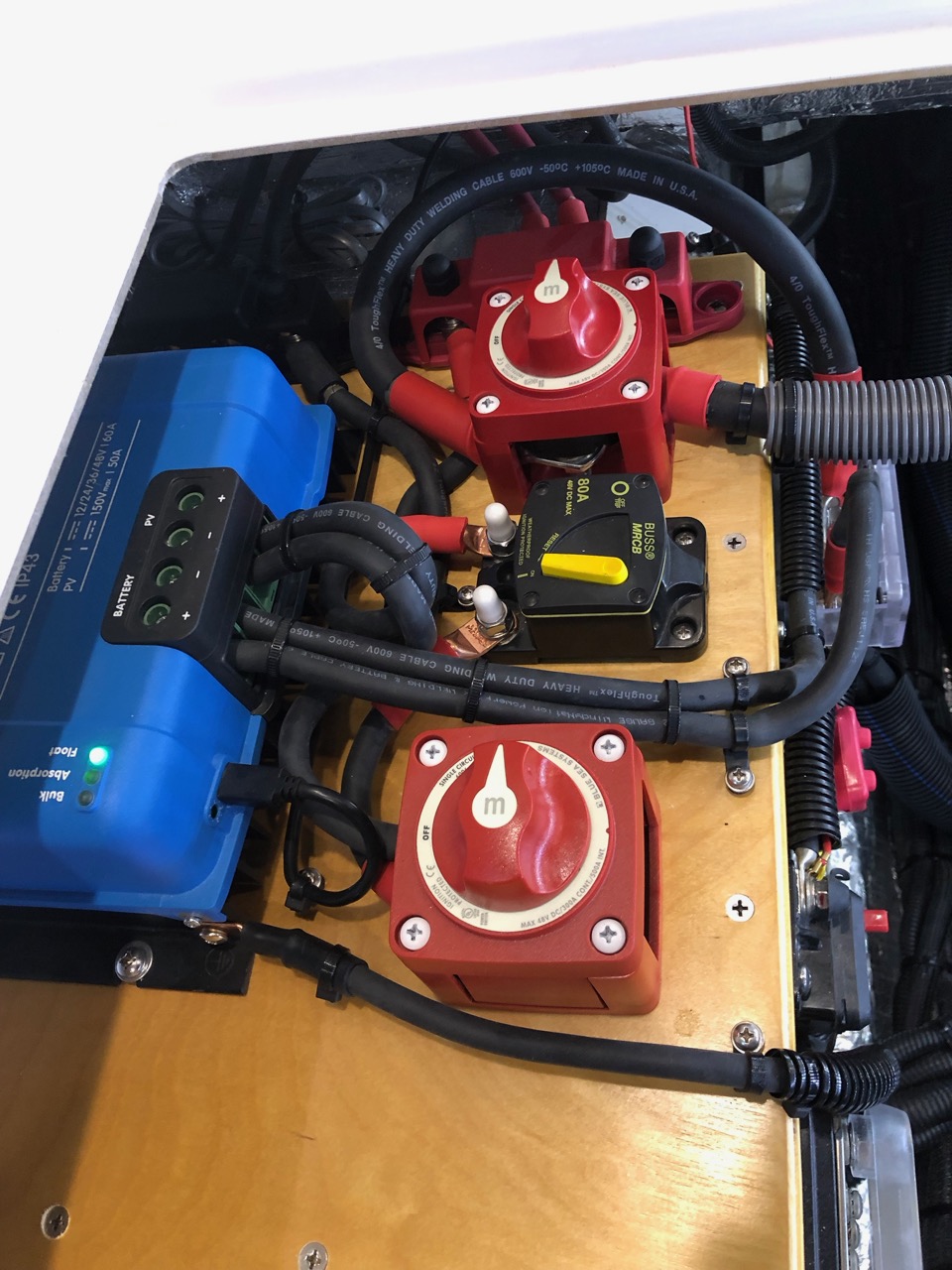
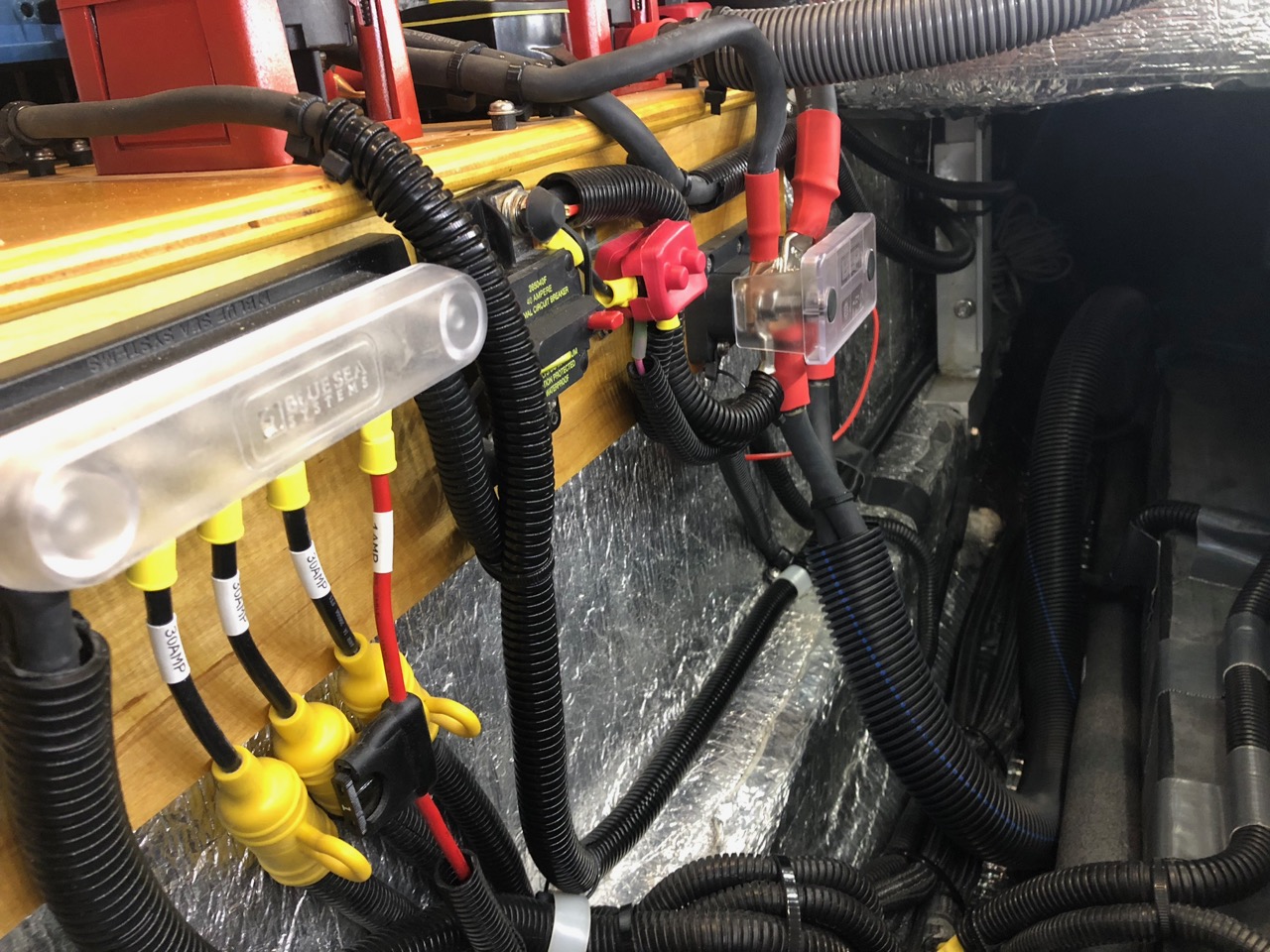
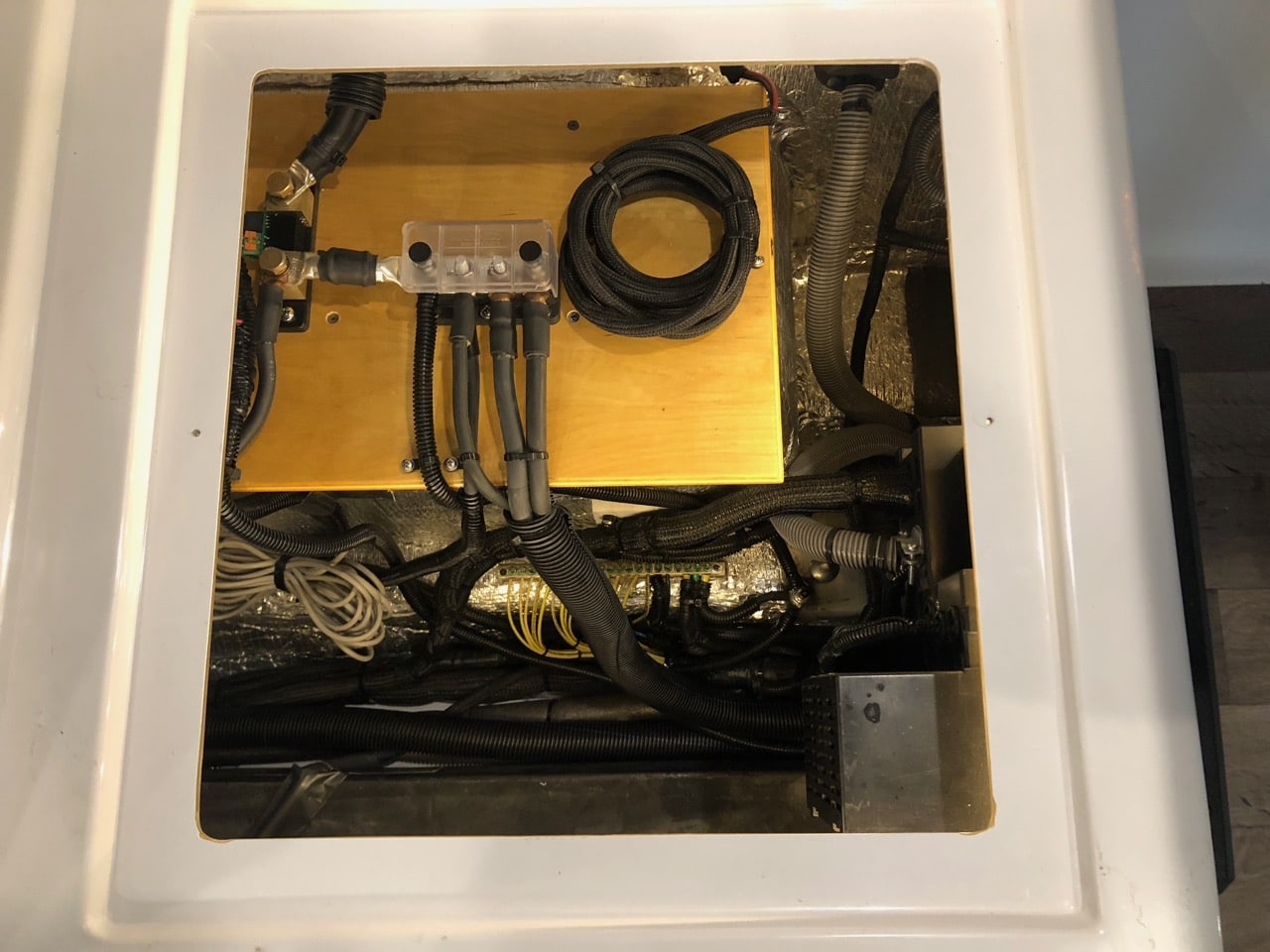
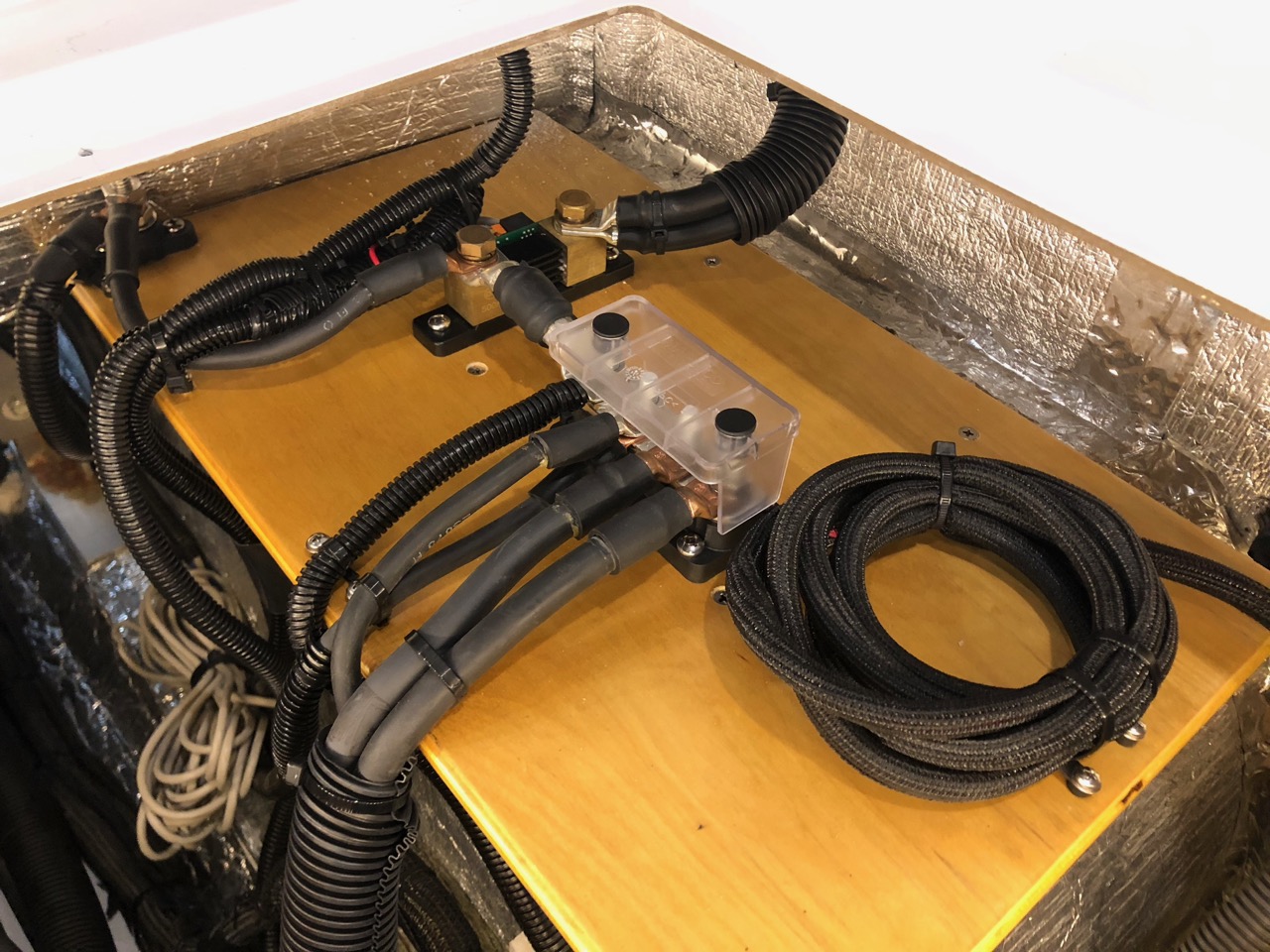
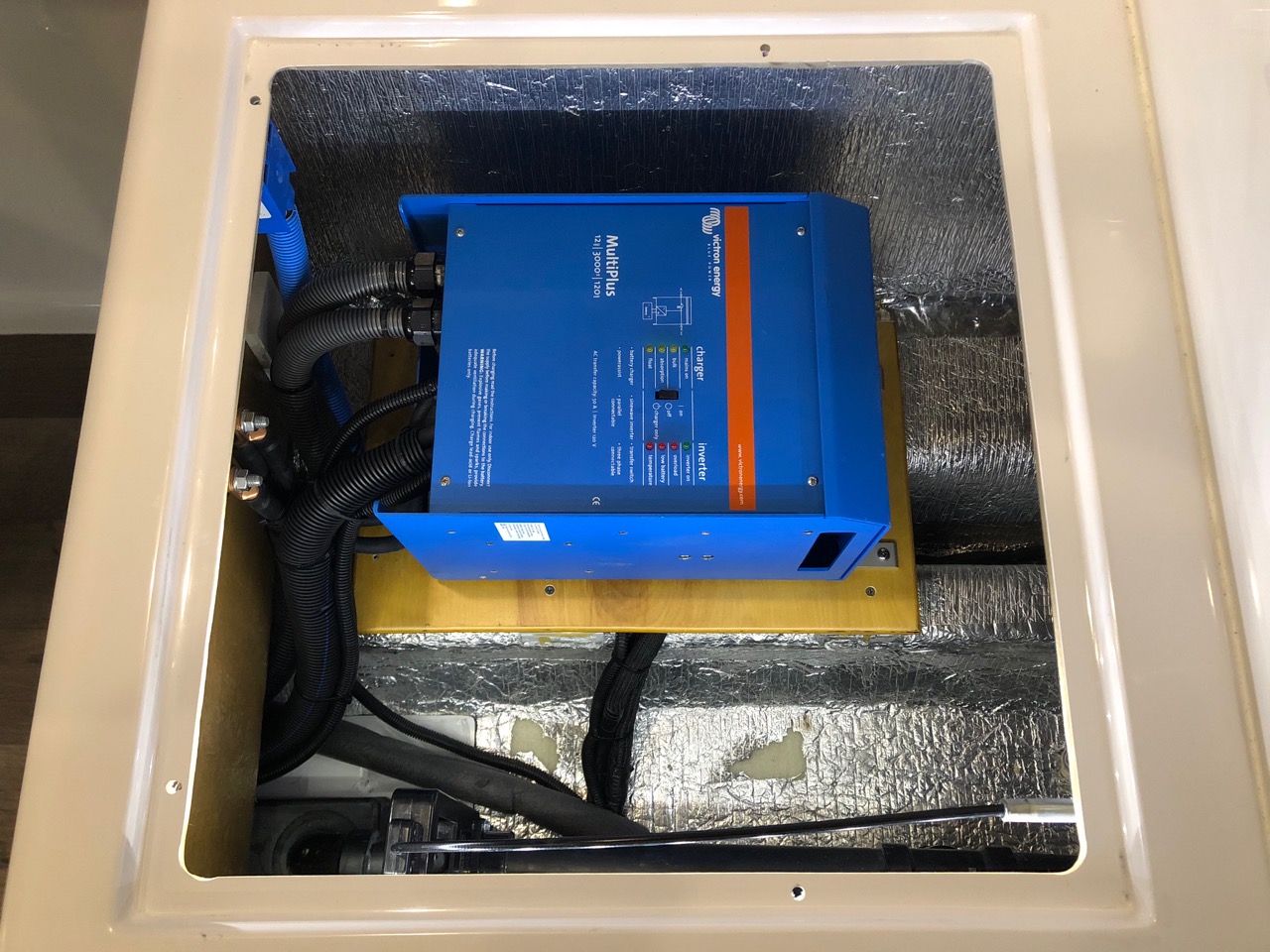
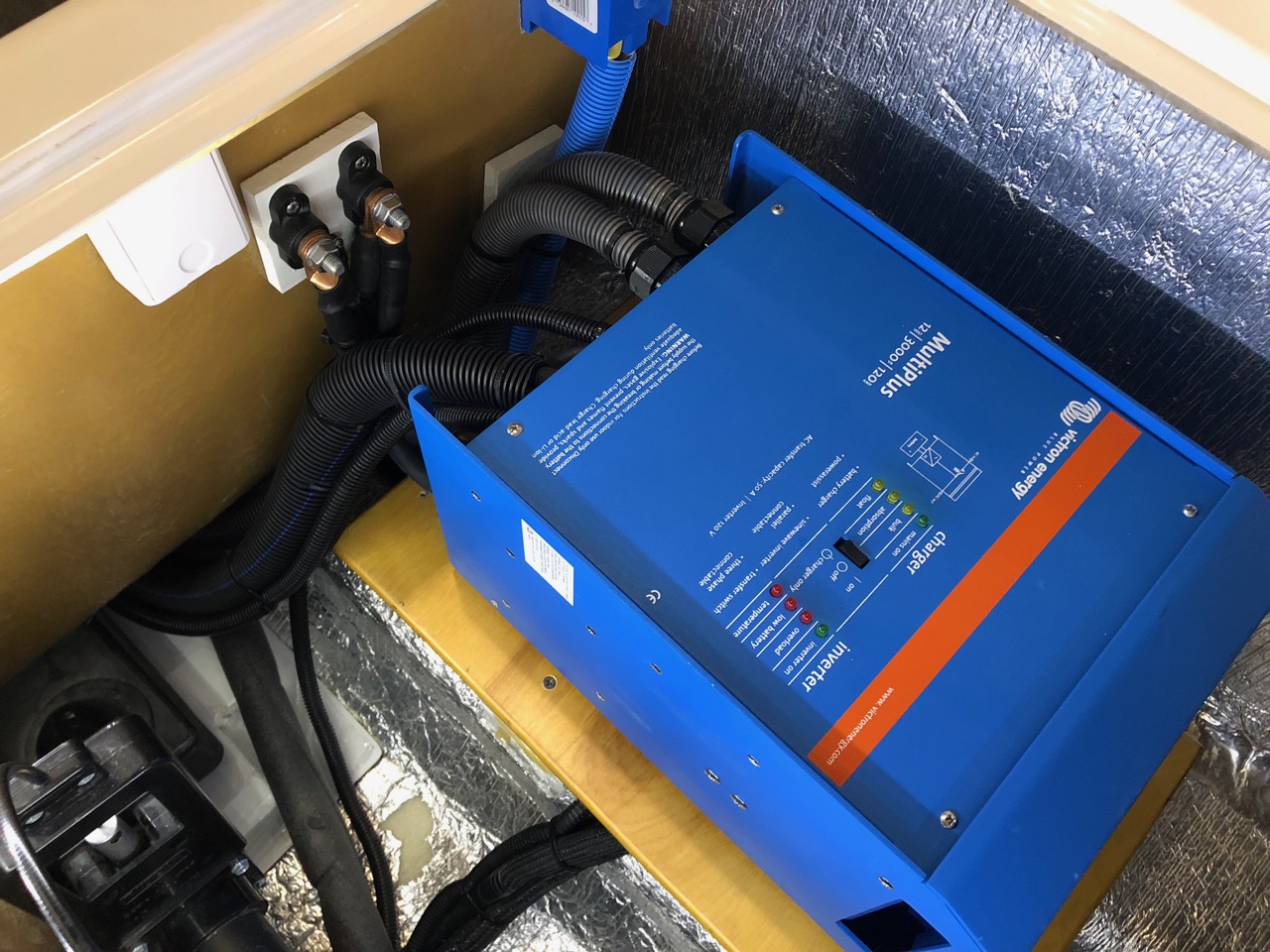
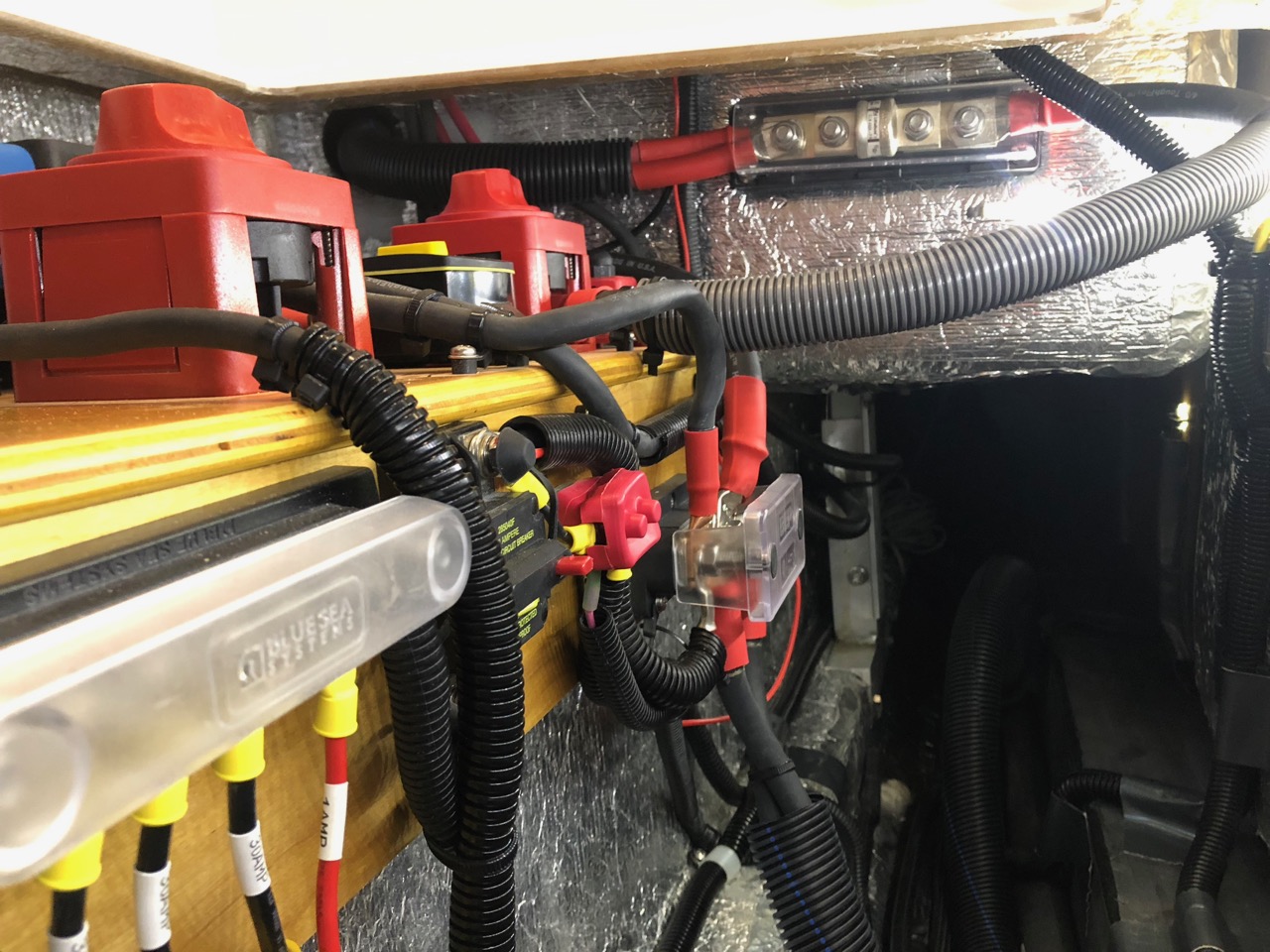
A little update on what I've been up to so far this summer, which has been all electrical. I've been wanting to redo all of the electrical work that I did when I took delivery, just because one, I was rushed, and two, I learned a lot both doing it and since doing it. So I made some new plywood boards to mount everything on, since I didn't really trust the PVC ones that I originally used. I rounded the corners of the plywood to try to minimize the chances of the corners digging into any cable that rested on it. Then reorganized it all, made sure all the cables were wrapped, and tried to tie down everything as securely as possible. I've been using zip tie cable supports. They're nice and small and grip the cables well. I used washers under the screws to prevent the ties from pulling through. Since part of the work involved removing the inverter, I decided that while it was out I might as well go ahead and get rid of the black tank and the sewer line. (You'll notice that I still need to recap the sewer at the grey tank.). That was a pain, but since I wasn't trying to salvage anything I could just go at it with an oscillating saw. I had to cut the pipe into pieces to get it out the rear hatch, and the black tank I had to cut in two as well since it wouldn't make the turn out the dinette seat hatch. Also meant I had to cut the vent pipe but I needed to remove the shower caddy for my next project anyway. None of this was too difficult and getting rid of the sewer pipe gave me a ton more room to run my cables. Before this, they were wedged pretty tightly in places, not very accessible - I was worried that they could wear against a sharp edge of fiberglass or something else that I couldn't see. I mounted a half-height milk crate where the black tank was, and enlarged the hole under the composting toilet. As an excuse for not deleting the black tank, Oliver once told me that it was needed as structure for the bath floor. That was pure fiction of course, since there's a gap between the floor and the tank, and you can enlarge that hole almost to the edge of the toilet and the floor remains solid as can be. That's where I'll store zip lock bags of extra peat moss in case we need to empty the toilet while traveling. It should be perfect storage for that - since I'd have to pull the toilet out anyway, access to the peat will be right there. I'll add a small rubber gasket around the hole to prevent shower water from seeping in. It hasn't been a problem, but with the larger hole I'd like to make sure. I also took the time to straighten up the rats nest of cables behind the fuse box as best I could. I don't know what other Ollies are like, but prior to this, I could barely even see in there. I'd even lost a small Atom smoke detector under the wiring after it fell loose. It was a few months later before I found it by wedging my phone randomly into the wiring nest and taking photos. Another thing I did was to saw off the sharp end of some screws in that space. Pretty much anything that is screwed into the fiberglass, like courtesy lights, has sharp screws that could potentially damage an electrical cable. All in all, I feel a lot more confident about the electrical, at least in these areas. This was all done working an hour or so a few days a week, so it seems like it's taken forever. I got about half of it done before the rally, but then it was slow going after that - a bit here and there as I found time. And I could still go back through to secure or wrap a few more things - seems never-ending. Also, working with the power off means no A/C and I have confirmed that I never want to boondock in the summer. Oh, I also added LED light strips in the compartments to make things easier to see. They really make a difference, so I highly recommend them. I'm using the Luminoodle Clicks that I listed above, but any similar strip light would work. Pics - Charge controller and breaker with cutoff switches for solar and batteries. Panels feed into bus bars on the right. I left space to the left for a second charge controller, breaker, and cutoff for external solar, just in case I decide to go that route someday: I moved Oliver's electrical and the positive bus bar onto a vertical panel. Main fuse is mounted to the battery box above: Negative side. The coiled cable is from the Zamp port, which I'm not using right now: And the inverter, which is much more secure now than it was when mounted to PVC:
2 points
-
Oliver connected it directly to the batteries during the build.1 point
-
I've never used the Zamp port but the only thing I can say I don't like about it is the cheap plastic cap. My eventual plan is to convert my portable panels to 24 volt and run them through a separate charge controller. If the Zamp port can be used like that, then I'll just use it. Otherwise, I was thinking that the easiest place for me to have a new port would be either in the back or just in front of the basement door, since that's closest to where I would place the charge controller.1 point
-
I am toying with a 2020 Chevy 1500 if I can't find the dodge/ if the diesel offers 1800+ payload in the LTZ trim, it would be worth the tradeoff of having to watch our weight vs a 2500 or 3500 with 1000-2000 extra pounds of payload. "MrTruck" showed a 2WD with an 1800lb payload so it's possible (double cab 2WD GVWR 6900 vs 4WD GVWR 7100 or even 7300 on the diesel 4WD CC). There the diesel is the same price as the "truck" gas engine, and has the potential to turn some greater mileage. Downside is losing the sealed bed storage and having to add weight for containers or a topper vs Ramboxes which don't steal as much payload. I saw TFL Truck's video on the PW. Their numbers lined up with what I saw on the Laramie. For an HD gas engine it stands alone as the current chevy/ford gassers were giving me ~12-13 MPG vs the 15-17 on the RAM 2500 6.4. 2020 will definitely change that. Speaking of TFL trucks, I wish they would focus a little more on testing the trucks and running their flat loaded/unloaded loops and ike loaded loops (not really as interested in that test - if I drive that roads it's because I chose to drive that road). Their latest videos have stupid clickbait titles like "do my feet smell after driving 10 hours?" and don't really provide any valid comparisons or data. To believe we towed a 3-ton tractor through the cascades with an inline 6 F250 with 100hp/190lb-ft torque back in the day puts things in perspective :)1 point
-
Bill, As nice as my install looks, it was very, very difficult to get the bolts on the top screws!! I would not recommend this placement if you are planning to use through bolts.1 point
-
If you don’t need to carry people in back, remove the rear seats entirely, and fabricate a vast flat load floor from Baltic Birch plywood to carry your stuff. Be sure to add cargo tie down tracks and loops. The seats are heavy so you end up with more cargo capacity, but more importantly, you gain lots of volume, and you can build hinges to access OEM underfloor storage areas for high security stuff like personal effects, firearms or contraband ;) The new 8 speed in the Ram HD trucks should be great, it offers a really low first gear to launch the trailer from a stop, and you should get better mpgs overall. The Fast Lane guys got a 25% improvement on their 100 mile test loop with the new 2019 Power Wagon vs the older model. That is pretty amazing, I hope that was not a measuring error..... I would get the lowest ratio axle gears offered, the Elite II is a heavy little tank when fully specced out and loaded down. More torque at the wheels is always a good thing out West, especially if you put bigger tires on the TV. I agree about the toilet, for boondocking a regular one is a big mistake for a number of reasons. Being able to skip RV dump stations, many of which are CLOSED off season, is huge. Your wife will adjust. Servicing the composting toilet is not a big deal at all. John Davies Spokane WA1 point
-
Will do. I know you've asked before for this - I'll try to get some photos in the next few days.1 point
-
Overland I have to commend you. Wiring is not one of my strong points. That wiring must have taken a lot of time and effort. Nice work.1 point
-
WhatDa seems like your moving towards dodge and all the spec’s are making you undecided. Look at the all new 2020 chevys The 1500 gas claim to have a new towing capacity as some 2500 models. And the 2500 and 3500 are above the pack. It could make you crazy comparing spec’s to a point. As always its all personal preference. Get in it, like it, and buy it. Works for me.1 point
-
Very nice attention to detail on the electrical mods, I like it. I love the black nylon ties which match the wire looms. Will you please post detailed pics and info for your pointy end, the hitch and jack? I have pretty much decided that I won’t immediately abandon the Andersen (having just upgraded the size) but I definitely want to know about the jack with castering wheels. How has it held up, have you used it to retrieve a stuck trailer, do you trust it enough to remove the OEM electric one? Do you worry about your Ollie rolling away? Owners love the jack, but there are concerns about customer service and replacement parts.... https://expeditionportal.com/forum/threads/new-xo-trailer-jack-from-ark.160905/ If I had a bigger TV I would probably be using a cool offroad coupler, but my Land Cruiser needs the Anderson jounce control. Thanks. John Davies Spokane WA1 point
-
As has been stated, All warranties are not equal. Unlimited powertrain - great, but not on anything electrical...… and a great deal of todays powertrains have lots of electronic control. As I listened to the dealer rep go over the warranty he was trying to sell me, I got deep into the details, and he drew up a kind of flow chart to show how the coverage worked, very enlightening. The GMC Duramax has a factory 100 K miles coverage, so I passed. Yes one can find - at different prices, other warranties, with a multitude of coverages, its almost as bad as health insurance. From my experience - its not the powertrain I worry about. I had great experience with my former GMC truck, but after 15 years I had some simple AC controls fritz out, and the speedo cluster, I replaced them - myself, but the powertrain was as good as new....so who knows. My Toyota experience - the tailgate rusted out in 3 years, but ran fine.... Todays autos are computers with a mechanical drive train. Can't imagine self drivers - more electric stuff to go haywire. Not to mention all the bells and whistles on the interior - which are NOT plug and play. Rolling arcade and entertainment centers - connected and integrated to a chassis and powertrain - what's to go wrong.... I have high hopes for my GMC long term, but its just a crap shoot - if it goes three years with no issues, it will probably last 15, so we will see. I long for the old days - simple powertrains, a radio, mechanical controls, 4 steel wheels --- but horrible mpg, smog generators, and little crash technology - not in the same world as todays rolling technology wonders. RB1 point
-
Thrs afternoon is tomorrow. So I will comment re: your situation. With all the elect & hitech stuff on vehicles, and I'm talking associated with the workings of the engines and such, besides the complicated touch screen controls, I would really want a 'full' bump-> bump warranty if I was one to keep my vehicle for a long time and the price of warranty was decent. I am sure you would be surprised of how limiting the engine/chassis warranty actually is. There are just hundreds of expensive items that can go off. IE, my last mini-van had just 1 of several computer circuitry that controlled engine in some way go bad 10 yrs ago - That was $1700 out of my pocket right after 36 month warranty went out. I had engine ext warranty, but they said that was electrical. Can't imagine what those new 6-7" info screen computer control thingies would cost when they go bad. Gotta make sure if you pay for ext warranty what exactly it covers and especially not covers Also the more miles you drive each year might require you pay for more mileage not just pay for so many months of coverage. Some may not cover one's higher miles driven, even though one has months or yrs in time left. Just a lot of food for thought. Balance the cost in regards to the peace of mind you personally want and need.1 point
-
If you are a member of AAA they may offer driving classes in your area; I know they do here in Virginia.1 point
-
Nan My 2015 Toyota Tundra is easy to drive and quite the pleasure. My wife Karren uses it frequently to do her Master Gardner projects and has absolutely no problems driving and parking the truck. Park away from everyone, do not try to get into those crowded parking spots up close to the store. Walking a bit farther is better than trying to maneuver a truck into a parking space designed for a Prius. A big advantage of a 1/2 ton pickup like the Tundra over the 3/4 ton like my new GMC 2500HD is the smoother and easier handling of the 1/2 ton Tundra. The 3/4 trucks do drive a bit stiffer, and, the diesel requires a bit more attention compared to the gasoline Tundra. I am certain you will be just fine in the Tundra. As for backing an Oliver, it is really easy, just back slow, check mirrors and camera, and if backing alone, I always get out a few times during the backing process to check behind me for obstructions and to envision my maneuvers. NEVER get in a rush when backing. At very slow backing speeds, even if something went wrong, the damage would be minimal compared to those macho backers who want to show off by "speed backing". I am an old man and I drive like one - no shame in it. Careful is key.1 point
-
All My apologies for not replying earlier. I am on the road and just now was able to log in. Please allow me address some concerns here. First, I nor our product/ Happy Camper Solar, are affiliated with Oliver Travel Trailers or Oliver Technologies. I am good friends with Scott Oliver and others in the Oliver family and staff. They are very family and customer focused and very much want to sell a quality product. I have been the chairman of the Oliver Travel Trailer Owners Rally but I am not an employee of Oliver. I bought hull # 73, live near Hohenwald, Tennessee, in the Huntsville Al area and have a great relationship with Oliver. Secondly, My company Happy Camper Solar and my two business partners have no plans on selling our product to Oliver as an Oliver accessory. It should be easily installed on the Elite and the Elite II. The framework of the tracker is being designed for the current solar panel configuration. We are developing this product from our own funding. My two partners are engineers, one with many years doing engineering research and development for the US Army Corps of Engineers and headed the Energy Department for the US Army. My other partner has been a engineer doing work in energy research for the US Department of Defense. I retired from BAE Systems as a Vice President, the second largest defense contractor in the world. We built ships, planes submarines , missile systems., and a lot of classified defense systems. I am NOT an engineer but I know business very well. Thirdly, Solar Tracker. This is a framework that supports movement of solar panels to gain the maximum efficiency that we can design. It moves the panels automatically from early morning to late evening, up and down, left and right to track the sun’s activity rather than sit flat on the roof. It does nothing to the solar panels themselves. It is a vehicle to move, rotate, articulate and increase the efficiency of the solar panels to capture the suns energy. It is not cheaply built nor will it be cheaply sold. The technology is far advanced beyond the current commercial capability. Last, we are still developing the solar tracker. We are retired and have time to do this right. The two engineers are putting so much into the tracker capability, it is unbelievable. Soon, we will have the first tracker installed on my Elite. We will use this prototype to test. I have a friend that has agreed to test the prototype for the Elite II. My focus at this point is safety and reliability. This tracker has a number of electronic parts that has required a large amount of writing computer programs to make it reliable and functional. The technology is being designed by two engineers that are building capability that will hopefully exceed our needs as campers. I hope to be able to provide you with a video demonstration soon. Our marketing plan at this point is to sell directly to the consumer. I will try to keep you posted on our progress soon. THANK YOU coy gayle1 point
-
NAN- I'm in TN, about 2 hrs. from the plant. If your game, I can help you with you concern. You can practice with my 16ft farm trailer, in a big open a field. If your any kind of competent driver, we will have you ready to go in a jiffy. Come a day early, practice - go forth in confidence! RB1 point
-
Jason, I, for one, am thankful that you take the time and resources to try to maintain the forum website and wish to applaud your efforts. A little anticipated down time for maintenance is not only acceptable in my mind, but actually mandatory in order to avoid bigger issues down the road which could have much more considerable impact on the forum members. What do they say, "A stitch in time....". During the downtime I can do other things like catch the news, weather or even prepare a cup of coffee or pour a glass of wine for my wife. All good uses of my time. Thanks again for all you and everyone else at Oliver does for us. I continue to be a Happy Camper. Hobo1 point
-
For people at the rally who asked for links to these items - Small Cargo Net (over each bed, dinette, door, and the two in the closet) Large Cargo Net (below the street side bed and under the attic) Map Pockets (by the front door and each side of the nightstand) Towel Bars (24" on the closet side, 18" on the dinette side) 1 ½" Stainless Mushroom Fitting (for running power cord into the attic) Deck Plate and Key (covers the hole on the spare tire cover) Recessed Anchors (for the bungees that hold the drawers in place) Shower Curtain Rod - Tubing (need 3 feet), Round Base (dinette wall), Lifeline Base and Clevis Slide (front wall) Shower Head (please read the separate thread on this since it's not a straight swap for the current one) Lagun Table Mount and Folding Table Top (I think I bought both from the UK store but it may be cheaper to order them separately. Be sure to check out the other style tops that they have, most of which are available in multiple sizes.) Folding Shelf Brackets (search for the counter extension thread to see how I had to modify them) Shower Door Magnet Luminoodles (pantry and access port lighting) Hopefully that's it. Thanks to all who came by - great to meet everyone. If I forgot anything, please let me know.1 point
-
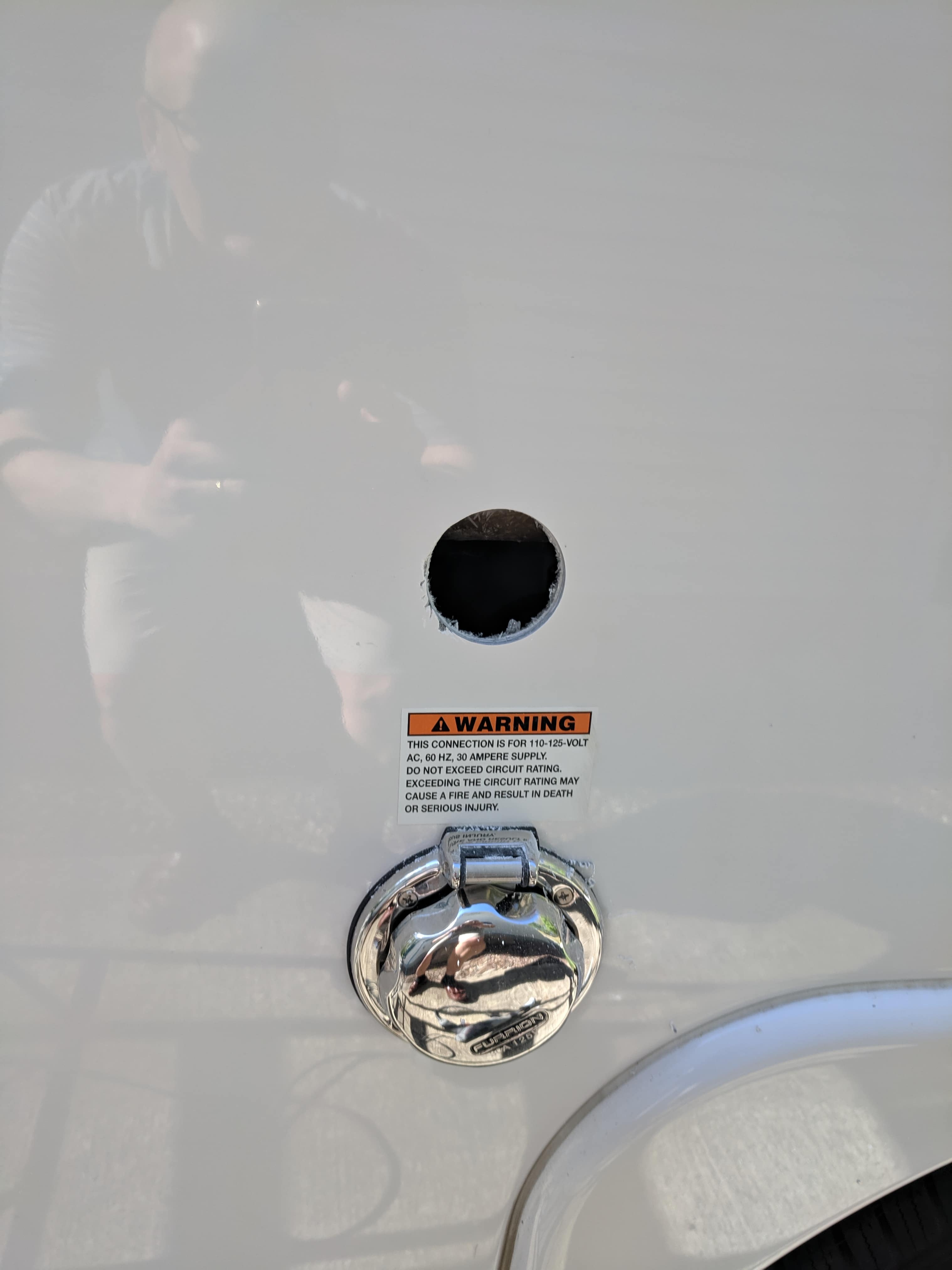
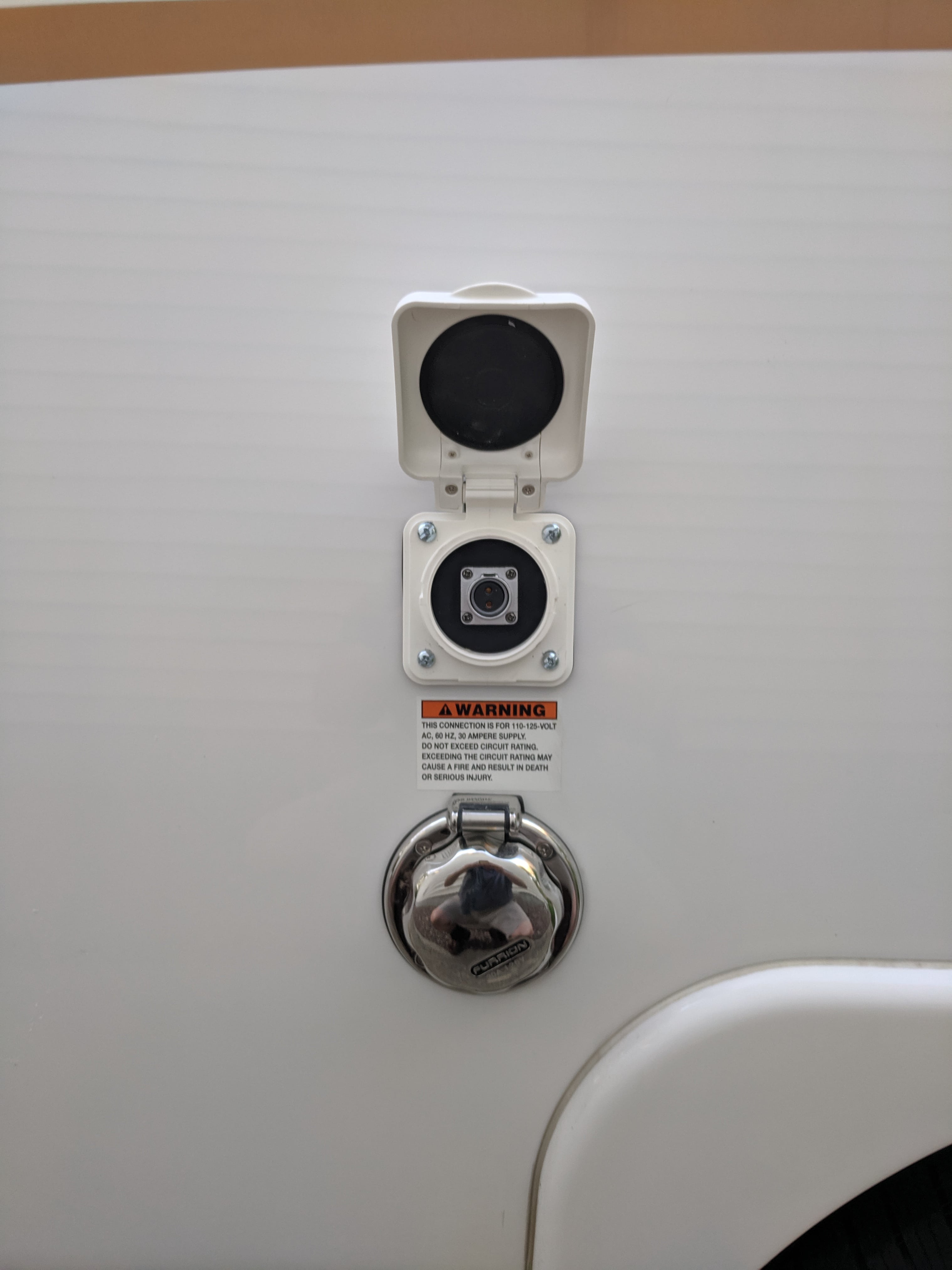
Thanks @Raspy. That is a nice simple idea. Well I have to say drilling a hole in my brand new camper was filled with anxiety but it was just about the easiest to drill hole I have ever cut. I decided to install the Furion solar plug port above my existing shore power port My plan was to use rivets to mount it but the rivets I had were not long enough. I think you would need 1 inch grip rivets to get through the plastic port and the thickness of the hull. I decided to through bolt it which worked but would be impossible with out a patient partner because the top through bolts were just under the lip of the inner hull; this made threading the two top nuts very tricky! At any rate the job is completed. I will post the pictures here and then add the final wiring install pictures when I get to that step.
1 point
-
Thanks for the info. It would be really helpful if sellers posted the actual sale price of their used Ollies, not just the asking price. All the asking prices are right up there close to new MSRP but we don’t know how far that number dropped to make the sale. John Davies Spokane WA1 point
-
The wire chase between the top and the bottom is in the rear on the street side. I pulled a tape thru there right after Hull # 050 came off the line. I leave a length of weed-eater cord permanently there to facilitate any future wire pulls.1 point







.thumb.jpg.780a61c48108d06558e15f745dfe9b5e.jpg)






-
Recent Achievements
-