Leaderboard


Popular Content
Showing content with the highest reputation on 10/22/2019 in all areas
-
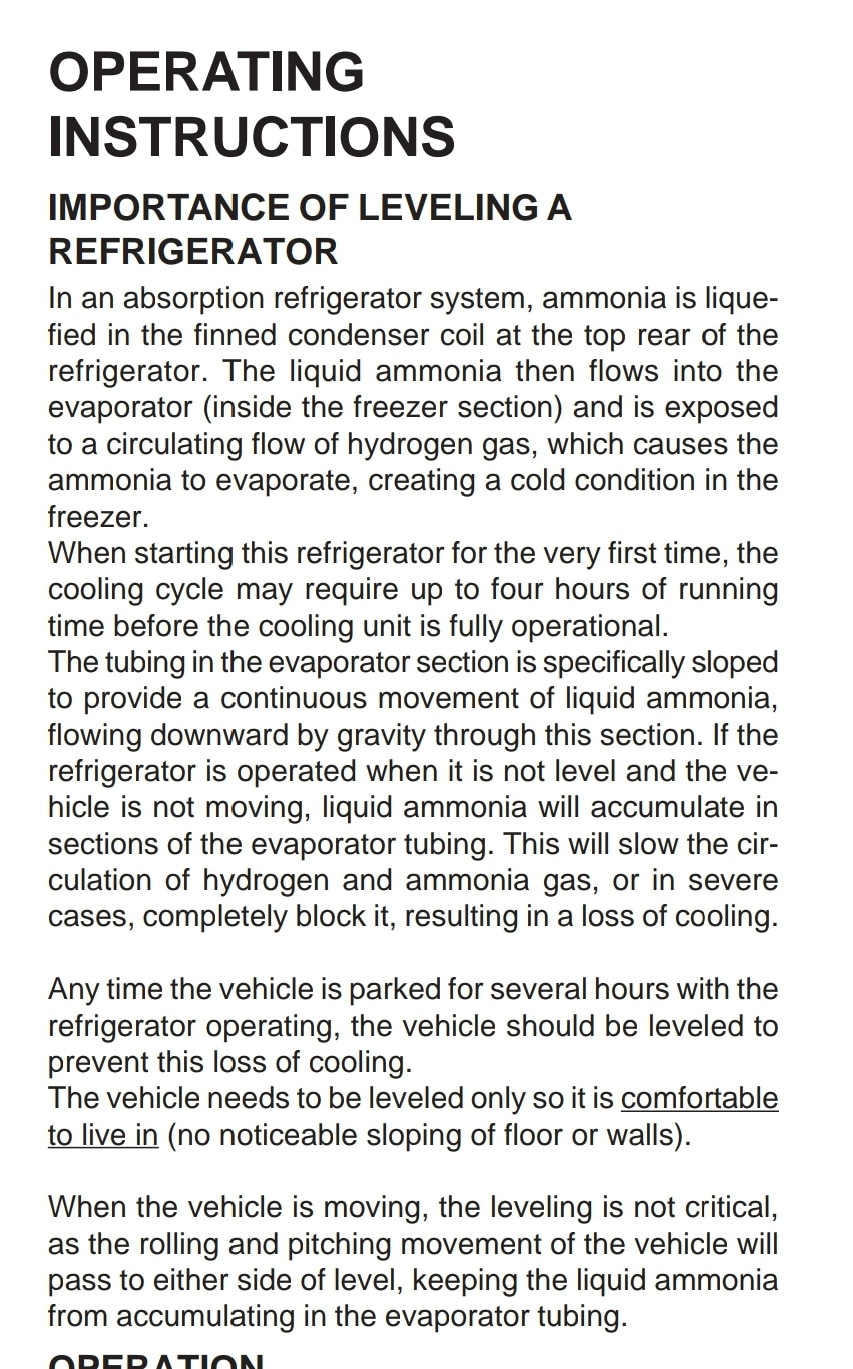
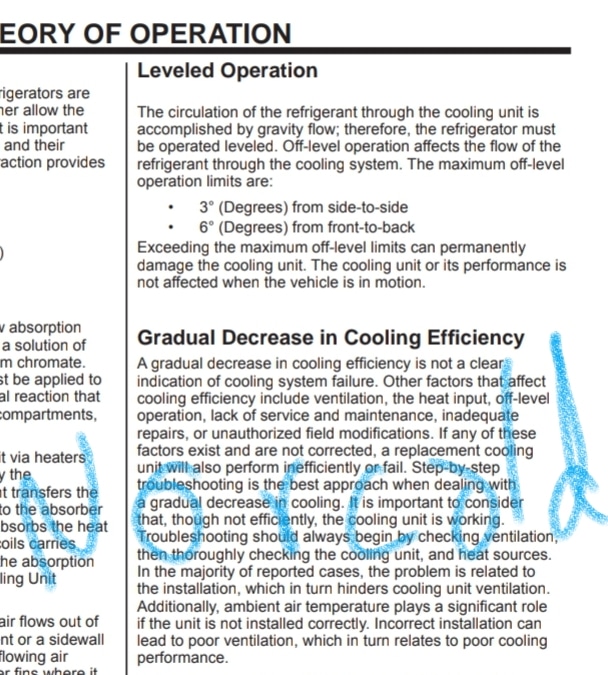
John, it was in our manual for the dometic rm2r54 we used to have. First thing in user instructions. Basically, if you're comfortable, the fridge can operate safely. I think our Norcold 3way manual said 3% was ok, but I wouldn't swear to it. That's actually a lot of slope, .4 inches to a foot, I think. ( I looked up a Norcold manual online. See attached.) Both manuals mention that travel doesn't affect the fluids. It all levels out. After all, none of us really drive uphill for an entire trip.? The newer generation fridges of today aren't as susceptible to the slope issues as the old school fridges of days gone by, but it's still important. Another reason you'll like the Danfoss compressor when you finally get one. Slope in a trailer, or heel in a sailboat, is pretty much immaterial.
 1 point
 -
It's Christmas everyday around our house, thanks, to Amazon and eBay. trainman1 point
-
very good stuff and educational. The fridge is not a problem or concern. We "charge the Oliver fridge the night before leaving town and then put all the food in it already cold or frozen from the house fridge. The Oliver fridge is a great "ice box". It stays cold all day until we stop to camp. At this time we turn on the fridge and all is good. Turn it off before we travel and so on. Never had a problem with food getting warm or defrosting. Doing this is super easy and worth the small effort to keep the fridge in good shape. Again I'm assuming we are operating with reliable information that it's very hard on the fridge to travel with it on and doing so greatly increases the likelihood of damage. I'm happy to learn the propane heat on its own gets the job done in cold weather. So far we have only had cold nights and mornings (high teens) but warm in the daytime. The concern is if we get caught when the temp is really cold 24/7 for several days in a row. I had a friend on a duck/goose hunting trip in Canada last year that made a mess out of his Lance camper in this very situation. The idea of just stopping and winterizing and blowing out lines is viable if the temp were to get crazy. All is good in my book as long as nothing internal gets broken. Seems like the biggest concerns are the outside shower and water input ports freezing if it gets really cold.1 point
-
below freezing is also very relative. The heater will keep most things warm, but the highest risk is the outside shower. Ours didn't freeze up, but there was definitely frozen water inside the door that I had dribbled before putting it away. At some point I will put an isolation valve/drain on those lines. This was at 20 degrees with probably 80-90mph wind chill while in motion (quartering headwind).1 point
-
Tunnels, ferries and refueling your TV are the places to be concerned about. The first two are a moderate risk if there is an accident and gas is released into a confined space. Kaboom! For a short tunnel at high speed, I would never shutoff the bottles. For a long slow one, certainly. WA State Ferries, the big ones, require you to use EPA approved cans for flammable liquids (only ten gallons allowed) and you must turn off your permanently mounted RV propane supply (regardless of tank size), and flag the regulator so that it is obvious to an onlooker that they have been secured. An dock attendant will ask you and visually check for a flag. I have never seen one actually touch a valve knob. I use a piece of red surveyors tape, dangling out the access hole. The little ferries here, on remote lake crossings, have the signs but nobody ever checks. It is a lot more casual. When refueling, there is a very small risk that a pilot light could ignite spilled gas vapors. The fridge presents the biggest risk since it is closer to your TV. Use common sense, stay at the pump and don’t spill fuel; I think you are a lot more likely to ignite fumes with static discharge than from a hidden pilot flame fifteen feet away.... I have two jerry cans on my rear rack, I remove them and fill them carefully at the pump, so if there should be an accident it would not immediately envelope the trailer. Just think about what you are doing and don’t screw up. Millions of RVers keep the propane on when traveling and fireballs are not that common, if you are in a serious wreck you probably have lots worse things to be concerned about. Everyone has different risk tolerance, do what makes you feel comfortable. John Davies Spokane WA1 point
-
It’s legal till you get caught. Seriously I don’t know about out west. East coast some tunnels have signs no propane if you are able to see them they are so small. I haven’t ever seen inspections before entering, or anyone being stoped for it. If you happen to be in an accident in the tunnel then the legal part of it kicks in, in short there are laws pertaining to propane on highways like a lot of other laws out there that aren’t really enforced unless something bad happens. Still doesn’t hurt to know basic traffic laws for different states you travel in. Each state is different.1 point
-
We just go home last night from a two week trip up on the Skyline Drive and the Blue Ridge Parkway both in Virginia. Both of these parkways have nice campgrounds, which we have been using for many years.1 point
-
I, sort of accidentally, left my Oliver out in freezing weather while we were away for a few days. It froze the cold valve on the bathroom sink, and it froze the toilet fresh water valve that the foot pedal operates. The bath sink faucet cracked the ceramic insert, and the toilet valve split open. It seems like the water inlet fitting would be the most vulnerable, or the outdoor shower assembly, but the breaks both happened inside the trailer. Afterward, I wished there were valves on the bathroom lines so that one could isolate that area while out on the road if needed. Once anything goes wrong, the whole system must be shut down. When I put in the new kitchen faucet, I did install shutoffs on the two lines. And an added benefit to this it allows you to backlash the faucet if needed. Mine gathered a bunch of debris from somewhere and I was able to blow it out with system pressure flowing backward.1 point
-
You're not - but many people do it anyway.1 point
-
I agree about blowing out the outside lines and shower head, a small compressor like this one - which puts out nearly 6 cfm - would work fine, and as a bonus you can air up your TV or trailer tires with it. Or an air mattress or inflatable boat. https://www.4wd.com/p/smittybilt-5-65-cfm-air-compressor-2781/_/R-DSBP-2781 I tend to shy away from inexpensive pumps but I have had one of these for several years and it is fine for occasional use. The tiny glovebox sized “high pressure” pumps are to be avoided at all cost. Most are less than worthless.... John Davies Spokane WA1 point
-
Even with the heat on, the most vulnerable areas will still tend to frieze - particularly the hose inlets. The best thing to do for short stints in the cold is to carry a compressor or air tank and blow out the lines prior to travel. It doesn't take much time and gets you 90% winterized.1 point
-
I see it here and on FB, the question of whether a particular vehicle can tow the Oliver. In the end, it depends - a lot. As part of our little cross country run in the Oliver, I weighed it more than a few times as it was hitched to my Navigator. The specs that are on the doorjamb of my navigator are: Payload 1500lbs (ie factory computed actual curb weight subtracted from GVWR) Gross Vehicle Weight Rating (GVWR): 7800lbs (Total weight on my truck should not exceed this) Front Gross Axle Weight Rating (GAWR): 3625lbs (the weight on my front axles should not exceed this) Rear Gross Axle Weight Rating: 4380lbs (the rear limit) The problem is none of this shows up - besides the 6800lbs - in any material available before purchase. Even the axle weight ratings are pretty useless as I have no idea how much of my "5300lbs" of curb weight are on the rear axle to begin with. To really understand capabilities, I need to take this information with me to a scale to see. I haven't had a chance to weigh the empty/loaded truck by itself, so we'll go with the full up loaded truck+loaded trailer scenarios. First we weighed in with our base load including driver, co-pilot, and rest stop dictator (doggo) in the second row: Total weight in Tow Vehicle: 7420 - 380lbs below max gross - plenty to spare Rear axle weight: 4340 - only 40lbs under the limit - but legal So I removed a piece of luggage from the rear of the SUV and put it in the back of the Oliver - we also gained some other stuff before my next scale date: Even though we gained overall weight (40 lbs), the rear axle of the SUV lost weight -- due to the distribution of weight in the trailer. We still had well over 10% weight. But I needed to carry my all season tires+wheels in the trailer - so I adjusted the Andersen and did a re-weigh: Not only did this lower my rear (drive) axle weight by 80 lbs, but it pushed some of that weight not only to the trailer - but to my front tires so that I have a little more steering authority. So I added the all season tires (and now winter tires are on the SUV): Total weight: 7600lbs -- 200lbs under gross. Rear (drive) axle weight is now exceeded. I moved two of the tires to the trailer for the rest of the trip (it was fun moving them back and forth after every stop) and then adjusted the Andersen again - which brought us well within specs on the re-weigh (which I had to get manually printed so it's not included in this post. So what I learned: I'm probably not going to hit max vehicle gross weight before I hit my rear axle weight. Not without really using the Andersen at max potential to push more weight to the front or without carrying more of the load in the second row floor/where doggo is. Pilot/Co-Pilot are pretty light in our case. What this means for you: whether your vehicle can tow or not will depend on your vehicle, how it's specifically configured, your weight, your stuff's weight, and where you put your weight. The Navigator works brilliantly for us, as long as I don't have 340lbs of tires+wheels in it. It might not work for someone else who needs to carry more stuff in the truck. The same goes for someone in an F150, Tundra, etc... Some trucks just won't work - Honda Ridgelines need not apply. For those that want to know how to weigh in - that will be my first reply to this topic. Please include your results below.1 point
-
How to weigh your truck and trailer at a CAT scale: CAT scales are at most rest stops frequented by truckers. They provide your steer axle (front wheels), drive axle (rear wheels), and trailer weight. This lets you know if you are in limits or not. 1) find a cat scale - they have big yellow signs that say CAT scale on them. https://catscale.com/cat-scale-locator/ can help 1a) Sign up for Weigh My Truck and download/setup the app if you want to use this service. It lets you get the weight and a PDF of your results without ever having to go into the store and interact with humans. https://weighmytruck.com/ "create driver account" - you'll need to add a payment method. Sign into the app on your phone afterwards and make sure it's working before you are sitting on the scale. 2) drive to the scale - I try to use them when there aren't a bunch of truckers queued for them. 3) drive onto the scale, you will see two yellow lines on them - put your front wheels just past the furthest line, and make sure the second line is between your trailer and rear wheels. 4) shift to neutral, use parking brake - this prevents weights being skewed by loads from brakes being applied. 5) either press the button the app (you are done) or press the button on the intercom (it'll probably be a little higher than you'd like unless you have an MDT). 6) get off the scale - get the receipt inside if you didn't use the app. If you want to get an idea of your tongue weight, disconnect in the parking area, and reweigh just the truck. I strongly advise against dropping your trailer on the scale.1 point
-
Ronb - Welcome to the Family! I agree with both John and Overland - both changes should not be a "problem" at all. And, you are correct - they will build you a great camper. When do you pick up the new baby? Bill1 point
-
Good to know, thanks for the info.1 point
-
John, thanks for the info. Good to get other opinions. I know The Oliver company will build my wife and I a great trailer.1 point
-
IMO, the smaller AC unit is an upgrade. It should be quieter and more efficient. I think it was purely a marketing decision to put the larger unit in the trailer to begin with.1 point
-
What Cooper tires? Michelins are good but when given the chance I would buy certain Cooper models over the LTX, any day. The LTX is a really hard compound, high mileage (70k) tire, not needed on a trailer that will be lucky to go 20,000 miles before they get old enough to scrap. The Coopers are probably not a downgrade. I can’t comment on the air conditioner except to say that you don’t need a 13.5 K unit in these tiny trailers. Except maybe if you parked in the summer sun in the Mojave desert. Welcome to the Ollie Club. John Davies Spokane WA1 point
-
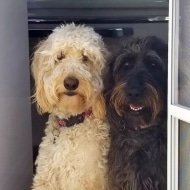
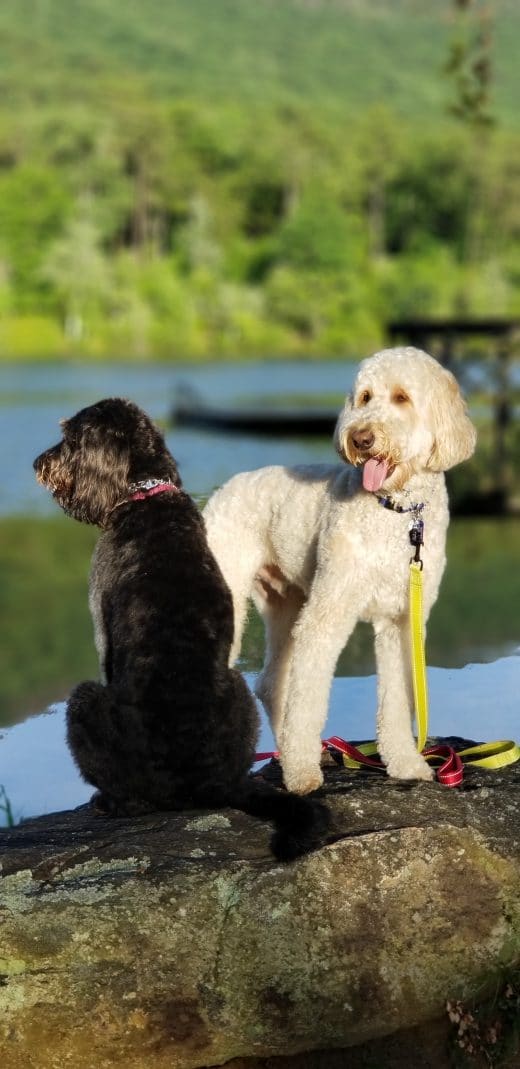
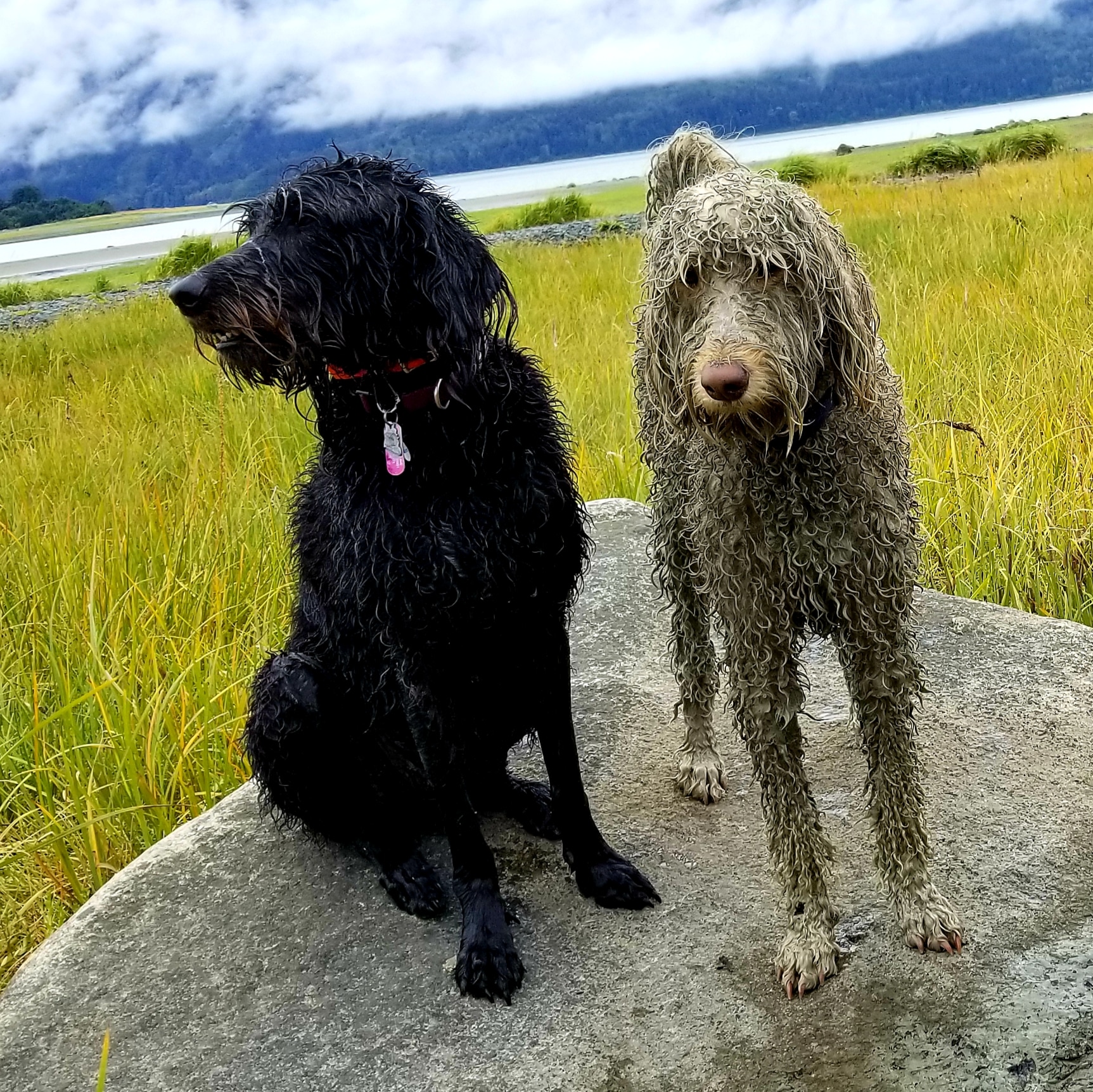
Welllll, how particular are you? Doodles are nature's velcro. We are on day 122 of our 160 day +/- meandering trek from FL to AK & back. When we left home our sweet Ollie looked so quaint. Matching bedding, pillows, rugs & I did my best to keep it that way. After a few weeks, I reassessed my priorities & ditched the fluff. The pretty entry rug was replaced with a plastic grass one to catch as much of the outdoors before it made its way back to the beds. (We have the king/dinette version but because the bed/table made the interior feel tight, we left it with family in KS.) We sleep on the benches with memory foam & the dogs get the space at the back & on a dog bed on the floor. That is where they hang all the time, except to drink from their water bowl that's in the shower. Weather permitting, we are outside most of the time, which I think is the norm. We mostly boondock but between locations we stay somewhere with full hookups & do a deep cleaning, laundry, grocery shopping, you know. What I learned the hard way is that trailers do not have enough water pressure to bathe the dogs. Groomers are impossible to schedule. If you know where you'll be far enough in advance, you might be able to schedule one at a Petco or the like. Otherwise, I find a do-it-yourself dog wash. Some places there are car washes with one bay converted to a pet wash. Quite clever! Only restrictions we've encountered is hiking in National Parks or anywhere there are bear problems. But then, I wouldn't take them anywhere dangerous. Despite all of the above reality, traveling with our Doods is a pleasure; they are the reason we have a camper. If you decide you need more space, I wouldn't blame you but there are huge tradeoffs. The obvious is the quality & comradeship you'd lose. Ollie owners are truly special.
1 point
-
From what I see on my post above, I seem to have succeeded. However, instead of copying the URL, I just copied the map itself. Does it appear the way it should regardless of the method? (That blank spot above Arizona will be filled in this month.) Thanks, Jason.1 point
-
Well, so far I am striking out1 point


.thumb.jpg.780a61c48108d06558e15f745dfe9b5e.jpg)





-
Recent Achievements
-