Leaderboard



Popular Content
Showing content with the highest reputation on 04/25/2023 in all areas
-
The wire chase from the attic to the basement is in the aft port corner. I used a fiberglass rod to work from bottom to top. Once placed I pulled a piece of bulk weed eater cord down to the basement. I left enough cord rolled up at each end to pull from either direction. When finished, leave this pull line in place for future use. Additionally, using this technique, I have successfully placed pull lines from the inside of the closet through the ceiling to the inside of the cabinet over the microwave and side to side behind the pantry.12 points
-
My inverter is still attached in it original position. That being said and I was going to re-attach the mounting board or just being proactive trying to prevent the mounting board from breaking loose, I think replacing the just top 2 screws holding the inverter to the mounting board with the through bolts of your choice, would prevent the inverter and board from falling. But the other choice is to hide the bolt heads. This is where Krunch keeps 4 or 5 pairs of sandals, slippers or 🩴’s under her port bed overhang. I’m sure no one would be able to see the bolt heads unless they wanted to borrow a pair of her shoes. We won’t even discuss where the other 15 pairs of her shoes go! Mossey
 6 points
 -
I can personally attest that driving the 40 mile washboard gravel road into Chico Culture with 80psi in the Oliver tires is both stupid and detrimental to the Oliver. I'm not completely convinced that it didn't slightly alter the earth's orbit around the sun as well.5 points
-
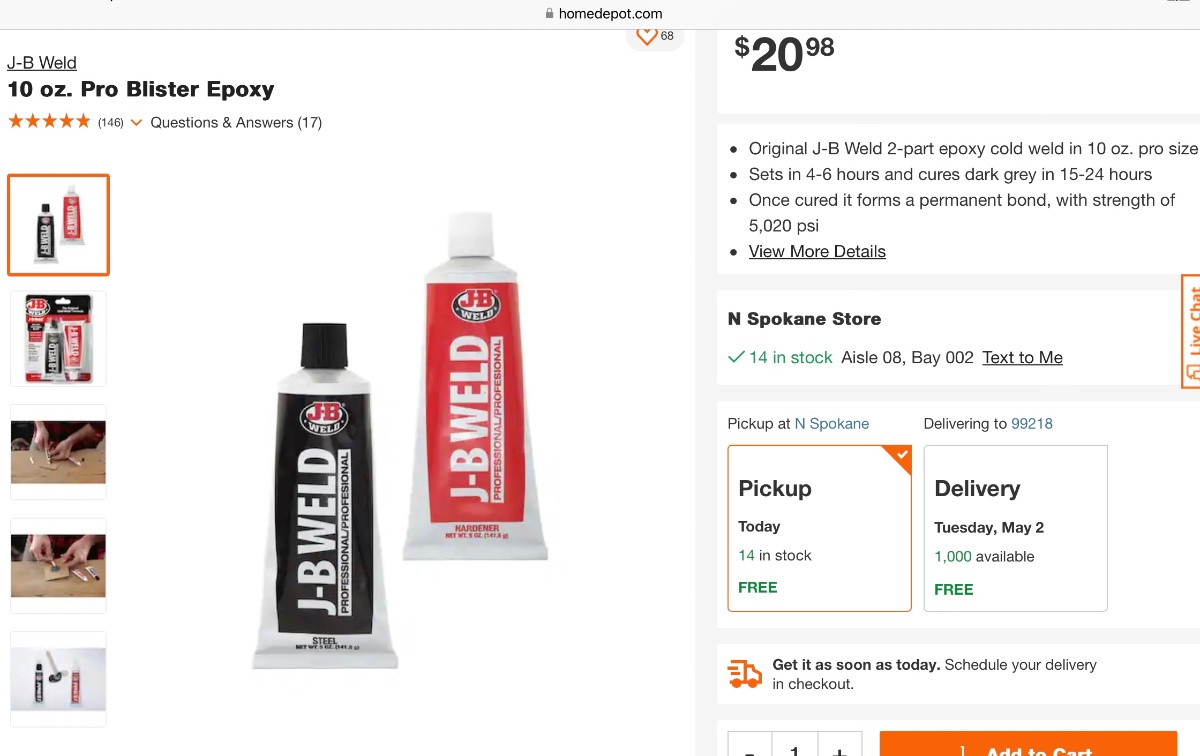
The screws or bolts are SUPPLEMENTARY, you must use epoxy or 3M 5200 to secure the white mounting plate, so that there are no vertical shear loads on the fiberglass. It is only 1/8” thick and it was manufactured with a chopper gun, not hand laid, so it is not especially strong by itself. If your white pad has fallen off completely, you must bond it back properly and let the epoxy cure before you install the screws, or you risk having those become immobilized. You could coat the threads with silicone grease, but that does not always work. One step at a time! Fix the board. Wait 24 hours. Fix the screws. When drilling from the inside outward, use the same size bit as the hole briefly to mark (“center punch”) its center. Then drill out using a 1/8” or smaller bit. Finish from the outside. It’s tight in there, a right angle drill attachment is necessary. As I mentioned on the first page, cut out the two bottom holes on the inverter flange, make slots so that you can pre-install nylock nuts and washers onto the screws, and simply lower the inverter onto them. You can reach the nuts easily enough to tighten them, but installing them with the inverter blocking the way would make you swear. Wouldn’t it be nice if Oliver did this at the factory…? File a service report. 5200 is great stuff but once opened it cannot be stored, it will harden inside the tube in a day... For the same price as a 3 ounce tube, you can get a 10 ounce JB Weld Pro pack, it will last for years, John Davies Spokane WA
5 points
-
My inverter is still in its original location and after checking it last evening is still mounted solidly. In the past few years we have traveled over some really rough roads mostly in the Northeast. All good thoughts and recommendations in this thread on a solutions to preempt a possible failure or a fix IF the inverter mounting board fails. After a conversation with Oliver Service yesterday, the failure rate of the present inverter mounting location is extremely low. I did see one reported failure on the Oliver Owners FB page which was posted in 2021. I don’t recall reading about any failures here on the forum, but I may have missed it. If anyone has had a failure please consider posting up. According to Oliver Service the very few rare cases they have seen have been attributed to running max tire air pressure and traversing extremely rough roads. Patriot🇺🇸4 points
-
A good choice for drilling a clean hole on the fiberglass would be a sharp brad point drill bit. Pilot with a very small one from the back side and then finish with the final size from the outside. Use a high rpm on the drill and very little pressure. Here's a good example: https://www.homedepot.com/p/DEWALT-High-Speed-Steel-Brad-Point-Drill-Bit-Set-6-Piece-DW1720/202279646
4 points
-
I spoke to Anita yesterday and passed on everyone's well wishes. For some reason she is unable to access the forum inside the facility so she's not been able to respond here. She is currently in a step-down rehab facility in Columbia, TN. She states she is still in a lot of pain, but she is very appreciative of all our thoughts and prayers. She thinks she may be there several months. I'm hopeful that won't be the case. She did say that she is able to get into a wheelchair for short periods of time. They do not want her sitting up too long at this period of her rehab.4 points
-
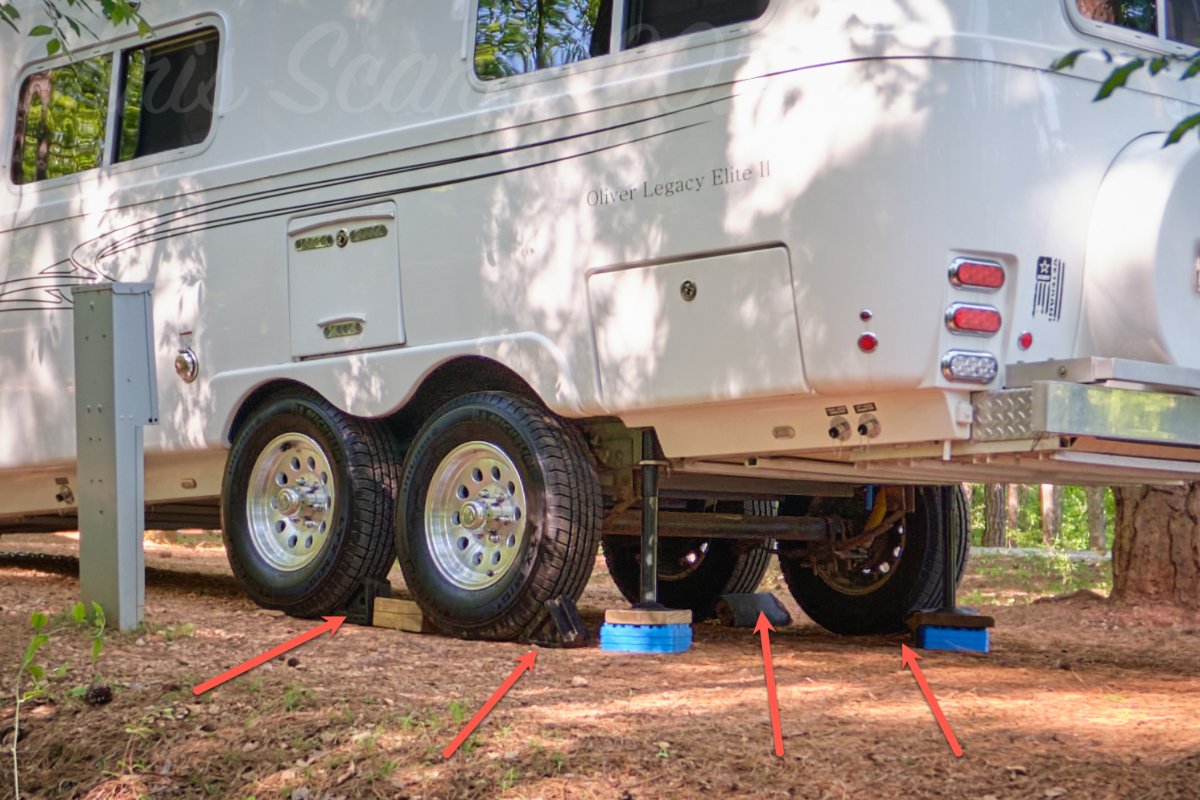
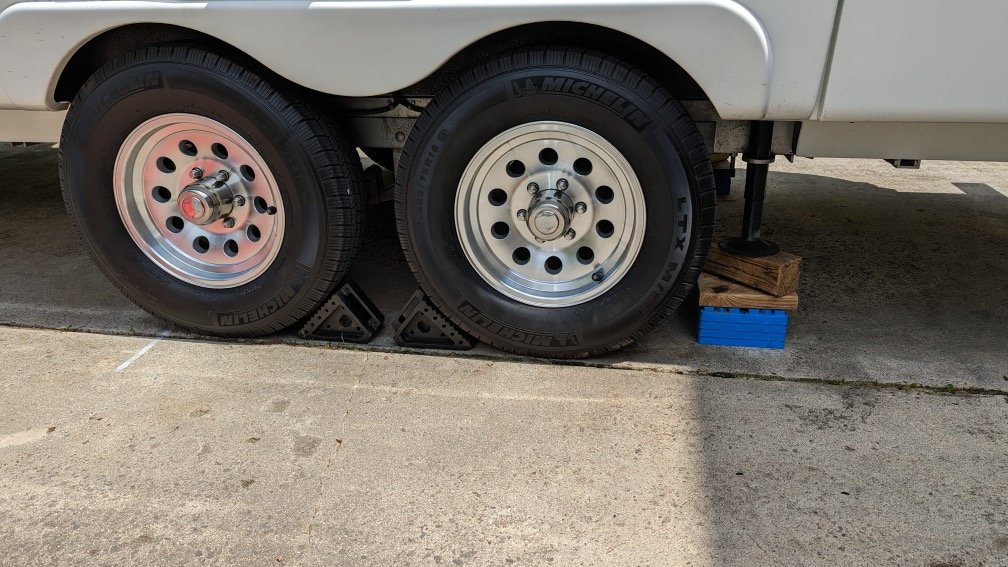
The only thing I would change here is to turn the HF chocks over. The ridged side should be on the ground and the slightly concave side should be against the tire. In another of your subsequent posts it is clearer than these photos that they are upside down. Also, when breaking camp, raise those rear jacks before raising the tongue. Keep the chocks in place until completely hooked up. You don't want to make the front jack try to lift the whole weight of the trailer and you certainly don't want the trailer at the bottom of the hill. I think you made poor campsite into a completely workable one. We've run into this same problem in various spots, especially at Quartzsite.3 points
-
Just wanted to share with everyone that Oliver’s labeling has improved over the years. This is a picture of the circuit breakers for the inverter in our trailer. Clear labeling really helps.
3 points
-
A good way to fish a wire between the hulls without damaging the insulation is to use a "ball chain". It usually finds it's way down on the first attempt just by jiggling up and down while letting weight of the chain do the work. I use one like this but without the large ring attached which I found has a way of getting snagged on things in tight areas. Ball Chain3 points
-
I recall that there is a path that the A/C condensate uses.3 points
-
Checking before disconnecting is ALWAYS a good practice. Even a campsite with a slight incline/decline can be problematic. A friend and I, and another neighboring camper, chased and stopped a trailer that hadn't been chocked on a fairly slight slope...but the site was on a ridge. Could have been a disaster. (That camper had a wheel instead of a foot on the front jack, so it moved pretty darn easily.) I like the big, chunky rubber chocks from harbor freight. The crappy plastic ones can slide much more easily.3 points
-
Plan to replace the existing PMW charge controller in the battery compartment with this Renogy 20A MPPT charge controller and temperature sensor next week.
3 points
-
I've successfully used this method from the attic down between studs on the interior of our house. I believe the wire chase in the rear of the Oliver is too tight with wires for this to work.2 points
-
Will install the controller this week and post photos. We don’t have an inverter, so can’t use 125V appliances when using only solar. Normally use about 25% of the single BattleBorn 100AH lithium battery daily when dry camping. We can easily camp three days without charging the single lithium battery. We have a three way Dometic refrigerator using LP gas to operate when dry camping. Going to monitor heat in the battery compartment with a Renogy temperature sensor, if needed, plan to add vents that open & close easily on the battery compartment door leaving the original vents plugged since they are fixed vents. Will see how testing goes! 🙂 Thanks, Bill2 points
-
Parking or setting up on hills and slopes? The thought immediately comes to mind- what could possibly go wrong? Overall you made it work, and hopefully enjoyed a nice lakeside stay and beat the odds of water testing your Olivers flotation capabilities. Onward! Patriot🇺🇸2 points
-
You should try it next time you have some leftover from a project. I think you'll find that once brought back to room temp it sets just as fast and bonds just as strong as new from the tube does. It's an old marine industry trick that's been used for decades. I still don't feel comfortable using it after freezing, though I think I'll try it with one of the tubes I have now just for kicks. Personally, even if I had to toss the leftover, I would still use 5200 over JB Weld to bond something to fiberglass in one of our trailers. JB cures way too brittle when applied thin for my taste and I'd be worried if it would stand up long term to all the vibrations, flexing and jolts it will receive from going down the road2 points
-
@Brian and BrandelyneGreat to hear from you, brother! Concur, awesome call sign! Got my General in '07 and have been active from the base station here (IC-746 Pro/Ameritron AL-811/G5RV up top) - mostly on the "High Noon Net", 7.240MHz, and occasional HAM Fests. I had an ICOM 7000 in my previous trailer (AS) with a home brewed multi-band (screwdriver) which I made from scratch. Used a 12vDC actuator to remotely raise the Screwdriver from towing mode (horizontal) to transmitting mode (vertical) on the roof; great ground plane on the AS - obviously not so on the Ollie! HA! Probably won't install a radio inside the Ollie (at least for now) - I'll most likely install the IC-7000 in the truck with the Screwdriver - lots to do to the truck in terms of bonding panels, etc. It would be nice to have an HF set-up portable/solar for camping, right? We've done the Quartzite, AZ HAM RV rally many times over the past Januarys - great fun winter boon docking on BLM with 800-900 "Hamster" rigs all spread out in the Borego Desert! I've got no less than 4HTs in the Ollie now, however! 73's, brother! W0ABX2 points
-
Hello and 73 to you! I have been a ham since the early ‘90’s and have been active most of that time. My call sign is, AF1US (cannot get a better call sign for being retired USAF!). I regularly work Parks on the Air (POTA) and enjoy portable, mobile, and base operations. My wife is KV4SF (also an Extra Class) and we are training Storm Spotters for the National Weather Service (NWS) supporting SKYWARN and ARES (Amateur Radio Emergency Services). I am presenting “A Conversation on Communications” at the Oliver Rally and will discuss Amateur operations as well as many other forms of communication. I am also planning a POTA activation since we will be in a State Park! I have a Yaesu FTM-300 in my truck and typically carry my FT-991A and Chameleon vertical when we travel. We also take a variety of handhelds (HT’s) along with us. From the description you would think I am a Yaesu man but my home shack is mostly ICOM, IC-7610 and IC-9700 along with a ACOM 1200S for some added power. I run that through a Mosley S-33 (40m, 20m and 17m) all other bands are on an EFHW long wire. Looking forward to some more talks, ideas, activities. 73 de AF1US Brian PS - I have no intention of installing any type of radio IN the Oliver. Ok, maybe a remote…2 points
-
K1PDB. Mostly got my ticket to work with Emergency Management, so not particularly active, but still keep a little Baofeng in the truck at all times.2 points
-
Thanks so much will give it a shot~ Pictures and mods to come.2 points
-
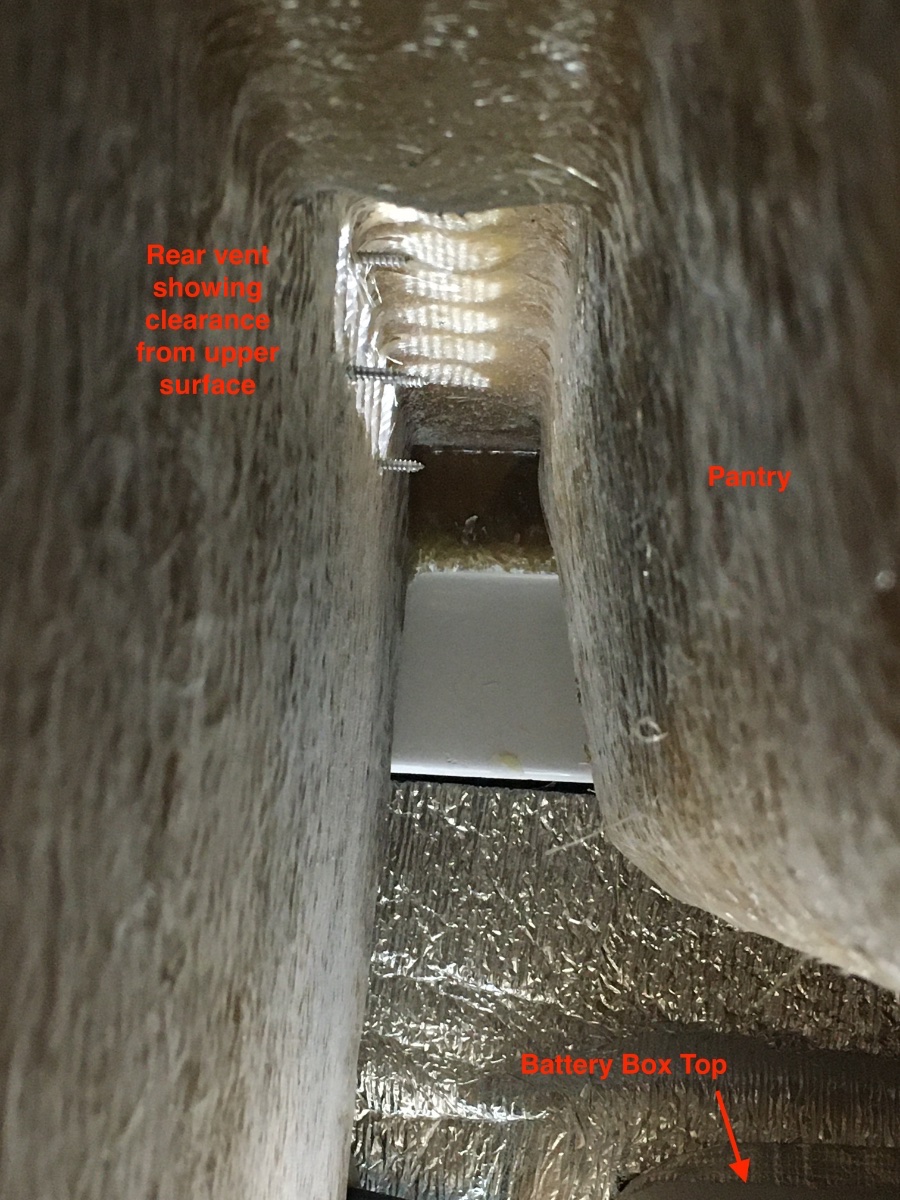
Not a problem, the pantry “floats” over the battery box with maybe three inches of space between the two parts. You can drill down at the rear inside corner (closest to you) and the bit will pop out at a location that lets a cable drop down right at the inverter area. Obviously you should think about protecting/ disguising the cable with a stick on “cord cover”. If you run it down the inside of the pantry nobody but you will ever see it. https://olivertraveltrailers.com/forums/topic/5301-how-to-lithium-battery-powered-vent-system/ Good luck, please start a thread about your mods. John Davies Spokane WA
2 points
-
Also after you put your stabilizer jacks down.2 points
-
For sure! Leave at least one of our safety chains connected until AFTER you have chocked and leveled Ollie. When preparing for departure, back up to Ollie and first connect one of the safety chains. As I have stated before: "Nothing like having a 6,000 pound anchor!" GJ2 points
-
I carry a milk crate full of 2 X 6 blocks. I use three under all my jacks to act as a shear-plane. Should for some reason the trailer moves, I'll hear a clunk and recall that I failed to use my check list. In your hill park picture, I see you are doing your best to keep Ollie in place. You even have a block to act as your shear-plane if it moves. Bravo! The two suggestions would be to: A. Use a line and tie off your brake emergency cable to a tree. If the trailer moves at least your Ollie brakes will activate. B. Bring more 2 X 6 blocks and shorten up the lever arm of the jacks as much as possible. GJ says: "Jack up Ollie as you need, but keep the jack extensions as short as your pre-planning will allow"2 points
-
We've been using X-Chocks for over 10 years now, they are a game changer in terms of eliminating a lot of movement when folks are walking back and forth inside the rig. They can be used with conventional wheel chocks if the situation dictates so. We carry both types because my crystal ball is real foggy when it comes to predicting what the campsite configuration will be on a given trip... just say'n.2 points
-
I pray for you, Anita, in the name of Jesus, that your pain would diminish, your procedures be guided by the hand of God, that your recovery is swift, and that you are restored to even an improved and stronger physical condition than before. Amen.2 points
-
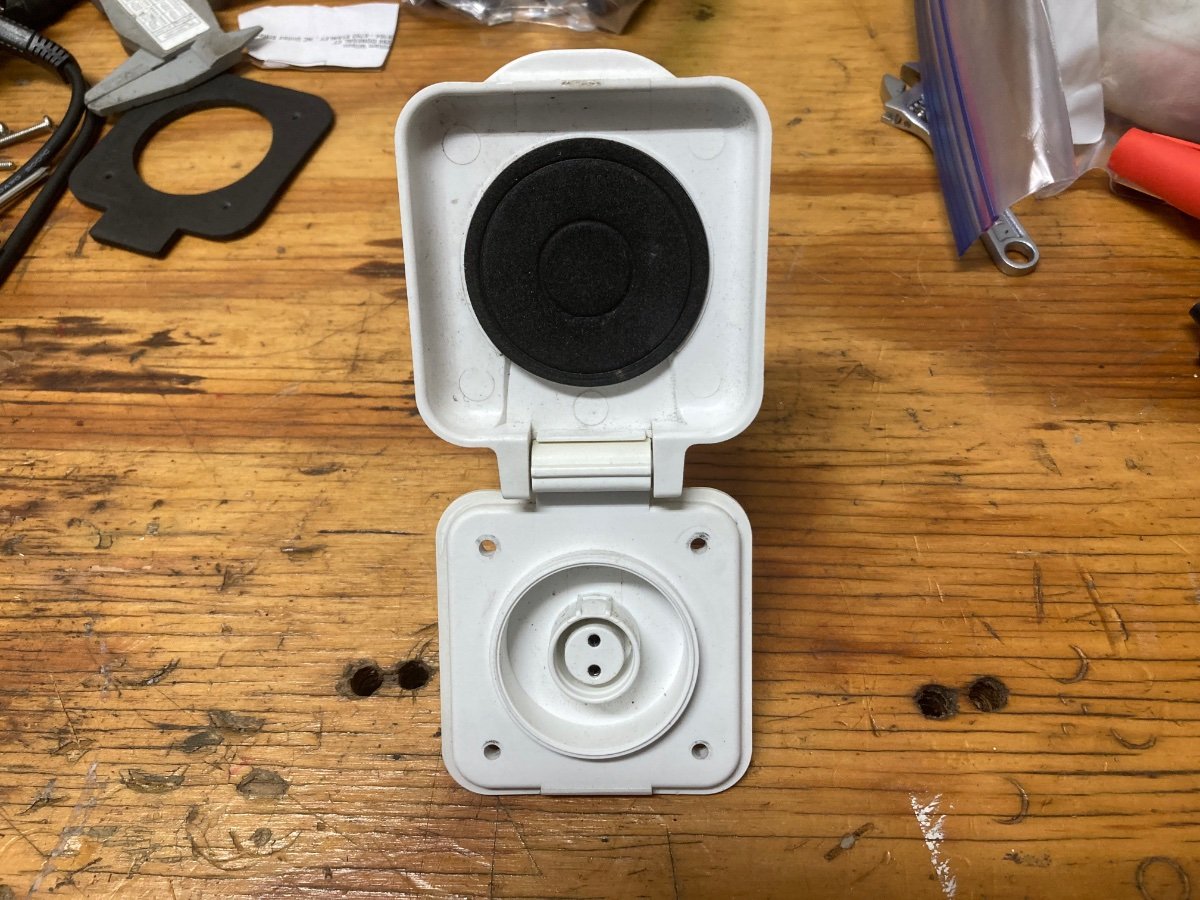
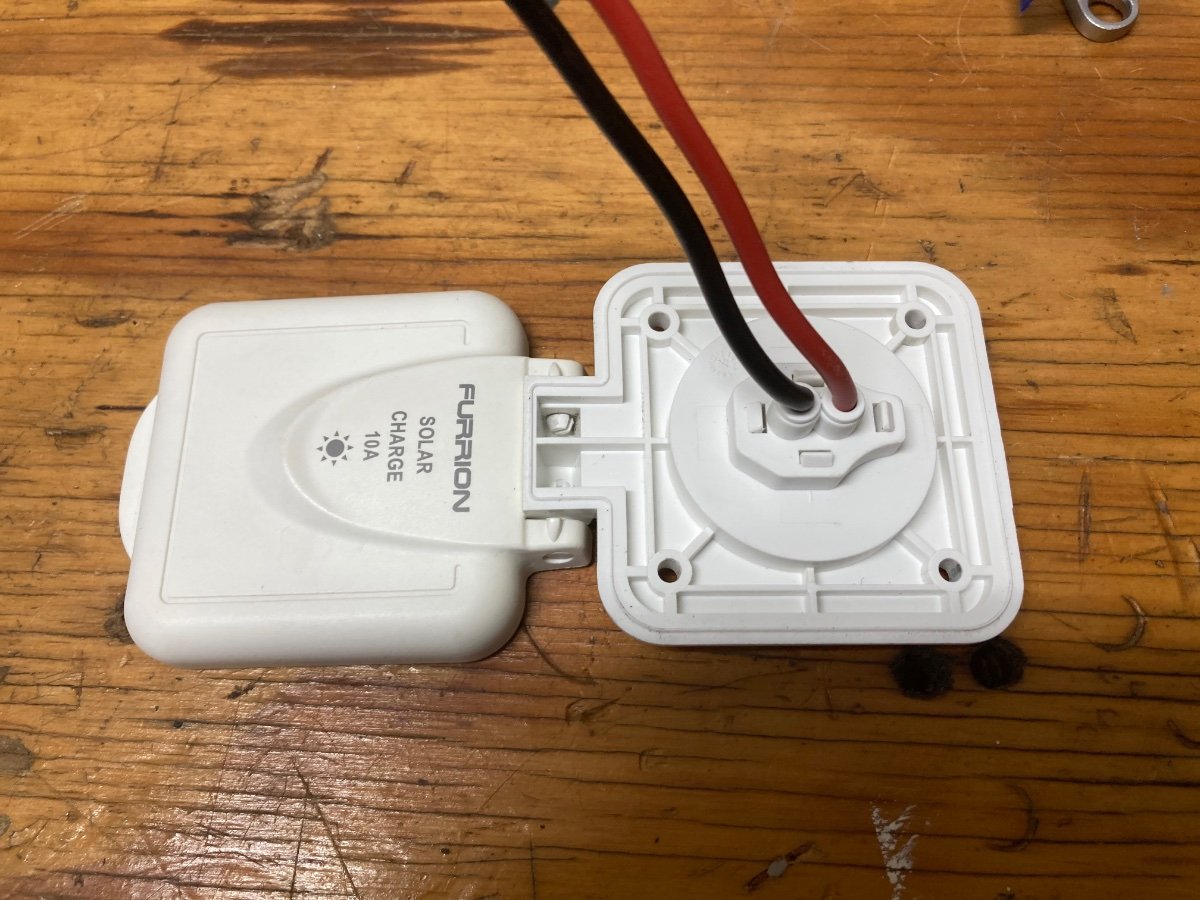
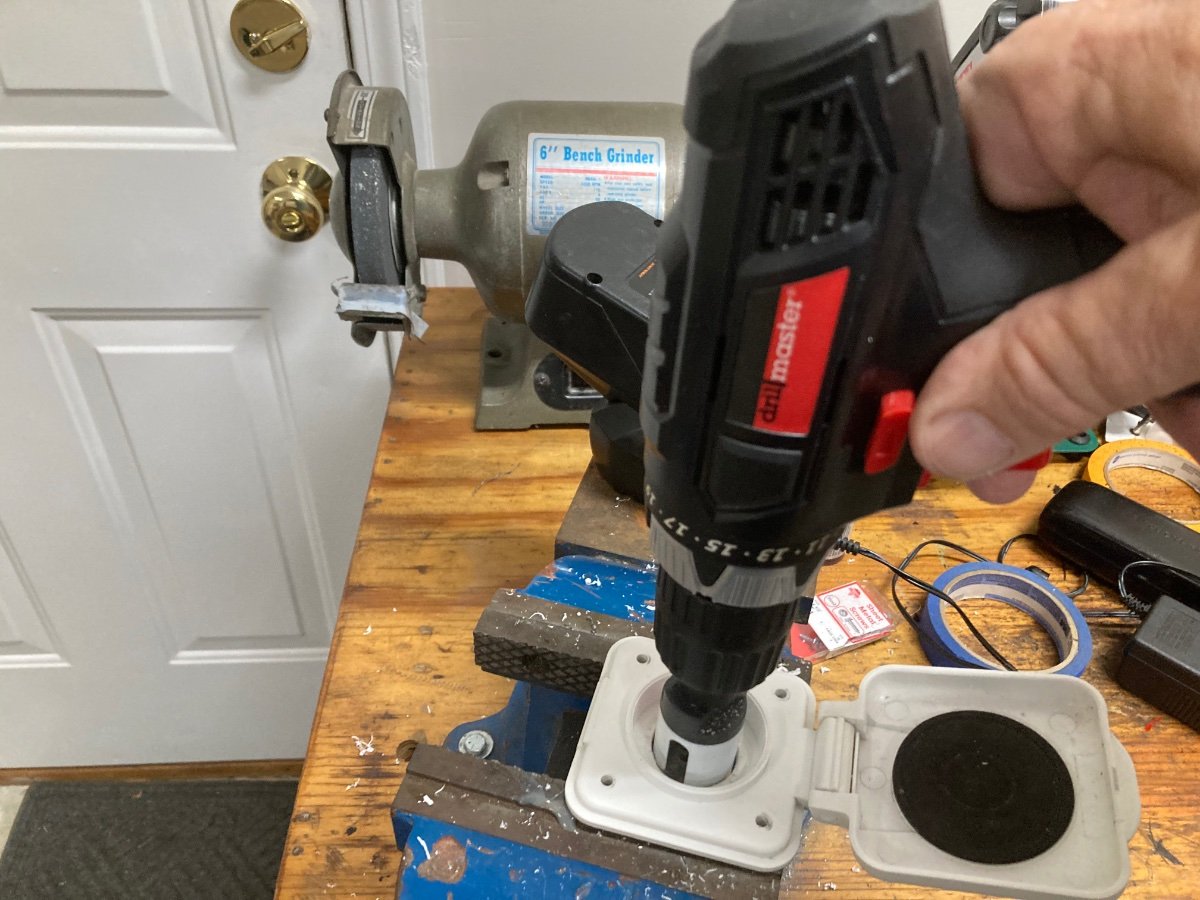
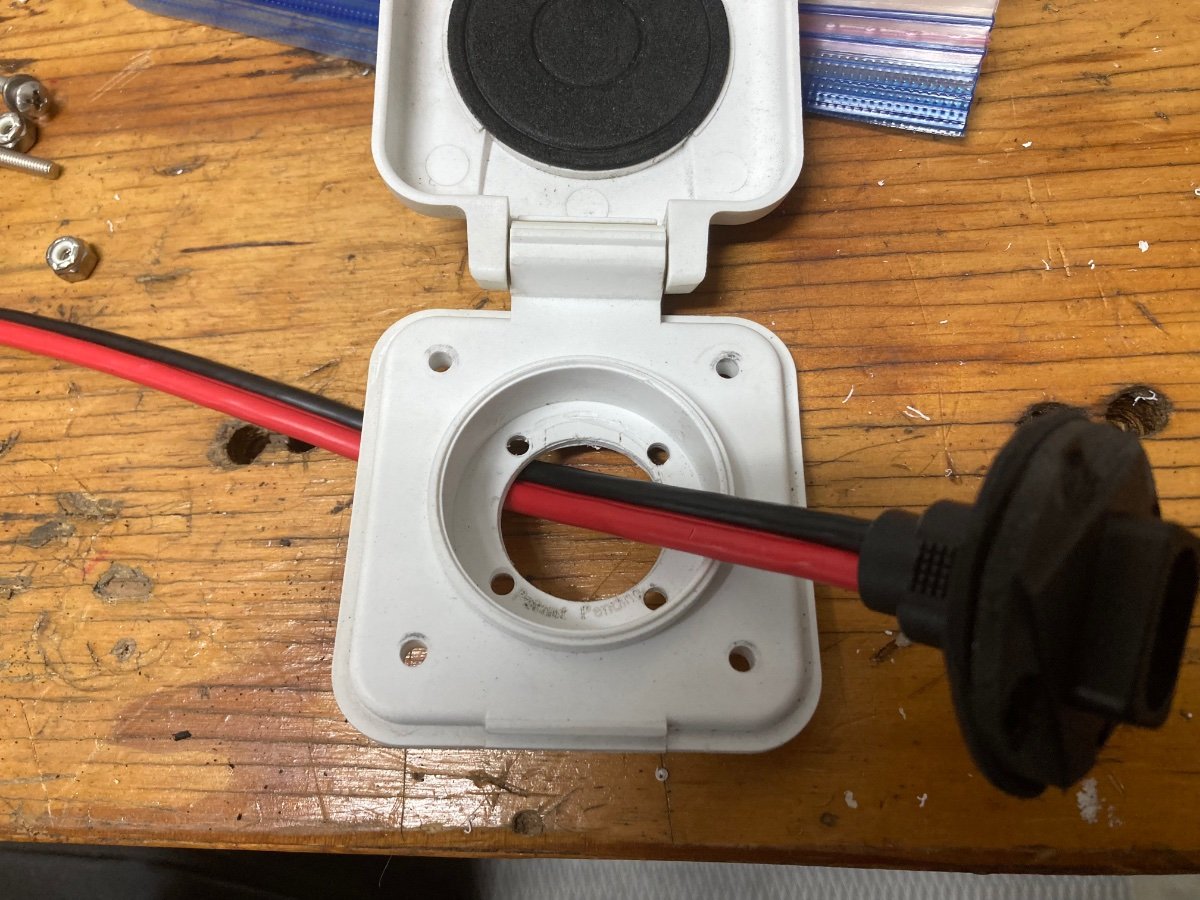
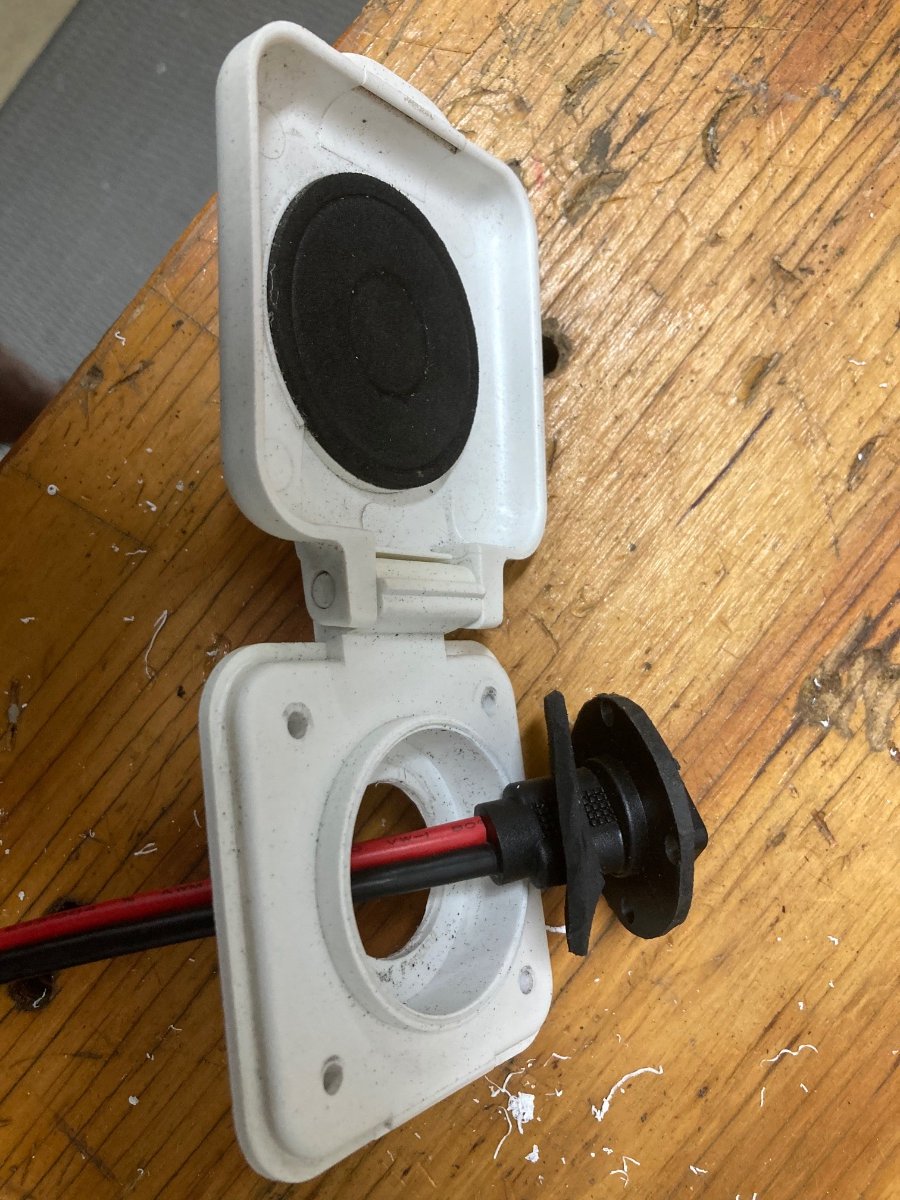
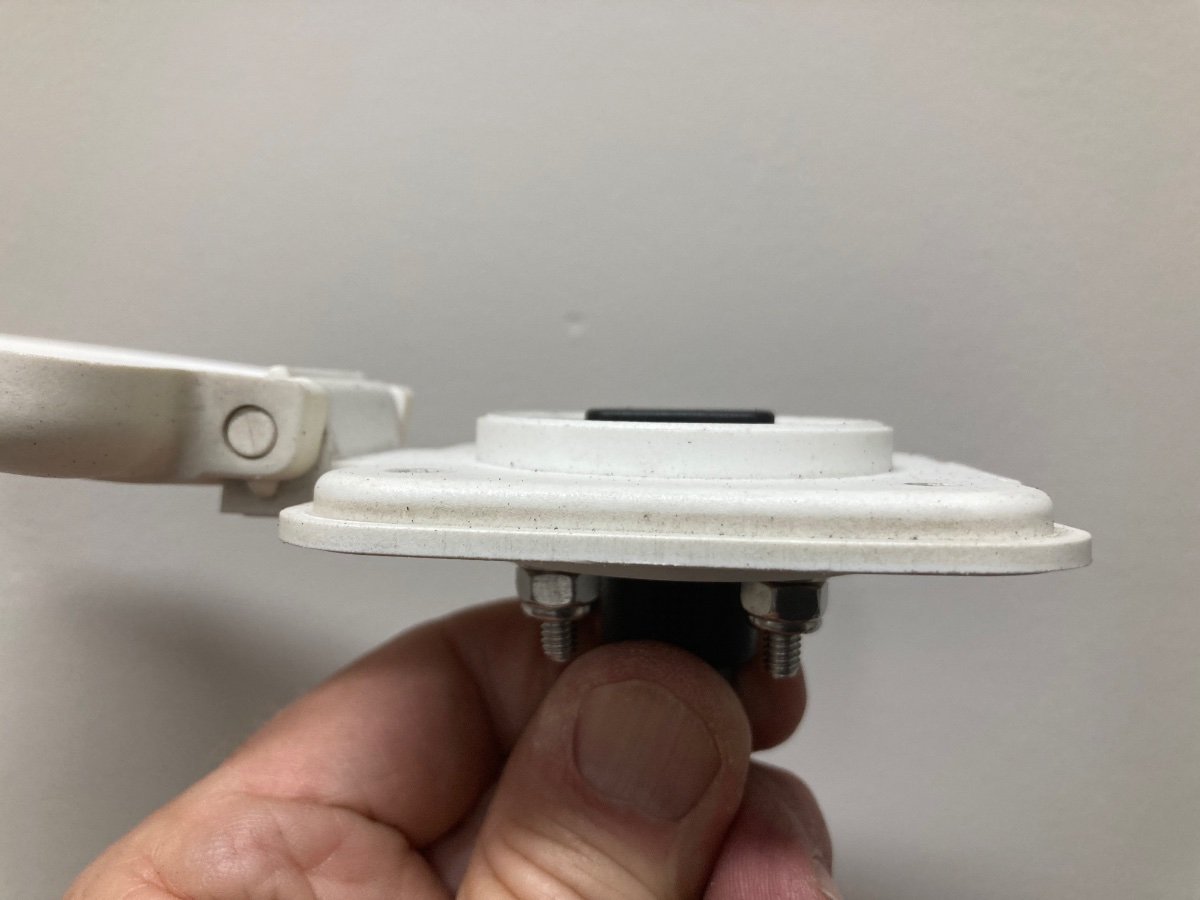
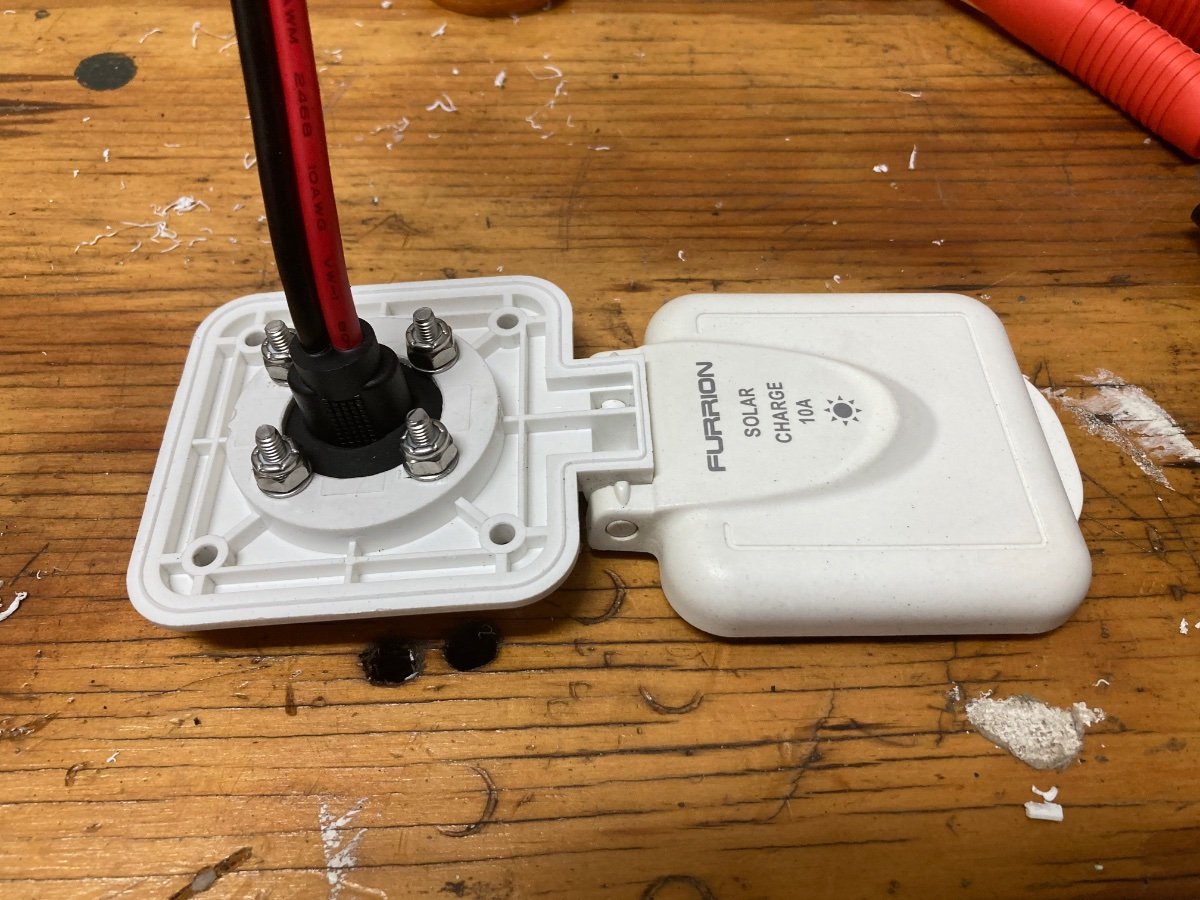
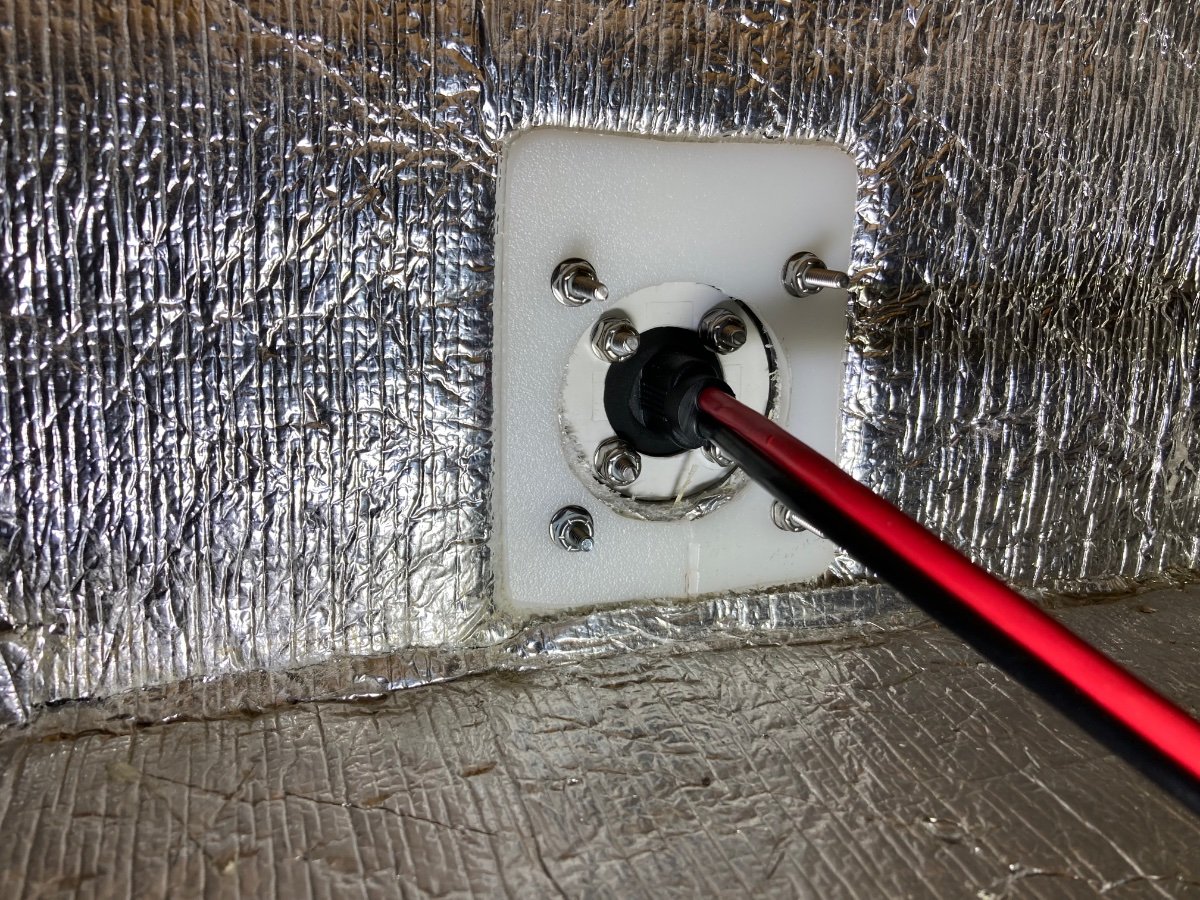
Added an additional 100W Renogy solar suitcase making two total 100W solar suitcases. Currently using a Renogy PWM charge controller. Decided to increase solar port capacity from 10 Amps to 20 Amps. Original Furrion 10 Amp solar port: Installing Zamp 20 Amp solar port in existing Furrion unit: Next modification will probably be installation of a Victron or Renogy MPPT charge controller.
2 points
-
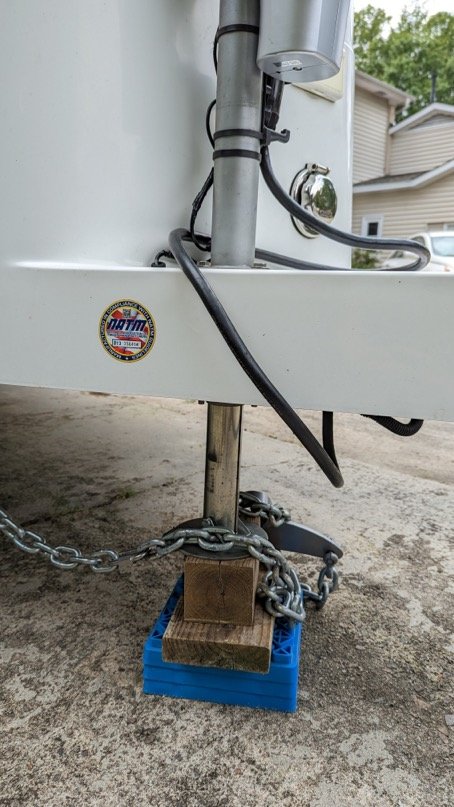
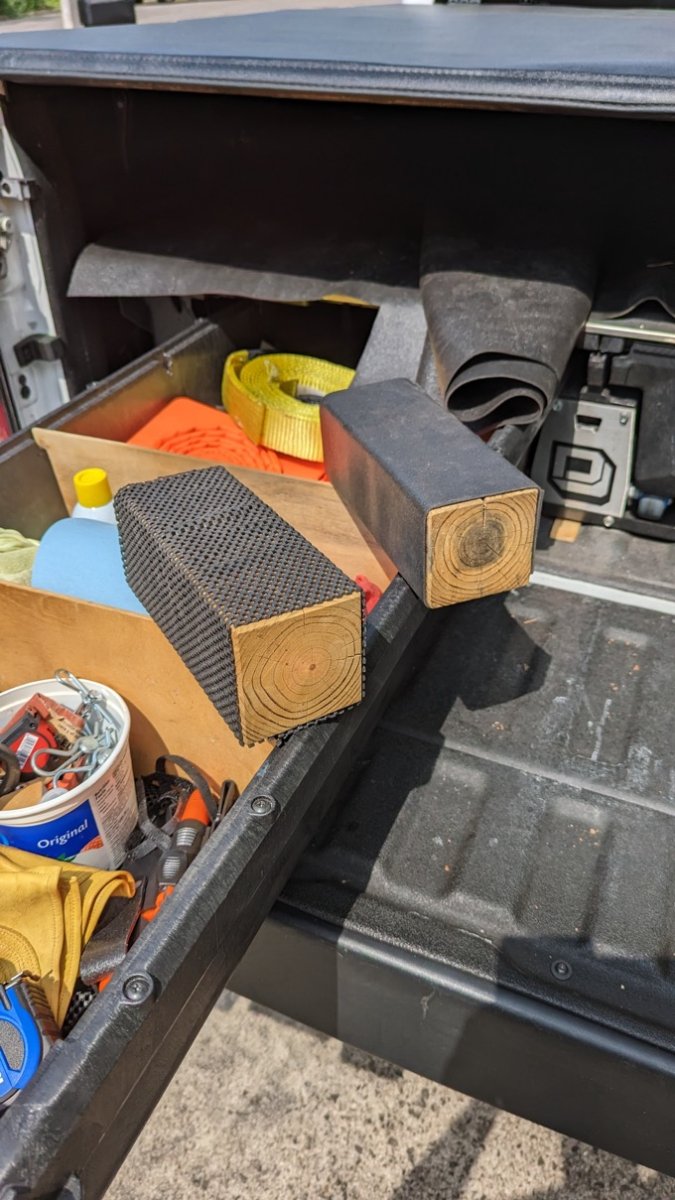
Okay experienced Oliver Owners. In your opinion, what is the best way(s) to ensure you successfully park and unhitch on a slope or incline/decline? What are the best chocks you've used? What other safety measures do you take? Have you made better chocks than you can find in the stores? This is what I dealt with this week. First time, and was nervous about it. I used four large solid chocks. Two are simply 4x4s wrapped in rubber non-slip material, that other are purchased heavy duty solid rubber triangle chocks. And, I hate to ask, but better safe than sorry, do you see anything terribly wrong with what I've done in the pics? Thanks.
1 point
-
Movie? Nope, true story, during our senior picnic/campout the night before high school graduation, spring 1972.1 point
-
Also, I'd like name this month as "Pull & test your emergency brake pin month". In honor of no floating Olivers..... yet! Going out right this second to do it. I'm afraid of the results. LOL1 point
-
I saw that movie. You were fantastic in that.1 point
-
See, if you can break one of these Heavy duty rubber chocks, especially in only 10 or even 50 feet, then I would step up to a better brand. Maybe I'll go for those nice ones I linked before and let folks know what I think of them. Some advantages to these I am thinking of after camping on a slope: Larger heavier Pass-thru handle that, in a pinch, could be used to drive a large "spike" or "pin" through to secure it more to the ground - no slipping at all. Unlike my current ones, these curve with the tire and are quite pointed to get farther under the tires. Really looks top-notch to me. Lastly, HF for $8 each or these AFA Tooling for $12 each.1 point
-
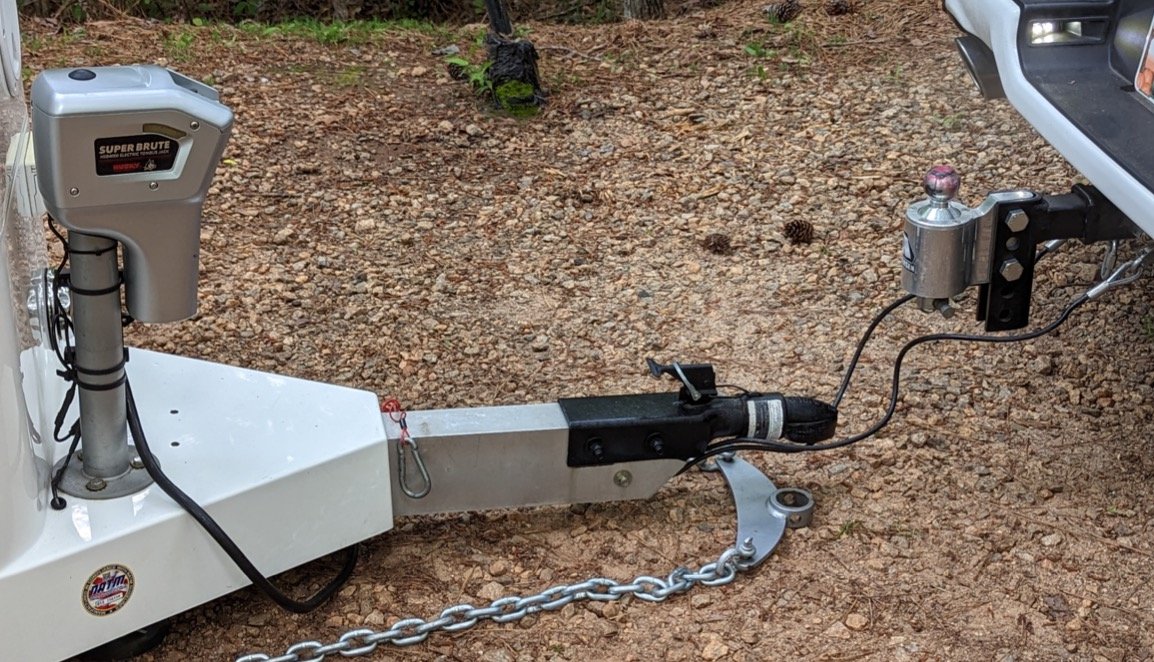
Well, thanks to all the reminders and scary stories, I not only successfully hooked back up, but the Ollie didn't move a bit. I was able to lower my truck (using my RAM airbags) and get just close enough that the safety cables (chains) (attached pic) were able to reach the receiver on the truck. I'm still shocked that the trailer didn't appear to move at on on a 3.7 degree slope. Although, I had to use my Rubber mallet that I always carry to persuade the blocks to come free from the tires. Especially the one chock with what @Geronimo John called a "shear-plane". That was determined to keep tires in place. LOL I will be adding a few more things to my next trip, like X-Chocks and a few more 2x6. I do have one pair of the Andersen Levelers, but didn't try using them, but then again, only the rear-most axle/tires could have been lifted with the Andersens I had on hand. Attached are some pics of how I always block on level ground I prefer to have the 4x4 under then jack foot itself, and always positioned diagonally. Also a shot of two different 4x4 blocks I JUST now wrapped in different rubber (non-slip) materials. I like the solid material better, but the perforated material is really non-slick. I will test out to see if that makes any difference in ANY situation. I also need to cut some of that solid non-slip material for my Andersen Levelers, mine did not come with rubber pads like I think they do now.
1 point
-
DdDd DDdD DdDd DDdD Ddd d DdD ddDDD dDDd dDdd DD DdD ddDDD dDDd dDdd DD Great thread, thanks for starting it! I always envisioned The Wonder Egg being a rolling ham shack. During the build (in the early days) I asked Oliver to wire the trailer for ham radio operations with an so239 connector outside, running the coax between the shells to the dinette area with another so239. But for many years, I was so busy traveling around the country making new friends and seeing new sights that I never sat still long enough to study for the FCC license and get on the air . . . until COVID, that is. It was the best social distancing hobby I could have ever participated in during the dreaded lock down. Now my home shack has an FTdx101D joined to a Palstar HF Auto and Palstar LA1k for my primary tranceiver. HTs abound as well. The antenna farm includes an EFHV stretched across the back yard for 133 ft, a Xeigu VG4 vertical up at 29 ft, and my go-to for DX is a HexBeam on a tower at 35ft. I also have a dual band Comet GP-1 mounted on a flagpole at 25 ft. My F150 is fully bonded together with 15 wide brass straps and my Diamondback aluminum tonneau is a great platform for my HF ATAS-120A and for my dual band CA-2X4SR. I tend to hear a lot of crickets on VHF and UHF, but on HF I communicate all over the world while driving down the highway. Inside the F150 I have an FT857D and FTM 400XDR/DE. Inside The Wonder Egg I'll have an ICOM IC-7300 and a Yaesu FT5D HT. I have too many choices of antennas to bring them all with me as I travel. This year I'll be bringing a portable BuddiHEX from Buddipole, a TW2010 with 40M and 80M options from DX Engineering, and a CHA LEFS Lightweight End Fed Sloper from Chameleon Antennas. There is a dual band VHF/UHF antenna mounted on The Wonder Egg. It will be great to meet fellow enthusiasts at the rally and down the road. 73, Pete, K2PLM P.S. Folks, sorry for the NERDing out thing here . . . it's an unfortunate condition of ham radio operators. Thanks for understanding . . . .1 point
-
Fridge or freezer? I periodically use Aquaseal (which is urethane) to attach drysuit gaskets. I store it in our freezer between uses, which keeps it usable for years.1 point
-
If you put 5200 into a ziplock bag and store in your fridge it will last more than 6 months without hardening.1 point
-
"I carry a milk crate full of 2 X 6 blocks. I use three under all my jacks to act as a shear-plane. Should for some reason the trailer moves, I'll hear a clunk and recall that I failed to use my check list." John, we use Camco yellow jack stands. Do you have pictures of how you use the 2x6 blocks? I don't understand the shear-plane concept. I do understand not extending the stabilizer legs too far. In the OP, he asked if there's anything wrong and the long extension is probably the thing that pops out in my mind. I would need more blocks in his situation, maybe a milk carton full of 2x6, but how to use them along with the Camco jack stands? John1 point
-
Eager to see the install...! 😎1 point
-
If you’re going to be at either the Alabama or the Maine rally, come by and I can show you more. Site E-05 in Guntersville. Not sure about Maine.1 point
-
I really like those machine screws WITH polished SS fender washers under their heads. I would have concern that they would damage the fiberglass over time with out the fender washer. GJ1 point
-
@Geronimo John and everyone, thanks for the reminders. More 2x6s are needed. With careful design and planning it might be worth making several of the interconnect, so in my case this week, I could have assembled a ramp-like solution to at least reduce the slopping affect. The upper most plank could have a "stop" block (make from oak) glued and screwed to the very end so you know you cannot easily to too far.1 point
-
The Chevy Express/GMC Savana is fine but I suggest getting the 6.6L instead of the 4.3 I think it is V-6. I have the older 4.8L which has similar specs and while it does fine fully loaded by itself, going up hills with a 6000 lb trailer behind it would be a stretch. I checked out the other vans some time ago and the only one I would be comfortable with is the Chevy/GMC...dated but reliable, a good driver, and lots of payload and towing.1 point
-
Thank you everyone. That's about what I was thinking too. There's not much to tie on to with the Oliver, except the Anderson chains or chain holds. The ground is sloped 3.7 degrees.1 point
-
@Jim and Frances I would follow Oliver Service advice, naturally they have installed hundreds of these units. I have never had a reason to doubt their expert recommendations. I hope you get it sorted out. Patriot🇺🇸1 point
-
My LE2 was built in late 2015, and I thought that Oliver used 3M 5200 to attach the white pvc board to the inside fiberglass surface. (hard to be sure, none has loosened or fallen off) For anyone that’s used 5200 for marine applications, you know it’s a PERMANENT attachment. Do not use it to seal anything that you might want to remove at a later date. (3m 4200 is semi-permanent and can be removed, with some difficulty) It’s not cheap stuff, and once it’s opened, needs to be used within a short period of time (day or two) before the remainder in the tube hardens. I just used it to attach a piece of pvc board for an accumulator tank and worked great. You do need to clean the surface of the fiberglass with acetone, NOT alcohol for it to harden properly. It takes 24 hours to cure.1 point
-
I realize this is very contrary to what most people think of or recommend when attaching something to a surface in the Oliver. The first hole you drill is always the hardest. After that first one, you'll feel more at ease drilling the next. I've drilled so many in mine through the years, I've probably lightened it a couple of pounds. You really will be pleased with the stability as a result.1 point
-
My 2022 Elite II is the same as your 2021. I am following this thread with interest, because I am having issues with my inverter as well, and may end up replacing it. Yep, drilling through that nice gelcoat into the aisle, and leaving four less-than-attractive bolt heads visible on the aisle side is just what is being proposed. I expect Oliver doesn't do this during production because it would significantly degrade the appearance. I hope I don't have to do that to our Ollie. But, we leave the bed made up most of the time, so the bolt heads would rarely be visible.1 point
-
Hoorah. Ollie lives! Stolen rig returned! Police found it behind a stolen tow vehicle behind a locked gate (locks cut) in a rancher's field less than a mile from the police station. It was stuck in the mud and two people who had been living in it had gone out to get a friend to help them get out of the mud when the rancher arrived, and the thieves raced away. Police didn't catch them, but they did find identifying evidence (jail release papers) and opioid detox meds from the jail pharmacy for one of them. Of course, most of my gear was stolen, and a lot of their stuff was in it. Thank goodness for the fiberglass inner hull which will make it much easier to clean/sanitize. There's work to do: negotiating with insurance, broken off stabilizer jack to replace, spray paint on the hull, stolen spare tire and fiberglass cover, destroyed door lock, wrecked entry stair and scratches on the hull, plus cleaning, fumigating and replacing contents, but we will be on the road again this spring and summer. So here's my question: fourteen years in my driveway in a big city, and never messed with before. Reasonable quality hitch lock and motion detector lights. What all do you folks recommend as security systems. You can bet I am paranoid, and short of trying to build an enclosure, what do you folks do to keep your beloved rigs safe? Thanks, Angler, Hull #27 470257C6-C213-48CD-8B61-9549EEBF0A7F.heic 502D75D4-929A-499C-A8A7-E01237E6022A.heic1 point
-
Not sure how many reservation systems it has in its database, but this is a Godsend for trying to book in Florida. We were able to successfully get 2 night reservations at multiple nice and hard to get campgrounds last week using this website. I love it. Im hesitant to share it with anyone, but everyone here deserves this site! https://wanderinglabs.com/1 point




.thumb.jpg.e34bf01ef7f7d5e99ad31856d45afbeb.jpg)














-
Recent Achievements
-