Leaderboard




Popular Content
Showing content with the highest reputation on 12/30/2025 in Posts
-
Nearing end of a fantastic 6 week trip. Camping at Morrow Strand State Beach, Ca Clear and sunny with blustery winds, 74 degrees.
 6 points
 -
You raised a good distinction. Our 2019 F-150 Lariat has a stand alone TPMS. It will give me a tire pressure warning light on my dash. The light for sure gets my attention and I can then change the screen to see which tire or tires are being alarmed. For a 2019 Ford F-150 Lariat FX4, the factory recommended cold tire pressure is typically 35 PSI. For this series of Fords the warning is set by the factory at 25% below the Ford recommended tire pressure or 26 PSI. When highway interstate towing Ollie, I run my Nitto Recons at 42 PSI. I had not thought about how far down the curve Ford TPMS alarmng at 26 is vs my 42 psi set point. With 8 seasons on my Ollie TPMS, it is not something I would now invest in. But with your distinction in mind, when I replace the Ollie TPMS I'll for sure go with one that gives me better coverage on my truck monitoring as well. I'll also look into if I can change the alarm 26 psi set point on the truck as well. Thanks GJ3 points
-
We often tow with a full fresh water tank, often for long distances. No problem at all.3 points
-
I have TST cap sensors on the four trailer tires and four TV tires, as well. Up to a couple months ago, only trailer-related tire issues have occurred requiring attention to flats or valve stem leaks in the past five years. However on a recent trip a slow leak was detected at a rear tire on the TV, a screw puncture was found. My TV has tire pressure readout, but no alert system and thus, so thankful I had sensors installed. I was able to repair the tire before further damage incurred due to under-inflation in tow.3 points
-
Heck, I'd pull the cover off and inspect it while it's still mounted up top. I've had the cover off of mine and it looks like it wouldn't take long at all to see what's going on inside the evaporator housing. Could be an easy fix.3 points
-
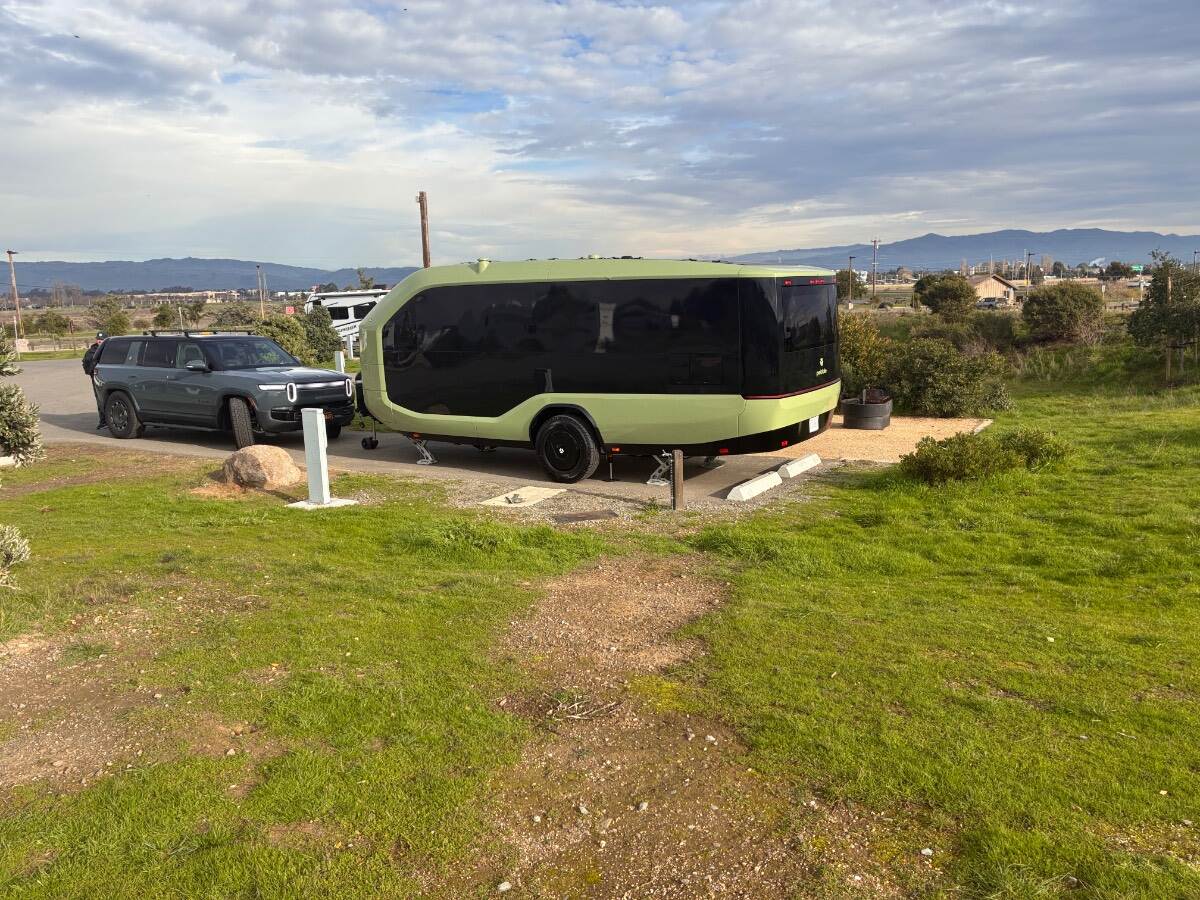
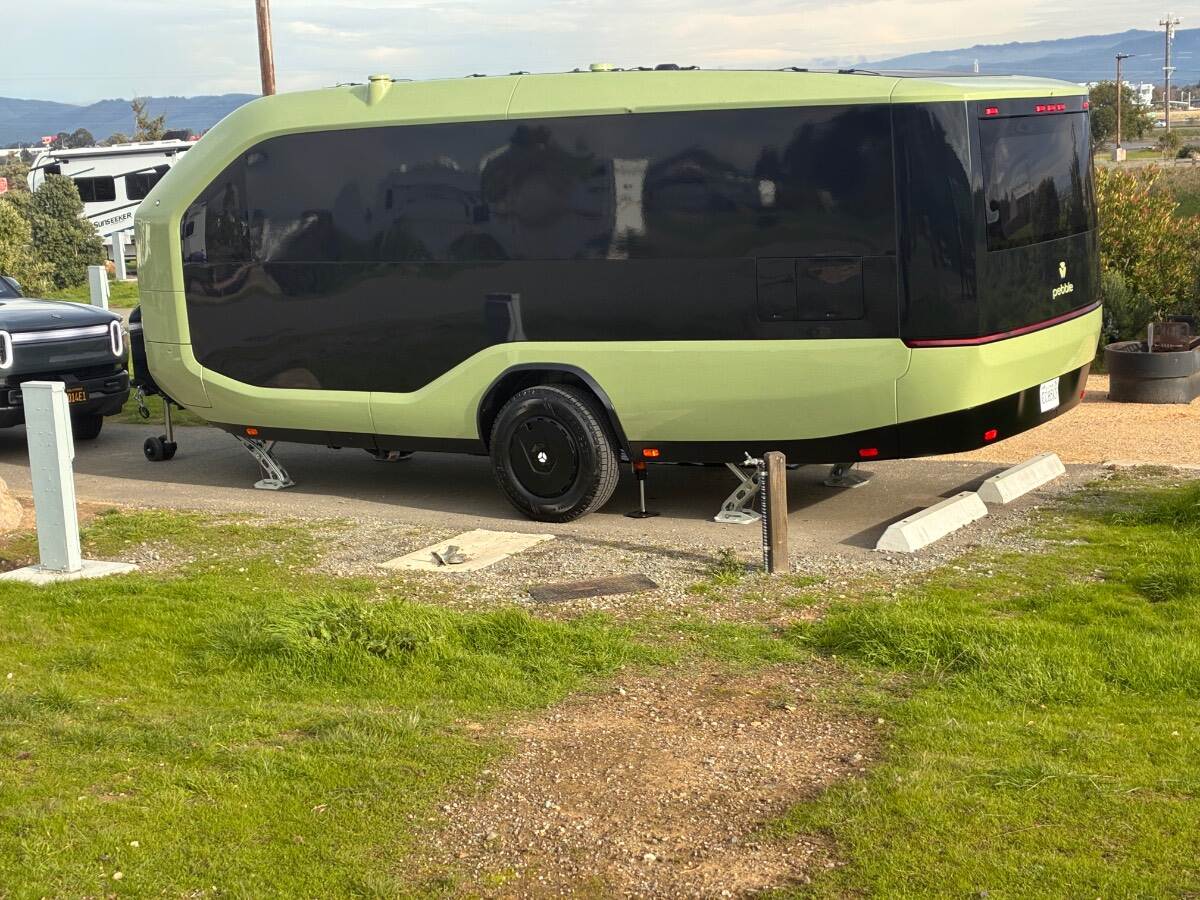
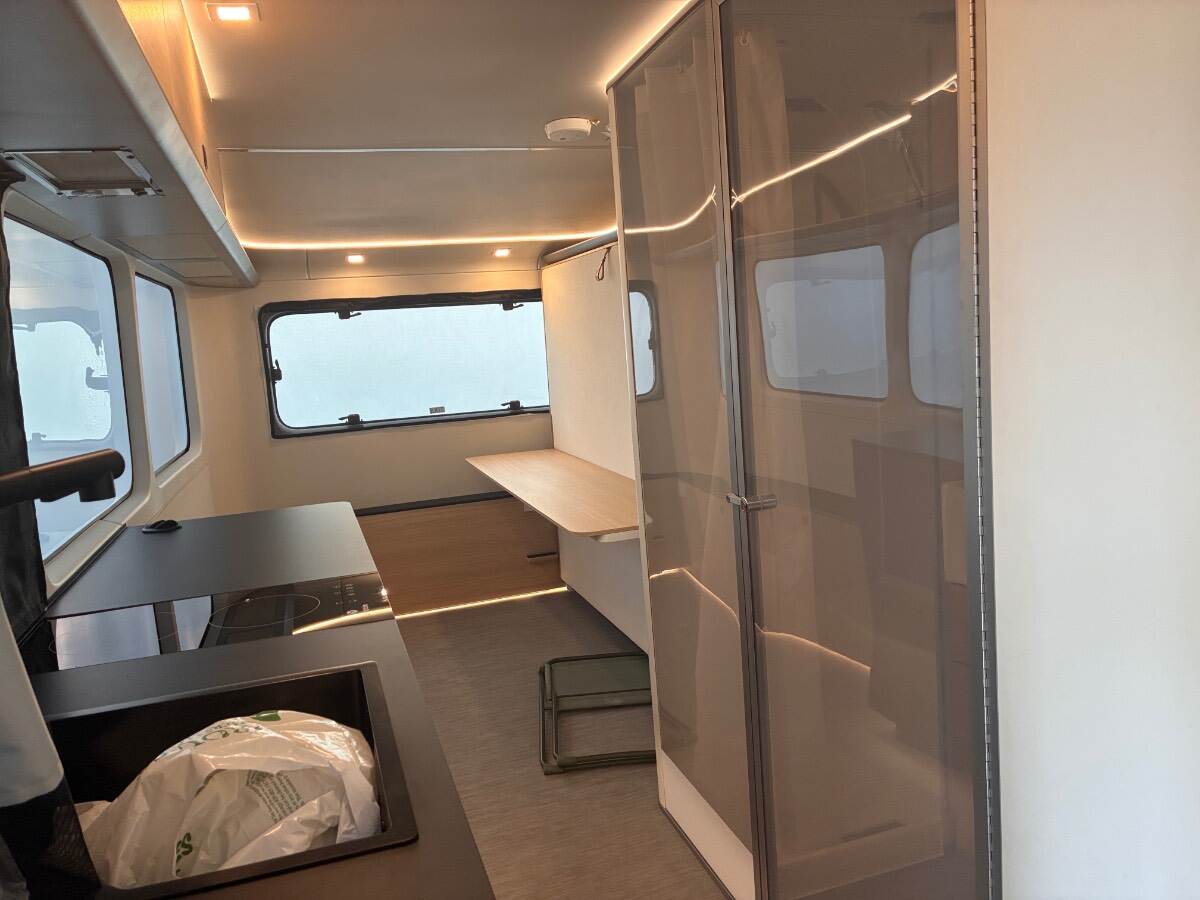
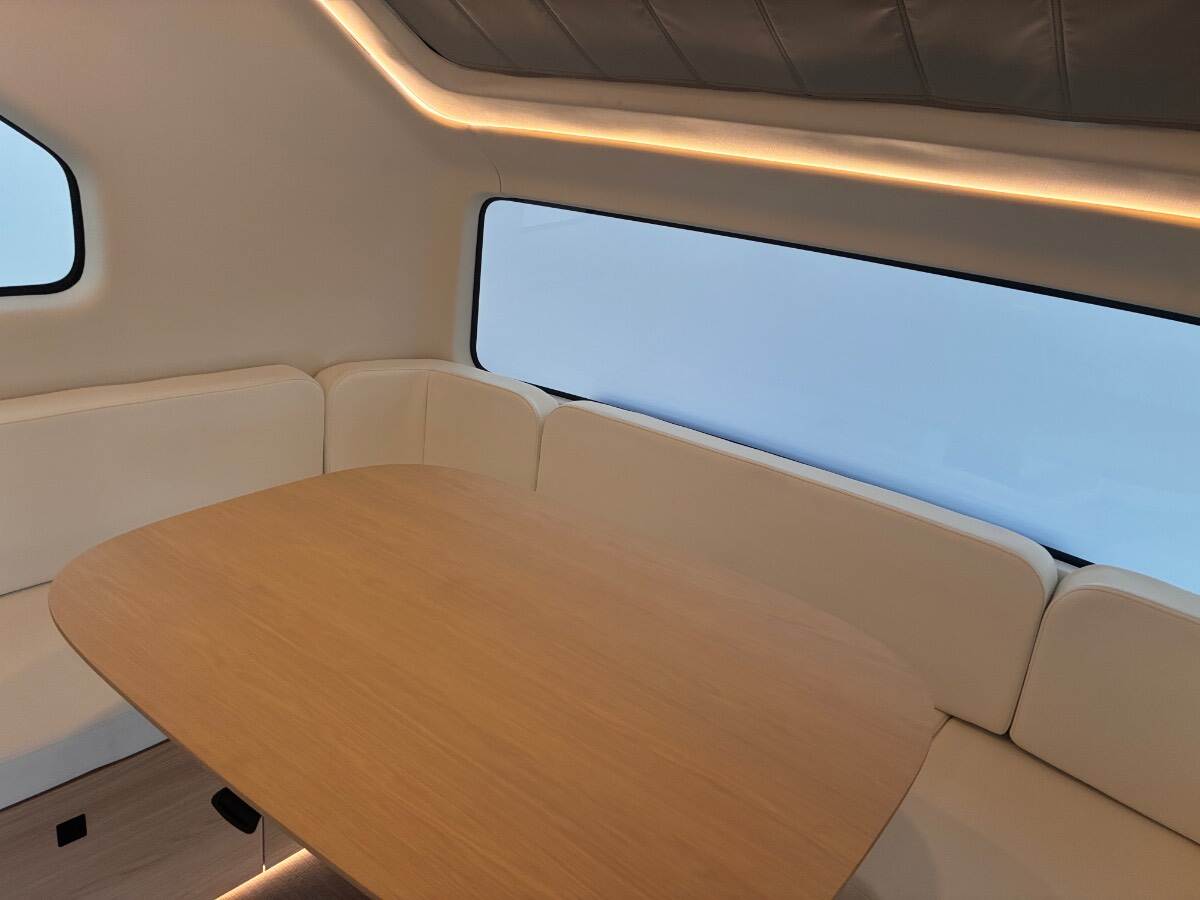
Pulled in to Dumbarton Quarry Campground (great place to stay if needing a place in the east bay / San Francisco). A Rivian pulling a Pebble Trailer pulls in. The driver un-hitches the trailer and uses his I-Pad to back/drive the trailer in place. Next the leveling jacks automaticly lift the trailer off the ground and self-level. I spoke with the owner and this is the first shakedown night from the factory in Fremont, Ca . The owner said he should get a range of 200+/- miles with the Rivian/Pebble combo. The Trailer motors are said to add about 100 miles to the Rivian's range vs pulling a standard trailer. I have to say it's very cool and makes our Oliver / F250 look and sound like a dinosaur. Regardless of how cool, this guy is way braver them me. I like being able to carry a couple of fuel cans for a bit more range (more than double the Riven/Pebble combo). We need early adopters and I'm not that guy. I wish him the best. Yes, the Pebble is very cool.
2 points
-
We’ve got over 110,000 miles towing usually with a full fresh tank and black and gray at various levels depending on dump availability. No issues and I don’t see much difference in mpg if I happen to have less than full tanks. Mike2 points
-
That's one of those Chinese things I was referring too! They will ignore what they don't want to answer. 🙃 Excellent electronics work @CRM! If I save my unit I'll ask more of the details. If my repair becomes not worth doing, I now have another brand in mind. It wouldn't be for everyone but it's very interesting. 😎 I'll write a post on it soon...2 points
-
GJ LOGIC: Time before your trip is precious, and with the mods you have done, and the electrical short wires, and the exploratory work you will be doing to fix the original, and unknown supply chain difficulities, and that you may need reliable Heat Pump, and possibly the A/C even for a winter trip, and there are lots of time stealers in all the "and's" listed above. So goal is to get your A/C Heat Pump on line soonest as time saved to do so before a trip is important. Besides, how long it takes you to fix the old one while it is on your work bench is not a worry. Hence, I would take it down, install the new one, mod it as you have done, and roll on to travel. EARLY ADOPTORS: Your experience reminds me of mine with the Houghton. Early adoptors seem to pay a high price for beng early. But as was my experience with the Houghton Mods, it paid off very nicely. But it also resulted in my caution for other owners not to go down that path unless they were very handy and willing to toss the warranty out the window. I suspect that you'll echo that thought down the road. GI Tongue in Cheek: On the other hand, wif you go the bench route, then have fun with experimenting on it for shop use and noise reduction idea. You could go with agressive ideas that you would not risk on the one in Ollie. That turns the process into FUN in my world. Heck you'll likely end up with a 10 page mod post that makes that unit THE best on the market. So before posting the DIY, blackmail the MFG to pay you $$$ for the solution or you'll not post it and your's will be the last one sold to OTT owners as well as the SOB owners that read our forum. Considering all the time you spent on this upgrade, that really would bring you a smile! LOL GJ Happy wife, happy life. Smart guy.... with a grin!2 points
-
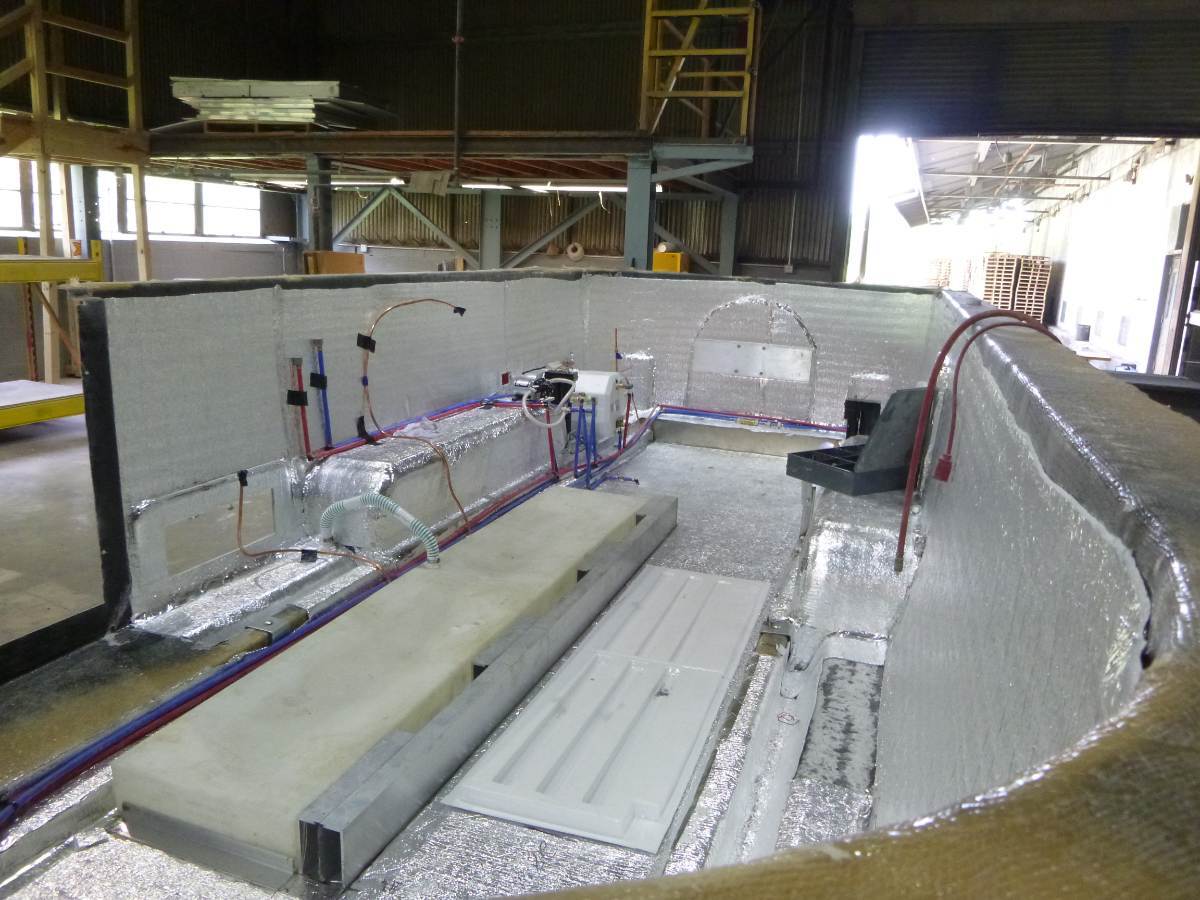
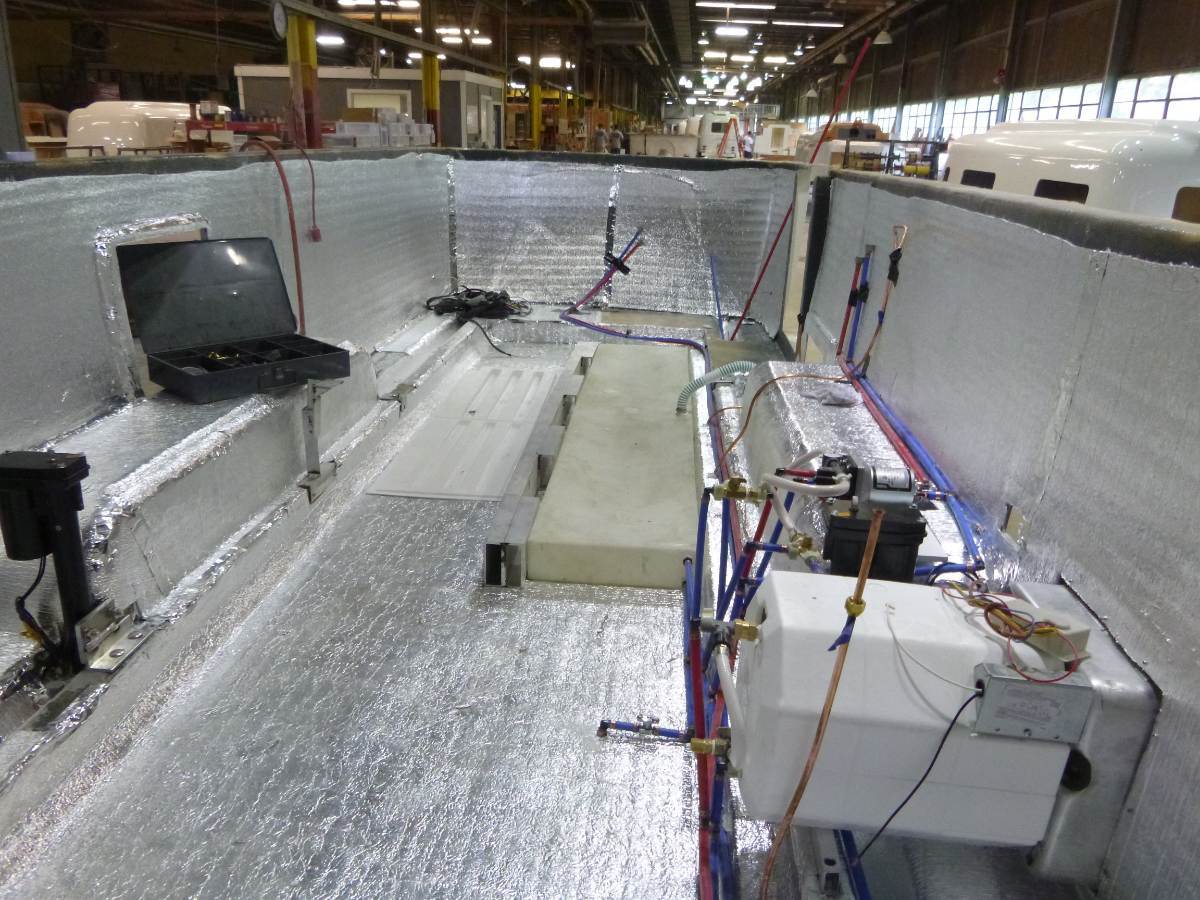
Lamar - There are several places here on the Forum where you can see pics of the location of the fresh water tank (and grey/black tanks). I believe that these pics will generally confirm your idea of the placement for these tanks. Another consideration (for more than one reason) regarding the tanks is the depth of the tanks - they are not very tall but they are relatively wide and long. The good news is that this helps with the weight distribution of the contents - keeps the weight low and more evenly distributed over the frame relative to other RV's. The bad news is that the Oliver can be a bit more subject to its "level" - if the Oliver is slanted towards the nose, it will drain the tanks somewhat more slowly than other RV's. For what its worth - I generally try to not tow relatively long distances with anything in my tanks. This is not due to problems with either the frame or body of the camper, but, more weight due to the water is certainly not going to help with the MPG on my tow vehicle. In the pic below you can see the fresh water tank (on the left) and its relation to the wheel wells and front door. Hope this helps you! Bill
2 points
-
Thanks JD. I had thought the axles were 5200#, which I am glad they are. All I have to do is keep a check on the springs. We like to boondock whenever possible, but have not been in really rough areas yet.2 points
-
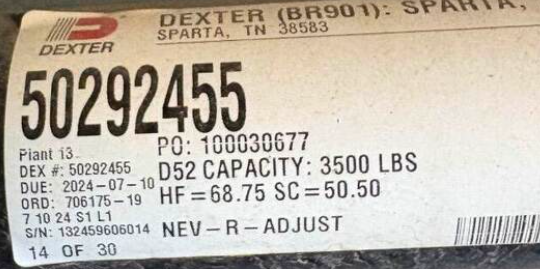
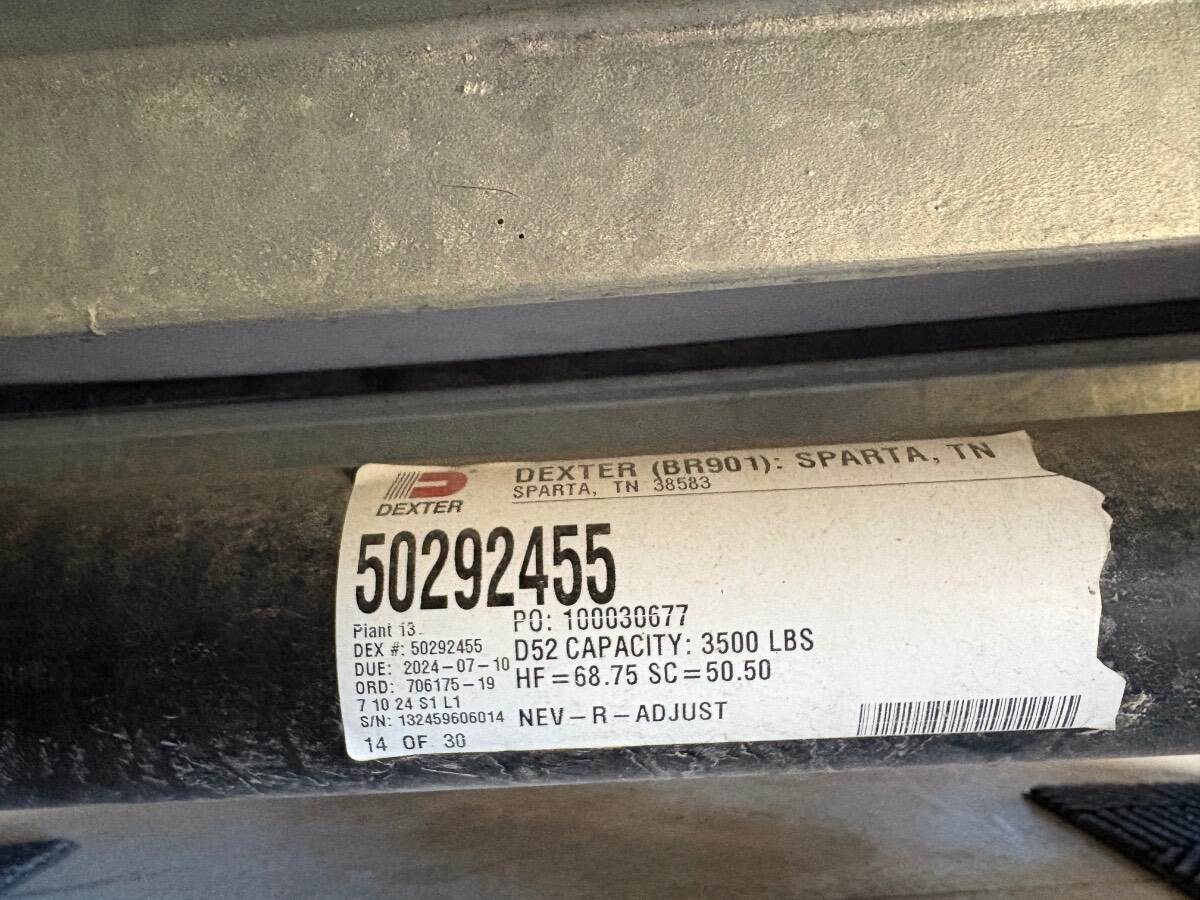
If they have the below axle tag, then the spring rating shows 3500#, that divided by 2 springs = 1750 pound rated springs. Those are the same ones that have a failure issue for the OE2's. if it's for an OE1, then you are in an Unsafe To Use mode... IMHO. GJ
2 points
-
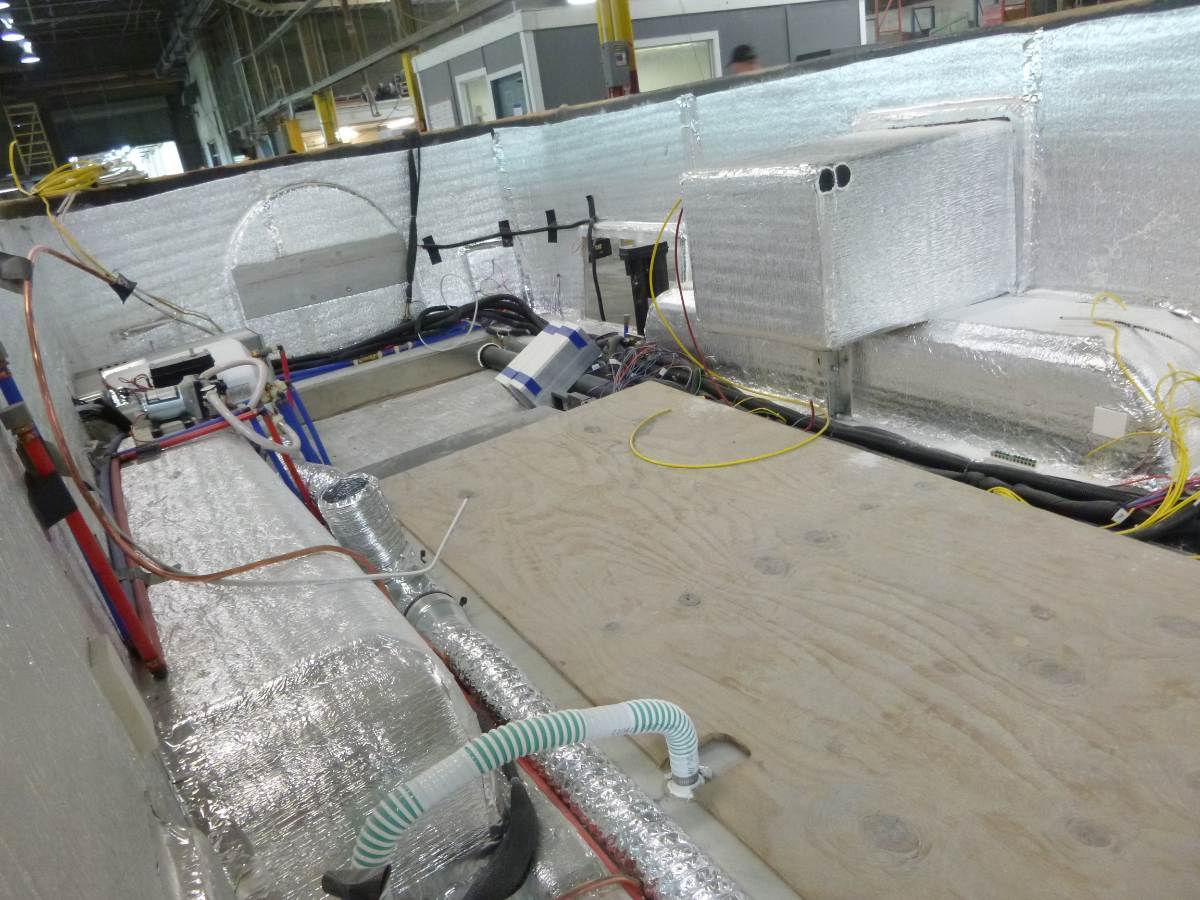
We always travel with a full fresh tank We like to start with our home water. We have a water softener and high performance filter system that goes with us. We tow with an F250 6.2 gasser. The tanks are installed between the the bottom two shells. The area is insulated and heated by the furnace. As noted in TopGun's photos. Rest at ease. Those tanks aren't going anywhere.1 point
-
Took me a few outings to learn this. At a campsite, I level using the LevelMatePRO and keep the nose up 1/2" or more. This allows you to utilize a greater % of the fresh tank before the water pump takes air. When dumping tanks I raise the front +2". Why is it that at 2 out of 3 dump stations the nose is down? And then I drive in the other direction and it's the same thing! The other thing I've learned is the gray tank being on the right/curbside, drain pipe exiting to the streetside, it often will not fully empty if that side is down. I will raise the curbside jack so that it's +1" at least to fully empty the gray water.
1 point
-
I have 2020 Elite 2 and over 40,000 miles on our trailer with no problem towing with tanks full or partially full.1 point
-
In my experience: YES and NO: Yes if you are traveling on paved roads or do gravel roads or dirt roads at a reasonable speed. No if your are going off road and qualify for membership into the 10% group that NEED 3500 pound springs. Then I suggest draining the black and gray tanks before heading into suspension hell. Also carry full Fresh Water (FW) only needed when boondocking. These thoughts are to reduce tire issue. My thoughts exactly for the black and gray tanks. For the fresh water, I always travel with enough fresh water for a couple of days for my rest stops. This may range from full FWT to half full depending. Like TopGun, it is MPG and convenience related. But also just in case I'm unexpectely stuck somewhere with a problem/weather and no FW source. GJ1 point
-
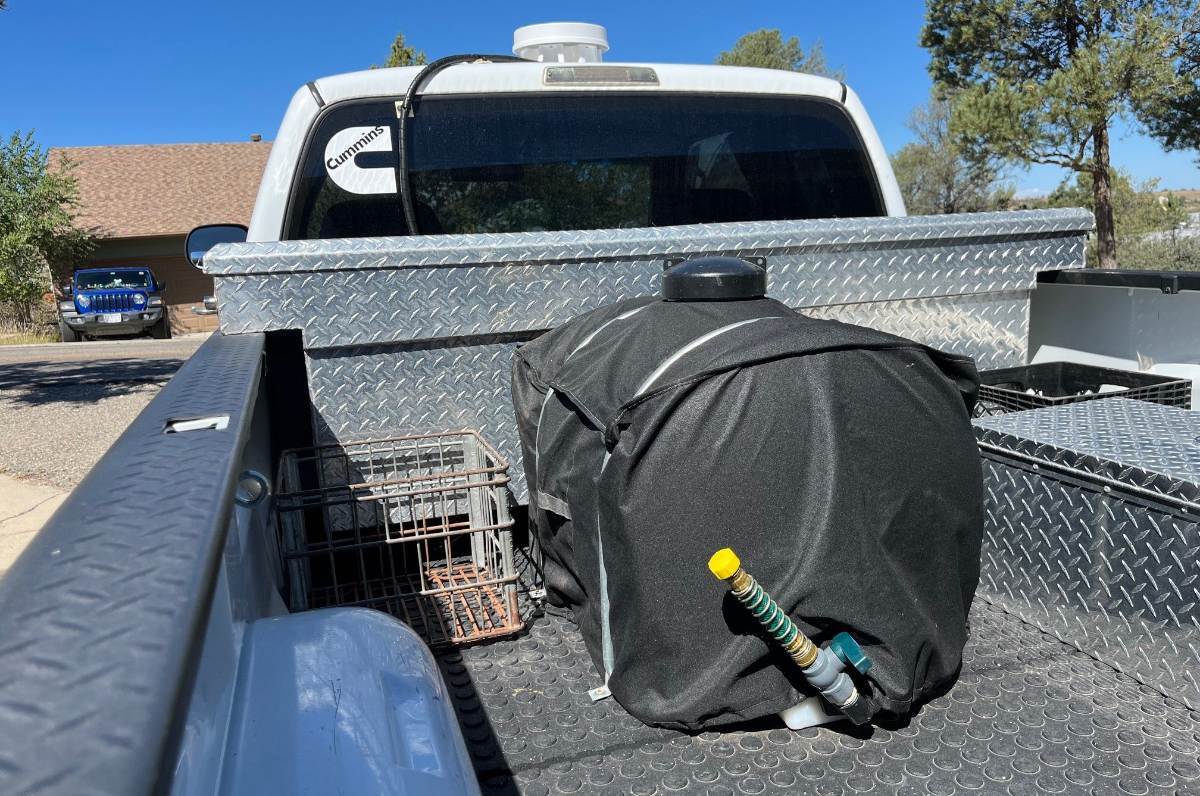
Certainly! We always travel with our fresh tank full whenever we leave home or leave campgrounds with good fresh water, thus allowing us to boondock the next few days. And we tow down steep mountain descents and on washboard dirt roads! We often tow back home with gray and black tanks near full, and fresh half full, since the RV dealer near home has a free dump station. We keep our Oliver bathroom and kitchen functional 100% of the time! Chris will NOT use a public bathroom during our Oliver travels. We like to have what we need to be off hookups for 7-10 days. We certainly have enough electric. We carry an extra 35 gal fresh water in the truck bed. We find the limiting factor is the gray tank fills first (as soon as we shower). Good thing out west it's legal to dump gray in BLM and FS lands (drain gradually when >500 ft from other campers and water sources). 90% of Arizona is 500 ft from a water source! Yes, fill up and tow your Oliver tanks full, NP! 😎
1 point
-
p.s. Of course I have assumed that you are getting an Elite II. Bill1 point
-
Noted on the 2022 with the 3500 lb capacity axle label to keep an eye on this just greased the suspension and they have a nice arch and only 6000 miles #1218 LE II1 point
-
I have not, nor do I entend on such winter camping that requires salted roads. However I noted my underdesigned 1750 Dexter springs starting to fail after six years service and 31,000 miles. So time wise, I think your 2022 model year group has some headroom before you'll be seeing the spring failure process. From what I have observed, it is most likely going to occurr first on the rear leaf of the back axle. Precluding a significant response to the below green post, I am suggesting checking your back springs occasionally each season when you are looking at your rear jacks. Let's see where this goes with the green below. Any owner not experiencing a back axle rear leaf failure first or seeing a back and front spring failure at the same time, please post back. Otherwise, the above sentence may be a bell ringer. GJ1 point
-
Haven't put a lot of effort towards that yet, but did cover the back vents with white tape and the noise dropped quite a bit. Didn't expect it to and was only trying to force more air forward in the cabin. Will probably add some sound deadening inside the plenum at some point to see if that helps further. It's really not too bad now, or maybe I've just gotten used to it? Other mods I've done to it are- I added a 52k ohm resistor onto the thermistor in parallel to trick the unit into thinking that the cabin air is warmer than it actually is. The thermistor was always reading 5 degrees or more than actual which became a problem since the unit only allows the temp to be set as low as 64. On cooler days in the 70's with high humidity it wouldn't run long enough to bring the humidity down, even in dry mode. Since the mod, it works perfectly. I complained to support about this temp differential and they told me it was "normal" since the sensor is reading the air inside the plenum, lol... I asked why they didn't put the thermistor inside the remote like they do with mini split's and all I got was crickets.. Hoping Cielo finally gets my thermostat working, but that's another story... I also added an On/On 4PDT Toggle Switch to control the fan speed circuit. One side to run the fan on low constant whether the unit was powered or not, and the other side of the switch to allow the unit to control fan speed normally. I did this mod since there was no way to keep the fan on constant while in heat mode. It was disturbing my wife's sleep by cycling on and off with the compressor and she wanted the steady sound of the fan. She's now happy, so I am happy! The last mod was to remove the speaker on the circuit board under the inside cover. Every time you make any adjustment to temp, fan, etc it would beep. To make matters worse, it conflicted with my TV remote and beeped whenever I used that too! All in all I'm happy with it now, though I wish I didn't have to do any mods to get there. If it weren't so efficient I might have just sent it back. I'm convinced this unit was designed by two separate set of engineers. One group designing the outside part of the unit and another designing the inside fan control and ducting.1 point
-
We’d like to know more about your mod to reduce air noise in the cabin, thanks!1 point
-
In 3 weeks we're heading to the Q and then points SE of Tucson. Thinking of SE Colorado again, when I have time off mid March through mid April, weather depending. Won't be needing A/C for these trips! It could be an easy repair but it's never easy working on top of the Oliver. I won't be walking around up there like some might. Just getting the cover off is not just 4 screws like the Dometic P2 cover. There are 9 screws in all directions. Not easy reaching over on the awning side either. I'd hate to pull the whole unit down for repair, but that may be the way to go. I could diagnose, repair and bench test in my garage/workshop. I had made a custom wiring job for the 120VAC connection. OTT had cut the 12/2 Romex quite short wired to a single-gang junction box. The junction box would not fit above the Turbro Fixing Plate. I had to die-cut a new opening on the close side of the Turbro control box to wire this connection directly. It will also be a pain taking that down, and given success rewiring it again. Short wires make for difficult wiring. Then there is the risk that besides the broken evaporator fan something else could be wrong. A new A/C unit for $100 +/- in parts and a few hours labor... ?1 point
-
Yes David, this is your axle label. It shows D52 for 5200 LB axles which are the better HD axles (12" vs. 10" brakes). It lists Capacity at 3500 LBS which means mounted to the axles are two 1750 LB rated leaf springs. As @John Dorrer has stated from data he has collected which is a good sample since he regularly monitors our OTT Forum AND the Oliver Facebook page. Yours on your very new hull should and could be fine. Inspect them before and after long trips. When the leaf springs continue to appear nicely arced, they are good. If you observe a flattening of the main spring at either end, then replace ASAP with Alcan Springs. Ours lasted 10 years and were still good. I only replaced mine wanting the best for our next 10 years! 😎1 point
-
I'm only aware of one 2022. It boils down to how much driving on washboard roads and driving on salt treated roads with your Oliver IMO. I have put lots of mileage on our 2022 and between the Mother Ship and the Truck Service place, and my visual observations, I'm told nothing is showing up that would point to a potential problem. I intend to continue with my springs for the immediate future, and hope I'm not playing Russian Roulette.1 point
-
Agreed. The ratio of tow vehicle weight to trailer weight is critical to stability, to avoid having the "tail wag the dog." Jeeps are not quite heavy enough to tow an Elite II as safely as I prefer.1 point
-
@JD1923, Is this the picture you’re looking for?
1 point
-
Oh yes, many exclamations 🙂 Nice idea keep them connected - that would have stopped things. Right -0 I was working on a dirt road - which softened up considerably after a big rain - causing jack stands to sink and droop. Another thing to take into account ...1 point
-
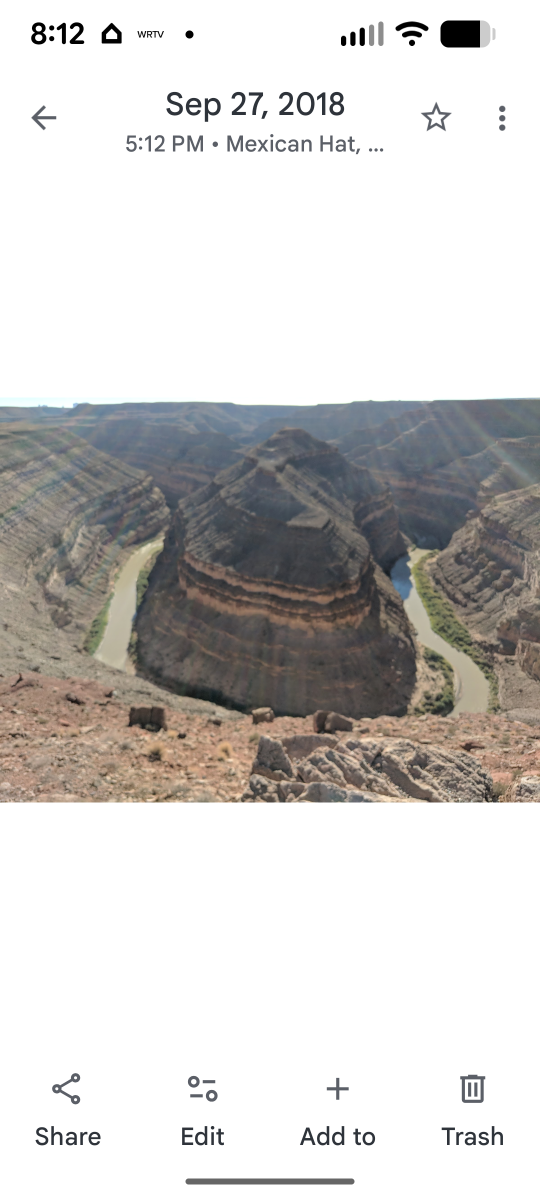
Goosenecks State Park, UT, not to far from Moab. Camped on the rim for $10/night. High above the San Juan River. You get an option, campground or along the rim. No brainer.
1 point
-
Mather campground Gand Canyon NP An amazing week to be in Grand Canyon N P. The main water supply is shut down for repairs and the whole Park is almost empty. That would be Hotels, campgrounds, parking lots and South rim drive. The park is a ghost town. We are among the few dry camping in Mather Campground (only campground open). Might be 20 campers tonight. No traffic, no lines, no people. This might be a once in lifetime event to have the greater Grand Canyon N P uncrowded and as our personal playground. Doesn't get better than this.
1 point
-
I’m late to the party, but having a truck with similar abilities, I definitely have an opinion. I would never tow my Ollie with my Ranger. The F350 does a fine job. In addition to being able to tow, the ability to stop should be considered.1 point
-
I remember when that happened with the old style cone. Sounded like Sasquatch was trying to rip the bumper off.1 point
-
Bigger trailer, bigger truck. Though "technically " you'd be within the legal limits, your travel joy will be increased with a bigger, heavier truck. Dragging 7k up a mountain pass, one time, in your Colorado would likely tell the story. And, hopefully, a great brake controller coming down. Casita typically have a heavier tongue weight, but not as heavy as an O2. Your Colorado would likely be fine for my elite 1, but towing a 2, other than on flats and gradual ascents/descents, I'd want some more oomph, and vehicle weight. I know it's hard to think about trading up trailers, and vehicles at the same time. My 2005 Silverado is about the same size as a current Colorado, but heavier (6k). I have a similar tow rating. Id personally only tow a 2 in Florida flats. Id be nervous going our route to NC, at highway speed, and up green mountain gorge, with your TV. Your anxiety will be decreased, and travel joy and cargo capacity, will increase with a bigger vehicle.1 point
-
1 point
-
I would suggest a bigger bogger truck. 😊😊😊 Seriously, we have a GMC Canyon with a diesel engine. But we tow with our Silverado 3500HD diesel. Move up to a 2500 or 3500 and you’ll be set.1 point
-
My ‘23 Tundra is on the recall list but I’m one of the lucky ones ( so far ) with 60k miles, 30k of which pulling our Oliver and no failure as yet. I’ve heard that they’re starting to address the ‘23s in my area soon. I have done frequent oil changes right from the start, hard to know if that made a difference.1 point
-
Again - Many times it is cheaper, when buying the initial setup, to get a couple of extra sensors - one for the spare tire on the Ollie and one for the spare tire on the tow vehicle. These extra sensors will save you a bunch of time (in checking the air pressure in those spares) and provide an extra if you were to have a "problem" with one of the main sensors. Bill1 point
-
There are a ton of different brands - just type in "TPMS" on Amazon. Also, do the same on YouTube to view many different brands as tested by "professionals". Just about all of these do the same thing while having slightly different monitors. I would tend to stay away from the "cheaper" brands and would also question what am I getting for my extra money on the more expensive brands. Simply put - this is NOT new tech anymore other than those that are starting to integrate the trailer's TPMS with that of the tow vehicle. Bill1 point
-
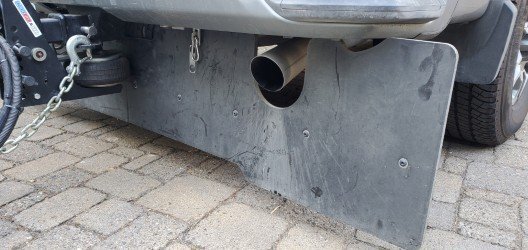
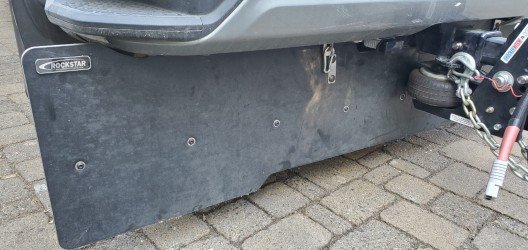
For the Commercial flaps, I read 85 inch-pounds. Even small bolts need special care in certain situations! Not that this is one of them however. I did just notice that after my recent trip before my last post, that one of my bolts had fallen out somewhere. So I emailed Rockstar about the situation of their torque spec and the rubber flaps not being able to support that kind of compression. I asked if using blue loc-tite would be a better solution. All they said was yes it would be OK. So I redid all the bolts with 5/16x1-1/2" SS fender washers and Blue loctite. With the larger washer, I was able to achieve 85 in-pounds with minimal distortion, but it's really probably not necessary with loc-tite. I just did it to see what would happen. Even with loc-tite and less torque, I think a washer is a good idea however. Dave1 point
-
85 in-lb is only 7 ft-lb! I read 100 in-lb in their instructions (8.3 ft-lb). When I read in-lbs I never get out the torque wrench, because I wouldn't own one! I can push an open-ended wrench more than 7, 8 or 10 ft-lb with just two fingers. Just use a short wrench, not a long-handled ratchet, and make them snug enough to where you see the material compress slightly, you're done.1 point
-
Took me a while to get to this.... I also have the Rockstar Commercial Flaps on my rig and really like it. My old flaps clamped on to my ball mount shank and were just OK. It made removing and placing the ball mount a very cumbersome and heavy affair. These are way more convenient to put on and take off since they are separate from the ball mount and do a much better job protecting the trailer from flying debris. Perhaps because they sit further forward under the bumper. My rig is gas but the cutout is similar I'm sure. Perfect fit. I added stainless steel fender washers to the bolts that attach the crossbar to the rubber flaps to spread out the load. The torque spec in the install guide was pulling the heads too deep into the rubber for my taste. Even with the washers, I didn't get as tight as was specified. But no issues with many miles on them. You'll love them! Cheers, Dave
1 point
-
We have 2 different TVs with our current first choice a 2023 F150 with a max tow factory package rated at 14K tow/1400 tongue (over 500 use WD hitch). I added air lift at the rear for minor leveling and have had no issues with this set for 2 years. When I had a 3/4T F250, did not use WD hitch. WD is anderson (2 5/16 ball). I try to not to exceed 50% of tow rating of equipped vehicle.1 point
-
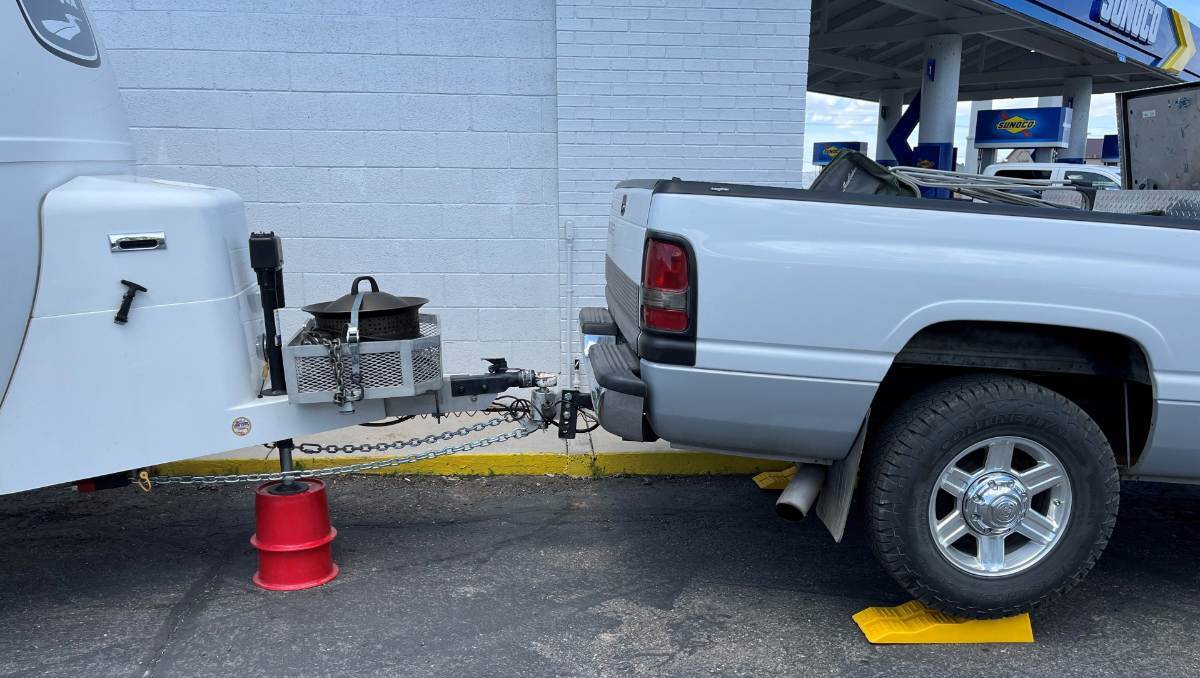
I've always placed my cables/chains below the whale tail. My reasoning is that since the cables/chains are there as a safety measure in the event that the trailer (in some manner) comes unattached from the tow vehicle, the cables/chains will be the "last resort" of attachment to that tow vehicle. Then, assuming that you have crossed the cables/chains the tongue should rest on those cables/chains as the trailer slows - this is particularly so assuming that the emergency brakes are applied on the trailer due to that ty switch becoming activated. Meanwhile, the whale tail would serve as a wide surface area that those cables/chains could "catch". Obviously, this crossing of the safety cables/chains has the effect of holding the hitch of the trailer off the ground so that the trailer hitch does not "dig" into the road thus possibly "flipping" the trailer. Bill1 point
-
I think we’ve been there.
1 point
-
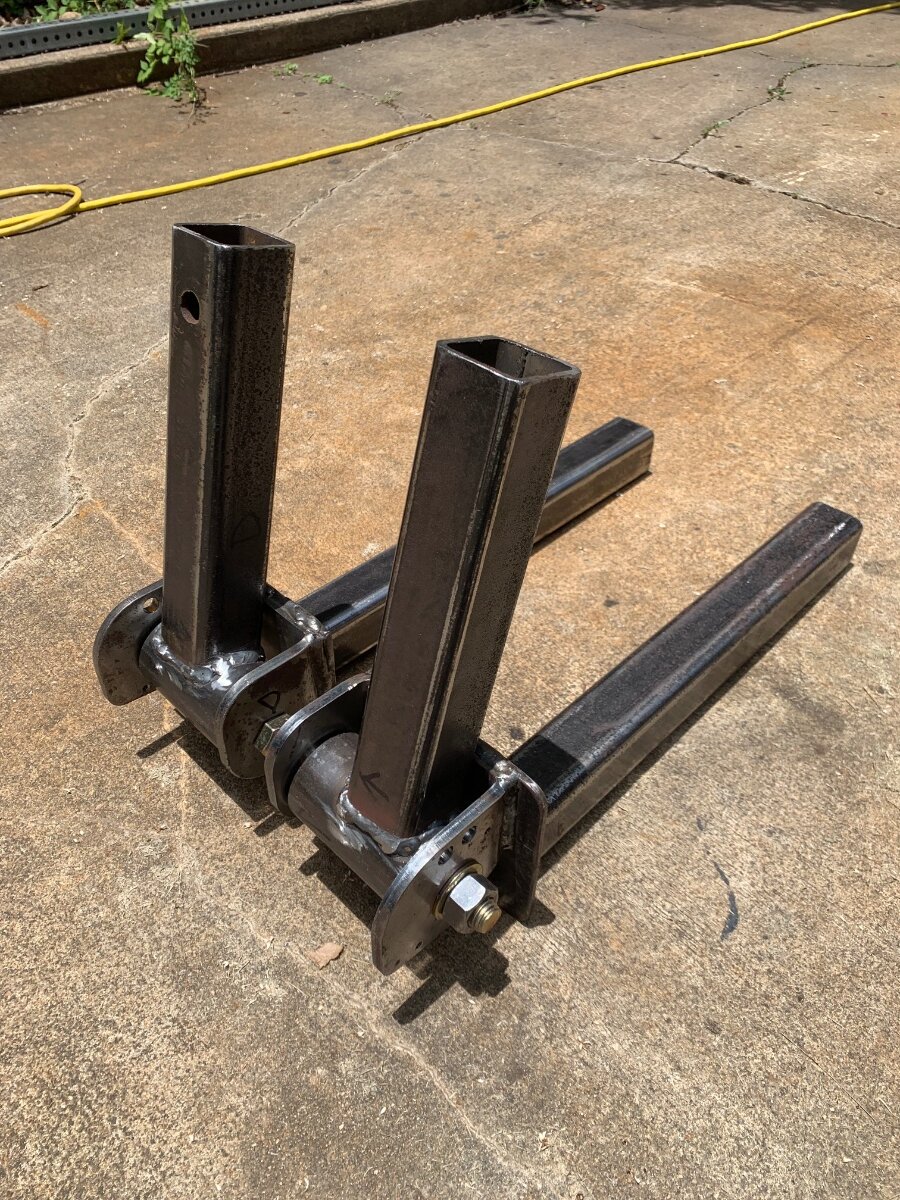
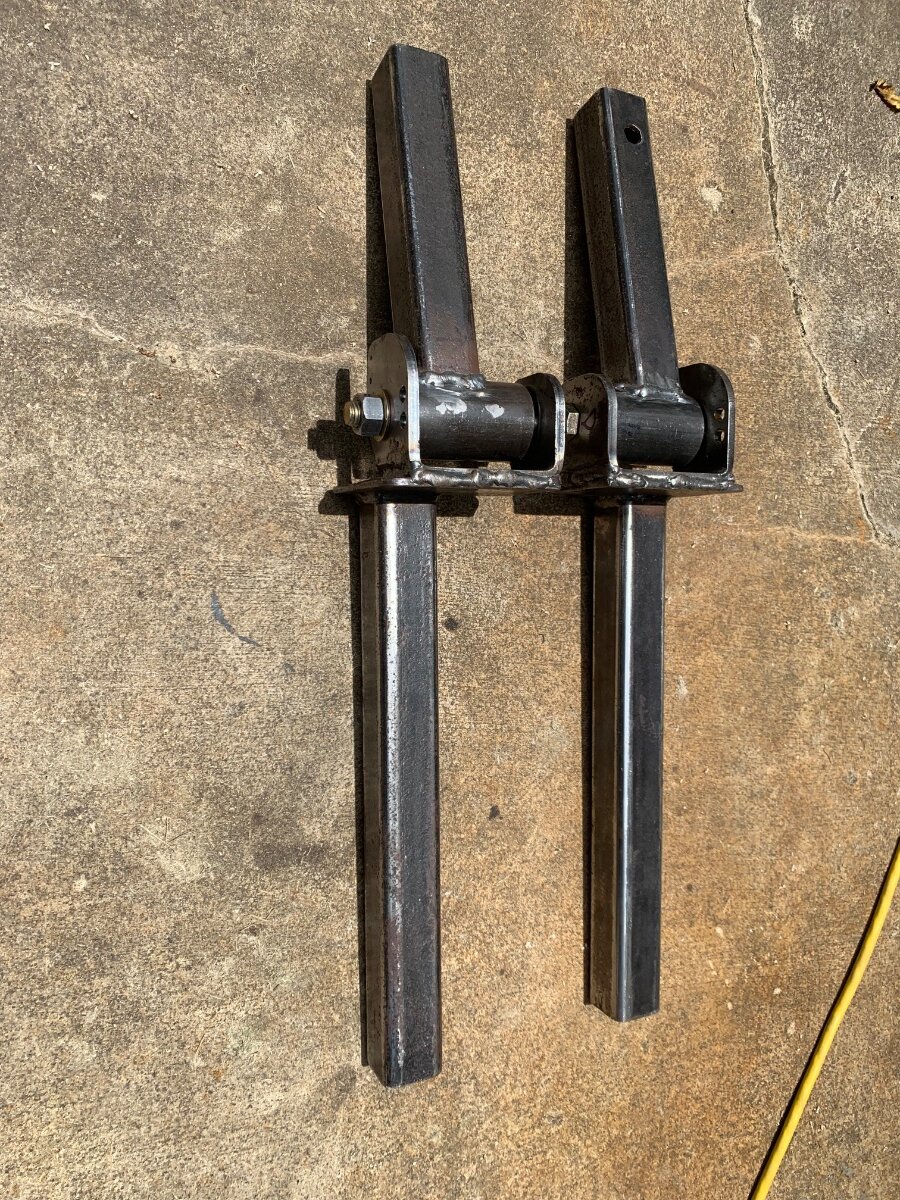
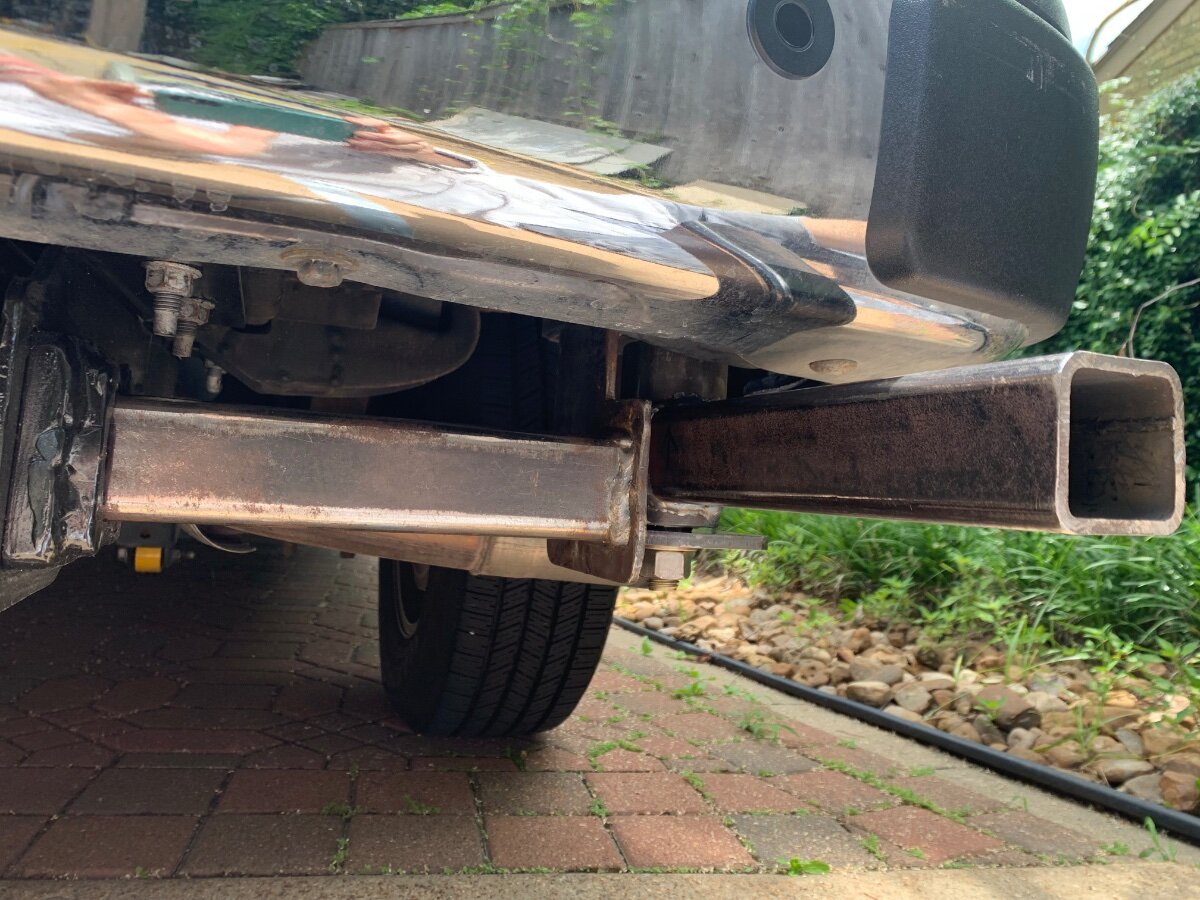
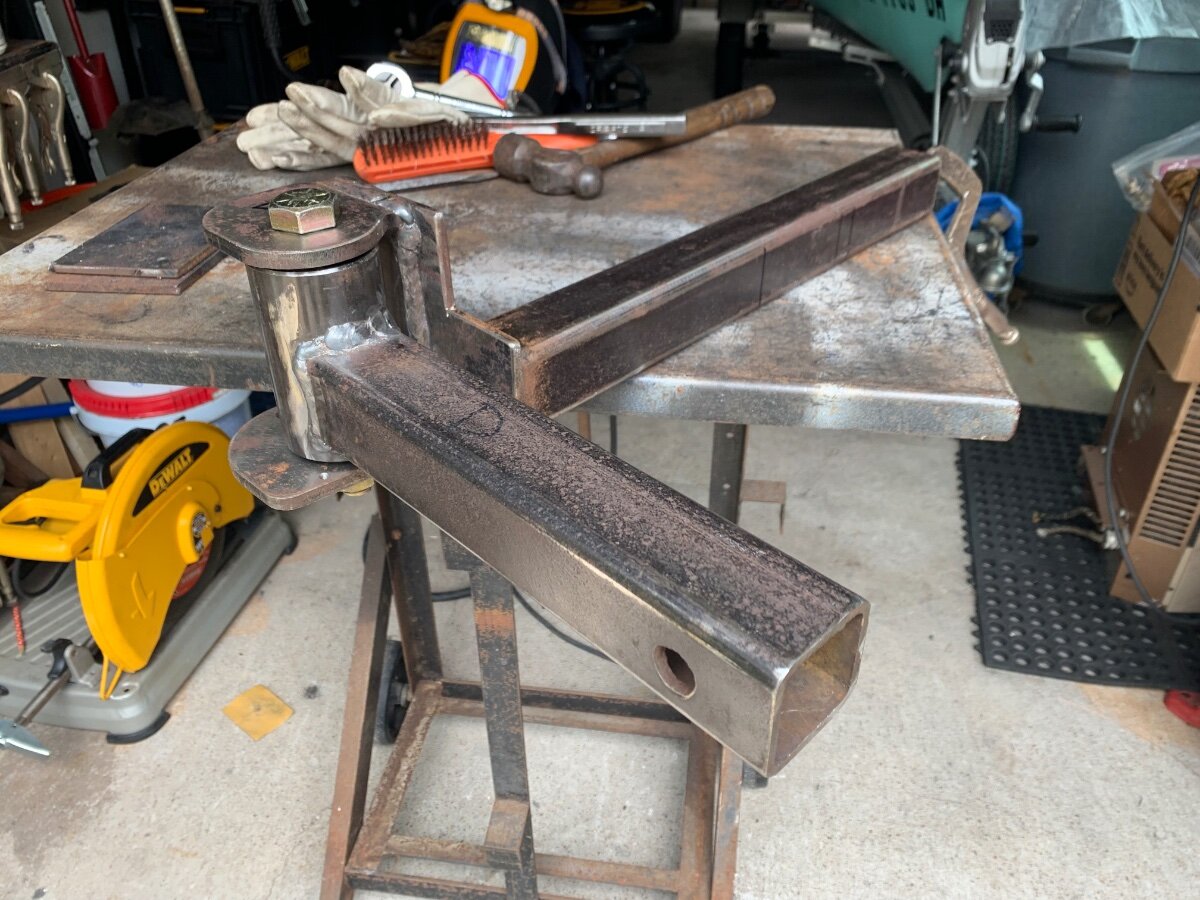
This is a slow progression, but my design-as-I-go method of doing things usually works to my favor. Each of the swing racks will have dual articulation to provide adequate clearance to enable the rear cargo doors to fully open. Here are some pics of the two primary pivot and arm assemblies. Awaiting delivery of additional supplies to further fabrication of secondary components. Standby! To anybody having the patience or curiosity to continue tracking this build, you are appreciated. I’m aware this may be beyond scope of the forum, and even though such tow vehicle mods are oftentimes of personal and individual importance, they should be shared in interest of others.
1 point
-
This seems like a good thread to reinforce a certain logic when it comes to tow vehicles with regard to the LE2. Like a few others here have stated here, I have extensive prior experience towing trailers, to the tune of close to 50 years. This includes rather large livestock trailers and twin engine boat trailers, enclosed and flat bed cargo trailers all the way down to small motorcycle trailers. They all introduce significant challenges depending on the tow vehicle used. Over the years my overall observation in learning from the seasoned veterans along the way is that just enough truck is never enough and there’s no such thing as too much truck, within reason. I’ve pulled trailers that were on the margin of overloading trucks at times and know what that feels like. When people mention white knuckles and pucker factor as it applies to trailering, I’ve experienced firsthand understanding I was at risk on a few occasions. Similar to previous comments once you’ve been there, you always make a point to never let that happen again. When we began formulating our plan to purchase the Oliver, the choice of truck capacity was of little debate. Our previous camper was a 34’ standard with a super slide on one side. I chose a diesel crew cab dually for that rig, and it performed perfectly. For the Oliver I would be towing a couple thousand pounds less and significantly shorter, but I still wanted plenty of truck and decided to downsize to 350 crew cab short bed with a 7.3L gas engine. Still far above the margin of capacity, so a significant safety factor built into the choice. Best part is like others have mentioned, I don’t have the worry about what cargo I want to load into the truck. No white knuckles and no pucker factor. But most of all with the Oliver, we’re way below the need for a WD hitch and that’s important to me. A WD hitch is a way to compensate for when a trailer connects behind the rear axle and weighs in at near or more than the tow vehicle. It’s acceptably effective at restoring controllability to the tow vehicle, but introduces compromises in articulation and can add significant stresses to both vehicles when moving through uneven terrain. I really wanted to avoid the need to manage the rig through situations where I could be risking damage to vehicles or equipment during remote camping/ boon-docking destinations, etc. plus I just didn’t want the added complexity of hitching and unhitching. These kind of threads always generate “lively debate” and I guess that’s fine so that the inexperienced can read the many views people have and hopefully learn the key factors to consider regarding TV choice and safety considerations. If you choose plenty of truck, most of the discussion is just good general knowledge that you won’t have to worry much about. Long winded way of saying that I f someone is asking for my advice, always choose plenty of truck with an abundance of safety margin. Nobody ever complains about having too much truck, but many have learned through any number of experiences that just enough is often never enough. Cheers!😎1 point
-
On my 2014 f150 I installed cheap manually adjustable air bags, on the 2021 none are needed. Full disclosure, I still use my class 3 receiver and I’m perfectly legal. One of the other things that I highly recommend is either xl (extra load) or lt( light truck) tires, the oem tires are p rated (passenger) tires1 point
-
For a change, I’m loss for words! Given your post, I have far less Oliver towing experience than you. User manual of our old Dodge, given a 2500 Cummins, states to use a WDH when towing over 5000 LBS (?), even though GVWR is 8800 lbs. It does level the rig, less porpoising from the light Oliver tongue weight, stays nicely level. I install the latest technology and use it to the max, yet down the highway I’m just an ol’ fart conservative! 🤣 Good to hear from you @STEVEnBETTY!91 point




.thumb.jpg.e34bf01ef7f7d5e99ad31856d45afbeb.jpg)



















-
Recent Achievements
-