Leaderboard



Popular Content
Showing content with the highest reputation on 10/08/2021 in all areas
-
Hmmm? ... problem solved! So, I determined it was not a propane issue as the gas stove was working fine. Then I figured perhaps all the dust that was stirred up while traversing the Pawnee Grasslands gravel roads was a possibility. I opened the hatch to the water heater and simply blew out the compartment (yeah, with my own mouth/breath) - then tested the water heater and it fired right up. Then, blew out the intake/exhaust ports of the furnace. From there went inside, opened the access hatch to the furnace (curb side rear) and learned that it would be very difficult to do any disassembly given the cramped quarters in there ... but, for the heck of it, used some compressed air (in a can) and blew through several of the vented openings and into the collar where the wiring exits the box. Viola! ... turned the thermostat switch back on and set the temp at 75 degrees ... fan kicked on (just like before) and a minute or so later the furnace fired up! Thanks guys for the thoughts and suggestions ... when I get back home will need to do a thorough cleaning and check everything closely. Cheers! -Dan6 points
-
I’ve been in the process of dumping black and gray tanks and someone stops to ask questions about our trailer. I am blunt and direct that I would be happy to talk as soon as I’m done with the task at hand. A couple of folks never returned, but most understood. Same with backing in to a site, don’t expect a conversation until I’m done!! Mike4 points
-
We also carry a Rand McNally atlas. We have a number of them, we like to update every few years. GPS is great, but it‘s nice to open the atlas and see the big picture. Mike4 points
-
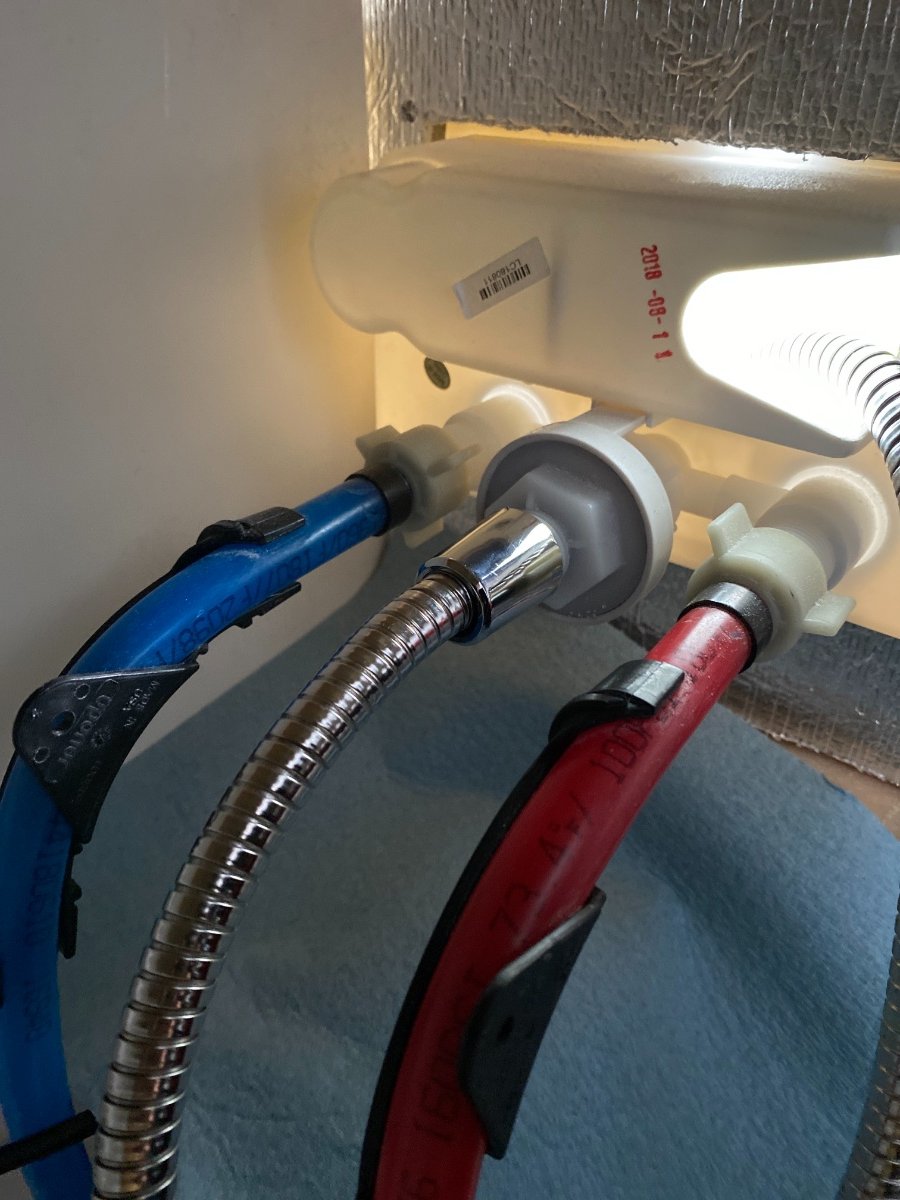
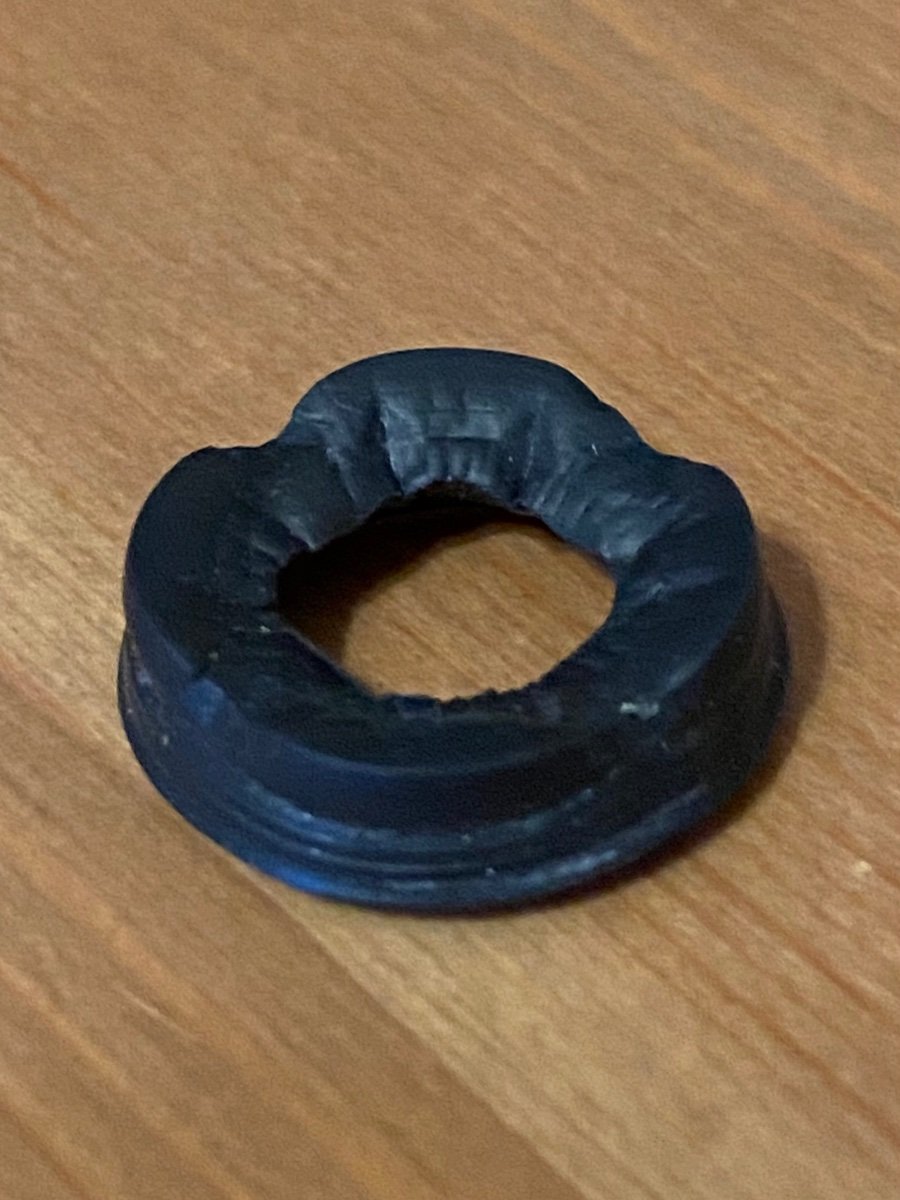
I was having an issue with reduced water flow at the outside shower head. Thinking it might be the usual mineral buildup or plastic shavings issue in the hose or shower head, I decided to disassemble things starting with the shower head and working upstream. No mineral buildup or plastic shavings found, but when I removed the flex hose from the valve assembly, I did discover that the rubber washer that seals the flex hose to the valve assembly was swollen to the point that it was almost completely restricting the flow of water from the anti-siphon check valve inside the valve assembly. I’ve only used the normal chemicals in the water system for cleaning, disinfection, and winterizing (vinegar, bleach, and RV anti-freeze). But the seal obviously didn’t like one or some combination of those chemicals. I replaced the seal with one from my plumbing parts stash and now the flow is back to normal. Just something else to check for anyone noticing reduced water flow. Just be careful when removing the flex hose. There are several small parts to the little check valve inside
 3 points
 -
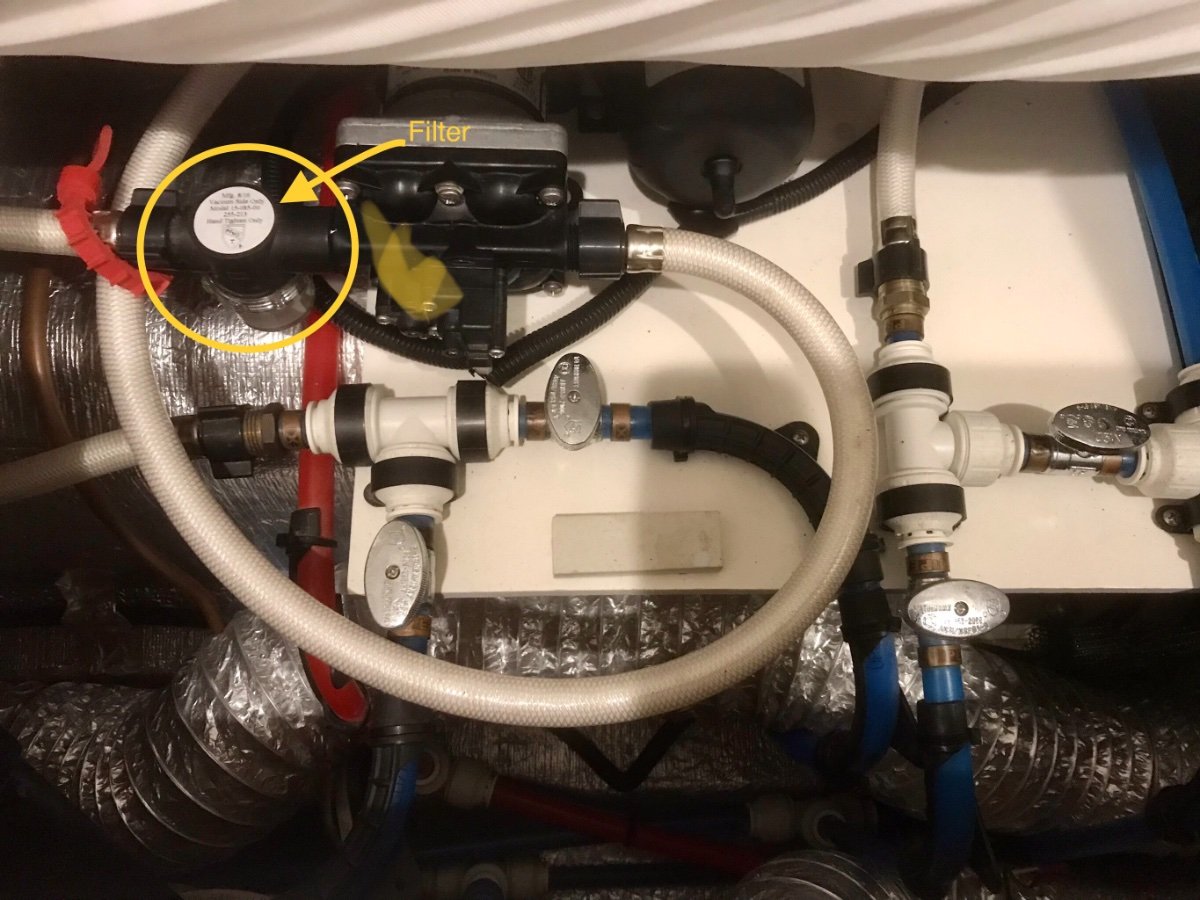
I think a spare pump is a good idea. It's better to buy it when you don’t need it with the supply chain issues we are experiencing now. But I have a few questions about your existing pump. Do you experience low water pressure at the kitchen and bathroom sinks and the inside and outside showers as well as the toilet? Do you have good pressure while using the city water connection or is it only while using the fresh water tank and pump? If your pump is original equipment, there should be a filter before the pump which would prevent plastic from getting into the pump. Have you cleaned the filter? Mossey
3 points
-
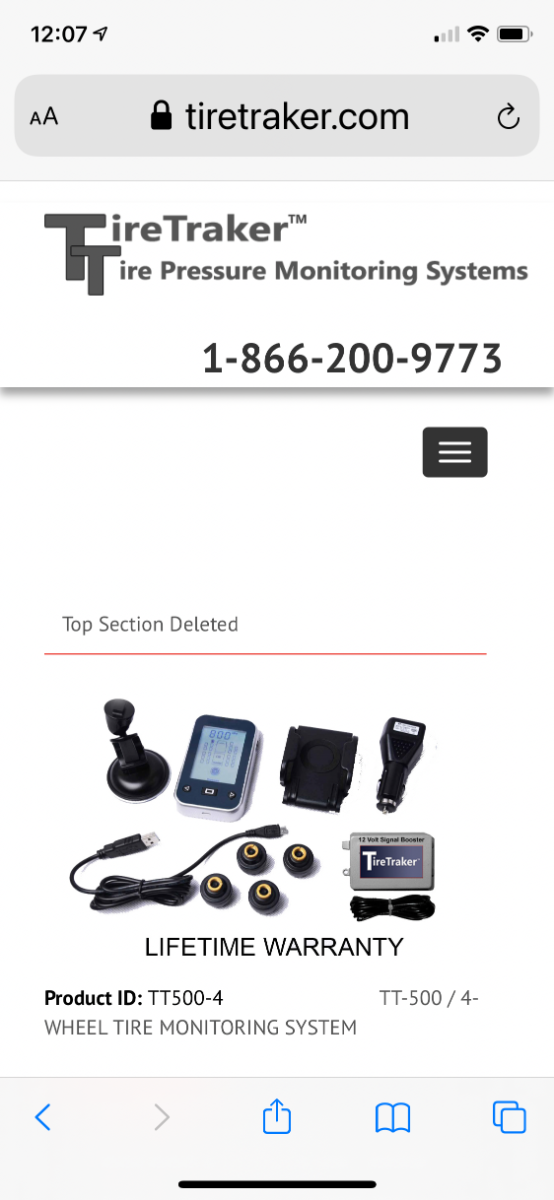
Not on my TST system. I just turn on the monitor and it hunts around the airwaves and finds each sensor. And then the monitor continues to receive a data signal from each sensor. If you already have your system, you can go through the pairing sequence before hand and put them on your tow vehicle and test them before you pickup your Ollie. Just follow the setup instructions and call their support line if you run into any difficulties. Mossey2 points
-
I think it's a good idea to carry a spare pump as well. I found the exact match for the one installed in Hull #688 on Amazon: SHURflo 12v 3.0 GPM Revolution RV Water Pump # 4008-101-A65 In addition to checking the filter mentioned by @mossemi, I'd recommend treating your plumbing with a vinegar solution if you haven't already done so to see if that helps. We had some pressure issues shortly after taking ownership and it shocked me how much Ca/Mg can quickly build up and create pressure problems in the plumbing.2 points
-
I have a GUTA system that I am quite happy with. I have an Elite l so I got the model with only four sensors. That covers my single axle tires, spare tire, and a spare sensor to replace one if it fails. My tow vehicle has an onboard monitoring system. One of my biggest concerns was the signal range. I did not want to install a repeater. The GUTA has great range. With my Ollie parked on its pad in my back yard, I still get a good signal in my truck when it is parked in the driveway. The only con that I can come up with is that the instructions are horrible. Apparently much was lost in the translation from Mandarin to English. I will never understand why manufacturers don't have someone from their intended market proof read instructions. I am sure that the instructions make perfect sense to someone from China who is fluent in English, but they make no sense to native speakers of the english language. YouTube to the rescue...2 points
-
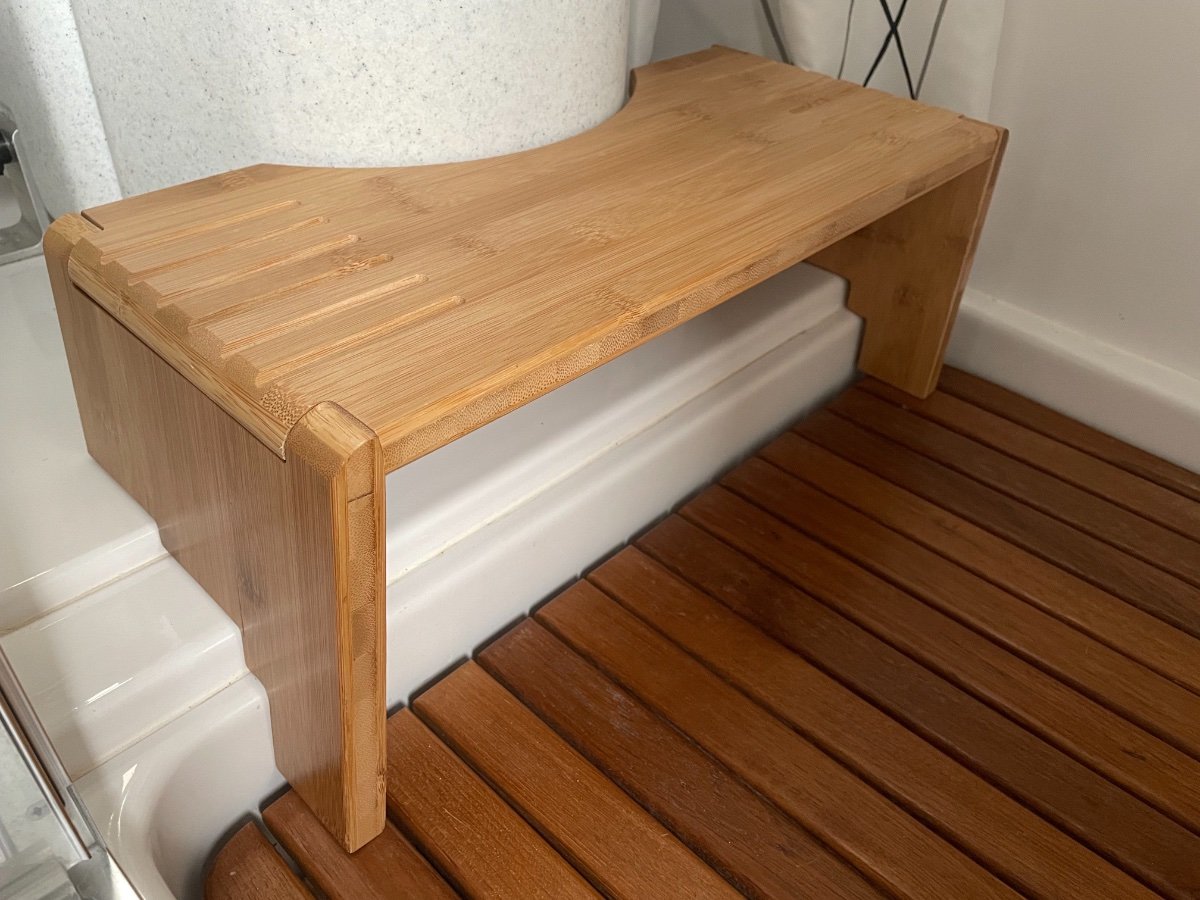
Here's a pretty easy project for owners of the Nature's Head toilet - a step to make the seat a more reasonable height. It's a slightly modified version of this new step from Squatty Potty. Since it's wood, it looks a lot better than the original plastic one, and also makes it pretty easy to modify. I wanted something that wouldn't take up most of the floor, so that we could leave it out and not have to worry about where to store it, so I scribed and cut notches on the legs to match the floor offset. That way it sits flush against the toilet and leaves plenty of room. As a bonus, the factory cutout matches the front of the Nature's Head pretty well without any modification. The legs do fold, so you could use it right out of the box if you wanted, and would be relatively easy to store - or just tip it up against the toilet. But making the notches and resealing it was a simple task and I kind of like that it looks a bit custom. It's polyurethaned and the hardware is chromed, so I suppose you could leave it out when showering, but it's easy enough to just prop it up behind the shower curtain so I'm sure that's what we'll do. I wish it were stained a bit darker to match the shower mat, but I wasn't concerned enough about it to bother with the sanding and staining. For a quick, two hour project, I think it turned out pretty well, and ended up just about the perfect height.
2 points
-
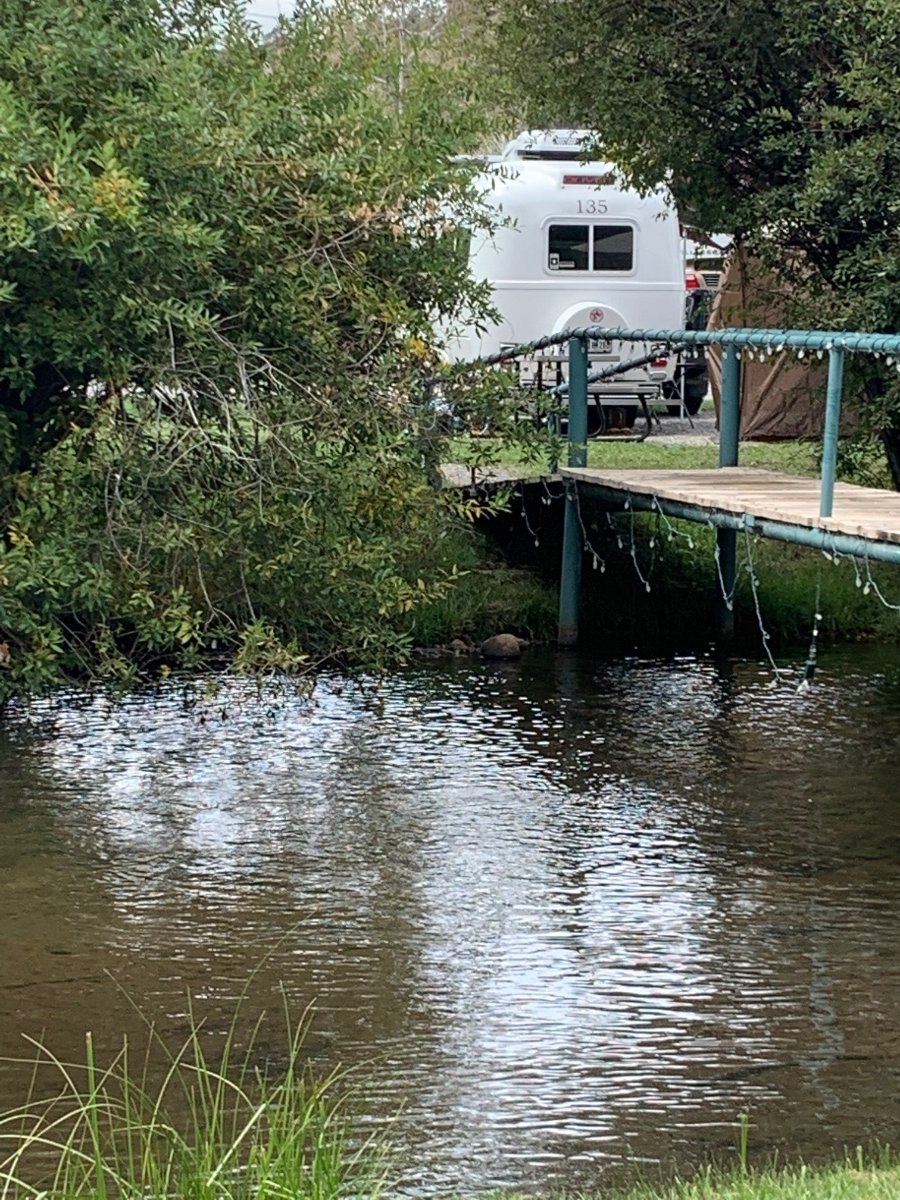
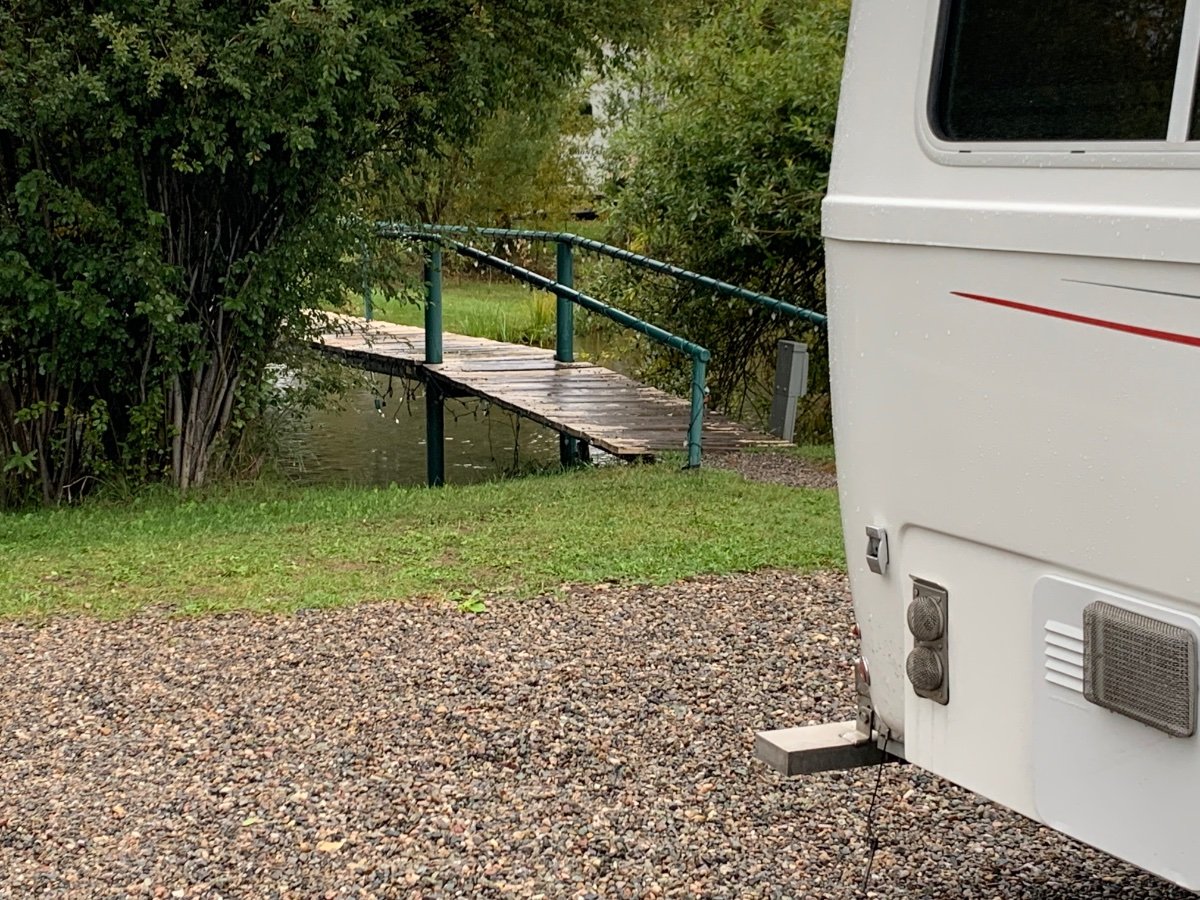
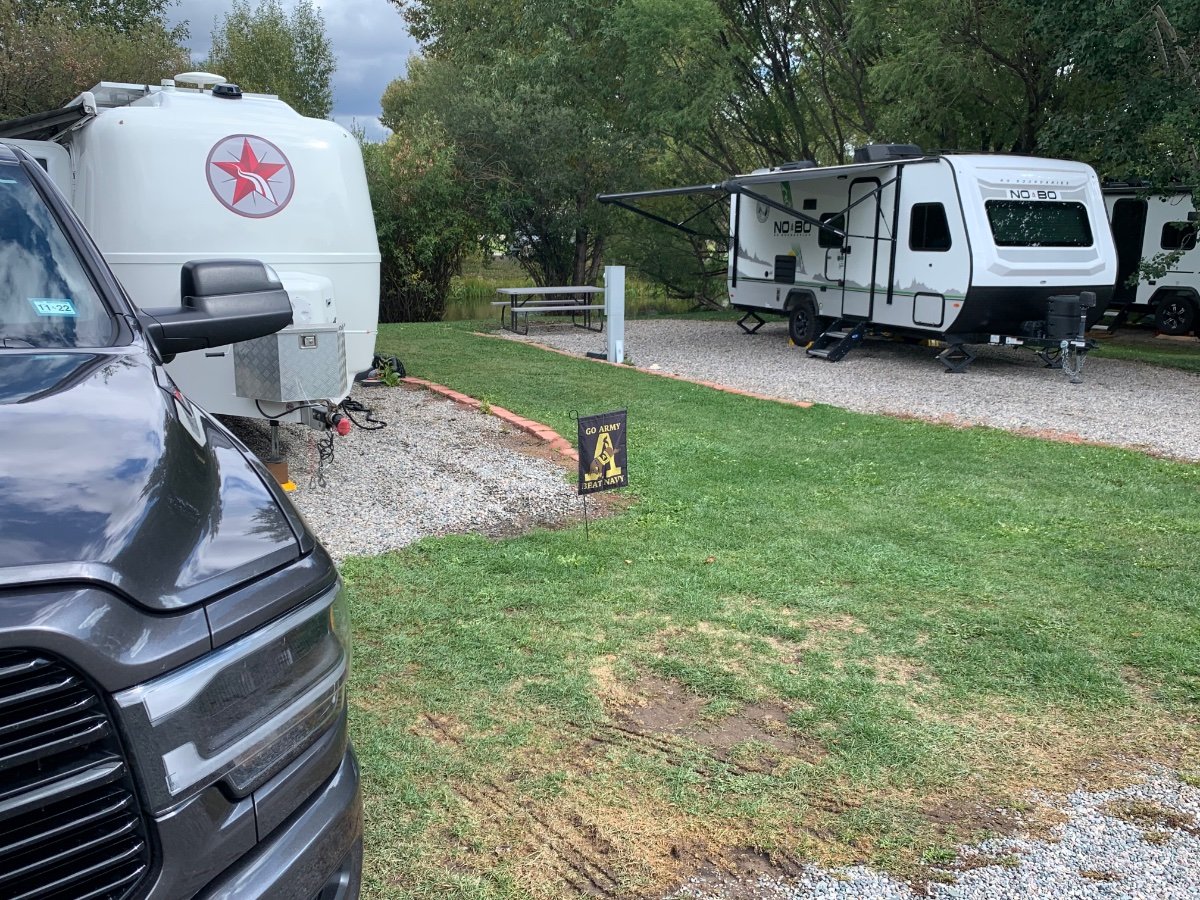
We just spent a week in southwest Colorado at Bayfield Riverside RV Park. Our son and family live in Durango and Bayfield is just to the east. We don’t normally do commercial parks but this one was nice, well maintained and convenient to what we needed to do. Our son and family pulled their RV out over the weekend and camped next to us, a new experience! Cowboy parade in Durango. Our site from across the river. Running river water can be very soothing! A very nice park, well maintained. Our site with my son’s NoBo next door.
2 points
-
We always have the Rand McNally in the truck, but the Benchmark state atlases are our favorite resource for trip planning. For topo, I think iPhone/iPad apps are your best bet, so long as you download the maps ahead of time. Gaia and Garmin are probably the first choices, but I've just downloaded Topo Maps+ to try and it seems decent. Avenza is another - not my favorite, but I've had to use that on occasion for downloading government maps.2 points
-
We, too, carry Rand McNally for look ahead. It doesn't give elevations. I've read on other forums about an atlas designed for truck drivers, that does give that info. Paper or download available. It's called Mountain Directory.2 points
-
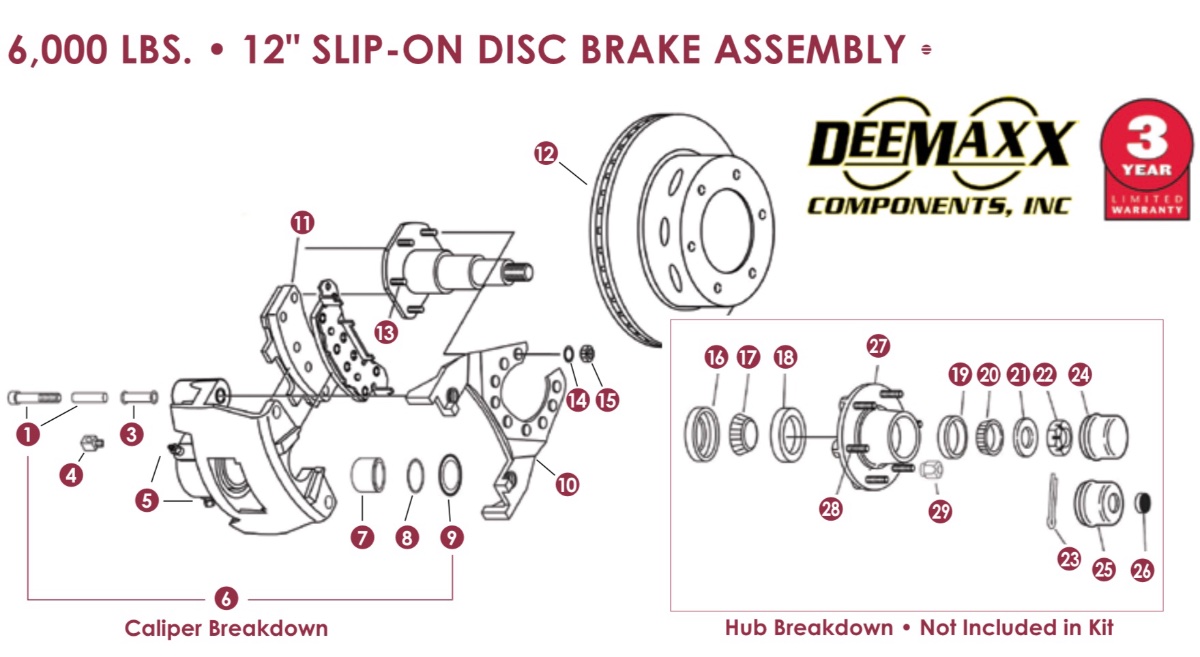
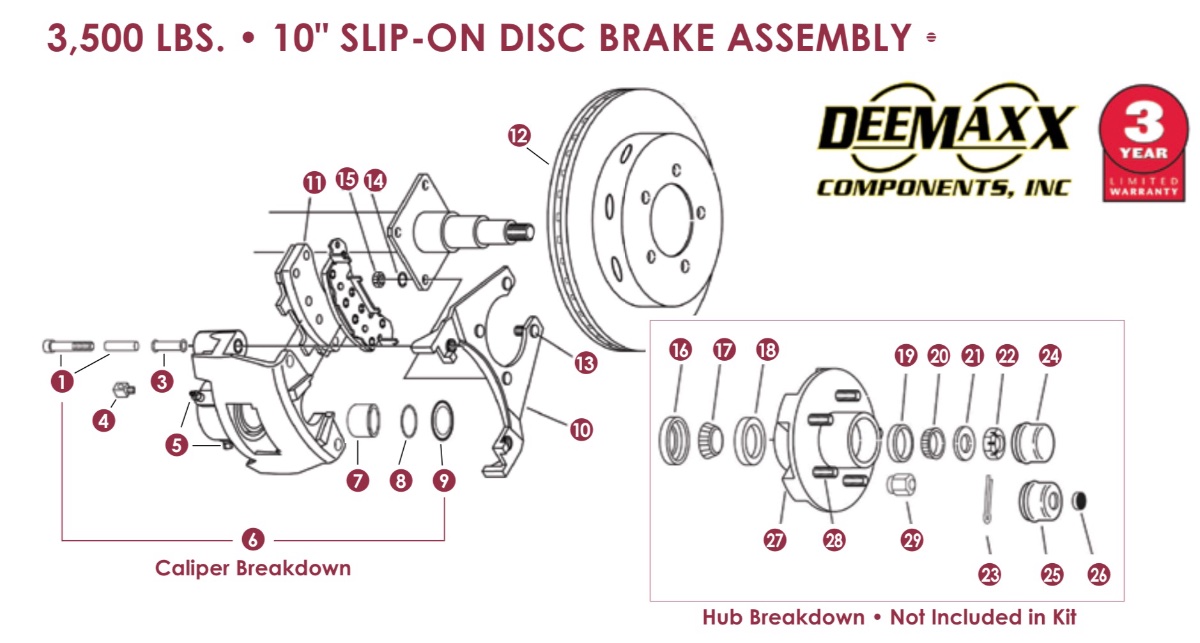
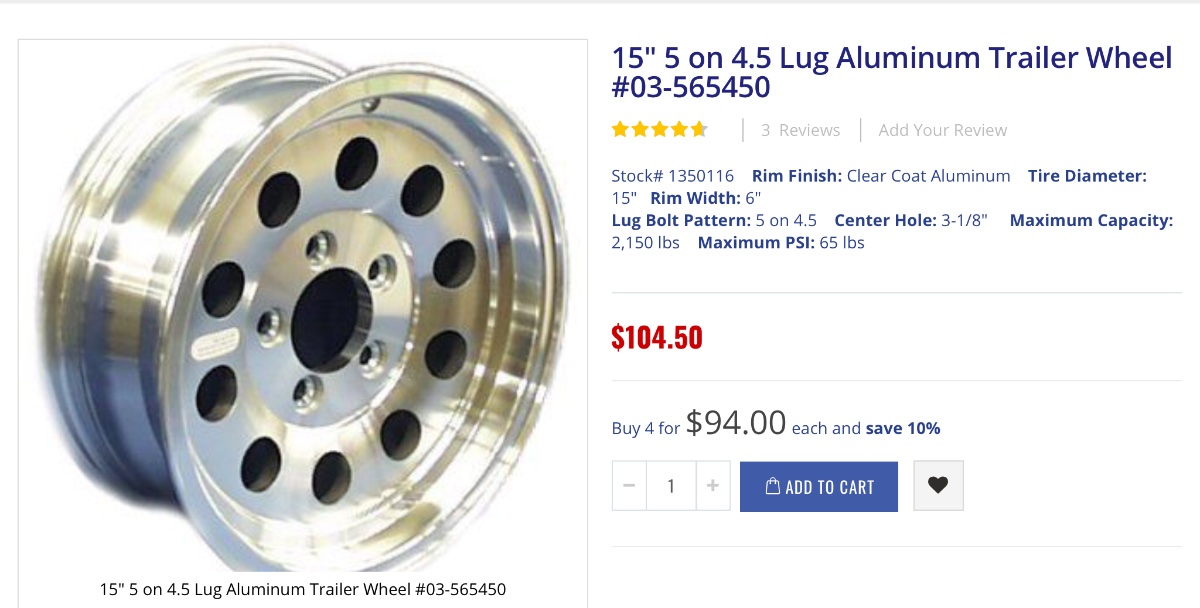
There are a couple of reasons, from my point of view, to change the wheels and tires…. 16 inch LT (10 ply) TRUCK tires are gross overkill for a 7000 pound trailer, they are expensive and they are really heavy. Going to a smaller 8 Ply tire saves money when the time comes to replace the tires if one gets damaged or as they age out (7 years is commonly recommended), plus they are a lot lighter and have less rolling resistance. You could buy an electric over hydraulic disk brake kit for a 3500 pound tandem axle setup and it would be completely plug and play. The current wheels are 6 on 5.5” bolt pattern, which is typical of heavier axles (like on the LE1) that have a 5 bolt brake mount pattern, but the LE2 has little 3500 pound axles with a 4 hole brake mount pattern. Pardon my language, they are bastards, neither here nor there. Nobody makes a bolt-on disk kit for this combination - the hubs have the wrong number of studs OR the brake plate is wrong….. . If you want to install disks, you must replace the axles on an LE2 with the bigger ones, with the proper matching brake plate and lug pattern, which gives you oversized parts and lots of extra mass. Or change the wheels and keep the old axles, and install a lighter system that is better matched to the trailer weight. I think it is crazy that Oliver decided to do this, it completely cripples any future brake upgrade. It will be a couple of more years before I have to replace the tires, enough time for Oliver to come up with a solution for me that does not involve complete axle replacement….. IMHO changing the wheels and tires when your current tires are fine makes no financial sense at all, but suddenly it does make sense when they get too old… Keep in mind your old 6 hole wheels would have some value, they could be sold on Craigslist or here in the Classifieds. Comments? I opened a Service Ticket, to see if there is any hope….. Here is the 10” Dexter slip-on kit (5 hole wheels): And the 12” kit (6 hole wheels, HEAVY parts): John Davies Spokane WA
1 point
-
I had a unique opportunity on a recent trip we took while towing our Ollie down to the Chesapeake Bay for a little vacation. Actually observed a trailer tire failure in real time. Driving in moderately heavy traffic on an interstate at 60-65 mph, we were a bit behind a pickup truck towing an SOB dual axle travel trailer. It was a section of the interstate with 3 lanes in each direction. I was in the far right lane as usual, and the pickup truck/TT ahead of us were in the center lane. My wife and I both noticed that the forward tire on passenger side of the trailer ahead of us was low and the sidewall of the tire was oscillating side to side noticeably. Our position to the rear and right of the other trailer gave us a great viewpoint. The oscillations were getting worse, but the pickup truck driver was showing no indication he noticed anything at all as he happily maintained his speed. I tried to speed up an little to get alongside to try to honk/wave to warn him, but traffic opened up a bit at that point and he actually sped up significantly, so I fell pretty far behind. At this point, small chunks of rubber were now being thrown off the tire, but the driver continued on at speed. I gave up on my attempt to get alongside to warn him since I didn't feel safe getting closer, and actually backed off a bit further. Within another 30 seconds larger chunks of tire started coming off, followed by pieces of aluminum siding from the trailer side wall around the wheel well as the entire tread started coming off the tire and whipping around in the wheel well. So I slowed down even more to get a very safe distance behind from the impending disaster. Incredibly, the driver was still maintaining his speed! Probably doing 70mph and in the middle lane of three lanes of traffic! The full tire tread soon came off, fortunately I was far enough behind to avoid it easily along with all the other debris laying in the road at this point. By now other drivers closer to him in traffic were honking & waving at him, and he probably felt some drag or vibration at this point, and he finally figured out something was wrong, but because he was in the middle lane of the three lanes, and with the traffic, it took him quite a bit of distance to finally get over to the far right lane and he exited at an off ramp and pulled off on the shoulder there. By that point the tire was completely gone, but fortunately since it was a dual axle trailer, the driver never lost control. Some lessons learned, and/or reinforced. A very strong reminder of the need for a good TPMS system (I've had one since day one with our Ollie Elite II). A great demonstration of the advantage of a dual axle trailer for stability. And also a reminder that keeping to a reasonable speed and staying in the right hand lane most of the time are good practice.1 point
-
With my TST there is no need for movement. I can turn on the monitor and pressures and temperatures pop up with the trailer stationary. Mike1 point
-
Many TPMS sensors do have a "sleep" function and will cease to send a signal - in order to save battery power - if certain conditions are met. One of these conditions is the lack of movement and if that is what you mean by "rotation" then certainly it is possible that no immediate reading would be available at the monitor screen. In this case, the monitor would show what the last reading available was. However, many sensors only require "movement" in order to start sending a signal again (i.e. wake up if they were in "sleep" mode). This movement can be obtained by just vibrating the appropriate sensor by "flicking" it with your finger or if the sensor is not easily touched then it would wake-up with the first bounce, jostle, crack in the pavement, pot hole, or most any movement of the vehicle. If you are concerned about this a more through explanation could be had by calling or emailing TST asking what kind of movement activates their sensors. Bill1 point
-
And one last thought, it may have been an installation error. So try remounting the pump a 1/2” north, south, east or west of it’s present location with new coarse thread screws. Put a washer on top off the rubber feet to help control the depth of the screw so it doesn’t penetrate the plastic wood entirely. If the screw passes through the board completely and hits the fiberglass, it could strip the hole in the board. Use a screwdriver and not a screw gun so you have a little more feel. Maybe even try some test screws for practice. Kreg pocket hole screws for soft wood might be a solution. My pump is mounted with lathe screws and hasn’t failed yet. Mossey1 point
-
You can get it on amazon - https://www.amazon.com/starboard-marine-board/s?k=starboard+marine+board1 point
-
The factory uses a clear epoxy. As long as enough was applied (sometimes this is a problem) they would be really tough to remove. Some folks have found their inverter and mounting plate has fallen down into the frame, not good, considering the amperage flowing through those wires! BZZZZZZAAAAAAPPPP! John Davies Spokane WA1 point
-
You could use starboard, which is an upgrade from the PVC boards that they use. A little bit denser, I believe. Or wood, just screw/glue it to the existing board. The epoxy Oliver uses to attach those boards is <STRONG>, so long as they used enough of it and didn't just drizzle it on (it's expensive, I hear, so used sparingly). But you could probably use it to attach a block to the front of the trailer and tow with it (not recommended). I don't know about attaching electrical stuff to aluminum plates. Most of those components will have chassis grounds, which means that when you screw them to the plate, the plate will have a path to ground as well, and if a positive wire comes loose, there's a good chance it's going to land on that plate. Sparks, melted aluminum and all that. If you do it, I'd use some good strain relief on all the wiring (which you should do anyway - I see so many people dismiss that step).1 point
-
I purchased a Tuson and the TPMSes are installed in all tires including spare. Display includes repeater for longer trailers. I installed it as well. It works great.1 point
-
We have 57,800 miles on our 2016 (hull 137.)1 point
-
Perfect. Short enough for my short self, but tall enough for my old self.1 point
-
We had the pleasure of camping with Mike D and company, including their really nice Lab. Their (really) big Lab is one of the nicest big dogs we've ever camped with. Got along great with our tiny dog. Obviously, it's doable. As I said before, humans and dogs adjust.1 point
-
1 point
-
OMG. I was just telling hubby Mark about this transfer "trick" to help us extend our boondocking ways. Will definitly also make sure neither of us gets distracted AND that we modify/extend the vent hose so it can reach the shower pan. Ugh. Just Ugh. Thank you for sharing!1 point
-
Exchanged emails with Foy today and we've decided to wait until I can pull exact dimensions from the '22, just in case. We have a Nature's Head in our current van, mounted on a pull-out tray, and even my 5'11" husband finds the height challenging.For this modified Potty Squatty, with your notches, what is the distance from the top of the wooden stool to the top of the toilet seat? Thanks, mb1 point
-
We travel with several Rand McNally atlas'. One of them is marked in highlighter with every road we've traveled over the past 14 years. Sometimes we're surprised to find out we've passed this way before. Another rides in the truck with us. I trust our GPS to get us where we want to go, but I don't always let it decide the route. I also like having the atlas so I can "look way down the road." The GPS has a rather narrow overview unless you zoom way out and then you lose detail.1 point
-
You could make a 3 foot extension hose with a slip coupling, to bring the NH vent hose opening all the way down into the lower pan. If the travel valve (isolation valve) was open, as it should be when parked, any excess grey water will flow into the shower drain and back into the grey tank. No harm done except for a little smelly water there, that could easily be rinsed away... Leave the transfer pump running and you have a plumbing Infinite Loop, for you computer geeks. John Davies Spokane WA1 point
-
I do always carry a paper atlas with me - a Rand McNally spiral bound - but neither it nor any other that I'm aware of has the information you are seeking. I do have a Garmin GPS and my truck's GPS both of which do not require cell service and even though the Garmin does consider road grades and height clearances they are not visible on the maps that I've seen. Obviously, there are a number of mapping services that are available via cell but they don't do any good if there is no signal/service. Good luck. Bill1 point
-
My good Sam's road hazard towing card. They will tow both the TV and the trailer tp the closest facility. Plus a jack and road hazard triangles, etc.1 point
-
This is the one I have on our Elite II.
1 point
-
I too carry an infared temp sensor but it really is no substitute for a TPMS. With regards to jacking up the trailer - against the legal advice of Oliver - I use the onboard jacks for the flat tire sort of thing. However, your comment concerning virtually any jacking of either the trailer or the truck being a very risky task is certainly on the mark. Just one of the reasons that I also have a roadside assistance plan - in the event that I do not feel entirely comfortable changing that tire, I'll simply make a call. Bill1 point
-
So, I just have to ask, what else gets carried to safely jack up the trailer, remove the wheel and brake drum to get to the bearings? On anything but a flat, level concrete surface it can be a very risky task. And that darn wheel/tire is heavy! In hoping to avoid such a circumstance as an on the road repair, I carry an infared tool that I can monitor wheel hub and brake drum temperatures. Failure avoidance is my scheme, even a simple hub/wheel temp test with the bare hand can be helpful preventing an overheated bearing or brake problem.1 point
-
There are bunches of reviews for various TPMS on Youtube. I use and am satisfied with EEZ Tire but I know that a number of Forum members use Tire Minder and TST systems among others. Bill1 point
-
Yep - me neither. There are very few things that will keep you stranded on the side of the road with an Oliver - but - this is one of them. I sleep better at night knowing that I can get off that "side of the road". Bill1 point
-
These are the exact same ones I carry. Mike1 point
-
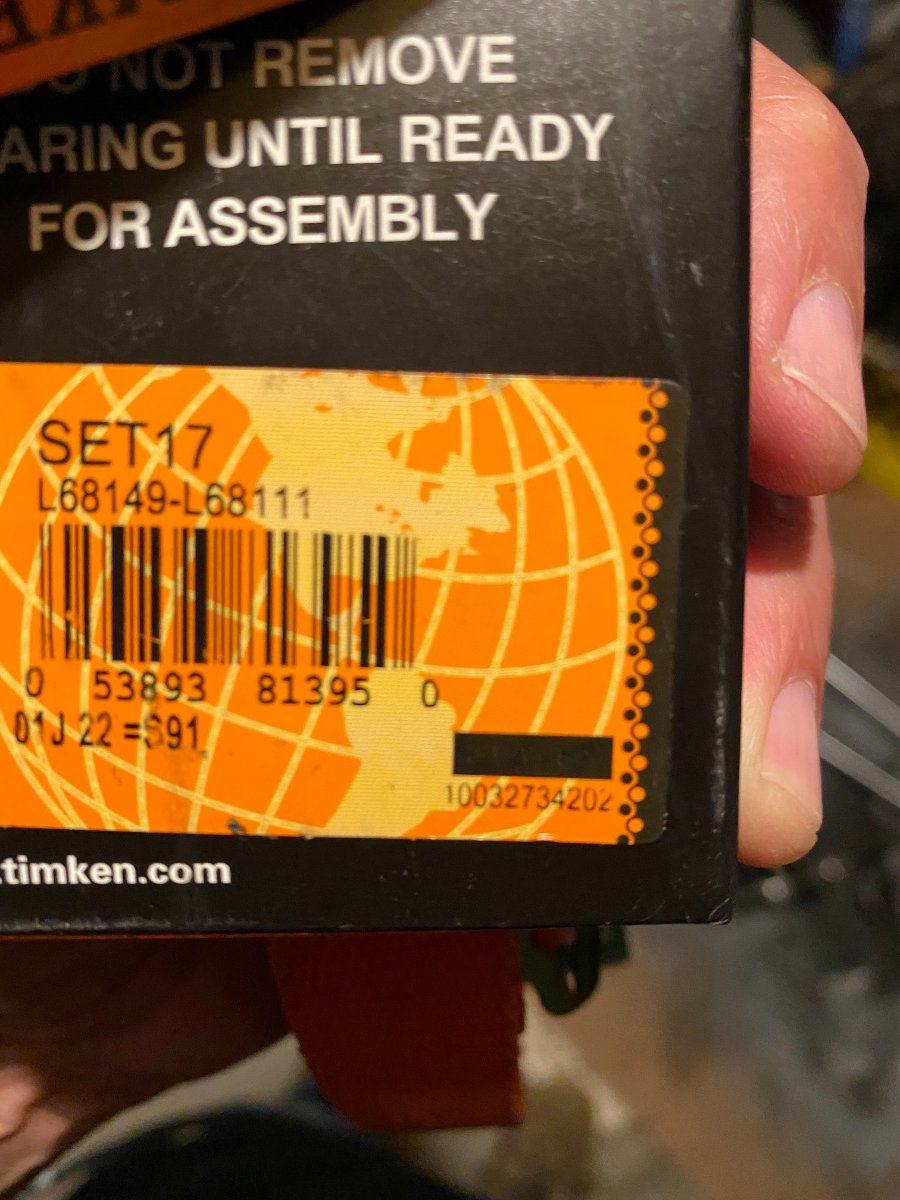
As an inexpensive experiment I purchased “Timken” Set4 & Set17 bearings, and the 473336 seal, all on Amazon. They arrived today. They certainly look like Timken bearings with nice packaging and even have the Timken microprinting hidden in the longitude and latitude lines on the globe logo. But the WBA bearing app scan of the bar codes on the bearing packaging says the bearings are likely counterfeit. The seal checks out as ok. The seal was stocked and shipped by Amazon. The bearings were from a third party supplier. I do have an authorized Timken dealer not far away, so I do plan to get actual Timken bearings to use, but it was a cheap experiment, lesson learned. The two bearing sets were only about $25 total for both. I’ve had a lot of experience with Chinese suppliers in my career, but I am still amazed at the effort they will put into counterfeiting a product.
1 point
-
With some cross-bracing on the 'floor' of the interior wall where the mount is and judicious use of a small hydraulic jack against the aluminum mounting plate upper base(with wood between), I was able to inch the mount up so the holes matched, maybe 1/2". Not real thrilled thinking about fiberglass moving, but figured I got it back where it was from the factory. It was obvious the screws had loosened over time and bounced around in the holes before falling out. Guess I've got two nuts and four washers floating around in hull somewhere. The bolts were nice enough to drop right in a crevice by the support. I ended up installing zinc-coated bolts, with smooth portion going through the braces, in there for now, since I had them. That and double washers. John, worth getting stainless bolts with nylon locknuts? I have a hard time believing they were tight from the factory given the minimal highway miles on the trailer. 5000 miles on the trailer, but no idea when they fell out. I have no idea why they don't use nylon locknuts in places like that. Critical bolt and hard to get too.... Will see what Jason says this week, before I close it all up. This is the second time troubleshooting one small problem and discovering serious structural QC issues under the fiberglass. All fixed reasonably easily, but would have been serious if left undiscovered.1 point
-
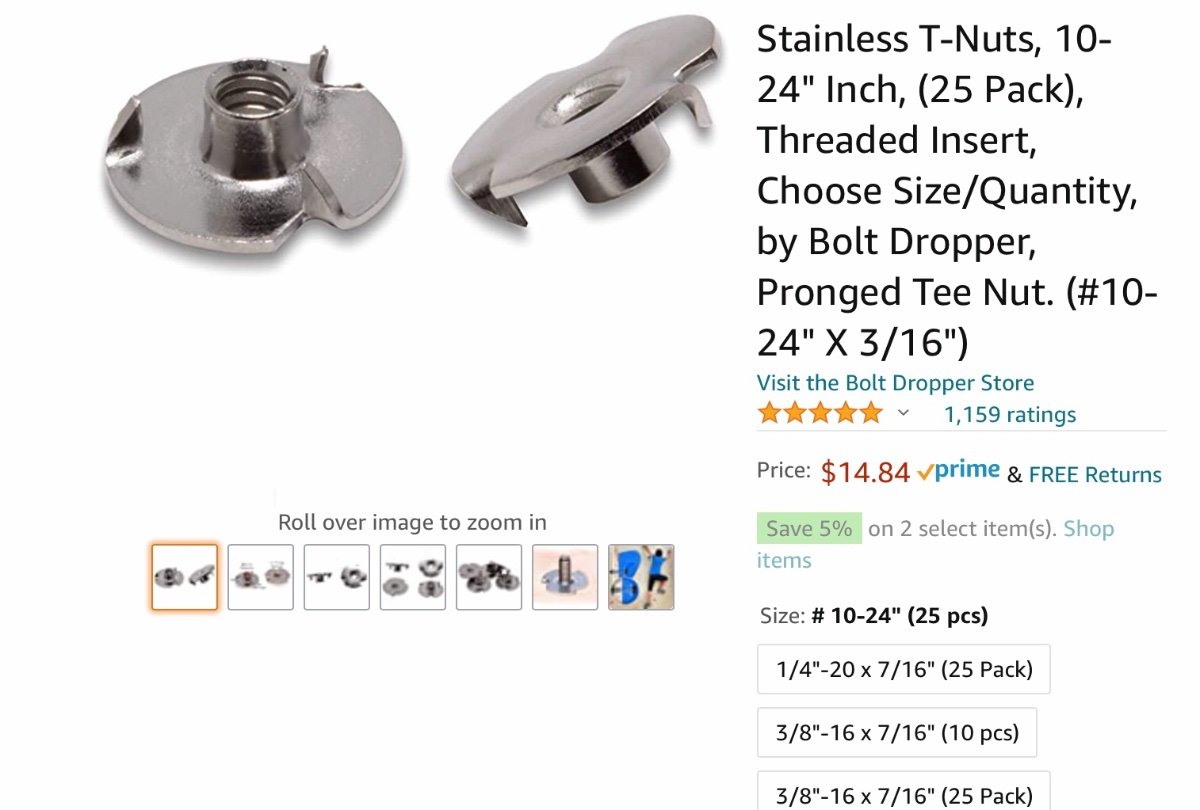
I have used a piece of oak to mount a battery cutoff switch and I really don’t see any problems with it. If that board rots, I definitely have bigger problems. Whichever lumber, plastic or wood I use, I put stainless t-nuts on the backside and use pan head machine screws to mount the device. Mossey
1 point
-
Honestly, people get phobic about "wood." As mounting, wood/marine plywood is an excellent material. Holds fasteners well, everyone (mostly) has tools to work with it, and water resistance is built in. Lasts a really long time. What's not to love?1 point
-
I suspect assembly problems at the factory, if the pilot holes are drilled too large, the screw threads will not hold. Mine are doing fine after five camping seasons. I used the same material in a 1” thickness to add additional mounting plates, I bonded the HDPE to the fiberglass with JB Weld, then screwed 6061 T6 aluminum to that with stainless sheet metal screws. As an ex A&P tech, structural aluminum is my material of choice, I won’t add any more wood to my Ollie, no way. John Davies Spokane WA
1 point
-
I'd recommend marine plywood.1 point
-
Yippee!!! New camera installed and working perfectly. Thank you for all your help. Could not have done it without you.1 point
-
Good comments. Just to add one - light truck tires on the Oliver are probably less susceptible to issues than most trailer tires. Mike1 point
-
That is no problem for me, if I were to be suddenly single, I would be strongly tempted to do the same, and add big tires, independent suspension and an offroad coupler, and be very happy to ditch the Andersen hitch entirely. Downsizing is not bad, just different. Be glad your brakes have been doing well, that is very unusual, and when they do go Tango Uniform, it is not a simple fix like a disk system, especially if you choose a disk kit with idler hubs with slip on rotors and Nev-R-Lube bearings. No more bearing repacking, just bring a spare hub and install it in 30 minutes if one fails, then get the old one's bearings replaced at a machine shop. Ten minute brake pad changes! Go drink a beer instead of mucking around with ancient and cranky drum brake technology... John Davies Spokane WA1 point
-
The Alarm that comes with the Oliver is a combination Smoke and CO detector. If you switch it out to a Smoke only you give up that detector's ability to detect CO. There is a CO detection capability on the LP detector though. Two downsides I see for CO detection with the LP detector are: 1.) the location is optimized for propane detection (heavier than air) and 2.) the power is from the 12 volt of the trailer without battery backup. I think it is best to keep both CO detection capabilities. If you switch to a Smoke detector only, you should add another CO detector that has a separate battery from the trailer and is in a better location than the LP/CO detector. Another thought to keep in mind. The Smoke detector sensor for the Smoke and CO detector is for Smoke (smoldering type fires). That detector is a photo optic detector that determines when large smoke particles block the light passing through the sensor. Another type of Fire sensor is the Ionization detector which detects particles from fast burning fires much quicker than a the sensor of a smoke detector will. I think it is best to use both types in your trailer and your house. For those with older units, the maximum life of a detector is 10years. In some cases it is less. I've seen CO detectors with shorter lives as recommended by the manufacturer. With the environment our units live in it would probably be better to change out more often. - Randy1 point
-
Dave, a decent multimeter with ammeter function is a must-have tool for troubleshooting, but only if you are reasonably skilled in using it. For testing the voltage of a motor or determining that a ground has high resistance it is essential. But you still have to dig it out of your toolbox, have the necessary jumper cables and adapter wires, have access to and be able to read wiring diagrams, and especially have a logical and focused mind. As I get grayer, and my eyesight gets worse, reading and thinking become more important factors. The Tekonsha tester works like the cheaper LED light testers but it also allows you to verify that your controller is working correctly, by simulating the resistance load of the brake magnets. There is no other simple way to do this other than by connecting your trailer! If you do connect to your trailer and the controller doesn't work, you have no idea if the problem is in the truck or the trailer. If your trailer is stored off site, it means that you have to wait until you are leaving on a trip to see if things are working right. I don't think anybody wants to hang around at a storage lot trying to figure out why the brakes are dead..... It takes only a minute to take the tester out of the glovebox, plug it in, and have a buddy work all the lights and the brake controller, and you can see that everything is good by observing the six LEDs and the displays on the P3 screen. Using a meter would take WAY longer and frankly is a real pain in the butt. The wiring at the back of a car or truck is exposed to extremely nasty conditions, including corrosive road chemicals, and it is very common for wiring and the 7 pin connector to fail, especially if there have been non-factory mods. If your connector has a steel body, it WILL rust out and then short out the wire terminals inside. Plastic ones will not do this. If somebody made a connection using a non-waterproof splice, it WILL corrode and fail, eventually. The Tekonsh tester is a great tool to give your truck a spring checkup before you leave on your first trip. Buy it and you will thank me later. Also it is a great feeling to pull it out, test somebody's lights, and then be able to tell them immediately if there is a problem and which circuit is involved. It makes you look like a wizard. ;) John Davies Spokane WA1 point
-
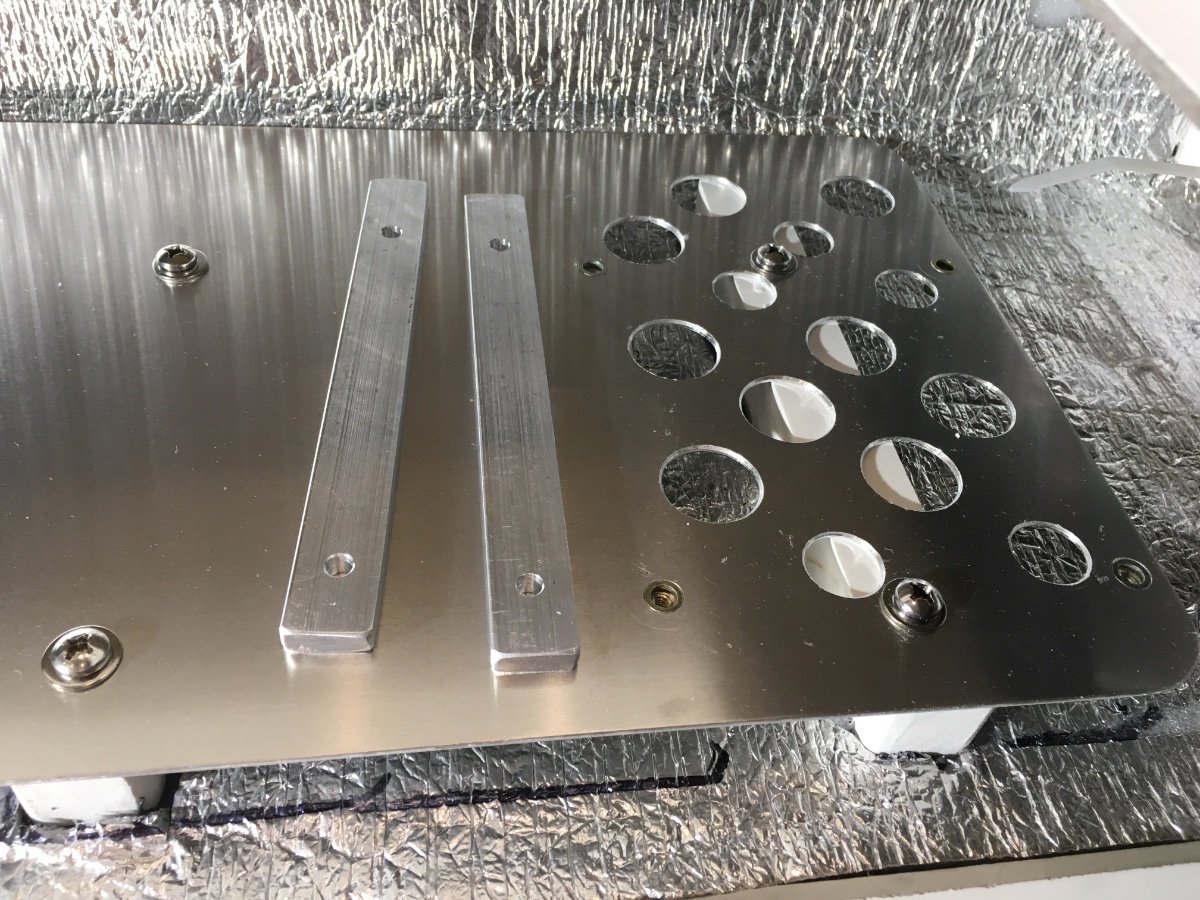
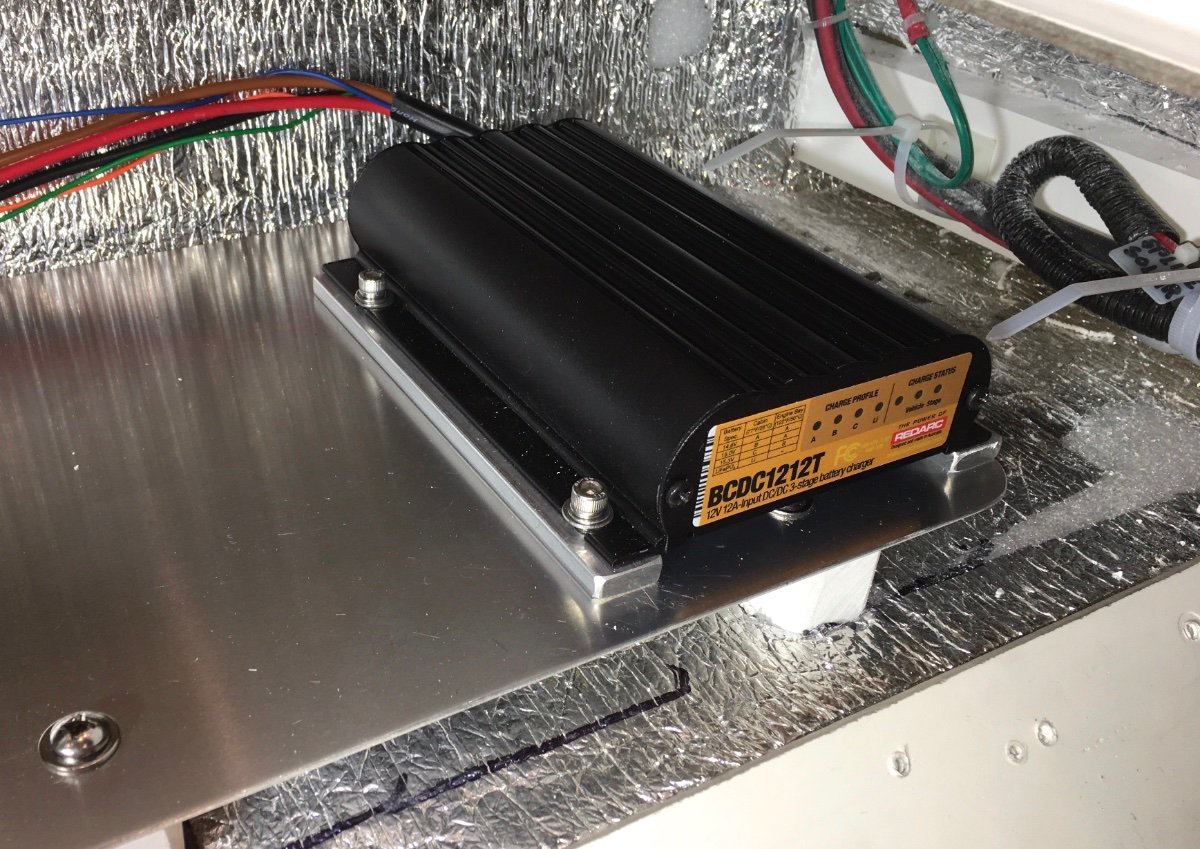
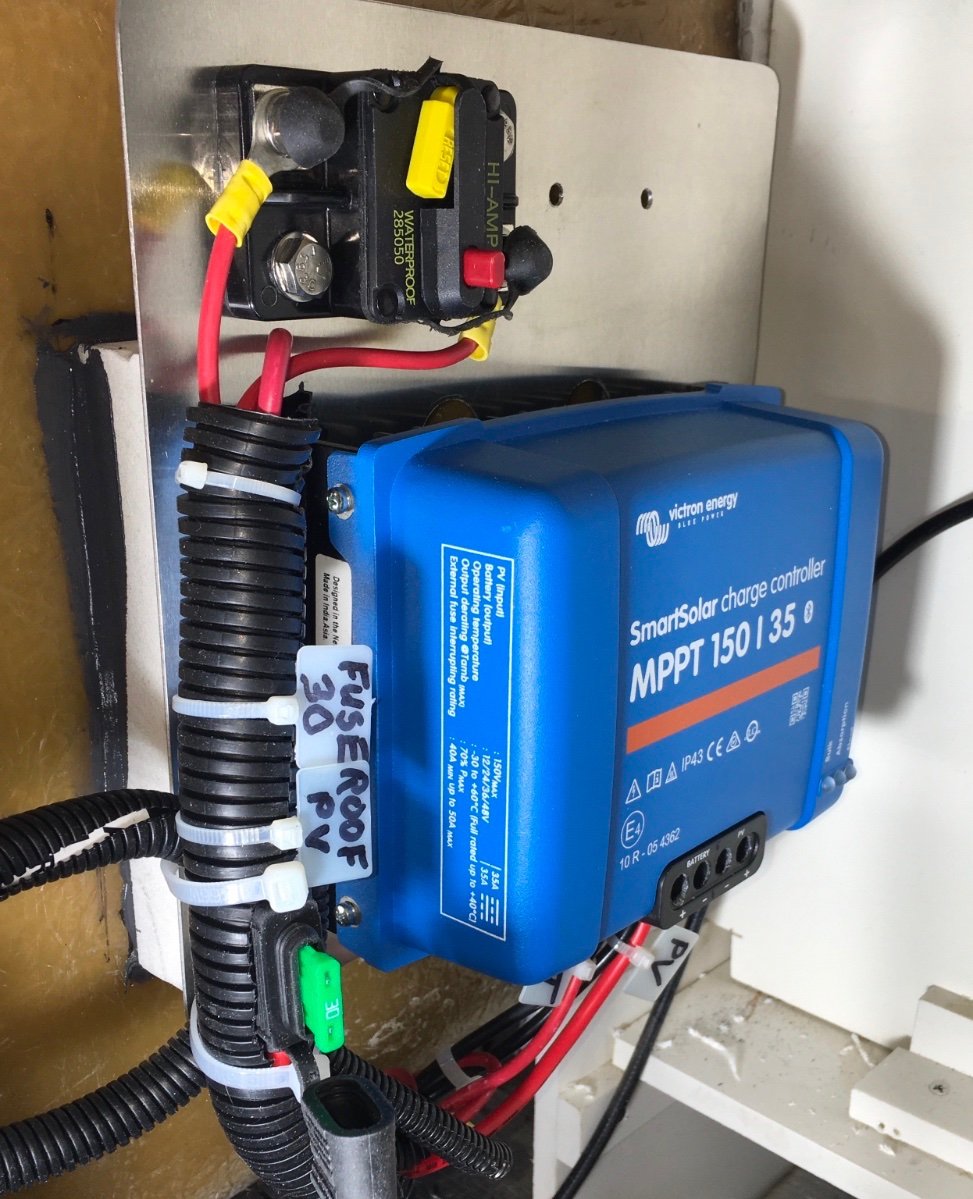
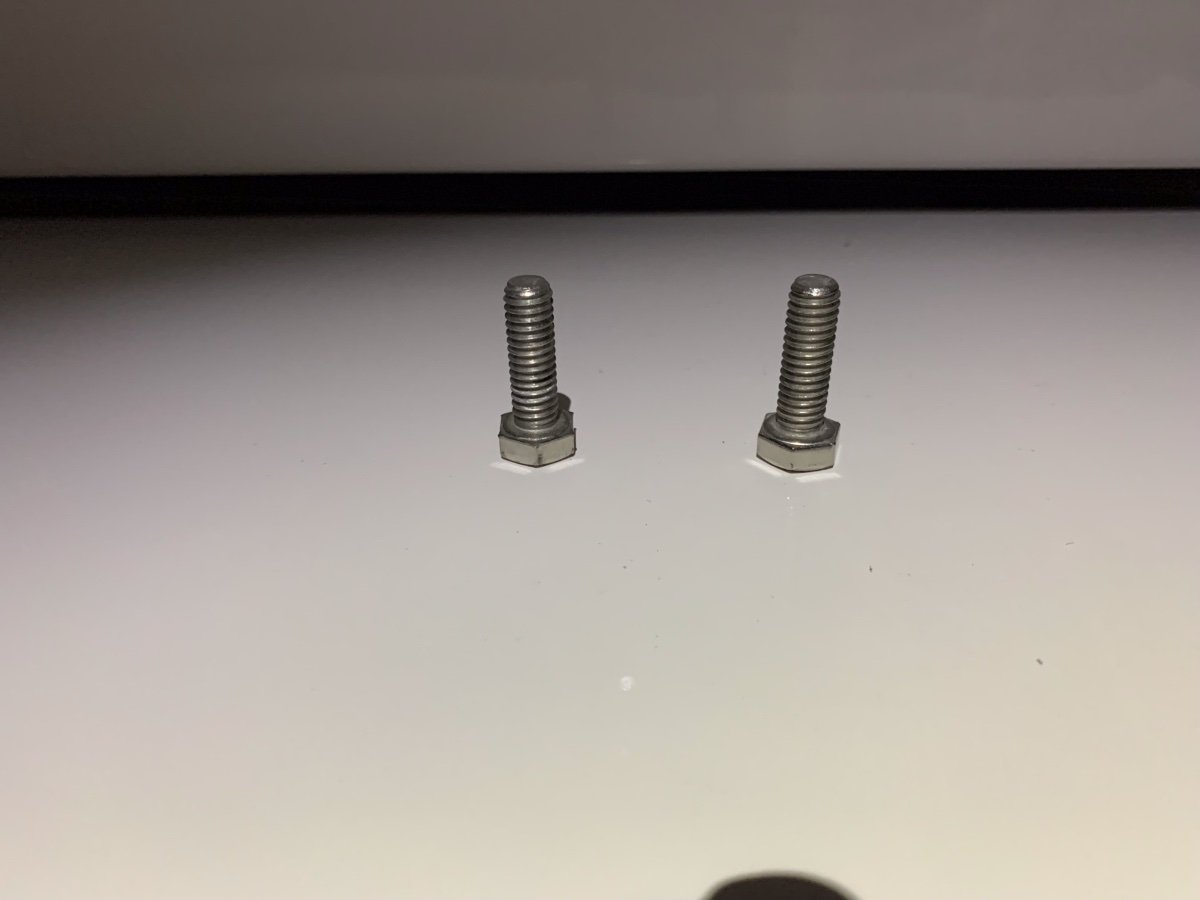
A bit of serendipity as I was troubleshooting the loss of all power. That turned out to be an outlet that probably went down during our recent lightning storm. Anyway, while checking circuit breakers, fuses and the inverter GVCI switch I found two lonesome bolts that have been waiting for someone to finish drilling two holes in the aluminum support beam under the the pantry shelf. It looks like it supports that fiberglass component. No movement and seems very sturdy, so trying to decide whether to finish the job. Wonder if there are two nuts on the other side? 😉 Actually looking at the photos now, it looks like there was a washer on the aluminum, which now makes me think they backed out and I need to figure out hard to push up and see if I have holes on the other bracket...something for tomorrow. I know that fiberglass wasn't moving when I checked...
0 points
-
This is one of those stories that I thought hard about sharing because it was such a great example of a classic "stupid attack". In the end though I decided if I can save someone else from themselves it was worth being forever thought of as "the guy who did that". Our 2021 elite 2 has a composting toilet partly to extend how long we can stay off grid but also because I hate dealing with black water tanks. Since my trailer still has a black water tank even though it is not used I thought it would be great if I could use it for grey water storage to even further extend times between dumps. NCEagle had developed a system to pump grey water to the black water tank through the black water flush port and I shamelessly stole his idea and put together a little kit I use to move grey water to the black tank. I have been using this system since last summer and it works great to give us a couple extra days between dumps. Last week we had just returned from a 10 day trip and as the grey water tank was starting to smell not so good I decided to do a good flush of both the black and grey since I had been using the black for grey storage. I was using the black water flush port to fill the black tank carefully watching the level indicator to make sure I didn't over fill and run water up the black water tank vent to the roof. The first flush went fine. On the second flush however in the middle of filling the black tank my wife Pam decided it was a good time to strike up a conversation and I bercame distracted untilI I looked over and noticed water pouring out of the weep holes in the bottom of the trailer suspiciously near the bathroom area. I quickly turned off the water to the black tank and muttered "Oh my God" and some other words not worthy of this audience. I ran into the trailer and into the bathroom and to my horror could see yucky water gushing out of the composting toilet. How on earth could this be! This just can't be happening! Its a composting toilet! It has no connection to the pluming system! Slowly the gushing stopped though and gave me time to scratch my little bald head long enough to reason through what had happened. What had happened was this. The composting toilet uses a vent fan and a plastic tube to vent that air out of the trailer. What I didn't realize until then was that Oliver had connected the composting toilet vent piping to the black water tank vent that goes to the roof. When I overfilled the black water tank the water had obviously backed up into the vent and found its way into the composting toilet vent piping where it ran downhill into the composting toilet until it overflowed into the bathroom. The toilet had 10 days worth of use in it at the time although at least the urine tank was empty and clean. Ten days worth of use in the solids container though mixed with a lot of water and blowing out the top like a volcano made the mother of all messes in the bathroom. After about a day and a half which included complete disassemble of the toilet and a detailed cleaning to the bathroom and venting systems it looks like all is well again. I will continue to use NCEagles great system going forward but will never again be distracted while cleaning the tanks out. Mike0 points





















-
Recent Achievements
-