Leaderboard


Popular Content
Showing content with the highest reputation on 06/07/2022 in all areas
-
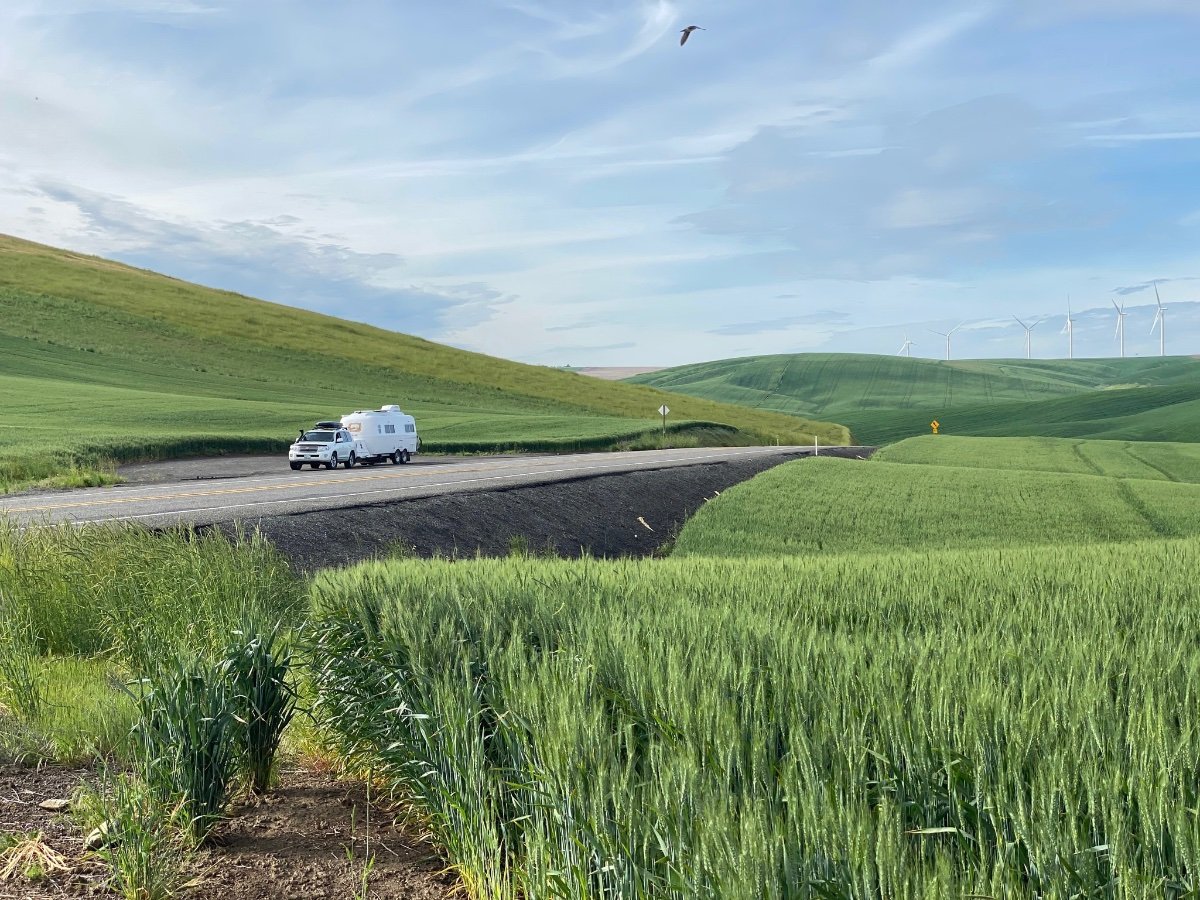
My wife took this with her iPhone 11, no retouching at all except a very slight adjustment of the Brilliance. South central Washington Palouse wheat fields on a WA 127 pass between Dayton and Dusty, the day after a bunch of rain. We had a delayed cold and dry Spring, then it got warm and very wet and the fields just exploded. I have lived here for nearly two decades, have driven through this area many times, and have never seen it so lush and vibrant. The stems are about four feet high and no irrigation is used. Look closely for a couple of cool “Easter eggs”. John Davies Spokane WA
 6 points
 -
“Love the one you’re with…”6 points
-
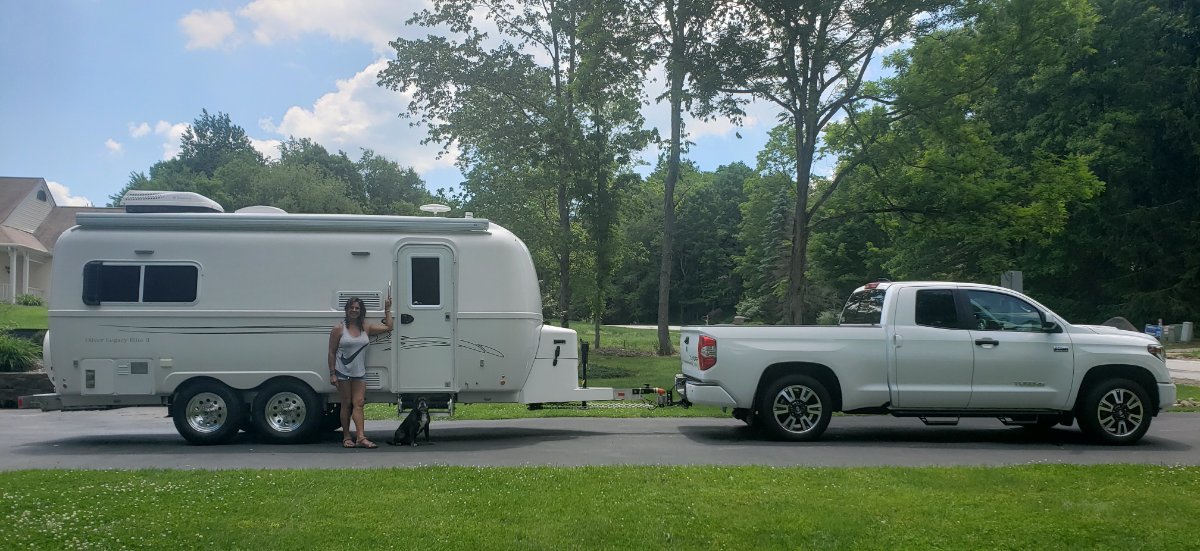
I have a '20 Tundra TRD Sport which was purchased before I knew I'd own an Oliver and right after Covid began and dealers were desperate. I have done no suspension modifications but added taller Michelin Defender tires. I do have the TRD sway bars and Bilstein shocks which I think are helpful features. I have no squat at all with the WDH. Outside of payload, which is low..around 1300# .. I find it to be a perfectly acceptable tow vehicle for the ILOVHER. It has plenty of power with the V8 and when using the Tow/Haul mode, the transmission comes to life. RPMs at times can tip up to 3k+ if you're a lead foot but doesn't stay there. I like the integrated brake controller and the plug and play seven pin. I am certain when its time to do brakes, I'm going big ProComp slotted. I would just feel safer with bigger braking power. The other thing I will add at a later date is an external transmission cooler. Somehow Toyota slipped that out of the builds starting in 2019 and uses some kind of heat exchanger. All three of my pre 2009 V8 4Runners had external coolers. There is a big stink on the Tundra forums about this as people are scan gauging pretty high ATF temps while towing. I pack light and distribute weight inside the camper if necessary (like the cooler of ice and beer) I don't do much mountain driving and if I did, the Tundra would do the job but certainly not as safely as a 3/4 ton or 1 ton diesel. I also think it's crucial with a half ton truck to have the Andersen WDH; no doubt there! With all of the above said, if money were no object, I certainly would love a larger truck but it's not in the cards as of now. The Beast is my daily driver and gas just shot to 5.29 here so I'm going to stick with her for now. With my travel primarily on the east coast, and not full time as of yet, I think its a good dependable truck for towing my baby ILOVHER.
6 points
-
I’m home, in hot, humid Myrtle Beach SC area. I have the 630ah/340w on my 2022 Elite 2…soft start on the AC. I ran a quick & dirty test last week, ambient temp in low 90’s, camper fully closed & in full sunlight. I started at 100% SOC, and set the thermostat to 80 degrees/automatic…kept the blackout shades closed. Ran the AC as stated above for 5 hours, 3-8pm, charge dropped to appx. 40%. I replaced about 10% charge per day, so I was just over 50% on Friday, 60% Saturday, with no power consumption….I did the same full-sun run in the AC on Sunday, started at 60% SOC, ambient temps were about the same. 4 hours of use saw the SOC drop to 18% & 20%. I plugged into shore power and the batteries were at 100% SOC in 3 hours. Far from a scientific test, but I was surprised how well the batteries handled the challenge and how quickly they recovered.3 points
-
I thought the only R value that Oliver talked about were the windows. R16 for the windows was a figure that I recall. I could be wrong. My wife would agree that I could be wrong.3 points
-
Like BIll said there was a drop down table in the place of the vents. I was surprised at how sturdy it was. The fridge itself was nice but the freezer portion was not of a practice size. You would need an external freezer. For Steve and Deb, I agree with all of Bill’s answers. John makes good points about size, the EII can get into places most conventional sized campers can’t, but it is still limited. If you like really remote camping the larger EII might limit your options. It will be interesting to see what the new redesigned EI show. Mike3 points
-
Most theoretical values hit a wall in real-world applications because they rarely get installed optimally. Even so, R16 does seem a bit far-fetched. The real question: is the Oliver insulation any better than a standard RV with aluminum studs and fiberglass/styrofoam/luan sandwich walls and roof? I'll know pretty soon. Had a few of those "stickie" trailers. This summer will be an Ollie. I know that our last fifth wheel radiated a lot of heat through the slideout walls, which I think were thinner than the "main" walls, and the cabinets/compartments in those slides were always cooler or hotter than the cabin interior. Comparisons with the Ollie will be interesting.3 points
-
Yes, we have a 2000W Honda that we'll probably carry to supplement the solar. I like the idea of portable solar panels, but we already own the Honda.3 points
-
Have you tried just turning on a faucet? Even with the pump on, the water will not run if it doesn’t sense a change in water pressure.3 points
-
I realize that sounds harsh, but it was, for us. Over our many trips, we've driven most of the Alaska named highways,,and we'd do most of them with our 4x4 truck, and our elite. Unless you're really tall, the elite is lighter, narrower, and easier to maneuver. We've not taken our elite to Alaska, as we routinely deliver motorhomes. We fly home. That begs another question. Its often still snowing or snowbound, along the route in early may. Snow can start in September. Getting 5 months would require patience, and alternate travel plans. 7 would be tough to do. My cousin lives summers in Cantwell, in a dry cabin she built when she was in her twenties. She grew up there It's spectacular. But, I'd plan on getting out by mid September, latest. Unless you ferry to the "tropics " of Juneau, an ferry out, as we have done. Still, the Yukon and bc can be uncooperative on the way home. And, you'll have a hard time finding open campgrounds in bc or the Yukon. We've camped in closed campgrounds in the Yukon many times. Not a huge deal, if you're self contained, and self sufficient. The only services in most are free firewood and pit toilets, anyway. Keep toilet paper in your pocket.3 points
-
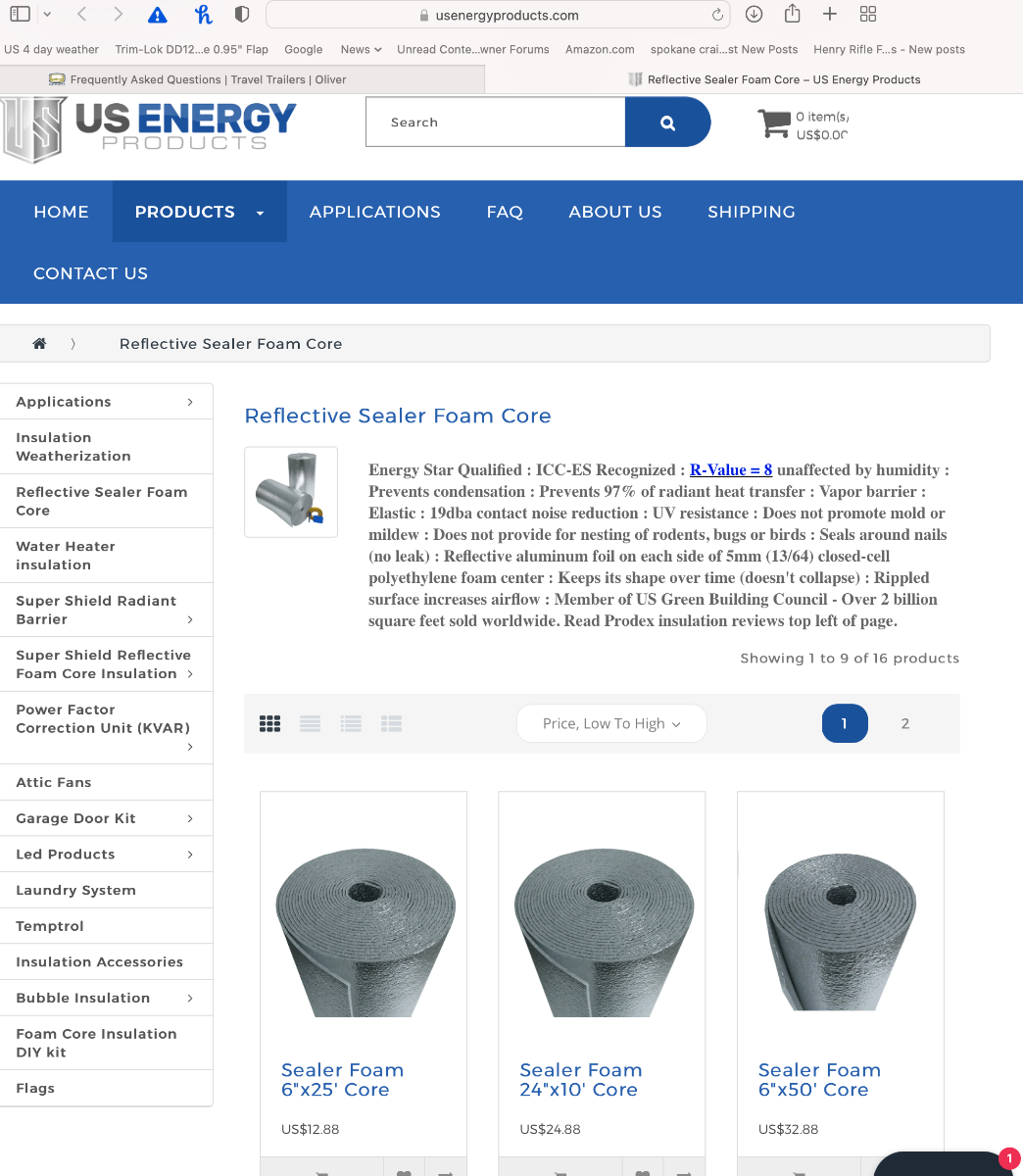
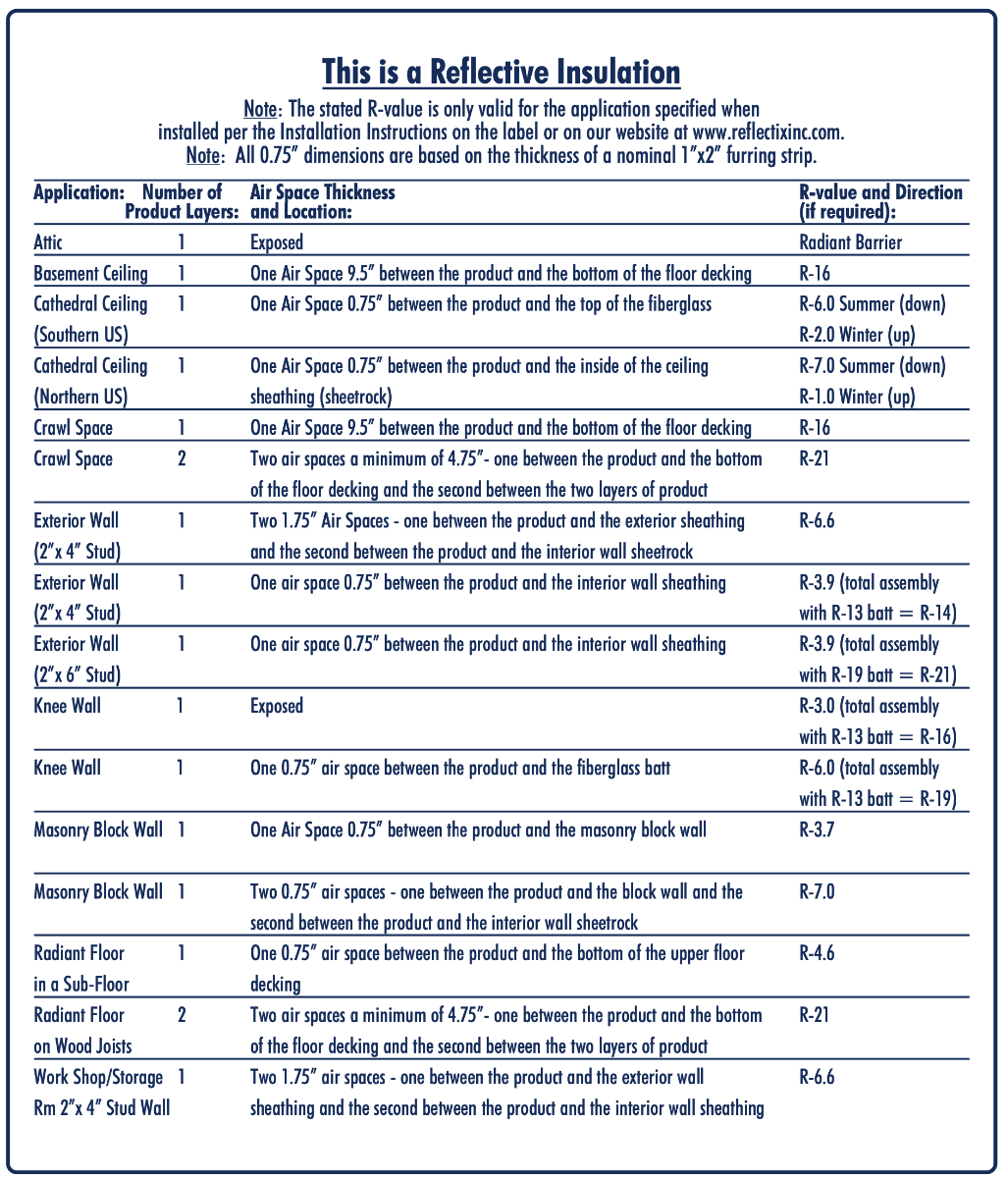
I was perusing the FAQ section here: ... https://olivertraveltrailers.com/travel-trailers/frequently-asked-questions/. and read their "What kind of insulation" statement ( I added the bold: "There are three ways to transfer heat: Conduction (through a solid material), Convection (through air space) and Radiant (reflective heat transmission.) The Oliver uses materials and construction techniques to take advantage of all three. The fiberglass hulls provide conductive insulation while the built in air gap between the inner and outer hull provide convective protection just like you would find in a double sided insulated cup. The Oliver is fully insulated between the exterior and interior shells with an insulated double-sided radiant barrier, which is best described as follows: "Reflective aluminum foil on each side of a 5mm (13/64 inch) polyethylene bubble center." "*Polyethylene Bubble + Radiant barrier + Vapor Barrier + Air Gap Barrier". This unique material provides a combination of radiant, convective and conductive protection. The foil radiates heat back into the camper in the winter or away from the camper in the summer. The foam insulation is infused with billions of tiny air bubbles that provide convective protection while the foam itself provides conductive protection. At only 13/64" thick this powerful product provides an R16 insulation rating. You would need approximately 4 3/4" of standard fiberglass batt insulation to equal this performance. The insulation we use serves as a radiant, vapor and air barrier making camping in any temperature a pleasurable experience." I don't know the brand they use, but I searched for that description, which seems to be cut and pasted directly with quotes from here, which states R8: ... https://www.usenergyproducts.com/collections/reflective-sealer-foam-core-1 Oliver says it has an R16 value, that manufacturer says R8, and I have a really hard time accepting either figure, since Reflectix has this VERY confusing chart: That chart says you need 9.5" gap to get to R16! And a thin Cathedral ceiling with 0.75" gap in a Northern winter is just R1. Basically a single layer of Reflectix with NO air gap has an R1 value. ;( and sticking another layer directly on top of an existing one doesn't do anything at all to increase it. The physical gap is the key, and the bigger the better. I think the Oliver description is misleading in the extreme, I hesitate to call it BS, but I really doubt the combined R16 value for the little 1 inch gap between inner and outer hulls. And they don't mention all the areas that do NOT have a protective gap against extreme temperatures, like the over and under storage cabinets, battery box and rear cargo area. Those spaces ARE the gap, they do keep the heat or cold out of the cabin, sort of, but it is also why they get so darned cold or hot inside. So your water valves freeze or your batteries overheat. I have been adding 1 inch slabs of Dow Corning R5 rigid foam board ... The Pink Stuff ... into those areas wherever I can reach, especially near water lines that run along the inside of the outer wall.. Any comments? John Davies Spokane WA
2 points
-
Thank you for the comments. I'm listening as far as what you all are saying about the size. As far as the freezer in a compressor fridge, I've got that covered. I have a National Luna 90 Twin fridge/freezer in the Cruiser that can be set with one or both bins as freezer or fridge. That's a lot of food (and weight!)2 points
-
What did you do with that MUST HAVE - ice cream?2 points
-
So apparently my wife is right again. We don't need to tell her.2 points
-
I do too 😁 A good double pane glass panel is maybe R5. Which is pretty good compared to a single pane, but not much more can be said about that. Just stick your hand on your home window when it is bitter outside. John Davies Spokane WA2 points
-
I think doing a walk around with a thermal camera would show where the heat is going. It might provide some interesting pictures and start some “heated” discussions. In the event if a fire I am not going to hang around inside. There are plenty of other sources of toxic chemicals in there like the tanks, plumbing, cushion foam, and appliances, not to mention the VAST amounts of fiberglass and gelcoat. My small addition of DC foam is not a serious concern to me. But I wouldn’t want unprotected DC foam in my house, it needs a fire barrier like 5/8” drywall.. “Aggressive marketing” 😄 That is a great euphemism for a lie. Like “up to”. My truck gets about 12 to 14 mpg normally, but it got “up to” 50 mpg once descending into the Hells Canyon gorge right after filling up. John Davies Spokane WA2 points
-
I agree that the R16 claim is "aggressive" marketing. If it were true, then an Oliver wall would outperform a sheathed 2x4 stud wall filled with R13 fiberglass batt insulation and drywalled on the inside. I seriously doubt that. Is there a way to scientifically test the R value of an Oliver double-hull-with-interior-insulation sandwich? Dow Corning pink foam insulation board offgasses highly toxic fumes if burned. Get out of Mouse ASAP in the event of fire.2 points
-
I freeze meals such as chili in the flat Chinese take-out containers. They stack up well in the Ollie freezer.2 points
-
No - but - there was an exterior drop down table in place of the lower fridge vents. Bill2 points
-
No "custom orders". But, you can always ask. The 2023 that Oliver brought to this year's Owner's Rally had a compressor fridge in it. So, that now just might be an option That's great news, @topgun2. Did the demo 2023 still have the fridge vents cut out? We replaced our 3way with a compressor fridge a few years ago. At the same time, we took out the microwave and built a big storage cabinet in its place. I'm very happy with both improvements. (We sealed the fridge vents with heavy plastic sheeting, insulation, and duct tape. ) we still have a gas cooktop, which I like, but carry an induction burner. Please do ask when you go on your tour. While you're there, see if there's a twin bed model in the offing for the Elite, with the redesign. We've had ours since 2008, so we're in our 15th season. Though smaller than the II, it has (almost) all the same features, and I consider the smaller size to be a bonus, for many of the reasons @John E Davies already outlined.2 points
-
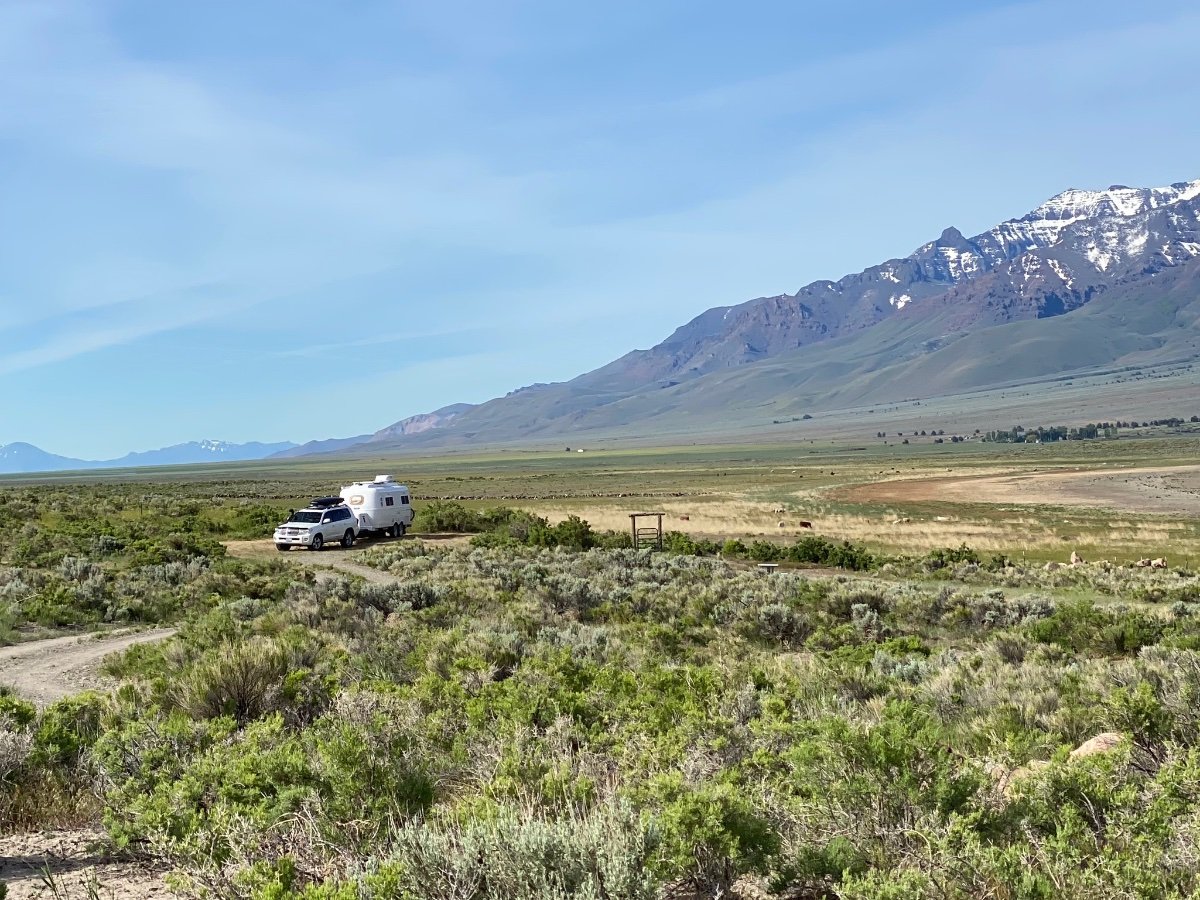
Welcome to the forum, I'll let others answer your questions. I would like to comment that I think you will miss the ease of maneuvering and finding a campsite if you buy the bigger trailer. Since you want to stay "primitive" it really does make things harder. We just spent two weeks in the Basin and Range area of NV and there were MANY times I wished for a smaller footprint! We also had to pass up a lot of great spots, because we just couldn't fit. Including in Great Basin National Park. This one at Steens Mountain OR (BLM) worked: You are correct, your LC200 will tow the LE2, but it will definitely work much harder, especially on long grades, and you must use the Andersen hitch. The LC200 has a short 120 inch wheelbase, and IMHO it really is better matched with a lighter trailer and perhaps an off-road coupler. Plus the towing mpgs are horrendous, especially if you add tougher LT tires and some accessories. The smaller trailer will not require so much wasted fuel and it will extend your cruising range a little. My truck with mud tires, snorkel, roof rack and cargo carrier rarely gets 10 mpg in the West, towing 6000 pounds. We paid an enormous amount for gas on this short trip.Fortunately, free stays in public lands and Harvest Host/ Boondockers Welcome sites helped to offset that. I can't imagine how costly it would be to tow with a Land Cruiser and stay at resorts ;( Oliver has suspended production of the LE for a major redesign, it will be interesting to see if they do some really cool stuff like independent suspension and disk brakes. We can only hope. We need more Land Cruisers! John Davies Spokane WA
2 points
-
A bunch of talk but as of yet I'm not aware that anyone has actually made this mod. Yes. Nope - black tank is in every Ollie and the standard is for a regular toilet to be installed on top of that black tank. The Nature's Head toilet is an option and it sits on top of the already installed black tank but, obviously, doesn't empty anything into that black tank. Yes - SeaDawg for one. No "custom orders". But, you can always ask. The 2023 that Oliver brought to this year's Owner's Rally had a compressor fridge in it. So, that now just might be an option. Again, you can always ask. Keep those questions coming and keep reading here on the Forum. All of the questions above have been discussed here. Finally - a big welcome to the Forum - we are happy that you have found us! Bill2 points
-
So, very rough estimate, the AC used approx. 10% SOC per hour and your solar replaced that 10% the next day. In theory then, someone in similar weather could probably run the AC for 1/2 hour each night to cool the cabin off before bed and recoup that power (and some other power used) the next day. Looking forward to trying this when we get our Ollie!2 points
-
It's really helpful if you complete year and hull number in your profile, and signature. Our 2008 has a couple switches to turn off the pump. One by the door. Your pump may need a prime.2 points
-
No guarantee - but - if the green light is "on" at the switch then it is likely that there is power getting to the pump. Have you checked the wire connections at the pump? Have you tried the water pump switch in the bathroom/shower AND the one in the main cabin?2 points
-
Agree with Bill. We had a 2014 Tundra and eventually bumped up to a F350 6.7 diesel one ton. Our 14 Tundra ran much higher RPMs in the mountains and never really felt as planted as our Super Duty. Quite honestly no comparison between the two trucks. We looked hard at the new 2022 Toyota, unfortunately with a cargo capacity of only 1400 lbs we knew this was not adequate for cargo our needs and we would be quickly close or over legal weight limits. We always pull our Ollie with a full fresh water tank and plenty of camping gear, and a generator in the bed which quickly eats up 1400 lb limit. With the F350 we are well within our safety margin of cargo weight which eliminates that concern. Also the larger Super Duty Cab we find so much more comfortable and we feel safer on long trips than we did with the Tundra for many reasons. We sold our Andersen hitch after we sold our Tundra as it is not needed with our Super Duty. The Super Duty also has a longer bed than our former Tundra which again helps accommodate all of our gear, tools, etc. Good luck with your choice!2 points
-
Diamondback installed, with the Front Runner racks and Yakima bike racks. Just about ready for our delivery date now.
2 points
-
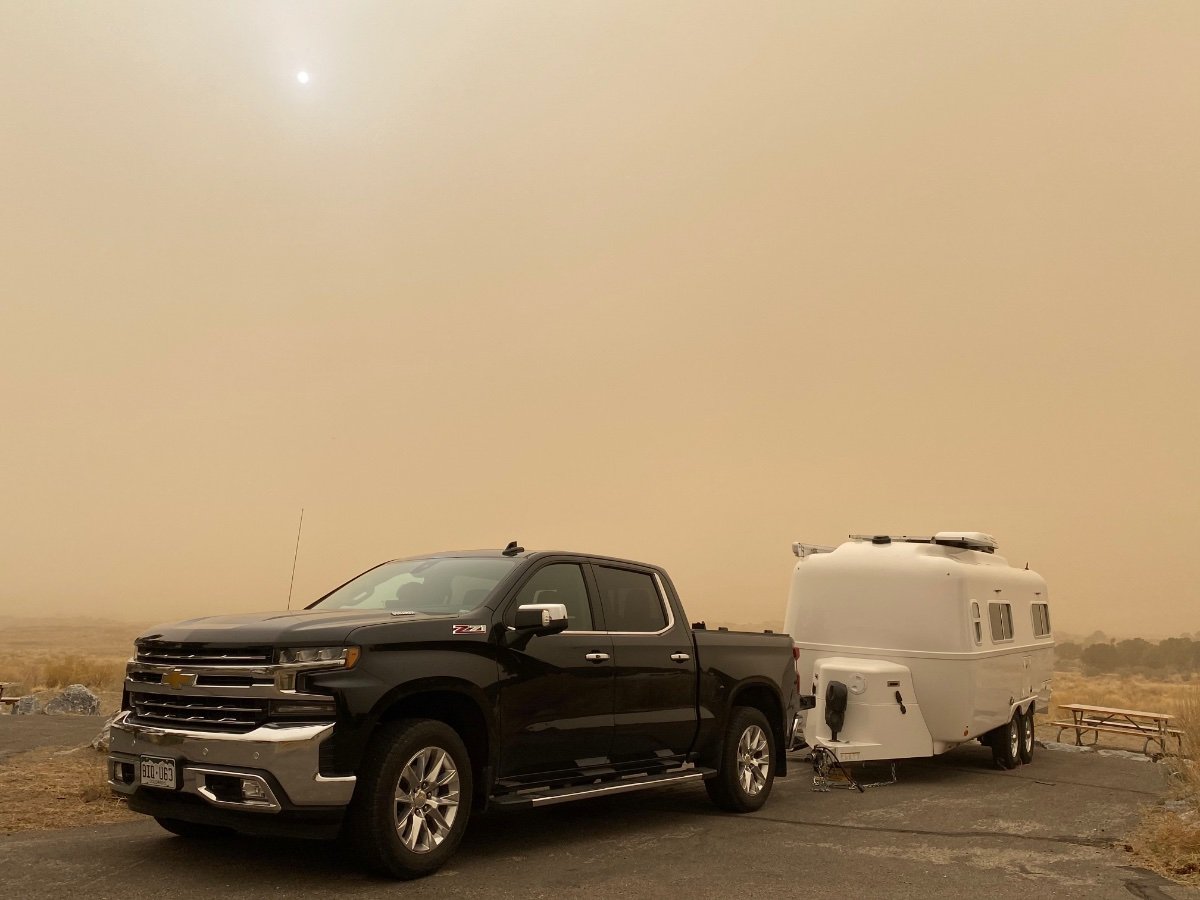
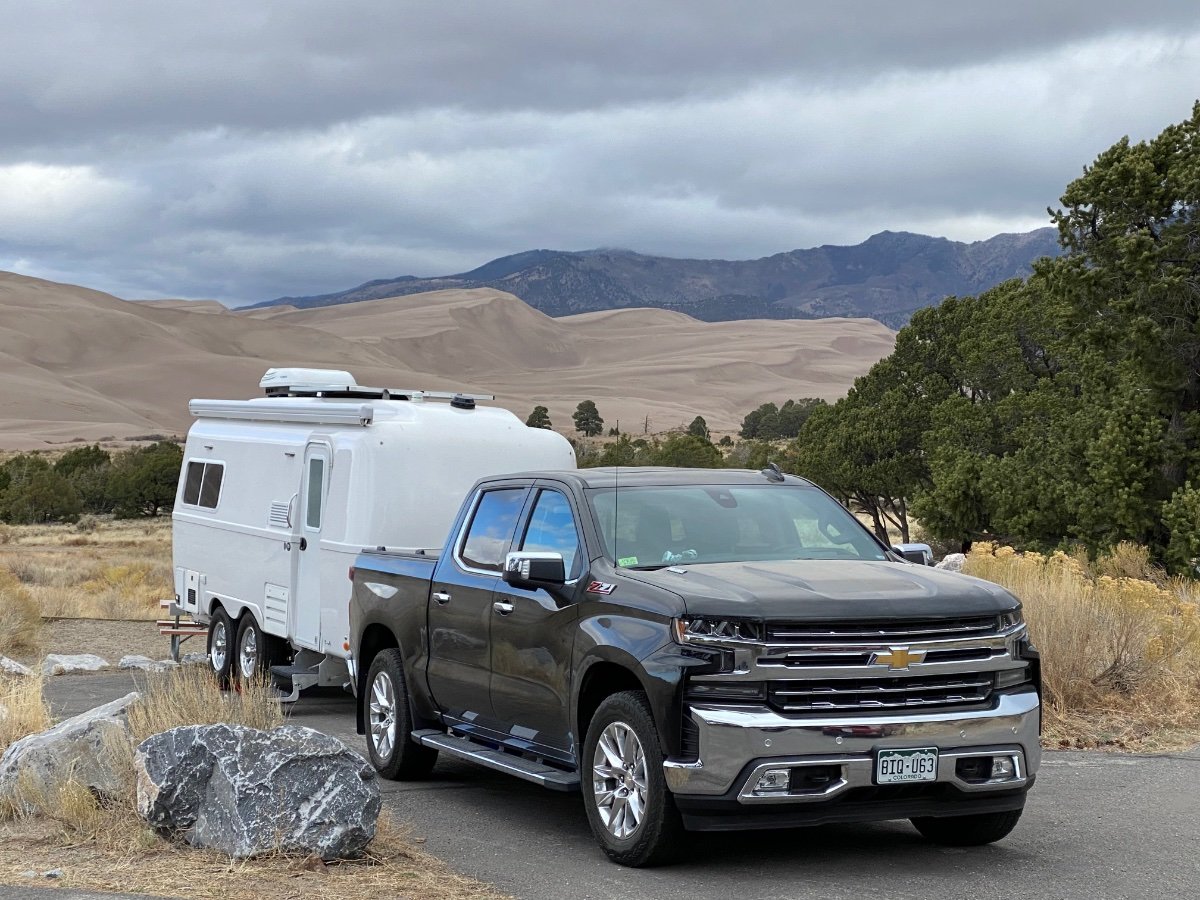
Great Sand Dunes NP in Colorado. Wind storm makes for a sand storm with 50 mph gusts and yes, that is the sun in the photo! Next morning we could actually see the dunes!
2 points
-
We grew up in Bellefontaine, Ohio, which is now the home of the sole importer of Kimberley Kampers. We stoped in to see David Bates in early 2021 to see an KK E2, which is about the same size as the EII. That was before prices and container costs went through the roof. At $120k, it was a possibility. At $175, nope! That, and it can't use an equalizing hitch, which would be way too much for my Cruiser. We'll stop in again on our way to Kentucky (and possibly Oliver HQ) to see a Kimberley Kruiser E3, which is about the size of the Elite. Sadly, it is nearly $140k now, where it was under $100k when we last visited. He didn't have one to see since, though. I have expensive tastes!1 point
-
I totally get that. Sleeping on a 25" bunk is confining. Ok for me, not for my much taller and heavier husband. Let is know what the factory has to say on the redesign. 6" width could make a huge difference.1 point
-
Thank you, and I will definitely be doing that! The size fits our needs better if only there was a bed situation that met our desires.And interesting that there's possibly a factory compressor fridge option and potential drop in third party induction stove. For both, I'd prefer factory installed, or al least the option not to cut openings for vents in the hull. The fewer holes the better! Thanks1 point
-
Thank you! All very helpful replies that are greatly appreciated. As for questions and answers, Absolutely yes on the search!! I've been admin and moderator on forums for 25 years now, and know the frustration they can sometimes cause. ("What mattress should I get?" has been asked probably 200 times on the Hiker Facebook group in its six years of existence!) Oddly, searching for "refrigerator" in title only resulted in nothing relevant. Again, thank you!1 point
-
I was impressed with the Olivers ability to hold heat. I did a modification to the heating system by simply adding ducting to the street side. With full fresh water tank and pump turned on I spent two days in sub zero weather, negative four down to negative twelve. I had the thermostat set at seventy degrees and was burning .274 gallons per hour but was toasty warm inside including the bathroom.1 point
-
When we were building our sips home, LEED standards required insulating every solid wood component (headers, lvls, posts, etc) as a thermal break. We used reflectix. My LEED advisor said it added only r1, but it helped with sealing the structure. The firring strip interstitial space took the rvalue to maybe 6? If I remember correctly. An inch air gap between two layers of reflectix type insulation may help more. I don't know. Rvalues require testing, but not within my capability. I don't have any of your current insulation in my 2008 trailer, just air gaps, and I've been good into the high teens, if it warms above freezing daytime. I'm not a serious cold weather camper, so it works for me. Slideouts have always been problematic for us, in motorhomes. They leak cold or hot air, and allow the mosquitoes in, as well.1 point
-
John and Jodi....let me first say congrats on the new Ollie! You are gonna love it!! Personally, my memory it absolutely terrible! I will also admit that while I consider myself of at least average intelligence, I sometimes lack a little bit of common sense (pains me to say it) - probably because I always rush through things. So I still use the checklist religiously. We have done 4 trips so far wit the Ollie, so I MAY be able to get to a campsite and set up the campsite and unhitch the trailer; and breakdown a campsite and hitch up the trailer without using the checklist, but could easily forget to do something important and screw things up. So I use my checklist. Plus, my list also has instructions for things I don't do very often (like winterize or de-winterize the Ollie) - so in those cases, I will probably always follow the checklist. Plus, in case something happens to me, my wife could use it (in fact, we usually work as a team to get the checklist done). To answer your questions....yes, I definitely feel alot more confident about doing many things now that I have had time to play with the Ollie. But not enough to get rid of the checklists. How has the checklist changed? Well, in terms of hitching and unhitching, it probably has a couple of changes, but I don't think it has had any radical changes since I started the checklist (plus, I have done minor rewording, or rewriting to make things a bit clearer). But I have added new checklists, like the winterizing/de-winterizing ones, and am still working on the 'sterilizing the water system' checklist. Thanks for the kudos.....let me know if you helps you, or if you would make any changes to it! Trey1 point
-
I understand that Furrion makes an rv induction cooktop about the same size as gas. Hmmm1 point
-
John, thanks for posting the answer from Andersen and happy with the reply. You will be surprised how this alternative method can make your life easier (connect and disconnect the trailer) after the initial hookup.1 point
-
Are you going to be by yourself? and what tow vehicle? If solo, I suggest the smaller Elite since it is easier and cheaper to lift, much MUCH easier and cheaper to add disk brakes to (there are no bolt on, plug and play kits for the LE2, you have to install heavier axles), has stouter axle and bearings, and is significantly more maneuverable. The 4.5 feet shorter length will fit into lots more primitive campsites. The wheels are strong. The tires that come are adequate high mileage LT Load E Cooper somethings. Earlier trailers had Michelin LTX. Neither will be a problem with typical groomed gravel roads, but a more robust tread has better sidewall cut resistance for sharp ballast roads like the drive to Kennecott. I would install a set of slightly larger 30” outside diameter robust off road tires, including the spare, and then not worry about it again. A bigger tire will not fit under that spare cover, but you can remove that entirely if you like. You would have to relocate the license plate bracket and light. The suspension is OK on either, but both definitely could be improved. The LE2 suspension flexes nicely but has around an inch of up travel before the axle ubolts hit the frame. BANG. 😳 I haven’t made it to AK yet, but have been through western BC and YT as far as White Horse, and driven the Stewart/ Cassiar in the rain. These trailers need significant rock protection unless you just don’t care about gelcoat damage and blasted frame and axles. There are a lot of threads on this subject. If I were flying solo, I definitely would prefer the LE over the LE2! It would be a great match for my Land Cruiser 200, which is a little overwhelmed by the bigger trailer, and I could eliminate that pesky PITA Andersen hitch. BTW, I used to occasionally do engine work on Turbo Beavers and Twin Otters in Seattle. I really hated working on float planes! Especially outside. Cool aircraft tho. I used to live near Lake Union and enjoyed watching them take off through the horde of sailboats and paddlers. Balls of steel! 😬 John Davies Spokane WA1 point
-
To secure tray, I used to wedge a throw pillow inside the microwave but then I found a plastic tub that fits perfectly & it holds our bread/buns & popcorn popper, giving it the weight needed to keep tray from rattling.1 point
-
As with any heating element - they do go bad over time. However they are not "sacrificial" like the anode rod is. I've never removed mine on any of the campers I've owned over the past 25 years and none ever failed to work. Bill1 point
-
We camp mostly in NC on the BRP, and the LE2 tows easily. Pavement conditions are OK. Speed limits are mostly 35 or 45 MPH and most Federal BRP campgrounds in NC have certain sites set aside as walk up that cannot be reserved. That being said, I would still make reservations during fall when there are many folks traveling the area to see the fall colors that peak at different times depending on elevation. The Federal campgrounds in NC do not have electricity or water at the campsites. Since we don't have factory solar, we have a portable suitcase solar panel that's handy to reach out from shady sites. We also enjoy hiking to water falls not too far from the BRP. Using the Federal geezer card gives 50% off of camping fees. Here's some NC Federal BRP campgrounds: Doughton Park, Julian Price, Linville Falls, Mt. Pisgah, and Balsam Mountain Campground is over 5300' elevation, but also a nice drive from the BRP in the Smoky Mountain National Park. Reservations can be made on Recreation.gov https://www.recreation.gov/ If there is construction, it's posted on their website with detour information. https://www.nps.gov/blri/planyourvisit/conditions.htm Roaring Fork Falls is not far from the BRP: Sunset on the BRP:1 point
-
Camped last week at Mount Pisgah Campground on the Blue Ridge Parkway NC. It was low 50s there last few mornings and very nice!1 point
-
Here is a thread where I talked about 10 mil PPF or paint protection film I had professionally installed.1 point
-
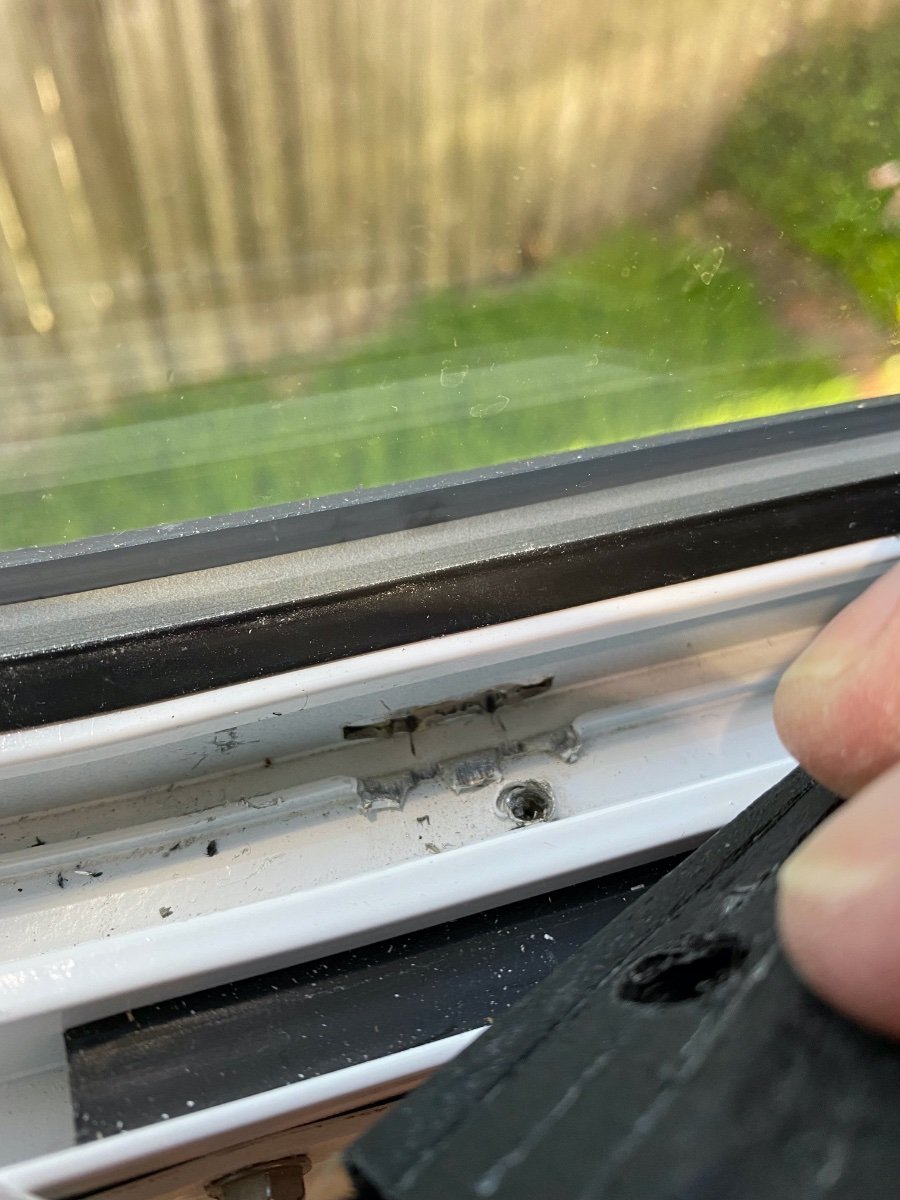
I'll tack on to this thread since it includes a lot of suggestions for tracking down leaks. I have one to add. I had a small leak under the curbside window the first time it rained on us and have been trouble shooting the last week. I may have found the problem. The track that the window slides in has a black fuzzy strip that the window pane slides on. There are holes every inch or two that allow rainwater to flow underneath and out of the inner weep holes in the window frame. At the end of the black fuzzy strip near the stove there is a screw and rubber/plastic sort of grommet that serves as a stop for the window at fully open. Well this screw goes right through the bottom of that drainage channel/window track. So there are 5 ways for water to escape: the four weep holes and this screw hole. I verified that a small amount of water poured into the window track would flow out the weep holes, but also could make its way over to the screw hole and then run out underneath the window, down across the belly band, and onto the seat above the water pump area. Oliver Service said that there should have been a butyl rubber strip laid down by the window manufacturer before the screw was put in. They will be sending a rubber strip out for me to install. I’ll also assess using a dab of silicone instead. So add this to the list of potential window leak causes. I'm wondering if anyone else has had a similar problem or if other windows have been constructed differently through the years. It seems like a bad design on the part of the window manufacturer to put a screw through the bottom of the window track that doubles as a drainage channel.
1 point
-
Also, talked to Vinnie's in Tallahassee today and was told the ceramic coating is for the "life of the camper". Was told it would loose some of it's luster in about 10 years, but the coating would still be there. It is costing me about $3500...one trip climbing a ladder, falling off and breaking another hip would cost me that much! I am happy to let them do it. I have been dealing with Briston at 850-999-38421 point
-
We had leaks appearing at the bed window frames (sides). Turned out to be the lights on the outside. The light housing had an outer seal, but the small hole for the wires was not caulked, nor were the screws holding the housing to the trailer. The trailer wall tips back just enough to let water flow back into the screw holes and then inside, down the wall and out the window frame. Enough to soak the bedding, surprisingly. Once the screw holes were sealed, no more leaks.1 point
-
Hi Skigator I got the Lithium Pro package and have been very happy with the battery performance. I don't have a generator because I can't think of why I would need one with the camping I do. I've run the A/C for about 90 min at a time and it does drop the batteries down, but the sun will charge them back up again with the panels up top. Once I left after breakfast for an all day outing. The batteries were at about 60% when I left, and at 100% when I came back for dinner. I usually dry camp or boondock. I guess having the generator would be good for constant A/C, but like I said, I'm not doing that kind of camping. A couple of times after boondocking I arrived at a friend's house for a visit and plugged into a 120v from the house. That also charged up the batteries pretty quickly. Sorry that this isn't completely on topic with your question.1 point
-
I am a little surprised that wheel nuts need regular tightening, I haven’t found them to loosen at all, once they are checked once or twice after installing the wheels. They do however loosen noticeably if you paint (or install new) drums, the paint underneath the wheel hubs compresses and makes things looser. I am not trying to downplay the need to check them, but before every trip is not necessary if they have already “settled down”. OTH, checking too often never hurt anything, if it makes you feel better. And it might catch something weird before it gets dangerous. I do not carry a torque wrench on trips, even long ones. One thing I do is to raise the tires off the ground every two thousand miles or so, and check for any signs of loose or rough bearings. That, plus a TPMS, plus quality bearings and grease, should eliminate any chances of catastrophe. Tripmushrv, be sure to set the wrench back to the minimum value before storage, and be gentle with it, no drops to concrete please. It is a fairly delicate tool. And it should only be used for tightening, not for removing nuts. It can be used for other stuff too, like your suspension or coupler hardware.Even if you are not comfortable checking those, a kindly campground neighbor might be, if you have the tool and sockets to do the job. John Davies Spokane WA1 point


















-
Recent Achievements
-